Hangai Funa Dansu Chest From Hokuriku - Late Edo
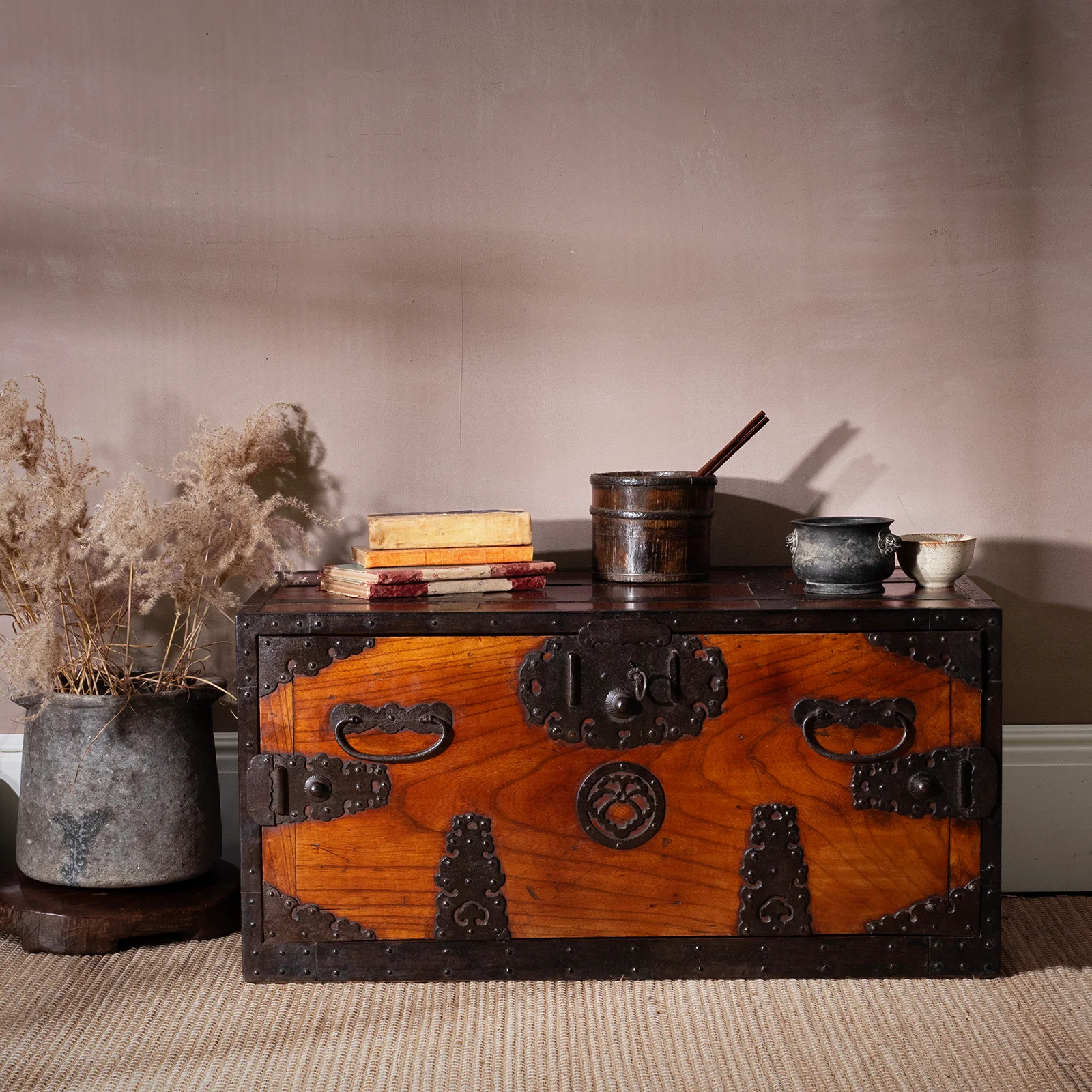
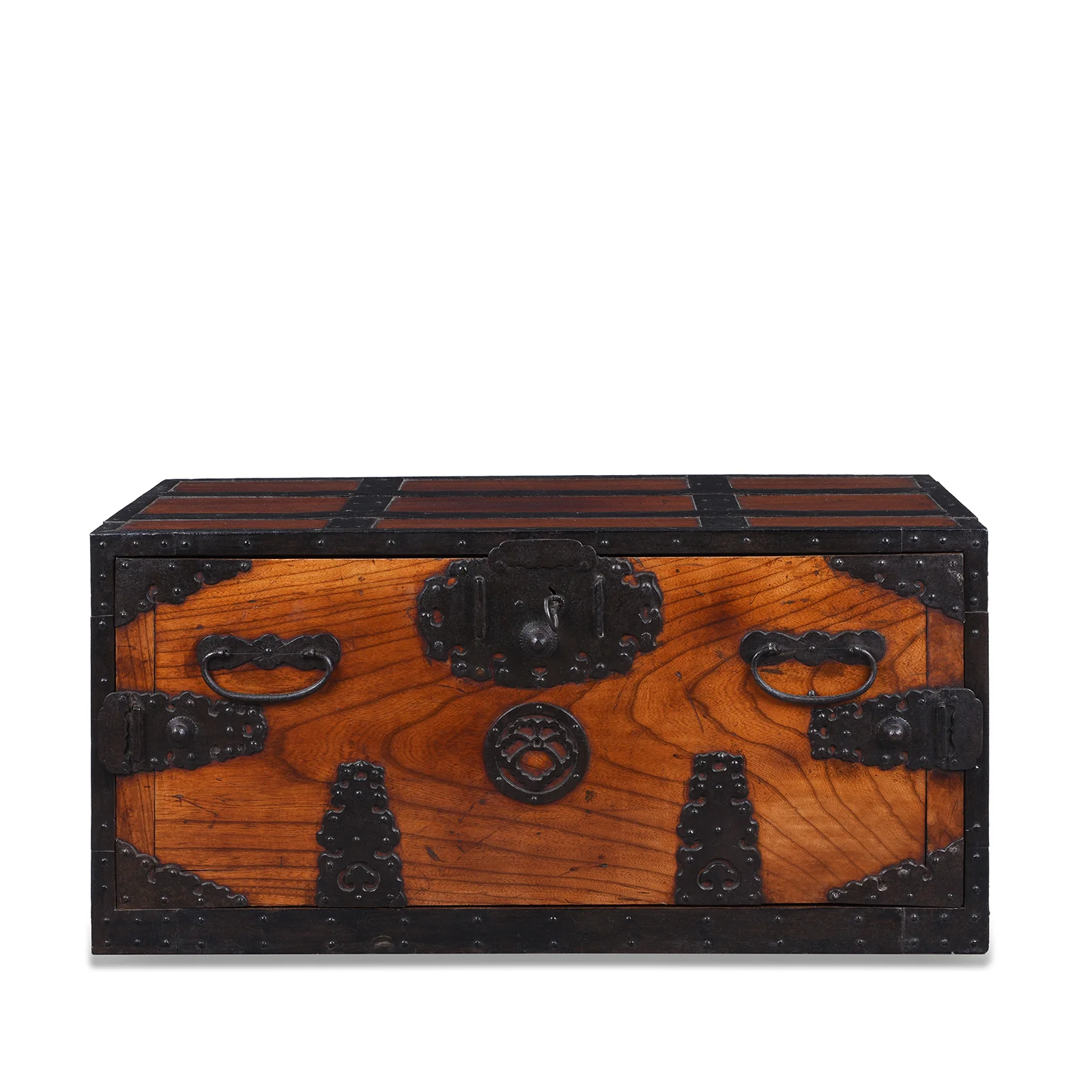
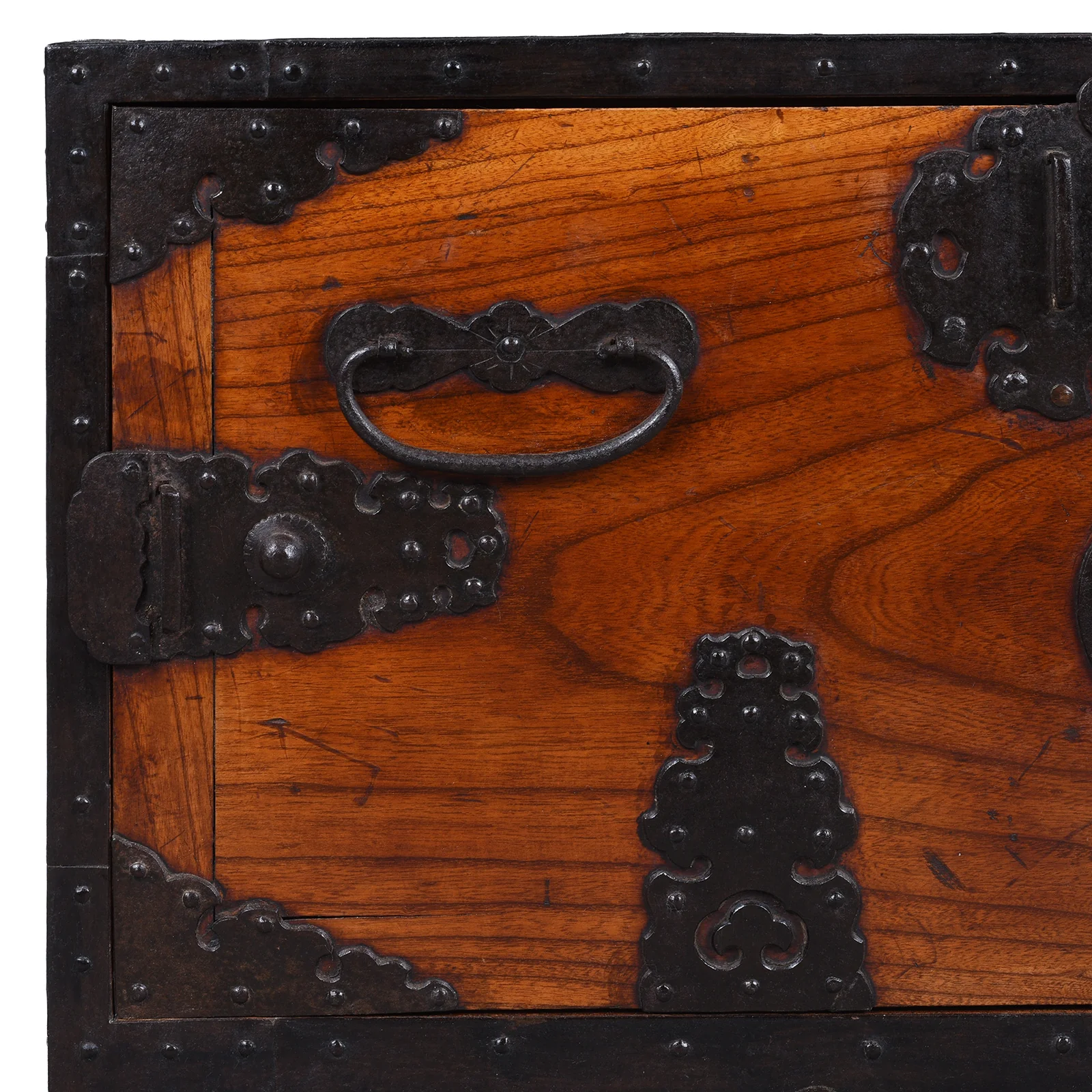
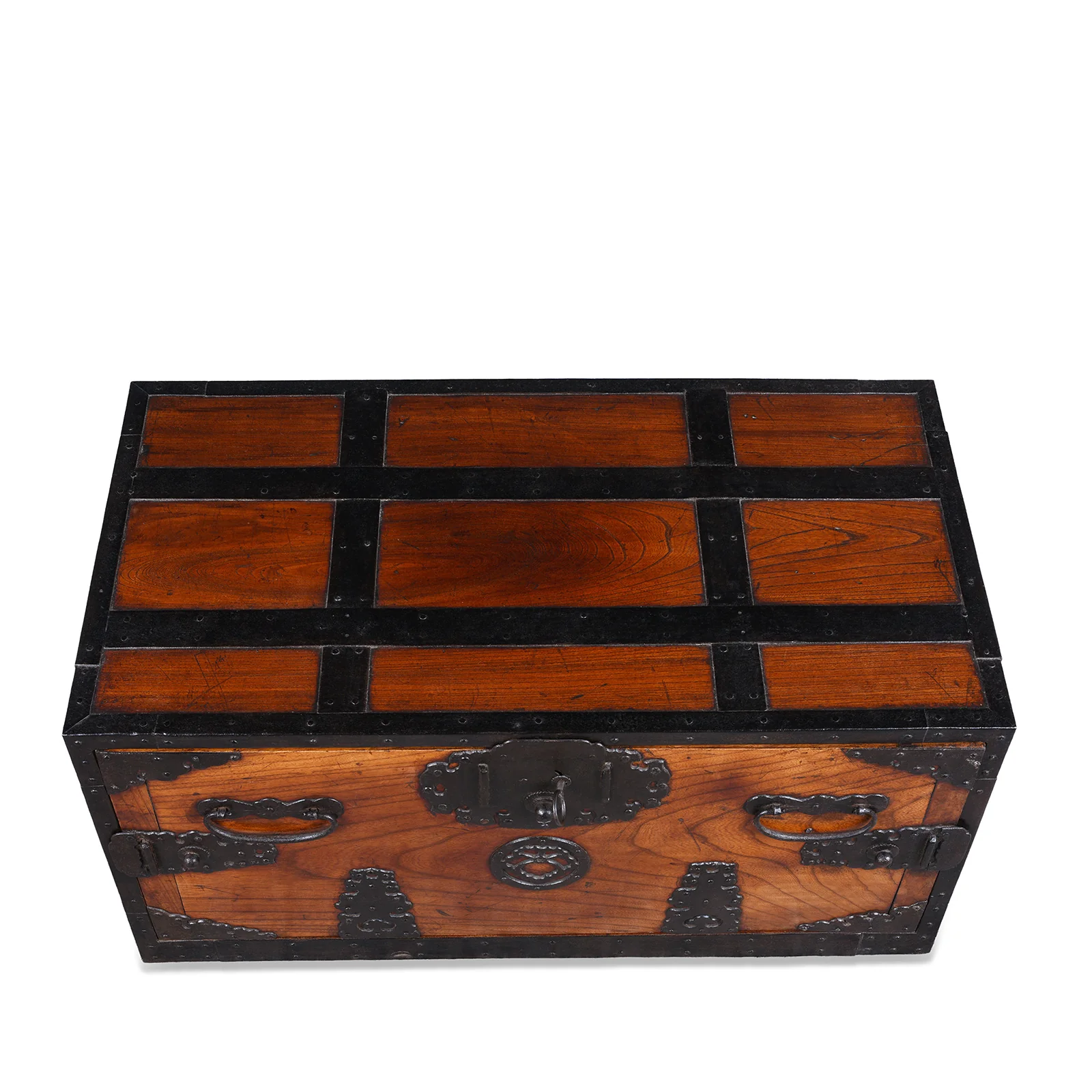
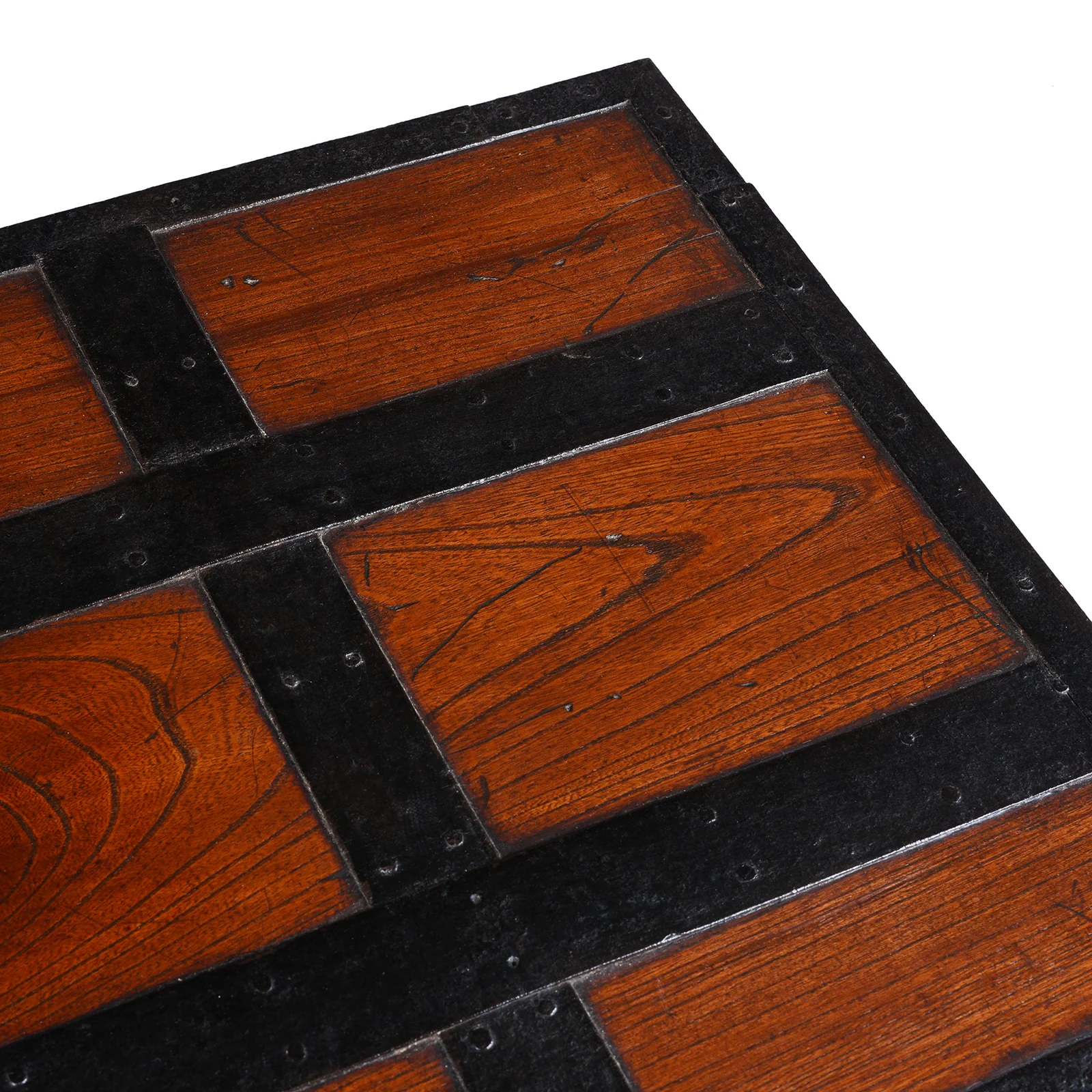
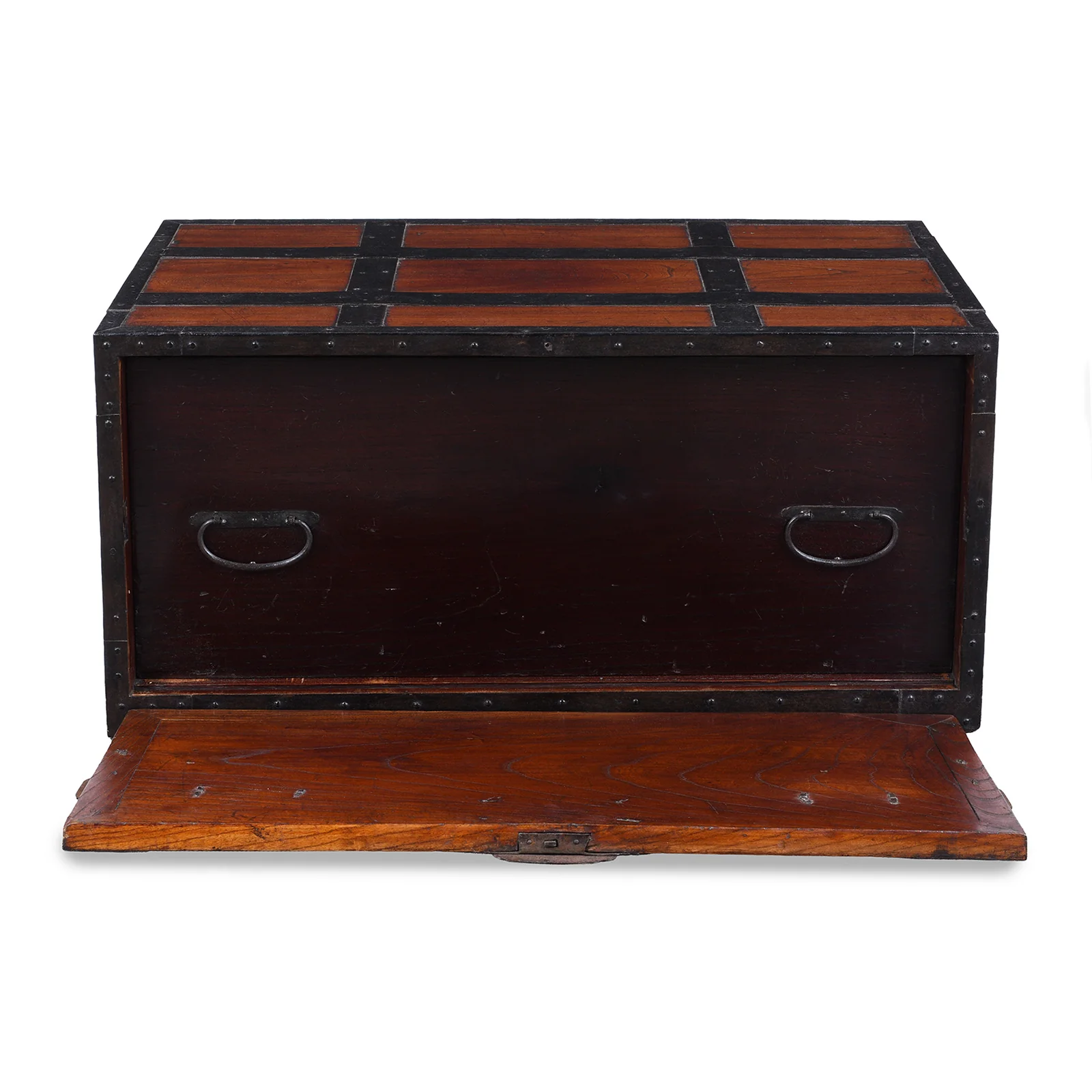
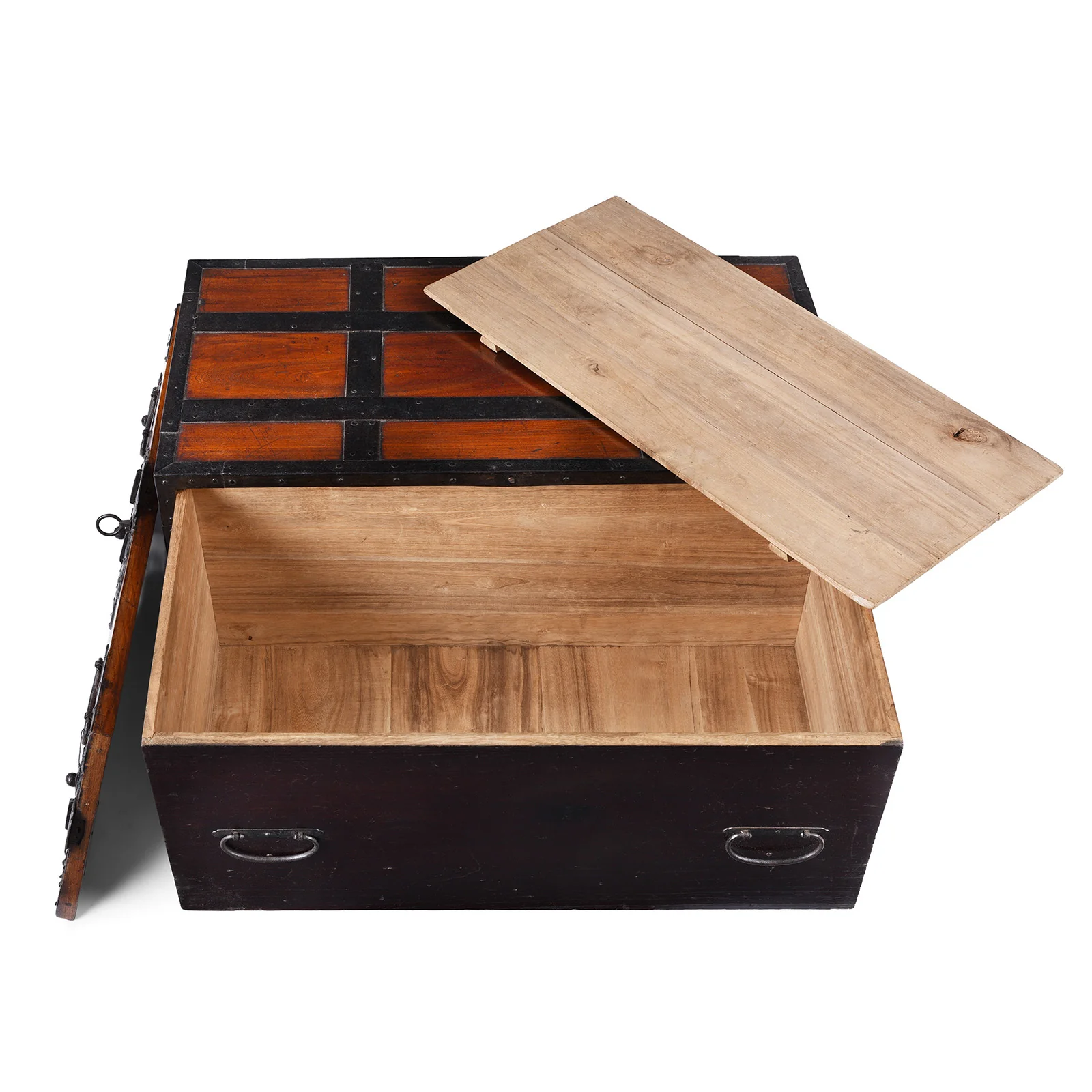
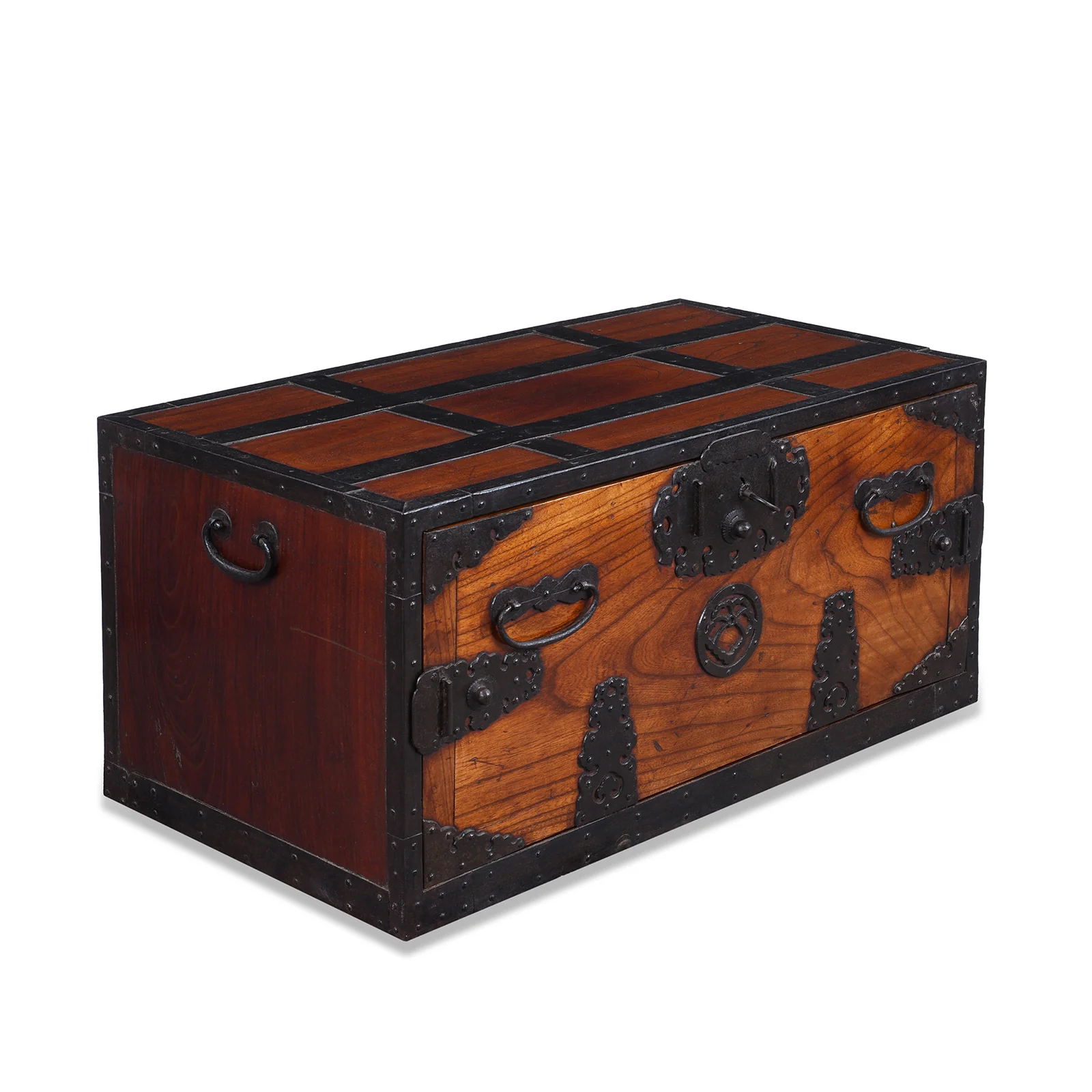
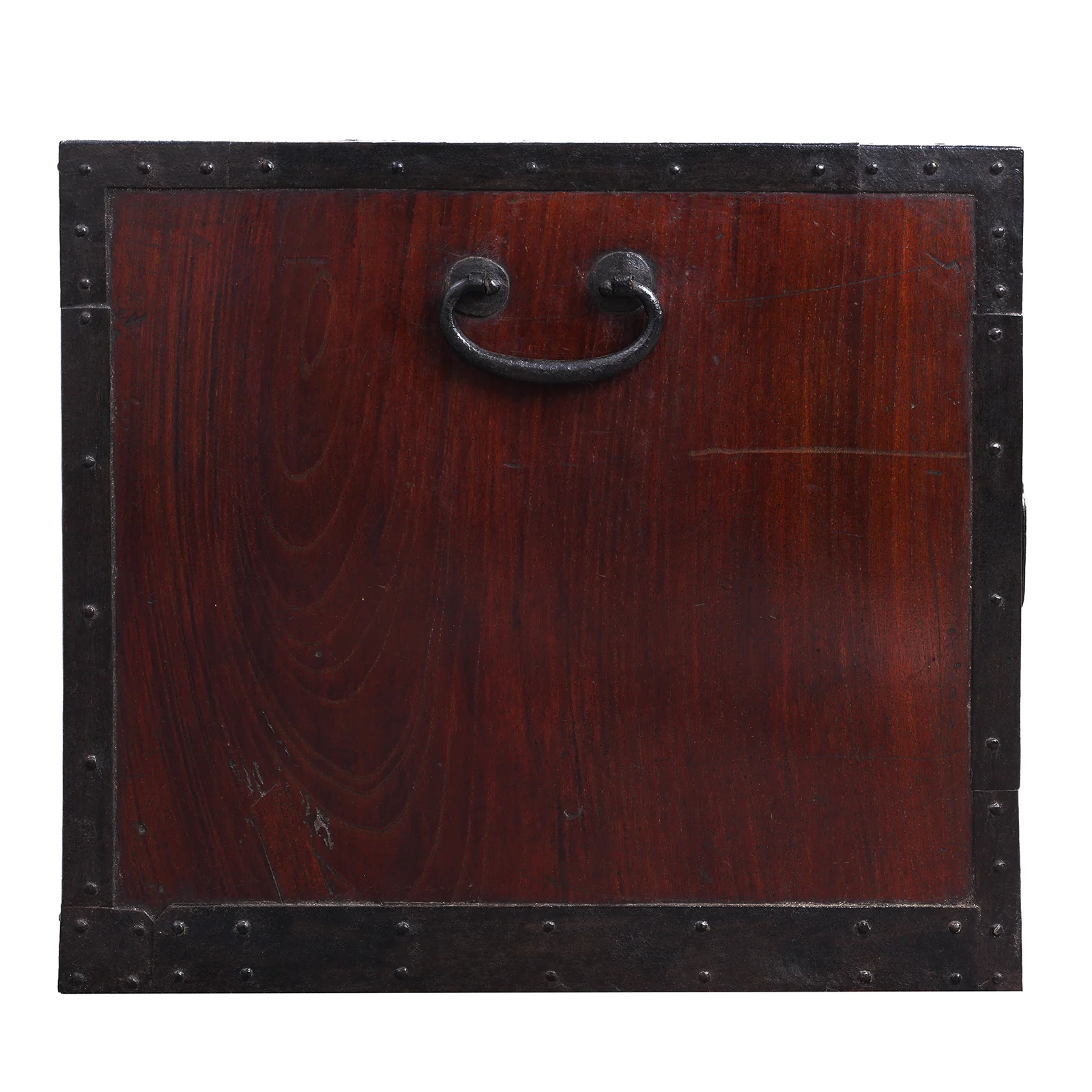
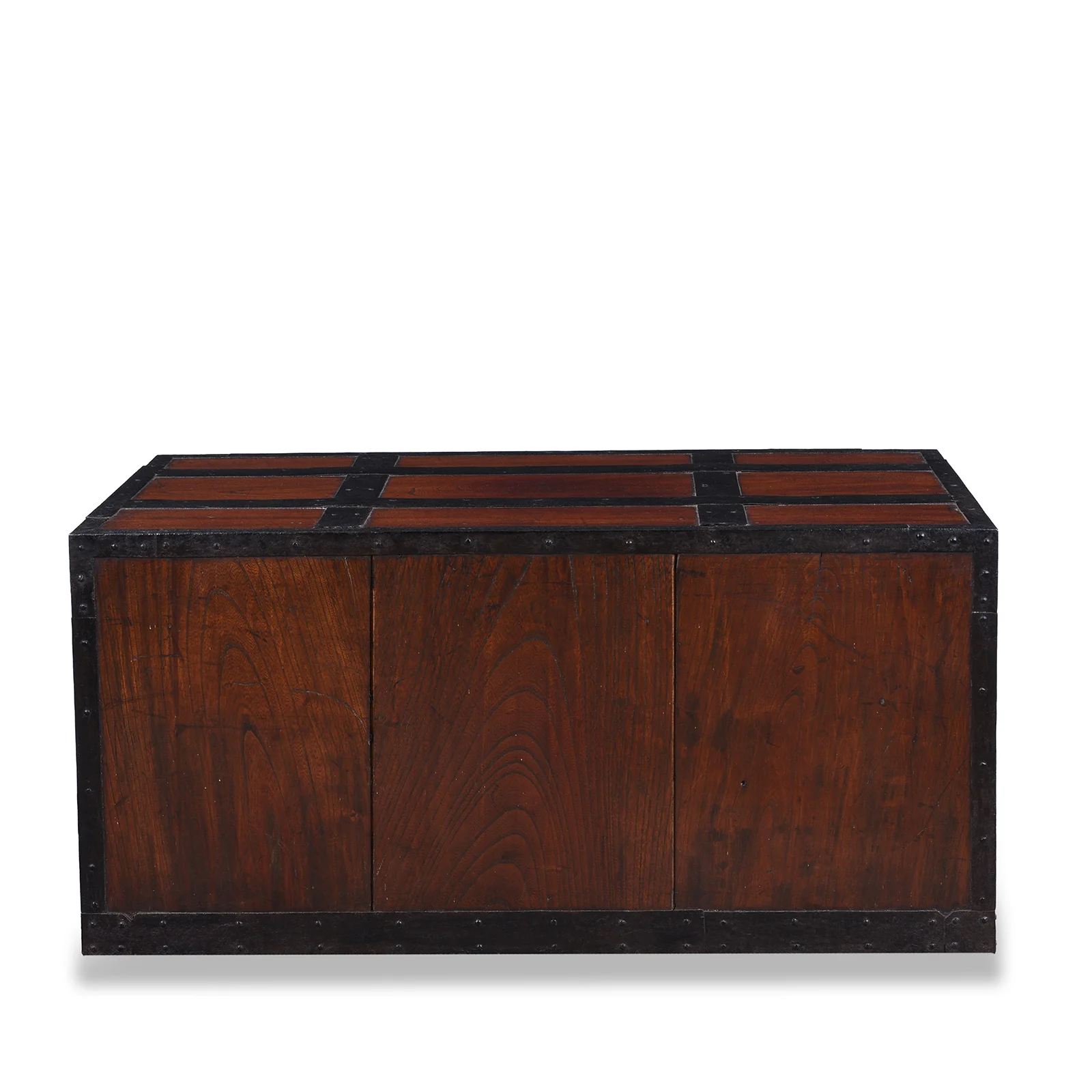
This superb late Edo period hangai funa dansu is a highly refined example of ship chest cabinetry from Japan (circa 1835). Constructed with a robust zelkova (keyaki) body and a single full width paulownia (kiri) drawer, it reflects the specialist craftsmanship associated with chests made for use aboard merchant vessels. The rich, warm grain of the keyaki case contrasts beautifully with the paler interior wood, a hallmark of Edo period (1603 - 1868) joinery chosen for strength, stability and durability at sea. This style of chest is from Hokuriku province which includes Sado Island, the main source of Funa Dansu production.
In the classic classification of sea chests, the hangai is the largest and was used exclusively by captains for clothing storage on the coastal merchant ships that sailed the Kitamae route. Captains work work clothes for the day to day work but were obliged to wear formal wear when liaising with port officials. This chest would have held captains formal ware, but also features its false bottom, a feature of Hangai dansu (see Traditional Japanese Chests: A Definitive Guide by Kazuko Koizumi, page 123 for further reading). False bottoms concealed important documents and maps and wouldn't have been spotted concealed beneath clothing.
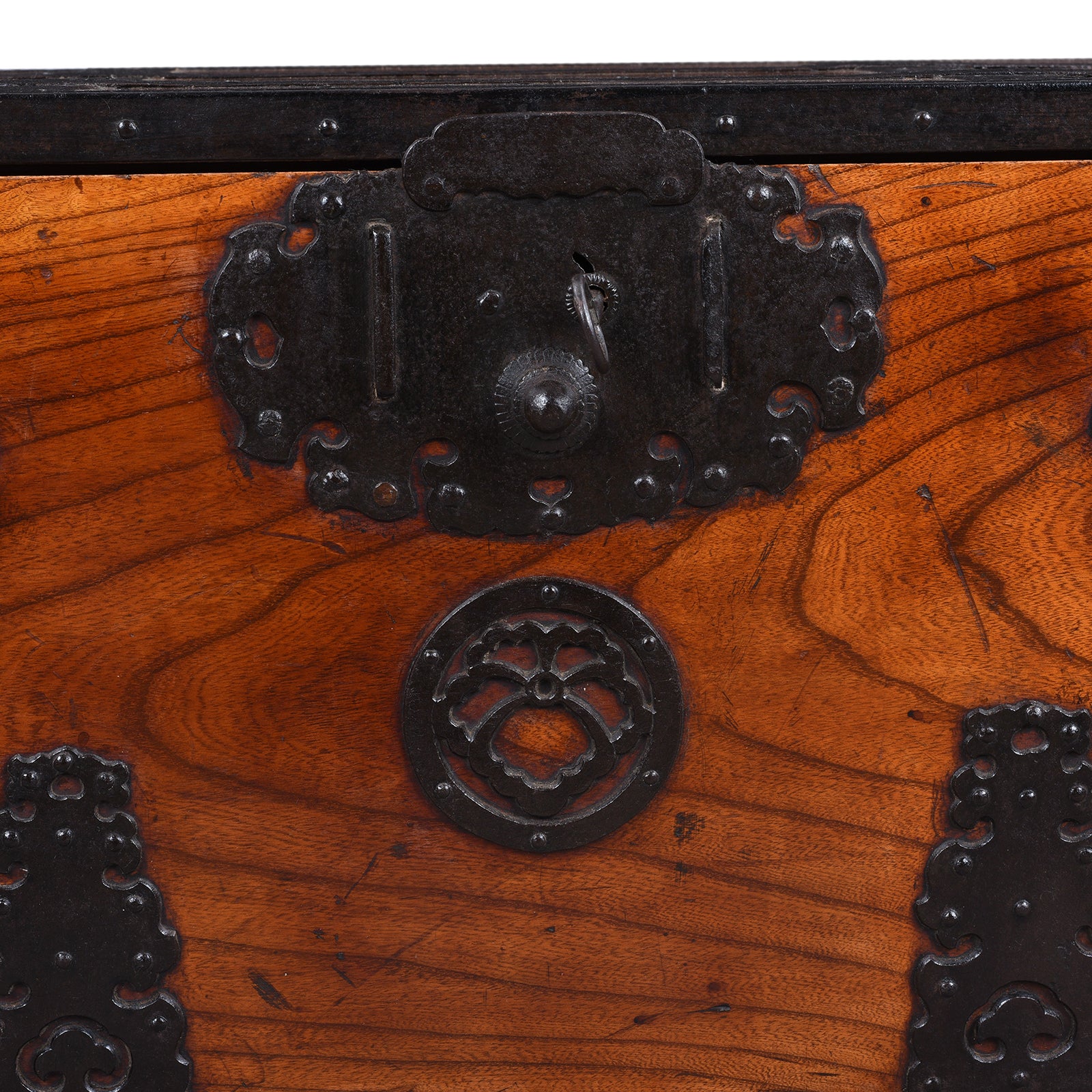
This chest has the characteristic full face drop fit front door (kendon buta), secured with traditional Japanese hashikui joinery, and heavy iron strapwork with dense riveting that underlines its maritime provenance. The front features a Ume-bachi mon (Plum Blossom Crest) symbolising endurance, safe return, good fortune for merchants, purification and renewal. This mon was found used especially by sailors and merchants on Kitamaebune shipping routes.
The Hangai style was likely influenced by Korean bandaji style chests. This chest comes from the distinguished collection of John Gruber, a noted authority and collector of Japanese tansu and is published as Fig. 84 in Tansu: Traditional Japanese Cabinetry by Ty and Kiyoko Heineken.
- Origin: Japan
- Region/Type: Hangai funa dansu (sea chest used for captains clothing)
- Date: Late Edo period (1603-1868)
- Materials: Zelkova (keyaki / red elm) body, single paulownia (kiri) drawer
- Features: Shipboard construction, full face removable front panel, contrasting woods, heavy iron strapwork, published example. Original false bottom.
- Provenance: Collection of John Gruber
- References: Published as Fig. 84 in Tansu: Traditional Japanese Cabinetry, Ty and Kiyoko Heineken (p. 62); discussed in Japanese Cabinetry: The Art & Craft of Tansu, David Jackson & Dane Owen - a near identical stacking example on page 101. For further reading see Traditional Japanese Chests: A Definitive Guide by Kazuko Koizumi page 123.
- Condition: Excellent antique condition consistent with age. Comes with original key.
- Dimensions: Width 78.5 × Depth 43 × Height 39 cm
A compact and beautifully crafted hangai funa dansu, documented in the literature and carrying notable provenance, offering a rare and evocative example of Japan’s seafaring material culture.
Original: $6,025.94
-65%$6,025.94
$2,109.08More Images
Hangai Funa Dansu Chest From Hokuriku - Late Edo
This superb late Edo period hangai funa dansu is a highly refined example of ship chest cabinetry from Japan (circa 1835). Constructed with a robust zelkova (keyaki) body and a single full width paulownia (kiri) drawer, it reflects the specialist craftsmanship associated with chests made for use aboard merchant vessels. The rich, warm grain of the keyaki case contrasts beautifully with the paler interior wood, a hallmark of Edo period (1603 - 1868) joinery chosen for strength, stability and durability at sea. This style of chest is from Hokuriku province which includes Sado Island, the main source of Funa Dansu production.
In the classic classification of sea chests, the hangai is the largest and was used exclusively by captains for clothing storage on the coastal merchant ships that sailed the Kitamae route. Captains work work clothes for the day to day work but were obliged to wear formal wear when liaising with port officials. This chest would have held captains formal ware, but also features its false bottom, a feature of Hangai dansu (see Traditional Japanese Chests: A Definitive Guide by Kazuko Koizumi, page 123 for further reading). False bottoms concealed important documents and maps and wouldn't have been spotted concealed beneath clothing.
This chest has the characteristic full face drop fit front door (kendon buta), secured with traditional Japanese hashikui joinery, and heavy iron strapwork with dense riveting that underlines its maritime provenance. The front features a Ume-bachi mon (Plum Blossom Crest) symbolising endurance, safe return, good fortune for merchants, purification and renewal. This mon was found used especially by sailors and merchants on Kitamaebune shipping routes.
The Hangai style was likely influenced by Korean bandaji style chests. This chest comes from the distinguished collection of John Gruber, a noted authority and collector of Japanese tansu and is published as Fig. 84 in Tansu: Traditional Japanese Cabinetry by Ty and Kiyoko Heineken.
- Origin: Japan
- Region/Type: Hangai funa dansu (sea chest used for captains clothing)
- Date: Late Edo period (1603-1868)
- Materials: Zelkova (keyaki / red elm) body, single paulownia (kiri) drawer
- Features: Shipboard construction, full face removable front panel, contrasting woods, heavy iron strapwork, published example. Original false bottom.
- Provenance: Collection of John Gruber
- References: Published as Fig. 84 in Tansu: Traditional Japanese Cabinetry, Ty and Kiyoko Heineken (p. 62); discussed in Japanese Cabinetry: The Art & Craft of Tansu, David Jackson & Dane Owen - a near identical stacking example on page 101. For further reading see Traditional Japanese Chests: A Definitive Guide by Kazuko Koizumi page 123.
- Condition: Excellent antique condition consistent with age. Comes with original key.
- Dimensions: Width 78.5 × Depth 43 × Height 39 cm
A compact and beautifully crafted hangai funa dansu, documented in the literature and carrying notable provenance, offering a rare and evocative example of Japan’s seafaring material culture.
Product Information
Product Information
Shipping & Returns
Shipping & Returns
Description
This superb late Edo period hangai funa dansu is a highly refined example of ship chest cabinetry from Japan (circa 1835). Constructed with a robust zelkova (keyaki) body and a single full width paulownia (kiri) drawer, it reflects the specialist craftsmanship associated with chests made for use aboard merchant vessels. The rich, warm grain of the keyaki case contrasts beautifully with the paler interior wood, a hallmark of Edo period (1603 - 1868) joinery chosen for strength, stability and durability at sea. This style of chest is from Hokuriku province which includes Sado Island, the main source of Funa Dansu production.
In the classic classification of sea chests, the hangai is the largest and was used exclusively by captains for clothing storage on the coastal merchant ships that sailed the Kitamae route. Captains work work clothes for the day to day work but were obliged to wear formal wear when liaising with port officials. This chest would have held captains formal ware, but also features its false bottom, a feature of Hangai dansu (see Traditional Japanese Chests: A Definitive Guide by Kazuko Koizumi, page 123 for further reading). False bottoms concealed important documents and maps and wouldn't have been spotted concealed beneath clothing.
This chest has the characteristic full face drop fit front door (kendon buta), secured with traditional Japanese hashikui joinery, and heavy iron strapwork with dense riveting that underlines its maritime provenance. The front features a Ume-bachi mon (Plum Blossom Crest) symbolising endurance, safe return, good fortune for merchants, purification and renewal. This mon was found used especially by sailors and merchants on Kitamaebune shipping routes.
The Hangai style was likely influenced by Korean bandaji style chests. This chest comes from the distinguished collection of John Gruber, a noted authority and collector of Japanese tansu and is published as Fig. 84 in Tansu: Traditional Japanese Cabinetry by Ty and Kiyoko Heineken.
- Origin: Japan
- Region/Type: Hangai funa dansu (sea chest used for captains clothing)
- Date: Late Edo period (1603-1868)
- Materials: Zelkova (keyaki / red elm) body, single paulownia (kiri) drawer
- Features: Shipboard construction, full face removable front panel, contrasting woods, heavy iron strapwork, published example. Original false bottom.
- Provenance: Collection of John Gruber
- References: Published as Fig. 84 in Tansu: Traditional Japanese Cabinetry, Ty and Kiyoko Heineken (p. 62); discussed in Japanese Cabinetry: The Art & Craft of Tansu, David Jackson & Dane Owen - a near identical stacking example on page 101. For further reading see Traditional Japanese Chests: A Definitive Guide by Kazuko Koizumi page 123.
- Condition: Excellent antique condition consistent with age. Comes with original key.
- Dimensions: Width 78.5 × Depth 43 × Height 39 cm
A compact and beautifully crafted hangai funa dansu, documented in the literature and carrying notable provenance, offering a rare and evocative example of Japan’s seafaring material culture.