Painted Tibetan 'Dragon' Storage Chest - 18thC
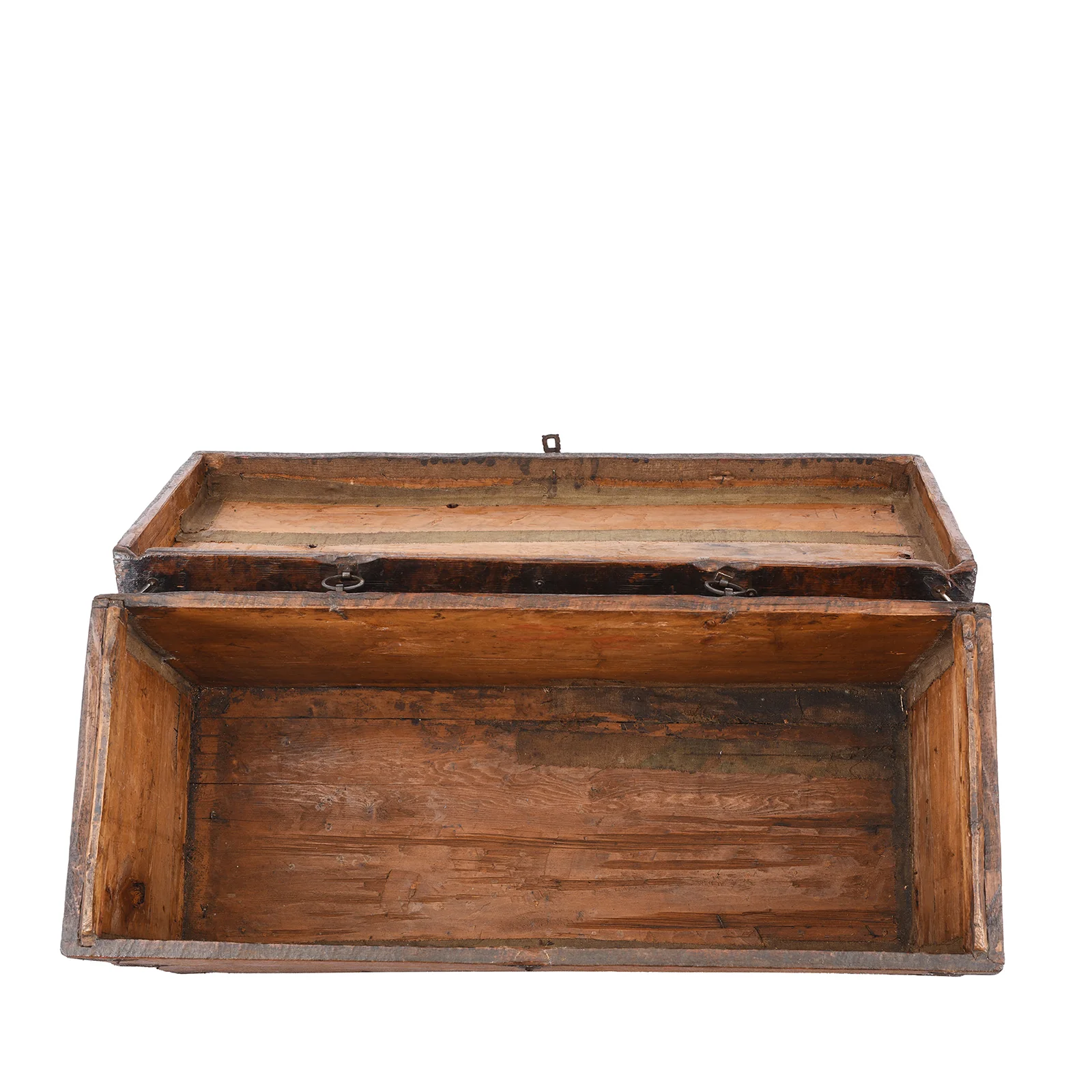
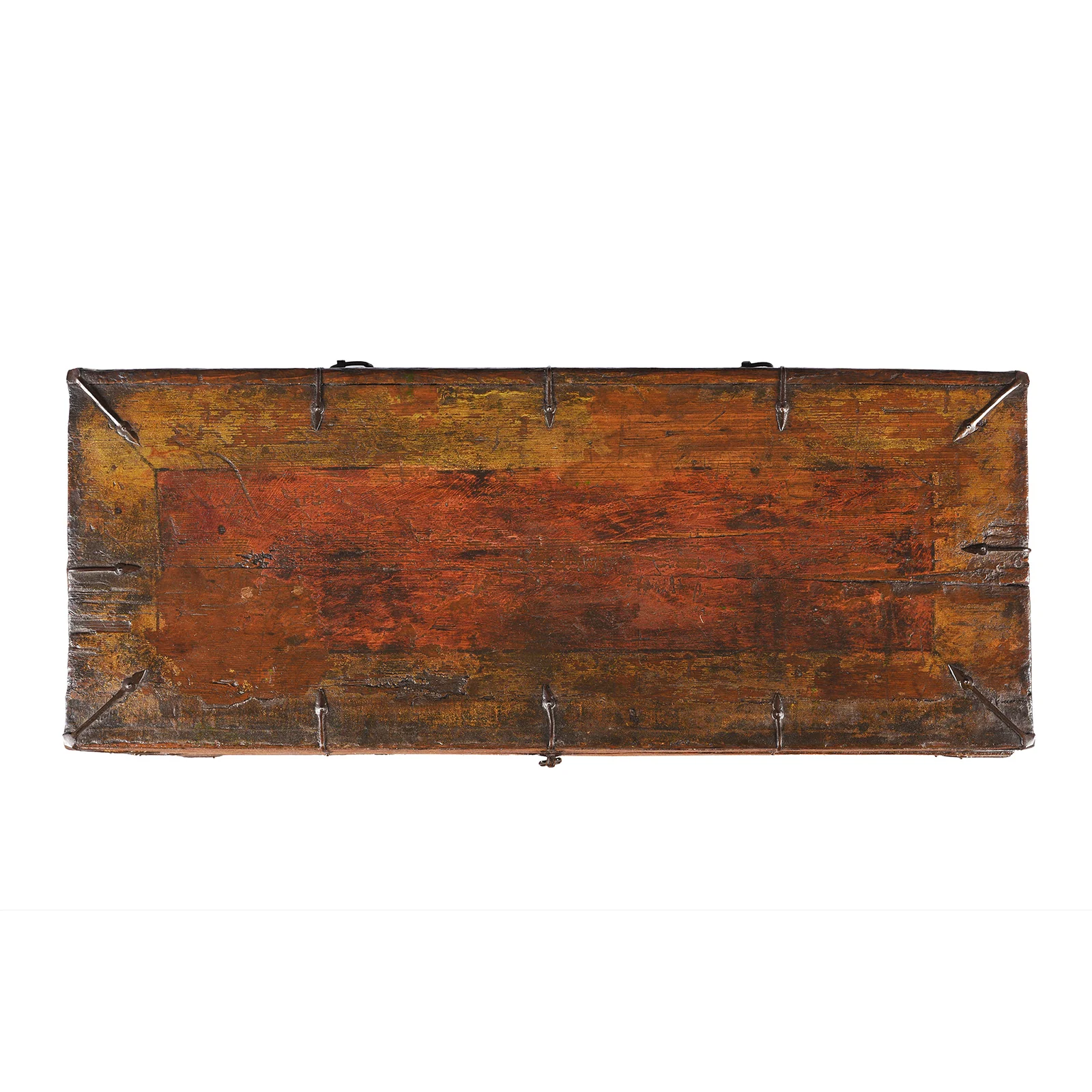
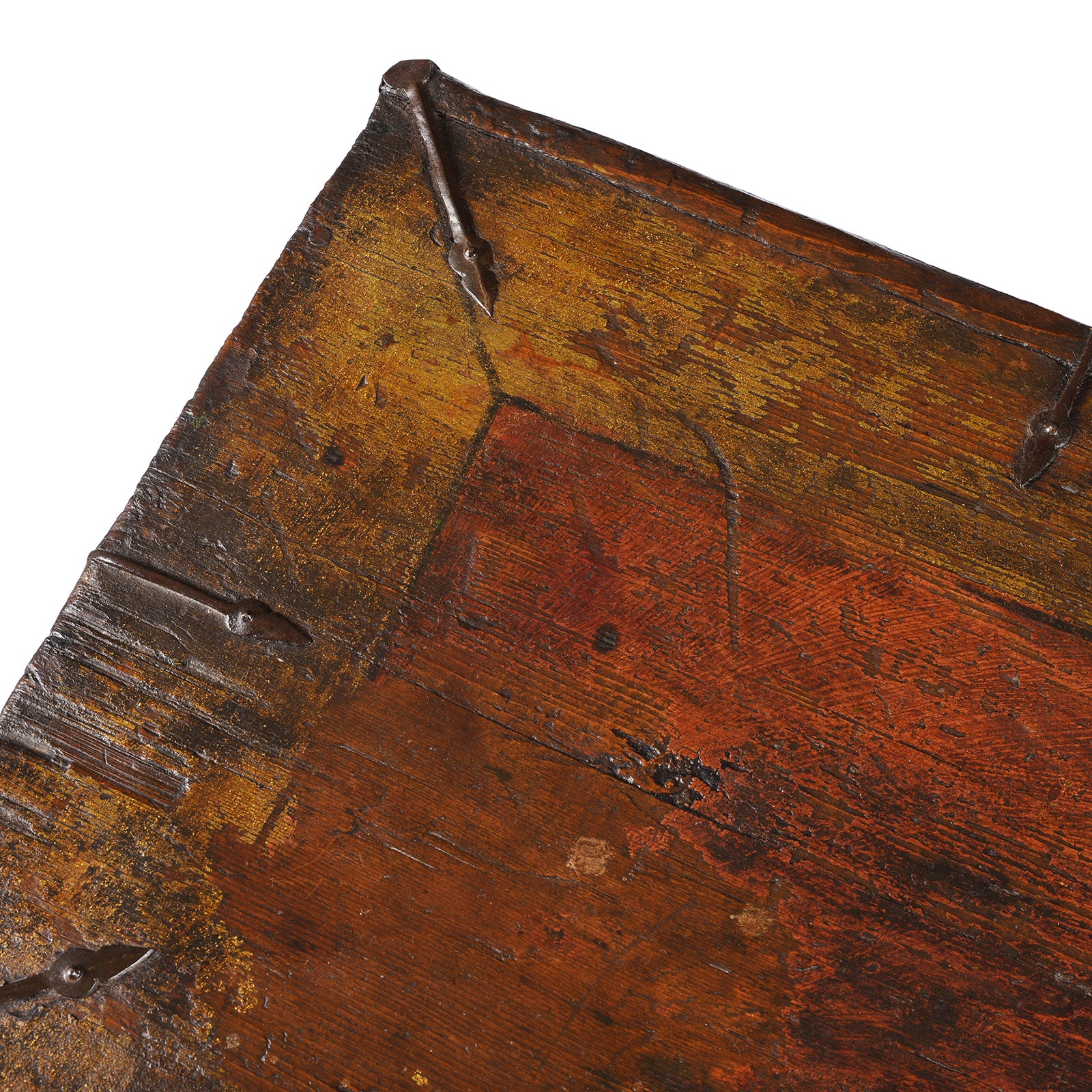
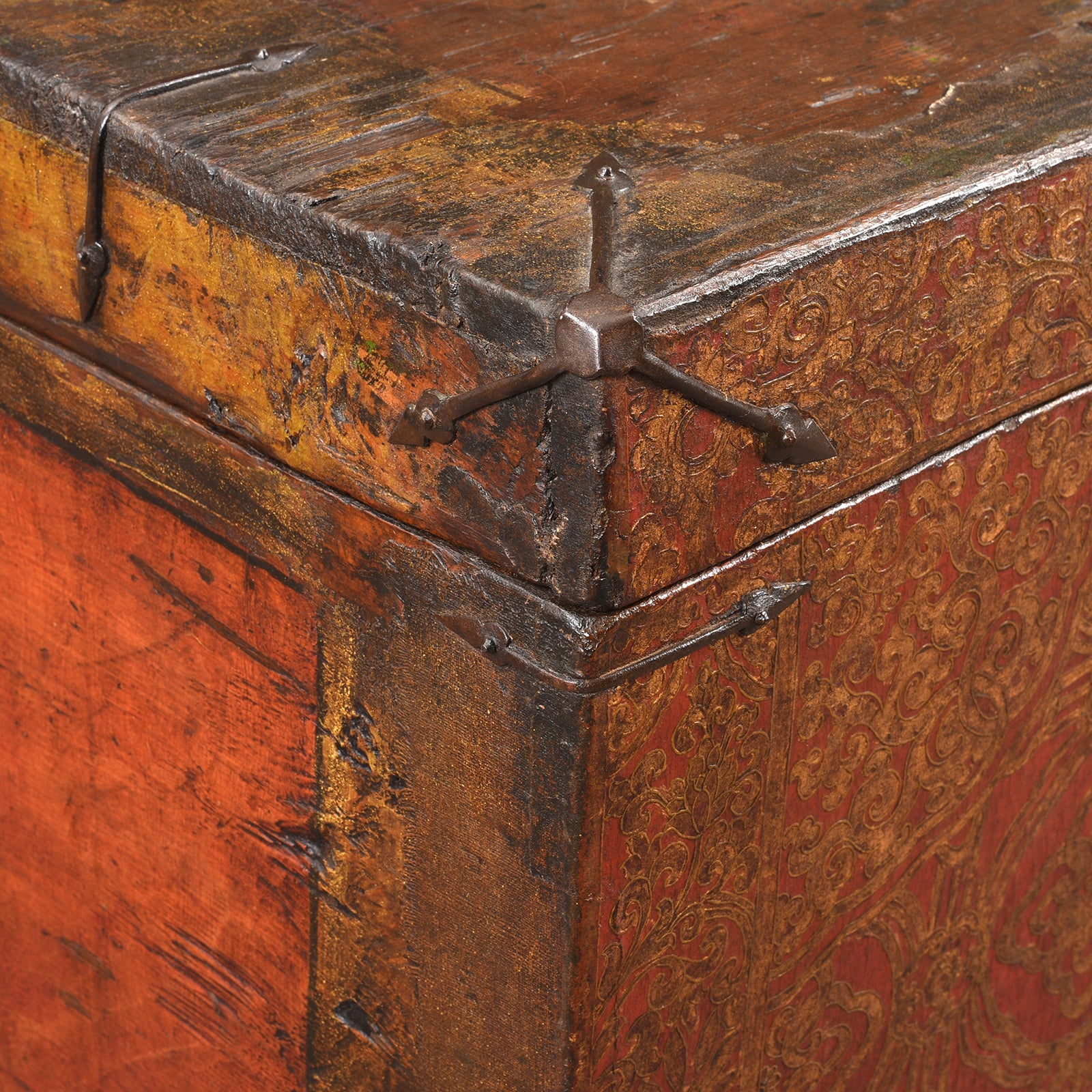
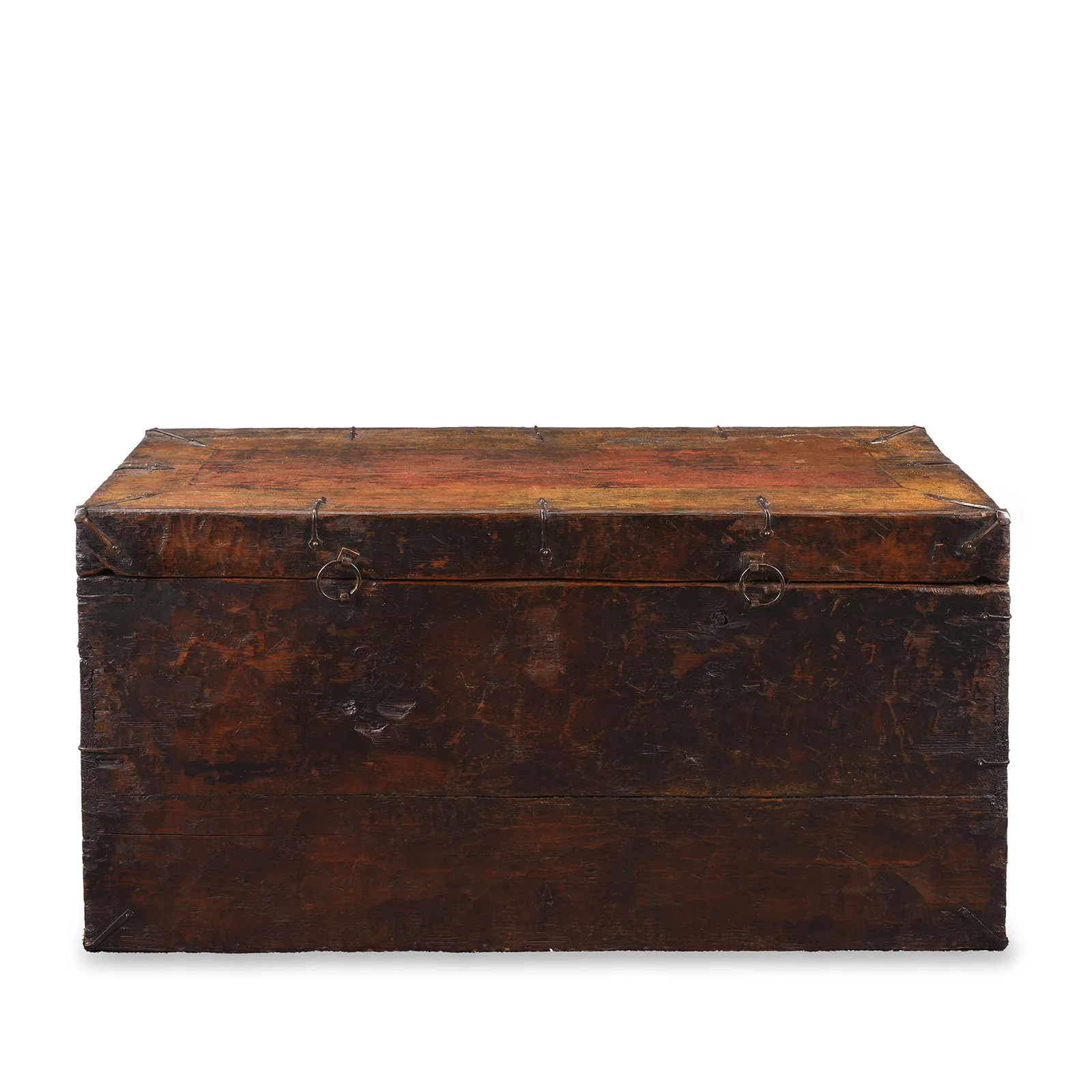
Tibetan chests and trunks were used as storage in homes and monasteries. Boxes are normally made from cedar, pine or poplar. If they are painted it is usually just the front and 2 sides. They can either be painted directly on the wood or on older pieces onto a fabric applied to the wood. The colours and designs used are very decorative.
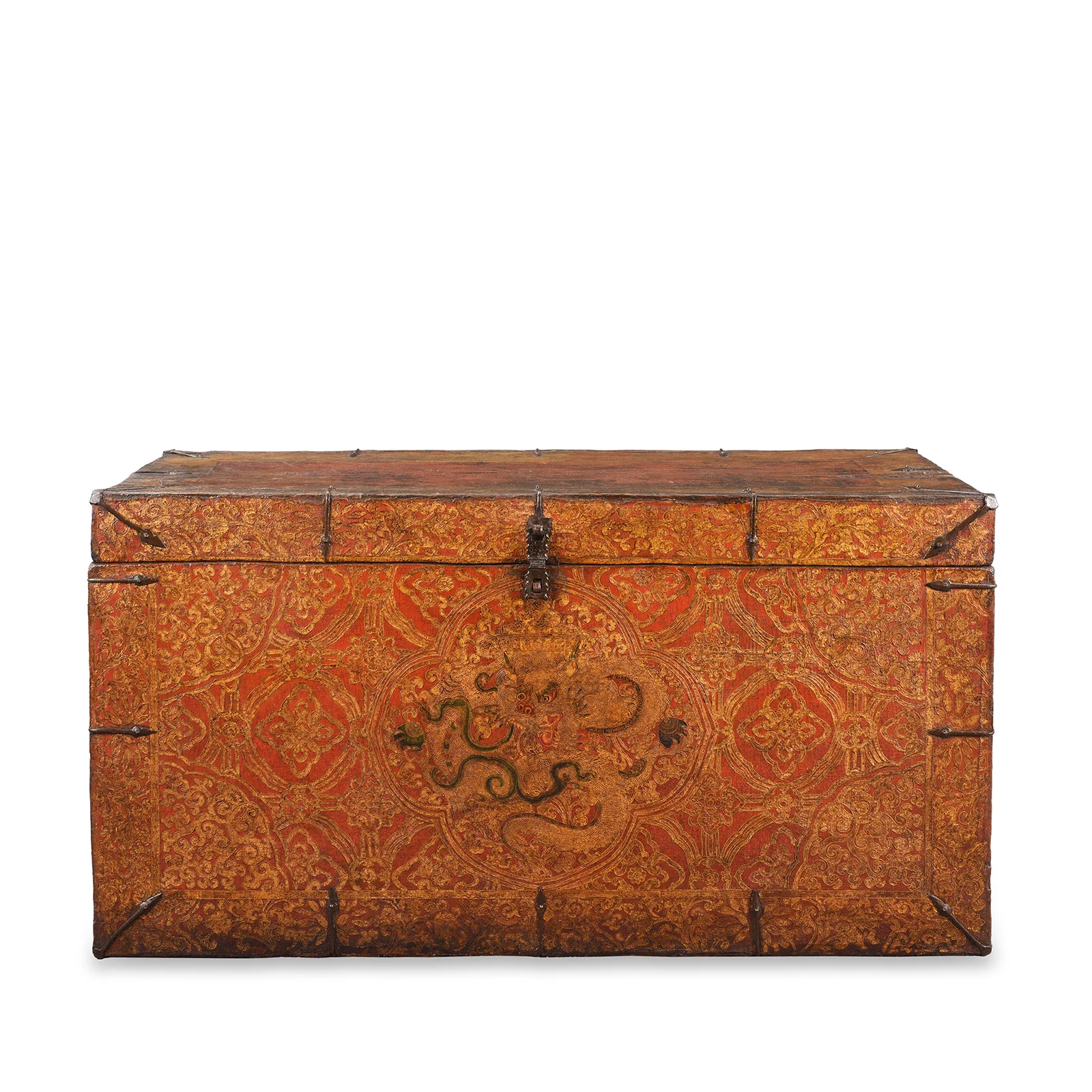
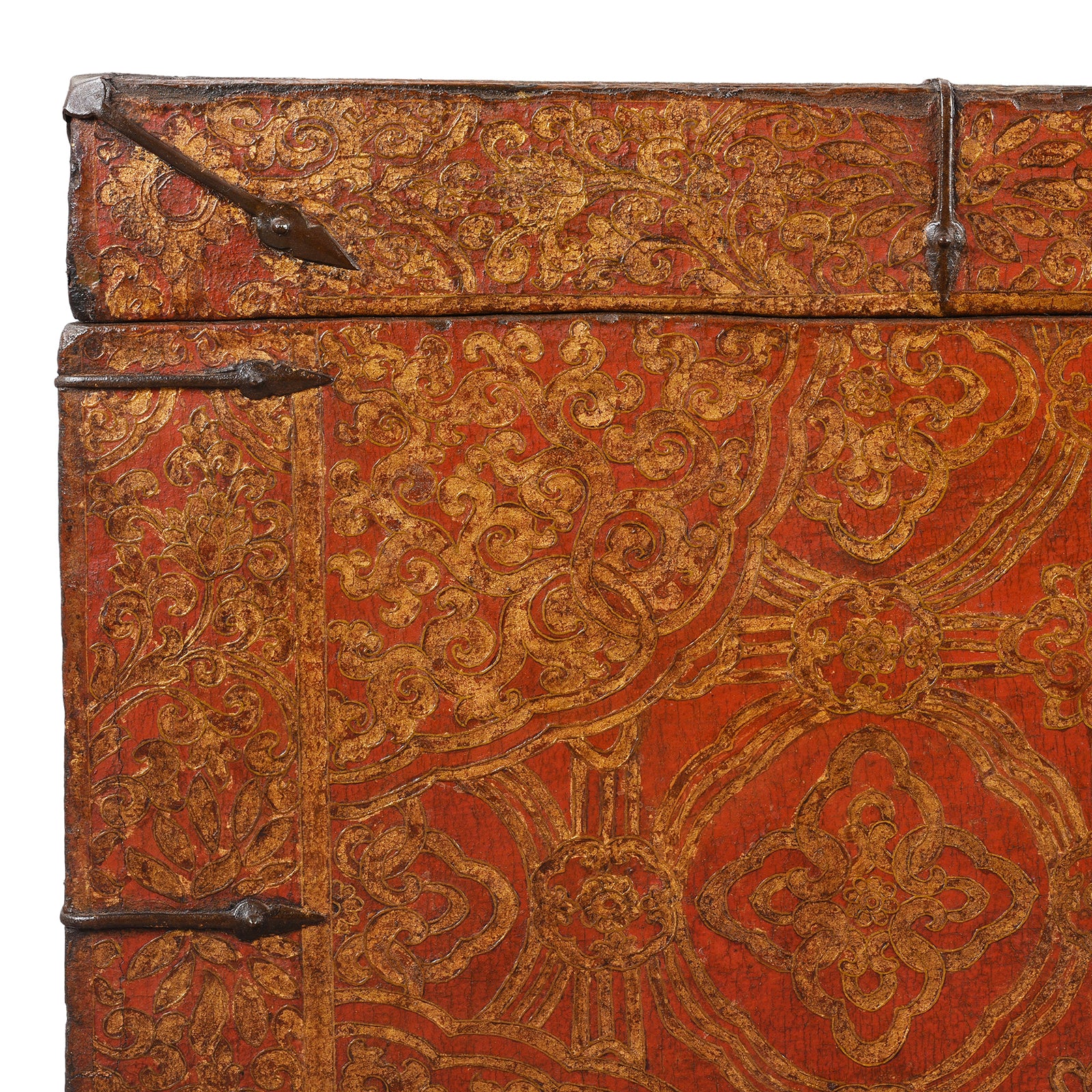
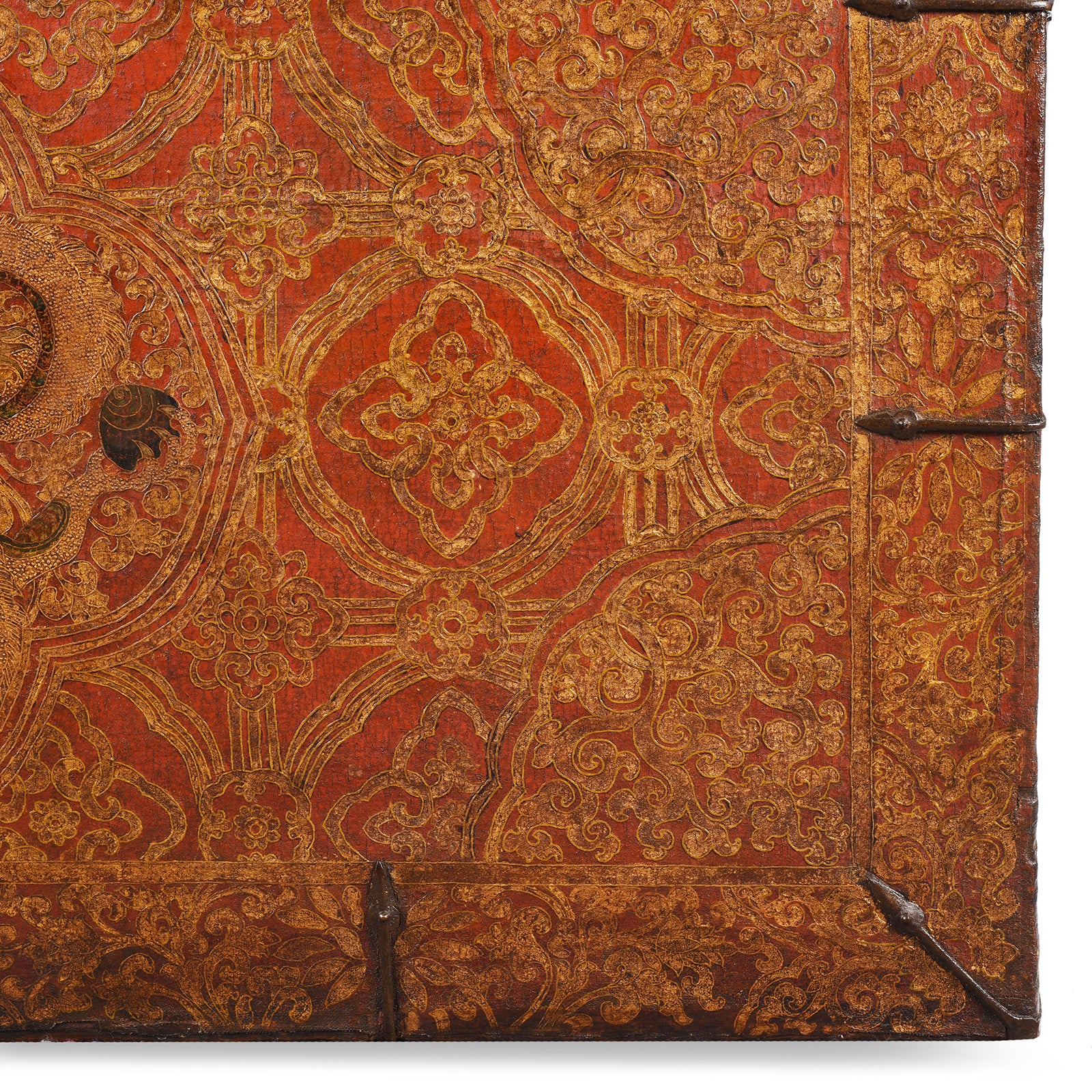
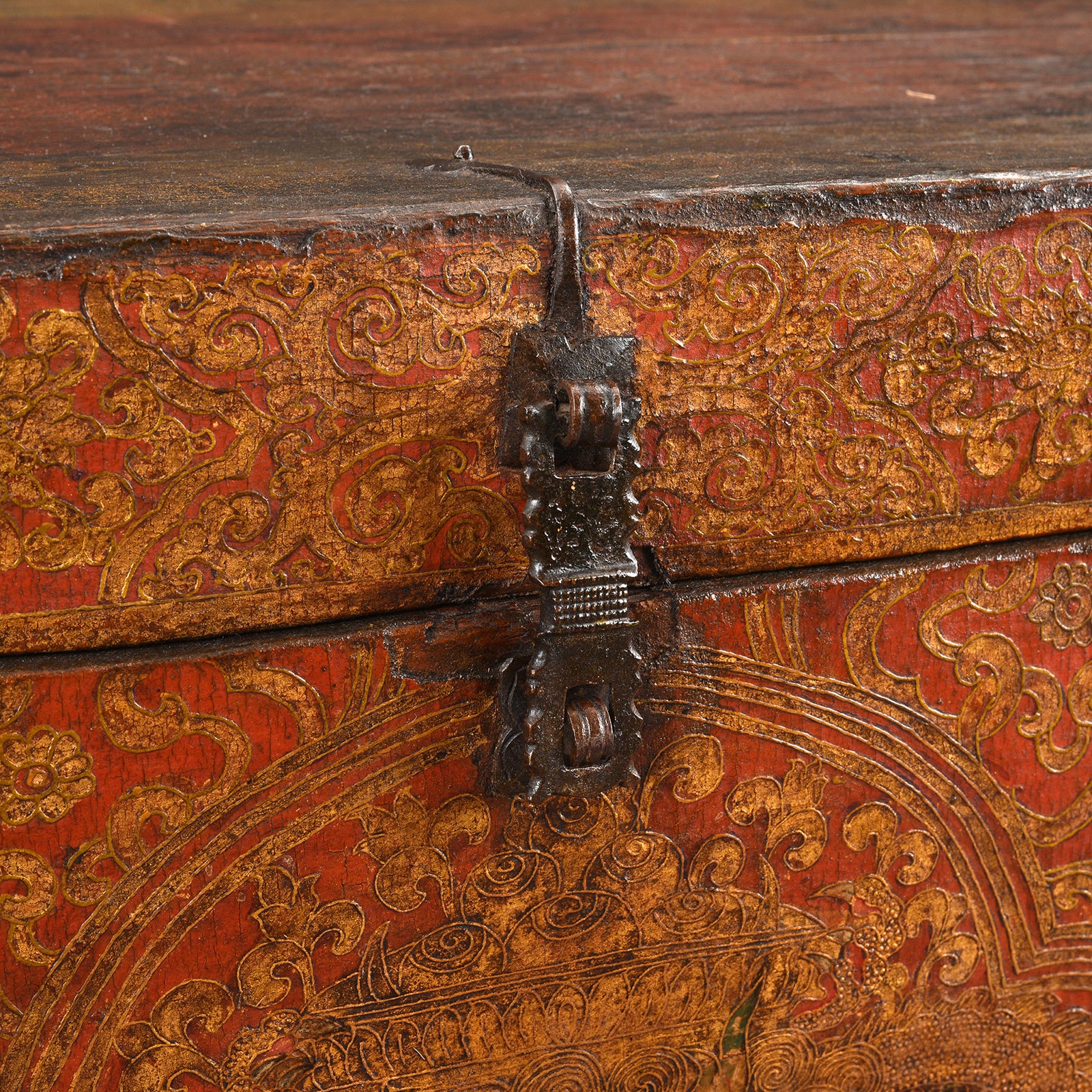
The crimson foreground is decorated in vibrant polychrome pigments with a central panel enclosing a ferocious writhing dragon grasping two jewels. The jewels represent knowledge passed down by the Buddha while the interlocking-Y textile design likely derives from body armour from the Central Asian regions and can be seen in the armour worn by the Four Guardian Kings, who are depicted in the entranceways of many Tibetan temples."
The dragon (druk in Tibetan) is a symbol of power and authority and was associated with the water element rather than fire as in the west. The dragon is an ancient symbol recognisable examples can be found as early as the Han dynasty (206 BC - AD 211).
References:
For further research and similar examples see Wooden Wonders: Tibetan Furniture in Secular and Religious Life by Kamansky, 'Tibetan Furniture: Identifying, Appreciating, Collecting' by Chris Buckley and, Auspicious by Design by C. Corona
For further information on Tibetan symbolism, see Tibetan Buddhist Symbols by R Beer.
From Tibet
UK Delivery Charge - except Highlands & Islands £40
More delivery options available at checkout
Original: $6,396.40
-65%$6,396.40
$2,238.74More Images

Painted Tibetan 'Dragon' Storage Chest - 18thC
Tibetan chests and trunks were used as storage in homes and monasteries. Boxes are normally made from cedar, pine or poplar. If they are painted it is usually just the front and 2 sides. They can either be painted directly on the wood or on older pieces onto a fabric applied to the wood. The colours and designs used are very decorative.
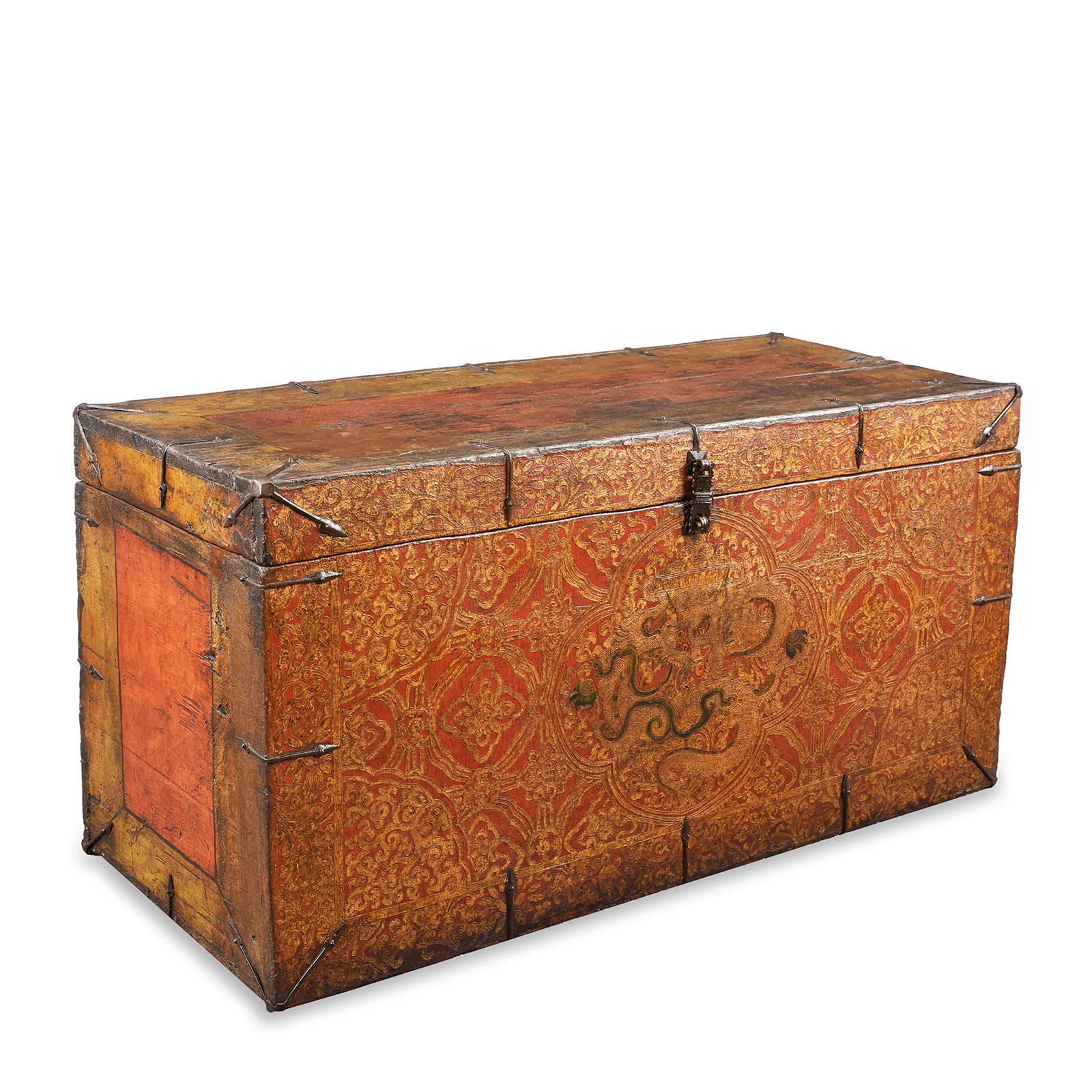
The crimson foreground is decorated in vibrant polychrome pigments with a central panel enclosing a ferocious writhing dragon grasping two jewels. The jewels represent knowledge passed down by the Buddha while the interlocking-Y textile design likely derives from body armour from the Central Asian regions and can be seen in the armour worn by the Four Guardian Kings, who are depicted in the entranceways of many Tibetan temples."
The dragon (druk in Tibetan) is a symbol of power and authority and was associated with the water element rather than fire as in the west. The dragon is an ancient symbol recognisable examples can be found as early as the Han dynasty (206 BC - AD 211).
References:
For further research and similar examples see Wooden Wonders: Tibetan Furniture in Secular and Religious Life by Kamansky, 'Tibetan Furniture: Identifying, Appreciating, Collecting' by Chris Buckley and, Auspicious by Design by C. Corona
For further information on Tibetan symbolism, see Tibetan Buddhist Symbols by R Beer.
From Tibet
UK Delivery Charge - except Highlands & Islands £40
More delivery options available at checkout
Product Information
Product Information
Shipping & Returns
Shipping & Returns
Description
Tibetan chests and trunks were used as storage in homes and monasteries. Boxes are normally made from cedar, pine or poplar. If they are painted it is usually just the front and 2 sides. They can either be painted directly on the wood or on older pieces onto a fabric applied to the wood. The colours and designs used are very decorative.
The crimson foreground is decorated in vibrant polychrome pigments with a central panel enclosing a ferocious writhing dragon grasping two jewels. The jewels represent knowledge passed down by the Buddha while the interlocking-Y textile design likely derives from body armour from the Central Asian regions and can be seen in the armour worn by the Four Guardian Kings, who are depicted in the entranceways of many Tibetan temples."
The dragon (druk in Tibetan) is a symbol of power and authority and was associated with the water element rather than fire as in the west. The dragon is an ancient symbol recognisable examples can be found as early as the Han dynasty (206 BC - AD 211).
References:
For further research and similar examples see Wooden Wonders: Tibetan Furniture in Secular and Religious Life by Kamansky, 'Tibetan Furniture: Identifying, Appreciating, Collecting' by Chris Buckley and, Auspicious by Design by C. Corona
For further information on Tibetan symbolism, see Tibetan Buddhist Symbols by R Beer.
From Tibet
UK Delivery Charge - except Highlands & Islands £40
More delivery options available at checkout