
Painted Tibetan Dragon Storage Chest - Ca 1910
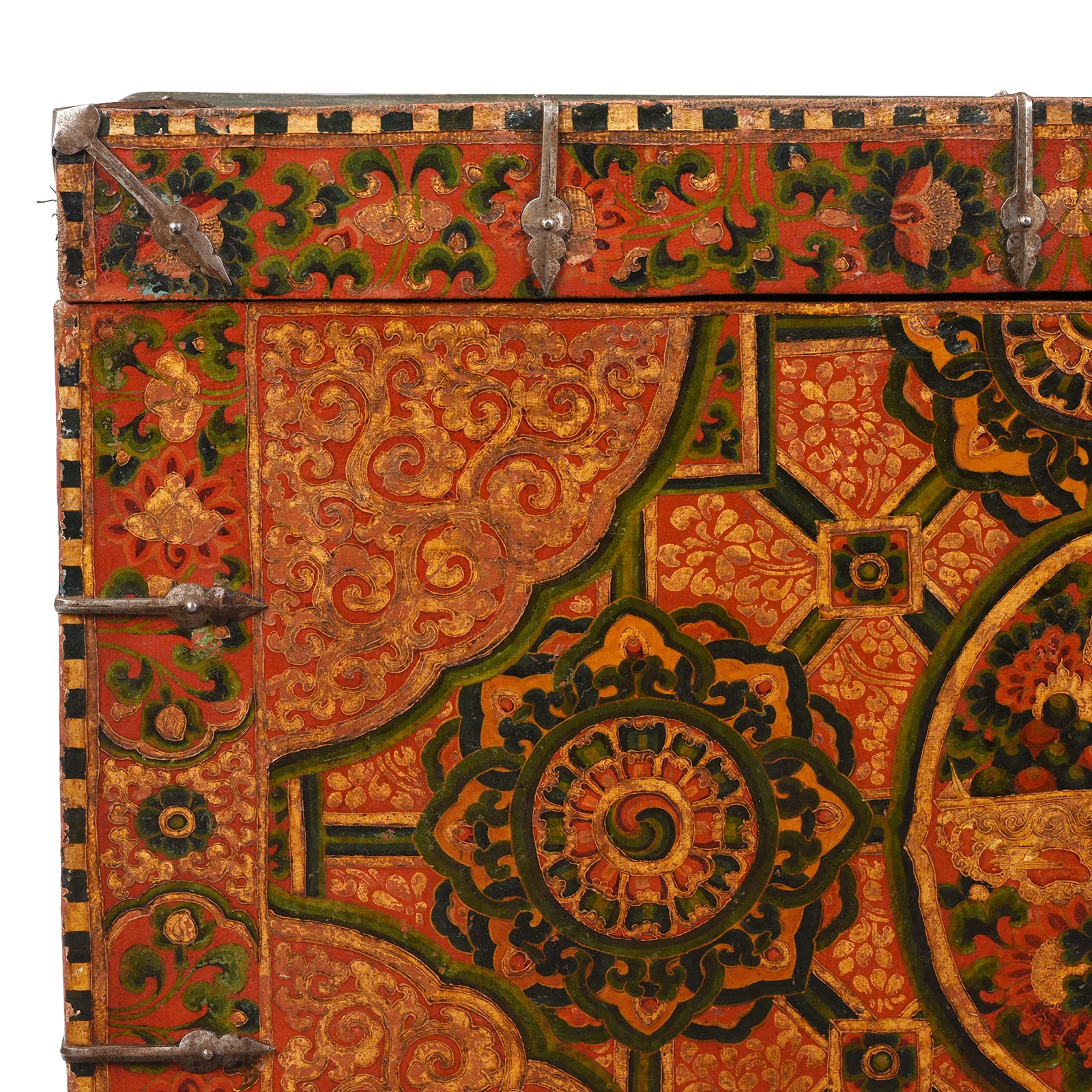
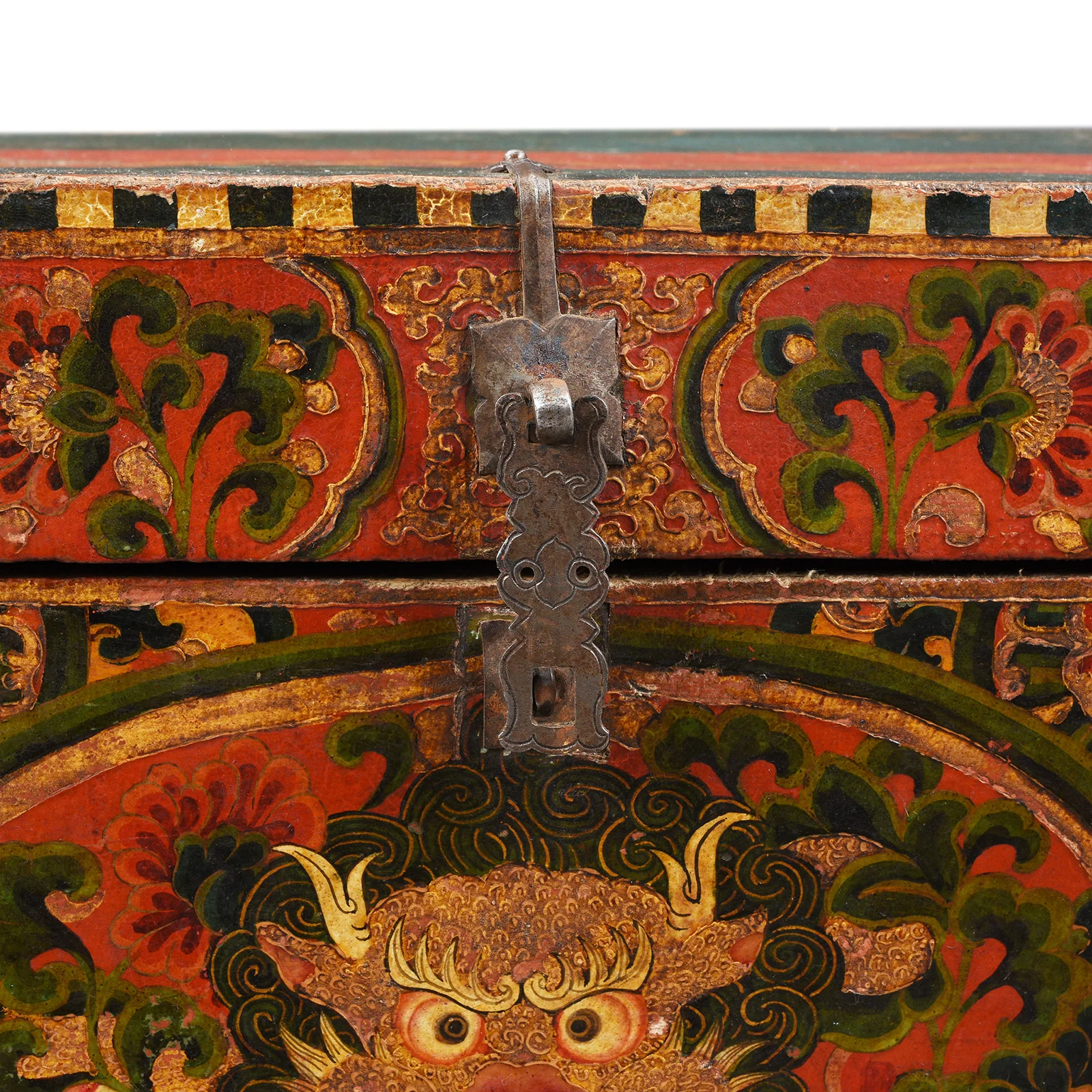
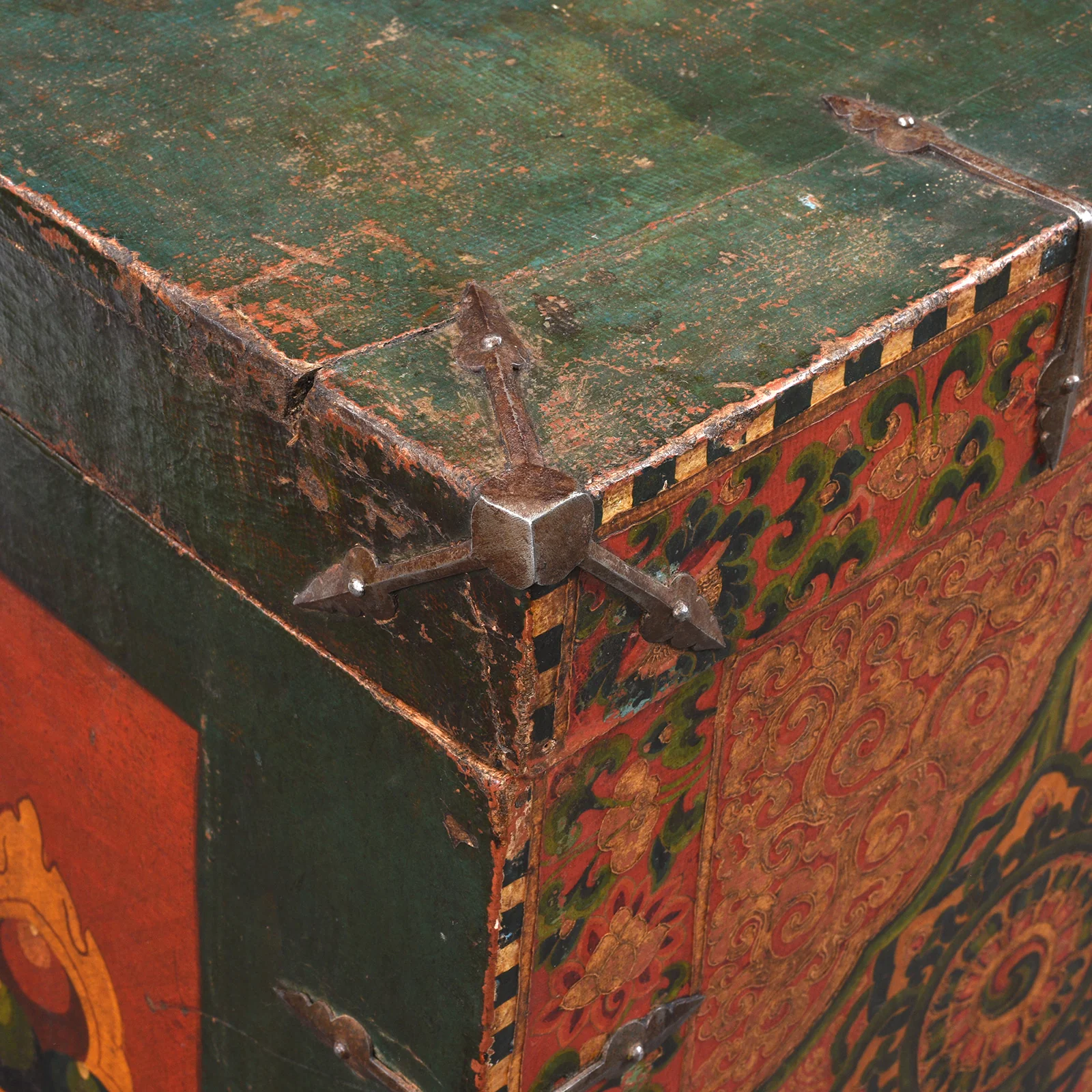
This antique Tibetan painted trunk features a central dragon and dates to the turn of the century - circa 1910. Later than most of our Tibetan chests, the quality of workmanship is excellent with kyung bur raised gesso work surrounded by intricate floral scrolling - it is based on a 17th century chest. The jewels seen throughout are a recurring motif in Tibetan art and symbolise knowledge passed down by Buddha. These chests were used as storage in homes and monasteries.
A central cartouch contains a dragon balancing bowls of jewels in each claw. This is surrounded by complex kati rimo trellis patterns overlaid with lotus mandalas with central yin-yang symbols. The dragon (druk in Tibetan) is a symbol of power and authority and was associated with the water element rather than fire as in the West. The dragon is an ancient symbol recognisable examples can be found as early as the Han dynasty (206 BC - AD 211).
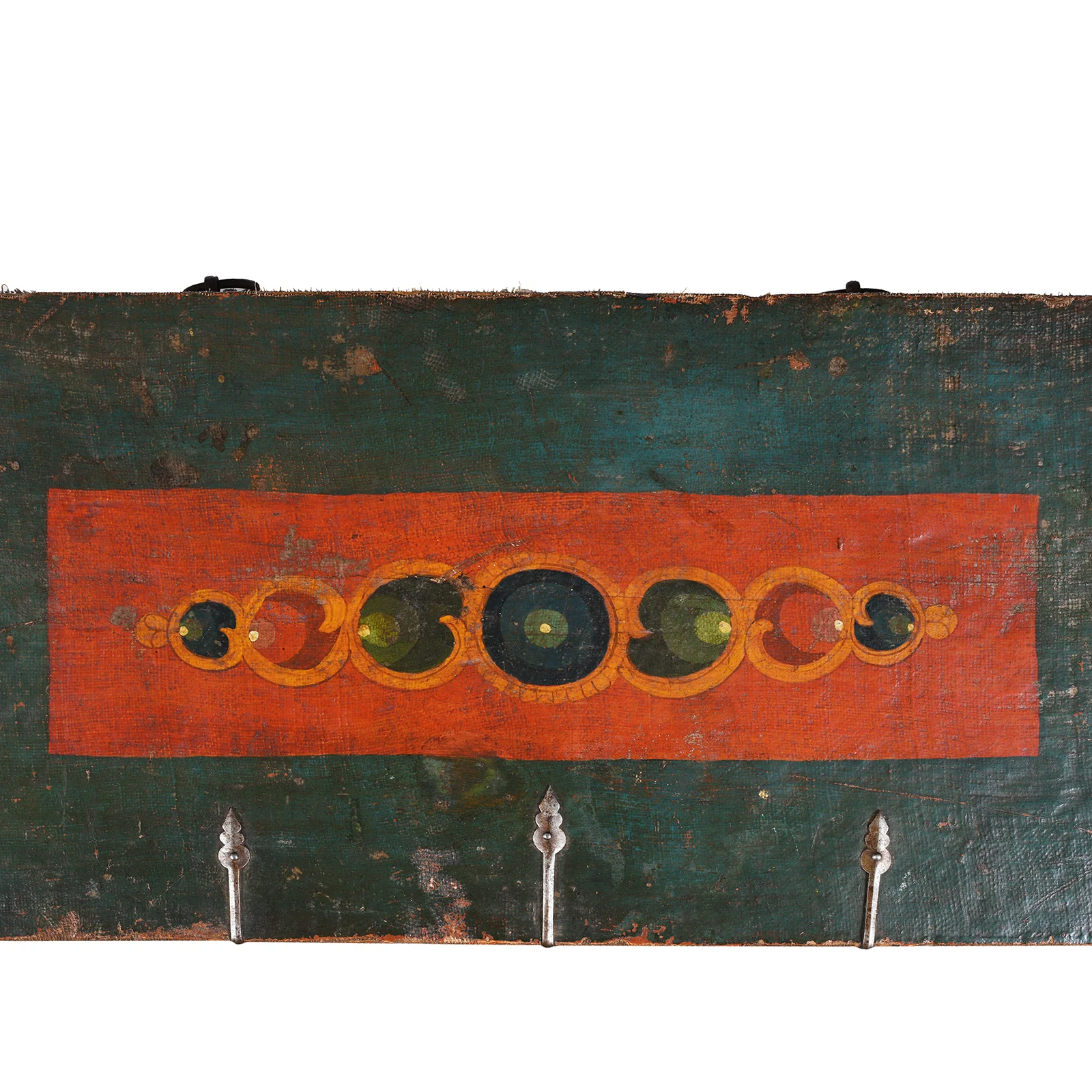
Tibetan boxes are normally made from cedar, pine, or poplar and this one is painted in the traditional way over fabric. The top and sides are also painted with wish granting jewels. This piece is an excellent example of the high-quality Tibetan painting techniques.
References:
This is a copy of a 17th century chest featured in Tibetan Furniture: Identifying · Appreciating · Collecting by Chris Buckley, (figure 30).
For further information on Tibetan symbolism, see Tibetan Buddhist Symbols by R Beer.
From Tibet
UK Delivery Charge - except Highlands & Islands £40
More delivery options available on checkout
Original: $5,470.26
-65%$5,470.26
$1,914.59More Images






Painted Tibetan Dragon Storage Chest - Ca 1910
This antique Tibetan painted trunk features a central dragon and dates to the turn of the century - circa 1910. Later than most of our Tibetan chests, the quality of workmanship is excellent with kyung bur raised gesso work surrounded by intricate floral scrolling - it is based on a 17th century chest. The jewels seen throughout are a recurring motif in Tibetan art and symbolise knowledge passed down by Buddha. These chests were used as storage in homes and monasteries.
A central cartouch contains a dragon balancing bowls of jewels in each claw. This is surrounded by complex kati rimo trellis patterns overlaid with lotus mandalas with central yin-yang symbols. The dragon (druk in Tibetan) is a symbol of power and authority and was associated with the water element rather than fire as in the West. The dragon is an ancient symbol recognisable examples can be found as early as the Han dynasty (206 BC - AD 211).
Tibetan boxes are normally made from cedar, pine, or poplar and this one is painted in the traditional way over fabric. The top and sides are also painted with wish granting jewels. This piece is an excellent example of the high-quality Tibetan painting techniques.
References:
This is a copy of a 17th century chest featured in Tibetan Furniture: Identifying · Appreciating · Collecting by Chris Buckley, (figure 30).
For further information on Tibetan symbolism, see Tibetan Buddhist Symbols by R Beer.
From Tibet
UK Delivery Charge - except Highlands & Islands £40
More delivery options available on checkout
Product Information
Product Information
Shipping & Returns
Shipping & Returns
Description
This antique Tibetan painted trunk features a central dragon and dates to the turn of the century - circa 1910. Later than most of our Tibetan chests, the quality of workmanship is excellent with kyung bur raised gesso work surrounded by intricate floral scrolling - it is based on a 17th century chest. The jewels seen throughout are a recurring motif in Tibetan art and symbolise knowledge passed down by Buddha. These chests were used as storage in homes and monasteries.
A central cartouch contains a dragon balancing bowls of jewels in each claw. This is surrounded by complex kati rimo trellis patterns overlaid with lotus mandalas with central yin-yang symbols. The dragon (druk in Tibetan) is a symbol of power and authority and was associated with the water element rather than fire as in the West. The dragon is an ancient symbol recognisable examples can be found as early as the Han dynasty (206 BC - AD 211).
Tibetan boxes are normally made from cedar, pine, or poplar and this one is painted in the traditional way over fabric. The top and sides are also painted with wish granting jewels. This piece is an excellent example of the high-quality Tibetan painting techniques.
References:
This is a copy of a 17th century chest featured in Tibetan Furniture: Identifying · Appreciating · Collecting by Chris Buckley, (figure 30).
For further information on Tibetan symbolism, see Tibetan Buddhist Symbols by R Beer.
From Tibet
UK Delivery Charge - except Highlands & Islands £40
More delivery options available on checkout