
Silvered Tibetan Dragon Storage Chest - 18th Century
This very decorative monastic chest is from Central Tibet and dates to the 18th century. Unusually this piece has a silver background instead of the more popular gold. Often silvered boxes are coated with a yellow varnish to imitate gold. Silvered boxes are very uncommon.
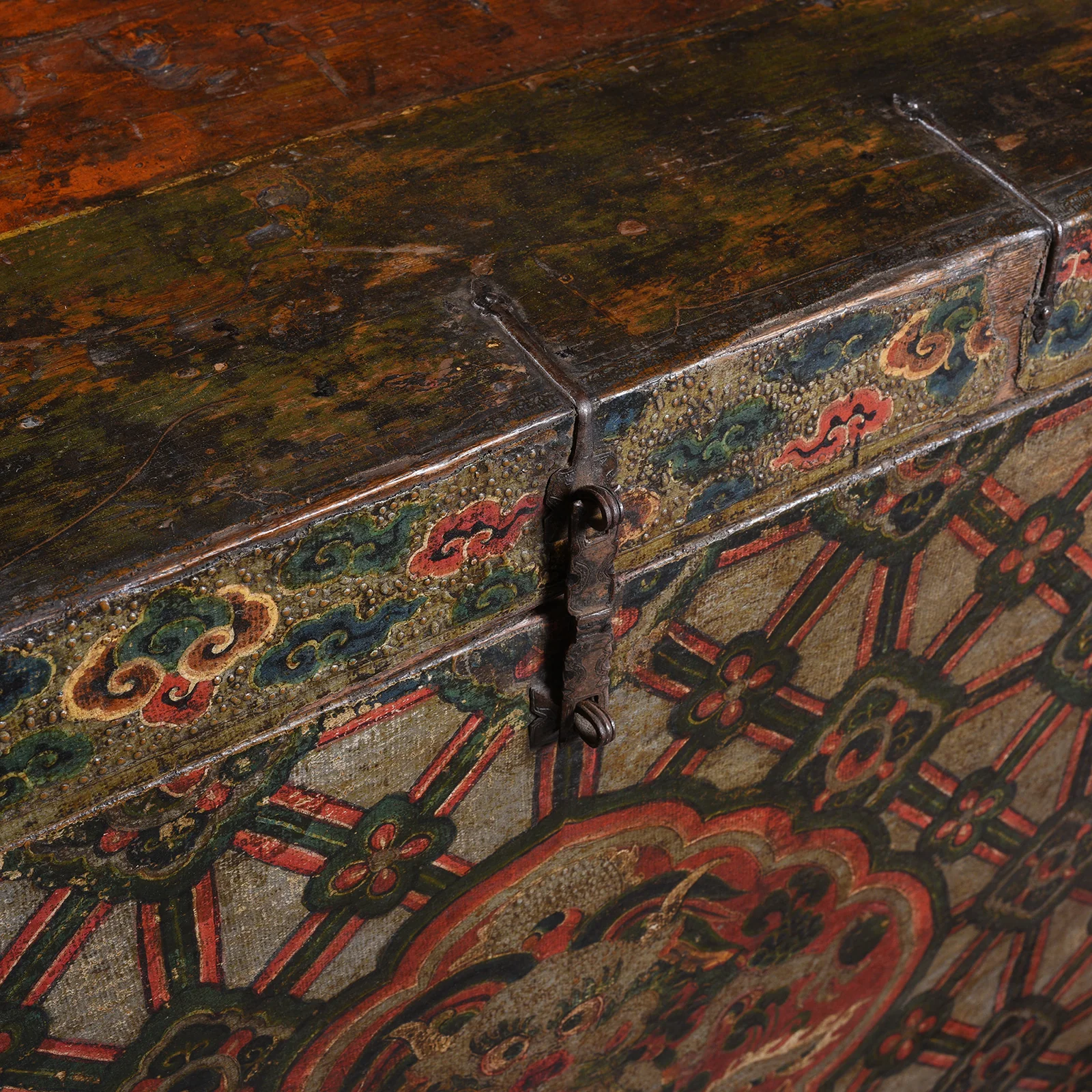
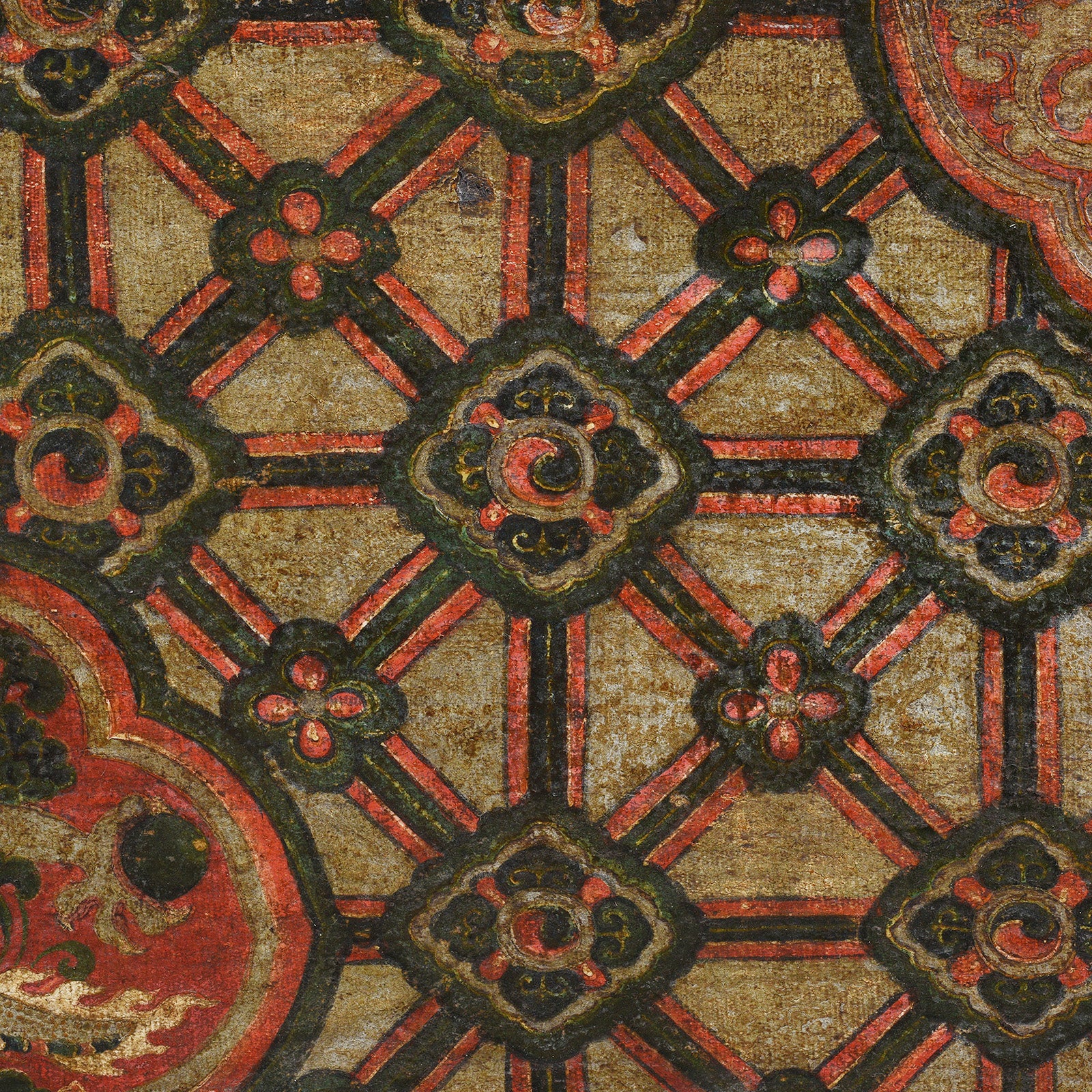
The main feature is a single four claw dragon holding wish granting cintamani jewels which represent wisdom. The front facing dragon clearly emulates the Chinese Imperial dragons. This is all surrounded by kati rimo latticework, stylised wheel of dharma with central yin & yang symbols. The frame and central dragon are painted with a raised gesso technique called kyung-bur.
A similar example can be found in Auspicious by Design by Corona (Plate 35)
Tibetan chests and trunks were used as storage in homes and monasteries. The better quality pieces are painted onto fabric on wood like this one. Often these chests were used in temples or as family altars for storing religious scrolls, silk ceremonial clothes, family jewelry and yak butter used in lamps. Often people would gift painted furniture to temples as offerings. The production of these larger chests declined in the 19th century, yet another suggestion that this piece dates to the 18th century or older.
Antique Tibetan furniture is becoming increasingly rare and is often found covered in a sticky residue. This is due to the continual burning of yak butter lamps. Our expert team has sensitively restored this piece, cleaning the residue whilst retaining its age and patina.
From Tibet
UK Delivery Charge - except Highlands & Islands £80
More delivery options available at checkout
Original: $9,177.50
-65%$9,177.50
$3,212.12More Images



Silvered Tibetan Dragon Storage Chest - 18th Century
This very decorative monastic chest is from Central Tibet and dates to the 18th century. Unusually this piece has a silver background instead of the more popular gold. Often silvered boxes are coated with a yellow varnish to imitate gold. Silvered boxes are very uncommon.
The main feature is a single four claw dragon holding wish granting cintamani jewels which represent wisdom. The front facing dragon clearly emulates the Chinese Imperial dragons. This is all surrounded by kati rimo latticework, stylised wheel of dharma with central yin & yang symbols. The frame and central dragon are painted with a raised gesso technique called kyung-bur.
A similar example can be found in Auspicious by Design by Corona (Plate 35)
Tibetan chests and trunks were used as storage in homes and monasteries. The better quality pieces are painted onto fabric on wood like this one. Often these chests were used in temples or as family altars for storing religious scrolls, silk ceremonial clothes, family jewelry and yak butter used in lamps. Often people would gift painted furniture to temples as offerings. The production of these larger chests declined in the 19th century, yet another suggestion that this piece dates to the 18th century or older.
Antique Tibetan furniture is becoming increasingly rare and is often found covered in a sticky residue. This is due to the continual burning of yak butter lamps. Our expert team has sensitively restored this piece, cleaning the residue whilst retaining its age and patina.
From Tibet
UK Delivery Charge - except Highlands & Islands £80
More delivery options available at checkout
Product Information
Product Information
Shipping & Returns
Shipping & Returns
Description
This very decorative monastic chest is from Central Tibet and dates to the 18th century. Unusually this piece has a silver background instead of the more popular gold. Often silvered boxes are coated with a yellow varnish to imitate gold. Silvered boxes are very uncommon.
The main feature is a single four claw dragon holding wish granting cintamani jewels which represent wisdom. The front facing dragon clearly emulates the Chinese Imperial dragons. This is all surrounded by kati rimo latticework, stylised wheel of dharma with central yin & yang symbols. The frame and central dragon are painted with a raised gesso technique called kyung-bur.
A similar example can be found in Auspicious by Design by Corona (Plate 35)
Tibetan chests and trunks were used as storage in homes and monasteries. The better quality pieces are painted onto fabric on wood like this one. Often these chests were used in temples or as family altars for storing religious scrolls, silk ceremonial clothes, family jewelry and yak butter used in lamps. Often people would gift painted furniture to temples as offerings. The production of these larger chests declined in the 19th century, yet another suggestion that this piece dates to the 18th century or older.
Antique Tibetan furniture is becoming increasingly rare and is often found covered in a sticky residue. This is due to the continual burning of yak butter lamps. Our expert team has sensitively restored this piece, cleaning the residue whilst retaining its age and patina.
From Tibet
UK Delivery Charge - except Highlands & Islands £80
More delivery options available at checkout