Japanese Keyaki Cha Dansu - Meiji Era
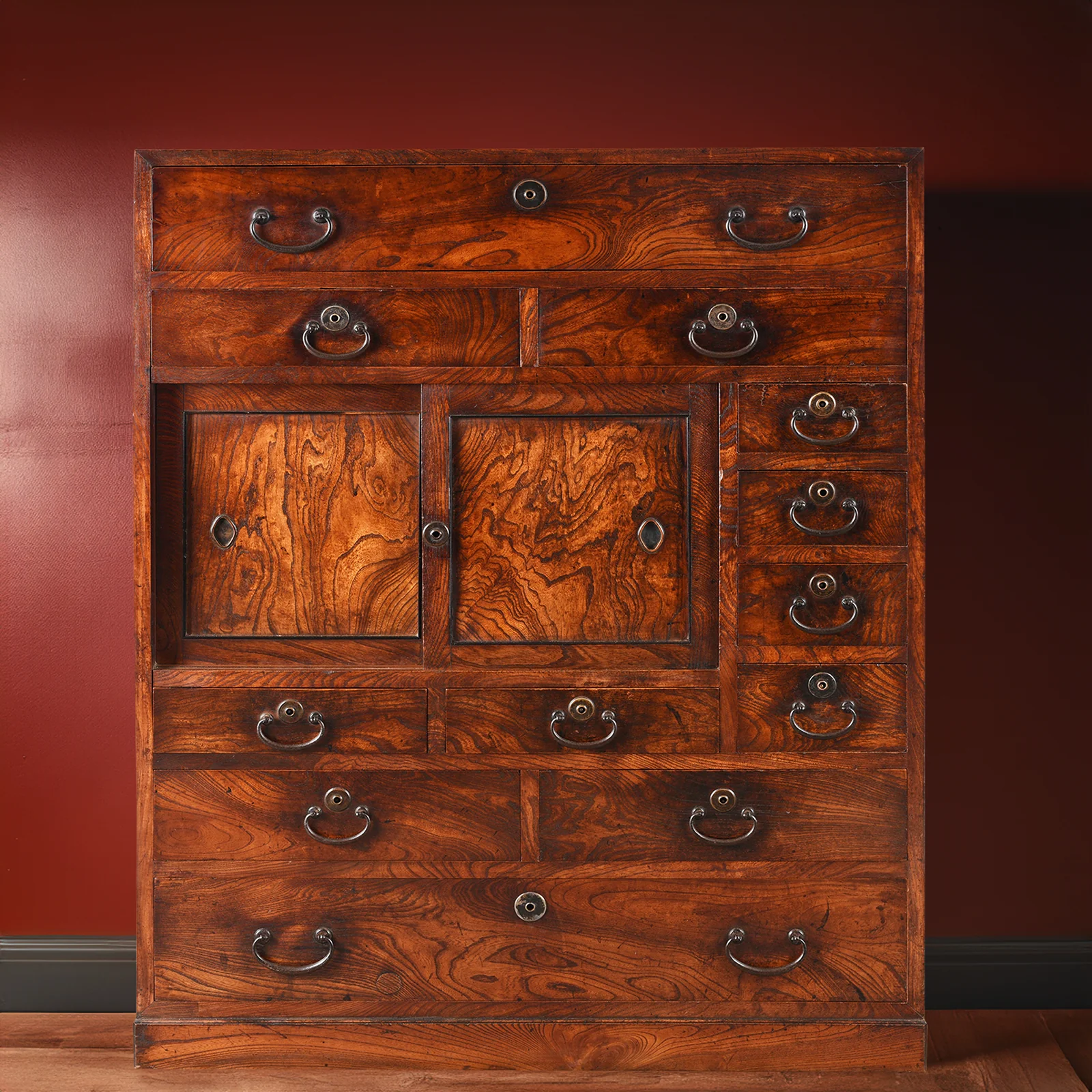
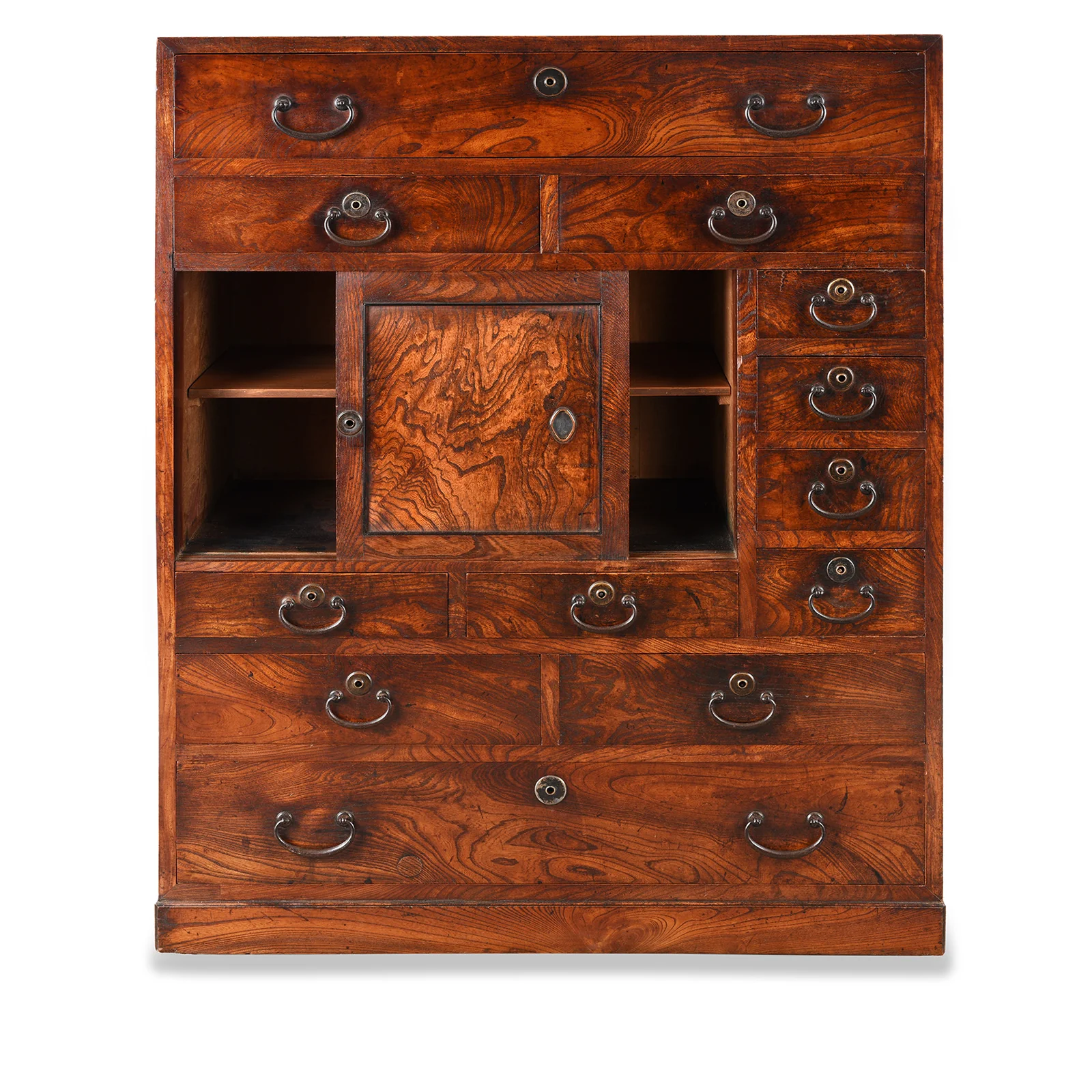
This Japanese cha dansu tea chest dates from the Meiji Period (1868-1912) - most likely the later part of it circa 1900. Tea chests were used for storing ceramics and other utensils used during the Japanese tea ceremonies.
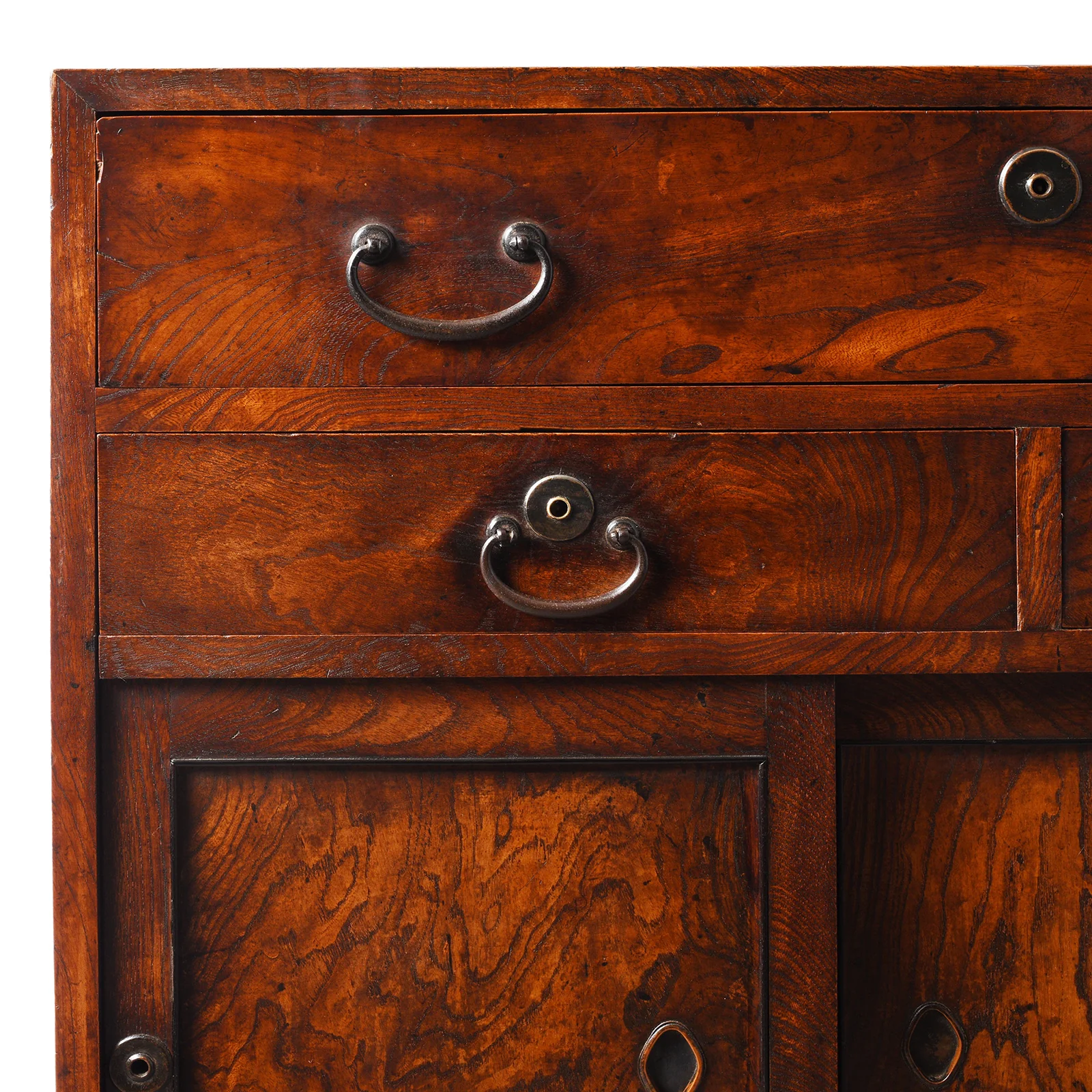
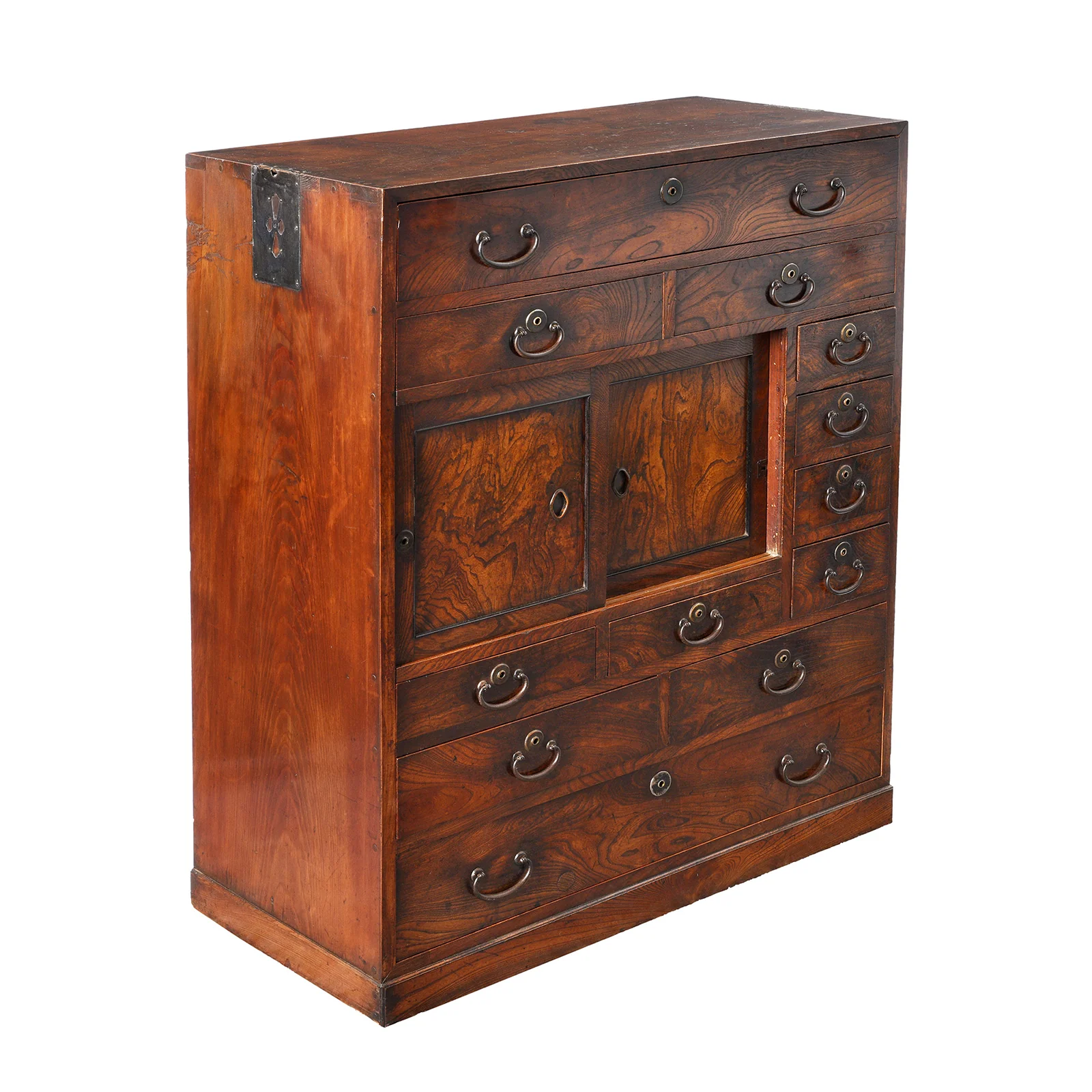
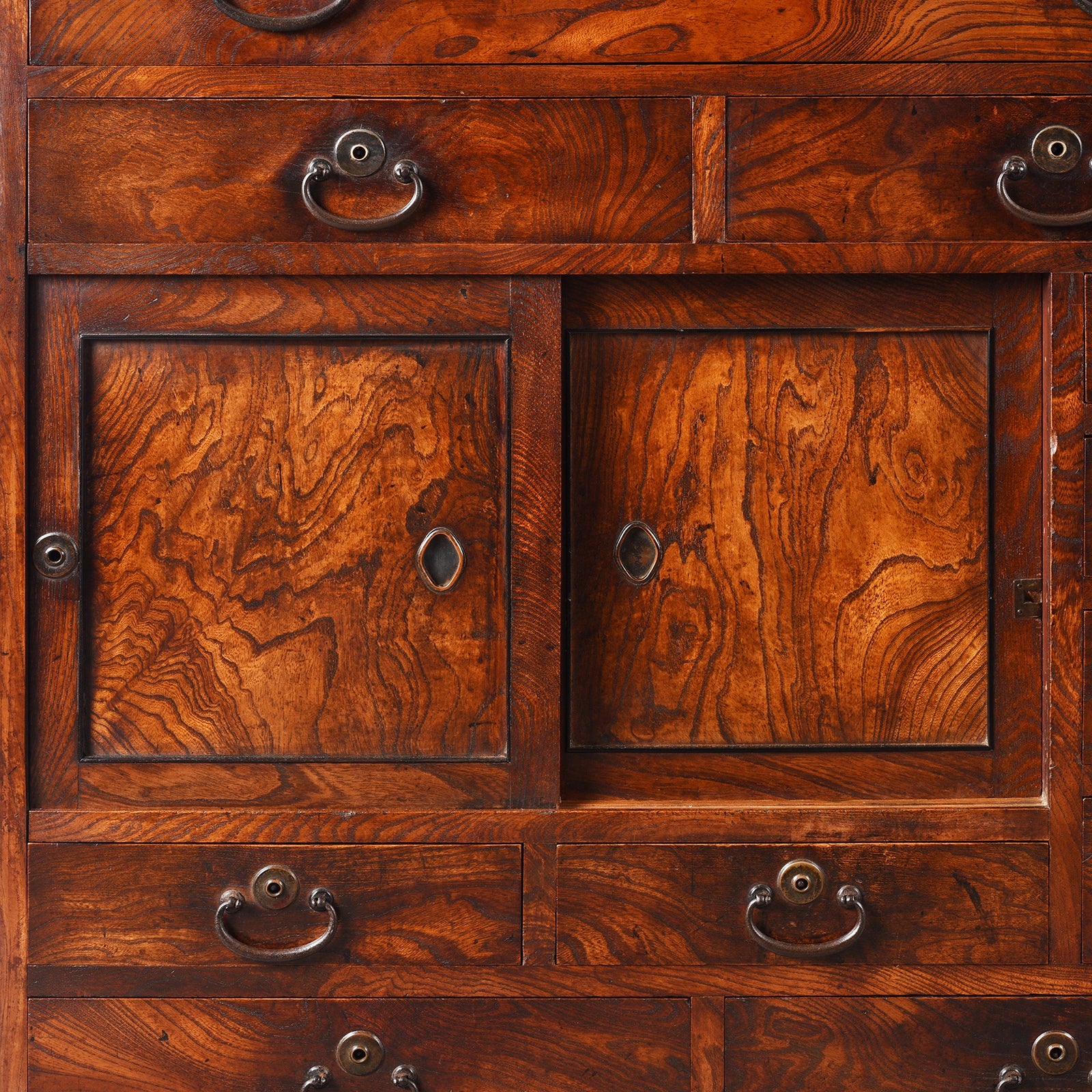
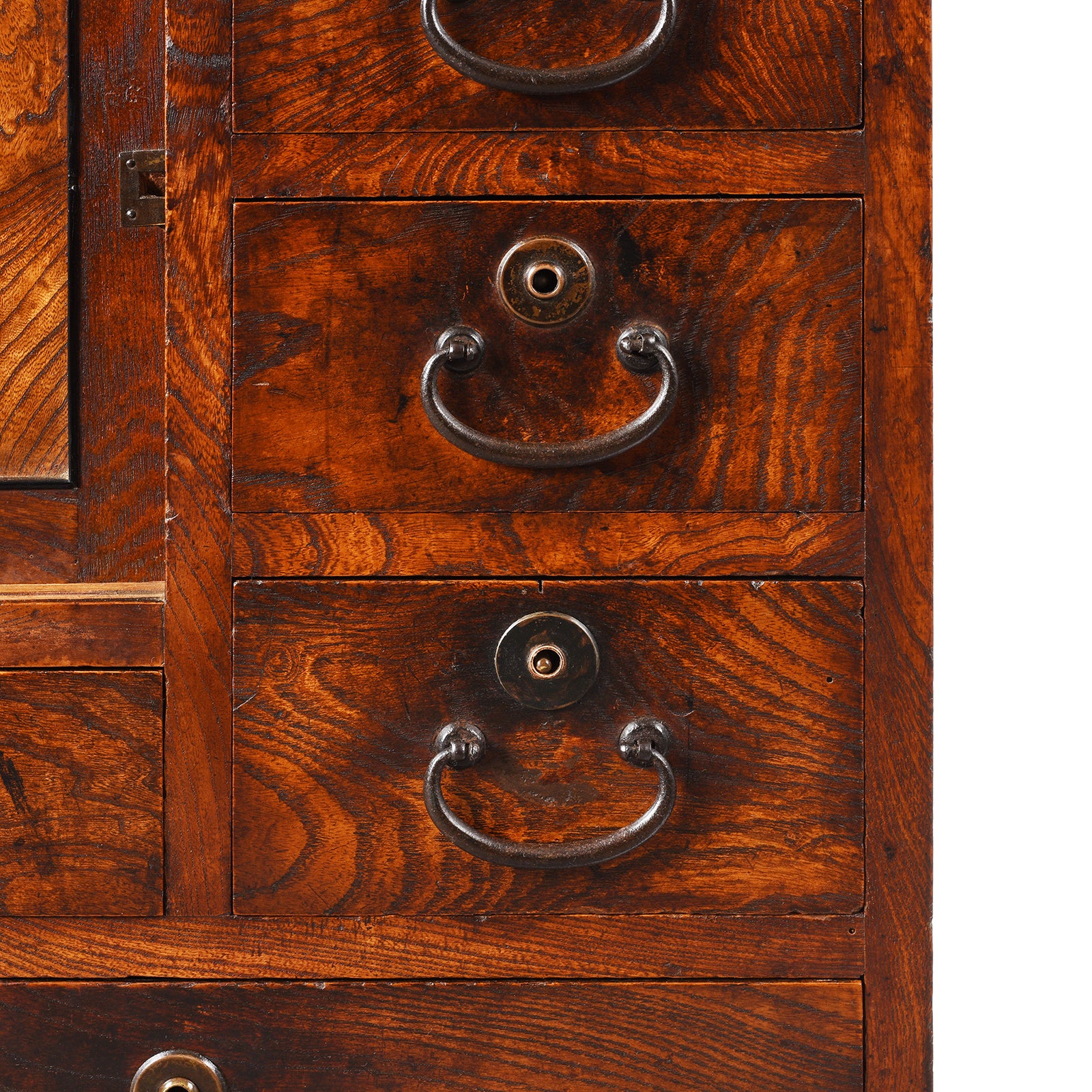
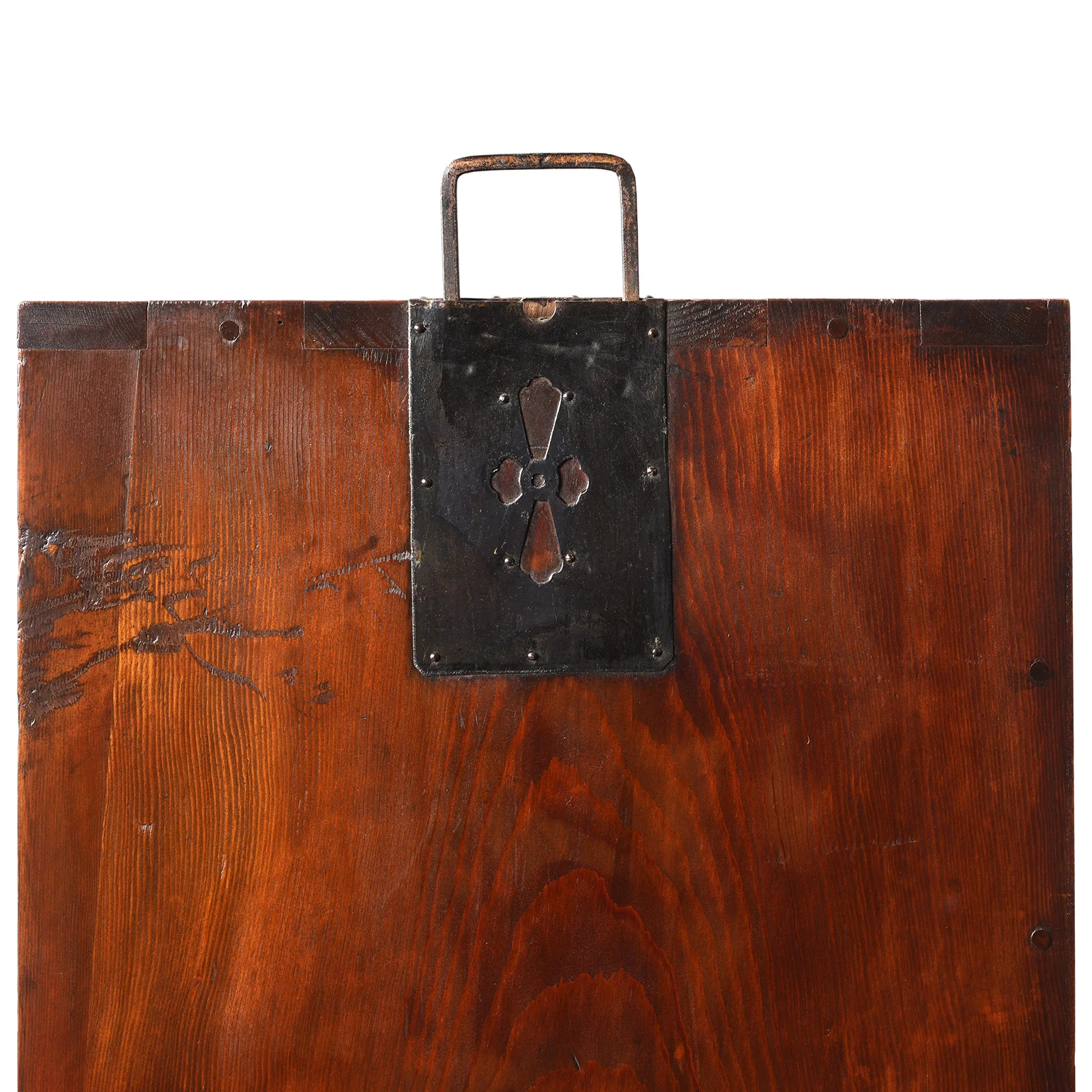
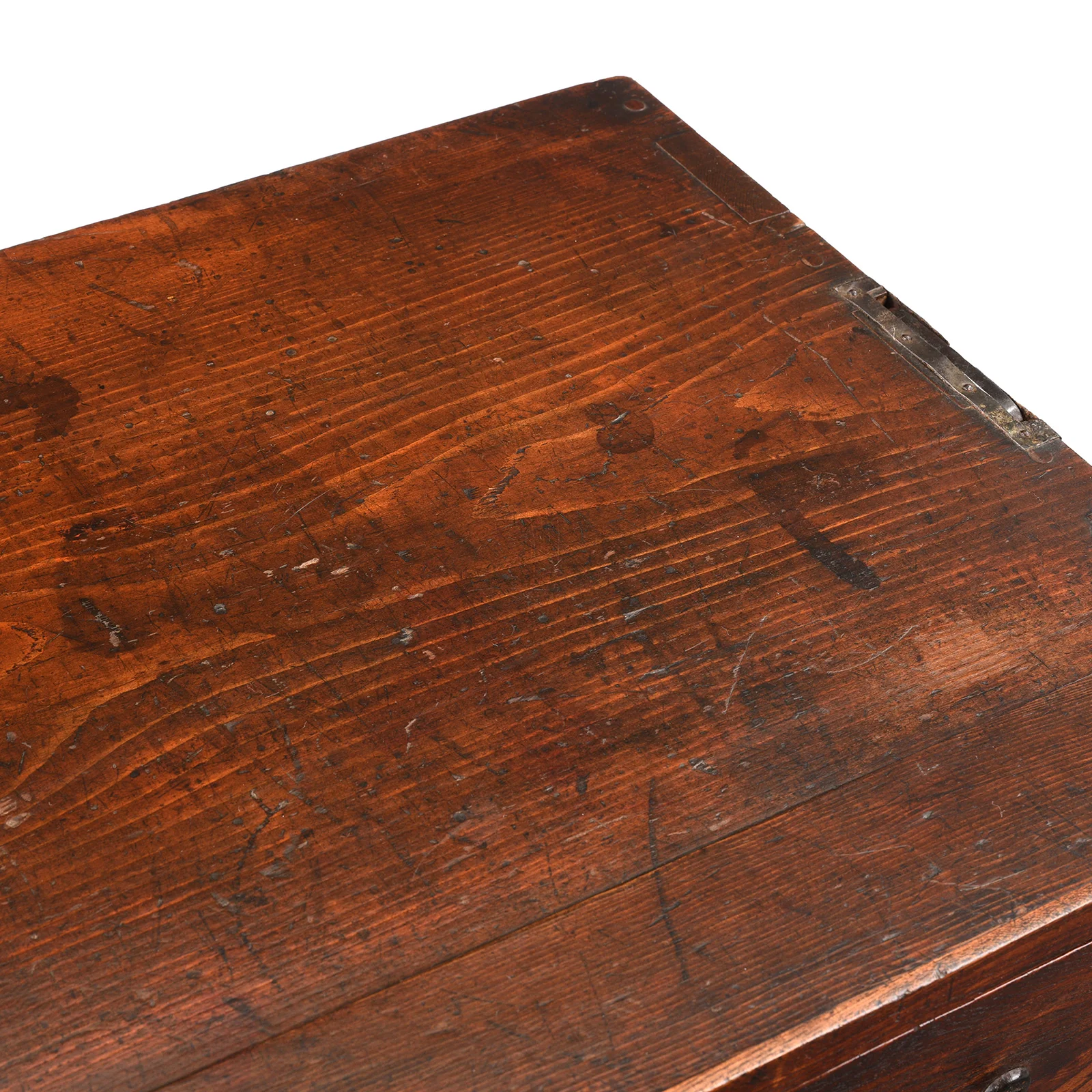
Tea tansu chests were made from fine wood and took pride of place in a Japanese home. The front, drawers, and frame are burr keyaki (burr red elm) and the top and sides are kiri wood (paulownia). The locks and warabite (bracken) style handles are made of machined anodised brass. The carrying handles are constructed of iron in a recessed style most commonly associated with late Meiji & Taisho era tansu. The style is that of Kansai
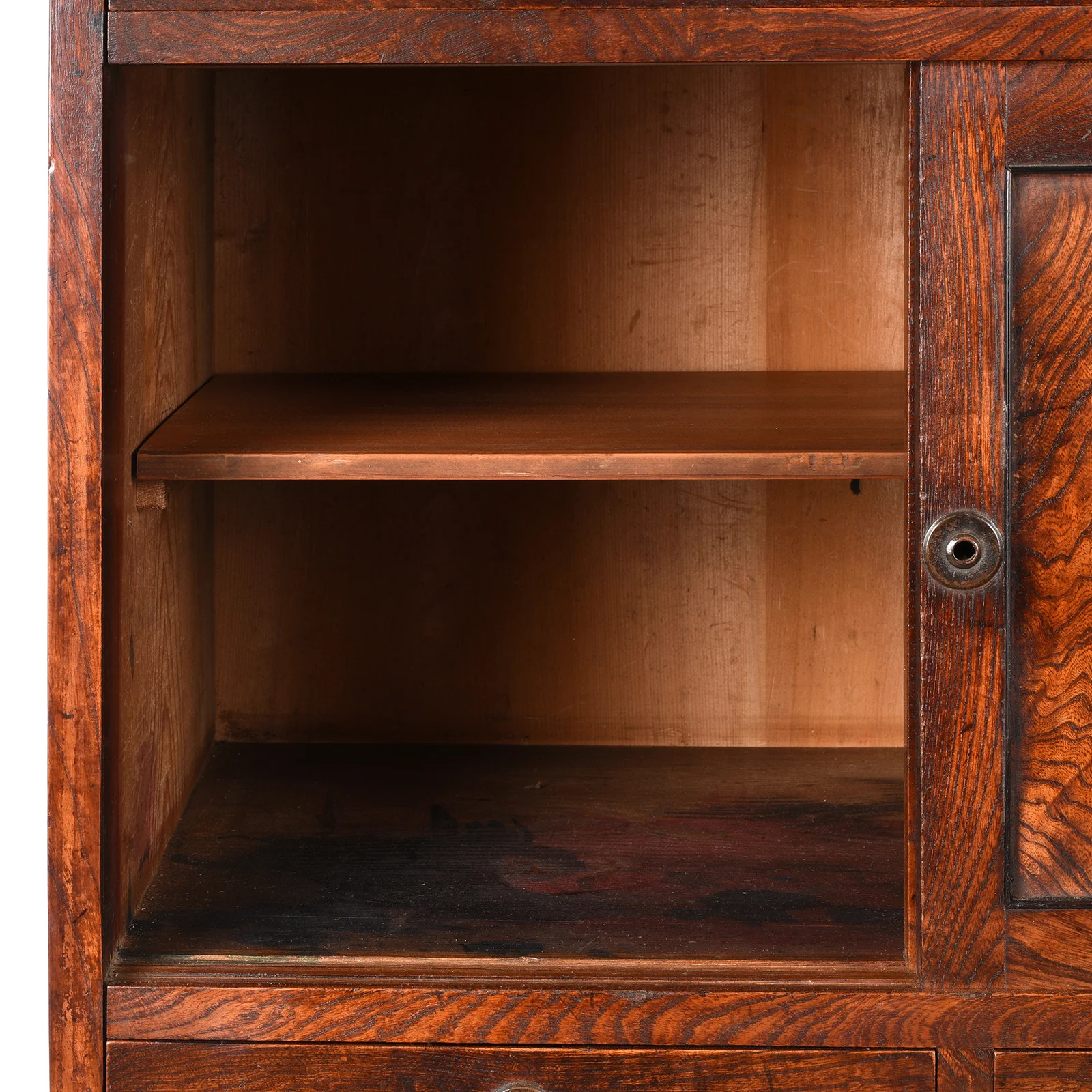
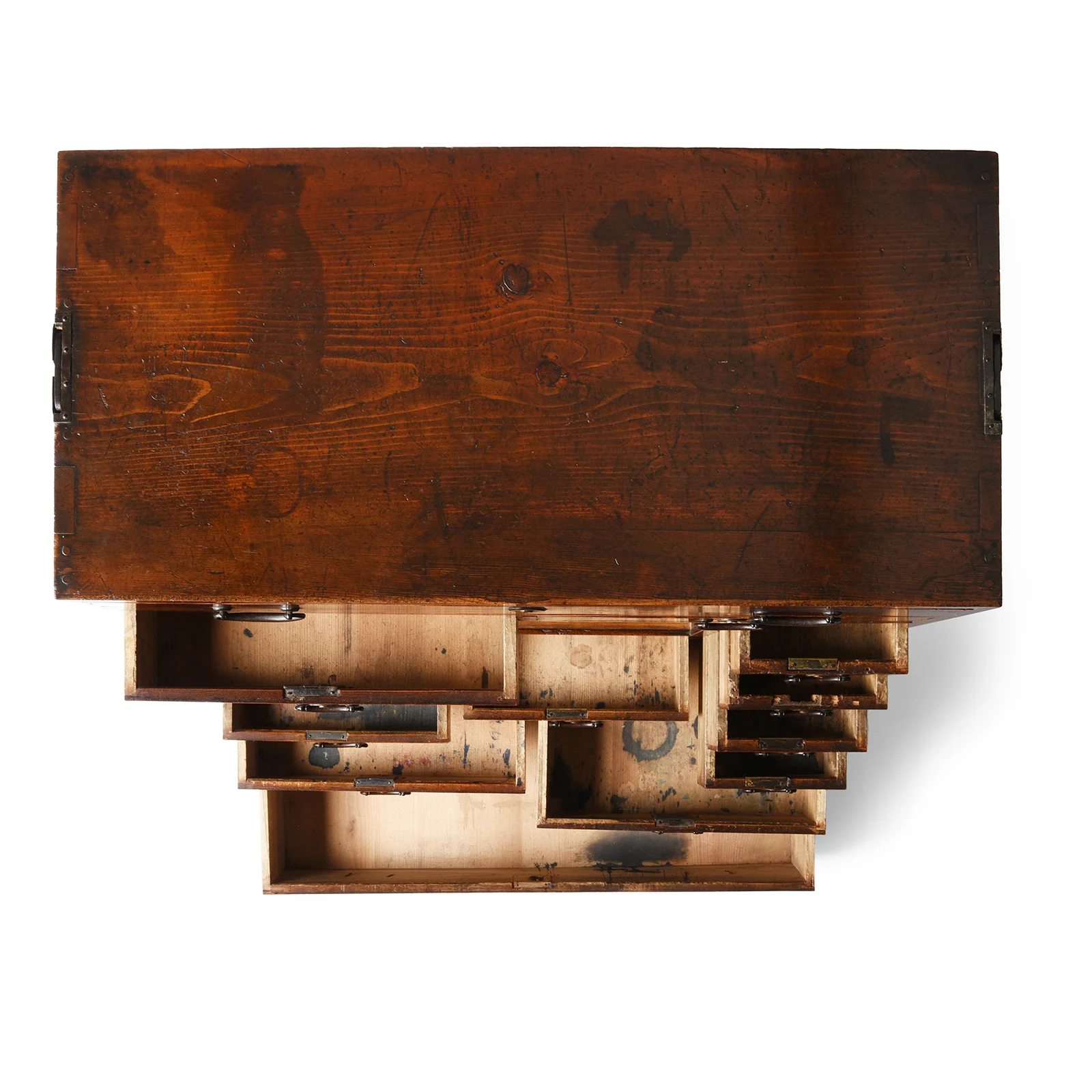
As with most Japanese furniture, the carpentry is excellent and although it is lightweight, it is extremely well-made. It has very functional sliding doors & drawers.
Dimensions:
85 x 41 x 107.5 (wxdxh cms)
From Japan
UK Delivery Charge - except Highlands & Islands £80
More delivery options available at checkout
More Images
Japanese Keyaki Cha Dansu - Meiji Era
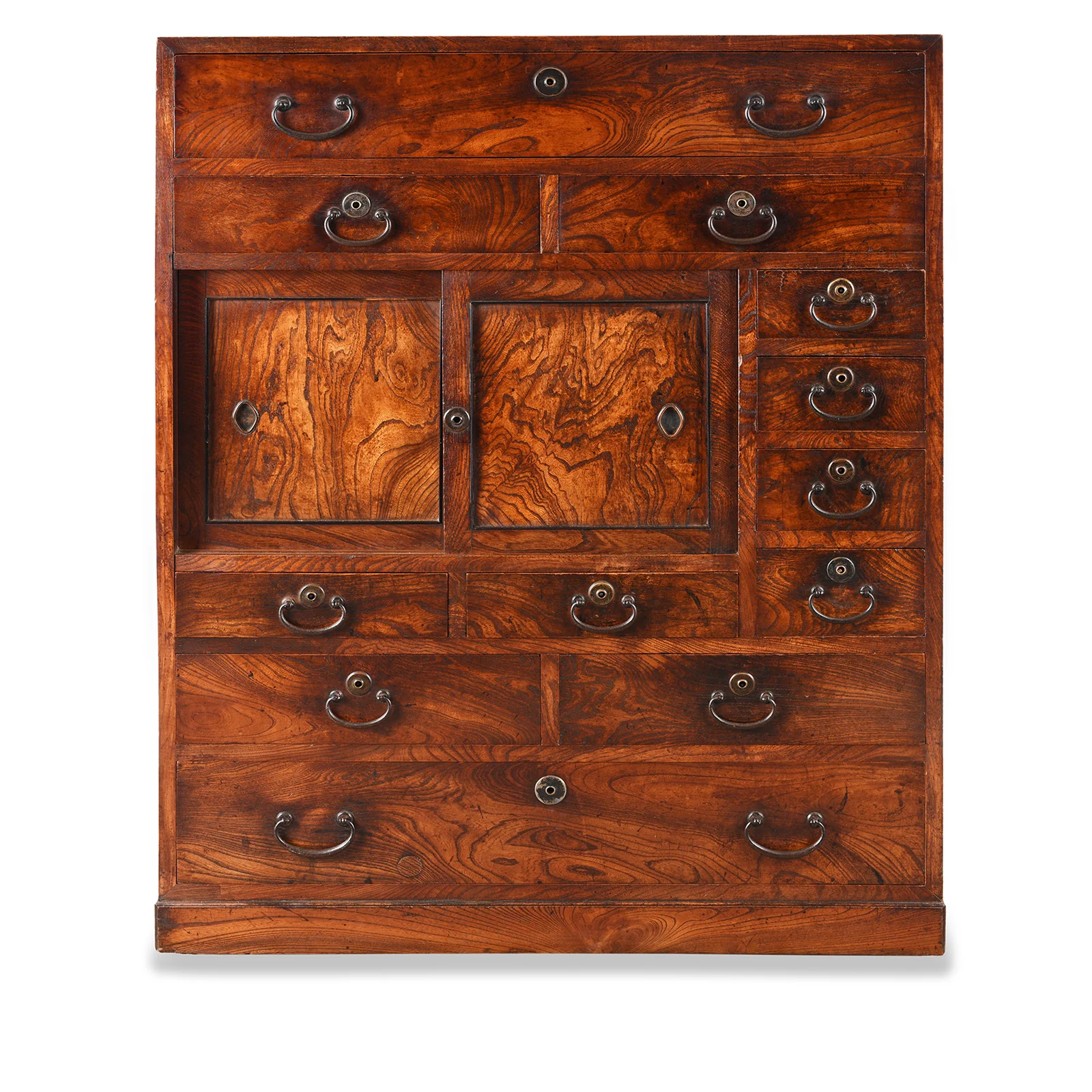
This Japanese cha dansu tea chest dates from the Meiji Period (1868-1912) - most likely the later part of it circa 1900. Tea chests were used for storing ceramics and other utensils used during the Japanese tea ceremonies.
Tea tansu chests were made from fine wood and took pride of place in a Japanese home. The front, drawers, and frame are burr keyaki (burr red elm) and the top and sides are kiri wood (paulownia). The locks and warabite (bracken) style handles are made of machined anodised brass. The carrying handles are constructed of iron in a recessed style most commonly associated with late Meiji & Taisho era tansu. The style is that of Kansai
As with most Japanese furniture, the carpentry is excellent and although it is lightweight, it is extremely well-made. It has very functional sliding doors & drawers.
Dimensions:
85 x 41 x 107.5 (wxdxh cms)
From Japan
UK Delivery Charge - except Highlands & Islands £80
More delivery options available at checkout
Product Information
Product Information
Shipping & Returns
Shipping & Returns
Description
This Japanese cha dansu tea chest dates from the Meiji Period (1868-1912) - most likely the later part of it circa 1900. Tea chests were used for storing ceramics and other utensils used during the Japanese tea ceremonies.
Tea tansu chests were made from fine wood and took pride of place in a Japanese home. The front, drawers, and frame are burr keyaki (burr red elm) and the top and sides are kiri wood (paulownia). The locks and warabite (bracken) style handles are made of machined anodised brass. The carrying handles are constructed of iron in a recessed style most commonly associated with late Meiji & Taisho era tansu. The style is that of Kansai
As with most Japanese furniture, the carpentry is excellent and although it is lightweight, it is extremely well-made. It has very functional sliding doors & drawers.
Dimensions:
85 x 41 x 107.5 (wxdxh cms)
From Japan
UK Delivery Charge - except Highlands & Islands £80
More delivery options available at checkout