
Japanese Isho Kasane Dansu - Meiji Era
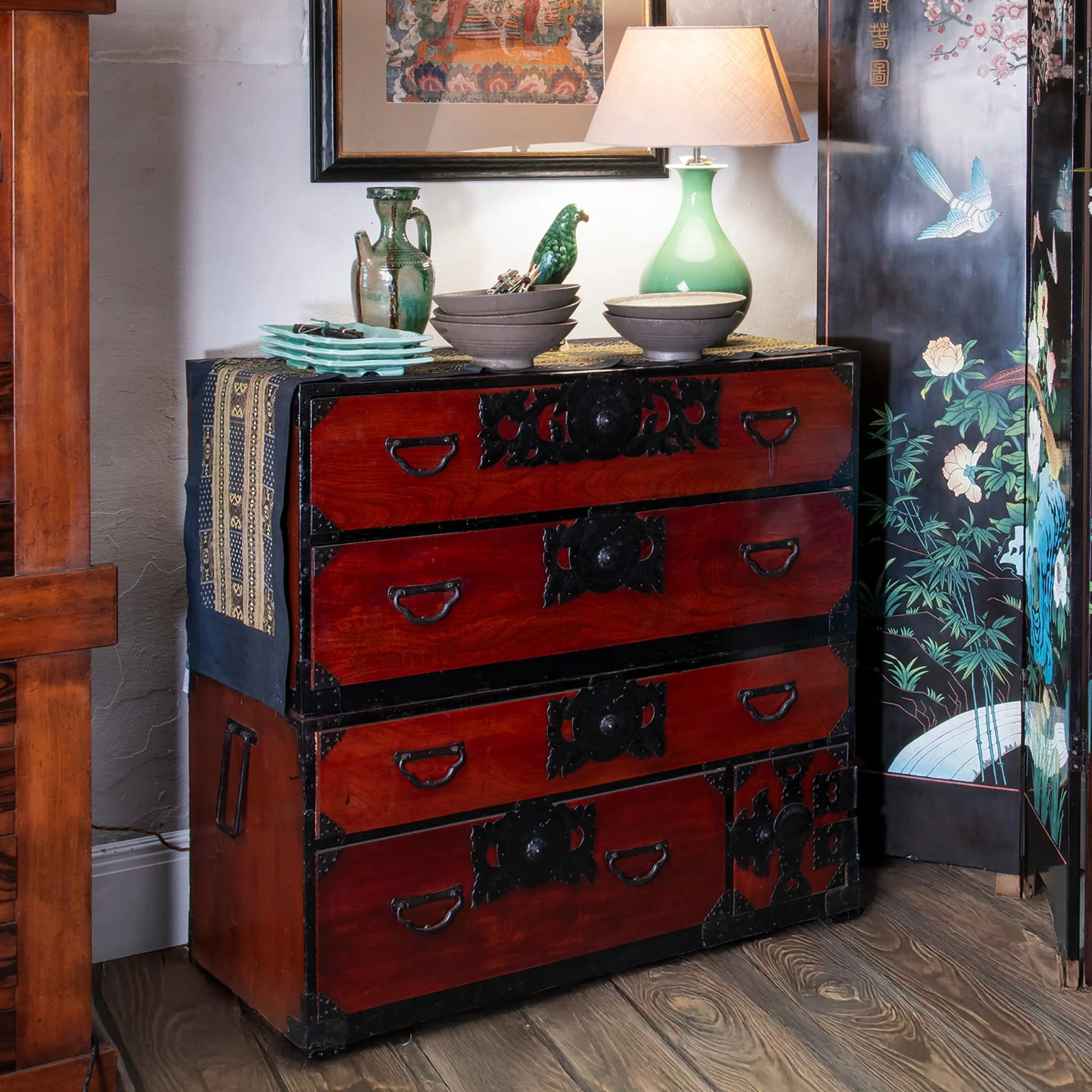
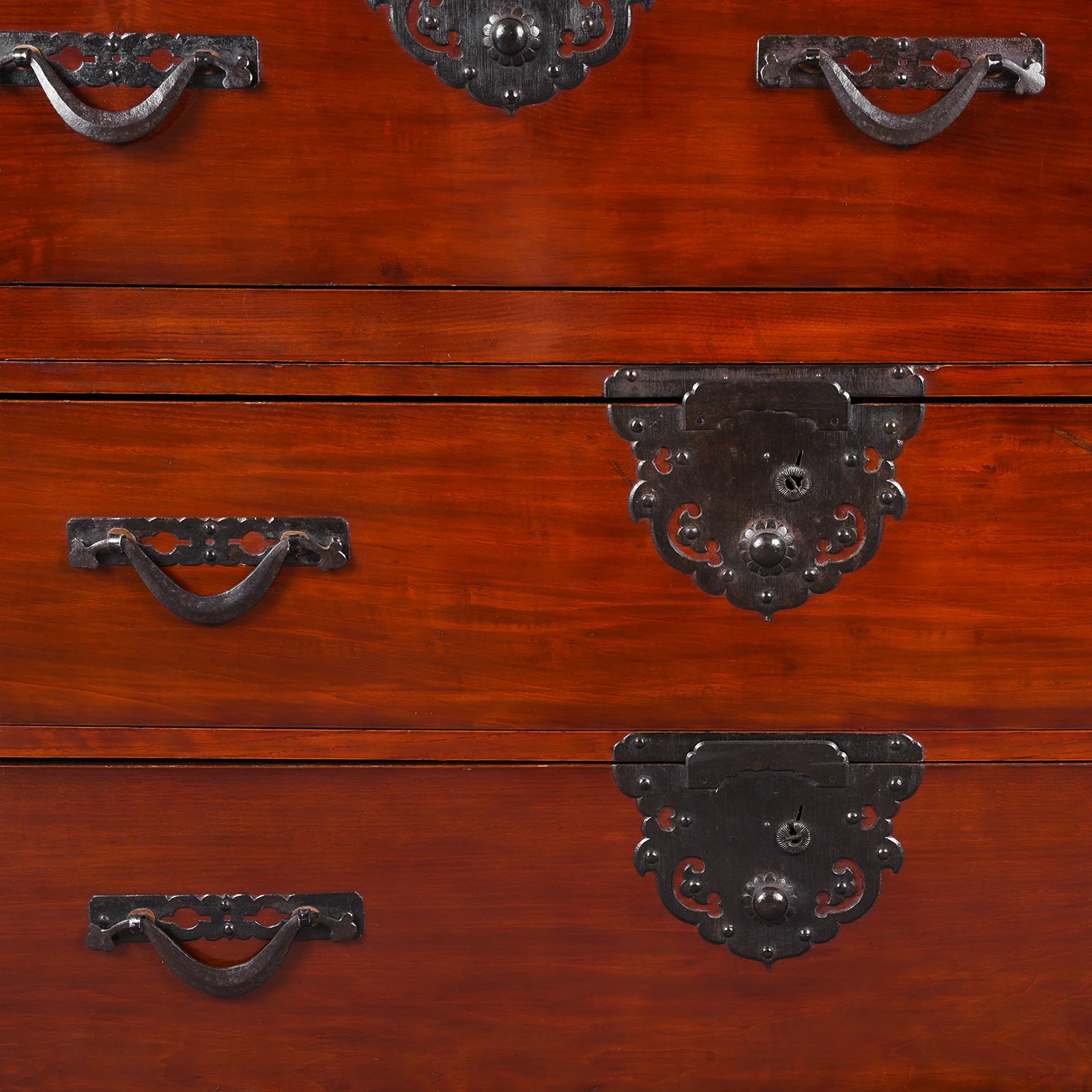
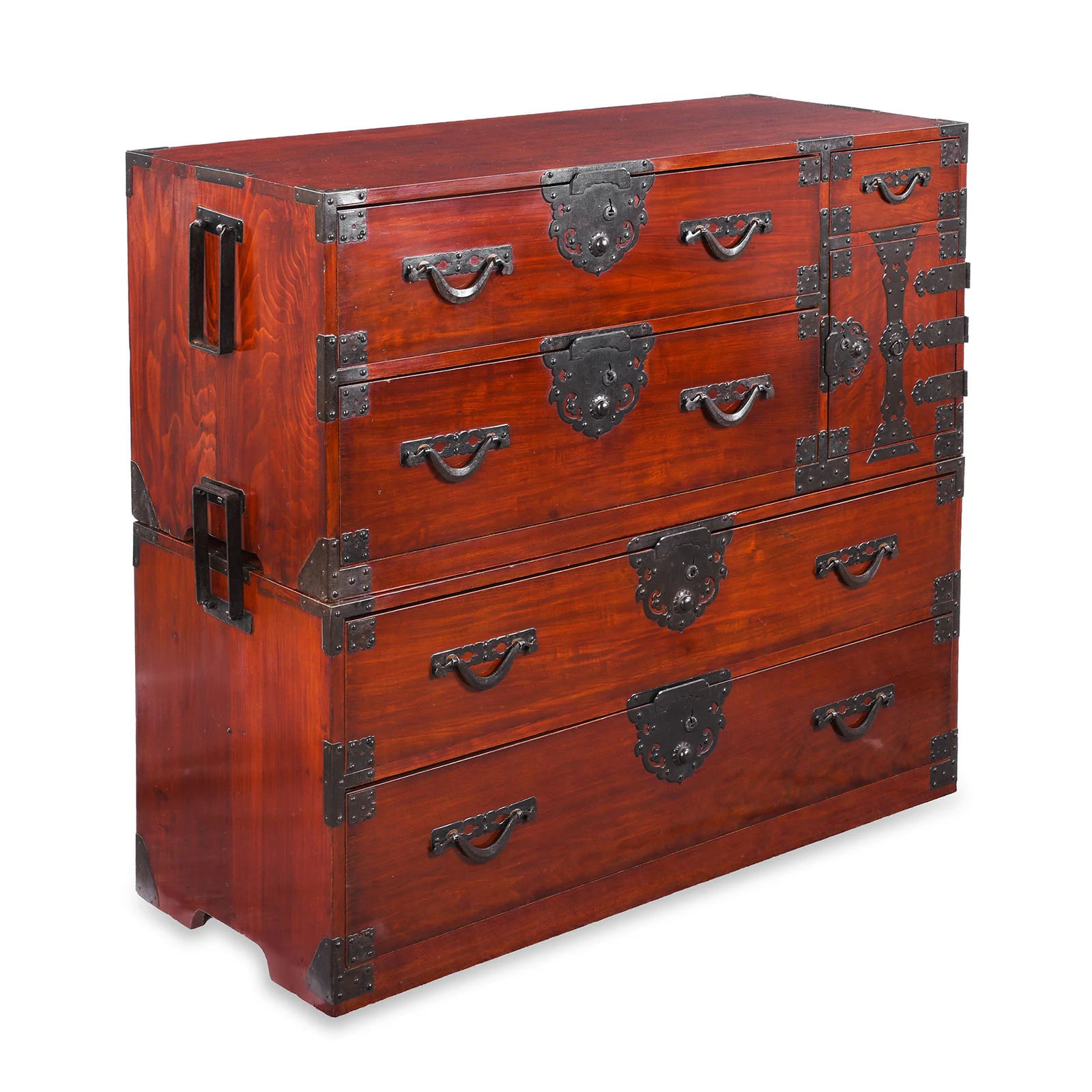
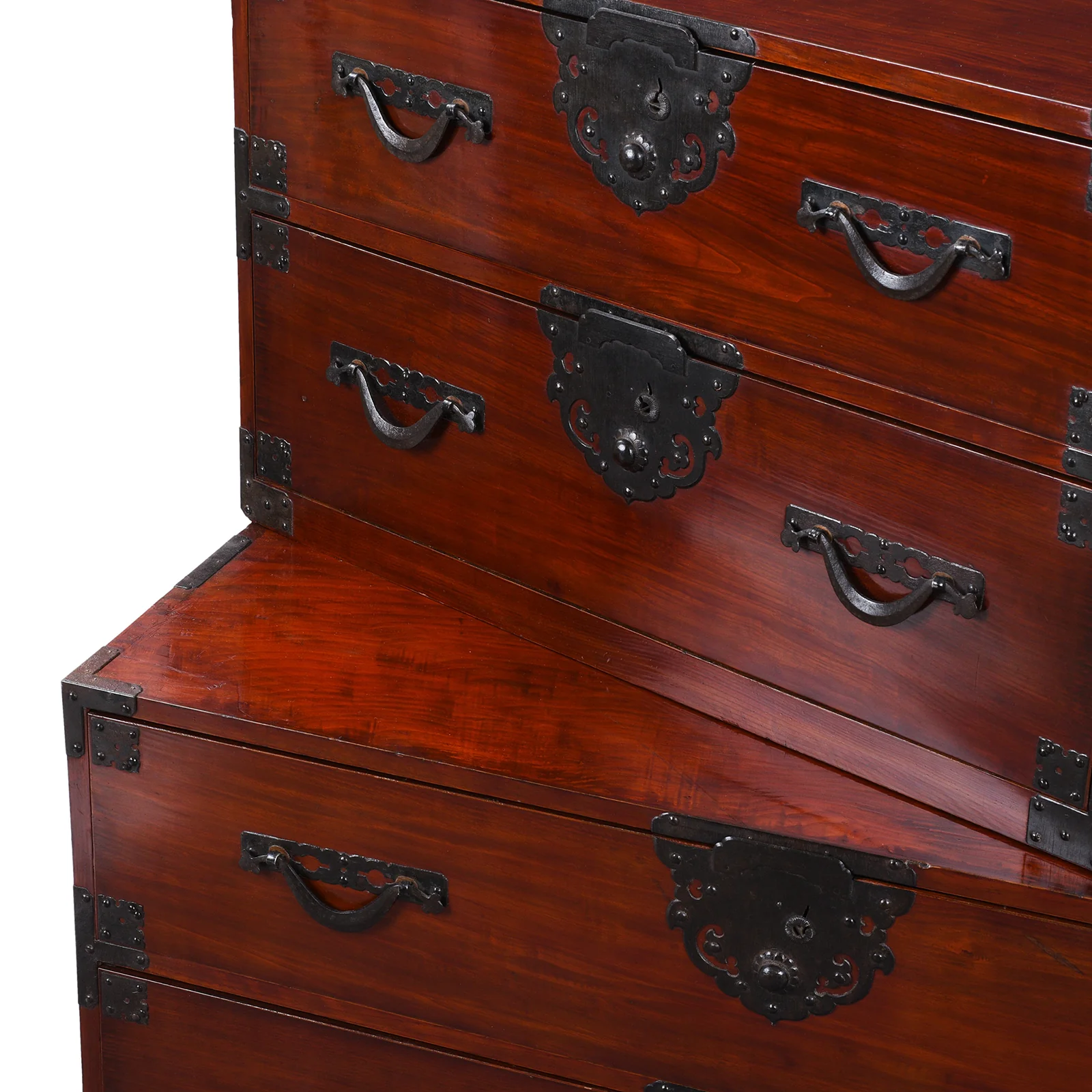
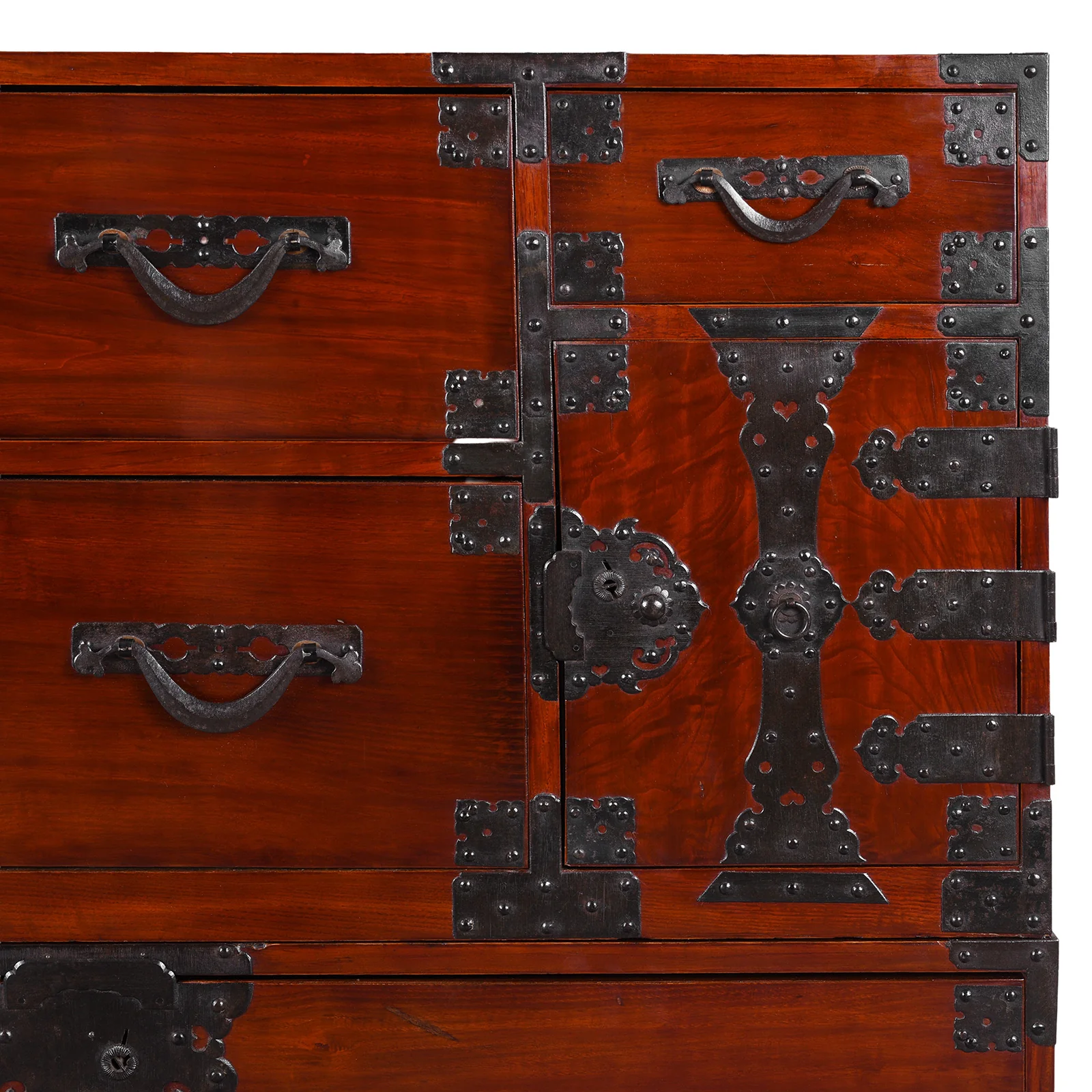
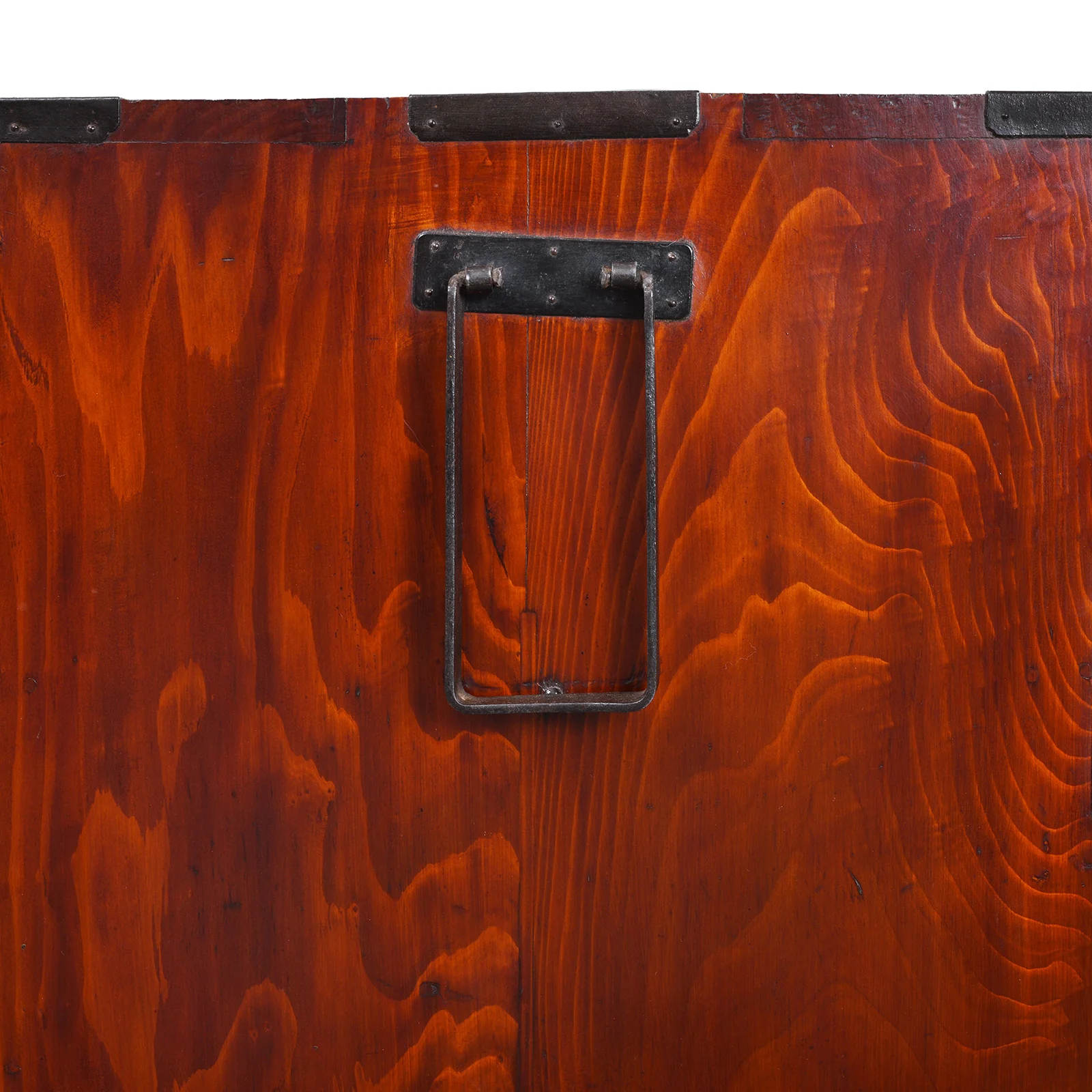
This Taisho-era Japanese kasane isho tansu represents the traditional craftsmanship of northern Japan. A kasane dansu refers to a stacking chest, designed in two parts for ease of transport and storage, while an isho tansu was used specifically for storing clothing. Families often kept separate chests for summer and winter garments, and the iron carrying handles allowed them to be moved to outbuildings when not in seasonal use. The lockplate is in the shape of a pine nut motif.
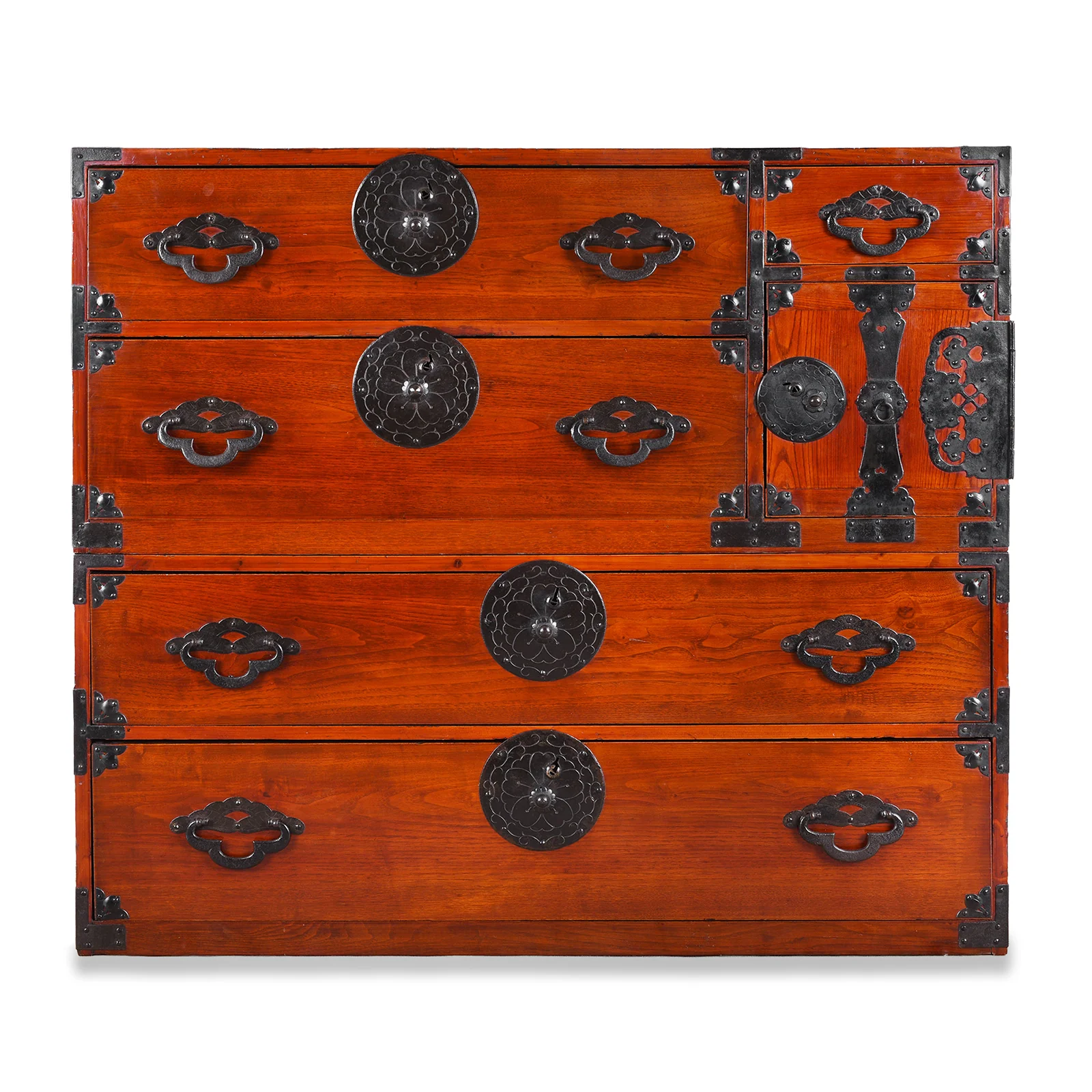
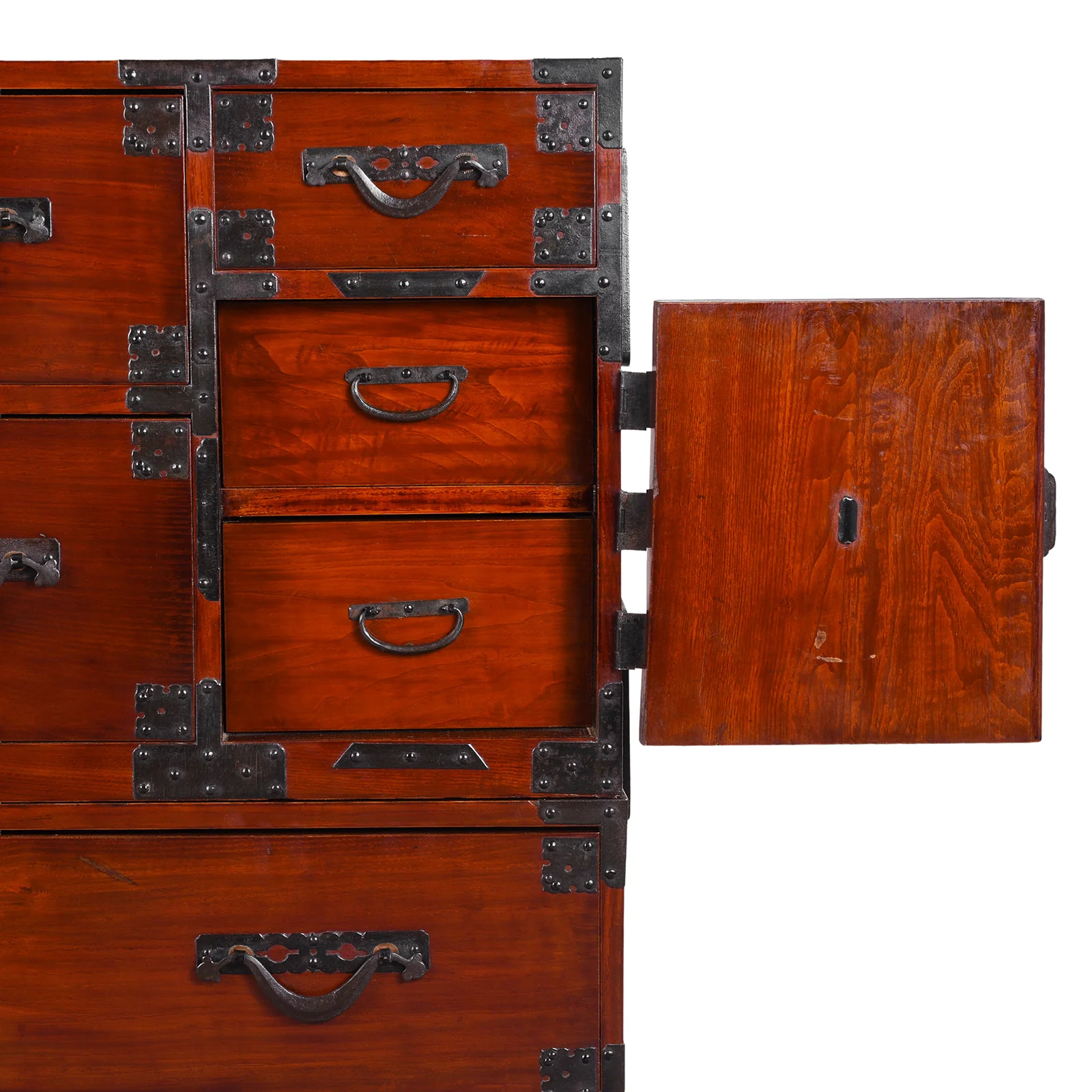
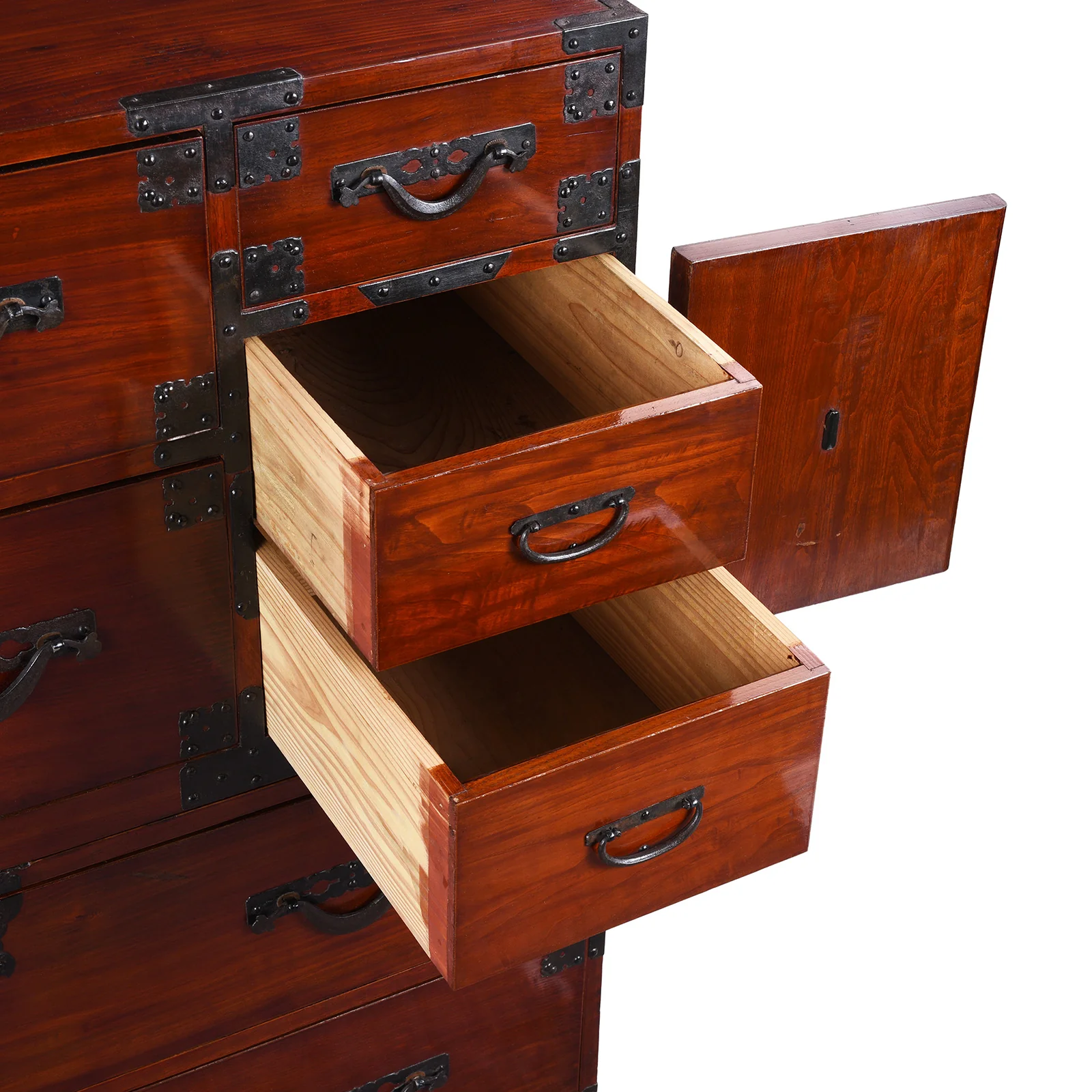
Crafted in the traditional way, this tansu would have been the collaborative work of three specialists: a carpenter, a lacquer worker, and an ironworker. Constructed from chestnut wood with a plywood back, it features four large drawers and two smaller drawers hidden behind a side door. The chest is finished with elaborate black iron hardware, contrasting beautifully with the rich natural lacquer of the wood. A practical yet elegant example of Japanese design, it retains its historic character while offering modern functionality for storage.
- Origin: Possibly Nihonmatsu, Japan
- Date: Taisho period (1912€“1925)
- Materials: Mixed woods with lacquer finish and iron fittings
- Features: Two-part stacking chest, four large drawers, two smaller drawers behind a side door, decorative black iron hardware
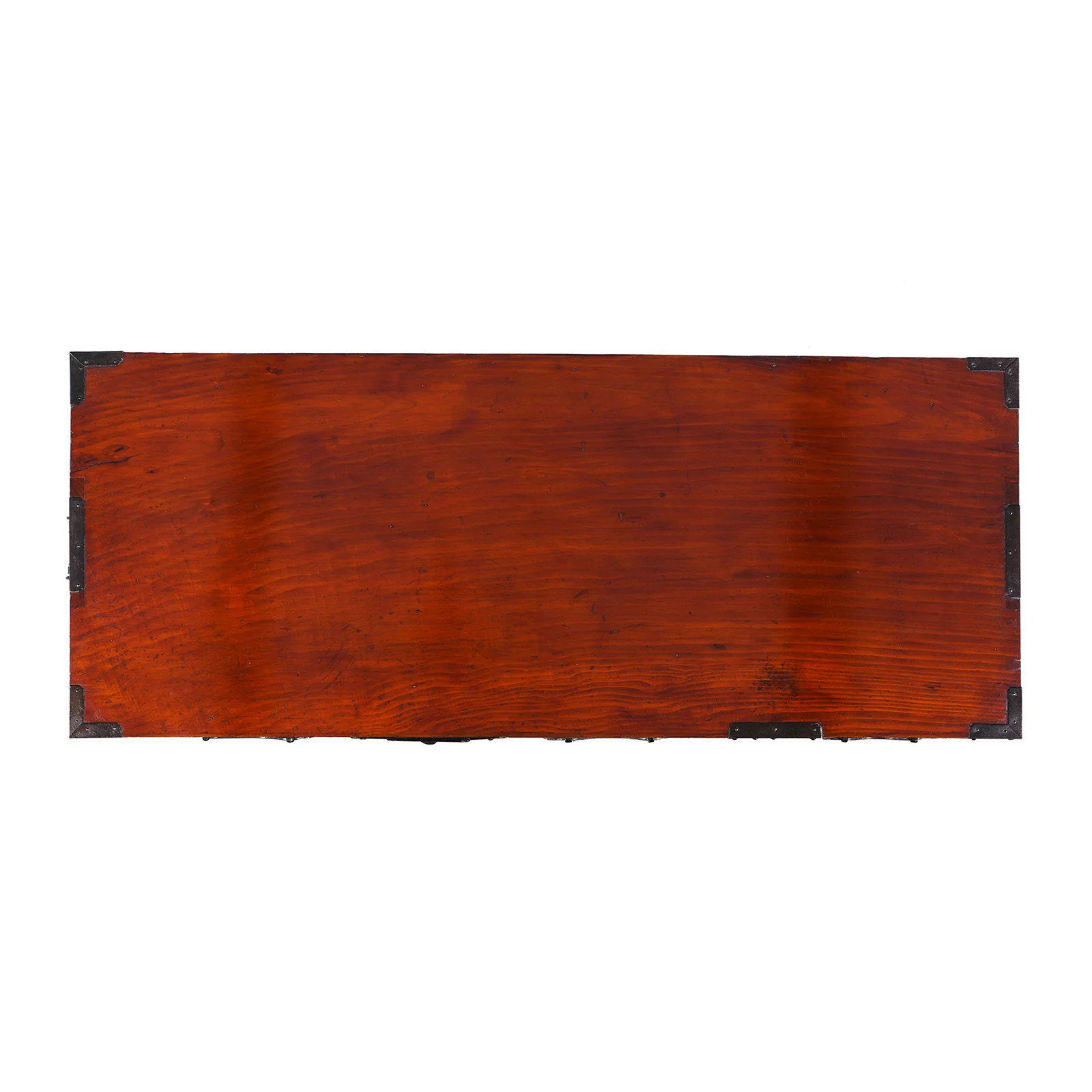
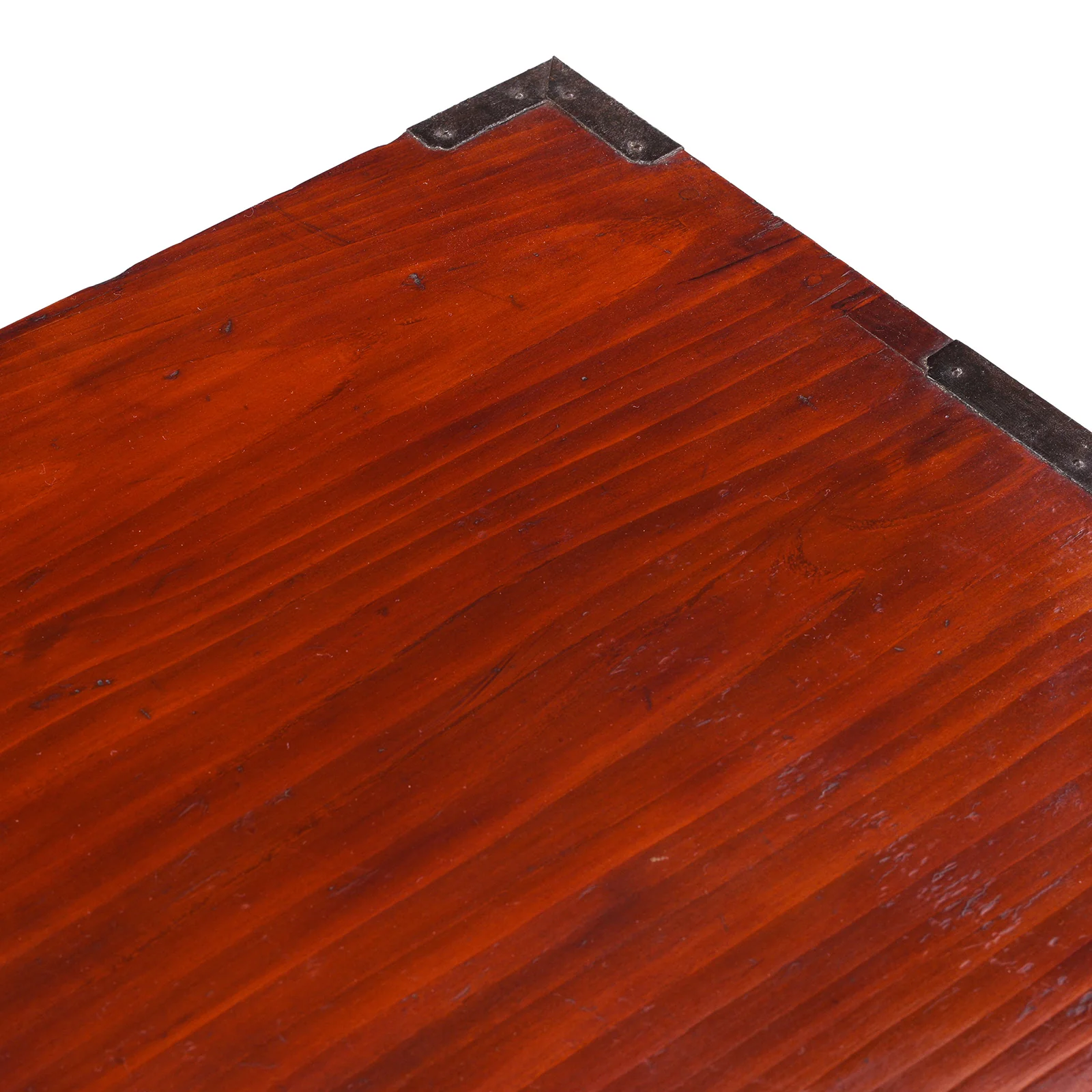
- Condition: Wear consistent with age; iron fittings and lacquer with aged character
- Dimensions: W112 x D45 x H103 cm
Original: $3,244.84
-65%$3,244.84
$1,135.69More Images

Japanese Isho Kasane Dansu - Meiji Era
This Taisho-era Japanese kasane isho tansu represents the traditional craftsmanship of northern Japan. A kasane dansu refers to a stacking chest, designed in two parts for ease of transport and storage, while an isho tansu was used specifically for storing clothing. Families often kept separate chests for summer and winter garments, and the iron carrying handles allowed them to be moved to outbuildings when not in seasonal use. The lockplate is in the shape of a pine nut motif.
Crafted in the traditional way, this tansu would have been the collaborative work of three specialists: a carpenter, a lacquer worker, and an ironworker. Constructed from chestnut wood with a plywood back, it features four large drawers and two smaller drawers hidden behind a side door. The chest is finished with elaborate black iron hardware, contrasting beautifully with the rich natural lacquer of the wood. A practical yet elegant example of Japanese design, it retains its historic character while offering modern functionality for storage.
- Origin: Possibly Nihonmatsu, Japan
- Date: Taisho period (1912€“1925)
- Materials: Mixed woods with lacquer finish and iron fittings
- Features: Two-part stacking chest, four large drawers, two smaller drawers behind a side door, decorative black iron hardware
- Condition: Wear consistent with age; iron fittings and lacquer with aged character
- Dimensions: W112 x D45 x H103 cm
Product Information
Product Information
Shipping & Returns
Shipping & Returns
Description
This Taisho-era Japanese kasane isho tansu represents the traditional craftsmanship of northern Japan. A kasane dansu refers to a stacking chest, designed in two parts for ease of transport and storage, while an isho tansu was used specifically for storing clothing. Families often kept separate chests for summer and winter garments, and the iron carrying handles allowed them to be moved to outbuildings when not in seasonal use. The lockplate is in the shape of a pine nut motif.
Crafted in the traditional way, this tansu would have been the collaborative work of three specialists: a carpenter, a lacquer worker, and an ironworker. Constructed from chestnut wood with a plywood back, it features four large drawers and two smaller drawers hidden behind a side door. The chest is finished with elaborate black iron hardware, contrasting beautifully with the rich natural lacquer of the wood. A practical yet elegant example of Japanese design, it retains its historic character while offering modern functionality for storage.
- Origin: Possibly Nihonmatsu, Japan
- Date: Taisho period (1912€“1925)
- Materials: Mixed woods with lacquer finish and iron fittings
- Features: Two-part stacking chest, four large drawers, two smaller drawers behind a side door, decorative black iron hardware
- Condition: Wear consistent with age; iron fittings and lacquer with aged character
- Dimensions: W112 x D45 x H103 cm