
Japanese Cho Dansu From Nagano - Edo Period
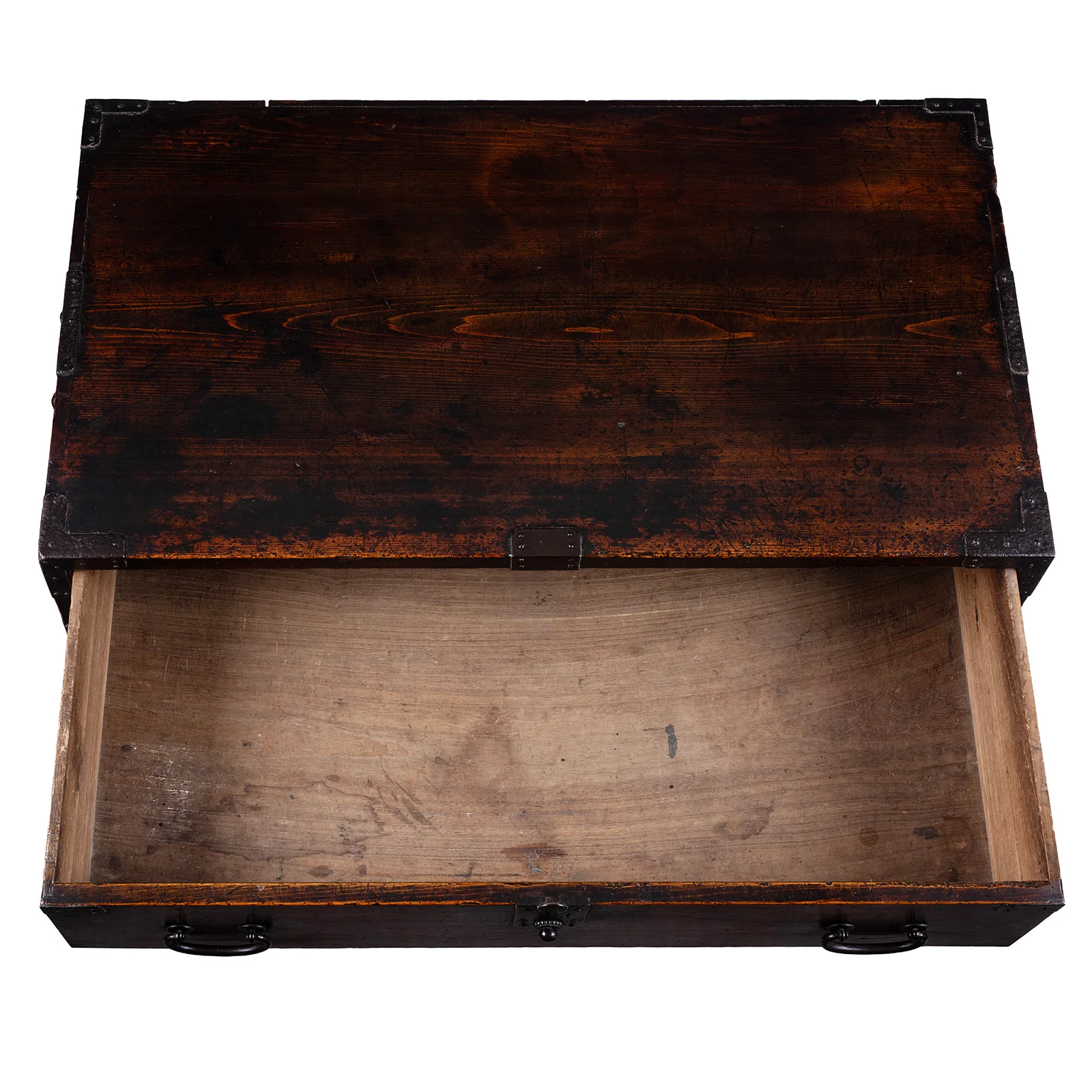
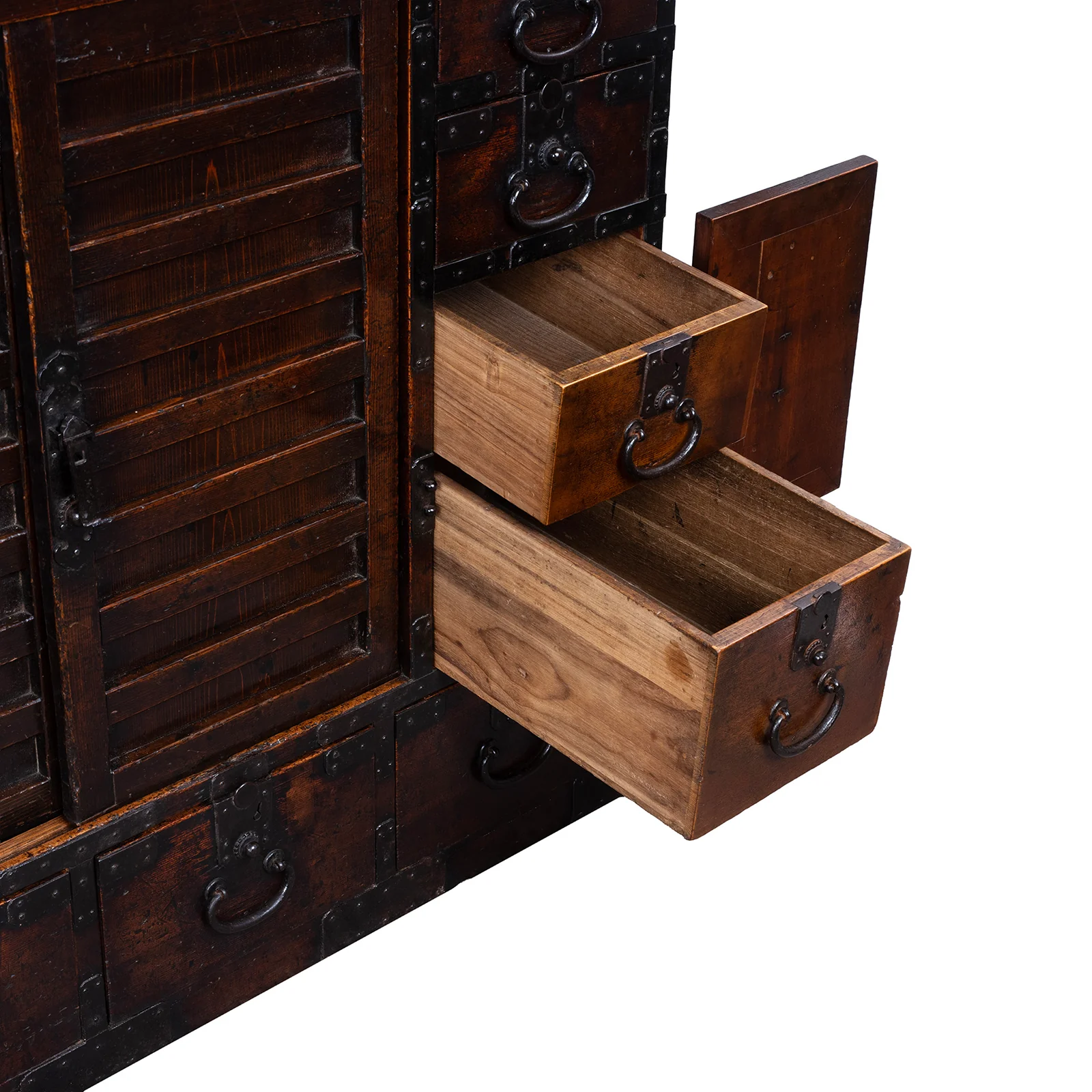
This characterful chō-dansu (merchant’s chest) dates to the late Edo period and is a fine example of Japanese mercantile cabinetry. Like from Nagano. Typical of cabinets associated with prosperous trading centres in northern Japan, the chest is built in richly toned sugi (cryptomeria) with kiri (paulownia) drawer liners. The façade features a pair of slatted sliding doors framed by exterior drawers and a secure kobiraki locking side door that opens to reveal two internal drawers for documents and valuables.
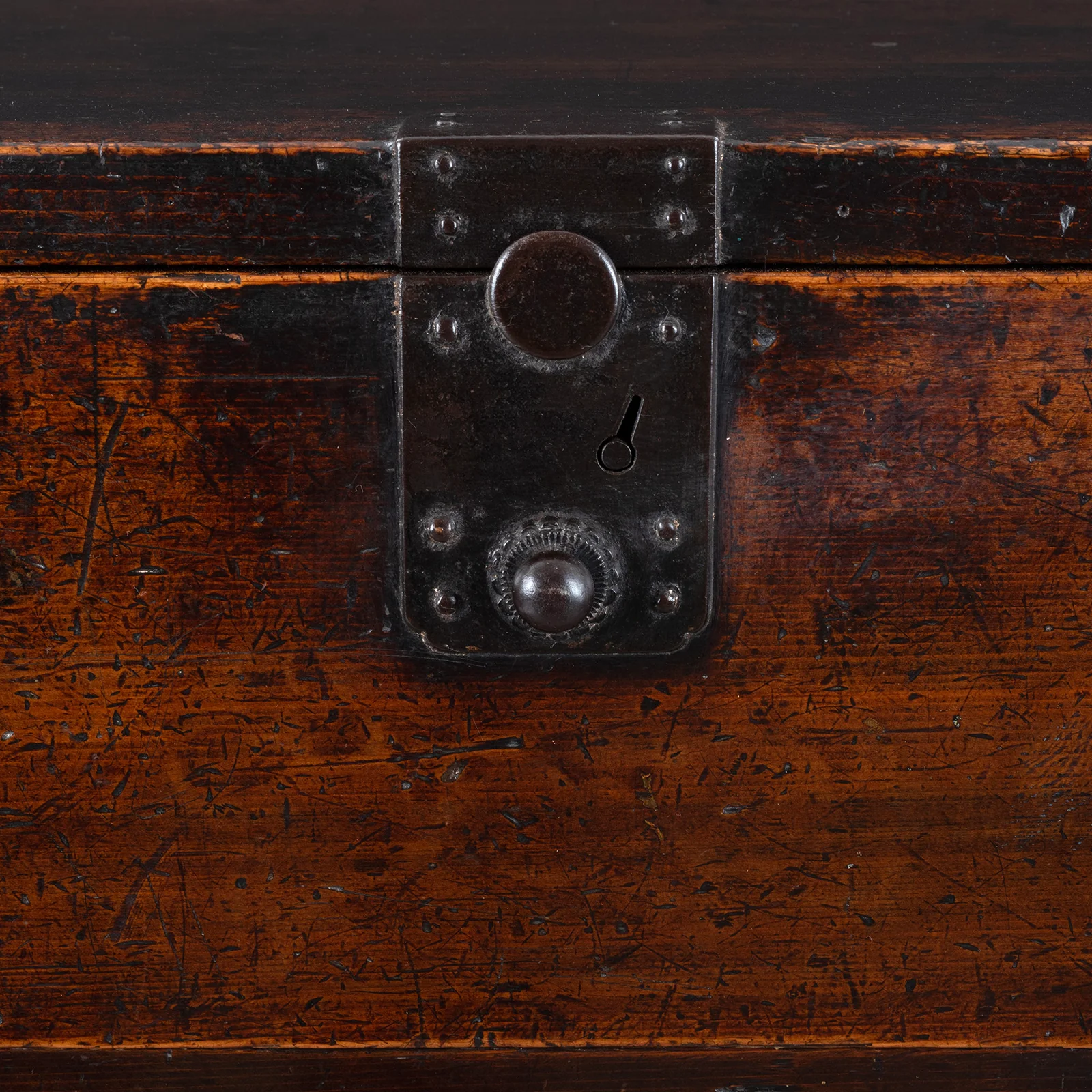
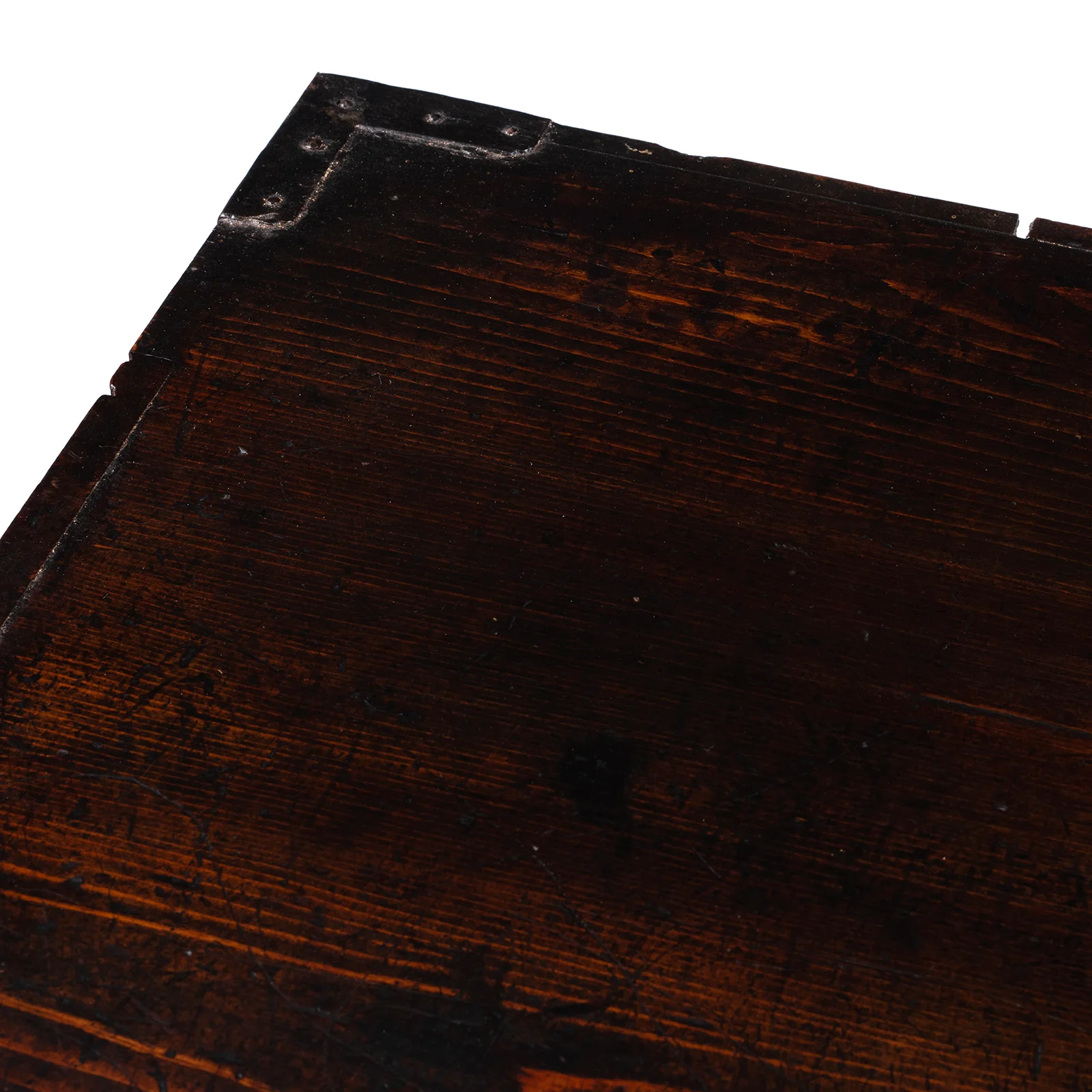
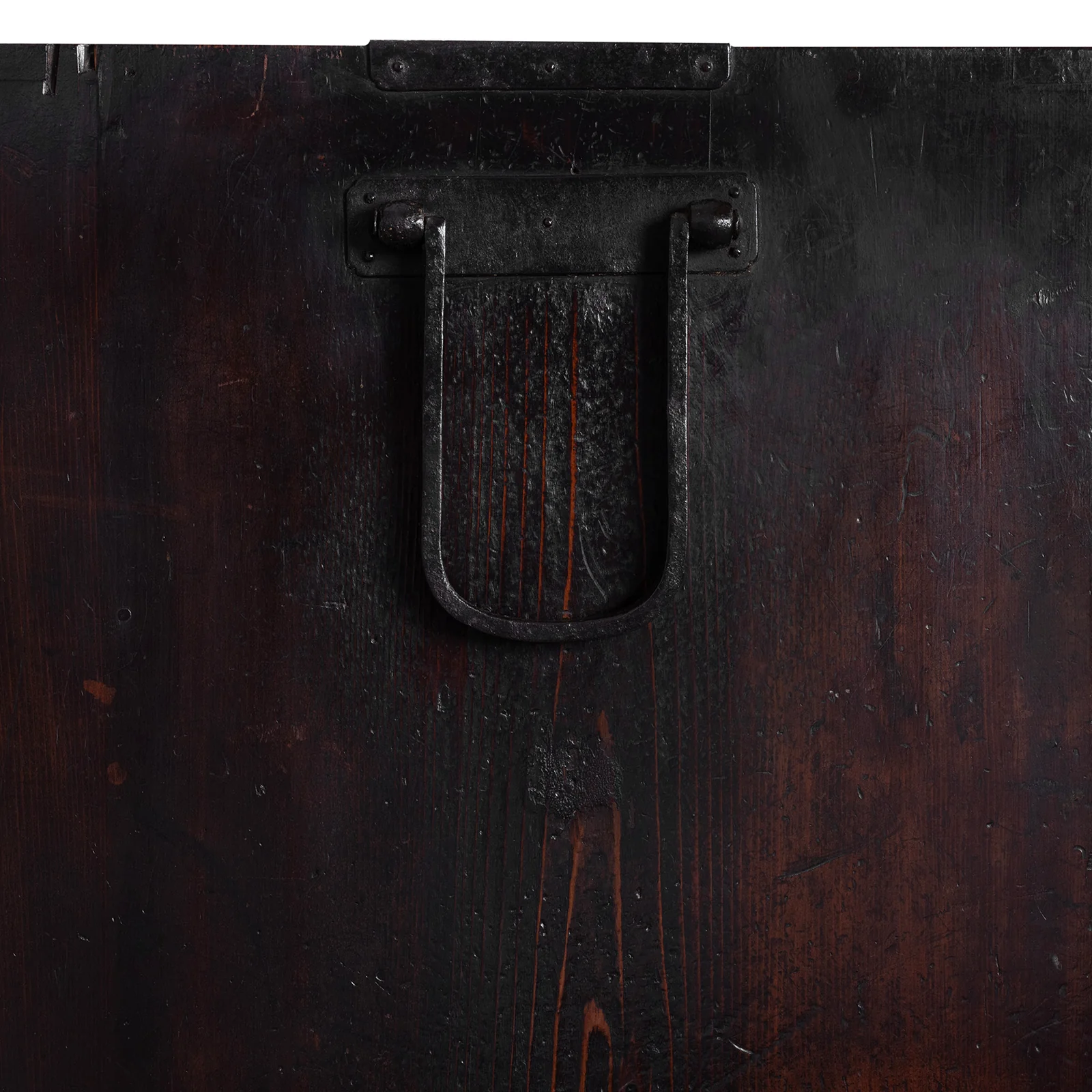
The chest retains its original hand-forged ironwork, including decorative lock plates, corner straps, hinges and forged warabite handles, all with a deep patina characteristic of Shōnai craftsmanship. The overall design reflects Edo-period merchant culture along the northern Kitamaebune shipping route, where cabinetry was made to be robust, compartmentalised and highly functional. With its expressive grain, refined iron detailing and versatile internal layout, this is a particularly handsome example of late-Edo merchant furniture.
- Origin: Possibly Sakata–Shōnai region, Yamagata Prefecture, northern Japan
- Date: Late Edo period (1603–1868)
- Materials: Sugi (cedar) case; hinoki (cypress) interior; hand-forged iron hardware
- Features: Slatted sliding doors; locking kobiraki safe door; two internal drawers; multiple exterior drawers; forged warabite handles; original iron fittings
- Provenance: Van de Velde, Antwerp, 29 March 1985
- Condition: Excellent antique condition with age-related patina
- Dimensions: Width 94 × Depth 55 × Height 106 cm
A superb late-Edo chō-dansu with the practical elegance of traditional merchant cabinetry.
Original: $5,098.46
-65%$5,098.46
$1,784.46More Images

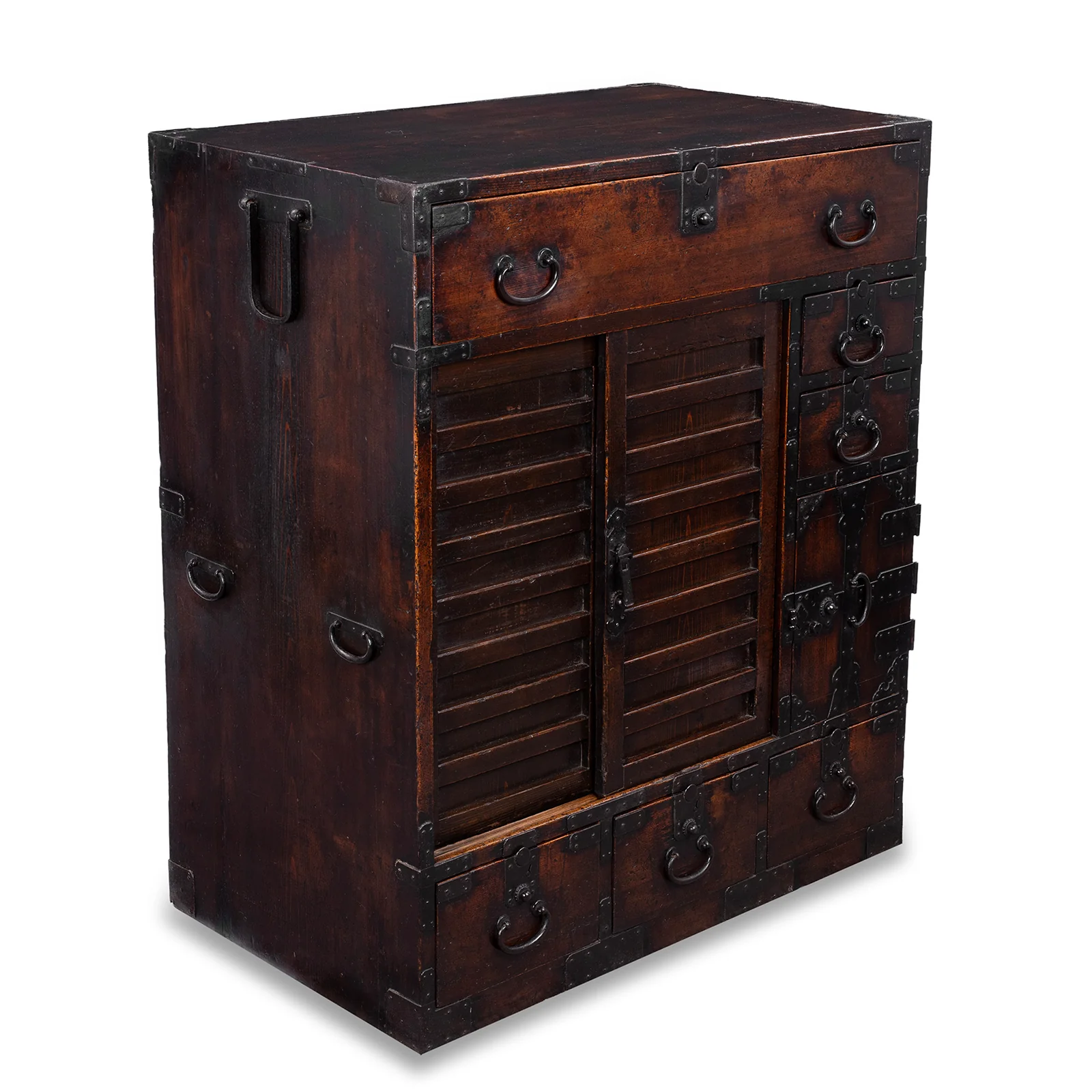



Japanese Cho Dansu From Nagano - Edo Period
This characterful chō-dansu (merchant’s chest) dates to the late Edo period and is a fine example of Japanese mercantile cabinetry. Like from Nagano. Typical of cabinets associated with prosperous trading centres in northern Japan, the chest is built in richly toned sugi (cryptomeria) with kiri (paulownia) drawer liners. The façade features a pair of slatted sliding doors framed by exterior drawers and a secure kobiraki locking side door that opens to reveal two internal drawers for documents and valuables.
The chest retains its original hand-forged ironwork, including decorative lock plates, corner straps, hinges and forged warabite handles, all with a deep patina characteristic of Shōnai craftsmanship. The overall design reflects Edo-period merchant culture along the northern Kitamaebune shipping route, where cabinetry was made to be robust, compartmentalised and highly functional. With its expressive grain, refined iron detailing and versatile internal layout, this is a particularly handsome example of late-Edo merchant furniture.
- Origin: Possibly Sakata–Shōnai region, Yamagata Prefecture, northern Japan
- Date: Late Edo period (1603–1868)
- Materials: Sugi (cedar) case; hinoki (cypress) interior; hand-forged iron hardware
- Features: Slatted sliding doors; locking kobiraki safe door; two internal drawers; multiple exterior drawers; forged warabite handles; original iron fittings
- Provenance: Van de Velde, Antwerp, 29 March 1985
- Condition: Excellent antique condition with age-related patina
- Dimensions: Width 94 × Depth 55 × Height 106 cm
A superb late-Edo chō-dansu with the practical elegance of traditional merchant cabinetry.
Product Information
Product Information
Shipping & Returns
Shipping & Returns
Description
This characterful chō-dansu (merchant’s chest) dates to the late Edo period and is a fine example of Japanese mercantile cabinetry. Like from Nagano. Typical of cabinets associated with prosperous trading centres in northern Japan, the chest is built in richly toned sugi (cryptomeria) with kiri (paulownia) drawer liners. The façade features a pair of slatted sliding doors framed by exterior drawers and a secure kobiraki locking side door that opens to reveal two internal drawers for documents and valuables.
The chest retains its original hand-forged ironwork, including decorative lock plates, corner straps, hinges and forged warabite handles, all with a deep patina characteristic of Shōnai craftsmanship. The overall design reflects Edo-period merchant culture along the northern Kitamaebune shipping route, where cabinetry was made to be robust, compartmentalised and highly functional. With its expressive grain, refined iron detailing and versatile internal layout, this is a particularly handsome example of late-Edo merchant furniture.
- Origin: Possibly Sakata–Shōnai region, Yamagata Prefecture, northern Japan
- Date: Late Edo period (1603–1868)
- Materials: Sugi (cedar) case; hinoki (cypress) interior; hand-forged iron hardware
- Features: Slatted sliding doors; locking kobiraki safe door; two internal drawers; multiple exterior drawers; forged warabite handles; original iron fittings
- Provenance: Van de Velde, Antwerp, 29 March 1985
- Condition: Excellent antique condition with age-related patina
- Dimensions: Width 94 × Depth 55 × Height 106 cm
A superb late-Edo chō-dansu with the practical elegance of traditional merchant cabinetry.