Japanese Menuki Decorated Cha Dansu - Meiji Period
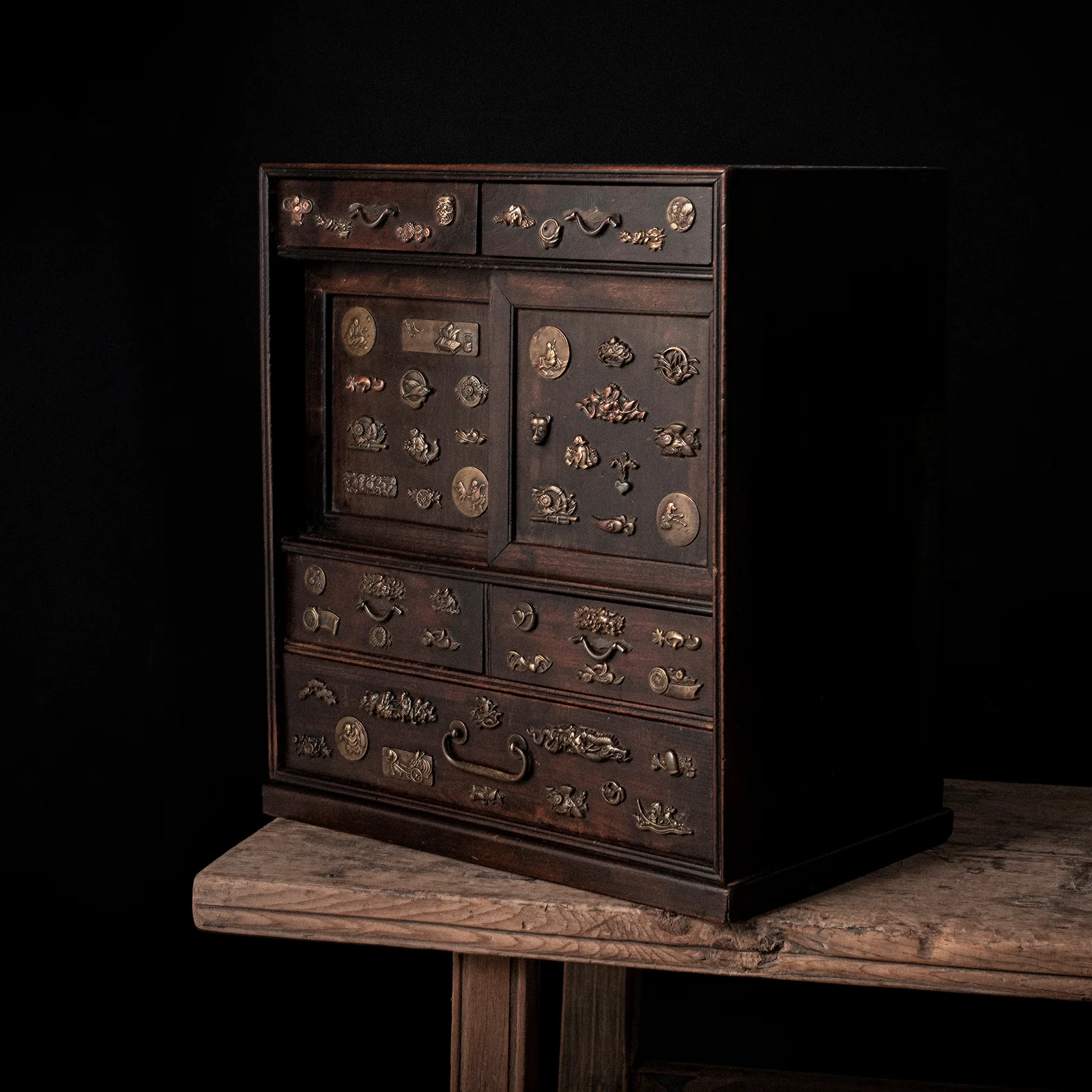
This intriguing tansu chest is a late 19th Century Japanese Cha Dansu (Tea Cabinet). It was made during the Meiji Period (1868 - 1912) - most likely after the Haitō Edict, the Samurai sword carrying ban of 1876.
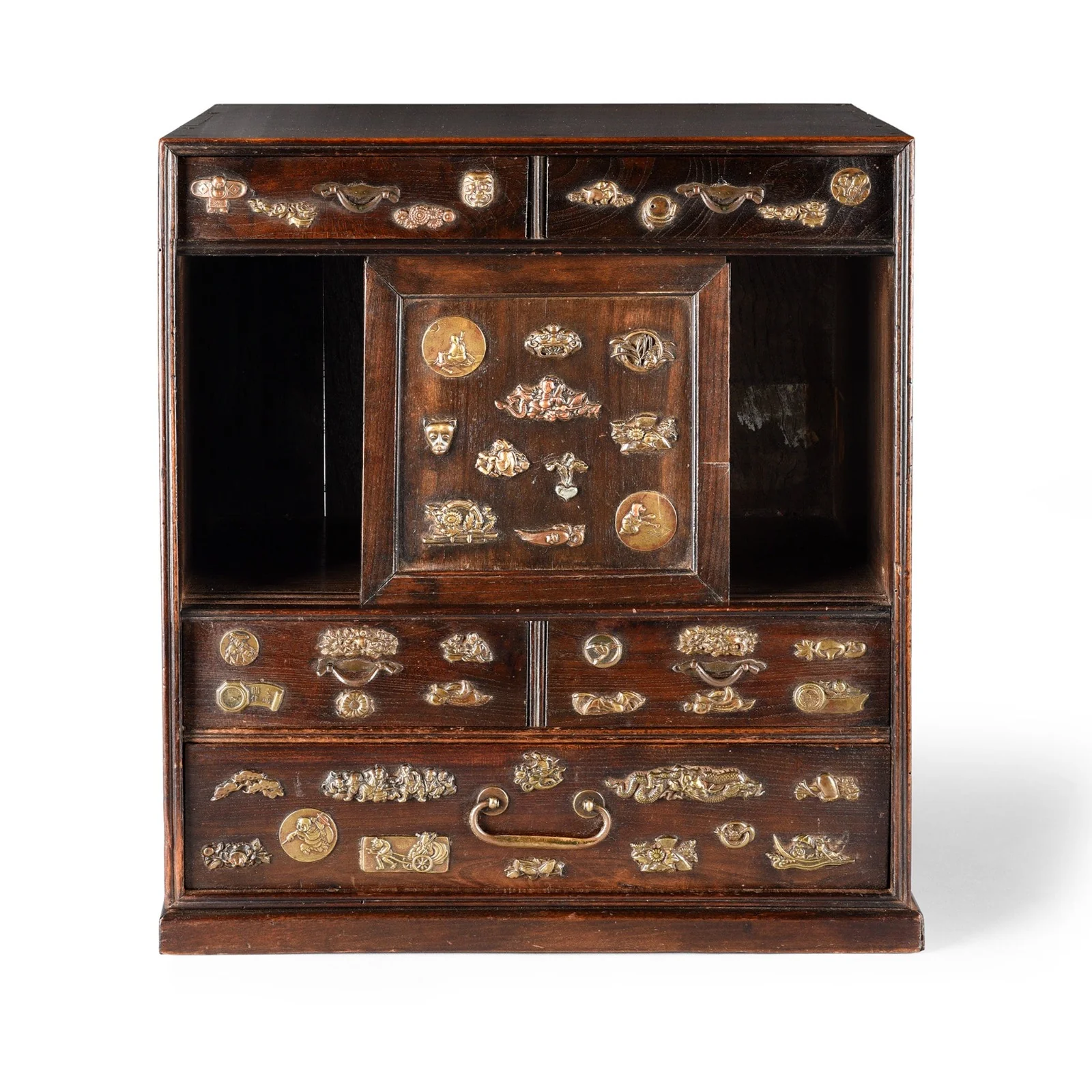
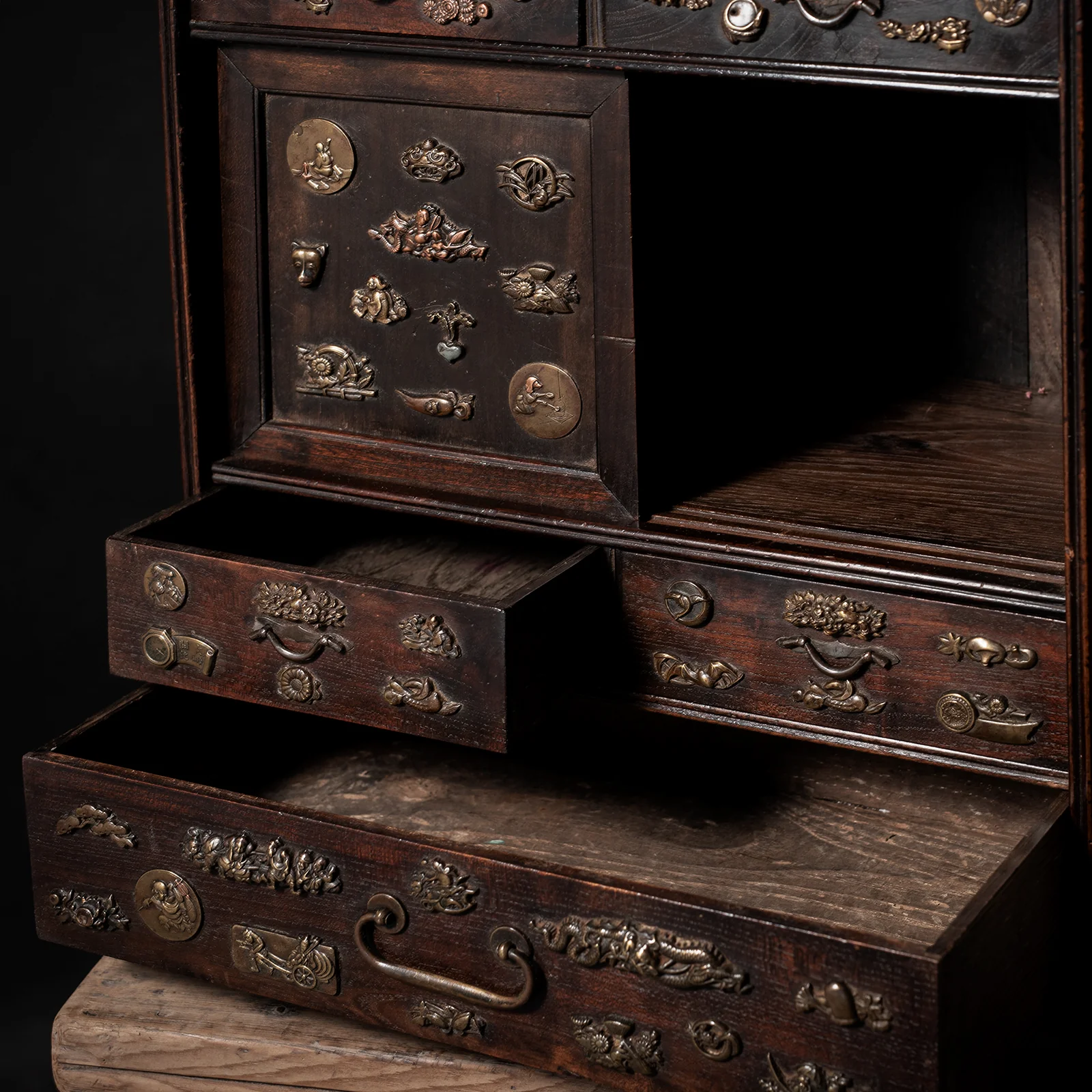
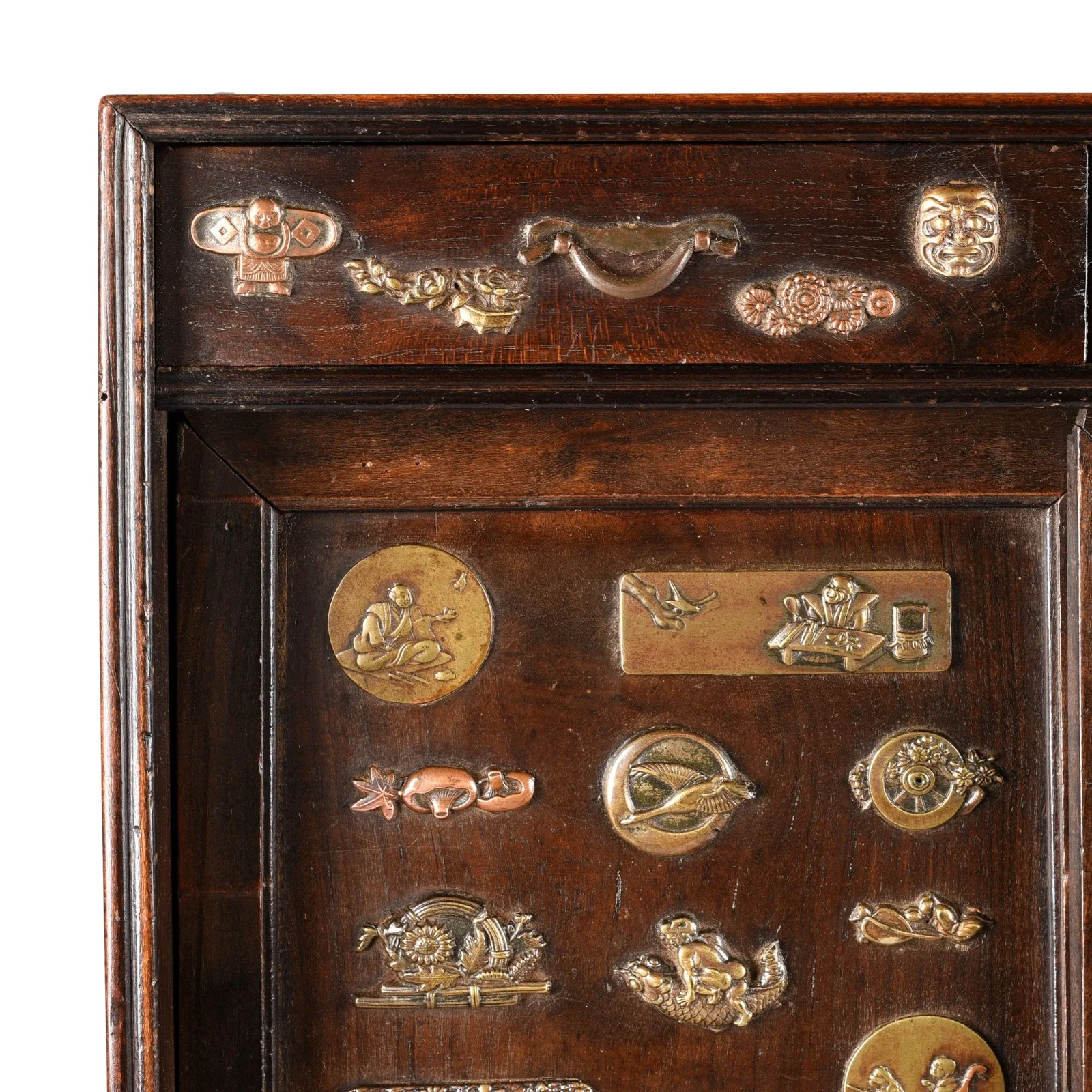
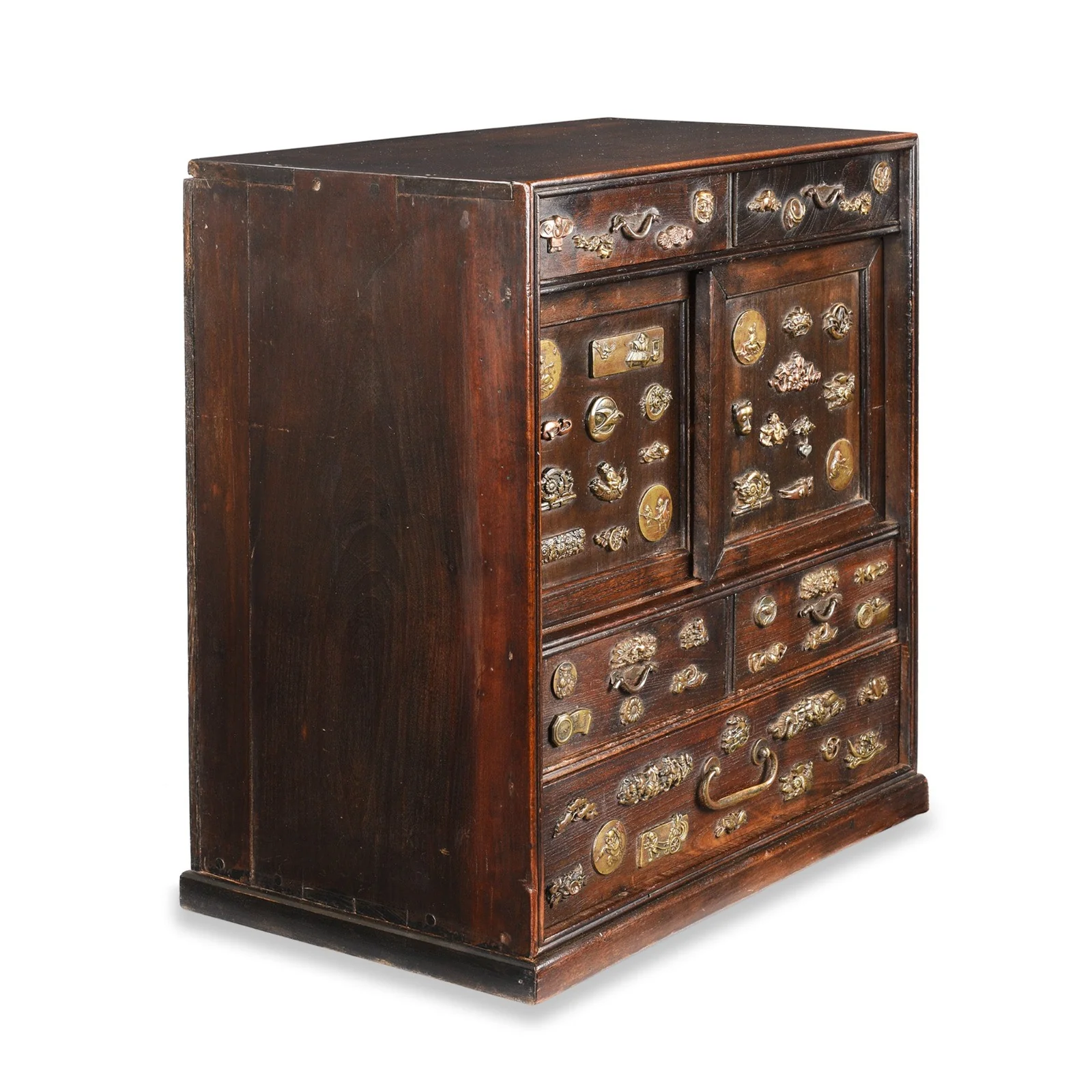
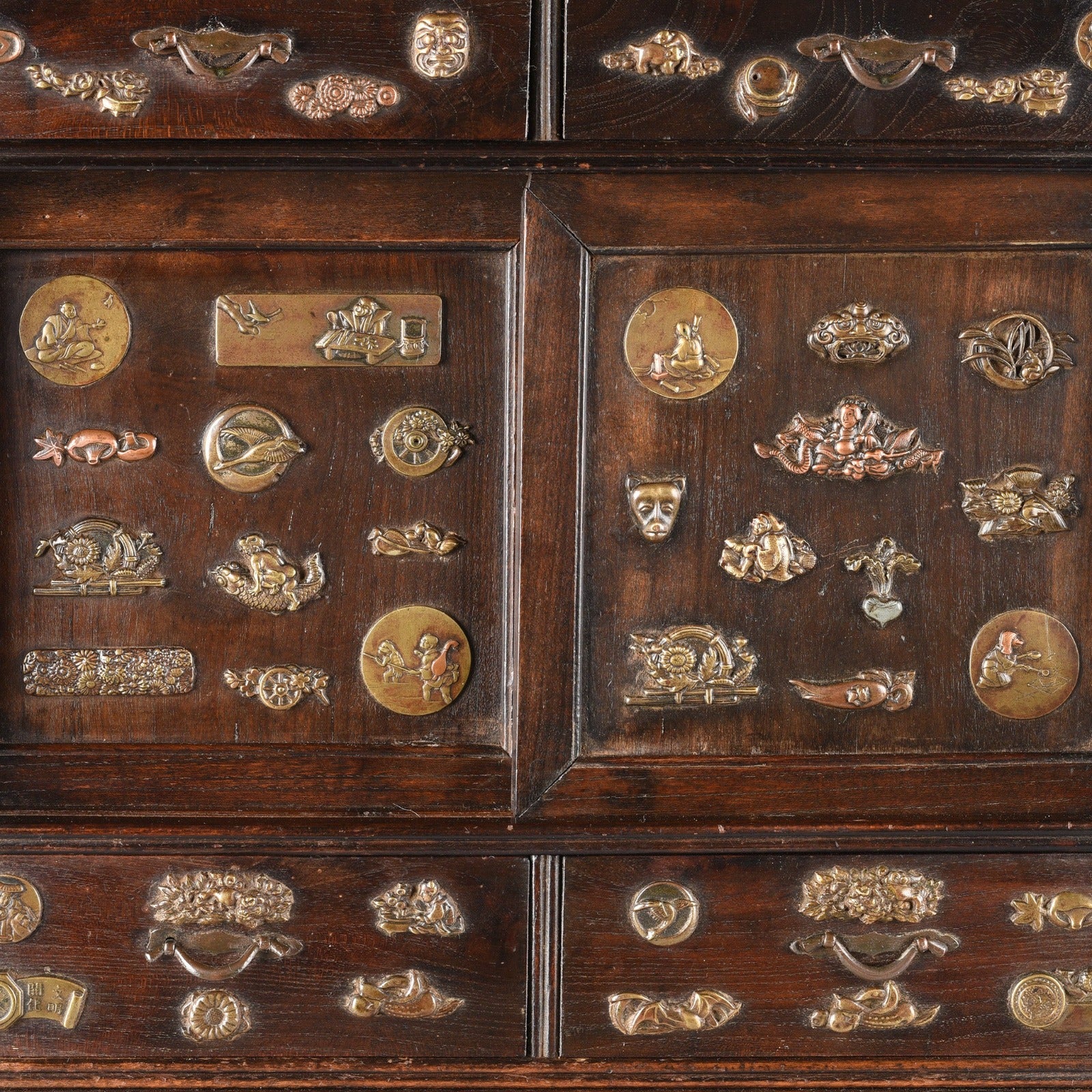
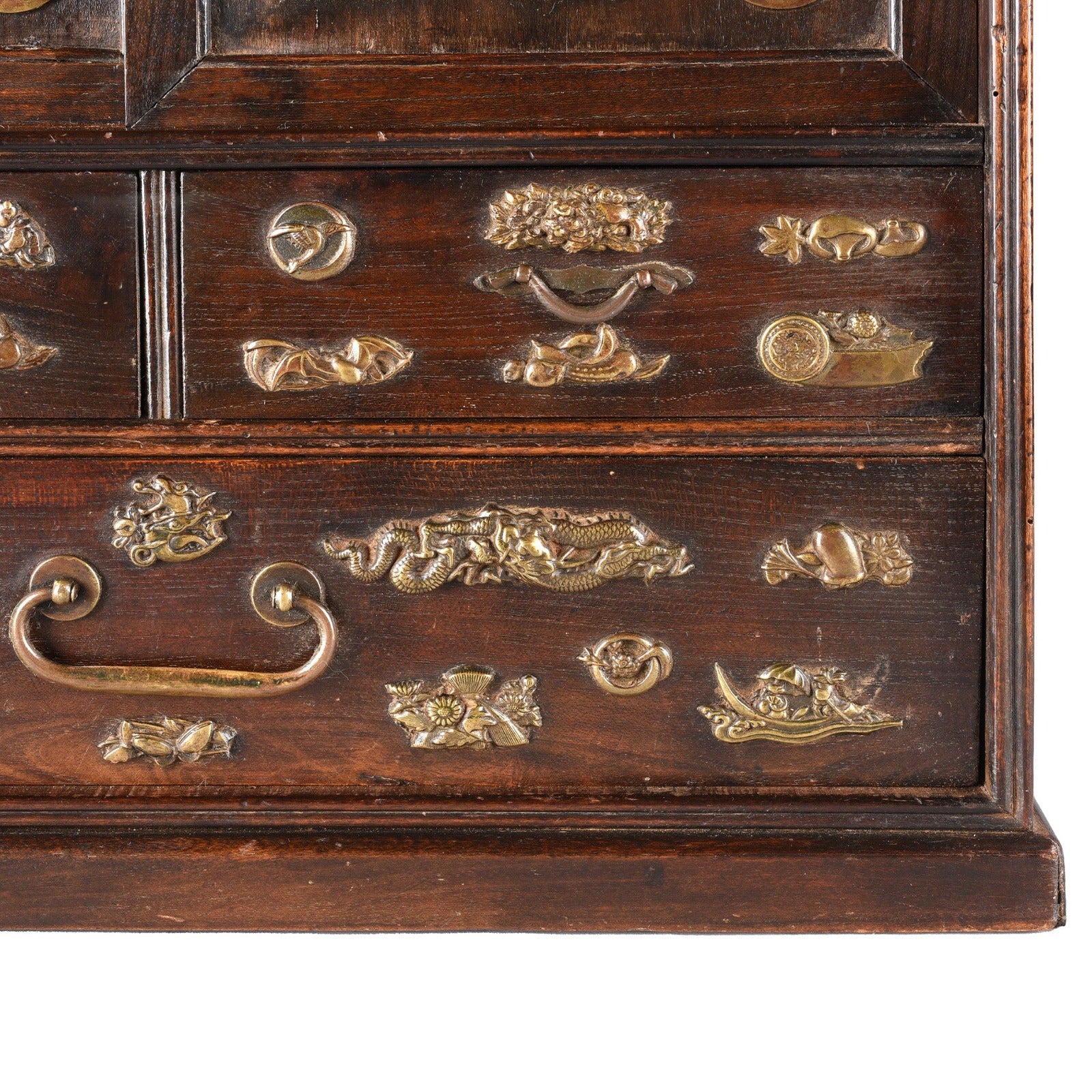
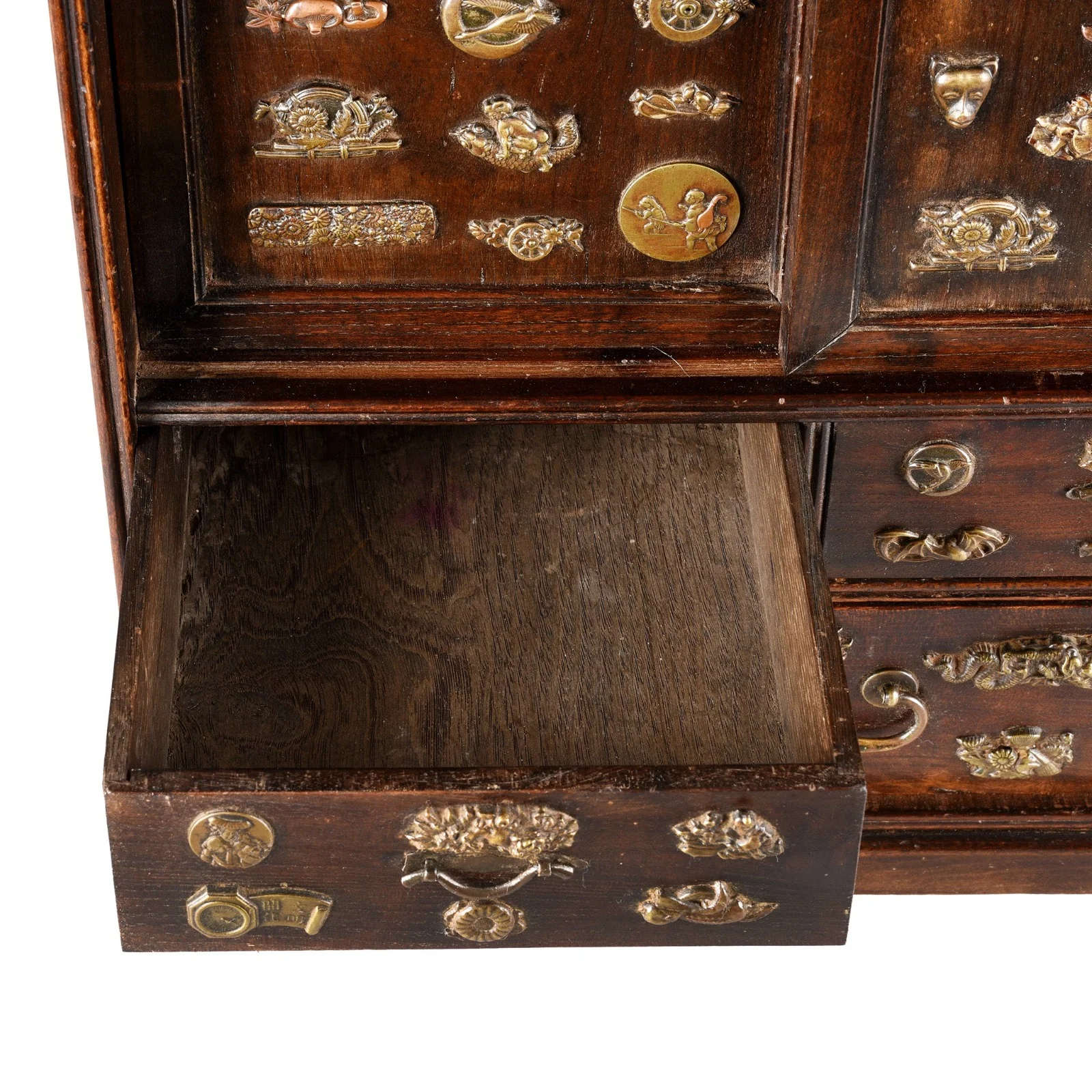
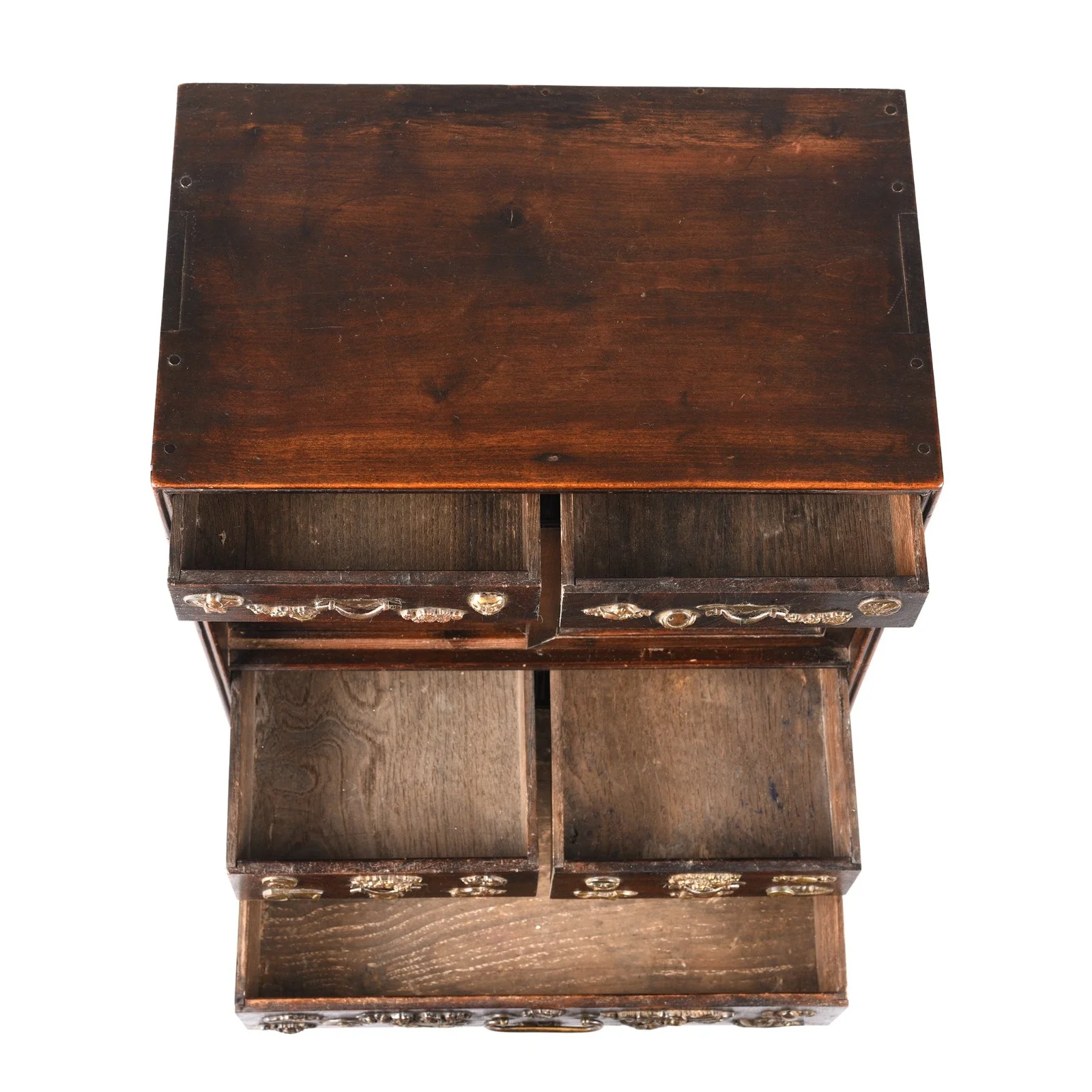
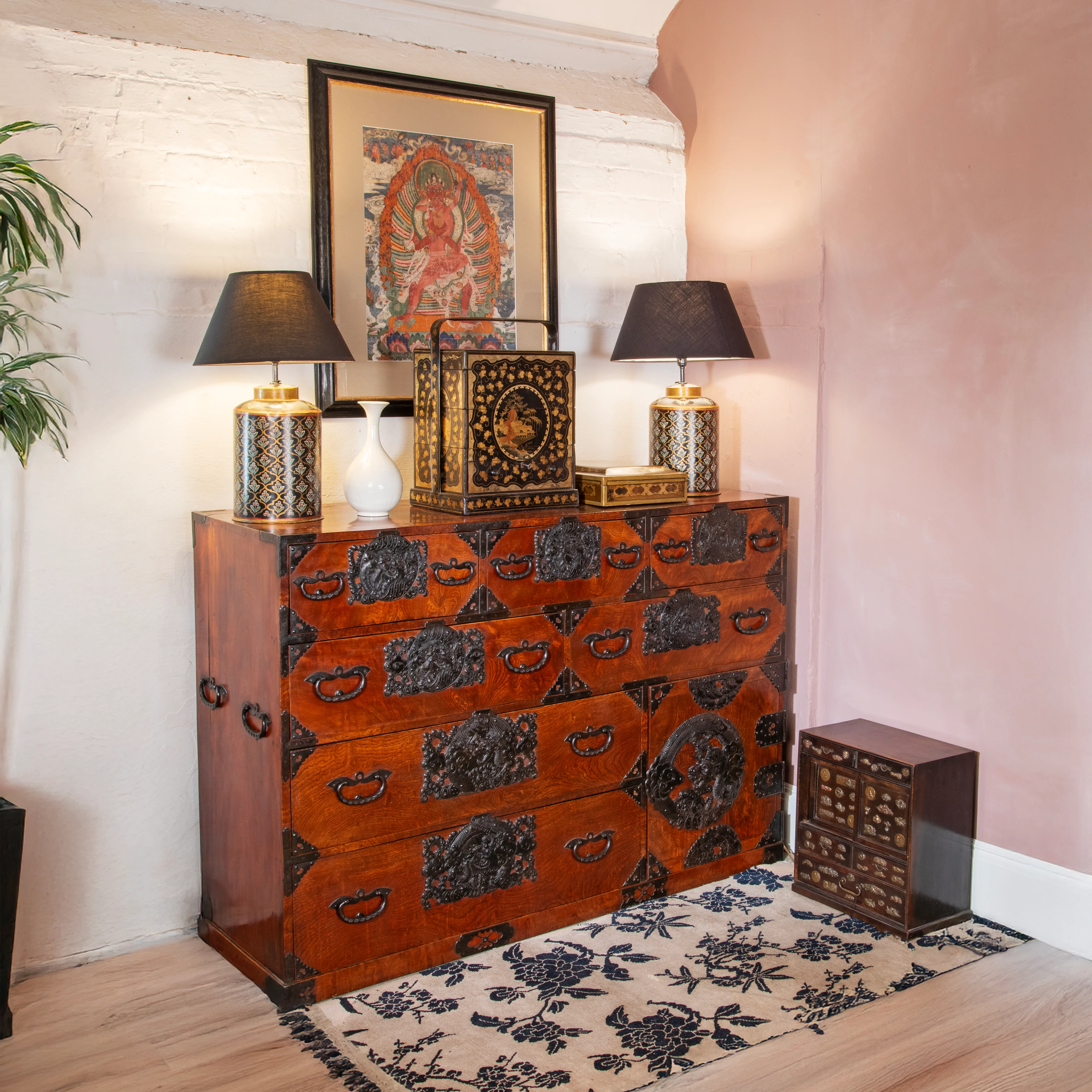
With an arrangement of five drawers and two sliding doors, this tansu is decorated with fifty-four copper & brass Menuki. Menuki are found on the handle of Samurai Swords and are not only decorative but have the function of giving extra grip. It's highly likely that following the Haitō Edict, a samurai retired his swords and as their priorities changed to the home, had the menuki applied to the most important piece of furniture in the home, the tea chest.
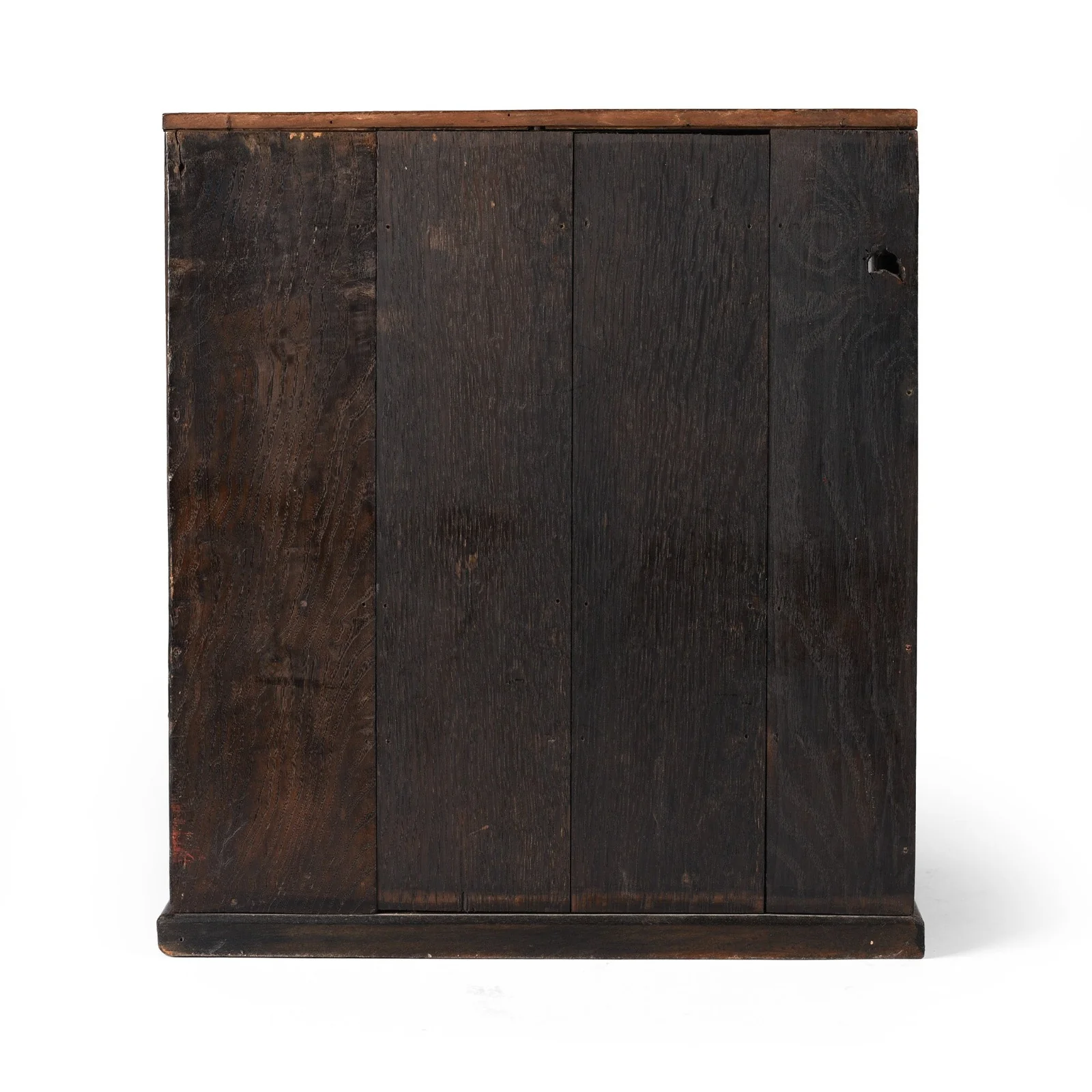
Tea chests (cha-dansu) were used for storing ceramics and other utensils used during Japanese tea ceremonies. Tea tansu chests were made from fine wood and took pride of place in a Japanese home. This tansu cabinet is made from oak, keyaki (red elm) & katsura (cherry) wood top & sides.
Original: $2,040.20
-65%$2,040.20
$714.07More Images
Japanese Menuki Decorated Cha Dansu - Meiji Period
This intriguing tansu chest is a late 19th Century Japanese Cha Dansu (Tea Cabinet). It was made during the Meiji Period (1868 - 1912) - most likely after the Haitō Edict, the Samurai sword carrying ban of 1876.
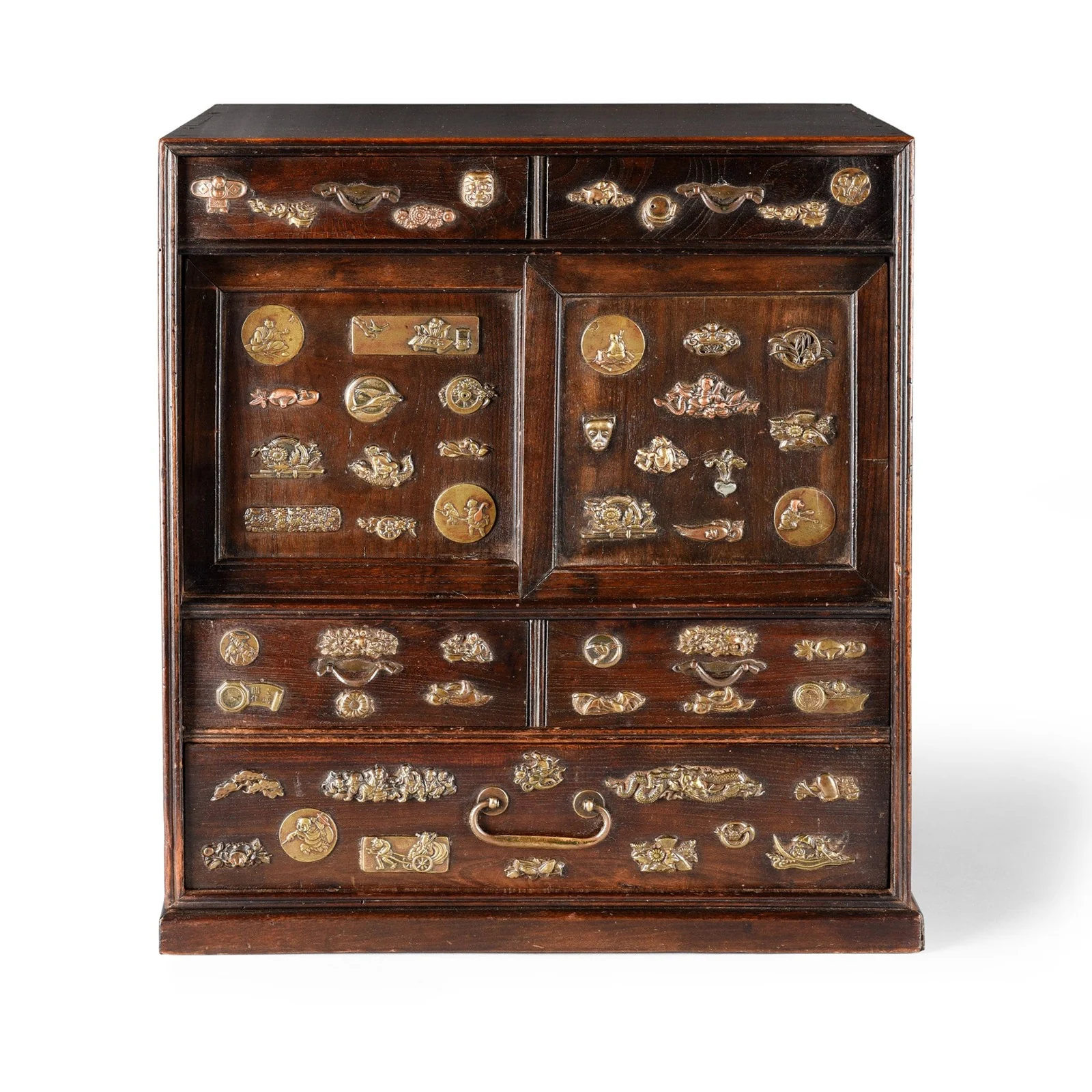
With an arrangement of five drawers and two sliding doors, this tansu is decorated with fifty-four copper & brass Menuki. Menuki are found on the handle of Samurai Swords and are not only decorative but have the function of giving extra grip. It's highly likely that following the Haitō Edict, a samurai retired his swords and as their priorities changed to the home, had the menuki applied to the most important piece of furniture in the home, the tea chest.
Tea chests (cha-dansu) were used for storing ceramics and other utensils used during Japanese tea ceremonies. Tea tansu chests were made from fine wood and took pride of place in a Japanese home. This tansu cabinet is made from oak, keyaki (red elm) & katsura (cherry) wood top & sides.
Product Information
Product Information
Shipping & Returns
Shipping & Returns
Description
This intriguing tansu chest is a late 19th Century Japanese Cha Dansu (Tea Cabinet). It was made during the Meiji Period (1868 - 1912) - most likely after the Haitō Edict, the Samurai sword carrying ban of 1876.
With an arrangement of five drawers and two sliding doors, this tansu is decorated with fifty-four copper & brass Menuki. Menuki are found on the handle of Samurai Swords and are not only decorative but have the function of giving extra grip. It's highly likely that following the Haitō Edict, a samurai retired his swords and as their priorities changed to the home, had the menuki applied to the most important piece of furniture in the home, the tea chest.
Tea chests (cha-dansu) were used for storing ceramics and other utensils used during Japanese tea ceremonies. Tea tansu chests were made from fine wood and took pride of place in a Japanese home. This tansu cabinet is made from oak, keyaki (red elm) & katsura (cherry) wood top & sides.