
Japanese Burr Keyaki Cha Dansu Chest - Taishō Era
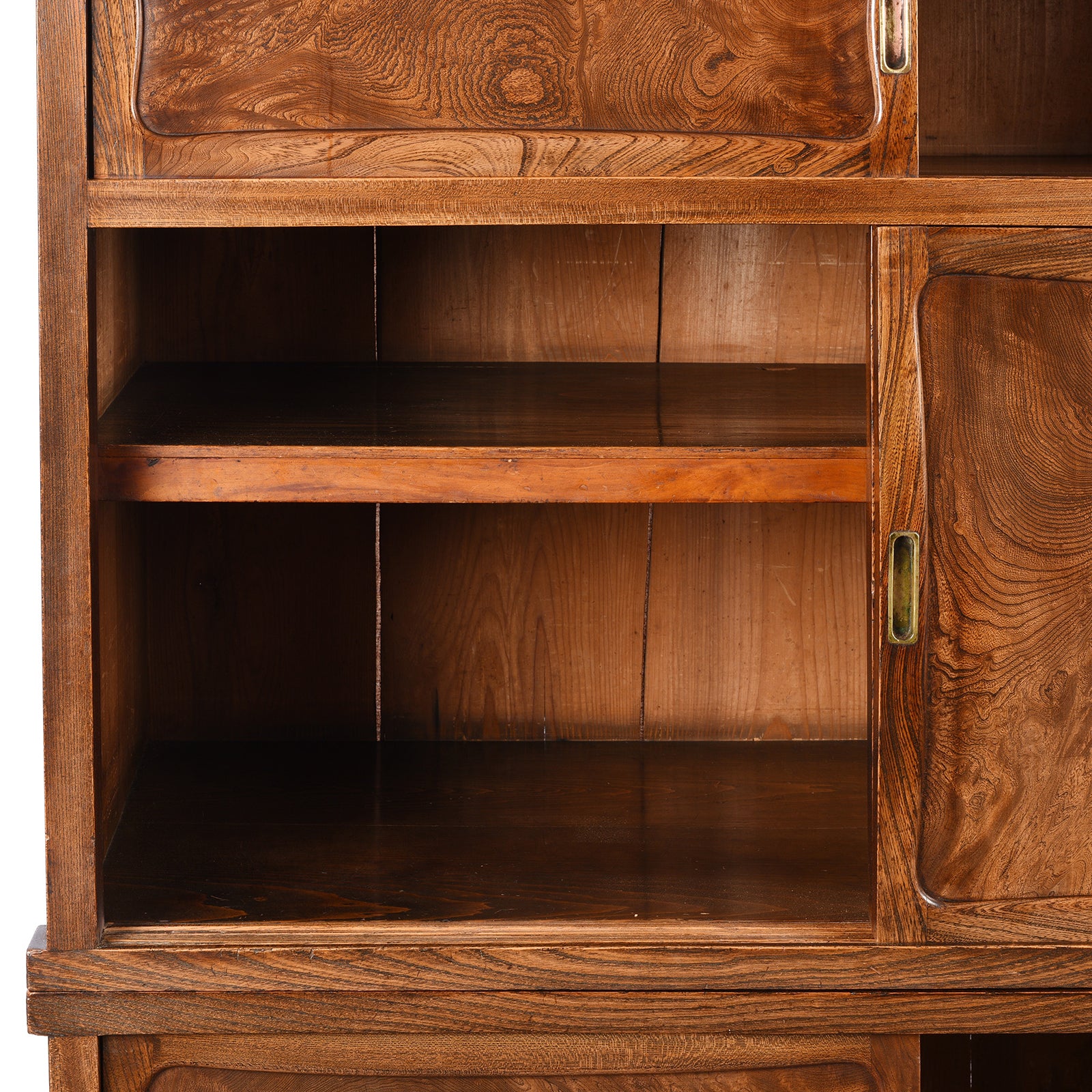
This Japanese cha dansu tea chest dates from the early Taishō Period (1912-1926). Tea chests were made from fine wood and took pride of place in a Japanese home. This particular cha dansu is exceedingly fine and constructed from luxurious burr keyaki wood (Japanese red elm/zelkova). It is of an unconventional form and is double the usual height. The sides are constructed from cryptomeria (Japanese cedar).
This tansu is built as a kasane dansu (stacking chest) with sliding doors, internal shelves, and anodised brass handles. This style of handle became more common in the late Meiji and early Taishō eras when regional styles homogenised and the Kyoto style came to prominence.
As with most Japanese furniture, the carpentry is excellent and although it is lightweight, it is extremely well-made. It has very functional sliding doors & drawers. All the fittings are original to the piece.
A similar example can be found in Japanese Cabinetry: The Art & Craft of Tansu by David Jackson & Dane Owen (page 217).
Dimensions:
120 x 45 x 150 (wxdxh cms)
Provenance:
From the Olivia Dell Collection
From Japan
UK Delivery Charge - except Highlands & Islands £80
More delivery options available at checkout
More Images




Japanese Burr Keyaki Cha Dansu Chest - Taishō Era
This Japanese cha dansu tea chest dates from the early Taishō Period (1912-1926). Tea chests were made from fine wood and took pride of place in a Japanese home. This particular cha dansu is exceedingly fine and constructed from luxurious burr keyaki wood (Japanese red elm/zelkova). It is of an unconventional form and is double the usual height. The sides are constructed from cryptomeria (Japanese cedar).
This tansu is built as a kasane dansu (stacking chest) with sliding doors, internal shelves, and anodised brass handles. This style of handle became more common in the late Meiji and early Taishō eras when regional styles homogenised and the Kyoto style came to prominence.
As with most Japanese furniture, the carpentry is excellent and although it is lightweight, it is extremely well-made. It has very functional sliding doors & drawers. All the fittings are original to the piece.
A similar example can be found in Japanese Cabinetry: The Art & Craft of Tansu by David Jackson & Dane Owen (page 217).
Dimensions:
120 x 45 x 150 (wxdxh cms)
Provenance:
From the Olivia Dell Collection
From Japan
UK Delivery Charge - except Highlands & Islands £80
More delivery options available at checkout
Product Information
Product Information
Shipping & Returns
Shipping & Returns
Description
This Japanese cha dansu tea chest dates from the early Taishō Period (1912-1926). Tea chests were made from fine wood and took pride of place in a Japanese home. This particular cha dansu is exceedingly fine and constructed from luxurious burr keyaki wood (Japanese red elm/zelkova). It is of an unconventional form and is double the usual height. The sides are constructed from cryptomeria (Japanese cedar).
This tansu is built as a kasane dansu (stacking chest) with sliding doors, internal shelves, and anodised brass handles. This style of handle became more common in the late Meiji and early Taishō eras when regional styles homogenised and the Kyoto style came to prominence.
As with most Japanese furniture, the carpentry is excellent and although it is lightweight, it is extremely well-made. It has very functional sliding doors & drawers. All the fittings are original to the piece.
A similar example can be found in Japanese Cabinetry: The Art & Craft of Tansu by David Jackson & Dane Owen (page 217).
Dimensions:
120 x 45 x 150 (wxdxh cms)
Provenance:
From the Olivia Dell Collection
From Japan
UK Delivery Charge - except Highlands & Islands £80
More delivery options available at checkout