
Carved Teak Majus Dowry Chest From Saurashtra - 19th Century
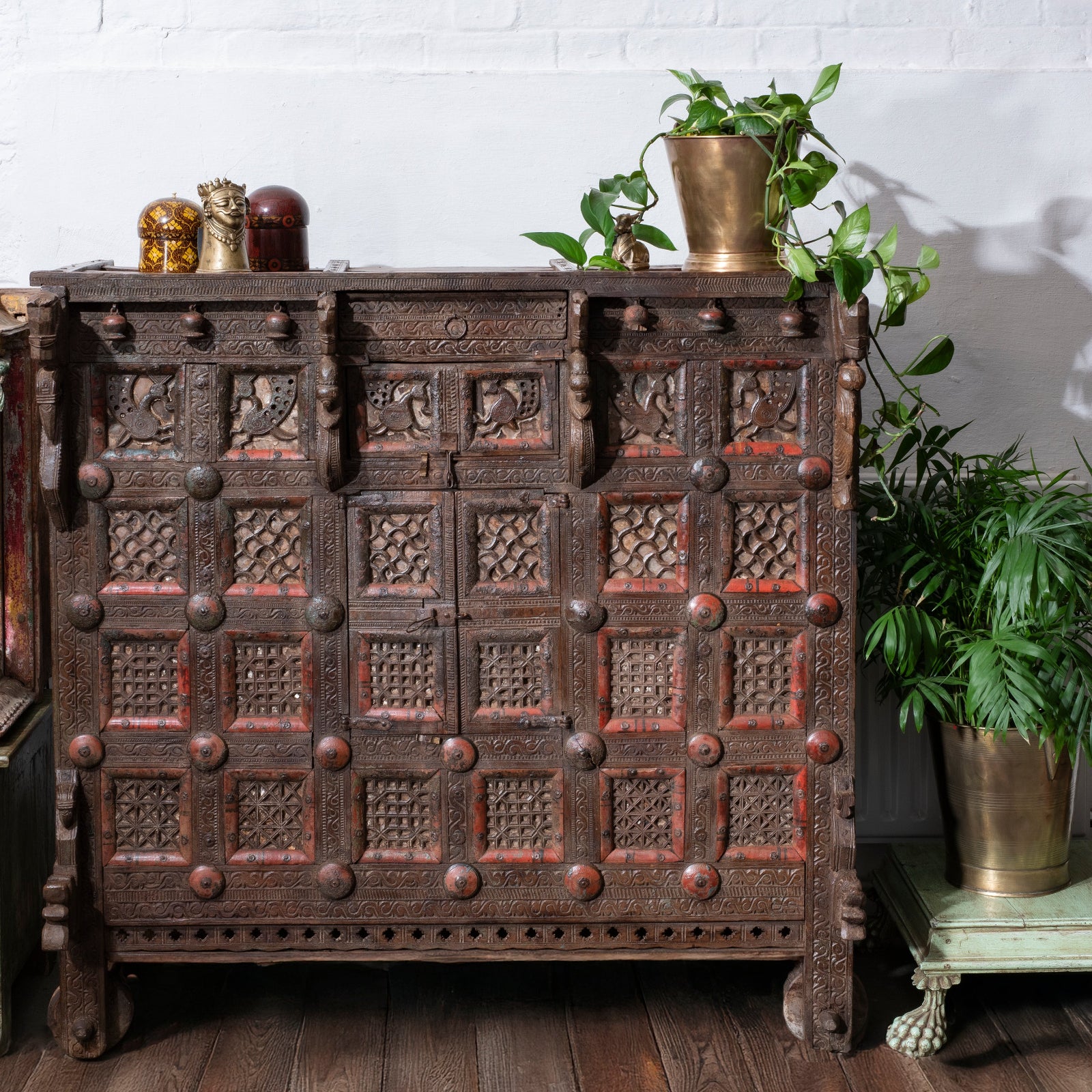
This style of Indian dowry chest is known as a majus. Identifiable from the chip carved geometric designs, horse brackets and splayed legs, this piece is from Saurashtra in Gujarat and dates to the 19th century.
The front of this beautiful chest has been chip carved in the traditional style with peacocks and stylised lotus flowers. It has four horse heads adorning each corner and a central door slides to the right to reveal a large interior storage space.
Traditionally the bride's family had to offer gifts known as Dowry - to the bridegroom's family if they were to find a good husband for their daughter. Dowry was normally Gold jewellery and Silk saris but sometimes brass cooking pots and other family treasures were exchanged. In modern times dowry is supposed to have been made an illegal practice, but in reality, it is still practiced and cars and even washing machines have been known to be exchanged.
Original: $2,086.16
-65%$2,086.16
$730.16More Images


Carved Teak Majus Dowry Chest From Saurashtra - 19th Century
This style of Indian dowry chest is known as a majus. Identifiable from the chip carved geometric designs, horse brackets and splayed legs, this piece is from Saurashtra in Gujarat and dates to the 19th century.
The front of this beautiful chest has been chip carved in the traditional style with peacocks and stylised lotus flowers. It has four horse heads adorning each corner and a central door slides to the right to reveal a large interior storage space.
Traditionally the bride's family had to offer gifts known as Dowry - to the bridegroom's family if they were to find a good husband for their daughter. Dowry was normally Gold jewellery and Silk saris but sometimes brass cooking pots and other family treasures were exchanged. In modern times dowry is supposed to have been made an illegal practice, but in reality, it is still practiced and cars and even washing machines have been known to be exchanged.
Product Information
Product Information
Shipping & Returns
Shipping & Returns
Description
This style of Indian dowry chest is known as a majus. Identifiable from the chip carved geometric designs, horse brackets and splayed legs, this piece is from Saurashtra in Gujarat and dates to the 19th century.
The front of this beautiful chest has been chip carved in the traditional style with peacocks and stylised lotus flowers. It has four horse heads adorning each corner and a central door slides to the right to reveal a large interior storage space.
Traditionally the bride's family had to offer gifts known as Dowry - to the bridegroom's family if they were to find a good husband for their daughter. Dowry was normally Gold jewellery and Silk saris but sometimes brass cooking pots and other family treasures were exchanged. In modern times dowry is supposed to have been made an illegal practice, but in reality, it is still practiced and cars and even washing machines have been known to be exchanged.