Teak Majus Dowry Chest From Saurashtra - 19th Century
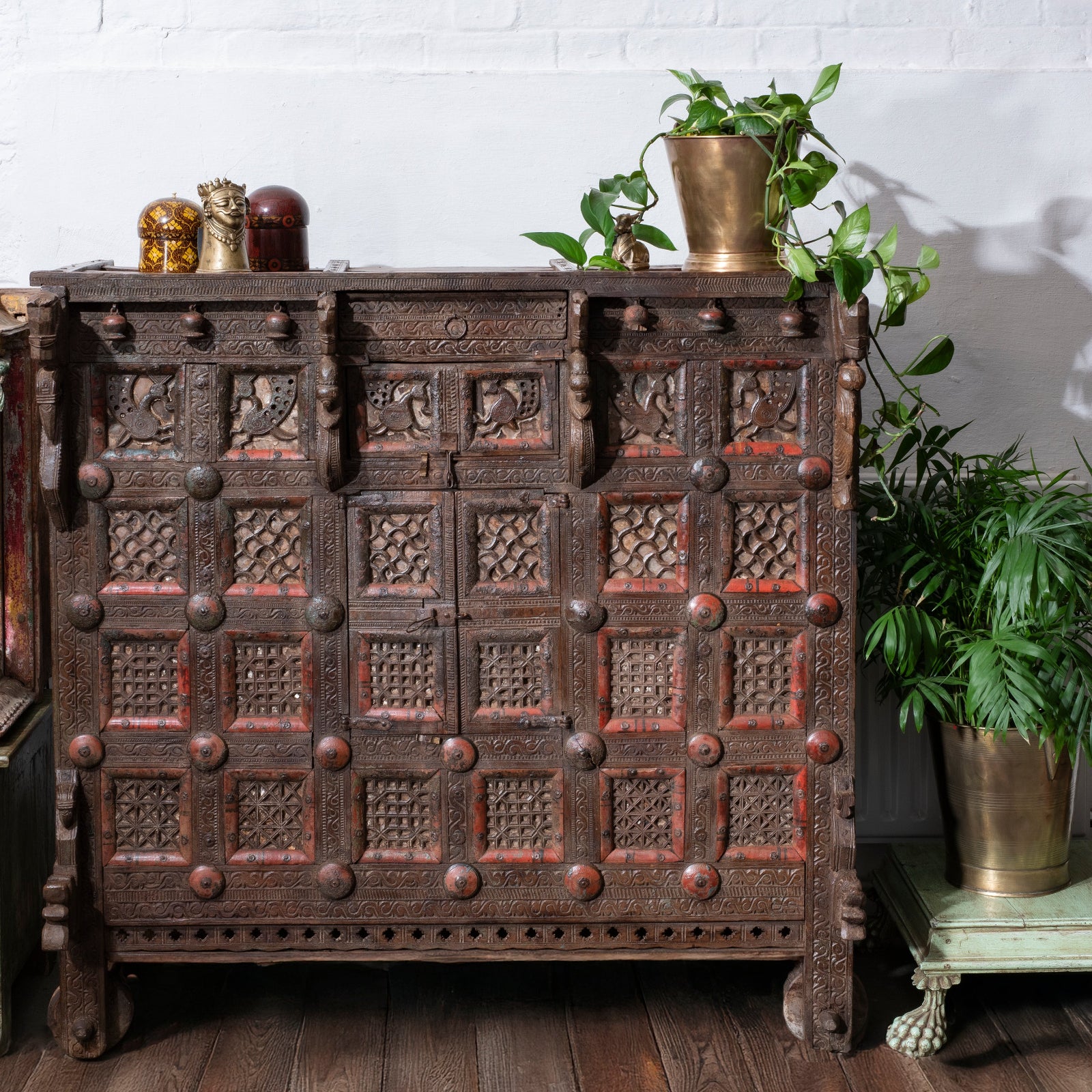
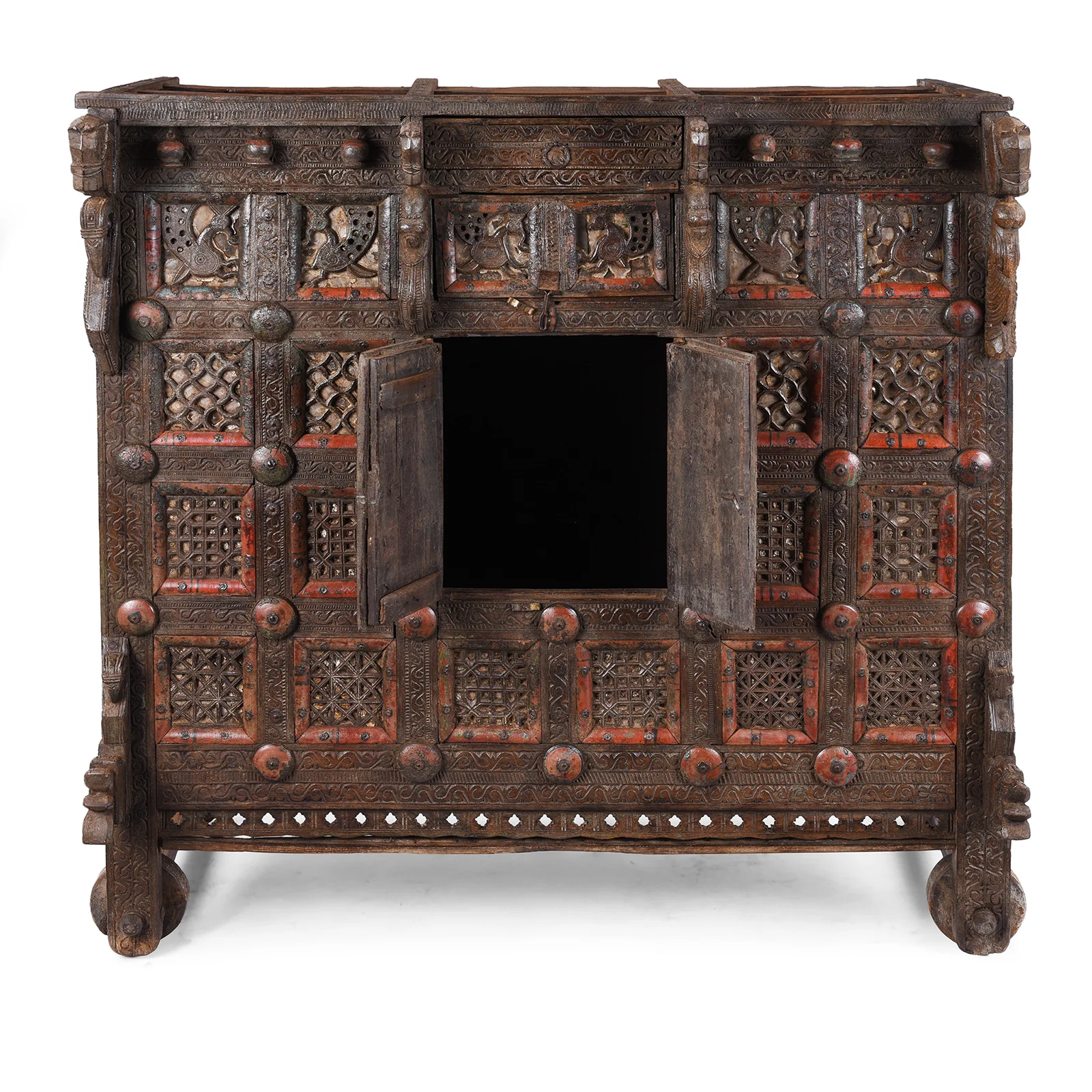
This richly carved and beautifully aged teak dowry chest is a superb 19th-century example of a majus chest from Saurashtra, Gujarat. Traditionally crafted by artisans of the Kanbi (now Patidar) caste, these chests were used in wedding ceremonies to transport a bride's most treasured belongings - jewellery, saris, or even brass utensils - into her new household.
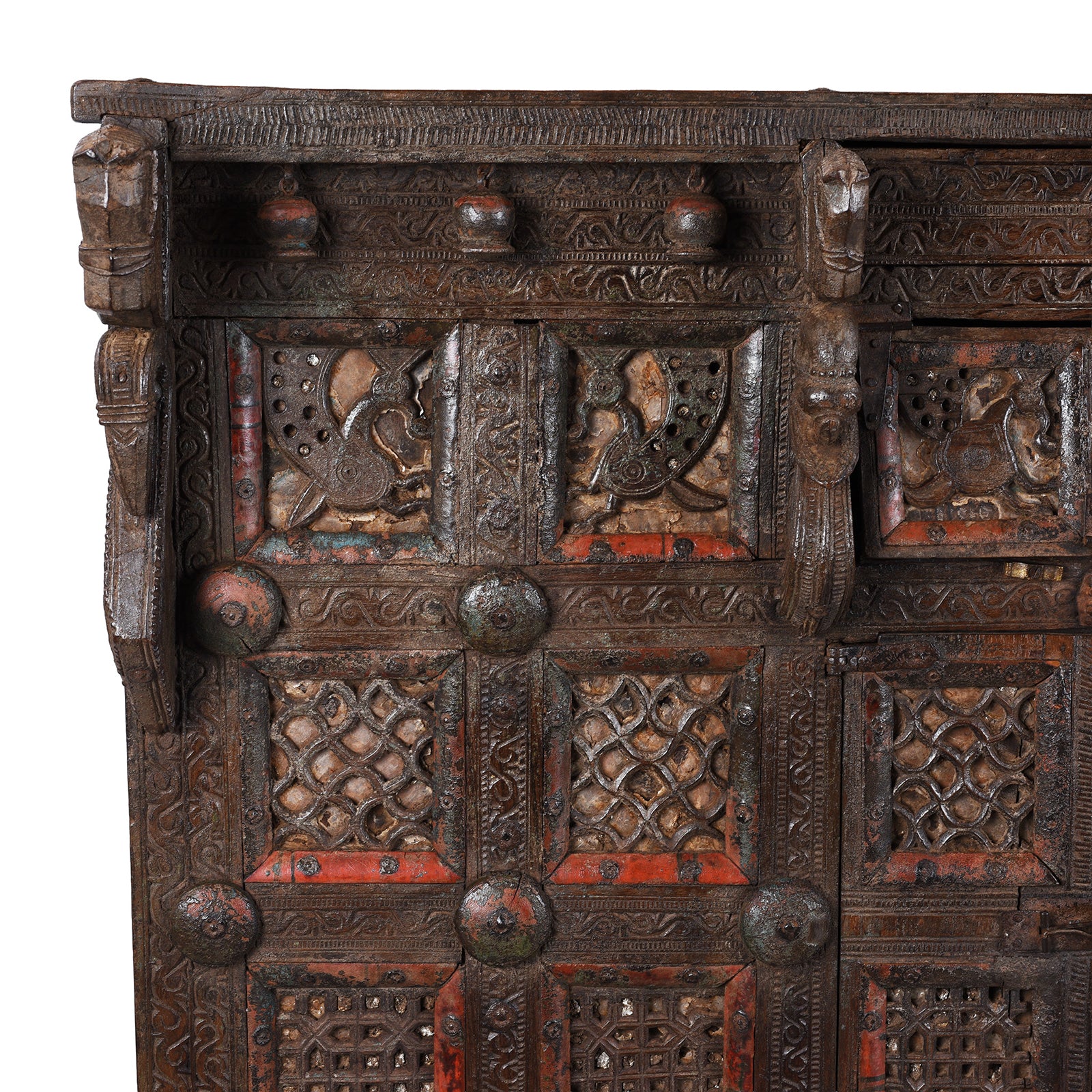
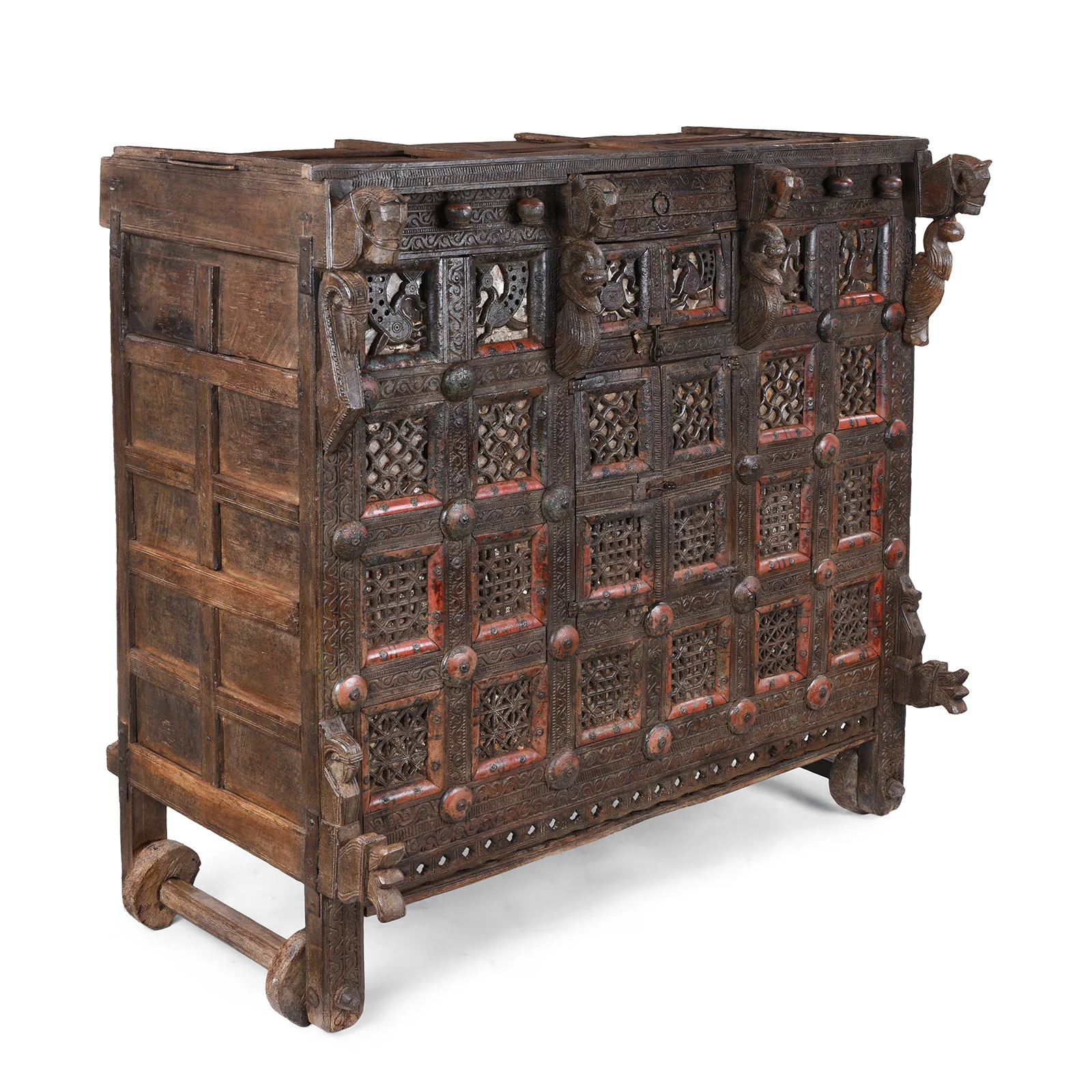
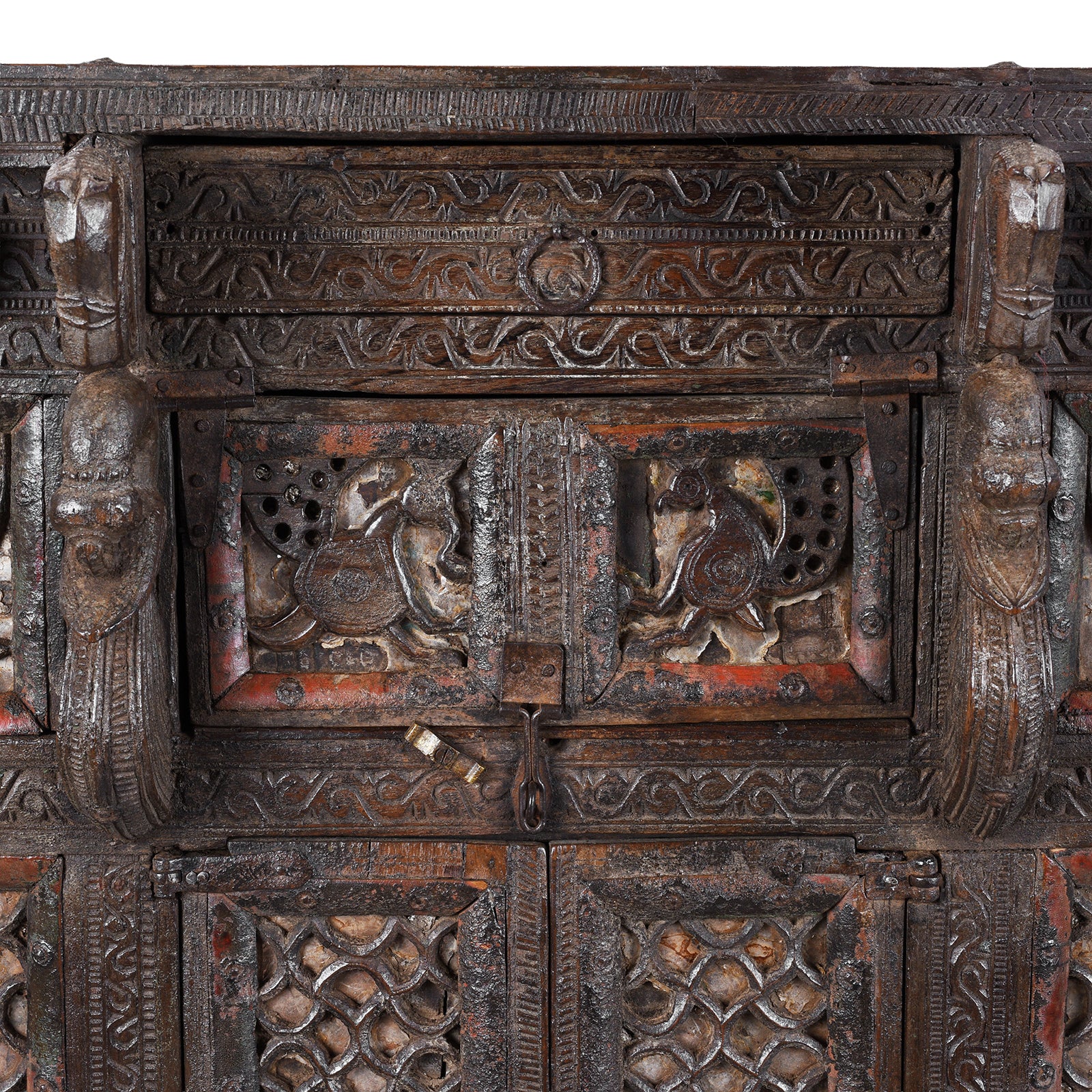
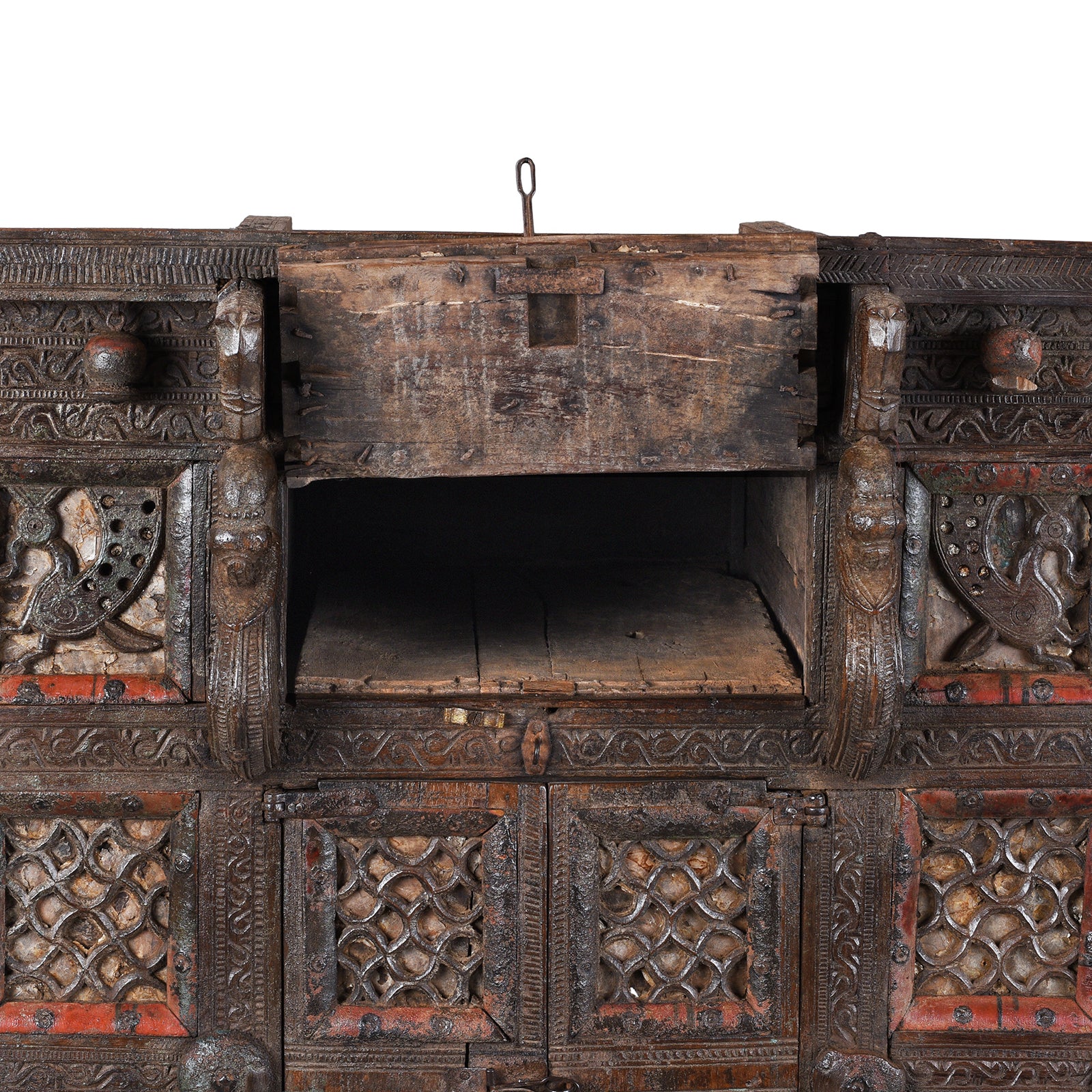
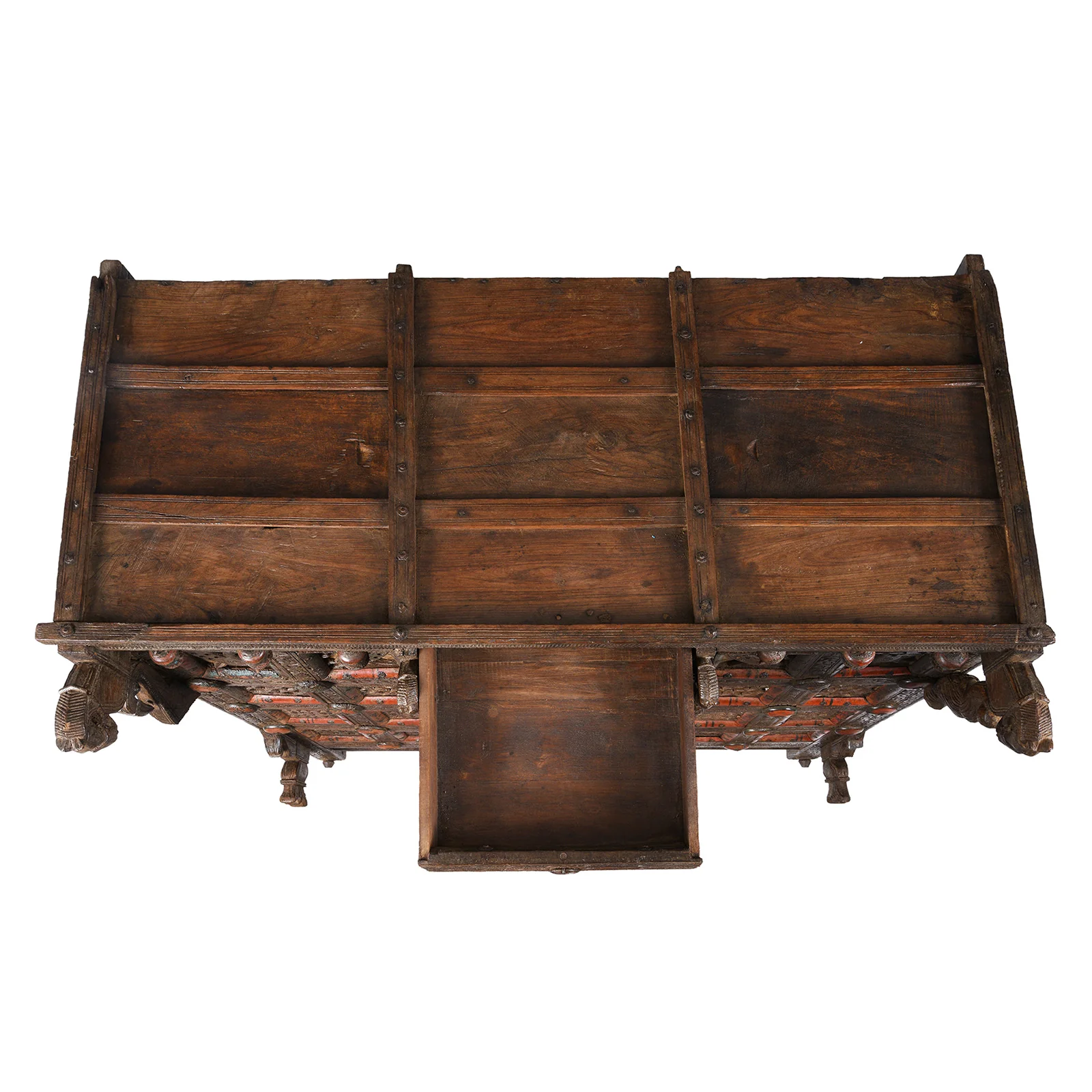
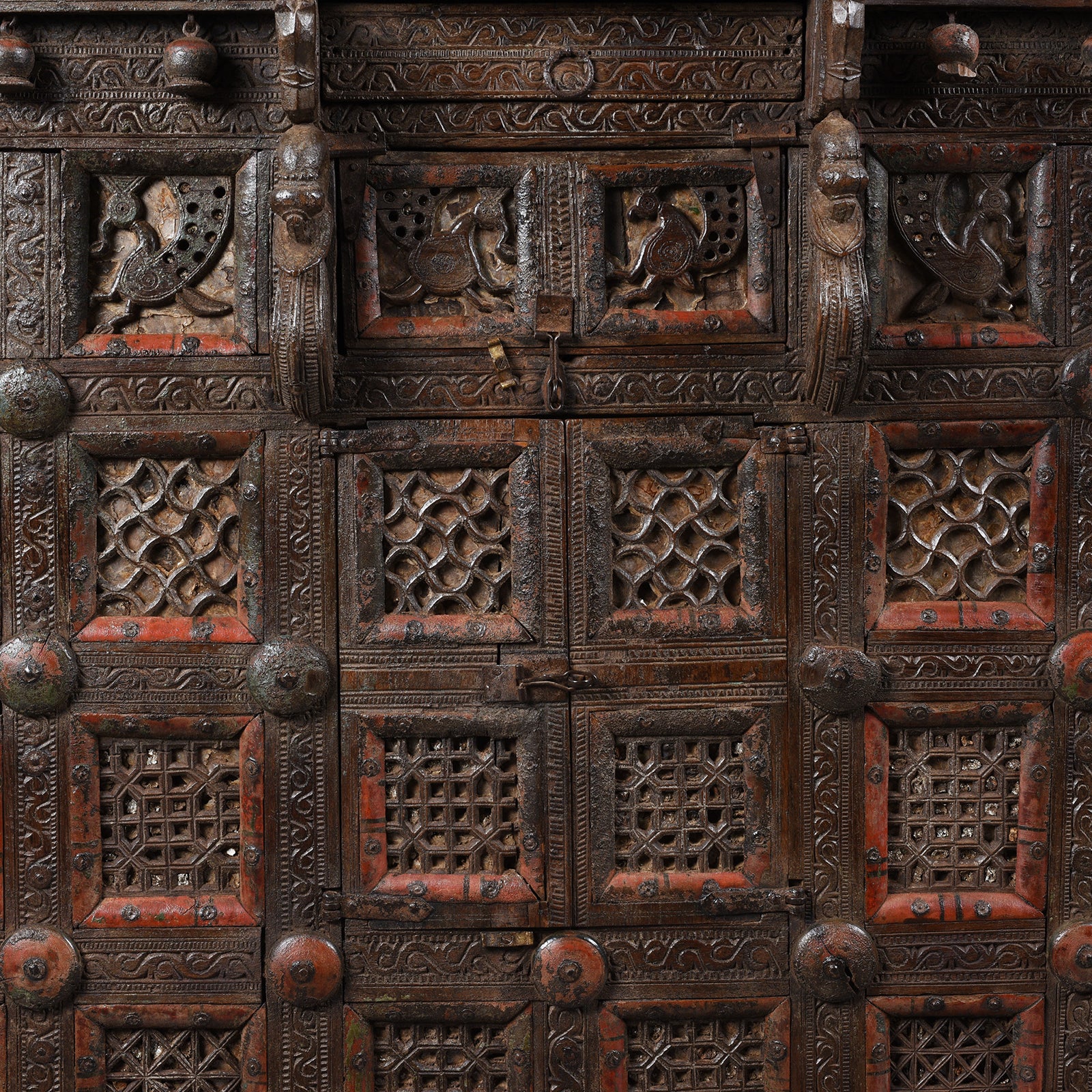
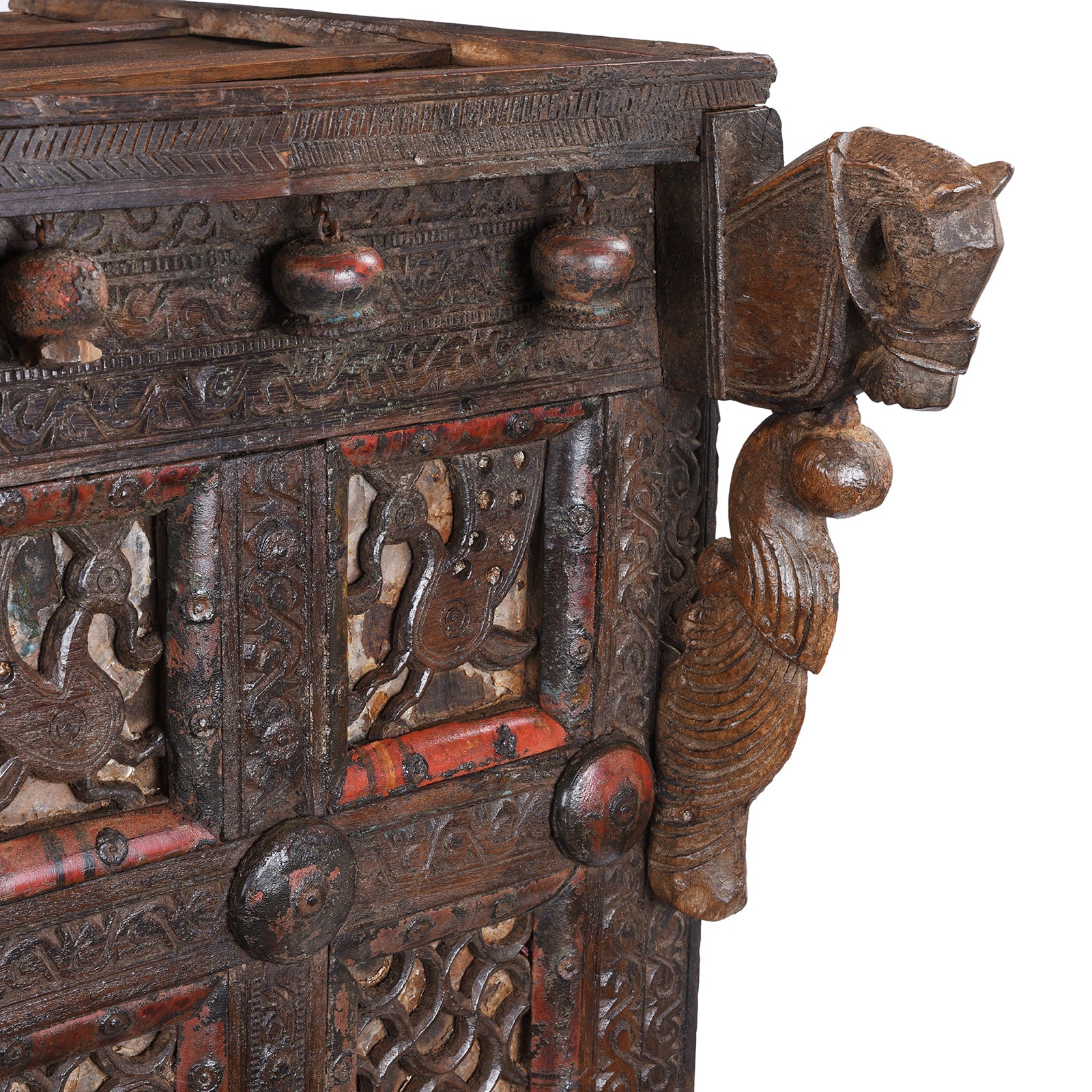
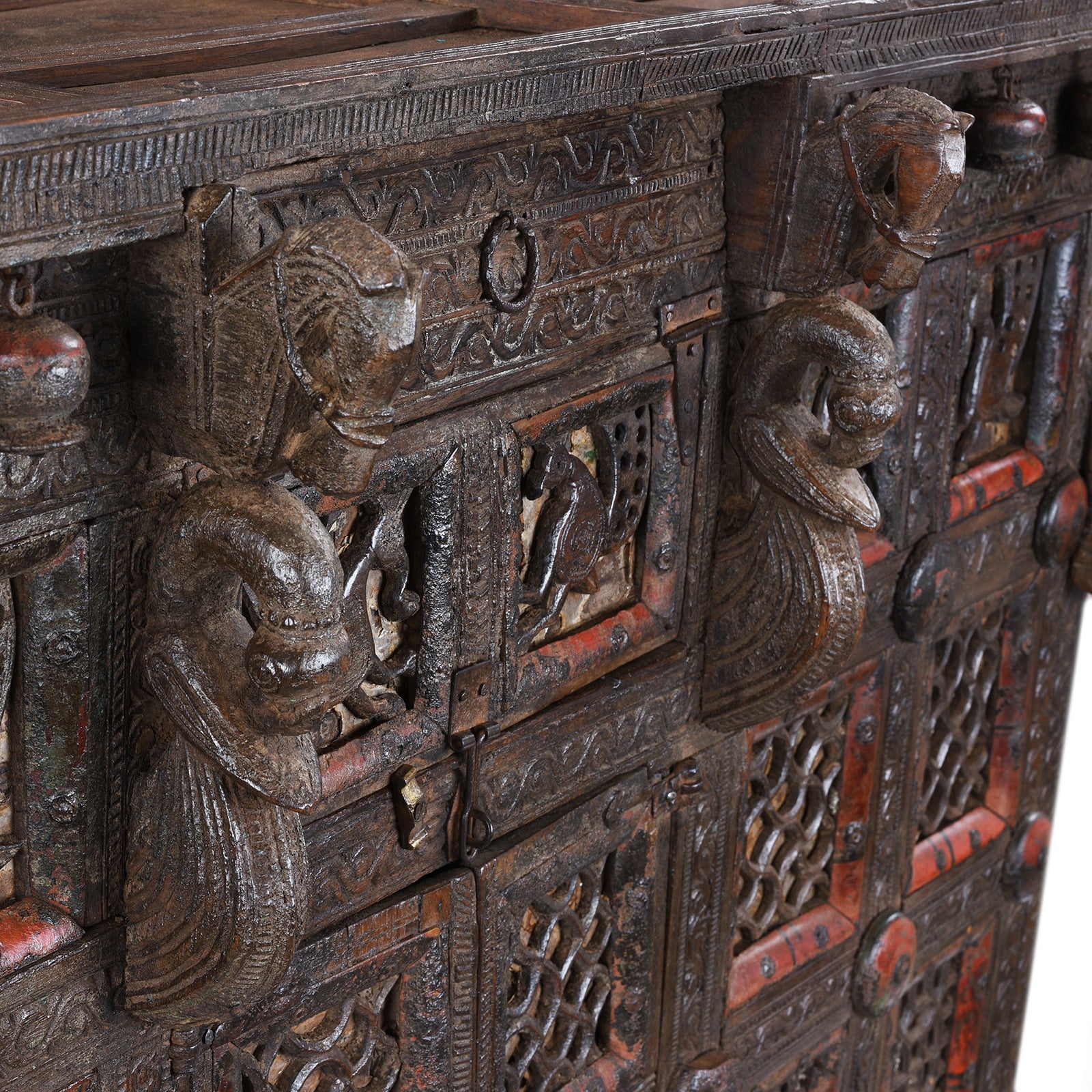
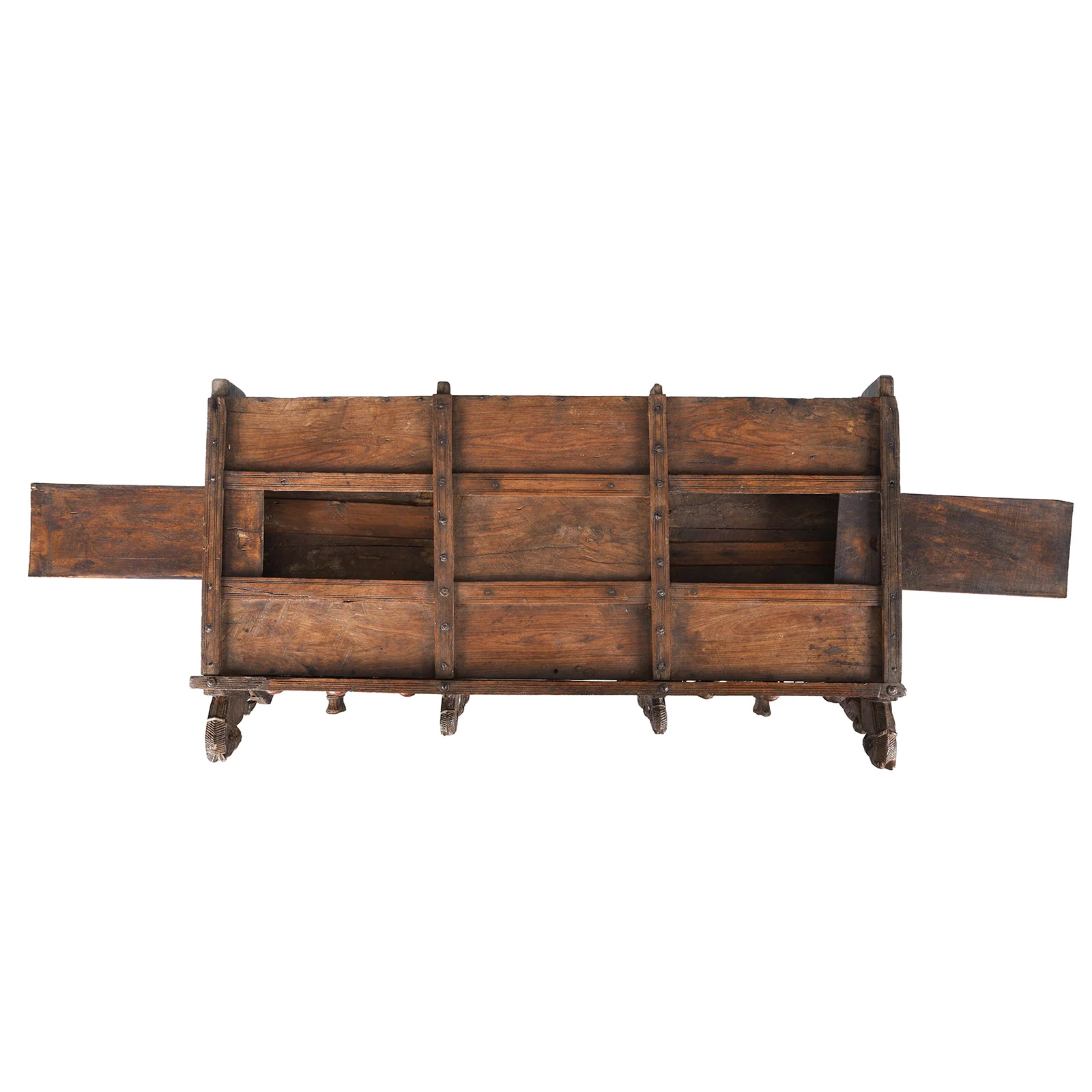
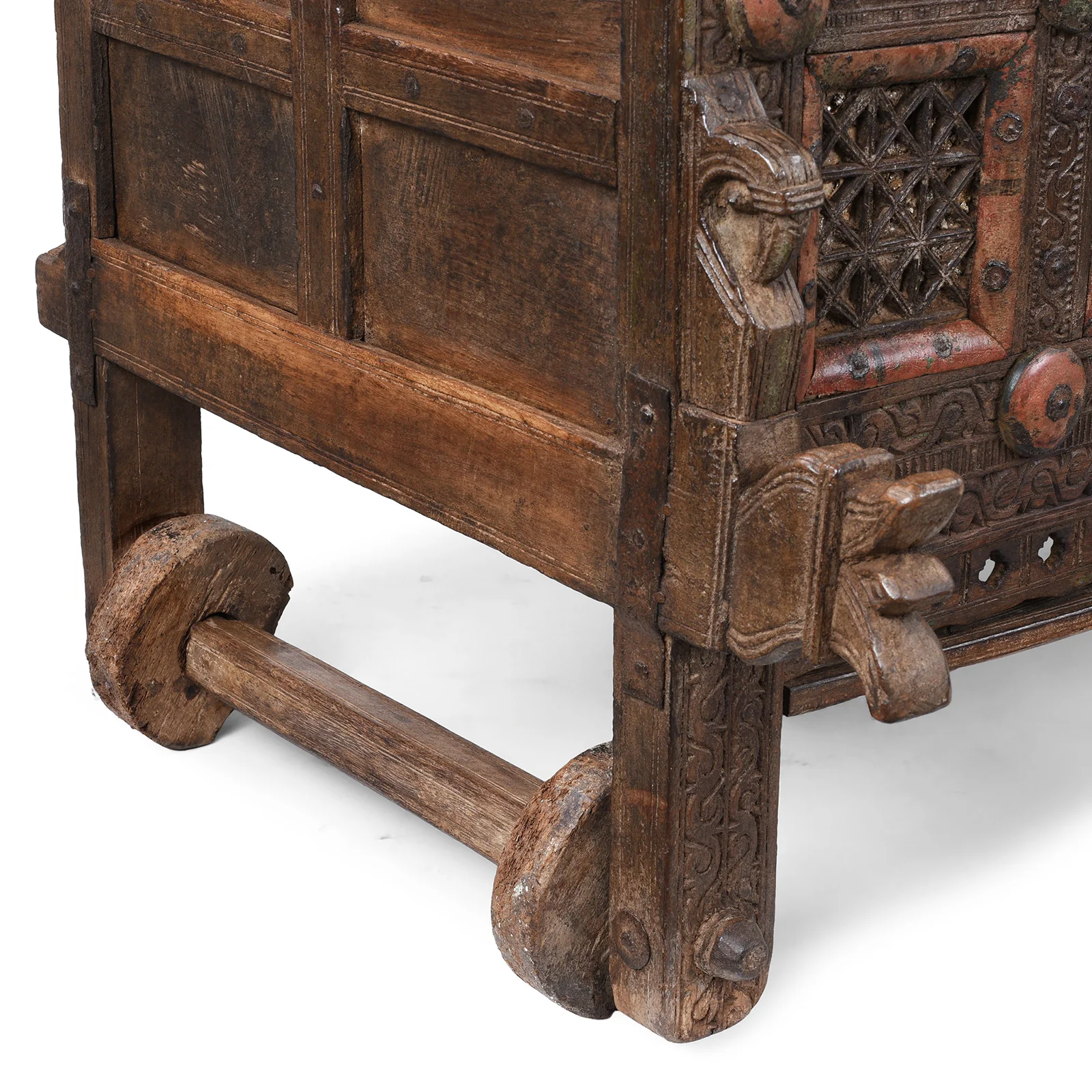
The design reflects not only exceptional craftsmanship but also strong stylistic influences from the neighbouring Sindh region - evident in the lattice-style carvings, stylised animal figures, and distinctive red lacquered discs. Peacocks are finely carved into the side panels, while horse heads in bold relief protrude from each corner. Cleverly concealed compartments add intrigue and function, and the original four wheels remain intact, offering mobility even when fully loaded.
Reference: A similar majus chest is illustrated and discussed in Folk Art & Culture of Gujarat: A Guide to the Collection of the Shreyas Folk Museum of Gujarat by Jyotindra Jain, which highlights the cultural and regional craftsmanship traditions of Gujarat and the influence of Sindh folk art.
- Origin: Saurashtra, Gujarat, Northern India (with Sindh regional influences)
- Date: 19th century
- Materials: Hand-carved teak with remnants of red pigment and lacquer detailing
- Features: Peacocks and horse heads in relief; geometric lattice carvings; lacquered discs; hidden compartments; original wheels
- Condition: Beautifully aged with wear consistent with use; patina and traces of original pigment and lacquer
- Dimensions: W120 x D70 x H118 cm
More Images


Teak Majus Dowry Chest From Saurashtra - 19th Century
This richly carved and beautifully aged teak dowry chest is a superb 19th-century example of a majus chest from Saurashtra, Gujarat. Traditionally crafted by artisans of the Kanbi (now Patidar) caste, these chests were used in wedding ceremonies to transport a bride's most treasured belongings - jewellery, saris, or even brass utensils - into her new household.
The design reflects not only exceptional craftsmanship but also strong stylistic influences from the neighbouring Sindh region - evident in the lattice-style carvings, stylised animal figures, and distinctive red lacquered discs. Peacocks are finely carved into the side panels, while horse heads in bold relief protrude from each corner. Cleverly concealed compartments add intrigue and function, and the original four wheels remain intact, offering mobility even when fully loaded.
Reference: A similar majus chest is illustrated and discussed in Folk Art & Culture of Gujarat: A Guide to the Collection of the Shreyas Folk Museum of Gujarat by Jyotindra Jain, which highlights the cultural and regional craftsmanship traditions of Gujarat and the influence of Sindh folk art.
- Origin: Saurashtra, Gujarat, Northern India (with Sindh regional influences)
- Date: 19th century
- Materials: Hand-carved teak with remnants of red pigment and lacquer detailing
- Features: Peacocks and horse heads in relief; geometric lattice carvings; lacquered discs; hidden compartments; original wheels
- Condition: Beautifully aged with wear consistent with use; patina and traces of original pigment and lacquer
- Dimensions: W120 x D70 x H118 cm
Product Information
Product Information
Shipping & Returns
Shipping & Returns
Description
This richly carved and beautifully aged teak dowry chest is a superb 19th-century example of a majus chest from Saurashtra, Gujarat. Traditionally crafted by artisans of the Kanbi (now Patidar) caste, these chests were used in wedding ceremonies to transport a bride's most treasured belongings - jewellery, saris, or even brass utensils - into her new household.
The design reflects not only exceptional craftsmanship but also strong stylistic influences from the neighbouring Sindh region - evident in the lattice-style carvings, stylised animal figures, and distinctive red lacquered discs. Peacocks are finely carved into the side panels, while horse heads in bold relief protrude from each corner. Cleverly concealed compartments add intrigue and function, and the original four wheels remain intact, offering mobility even when fully loaded.
Reference: A similar majus chest is illustrated and discussed in Folk Art & Culture of Gujarat: A Guide to the Collection of the Shreyas Folk Museum of Gujarat by Jyotindra Jain, which highlights the cultural and regional craftsmanship traditions of Gujarat and the influence of Sindh folk art.
- Origin: Saurashtra, Gujarat, Northern India (with Sindh regional influences)
- Date: 19th century
- Materials: Hand-carved teak with remnants of red pigment and lacquer detailing
- Features: Peacocks and horse heads in relief; geometric lattice carvings; lacquered discs; hidden compartments; original wheels
- Condition: Beautifully aged with wear consistent with use; patina and traces of original pigment and lacquer
- Dimensions: W120 x D70 x H118 cm