Dutch Colonial Chest from Ceylon - 18th Century
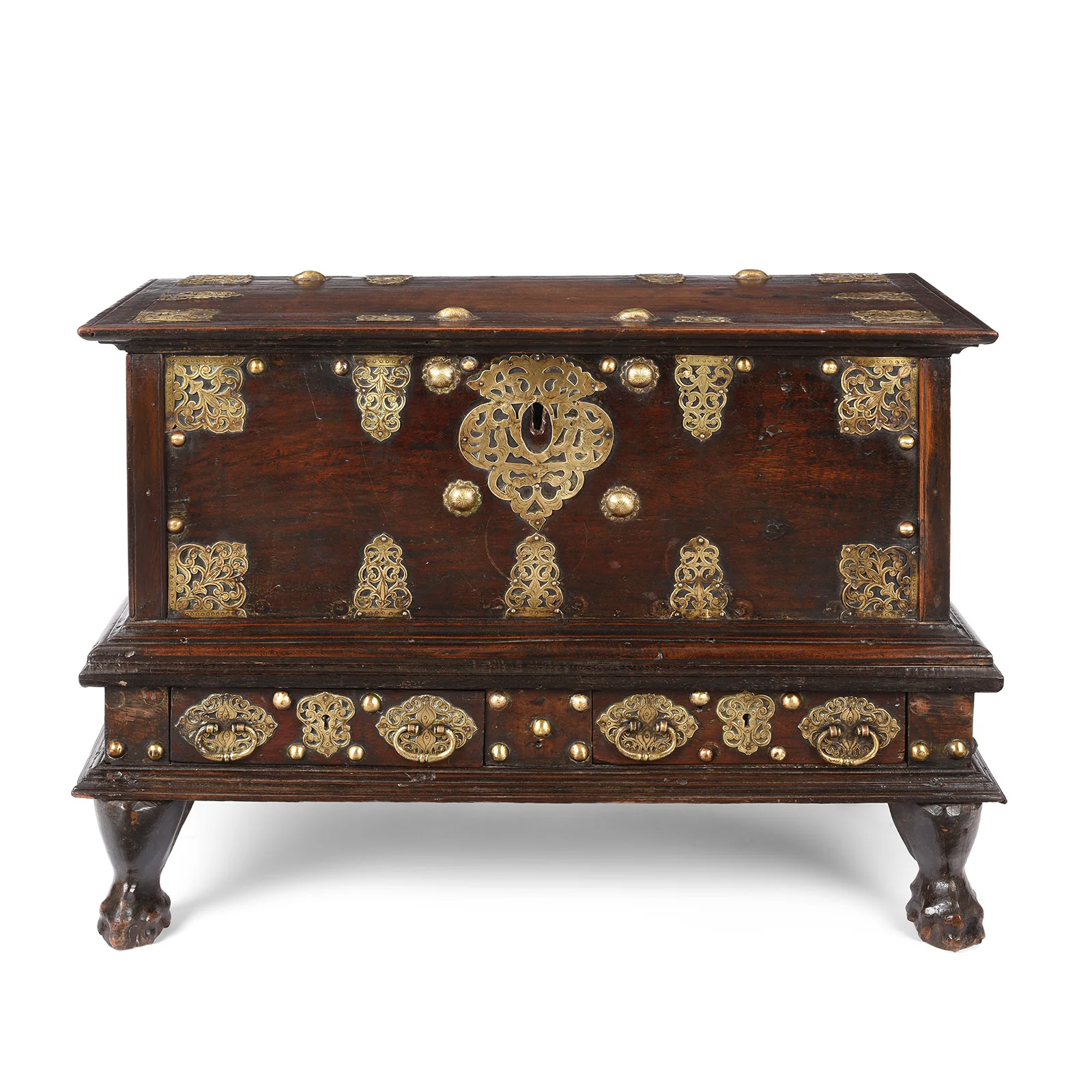
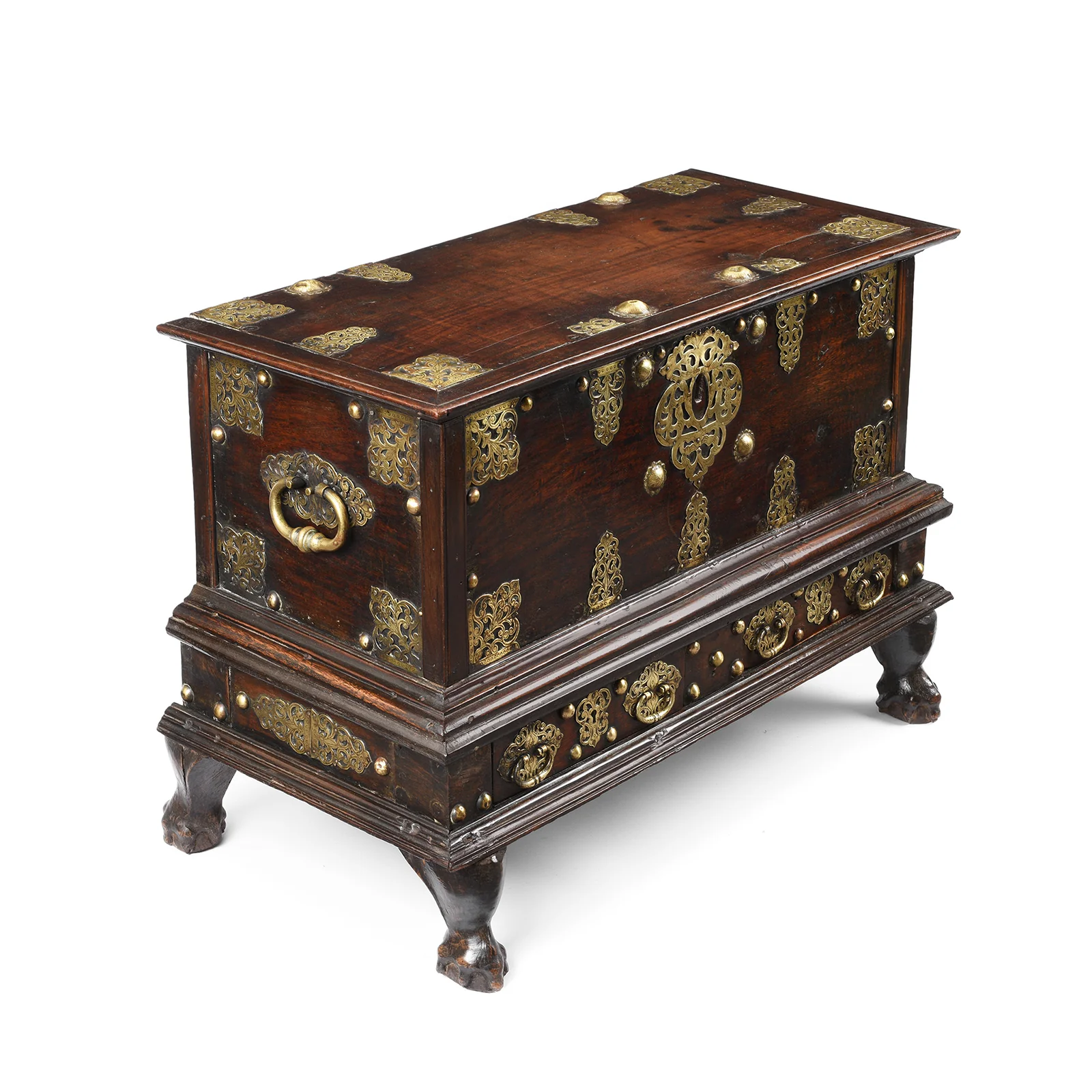
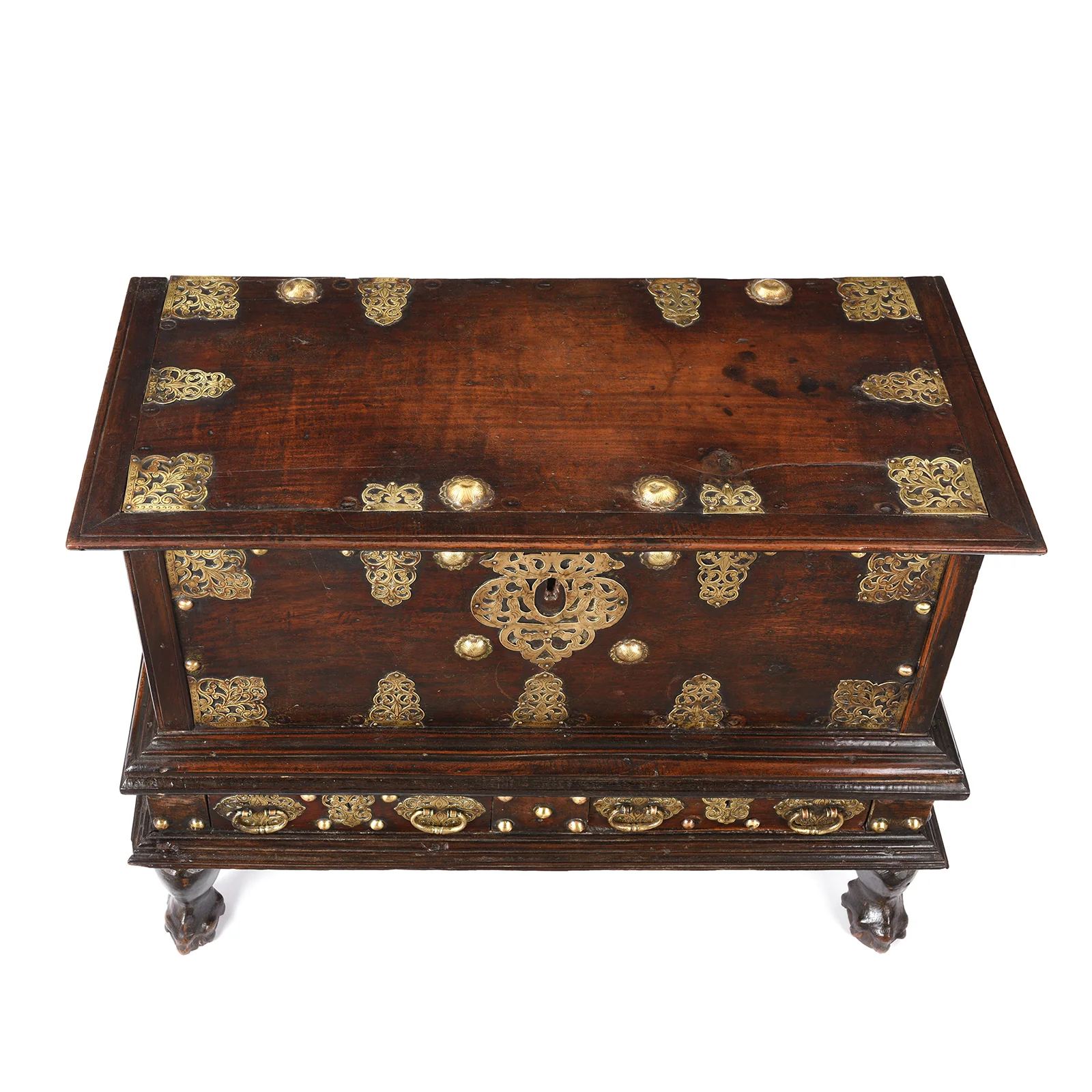
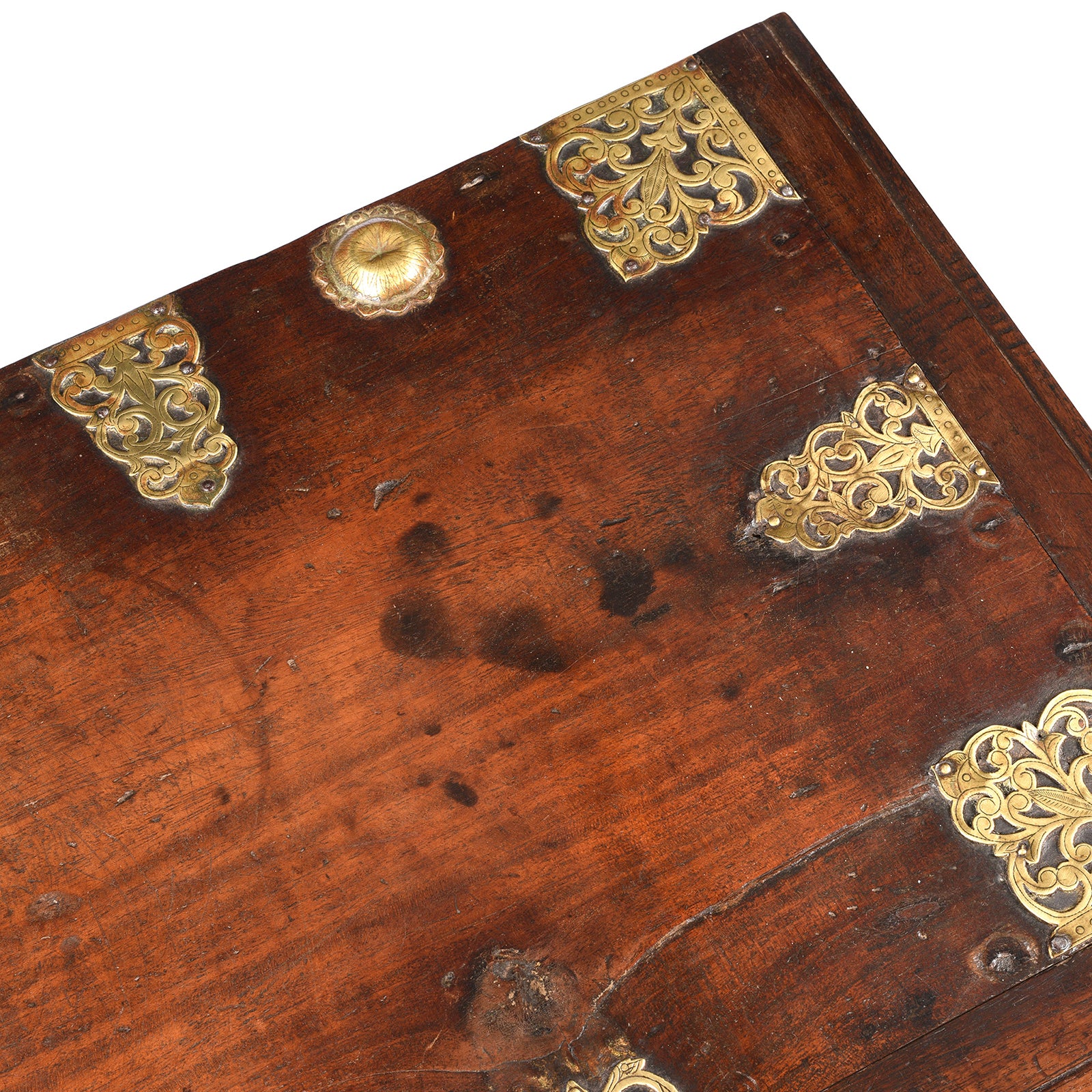
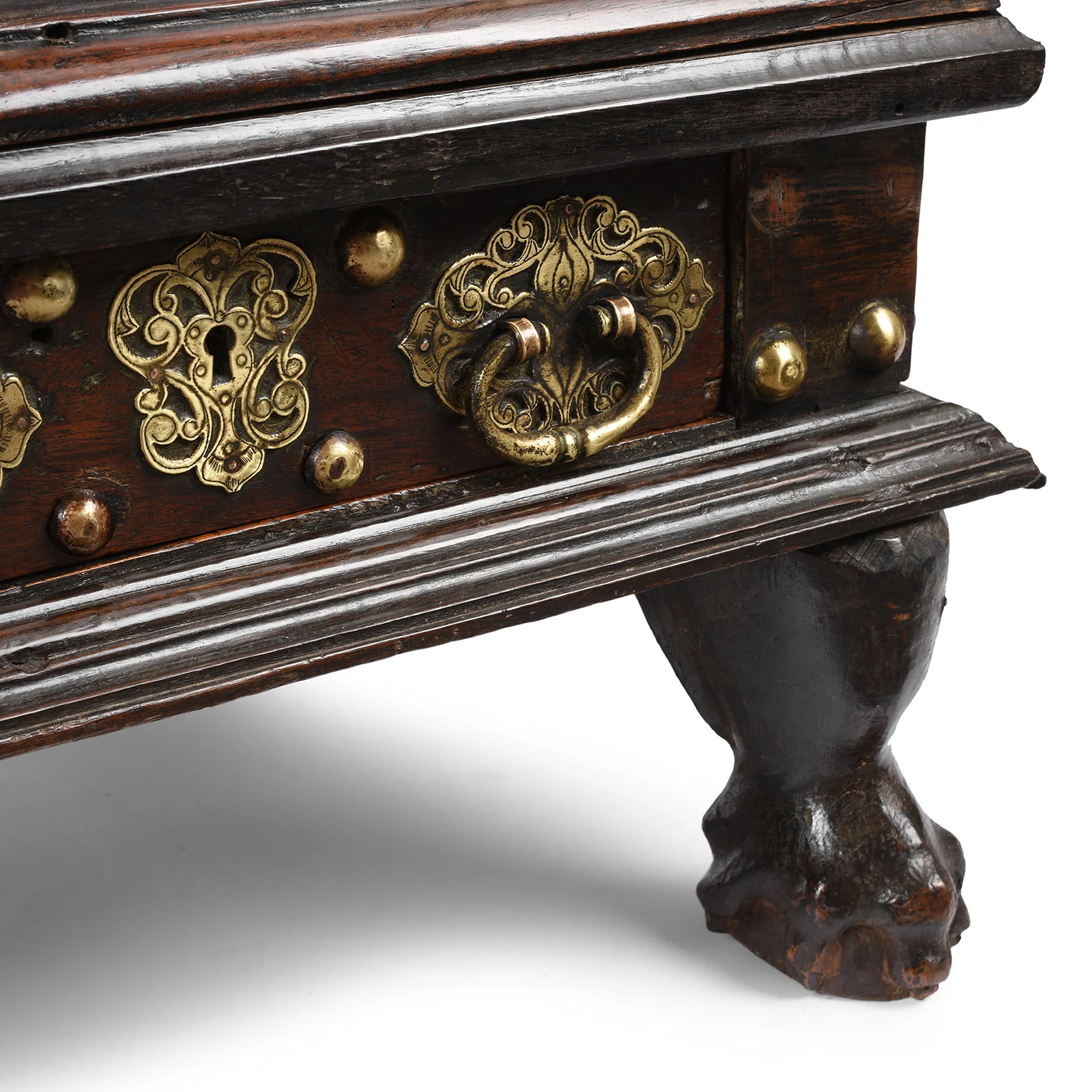
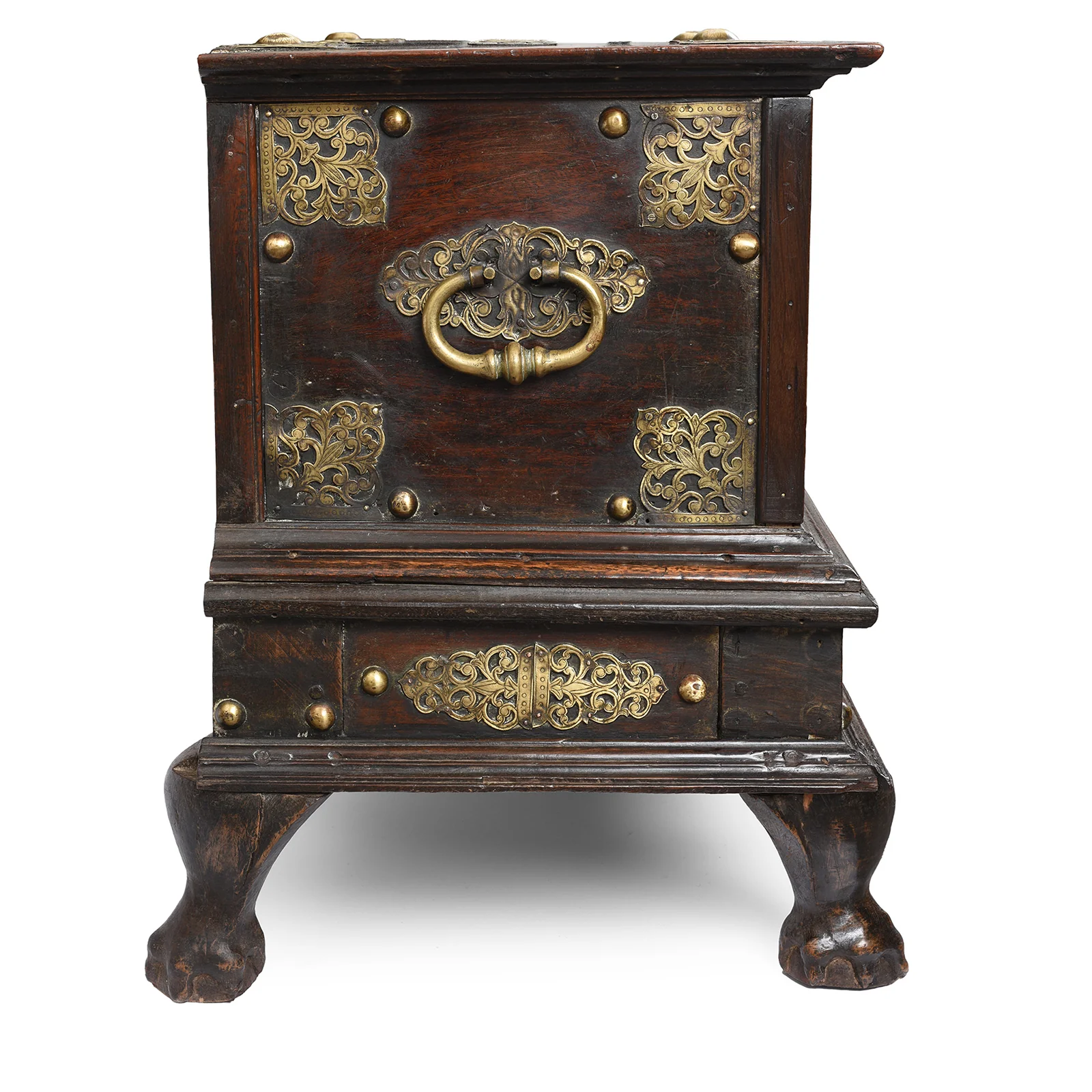
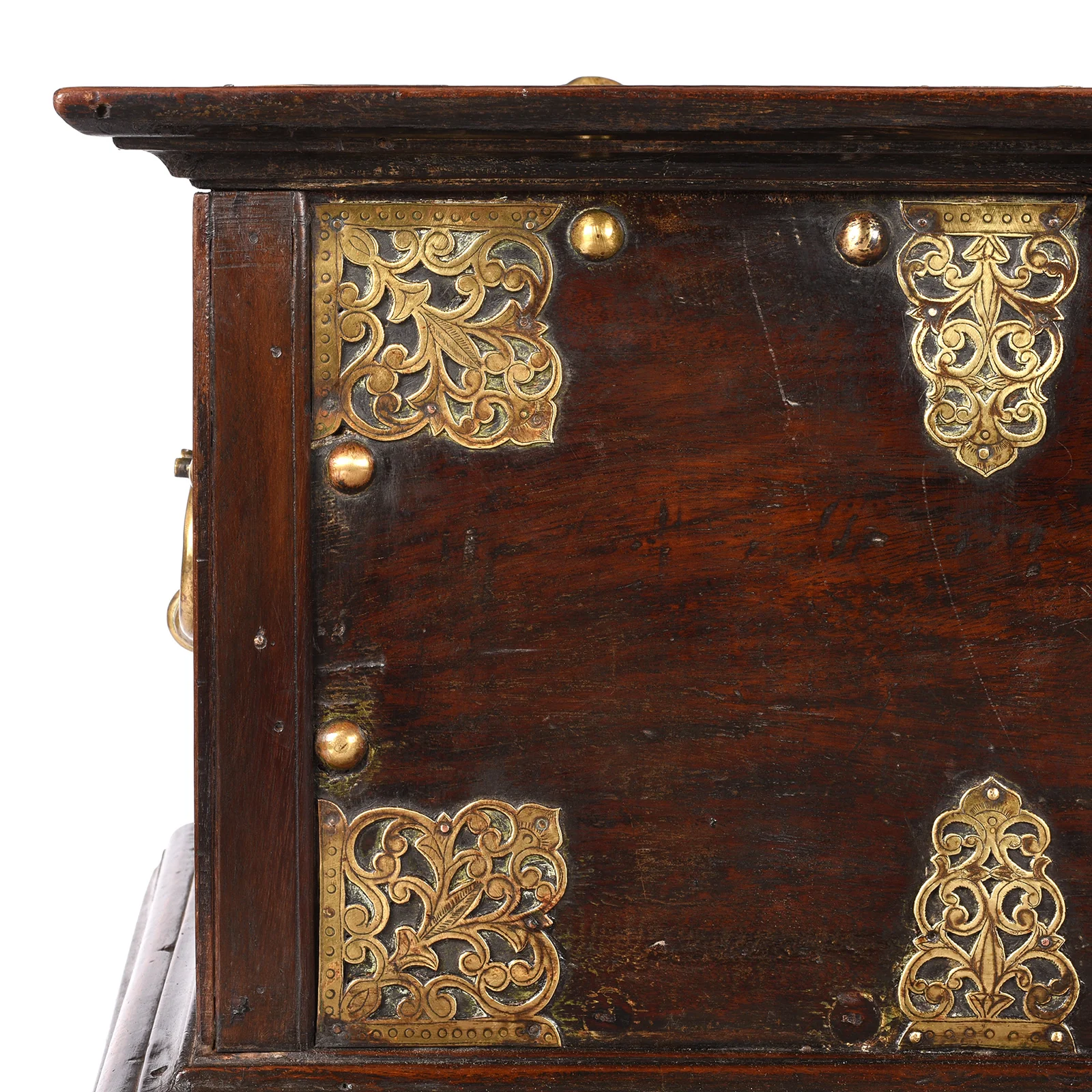
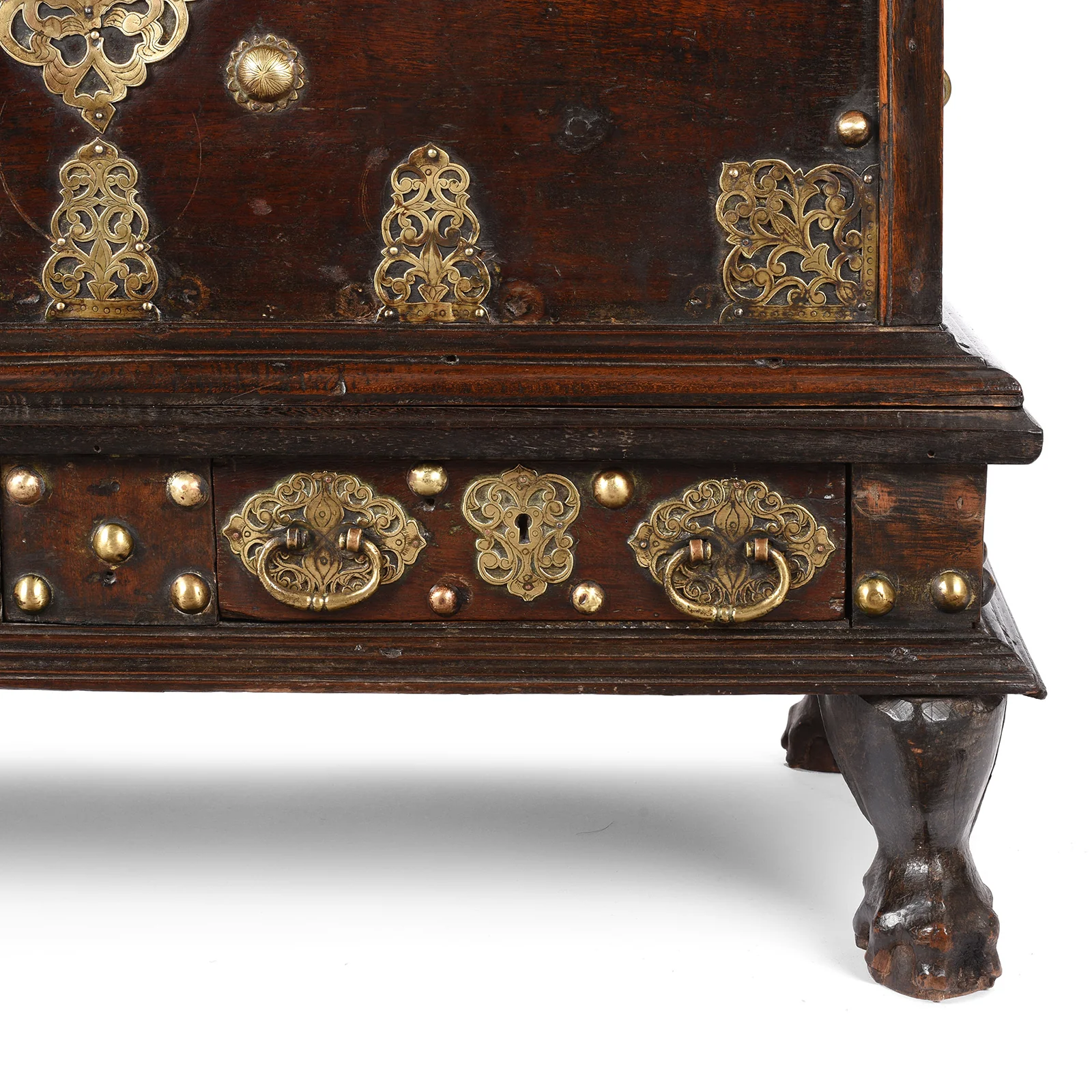
This majestic antique Indo-Dutch chest harks back to the colonial days and the 'Spice Wars'. Originally from colonial Ceylon (modern-day Sri Lanka), it dates from the middle of the 18th century. It is beautifully constructed from jackfruit wood with brass decorations and stands on four carved hoof legs.
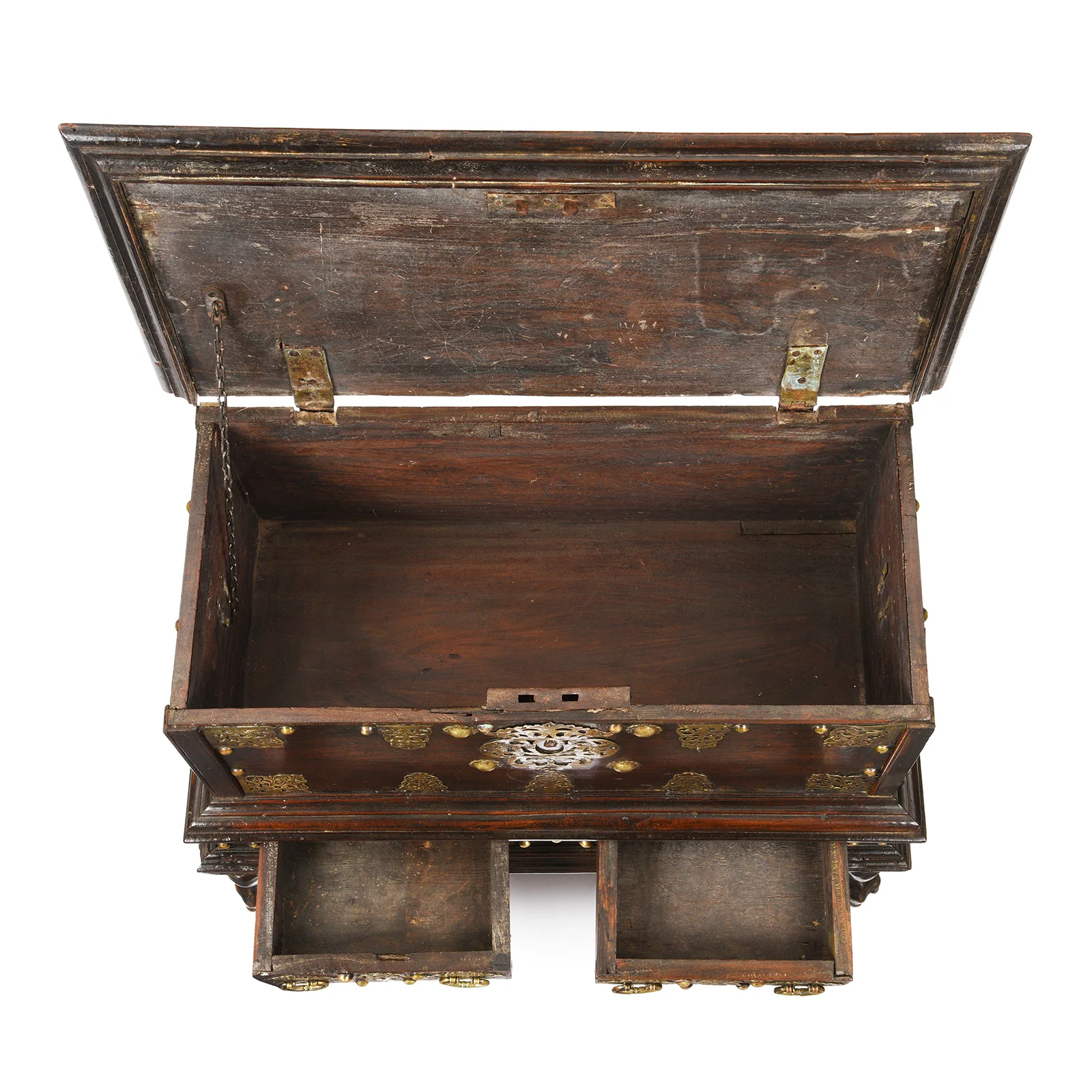
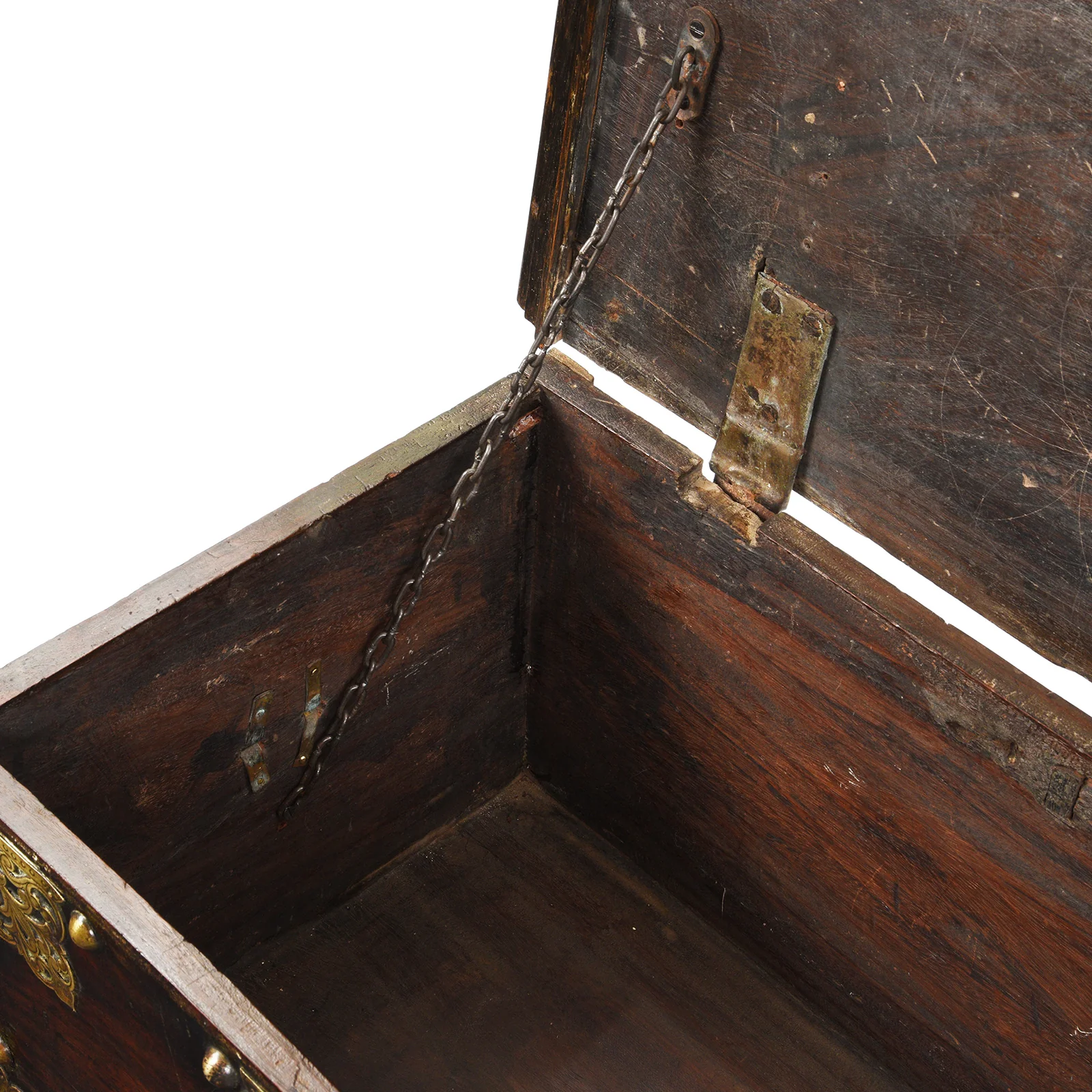
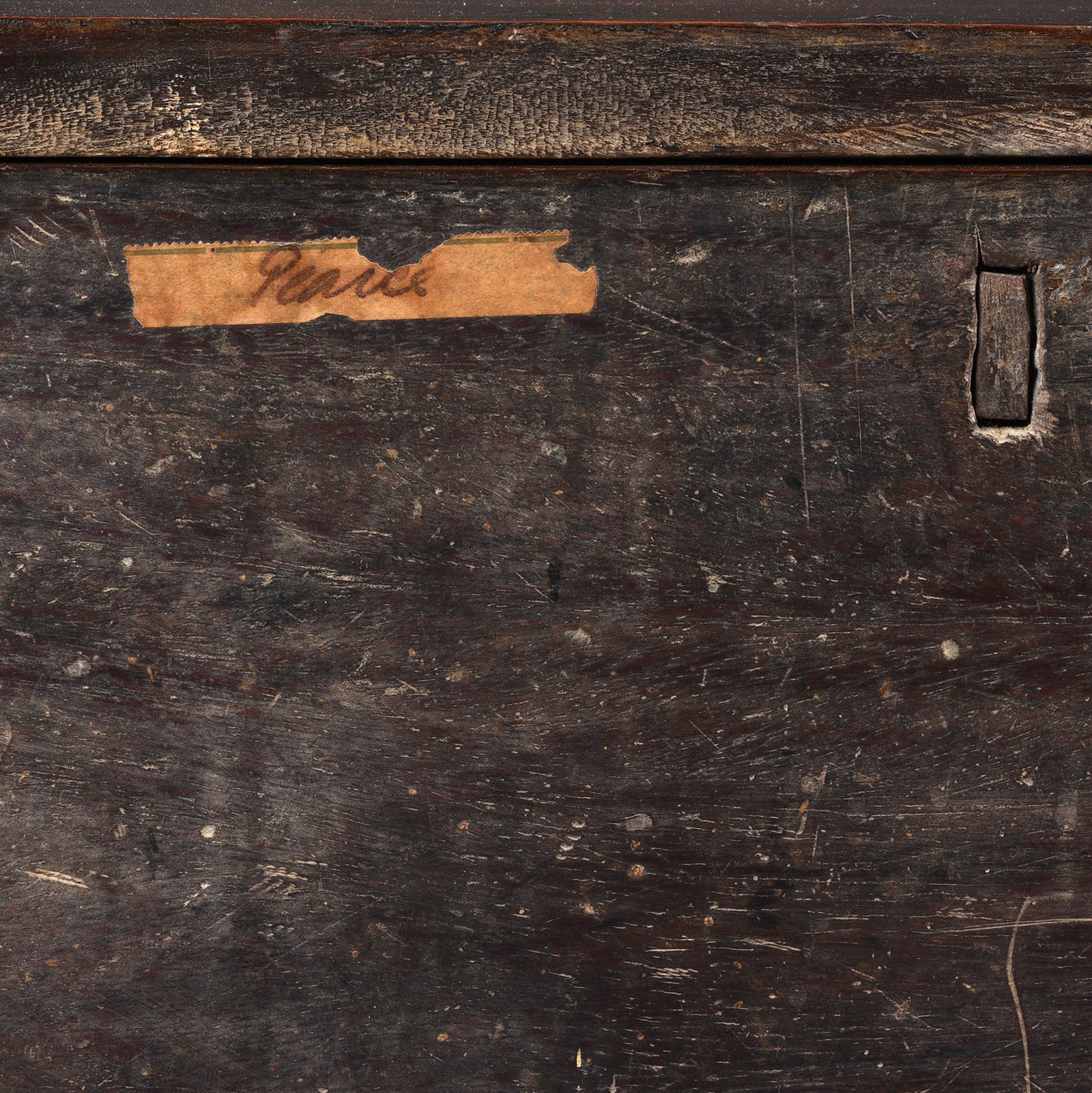
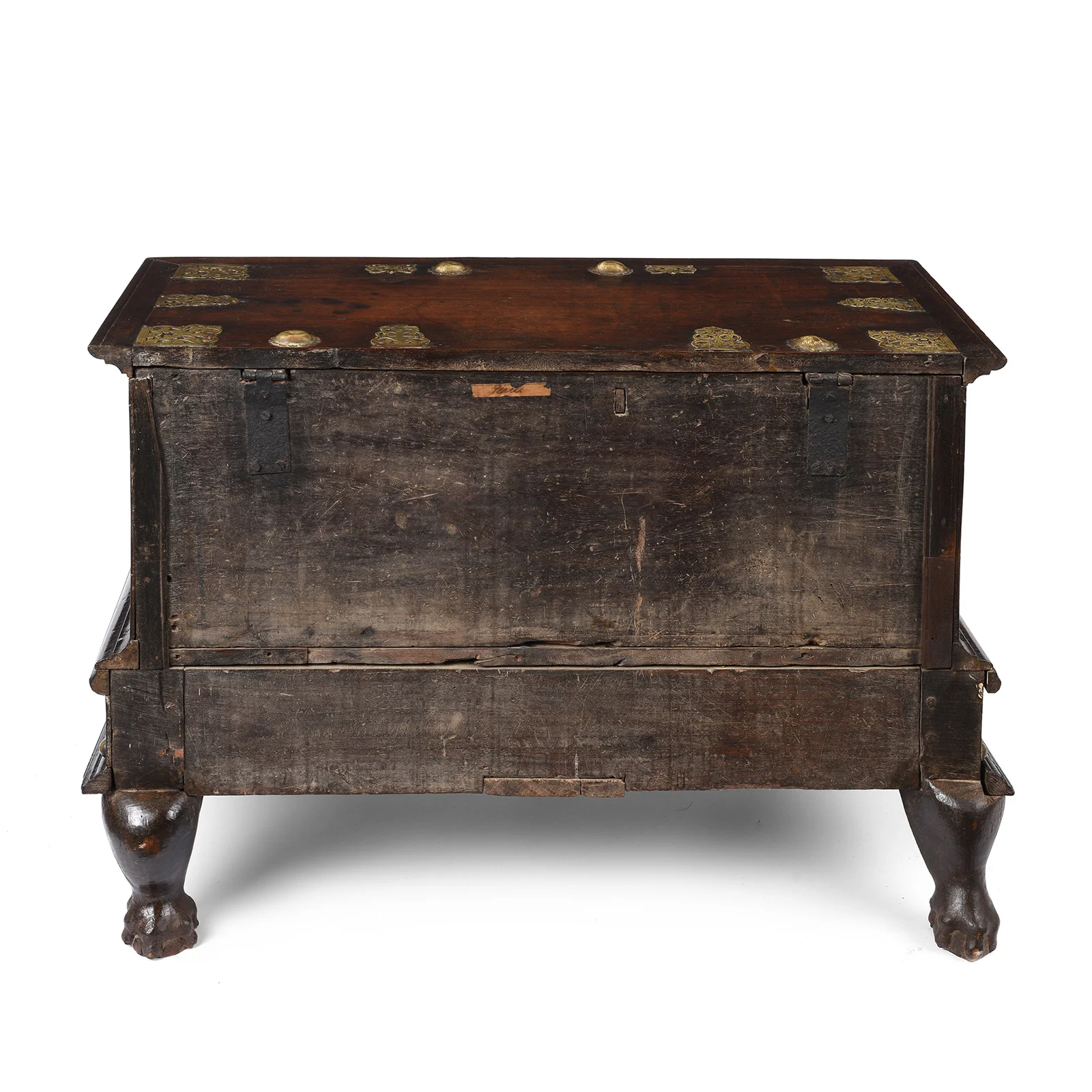
The interior consists of one large storage space with a chain preventing the lid from falling open. Two drawers along the bottom add additional storage. A name, 'Pearce', likely the name of a previous owner can still be seen on the back.
Doubtless, this chest would have been owned by a wealthy merchant who was part of the Dutch East India Company, often abbreviated to VOC (Verenigde Oostindische Compagnie / United East India Company) which was formally dissolved in 1799 due to bankruptcy. This dates the chest earlier than 1799 and it's likely the trader would have traveled between Sri Lanka, South India, and Europe. It has had some repairs over the years and some historic scratches can be seen on the front face.
More Images
Dutch Colonial Chest from Ceylon - 18th Century
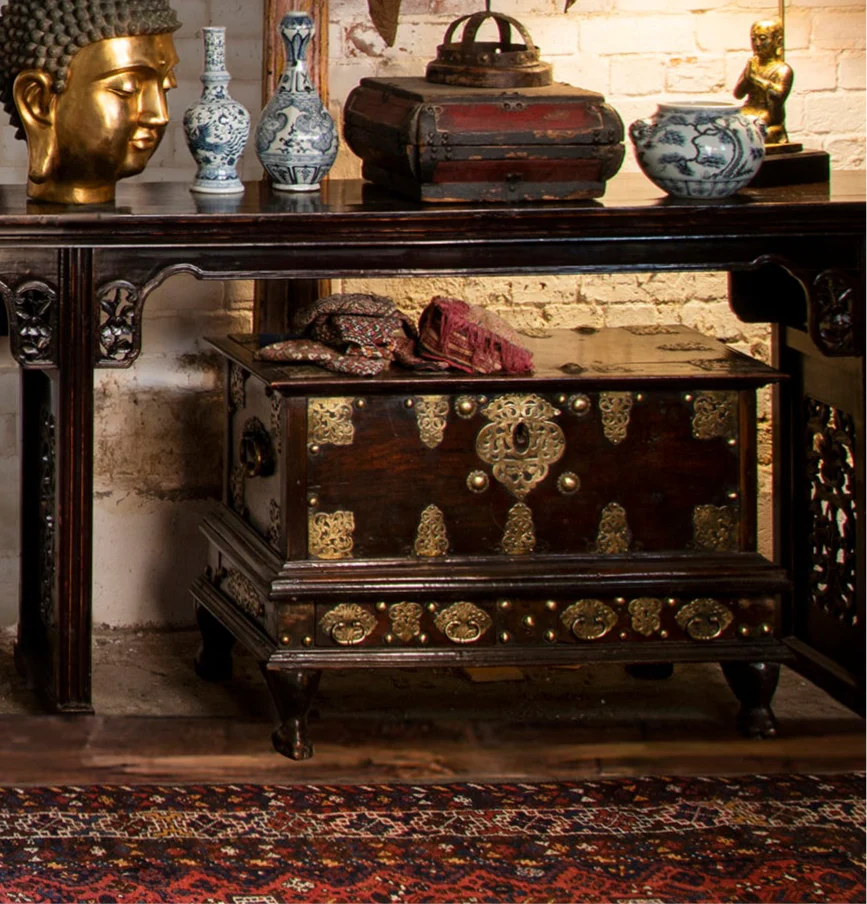
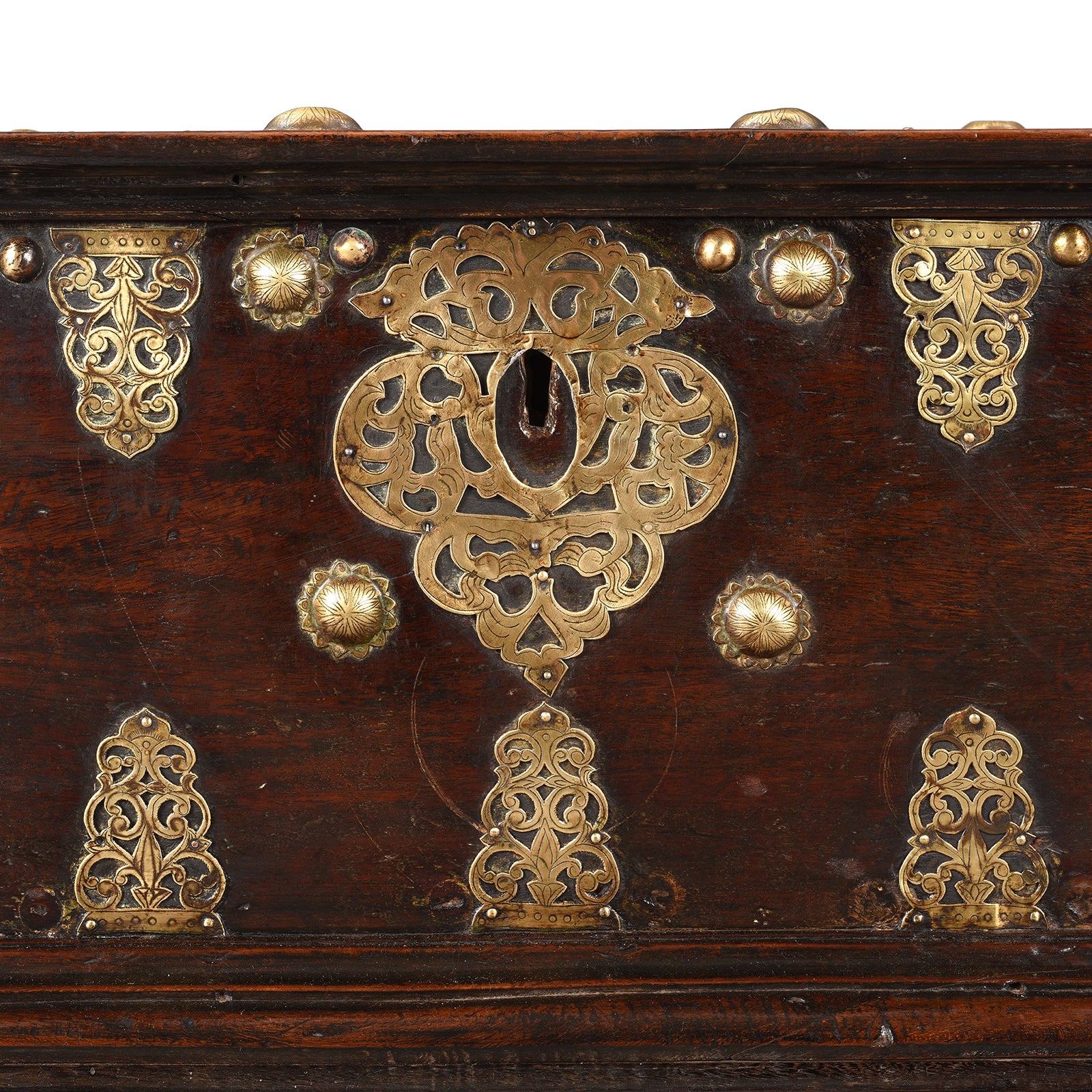
This majestic antique Indo-Dutch chest harks back to the colonial days and the 'Spice Wars'. Originally from colonial Ceylon (modern-day Sri Lanka), it dates from the middle of the 18th century. It is beautifully constructed from jackfruit wood with brass decorations and stands on four carved hoof legs.
The interior consists of one large storage space with a chain preventing the lid from falling open. Two drawers along the bottom add additional storage. A name, 'Pearce', likely the name of a previous owner can still be seen on the back.
Doubtless, this chest would have been owned by a wealthy merchant who was part of the Dutch East India Company, often abbreviated to VOC (Verenigde Oostindische Compagnie / United East India Company) which was formally dissolved in 1799 due to bankruptcy. This dates the chest earlier than 1799 and it's likely the trader would have traveled between Sri Lanka, South India, and Europe. It has had some repairs over the years and some historic scratches can be seen on the front face.
Product Information
Product Information
Shipping & Returns
Shipping & Returns
Description
This majestic antique Indo-Dutch chest harks back to the colonial days and the 'Spice Wars'. Originally from colonial Ceylon (modern-day Sri Lanka), it dates from the middle of the 18th century. It is beautifully constructed from jackfruit wood with brass decorations and stands on four carved hoof legs.
The interior consists of one large storage space with a chain preventing the lid from falling open. Two drawers along the bottom add additional storage. A name, 'Pearce', likely the name of a previous owner can still be seen on the back.
Doubtless, this chest would have been owned by a wealthy merchant who was part of the Dutch East India Company, often abbreviated to VOC (Verenigde Oostindische Compagnie / United East India Company) which was formally dissolved in 1799 due to bankruptcy. This dates the chest earlier than 1799 and it's likely the trader would have traveled between Sri Lanka, South India, and Europe. It has had some repairs over the years and some historic scratches can be seen on the front face.