
Red Lacquer Burmese Betel Box - Ca 1920
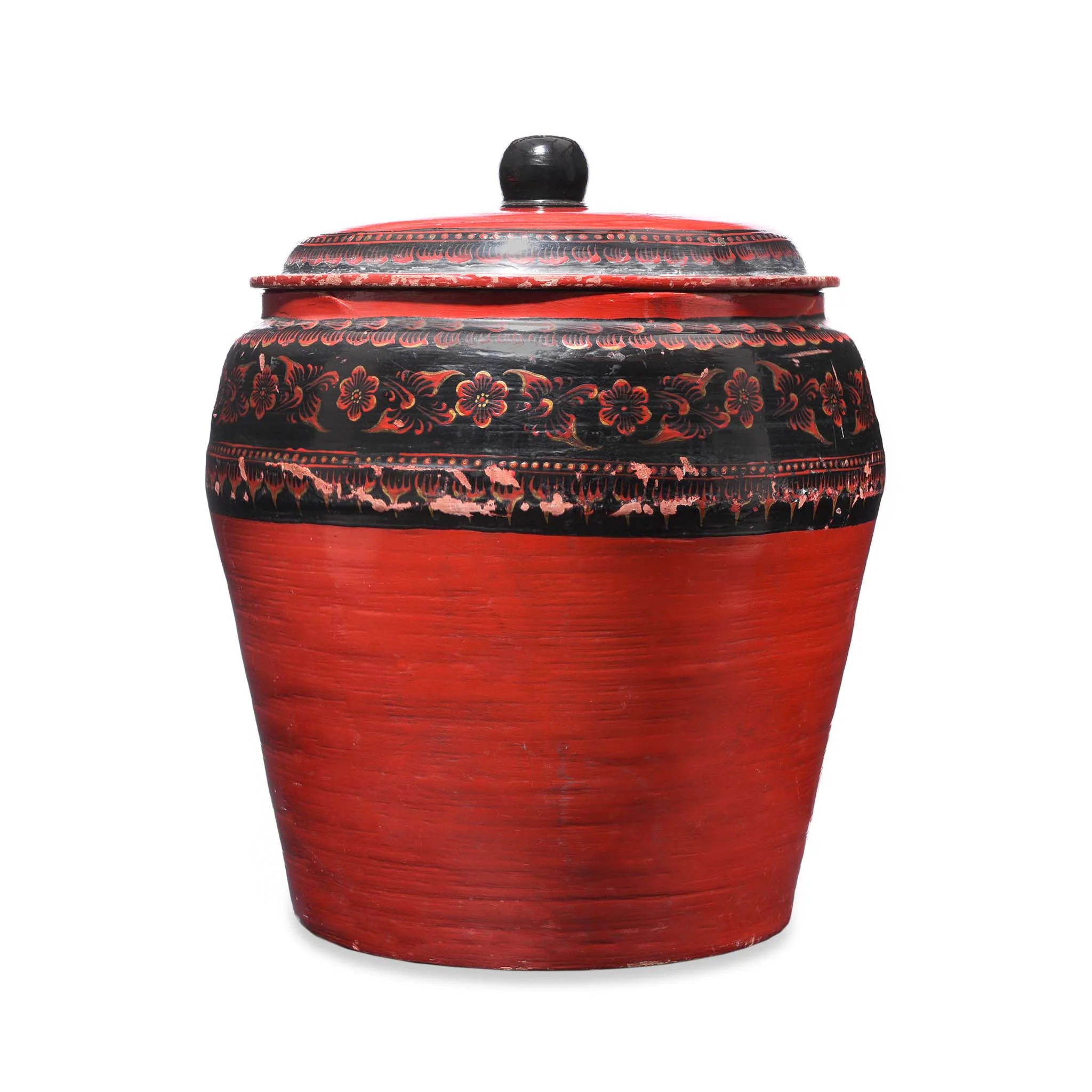
This Burmese lacquer betel box is called a kun it. These boxes were multifunctional and used both as tiffin boxes and betel boxes. This Burmese lacquer box is typical of the style and has a base orange-red colour and is decorated with finely etched lines and dots.
Tiffin boxes were used in the old days as lunch boxes or for packaging up small snacks which the colonials called tiffin. Betel boxes were used for holding betel leaves and other ingredients associated with the consumption of betelnut.
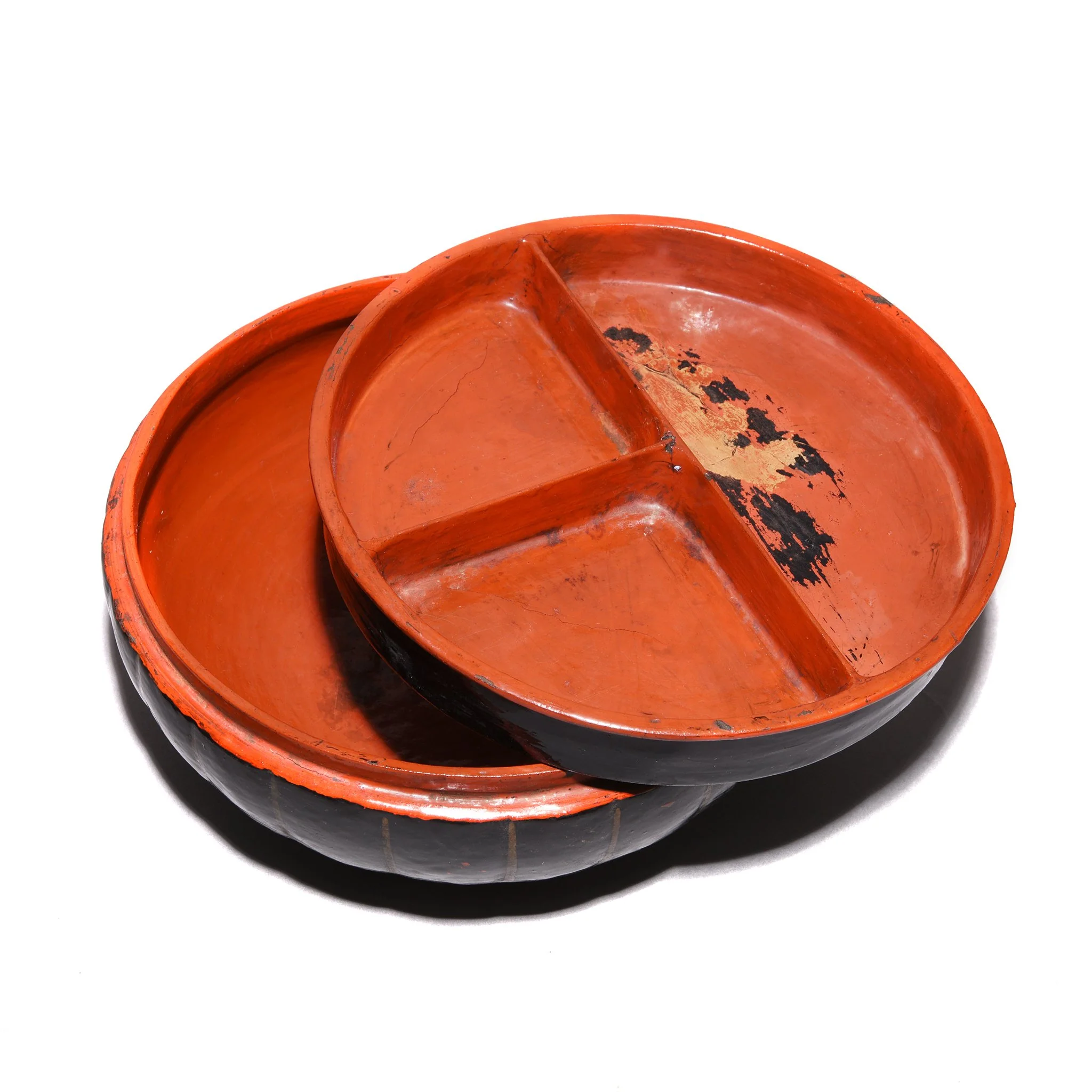
The box itself is made from woven grass or bamboo and the lacquer work gives strength and durability. They come in all sizes a set is made that nests one inside the other when not in use. Generally drum shape, with a lacquered pattern on the top and sides. The lid is removed to reveal a series of lacquered bowls and compartments.
All Burmese families prided themselves on their lacquer work. Because of the fragile nature of these boxes, many of these boxes were destroyed.
Original: $269.05
-65%$269.05
$94.17More Images


Red Lacquer Burmese Betel Box - Ca 1920
This Burmese lacquer betel box is called a kun it. These boxes were multifunctional and used both as tiffin boxes and betel boxes. This Burmese lacquer box is typical of the style and has a base orange-red colour and is decorated with finely etched lines and dots.
Tiffin boxes were used in the old days as lunch boxes or for packaging up small snacks which the colonials called tiffin. Betel boxes were used for holding betel leaves and other ingredients associated with the consumption of betelnut.
The box itself is made from woven grass or bamboo and the lacquer work gives strength and durability. They come in all sizes a set is made that nests one inside the other when not in use. Generally drum shape, with a lacquered pattern on the top and sides. The lid is removed to reveal a series of lacquered bowls and compartments.
All Burmese families prided themselves on their lacquer work. Because of the fragile nature of these boxes, many of these boxes were destroyed.
Product Information
Product Information
Shipping & Returns
Shipping & Returns
Description
This Burmese lacquer betel box is called a kun it. These boxes were multifunctional and used both as tiffin boxes and betel boxes. This Burmese lacquer box is typical of the style and has a base orange-red colour and is decorated with finely etched lines and dots.
Tiffin boxes were used in the old days as lunch boxes or for packaging up small snacks which the colonials called tiffin. Betel boxes were used for holding betel leaves and other ingredients associated with the consumption of betelnut.
The box itself is made from woven grass or bamboo and the lacquer work gives strength and durability. They come in all sizes a set is made that nests one inside the other when not in use. Generally drum shape, with a lacquered pattern on the top and sides. The lid is removed to reveal a series of lacquered bowls and compartments.
All Burmese families prided themselves on their lacquer work. Because of the fragile nature of these boxes, many of these boxes were destroyed.