
Japanese Isho Yaro Dansu From Yonezawa - Taisho Era
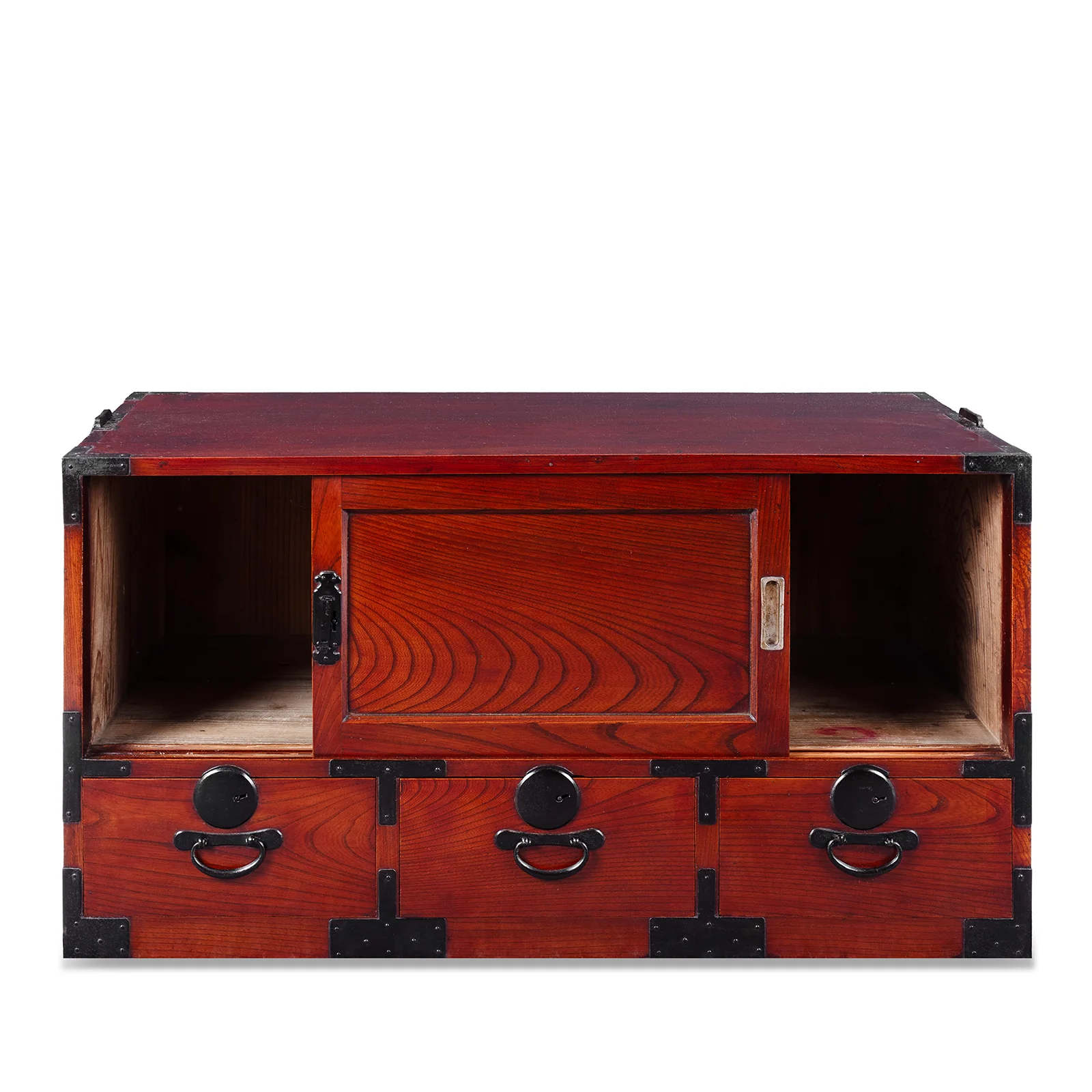
This exquisite Japanese Isho Yaro Dansu originates from Yonezawa in Yamagata prefecture and was originally made in 1912. This tansu has a drawer with the original year of construction and a further date of restoration.
Traditionally isho yaro dansu were used by merchants to store clothing and personal effects. Yonezawa isho yaro dansu were considerably less common than kasane dansu (stacking chests). Constructed from sugi (cryptomeria) wood with zelkova (red elm) drawer fronts and a wiped lacquered finish, this chest exemplifies the fine craftsmanship and regional design cues of northern Japan.
The hand-forged ironwork depicts intricate motifs - Round butterfly lock plates with hakudo (copper and tin compound) rims, sand cast mokko (melon vine) drawer pulls against backplates cut and engraved as pine boughs and tea seedpod motifs in the drawer corners. Butterflies were a popular depiction on Yamagata tansu.
The underside of one of the drawers is annotated: "昭和四拾年七月三十日 - 大正元年製 - 昭和四拾年八月改調" (translated as "Made Taisho year 1 (1912) - Restored Showa year 40 (1965), August.")
This chest is more compact than most Japanese tansu chests. Unusually practical for Asian furniture with a hinged lockbox on the right -originally intended for safeguarding valuables - which adds both visual interest and practical security. Carefully restored, this dansu retains its authentic character while offering versatile storage and display potential in contemporary interiors.
- Origin: Yonezawa in Yamagata prefecture, Japan
- Date: Early 20th Century
- Materials: Sugi (cryptomeria) frame and drawers & zelkova (red elm) drawer fronts. Hand-forged iron hardware
- Features: Traditional Isho yaro dansu form with large drawers, side lockbox
- Condition: Antique condition with age-appropriate wear and restored finish
- Dimensions: W104 x D46 x H89 cm
-
References: This tansu is similar to near identical to plate 161 of Tansu: Traditional Japanese Cabinetry by Heineken.
More Images


Japanese Isho Yaro Dansu From Yonezawa - Taisho Era
This exquisite Japanese Isho Yaro Dansu originates from Yonezawa in Yamagata prefecture and was originally made in 1912. This tansu has a drawer with the original year of construction and a further date of restoration.
Traditionally isho yaro dansu were used by merchants to store clothing and personal effects. Yonezawa isho yaro dansu were considerably less common than kasane dansu (stacking chests). Constructed from sugi (cryptomeria) wood with zelkova (red elm) drawer fronts and a wiped lacquered finish, this chest exemplifies the fine craftsmanship and regional design cues of northern Japan.
The hand-forged ironwork depicts intricate motifs - Round butterfly lock plates with hakudo (copper and tin compound) rims, sand cast mokko (melon vine) drawer pulls against backplates cut and engraved as pine boughs and tea seedpod motifs in the drawer corners. Butterflies were a popular depiction on Yamagata tansu.
The underside of one of the drawers is annotated: "昭和四拾年七月三十日 - 大正元年製 - 昭和四拾年八月改調" (translated as "Made Taisho year 1 (1912) - Restored Showa year 40 (1965), August.")
This chest is more compact than most Japanese tansu chests. Unusually practical for Asian furniture with a hinged lockbox on the right -originally intended for safeguarding valuables - which adds both visual interest and practical security. Carefully restored, this dansu retains its authentic character while offering versatile storage and display potential in contemporary interiors.
- Origin: Yonezawa in Yamagata prefecture, Japan
- Date: Early 20th Century
- Materials: Sugi (cryptomeria) frame and drawers & zelkova (red elm) drawer fronts. Hand-forged iron hardware
- Features: Traditional Isho yaro dansu form with large drawers, side lockbox
- Condition: Antique condition with age-appropriate wear and restored finish
- Dimensions: W104 x D46 x H89 cm
-
References: This tansu is similar to near identical to plate 161 of Tansu: Traditional Japanese Cabinetry by Heineken.
Product Information
Product Information
Shipping & Returns
Shipping & Returns
Description
This exquisite Japanese Isho Yaro Dansu originates from Yonezawa in Yamagata prefecture and was originally made in 1912. This tansu has a drawer with the original year of construction and a further date of restoration.
Traditionally isho yaro dansu were used by merchants to store clothing and personal effects. Yonezawa isho yaro dansu were considerably less common than kasane dansu (stacking chests). Constructed from sugi (cryptomeria) wood with zelkova (red elm) drawer fronts and a wiped lacquered finish, this chest exemplifies the fine craftsmanship and regional design cues of northern Japan.
The hand-forged ironwork depicts intricate motifs - Round butterfly lock plates with hakudo (copper and tin compound) rims, sand cast mokko (melon vine) drawer pulls against backplates cut and engraved as pine boughs and tea seedpod motifs in the drawer corners. Butterflies were a popular depiction on Yamagata tansu.
The underside of one of the drawers is annotated: "昭和四拾年七月三十日 - 大正元年製 - 昭和四拾年八月改調" (translated as "Made Taisho year 1 (1912) - Restored Showa year 40 (1965), August.")
This chest is more compact than most Japanese tansu chests. Unusually practical for Asian furniture with a hinged lockbox on the right -originally intended for safeguarding valuables - which adds both visual interest and practical security. Carefully restored, this dansu retains its authentic character while offering versatile storage and display potential in contemporary interiors.
- Origin: Yonezawa in Yamagata prefecture, Japan
- Date: Early 20th Century
- Materials: Sugi (cryptomeria) frame and drawers & zelkova (red elm) drawer fronts. Hand-forged iron hardware
- Features: Traditional Isho yaro dansu form with large drawers, side lockbox
- Condition: Antique condition with age-appropriate wear and restored finish
- Dimensions: W104 x D46 x H89 cm
-
References: This tansu is similar to near identical to plate 161 of Tansu: Traditional Japanese Cabinetry by Heineken.