

Painted Majus Dowry Chest From Saurashtra - 19th Century
This beautifully carved and antique Indian dowry chest is a really special example of a Majus (also spelled Majju or Manjush) chest, a traditional form associated with the Kanbi (now Patidar) community of Saurashtra, Gujarat. Dating to the 19th century, these dowry chests were used to transport a bride’s possessions to her new home — such as jewellery, silk saris, and brass cooking pots — and were later used to store food or household valuables.
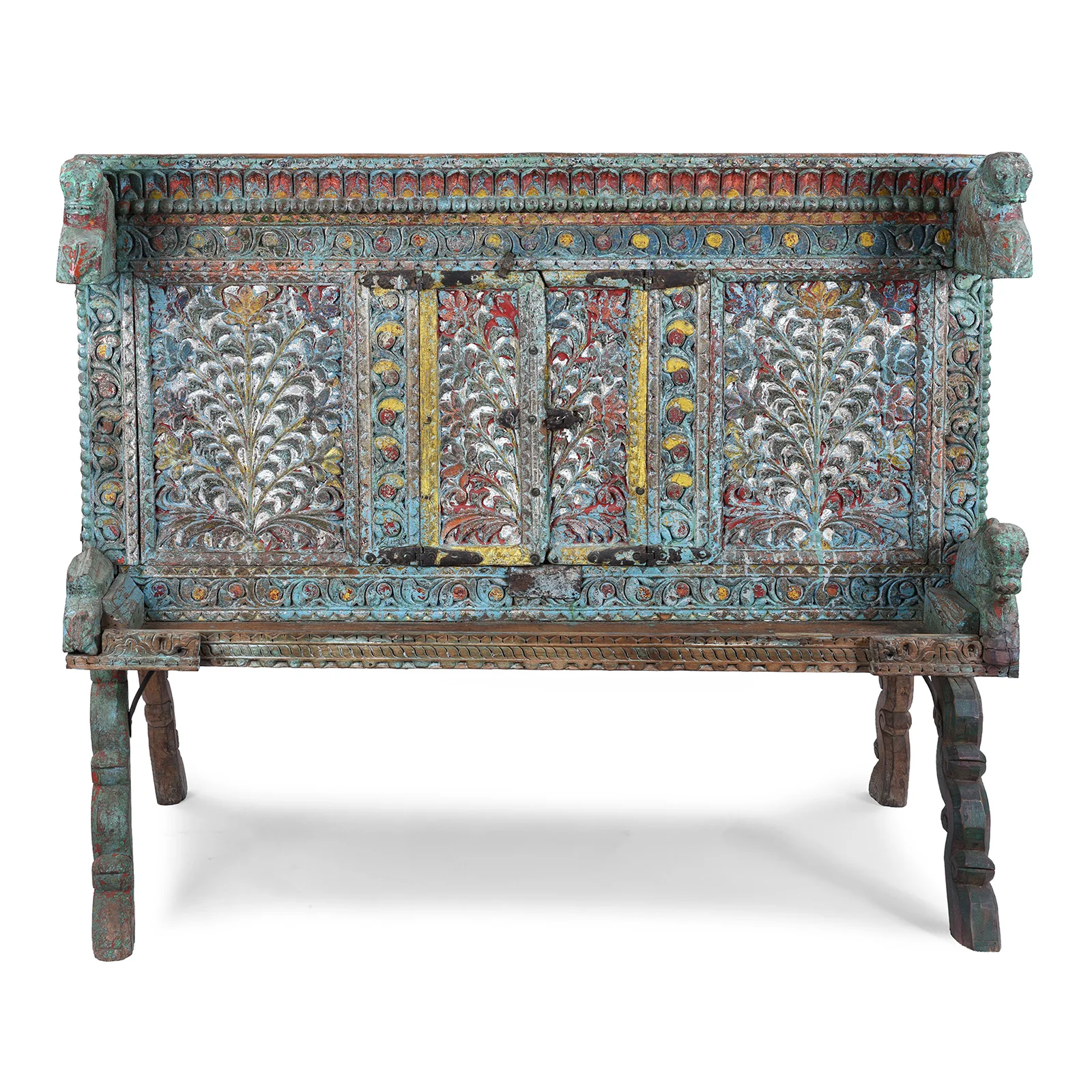
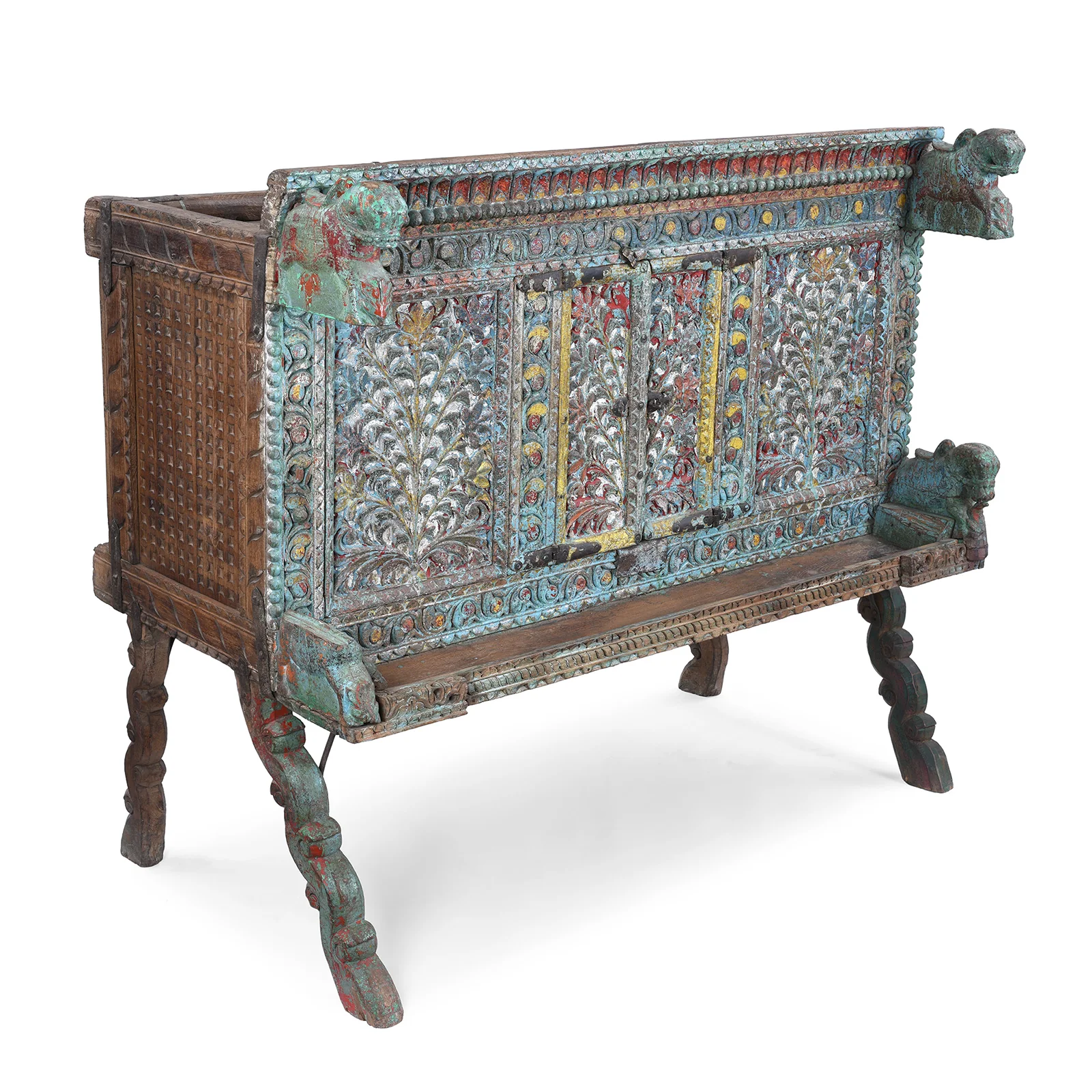
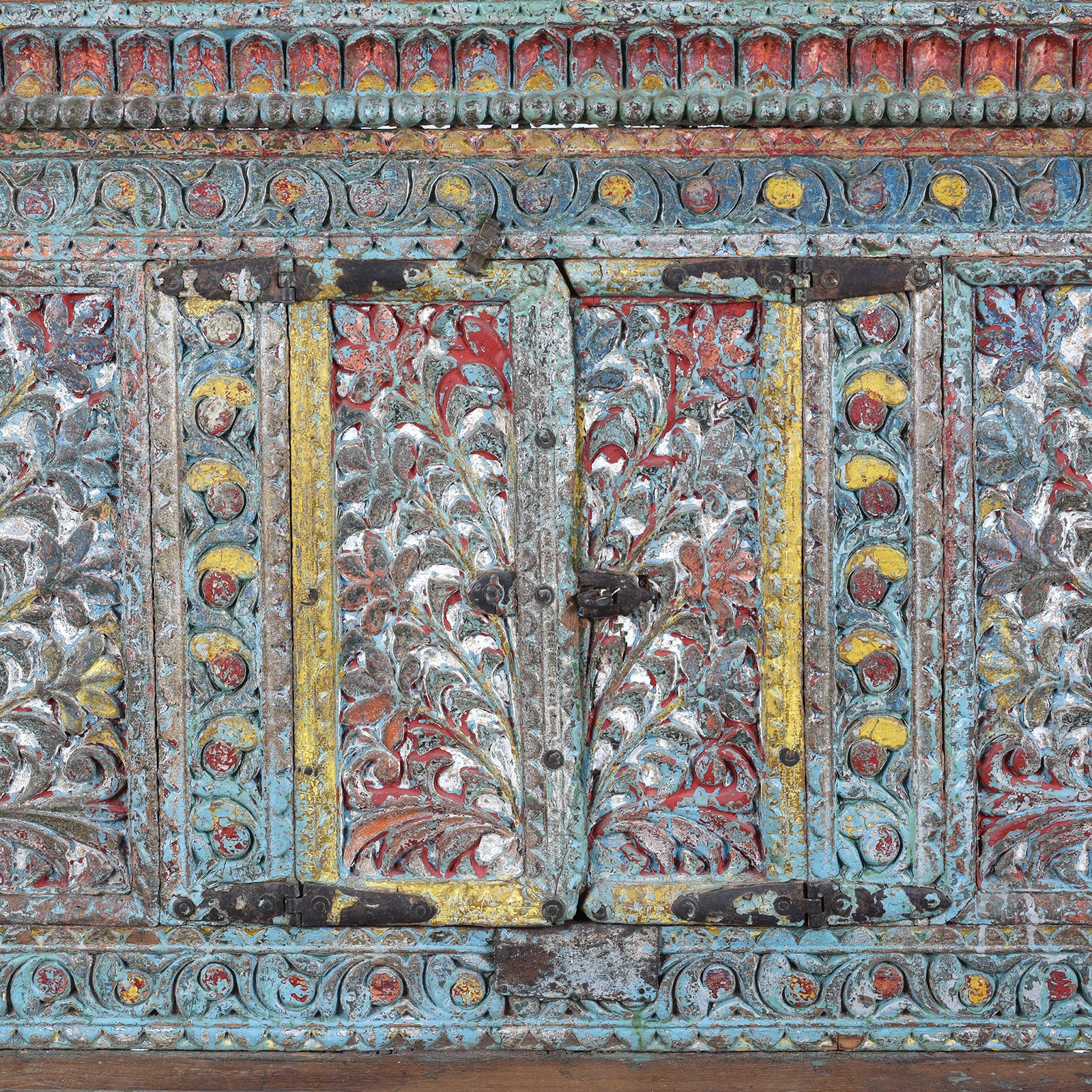
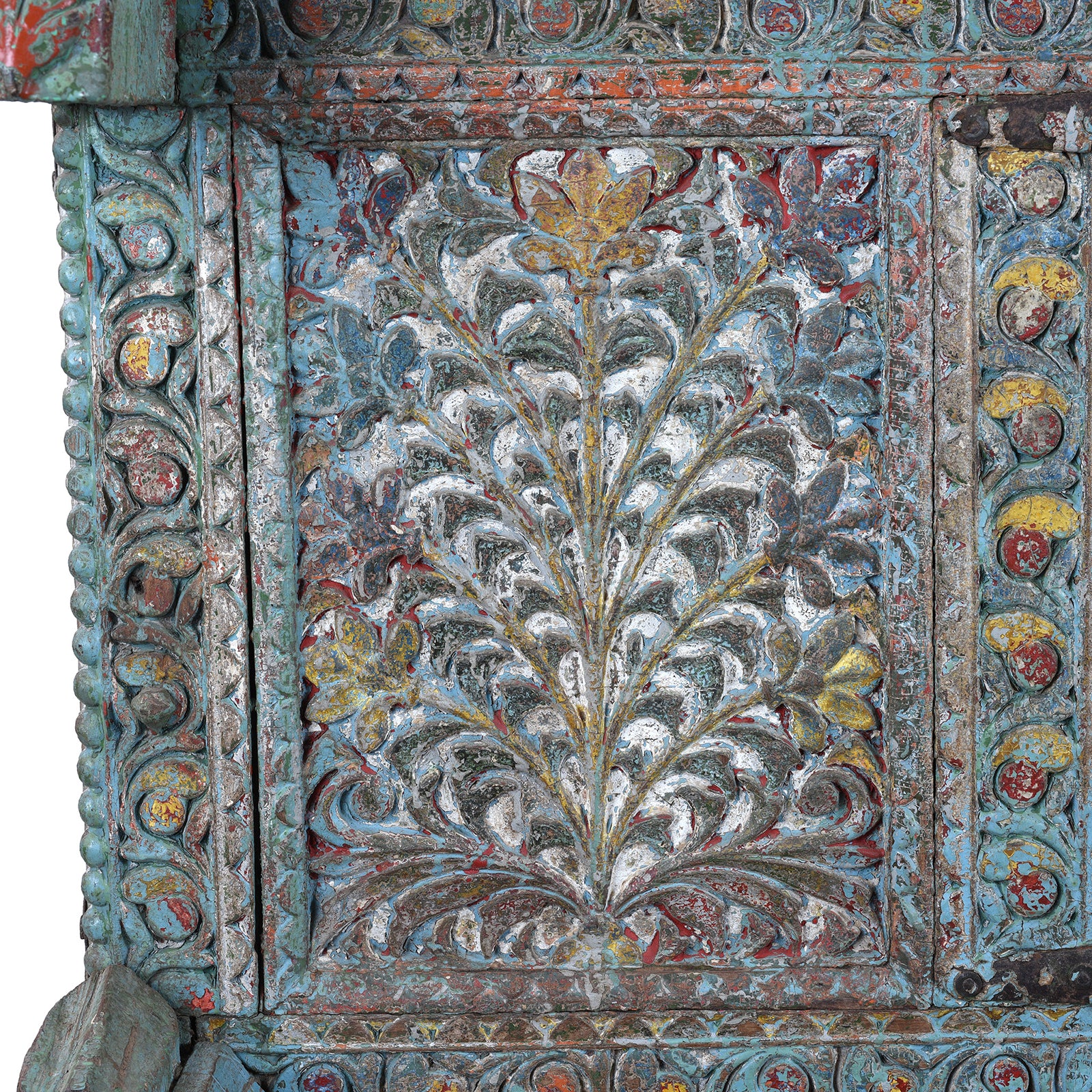
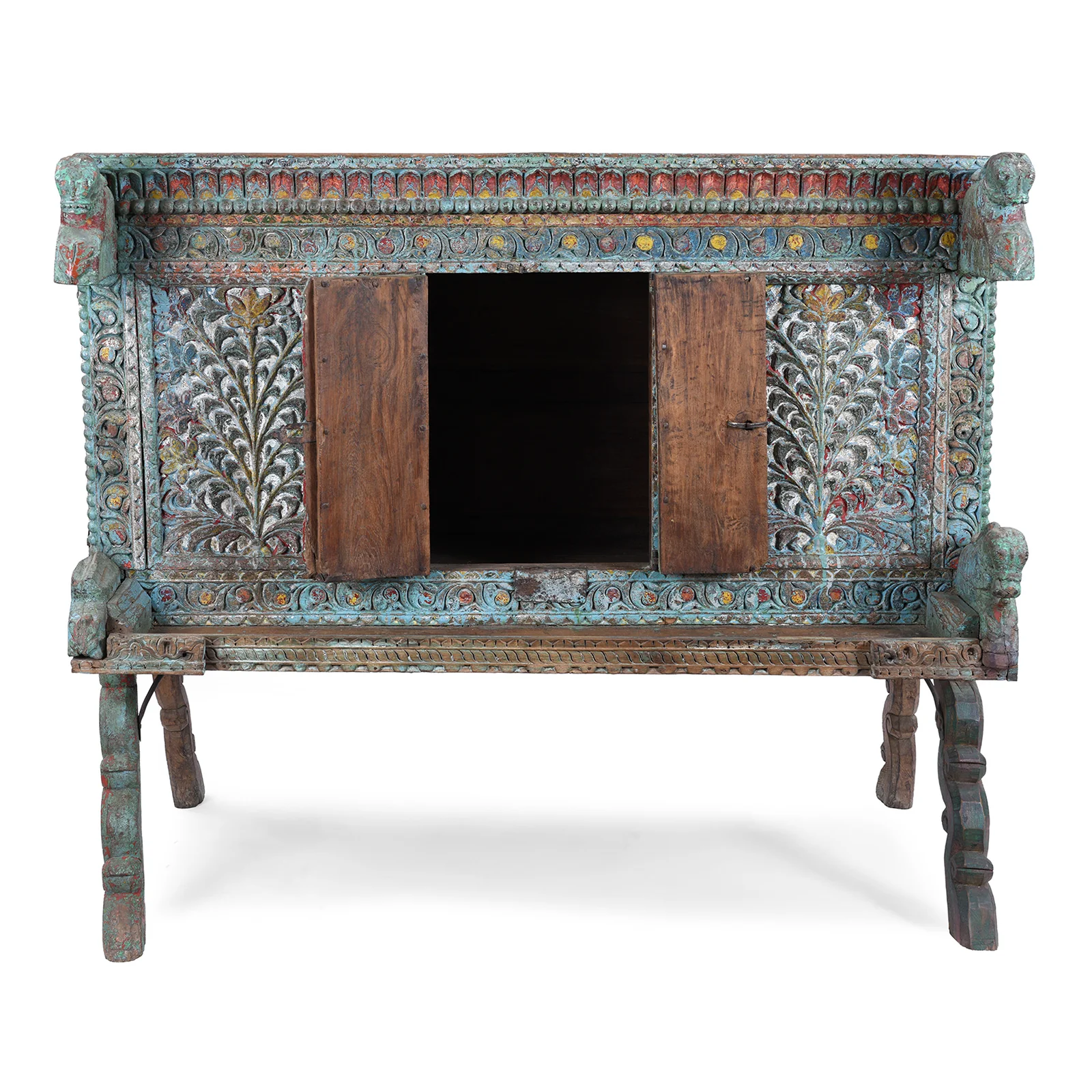
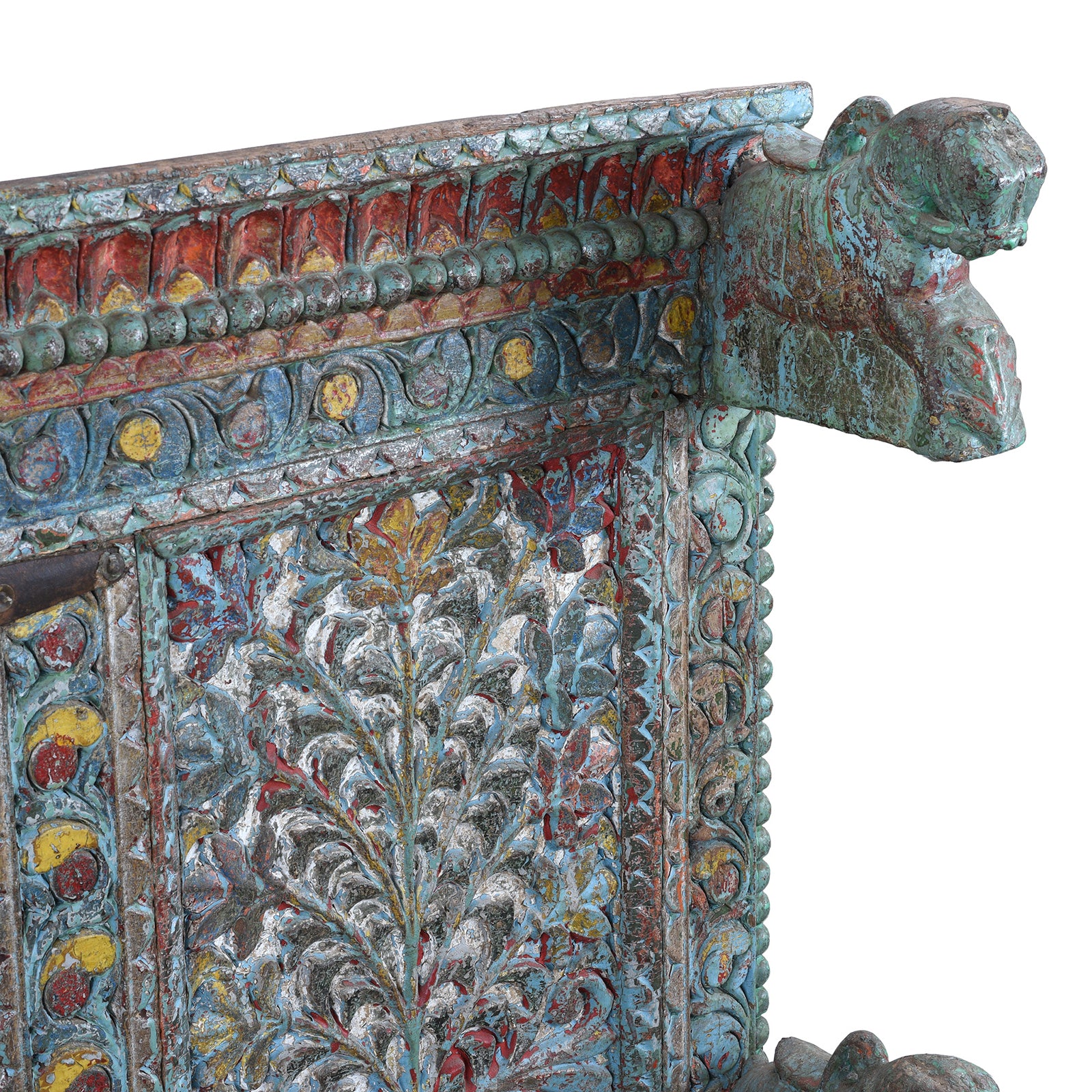
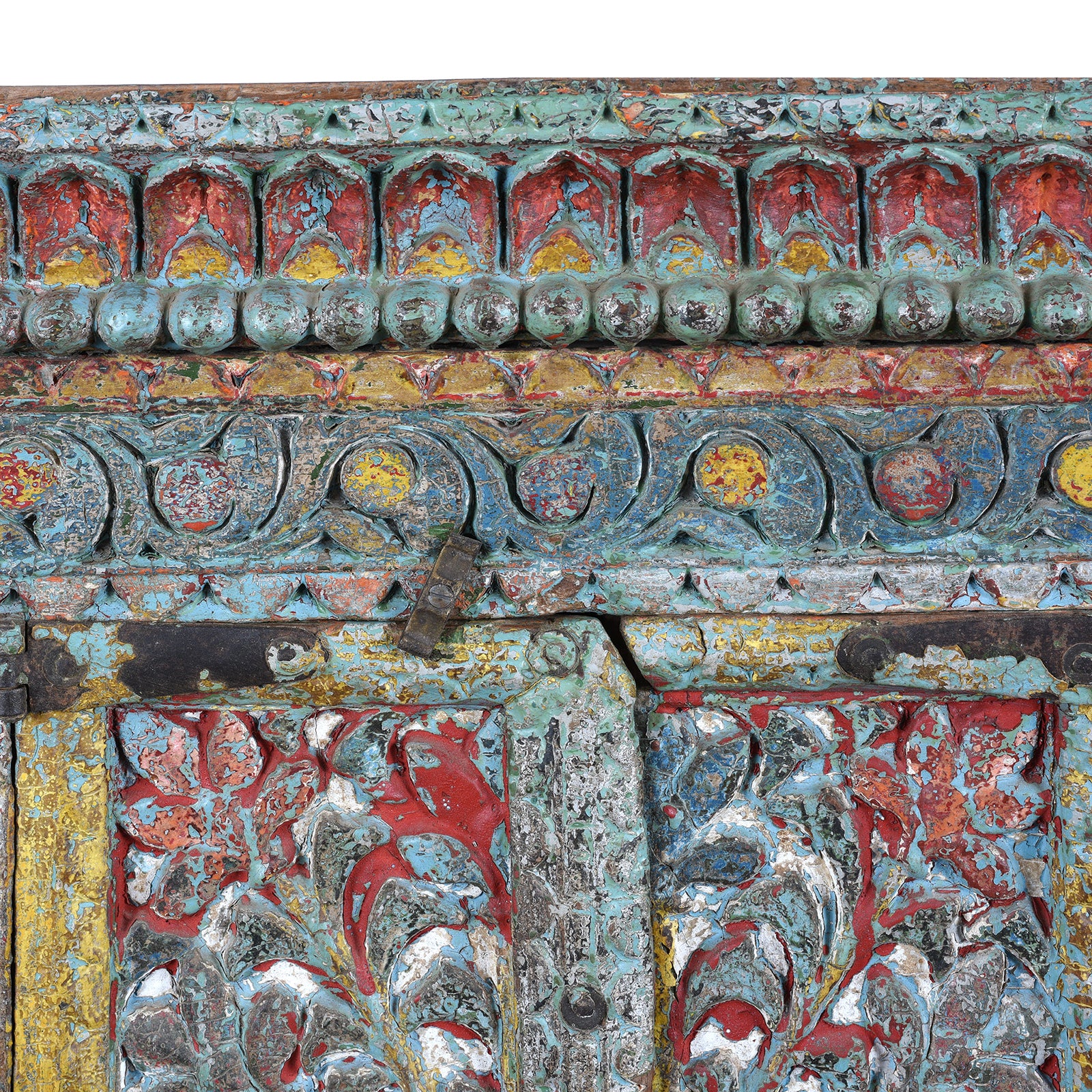
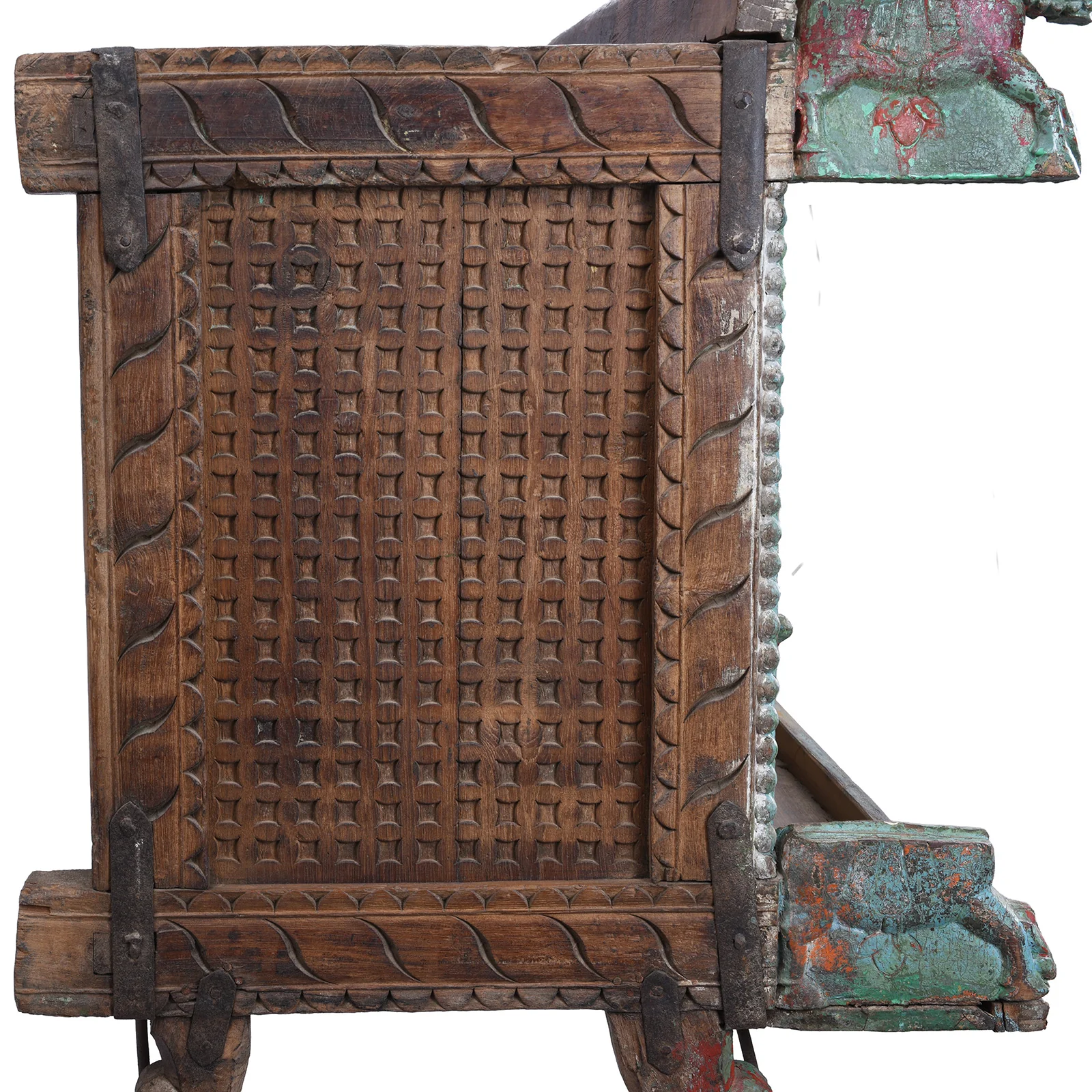
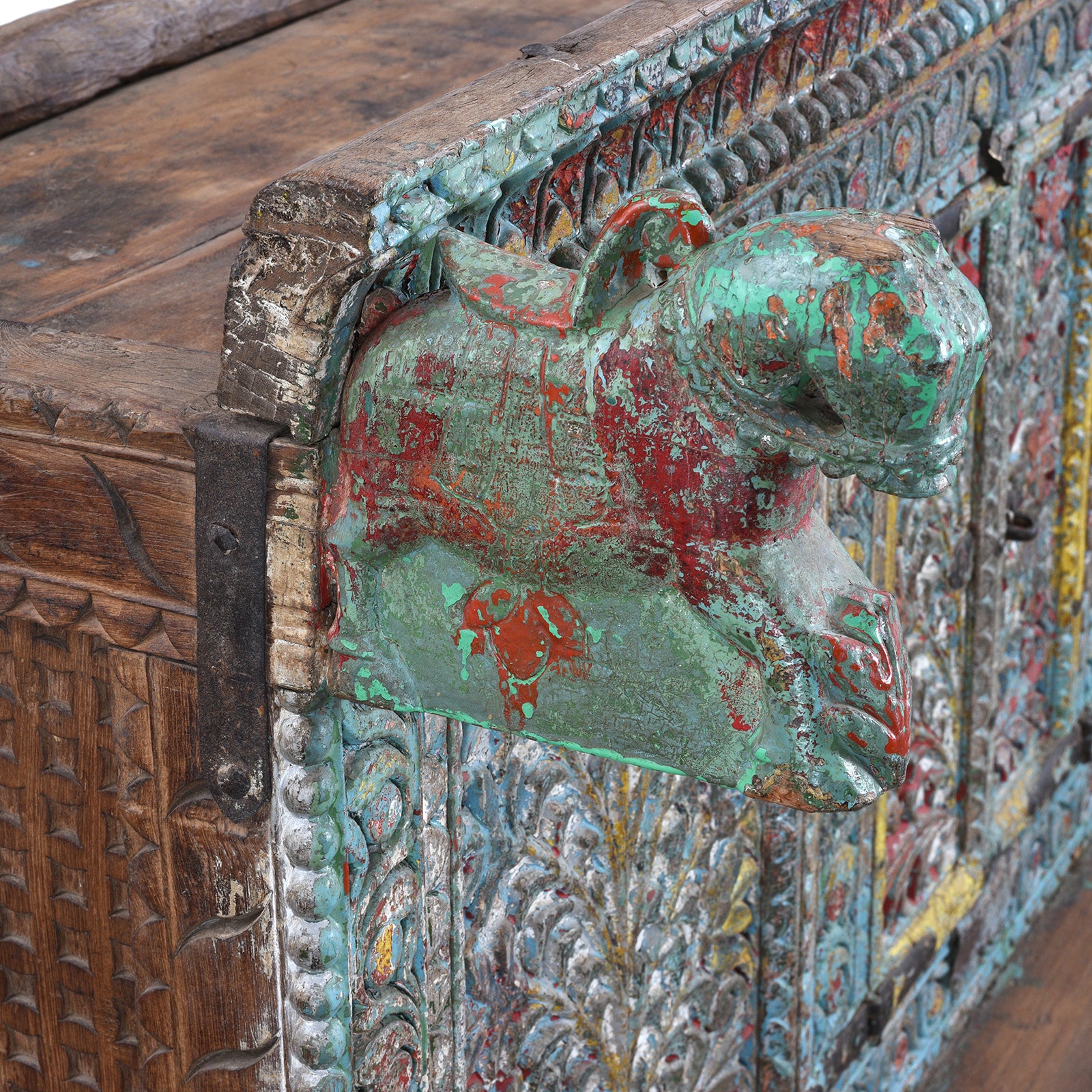
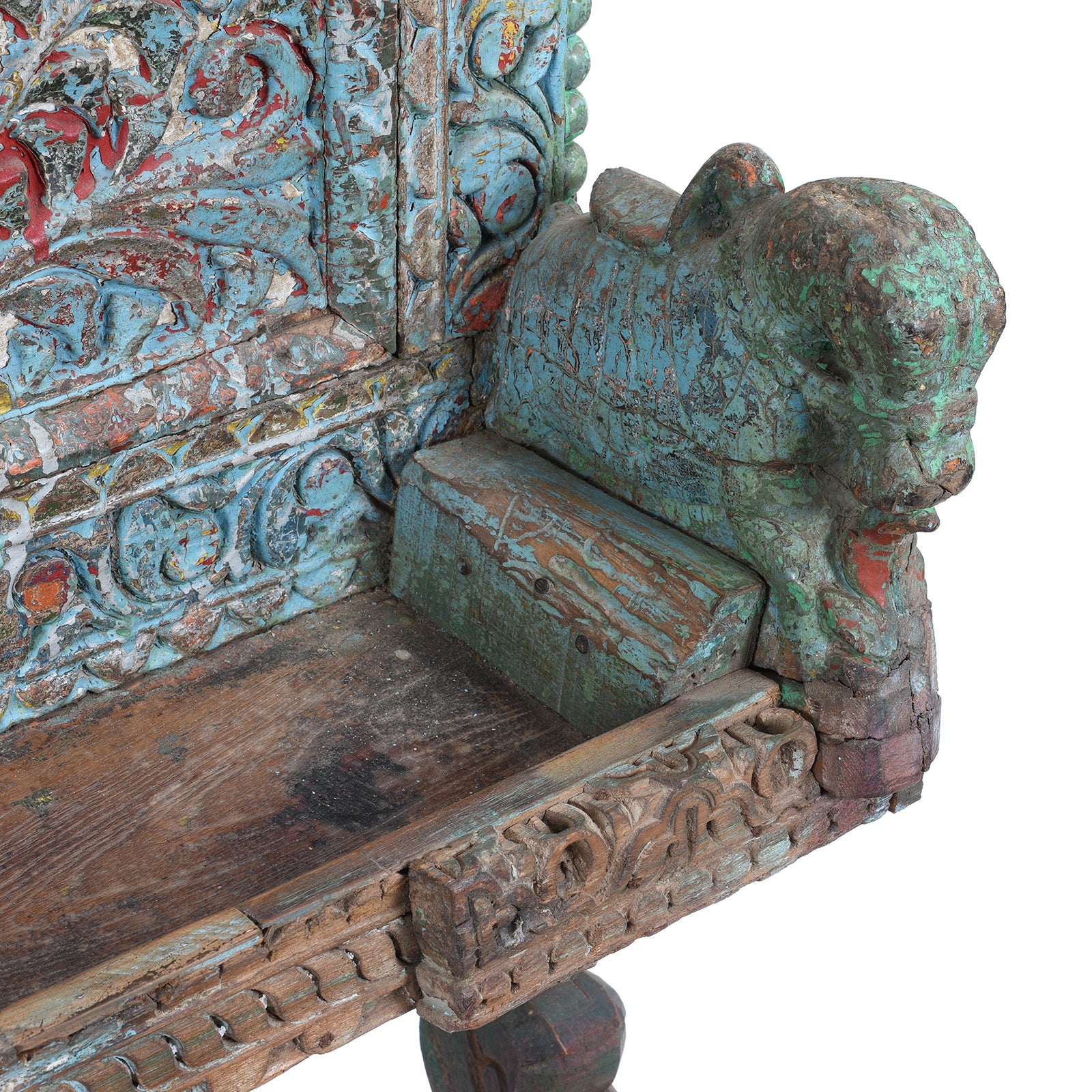
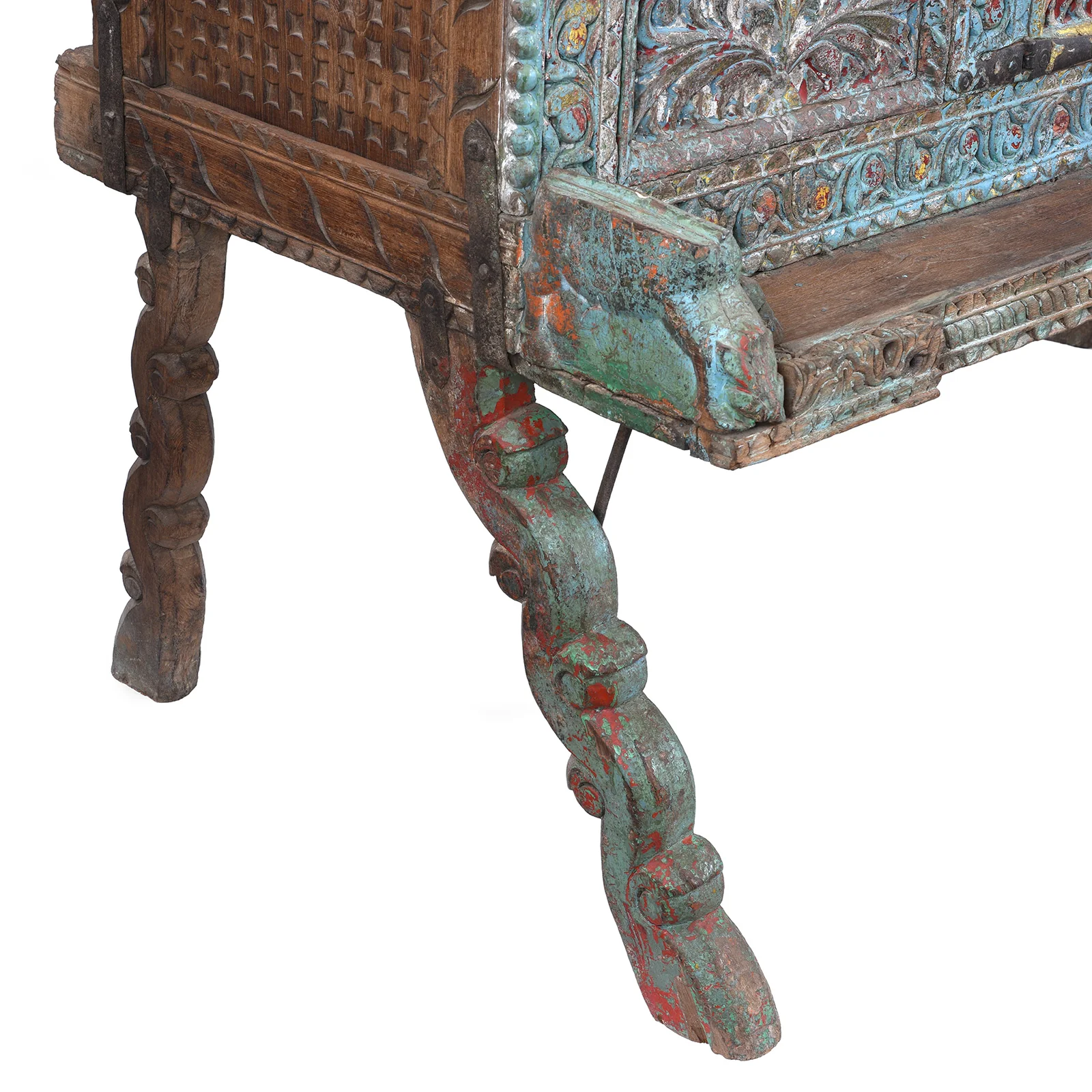
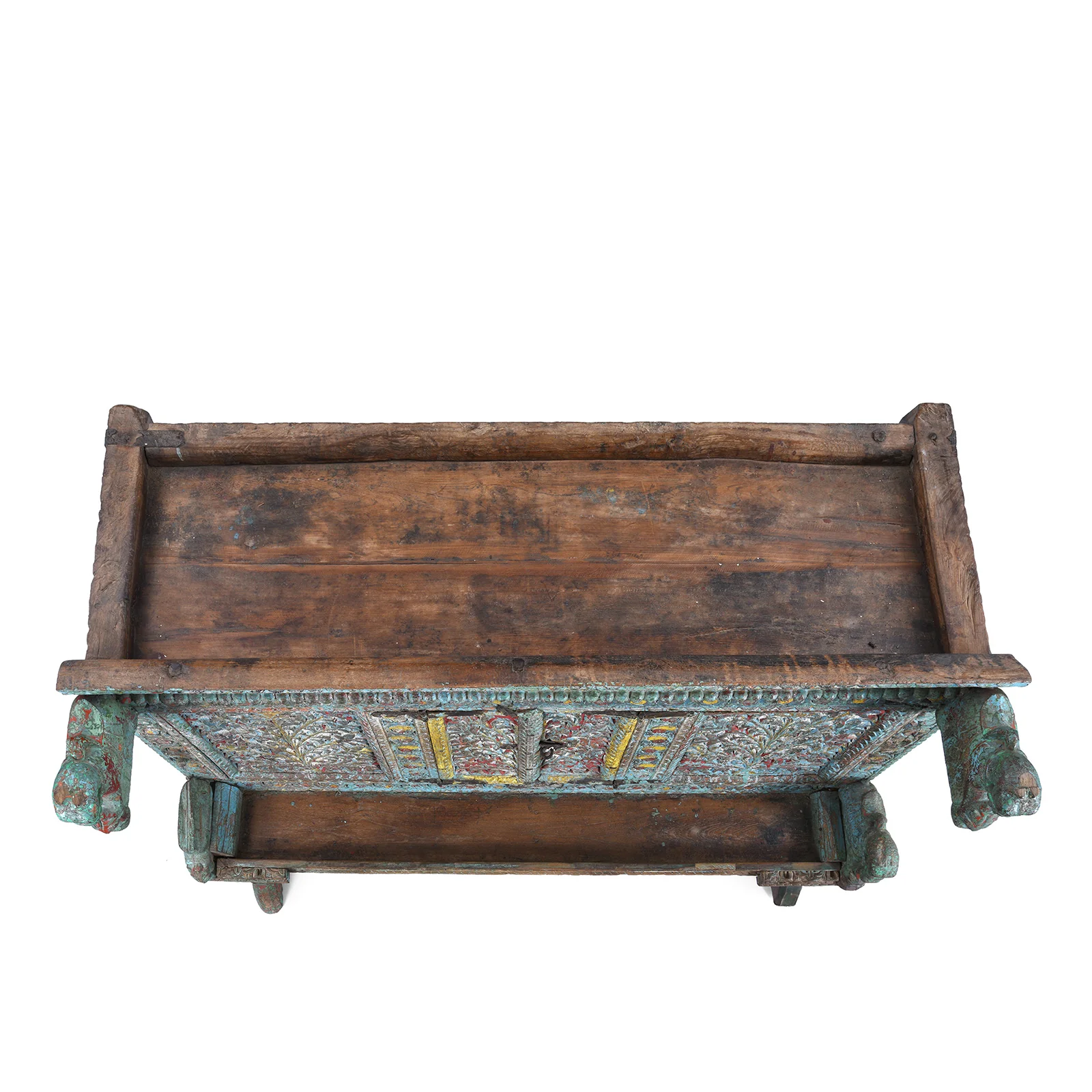
This chest is exquisitely detailed, its front panels decorated with bold tree of life motifs in vibrant tones of red, yellow, turquoise, and silver, typical of Gujarati folk artistry. The piece is framed by beautifully carved horse-head finials on three corners — one now missing, likely lost over time — a distinctive regional symbol of protection and vitality. The sides are chip carved, unusual for majus chests. Crafted from solid teak wood, it retains a wonderful surface patina, with traces of its original paint that have mellowed gracefully over generations.
Comparable examples can be found in “Folk Art & Culture of Gujarat: A Guide to the Collection of the Shreyas Folk Museum of Gujarat” by Jyotindra Jain, highlighting the cultural significance of this rare form of Gujarati craftsmanship.
- Origin: Saurashtra, Gujarat, India
- Date: 19th Century
- Materials: Solid teak wood with remnants of original paint
- Features: Carved floral panels, painted decoration, horse-head finials, one corner finial missing, rich aged patina
- Condition: Naturally aged surface with weathering, losses, and wear consistent with age and use
- Dimensions: W128 x D68 x H110 cm
- Reference: Folk Art & Culture of Gujarat by Jyotindra Jain, Shreyas Folk Museum of Gujarat
Original: $5,331.01
-65%$5,331.01
$1,865.85More Images
Painted Majus Dowry Chest From Saurashtra - 19th Century
This beautifully carved and antique Indian dowry chest is a really special example of a Majus (also spelled Majju or Manjush) chest, a traditional form associated with the Kanbi (now Patidar) community of Saurashtra, Gujarat. Dating to the 19th century, these dowry chests were used to transport a bride’s possessions to her new home — such as jewellery, silk saris, and brass cooking pots — and were later used to store food or household valuables.
This chest is exquisitely detailed, its front panels decorated with bold tree of life motifs in vibrant tones of red, yellow, turquoise, and silver, typical of Gujarati folk artistry. The piece is framed by beautifully carved horse-head finials on three corners — one now missing, likely lost over time — a distinctive regional symbol of protection and vitality. The sides are chip carved, unusual for majus chests. Crafted from solid teak wood, it retains a wonderful surface patina, with traces of its original paint that have mellowed gracefully over generations.
Comparable examples can be found in “Folk Art & Culture of Gujarat: A Guide to the Collection of the Shreyas Folk Museum of Gujarat” by Jyotindra Jain, highlighting the cultural significance of this rare form of Gujarati craftsmanship.
- Origin: Saurashtra, Gujarat, India
- Date: 19th Century
- Materials: Solid teak wood with remnants of original paint
- Features: Carved floral panels, painted decoration, horse-head finials, one corner finial missing, rich aged patina
- Condition: Naturally aged surface with weathering, losses, and wear consistent with age and use
- Dimensions: W128 x D68 x H110 cm
- Reference: Folk Art & Culture of Gujarat by Jyotindra Jain, Shreyas Folk Museum of Gujarat
Product Information
Product Information
Shipping & Returns
Shipping & Returns
Description
This beautifully carved and antique Indian dowry chest is a really special example of a Majus (also spelled Majju or Manjush) chest, a traditional form associated with the Kanbi (now Patidar) community of Saurashtra, Gujarat. Dating to the 19th century, these dowry chests were used to transport a bride’s possessions to her new home — such as jewellery, silk saris, and brass cooking pots — and were later used to store food or household valuables.
This chest is exquisitely detailed, its front panels decorated with bold tree of life motifs in vibrant tones of red, yellow, turquoise, and silver, typical of Gujarati folk artistry. The piece is framed by beautifully carved horse-head finials on three corners — one now missing, likely lost over time — a distinctive regional symbol of protection and vitality. The sides are chip carved, unusual for majus chests. Crafted from solid teak wood, it retains a wonderful surface patina, with traces of its original paint that have mellowed gracefully over generations.
Comparable examples can be found in “Folk Art & Culture of Gujarat: A Guide to the Collection of the Shreyas Folk Museum of Gujarat” by Jyotindra Jain, highlighting the cultural significance of this rare form of Gujarati craftsmanship.
- Origin: Saurashtra, Gujarat, India
- Date: 19th Century
- Materials: Solid teak wood with remnants of original paint
- Features: Carved floral panels, painted decoration, horse-head finials, one corner finial missing, rich aged patina
- Condition: Naturally aged surface with weathering, losses, and wear consistent with age and use
- Dimensions: W128 x D68 x H110 cm
- Reference: Folk Art & Culture of Gujarat by Jyotindra Jain, Shreyas Folk Museum of Gujarat


