Painted Tibetan Dragon Storage Chest - 18th Century
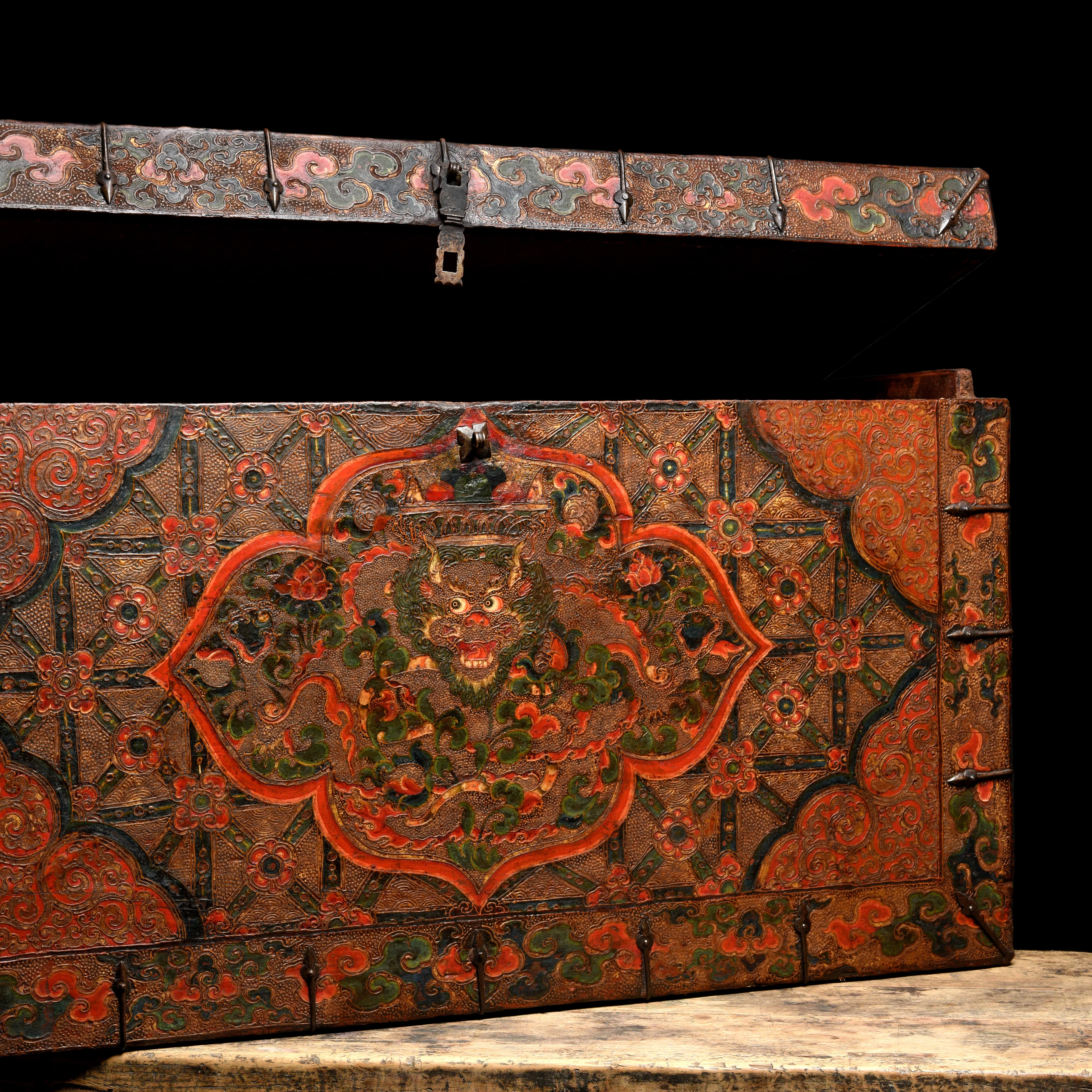
Tibetan antique furniture with original painting was always unusual to find but is incredibly difficult to come by. This very decorative dragon chest is one of our favourite pieces from an excellent quality recently acquired collection we've acquired.
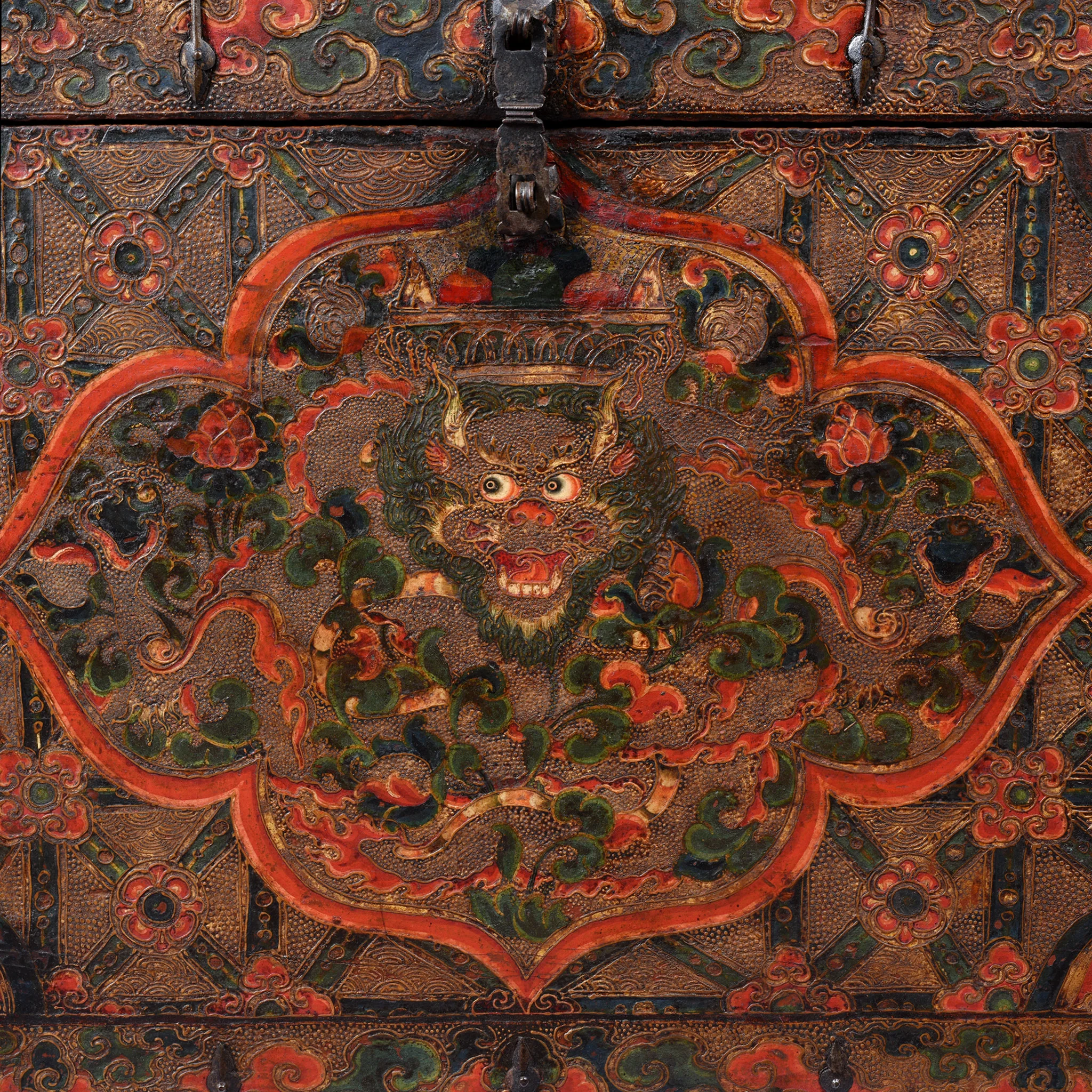
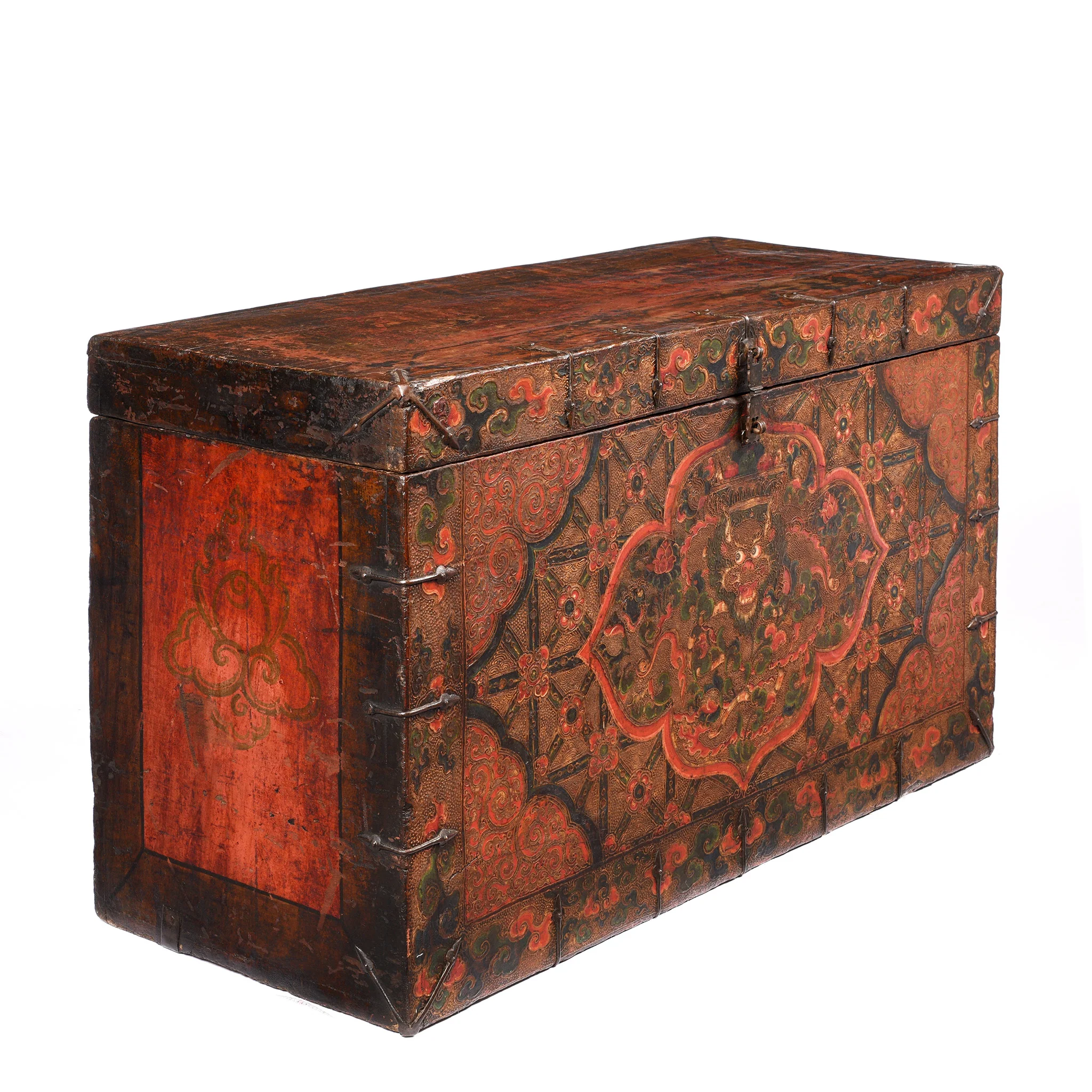
This piece is at at least 18th century and the painting style is textured which was uncommon to find on early chests. The dragon has a particularly cheeky face forming almost a smile.
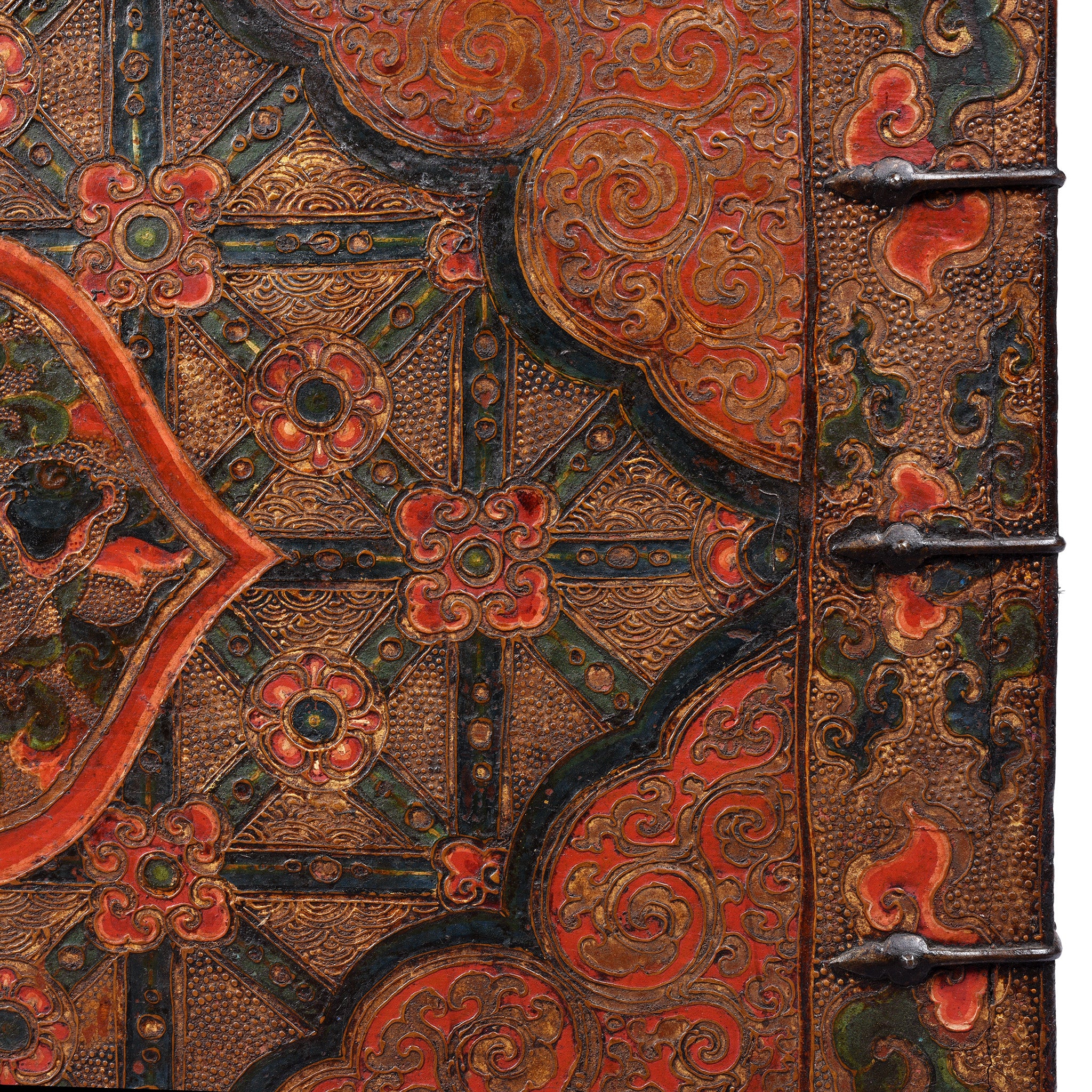
This piece is an excellent example of the high quality Tibetan painting techniques and the aforementioned dragon wears a crown of flaming jewels (the cintamani which represent wisdom and grant wishes). He is surrounded by lotus flowers (a symbol for harmony and nature) and the Ashoka flower. The surrounding of the chest is dedicated to a repeating Wheel of Dharma pattern. With eight spokes, the wheel denotes the eight paths which together bring enlightenment. The steps are 'understanding,' 'good attitude,' 'right speech, 'good actions,'' 'good work,' 'effort,' 'mindfulness,' and 'meditation.'
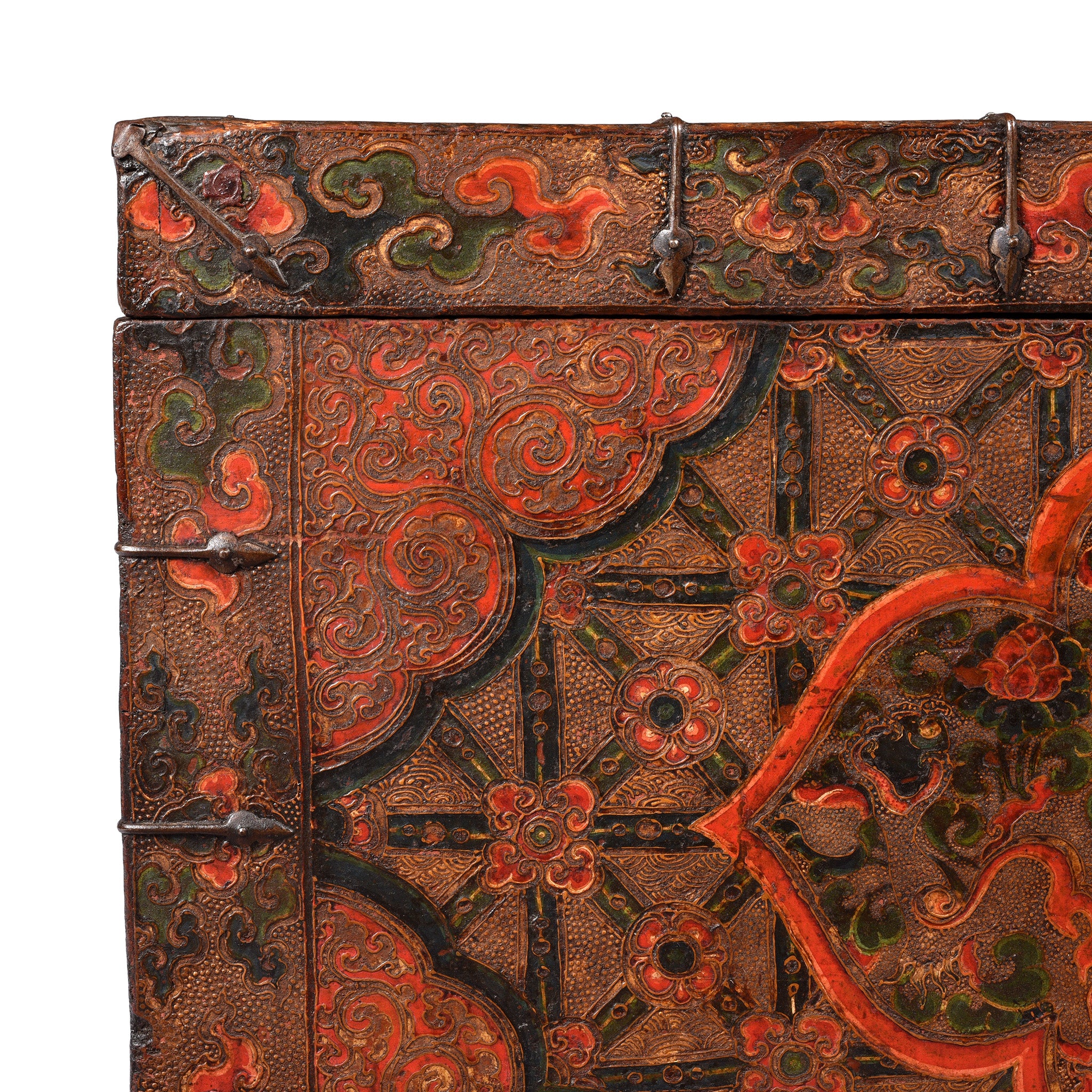
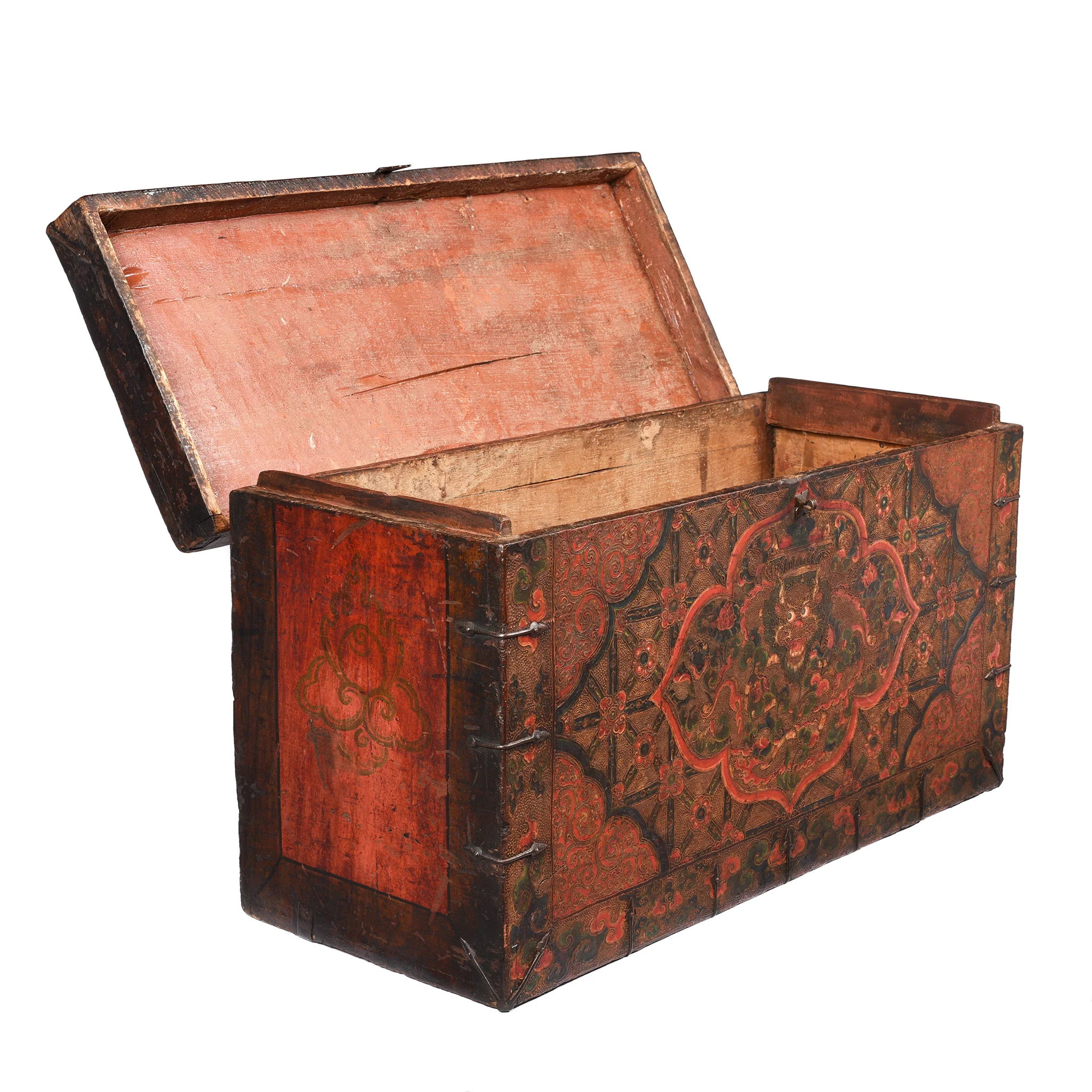
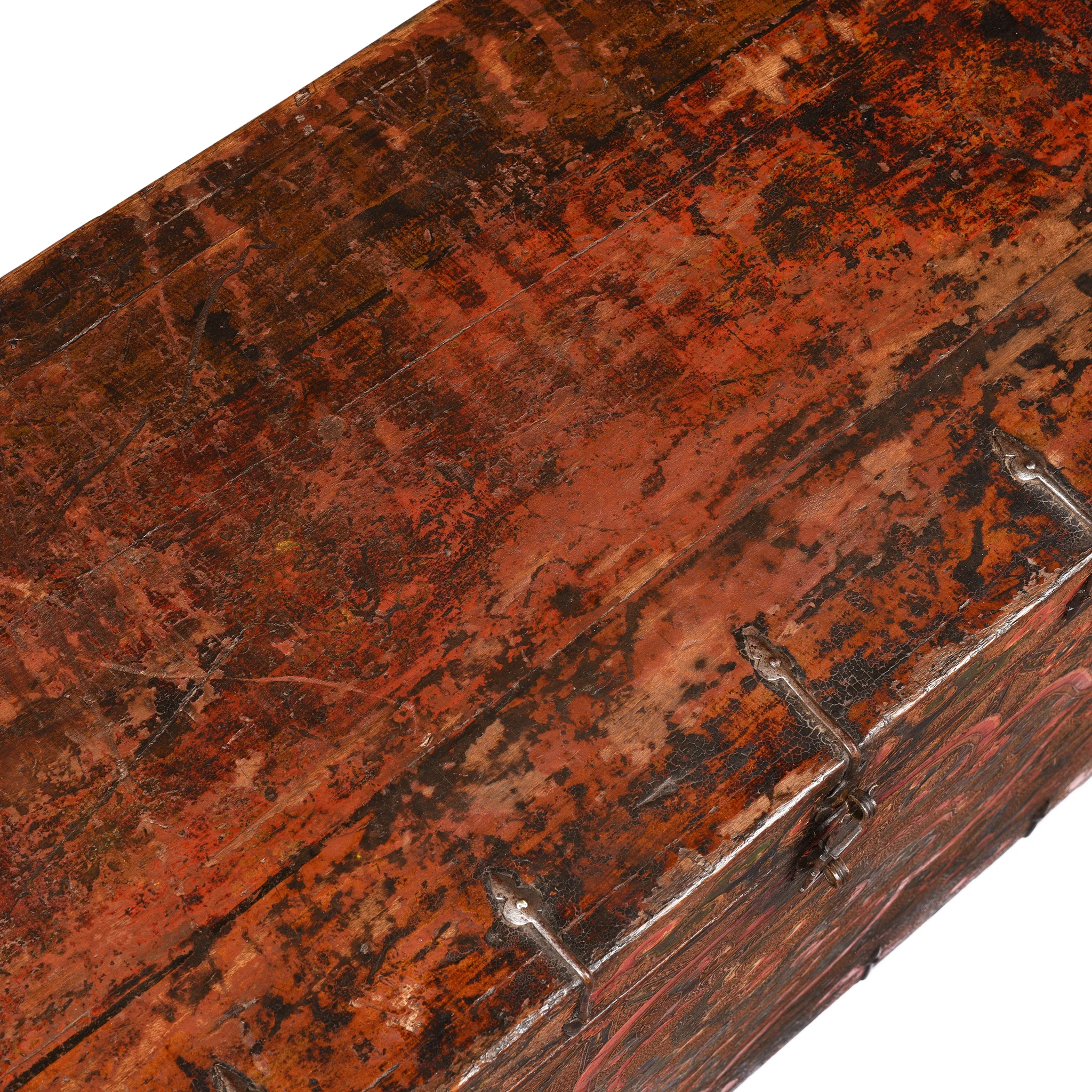
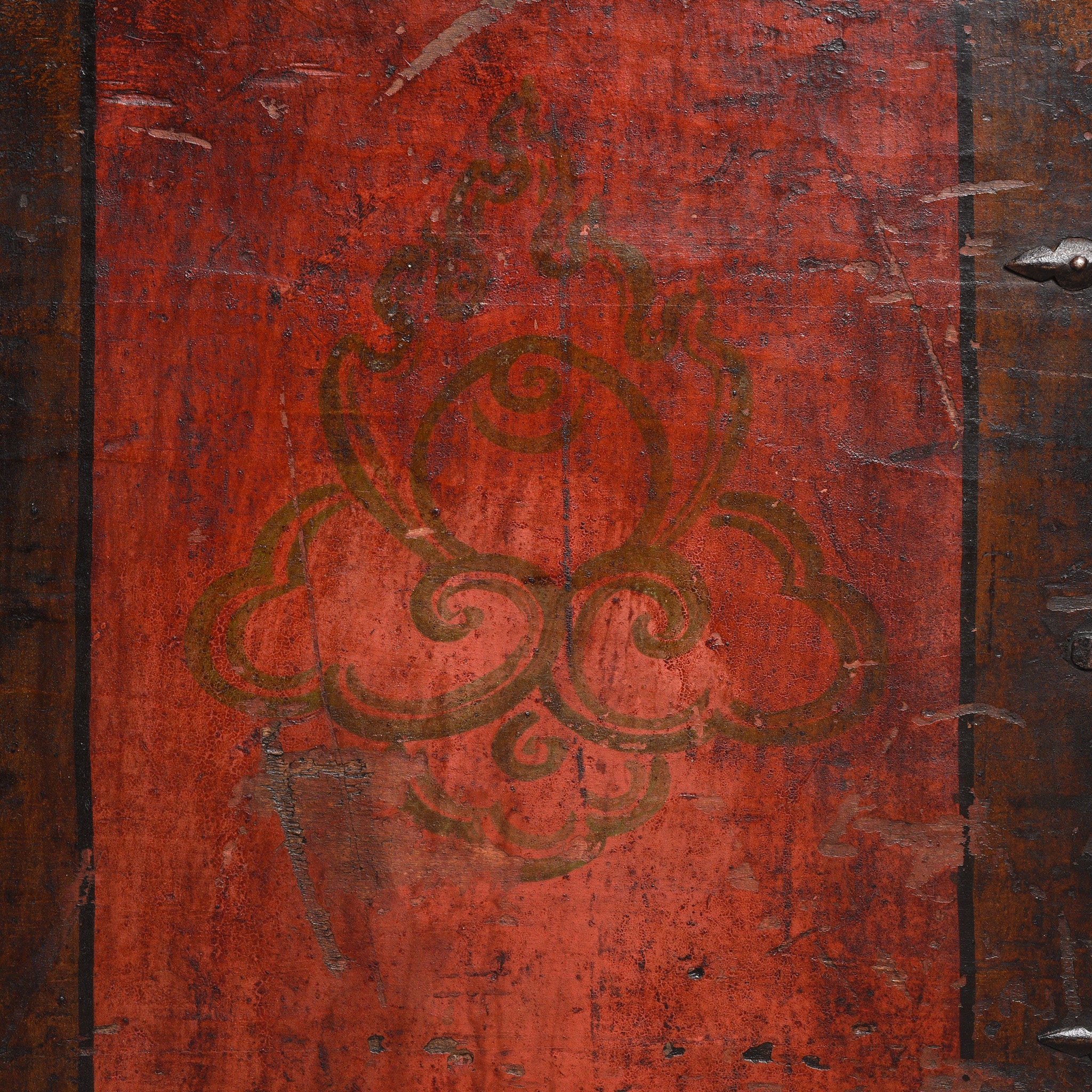
Unusually for Tibetan chests, the sides and top of this piece are painted. The sides are again painted with the eight-faceted jewel which heals and protects from disease and misfortune.
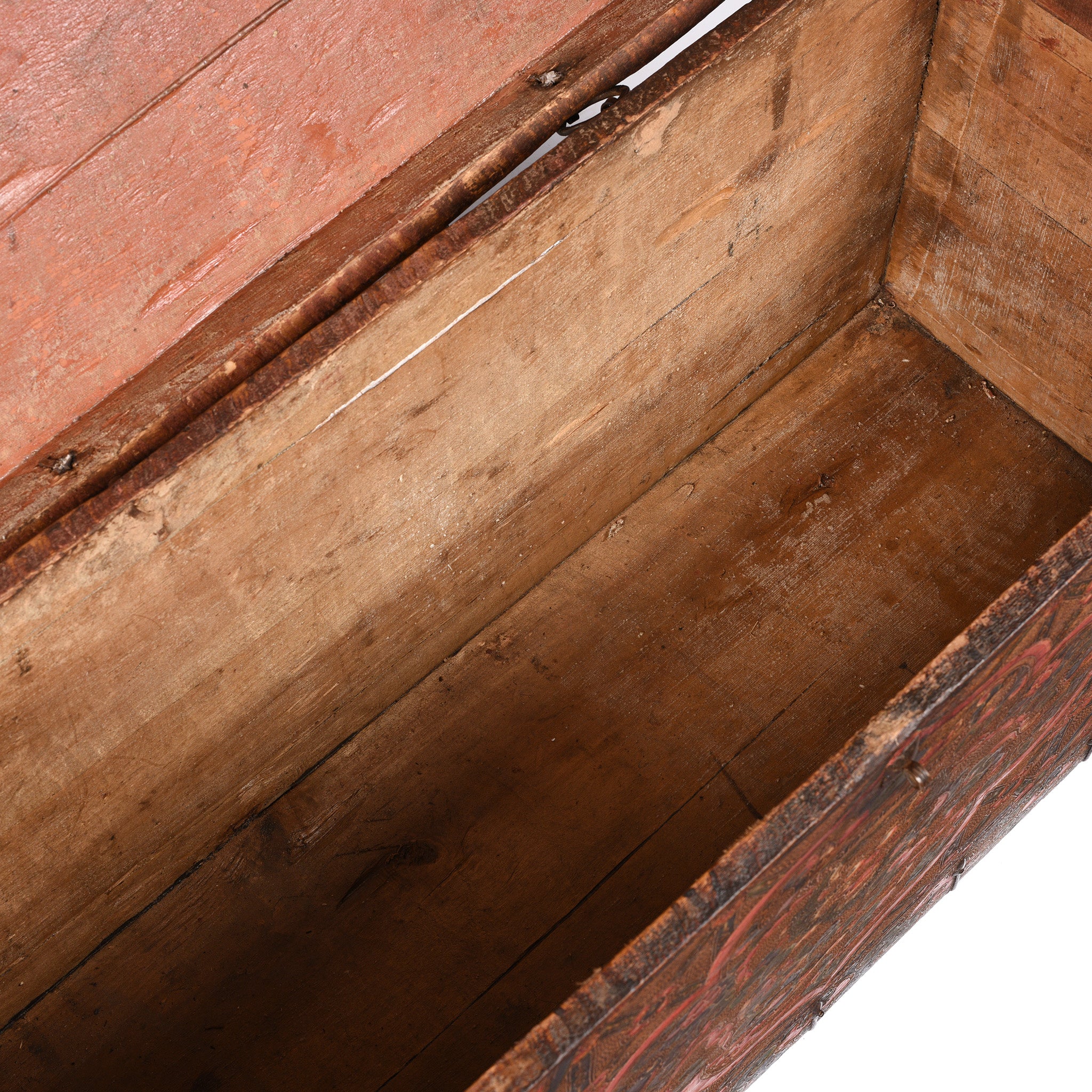
Tibetan chests and trunks were used as storage in homes and monasteries. Boxes are normally made from cedar, pine or poplar. If they are painted it is usually just the front and 2 sides. They can either be painted directly on the wood or on older pieces onto a fabric applied to the wood. The colours and designs used are very decorative.
More Images
Painted Tibetan Dragon Storage Chest - 18th Century
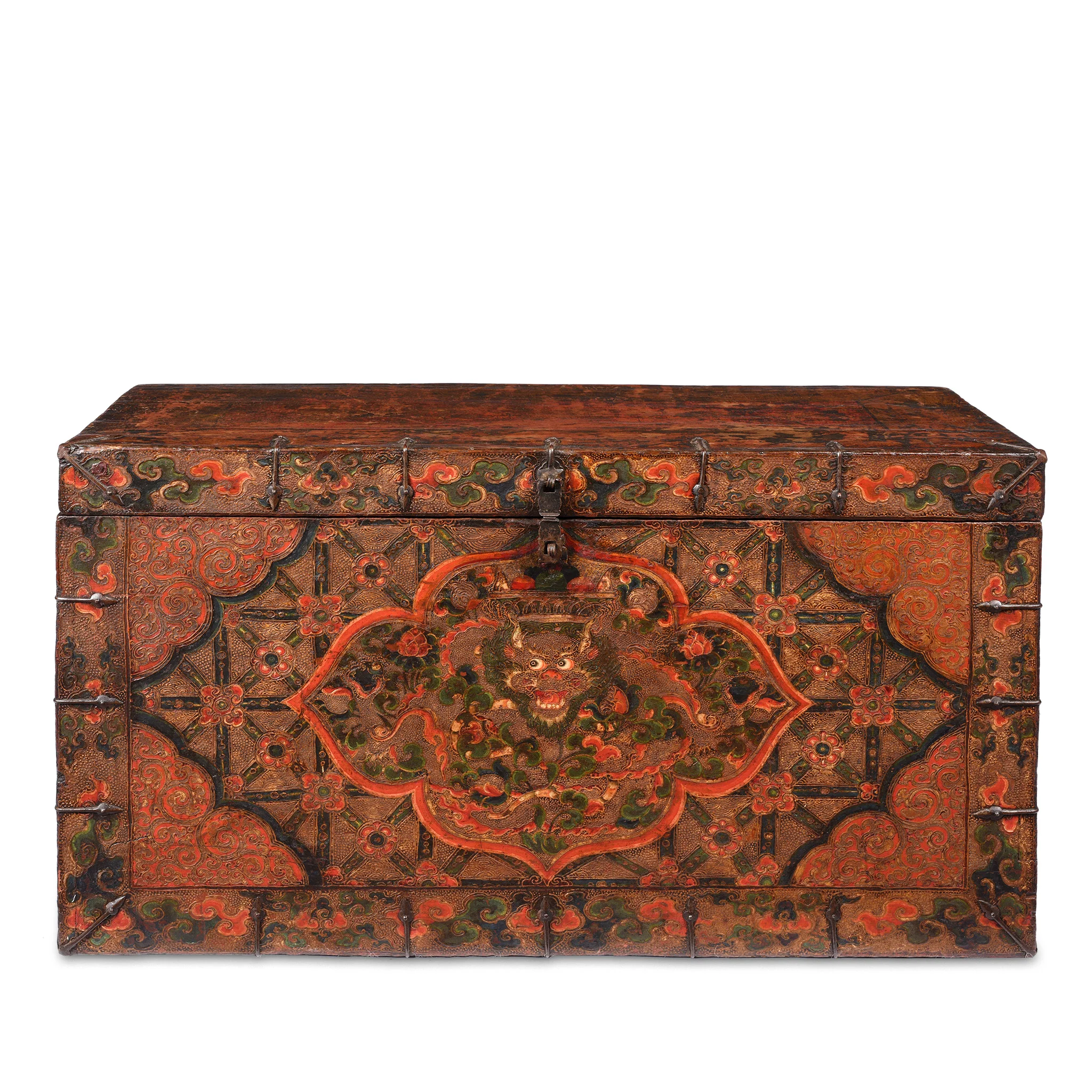
Tibetan antique furniture with original painting was always unusual to find but is incredibly difficult to come by. This very decorative dragon chest is one of our favourite pieces from an excellent quality recently acquired collection we've acquired.
This piece is at at least 18th century and the painting style is textured which was uncommon to find on early chests. The dragon has a particularly cheeky face forming almost a smile.
This piece is an excellent example of the high quality Tibetan painting techniques and the aforementioned dragon wears a crown of flaming jewels (the cintamani which represent wisdom and grant wishes). He is surrounded by lotus flowers (a symbol for harmony and nature) and the Ashoka flower. The surrounding of the chest is dedicated to a repeating Wheel of Dharma pattern. With eight spokes, the wheel denotes the eight paths which together bring enlightenment. The steps are 'understanding,' 'good attitude,' 'right speech, 'good actions,'' 'good work,' 'effort,' 'mindfulness,' and 'meditation.'
Unusually for Tibetan chests, the sides and top of this piece are painted. The sides are again painted with the eight-faceted jewel which heals and protects from disease and misfortune.
Tibetan chests and trunks were used as storage in homes and monasteries. Boxes are normally made from cedar, pine or poplar. If they are painted it is usually just the front and 2 sides. They can either be painted directly on the wood or on older pieces onto a fabric applied to the wood. The colours and designs used are very decorative.
Product Information
Product Information
Shipping & Returns
Shipping & Returns
Description
Tibetan antique furniture with original painting was always unusual to find but is incredibly difficult to come by. This very decorative dragon chest is one of our favourite pieces from an excellent quality recently acquired collection we've acquired.
This piece is at at least 18th century and the painting style is textured which was uncommon to find on early chests. The dragon has a particularly cheeky face forming almost a smile.
This piece is an excellent example of the high quality Tibetan painting techniques and the aforementioned dragon wears a crown of flaming jewels (the cintamani which represent wisdom and grant wishes). He is surrounded by lotus flowers (a symbol for harmony and nature) and the Ashoka flower. The surrounding of the chest is dedicated to a repeating Wheel of Dharma pattern. With eight spokes, the wheel denotes the eight paths which together bring enlightenment. The steps are 'understanding,' 'good attitude,' 'right speech, 'good actions,'' 'good work,' 'effort,' 'mindfulness,' and 'meditation.'
Unusually for Tibetan chests, the sides and top of this piece are painted. The sides are again painted with the eight-faceted jewel which heals and protects from disease and misfortune.
Tibetan chests and trunks were used as storage in homes and monasteries. Boxes are normally made from cedar, pine or poplar. If they are painted it is usually just the front and 2 sides. They can either be painted directly on the wood or on older pieces onto a fabric applied to the wood. The colours and designs used are very decorative.