
Wrought Iron Opium Retort From Jaisalmer - 19th Century
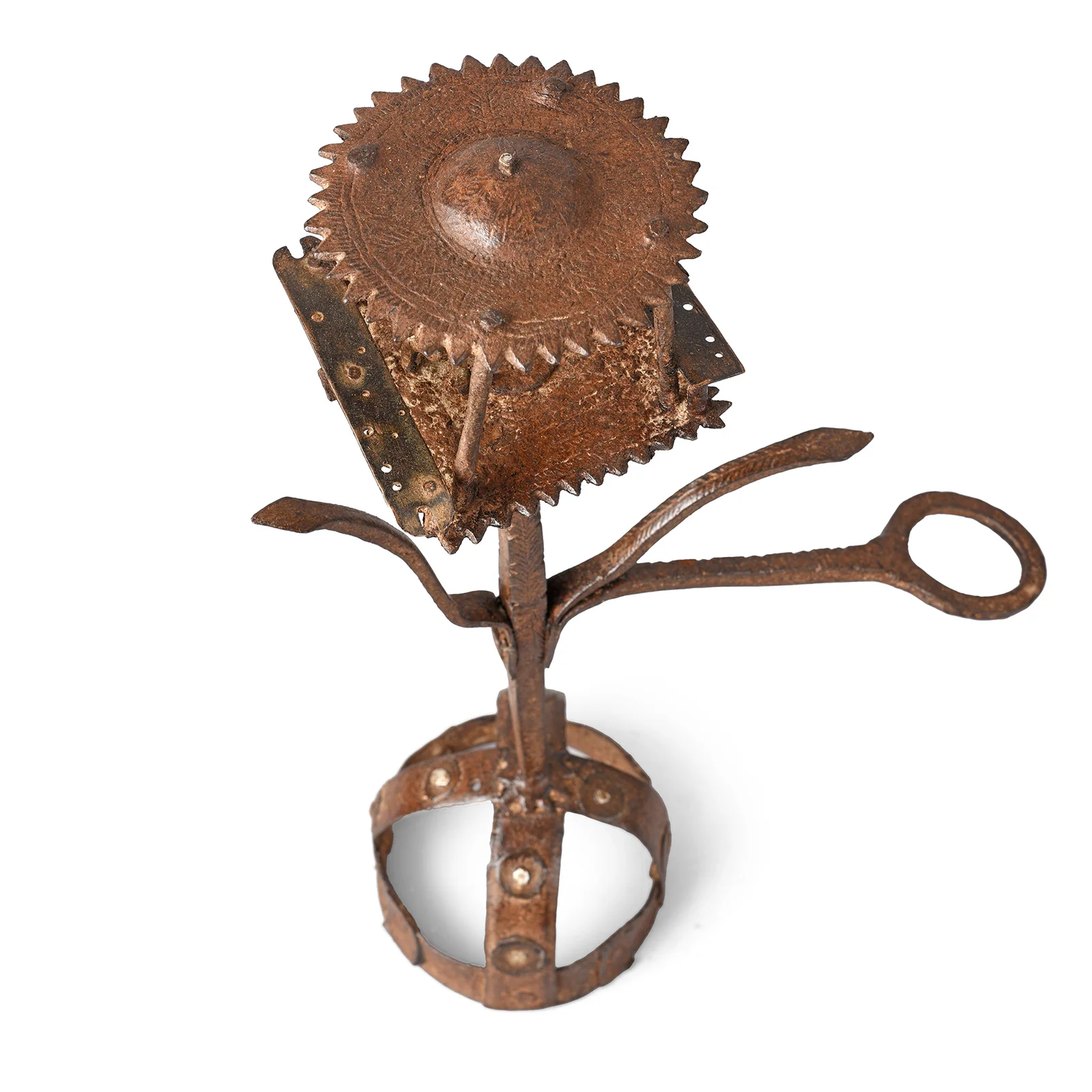
This old Indian iron opium retort (or hemp filter) was used for filtering raw opium water through a cotton bag. It dates to the 19th century and would have been part of Rajasthani traditional opium consumption. The iron stand is delicately etched and has a central pagoda sheltering a nandi bull. The Nandi bull is a symbol of Lord Shiva. A stylised naga or snake sits above the ring which would once have held a cotton bag.
These stands were hand-wrought by Lohar blacksmiths in Rajasthan. These stands would have filtered the opium water which would then have been drunk. Although opium is no longer used in the same way, these pieces still make unusual unique ornaments that come complete with a fascinating social history.
References:
For a similar example see page 39 of Museums of India 'National Handicrafts & Handlooms Museum New Delhi' by Jyotindra Jain & Aarti Aggarwala. Note that the book misidentifies this as a lamp stand.
A similar example can be found in Unknown Masterpieces of Indian Folk & Tribal Art by S Aryan & B.N. Aryan, fig 352.
From India
UK Delivery Charge - except Highlands & Islands £15
More delivery options available on checkout
More Images




Wrought Iron Opium Retort From Jaisalmer - 19th Century
This old Indian iron opium retort (or hemp filter) was used for filtering raw opium water through a cotton bag. It dates to the 19th century and would have been part of Rajasthani traditional opium consumption. The iron stand is delicately etched and has a central pagoda sheltering a nandi bull. The Nandi bull is a symbol of Lord Shiva. A stylised naga or snake sits above the ring which would once have held a cotton bag.
These stands were hand-wrought by Lohar blacksmiths in Rajasthan. These stands would have filtered the opium water which would then have been drunk. Although opium is no longer used in the same way, these pieces still make unusual unique ornaments that come complete with a fascinating social history.
References:
For a similar example see page 39 of Museums of India 'National Handicrafts & Handlooms Museum New Delhi' by Jyotindra Jain & Aarti Aggarwala. Note that the book misidentifies this as a lamp stand.
A similar example can be found in Unknown Masterpieces of Indian Folk & Tribal Art by S Aryan & B.N. Aryan, fig 352.
From India
UK Delivery Charge - except Highlands & Islands £15
More delivery options available on checkout
Product Information
Product Information
Shipping & Returns
Shipping & Returns
Description
This old Indian iron opium retort (or hemp filter) was used for filtering raw opium water through a cotton bag. It dates to the 19th century and would have been part of Rajasthani traditional opium consumption. The iron stand is delicately etched and has a central pagoda sheltering a nandi bull. The Nandi bull is a symbol of Lord Shiva. A stylised naga or snake sits above the ring which would once have held a cotton bag.
These stands were hand-wrought by Lohar blacksmiths in Rajasthan. These stands would have filtered the opium water which would then have been drunk. Although opium is no longer used in the same way, these pieces still make unusual unique ornaments that come complete with a fascinating social history.
References:
For a similar example see page 39 of Museums of India 'National Handicrafts & Handlooms Museum New Delhi' by Jyotindra Jain & Aarti Aggarwala. Note that the book misidentifies this as a lamp stand.
A similar example can be found in Unknown Masterpieces of Indian Folk & Tribal Art by S Aryan & B.N. Aryan, fig 352.
From India
UK Delivery Charge - except Highlands & Islands £15
More delivery options available on checkout