
Stone Water Pot For Planter - 19th Century
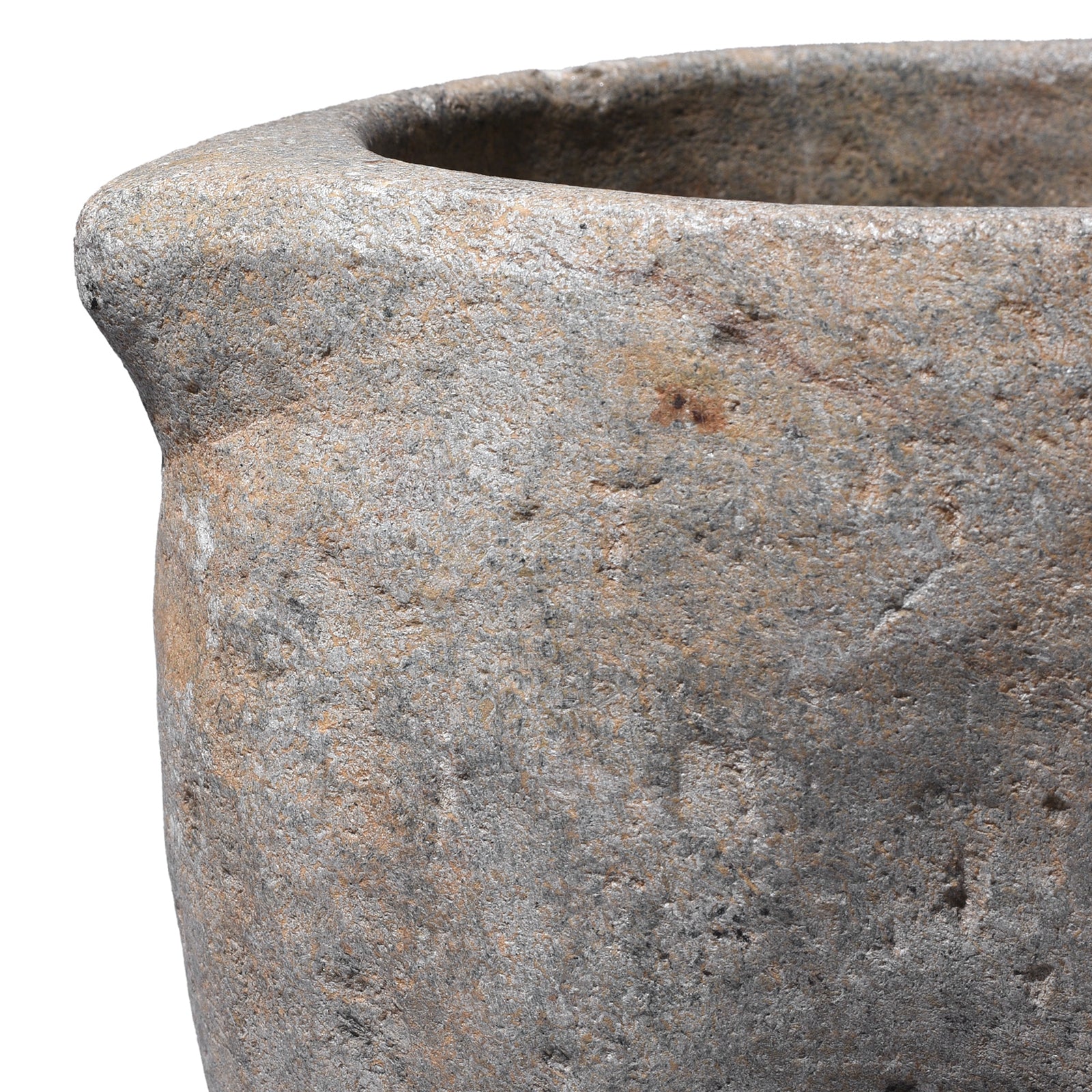
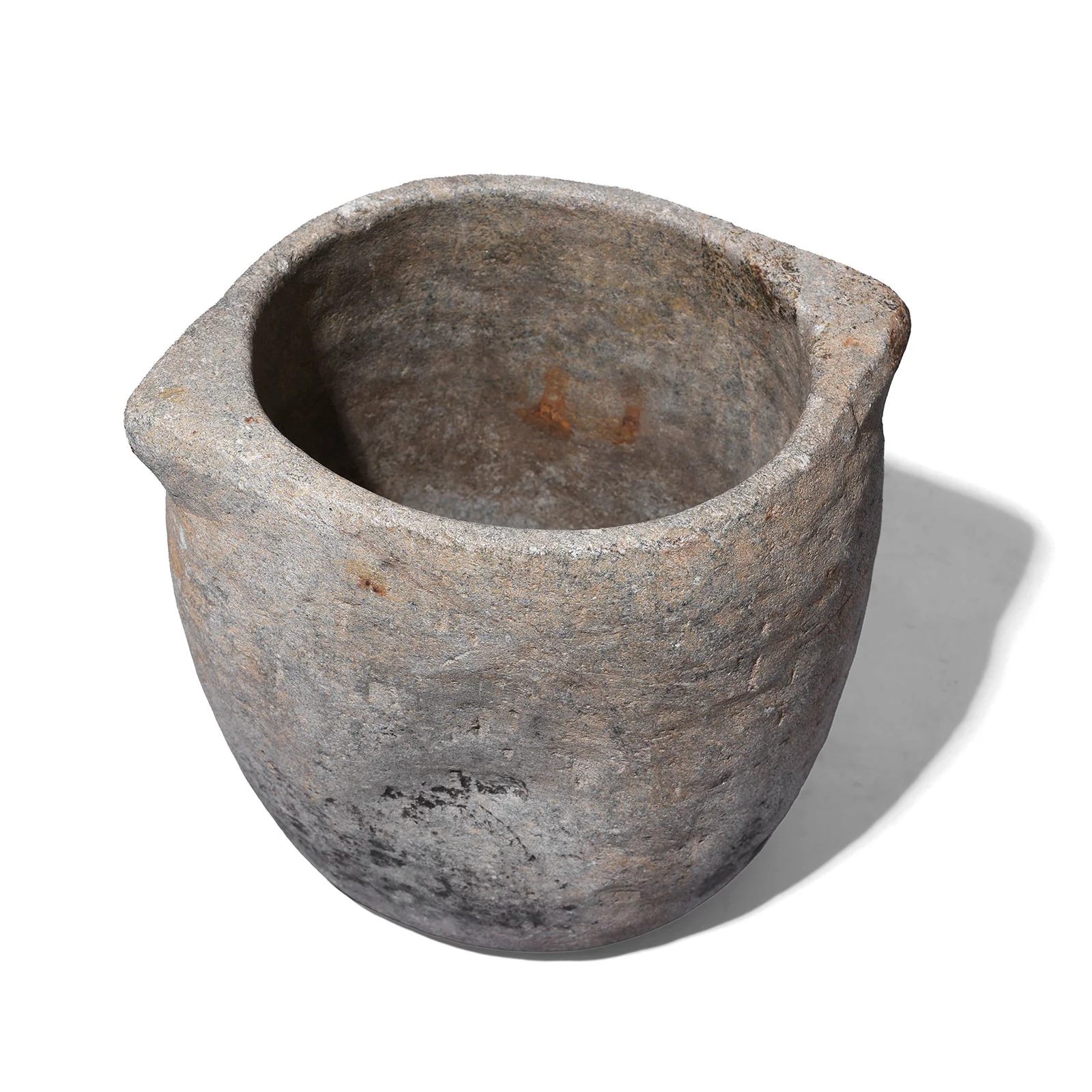
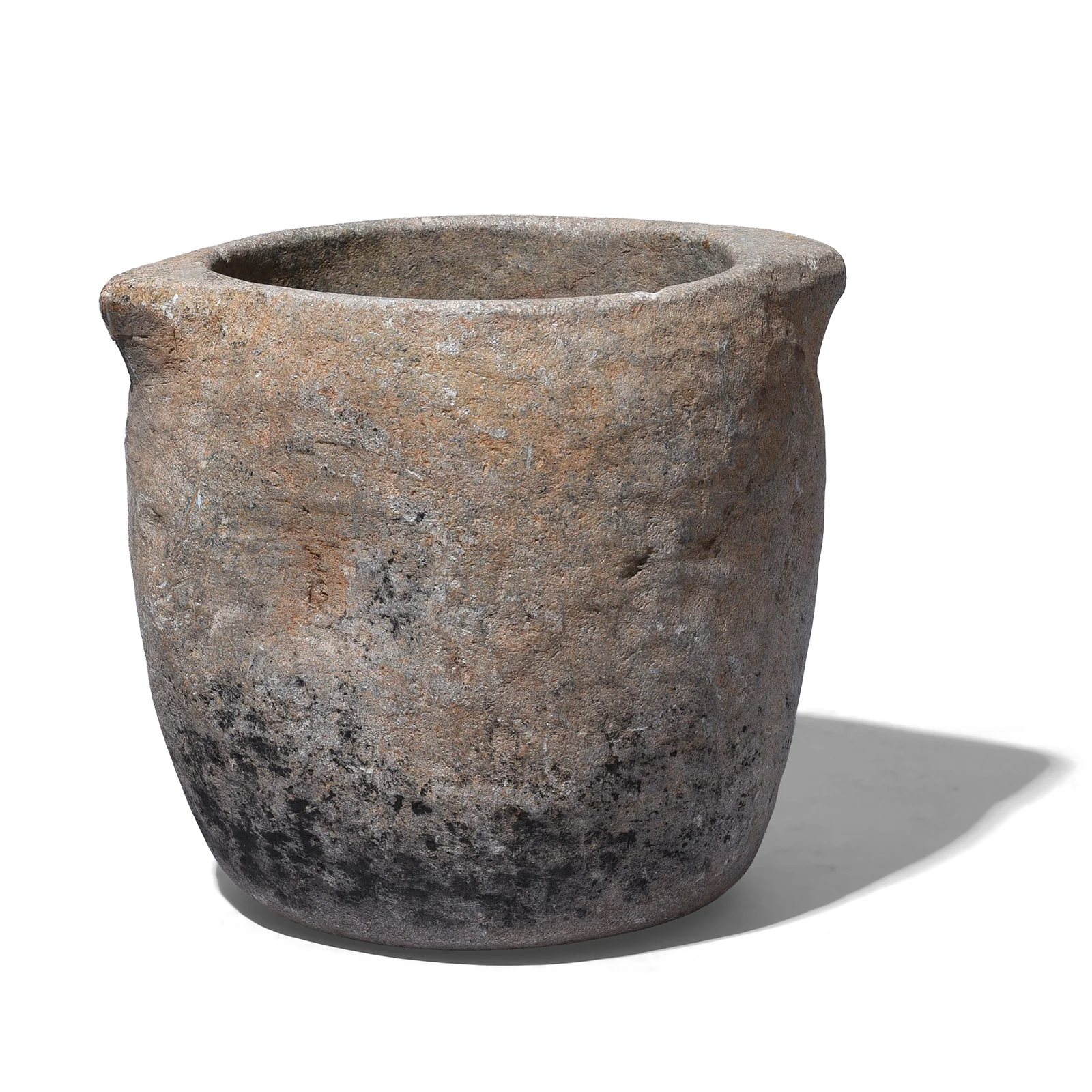
This 19th-century carved-stone pot was originally used in South Indian and tribal communal kitchens, where thick, heavy stone vessels were valued for their durability and superb heat retention. Hand-carved from a single block of dense stone, it would have been used for everyday cooking tasks such as boiling rice, reducing milk, preparing kanji (a traditional porridge), or slowly simmering lentils and grains over a clay-lined chulha hearth. Its rounded base, gently flared rim, and soot-darkened lower body are all characteristic signs of long, practical use.
Today, the pot’s sculptural form and beautifully weathered surface give it a powerful rustic presence. The thick walls naturally insulate the soil, making it a superb planter for both indoor and outdoor settings. Whether filled with architectural greenery or left unplanted as a standalone piece, it offers a striking blend of authenticity, texture and functional versatility.
- Origin: South India
- Date: 19th Century
- Materials: Hand-carved stone
- Features: Single-block construction; flared rim; rounded base; smoke-darkened lower body; thick insulating walls
- Condition: Worn and weathered surface consistent with long use
- Dimensions: W12 x D18 x H18 cm
Original: $132.50
-65%$132.50
$46.38More Images

Stone Water Pot For Planter - 19th Century
This 19th-century carved-stone pot was originally used in South Indian and tribal communal kitchens, where thick, heavy stone vessels were valued for their durability and superb heat retention. Hand-carved from a single block of dense stone, it would have been used for everyday cooking tasks such as boiling rice, reducing milk, preparing kanji (a traditional porridge), or slowly simmering lentils and grains over a clay-lined chulha hearth. Its rounded base, gently flared rim, and soot-darkened lower body are all characteristic signs of long, practical use.
Today, the pot’s sculptural form and beautifully weathered surface give it a powerful rustic presence. The thick walls naturally insulate the soil, making it a superb planter for both indoor and outdoor settings. Whether filled with architectural greenery or left unplanted as a standalone piece, it offers a striking blend of authenticity, texture and functional versatility.
- Origin: South India
- Date: 19th Century
- Materials: Hand-carved stone
- Features: Single-block construction; flared rim; rounded base; smoke-darkened lower body; thick insulating walls
- Condition: Worn and weathered surface consistent with long use
- Dimensions: W12 x D18 x H18 cm
Product Information
Product Information
Shipping & Returns
Shipping & Returns
Description
This 19th-century carved-stone pot was originally used in South Indian and tribal communal kitchens, where thick, heavy stone vessels were valued for their durability and superb heat retention. Hand-carved from a single block of dense stone, it would have been used for everyday cooking tasks such as boiling rice, reducing milk, preparing kanji (a traditional porridge), or slowly simmering lentils and grains over a clay-lined chulha hearth. Its rounded base, gently flared rim, and soot-darkened lower body are all characteristic signs of long, practical use.
Today, the pot’s sculptural form and beautifully weathered surface give it a powerful rustic presence. The thick walls naturally insulate the soil, making it a superb planter for both indoor and outdoor settings. Whether filled with architectural greenery or left unplanted as a standalone piece, it offers a striking blend of authenticity, texture and functional versatility.
- Origin: South India
- Date: 19th Century
- Materials: Hand-carved stone
- Features: Single-block construction; flared rim; rounded base; smoke-darkened lower body; thick insulating walls
- Condition: Worn and weathered surface consistent with long use
- Dimensions: W12 x D18 x H18 cm