Small Brass & Rosewood 'Malabar' Chest From Kutch - 19th Century
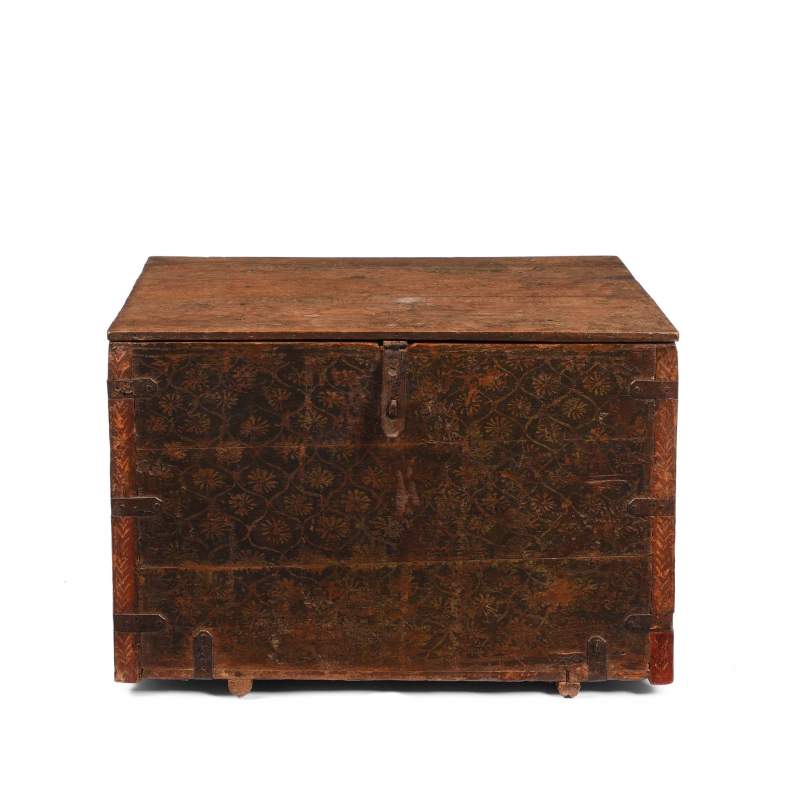
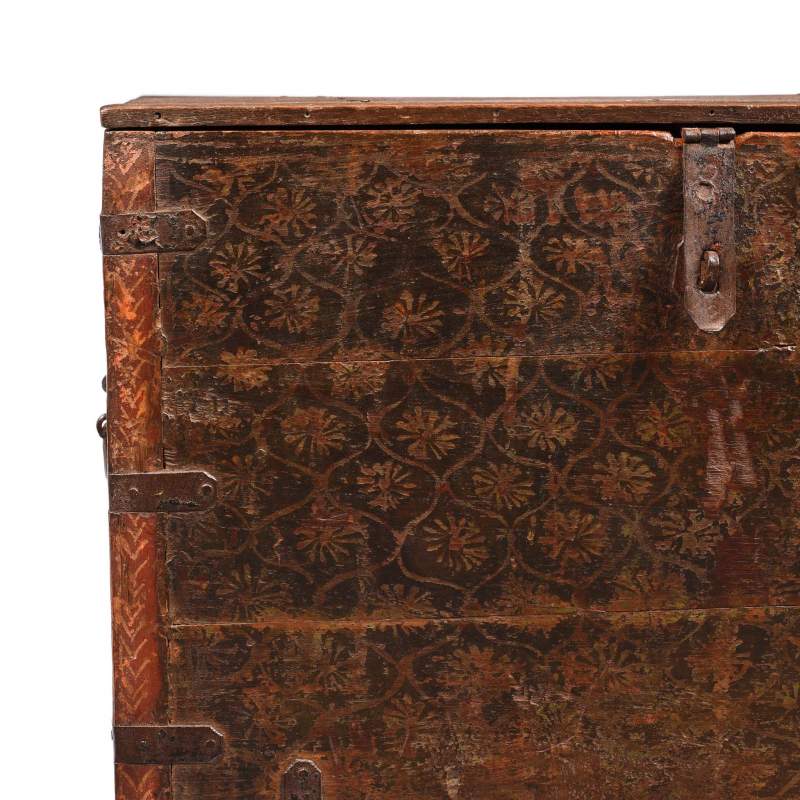
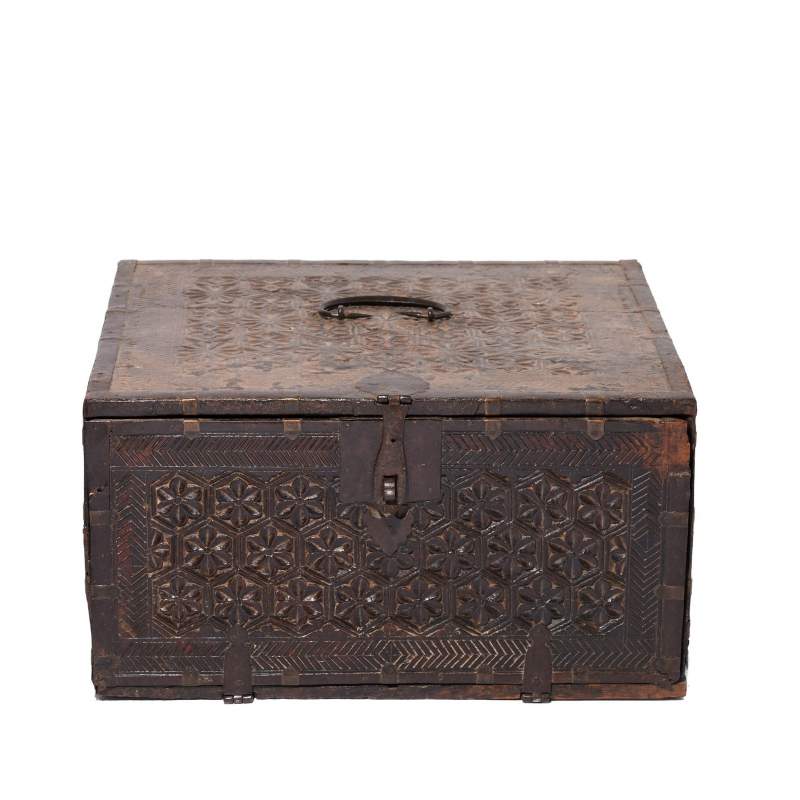
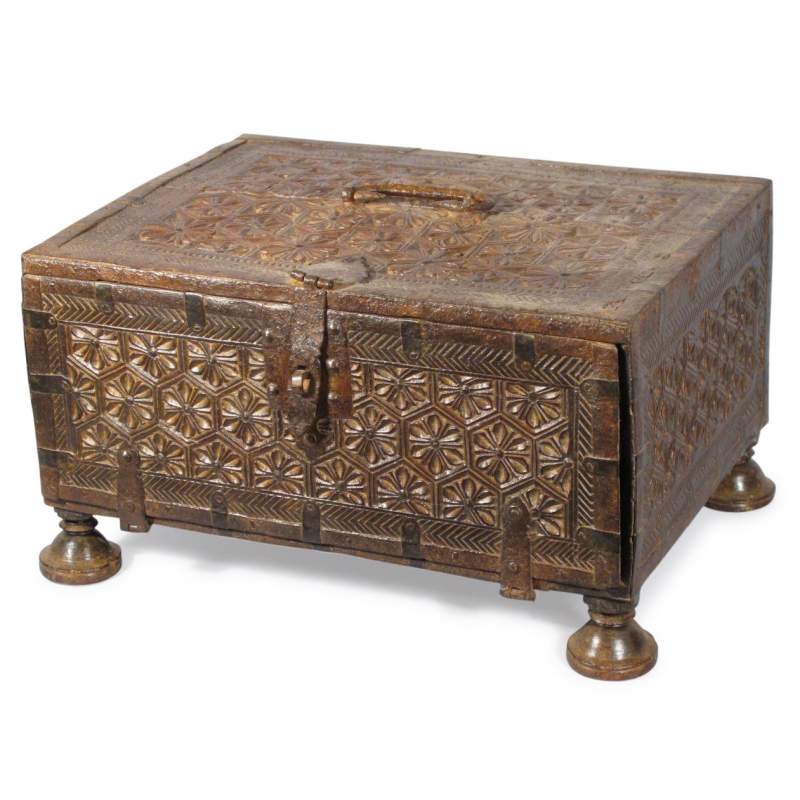
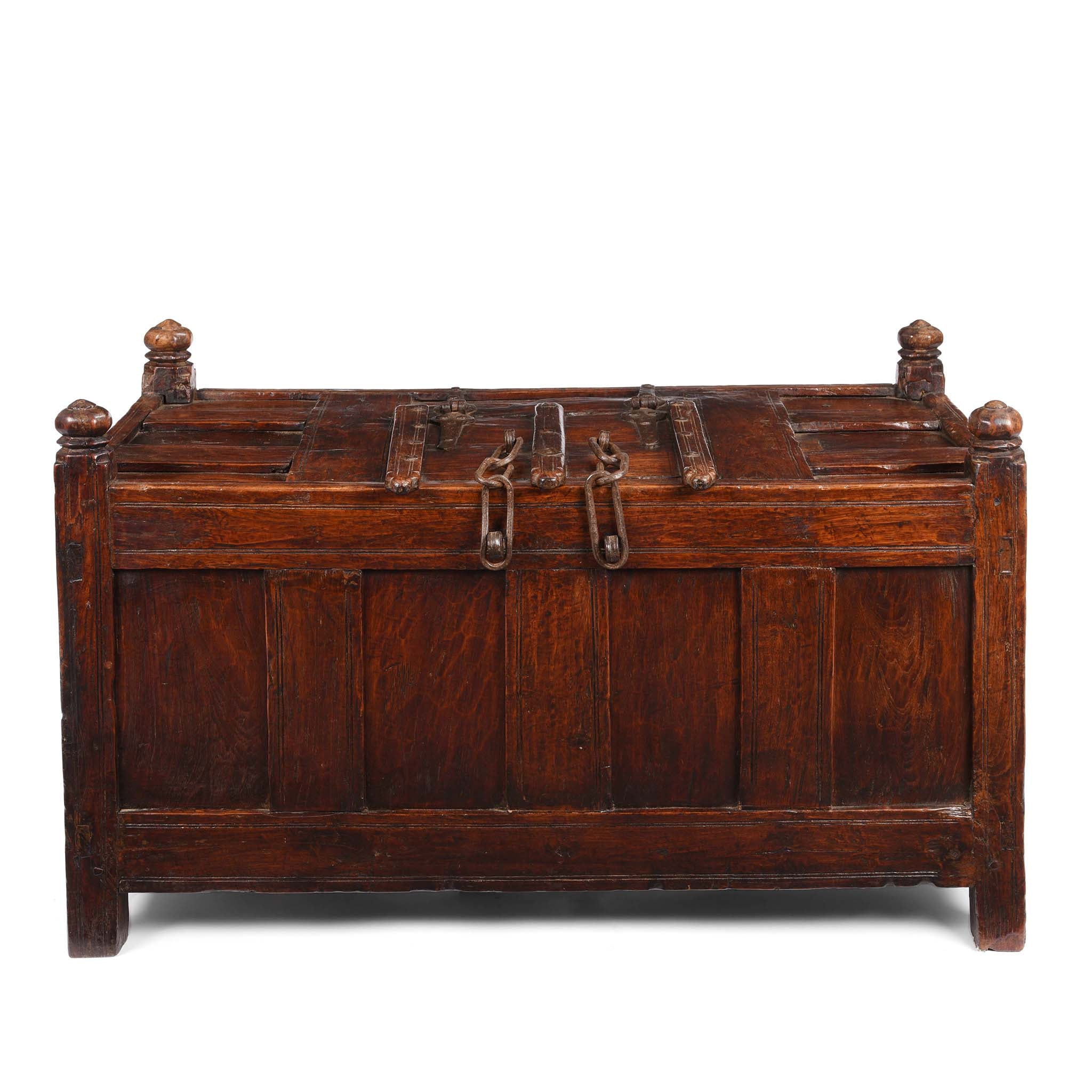
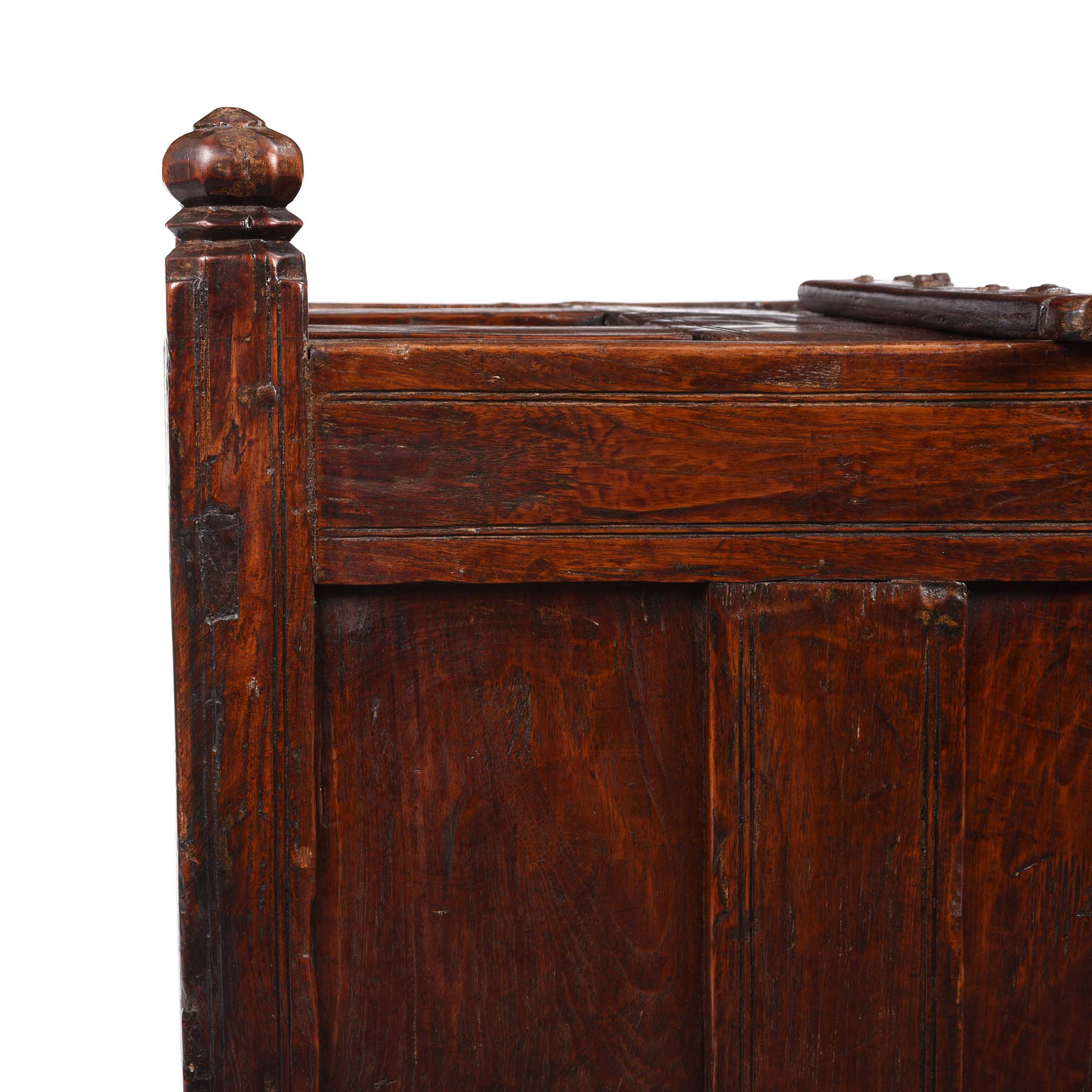
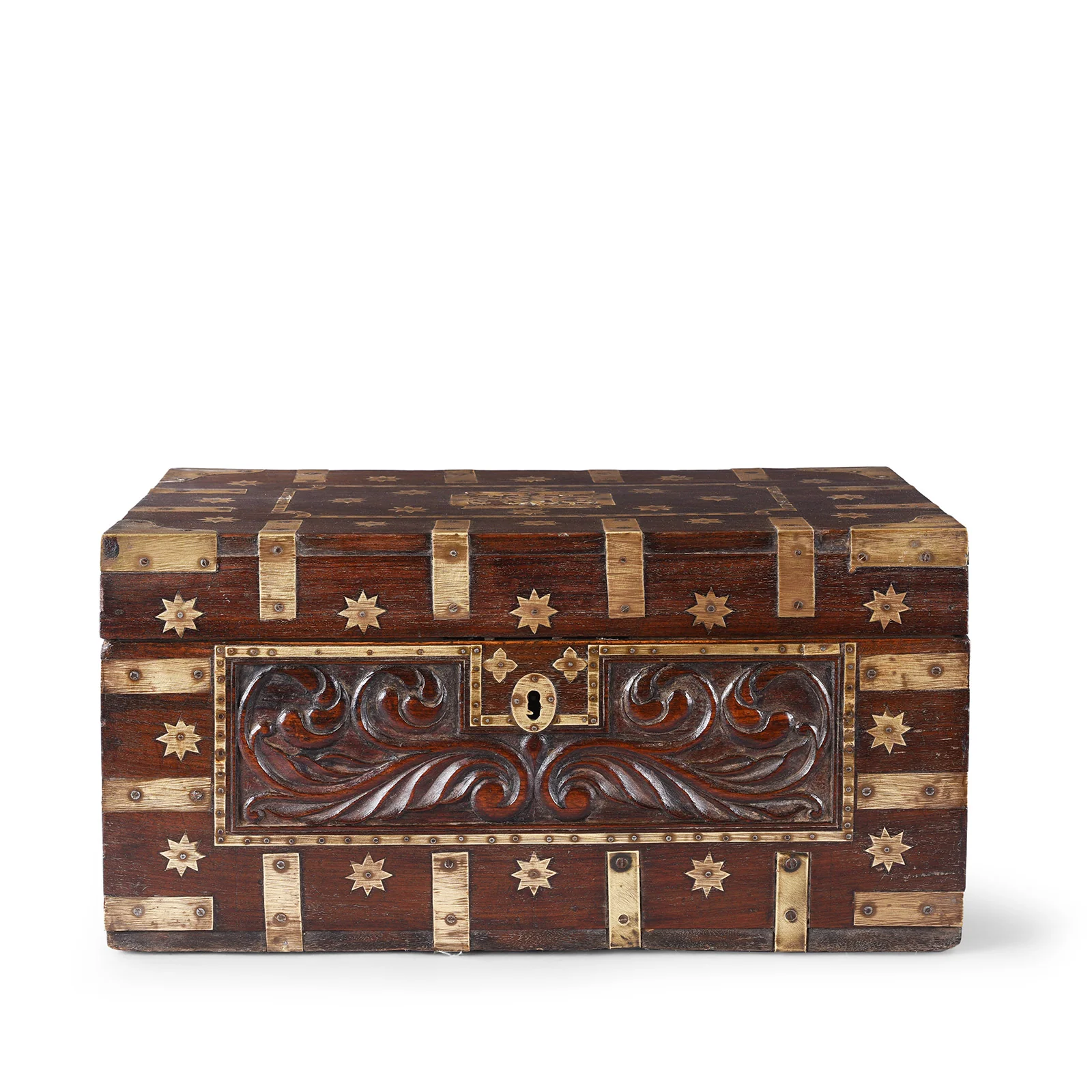
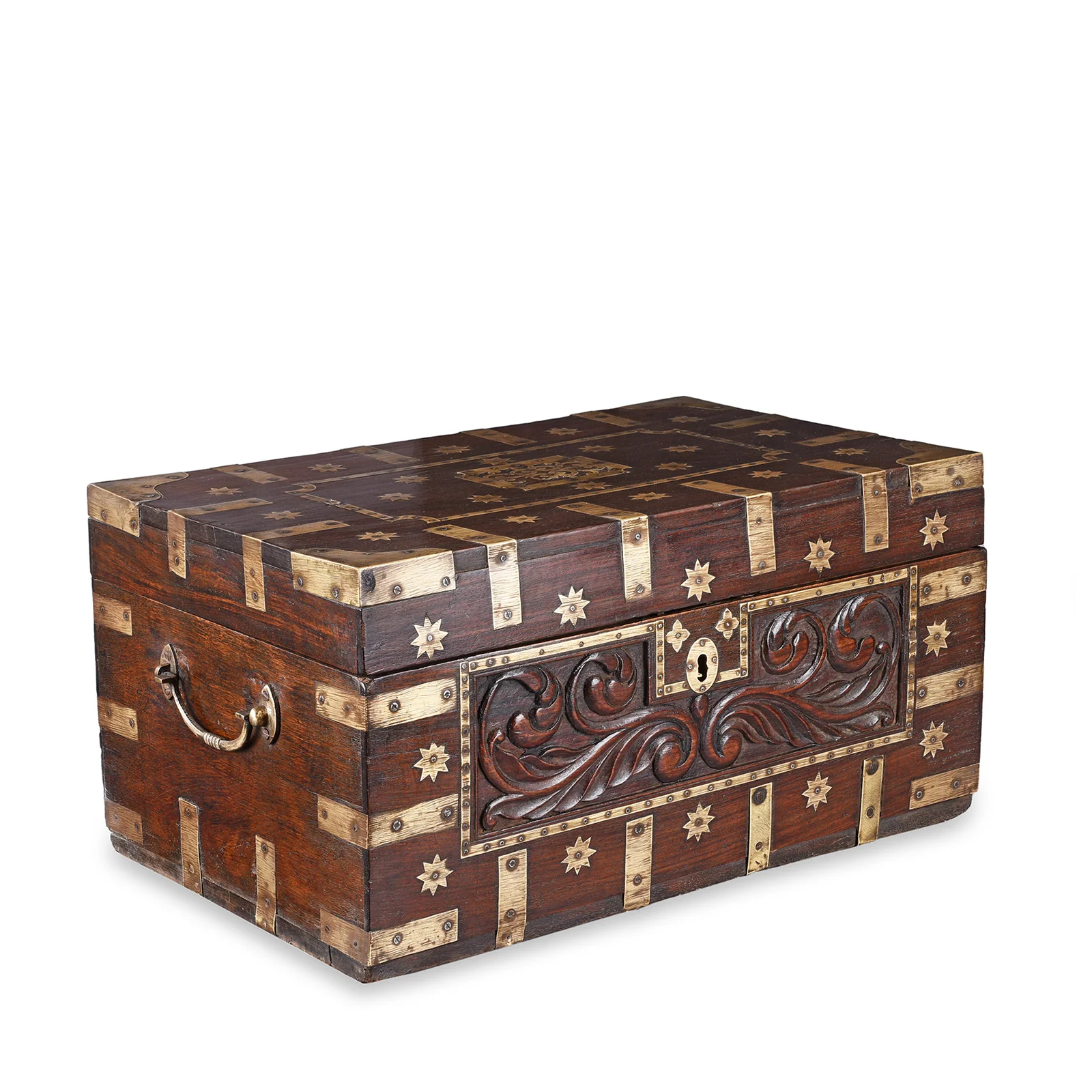
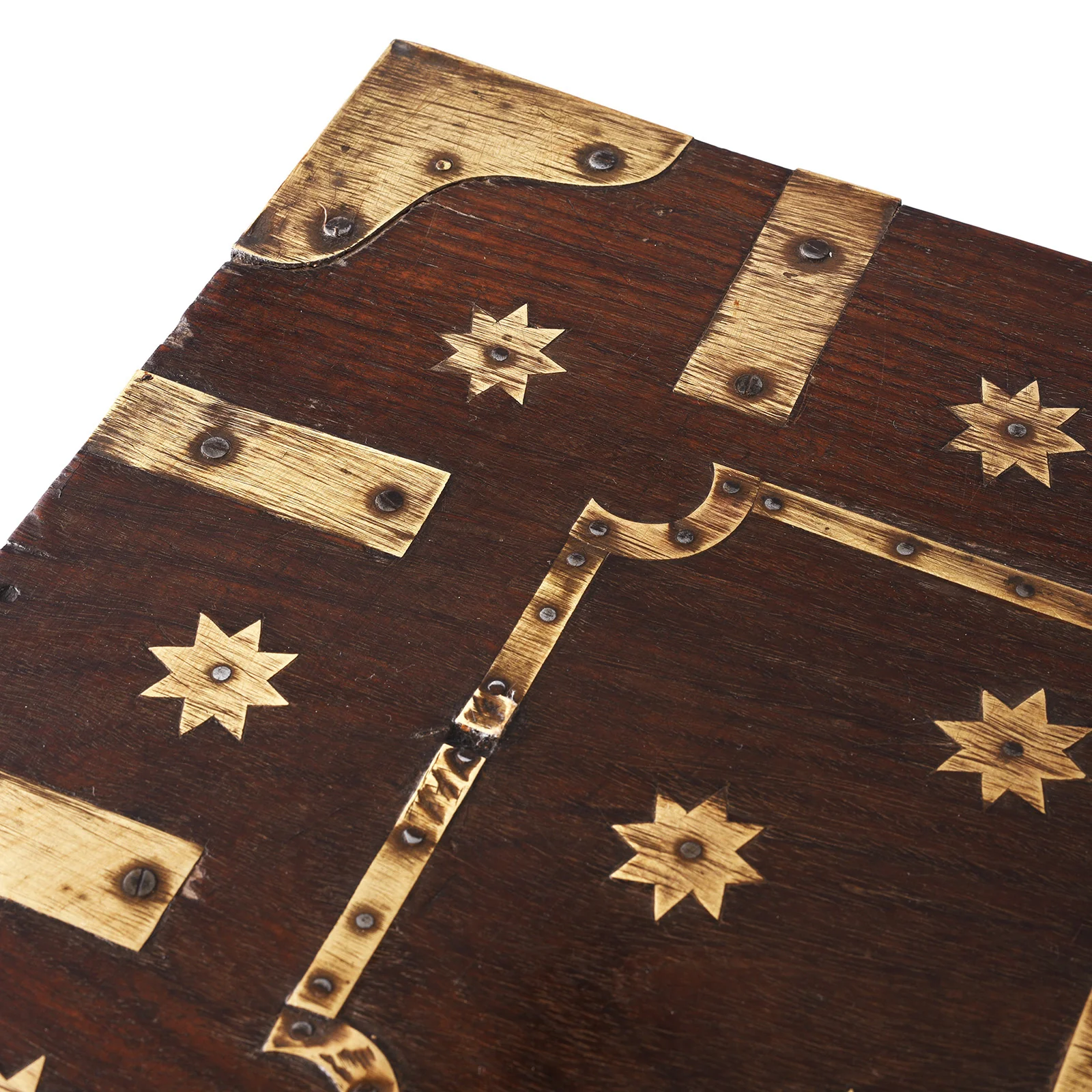
This beautifully carved Indian chest is known as a Malabar chest and dates to the middle of the 19th century. It is made from solid rosewood and bound with brass. This is a rather small example suggesting it was made for use as a merchants lockbox. Perhaps a sea captain. The larger chests were used as dhow trade chests for transporting spices like pepper and cloves, Indian cotton, and gemstones. The main trade hubs were Diu, Surat, Basra, Zanzibar & Bombay.
Although a Malabar chest in name, this style of chest was likely made in Kutch in Gujarat. The carving is heavily influenced by the Portuguese style with flowing leafy tendrils and hanging breadfruit, a tree native to Malabar. The inner hinges are the traditional Zanzibar chest style.
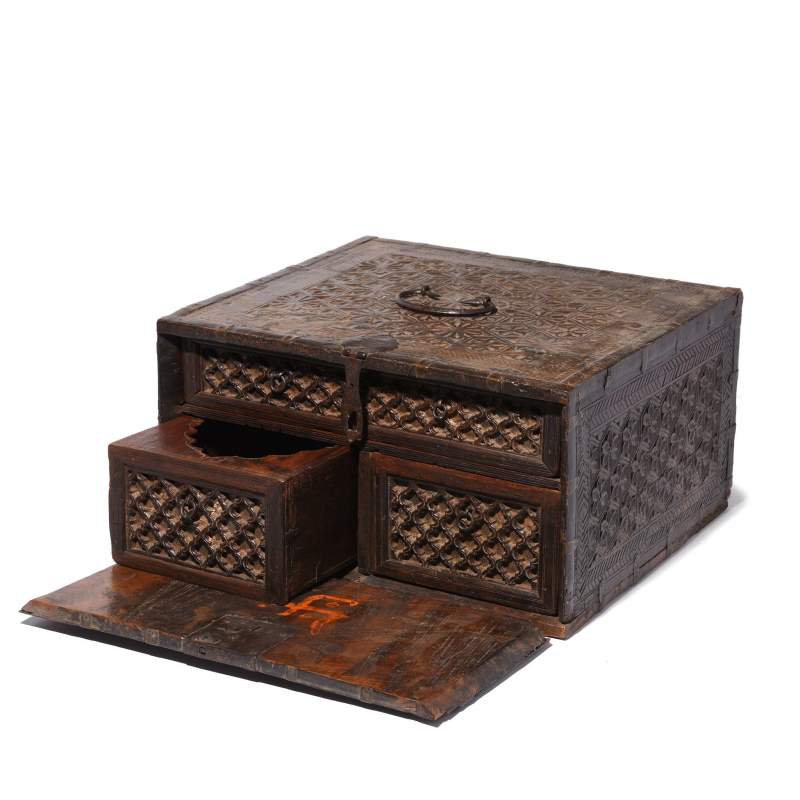
This is particular chest has wonderfully carved interior compartments along with a removable top tray which gives access to the larger storage space beneath.
References:
Further information on Malabar chests can be found in The Arab Chest by Sheila Unwin, page 85 - 87.
More Images





Small Brass & Rosewood 'Malabar' Chest From Kutch - 19th Century
This beautifully carved Indian chest is known as a Malabar chest and dates to the middle of the 19th century. It is made from solid rosewood and bound with brass. This is a rather small example suggesting it was made for use as a merchants lockbox. Perhaps a sea captain. The larger chests were used as dhow trade chests for transporting spices like pepper and cloves, Indian cotton, and gemstones. The main trade hubs were Diu, Surat, Basra, Zanzibar & Bombay.
Although a Malabar chest in name, this style of chest was likely made in Kutch in Gujarat. The carving is heavily influenced by the Portuguese style with flowing leafy tendrils and hanging breadfruit, a tree native to Malabar. The inner hinges are the traditional Zanzibar chest style.
This is particular chest has wonderfully carved interior compartments along with a removable top tray which gives access to the larger storage space beneath.
References:
Further information on Malabar chests can be found in The Arab Chest by Sheila Unwin, page 85 - 87.
Product Information
Product Information
Shipping & Returns
Shipping & Returns
Description
This beautifully carved Indian chest is known as a Malabar chest and dates to the middle of the 19th century. It is made from solid rosewood and bound with brass. This is a rather small example suggesting it was made for use as a merchants lockbox. Perhaps a sea captain. The larger chests were used as dhow trade chests for transporting spices like pepper and cloves, Indian cotton, and gemstones. The main trade hubs were Diu, Surat, Basra, Zanzibar & Bombay.
Although a Malabar chest in name, this style of chest was likely made in Kutch in Gujarat. The carving is heavily influenced by the Portuguese style with flowing leafy tendrils and hanging breadfruit, a tree native to Malabar. The inner hinges are the traditional Zanzibar chest style.
This is particular chest has wonderfully carved interior compartments along with a removable top tray which gives access to the larger storage space beneath.
References:
Further information on Malabar chests can be found in The Arab Chest by Sheila Unwin, page 85 - 87.