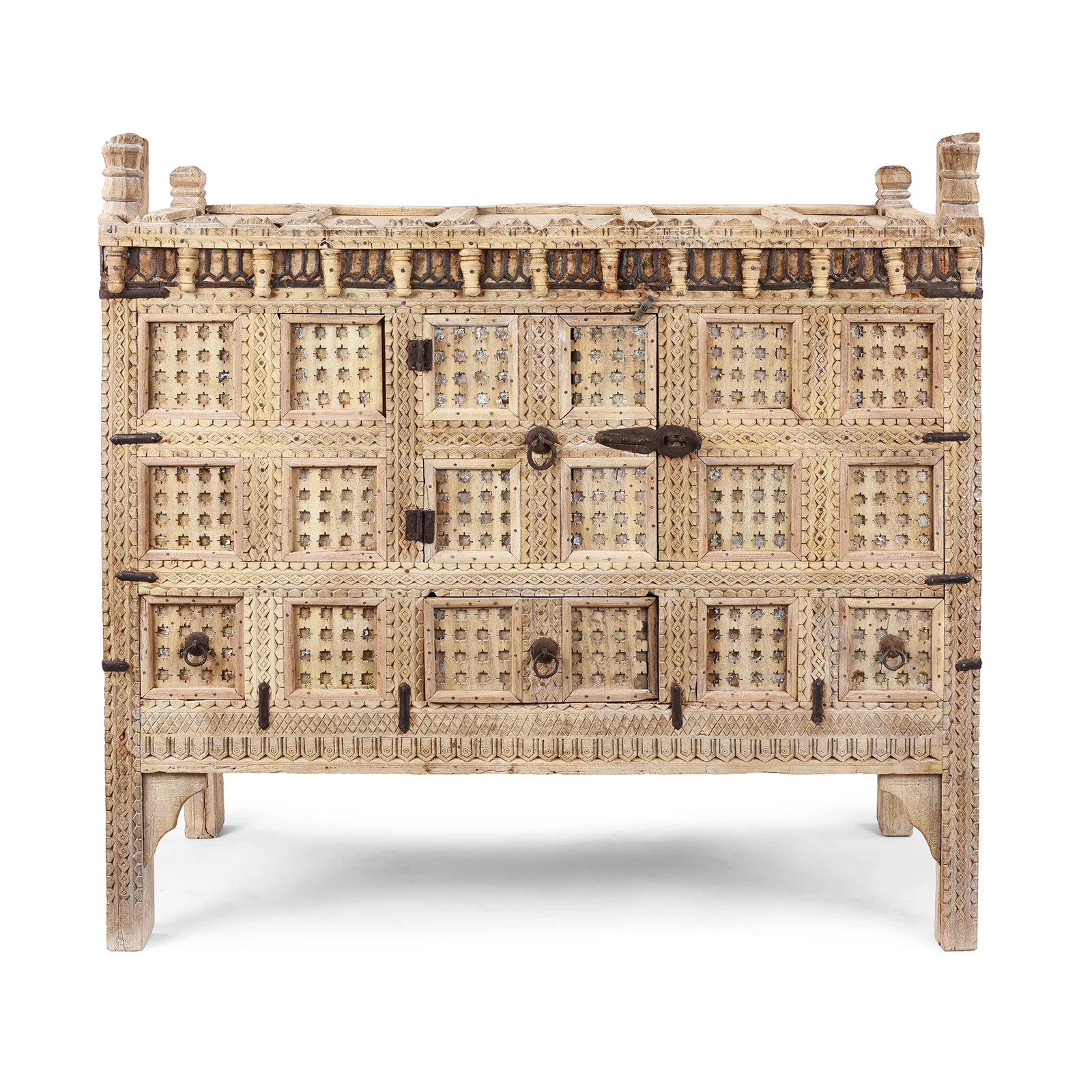
Rubari Damchiya Dowry Chest From Kutch - Ca 1920
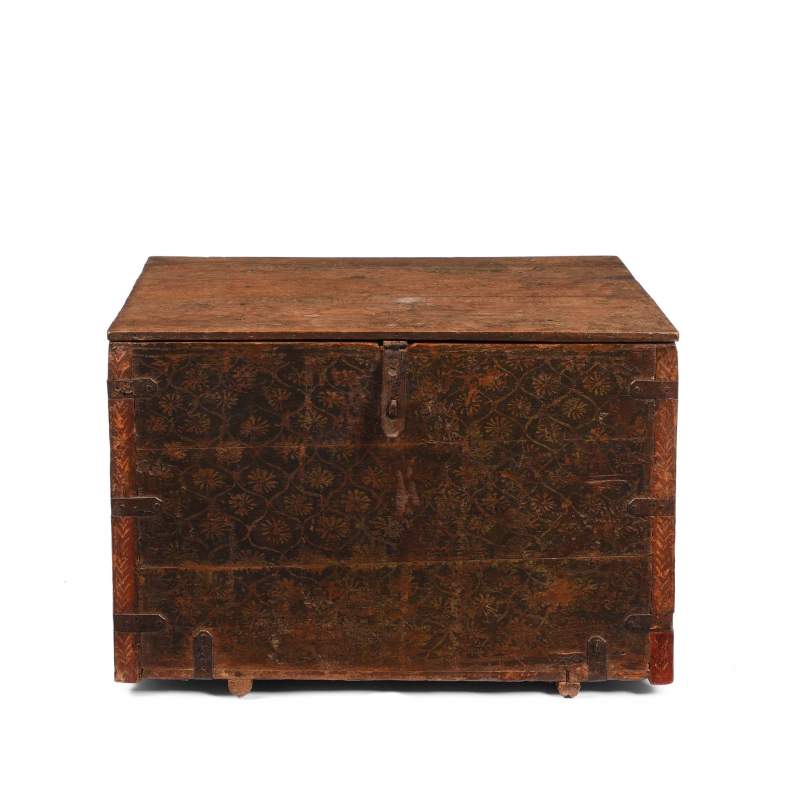
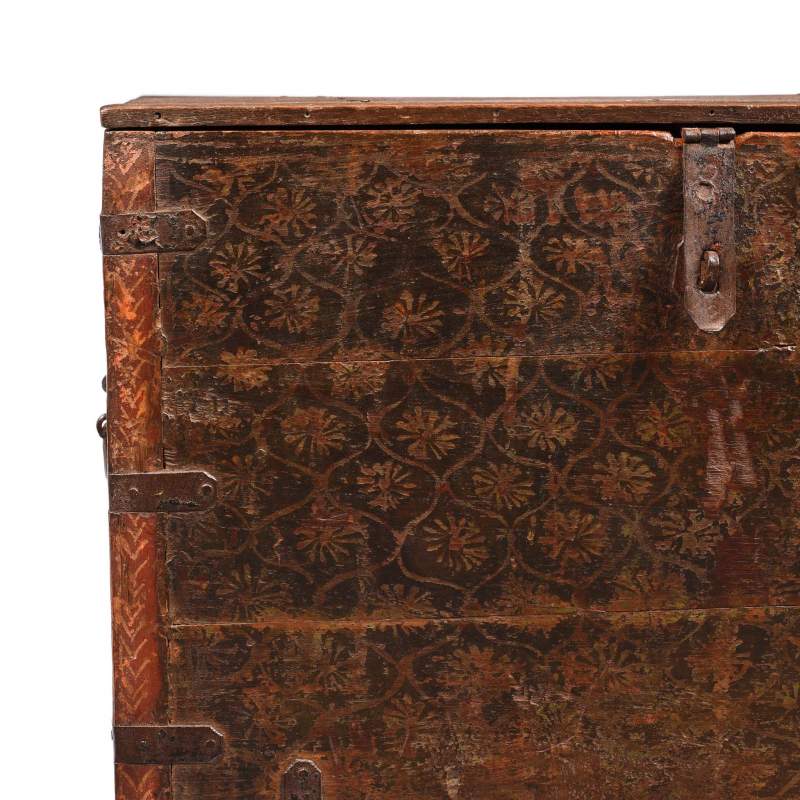
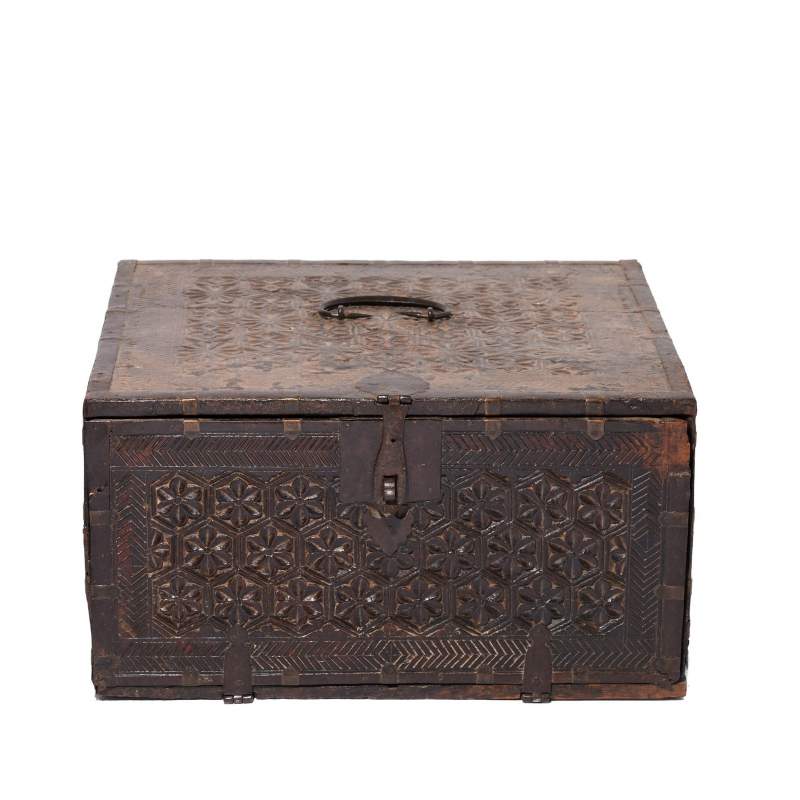
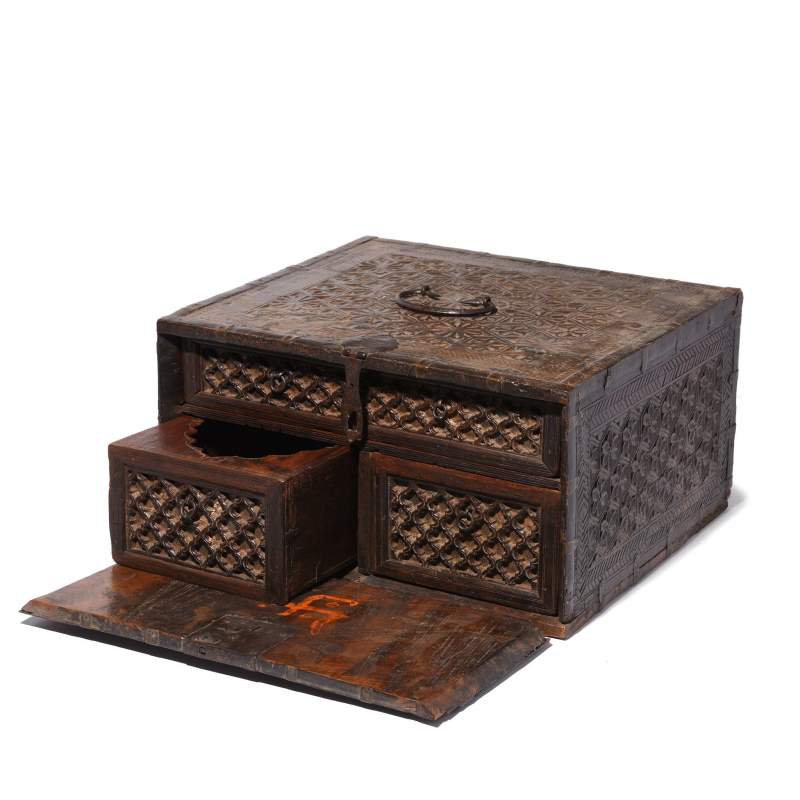
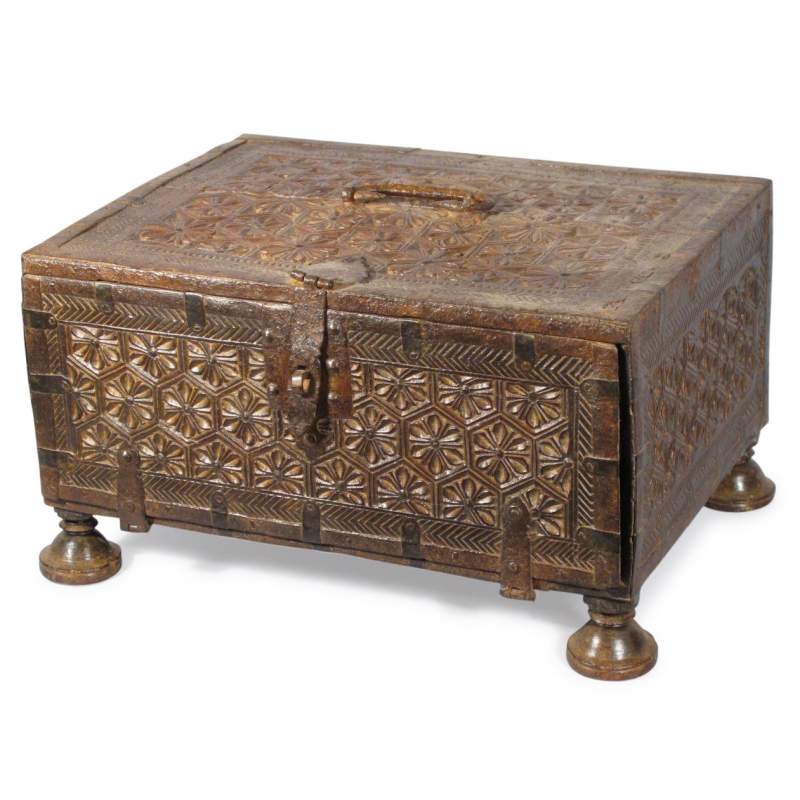
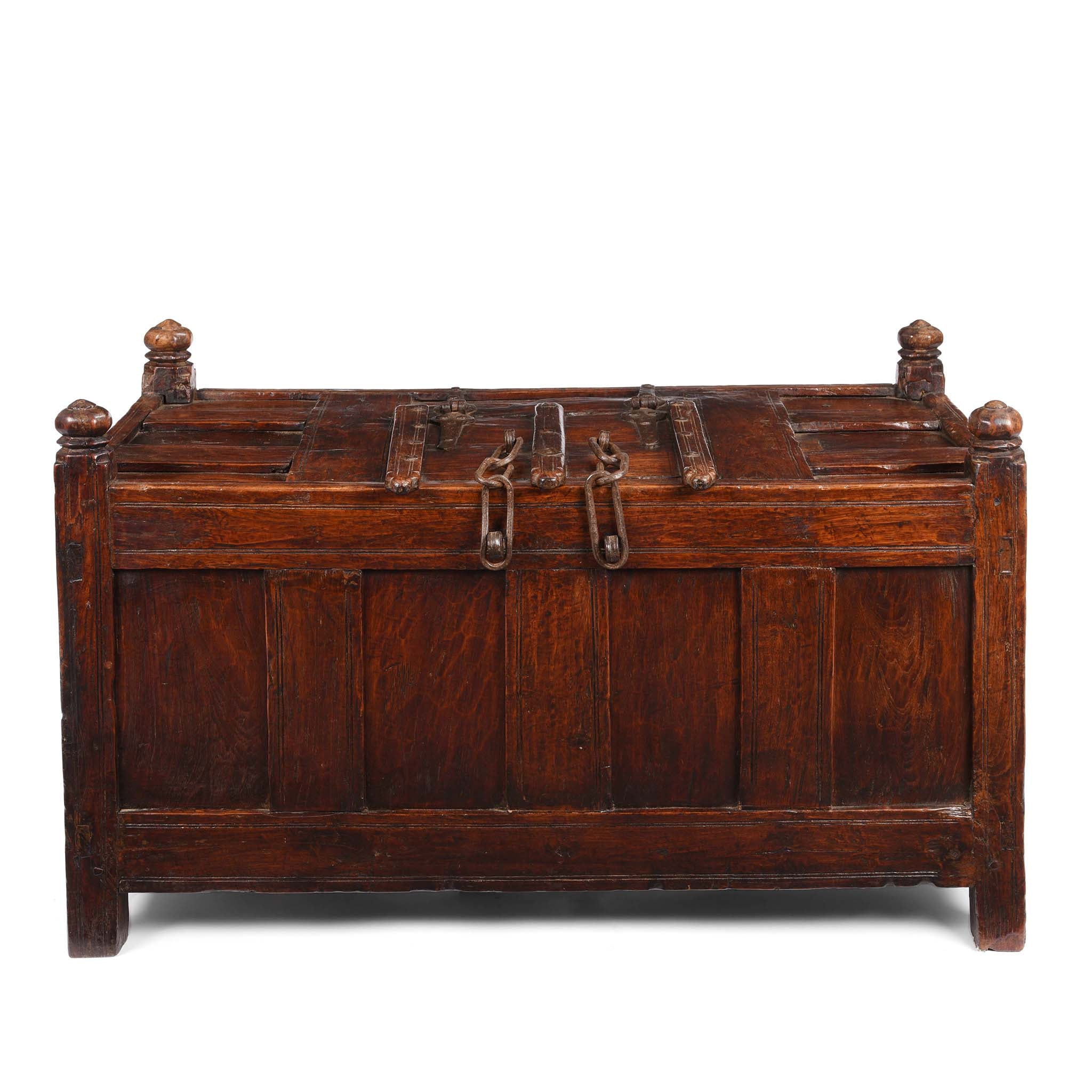
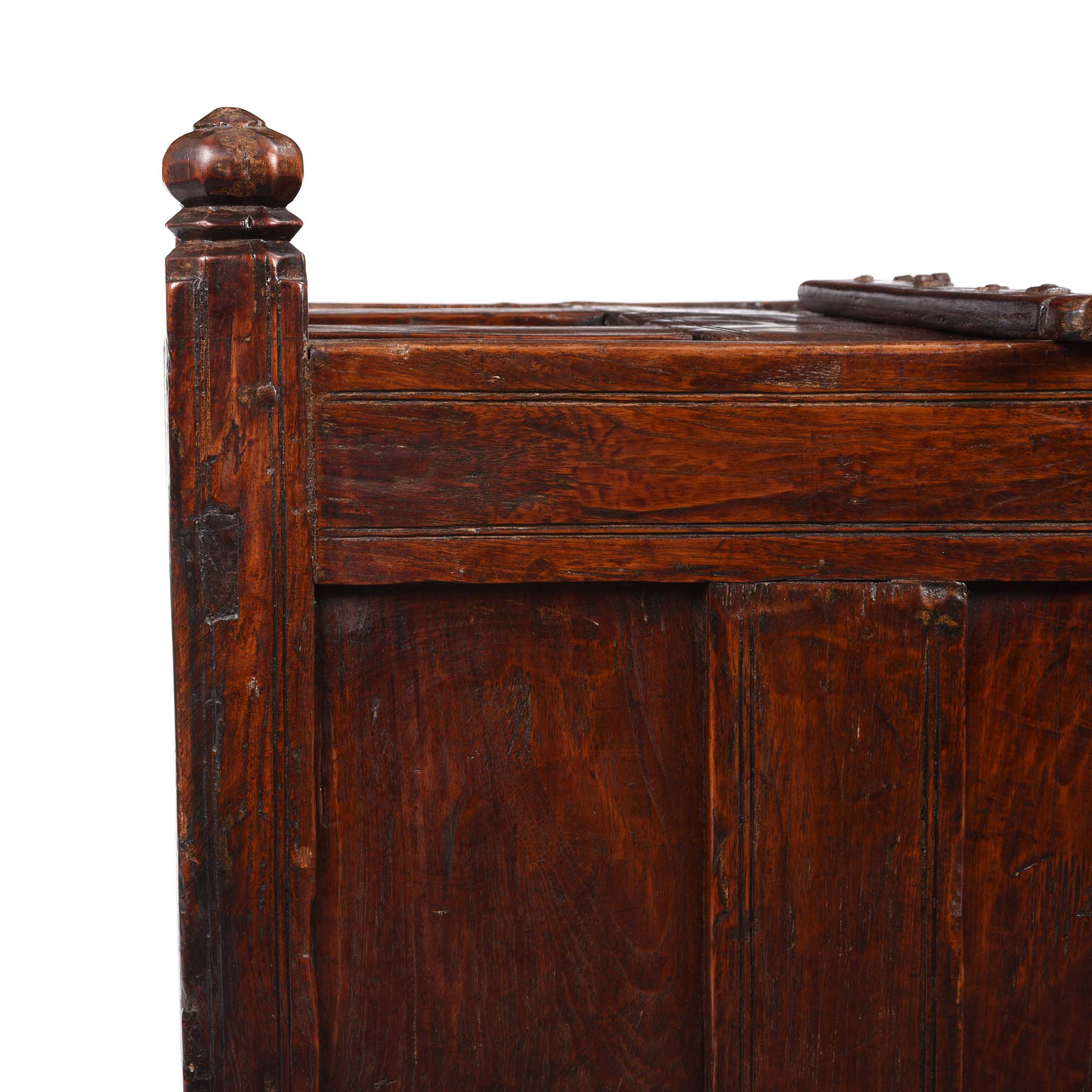
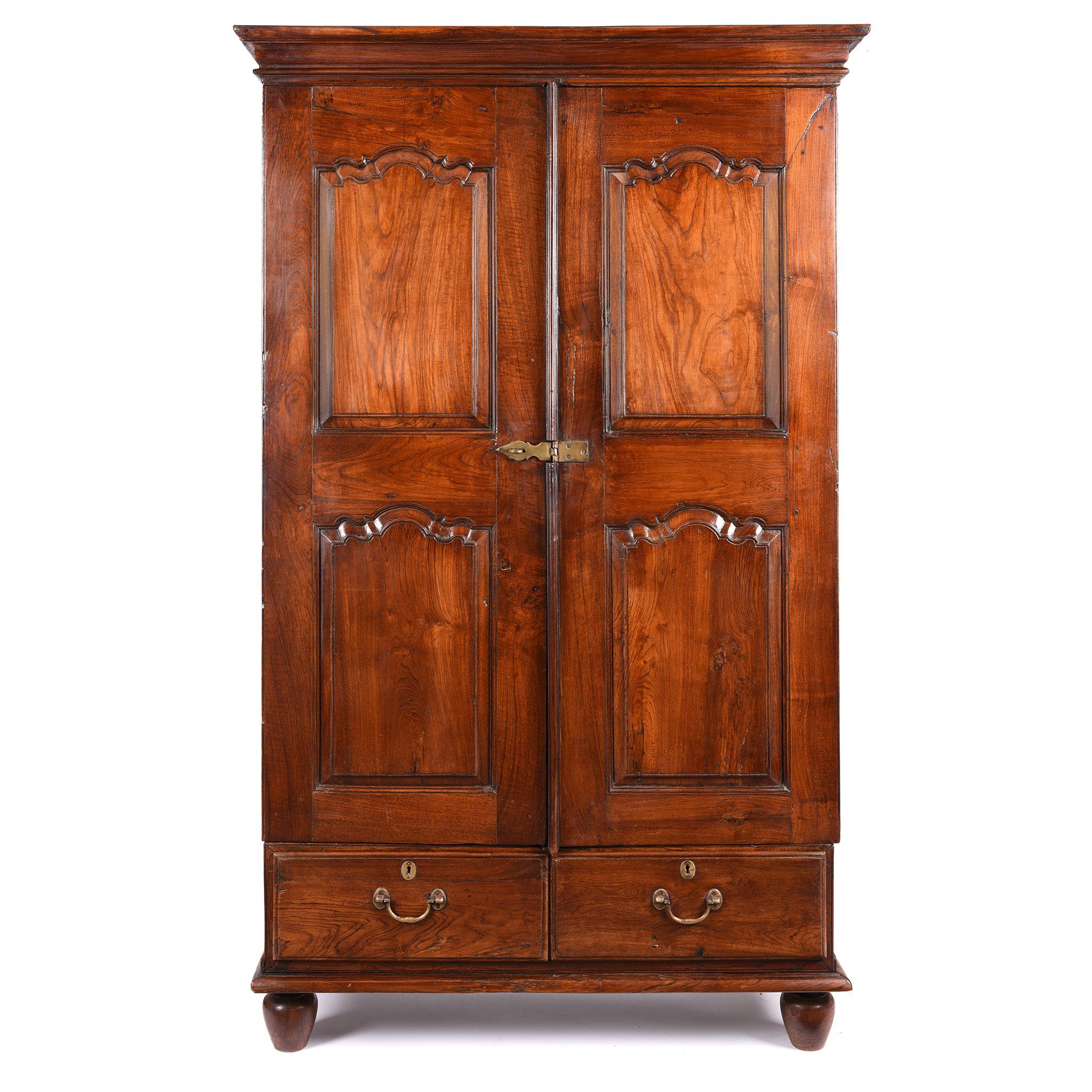
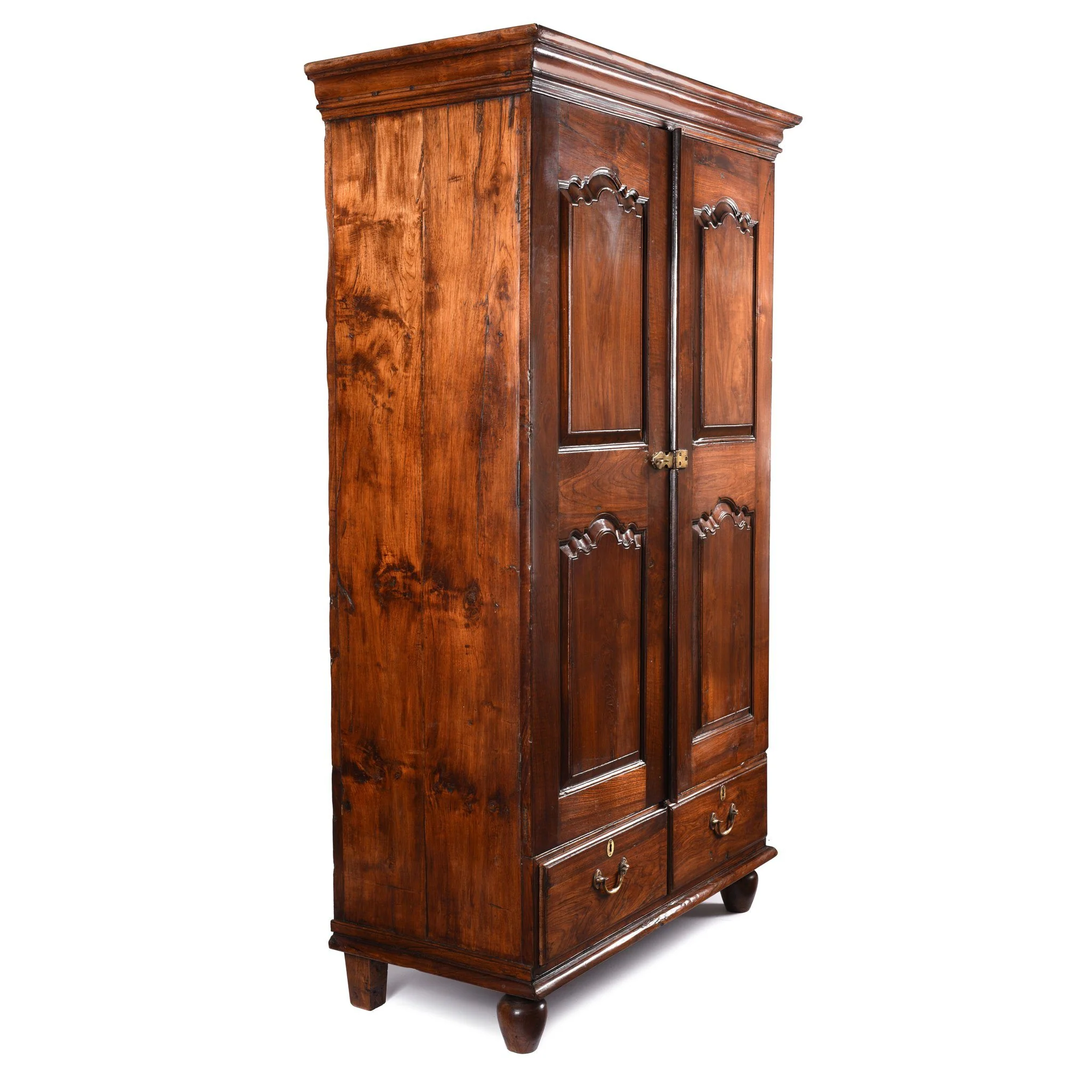
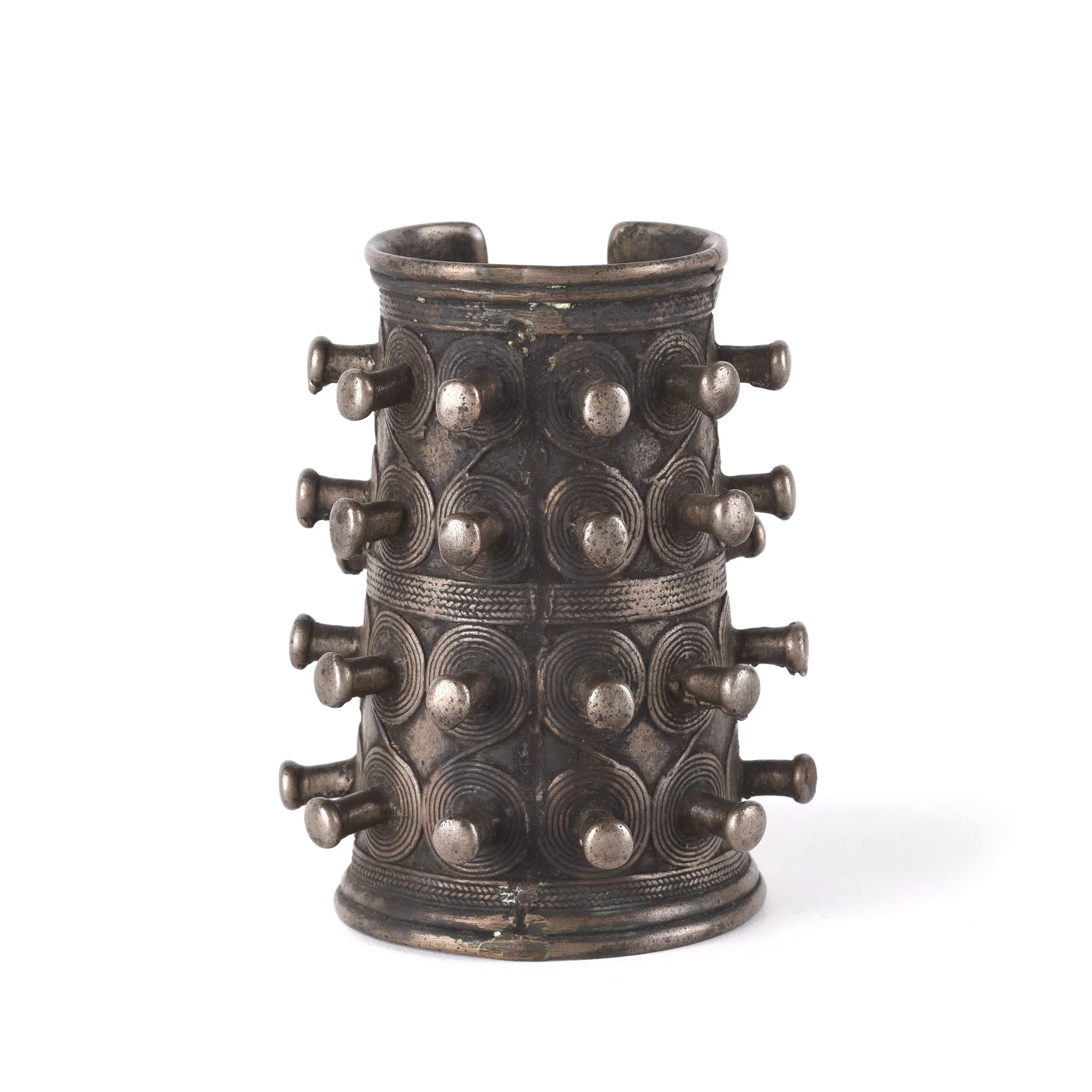
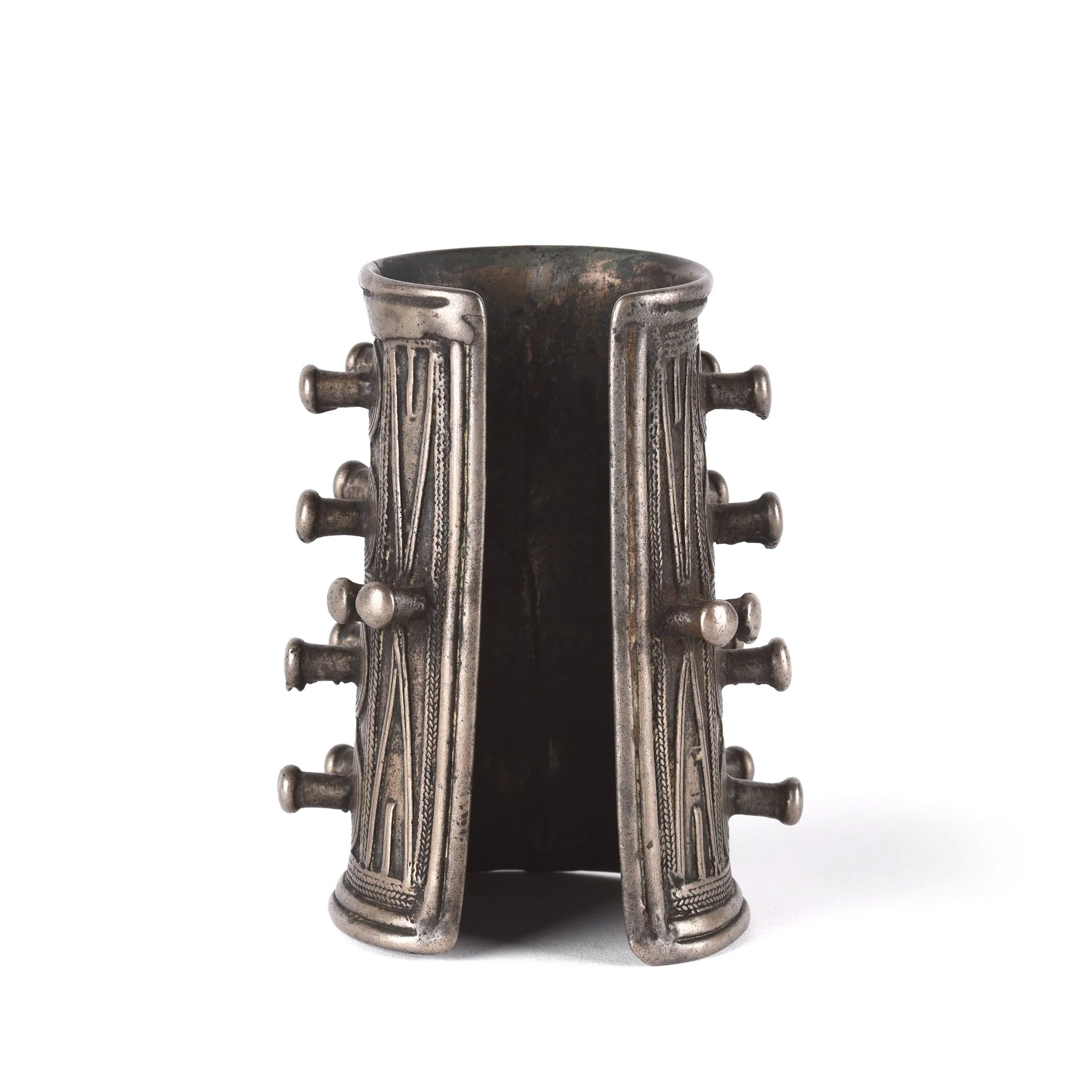
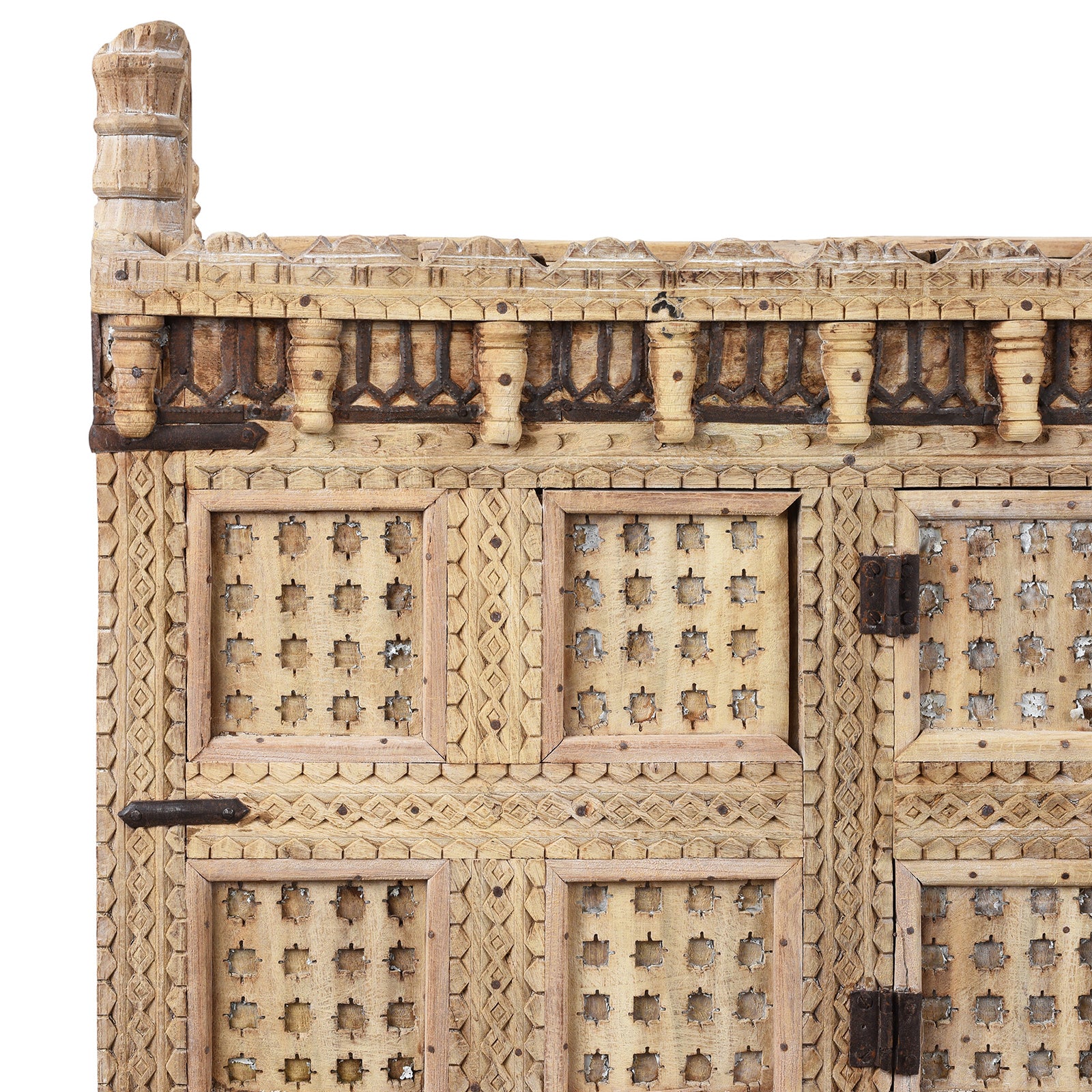
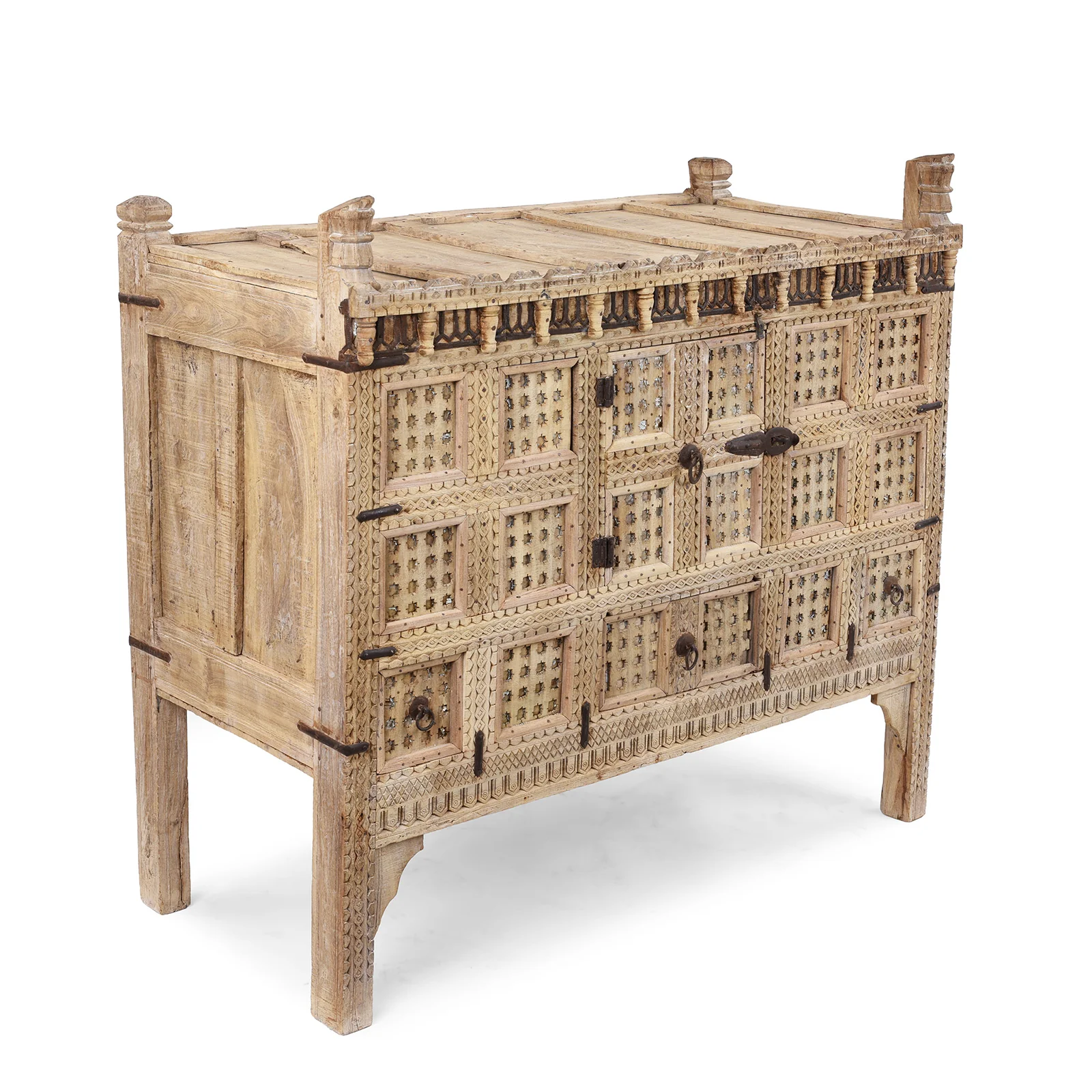
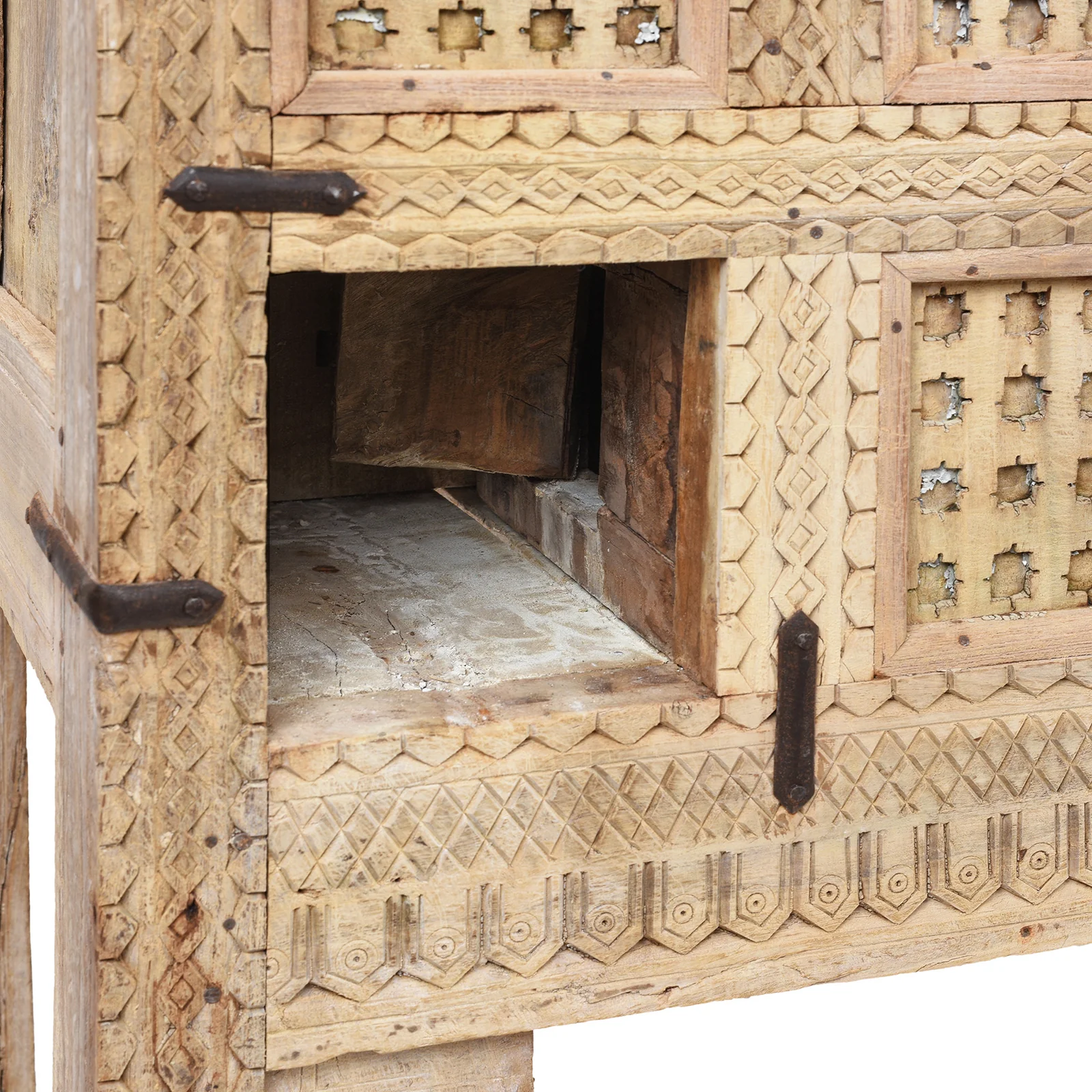
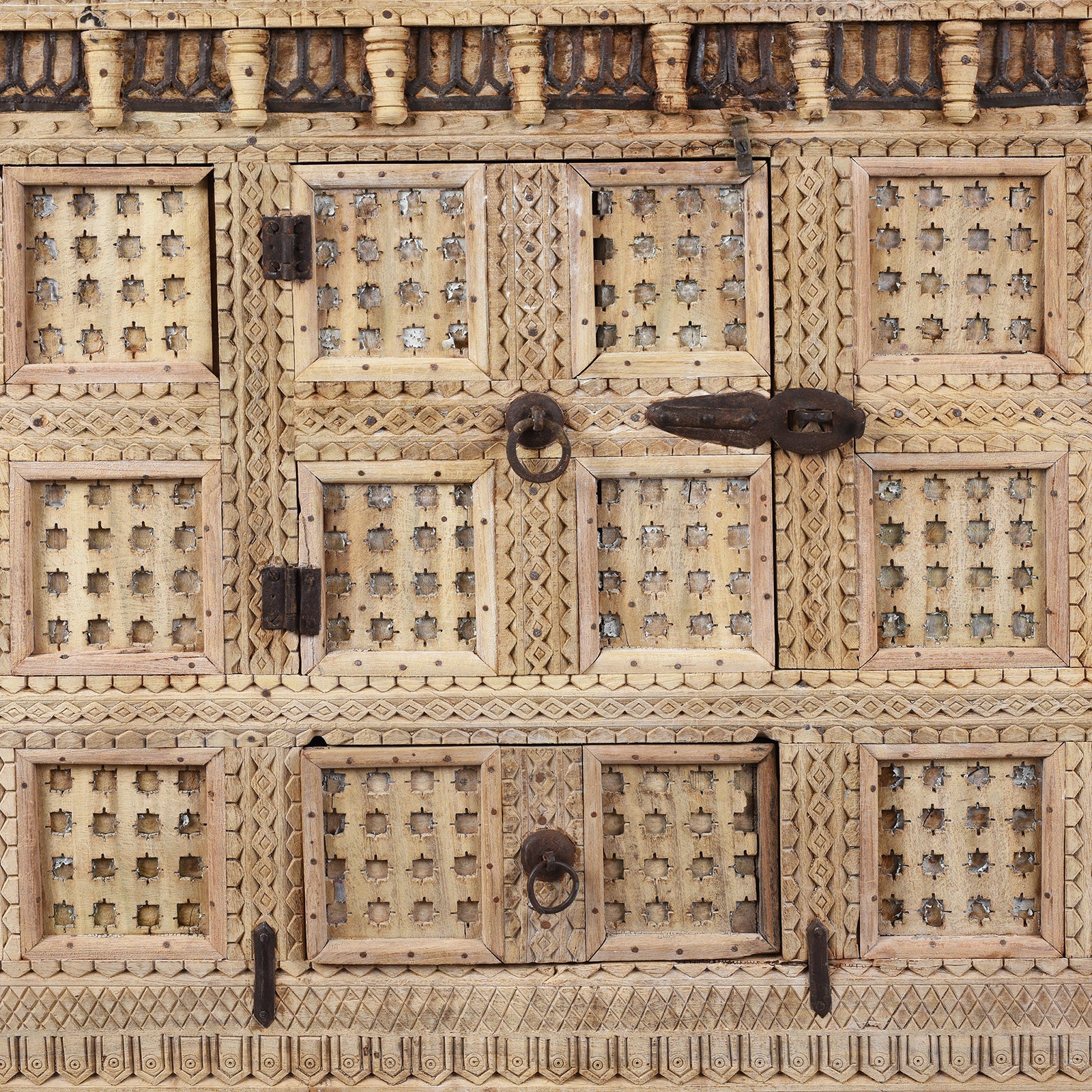
This striking bleached teak dowry chest, known locally as a damchiya, originates from the Rabari tribe of Kutch in Gujarat, India. Over a century old, it showcases intricate chip-carved detailing and geometric embellishments, all carved by hand. Once a prized possession in traditional matrimonial exchanges, this piece served both as a symbolic and functional object, storing the dowry treasures gifted by a bride's family.
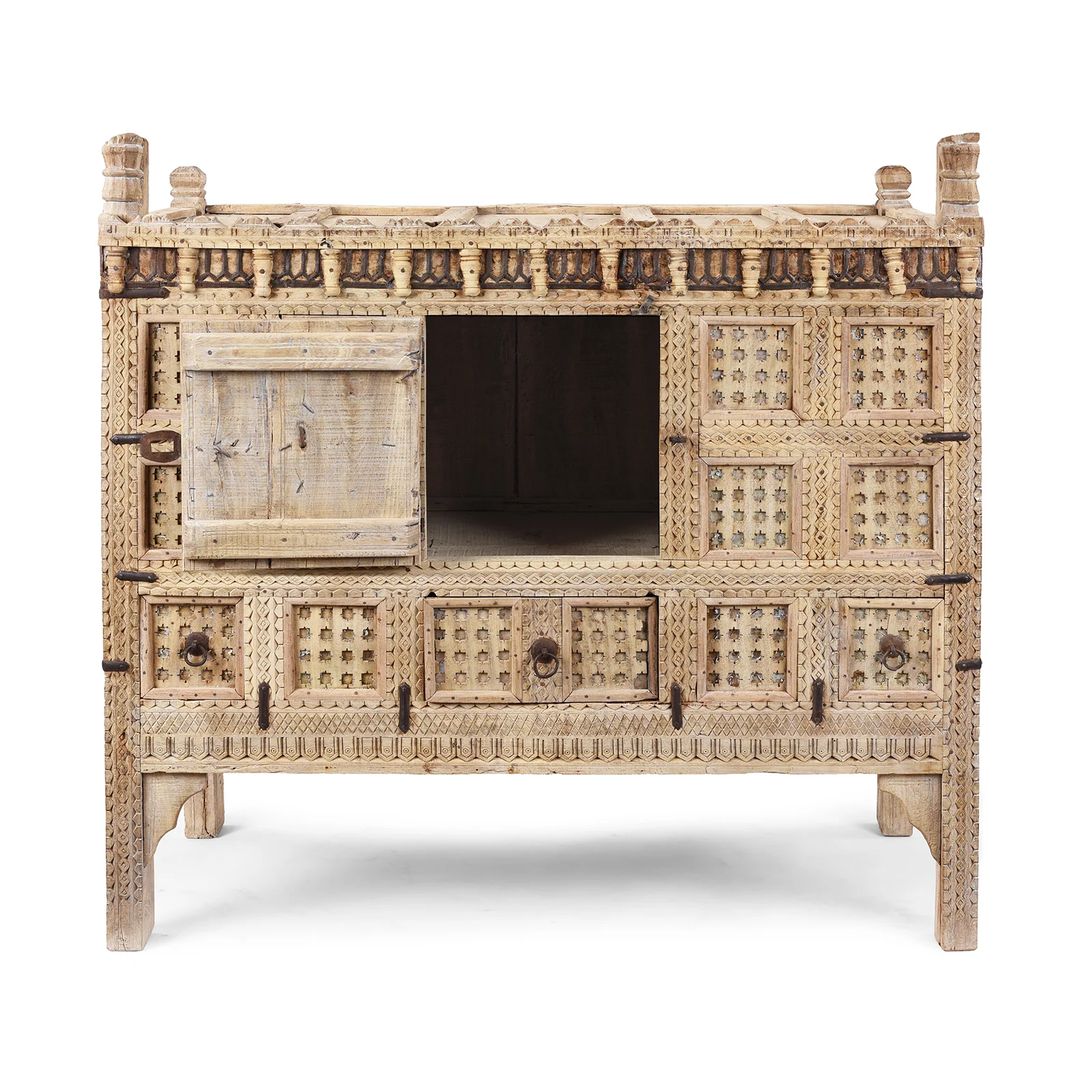
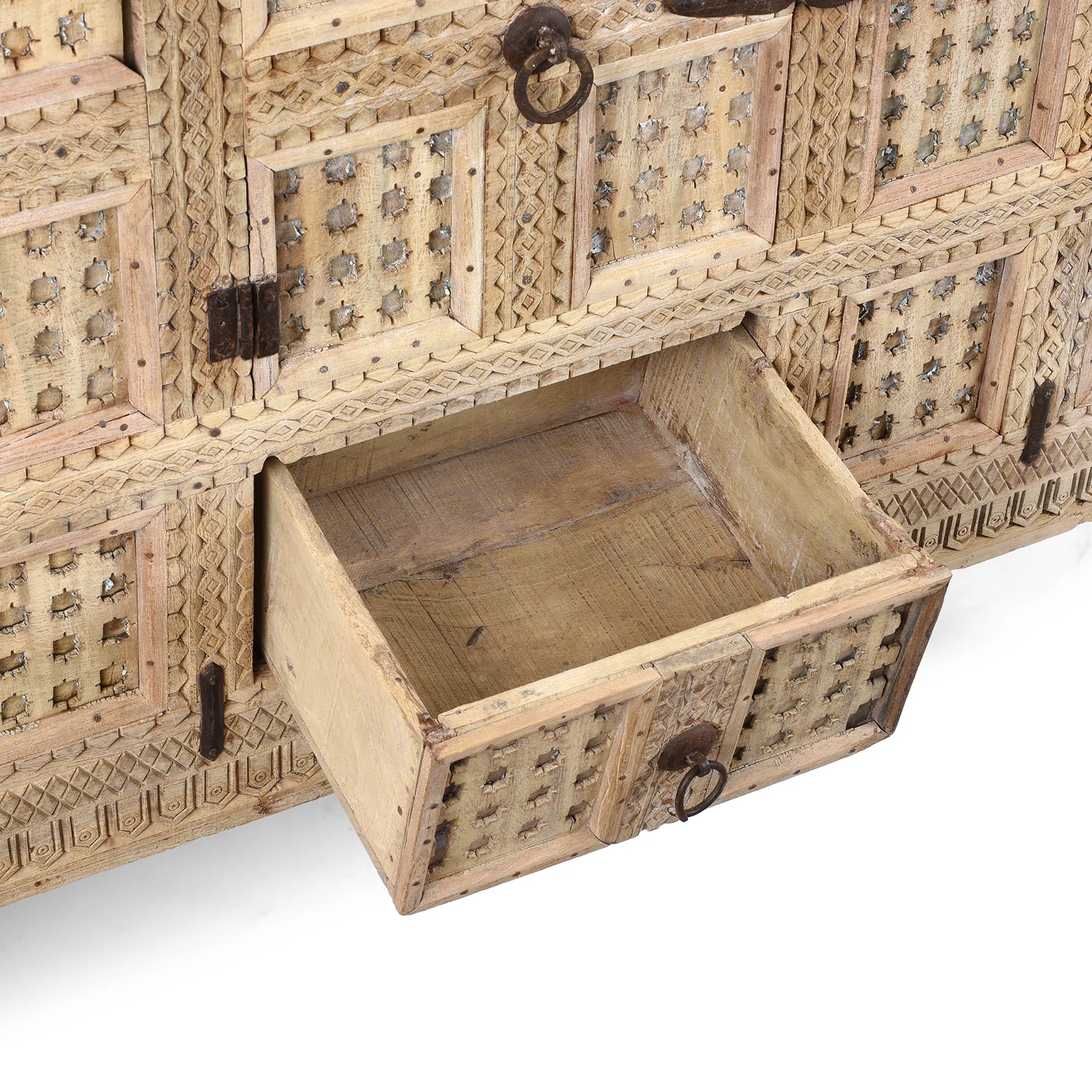
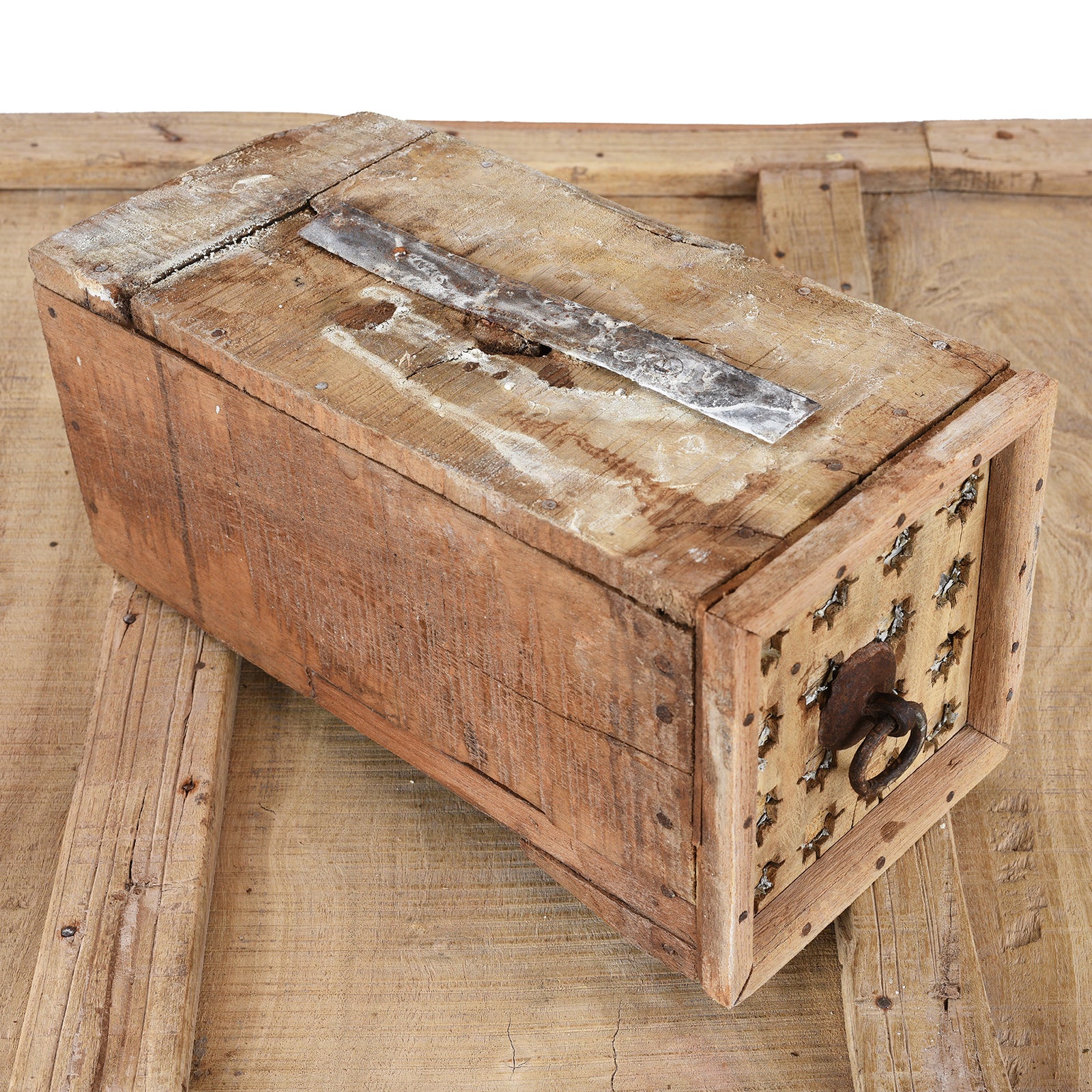
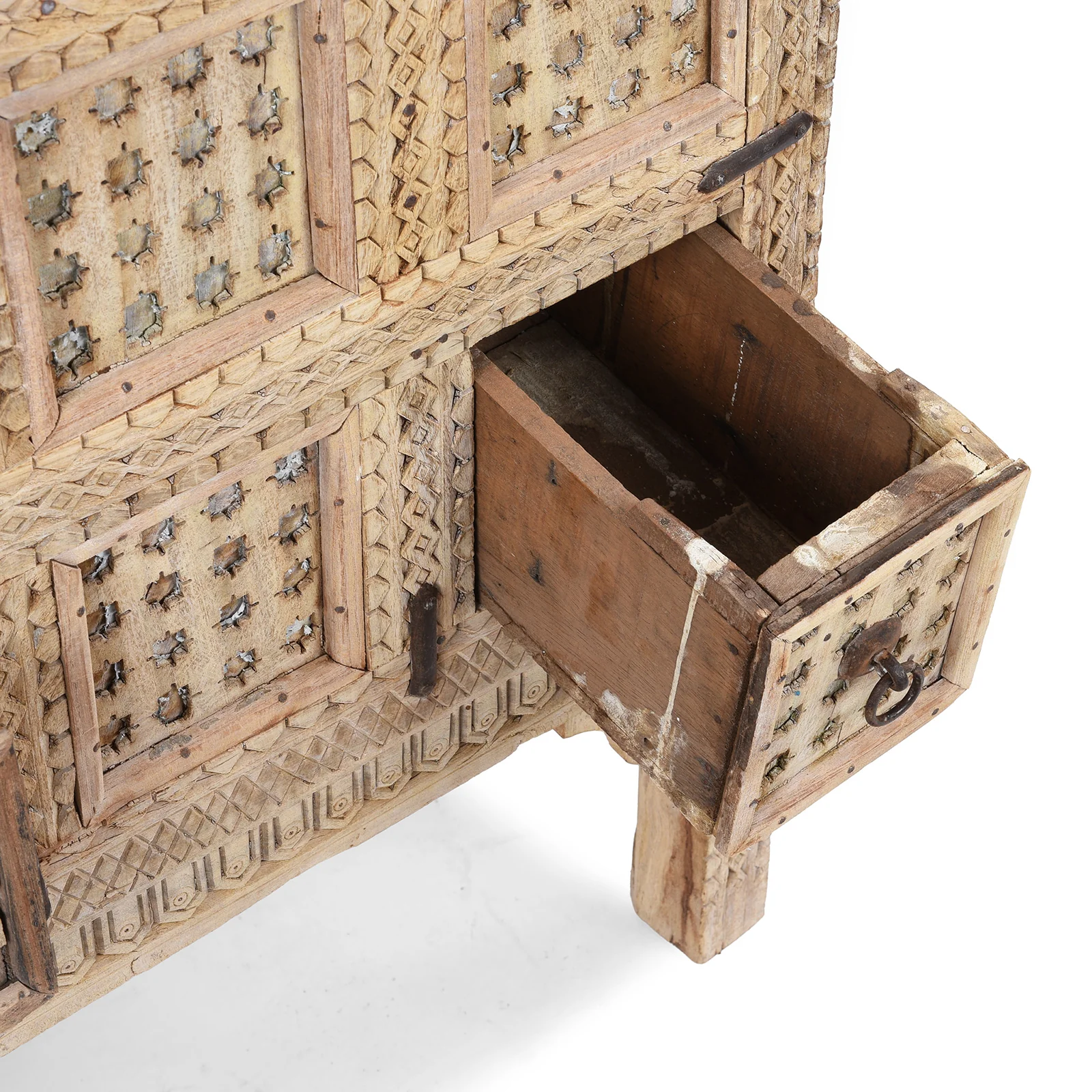
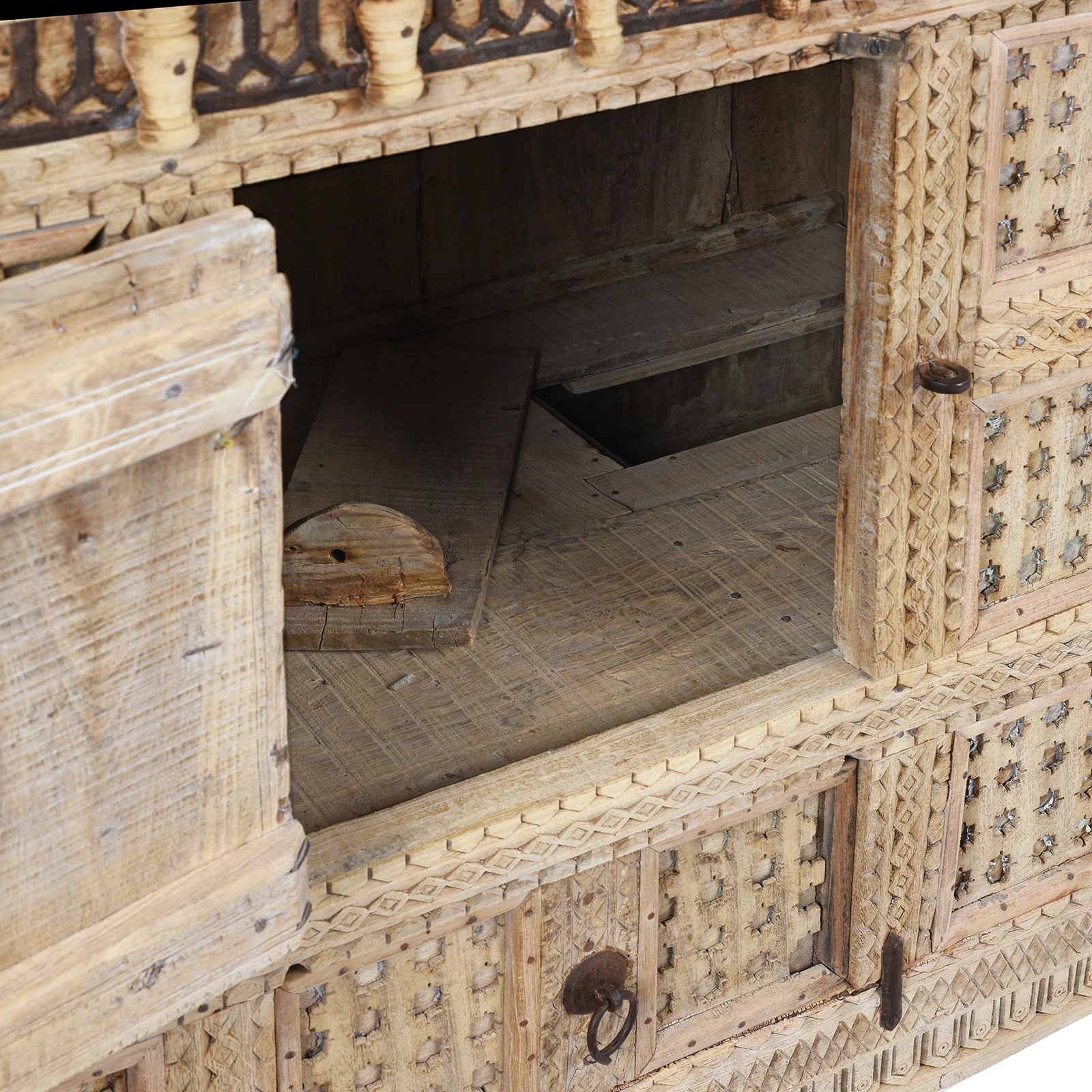
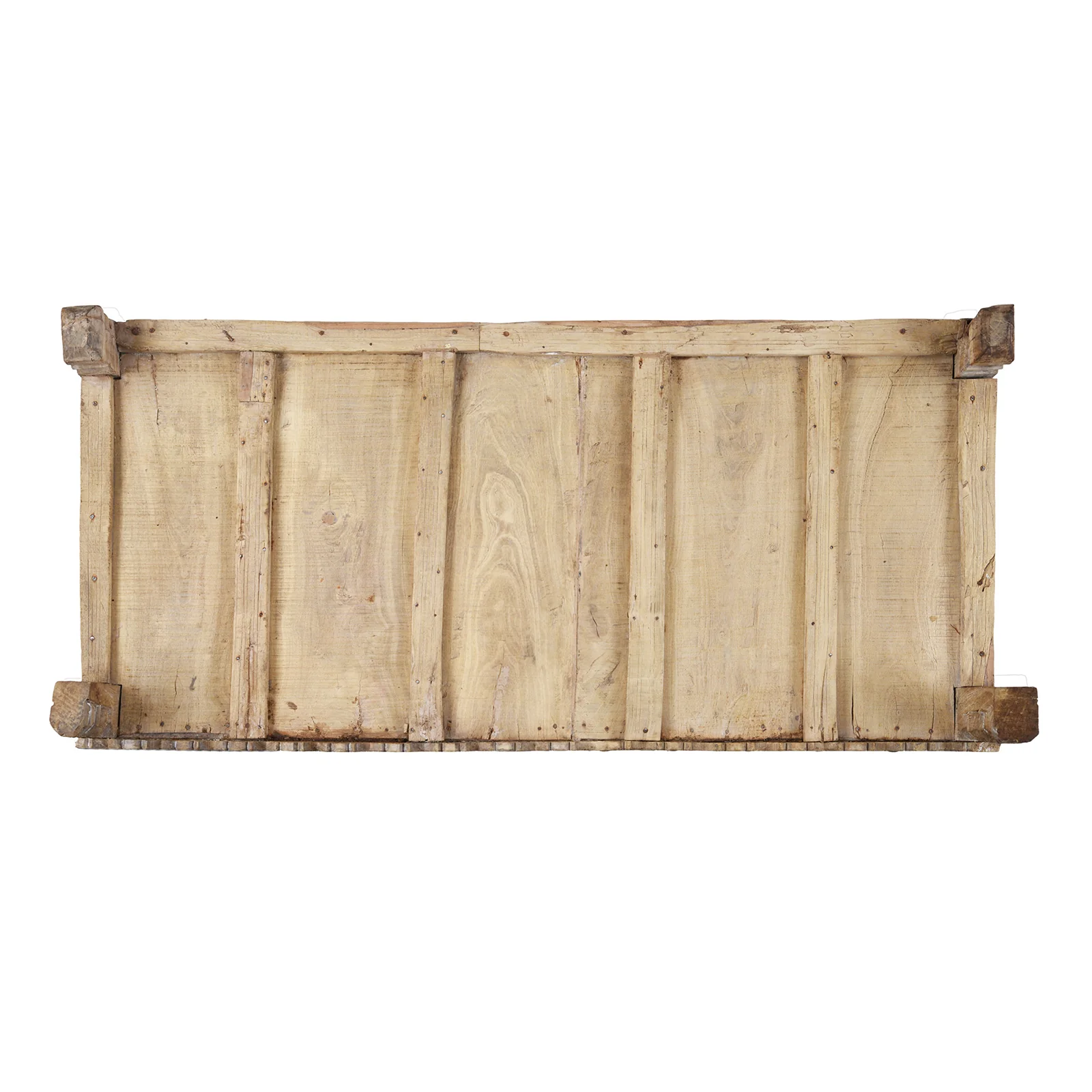
The chest remains in its original, unpolished condition, with a warm bleached tone that highlights the hand-carved patterns and iron fittings. This dowry chest features four discreet compartments ingeniously hidden inside. By inserting a pencil into small holes beneath the piece, the two end drawers unlock, revealing its original purpose of securely storing precious items. A beautiful example of tribal Indian furniture, it's not only a statement piece but a meaningful artefact steeped in history and tradition.
- Origin: Kutch, Gujarat, India
- Date: Early 20th Century (circa 1920)
- Materials: Bleached teak wood, iron hardware
- Features: Chip-carved geometric designs, original ironwork, hidden compartments
- Condition: Sun bleached with age
- Dimensions: W104 x D50 x H101 cm
More Images
Rubari Damchiya Dowry Chest From Kutch - Ca 1920
This striking bleached teak dowry chest, known locally as a damchiya, originates from the Rabari tribe of Kutch in Gujarat, India. Over a century old, it showcases intricate chip-carved detailing and geometric embellishments, all carved by hand. Once a prized possession in traditional matrimonial exchanges, this piece served both as a symbolic and functional object, storing the dowry treasures gifted by a bride's family.
The chest remains in its original, unpolished condition, with a warm bleached tone that highlights the hand-carved patterns and iron fittings. This dowry chest features four discreet compartments ingeniously hidden inside. By inserting a pencil into small holes beneath the piece, the two end drawers unlock, revealing its original purpose of securely storing precious items. A beautiful example of tribal Indian furniture, it's not only a statement piece but a meaningful artefact steeped in history and tradition.
- Origin: Kutch, Gujarat, India
- Date: Early 20th Century (circa 1920)
- Materials: Bleached teak wood, iron hardware
- Features: Chip-carved geometric designs, original ironwork, hidden compartments
- Condition: Sun bleached with age
- Dimensions: W104 x D50 x H101 cm
Product Information
Product Information
Shipping & Returns
Shipping & Returns
Description
This striking bleached teak dowry chest, known locally as a damchiya, originates from the Rabari tribe of Kutch in Gujarat, India. Over a century old, it showcases intricate chip-carved detailing and geometric embellishments, all carved by hand. Once a prized possession in traditional matrimonial exchanges, this piece served both as a symbolic and functional object, storing the dowry treasures gifted by a bride's family.
The chest remains in its original, unpolished condition, with a warm bleached tone that highlights the hand-carved patterns and iron fittings. This dowry chest features four discreet compartments ingeniously hidden inside. By inserting a pencil into small holes beneath the piece, the two end drawers unlock, revealing its original purpose of securely storing precious items. A beautiful example of tribal Indian furniture, it's not only a statement piece but a meaningful artefact steeped in history and tradition.
- Origin: Kutch, Gujarat, India
- Date: Early 20th Century (circa 1920)
- Materials: Bleached teak wood, iron hardware
- Features: Chip-carved geometric designs, original ironwork, hidden compartments
- Condition: Sun bleached with age
- Dimensions: W104 x D50 x H101 cm