Red Lacquer Camphor Wood Chinese Chest - 18thC
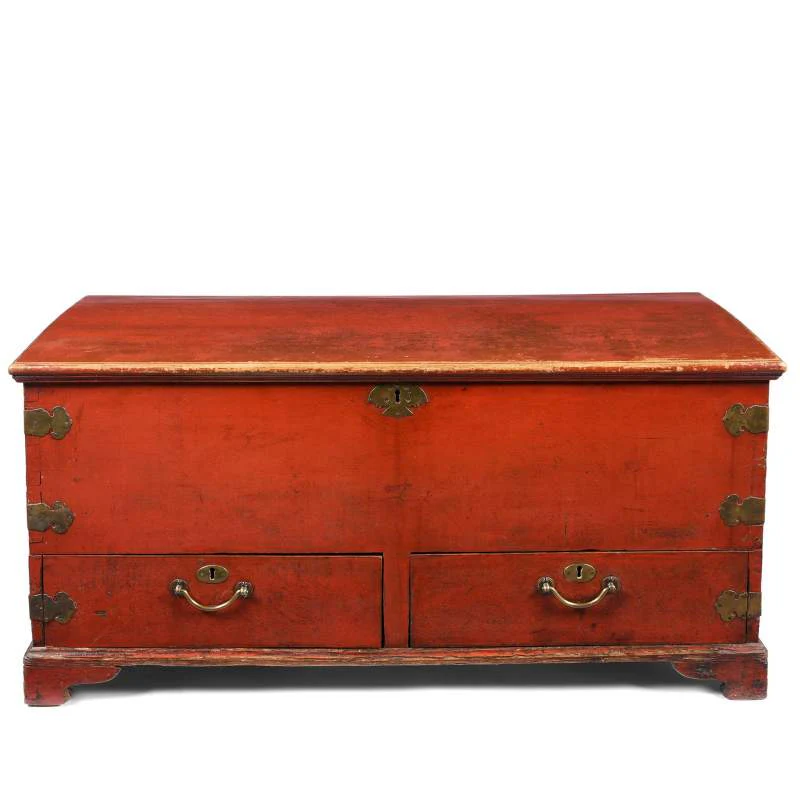
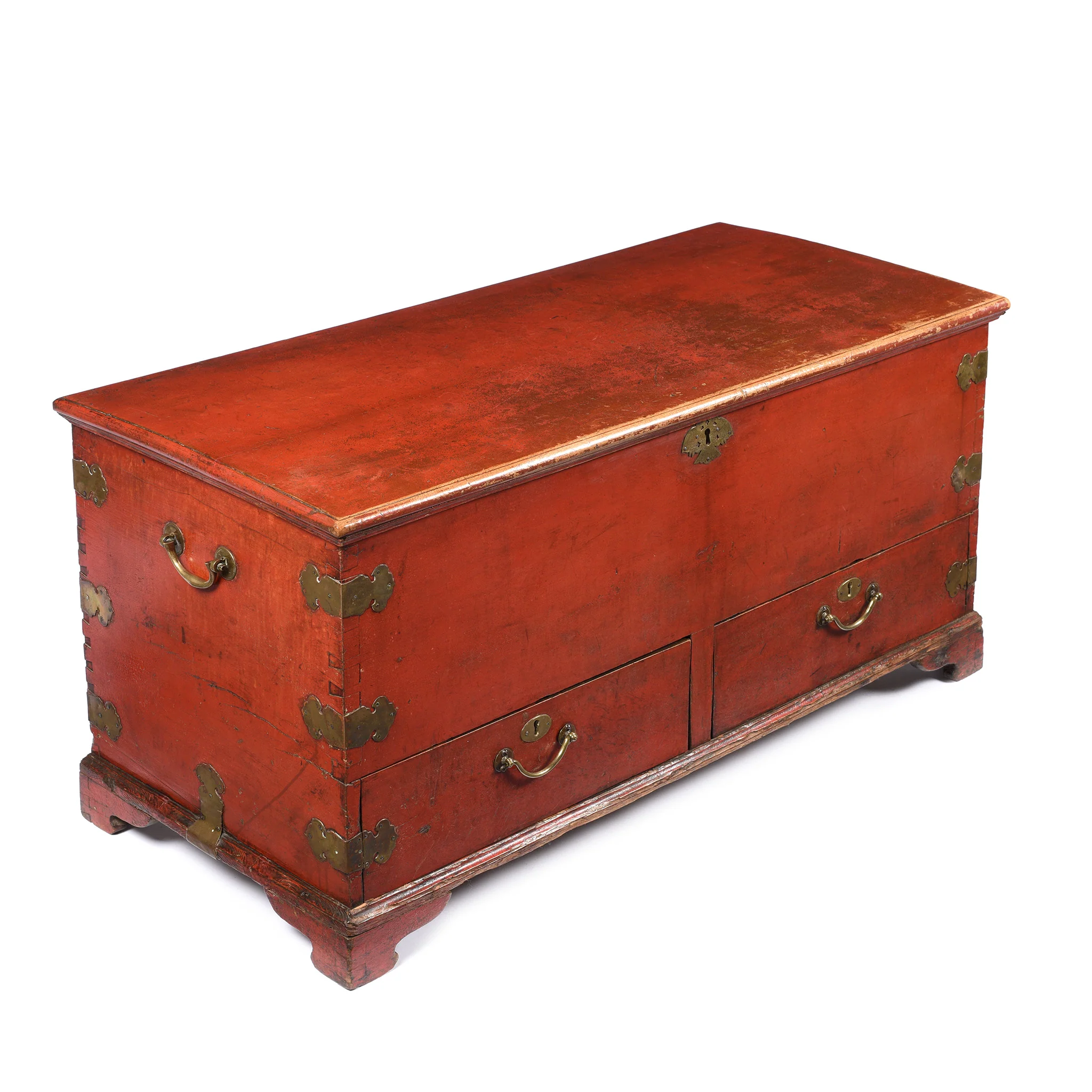
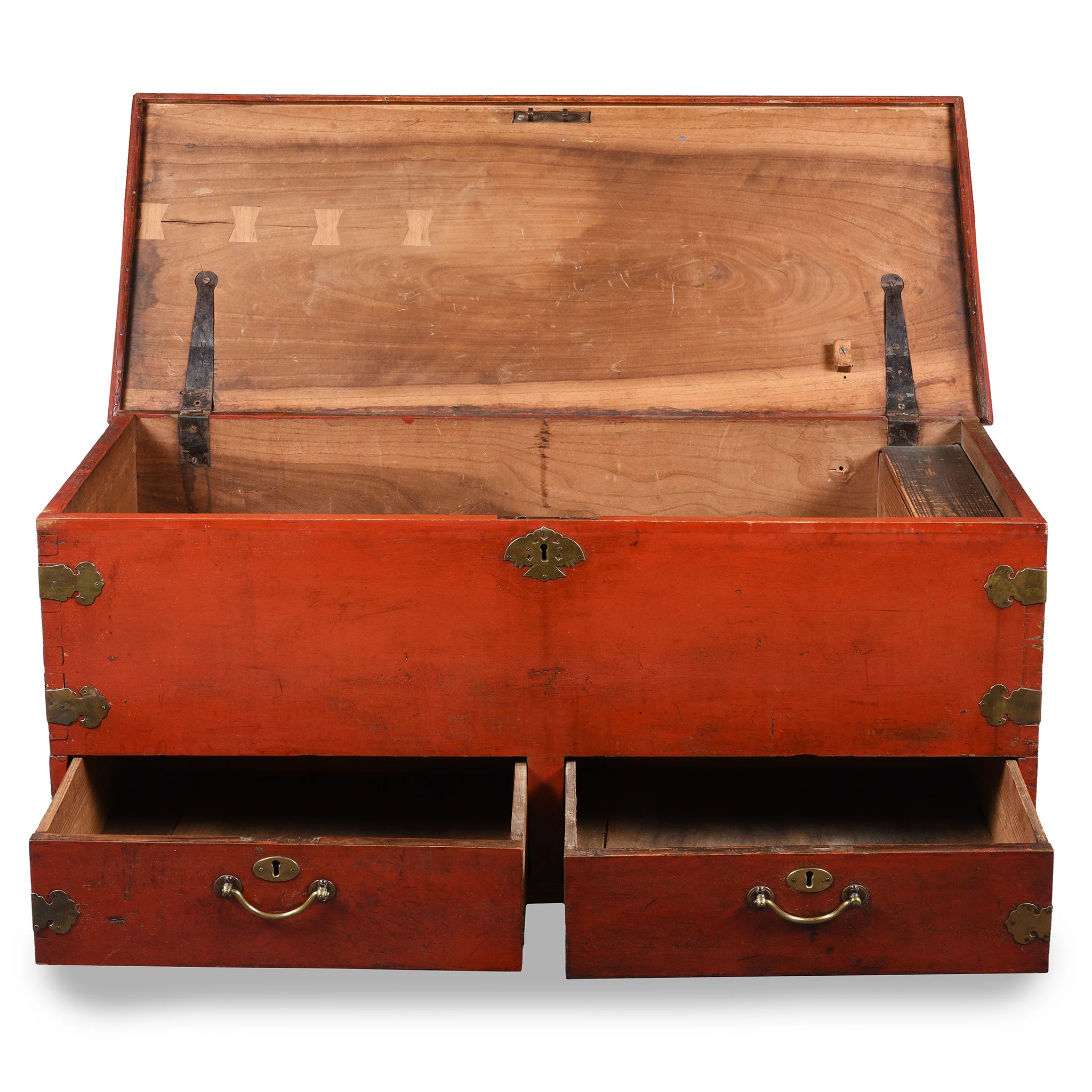
This incredibly unusual Chinese chest dates from the early 18th century. These chests were used on East Indiaman trading ships plying the routes between China, India & Britain. This style of chest was made in Canton, China for the Anglo-Indian market.
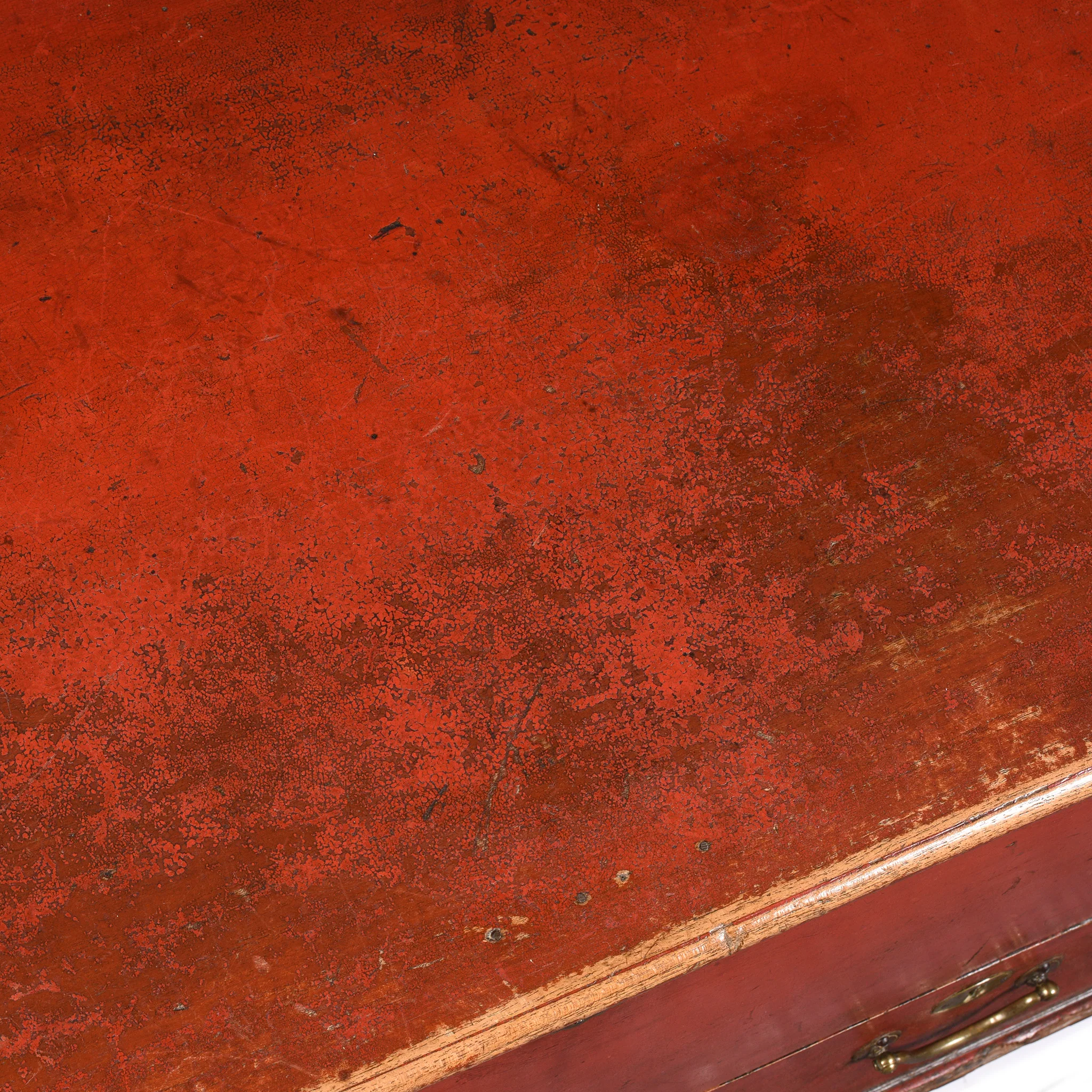
We've only seen a handful of pieces like this in our 45 years of travelling Asia. They have always been in very poor condition because of their age with badly damaged paint & missing brass corners.
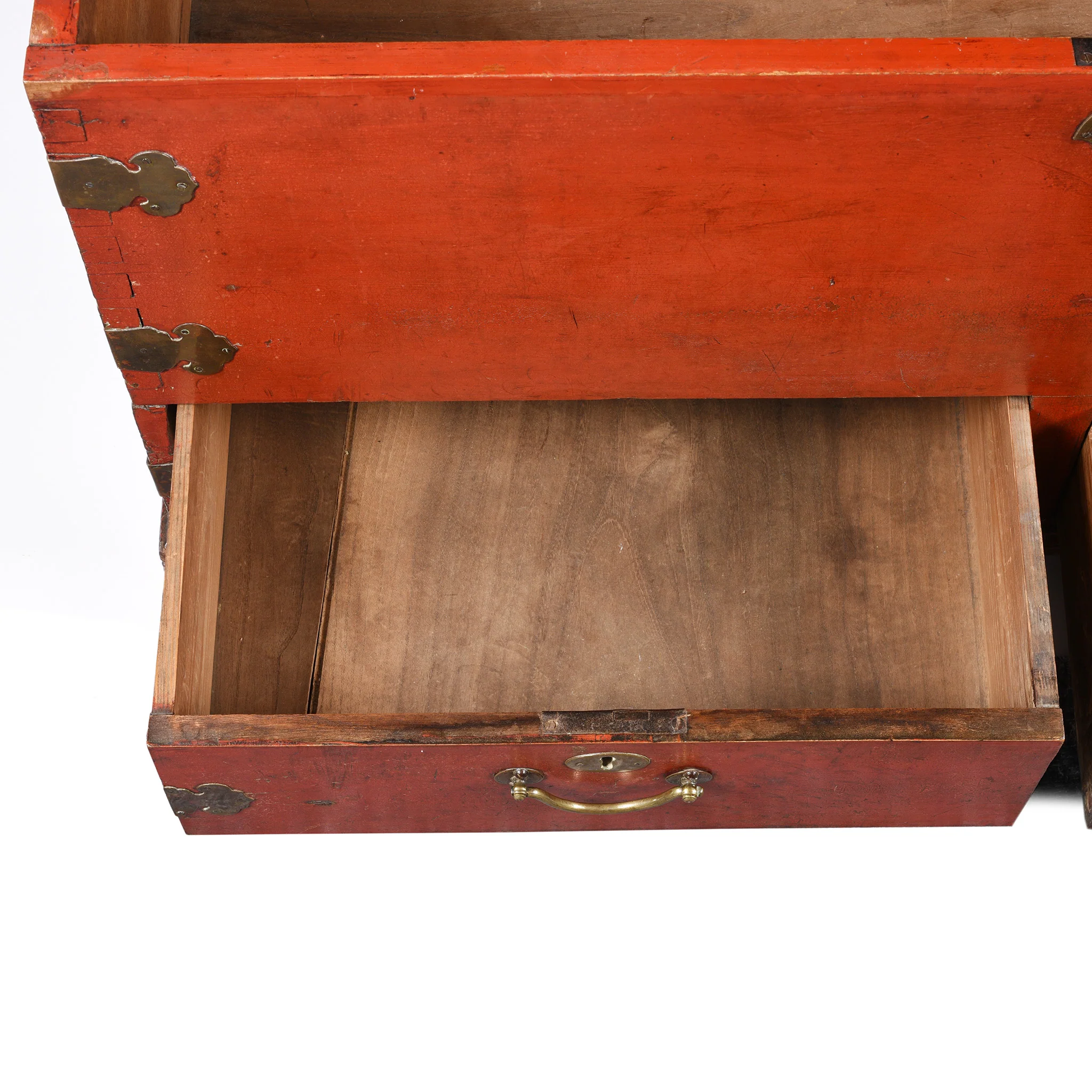
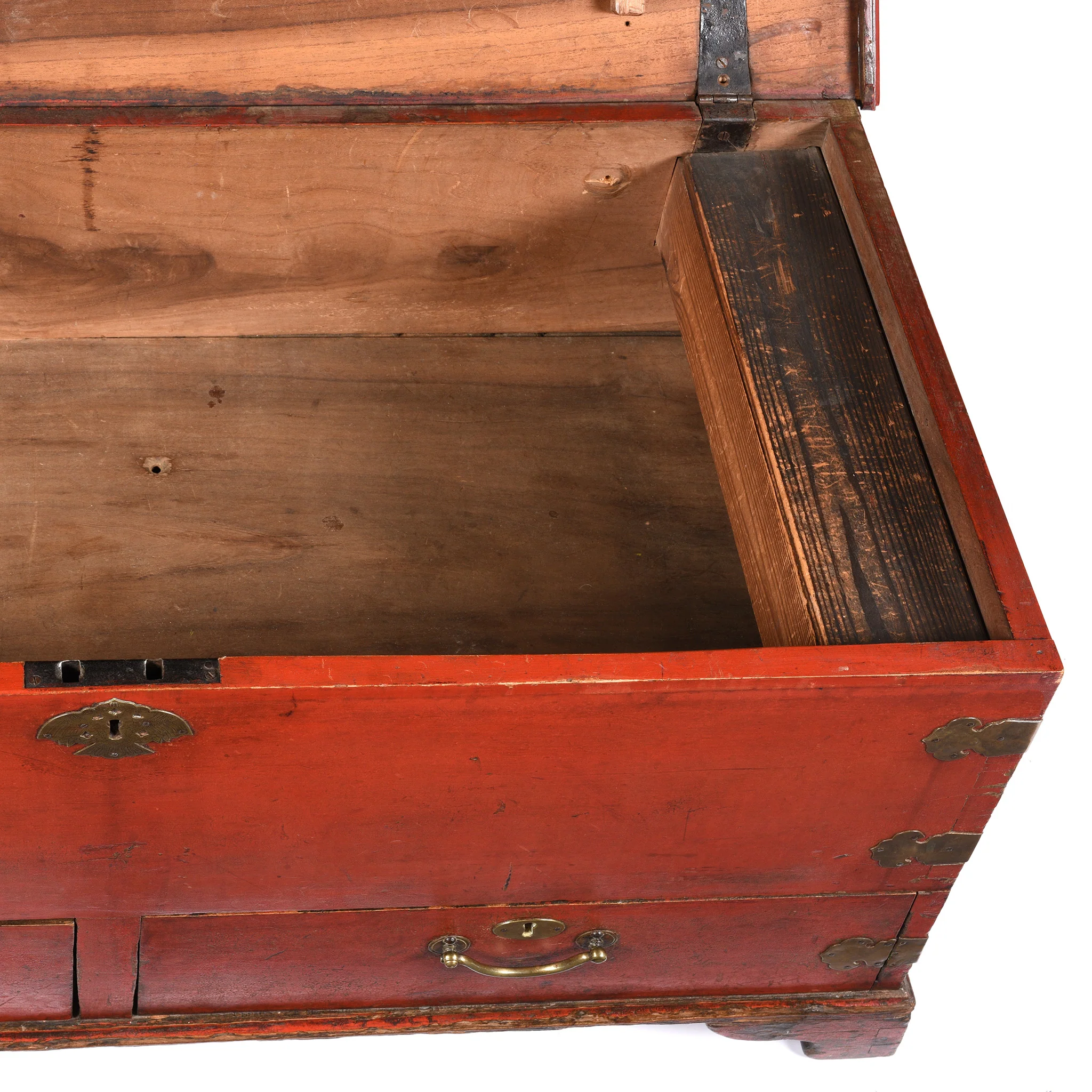
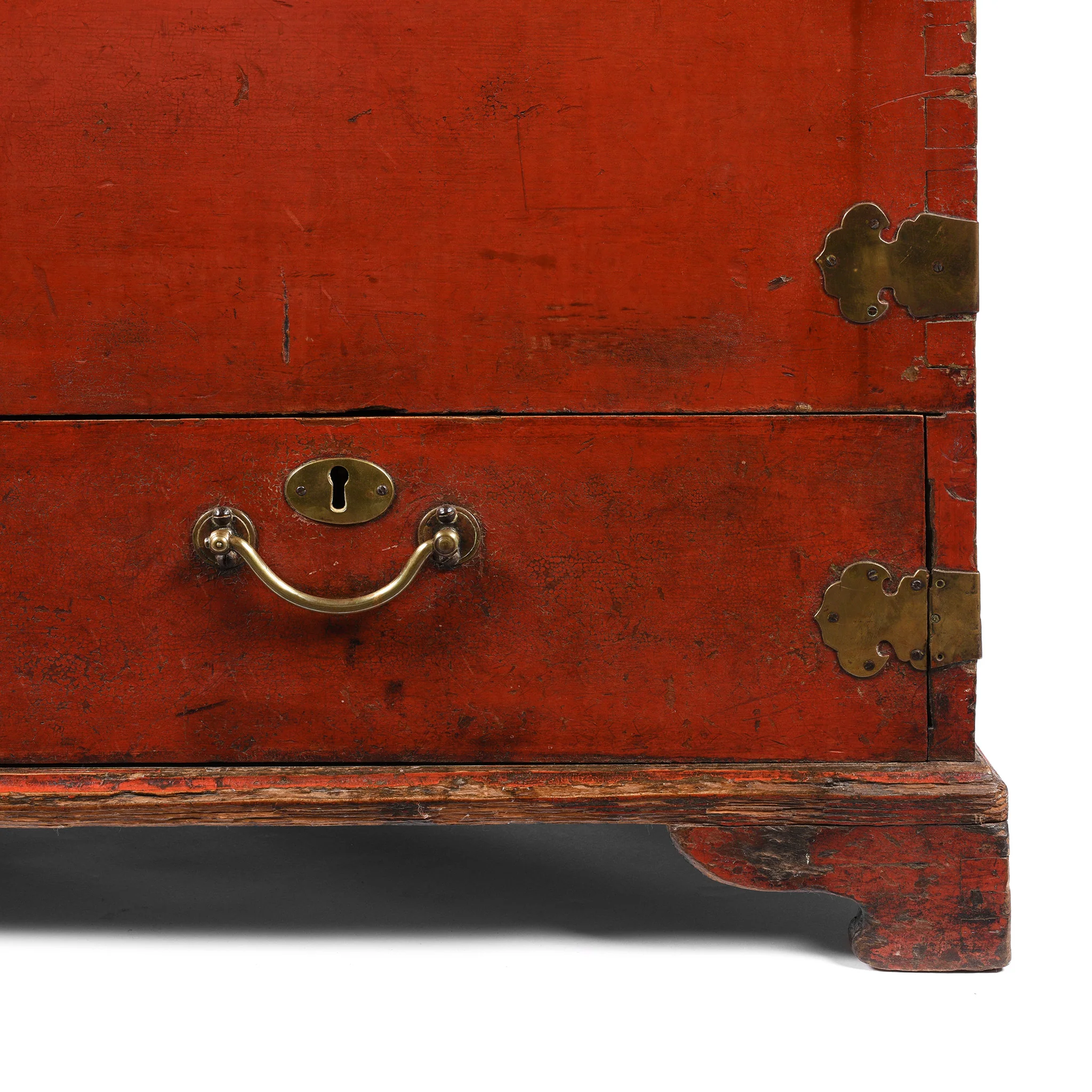
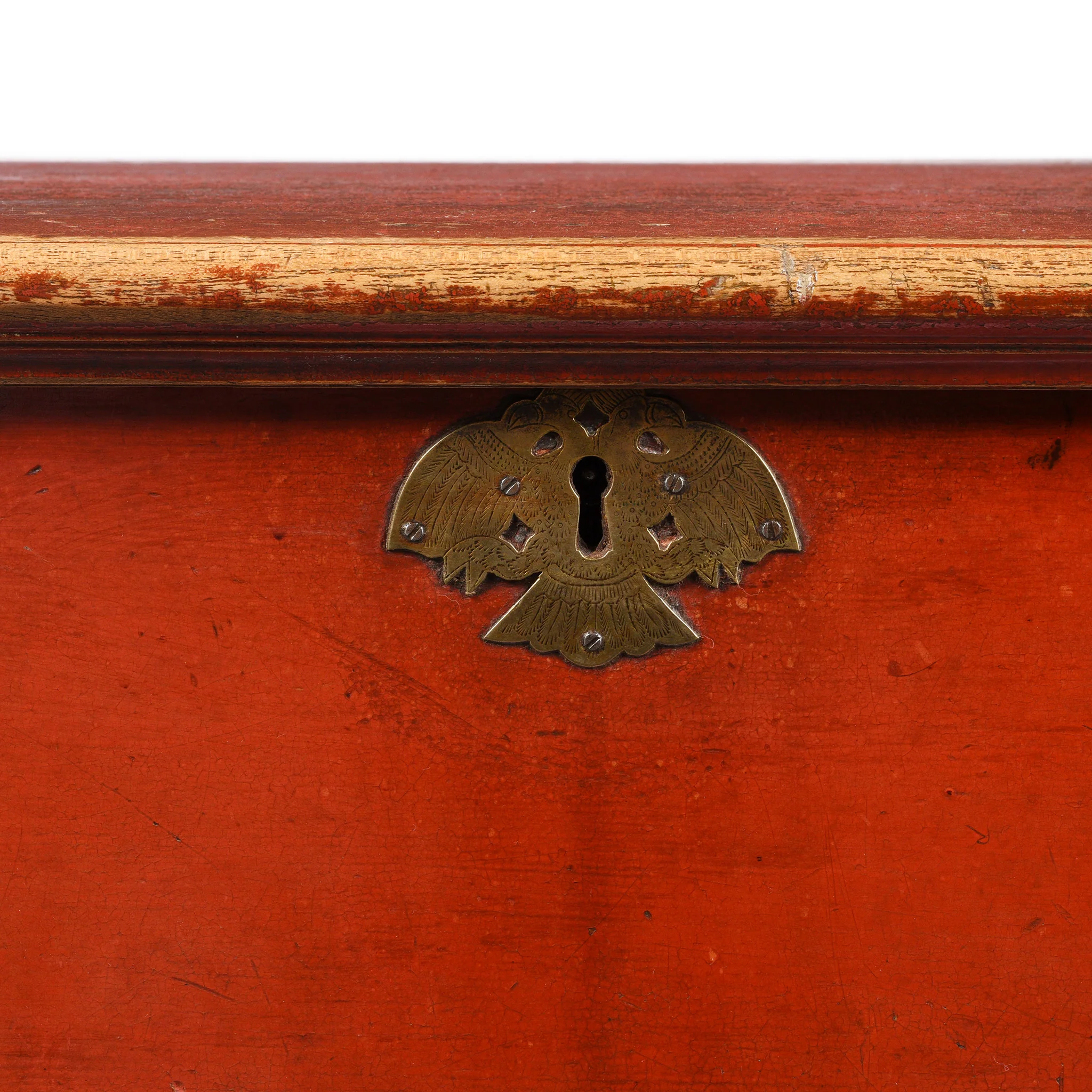
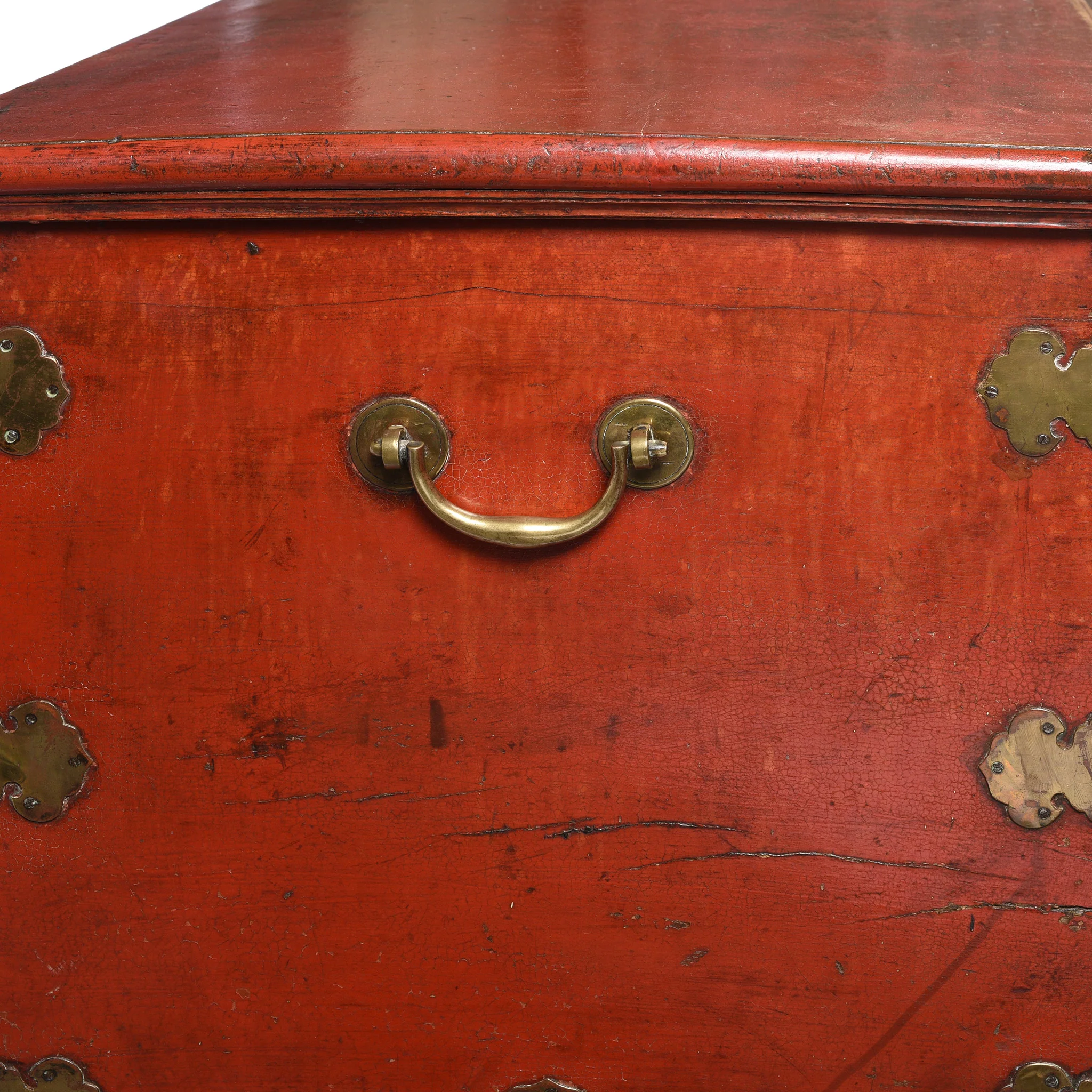
The shape of the chest and style is Anglo-Indian, as are the brass handles however, the brass corners are ruyi, the symbol for a ceremonial scepter symbolising power and good fortune in Buddhist & Chinese folklore. The lock plate is a double headed eagle known as Gandaberunda or Berunda, a bird from Hindu mythology particularly prominent in South India.
There is a date of 1710 inside one of the drawers, which can't be verified, but it fits in with the dates that East Indiaman ships were in use.
We suspect that this piece was brought back to Britain by a sailor or officer in the 18th century which would explain its unusually good condition.
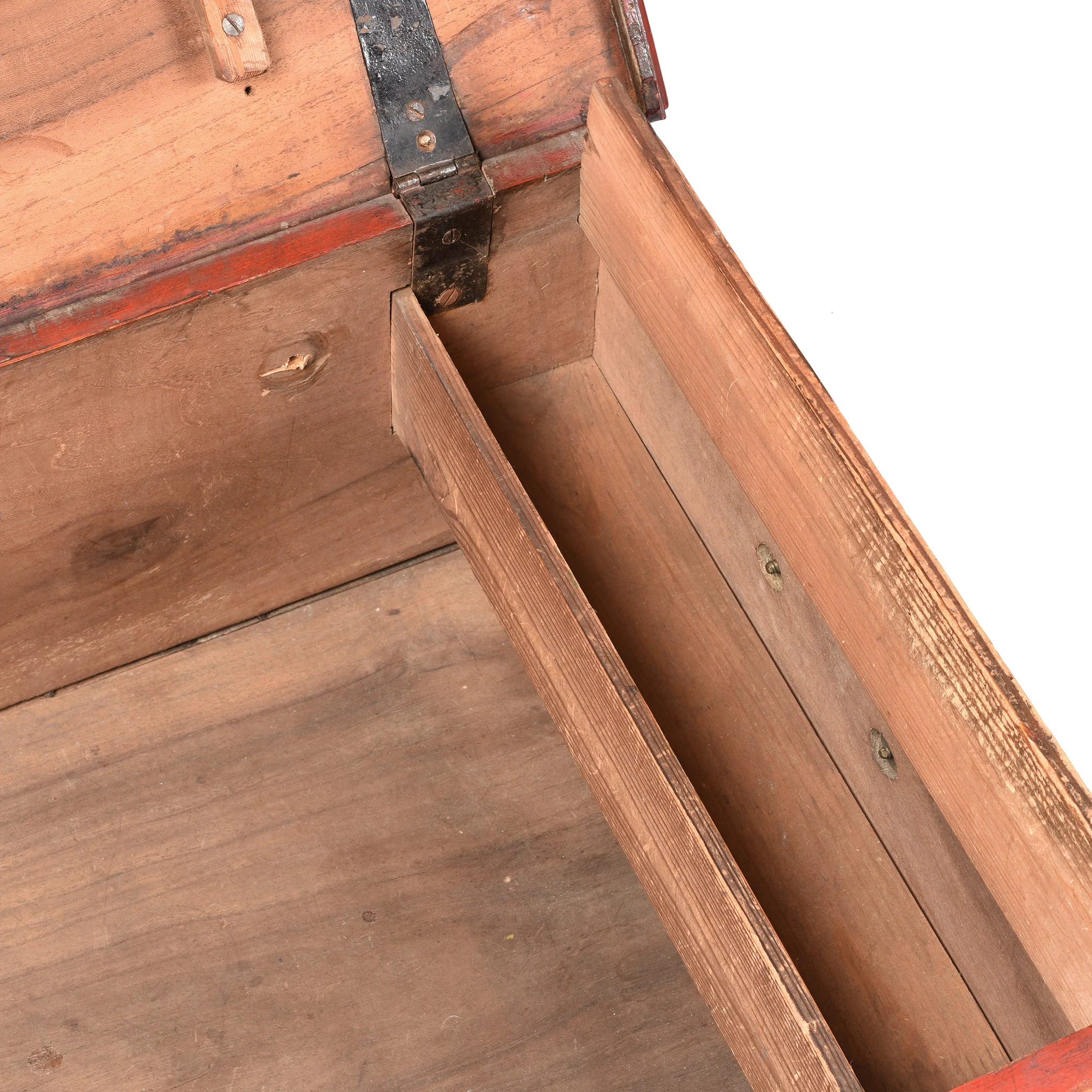
It is constructed from camphor wood with pine drawer liners and a candle box.
See similar chests featured in a gouache from the collection of Benjamin Ginsberg, featured in "Decorative Arts of The China Trade" by C L Crossman - Colour Plate 92. In the same book, Crossman refers to the double headed eagle escutcheons being found only on the rarest of chests. See plate 137.
From China
115 x 53 x 58 (wxdxh) cms
UK Delivery Charge - except Highlands & Islands £80
More delivery options available on checkout
Original: $3,987.10
-65%$3,987.10
$1,395.48More Images

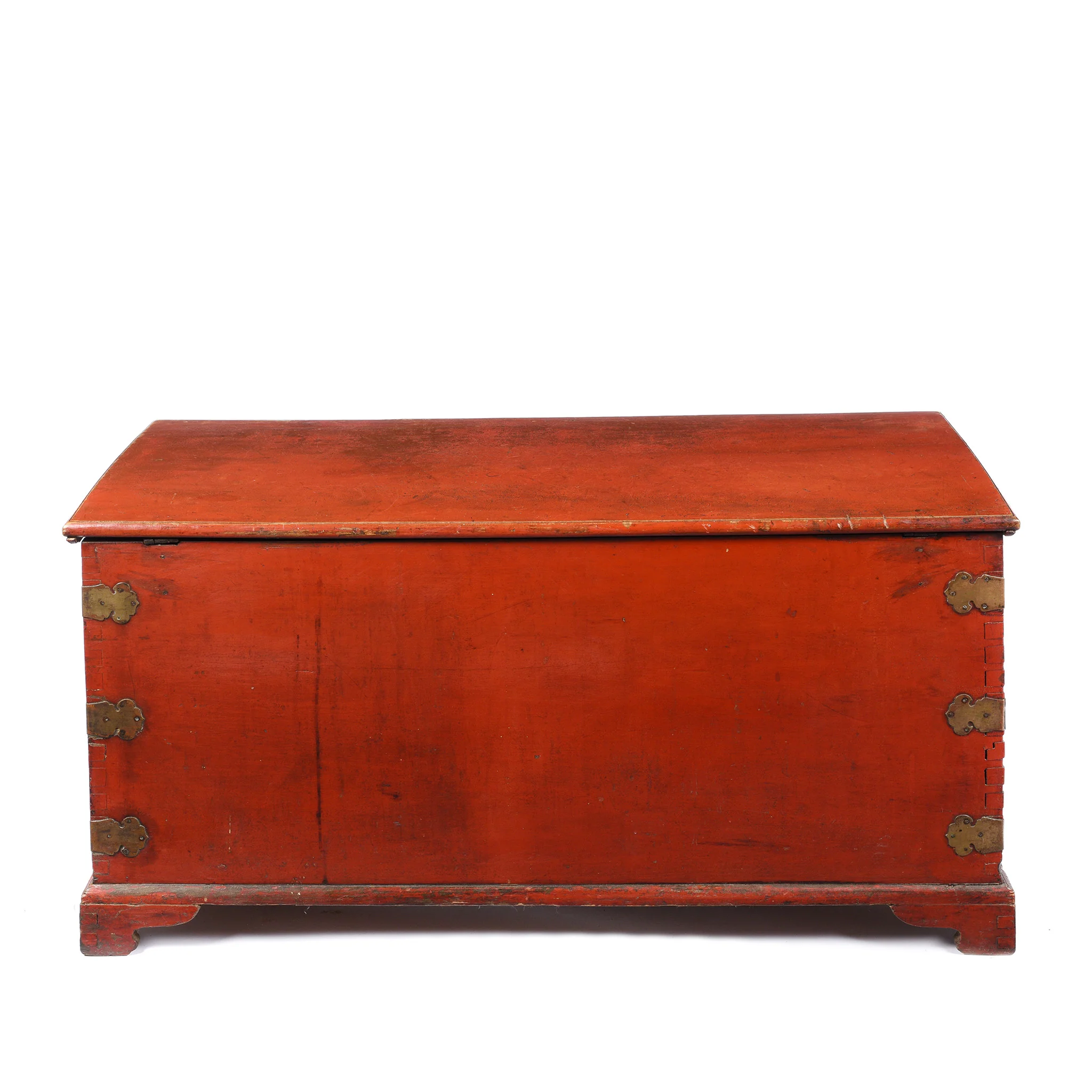
Red Lacquer Camphor Wood Chinese Chest - 18thC
This incredibly unusual Chinese chest dates from the early 18th century. These chests were used on East Indiaman trading ships plying the routes between China, India & Britain. This style of chest was made in Canton, China for the Anglo-Indian market.
We've only seen a handful of pieces like this in our 45 years of travelling Asia. They have always been in very poor condition because of their age with badly damaged paint & missing brass corners.
The shape of the chest and style is Anglo-Indian, as are the brass handles however, the brass corners are ruyi, the symbol for a ceremonial scepter symbolising power and good fortune in Buddhist & Chinese folklore. The lock plate is a double headed eagle known as Gandaberunda or Berunda, a bird from Hindu mythology particularly prominent in South India.
There is a date of 1710 inside one of the drawers, which can't be verified, but it fits in with the dates that East Indiaman ships were in use.
We suspect that this piece was brought back to Britain by a sailor or officer in the 18th century which would explain its unusually good condition.
It is constructed from camphor wood with pine drawer liners and a candle box.
See similar chests featured in a gouache from the collection of Benjamin Ginsberg, featured in "Decorative Arts of The China Trade" by C L Crossman - Colour Plate 92. In the same book, Crossman refers to the double headed eagle escutcheons being found only on the rarest of chests. See plate 137.
From China
115 x 53 x 58 (wxdxh) cms
UK Delivery Charge - except Highlands & Islands £80
More delivery options available on checkout
Product Information
Product Information
Shipping & Returns
Shipping & Returns
Description
This incredibly unusual Chinese chest dates from the early 18th century. These chests were used on East Indiaman trading ships plying the routes between China, India & Britain. This style of chest was made in Canton, China for the Anglo-Indian market.
We've only seen a handful of pieces like this in our 45 years of travelling Asia. They have always been in very poor condition because of their age with badly damaged paint & missing brass corners.
The shape of the chest and style is Anglo-Indian, as are the brass handles however, the brass corners are ruyi, the symbol for a ceremonial scepter symbolising power and good fortune in Buddhist & Chinese folklore. The lock plate is a double headed eagle known as Gandaberunda or Berunda, a bird from Hindu mythology particularly prominent in South India.
There is a date of 1710 inside one of the drawers, which can't be verified, but it fits in with the dates that East Indiaman ships were in use.
We suspect that this piece was brought back to Britain by a sailor or officer in the 18th century which would explain its unusually good condition.
It is constructed from camphor wood with pine drawer liners and a candle box.
See similar chests featured in a gouache from the collection of Benjamin Ginsberg, featured in "Decorative Arts of The China Trade" by C L Crossman - Colour Plate 92. In the same book, Crossman refers to the double headed eagle escutcheons being found only on the rarest of chests. See plate 137.
From China
115 x 53 x 58 (wxdxh) cms
UK Delivery Charge - except Highlands & Islands £80
More delivery options available on checkout