
North Korean Pyongyang Bandaji - 19thC - Late Joseon
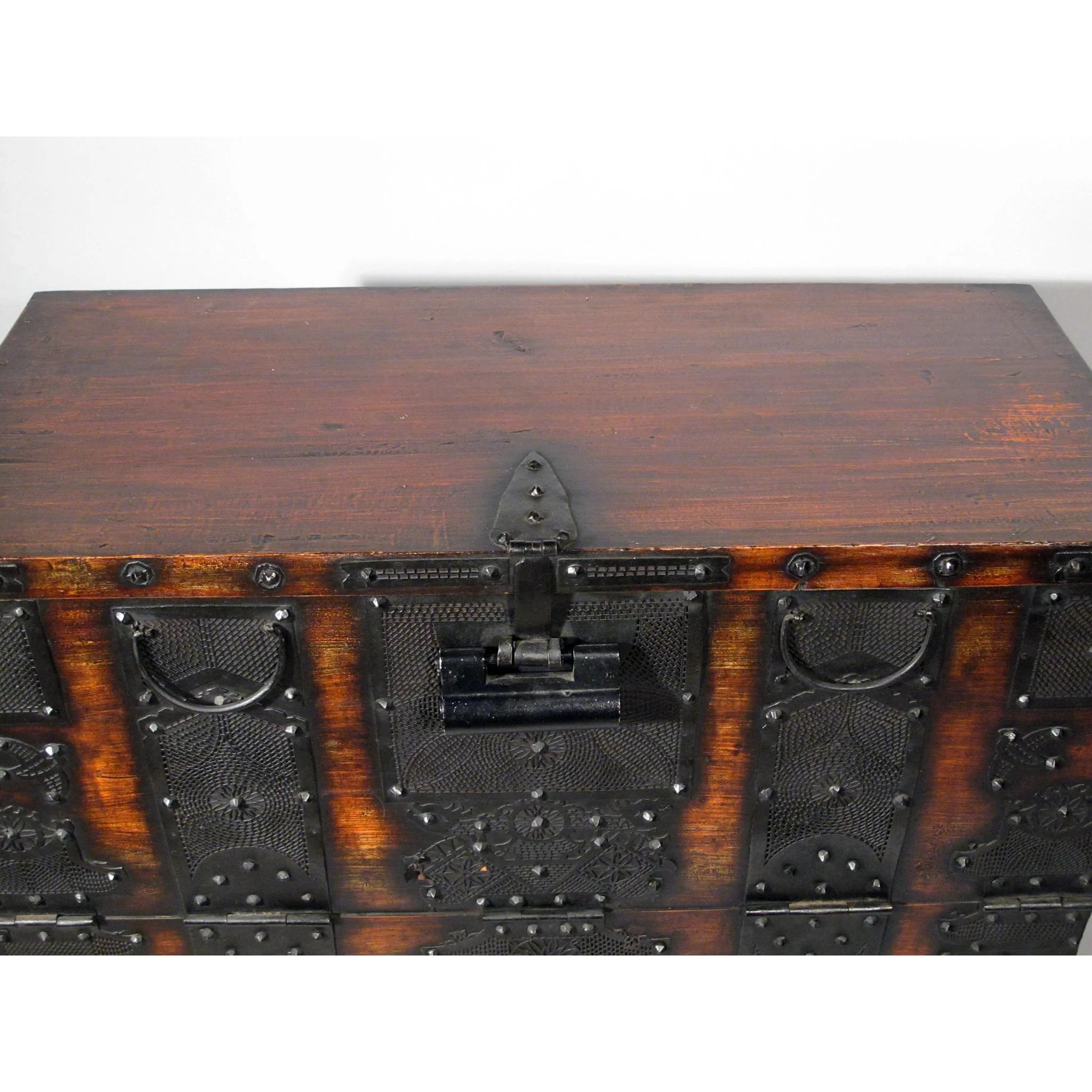
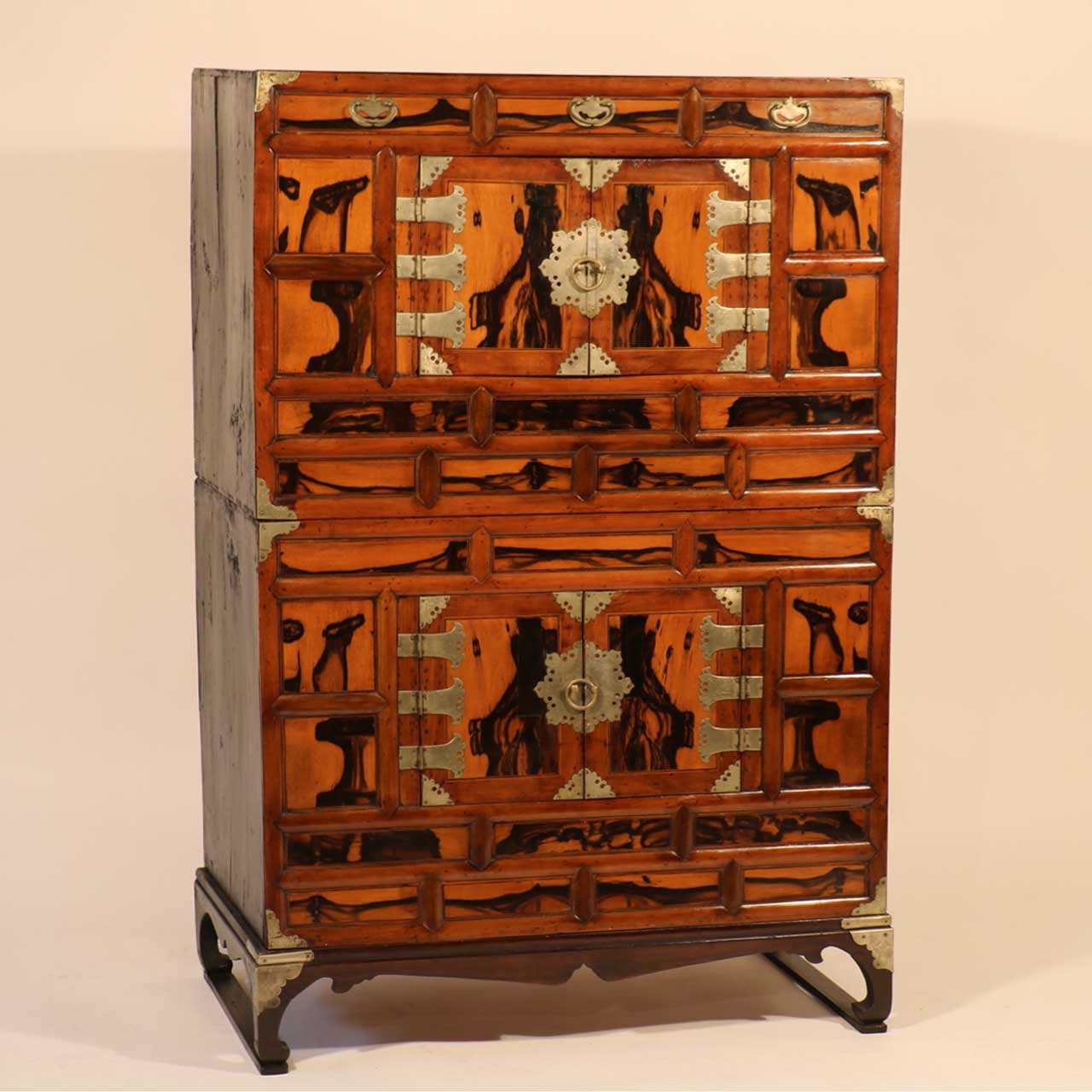
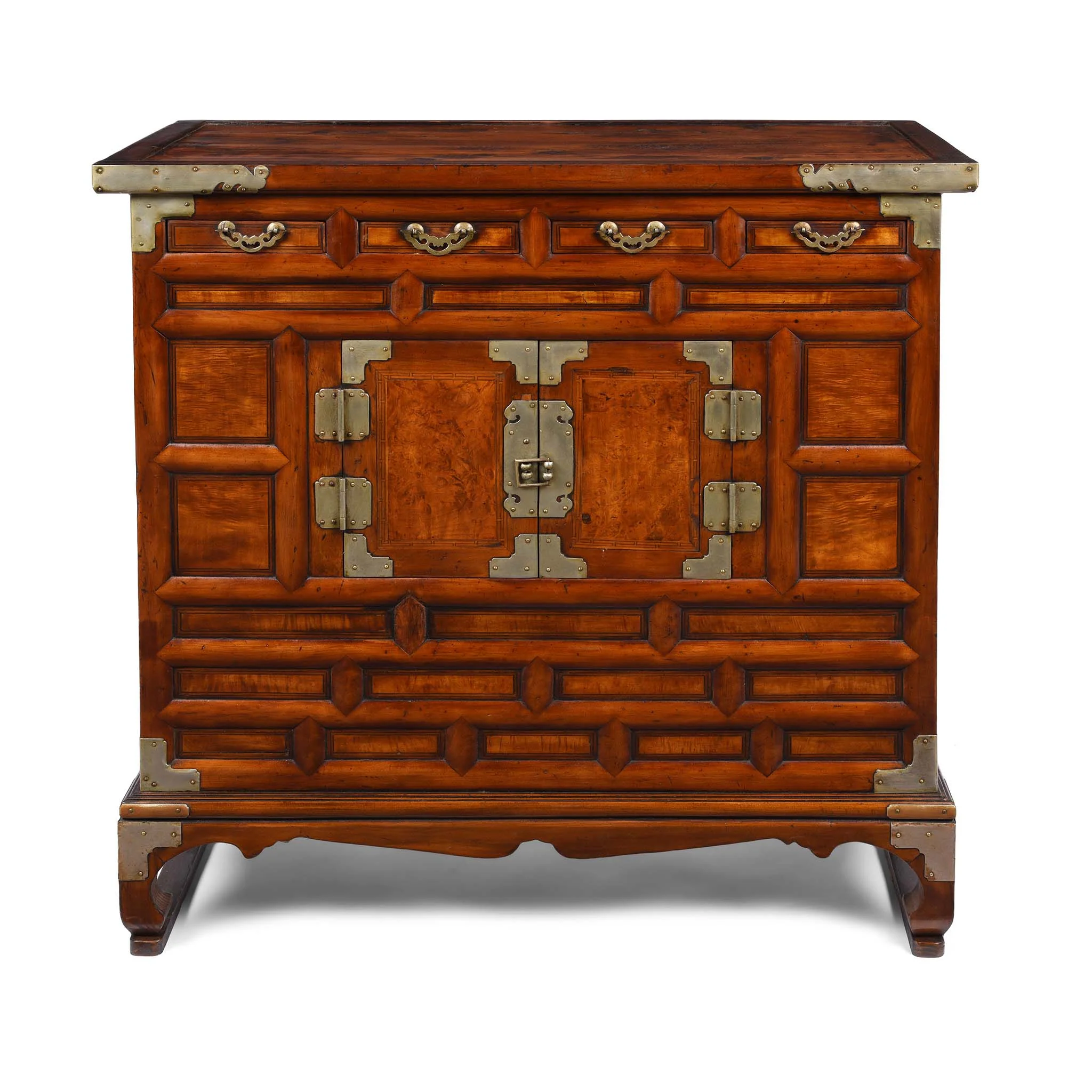
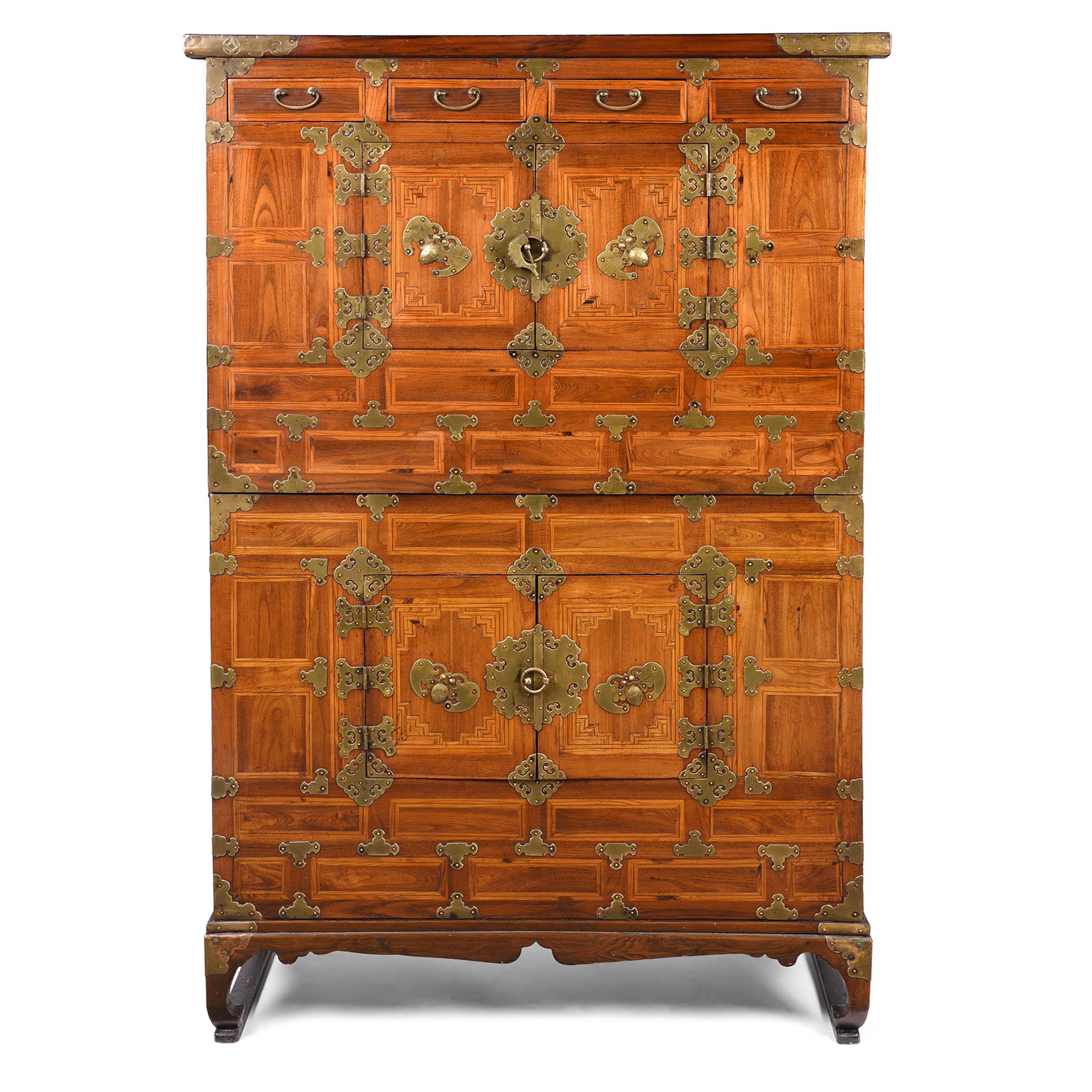
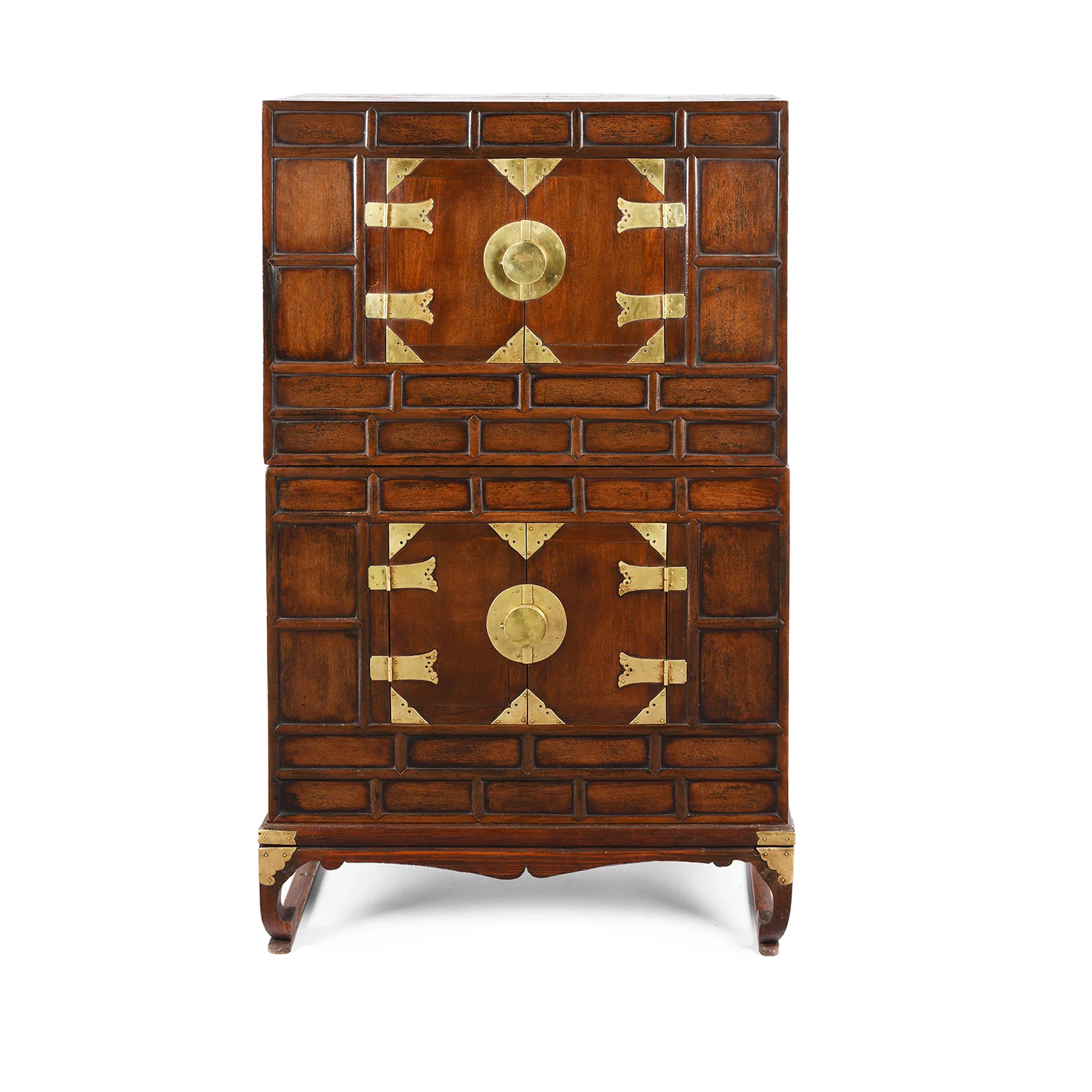
This striking Pyongyang Bandaji (반닫이) chest from North Korea, dating to the late 19th century in the final decades of the Joseon Dynasty (1392–1897), represents Korean cabinetry at its most sculptural and expressive. Bandaji — the classic “half-opening” chest form — served as essential household storage for bedding, clothing, valuables, and ceremonial textiles, and their imposing metalwork made them powerful symbols of status within the Korean home.
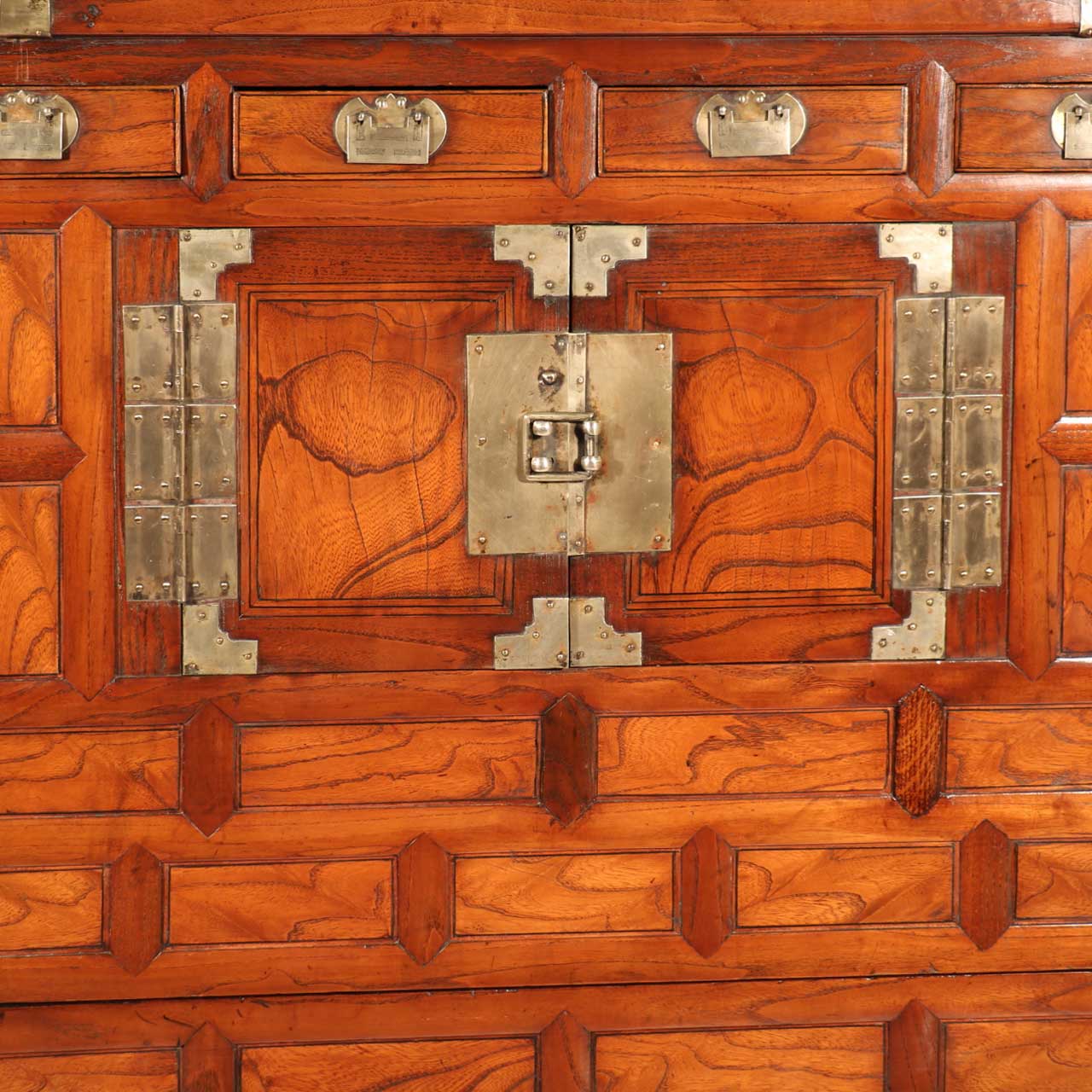
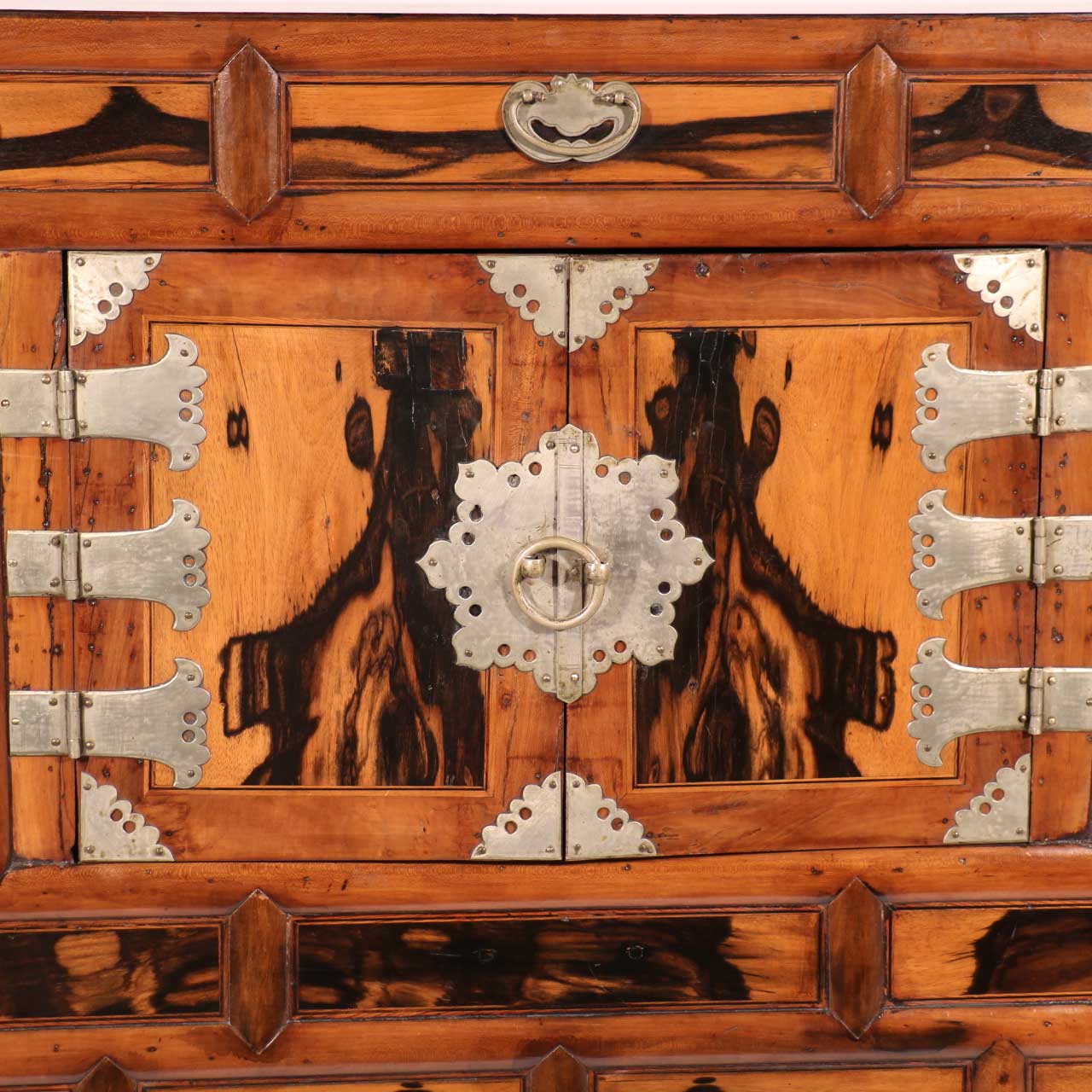
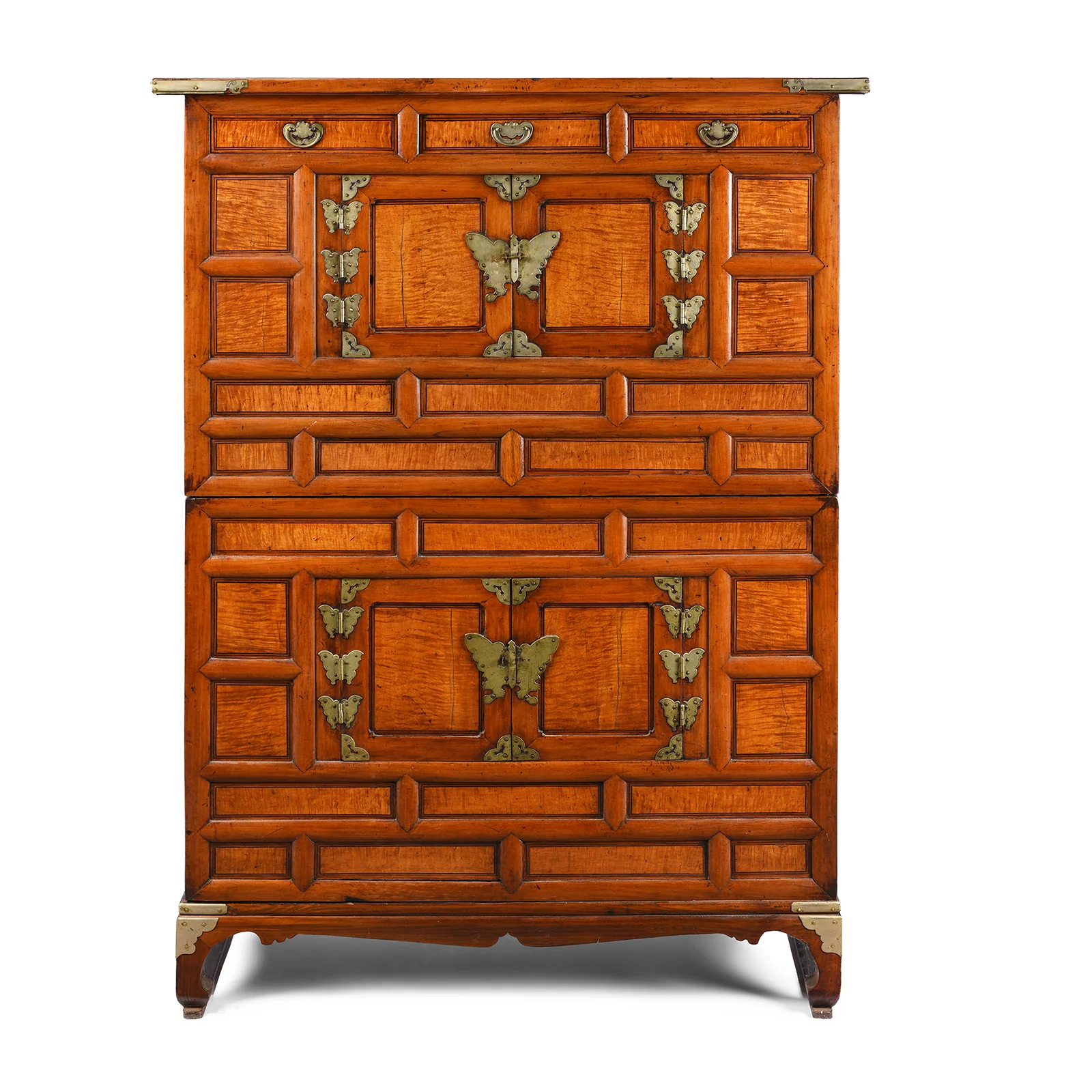
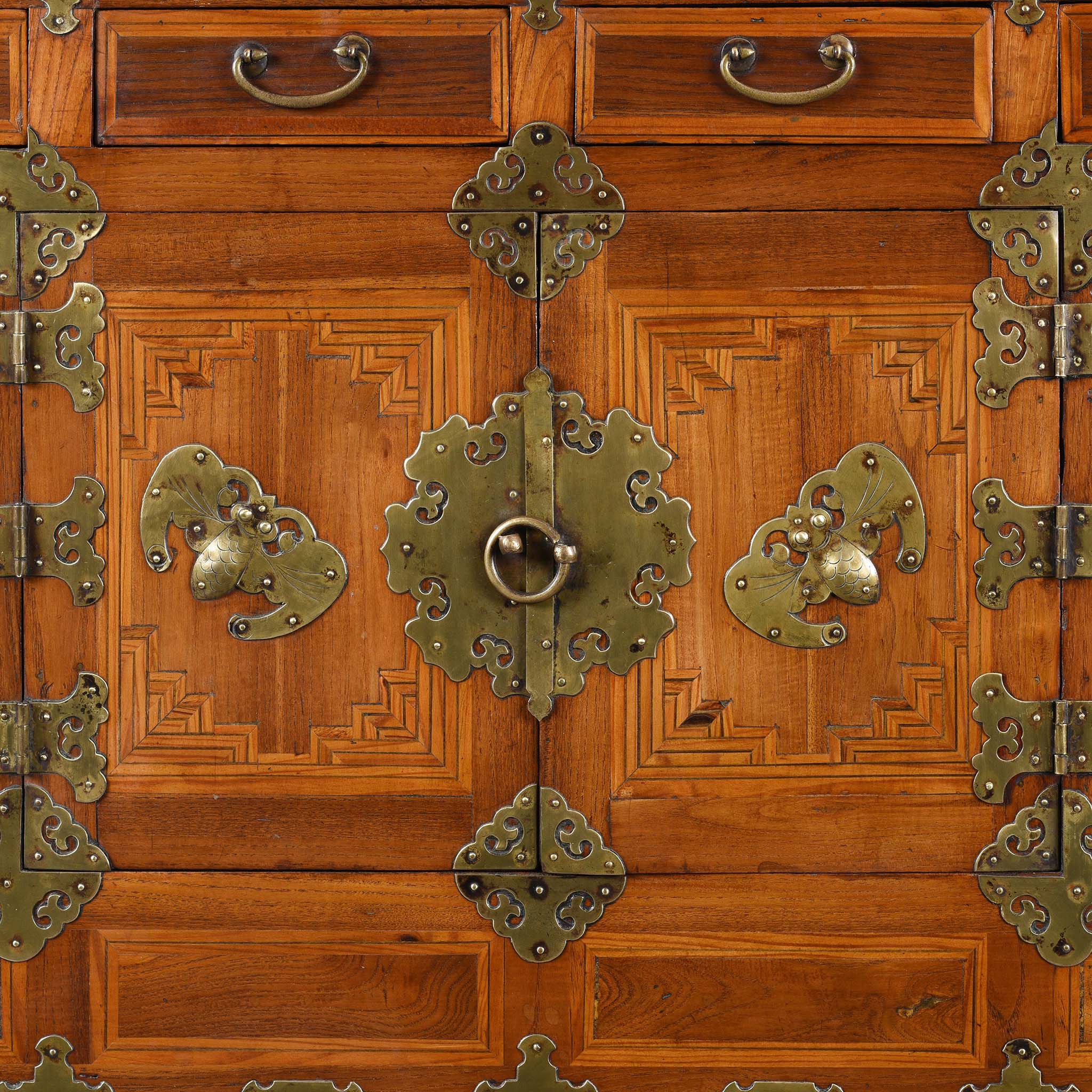
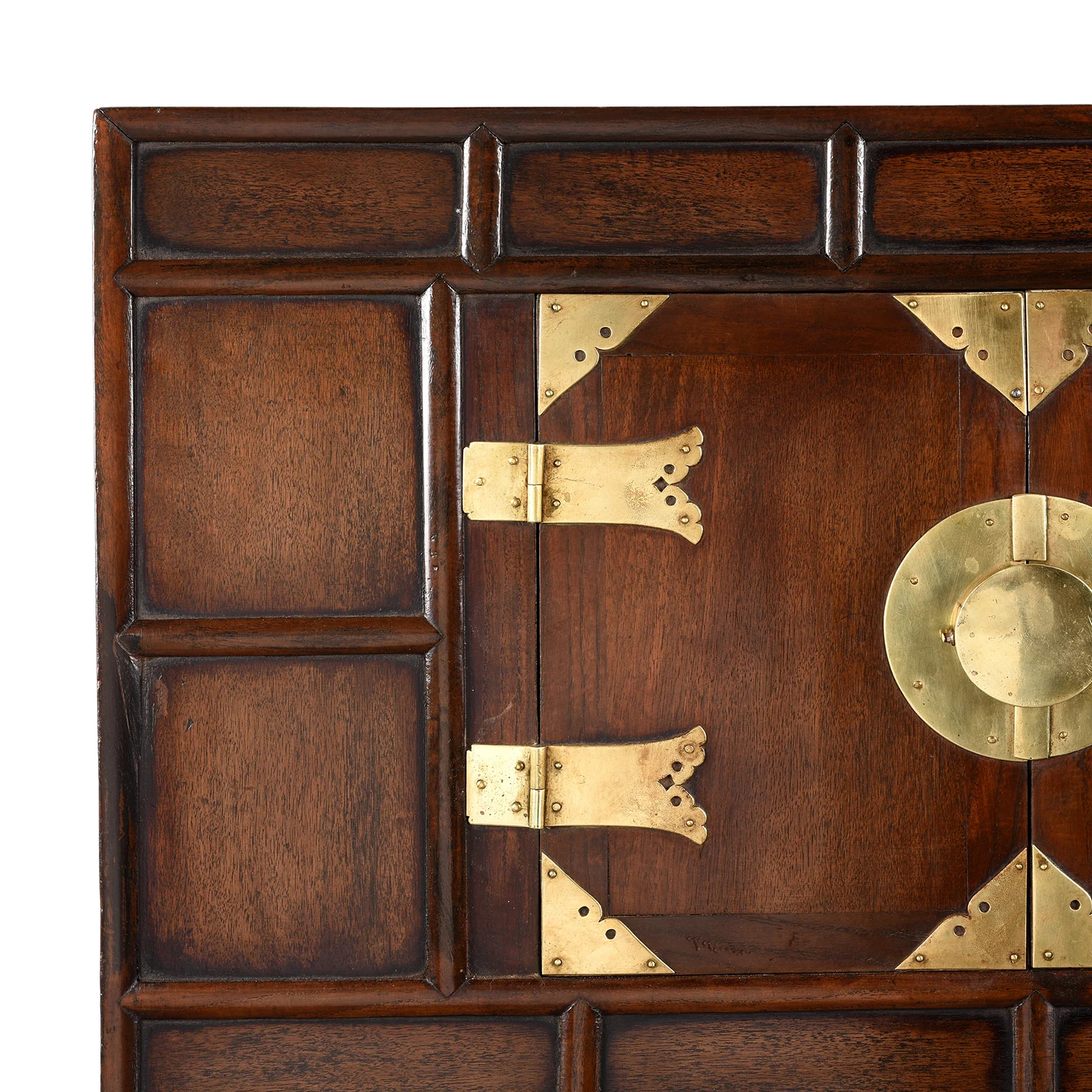
Pyongyang had long been a centre of cultural and economic influence since the Goryeo Dynasty (918–1392), and chests of this type travelled widely during the upheavals of the mid-20th century. This example is crafted with pine wood sides, back, and top, and a linden wood front panel, a construction style typical of North Korean bandaji. Its surface is richly clad with engraved white-brass mounts, a high-nickel alloy prized for its pale, silver-toned finish. The decoration includes long vertical plates, square bosses, auspicious corner fittings, and engraved panels featuring stylised chrysanthemum and pine-flower motifs — symbols of longevity, resilience, and noble refinement in Korean decorative art.
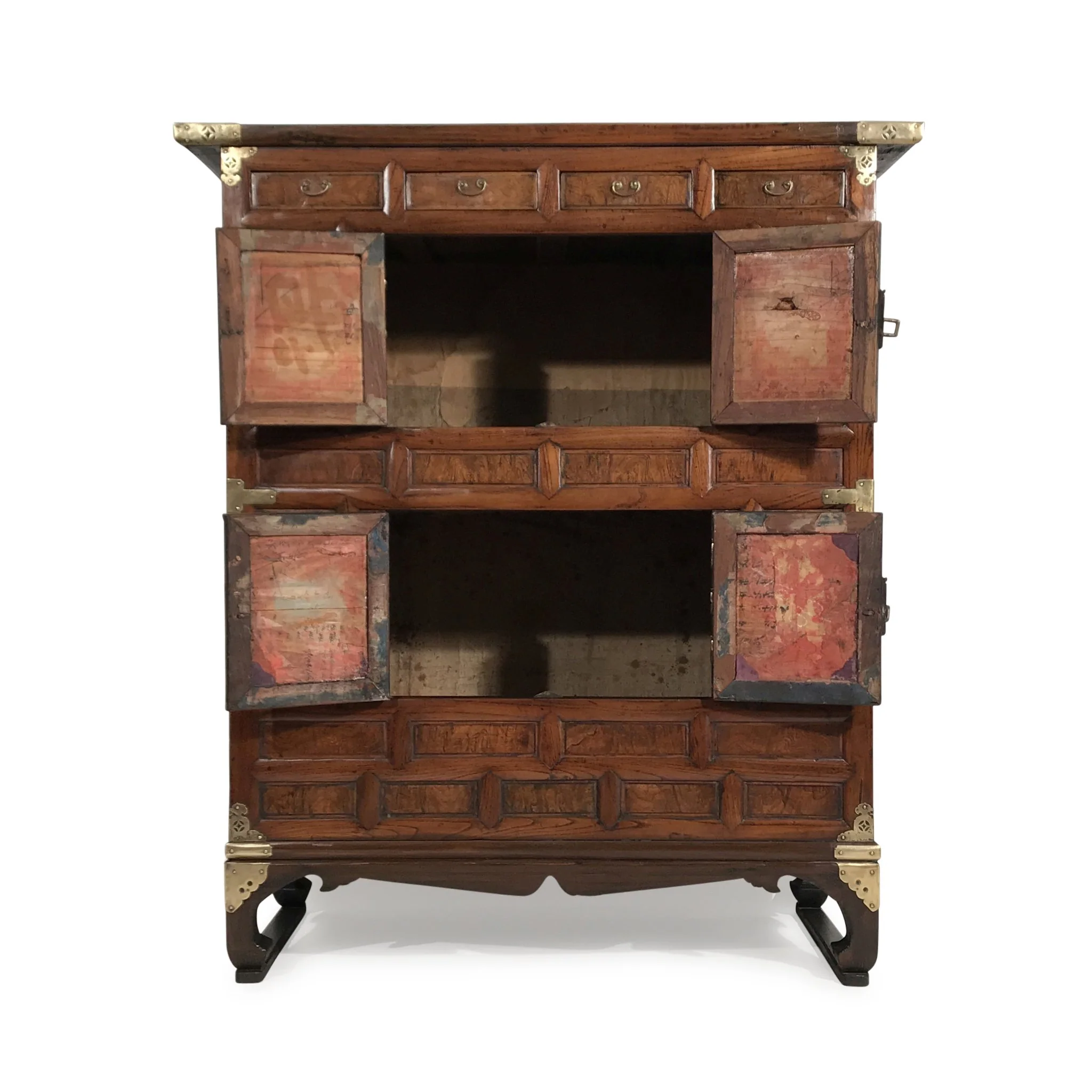
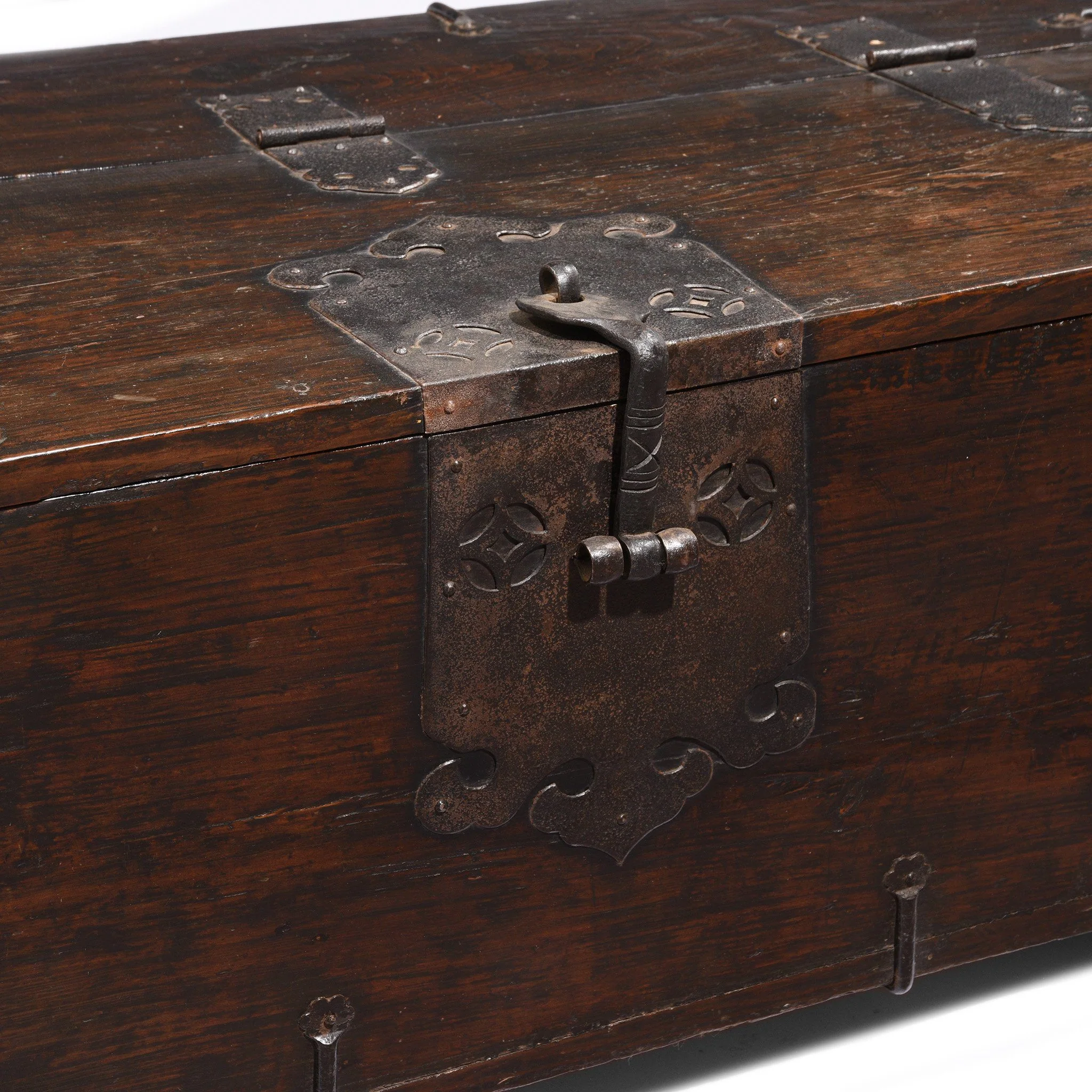
Inside, the chest retains its hanji (Korean mulberry paper) lining in beautifully worn original condition, along with a set of three internal drawers beneath the upper rail. The lockplate — complete with its original working lock and key (shown in the photos) — displays further protective and prosperity-related imagery, while the whole chest rests on an elegant raised open stand with traditional Joseon-period cut feet.
- Origin: Pyongyang city, North Korea
- Date: 19th century (Late Joseon Dynasty)
- Materials: Pine (sides, back, top); linden wood (front panel); engraved white-brass (high-nickel alloy) hardware
- Features: Elaborate white-brass mounts; chrysanthemum and pine-flower engravings; vertical engraved plates; symbolic lockplate; original working lock and key; internal hanji lining; three internal drawers; traditional half-opening design; raised open stand
- Condition: Age-related marks and wear consistent with use; original high-nickel white-brasswork beautifully patinated. Restored in our Wiltshire workshops.
- Dimensions: W92 × D45 × H103 cm
A highly decorative Pyongyang Bandaji with excellent high-nickel white brass, sensitively restored.
More Images


North Korean Pyongyang Bandaji - 19thC - Late Joseon
This striking Pyongyang Bandaji (반닫이) chest from North Korea, dating to the late 19th century in the final decades of the Joseon Dynasty (1392–1897), represents Korean cabinetry at its most sculptural and expressive. Bandaji — the classic “half-opening” chest form — served as essential household storage for bedding, clothing, valuables, and ceremonial textiles, and their imposing metalwork made them powerful symbols of status within the Korean home.
Pyongyang had long been a centre of cultural and economic influence since the Goryeo Dynasty (918–1392), and chests of this type travelled widely during the upheavals of the mid-20th century. This example is crafted with pine wood sides, back, and top, and a linden wood front panel, a construction style typical of North Korean bandaji. Its surface is richly clad with engraved white-brass mounts, a high-nickel alloy prized for its pale, silver-toned finish. The decoration includes long vertical plates, square bosses, auspicious corner fittings, and engraved panels featuring stylised chrysanthemum and pine-flower motifs — symbols of longevity, resilience, and noble refinement in Korean decorative art.
Inside, the chest retains its hanji (Korean mulberry paper) lining in beautifully worn original condition, along with a set of three internal drawers beneath the upper rail. The lockplate — complete with its original working lock and key (shown in the photos) — displays further protective and prosperity-related imagery, while the whole chest rests on an elegant raised open stand with traditional Joseon-period cut feet.
- Origin: Pyongyang city, North Korea
- Date: 19th century (Late Joseon Dynasty)
- Materials: Pine (sides, back, top); linden wood (front panel); engraved white-brass (high-nickel alloy) hardware
- Features: Elaborate white-brass mounts; chrysanthemum and pine-flower engravings; vertical engraved plates; symbolic lockplate; original working lock and key; internal hanji lining; three internal drawers; traditional half-opening design; raised open stand
- Condition: Age-related marks and wear consistent with use; original high-nickel white-brasswork beautifully patinated. Restored in our Wiltshire workshops.
- Dimensions: W92 × D45 × H103 cm
A highly decorative Pyongyang Bandaji with excellent high-nickel white brass, sensitively restored.
Product Information
Product Information
Shipping & Returns
Shipping & Returns
Description
This striking Pyongyang Bandaji (반닫이) chest from North Korea, dating to the late 19th century in the final decades of the Joseon Dynasty (1392–1897), represents Korean cabinetry at its most sculptural and expressive. Bandaji — the classic “half-opening” chest form — served as essential household storage for bedding, clothing, valuables, and ceremonial textiles, and their imposing metalwork made them powerful symbols of status within the Korean home.
Pyongyang had long been a centre of cultural and economic influence since the Goryeo Dynasty (918–1392), and chests of this type travelled widely during the upheavals of the mid-20th century. This example is crafted with pine wood sides, back, and top, and a linden wood front panel, a construction style typical of North Korean bandaji. Its surface is richly clad with engraved white-brass mounts, a high-nickel alloy prized for its pale, silver-toned finish. The decoration includes long vertical plates, square bosses, auspicious corner fittings, and engraved panels featuring stylised chrysanthemum and pine-flower motifs — symbols of longevity, resilience, and noble refinement in Korean decorative art.
Inside, the chest retains its hanji (Korean mulberry paper) lining in beautifully worn original condition, along with a set of three internal drawers beneath the upper rail. The lockplate — complete with its original working lock and key (shown in the photos) — displays further protective and prosperity-related imagery, while the whole chest rests on an elegant raised open stand with traditional Joseon-period cut feet.
- Origin: Pyongyang city, North Korea
- Date: 19th century (Late Joseon Dynasty)
- Materials: Pine (sides, back, top); linden wood (front panel); engraved white-brass (high-nickel alloy) hardware
- Features: Elaborate white-brass mounts; chrysanthemum and pine-flower engravings; vertical engraved plates; symbolic lockplate; original working lock and key; internal hanji lining; three internal drawers; traditional half-opening design; raised open stand
- Condition: Age-related marks and wear consistent with use; original high-nickel white-brasswork beautifully patinated. Restored in our Wiltshire workshops.
- Dimensions: W92 × D45 × H103 cm
A highly decorative Pyongyang Bandaji with excellent high-nickel white brass, sensitively restored.