Blue & White Porcelain Tianqiuping Vase - Wave Dragons
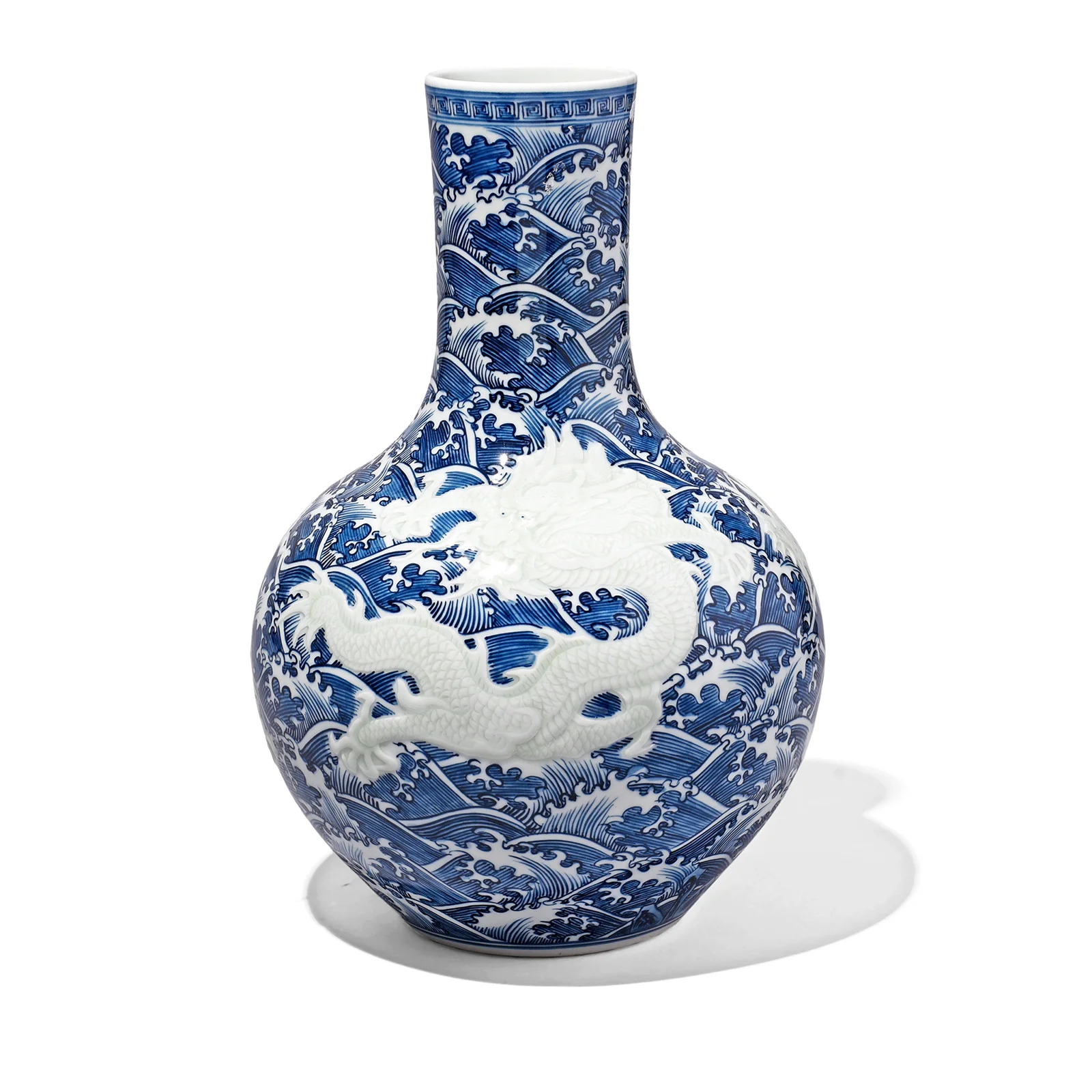
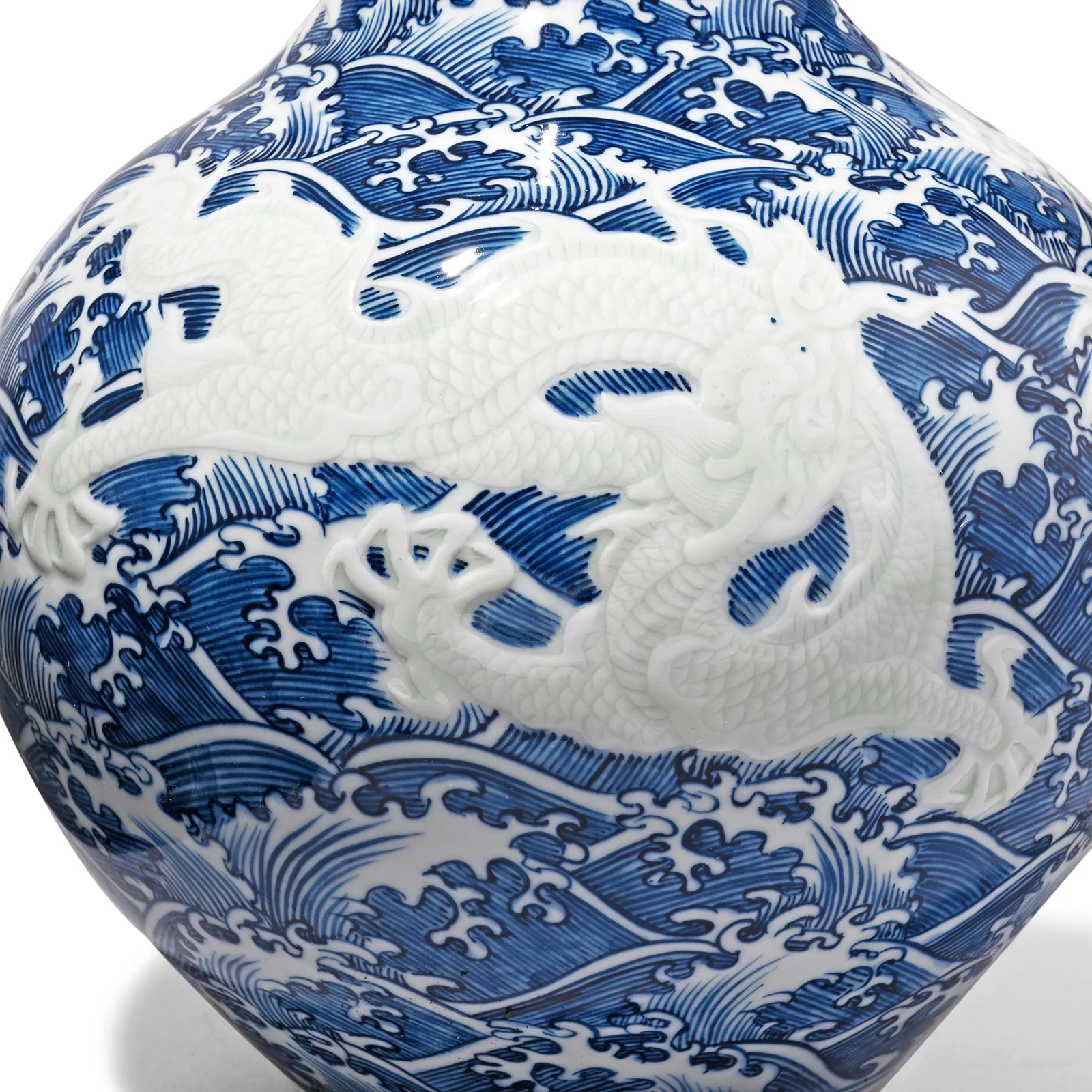
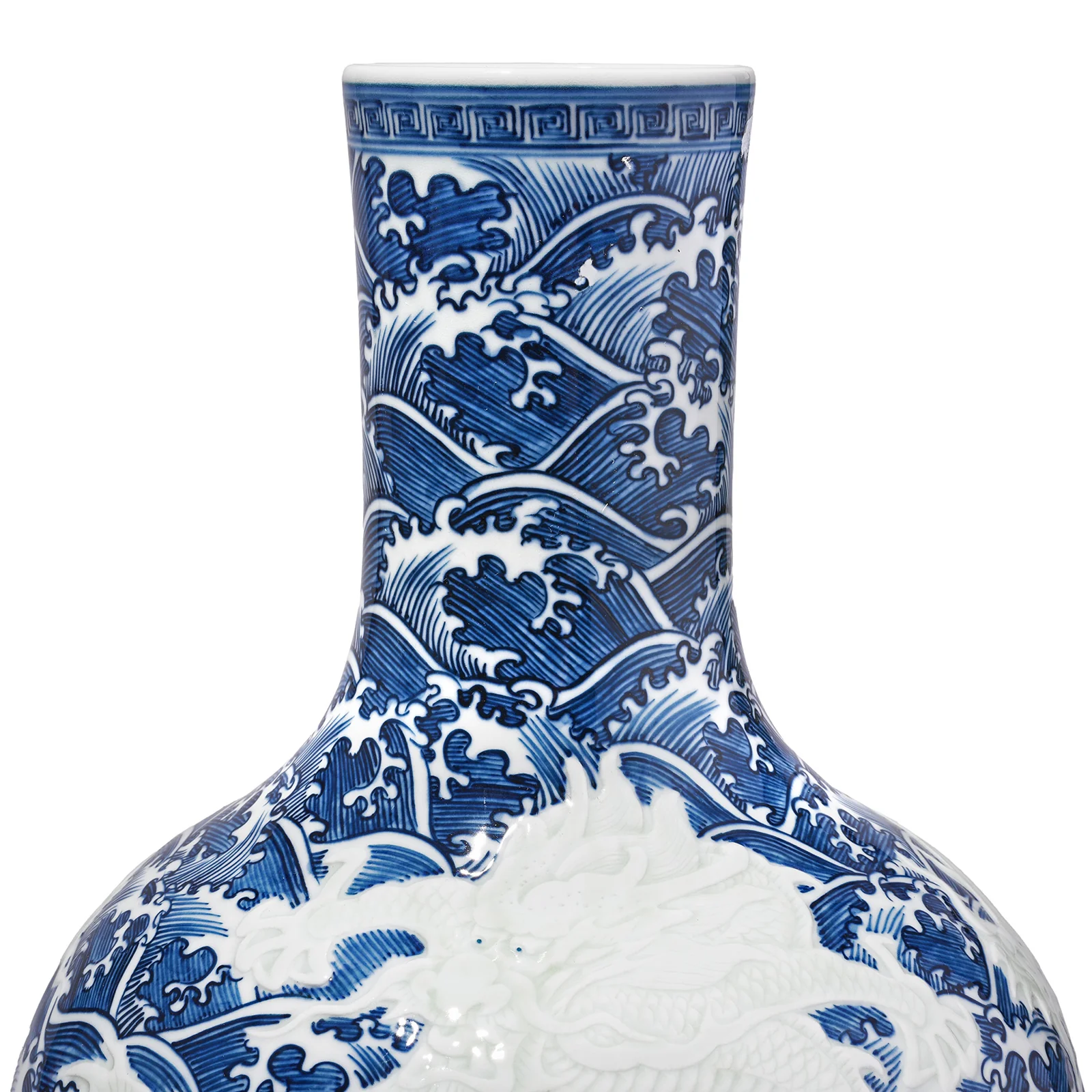
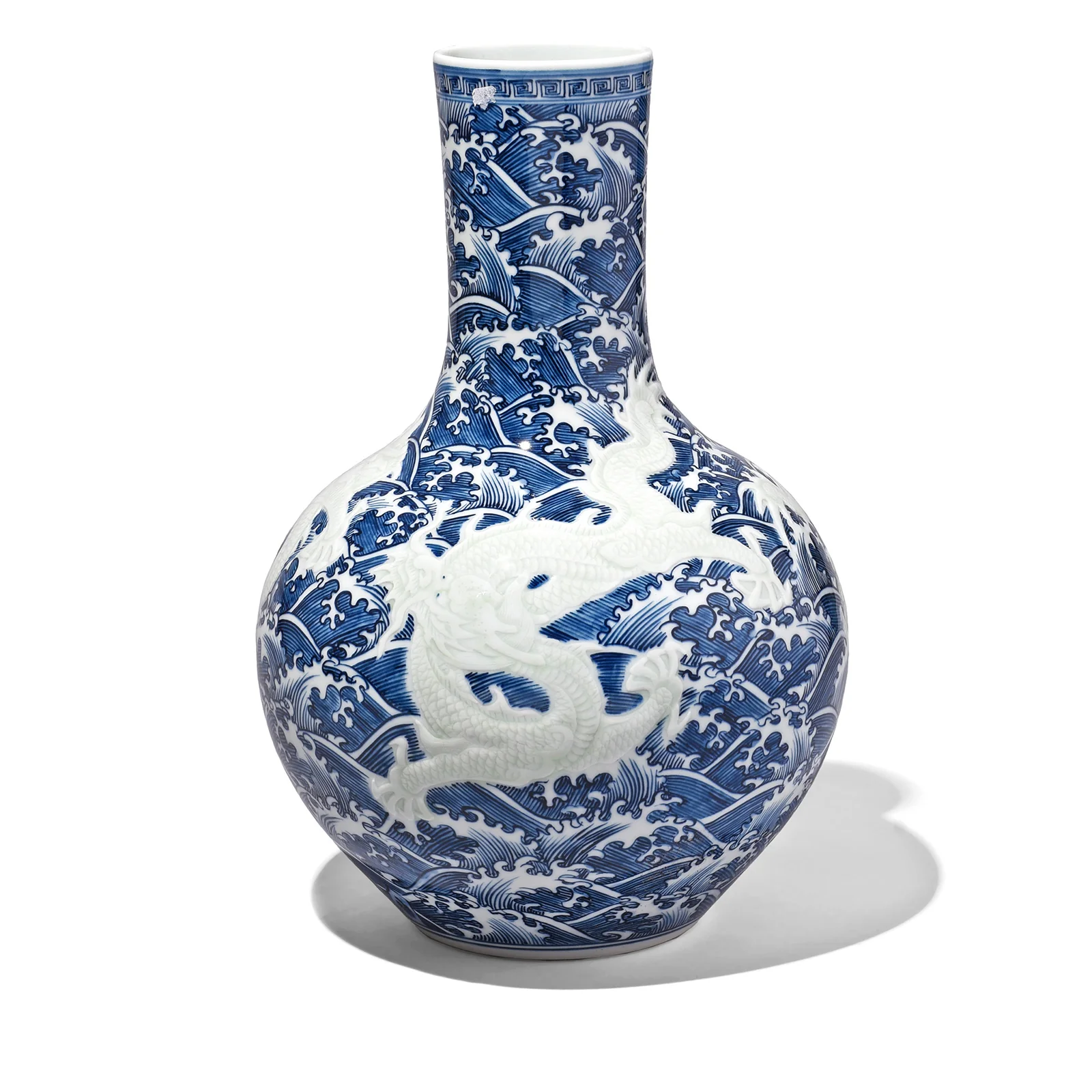
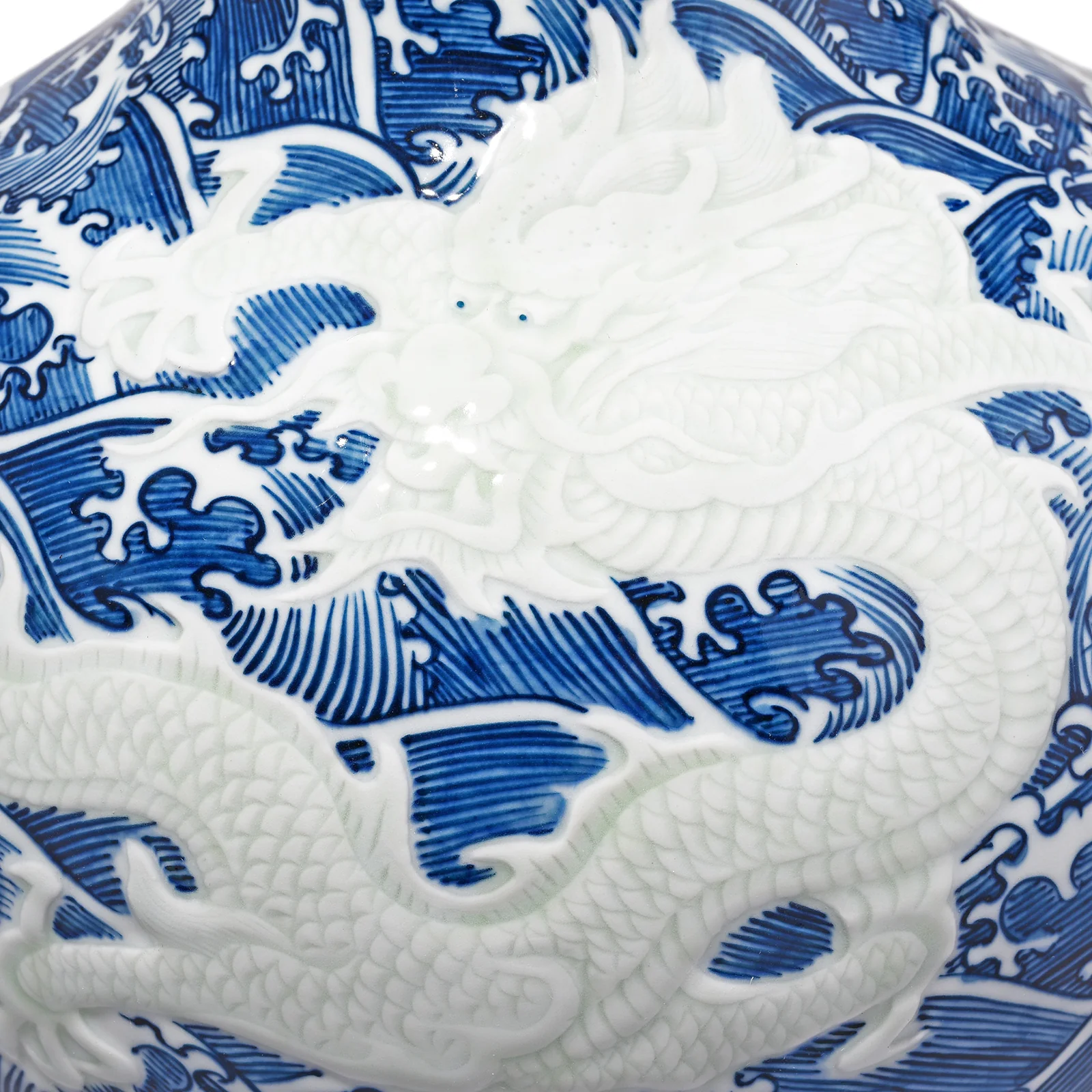
This reproduction Chinese porcelain tianqiuping bottle vase is decorated in an inverted blue & white glaze. The painting depicts five claw white dragons on a background of waves. Although the dragon was claimed as the symbol of the emperor during the Han dynasty (206 BC - 22 AD) it wasn't until the Ming dynasty (1368 0 1644) that the five claw dragon became the specific symbol of imperial might. It was then that the use of the five claw dragon outside of the imperial court became treasonous
This beautiful vase is hand made on the potters wheel in the traditional way. It is then painted by hand before firing. Porcelain is steeped in centuries of Chinese culture and history.
References:
The original of this vase can be found at the Tokyo National Museum
See Auspicious Meaning in Chinese Art by Tokyo National Museum
A similar example can be found in the British Museum - PDF.662
More Images
Blue & White Porcelain Tianqiuping Vase - Wave Dragons
This reproduction Chinese porcelain tianqiuping bottle vase is decorated in an inverted blue & white glaze. The painting depicts five claw white dragons on a background of waves. Although the dragon was claimed as the symbol of the emperor during the Han dynasty (206 BC - 22 AD) it wasn't until the Ming dynasty (1368 0 1644) that the five claw dragon became the specific symbol of imperial might. It was then that the use of the five claw dragon outside of the imperial court became treasonous
This beautiful vase is hand made on the potters wheel in the traditional way. It is then painted by hand before firing. Porcelain is steeped in centuries of Chinese culture and history.
References:
The original of this vase can be found at the Tokyo National Museum
See Auspicious Meaning in Chinese Art by Tokyo National Museum
A similar example can be found in the British Museum - PDF.662
Product Information
Product Information
Shipping & Returns
Shipping & Returns
Description
This reproduction Chinese porcelain tianqiuping bottle vase is decorated in an inverted blue & white glaze. The painting depicts five claw white dragons on a background of waves. Although the dragon was claimed as the symbol of the emperor during the Han dynasty (206 BC - 22 AD) it wasn't until the Ming dynasty (1368 0 1644) that the five claw dragon became the specific symbol of imperial might. It was then that the use of the five claw dragon outside of the imperial court became treasonous
This beautiful vase is hand made on the potters wheel in the traditional way. It is then painted by hand before firing. Porcelain is steeped in centuries of Chinese culture and history.
References:
The original of this vase can be found at the Tokyo National Museum
See Auspicious Meaning in Chinese Art by Tokyo National Museum
A similar example can be found in the British Museum - PDF.662