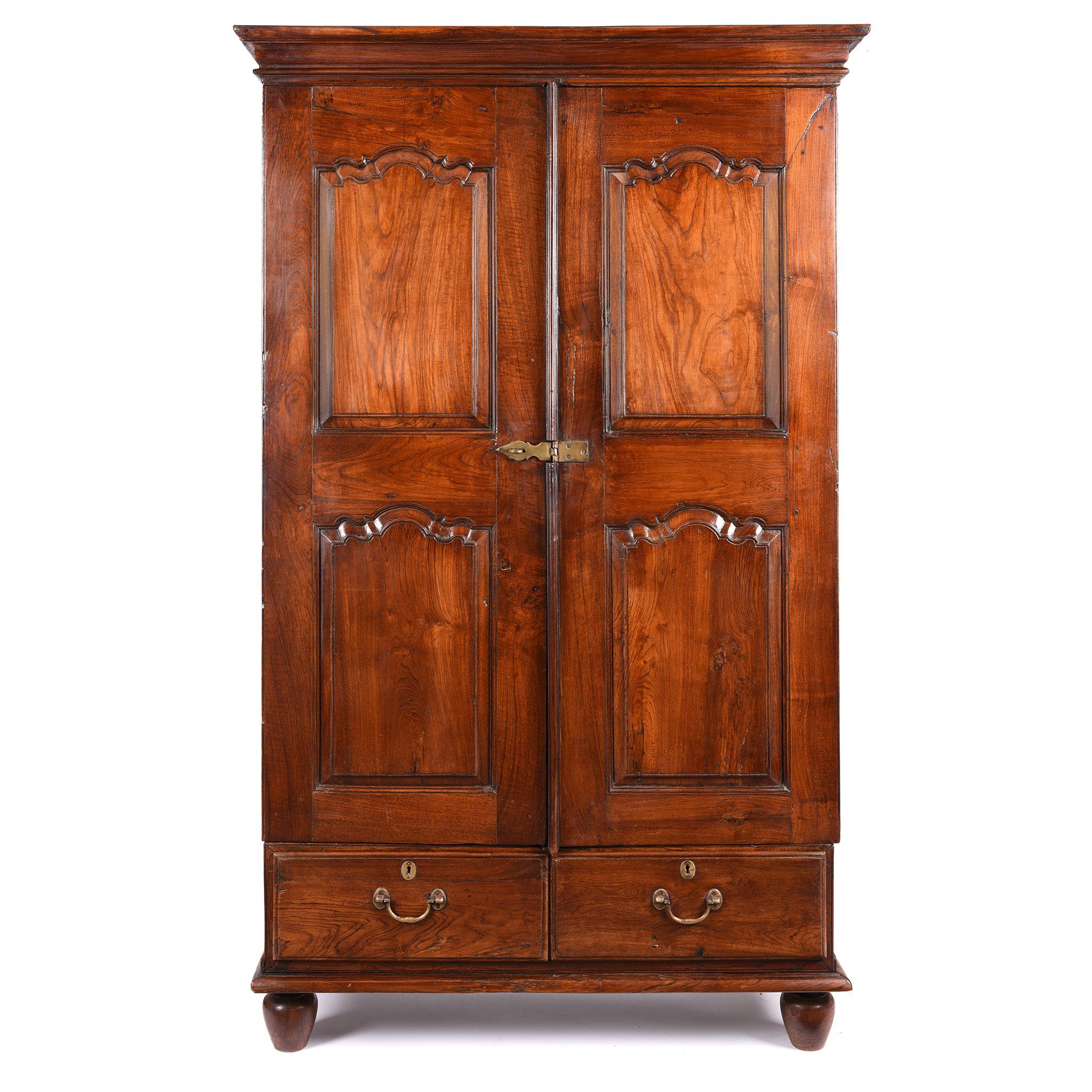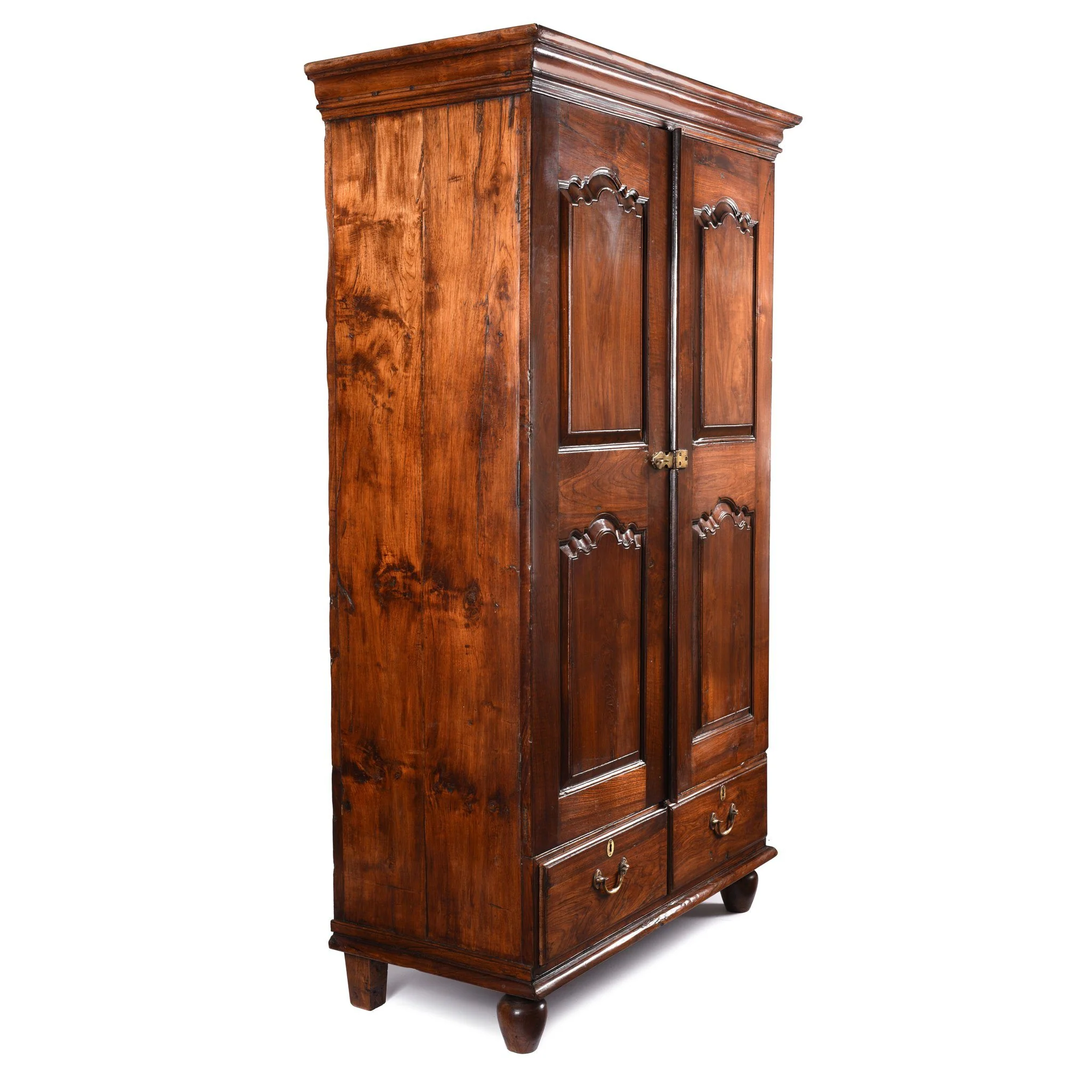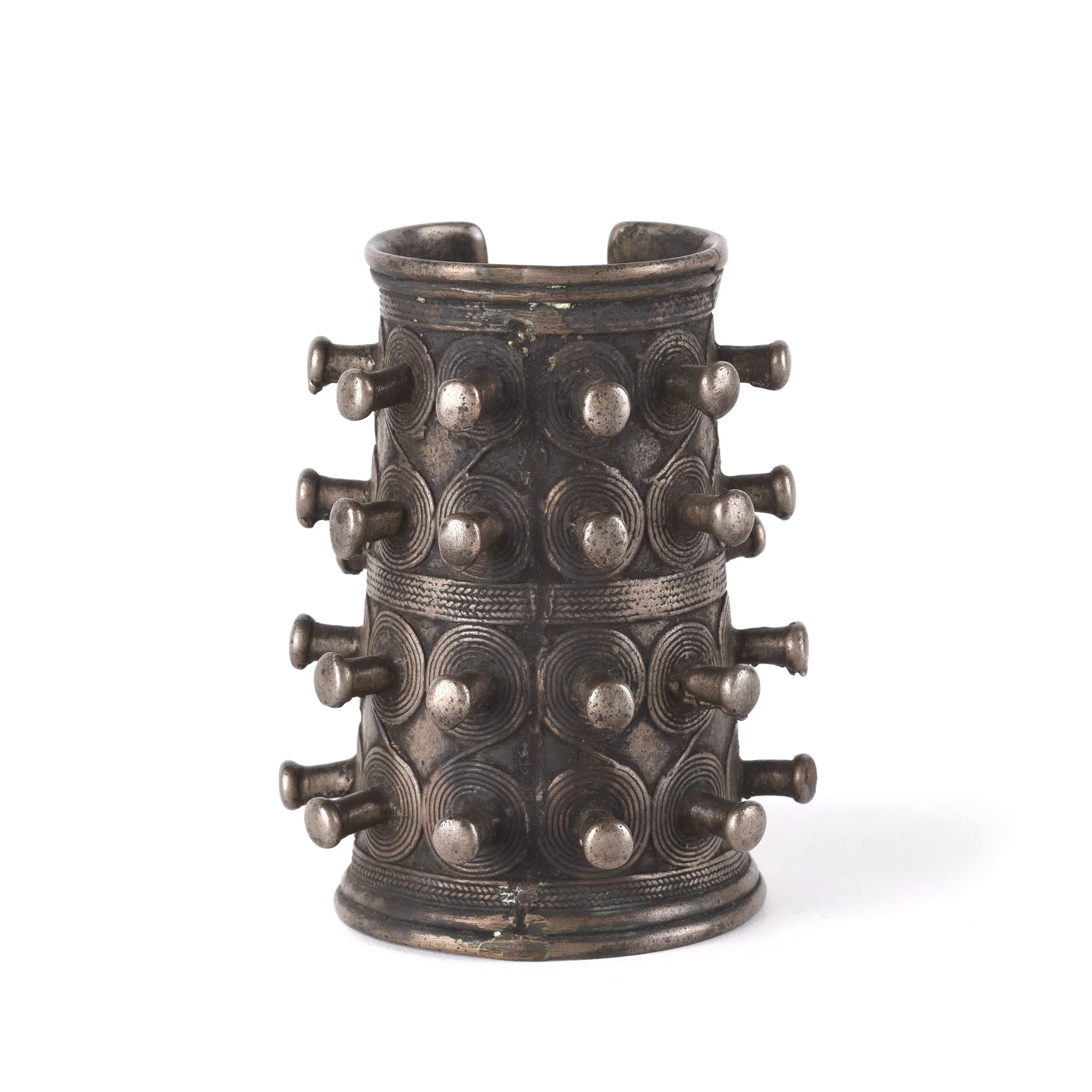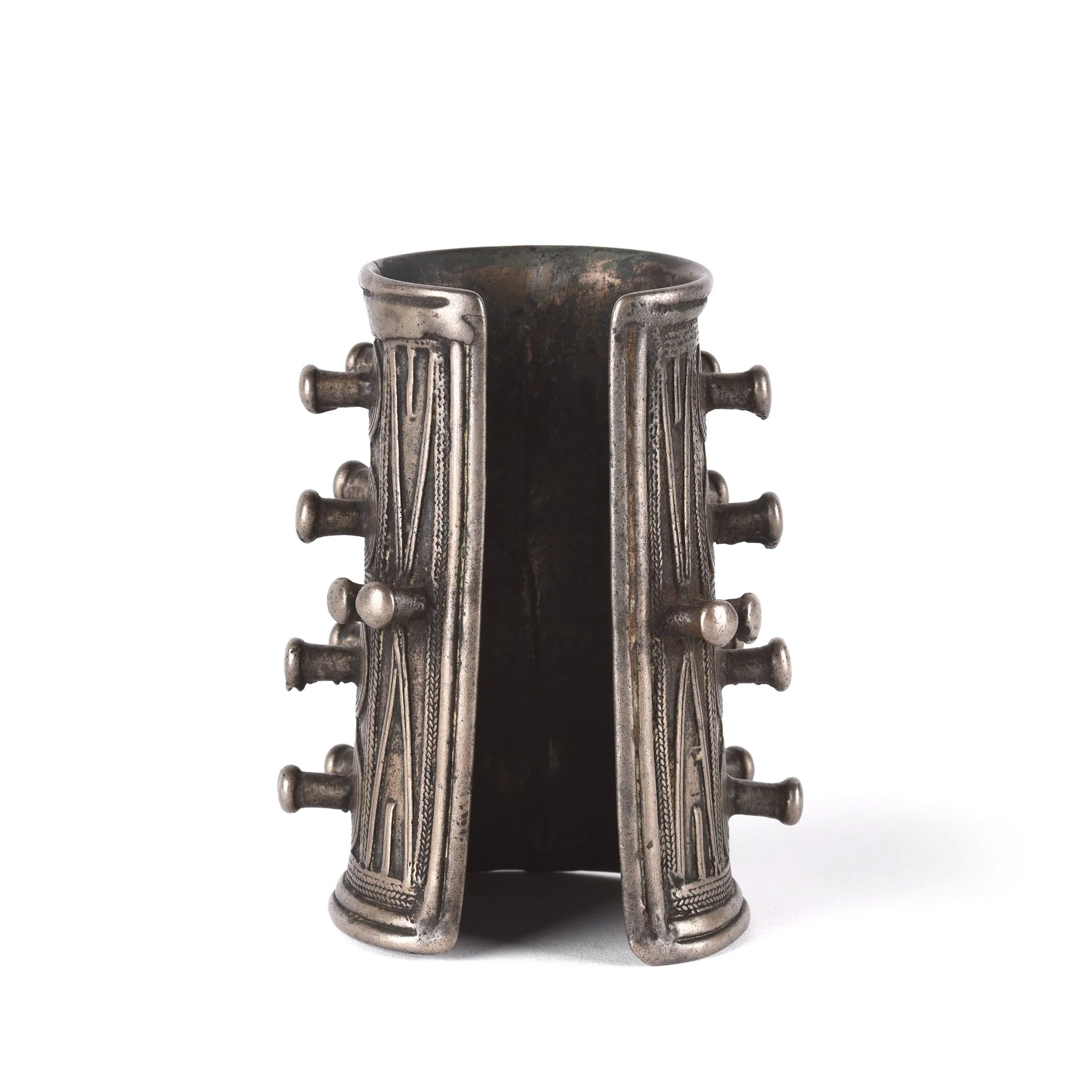
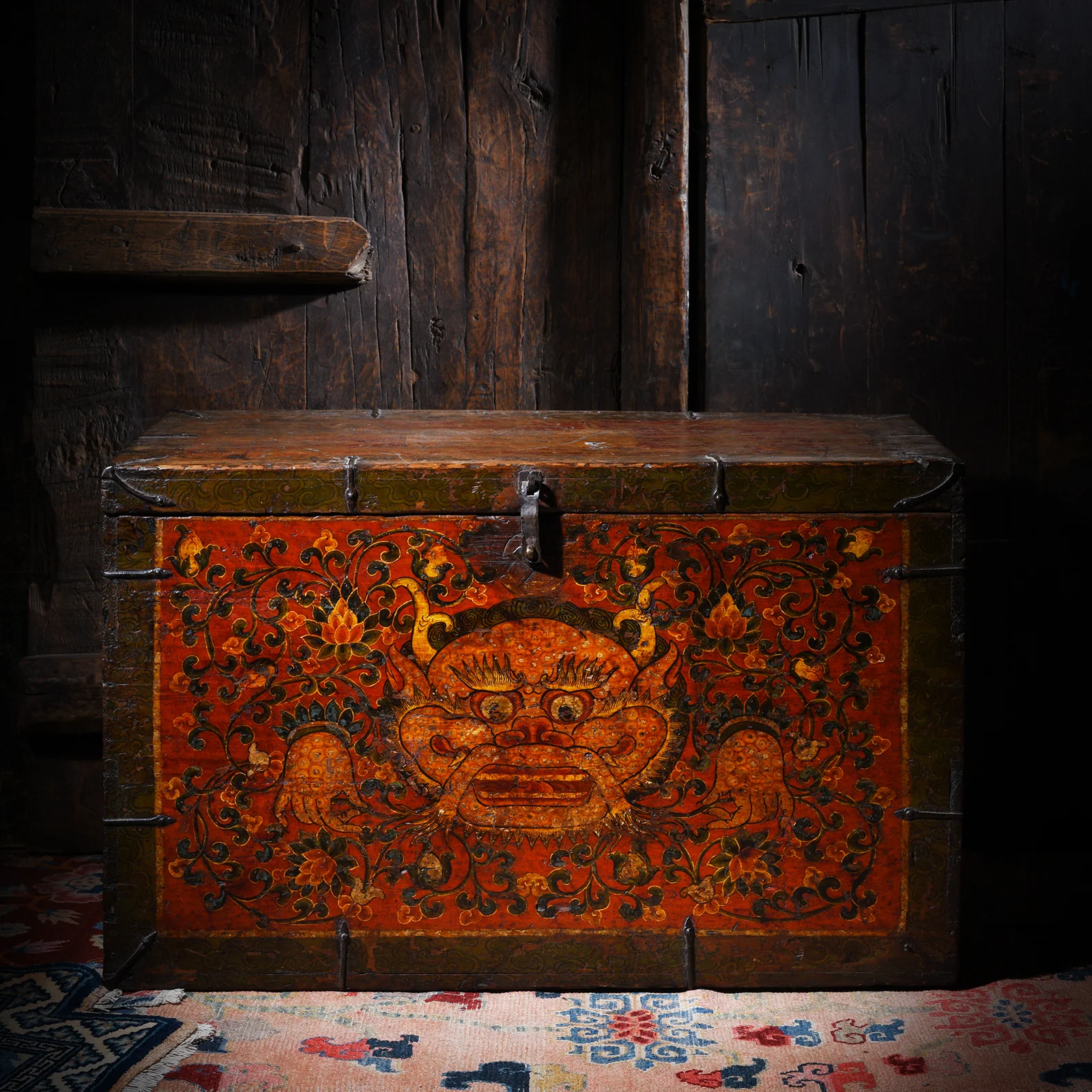
Painted Zeeba Chest From Tibet - 19th Century
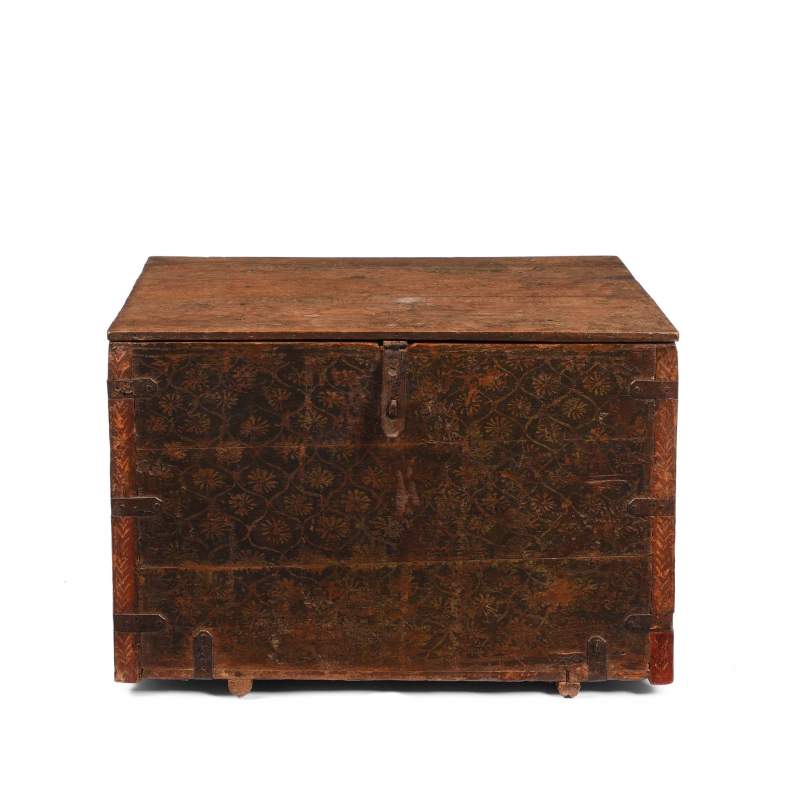
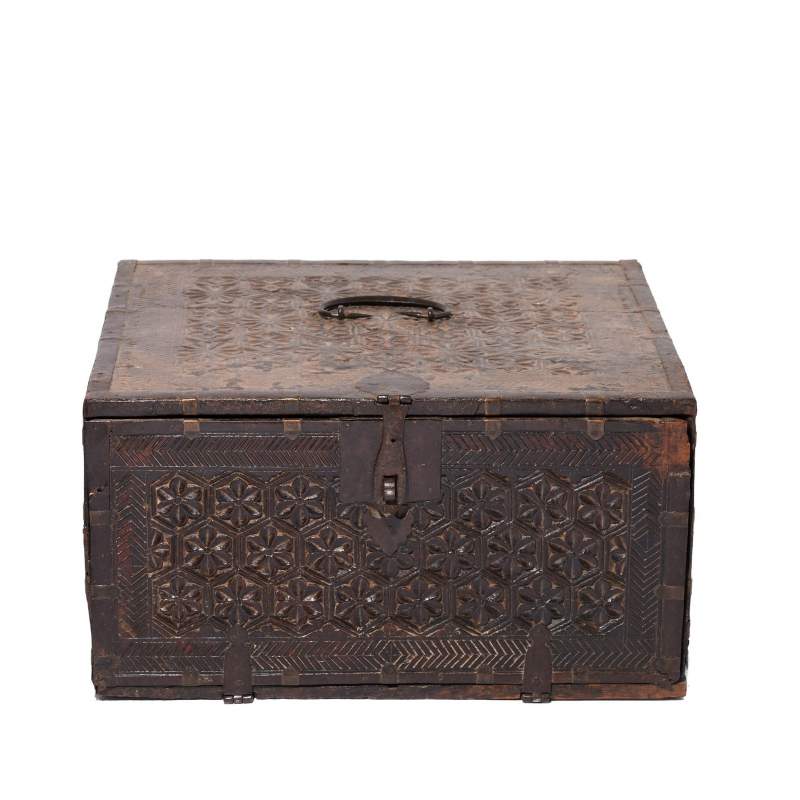
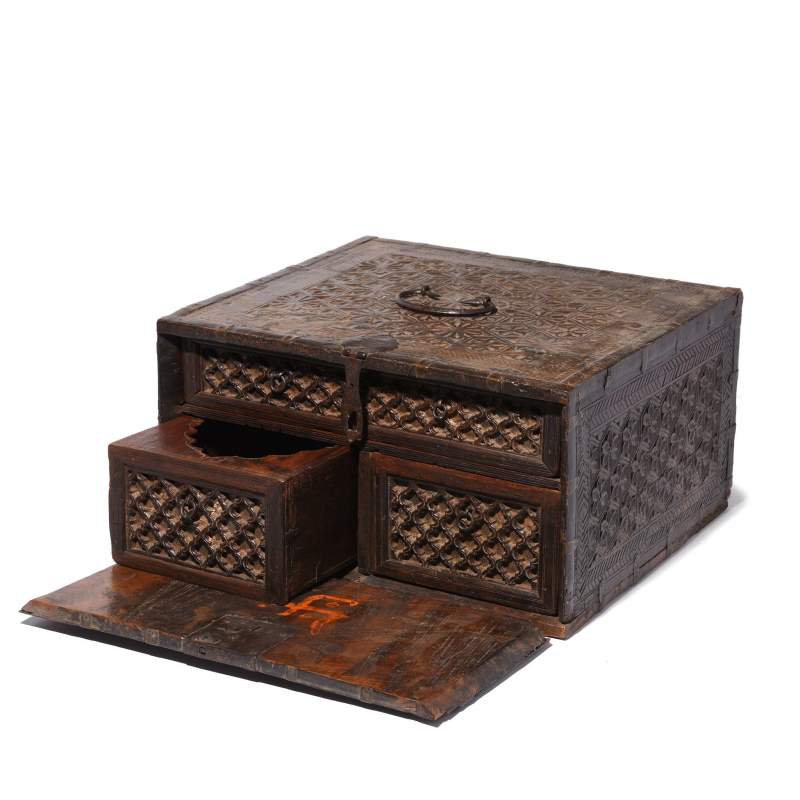
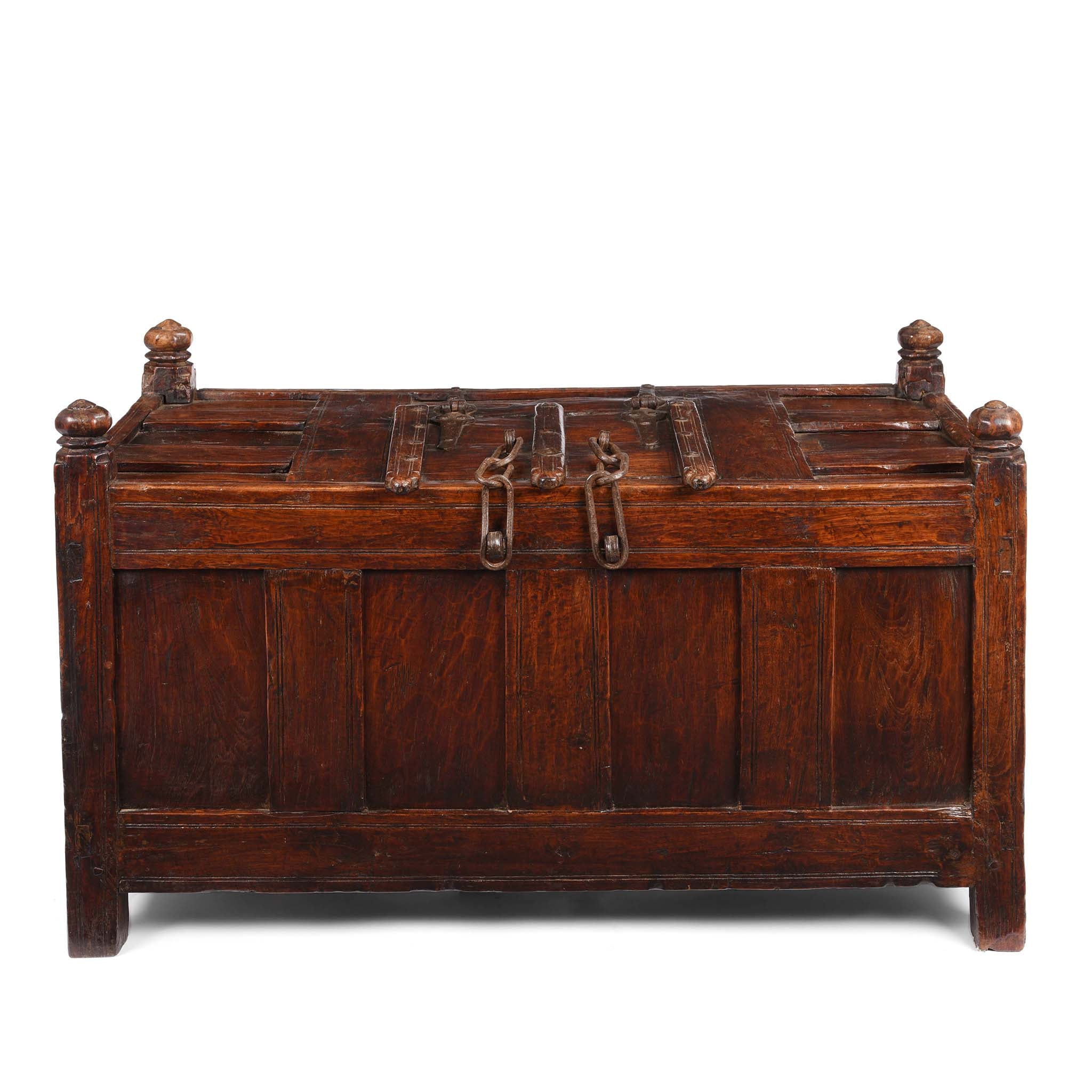
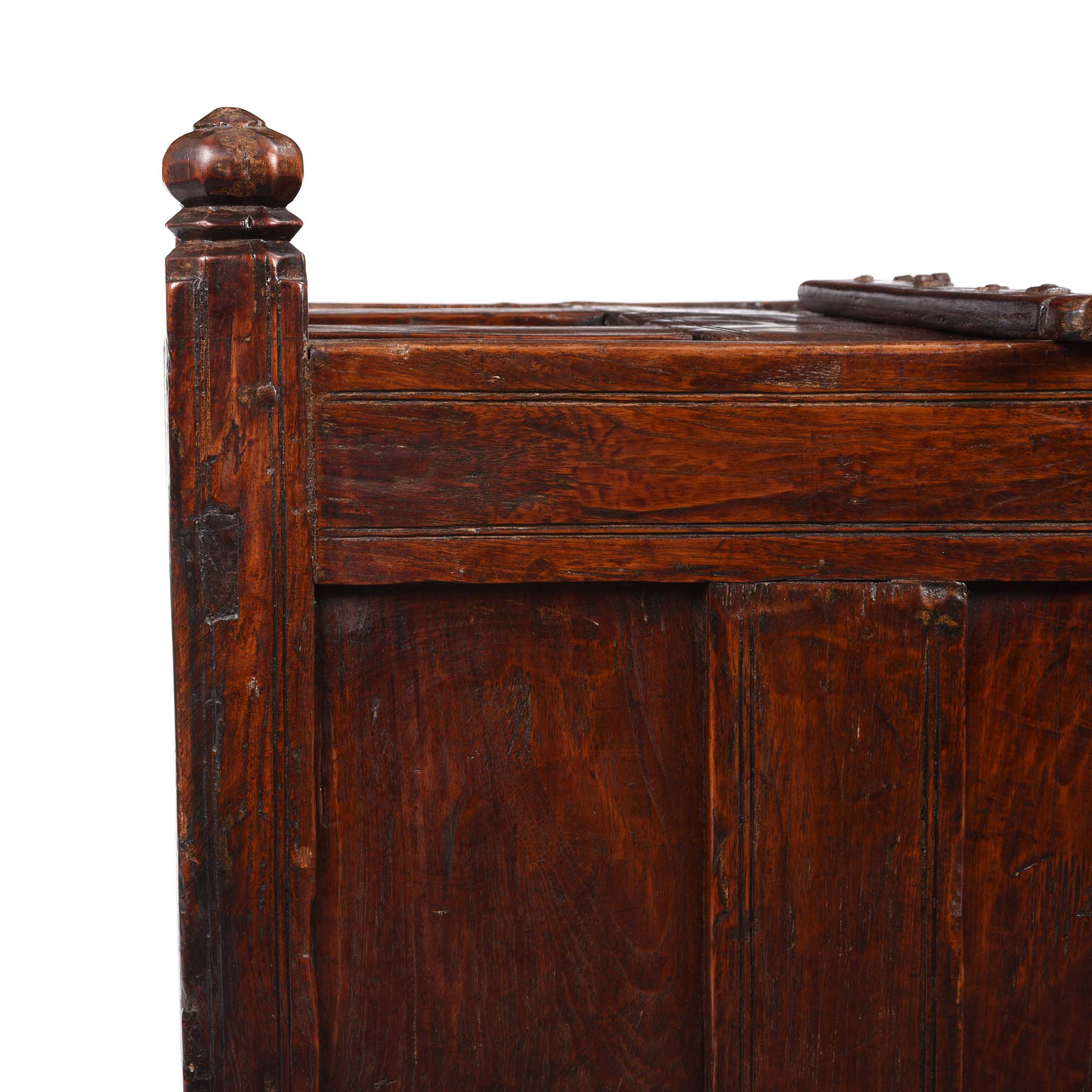
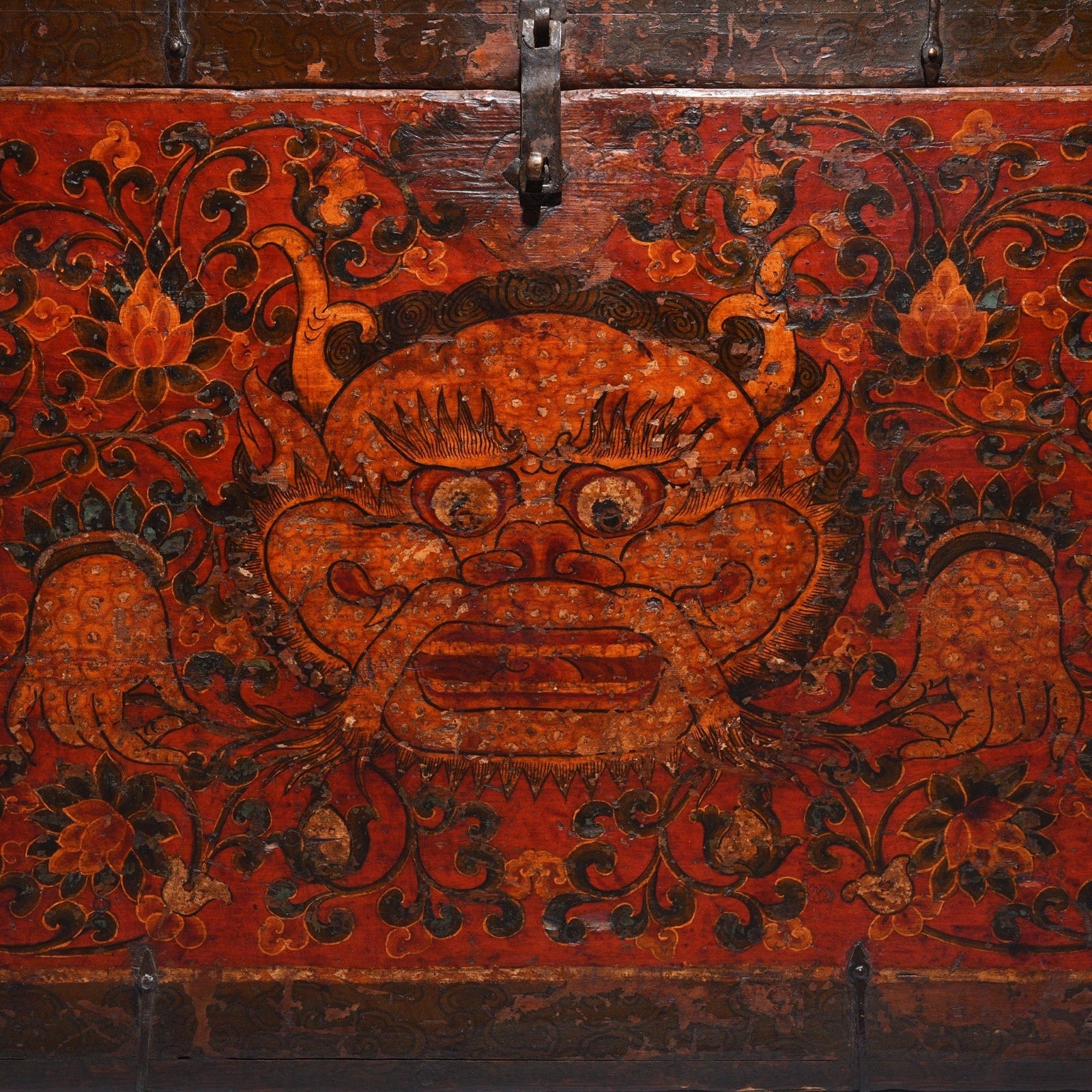
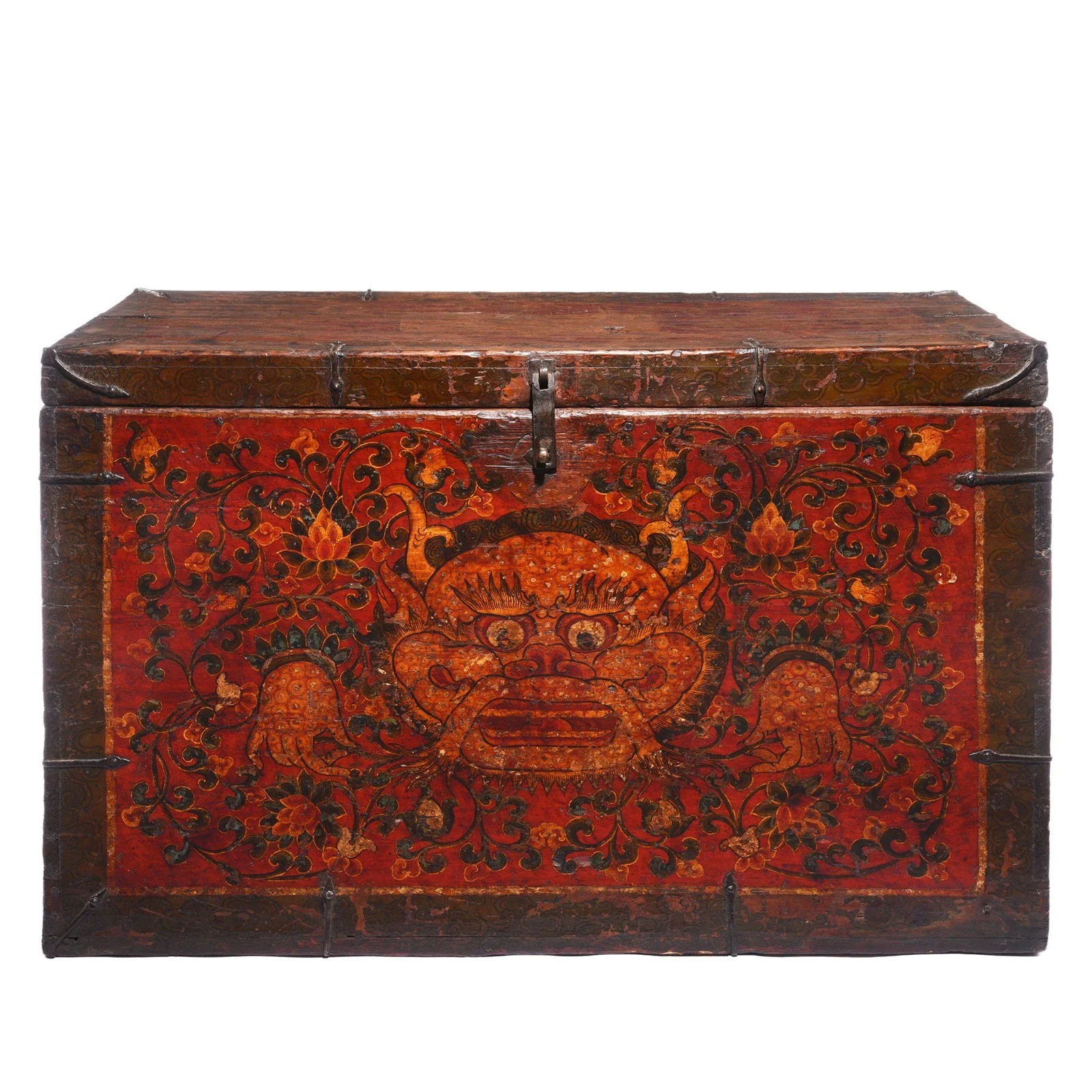
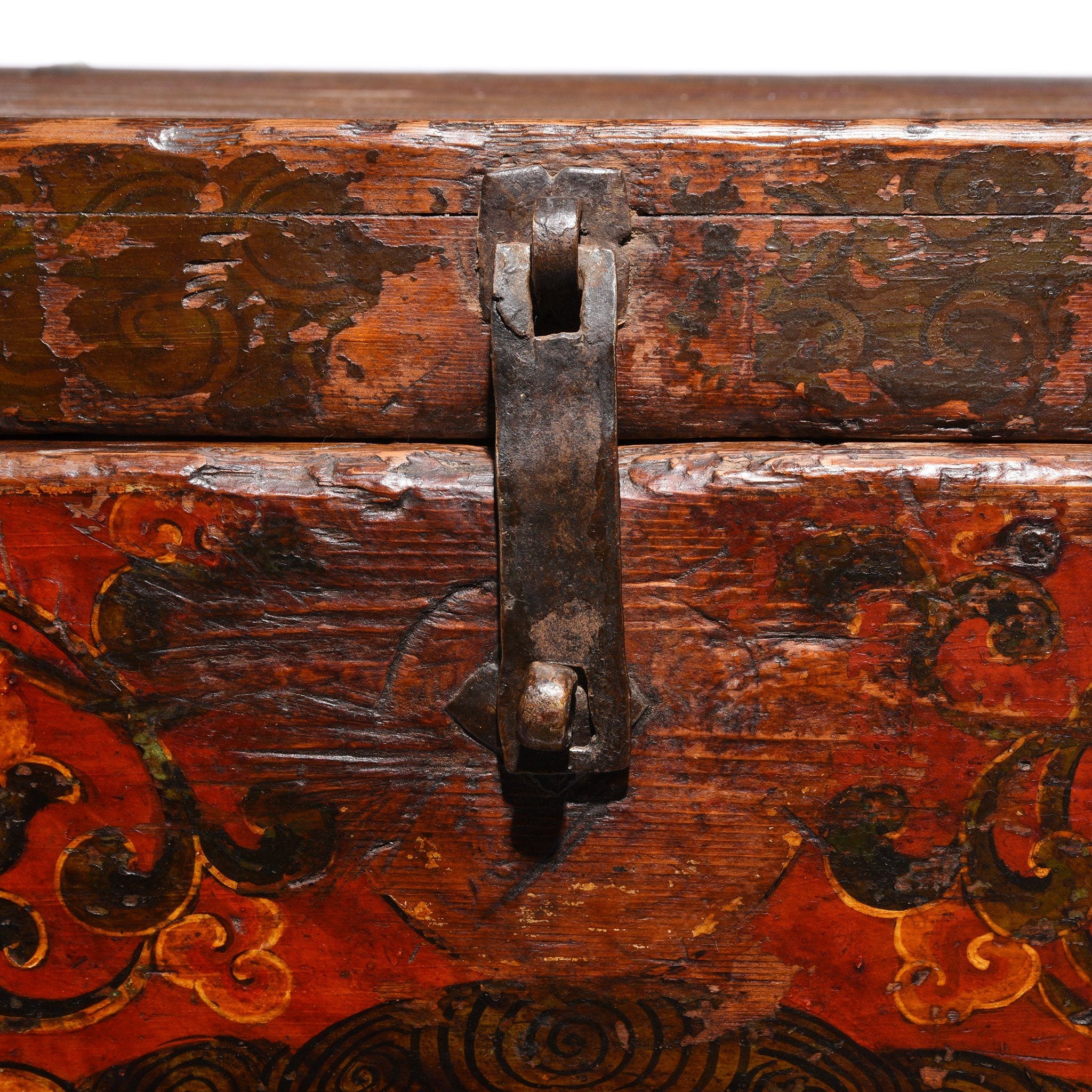
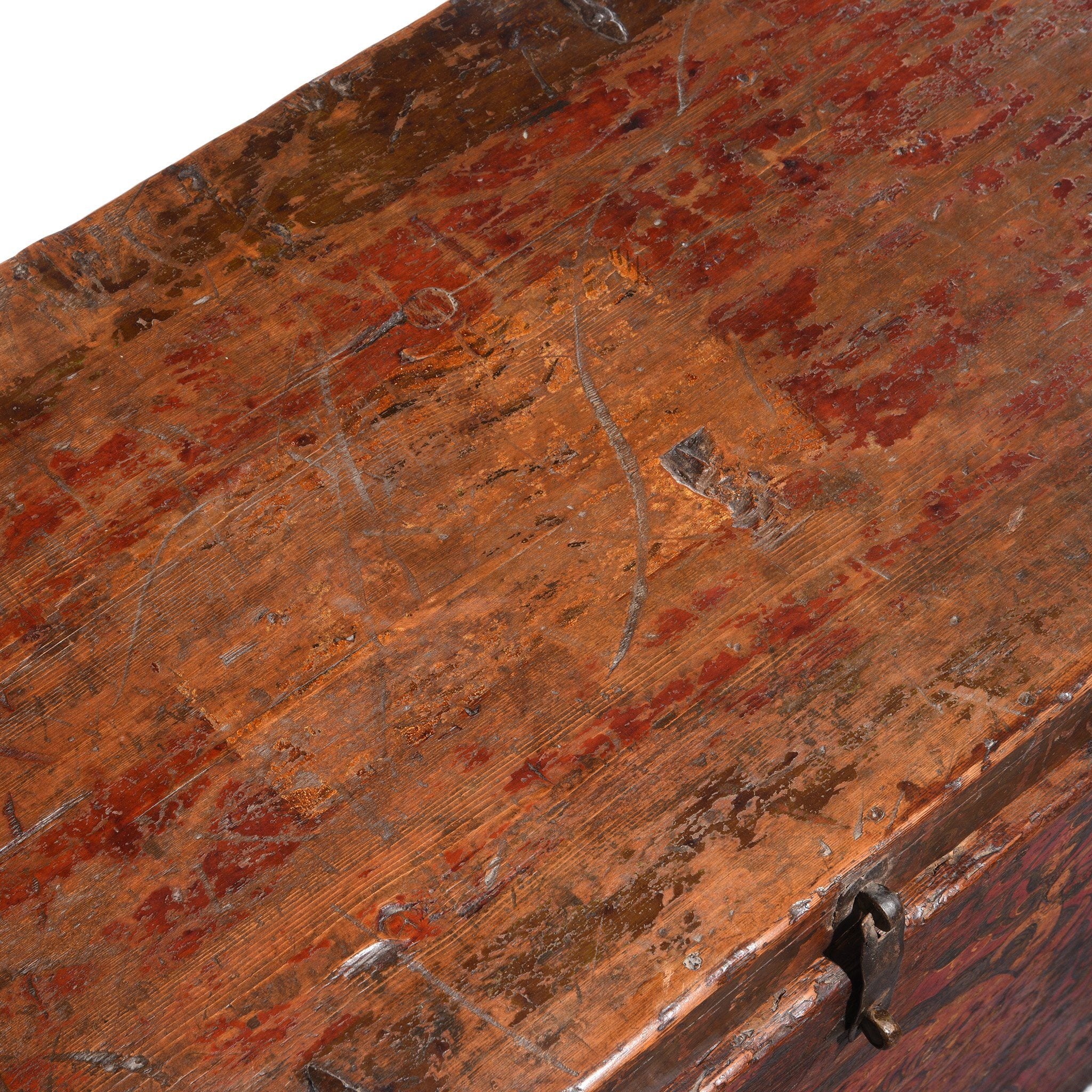
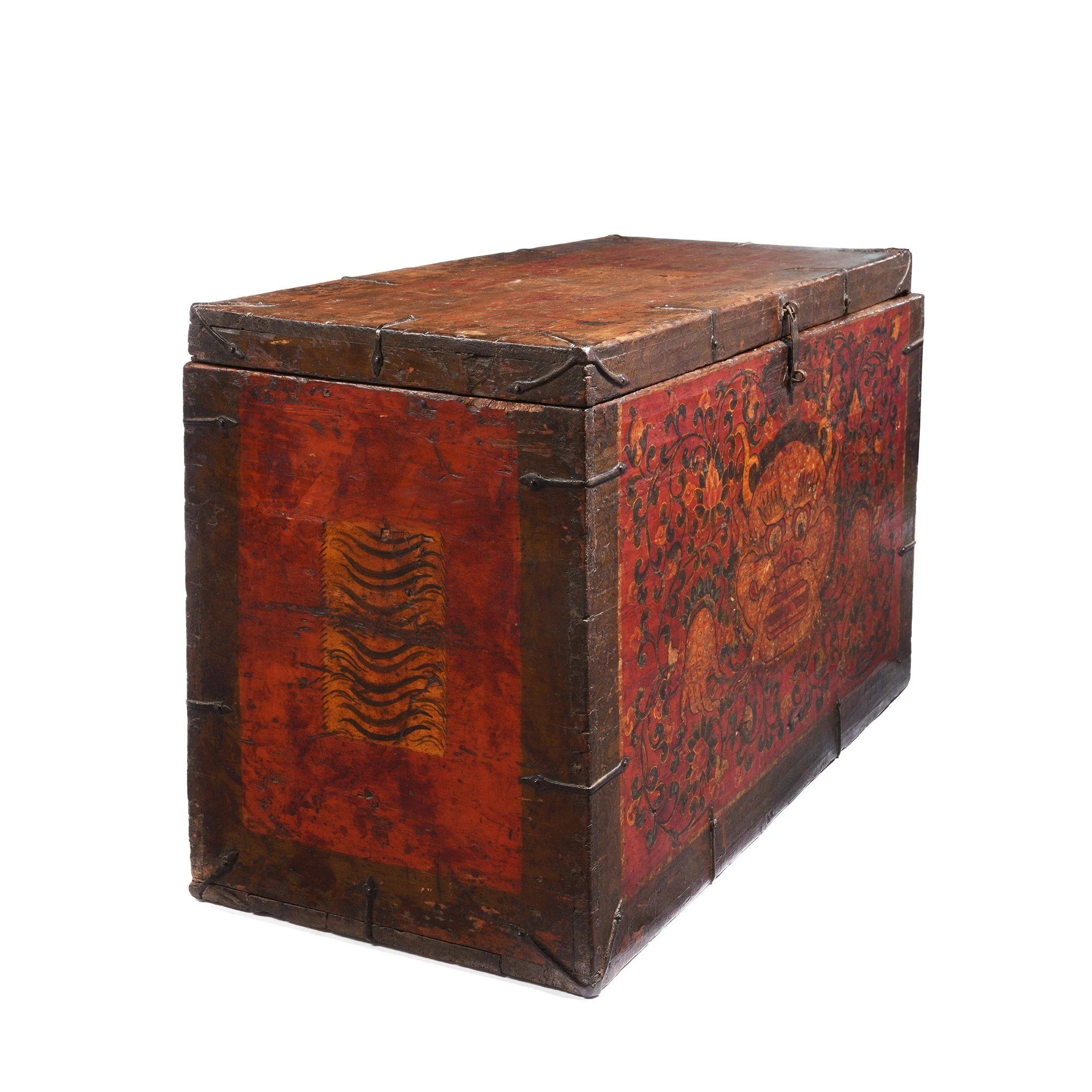
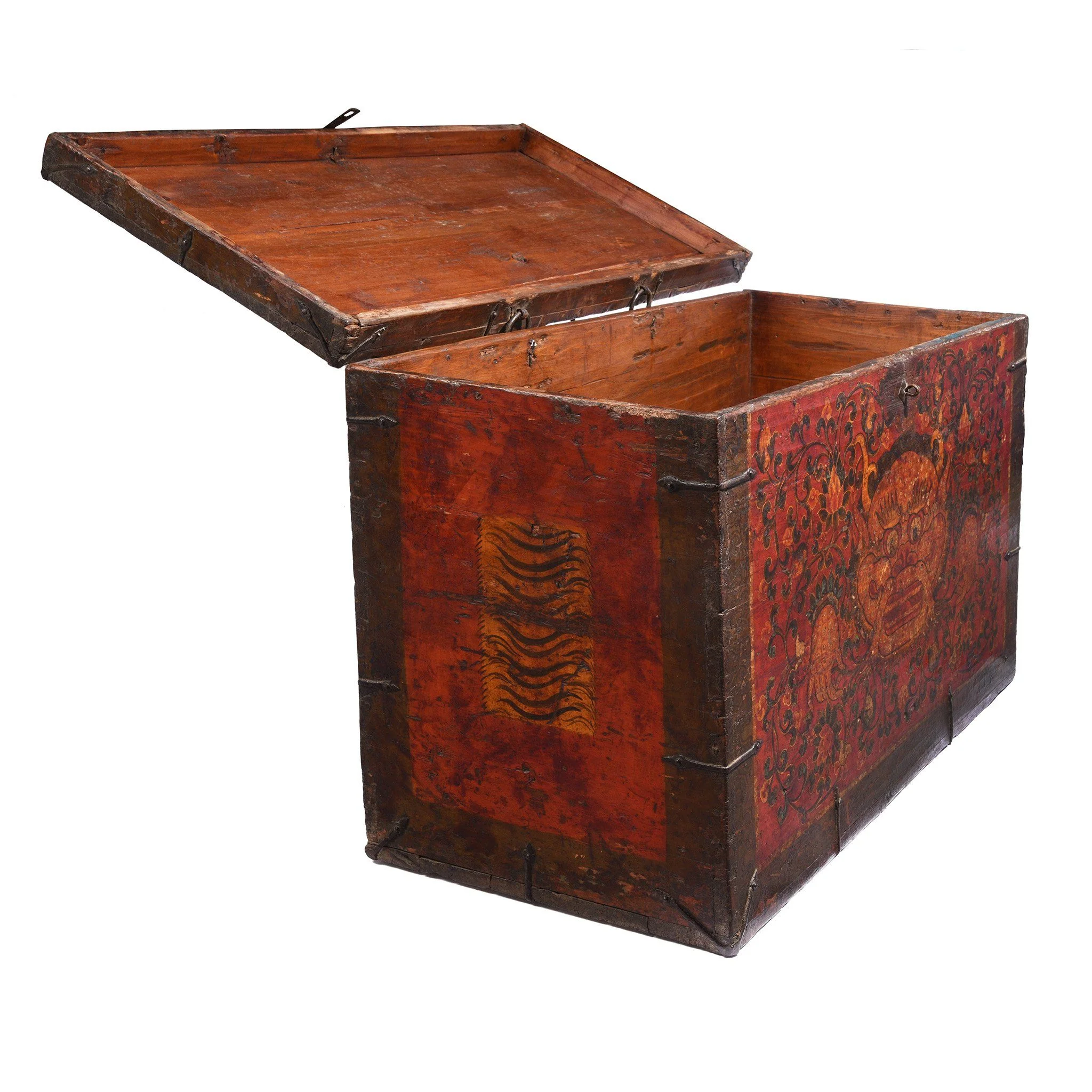
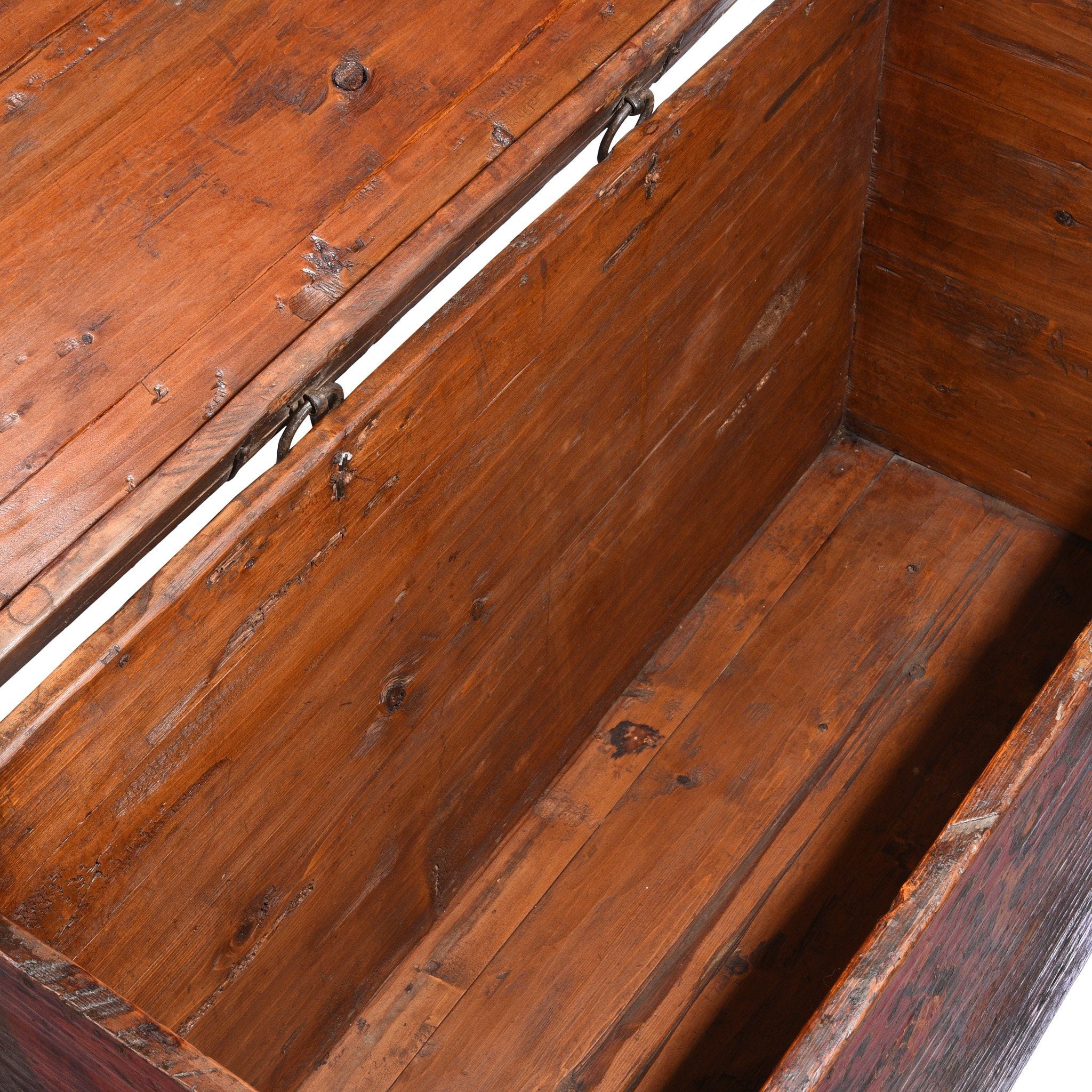
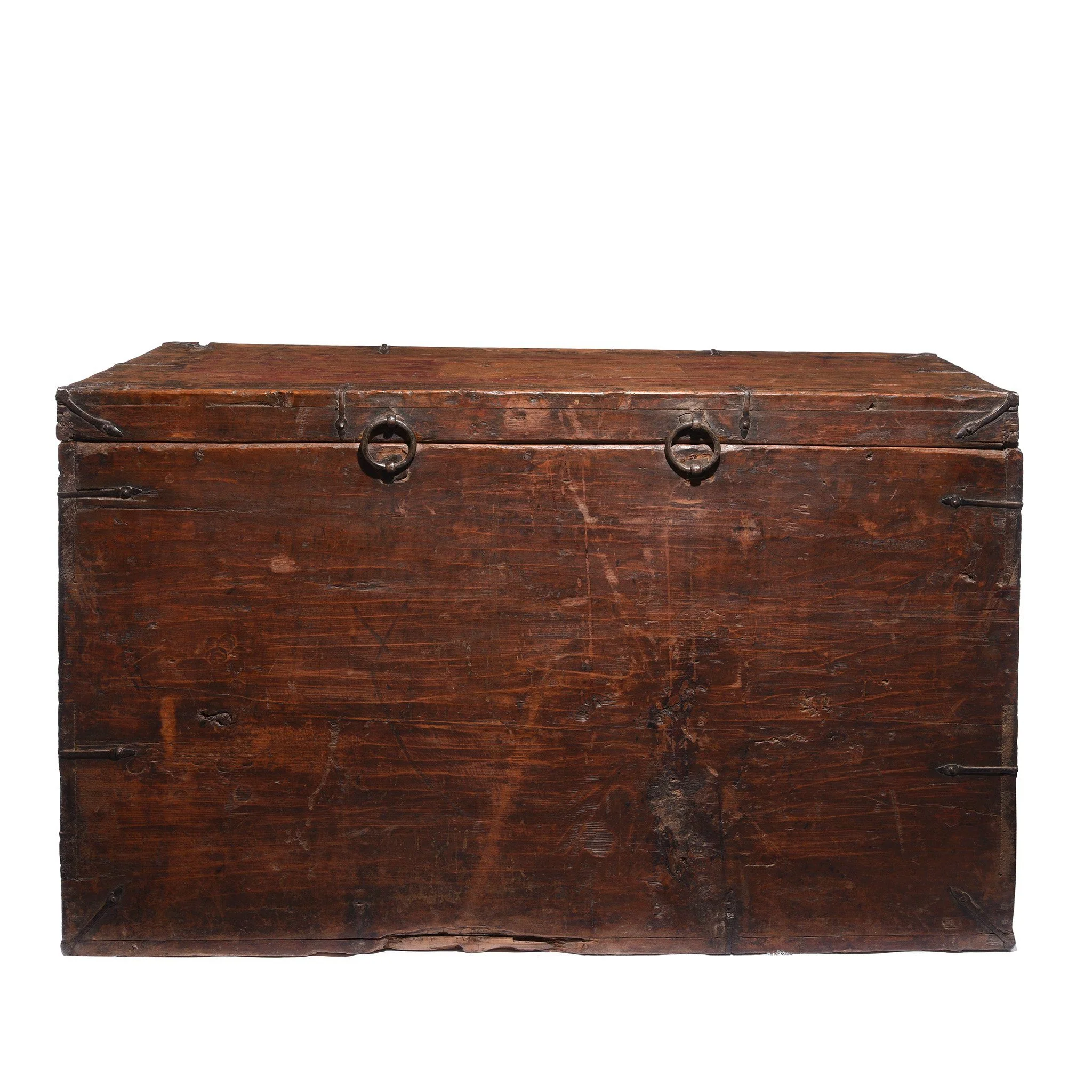
From Eastern Tibet, this chest is particularly special. Depicting the guardian spirit Zeeba, this chest would have been used for storage of religious items either in homes or monasteries.
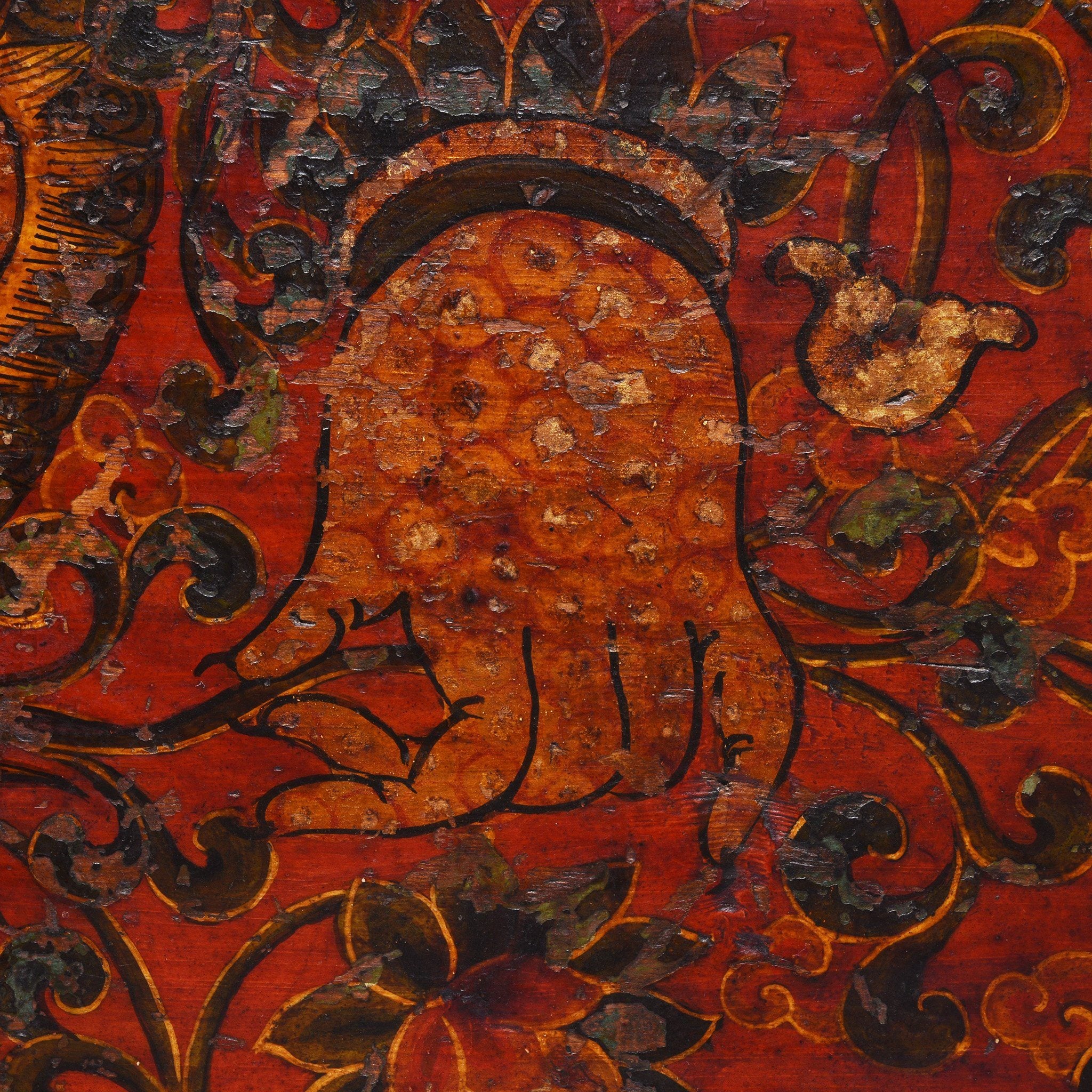
Zeeba, often called Kirtimukha (meaning the face of majesty) (also named / Ziba / Zipak) is a monstrous creature whose symbol is frequently found across China, Tibet & India. Also known as the 'Monster of Greed' (T'ao t'ieh in Chinese), 'Creature Without a Name' or 'Face of Glory'. The story of Skhanda Purana states that the Kirtimukha was a demon born from the blaze of Shiva's third eye. When his prey, Rahu repented and was forgiven for his sins, Zeeba was ravenous and devoured its own body leaving just the head and hands remaining. Shiva henceforth requested he remain as a guardian to his doors for all eternity.
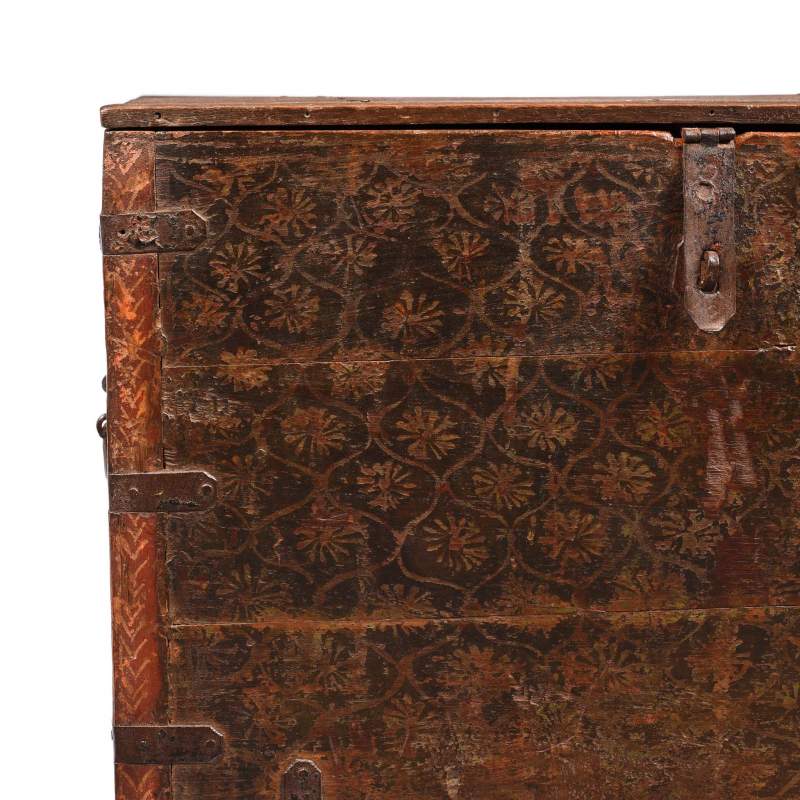
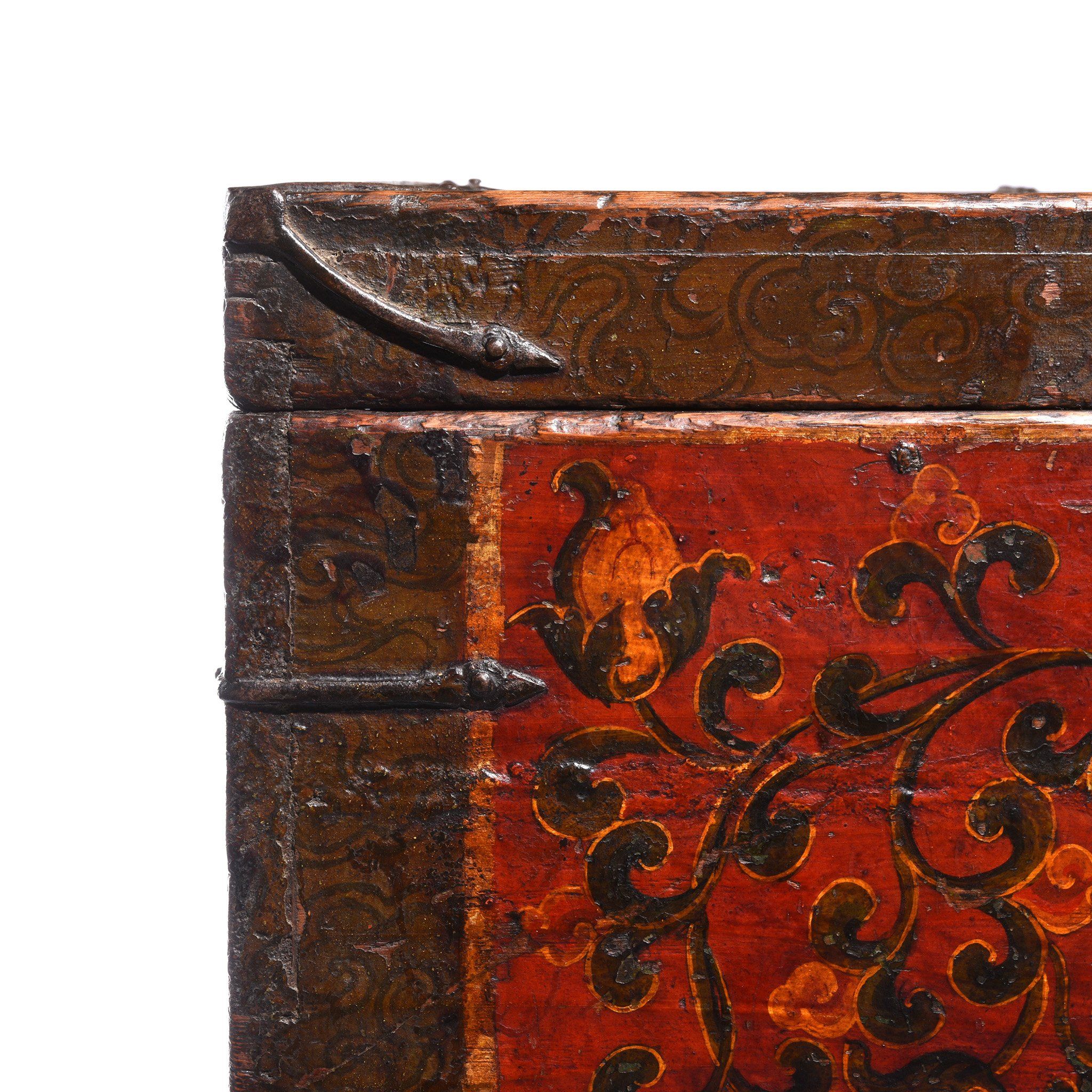
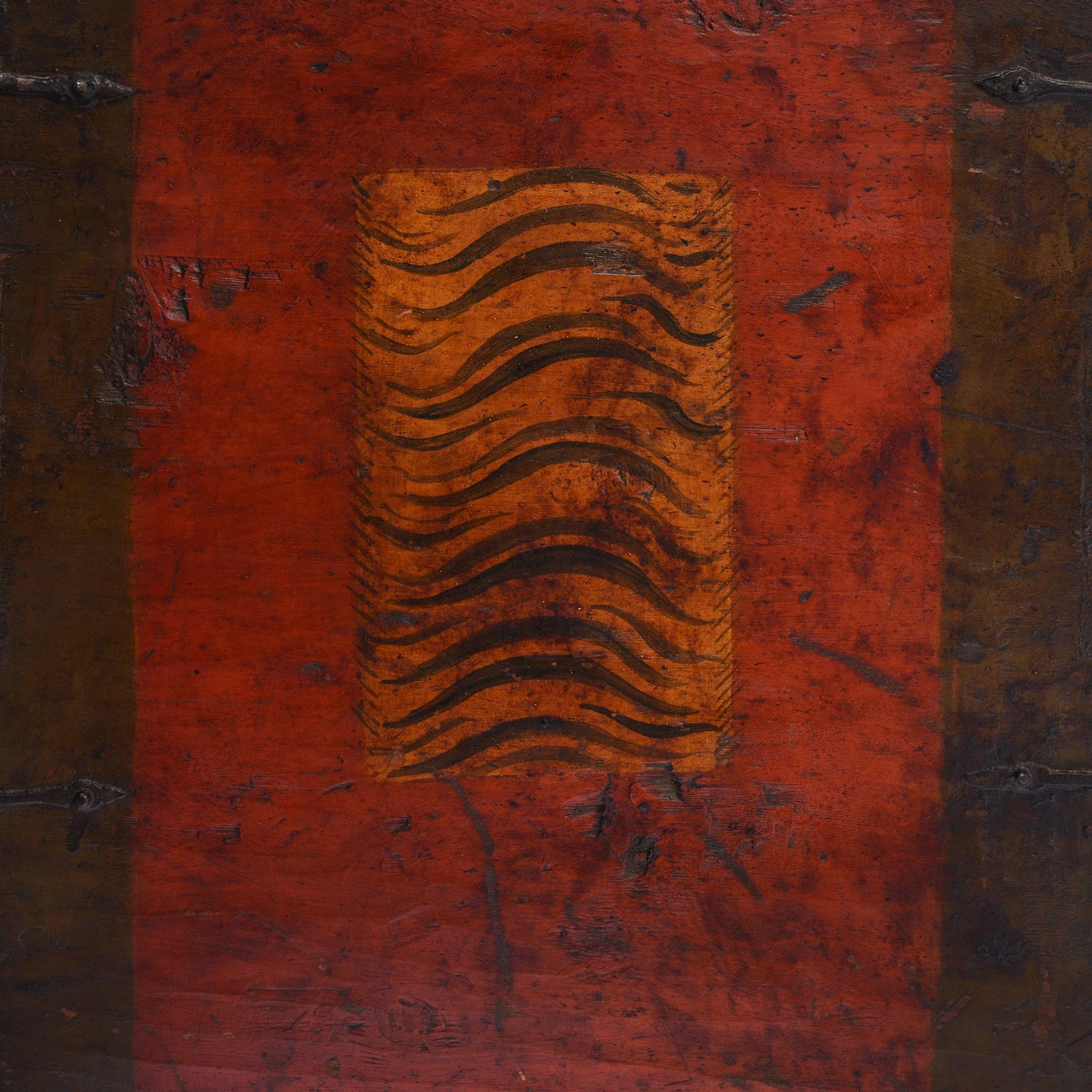
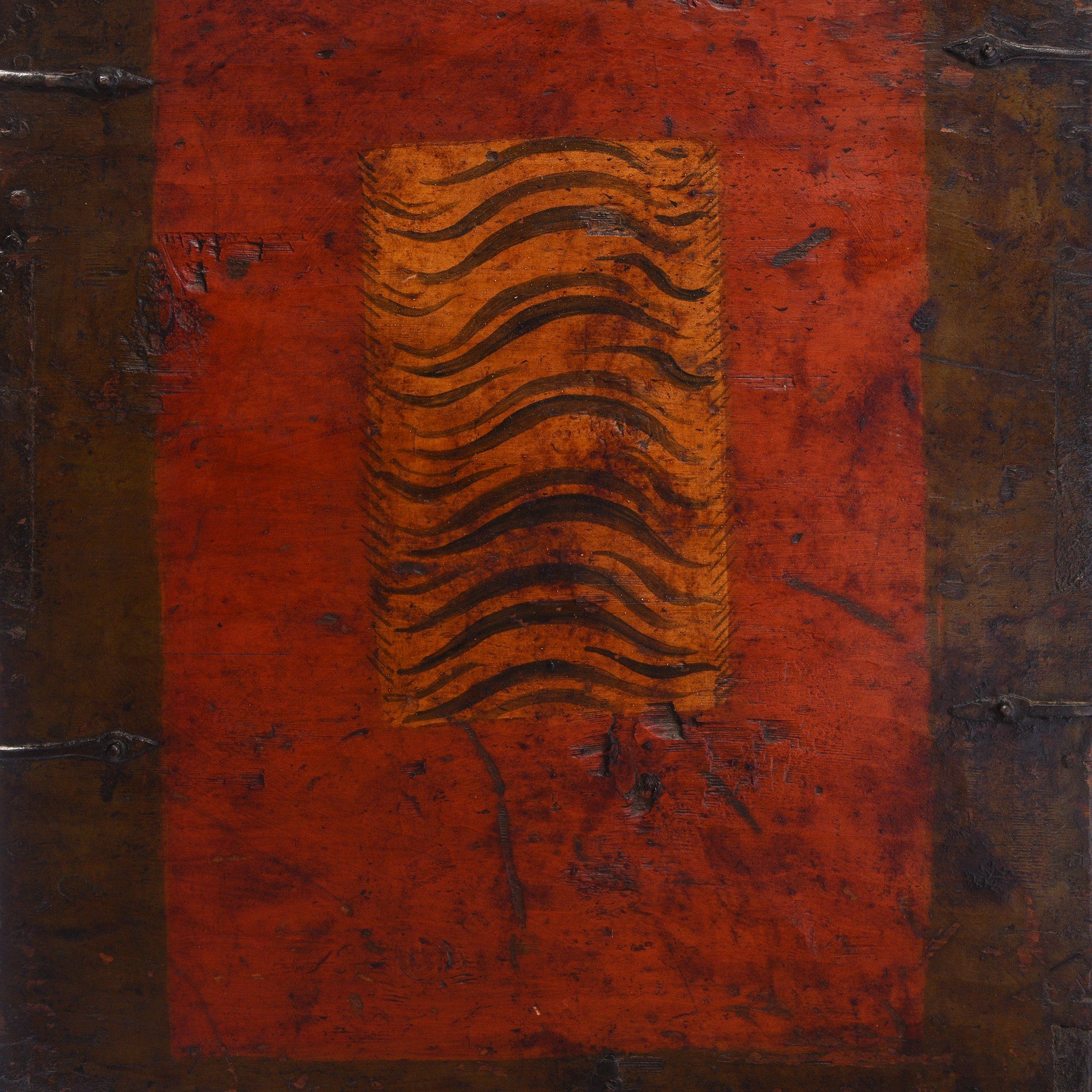
The colours and designs used in antique Tibetan furniture are very decorative. This chest has tiger paintings on the sides. Tiger (tak in Tibetan) played an integral part in Tibetan culture and the skin represents the transference of anger into wisdom. It has become extremely difficult to find pieces these days and because of this many reproduction pieces are appearing on the market.
Original: $5,021.39
-65%$5,021.39
$1,757.49More Images
Painted Zeeba Chest From Tibet - 19th Century
From Eastern Tibet, this chest is particularly special. Depicting the guardian spirit Zeeba, this chest would have been used for storage of religious items either in homes or monasteries.
Zeeba, often called Kirtimukha (meaning the face of majesty) (also named / Ziba / Zipak) is a monstrous creature whose symbol is frequently found across China, Tibet & India. Also known as the 'Monster of Greed' (T'ao t'ieh in Chinese), 'Creature Without a Name' or 'Face of Glory'. The story of Skhanda Purana states that the Kirtimukha was a demon born from the blaze of Shiva's third eye. When his prey, Rahu repented and was forgiven for his sins, Zeeba was ravenous and devoured its own body leaving just the head and hands remaining. Shiva henceforth requested he remain as a guardian to his doors for all eternity.
The colours and designs used in antique Tibetan furniture are very decorative. This chest has tiger paintings on the sides. Tiger (tak in Tibetan) played an integral part in Tibetan culture and the skin represents the transference of anger into wisdom. It has become extremely difficult to find pieces these days and because of this many reproduction pieces are appearing on the market.
Product Information
Product Information
Shipping & Returns
Shipping & Returns
Description
From Eastern Tibet, this chest is particularly special. Depicting the guardian spirit Zeeba, this chest would have been used for storage of religious items either in homes or monasteries.
Zeeba, often called Kirtimukha (meaning the face of majesty) (also named / Ziba / Zipak) is a monstrous creature whose symbol is frequently found across China, Tibet & India. Also known as the 'Monster of Greed' (T'ao t'ieh in Chinese), 'Creature Without a Name' or 'Face of Glory'. The story of Skhanda Purana states that the Kirtimukha was a demon born from the blaze of Shiva's third eye. When his prey, Rahu repented and was forgiven for his sins, Zeeba was ravenous and devoured its own body leaving just the head and hands remaining. Shiva henceforth requested he remain as a guardian to his doors for all eternity.
The colours and designs used in antique Tibetan furniture are very decorative. This chest has tiger paintings on the sides. Tiger (tak in Tibetan) played an integral part in Tibetan culture and the skin represents the transference of anger into wisdom. It has become extremely difficult to find pieces these days and because of this many reproduction pieces are appearing on the market.