Painted Tibetan Storage Chest On Stand - 18th Century
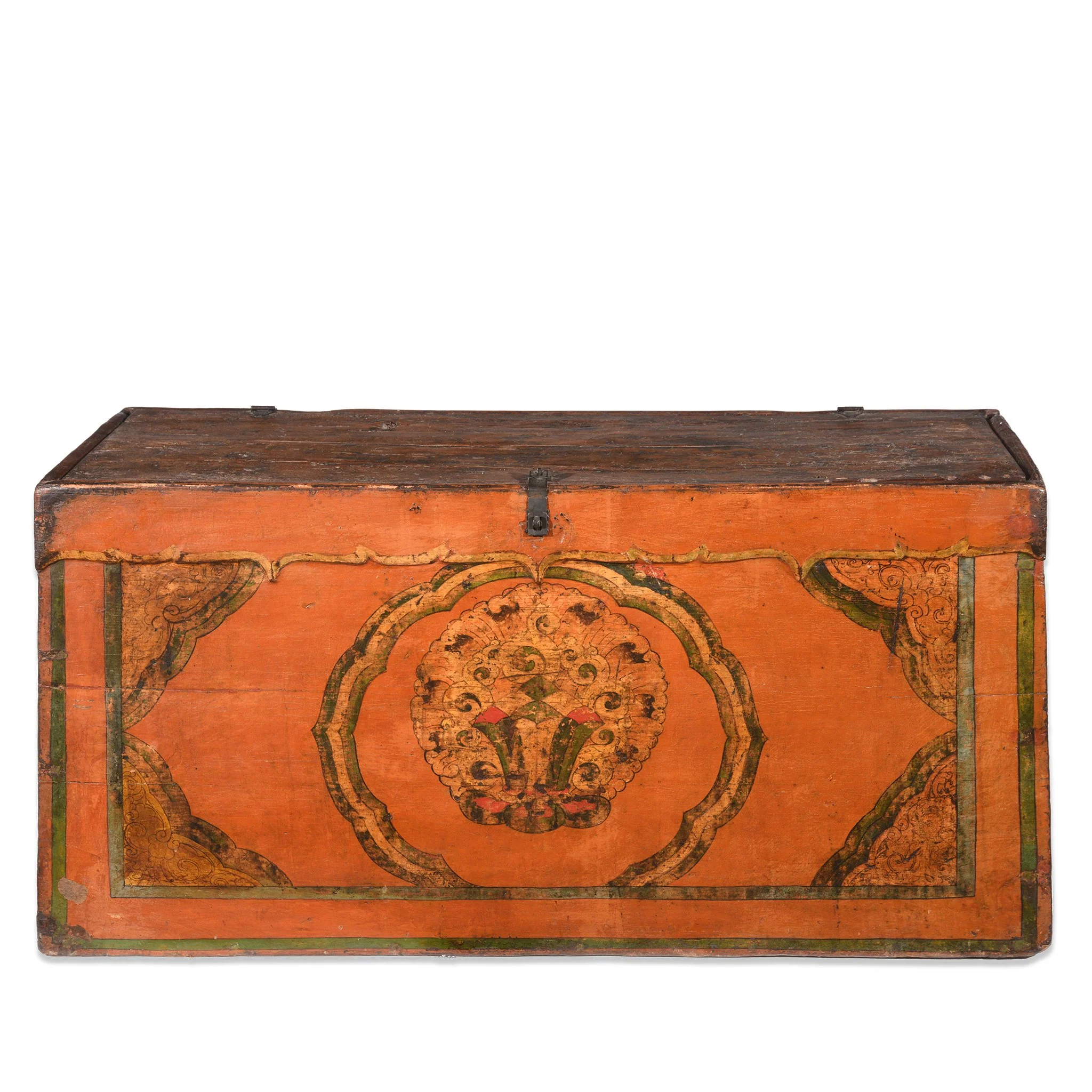
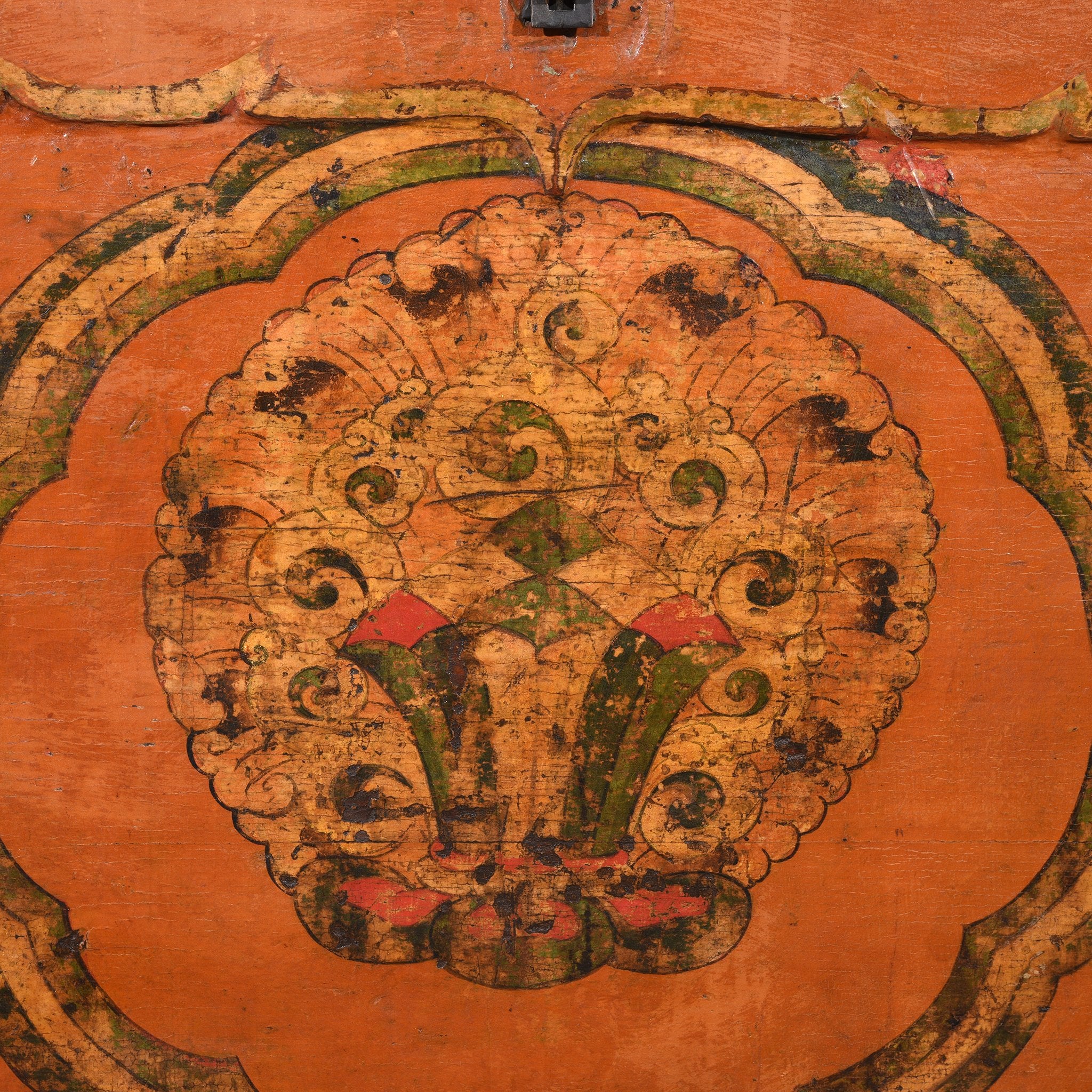
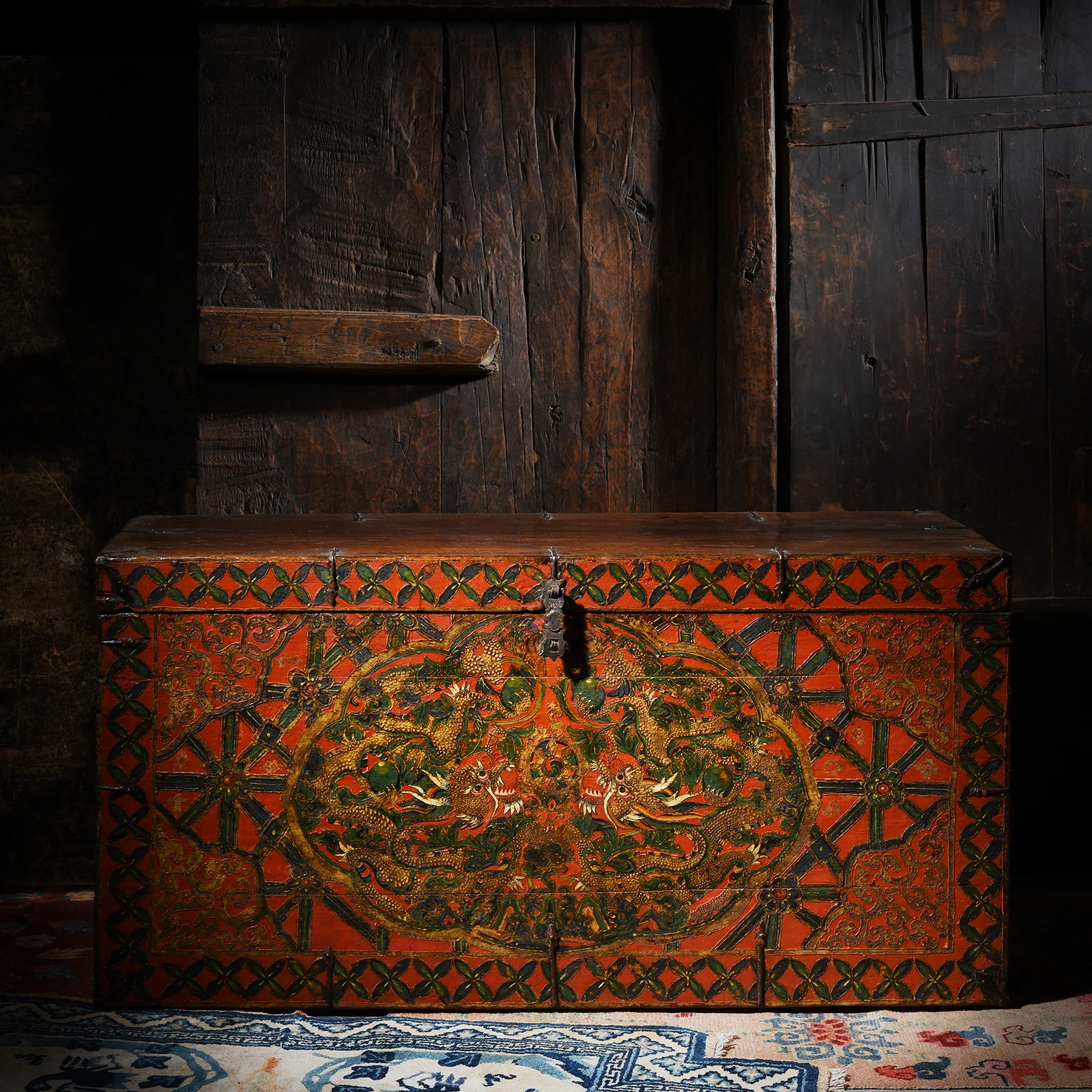
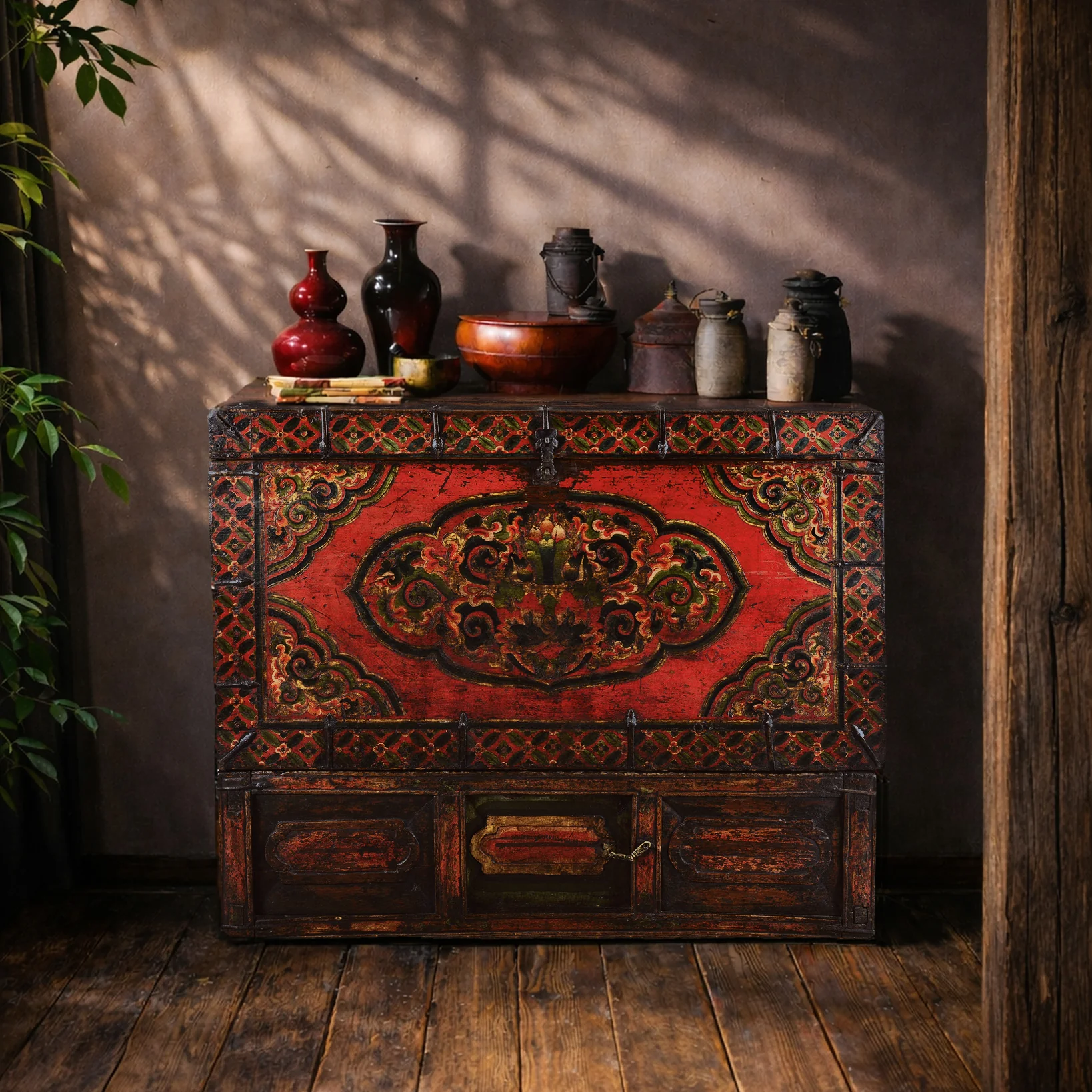
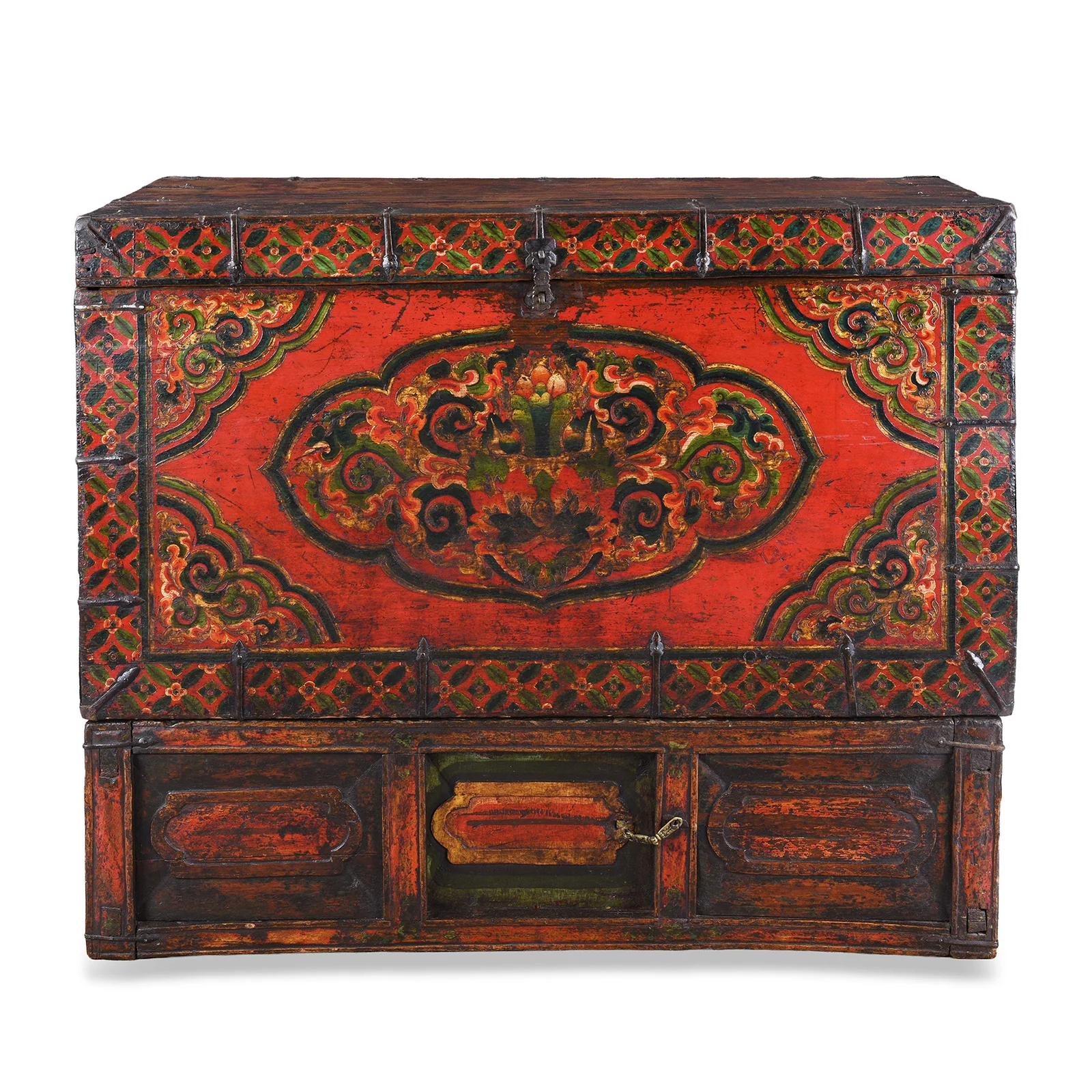
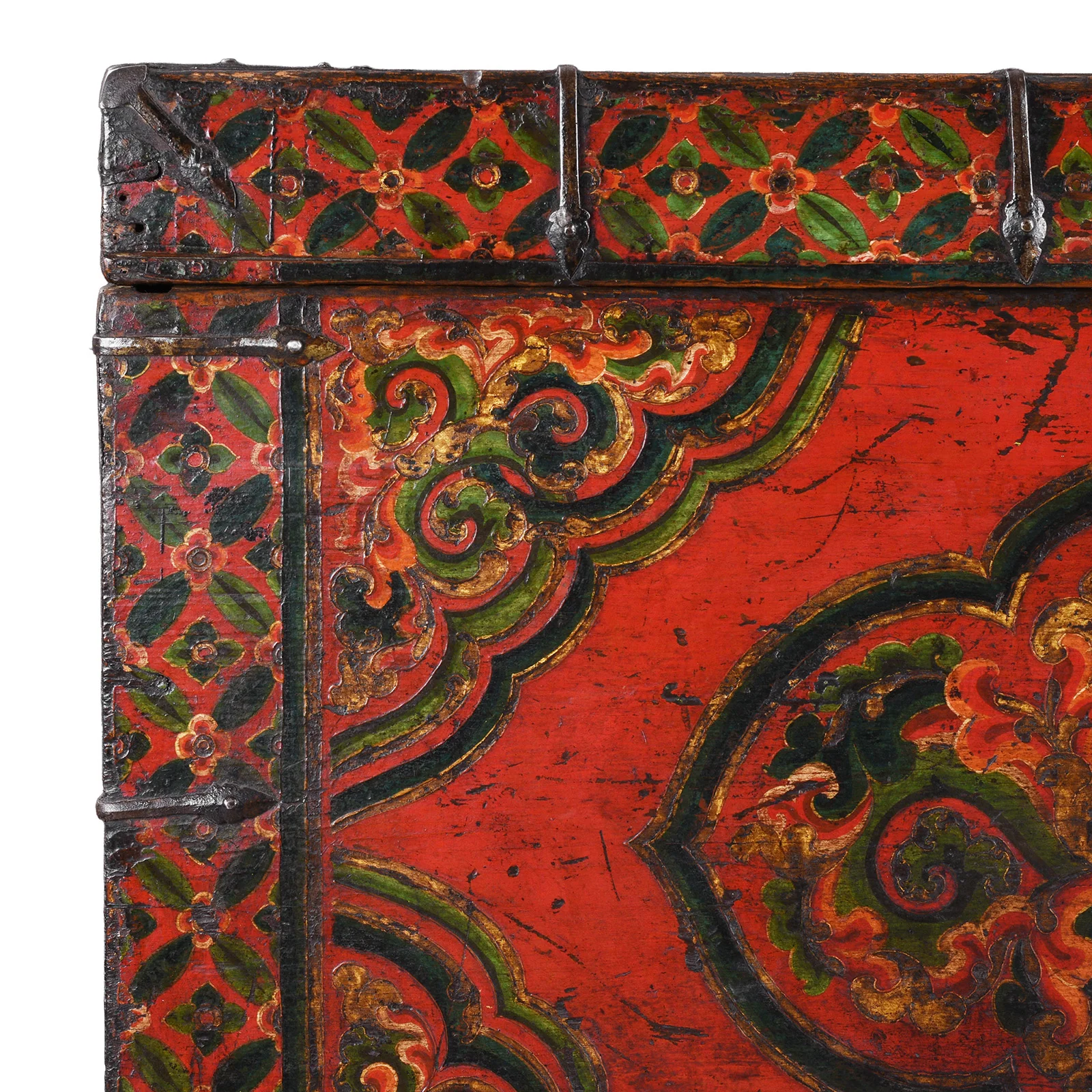
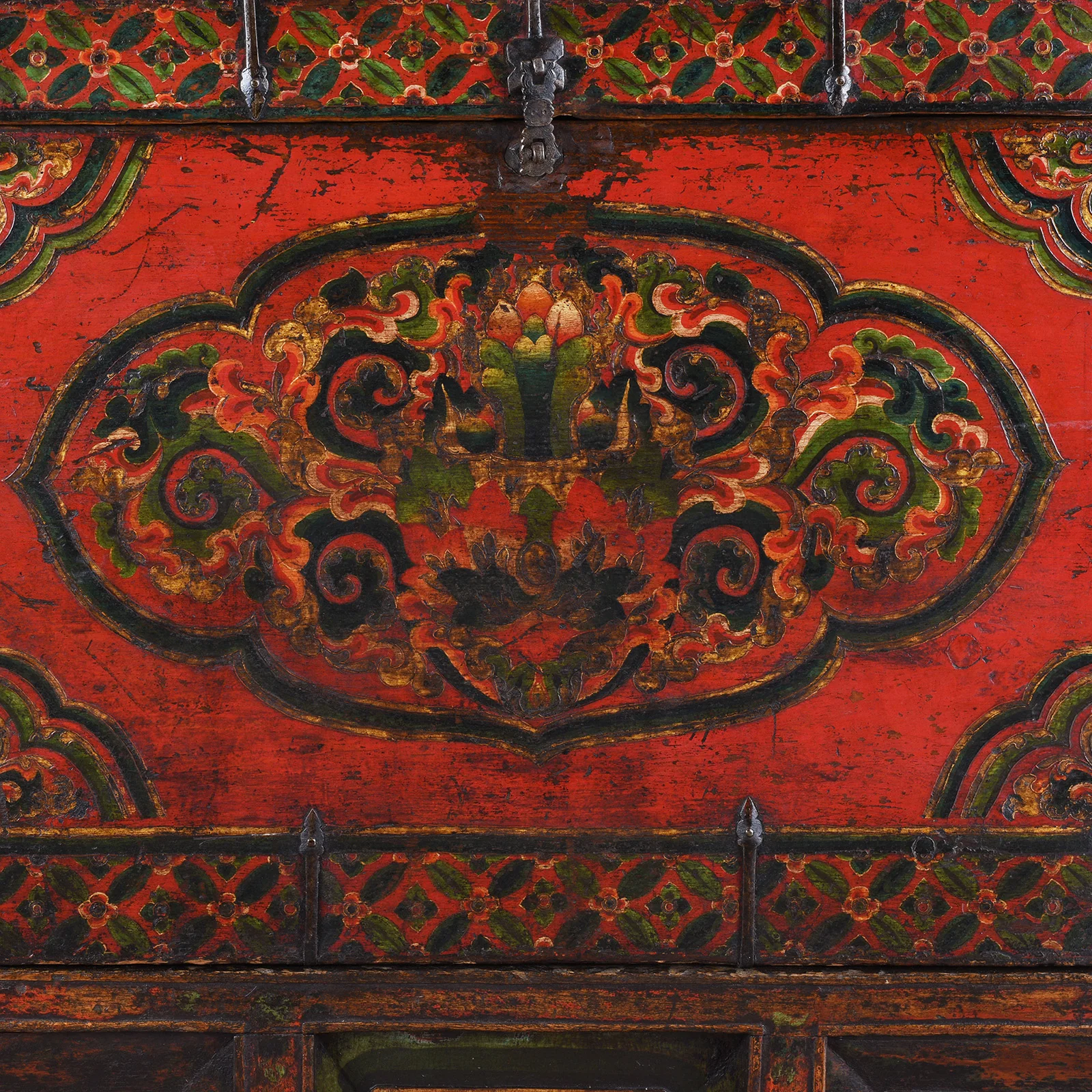
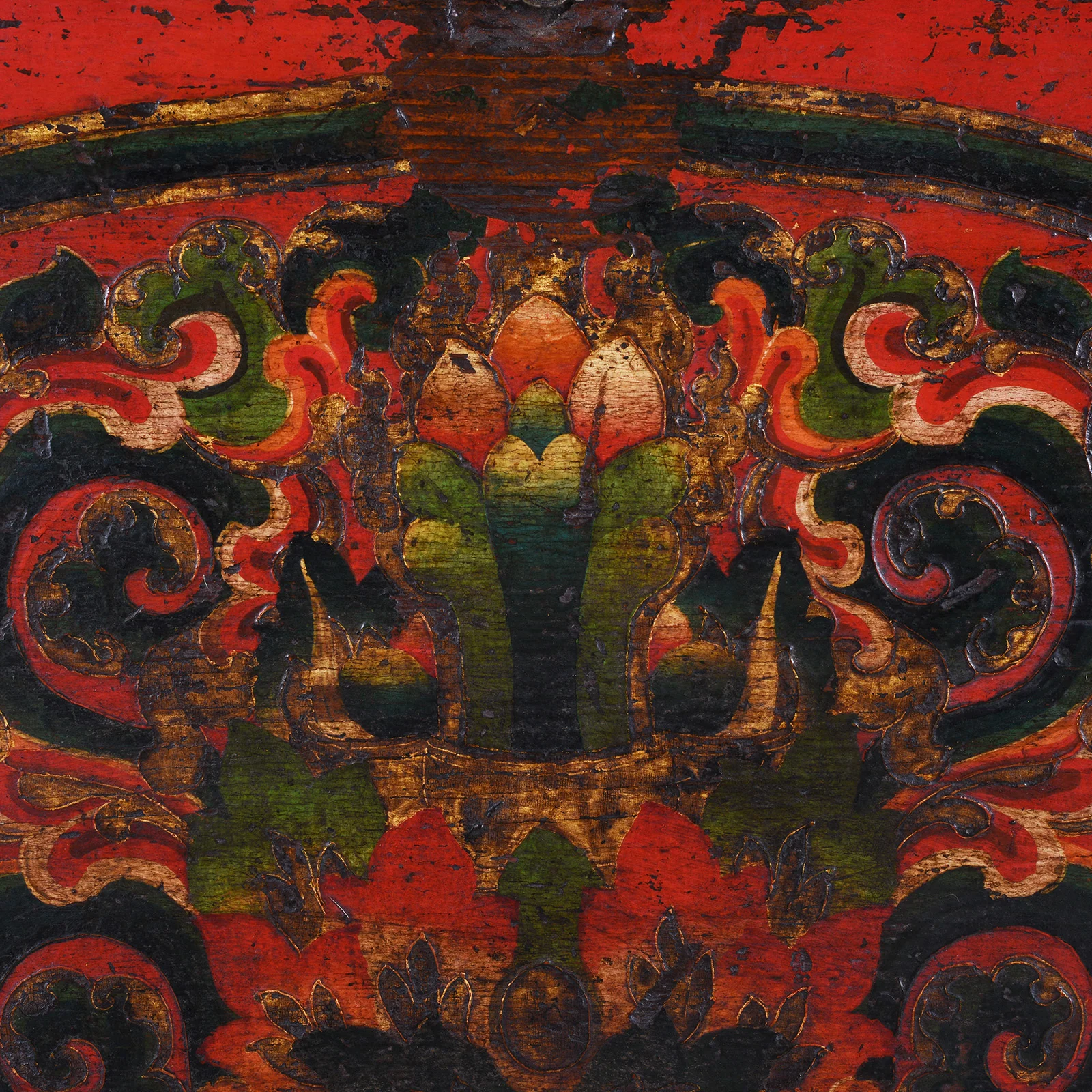
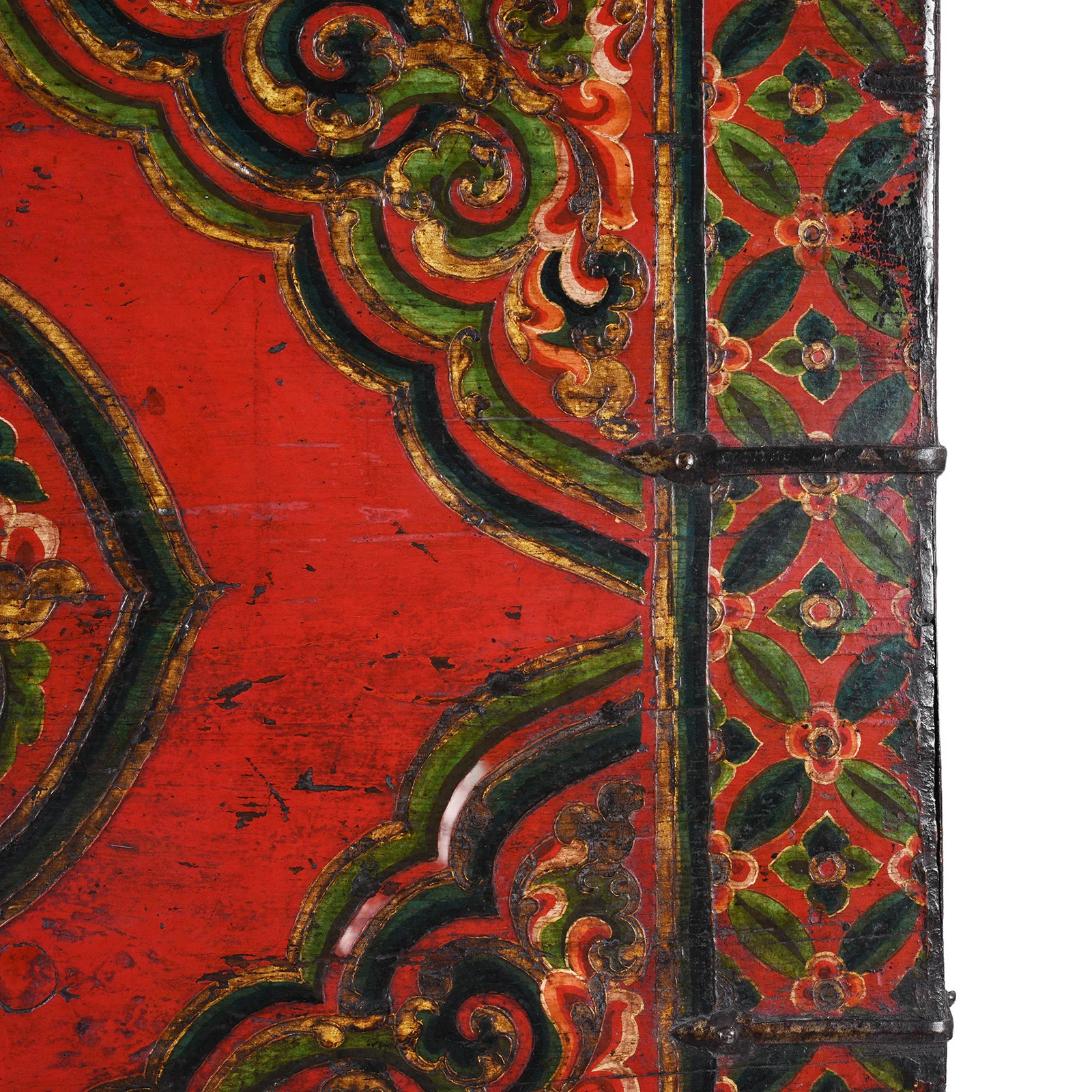
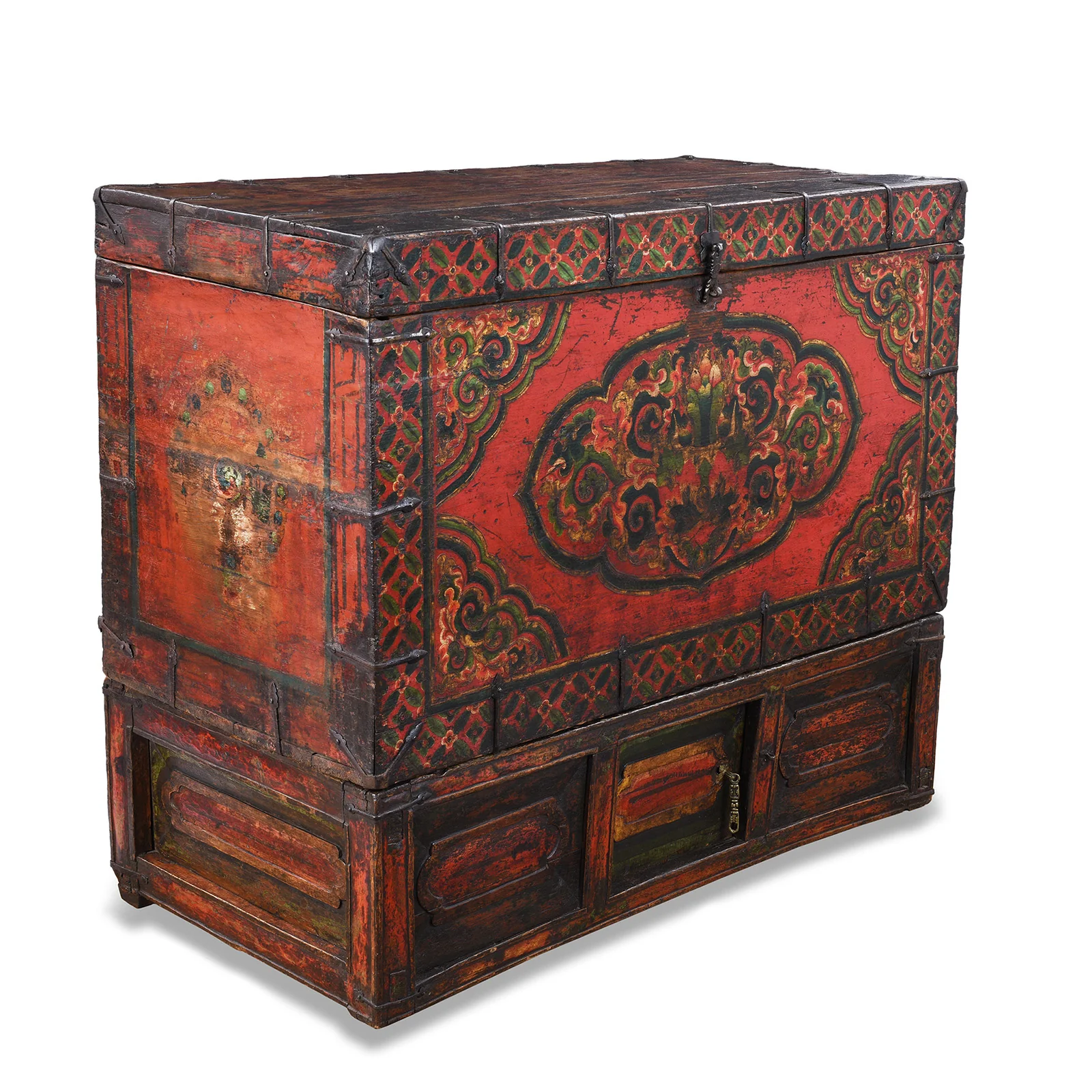
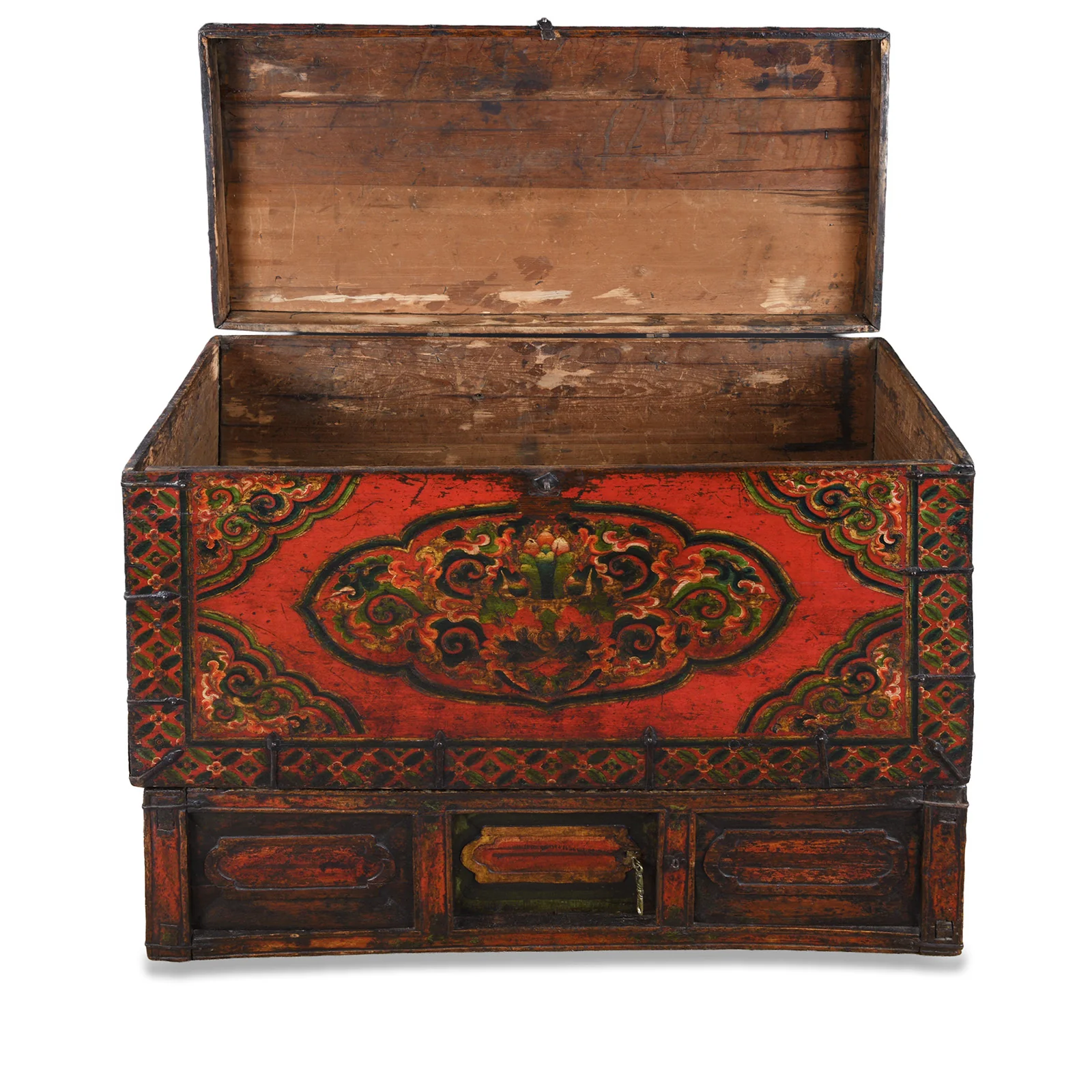
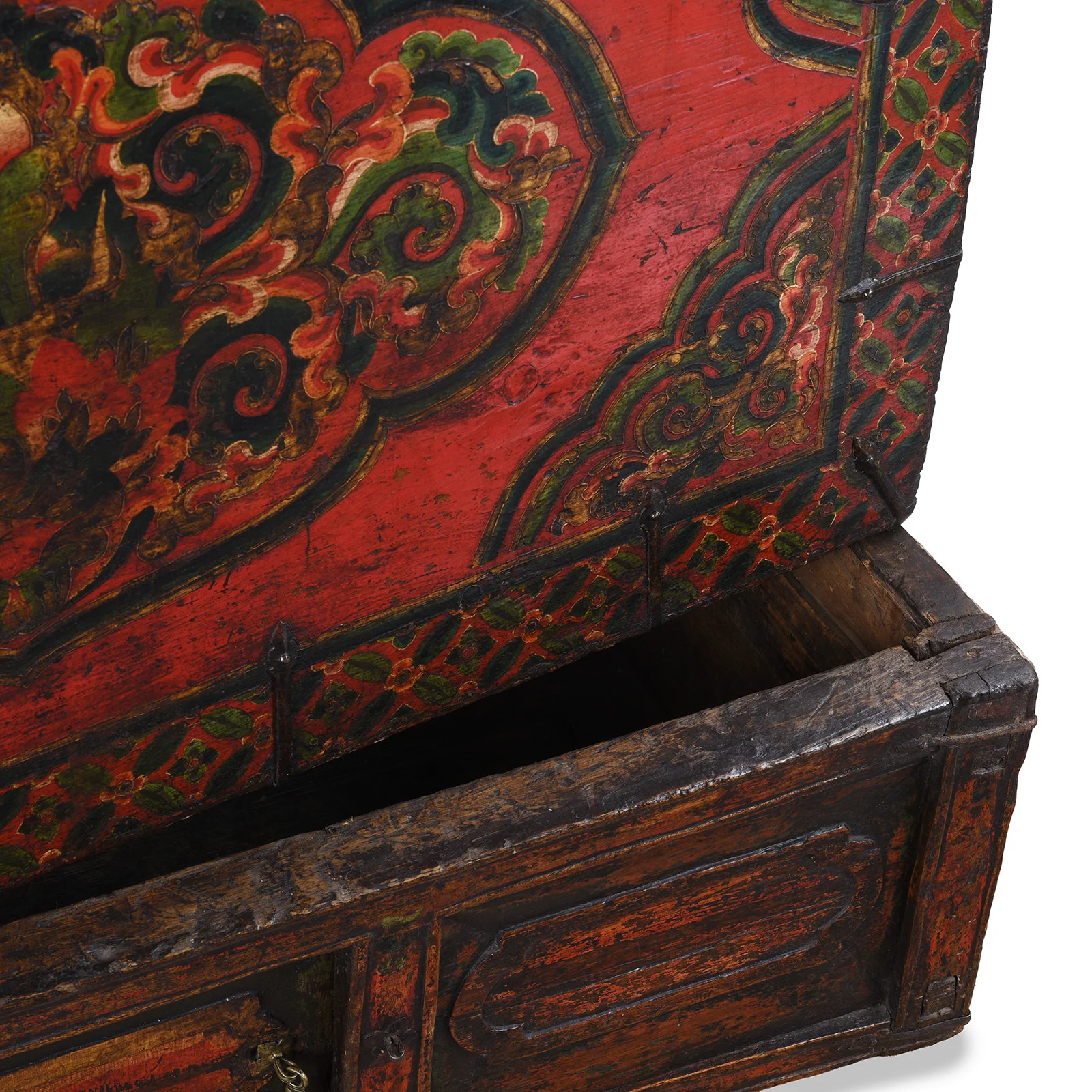
Richly painted and exceptionally complete, this rare 18th-century Central Tibetan monastic chest is a powerful survival of Himalayan religious furniture. The front panel is dominated by the Three Jewels (dkon-mchog gsum), depicted as flaming wish-granting gems (cintāmaṇi) rising from a blossoming lotus, framed by flowing floral scrolls and geometric borders. Executed in deep mineral reds, greens, and ochres, the imagery reflects the visual language of Tibetan Buddhism, combining devotional symbolism with confident, highly accomplished painting.
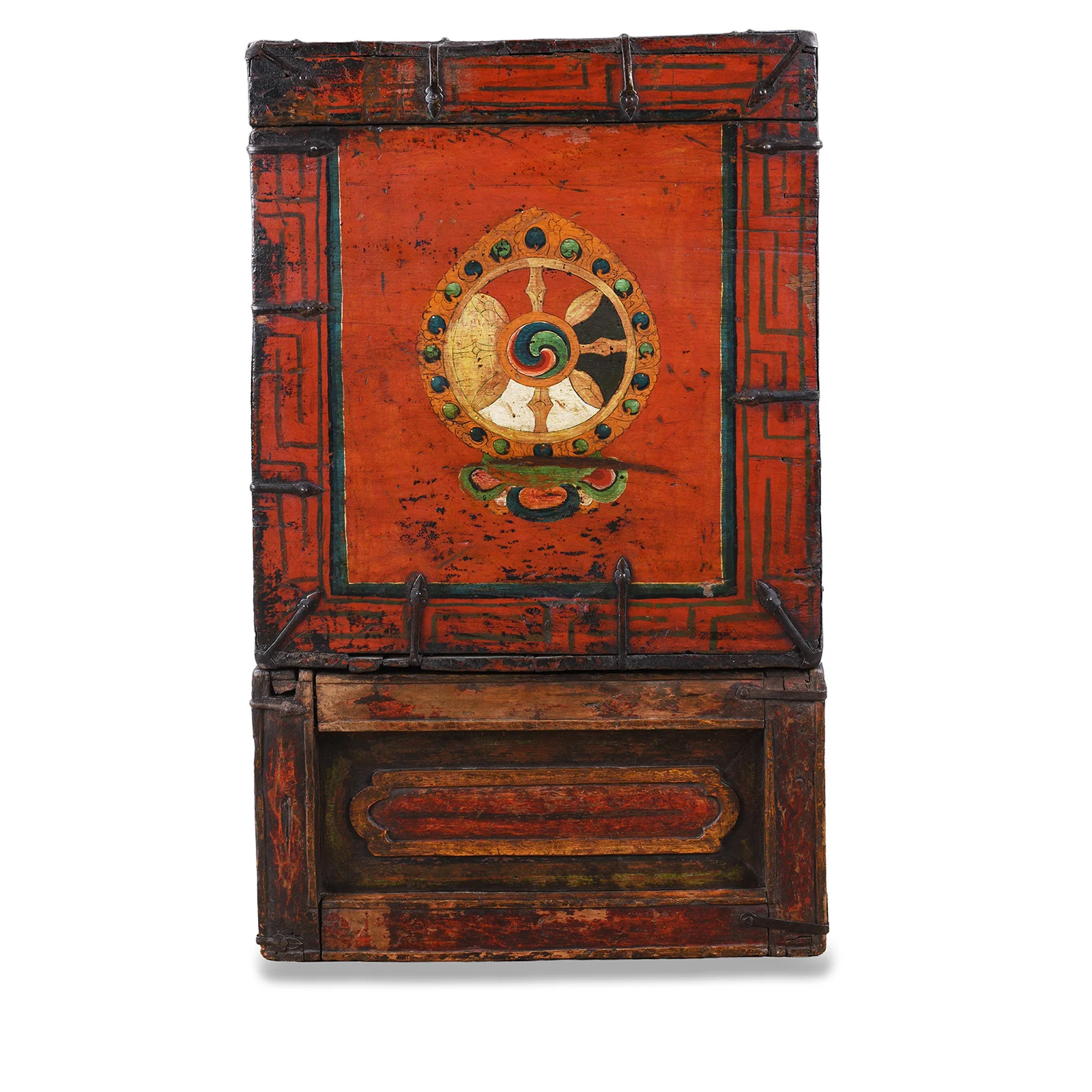
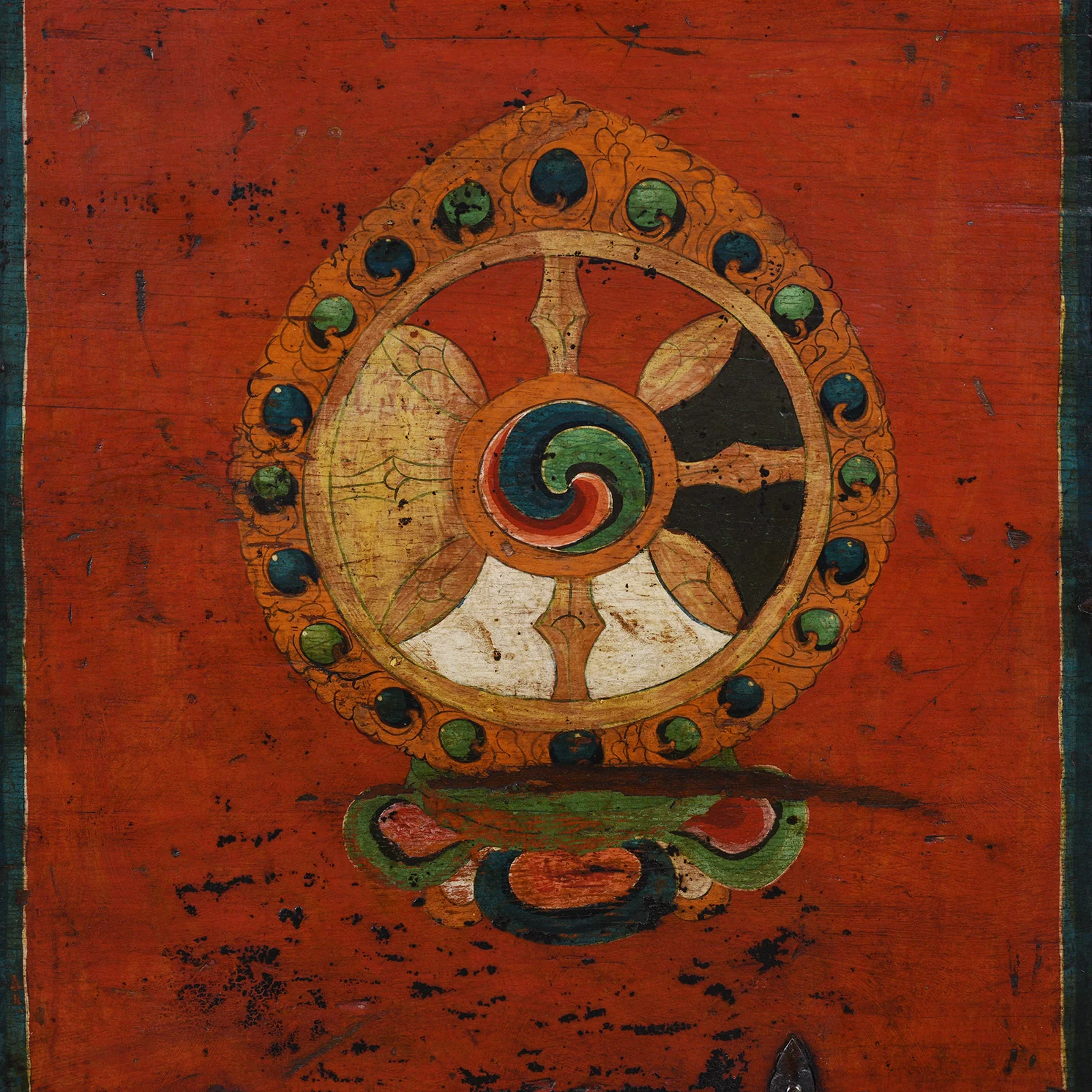
The symbolic programme continues across the chest, with a painted roundel to the side panel depicting the Wheel of Dharma incorporating the Three Jewels, reinforcing the chest’s monastic and ritual function. Such chests were traditionally used within monasteries and domestic shrines to store sacred texts, ceremonial textiles, jewellery, and ritual items, and were often donated as devotional offerings. The lotus, emerging unstained from dark waters, represents purity and liberation, while the Three Jewels symbolise Buddha, Dharma, and Sangha, believed to fulfil the altruistic aspirations of their owner.
- Origin: Central Tibet
- Date: 18th century
- Materials: Himalayan cedar, pigment on fabric, hand-beaten iron bindings, brass latch
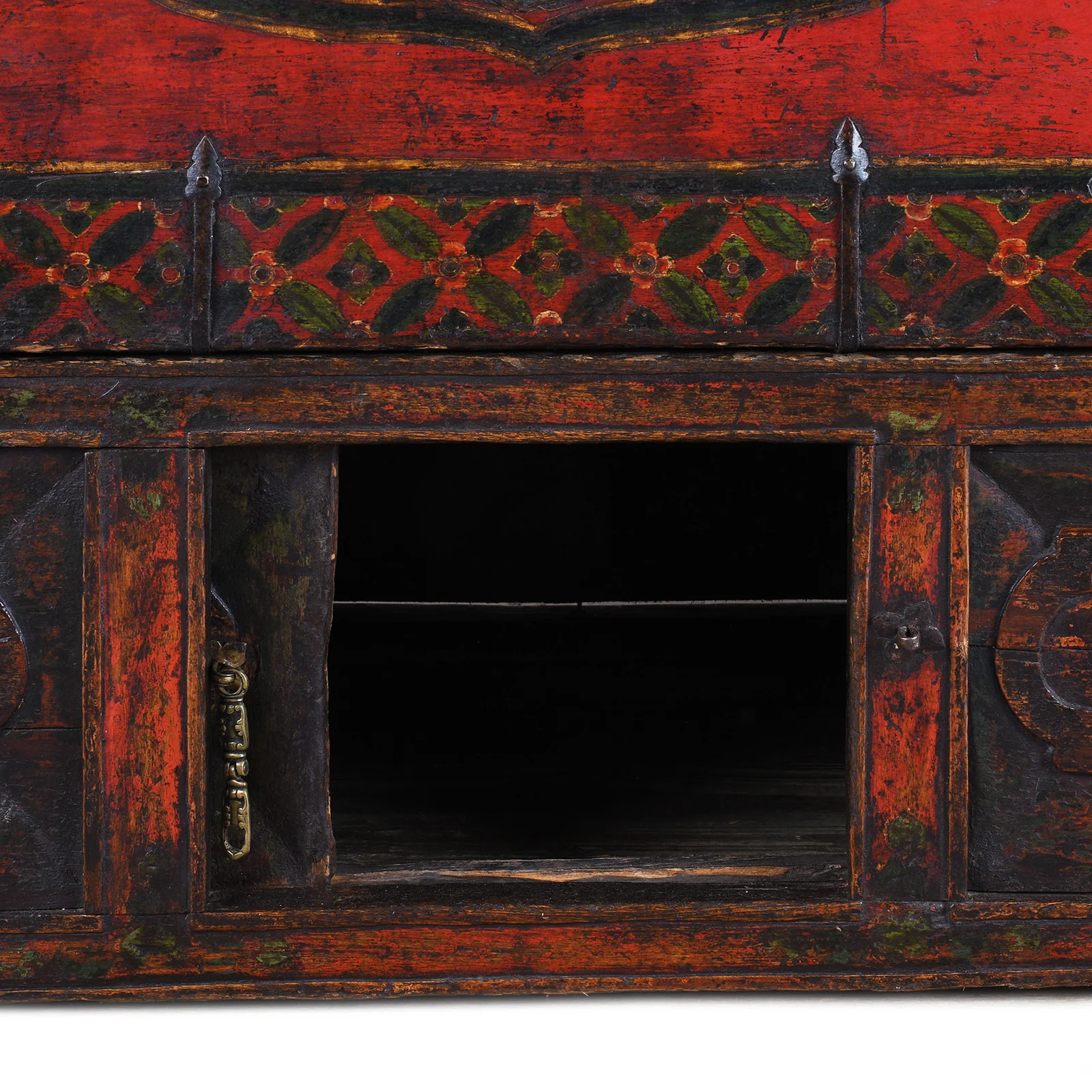
- Construction: Painted fabric applied to wood, a technique associated with higher-status monastic furniture
- Iconography: Three Jewels (cintāmaṇi) within a lotus to the front panel; Wheel of Dharma incorporating the Three Jewels to the side panel
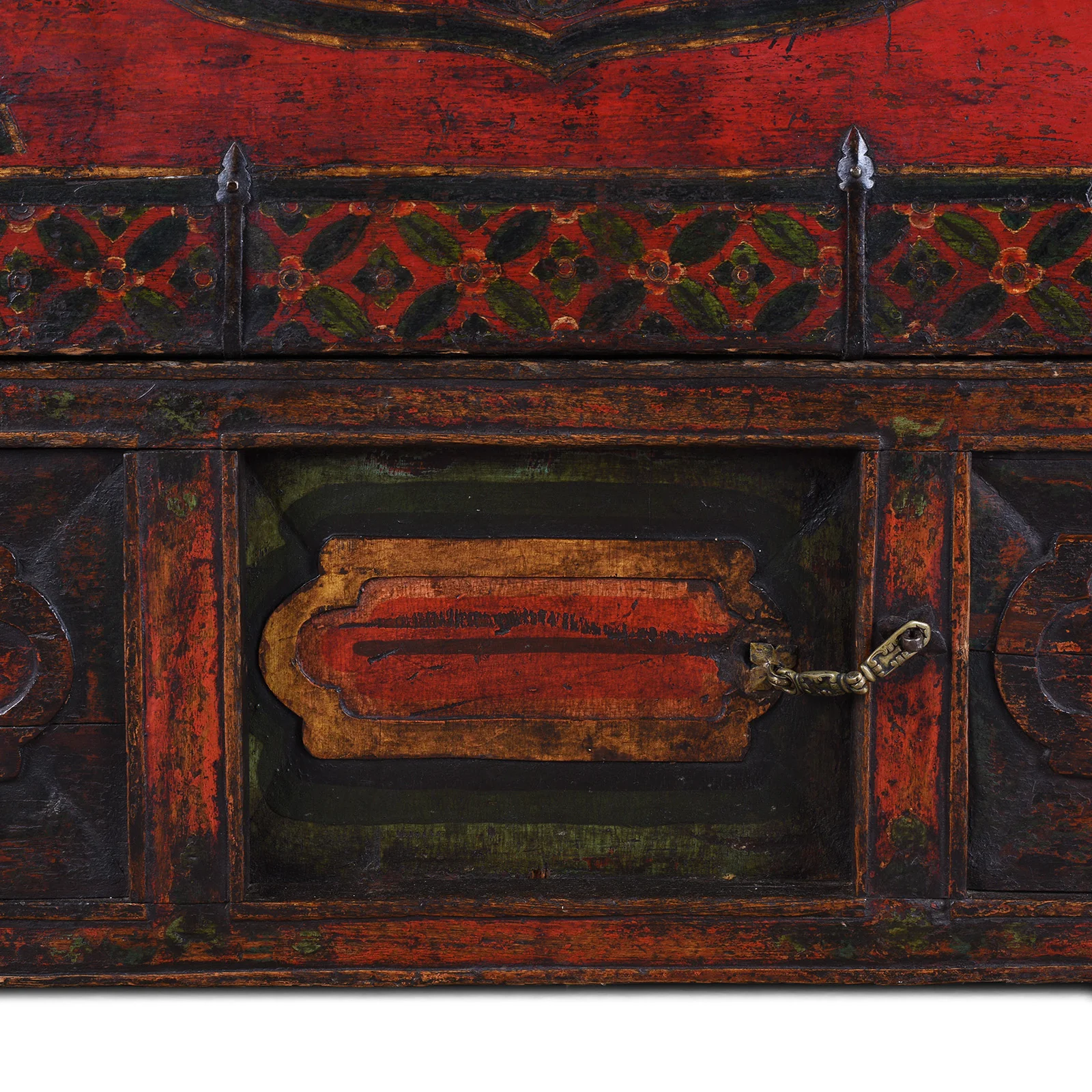
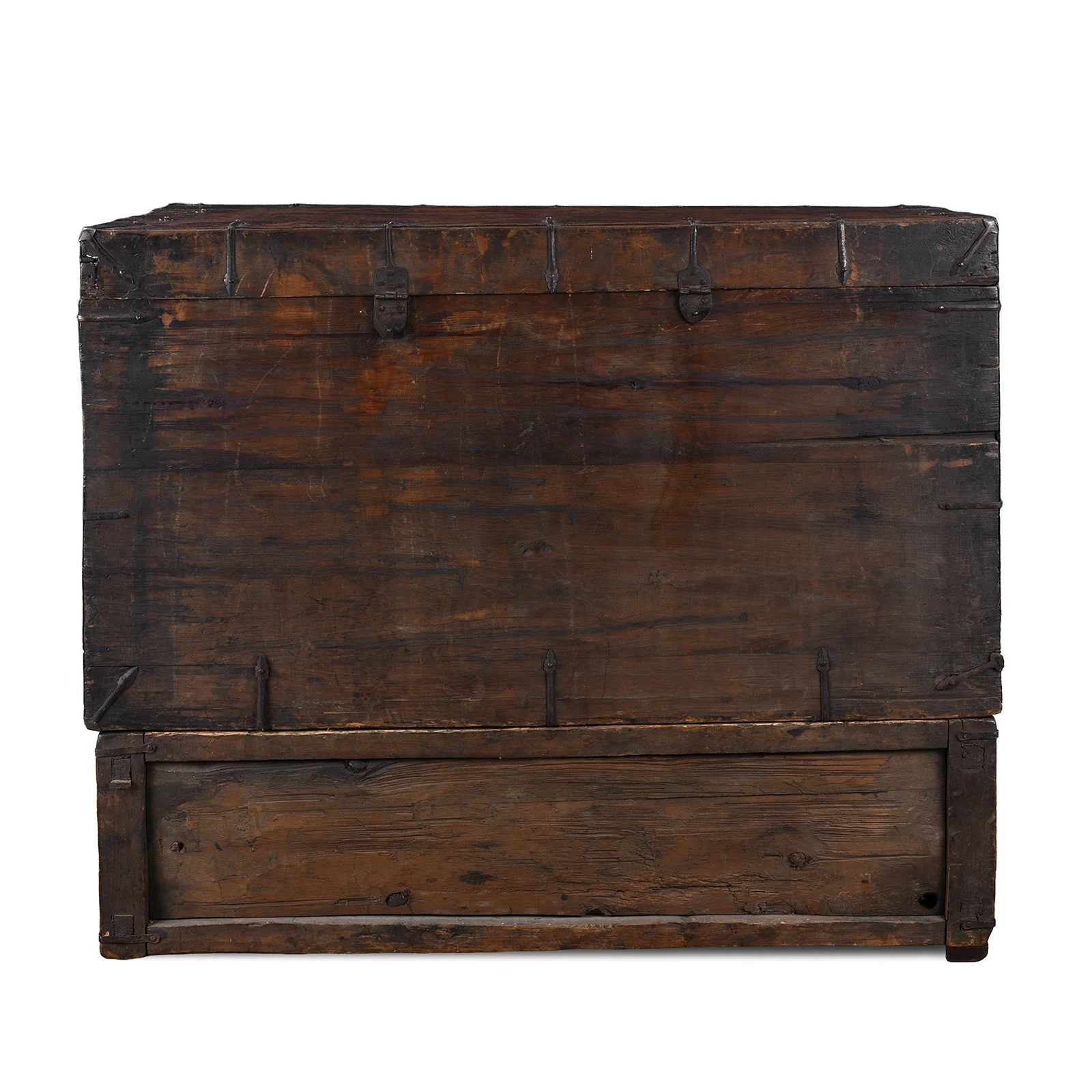
- Features: Original painted surface, original ironwork, original stand with concealed sliding storage compartment
- Condition: Structurally sound with age-related wear. Restored in our UK workshops.
- Dimensions: Width 116 × Depth 57 × Height 99.5 cm
- Height (chest only): 67.5 cm
Original Tibetan chests of this quality are now extremely scarce, and examples retaining their original stands are almost unheard of. Comparable painted monastic chests are held in museum collections including the Rubin Museum of Art and the British Museum, underscoring the cultural and religious significance of this form.
References
- Buckley, Chris. Tibetan Furniture: Identifying, Appreciating, Collecting, p. 120.
- Corona, C. Auspicious by Design, plates 41 and 43.
- Beer, Robert. The Handbook of Tibetan Buddhist Symbols.
Original: $7,323.88
-65%$7,323.88
$2,563.36More Images
Painted Tibetan Storage Chest On Stand - 18th Century
Richly painted and exceptionally complete, this rare 18th-century Central Tibetan monastic chest is a powerful survival of Himalayan religious furniture. The front panel is dominated by the Three Jewels (dkon-mchog gsum), depicted as flaming wish-granting gems (cintāmaṇi) rising from a blossoming lotus, framed by flowing floral scrolls and geometric borders. Executed in deep mineral reds, greens, and ochres, the imagery reflects the visual language of Tibetan Buddhism, combining devotional symbolism with confident, highly accomplished painting.
The symbolic programme continues across the chest, with a painted roundel to the side panel depicting the Wheel of Dharma incorporating the Three Jewels, reinforcing the chest’s monastic and ritual function. Such chests were traditionally used within monasteries and domestic shrines to store sacred texts, ceremonial textiles, jewellery, and ritual items, and were often donated as devotional offerings. The lotus, emerging unstained from dark waters, represents purity and liberation, while the Three Jewels symbolise Buddha, Dharma, and Sangha, believed to fulfil the altruistic aspirations of their owner.
- Origin: Central Tibet
- Date: 18th century
- Materials: Himalayan cedar, pigment on fabric, hand-beaten iron bindings, brass latch
- Construction: Painted fabric applied to wood, a technique associated with higher-status monastic furniture
- Iconography: Three Jewels (cintāmaṇi) within a lotus to the front panel; Wheel of Dharma incorporating the Three Jewels to the side panel
- Features: Original painted surface, original ironwork, original stand with concealed sliding storage compartment
- Condition: Structurally sound with age-related wear. Restored in our UK workshops.
- Dimensions: Width 116 × Depth 57 × Height 99.5 cm
- Height (chest only): 67.5 cm
Original Tibetan chests of this quality are now extremely scarce, and examples retaining their original stands are almost unheard of. Comparable painted monastic chests are held in museum collections including the Rubin Museum of Art and the British Museum, underscoring the cultural and religious significance of this form.
References
- Buckley, Chris. Tibetan Furniture: Identifying, Appreciating, Collecting, p. 120.
- Corona, C. Auspicious by Design, plates 41 and 43.
- Beer, Robert. The Handbook of Tibetan Buddhist Symbols.
Product Information
Product Information
Shipping & Returns
Shipping & Returns
Description
Richly painted and exceptionally complete, this rare 18th-century Central Tibetan monastic chest is a powerful survival of Himalayan religious furniture. The front panel is dominated by the Three Jewels (dkon-mchog gsum), depicted as flaming wish-granting gems (cintāmaṇi) rising from a blossoming lotus, framed by flowing floral scrolls and geometric borders. Executed in deep mineral reds, greens, and ochres, the imagery reflects the visual language of Tibetan Buddhism, combining devotional symbolism with confident, highly accomplished painting.
The symbolic programme continues across the chest, with a painted roundel to the side panel depicting the Wheel of Dharma incorporating the Three Jewels, reinforcing the chest’s monastic and ritual function. Such chests were traditionally used within monasteries and domestic shrines to store sacred texts, ceremonial textiles, jewellery, and ritual items, and were often donated as devotional offerings. The lotus, emerging unstained from dark waters, represents purity and liberation, while the Three Jewels symbolise Buddha, Dharma, and Sangha, believed to fulfil the altruistic aspirations of their owner.
- Origin: Central Tibet
- Date: 18th century
- Materials: Himalayan cedar, pigment on fabric, hand-beaten iron bindings, brass latch
- Construction: Painted fabric applied to wood, a technique associated with higher-status monastic furniture
- Iconography: Three Jewels (cintāmaṇi) within a lotus to the front panel; Wheel of Dharma incorporating the Three Jewels to the side panel
- Features: Original painted surface, original ironwork, original stand with concealed sliding storage compartment
- Condition: Structurally sound with age-related wear. Restored in our UK workshops.
- Dimensions: Width 116 × Depth 57 × Height 99.5 cm
- Height (chest only): 67.5 cm
Original Tibetan chests of this quality are now extremely scarce, and examples retaining their original stands are almost unheard of. Comparable painted monastic chests are held in museum collections including the Rubin Museum of Art and the British Museum, underscoring the cultural and religious significance of this form.
References
- Buckley, Chris. Tibetan Furniture: Identifying, Appreciating, Collecting, p. 120.
- Corona, C. Auspicious by Design, plates 41 and 43.
- Beer, Robert. The Handbook of Tibetan Buddhist Symbols.