Painted Tibetan Chest With Flaming Jewels - 18th Century
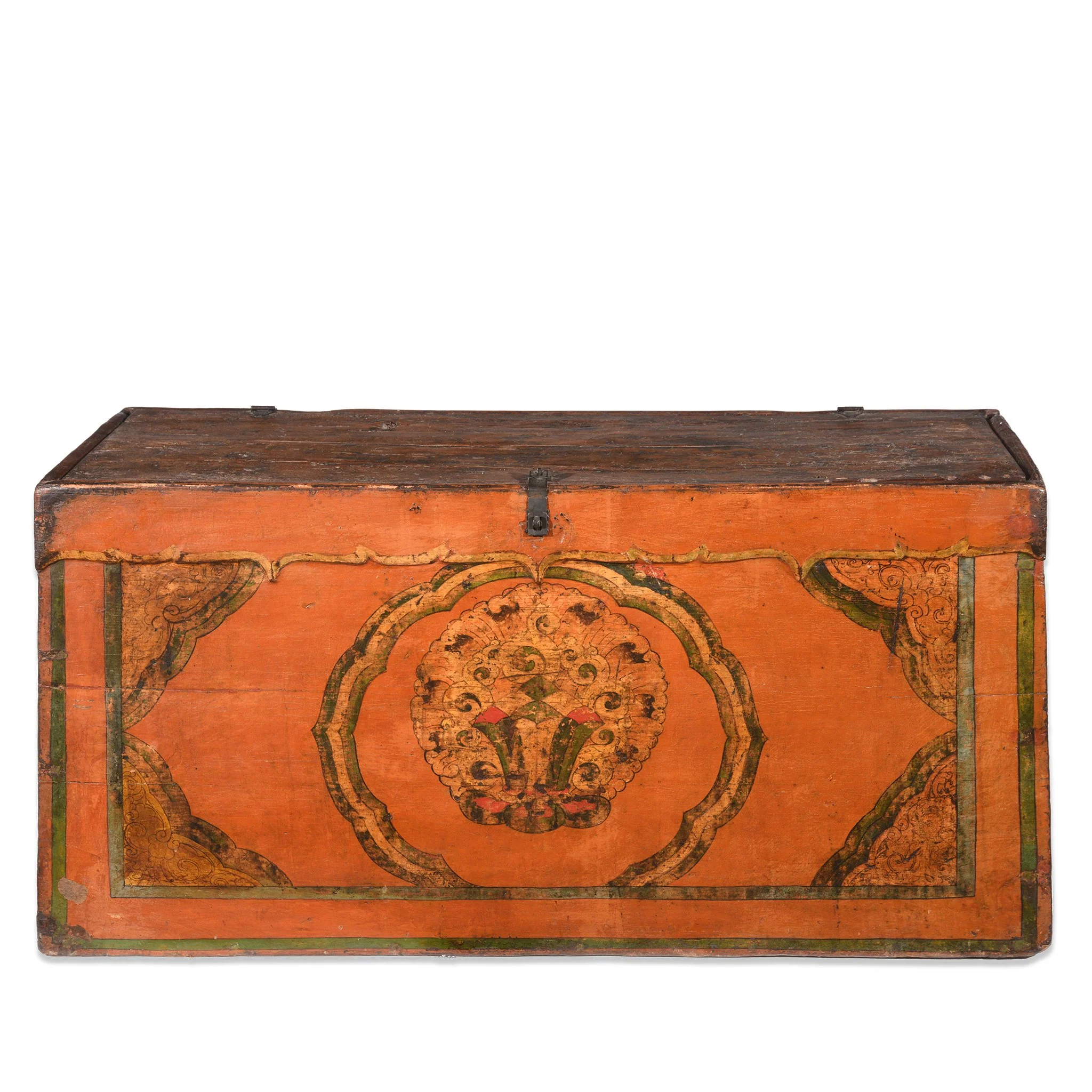
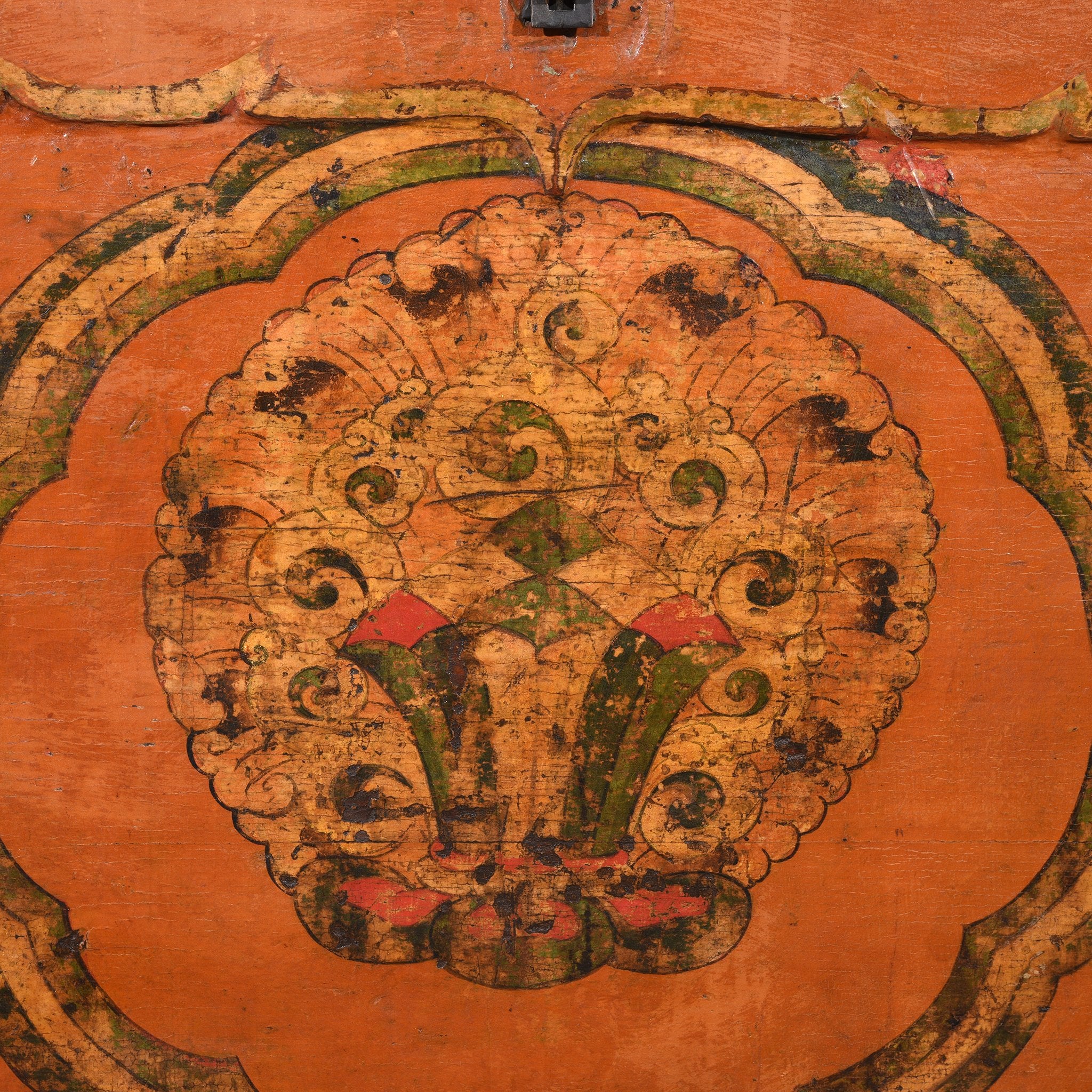
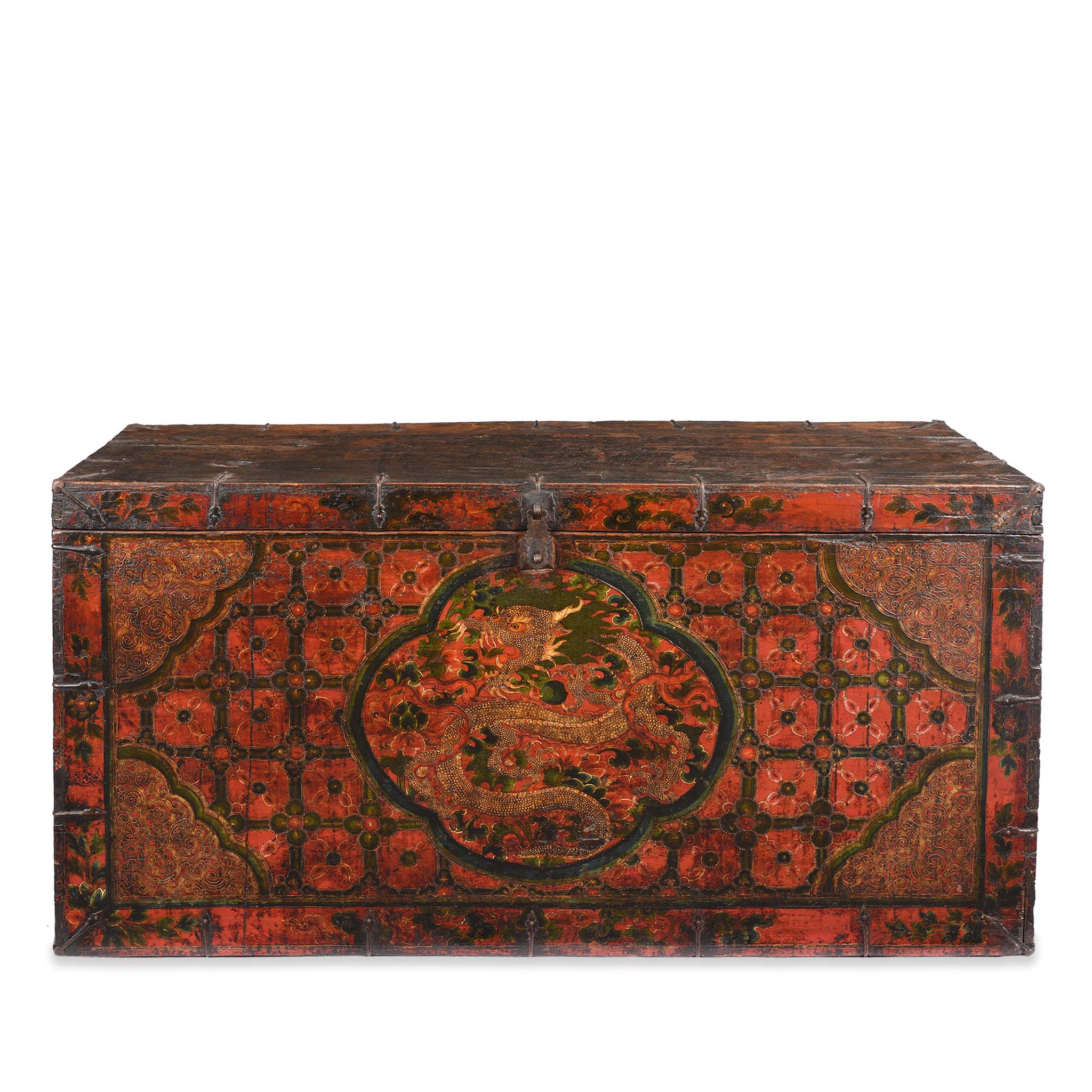
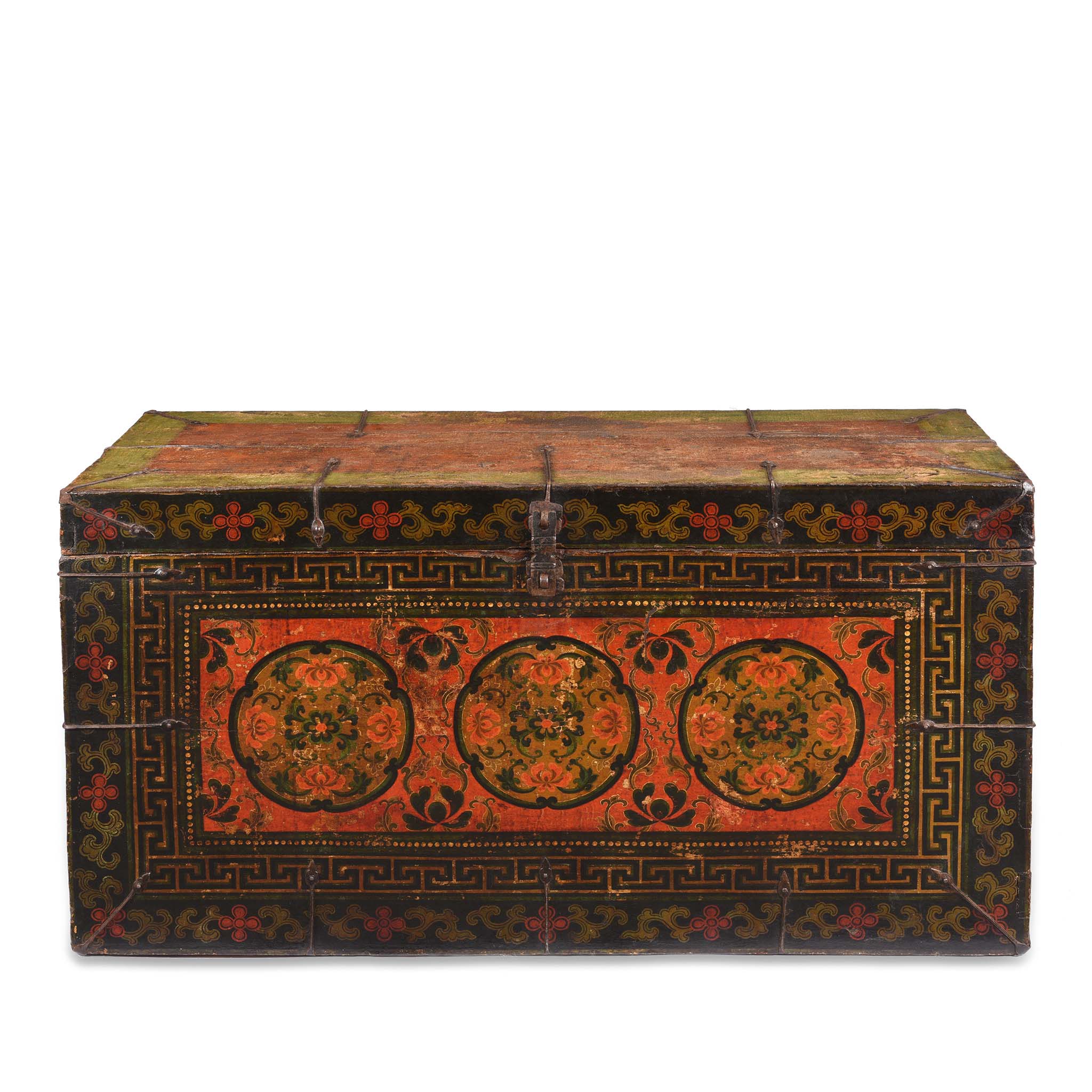
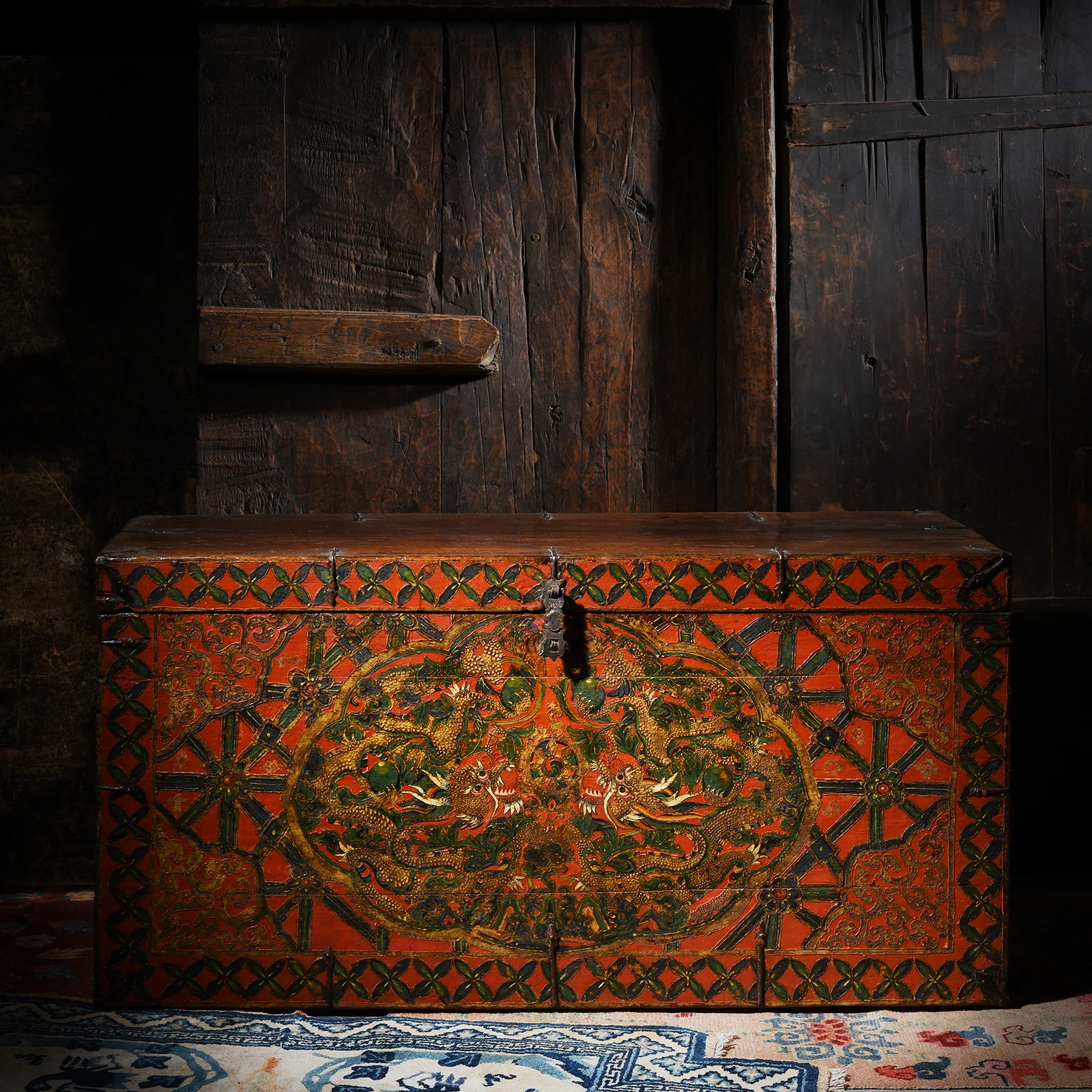
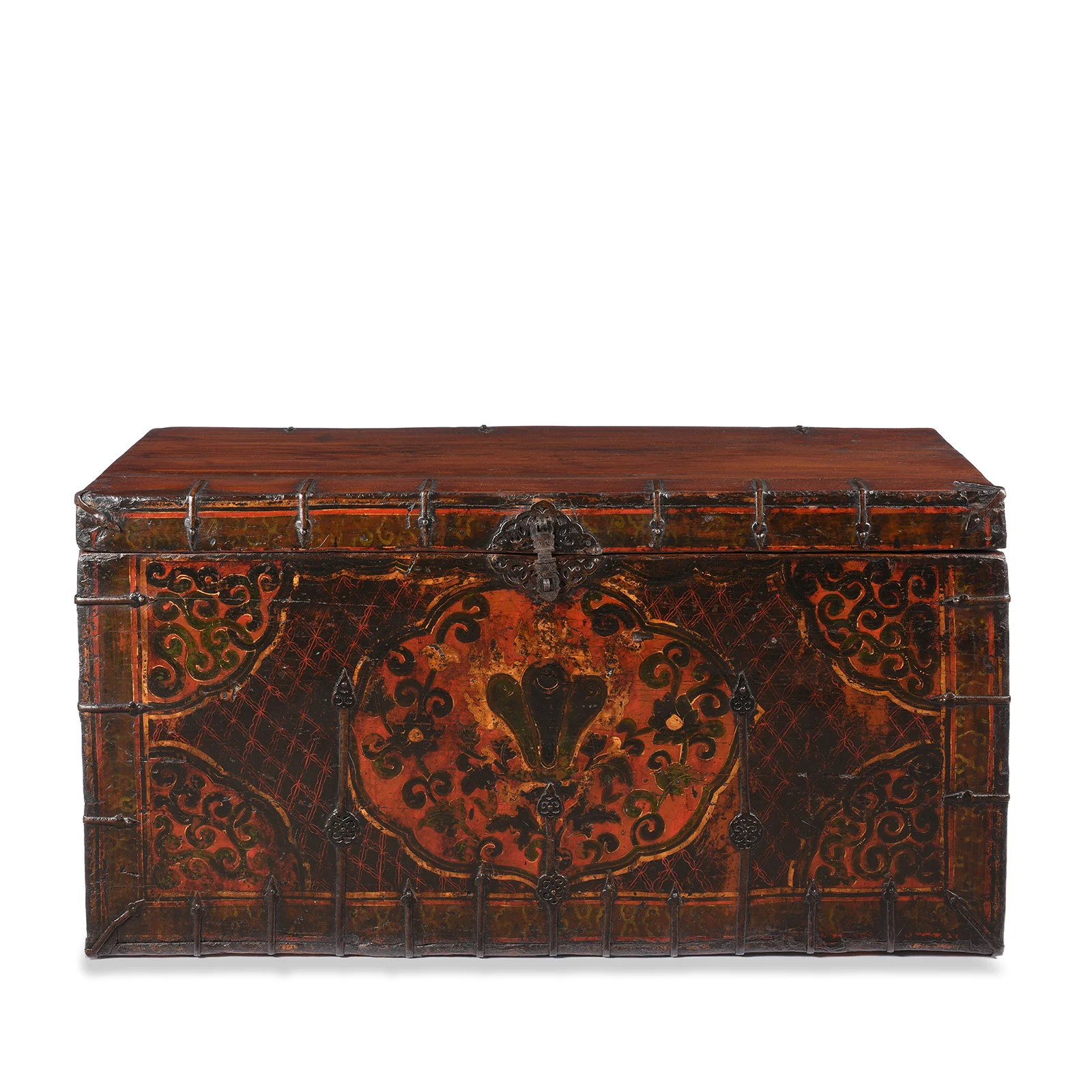
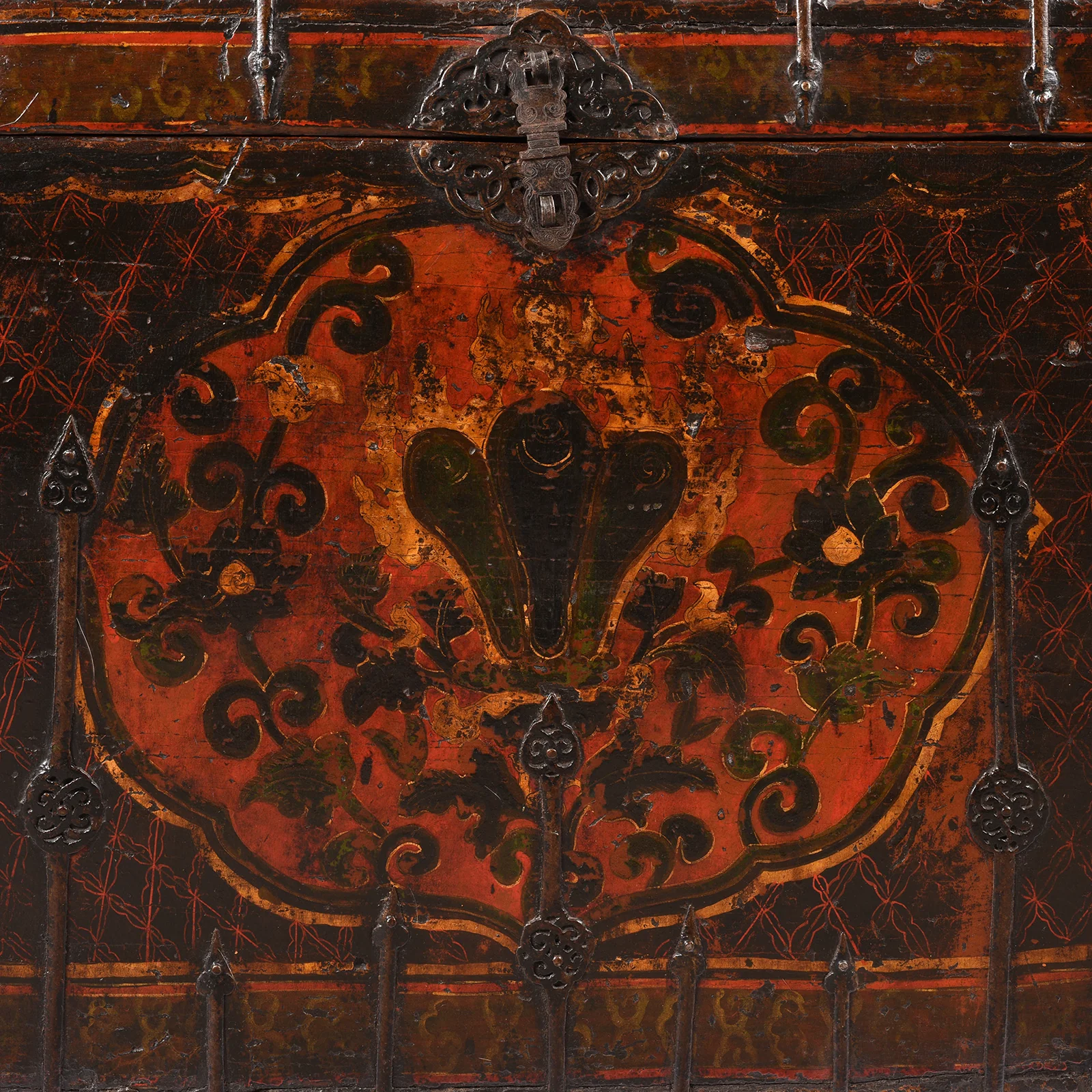
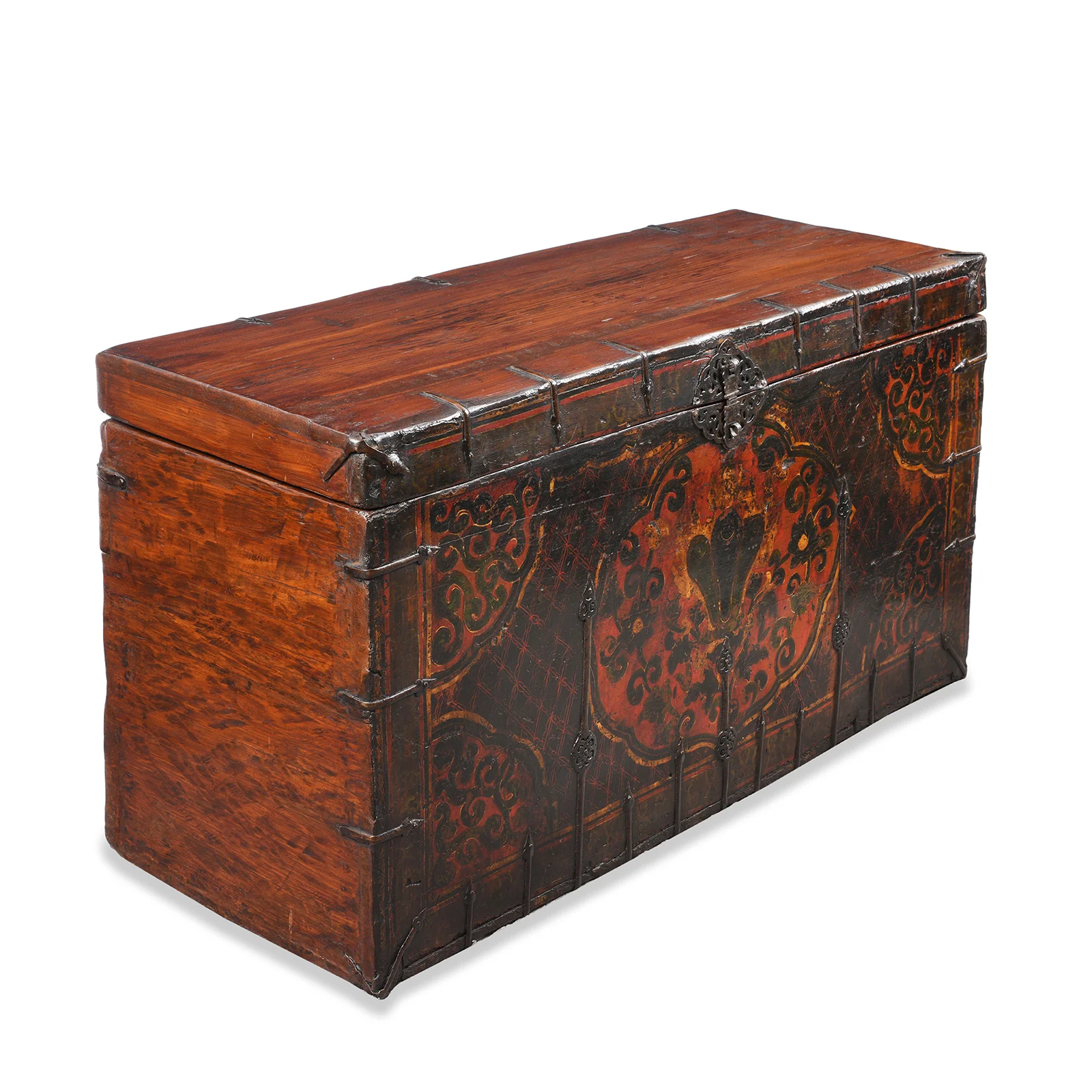
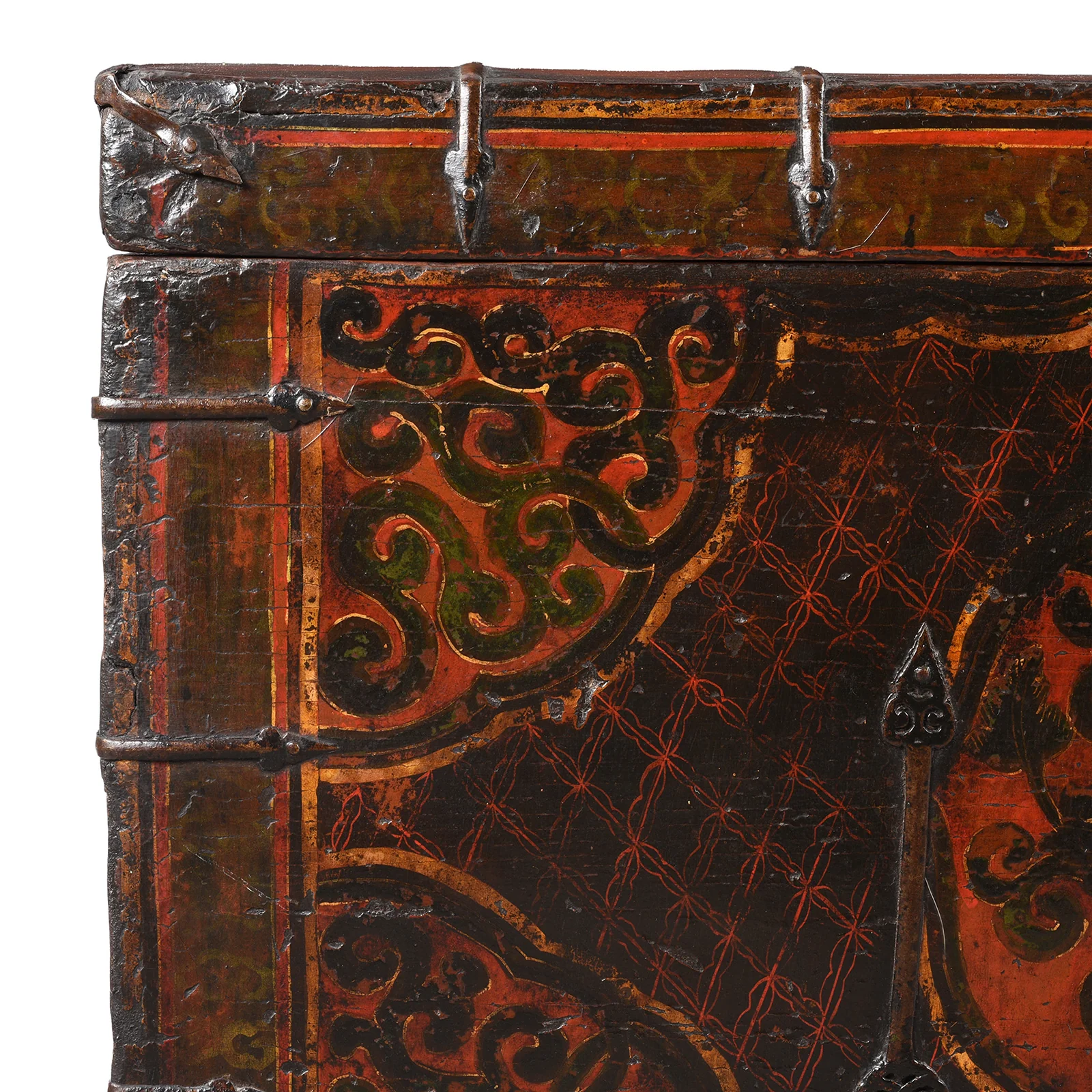
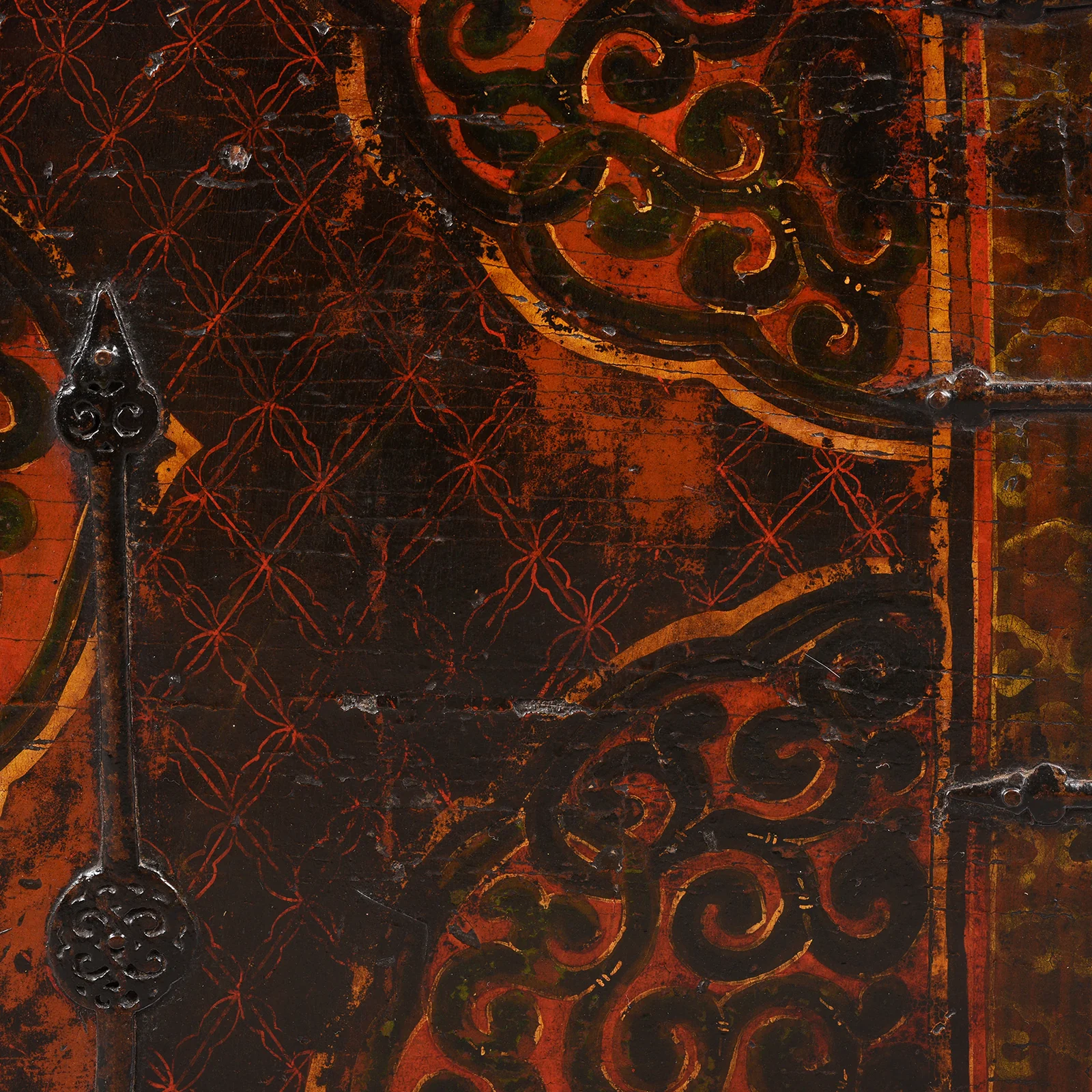
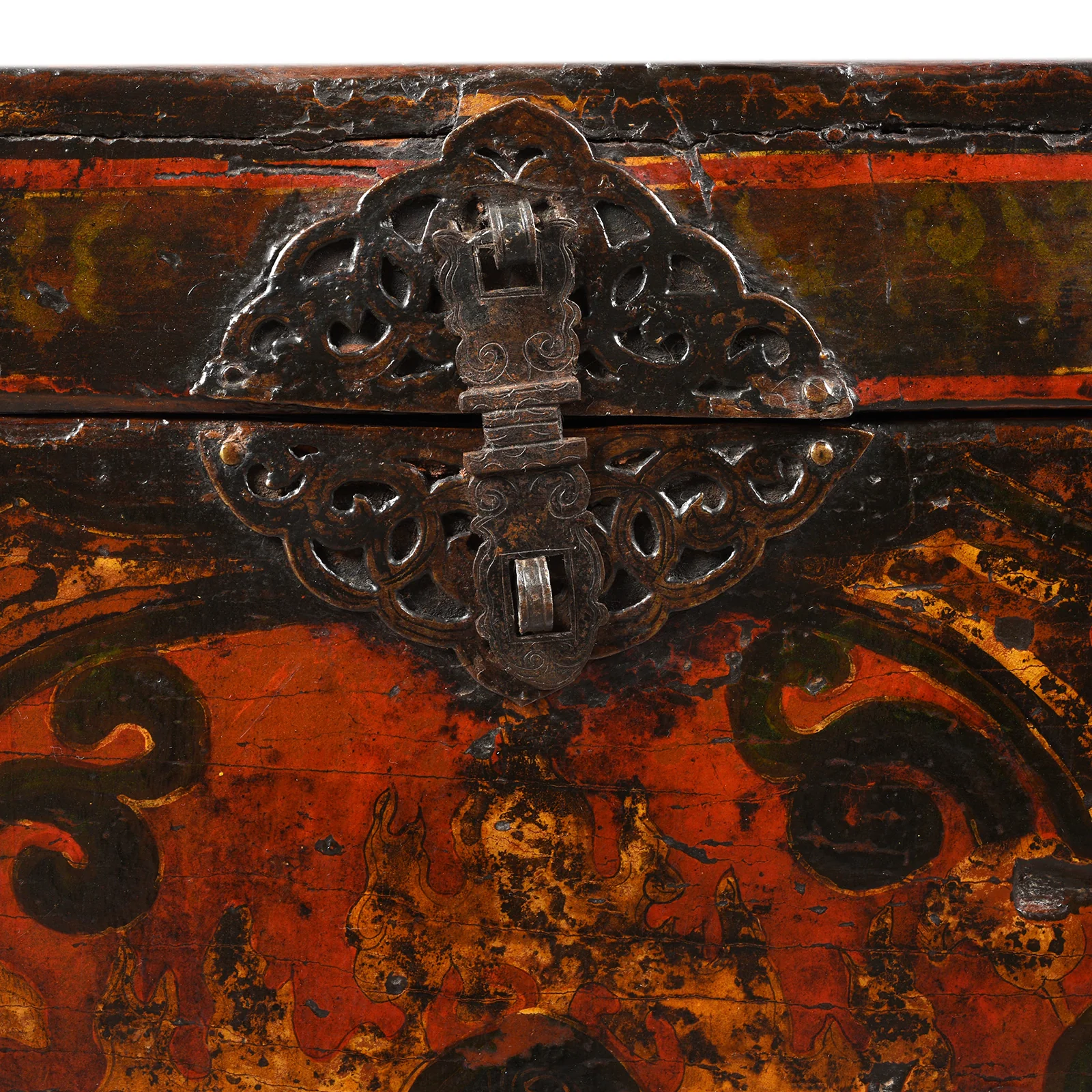
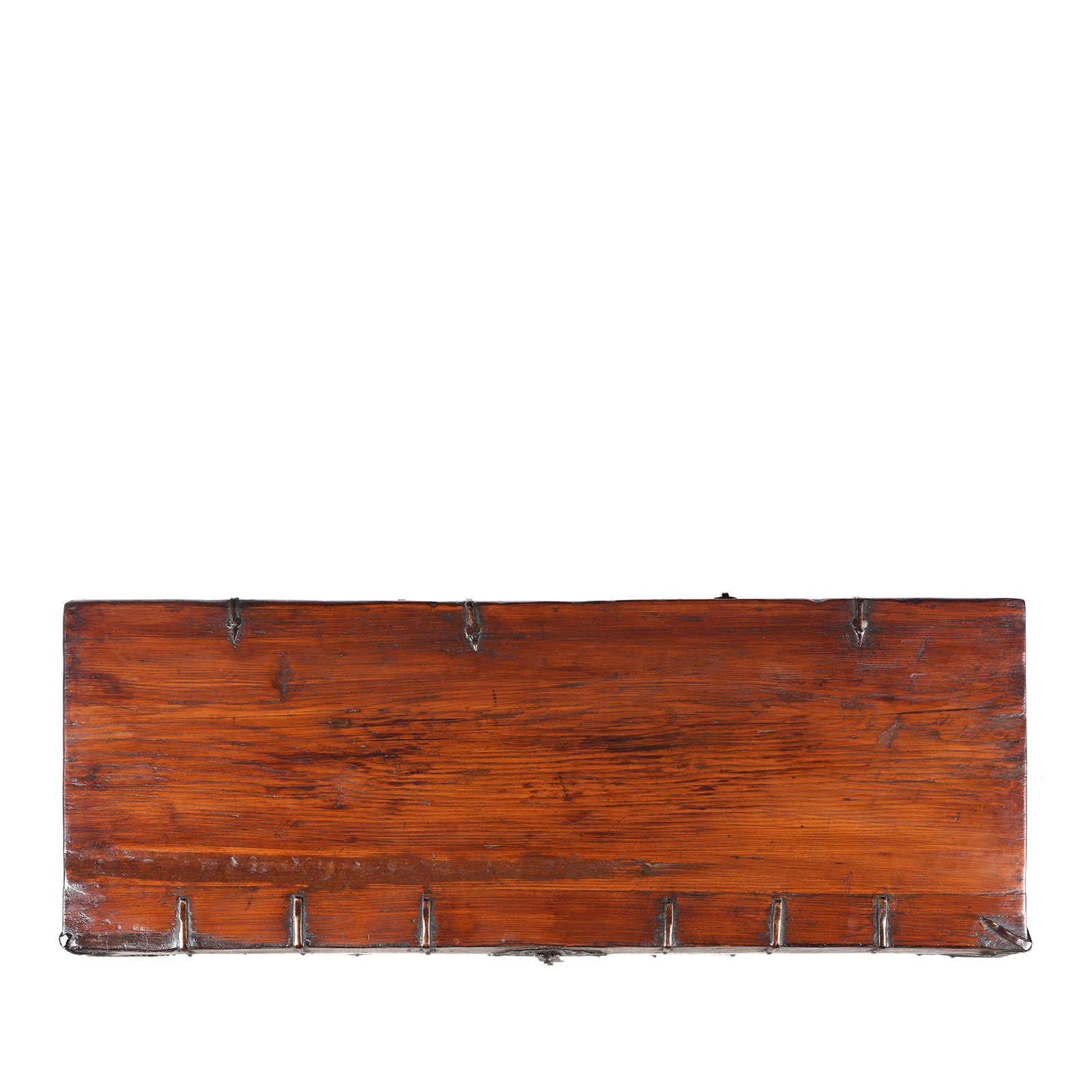
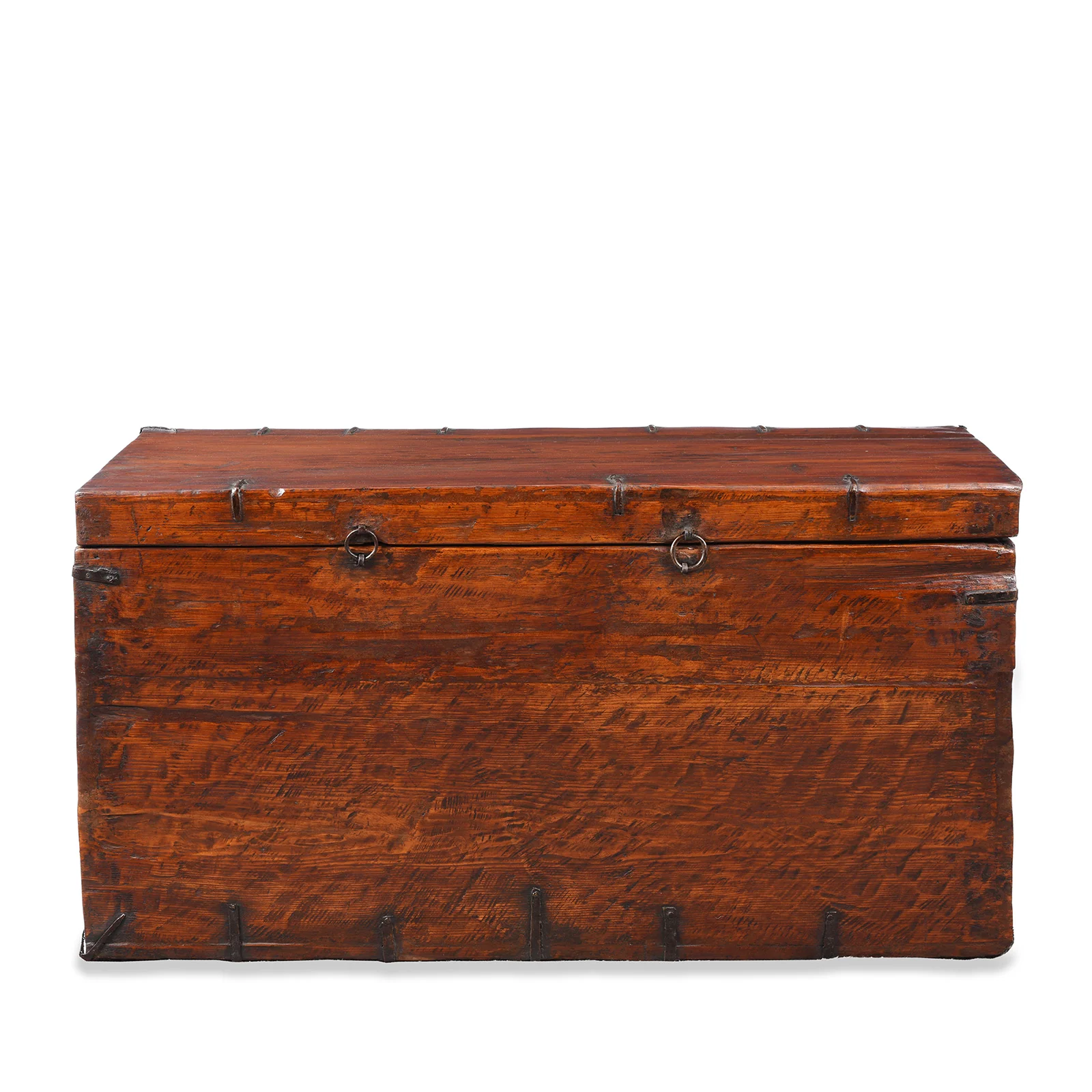
This decorative Tibetan monastic chest dates to the 18th century and is from Central Tibet. The central medallion depicts three flaming jewels surrounded by a typical quatrefoil frame infilled with traditional geometric brocade designs. The Three Jewels of Buddha, dharma, and sangha represent the body, speech & mind of all Buddhas & enlightened beings. The jewels also represent the central offerings on a Tibetan Buddhist altar which are used during the 'taking refuge' ceremony - the ceremony where one formally becomes a Buddhist. The front of this chest is framed by delicately crafted iron bindings which are indicative of 17th & 18th century Tibetan chests.
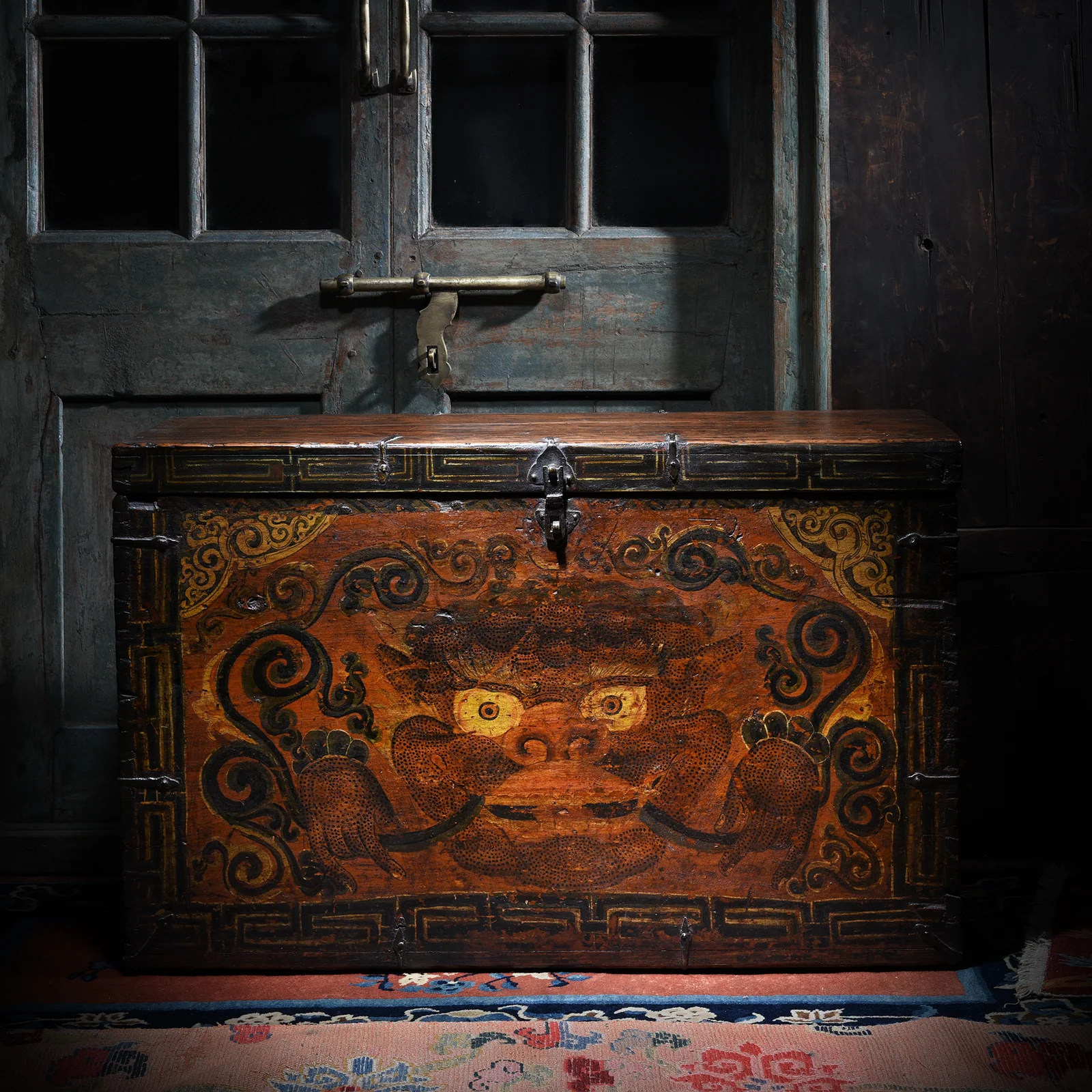
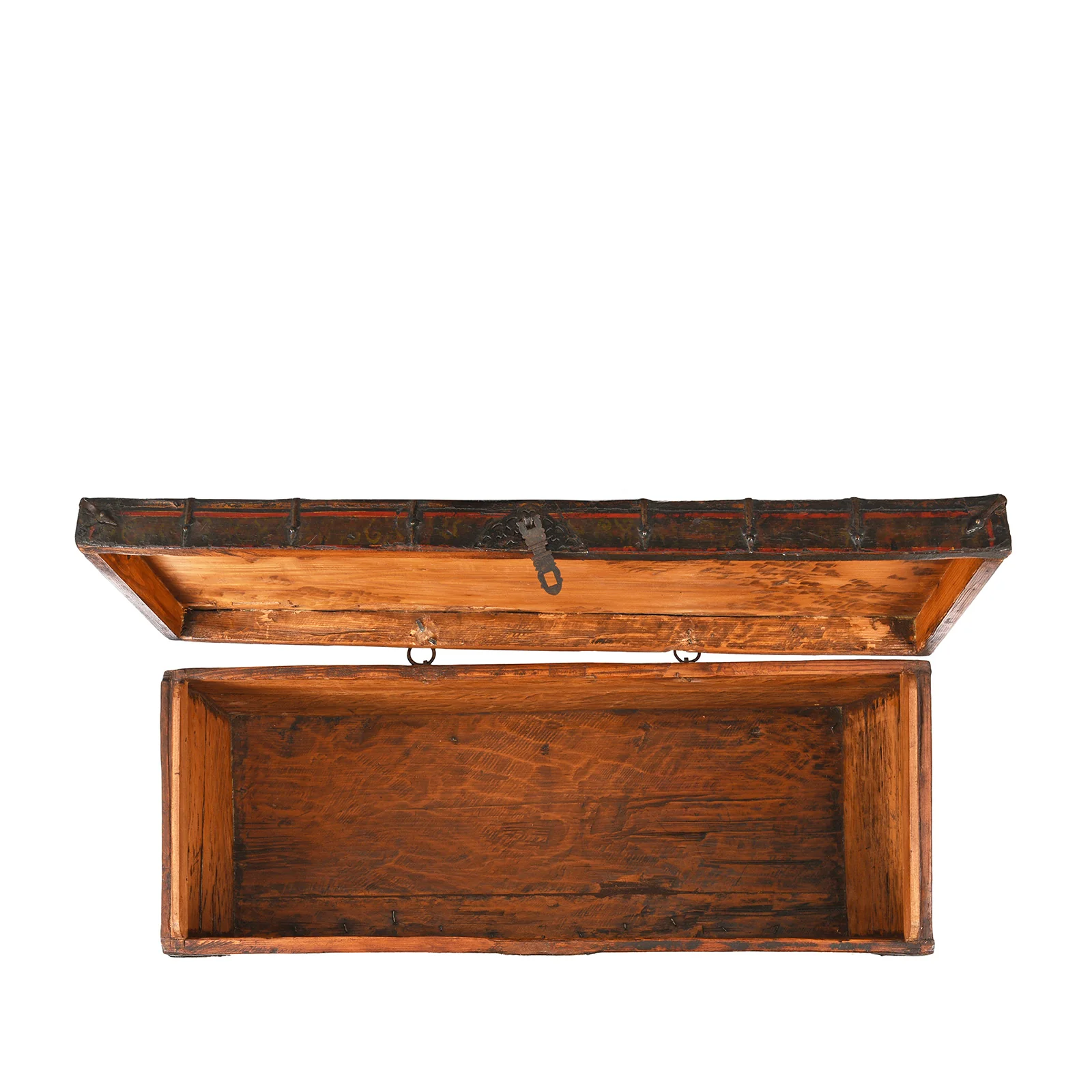
Tibetan chests and trunks were used as storage in homes and monasteries. The better quality pieces are painted onto fabric on wood like this one. Often these chests were used in temples or as family altars for storing religious scrolls, silk ceremonial clothes, family jewelry, and yak butter used in lamps. Often people would gift painted furniture to monasteries as offerings.
The colours and designs used in antique Tibetan furniture are very decorative. It has become extremely difficult to find pieces these days and because of this many reproduction pieces are appearing on the market.
References:
For similar examples see Wooden Wonders: Tibetan Furniture in Secular and Religious Life by Kamansky (plate 96).
From Tibet
UK Delivery Charge - except Highlands & Islands £40
More delivery options available at checkout
More Images
Painted Tibetan Chest With Flaming Jewels - 18th Century
This decorative Tibetan monastic chest dates to the 18th century and is from Central Tibet. The central medallion depicts three flaming jewels surrounded by a typical quatrefoil frame infilled with traditional geometric brocade designs. The Three Jewels of Buddha, dharma, and sangha represent the body, speech & mind of all Buddhas & enlightened beings. The jewels also represent the central offerings on a Tibetan Buddhist altar which are used during the 'taking refuge' ceremony - the ceremony where one formally becomes a Buddhist. The front of this chest is framed by delicately crafted iron bindings which are indicative of 17th & 18th century Tibetan chests.
Tibetan chests and trunks were used as storage in homes and monasteries. The better quality pieces are painted onto fabric on wood like this one. Often these chests were used in temples or as family altars for storing religious scrolls, silk ceremonial clothes, family jewelry, and yak butter used in lamps. Often people would gift painted furniture to monasteries as offerings.
The colours and designs used in antique Tibetan furniture are very decorative. It has become extremely difficult to find pieces these days and because of this many reproduction pieces are appearing on the market.
References:
For similar examples see Wooden Wonders: Tibetan Furniture in Secular and Religious Life by Kamansky (plate 96).
From Tibet
UK Delivery Charge - except Highlands & Islands £40
More delivery options available at checkout
Product Information
Product Information
Shipping & Returns
Shipping & Returns
Description
This decorative Tibetan monastic chest dates to the 18th century and is from Central Tibet. The central medallion depicts three flaming jewels surrounded by a typical quatrefoil frame infilled with traditional geometric brocade designs. The Three Jewels of Buddha, dharma, and sangha represent the body, speech & mind of all Buddhas & enlightened beings. The jewels also represent the central offerings on a Tibetan Buddhist altar which are used during the 'taking refuge' ceremony - the ceremony where one formally becomes a Buddhist. The front of this chest is framed by delicately crafted iron bindings which are indicative of 17th & 18th century Tibetan chests.
Tibetan chests and trunks were used as storage in homes and monasteries. The better quality pieces are painted onto fabric on wood like this one. Often these chests were used in temples or as family altars for storing religious scrolls, silk ceremonial clothes, family jewelry, and yak butter used in lamps. Often people would gift painted furniture to monasteries as offerings.
The colours and designs used in antique Tibetan furniture are very decorative. It has become extremely difficult to find pieces these days and because of this many reproduction pieces are appearing on the market.
References:
For similar examples see Wooden Wonders: Tibetan Furniture in Secular and Religious Life by Kamansky (plate 96).
From Tibet
UK Delivery Charge - except Highlands & Islands £40
More delivery options available at checkout