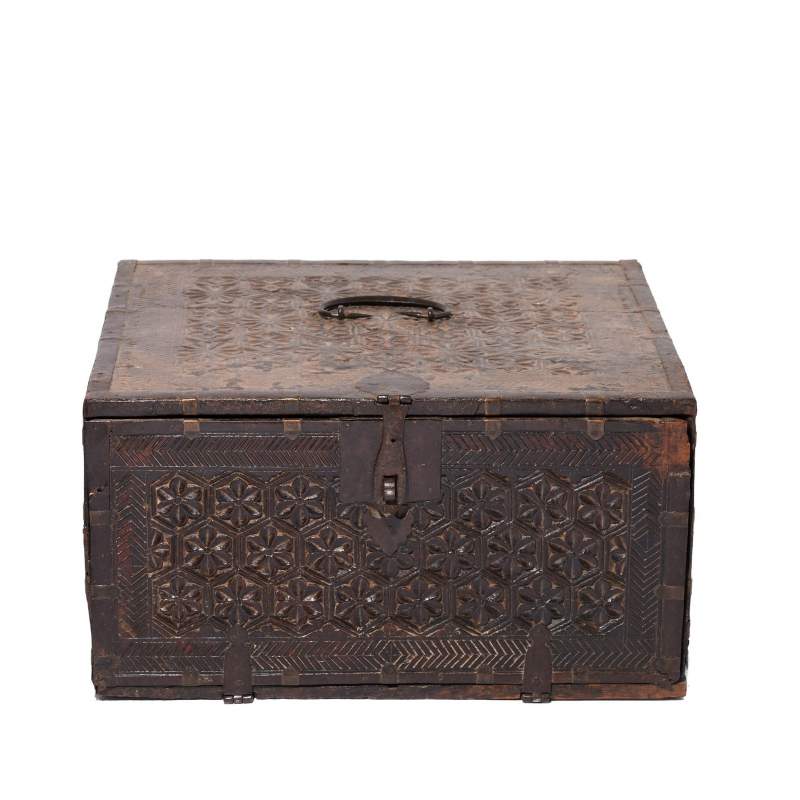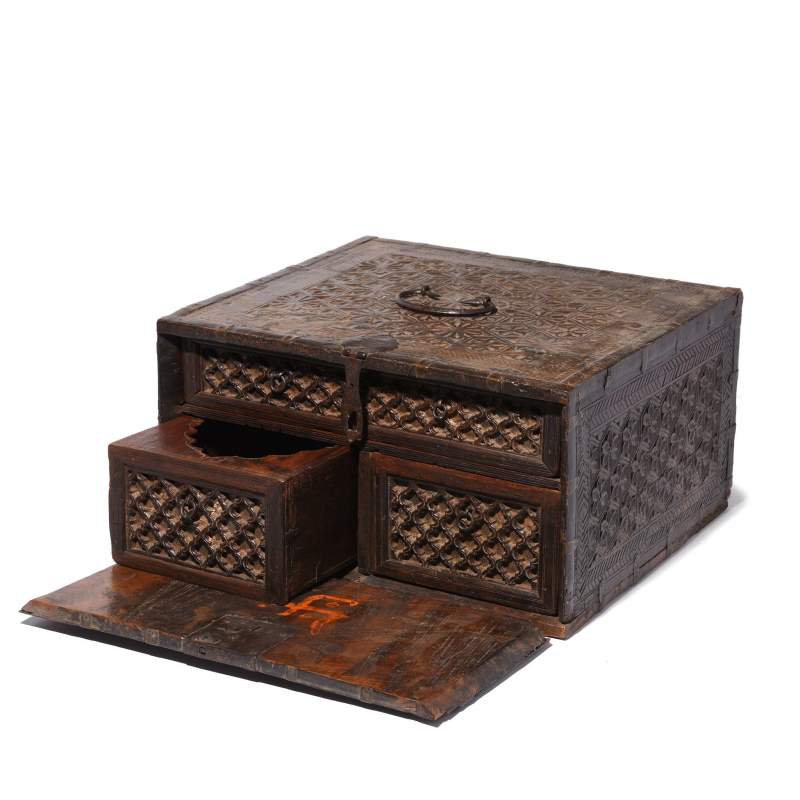
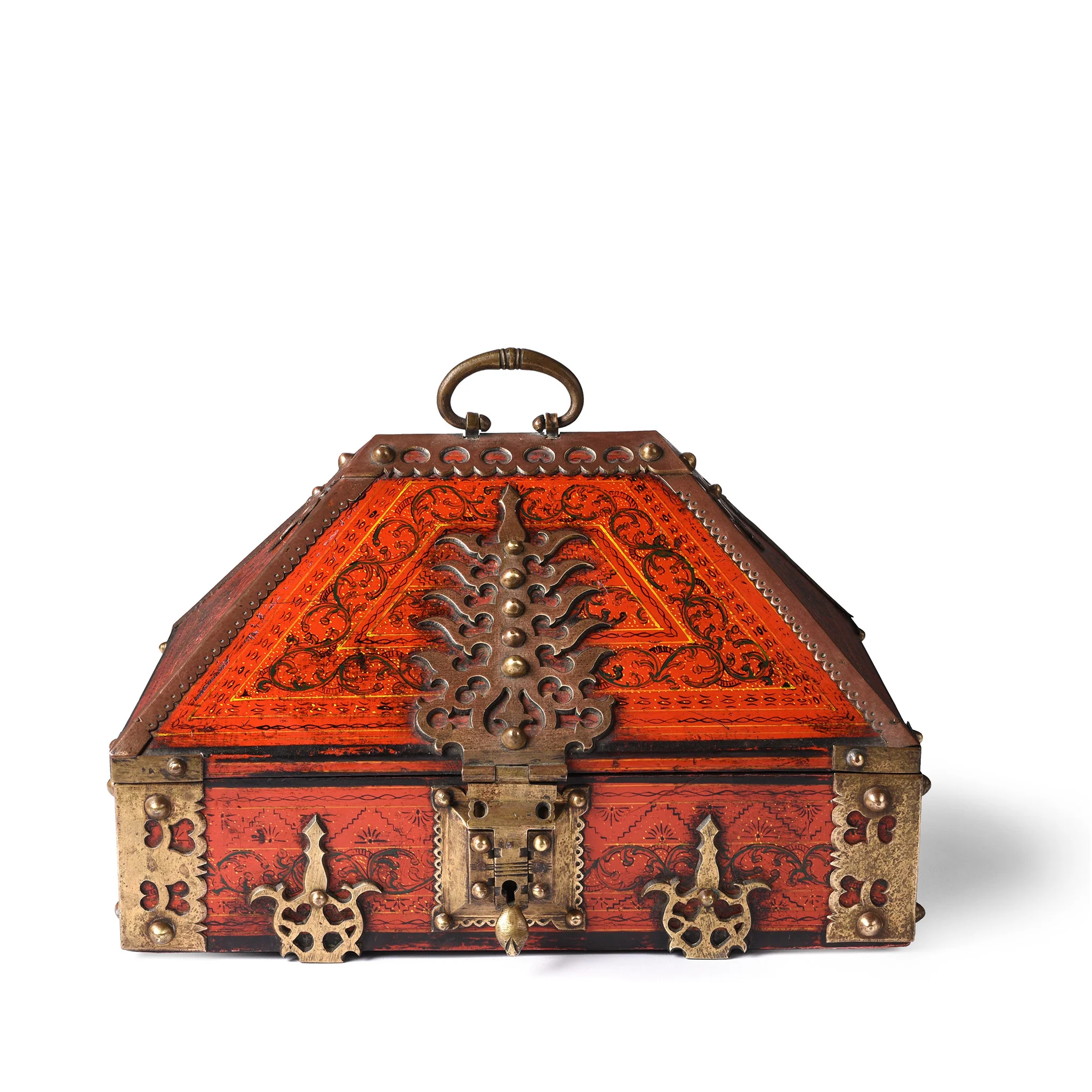
Painted Betel Nut Box From Kerala - Ca 1910
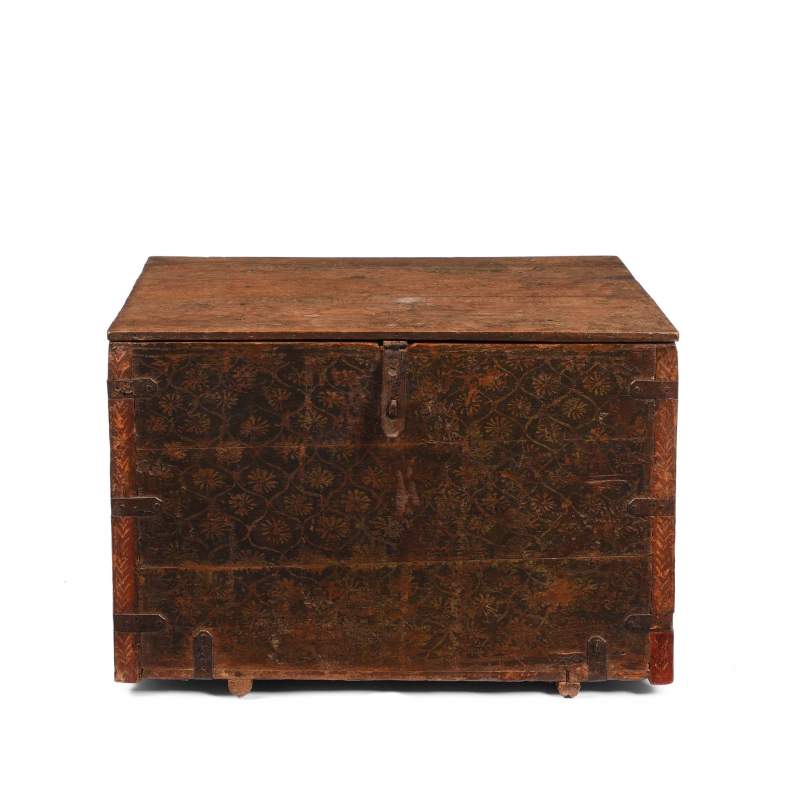
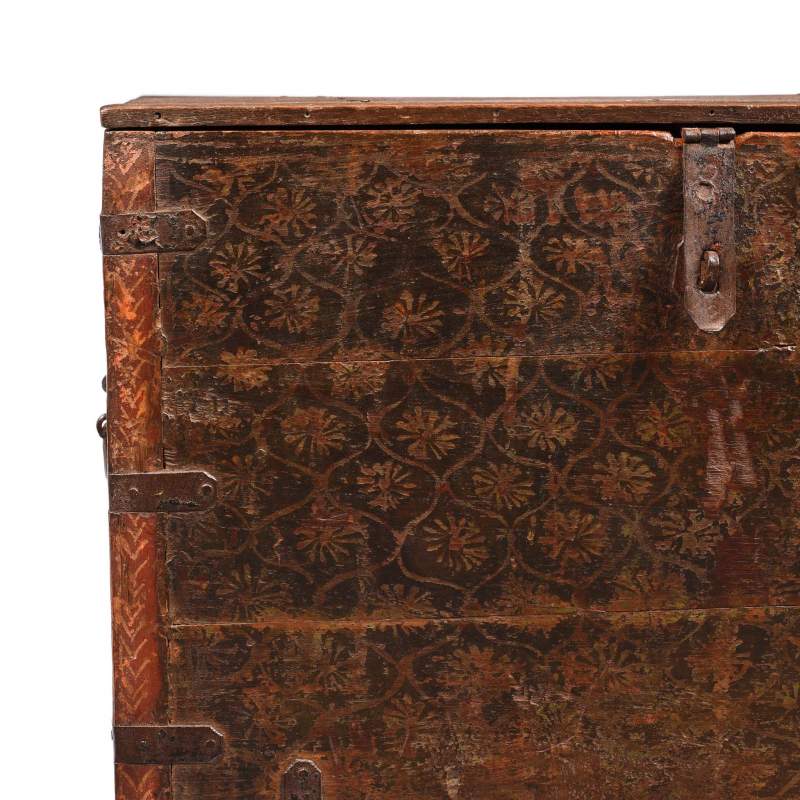
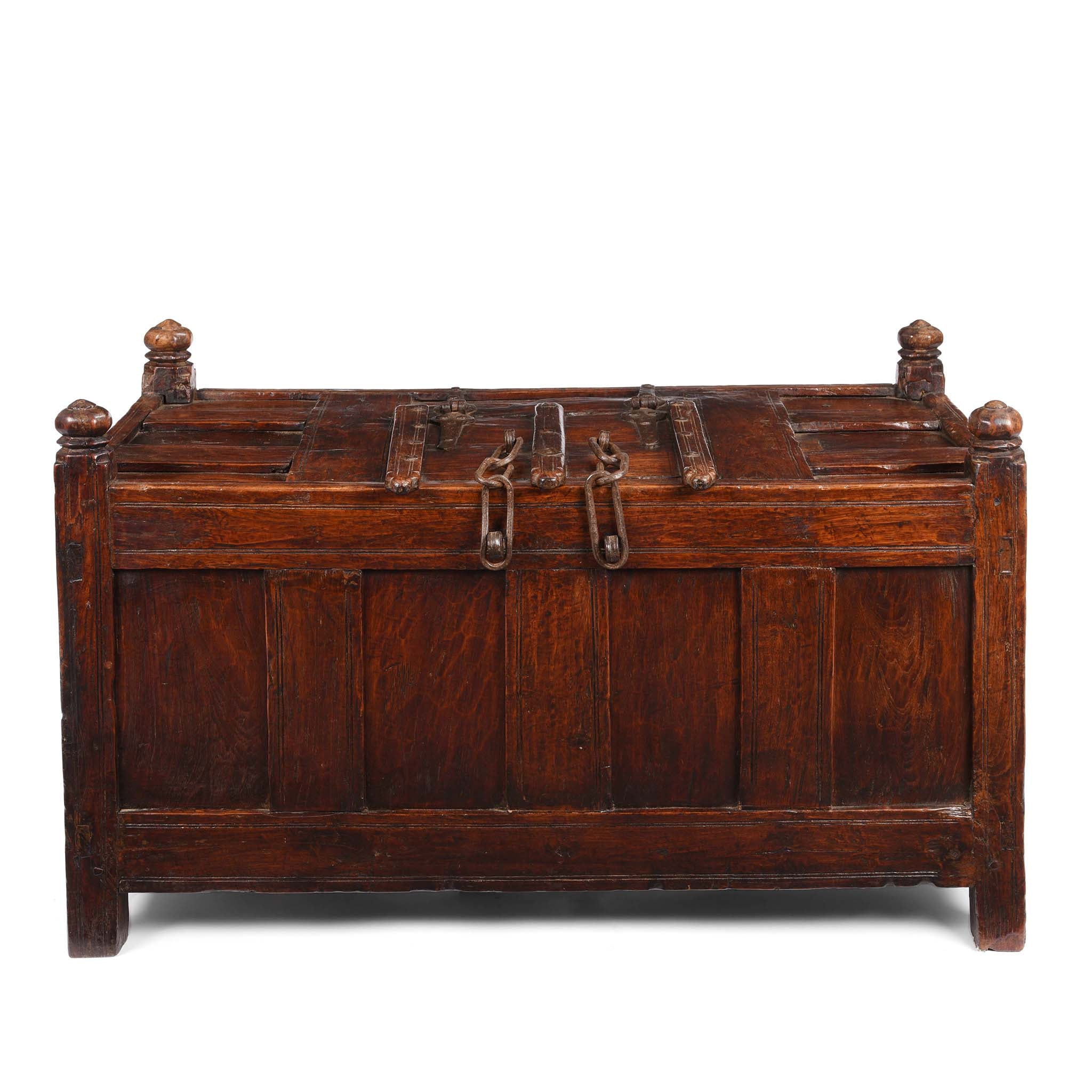
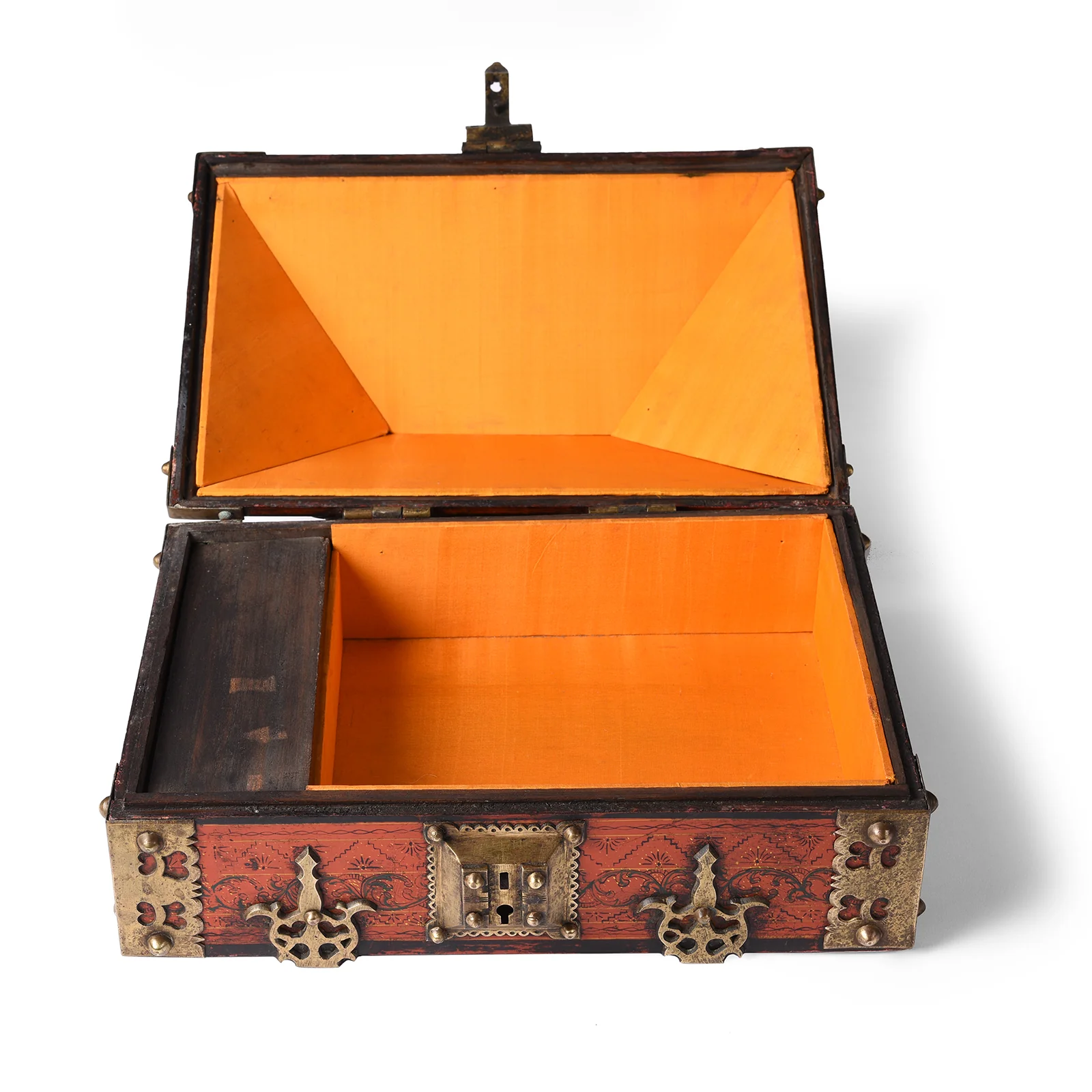
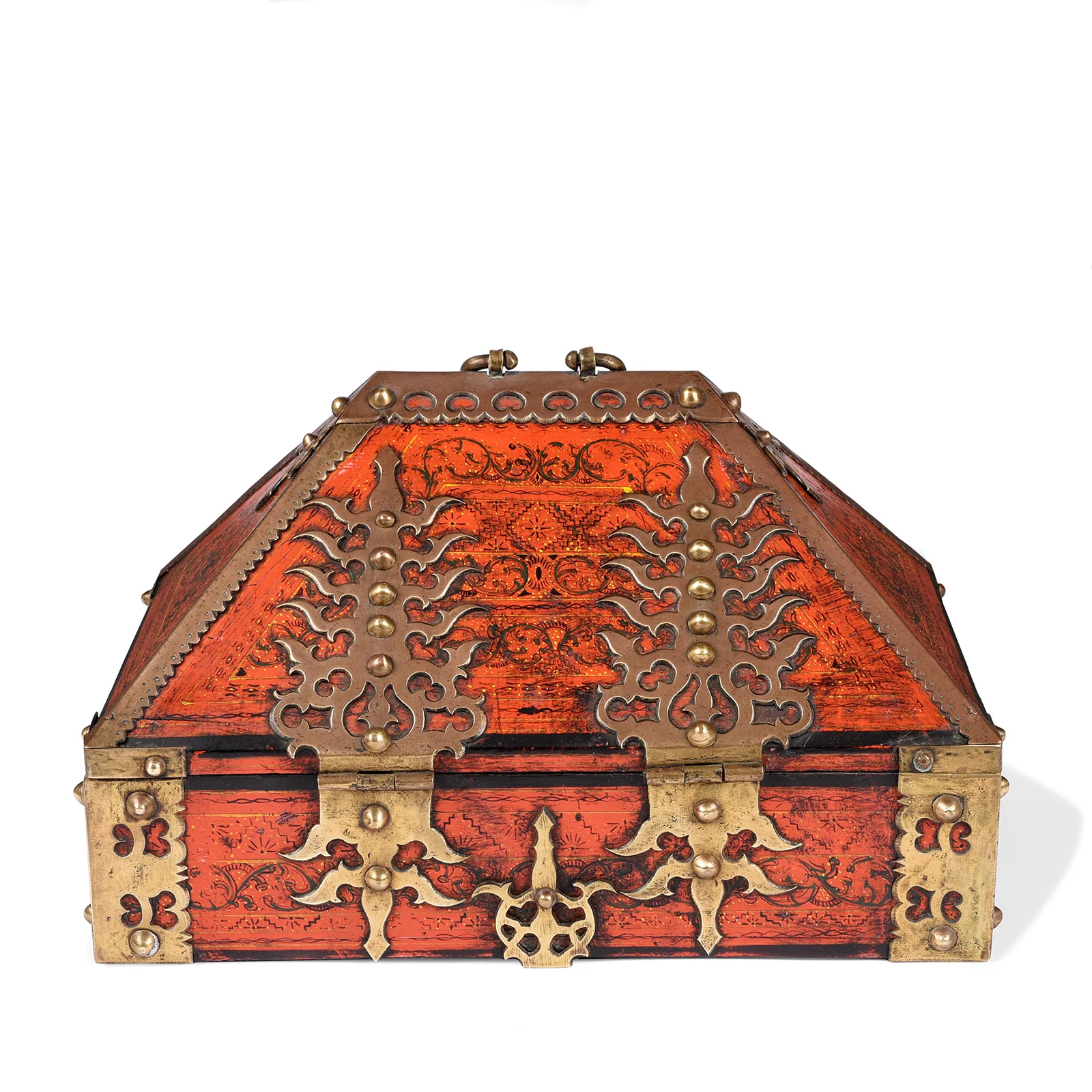
Carved from a single piece of jackfruit wood and painted, this style of box is known as a Malabar box or Nettur Petti and was likely used as a wedding box, jewellery box or betel nut box. These boxes are named after the village of Nettoor where this style of box originated. They were often used as jewellery and dowry chests for women of wealthy families. The hut style with a gabled lid resembles the thatched houses of Kerala and acts as a metaphor for the new home of a bride and groom. In South India it is a common custom for women to wear expensive bridal jewellery equal to the wealth of her household. It has also been suggested that some of these boxes were also used in temples for storing local idols.
This style of box is found almost exclusively in Kerala, South India, and this particular one dates to the early 20th century. It is lined with modern orange silk.
From Kerala, South India
References:
For similar examples see 'India - Village, Tribal, Ritual Art' by Mingei International Museum of Folk Art, page 41.
UK Delivery Charge - except Highlands & Islands £15
More delivery options available at checkout
More Images
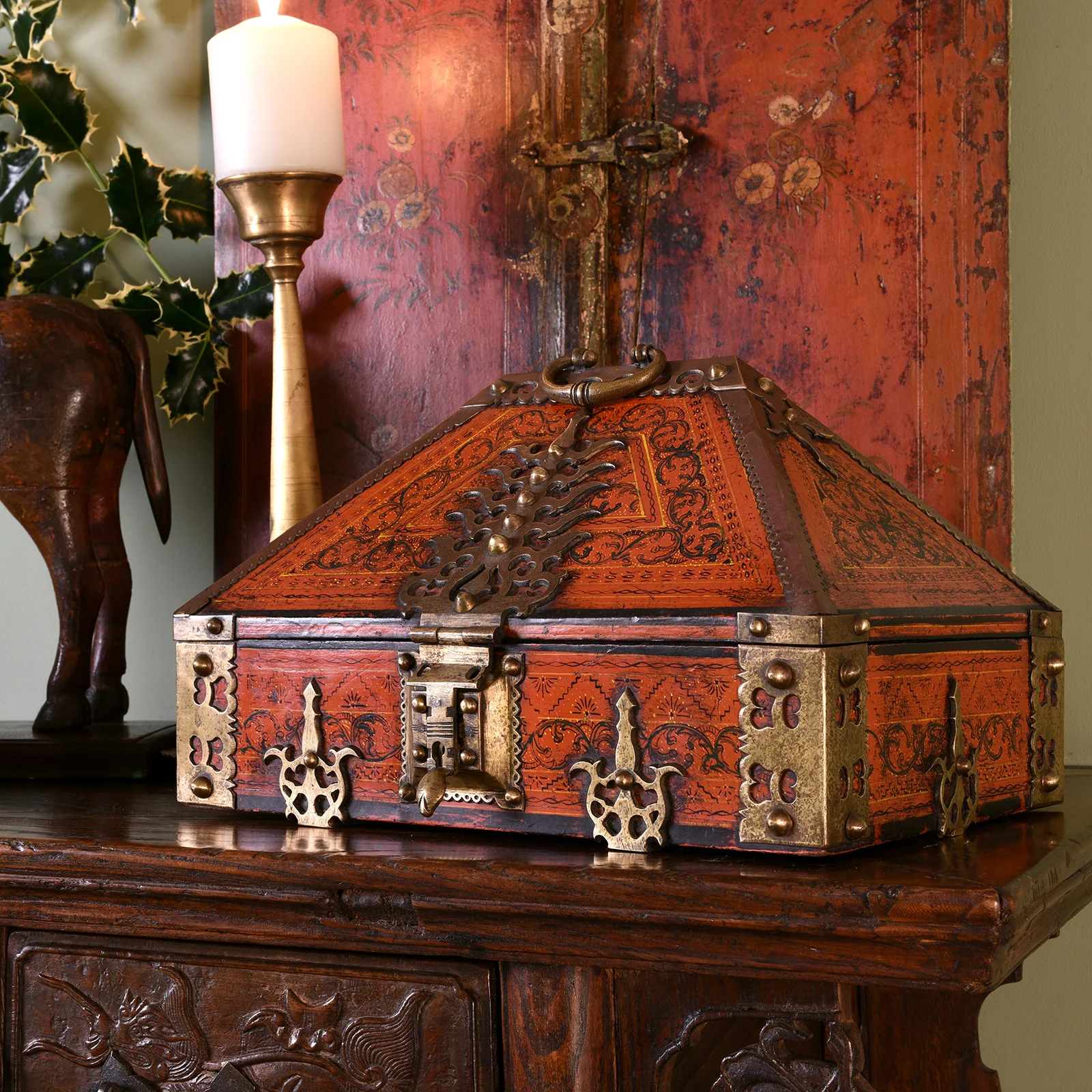
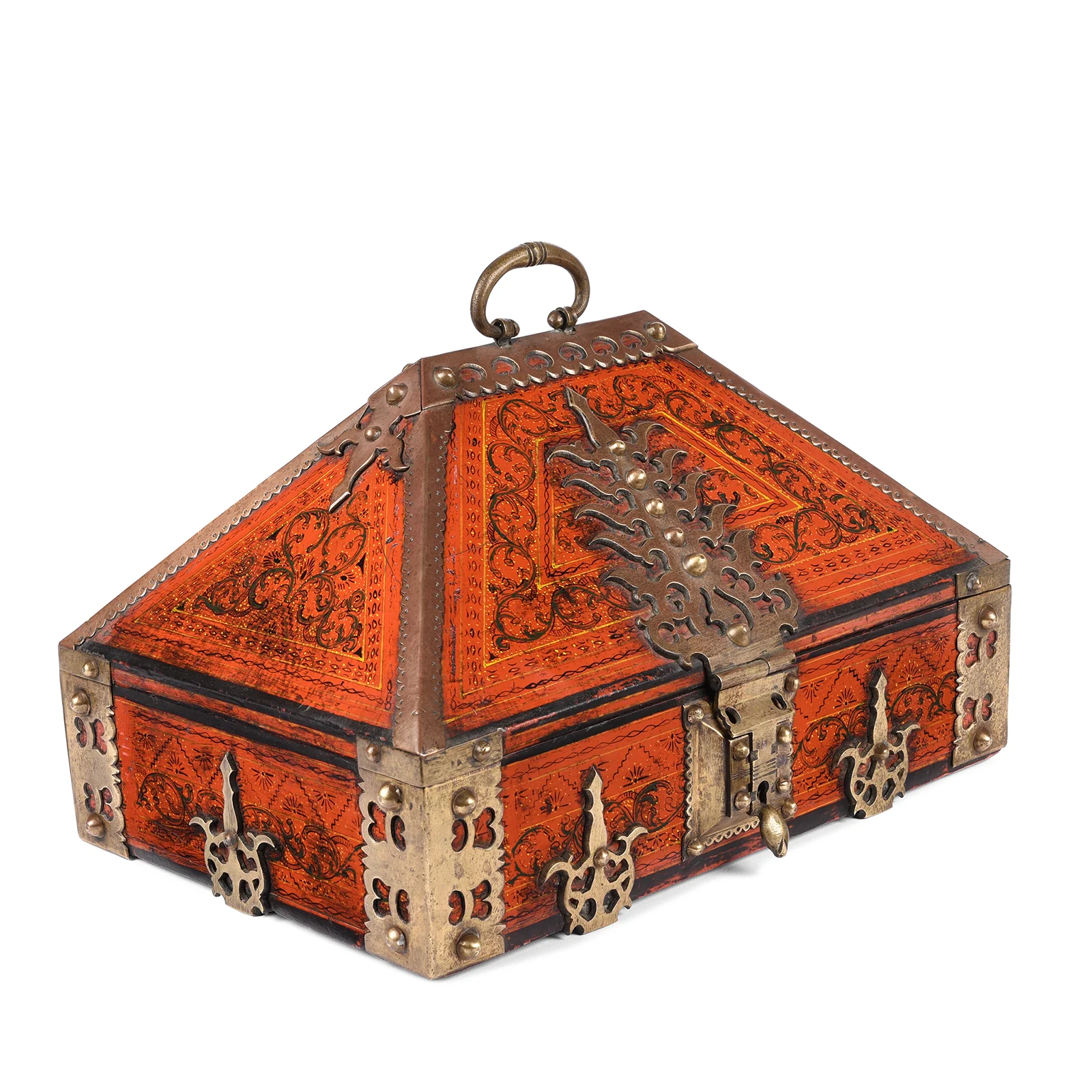
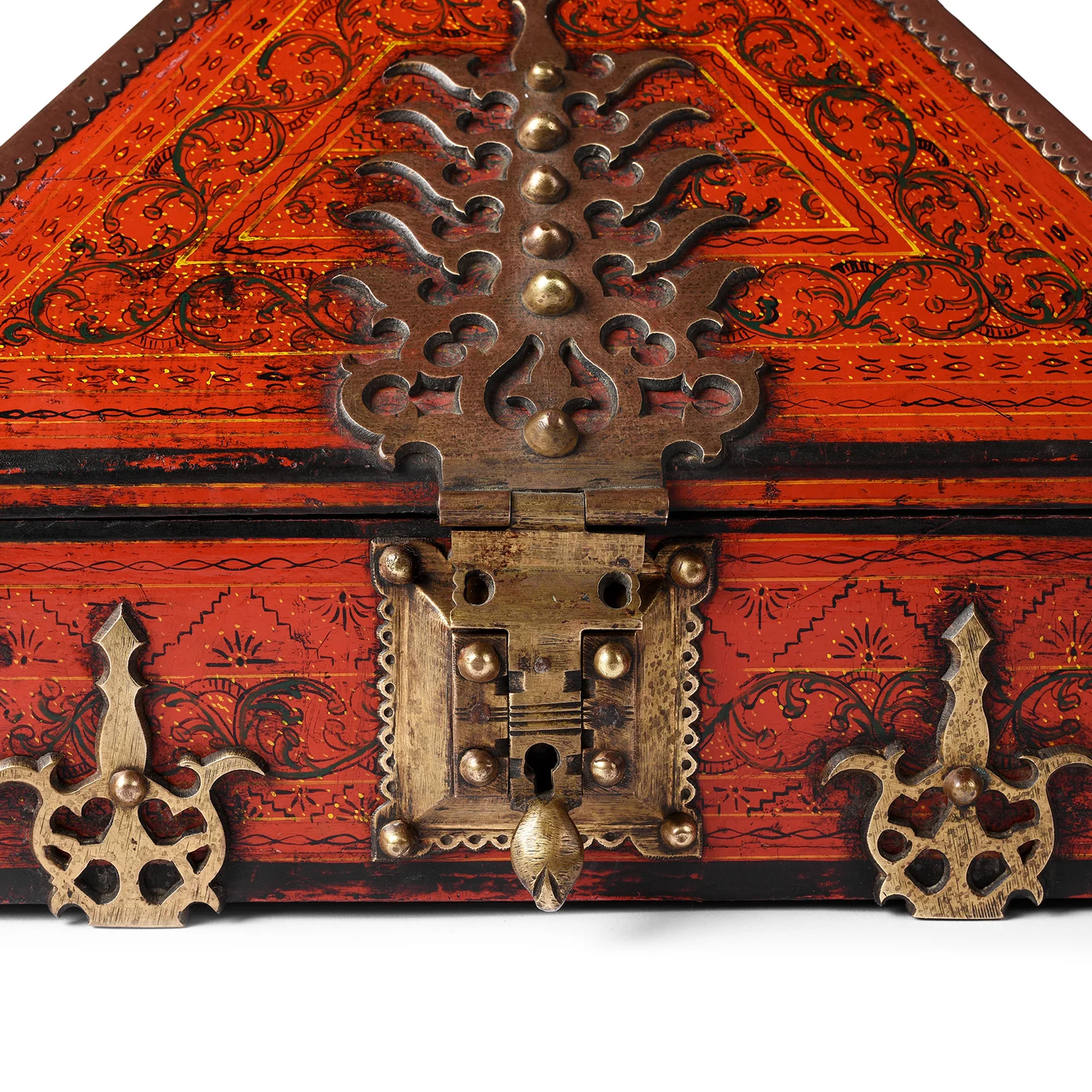
Painted Betel Nut Box From Kerala - Ca 1910
Carved from a single piece of jackfruit wood and painted, this style of box is known as a Malabar box or Nettur Petti and was likely used as a wedding box, jewellery box or betel nut box. These boxes are named after the village of Nettoor where this style of box originated. They were often used as jewellery and dowry chests for women of wealthy families. The hut style with a gabled lid resembles the thatched houses of Kerala and acts as a metaphor for the new home of a bride and groom. In South India it is a common custom for women to wear expensive bridal jewellery equal to the wealth of her household. It has also been suggested that some of these boxes were also used in temples for storing local idols.
This style of box is found almost exclusively in Kerala, South India, and this particular one dates to the early 20th century. It is lined with modern orange silk.
From Kerala, South India
References:
For similar examples see 'India - Village, Tribal, Ritual Art' by Mingei International Museum of Folk Art, page 41.
UK Delivery Charge - except Highlands & Islands £15
More delivery options available at checkout
Product Information
Product Information
Shipping & Returns
Shipping & Returns
Description
Carved from a single piece of jackfruit wood and painted, this style of box is known as a Malabar box or Nettur Petti and was likely used as a wedding box, jewellery box or betel nut box. These boxes are named after the village of Nettoor where this style of box originated. They were often used as jewellery and dowry chests for women of wealthy families. The hut style with a gabled lid resembles the thatched houses of Kerala and acts as a metaphor for the new home of a bride and groom. In South India it is a common custom for women to wear expensive bridal jewellery equal to the wealth of her household. It has also been suggested that some of these boxes were also used in temples for storing local idols.
This style of box is found almost exclusively in Kerala, South India, and this particular one dates to the early 20th century. It is lined with modern orange silk.
From Kerala, South India
References:
For similar examples see 'India - Village, Tribal, Ritual Art' by Mingei International Museum of Folk Art, page 41.
UK Delivery Charge - except Highlands & Islands £15
More delivery options available at checkout