
Painted Malabar Betel Nut Box From Kerala - Ca 1920
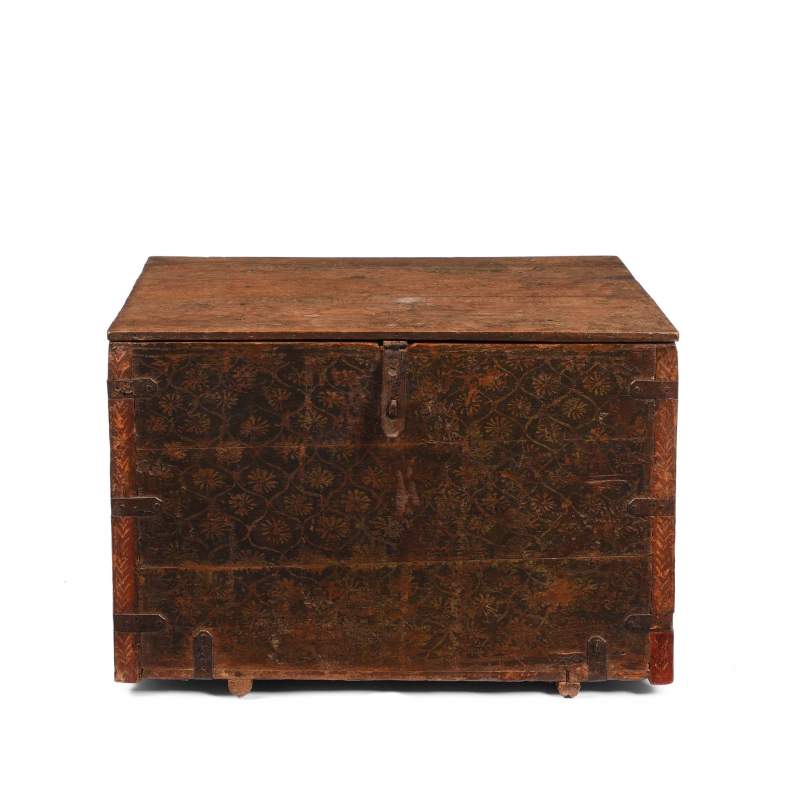
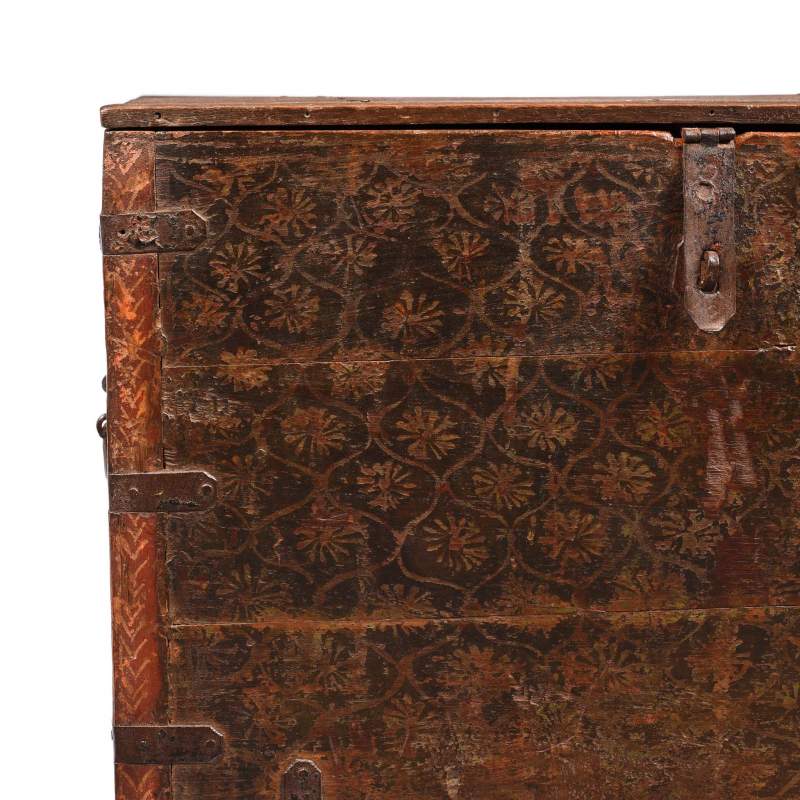
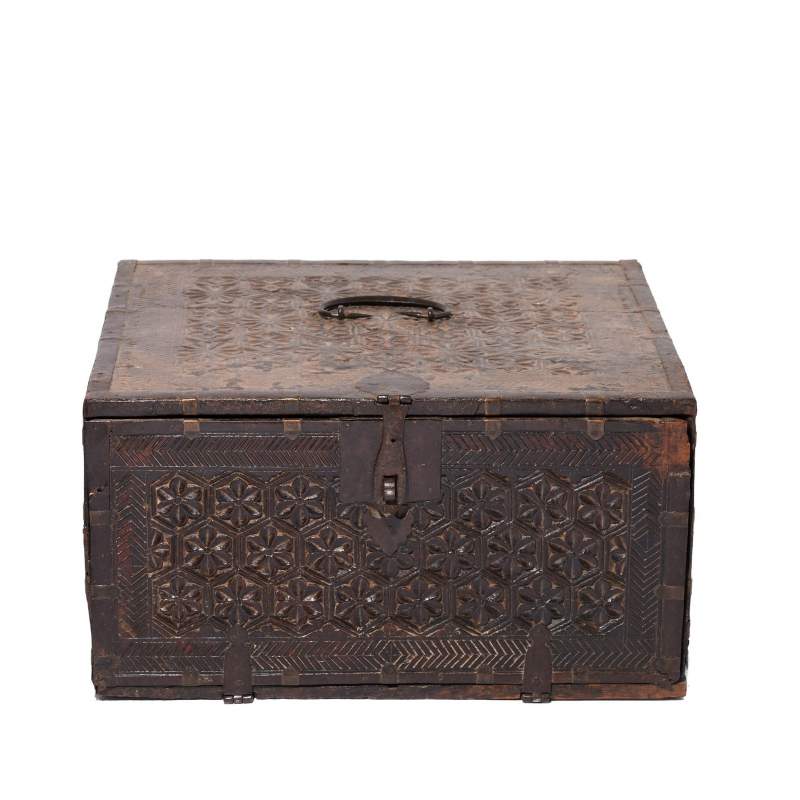
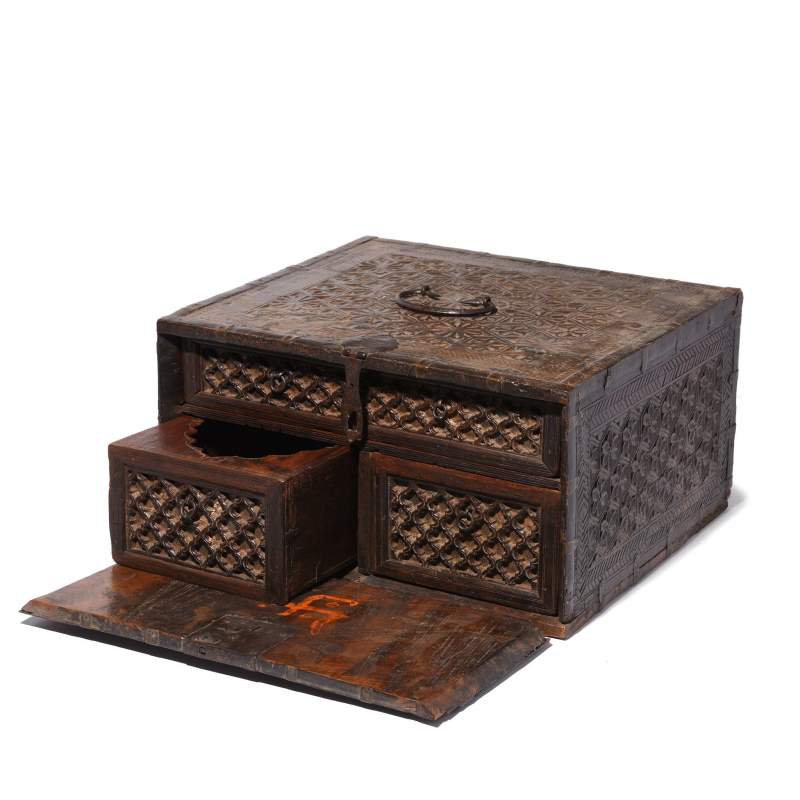
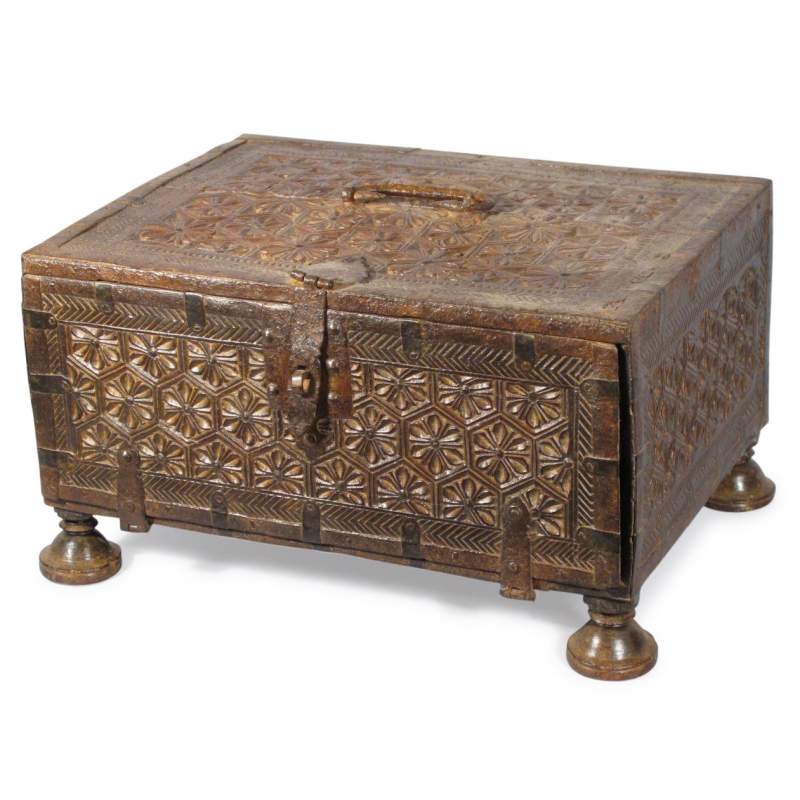
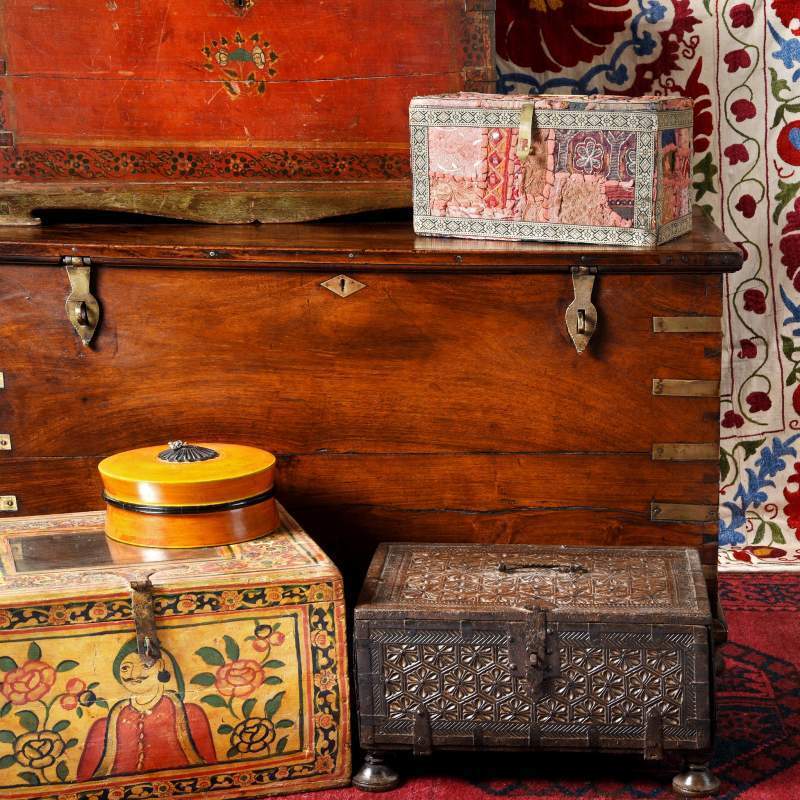
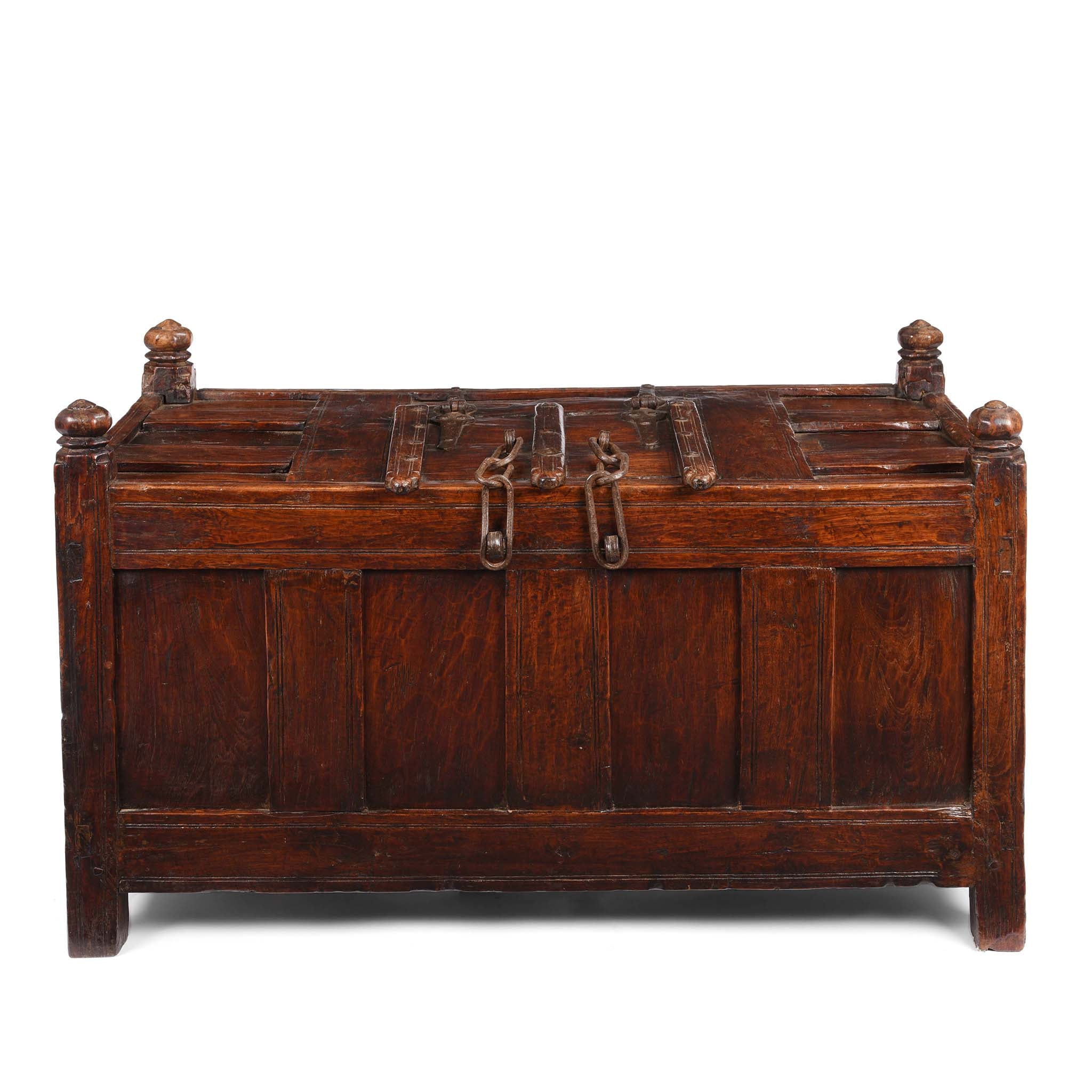
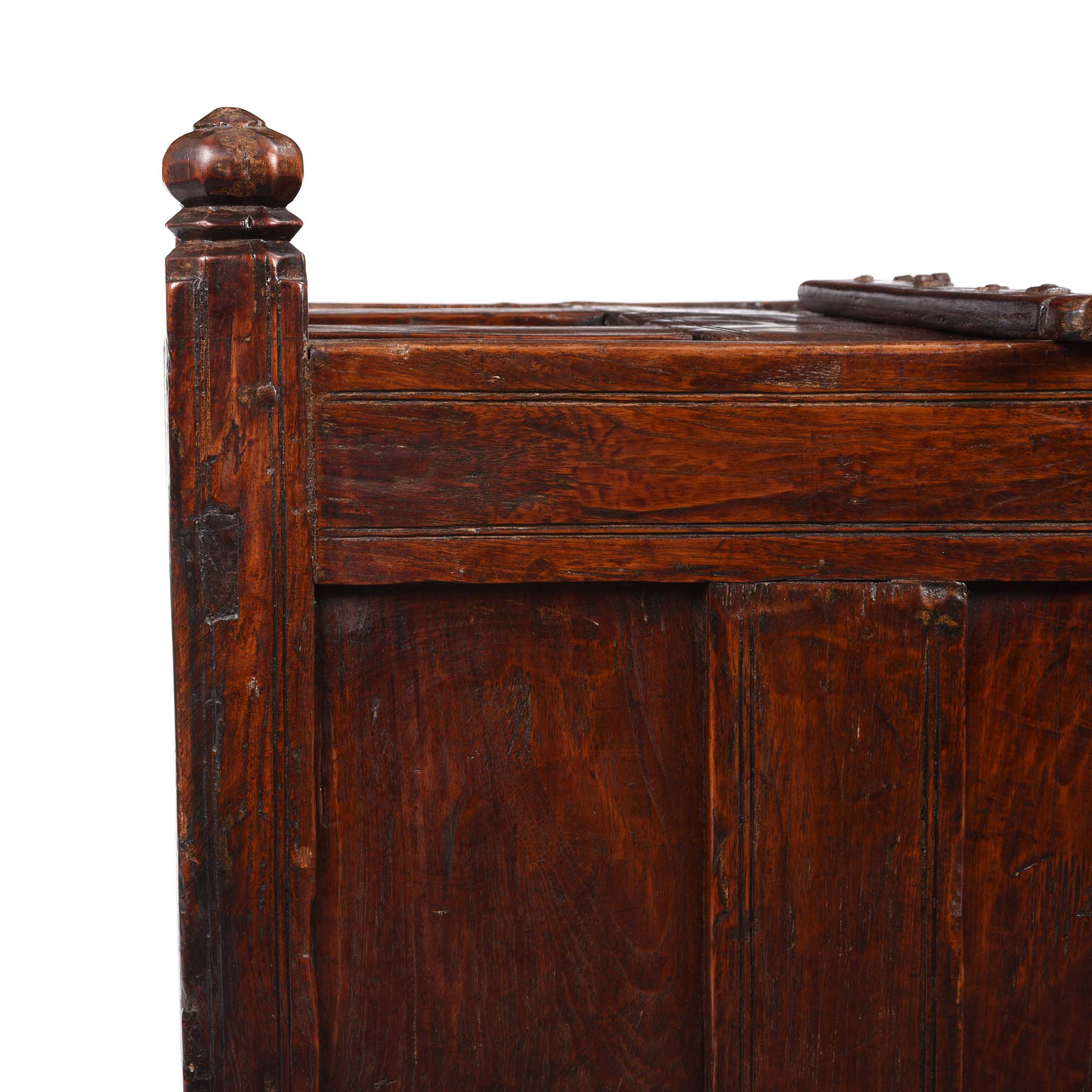
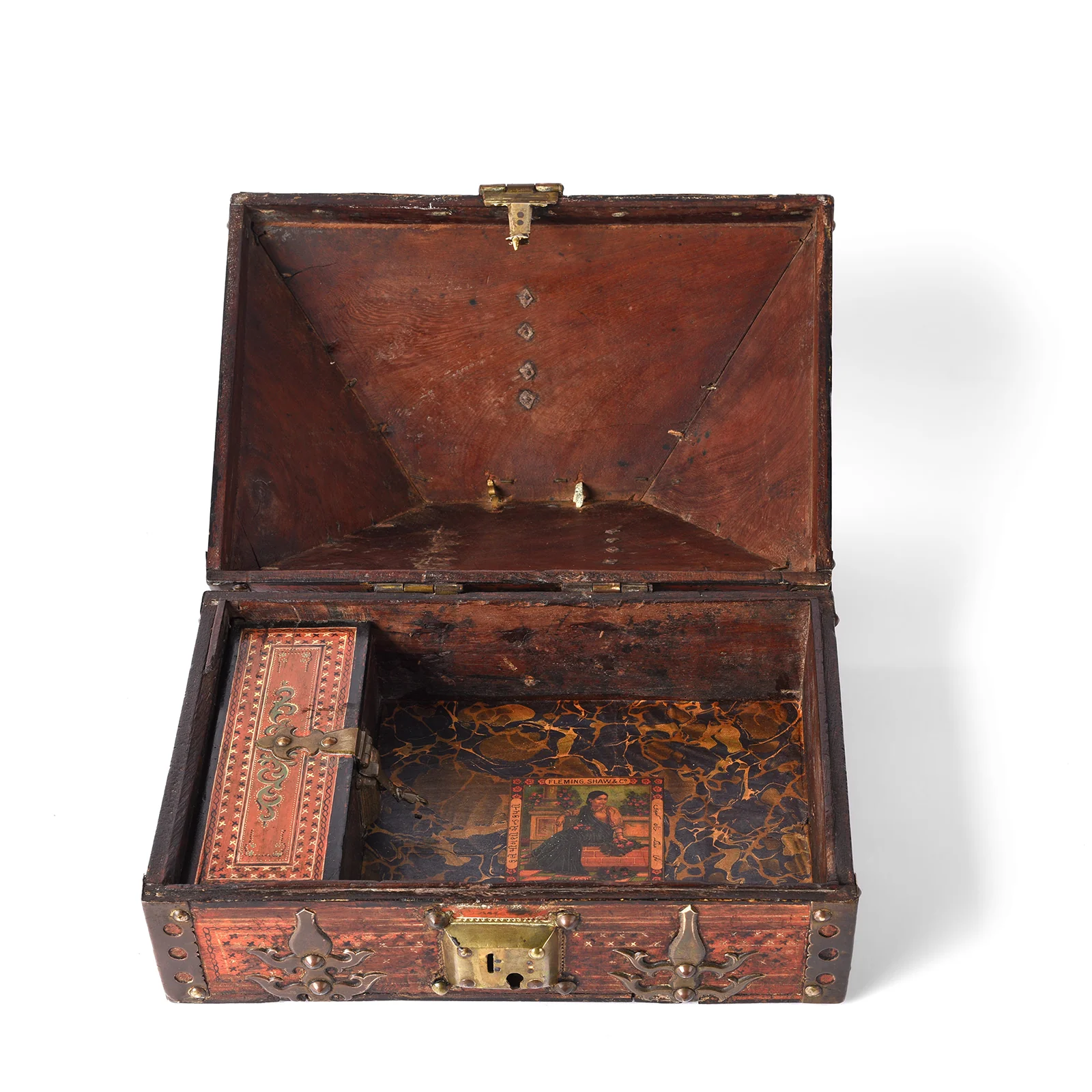
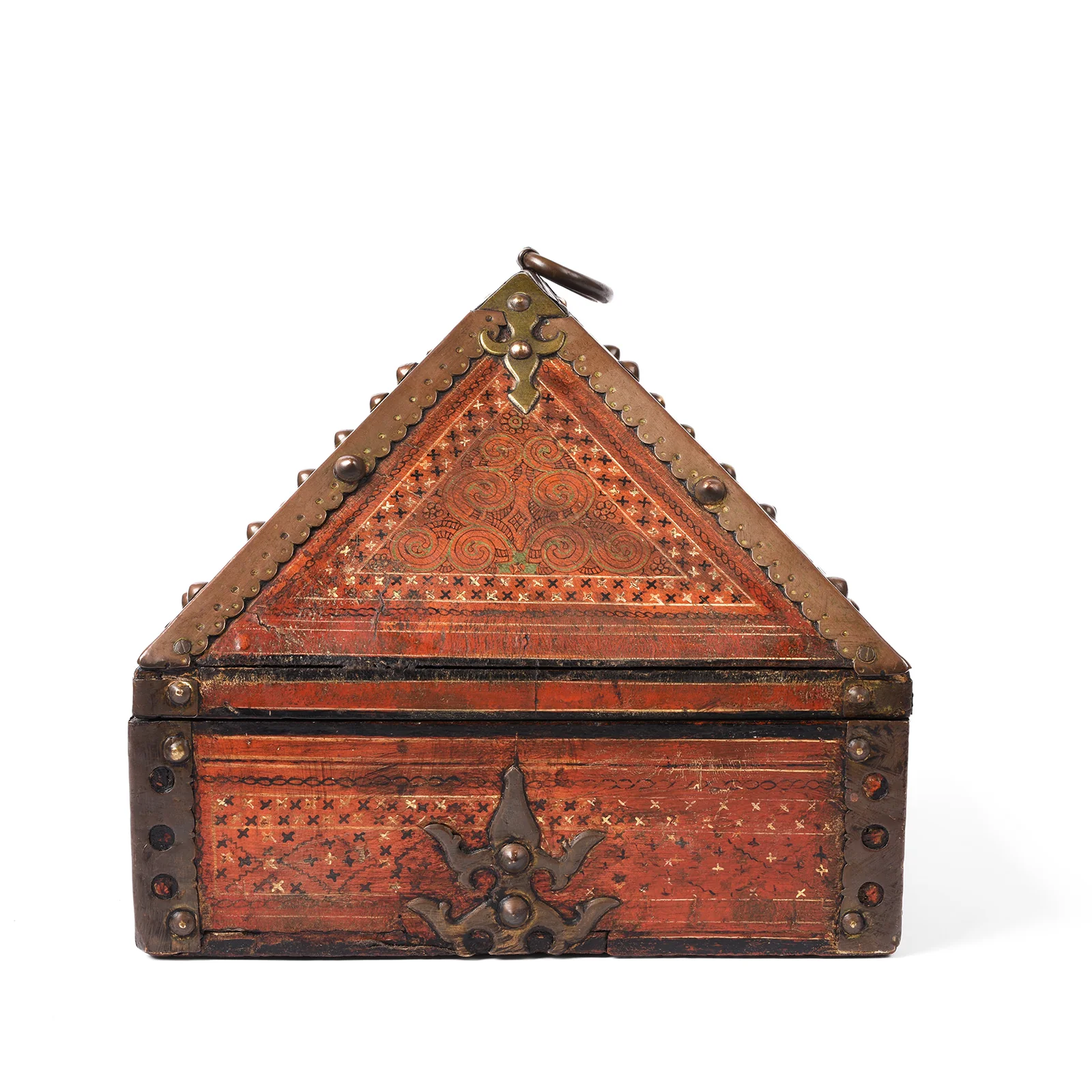
Carved from a single piece of jackfruit wood and painted, this style of Indian box is known as a "Malabar Box" or "Nettur Petti." and was likely used as a wedding box, jewellery box or betel nut box. It dates to circa 1920
Nettoor pettis, also known as Malabar boxes, are one of the most recognisable and prominent examples of Keralan craftsmanship. Named after Nettoor, the village in Kerala where the craft is believed to have originated, and usually made in either teak, rosewood or jack wood with eccentric brass fittings, these boxes were commonly used as jewellery and dowry chests by the women of the most affluent and richest families. Their design, resembling a thatched house, is not a coincidence: it is a visual metaphor for the new house where the bride will live with her husband. It has been suggested some of these pettis (boxes) were employed in temples as well to store precious and bejewelled ornaments of the local idol (murti).
References:
For a similar example see page figure 39, page 52 of Arts & Crafts of India by Ilay Cooper & John Gillow.
UK Delivery Charge - except Highlands & Islands £15
More delivery options available at checkout
Original: $1,011.31
-65%$1,011.31
$353.96More Images




Painted Malabar Betel Nut Box From Kerala - Ca 1920
Carved from a single piece of jackfruit wood and painted, this style of Indian box is known as a "Malabar Box" or "Nettur Petti." and was likely used as a wedding box, jewellery box or betel nut box. It dates to circa 1920
Nettoor pettis, also known as Malabar boxes, are one of the most recognisable and prominent examples of Keralan craftsmanship. Named after Nettoor, the village in Kerala where the craft is believed to have originated, and usually made in either teak, rosewood or jack wood with eccentric brass fittings, these boxes were commonly used as jewellery and dowry chests by the women of the most affluent and richest families. Their design, resembling a thatched house, is not a coincidence: it is a visual metaphor for the new house where the bride will live with her husband. It has been suggested some of these pettis (boxes) were employed in temples as well to store precious and bejewelled ornaments of the local idol (murti).
References:
For a similar example see page figure 39, page 52 of Arts & Crafts of India by Ilay Cooper & John Gillow.
UK Delivery Charge - except Highlands & Islands £15
More delivery options available at checkout
Product Information
Product Information
Shipping & Returns
Shipping & Returns
Description
Carved from a single piece of jackfruit wood and painted, this style of Indian box is known as a "Malabar Box" or "Nettur Petti." and was likely used as a wedding box, jewellery box or betel nut box. It dates to circa 1920
Nettoor pettis, also known as Malabar boxes, are one of the most recognisable and prominent examples of Keralan craftsmanship. Named after Nettoor, the village in Kerala where the craft is believed to have originated, and usually made in either teak, rosewood or jack wood with eccentric brass fittings, these boxes were commonly used as jewellery and dowry chests by the women of the most affluent and richest families. Their design, resembling a thatched house, is not a coincidence: it is a visual metaphor for the new house where the bride will live with her husband. It has been suggested some of these pettis (boxes) were employed in temples as well to store precious and bejewelled ornaments of the local idol (murti).
References:
For a similar example see page figure 39, page 52 of Arts & Crafts of India by Ilay Cooper & John Gillow.
UK Delivery Charge - except Highlands & Islands £15
More delivery options available at checkout