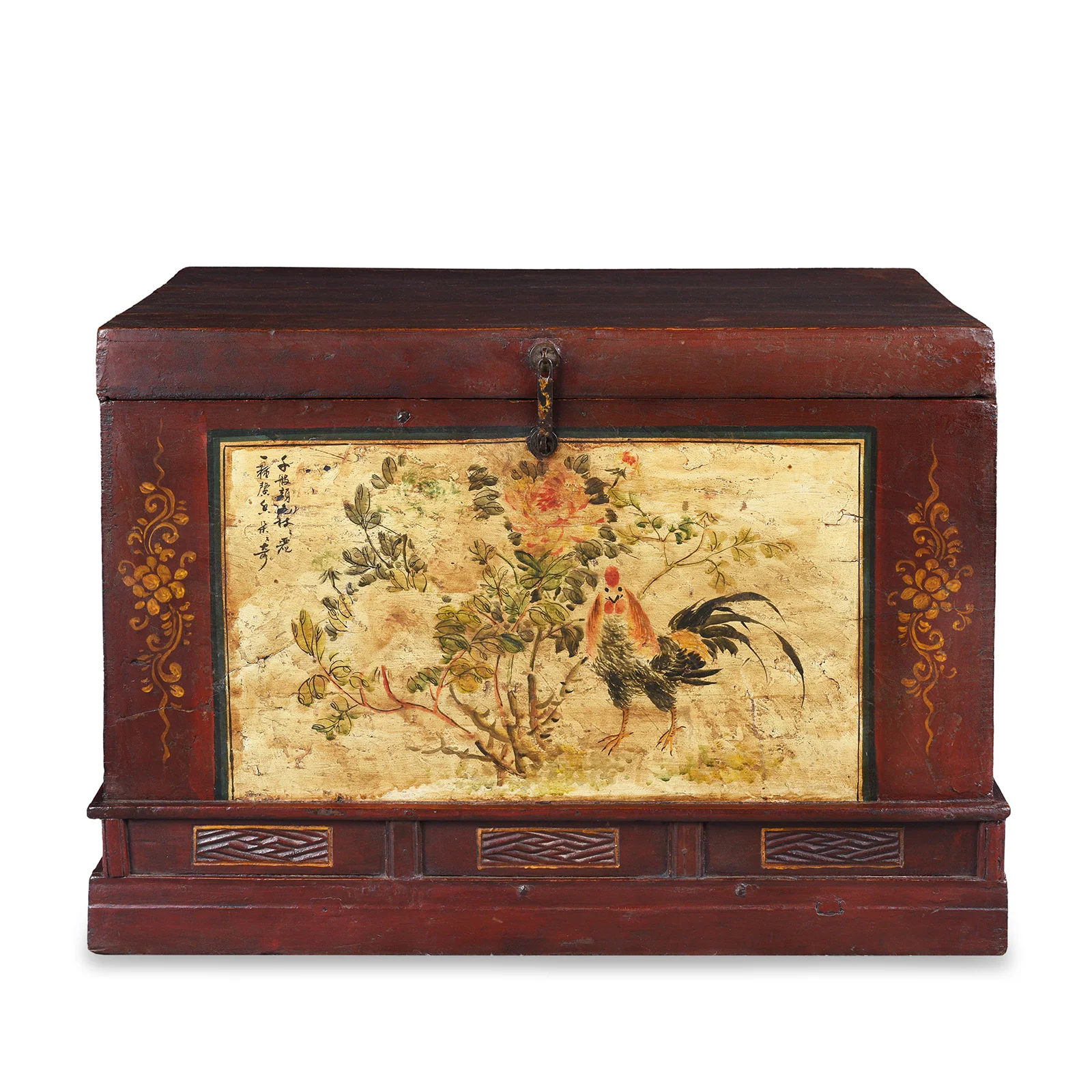
Red Painted Opera Chest From Shanxi - Ca 1900
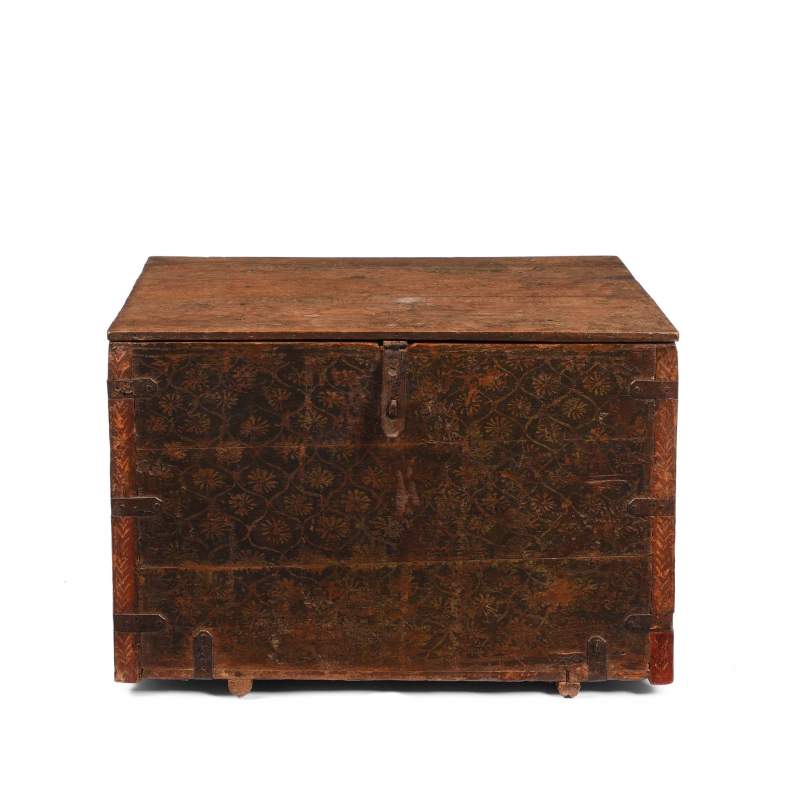
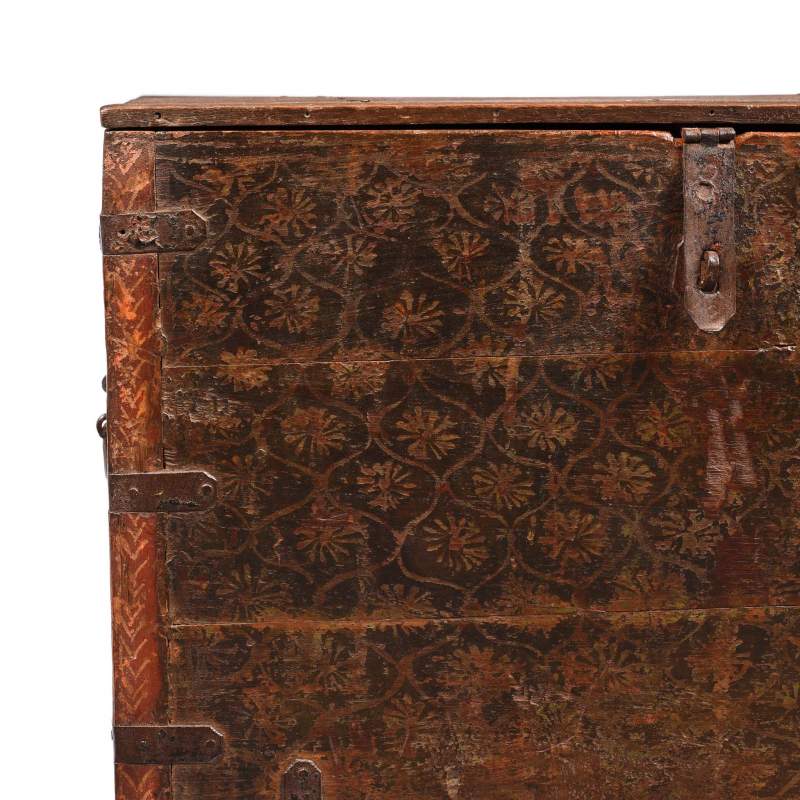
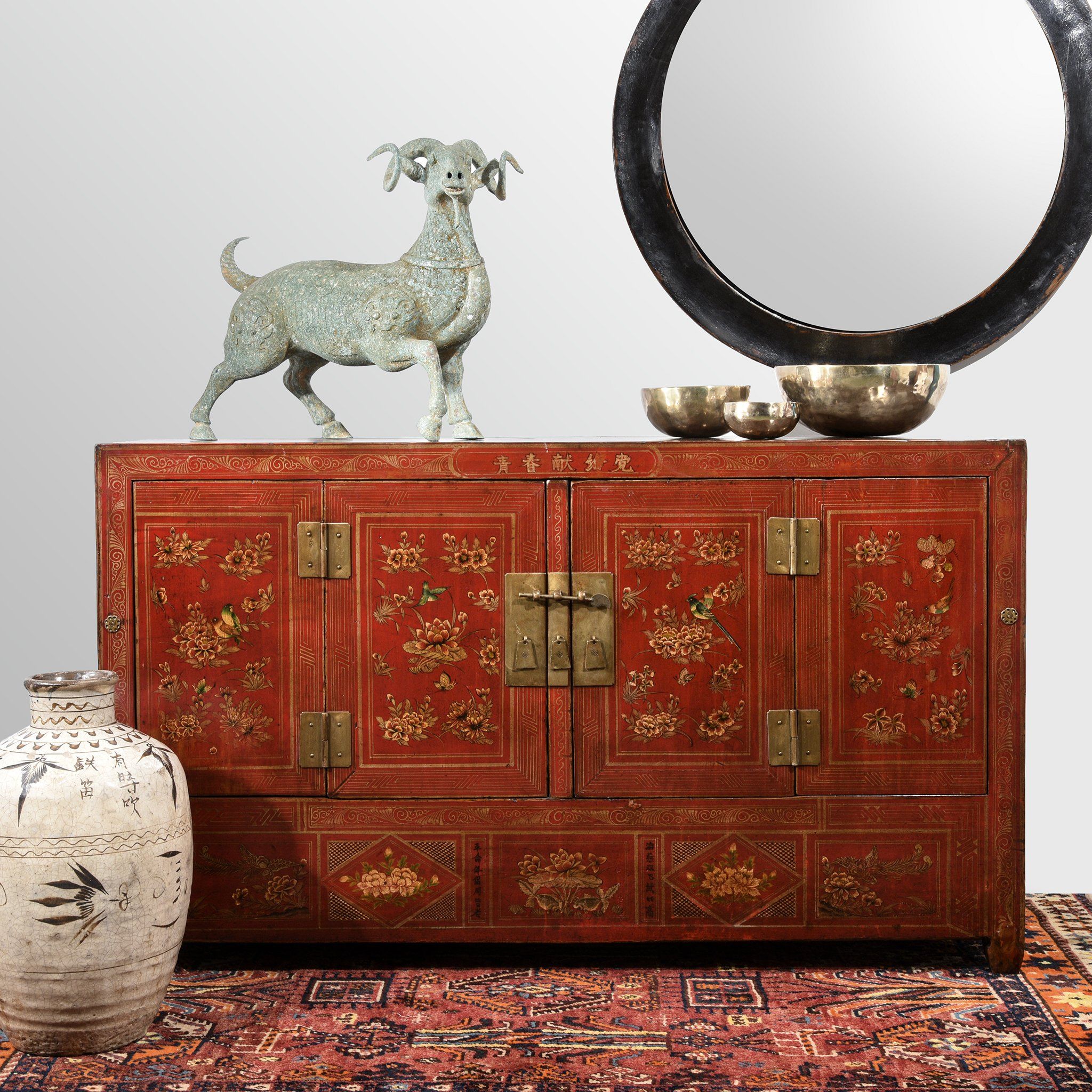
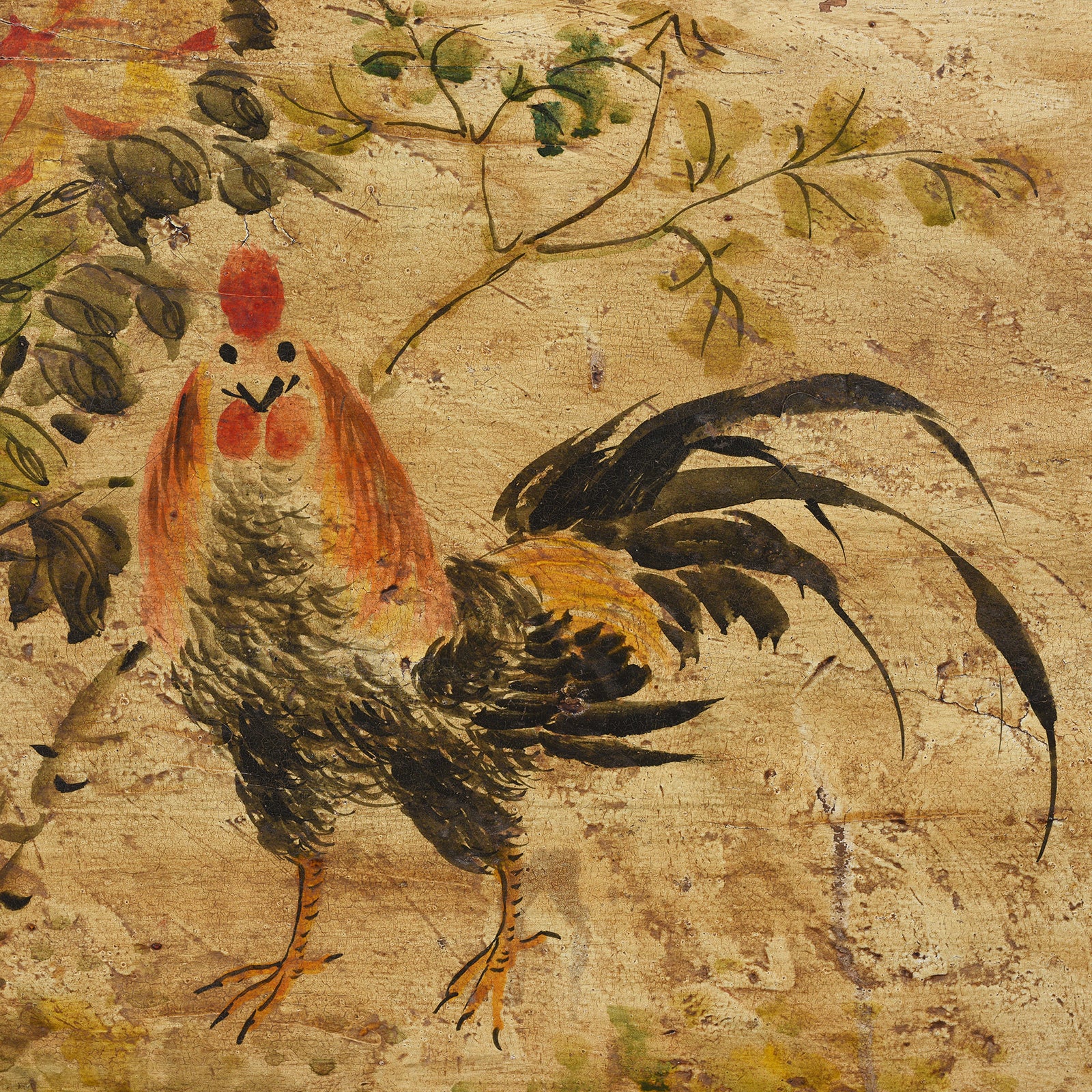
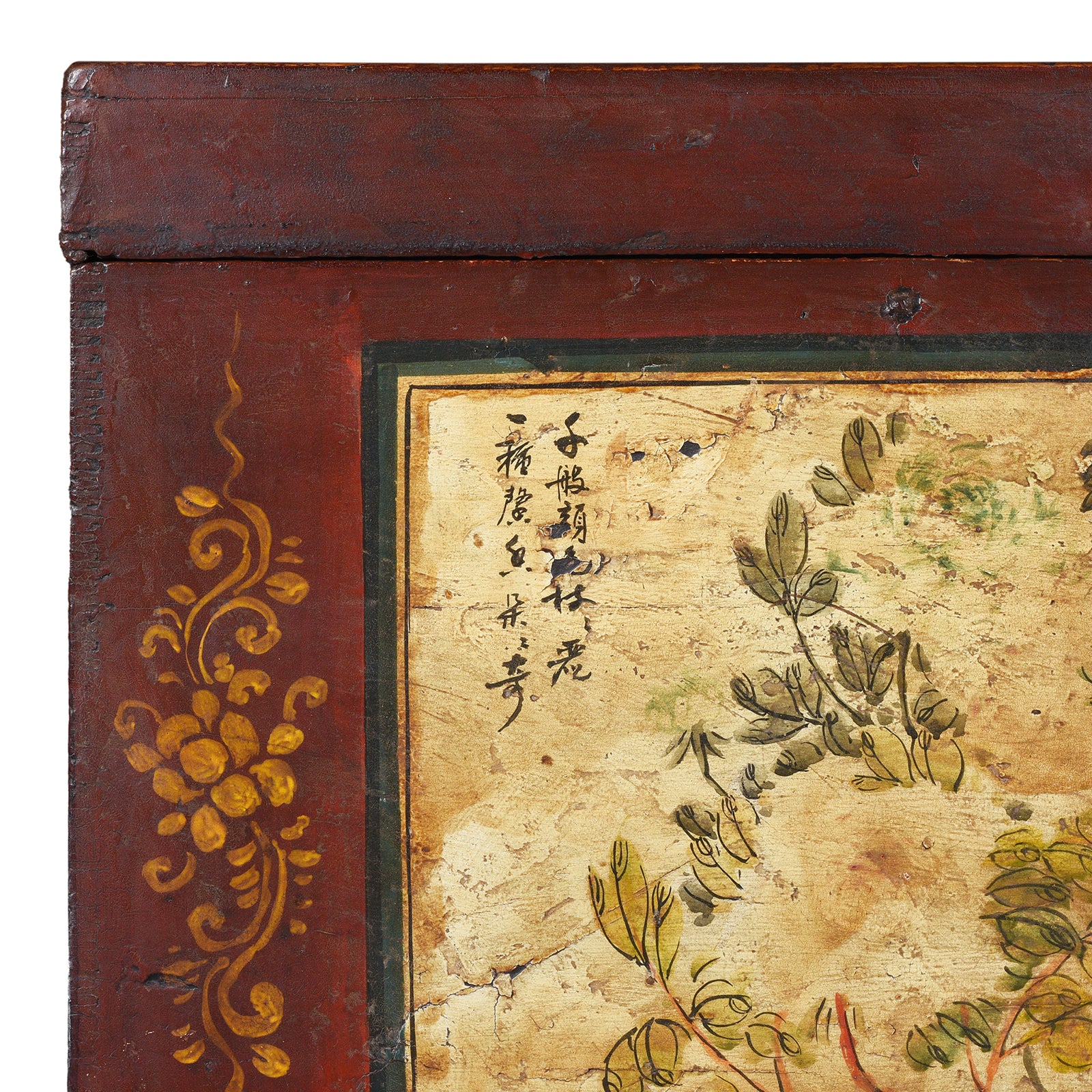
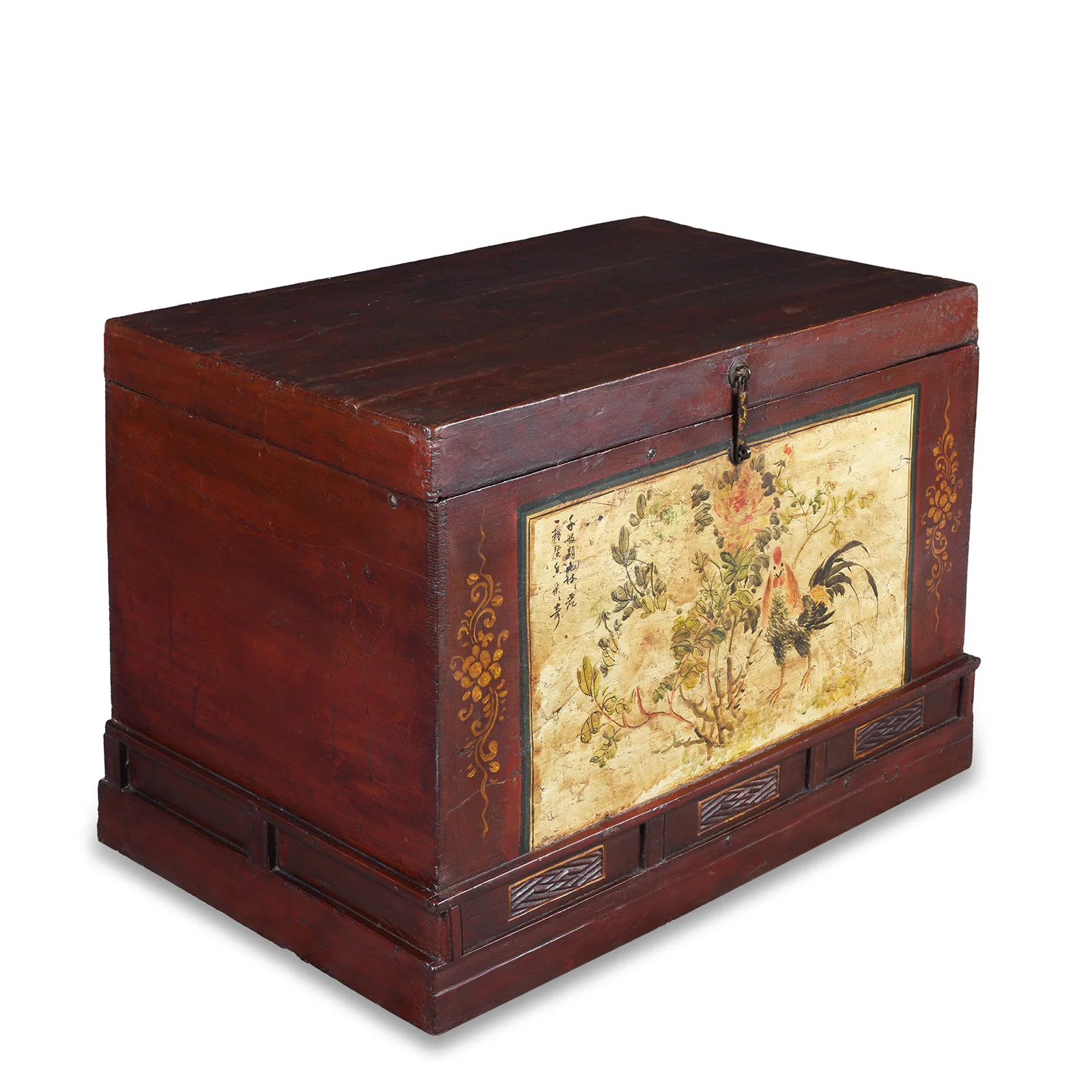
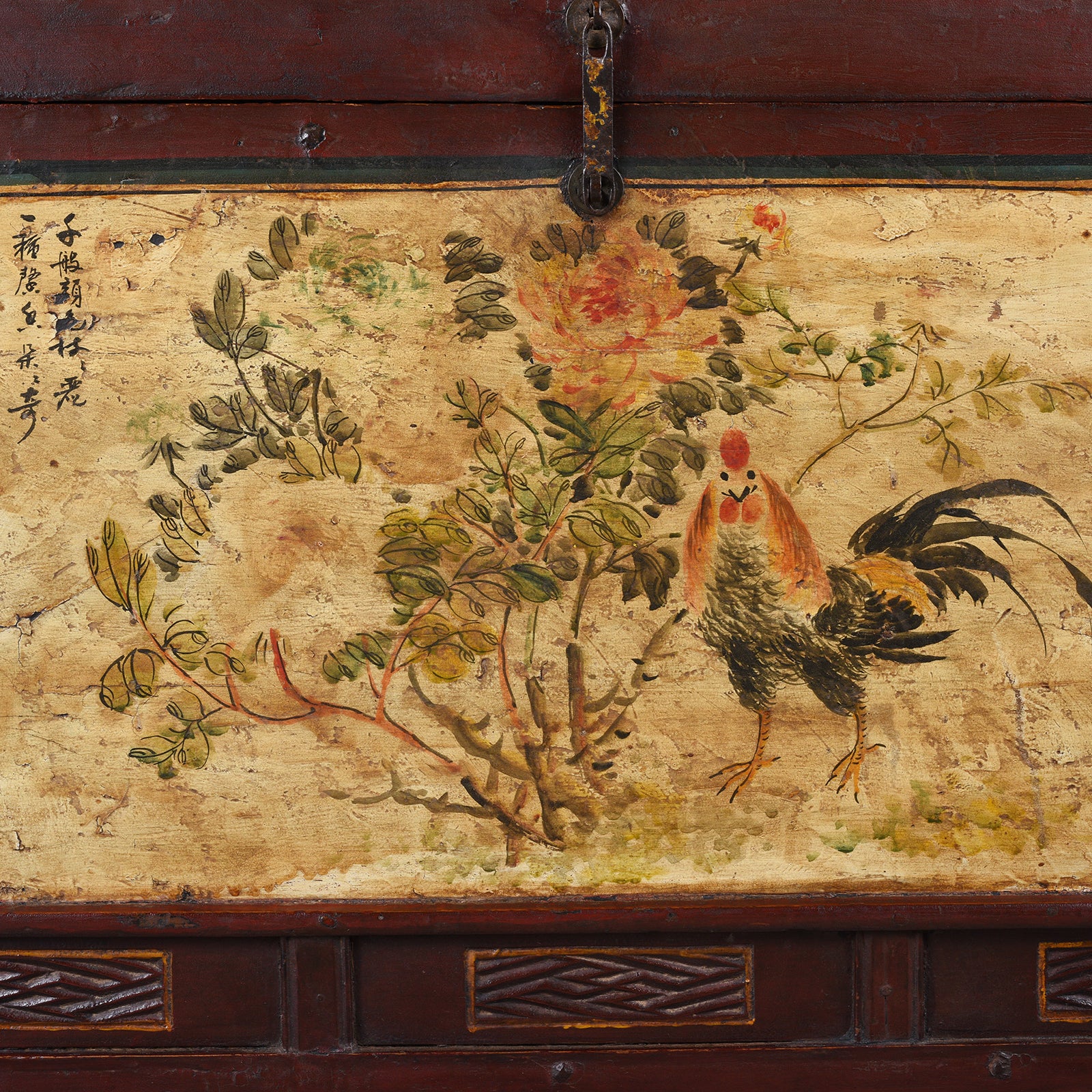
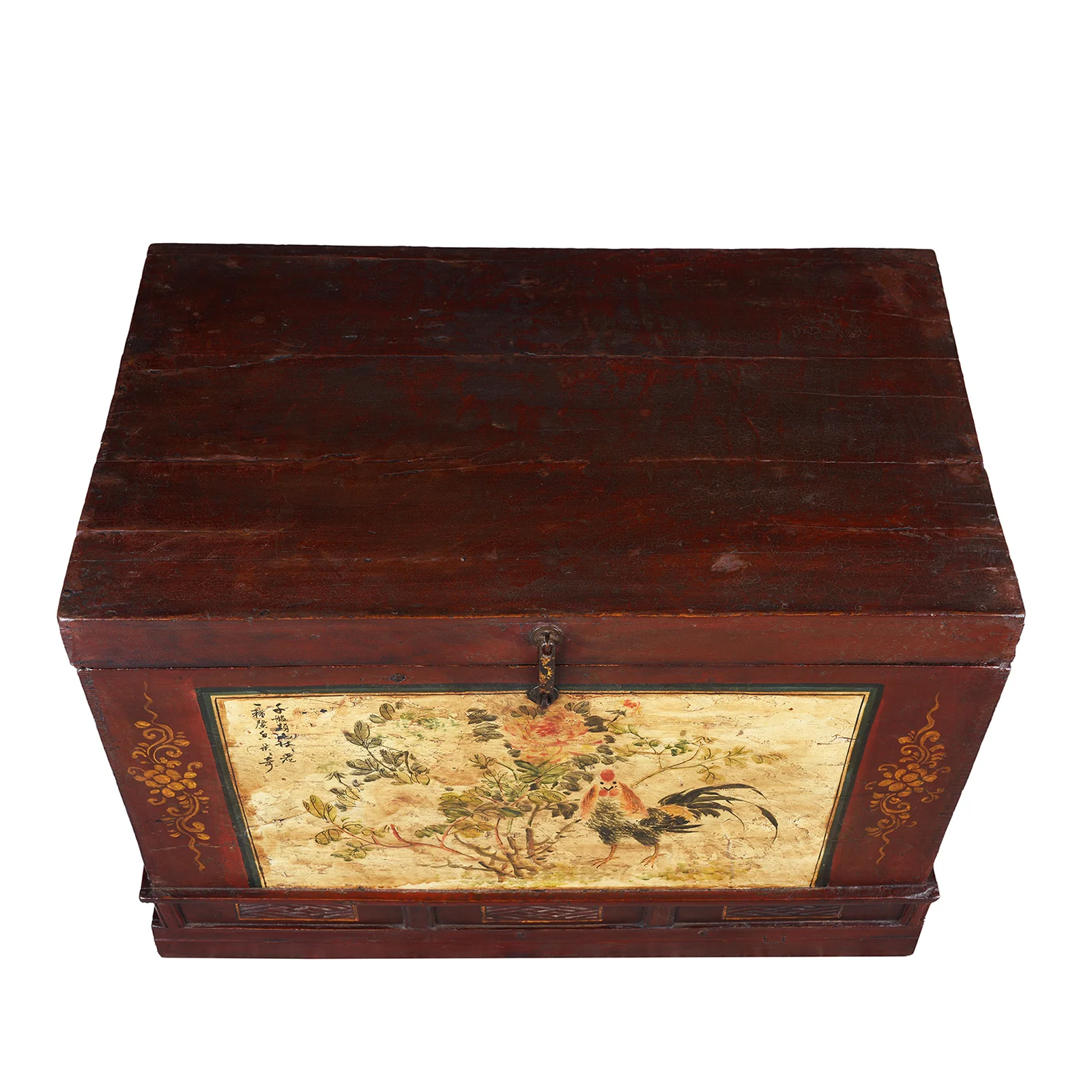
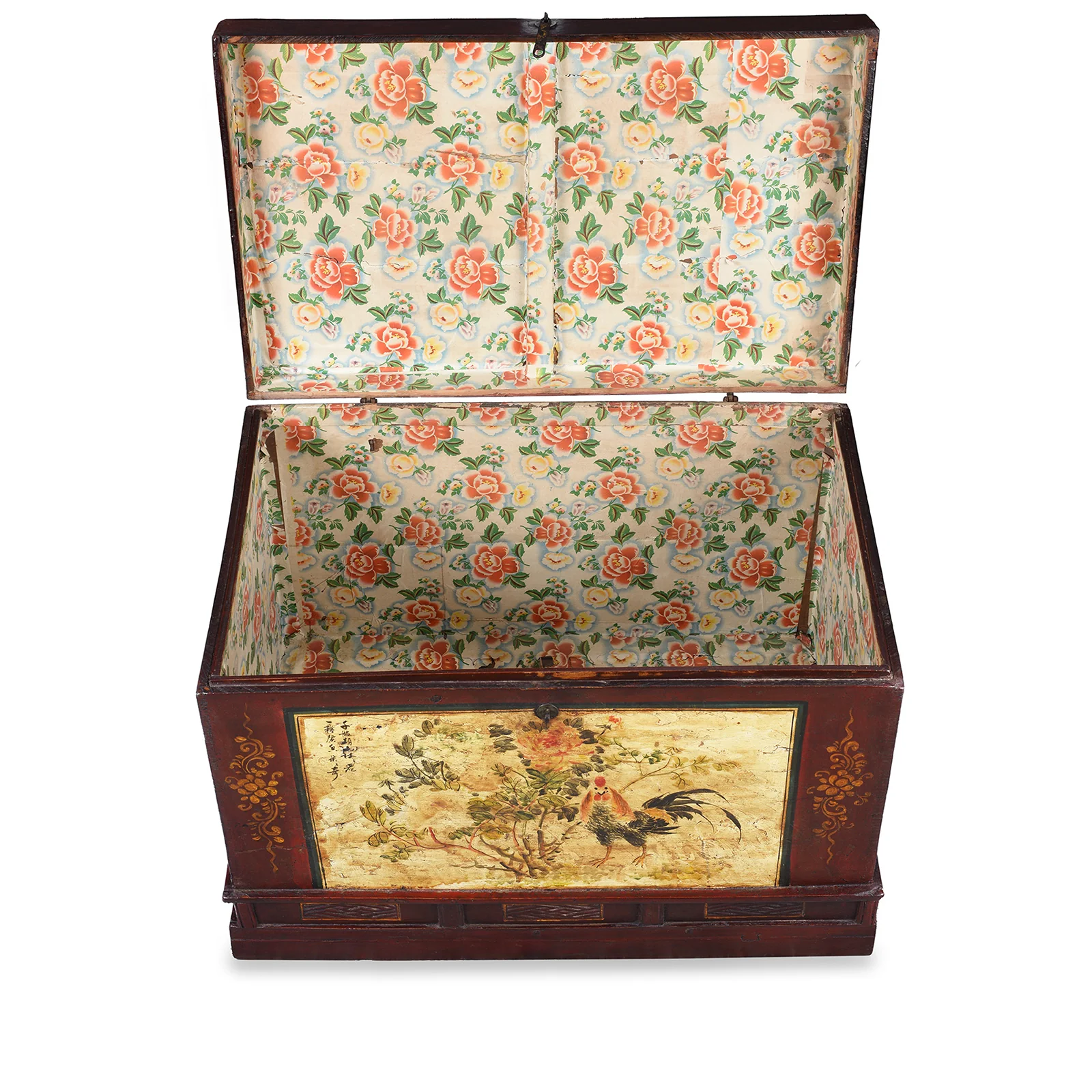
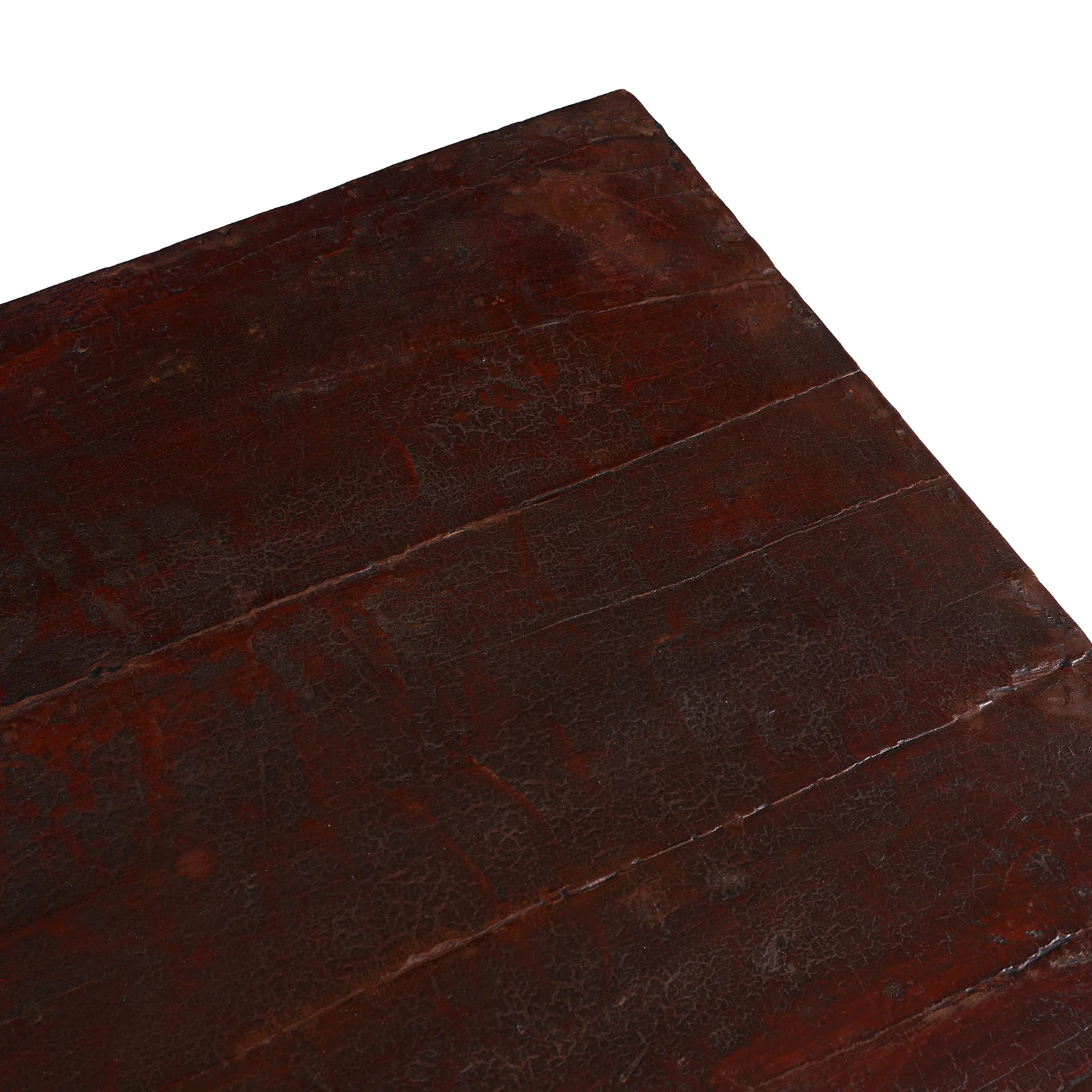
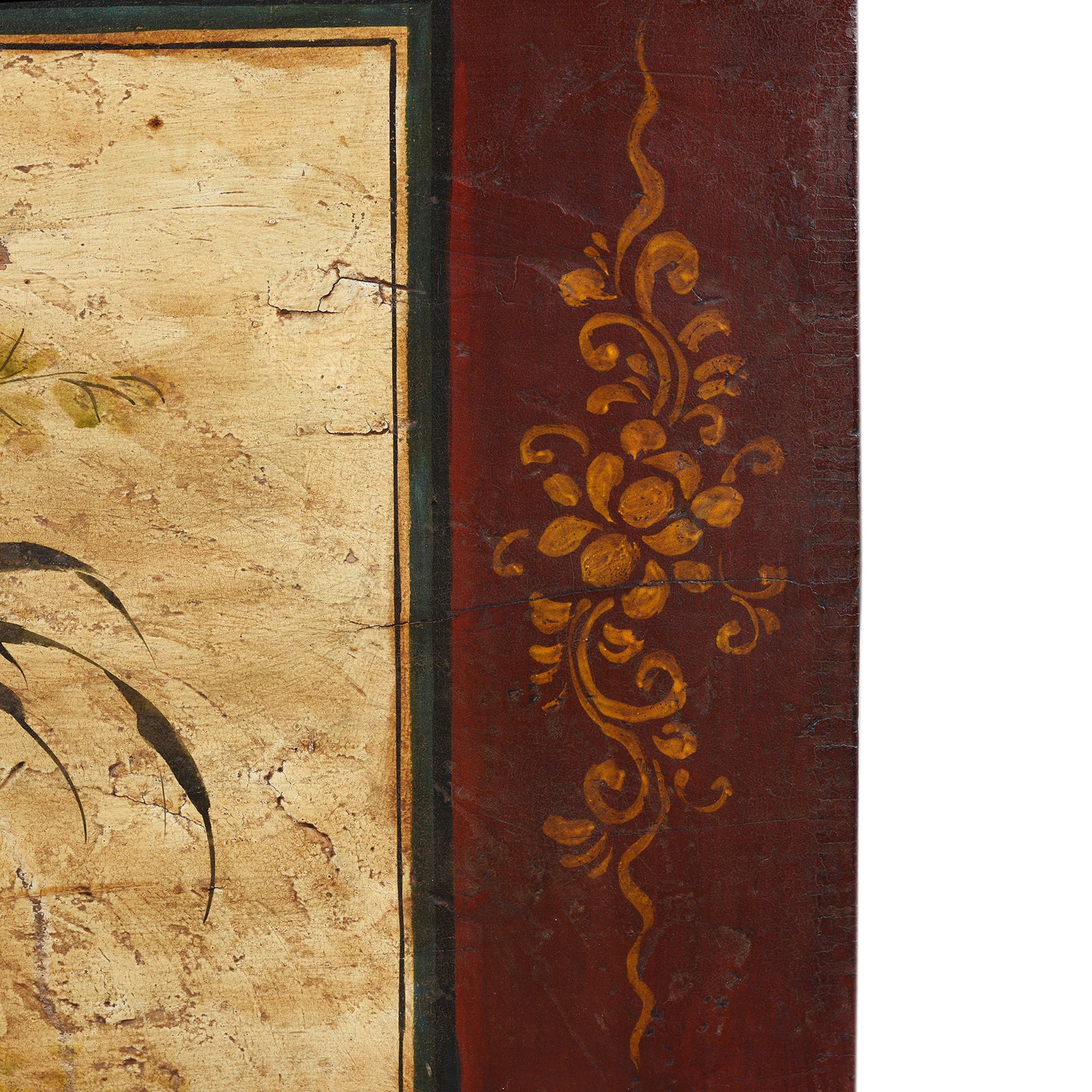
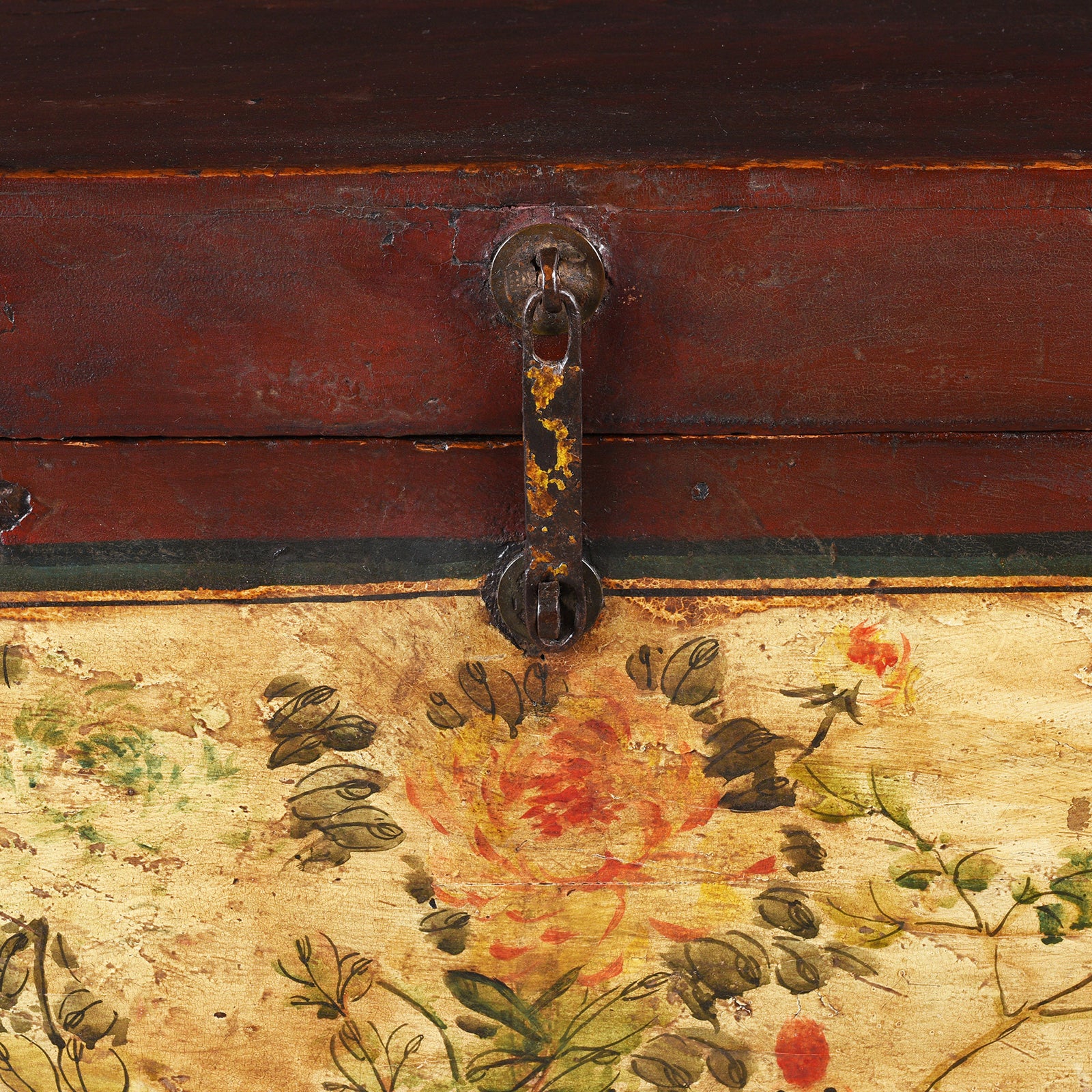
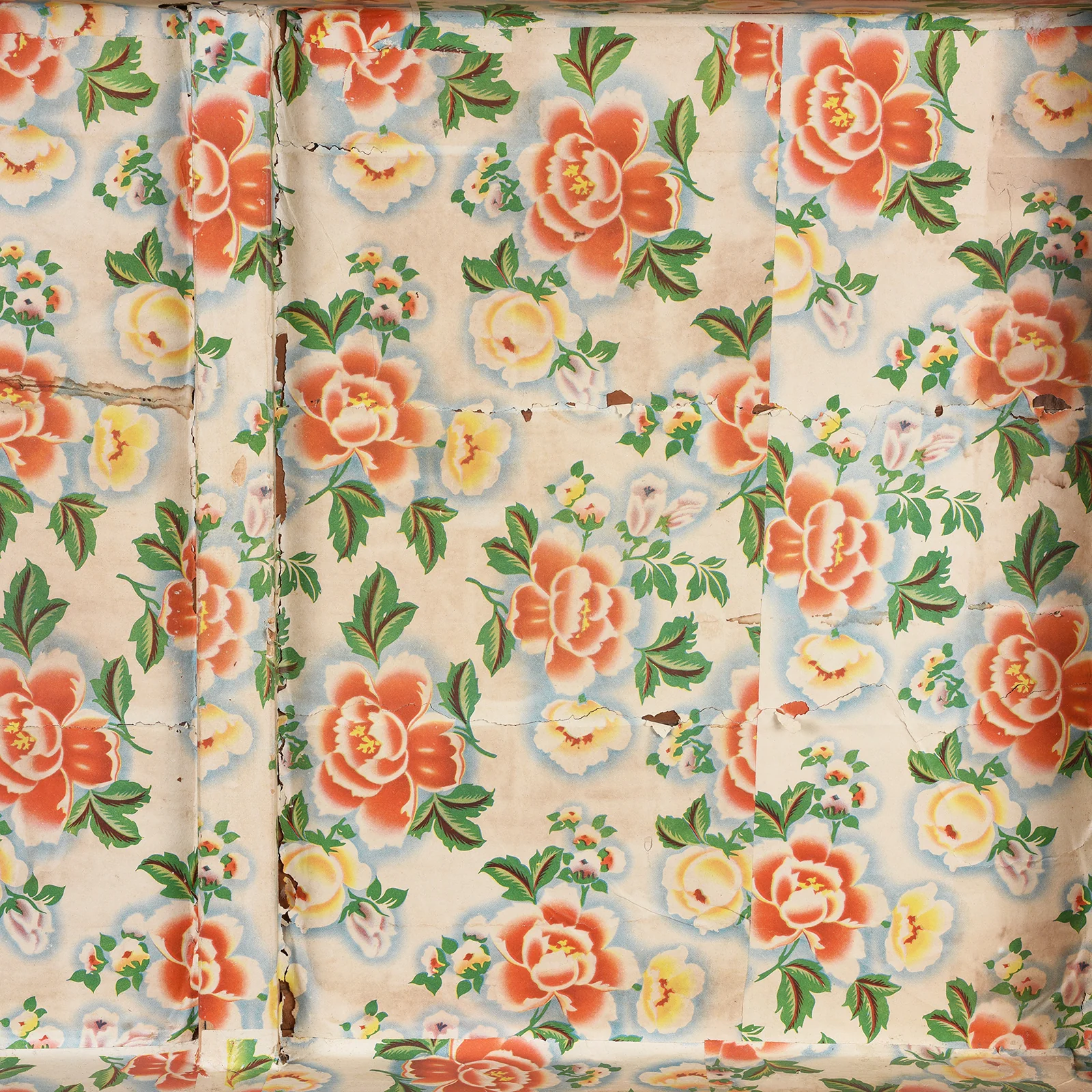
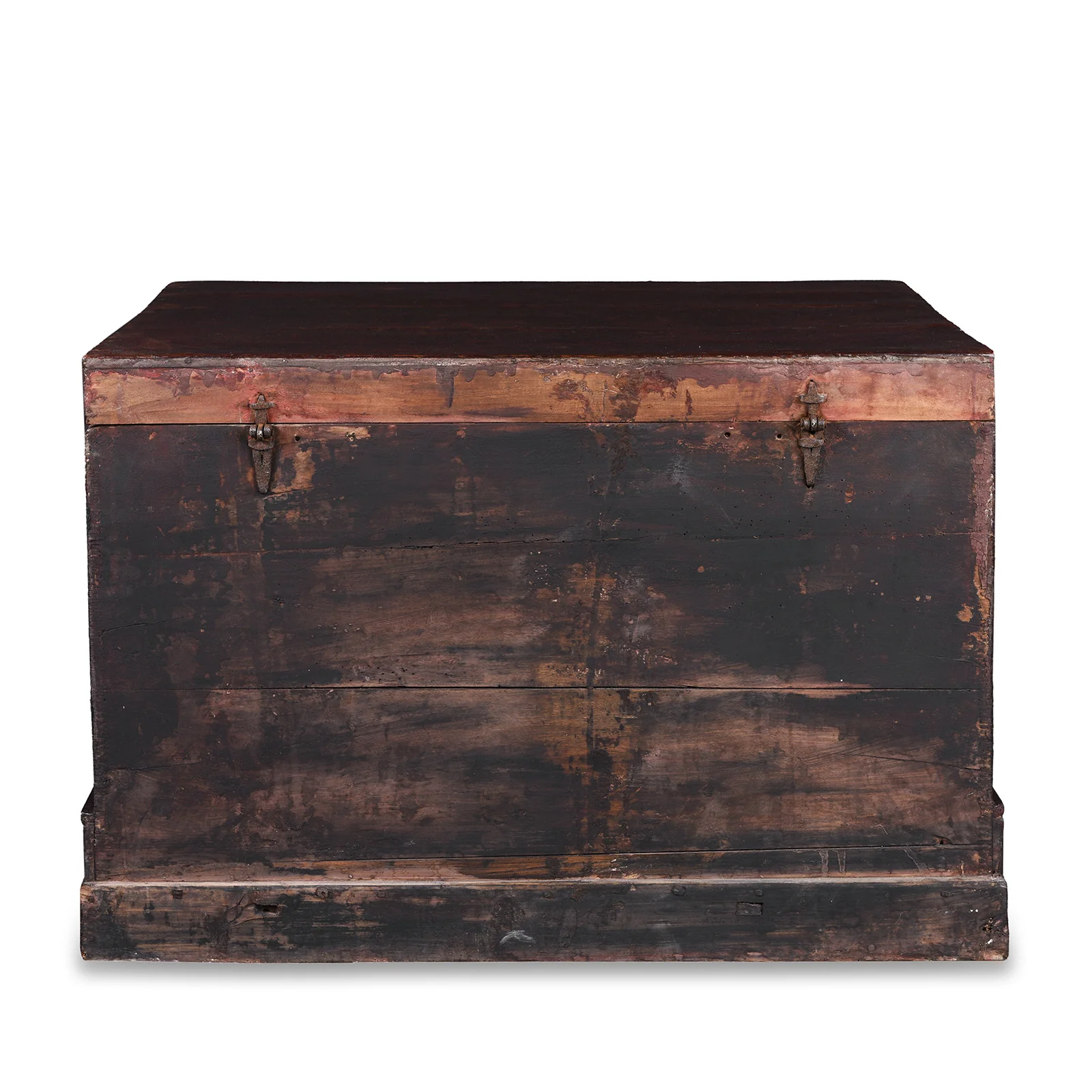
This antique painted Chinese trunk is painted with a strapping cockerel and would have accompanied a bride on the way to her new home. These chests are from Shanxi province and would have stored clothes, bedding and other precious items. This style of Chinese chest is found exclusively in Shanxi Province in Northern China and dates to the turn of the century, circa 1900. This chest is decorated with old fabric and a ribbon has been added to reduce strain on the hinges. It is finished with a red lacquer which has a rich patina.
This style of chest is often referred to as an opera chest as many of them depict scenes of the Chinese opera. Opera chests, are nearly always constructed from paulownia wood (tong mu / 桐木). Paulownia trees were often planted at the birth of a daughter and were considered symbols of prosperity, fertility & marital bliss. Upon reaching maturity the tree would be crafted into furniture and given as part of a bride's dowry symbolising hope for a prosperous & enduring marriage.
Like all our pieces, it has been sympathetically restored showing signs of wear and the marks of age.
Original: $1,228.98
-65%$1,228.98
$430.14More Images
Red Painted Opera Chest From Shanxi - Ca 1900
This antique painted Chinese trunk is painted with a strapping cockerel and would have accompanied a bride on the way to her new home. These chests are from Shanxi province and would have stored clothes, bedding and other precious items. This style of Chinese chest is found exclusively in Shanxi Province in Northern China and dates to the turn of the century, circa 1900. This chest is decorated with old fabric and a ribbon has been added to reduce strain on the hinges. It is finished with a red lacquer which has a rich patina.
This style of chest is often referred to as an opera chest as many of them depict scenes of the Chinese opera. Opera chests, are nearly always constructed from paulownia wood (tong mu / 桐木). Paulownia trees were often planted at the birth of a daughter and were considered symbols of prosperity, fertility & marital bliss. Upon reaching maturity the tree would be crafted into furniture and given as part of a bride's dowry symbolising hope for a prosperous & enduring marriage.
Like all our pieces, it has been sympathetically restored showing signs of wear and the marks of age.
Product Information
Product Information
Shipping & Returns
Shipping & Returns
Description
This antique painted Chinese trunk is painted with a strapping cockerel and would have accompanied a bride on the way to her new home. These chests are from Shanxi province and would have stored clothes, bedding and other precious items. This style of Chinese chest is found exclusively in Shanxi Province in Northern China and dates to the turn of the century, circa 1900. This chest is decorated with old fabric and a ribbon has been added to reduce strain on the hinges. It is finished with a red lacquer which has a rich patina.
This style of chest is often referred to as an opera chest as many of them depict scenes of the Chinese opera. Opera chests, are nearly always constructed from paulownia wood (tong mu / 桐木). Paulownia trees were often planted at the birth of a daughter and were considered symbols of prosperity, fertility & marital bliss. Upon reaching maturity the tree would be crafted into furniture and given as part of a bride's dowry symbolising hope for a prosperous & enduring marriage.
Like all our pieces, it has been sympathetically restored showing signs of wear and the marks of age.