Nepalese Carved Wooden Milk Pot - Early 20th Century
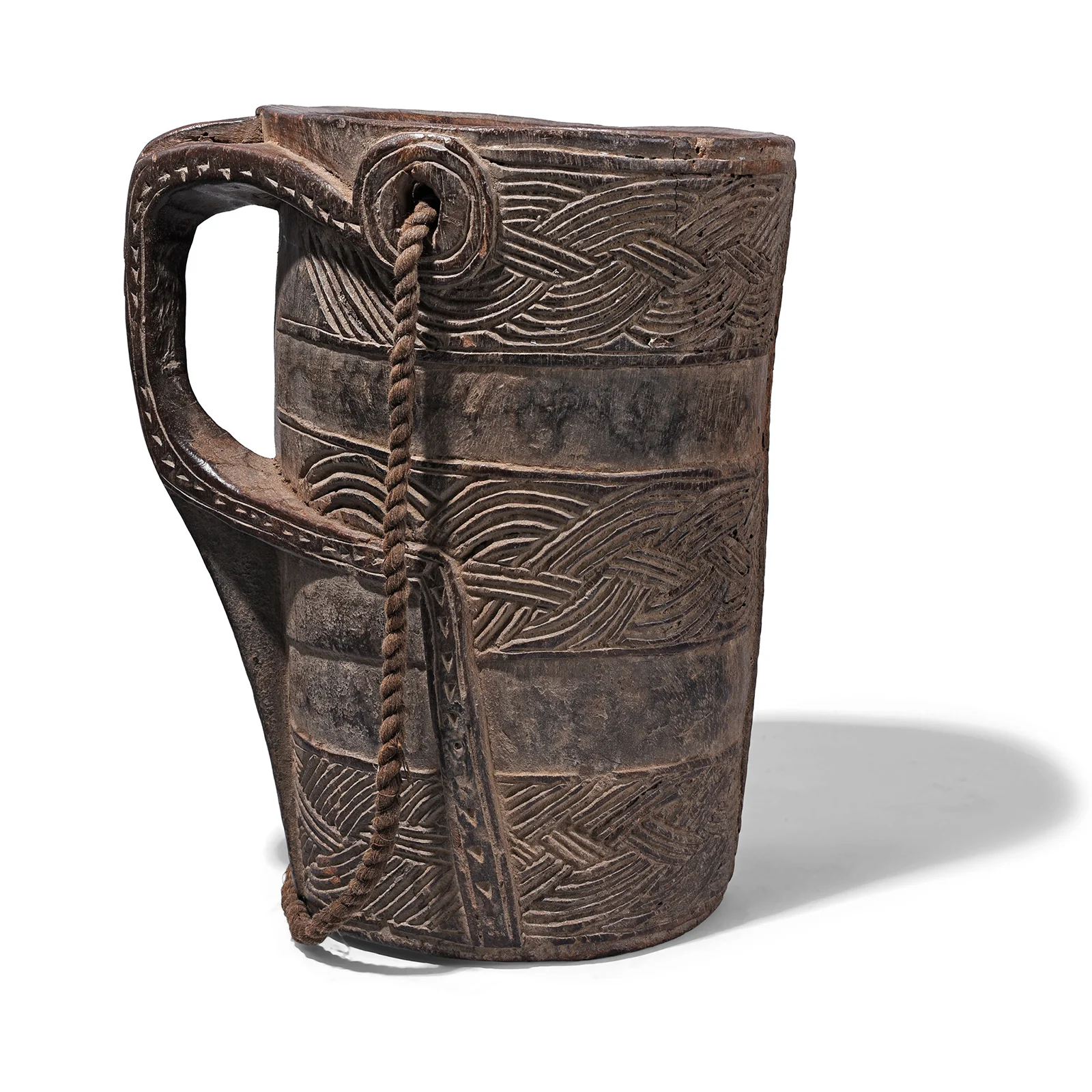
This richly carved wooden milk pot originates from Nepal and dates to the early 20th century. Vessels of this type are widely documented in Himalayan material culture and are commonly referred to as milk jugs or milk beakers, used for carrying and storing milk and other liquids as part of everyday rural life.
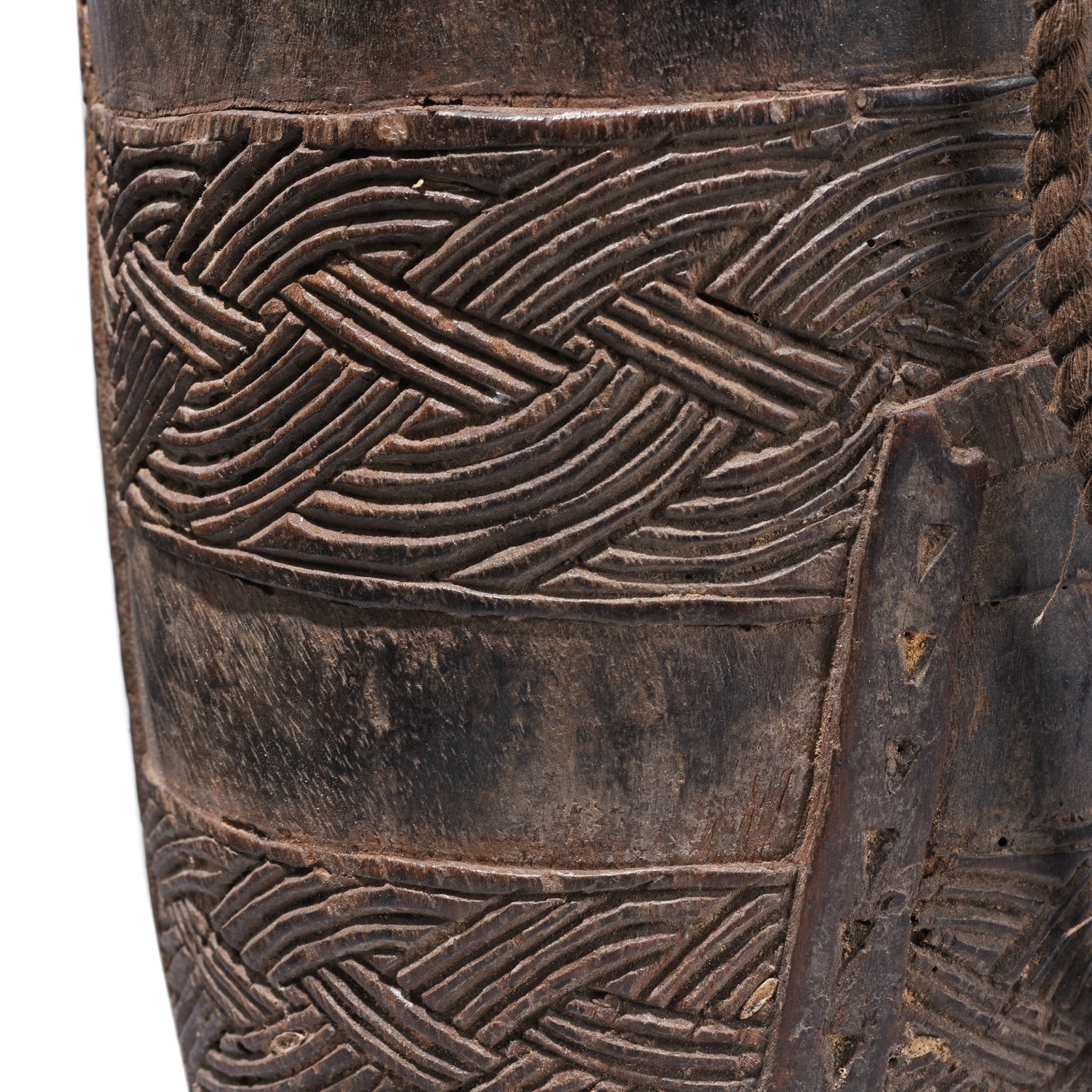
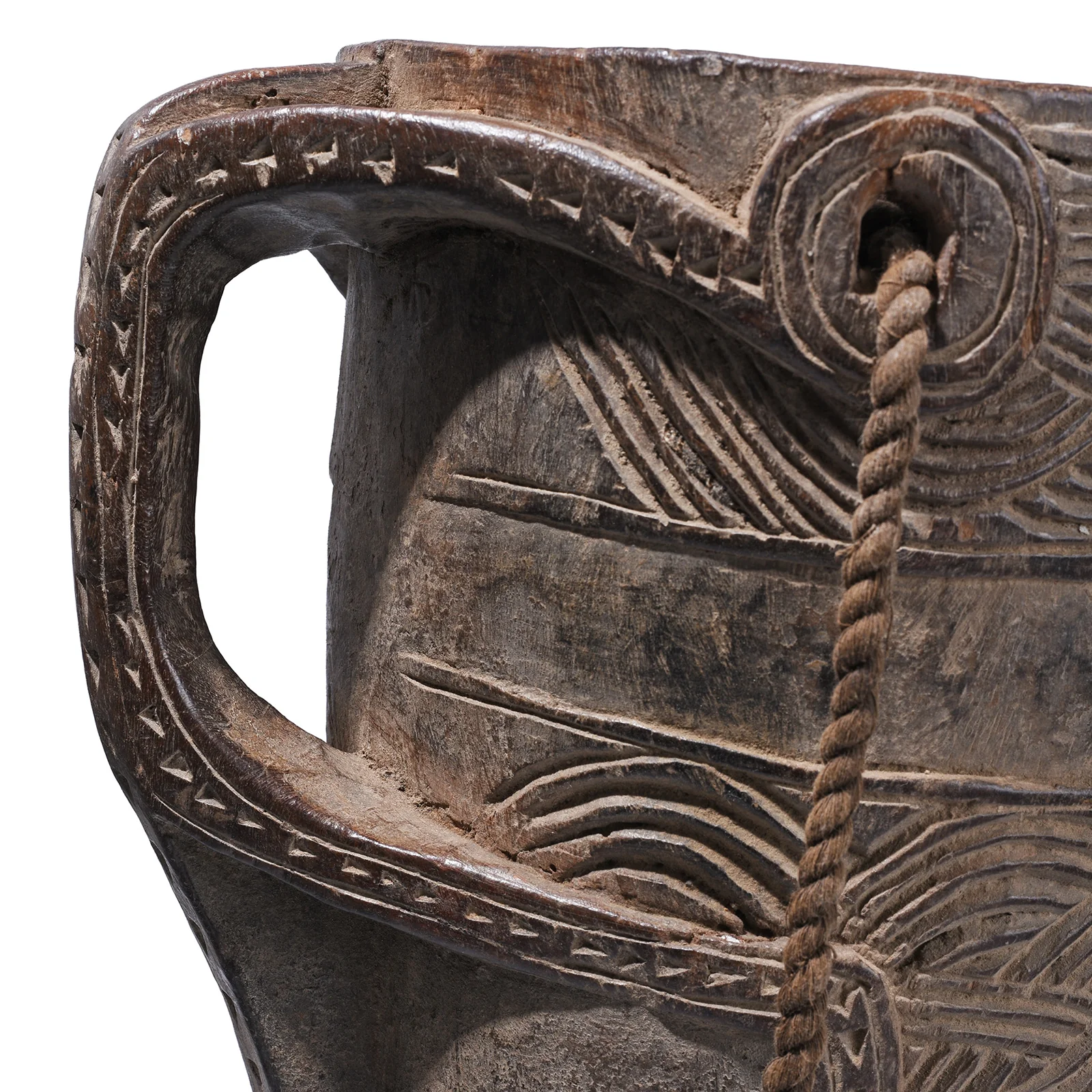
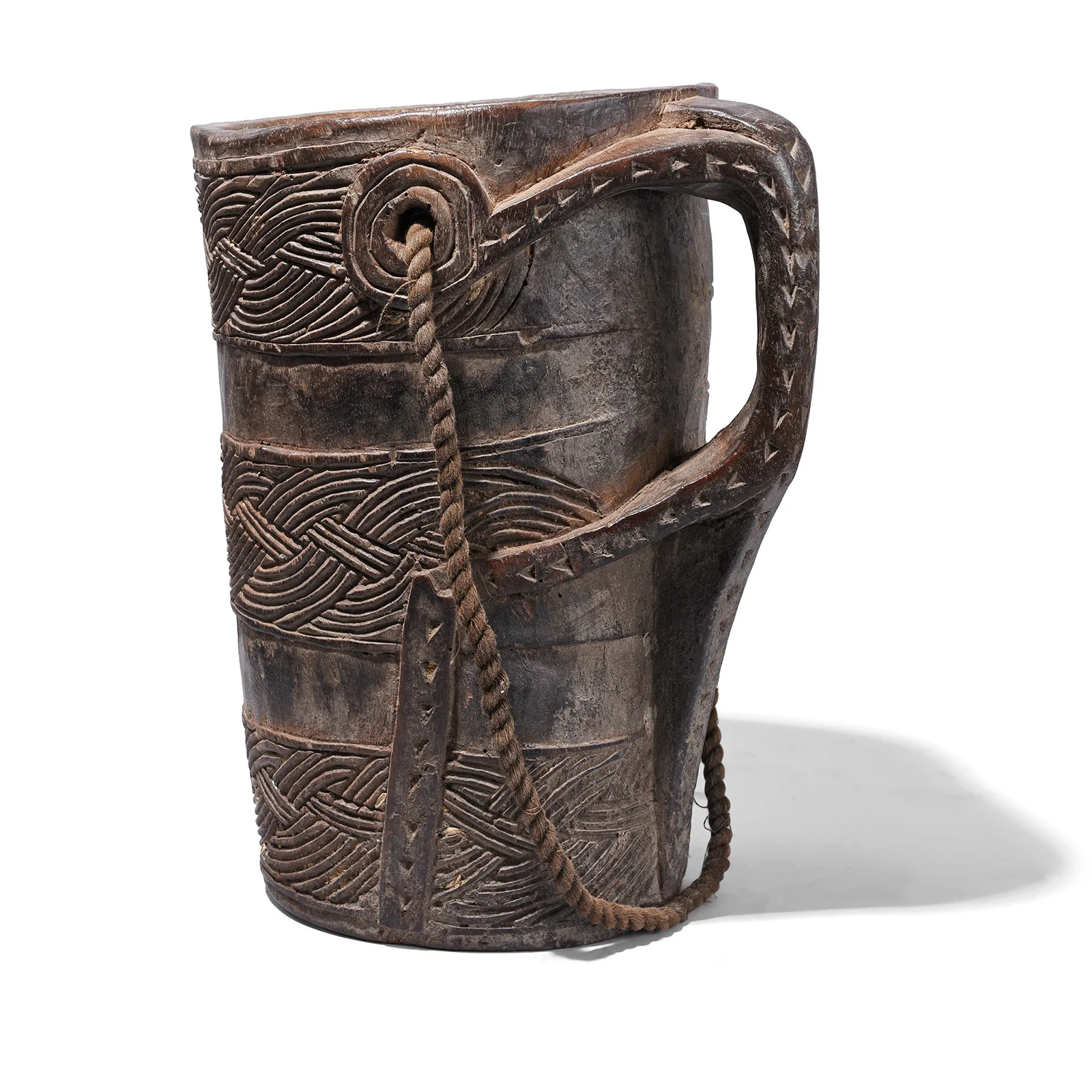
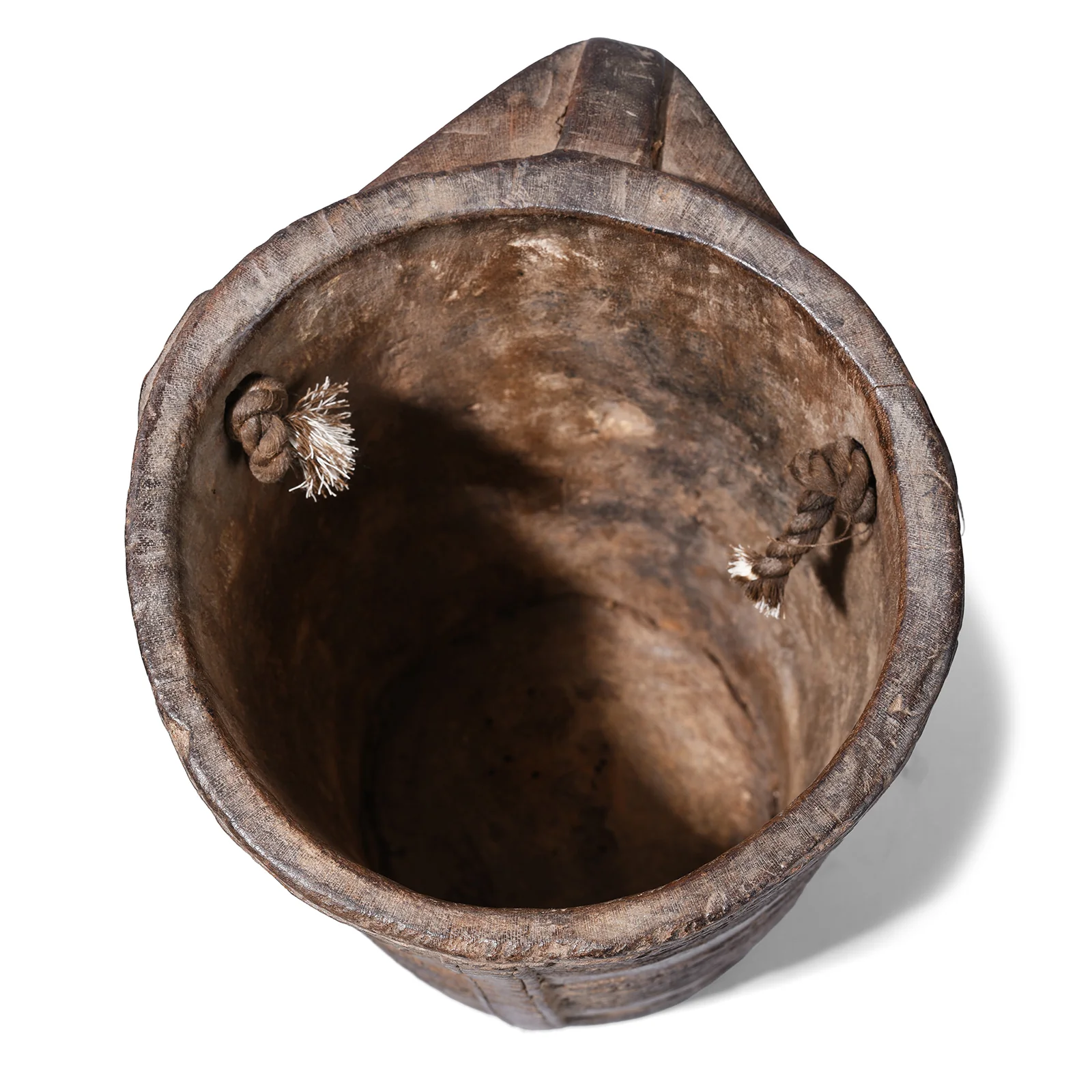
Carved from a single block of dense local hardwood, the vessel has a strong, tactile presence shaped by prolonged practical use. The exterior is decorated with deeply incised geometric banding incorporating a stylised endless knot motif, arranged in horizontal registers that give the surface a rhythmic, woven appearance. A substantial carved handle is integrated into the body, accompanied by a pierced lug with a rope strap, allowing the pot to be carried or suspended when not in use. Objects of this form are also known colloquially in the antiques trade as “monk pots”, a later descriptive term rather than a historic local name.
- Origin: Nepal
- Date: Early 20th Century
- Materials: Carved hardwood with rope strap
- Decoration: Deeply carved geometric banding with stylised endless knot motif
- Features: Integrated handle, pierced lug, rope suspension
- Condition: Structurally sound with age-related wear, surface marks, and a rich, time-worn patina
- Dimensions: W17 × D21 × H26 cm
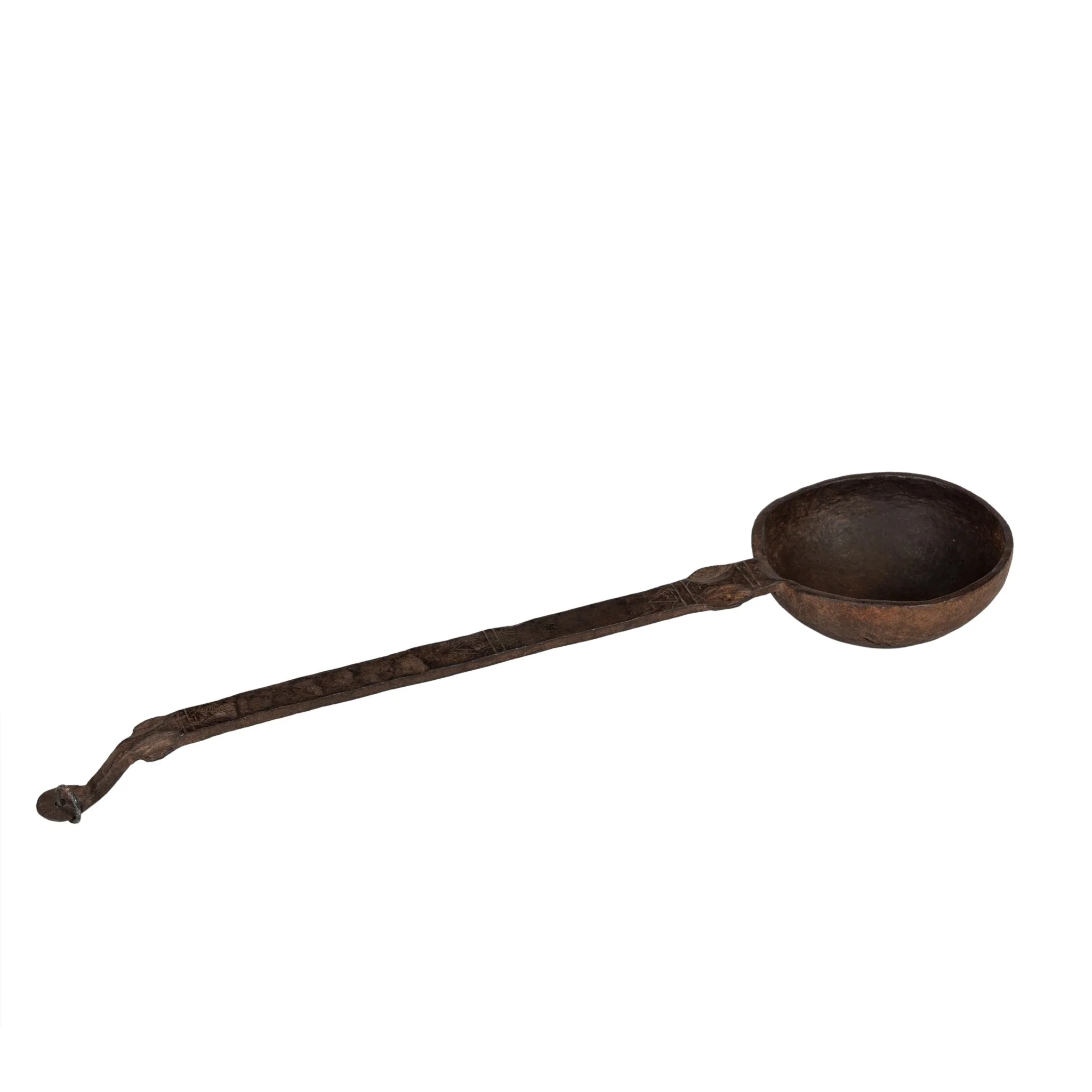
Reference: Similar Nepalese examples described as pot à lait (milk pot), often shown with a ladle, are illustrated in the Art & Tribal de l’Himalaya collection series (2007).
More Images
Nepalese Carved Wooden Milk Pot - Early 20th Century
This richly carved wooden milk pot originates from Nepal and dates to the early 20th century. Vessels of this type are widely documented in Himalayan material culture and are commonly referred to as milk jugs or milk beakers, used for carrying and storing milk and other liquids as part of everyday rural life.
Carved from a single block of dense local hardwood, the vessel has a strong, tactile presence shaped by prolonged practical use. The exterior is decorated with deeply incised geometric banding incorporating a stylised endless knot motif, arranged in horizontal registers that give the surface a rhythmic, woven appearance. A substantial carved handle is integrated into the body, accompanied by a pierced lug with a rope strap, allowing the pot to be carried or suspended when not in use. Objects of this form are also known colloquially in the antiques trade as “monk pots”, a later descriptive term rather than a historic local name.
- Origin: Nepal
- Date: Early 20th Century
- Materials: Carved hardwood with rope strap
- Decoration: Deeply carved geometric banding with stylised endless knot motif
- Features: Integrated handle, pierced lug, rope suspension
- Condition: Structurally sound with age-related wear, surface marks, and a rich, time-worn patina
- Dimensions: W17 × D21 × H26 cm
Reference: Similar Nepalese examples described as pot à lait (milk pot), often shown with a ladle, are illustrated in the Art & Tribal de l’Himalaya collection series (2007).
Product Information
Product Information
Shipping & Returns
Shipping & Returns
Description
This richly carved wooden milk pot originates from Nepal and dates to the early 20th century. Vessels of this type are widely documented in Himalayan material culture and are commonly referred to as milk jugs or milk beakers, used for carrying and storing milk and other liquids as part of everyday rural life.
Carved from a single block of dense local hardwood, the vessel has a strong, tactile presence shaped by prolonged practical use. The exterior is decorated with deeply incised geometric banding incorporating a stylised endless knot motif, arranged in horizontal registers that give the surface a rhythmic, woven appearance. A substantial carved handle is integrated into the body, accompanied by a pierced lug with a rope strap, allowing the pot to be carried or suspended when not in use. Objects of this form are also known colloquially in the antiques trade as “monk pots”, a later descriptive term rather than a historic local name.
- Origin: Nepal
- Date: Early 20th Century
- Materials: Carved hardwood with rope strap
- Decoration: Deeply carved geometric banding with stylised endless knot motif
- Features: Integrated handle, pierced lug, rope suspension
- Condition: Structurally sound with age-related wear, surface marks, and a rich, time-worn patina
- Dimensions: W17 × D21 × H26 cm
Reference: Similar Nepalese examples described as pot à lait (milk pot), often shown with a ladle, are illustrated in the Art & Tribal de l’Himalaya collection series (2007).