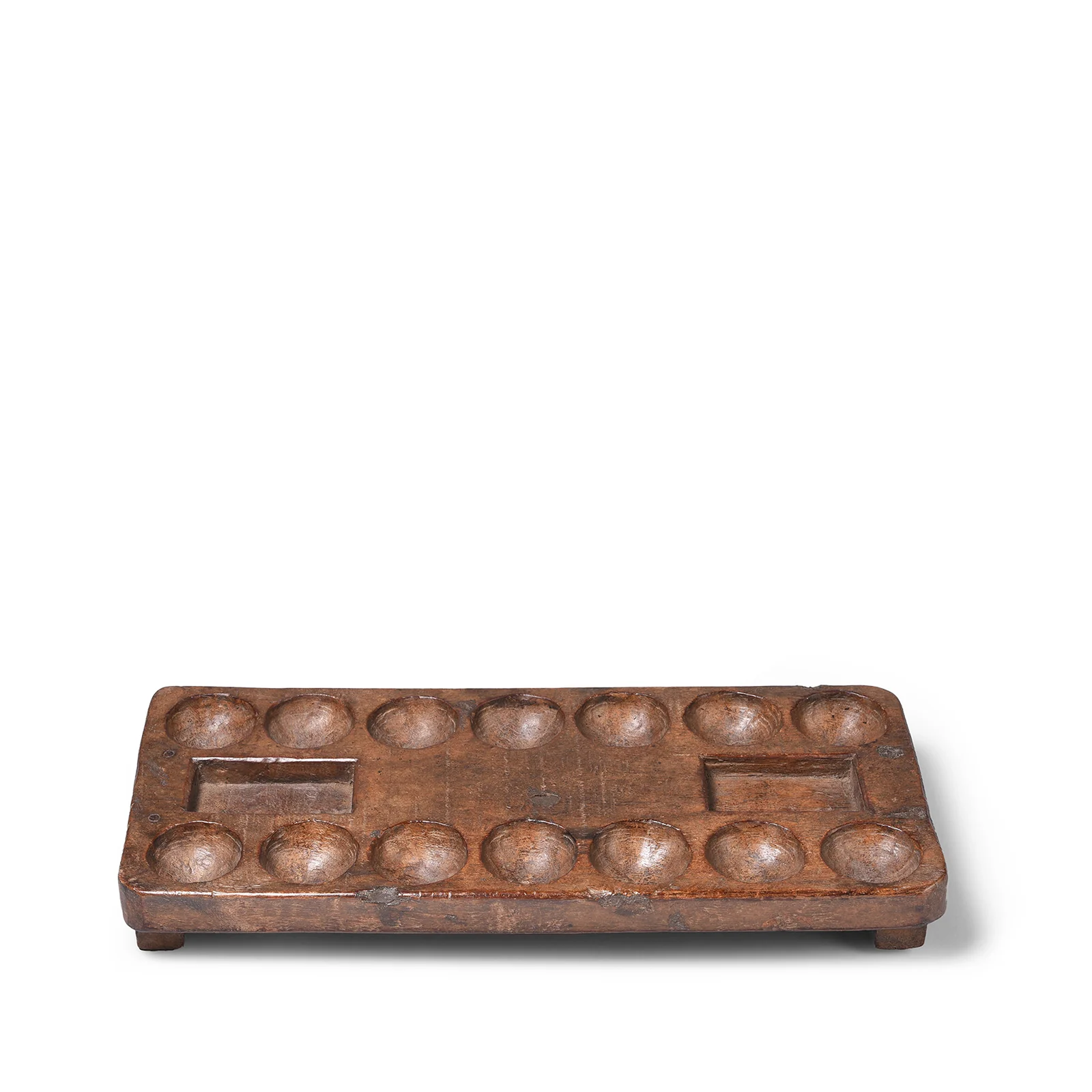
Pallanguzhi Game Board From Kerala - 19th Century
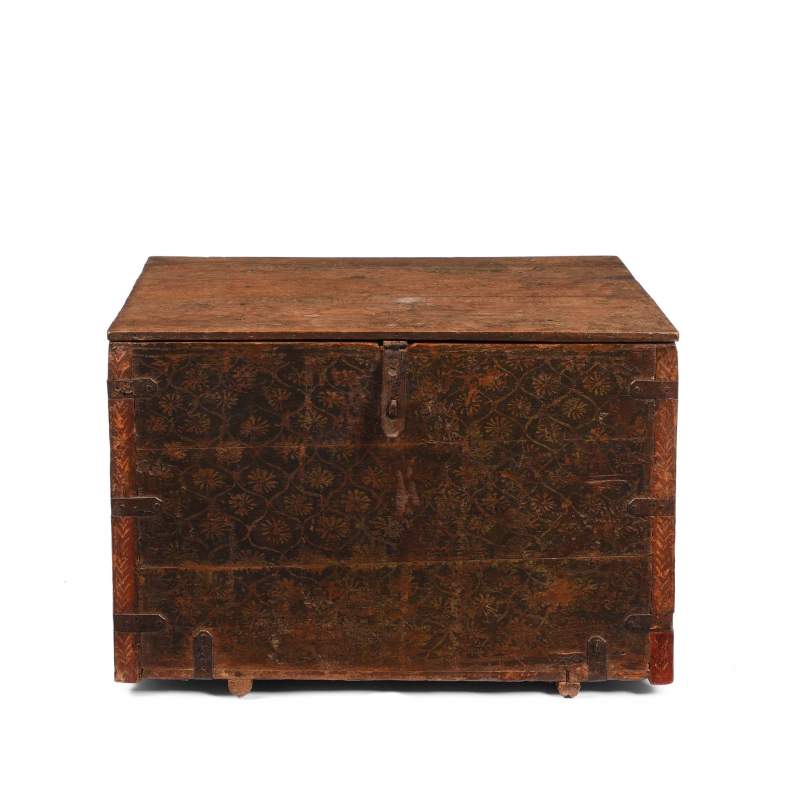
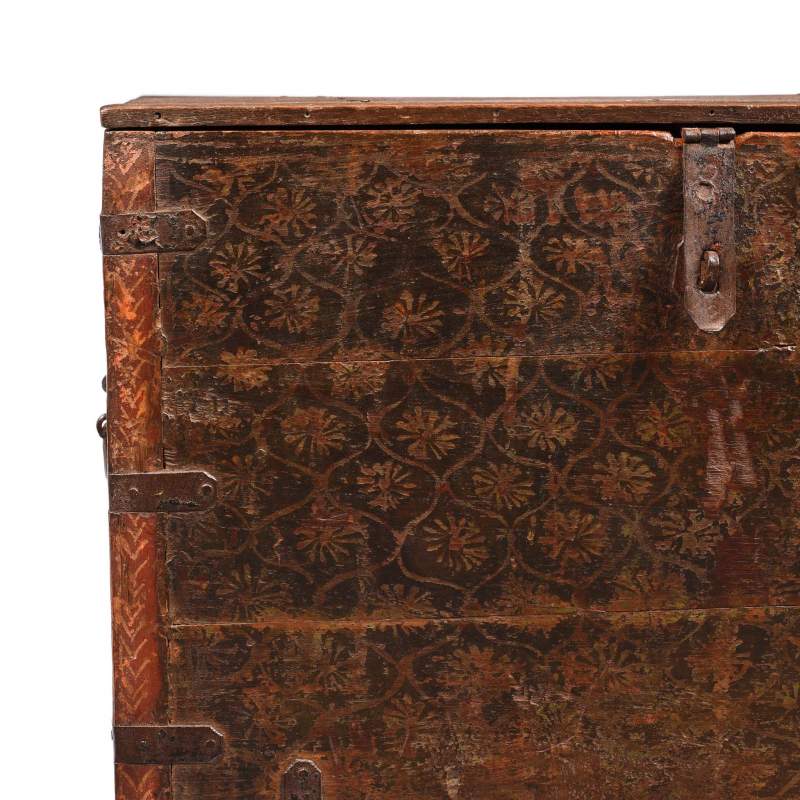
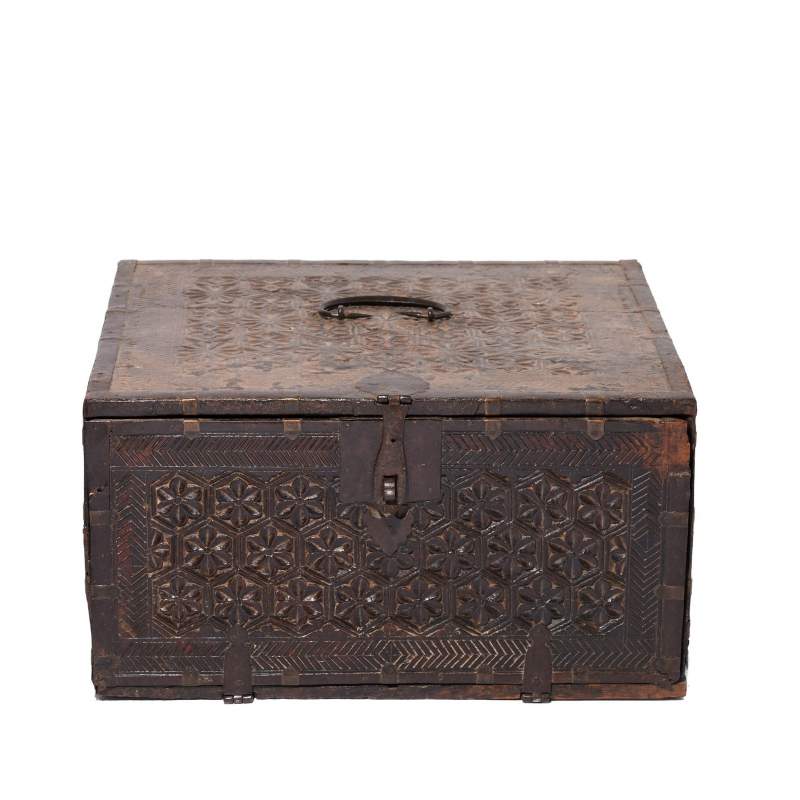
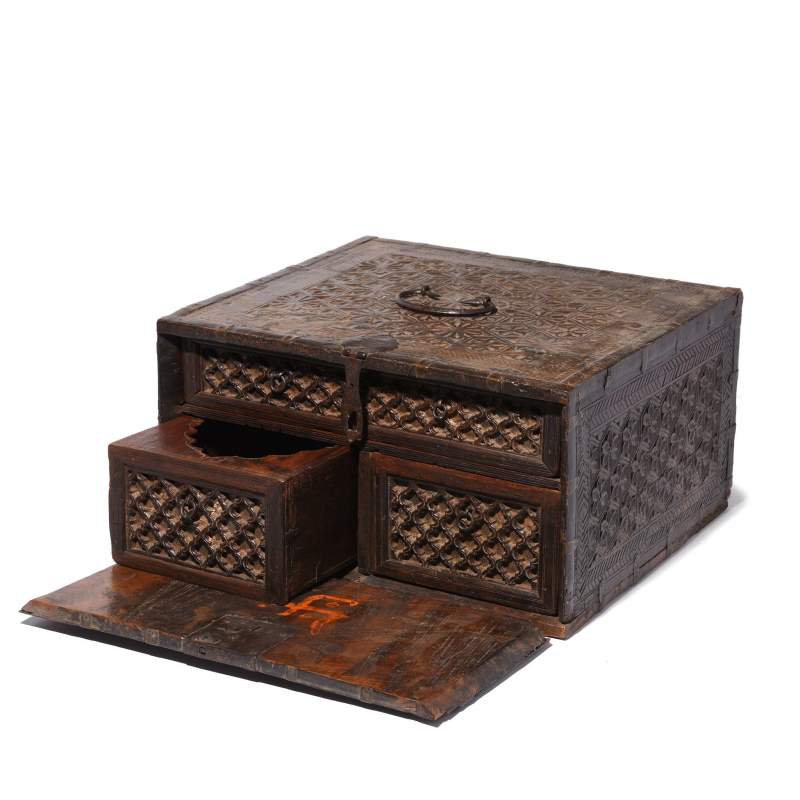
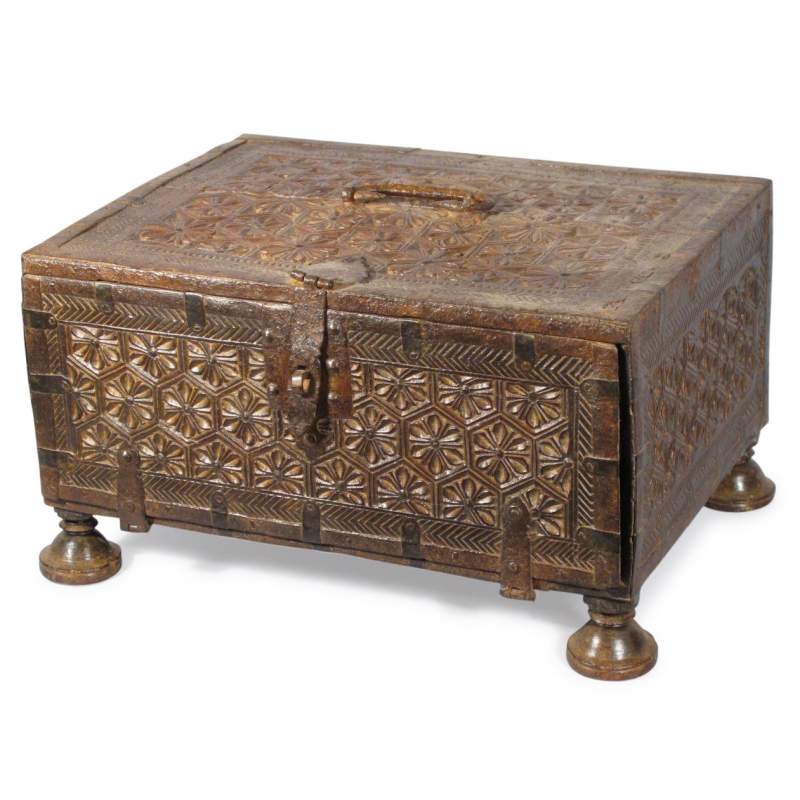
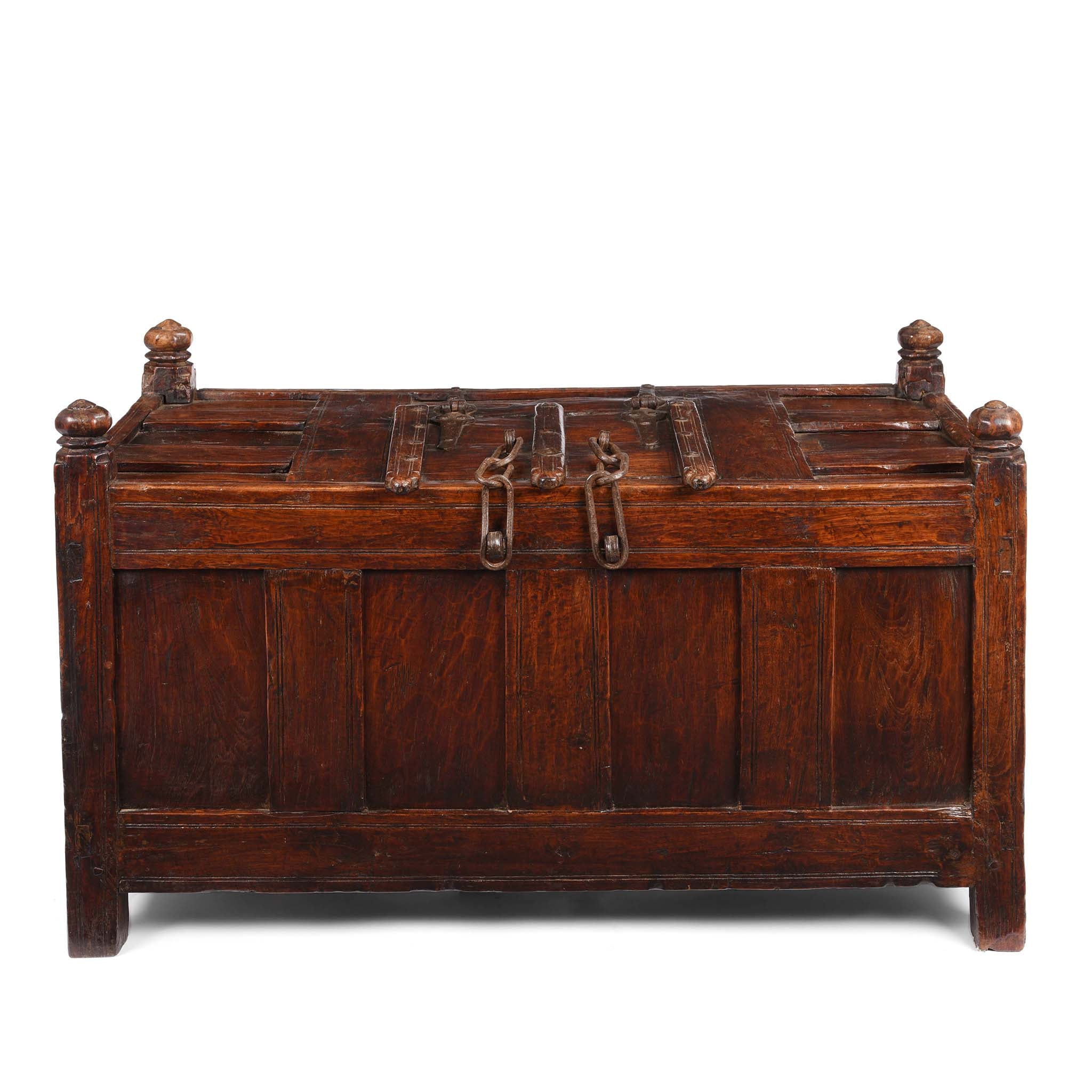
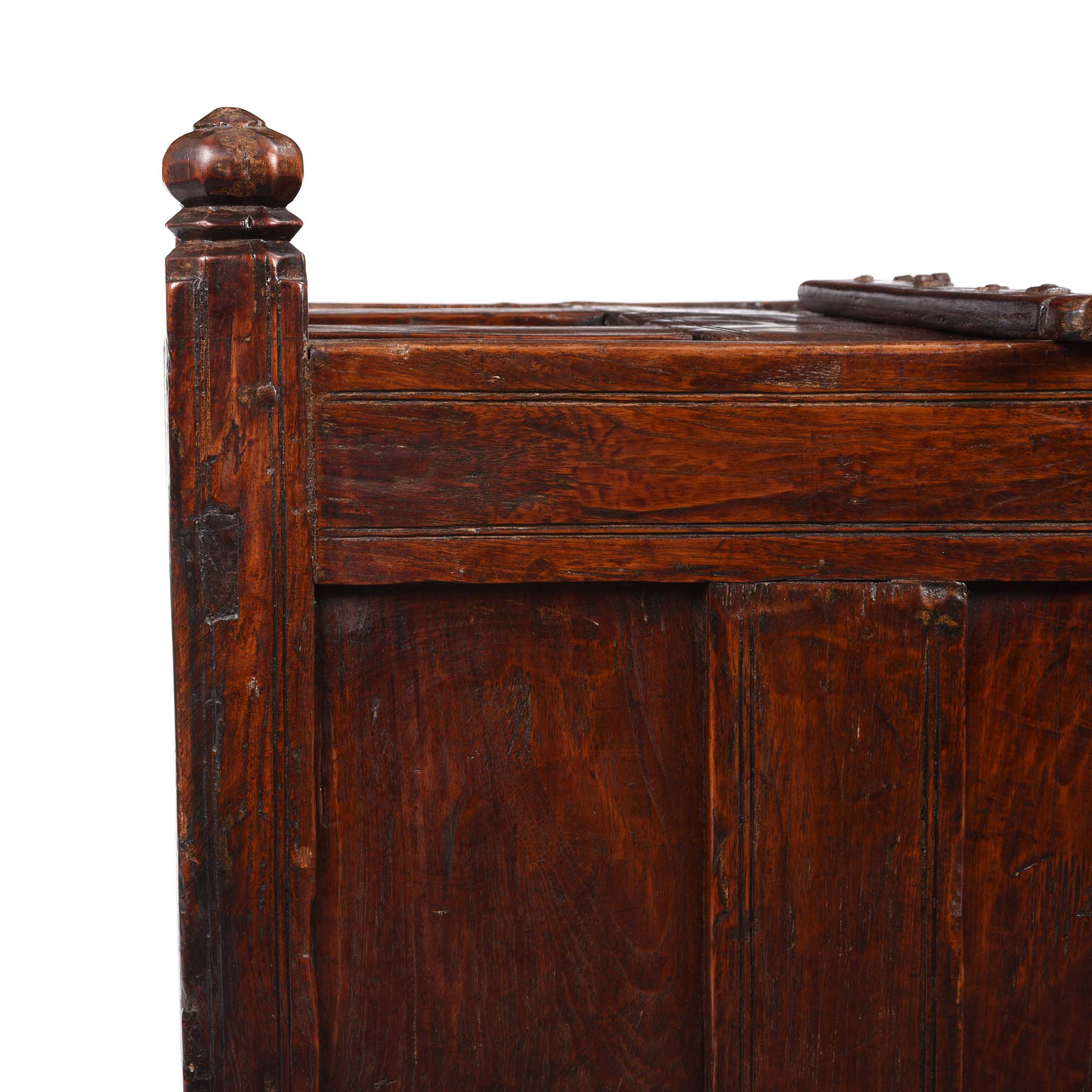
This Indian mancala board is from South India where it is called pallanguzhi. This teak wood board dates to the 19th century and has developed a wonderful patina over the years. It is a two player game of mathematical skill - cowrie shells, seeds and pebbles are usually used for as counters.
Mancala is a board game that has been played since at least 1400 B.C.E. Representations of the game have been found carved into Egyptian tombs, and the word "mancala" has its roots in Arabic.
From India
UK Delivery Charge - except Highlands & Islands £15
More delivery options available at checkout
More Images
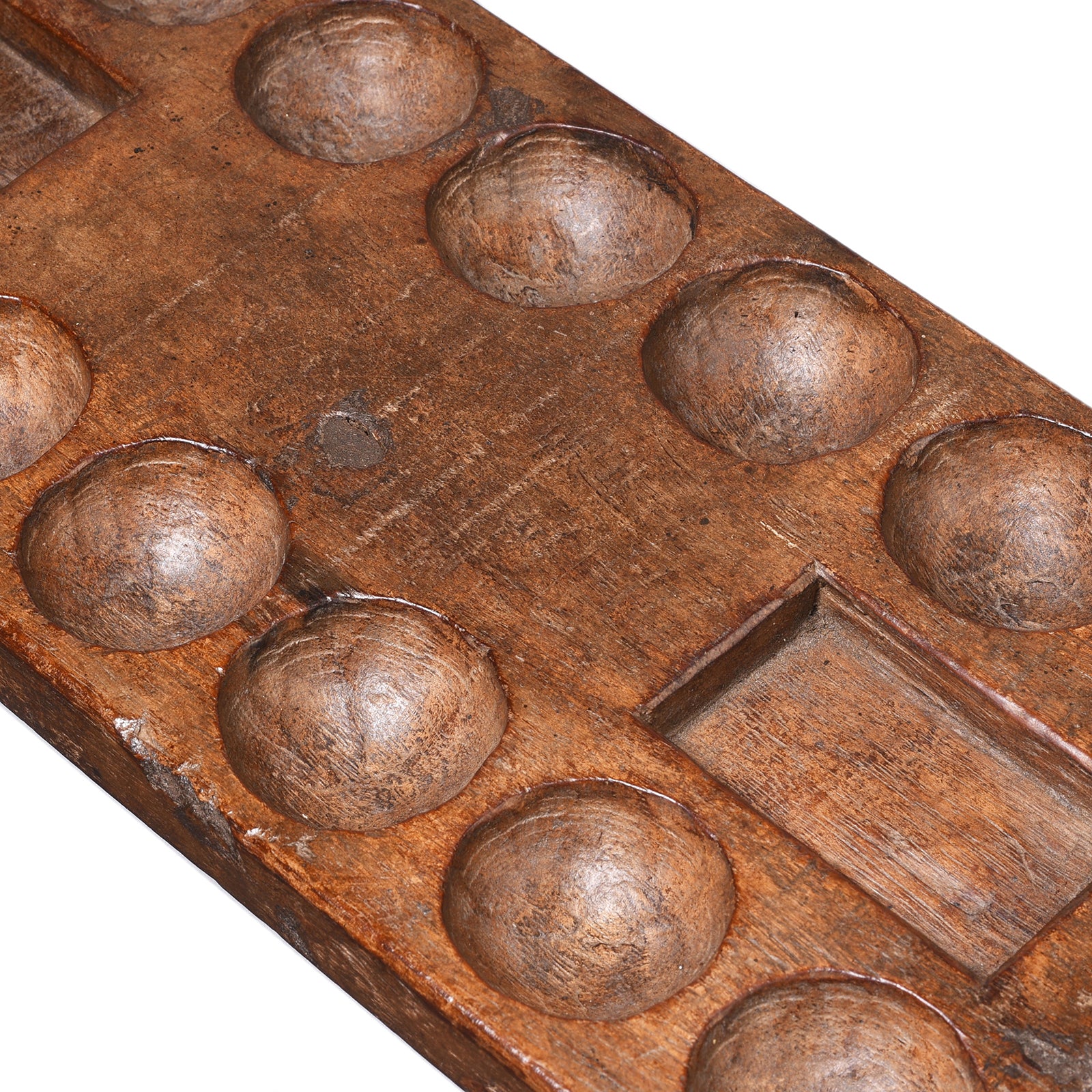
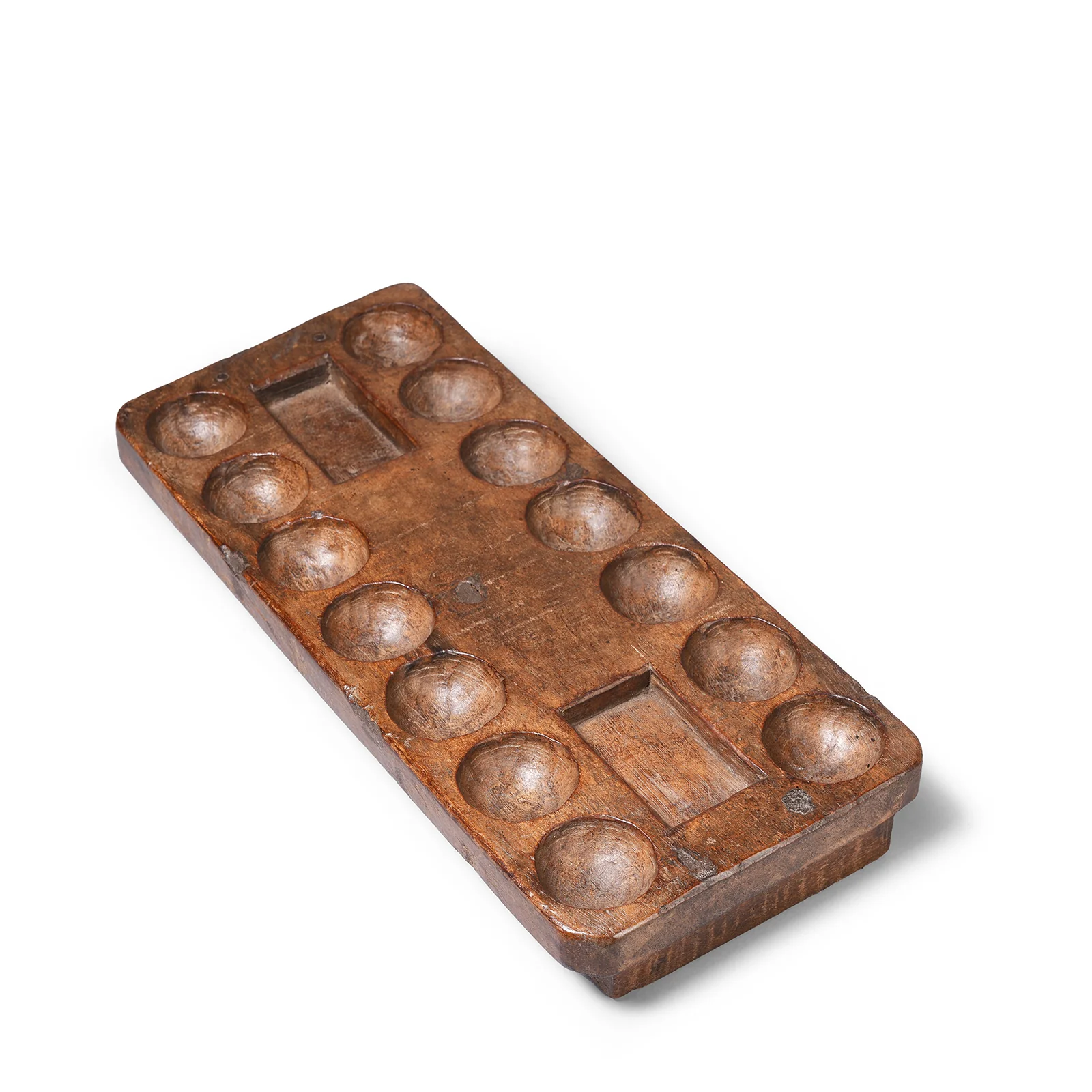
Pallanguzhi Game Board From Kerala - 19th Century
This Indian mancala board is from South India where it is called pallanguzhi. This teak wood board dates to the 19th century and has developed a wonderful patina over the years. It is a two player game of mathematical skill - cowrie shells, seeds and pebbles are usually used for as counters.
Mancala is a board game that has been played since at least 1400 B.C.E. Representations of the game have been found carved into Egyptian tombs, and the word "mancala" has its roots in Arabic.
From India
UK Delivery Charge - except Highlands & Islands £15
More delivery options available at checkout
Product Information
Product Information
Shipping & Returns
Shipping & Returns
Description
This Indian mancala board is from South India where it is called pallanguzhi. This teak wood board dates to the 19th century and has developed a wonderful patina over the years. It is a two player game of mathematical skill - cowrie shells, seeds and pebbles are usually used for as counters.
Mancala is a board game that has been played since at least 1400 B.C.E. Representations of the game have been found carved into Egyptian tombs, and the word "mancala" has its roots in Arabic.
From India
UK Delivery Charge - except Highlands & Islands £15
More delivery options available at checkout