Korean Mandarin Duck Jang Cabinet - 19th Century
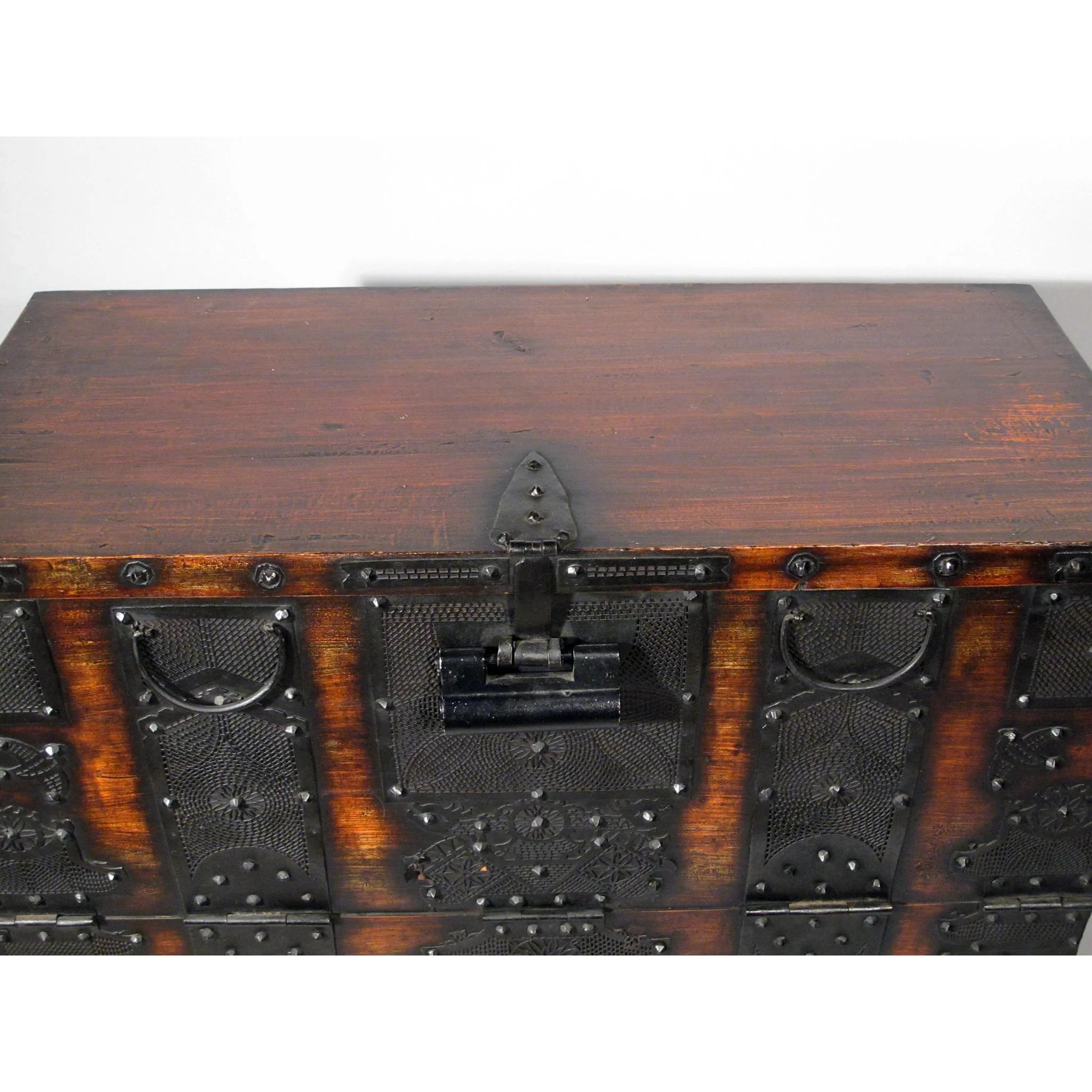
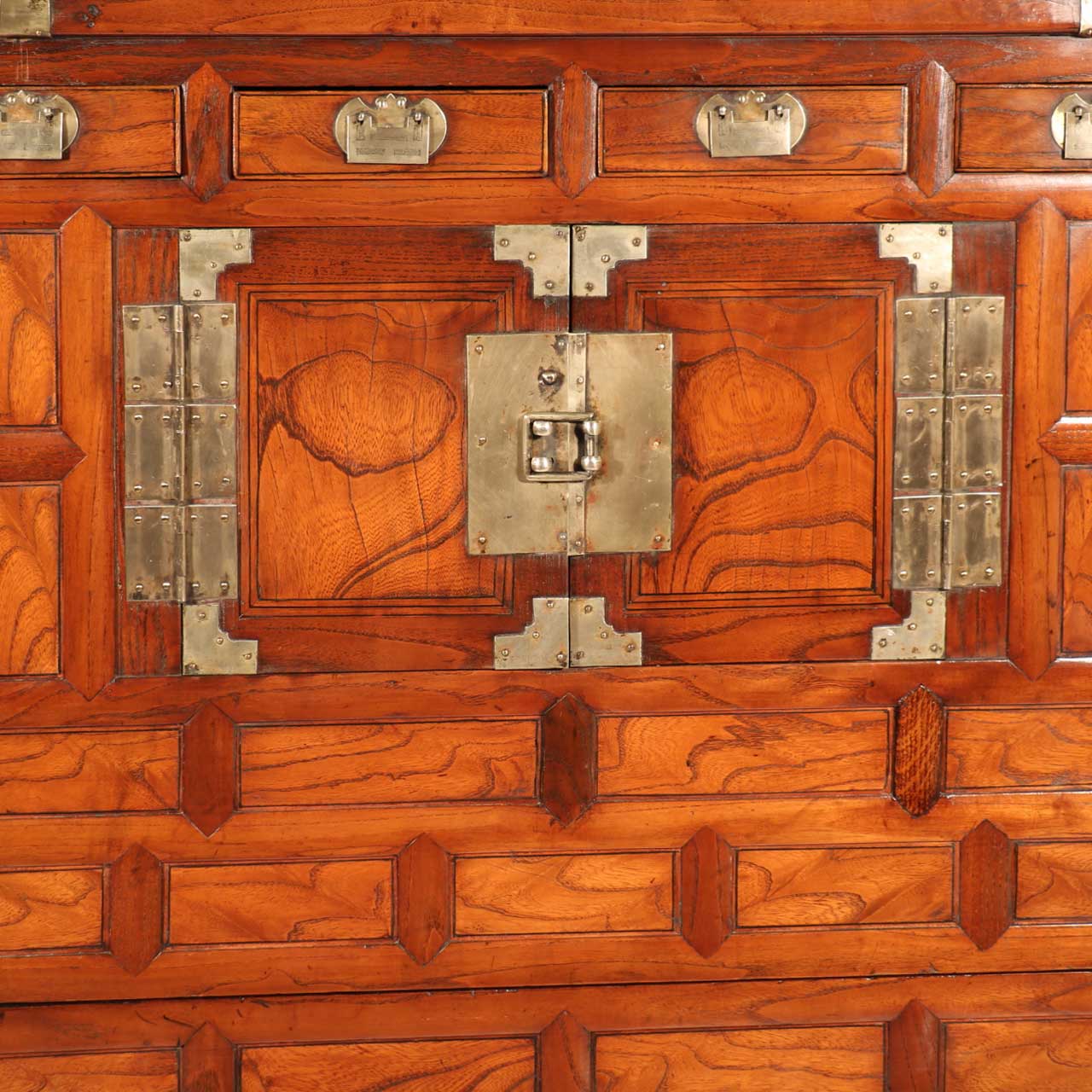
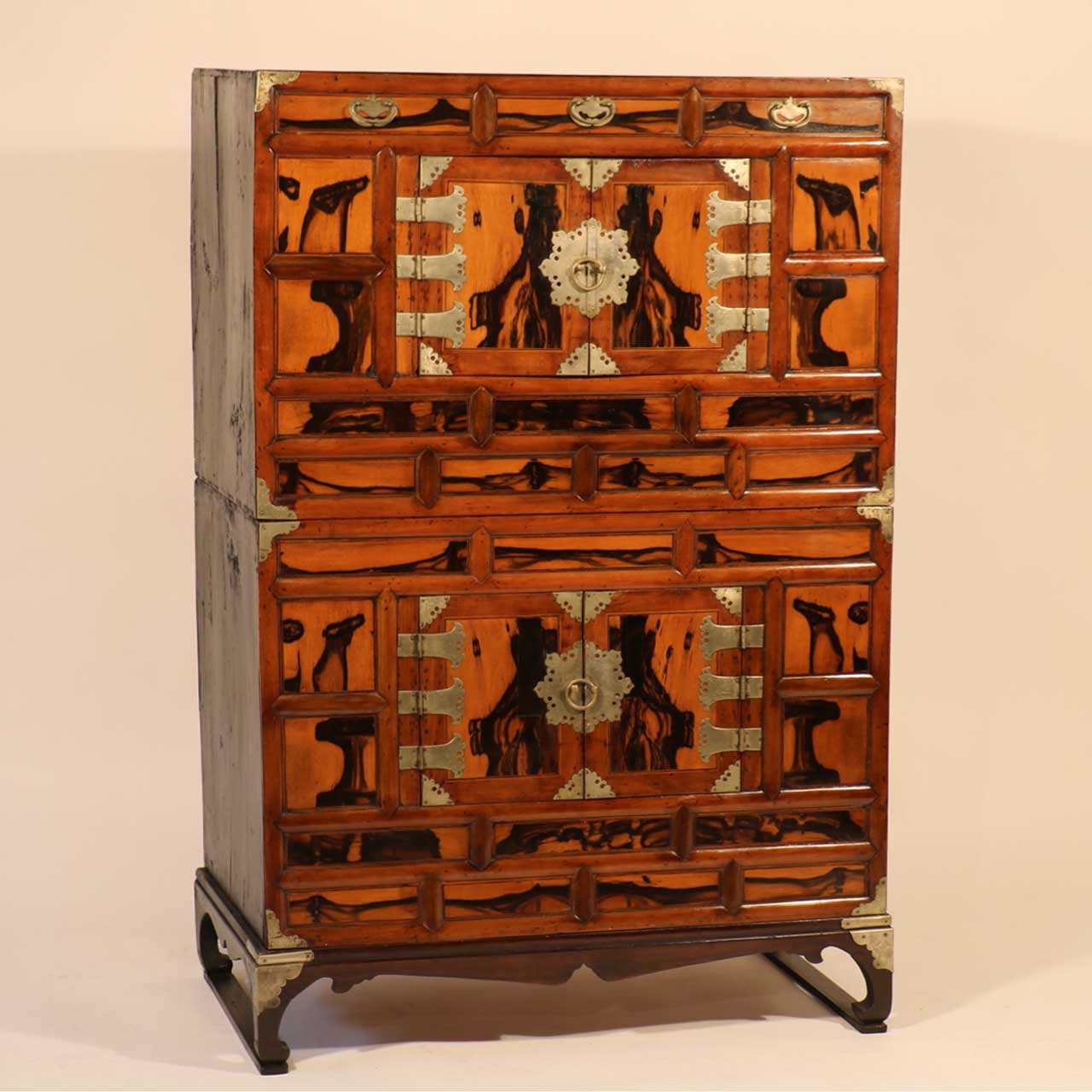
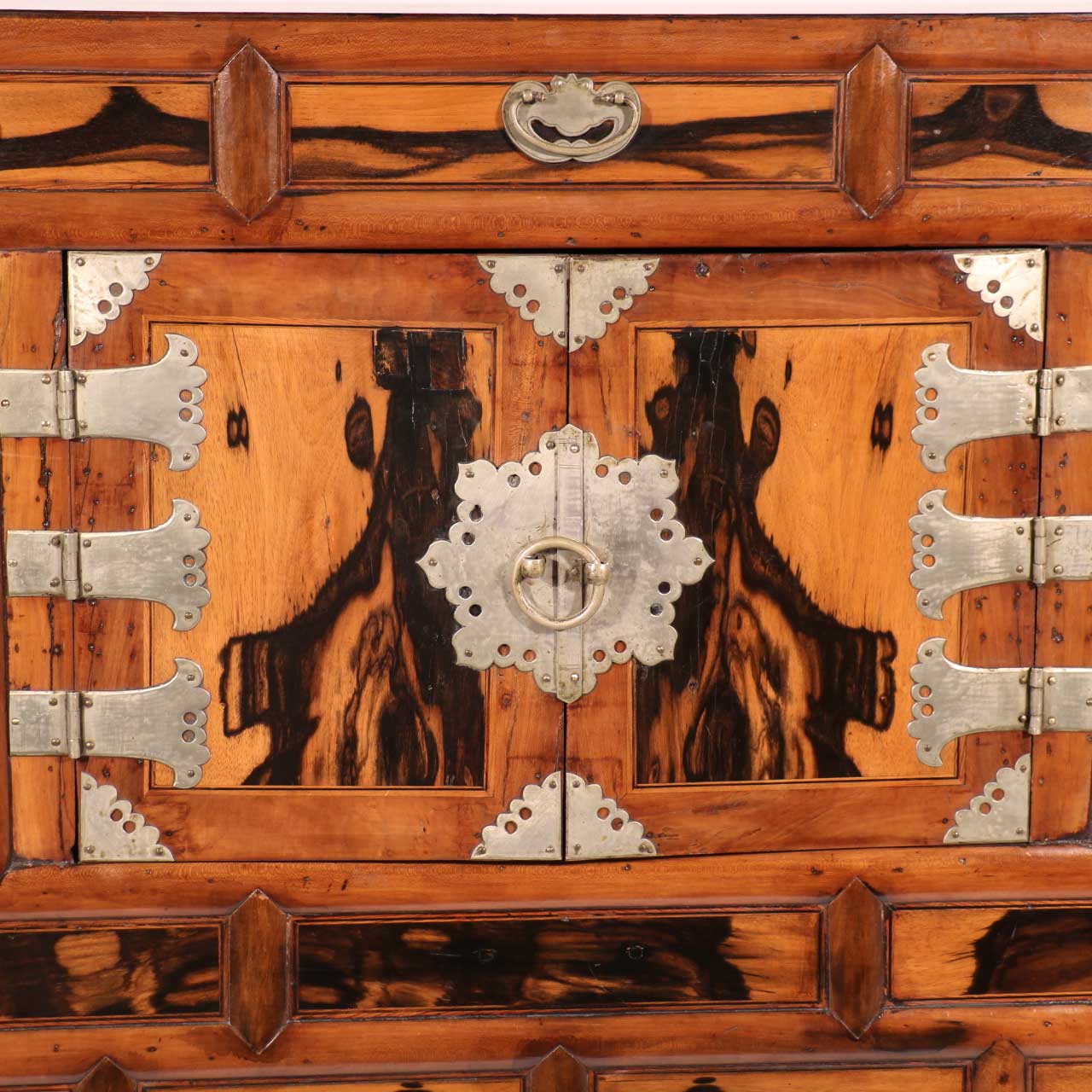
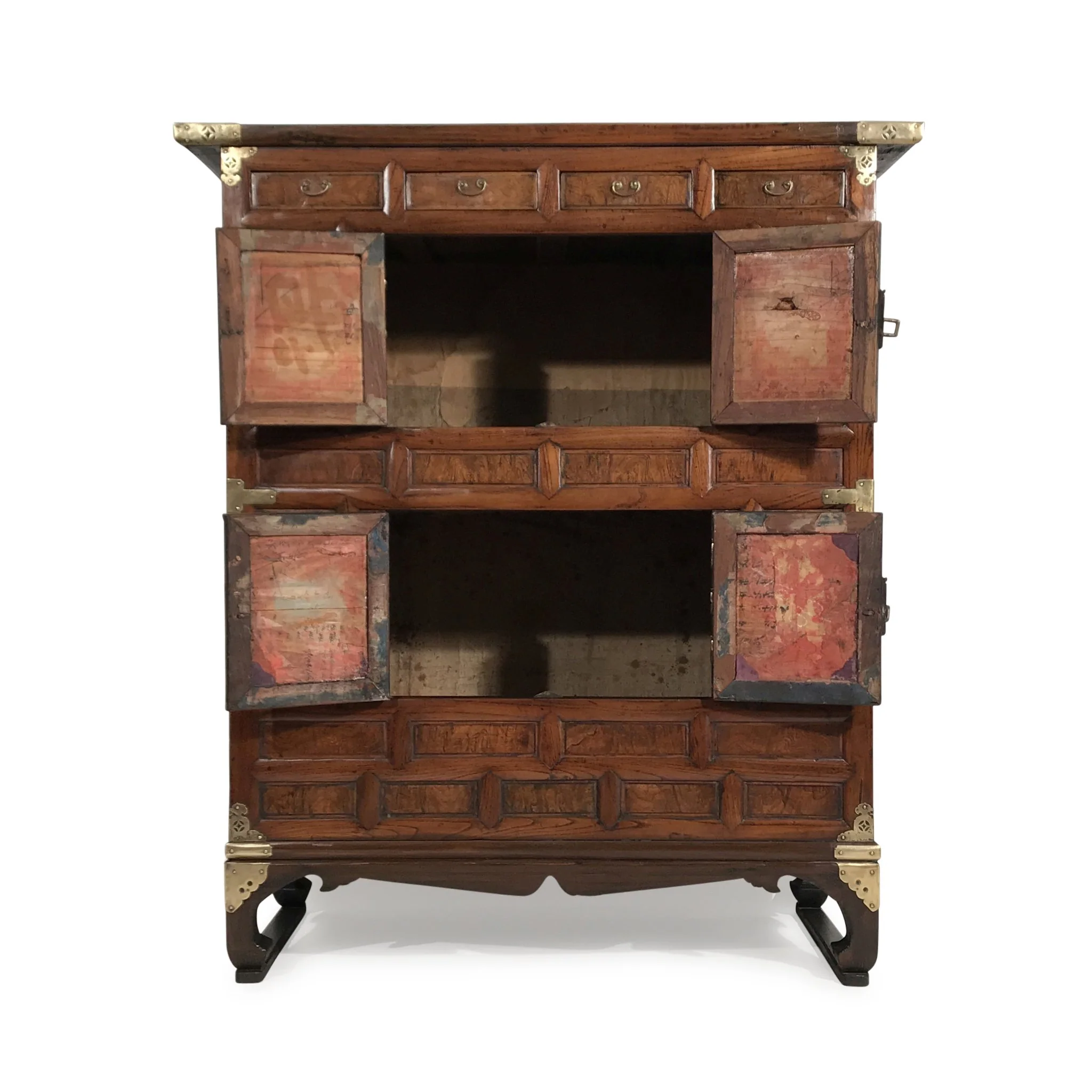
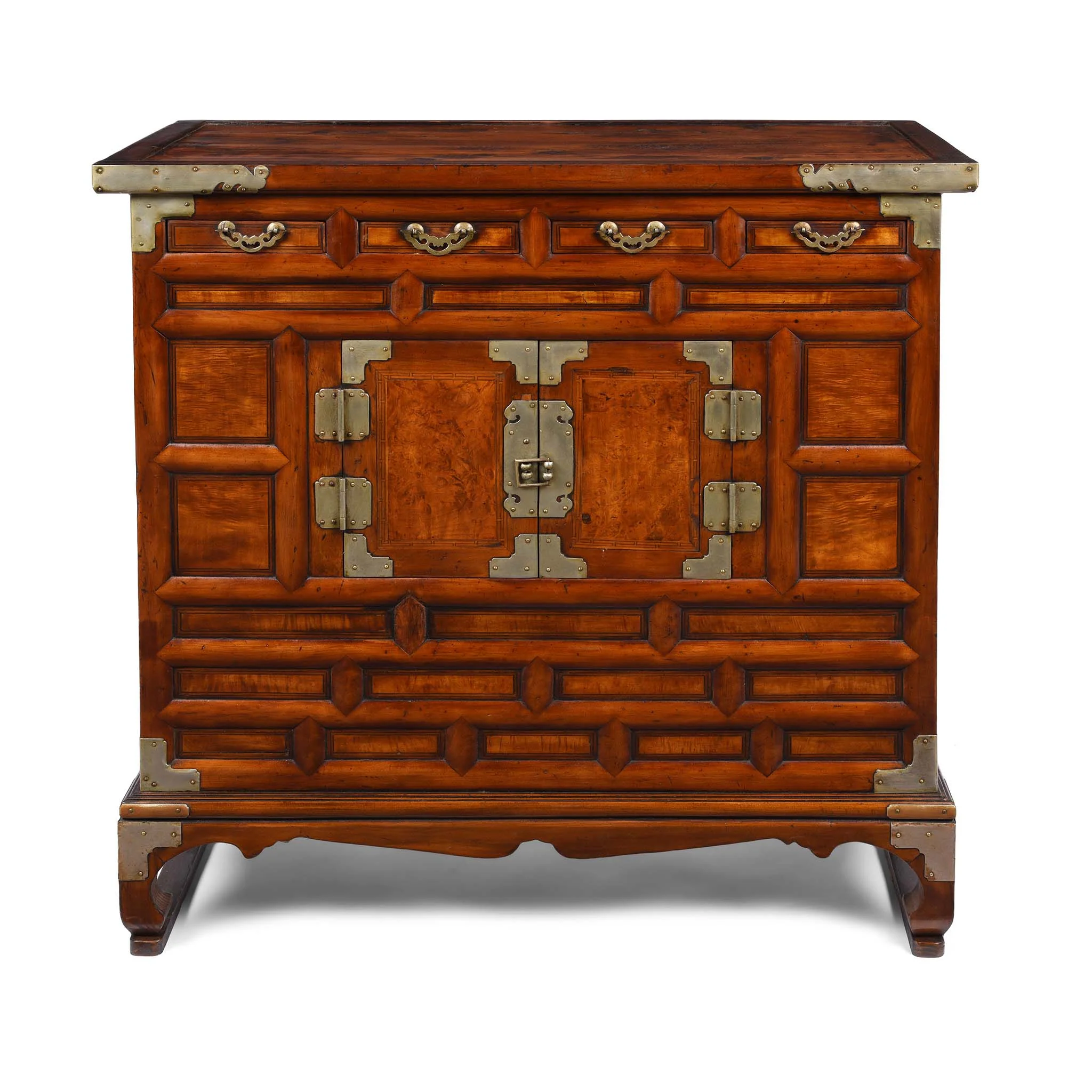
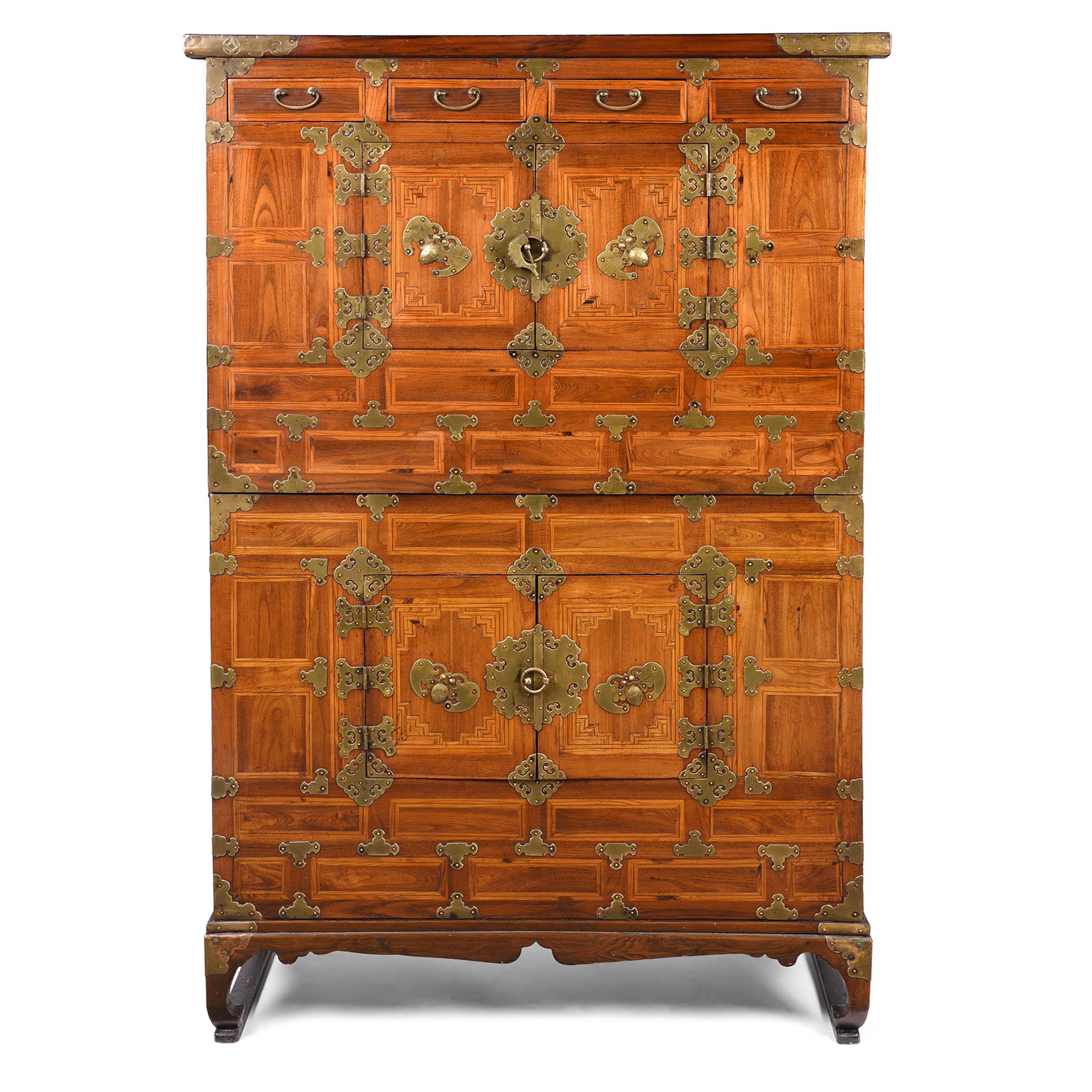
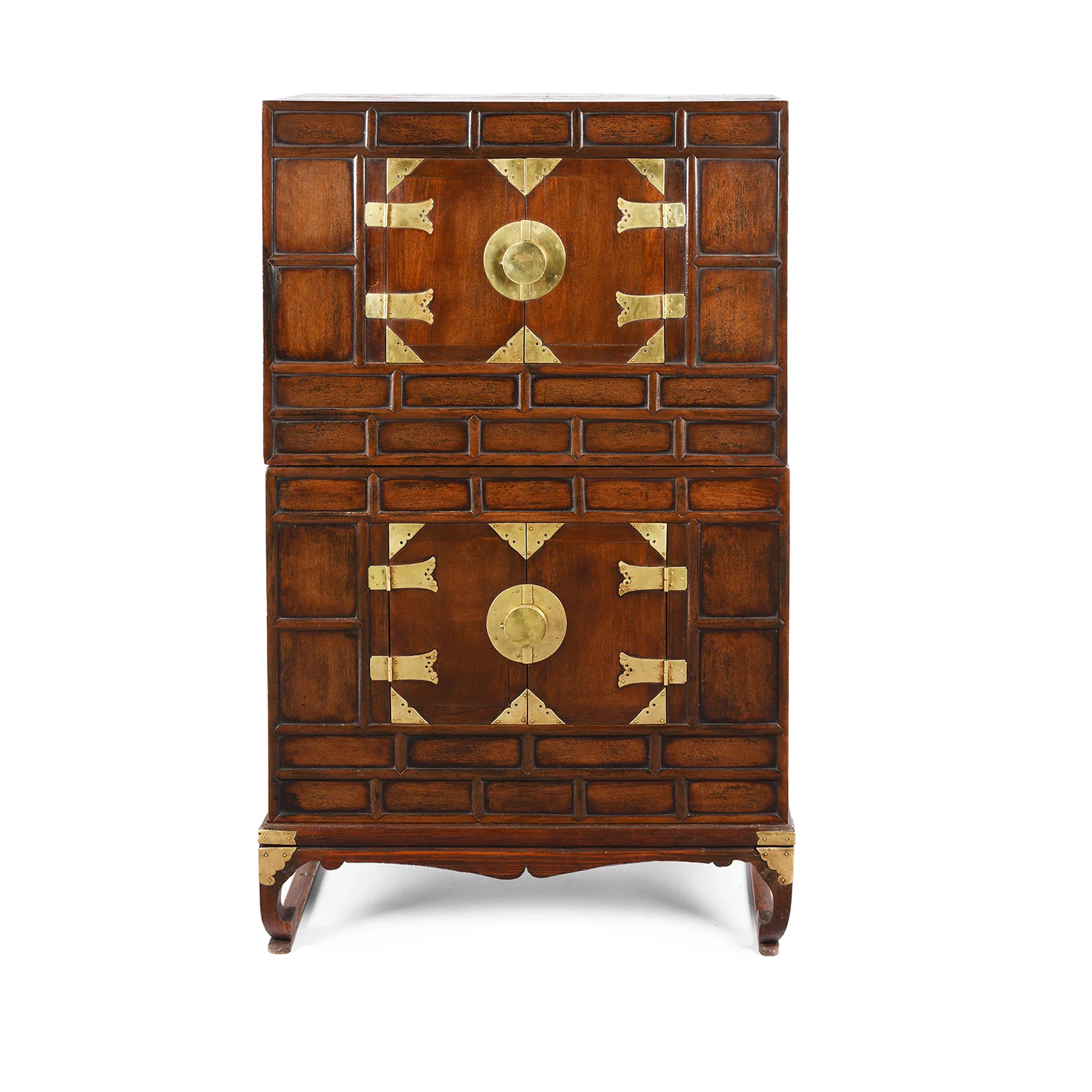
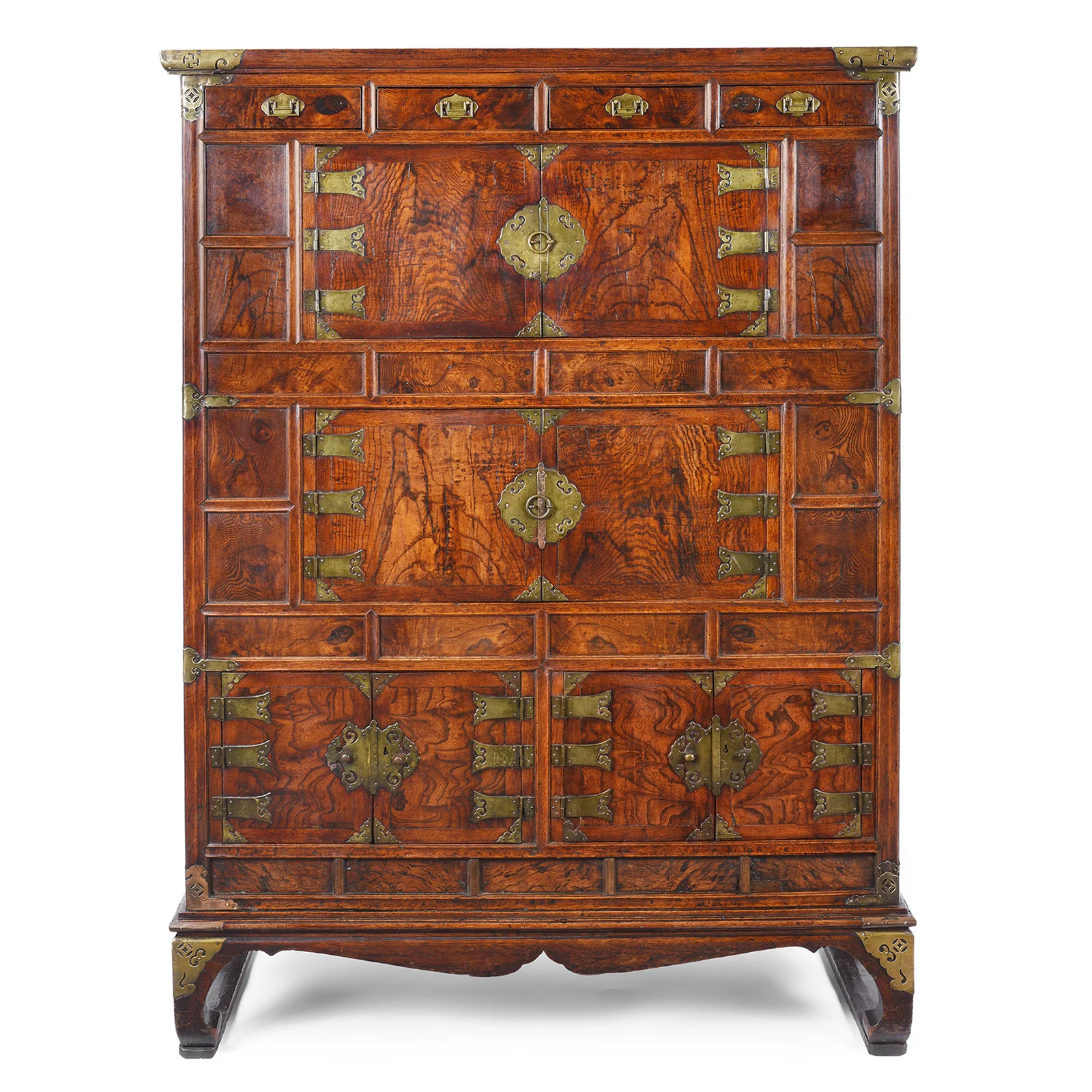
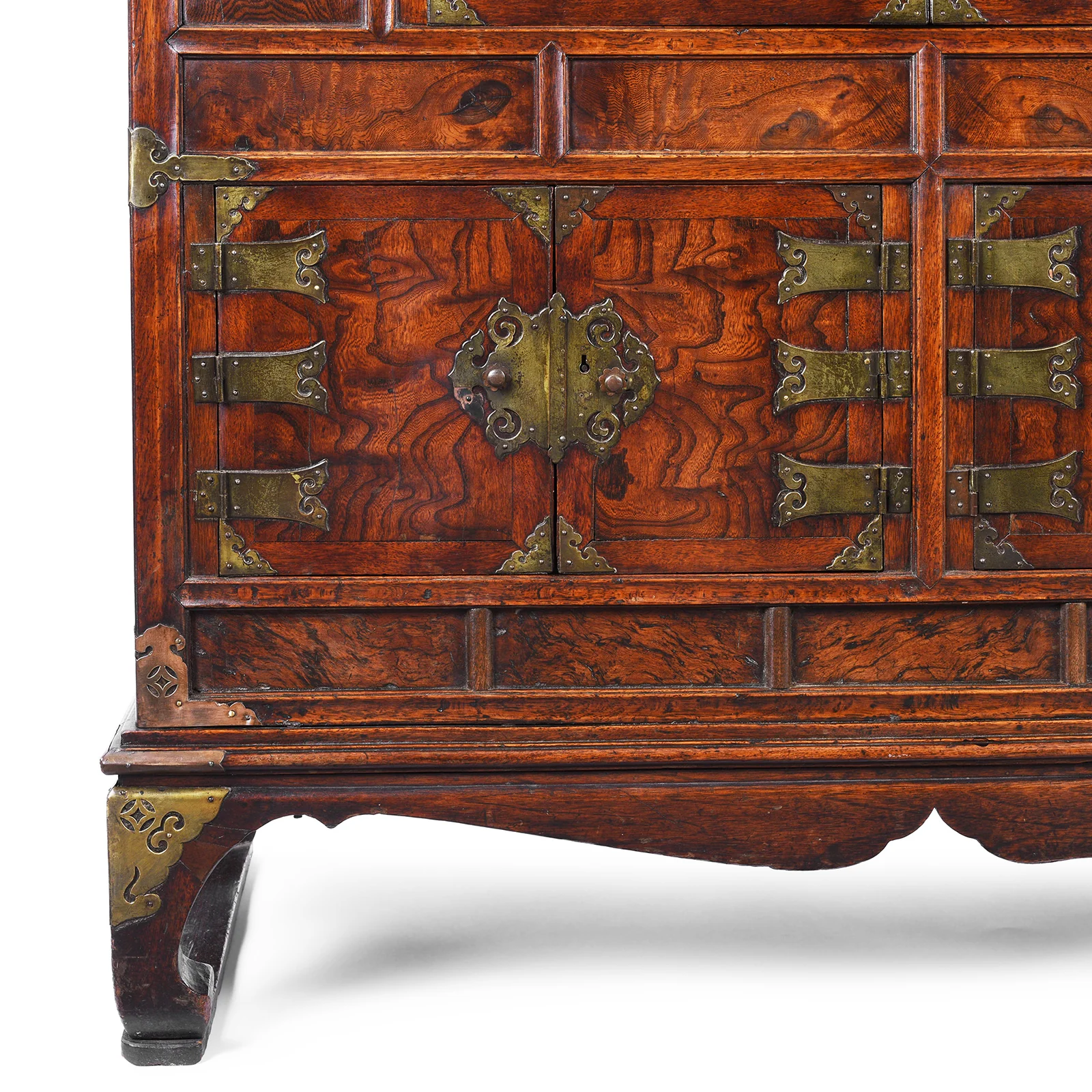
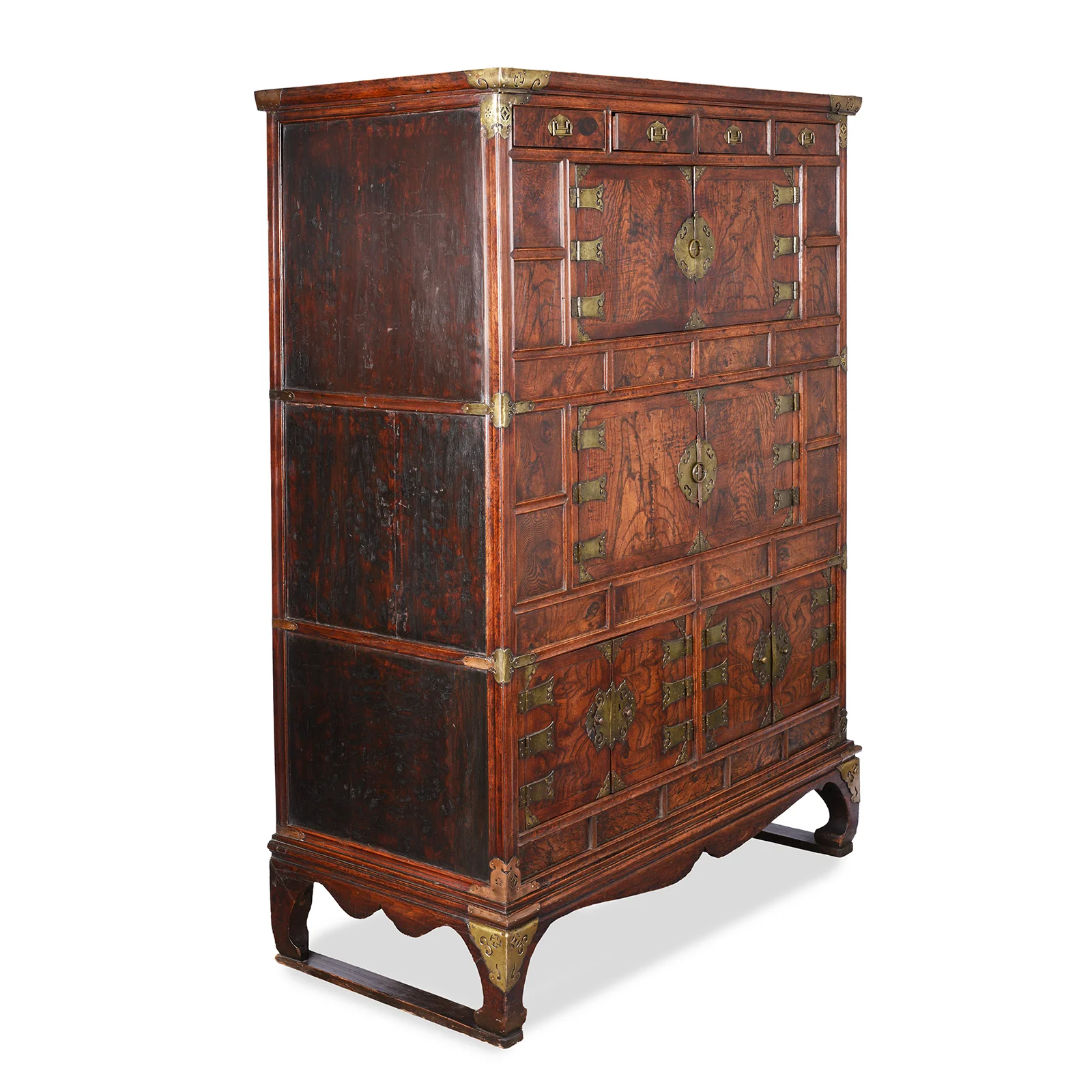
This elegant 19th-century Korean cabinet on stand is a rare find - this form is known as a Mandarin Duck jang. Mandarin ducks mate for life and the paired opening at the base is emblematic of this. Jang cabinets (장) were status symbols and this particular cabinet would have been an expensive purchase from the home of wealthy nobility. Cabinets like these were found in the women's quarters were most household goods were stored. They would have been given to couples at the time of their wedding.This piece is from Southern Korea and was made during the Joseon dynasty (1392 - 1910).
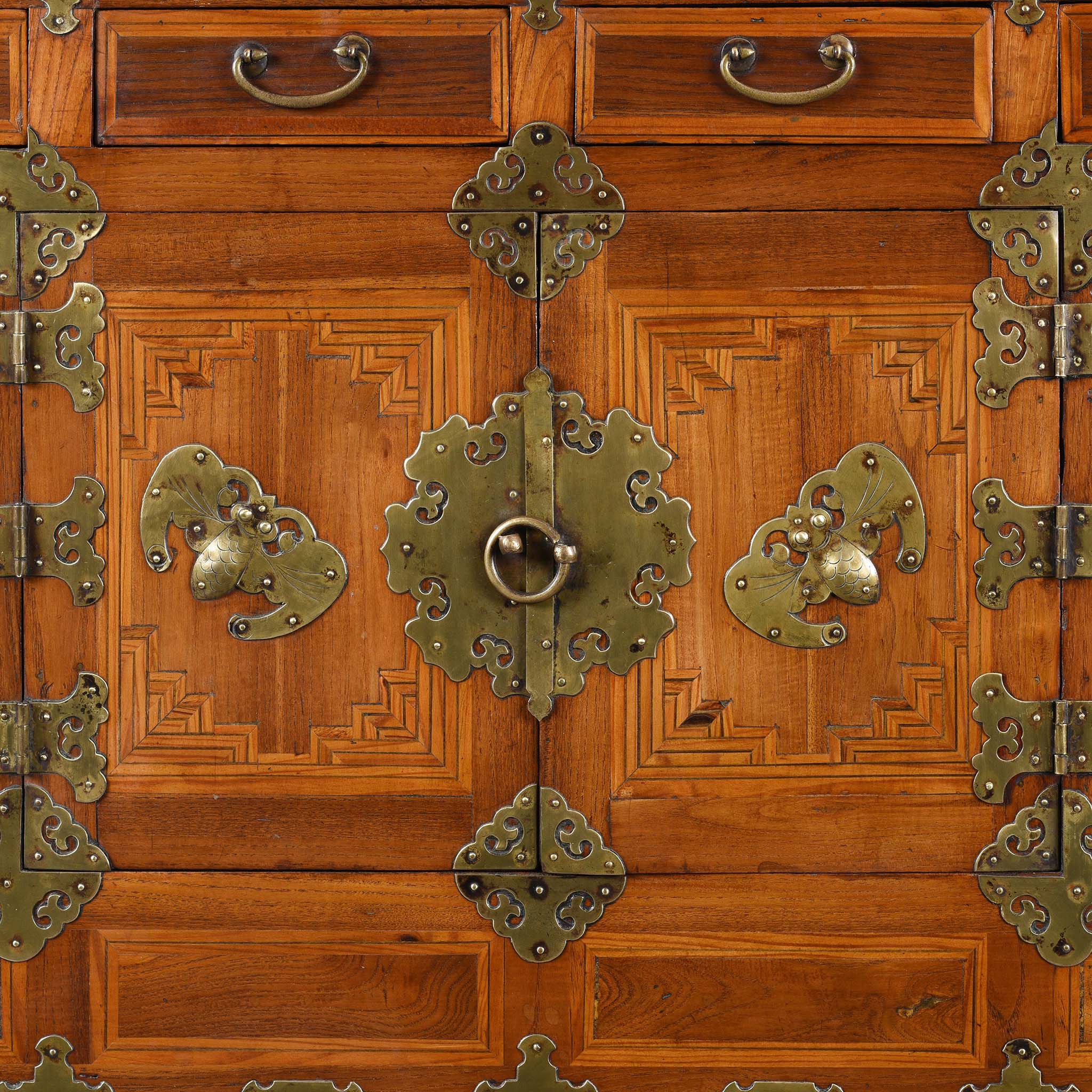
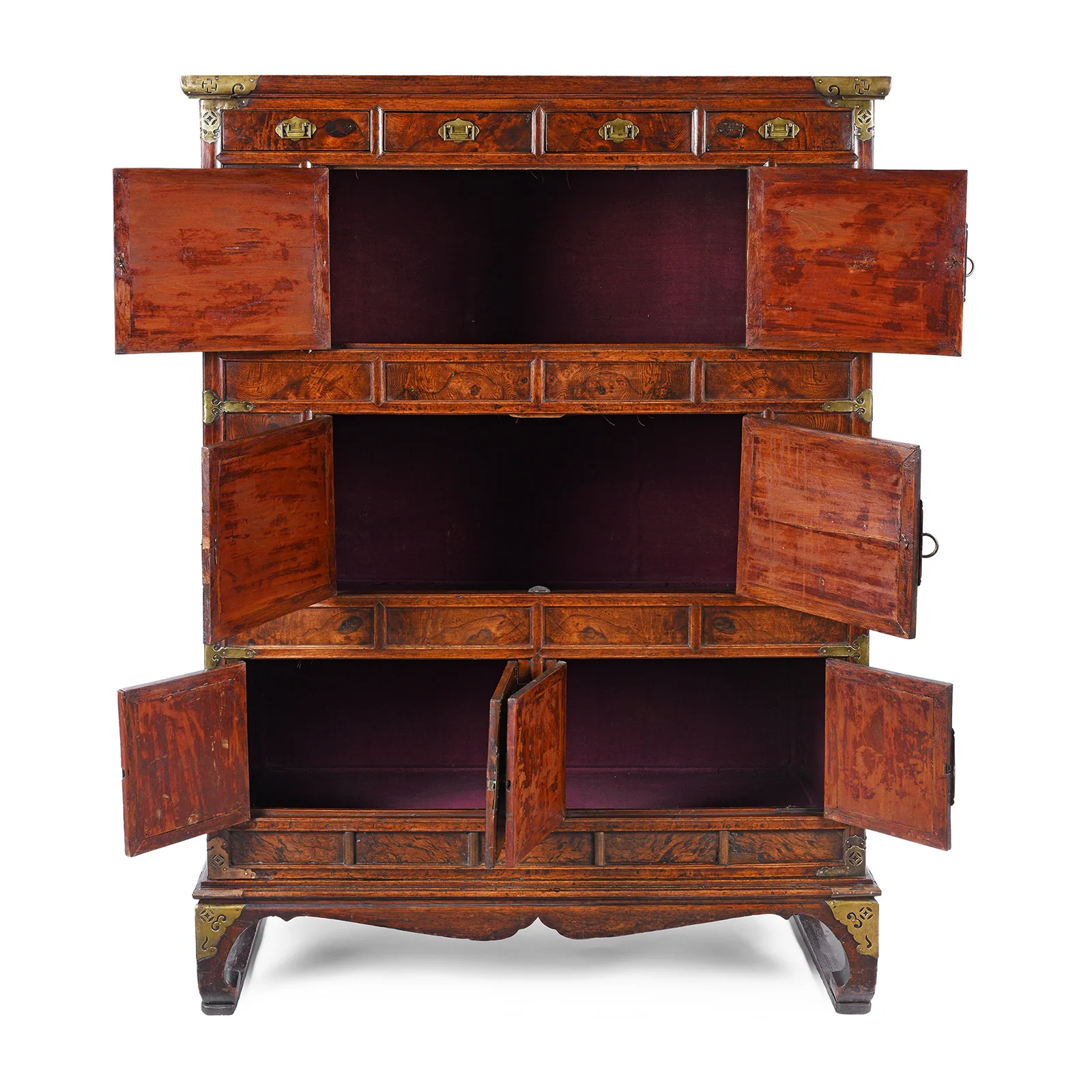
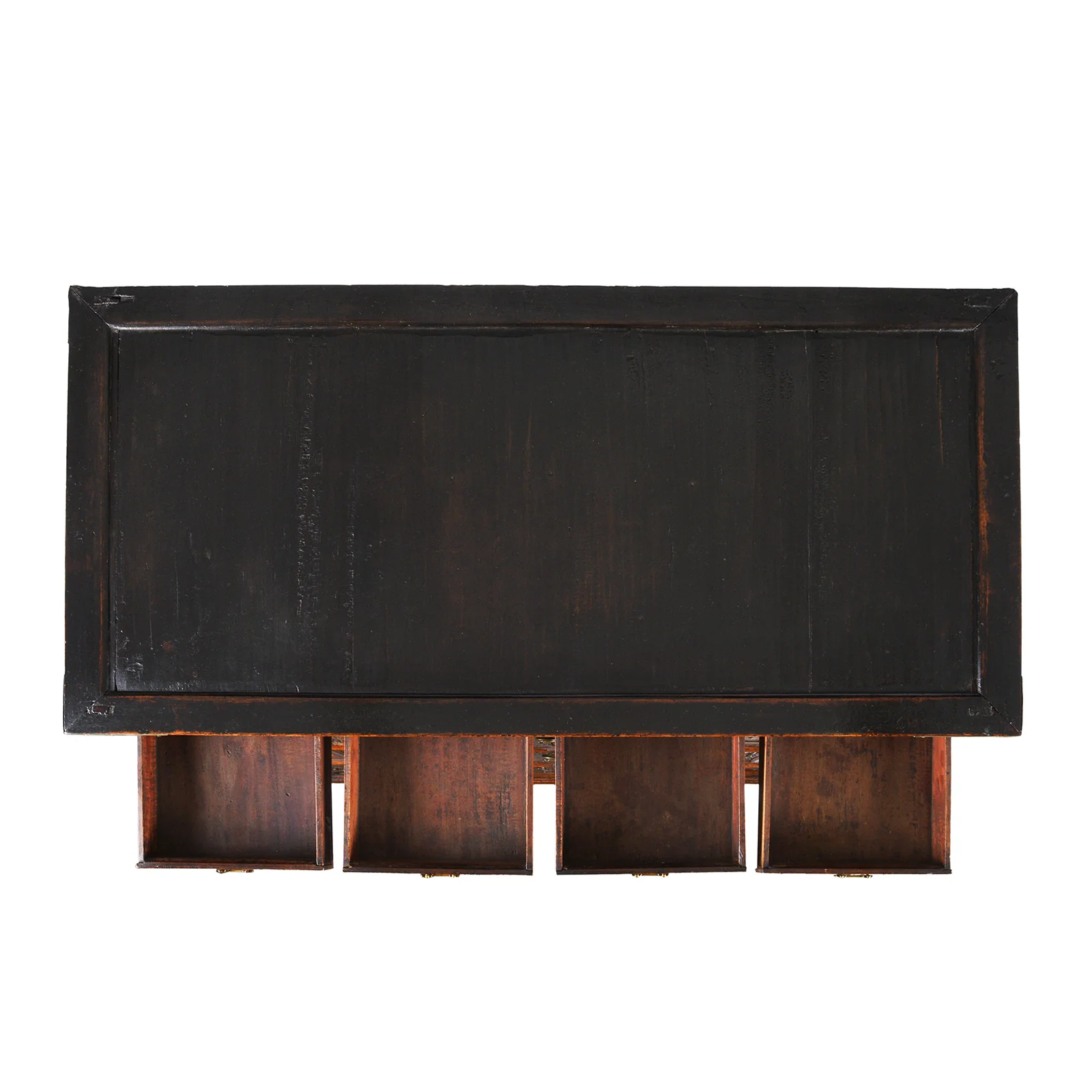
It features three tiers, with the top two offering spacious interiors and the bottom tier divided into two compartments. Above, four drawers provide additional storage space for smaller items.
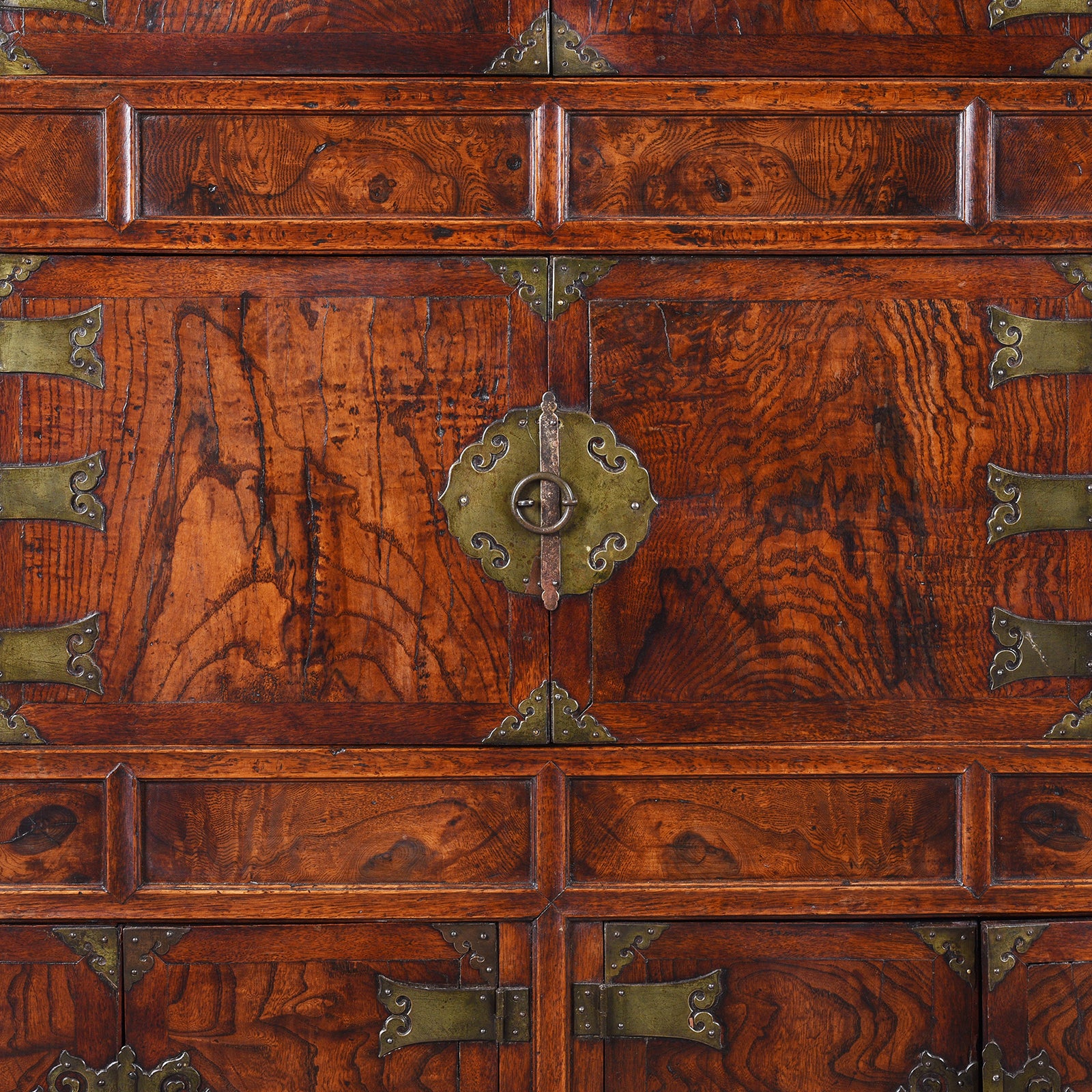
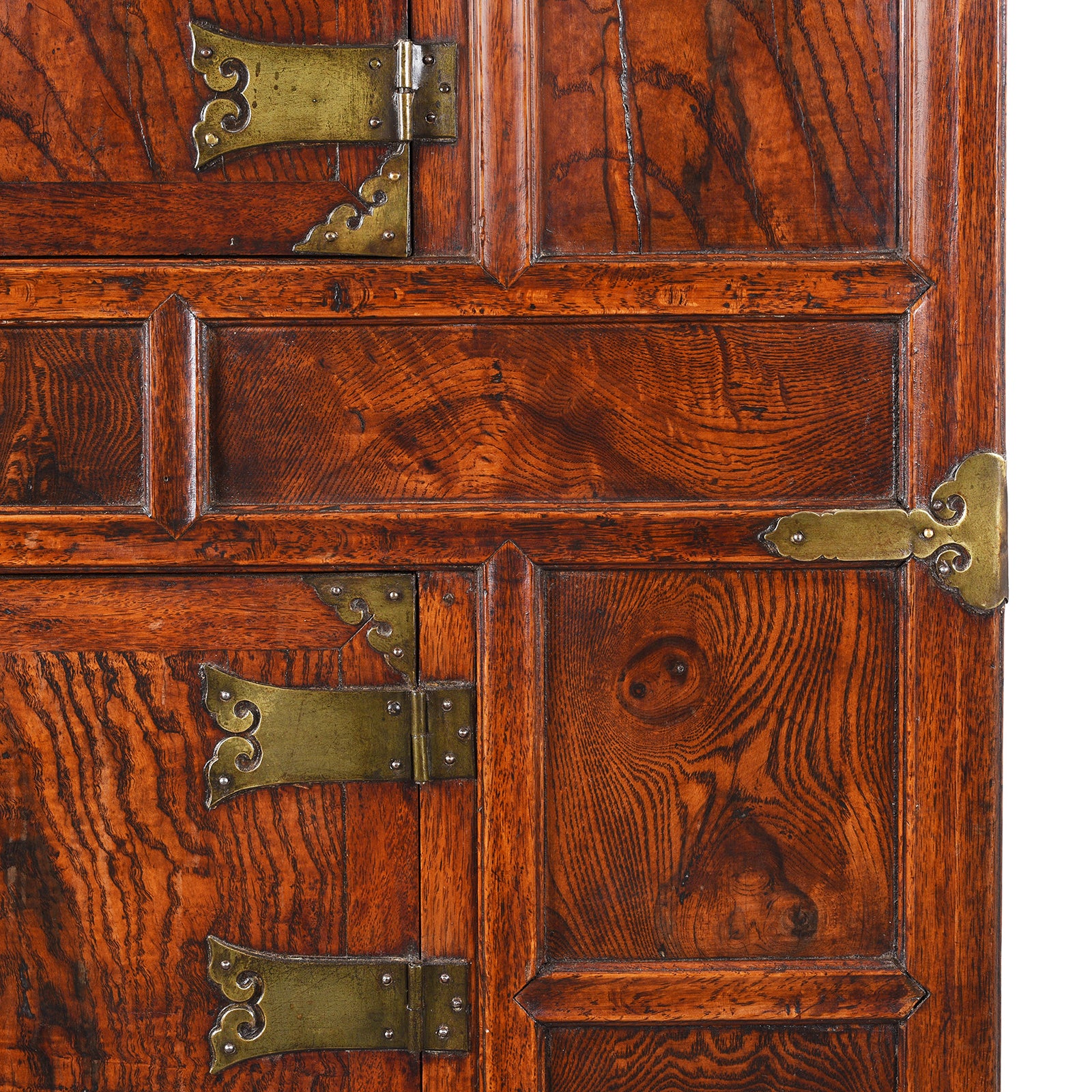
This cabinet is constructed from burr zelkova (red elm, 느티나무). Zelkova burr's complex swirling patterns were highly valued by Korean carpenters and perceived as coiled dragons, hence its nickname 'dragon wood'. The frame and body is made from
References:
A similar cabinet can be found in the collection of the National Folk Museum of Korea.
See Korean Furniture: Elegance & Tradition by Edward Reynolds Wright & Man Sill Pai for further reading on Antique Korean Furniture.
More Images
Korean Mandarin Duck Jang Cabinet - 19th Century
This elegant 19th-century Korean cabinet on stand is a rare find - this form is known as a Mandarin Duck jang. Mandarin ducks mate for life and the paired opening at the base is emblematic of this. Jang cabinets (장) were status symbols and this particular cabinet would have been an expensive purchase from the home of wealthy nobility. Cabinets like these were found in the women's quarters were most household goods were stored. They would have been given to couples at the time of their wedding.This piece is from Southern Korea and was made during the Joseon dynasty (1392 - 1910).
It features three tiers, with the top two offering spacious interiors and the bottom tier divided into two compartments. Above, four drawers provide additional storage space for smaller items.
This cabinet is constructed from burr zelkova (red elm, 느티나무). Zelkova burr's complex swirling patterns were highly valued by Korean carpenters and perceived as coiled dragons, hence its nickname 'dragon wood'. The frame and body is made from
References:
A similar cabinet can be found in the collection of the National Folk Museum of Korea.
See Korean Furniture: Elegance & Tradition by Edward Reynolds Wright & Man Sill Pai for further reading on Antique Korean Furniture.
Product Information
Product Information
Shipping & Returns
Shipping & Returns
Description
This elegant 19th-century Korean cabinet on stand is a rare find - this form is known as a Mandarin Duck jang. Mandarin ducks mate for life and the paired opening at the base is emblematic of this. Jang cabinets (장) were status symbols and this particular cabinet would have been an expensive purchase from the home of wealthy nobility. Cabinets like these were found in the women's quarters were most household goods were stored. They would have been given to couples at the time of their wedding.This piece is from Southern Korea and was made during the Joseon dynasty (1392 - 1910).
It features three tiers, with the top two offering spacious interiors and the bottom tier divided into two compartments. Above, four drawers provide additional storage space for smaller items.
This cabinet is constructed from burr zelkova (red elm, 느티나무). Zelkova burr's complex swirling patterns were highly valued by Korean carpenters and perceived as coiled dragons, hence its nickname 'dragon wood'. The frame and body is made from
References:
A similar cabinet can be found in the collection of the National Folk Museum of Korea.
See Korean Furniture: Elegance & Tradition by Edward Reynolds Wright & Man Sill Pai for further reading on Antique Korean Furniture.