
Japanese Tsugaru Nuri Lacquer Zataku Table - Taisho Era
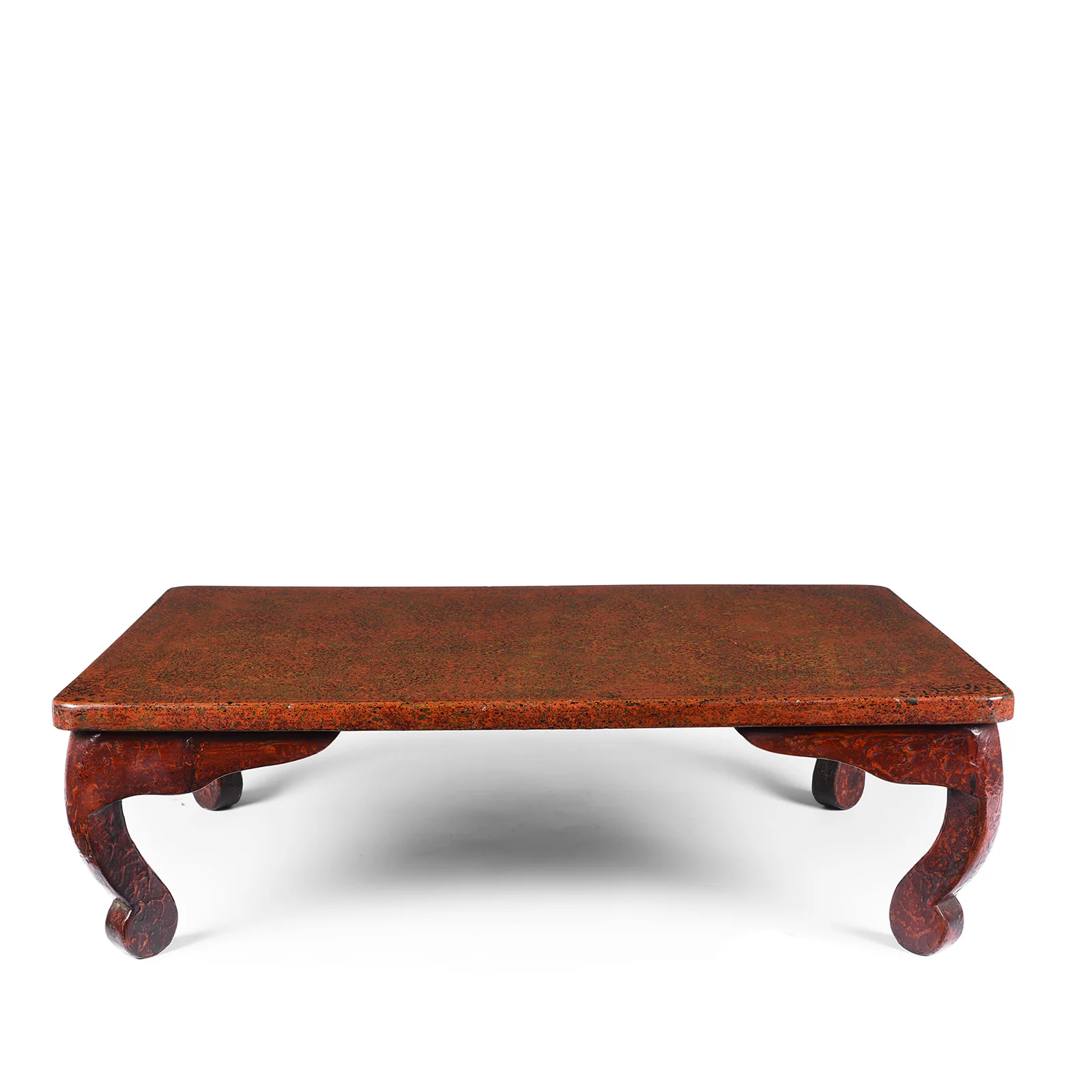
This Japanese zataku table (low table, 座卓) is crafted in tsugaru nuri lacquer with inclusions of mother of pearl (raden) flakes. Zataku were known as communal dining tables which came to prominence in the Taishō era (1912 - 1926). It would be a dramatic and functional coffee table.
Tsugaru nuri lacquer technique mimics the beautiful depths and patterns on the seabed of Wakasa Bay. It is painstakingly intensive work involving hundreds of layers of lacquer, each partially rubbed through to reveal layers beneath. The technique was created by Sanjuro Matsuura between 1596 - 1615. Tsugaru lacquer (津軽塗) is produced in Aomori prefecture. This style is the most typical Tsugaru-nuri pattern called kara-nuri (唐塗).
References:
A similar example can be found in 'Traditional Japanese Furniture: A Definitive Guide' by Kazuko Koizumi fig. 256.
More Images


Japanese Tsugaru Nuri Lacquer Zataku Table - Taisho Era
This Japanese zataku table (low table, 座卓) is crafted in tsugaru nuri lacquer with inclusions of mother of pearl (raden) flakes. Zataku were known as communal dining tables which came to prominence in the Taishō era (1912 - 1926). It would be a dramatic and functional coffee table.
Tsugaru nuri lacquer technique mimics the beautiful depths and patterns on the seabed of Wakasa Bay. It is painstakingly intensive work involving hundreds of layers of lacquer, each partially rubbed through to reveal layers beneath. The technique was created by Sanjuro Matsuura between 1596 - 1615. Tsugaru lacquer (津軽塗) is produced in Aomori prefecture. This style is the most typical Tsugaru-nuri pattern called kara-nuri (唐塗).
References:
A similar example can be found in 'Traditional Japanese Furniture: A Definitive Guide' by Kazuko Koizumi fig. 256.
Product Information
Product Information
Shipping & Returns
Shipping & Returns
Description
This Japanese zataku table (low table, 座卓) is crafted in tsugaru nuri lacquer with inclusions of mother of pearl (raden) flakes. Zataku were known as communal dining tables which came to prominence in the Taishō era (1912 - 1926). It would be a dramatic and functional coffee table.
Tsugaru nuri lacquer technique mimics the beautiful depths and patterns on the seabed of Wakasa Bay. It is painstakingly intensive work involving hundreds of layers of lacquer, each partially rubbed through to reveal layers beneath. The technique was created by Sanjuro Matsuura between 1596 - 1615. Tsugaru lacquer (津軽塗) is produced in Aomori prefecture. This style is the most typical Tsugaru-nuri pattern called kara-nuri (唐塗).
References:
A similar example can be found in 'Traditional Japanese Furniture: A Definitive Guide' by Kazuko Koizumi fig. 256.