South Indian Grain Measure From Kerala - 19th Century
This 19th-century grain measure from Kerala would have been used in village markets to portion out staples such as rice, wheat, corn, and pulses. Before the adoption of the metric system, traditional Indian measures like seers and pattis were widely used, and vessels like this ensured consistency and fairness in trade.
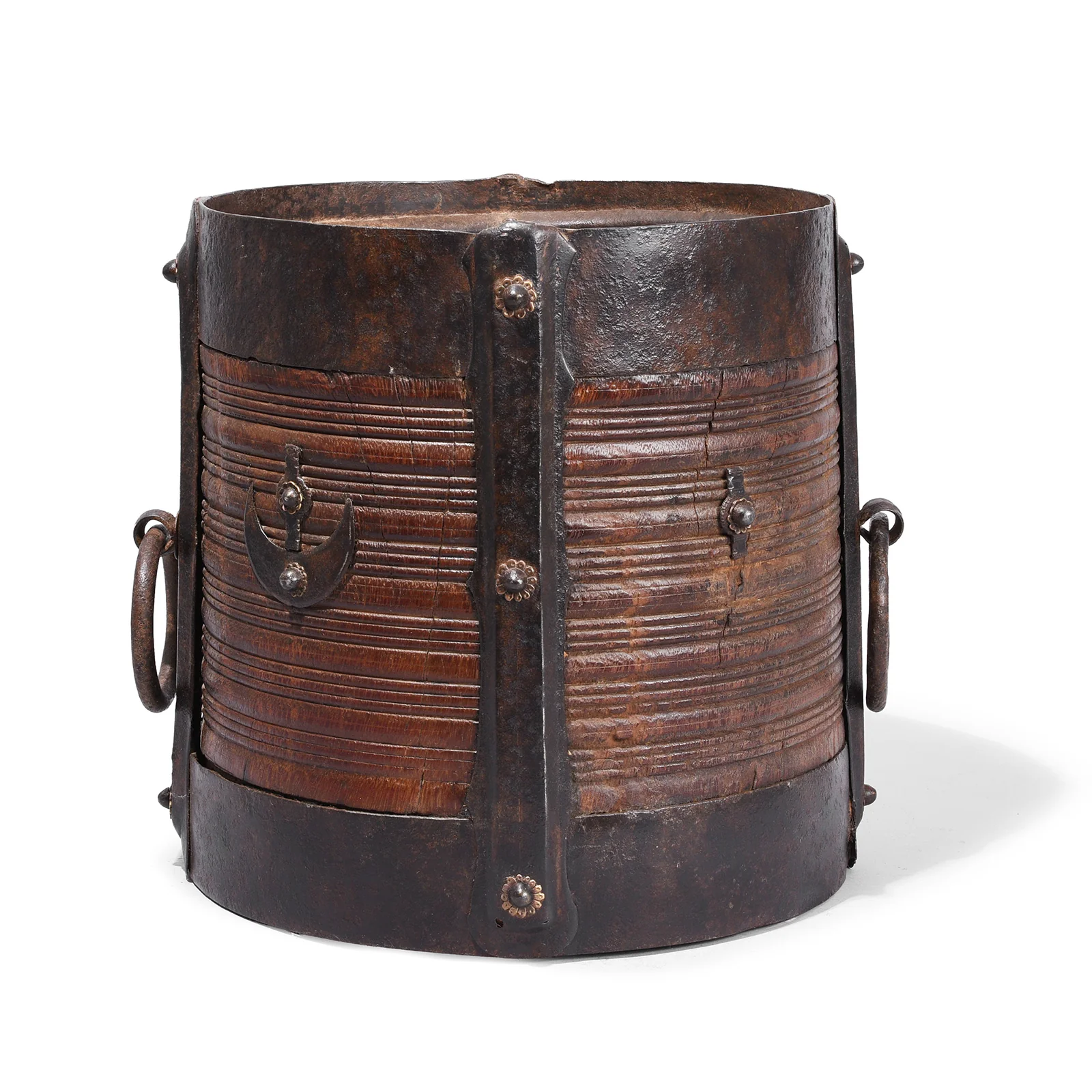
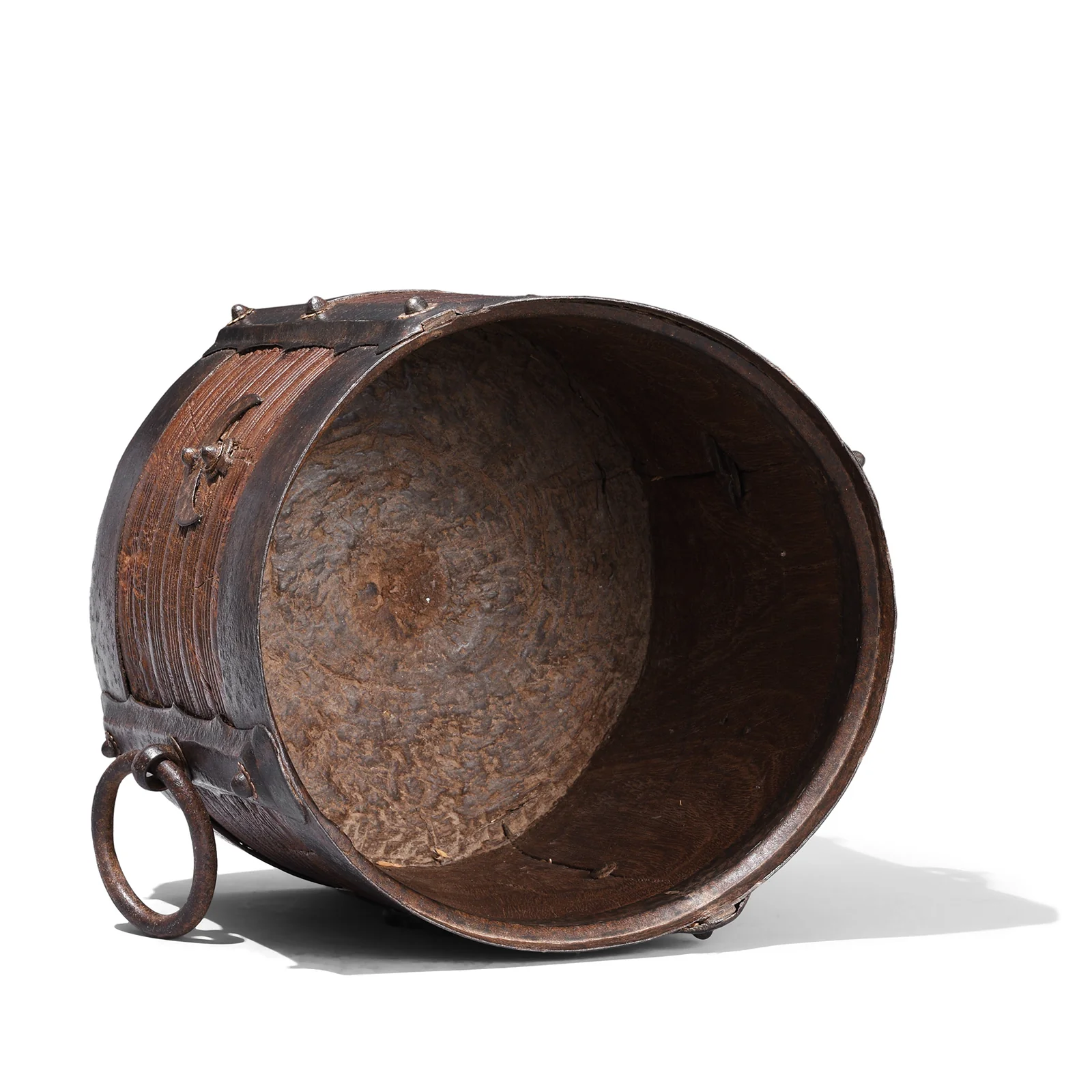
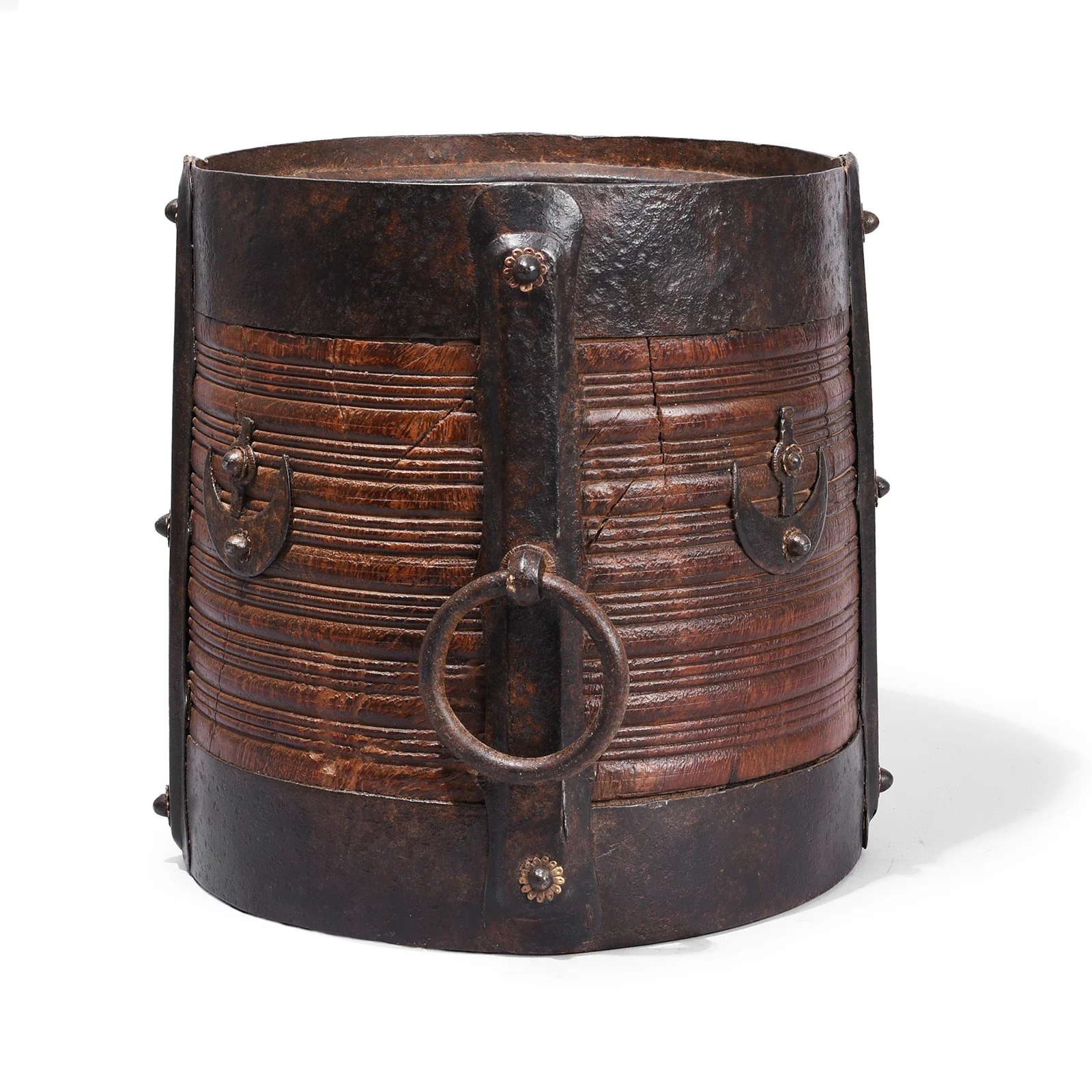
Constructed from solid wood and bound with heavy forged iron straps, the cylindrical container is reinforced with riveted bands and fitted with bold iron ring handles. Decorative crescent-shaped clasps add further character to the piece, while its rich, timeworn patina speaks of generations of use. Today, it stands as both a sculptural object and a tangible link to India's historic rural marketplaces.
- Origin: Kerala, South India
- Date: 19th Century
- Materials: Wood with forged iron binding
- Features: Wooden staves bound with riveted iron bands, crescent-shaped clasps, ring handles
- Condition: Age-related wear with rich patina; structurally sound
- Dimensions: W30 x D28 x H29 cm
Original: $378.57
-65%$378.57
$132.50More Images
South Indian Grain Measure From Kerala - 19th Century
This 19th-century grain measure from Kerala would have been used in village markets to portion out staples such as rice, wheat, corn, and pulses. Before the adoption of the metric system, traditional Indian measures like seers and pattis were widely used, and vessels like this ensured consistency and fairness in trade.
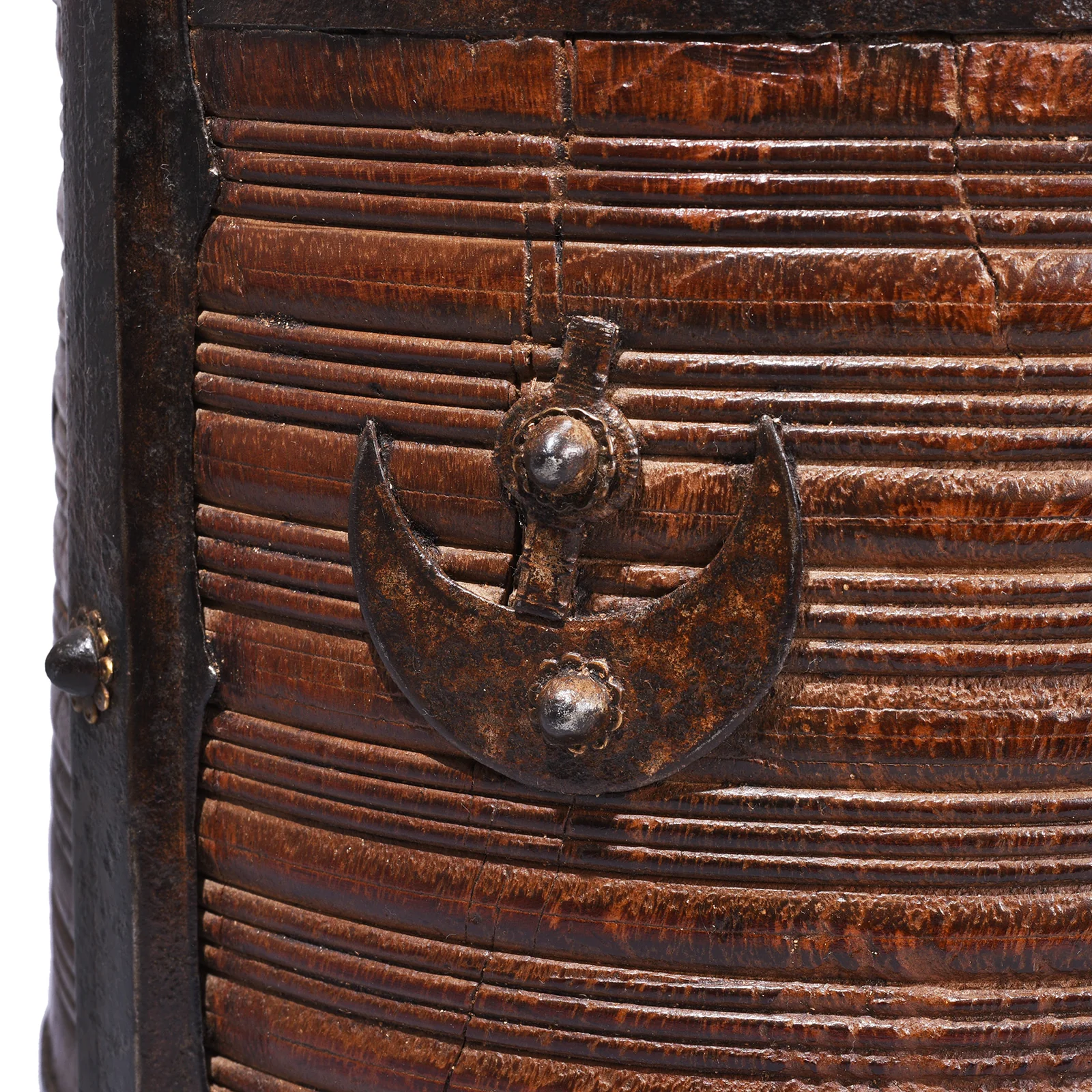
Constructed from solid wood and bound with heavy forged iron straps, the cylindrical container is reinforced with riveted bands and fitted with bold iron ring handles. Decorative crescent-shaped clasps add further character to the piece, while its rich, timeworn patina speaks of generations of use. Today, it stands as both a sculptural object and a tangible link to India's historic rural marketplaces.
- Origin: Kerala, South India
- Date: 19th Century
- Materials: Wood with forged iron binding
- Features: Wooden staves bound with riveted iron bands, crescent-shaped clasps, ring handles
- Condition: Age-related wear with rich patina; structurally sound
- Dimensions: W30 x D28 x H29 cm
Product Information
Product Information
Shipping & Returns
Shipping & Returns
Description
This 19th-century grain measure from Kerala would have been used in village markets to portion out staples such as rice, wheat, corn, and pulses. Before the adoption of the metric system, traditional Indian measures like seers and pattis were widely used, and vessels like this ensured consistency and fairness in trade.
Constructed from solid wood and bound with heavy forged iron straps, the cylindrical container is reinforced with riveted bands and fitted with bold iron ring handles. Decorative crescent-shaped clasps add further character to the piece, while its rich, timeworn patina speaks of generations of use. Today, it stands as both a sculptural object and a tangible link to India's historic rural marketplaces.
- Origin: Kerala, South India
- Date: 19th Century
- Materials: Wood with forged iron binding
- Features: Wooden staves bound with riveted iron bands, crescent-shaped clasps, ring handles
- Condition: Age-related wear with rich patina; structurally sound
- Dimensions: W30 x D28 x H29 cm