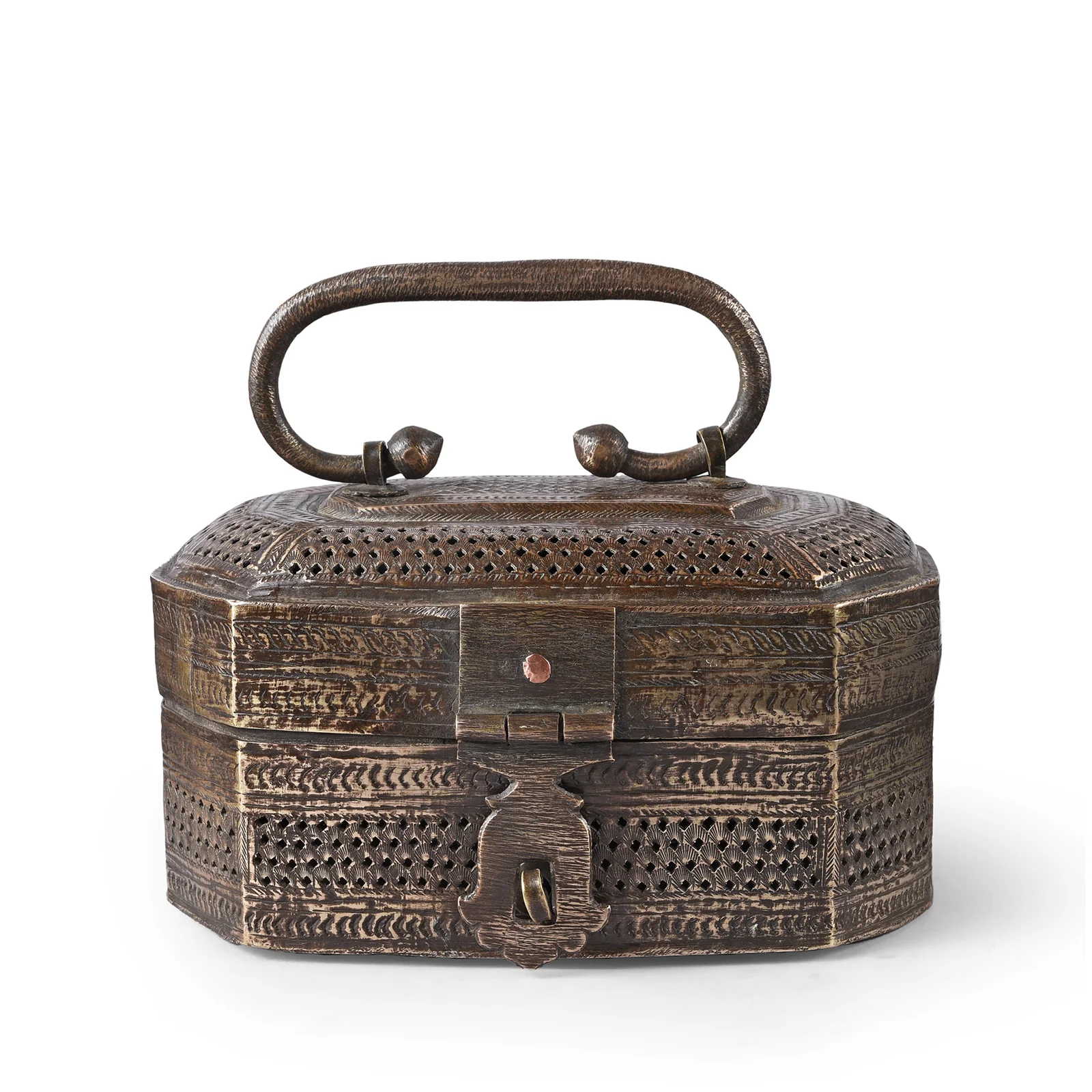
Indian Brass Jali Paan Dan Box - Circa 1910
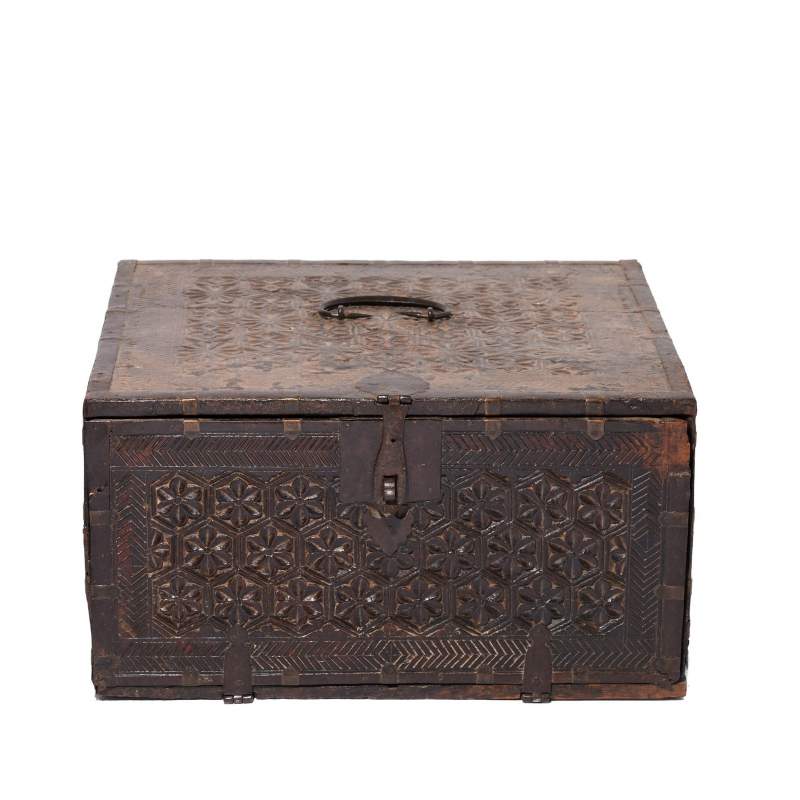
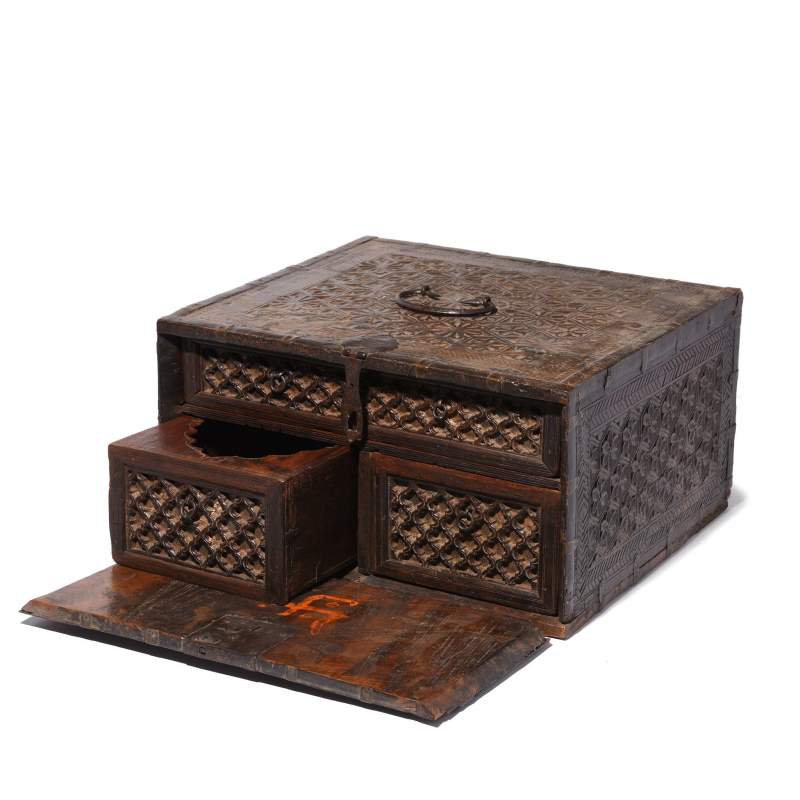
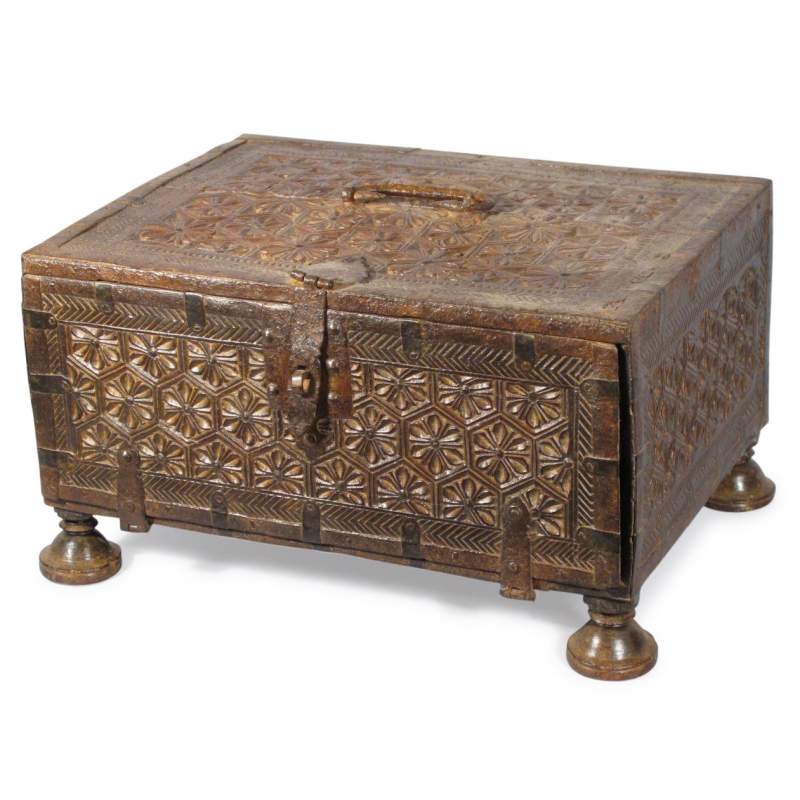
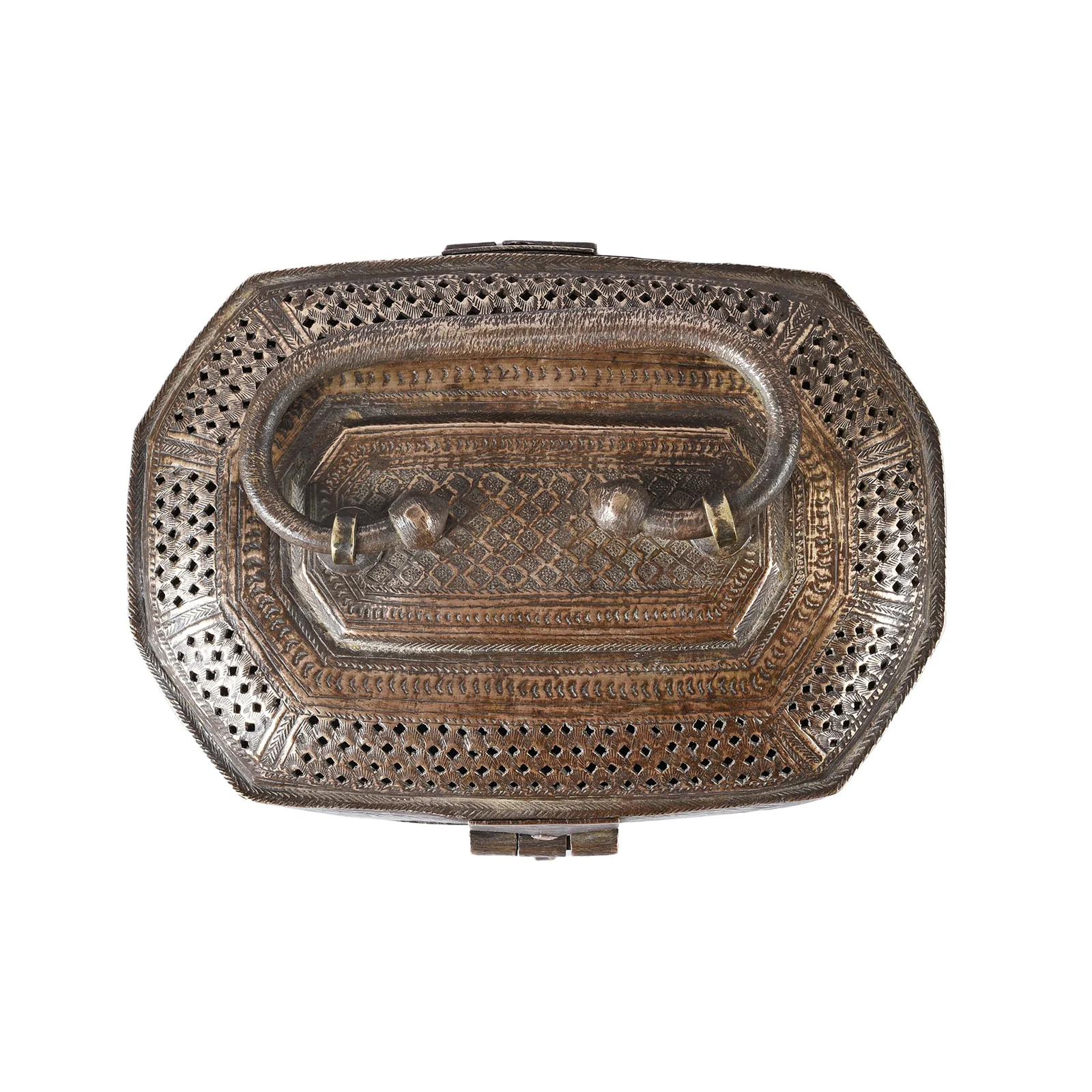
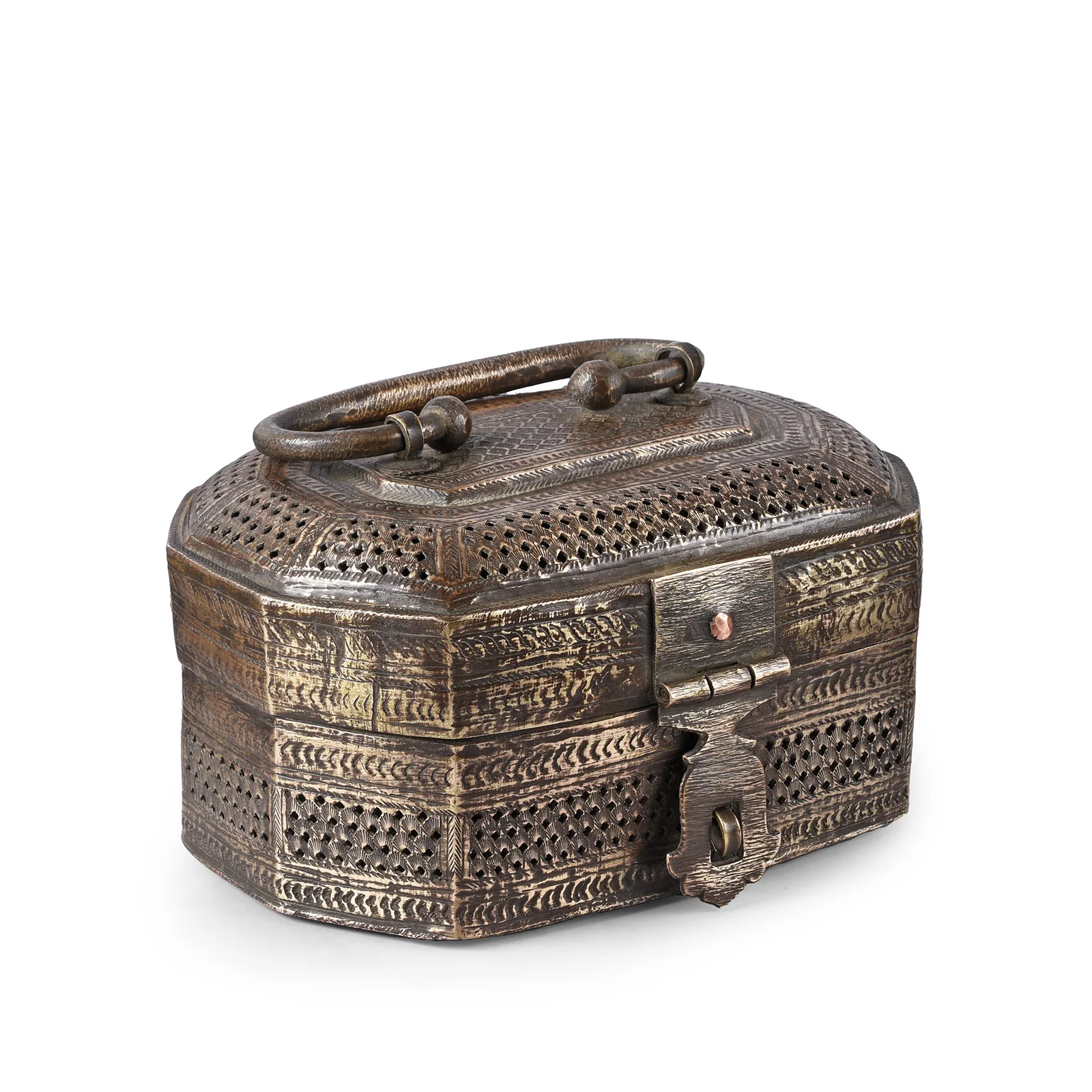
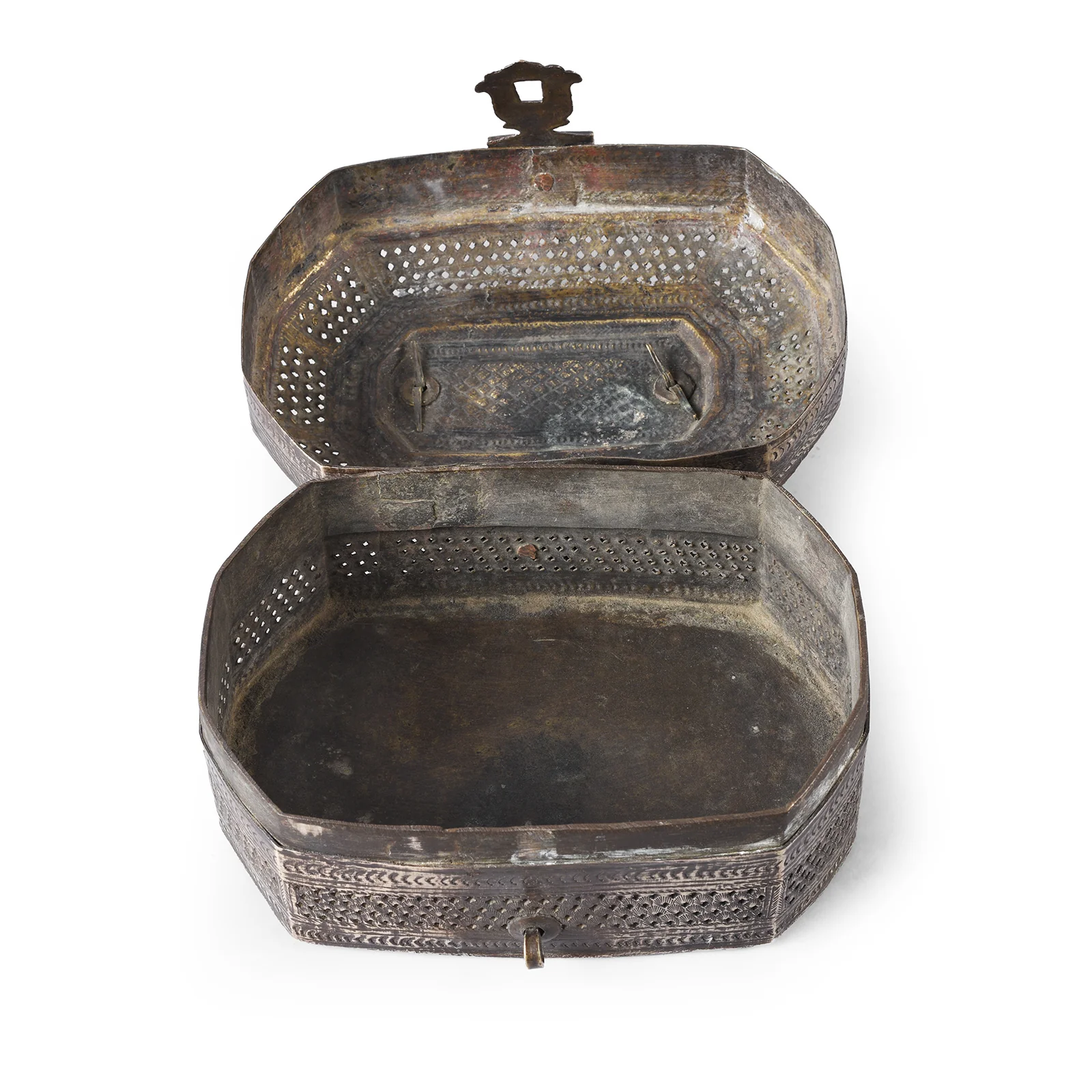
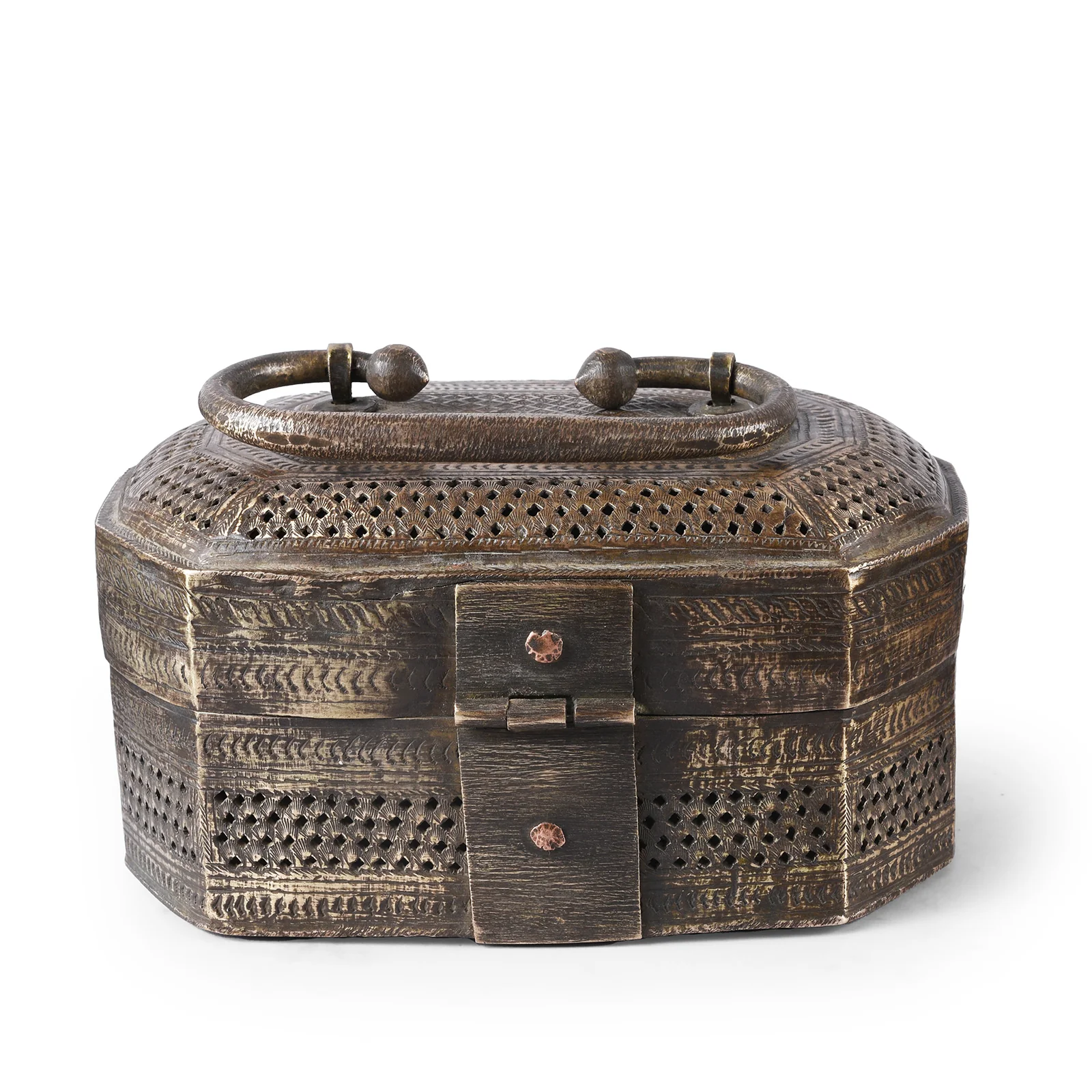
This Indian brass box was used for storing paan leaves and is known colloquially as a paan dan.
Paan is a preparation, which combines a paste of spices in a betel leaf, which is chewed for its stimulant and psychoactive effects. After chewing it is either spat out or swallowed. Paan has many variations. Slaked lime (chunam) paste is commonly added to bind the leaves. The skilled Paan maker is known as a paanwala in North India.
References:
A near identical piece can be found in Syracuse University Art Museum - object number 1966.1118.
UK Delivery Charge - except Highlands & Islands £7.50
More delivery options available at checkout
More Images
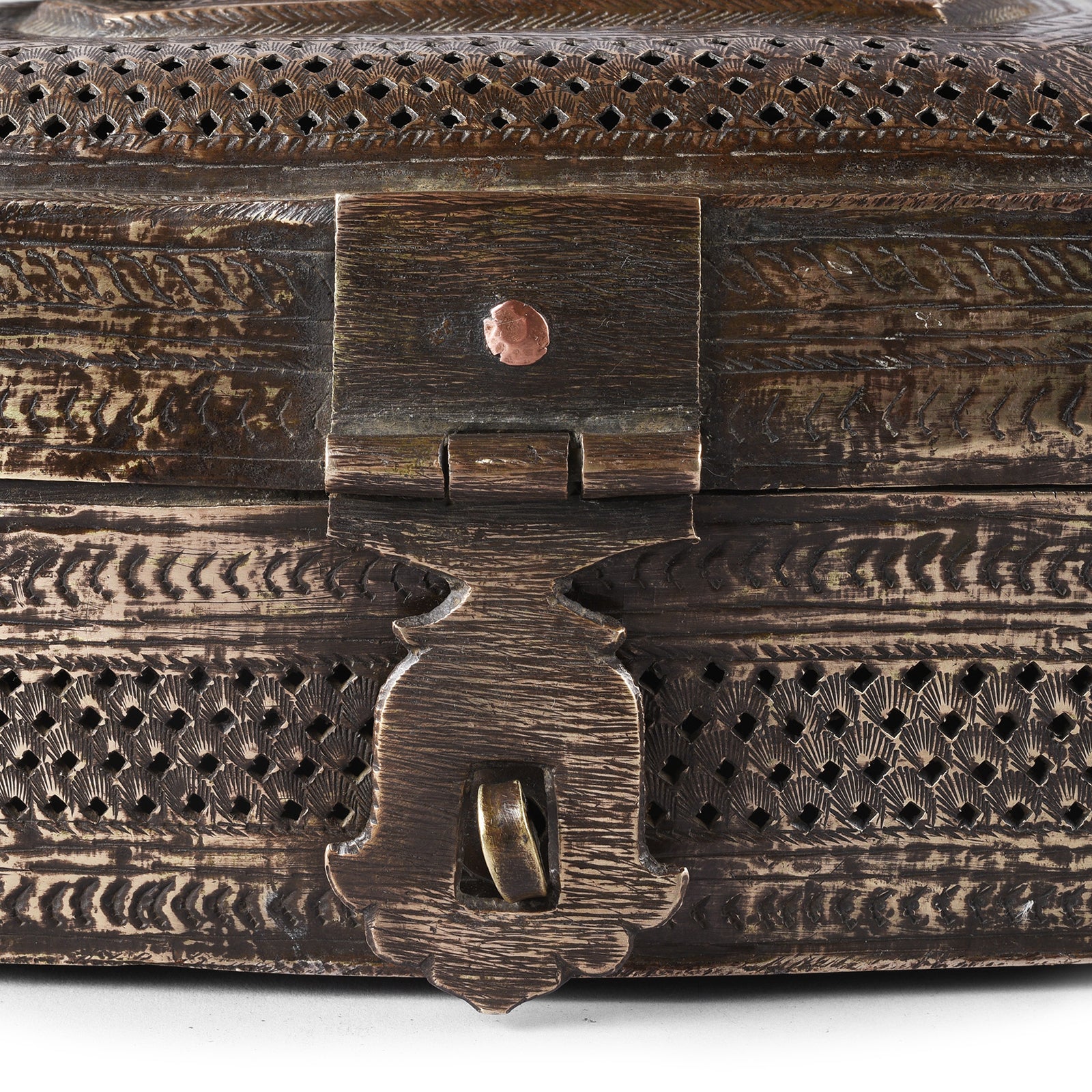
Indian Brass Jali Paan Dan Box - Circa 1910
This Indian brass box was used for storing paan leaves and is known colloquially as a paan dan.
Paan is a preparation, which combines a paste of spices in a betel leaf, which is chewed for its stimulant and psychoactive effects. After chewing it is either spat out or swallowed. Paan has many variations. Slaked lime (chunam) paste is commonly added to bind the leaves. The skilled Paan maker is known as a paanwala in North India.
References:
A near identical piece can be found in Syracuse University Art Museum - object number 1966.1118.
UK Delivery Charge - except Highlands & Islands £7.50
More delivery options available at checkout
Product Information
Product Information
Shipping & Returns
Shipping & Returns
Description
This Indian brass box was used for storing paan leaves and is known colloquially as a paan dan.
Paan is a preparation, which combines a paste of spices in a betel leaf, which is chewed for its stimulant and psychoactive effects. After chewing it is either spat out or swallowed. Paan has many variations. Slaked lime (chunam) paste is commonly added to bind the leaves. The skilled Paan maker is known as a paanwala in North India.
References:
A near identical piece can be found in Syracuse University Art Museum - object number 1966.1118.
UK Delivery Charge - except Highlands & Islands £7.50
More delivery options available at checkout