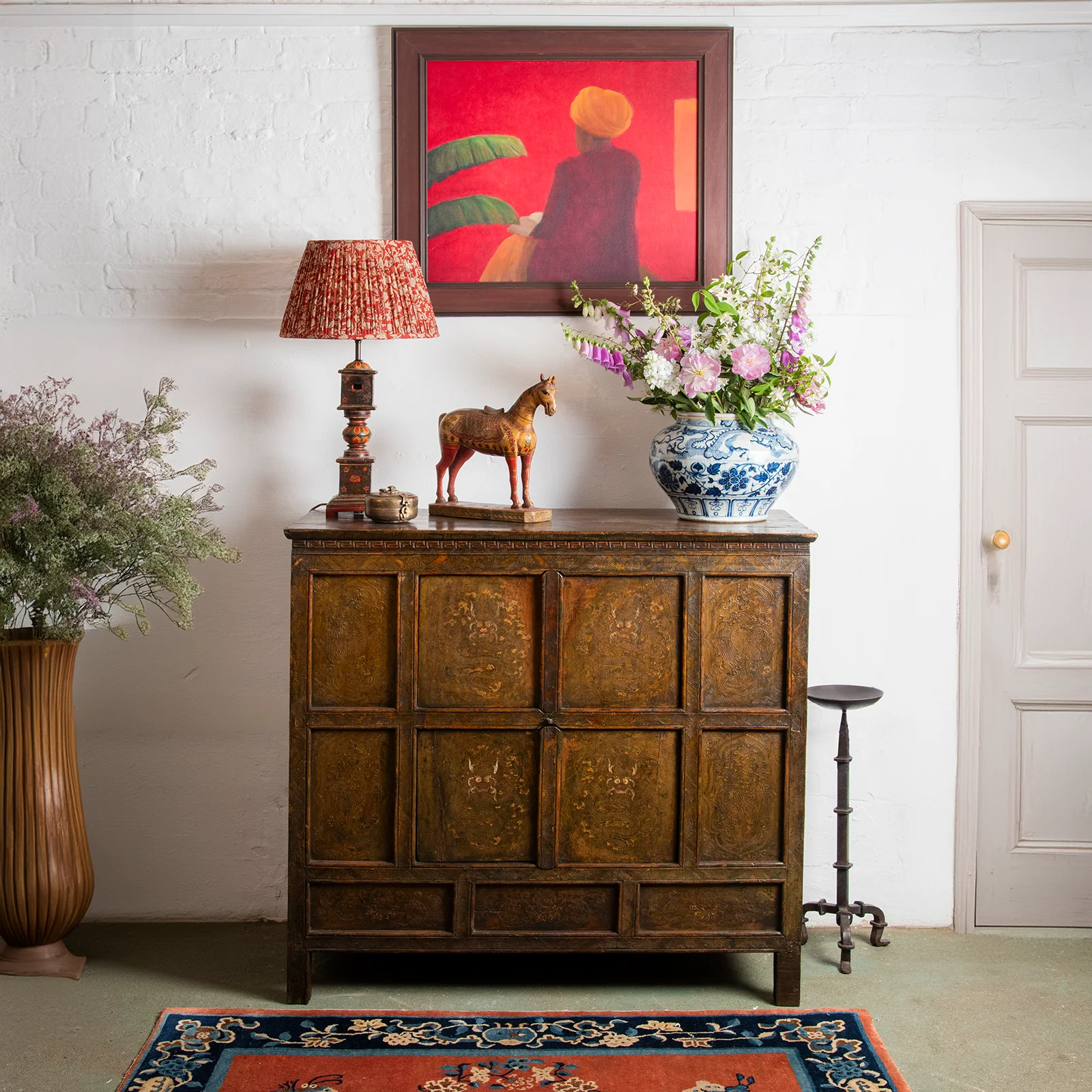
Gilt Painted Tibetan Altar Cabinet - Late 19th Century
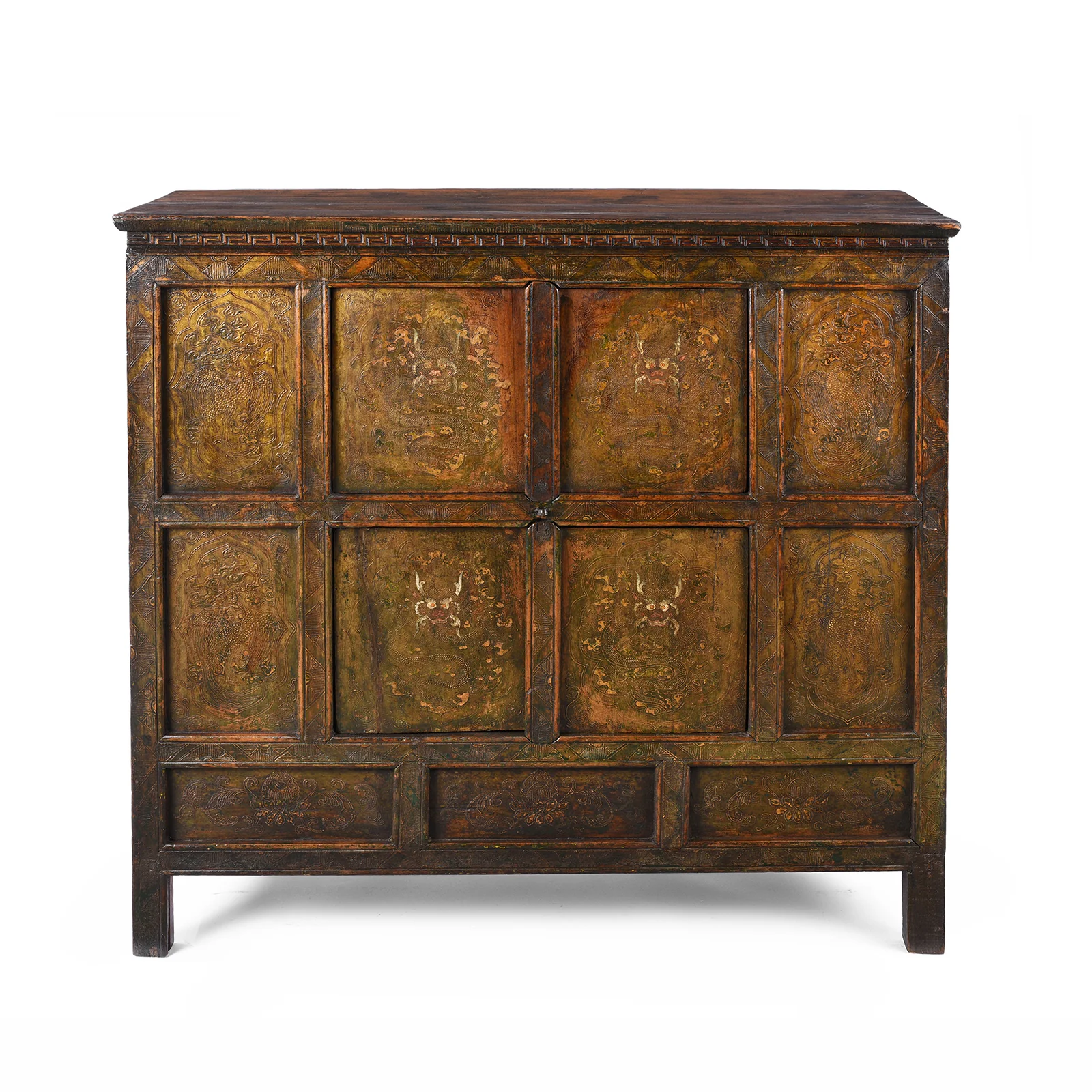
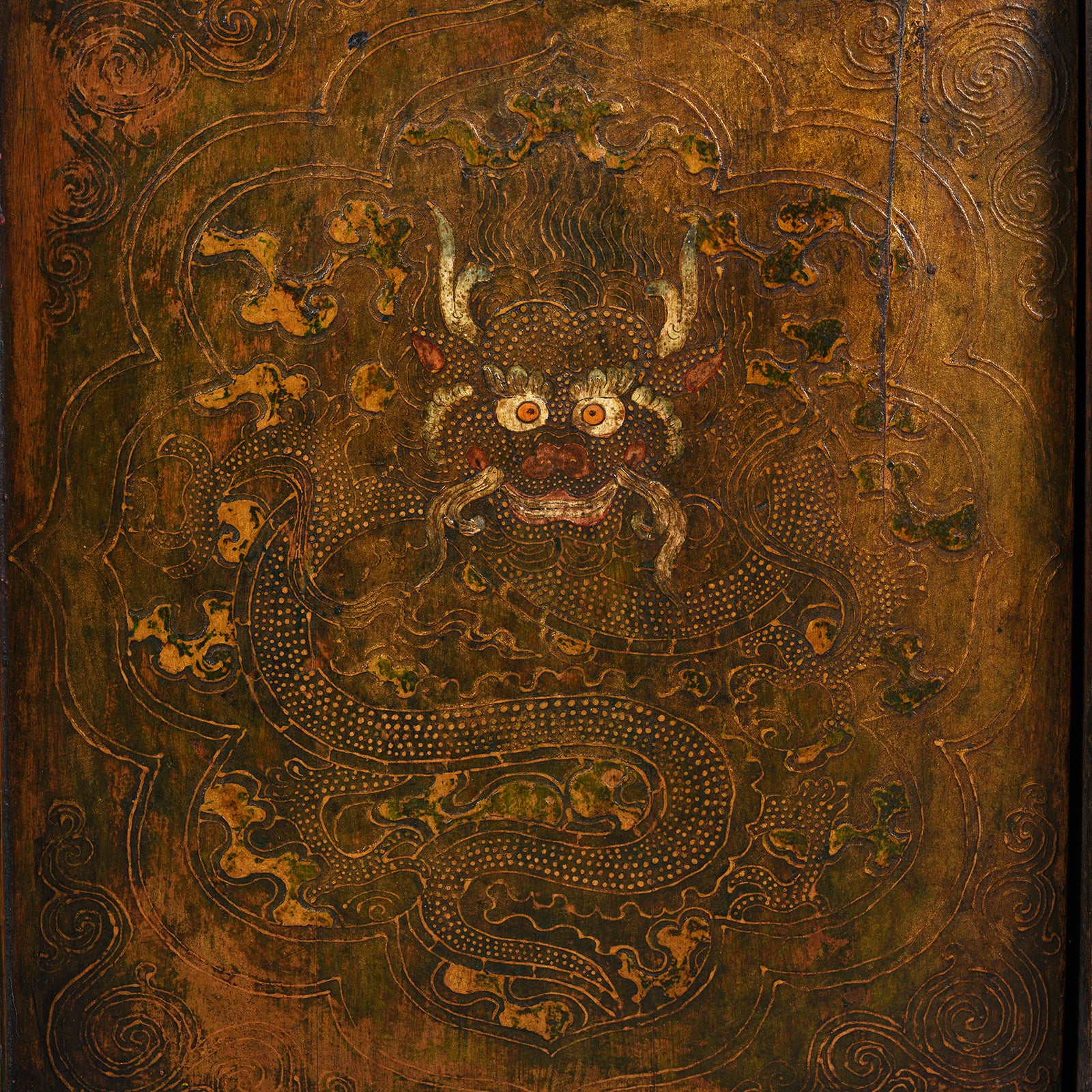
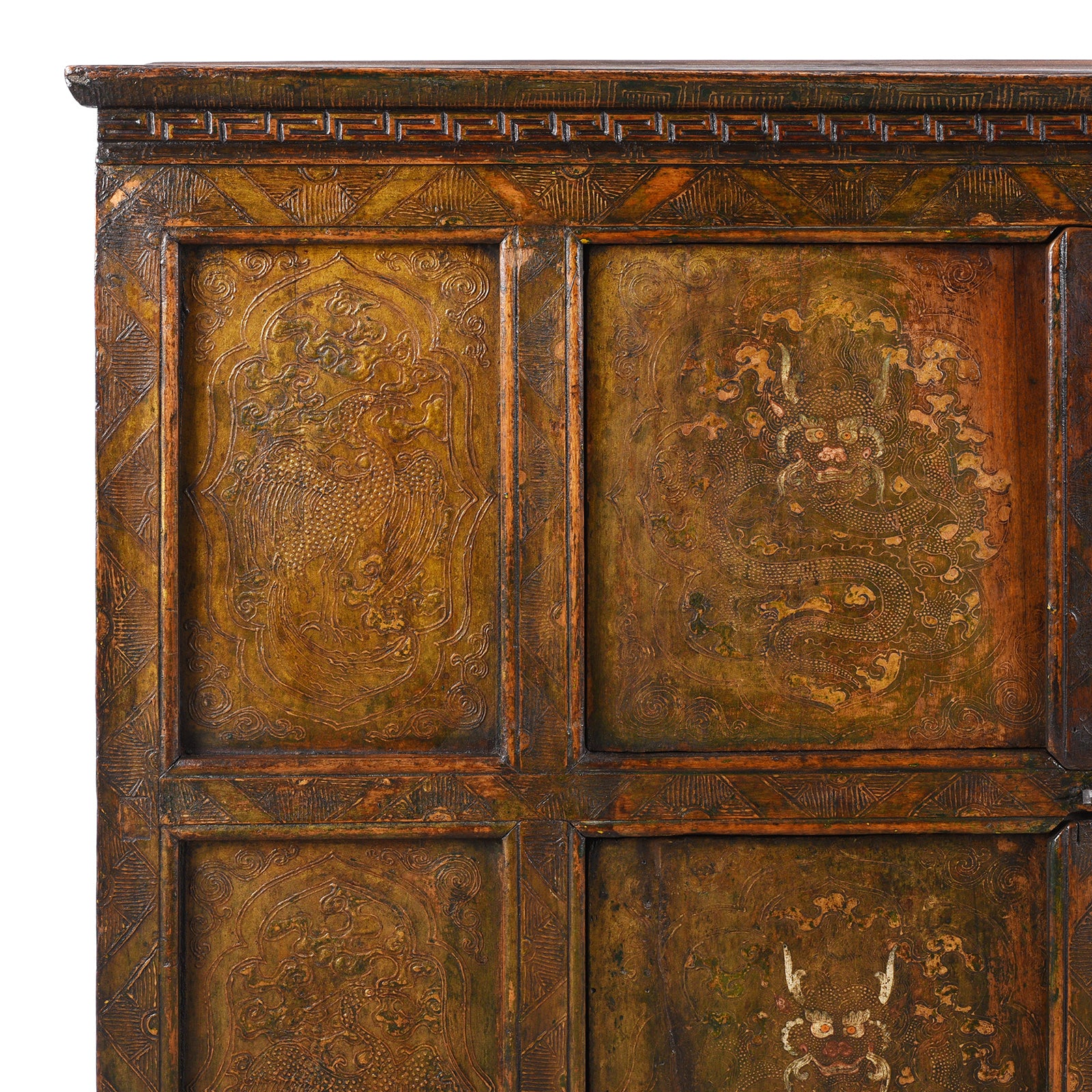
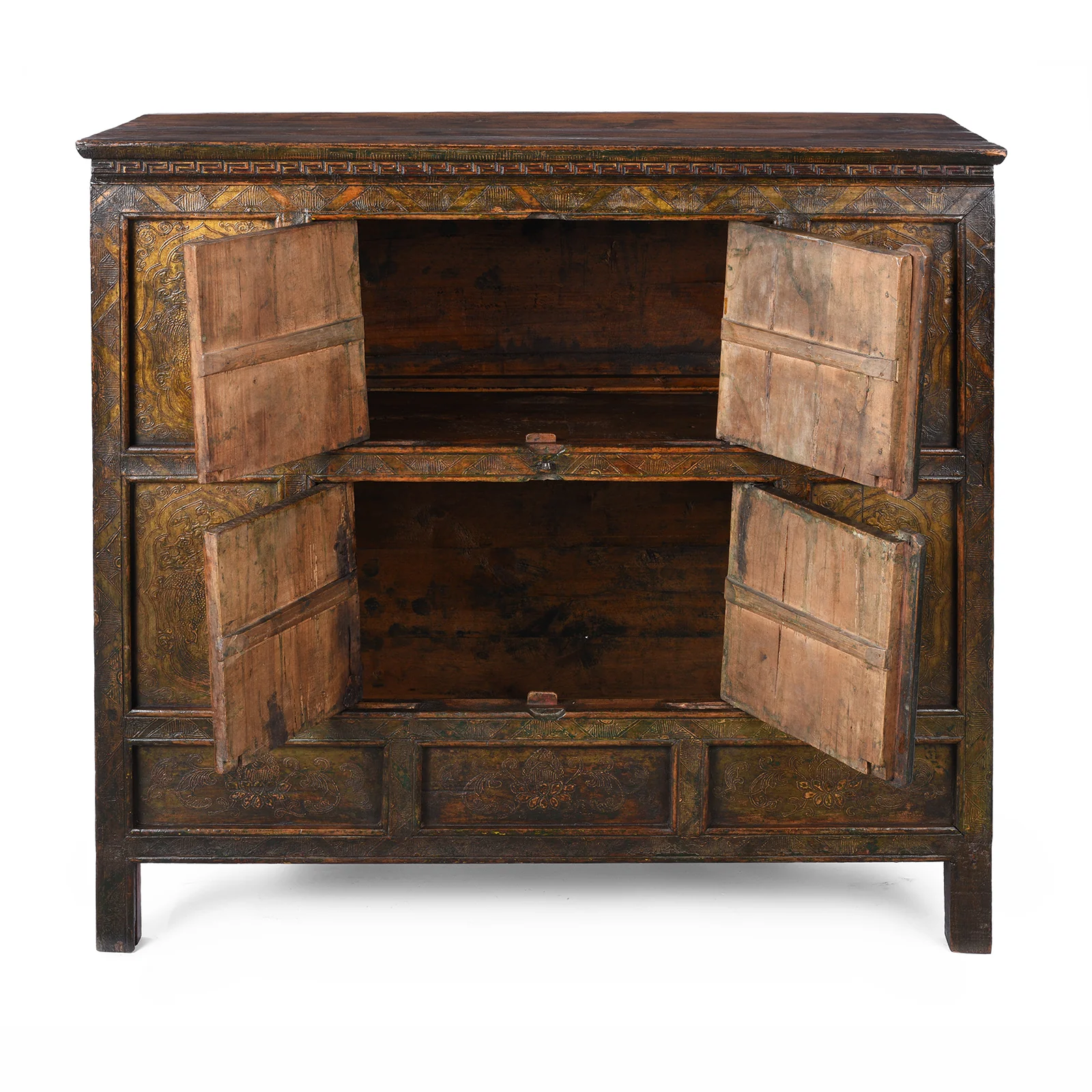
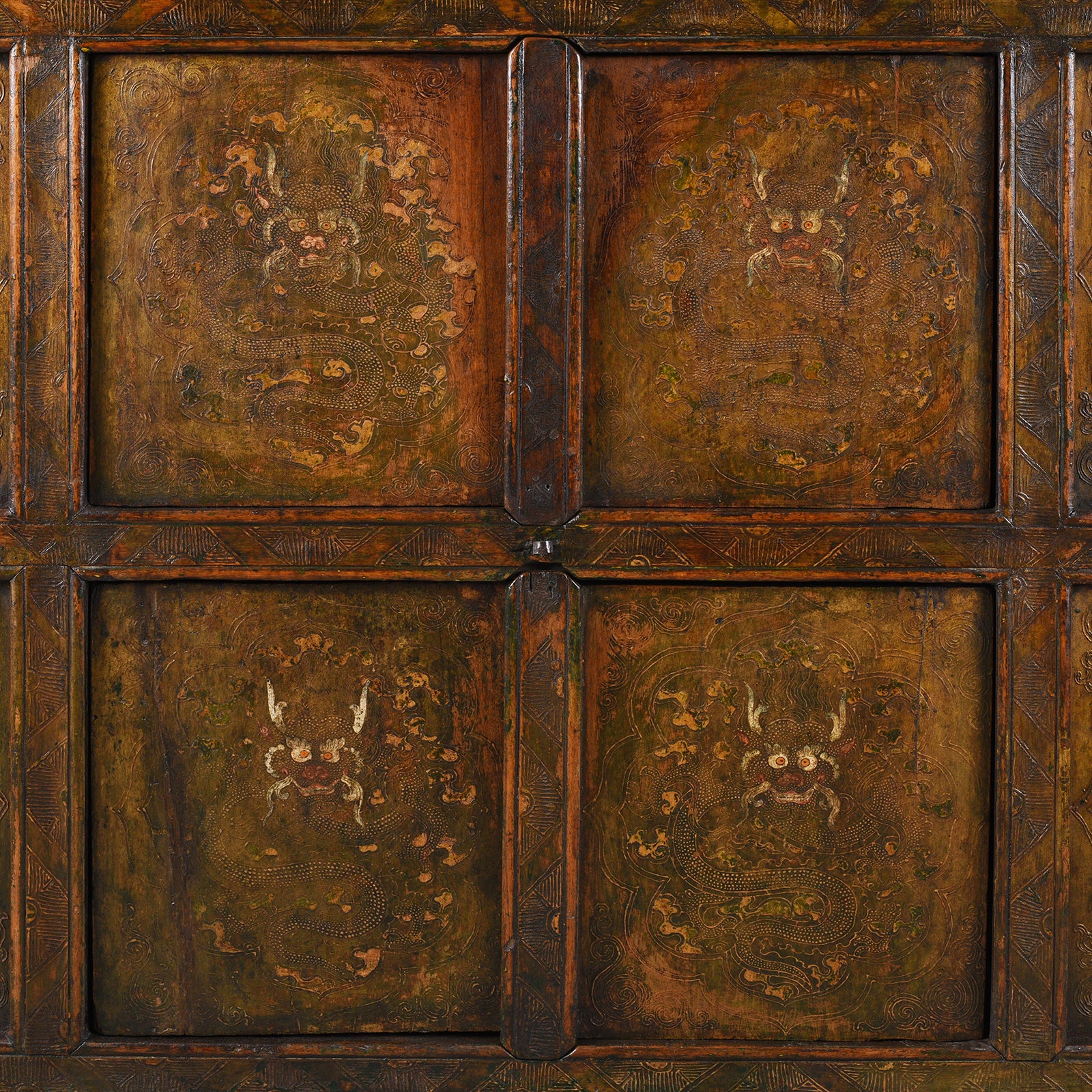
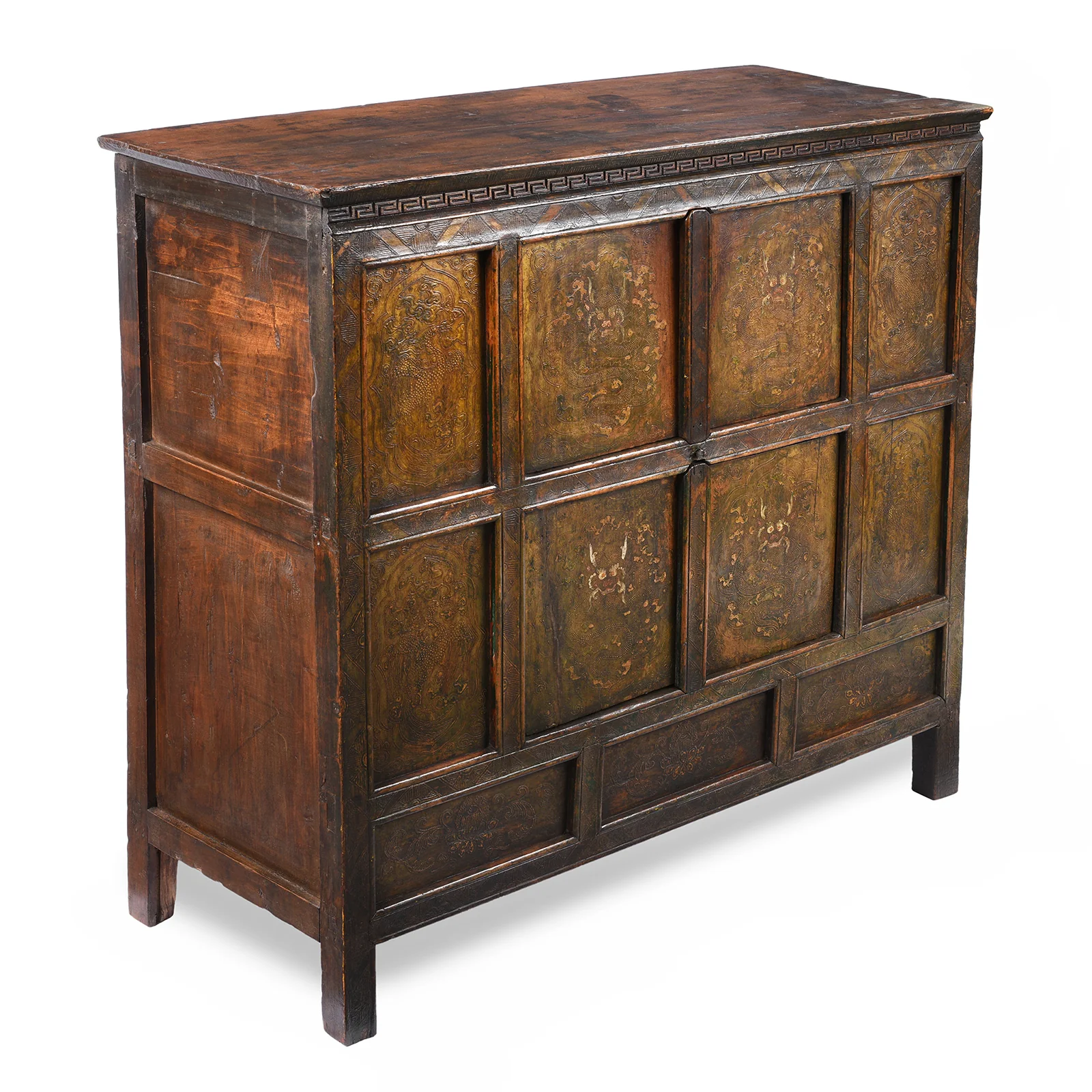
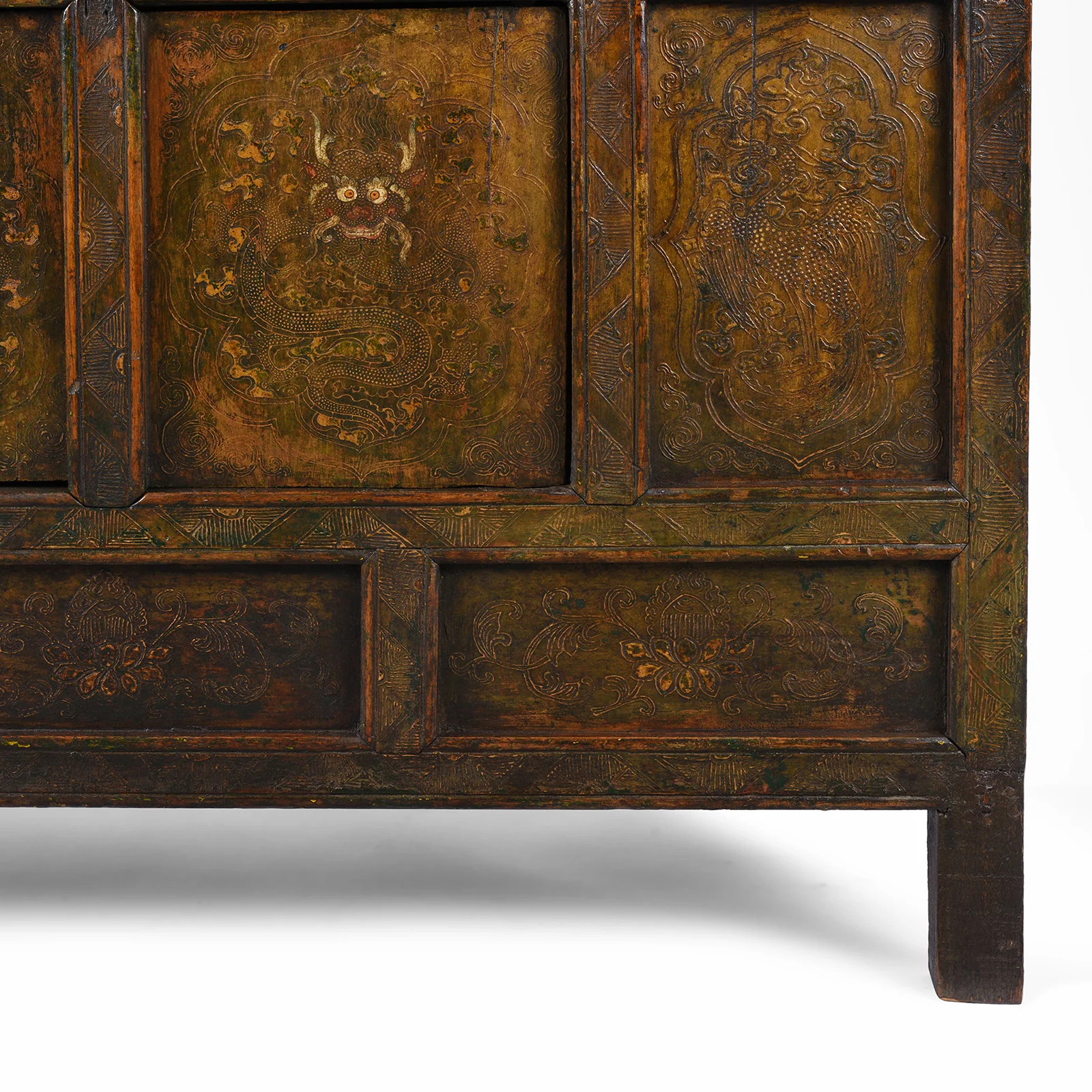
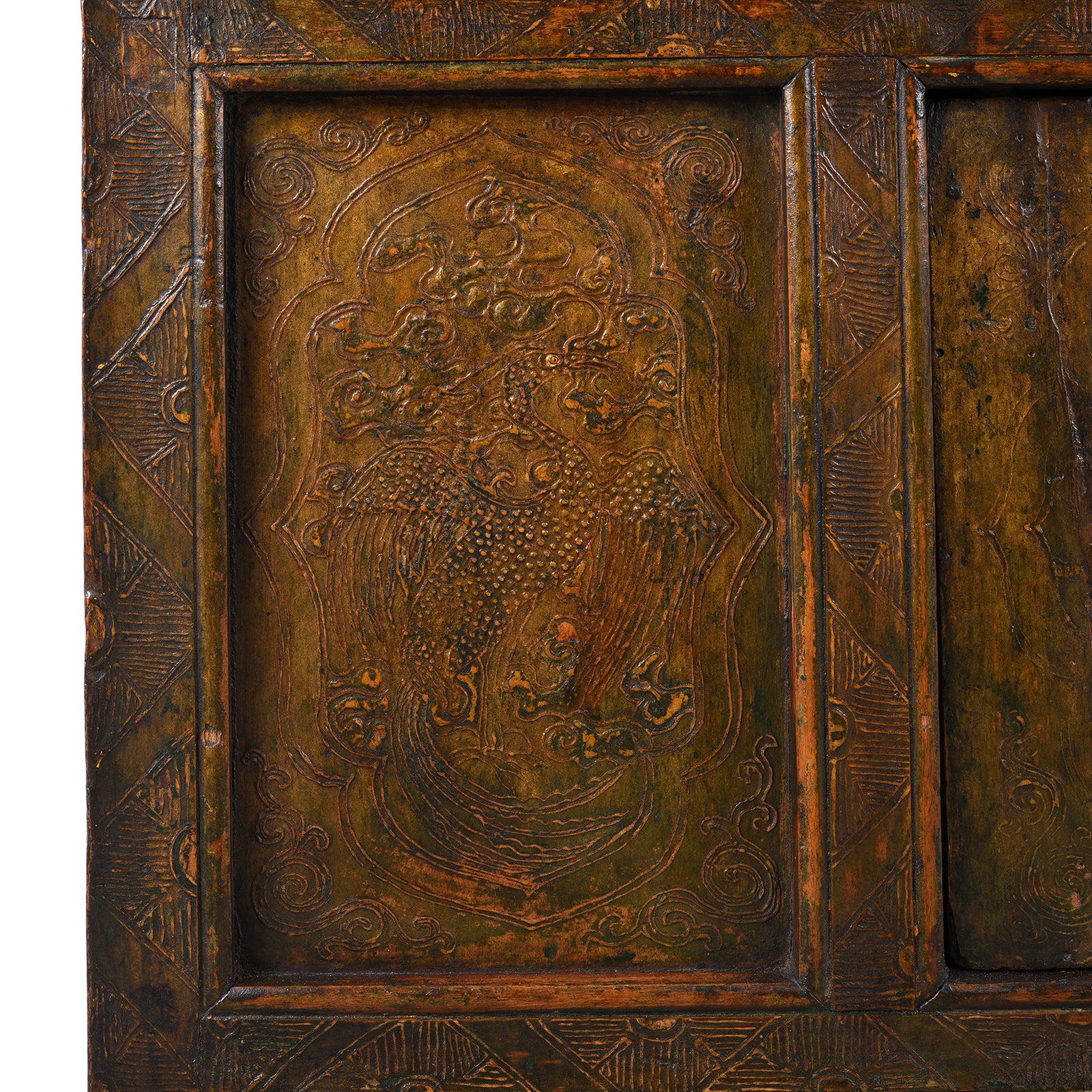
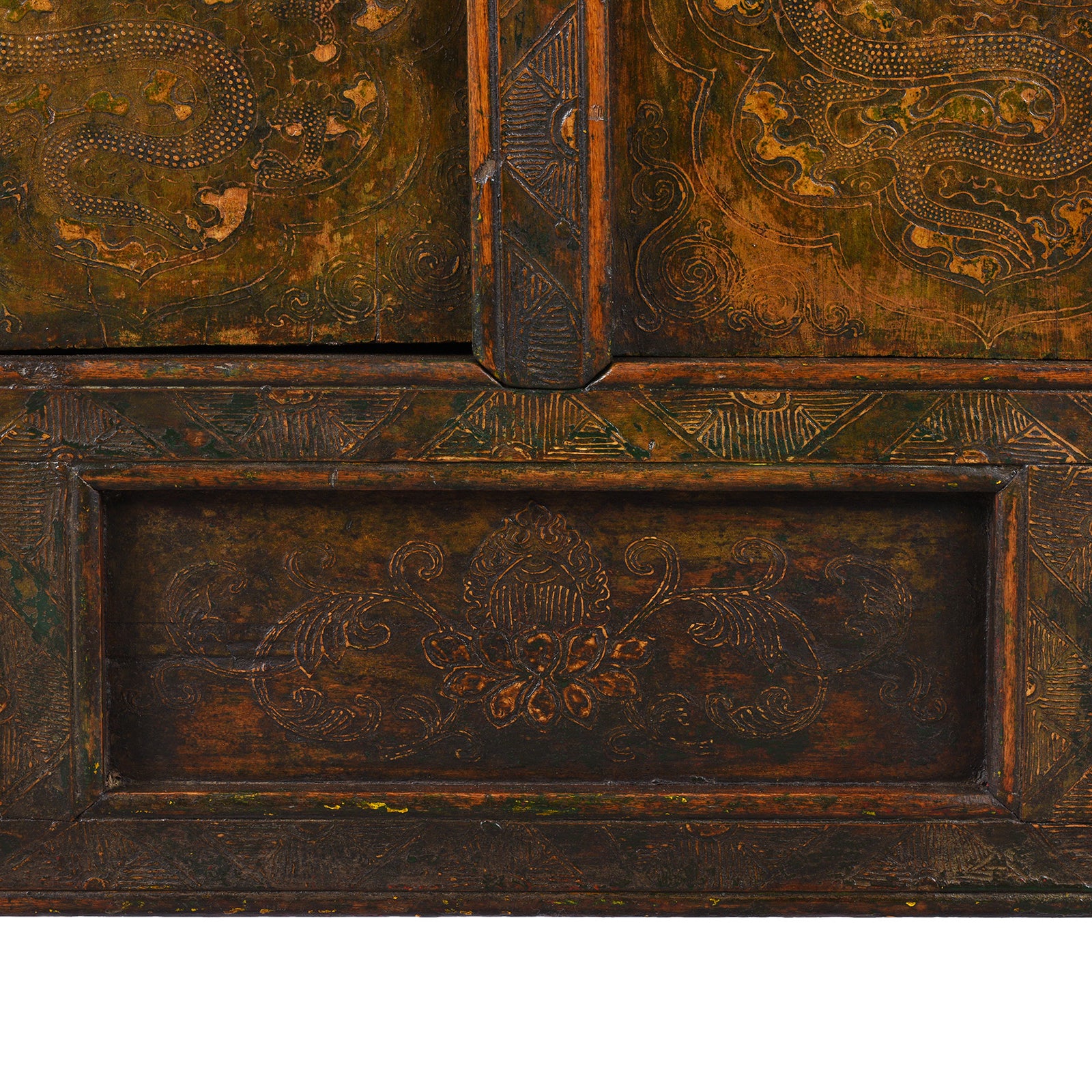
This antique Tibetan altar cabinet is gilt and polychromed with dragons among the clouds decorating each of its four doors. The painting design is a ragdul finish over fine kyungbur gesso work and the style is similar to that found in Tsurpu monastery in Central Tibet suggesting this cabinet could be from that region. Ragdul (Dutch Gold) was a technique of gilding using brass powder - The dragons on this cabinet are painted in the Qing style.
This is a classic example of a 19th century Tibetan altar cabinet. Our team painstakingly restored this elegant piece in our Wiltshire workshops revealing the beautiful painting underneath. Dragons occupy the middle four doors while phoenixes decorate the outer panels. Lotuses run along the smaller bottom panels.
Tibetan altar cabinets became more prominently used in Tibet from the 19th century onwards - Before this, chests were the most common form of furniture in Tibet. Cabinets like this were constructed from cedar or pine and painted using mineral pigments. They were often used as family altars & were used to store religious scrolls, silk ceremonial clothes, family jewelry, and yak butter used in lamps. Often people would gift painted furniture to temples as offerings.
References:
For a similar example see Wooden Wonders: Tibetan Furniture in Secular and Religious Life by Kamansky (plate 118)
For further information on Tibetan symbolism, see Tibetan Buddhist Symbols by R Beer.
From Tibet
UK Delivery Charge - except Highlands & Islands £40
More delivery options available at checkout
Original: $4,557.65
-65%$4,557.65
$1,595.18More Images
Gilt Painted Tibetan Altar Cabinet - Late 19th Century
This antique Tibetan altar cabinet is gilt and polychromed with dragons among the clouds decorating each of its four doors. The painting design is a ragdul finish over fine kyungbur gesso work and the style is similar to that found in Tsurpu monastery in Central Tibet suggesting this cabinet could be from that region. Ragdul (Dutch Gold) was a technique of gilding using brass powder - The dragons on this cabinet are painted in the Qing style.
This is a classic example of a 19th century Tibetan altar cabinet. Our team painstakingly restored this elegant piece in our Wiltshire workshops revealing the beautiful painting underneath. Dragons occupy the middle four doors while phoenixes decorate the outer panels. Lotuses run along the smaller bottom panels.
Tibetan altar cabinets became more prominently used in Tibet from the 19th century onwards - Before this, chests were the most common form of furniture in Tibet. Cabinets like this were constructed from cedar or pine and painted using mineral pigments. They were often used as family altars & were used to store religious scrolls, silk ceremonial clothes, family jewelry, and yak butter used in lamps. Often people would gift painted furniture to temples as offerings.
References:
For a similar example see Wooden Wonders: Tibetan Furniture in Secular and Religious Life by Kamansky (plate 118)
For further information on Tibetan symbolism, see Tibetan Buddhist Symbols by R Beer.
From Tibet
UK Delivery Charge - except Highlands & Islands £40
More delivery options available at checkout
Product Information
Product Information
Shipping & Returns
Shipping & Returns
Description
This antique Tibetan altar cabinet is gilt and polychromed with dragons among the clouds decorating each of its four doors. The painting design is a ragdul finish over fine kyungbur gesso work and the style is similar to that found in Tsurpu monastery in Central Tibet suggesting this cabinet could be from that region. Ragdul (Dutch Gold) was a technique of gilding using brass powder - The dragons on this cabinet are painted in the Qing style.
This is a classic example of a 19th century Tibetan altar cabinet. Our team painstakingly restored this elegant piece in our Wiltshire workshops revealing the beautiful painting underneath. Dragons occupy the middle four doors while phoenixes decorate the outer panels. Lotuses run along the smaller bottom panels.
Tibetan altar cabinets became more prominently used in Tibet from the 19th century onwards - Before this, chests were the most common form of furniture in Tibet. Cabinets like this were constructed from cedar or pine and painted using mineral pigments. They were often used as family altars & were used to store religious scrolls, silk ceremonial clothes, family jewelry, and yak butter used in lamps. Often people would gift painted furniture to temples as offerings.
References:
For a similar example see Wooden Wonders: Tibetan Furniture in Secular and Religious Life by Kamansky (plate 118)
For further information on Tibetan symbolism, see Tibetan Buddhist Symbols by R Beer.
From Tibet
UK Delivery Charge - except Highlands & Islands £40
More delivery options available at checkout