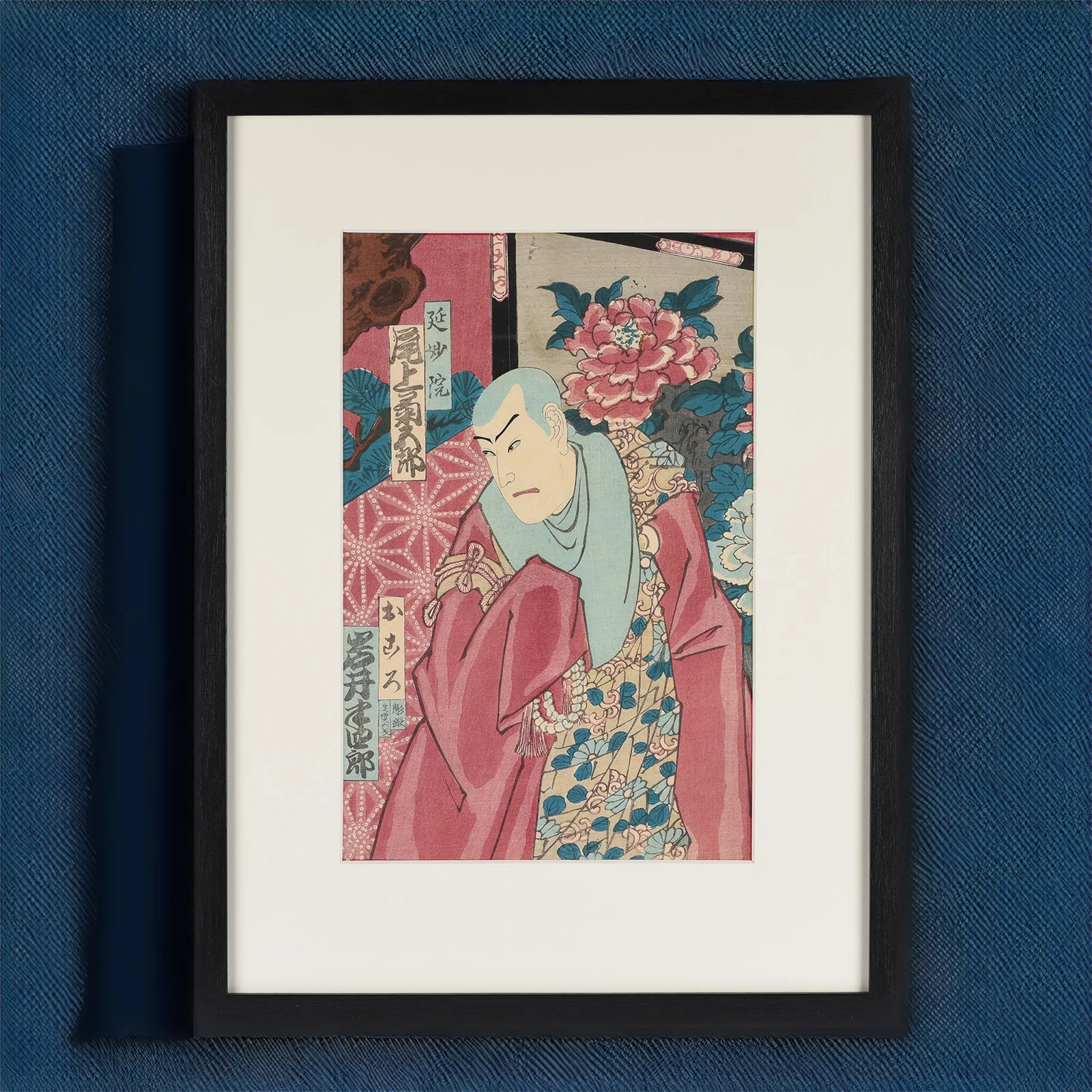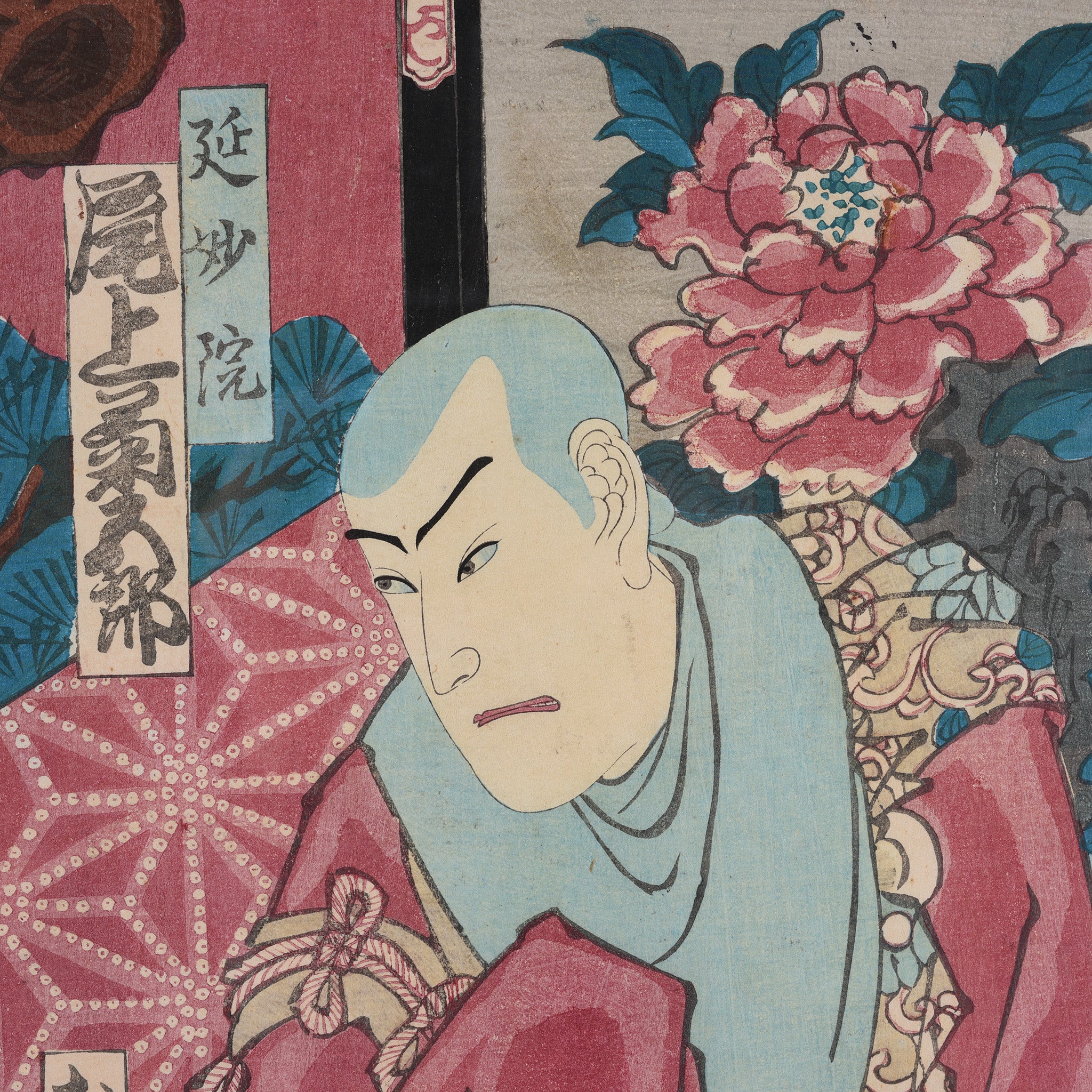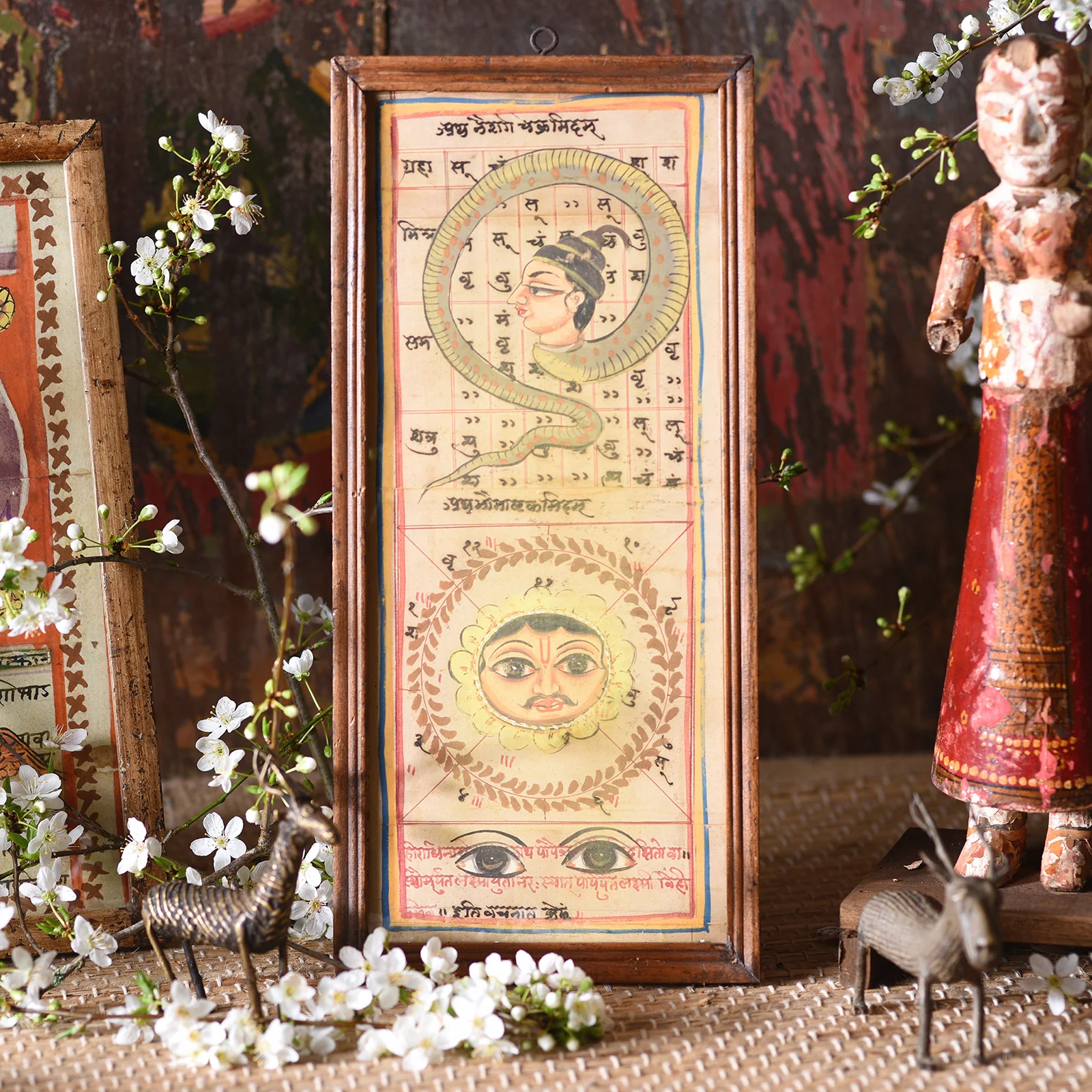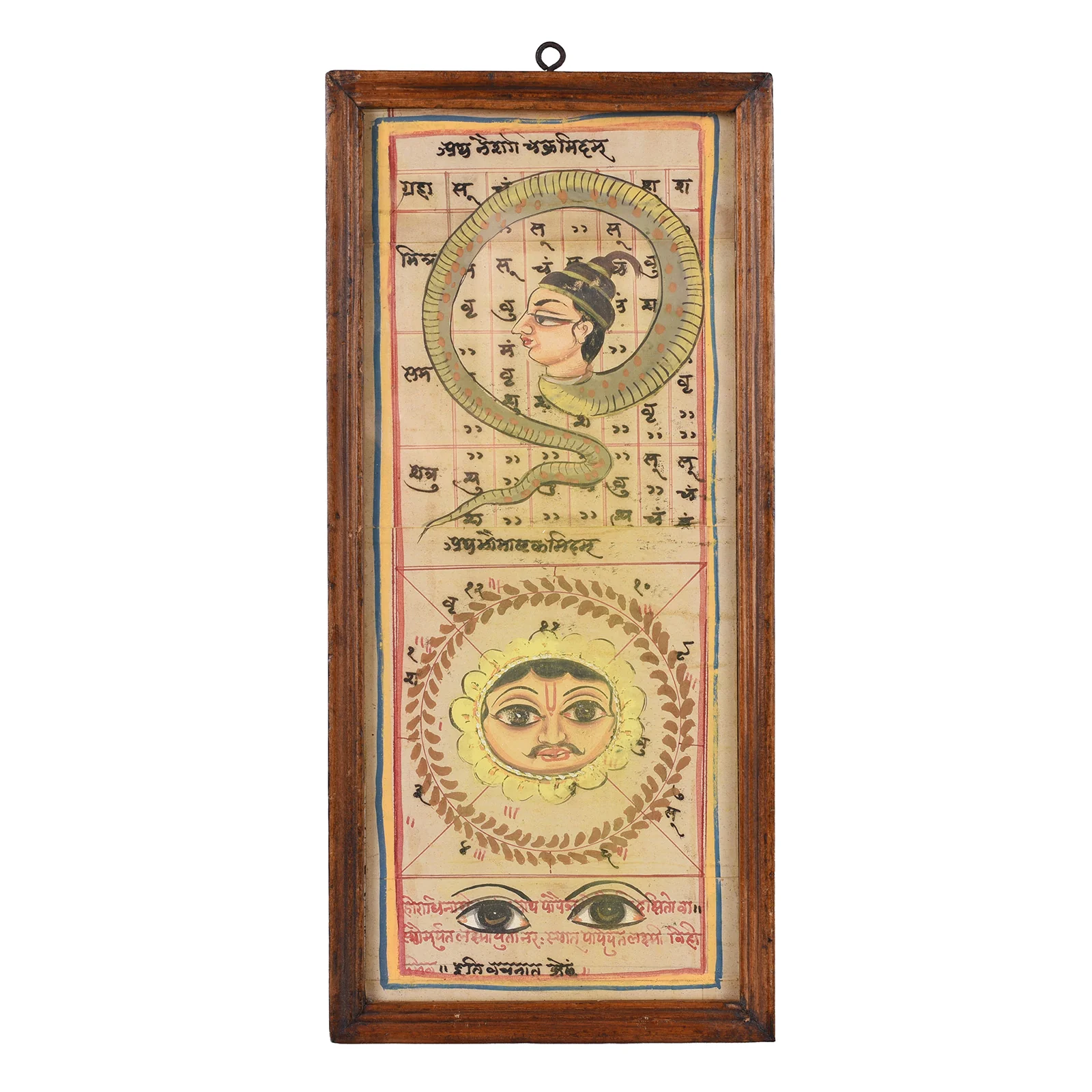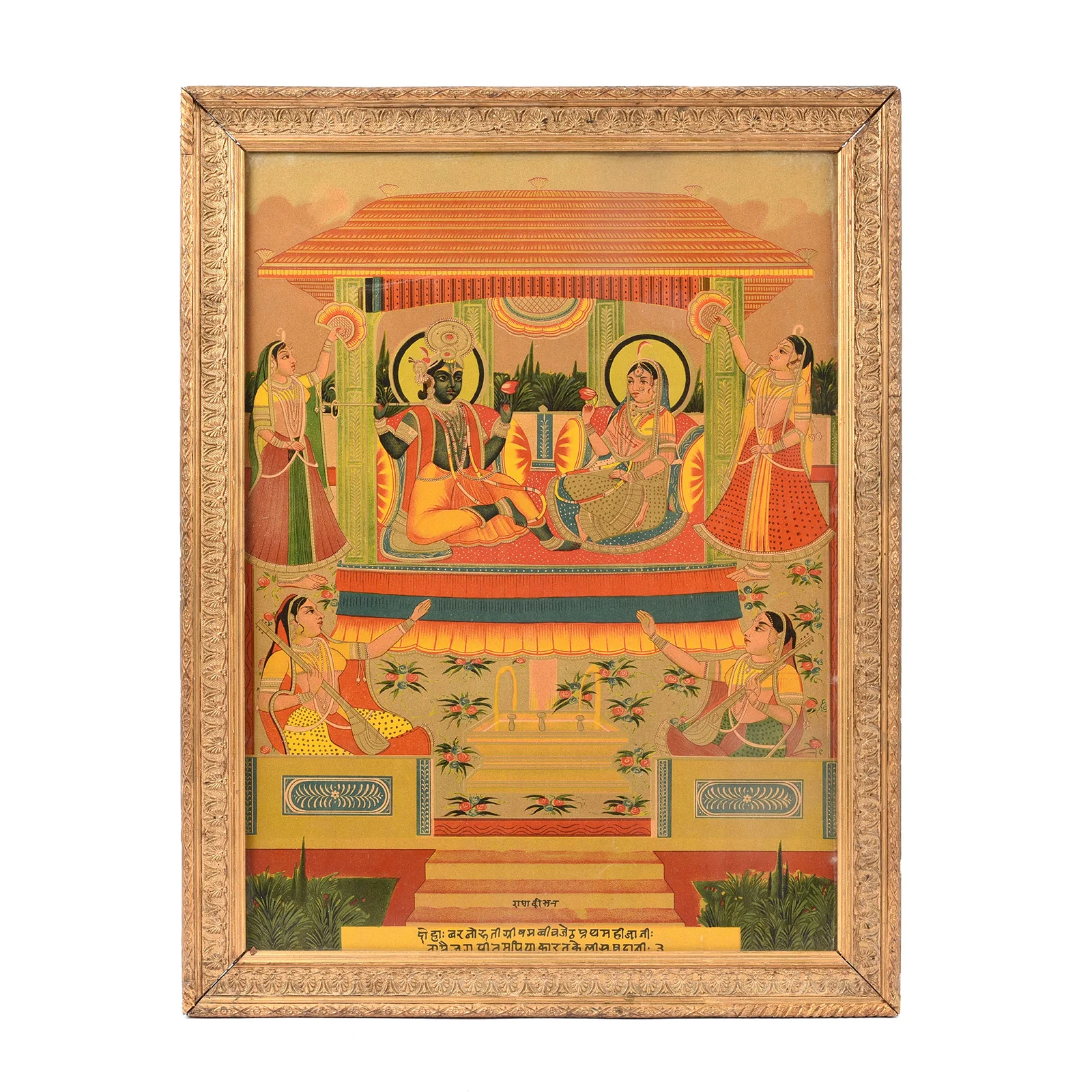

Framed 'John Orr Ewing & Co' Cotton Bale Advertising Label - Ca 1870
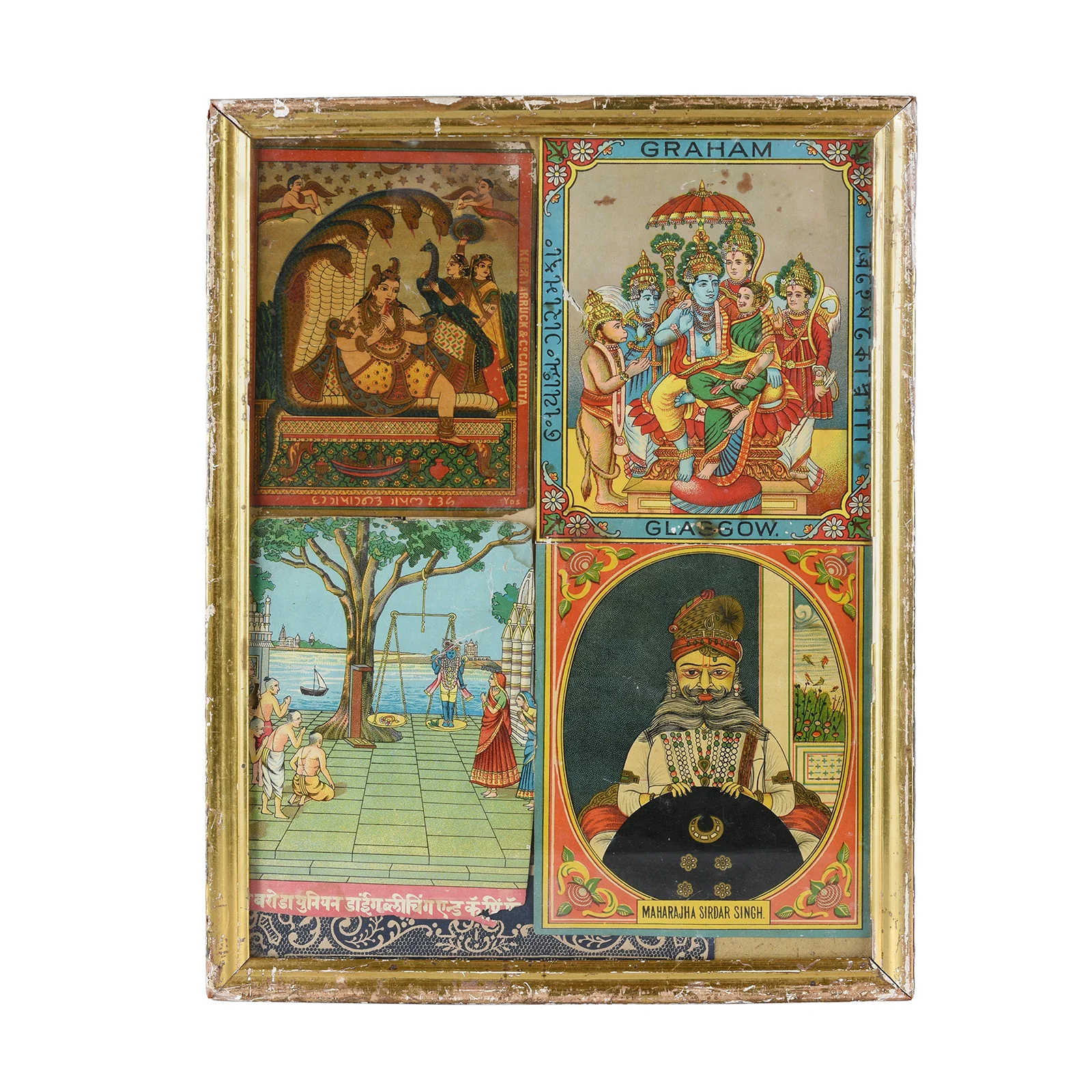
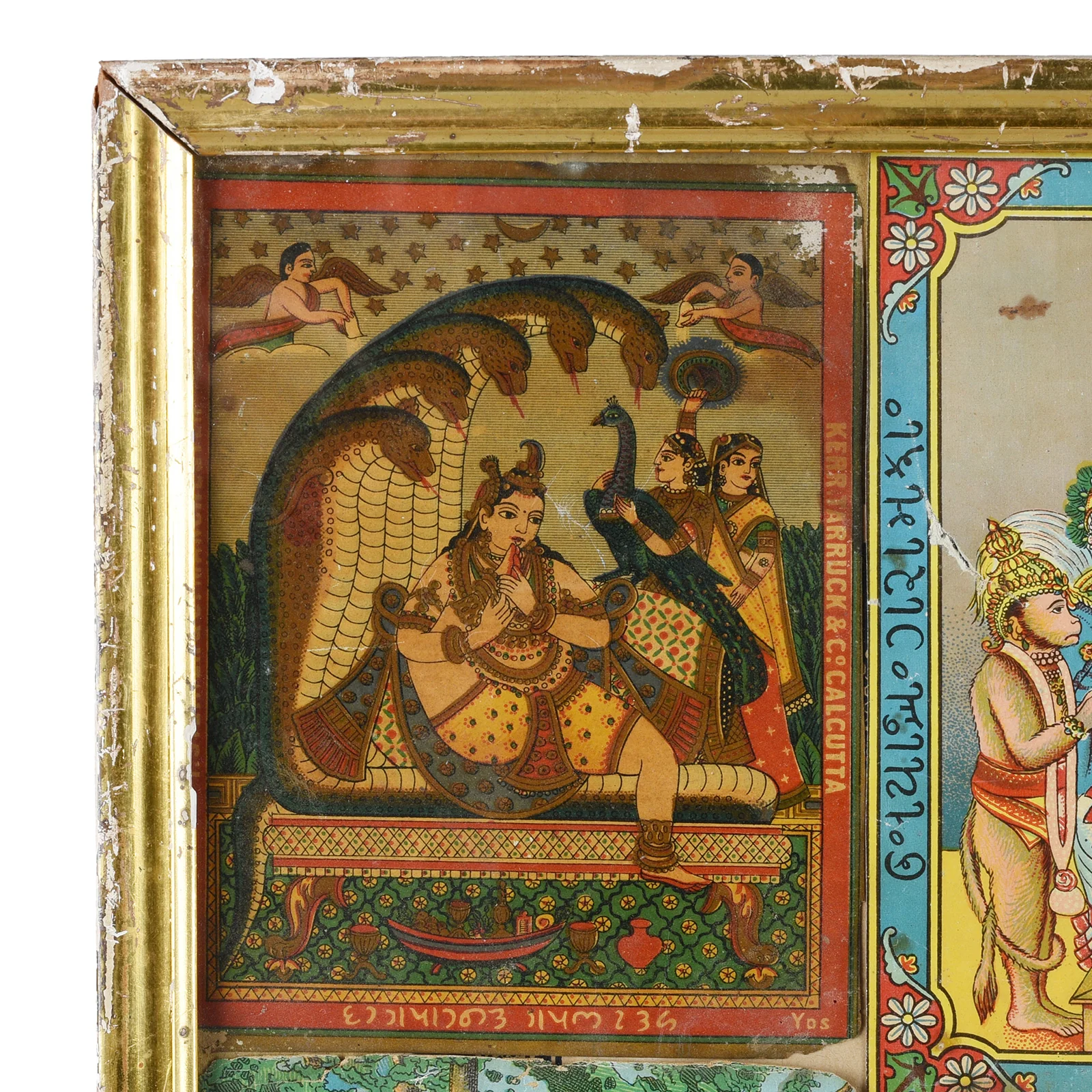
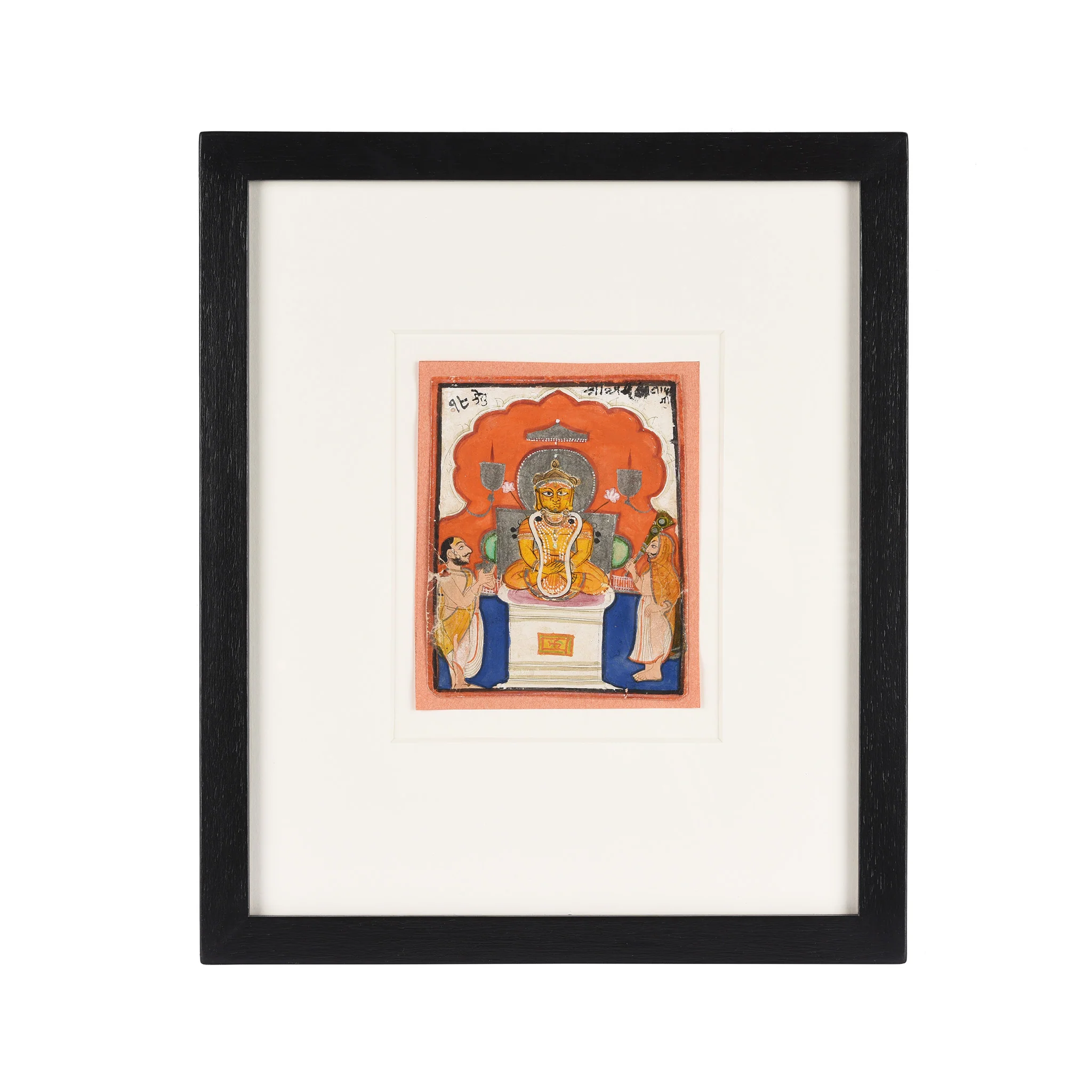
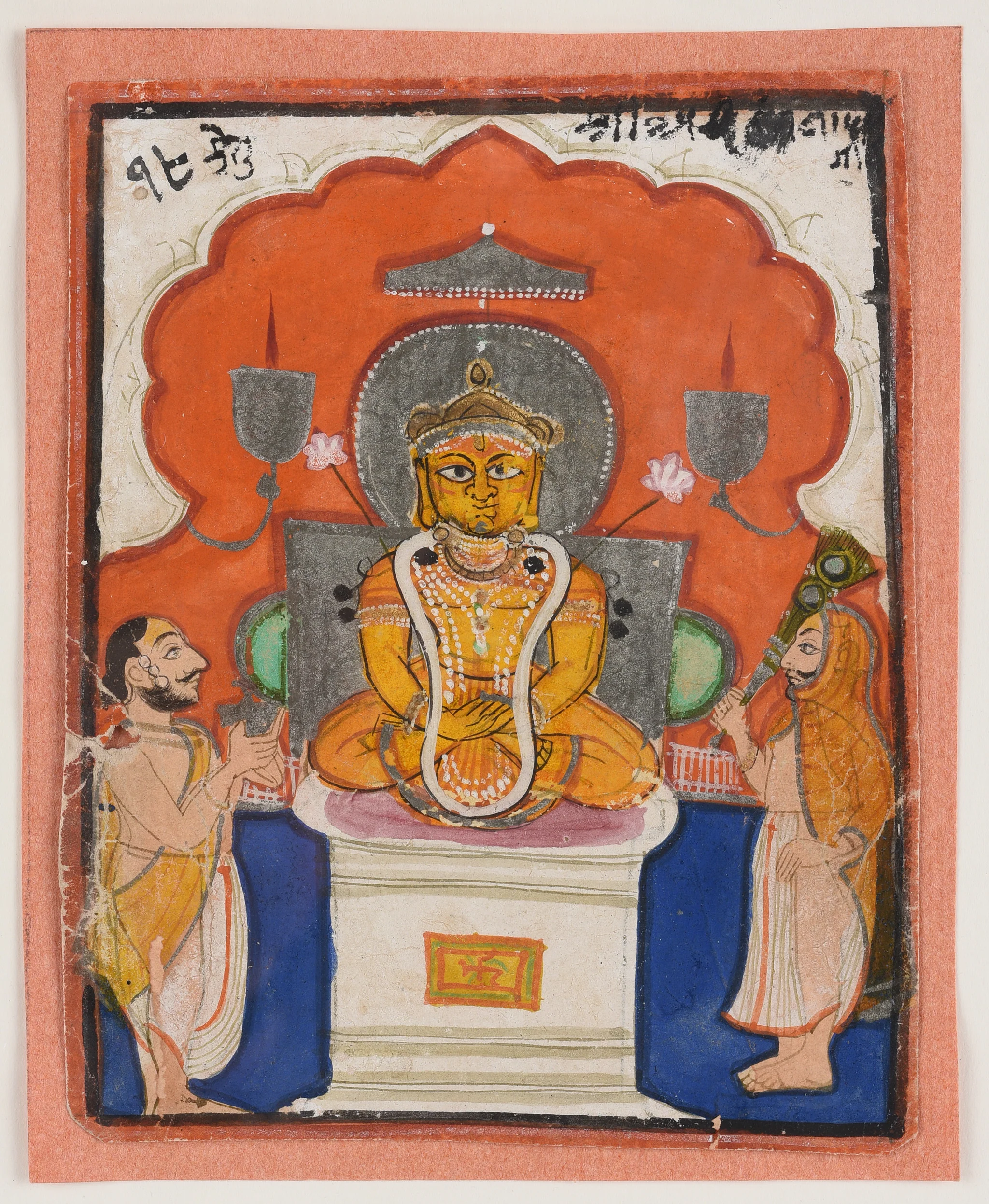
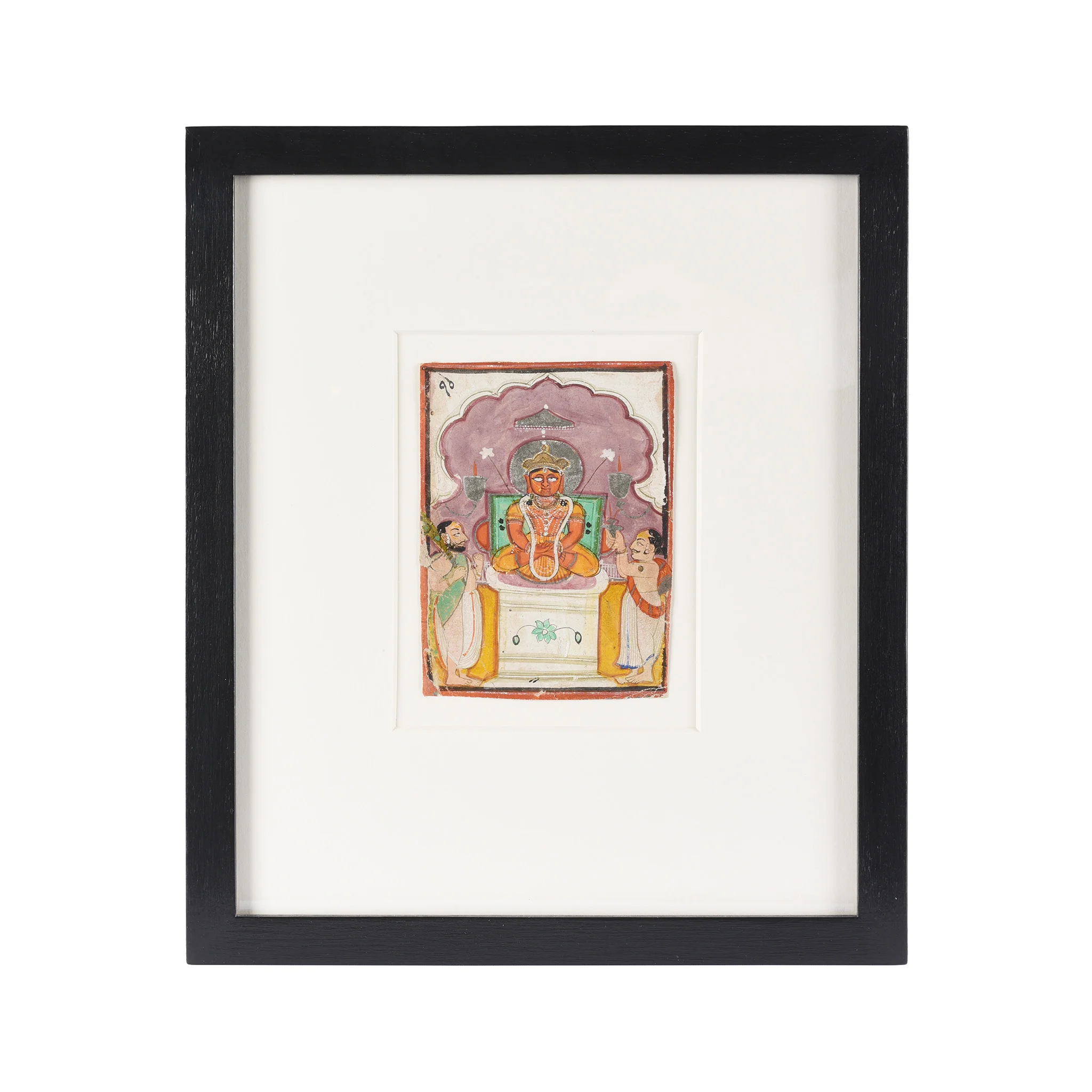
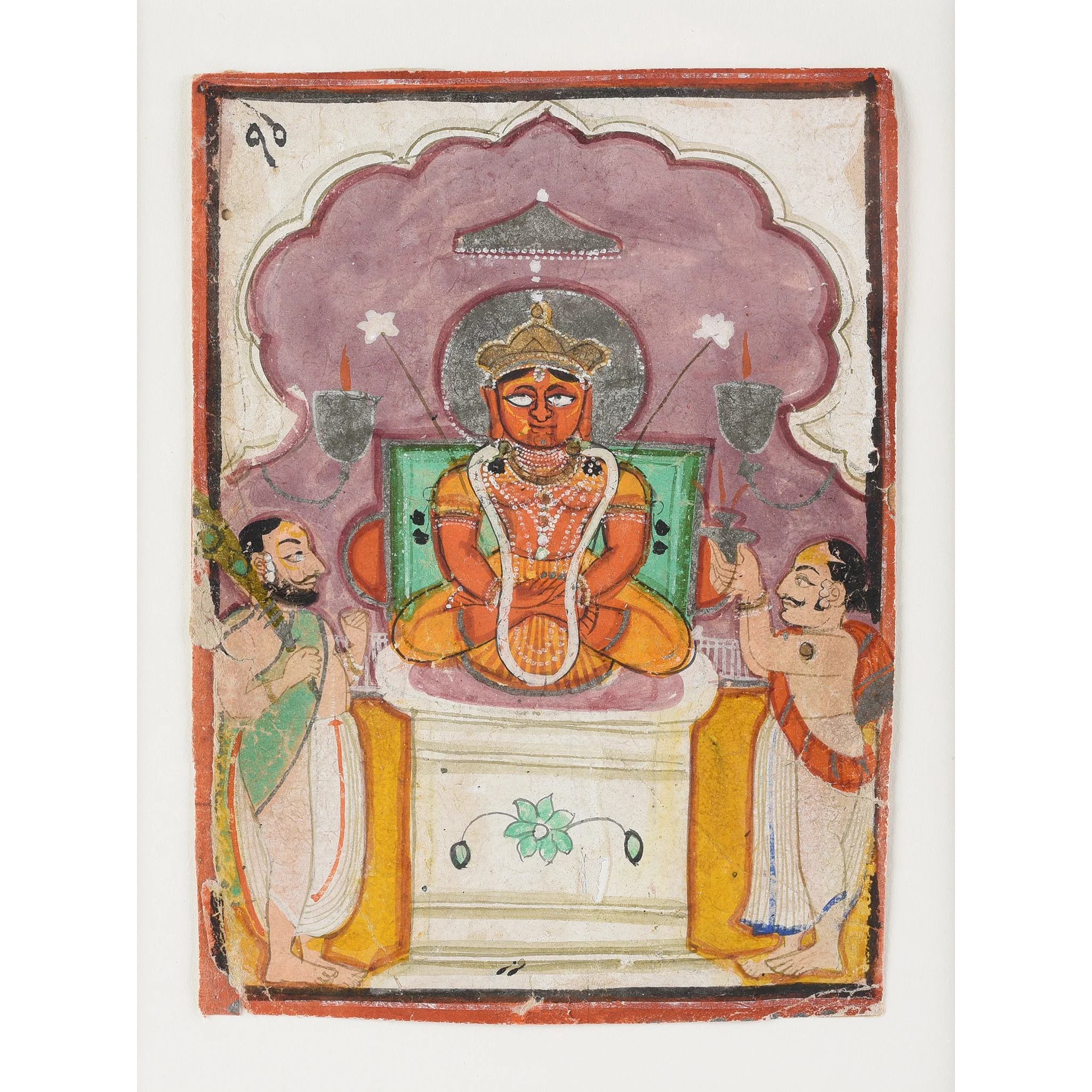
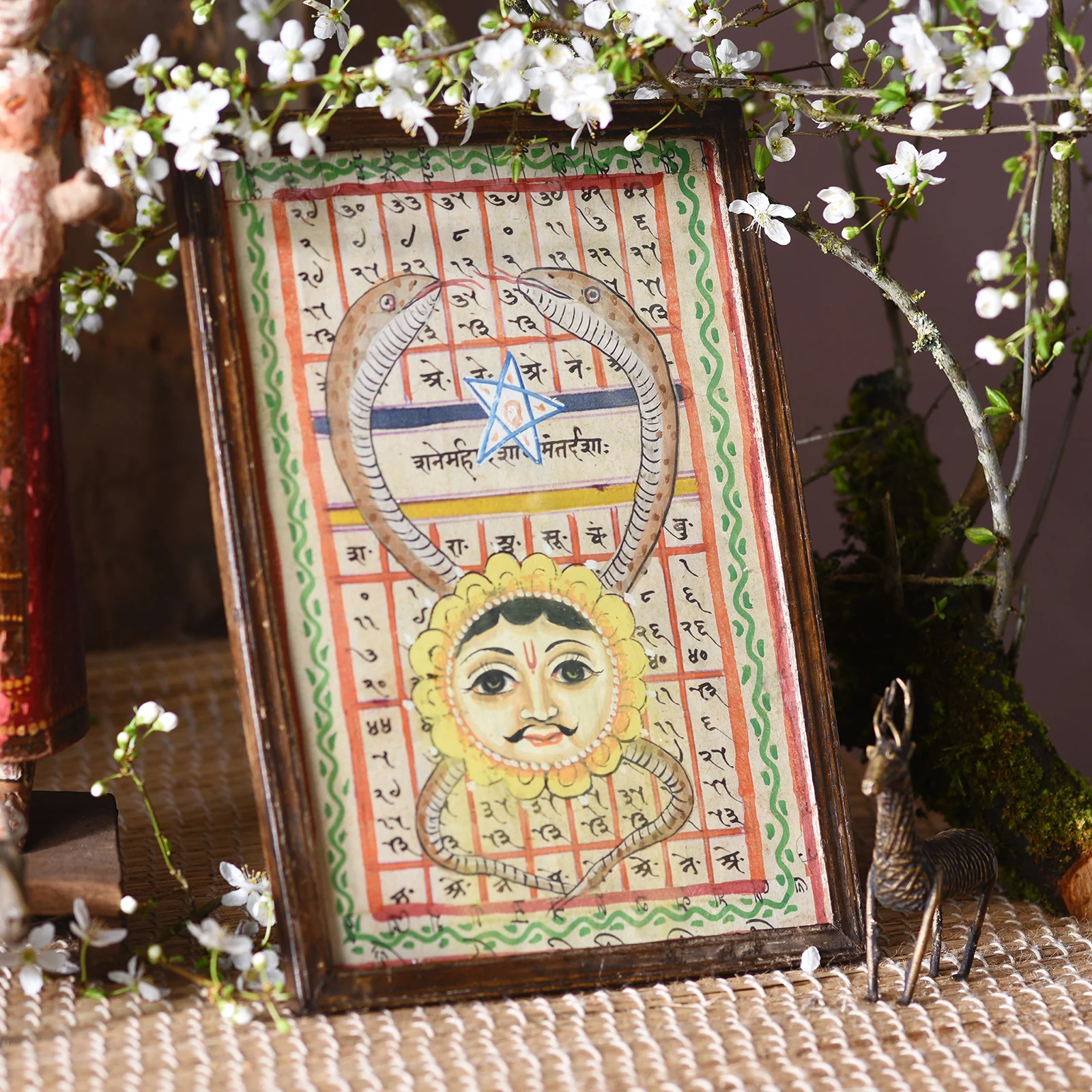
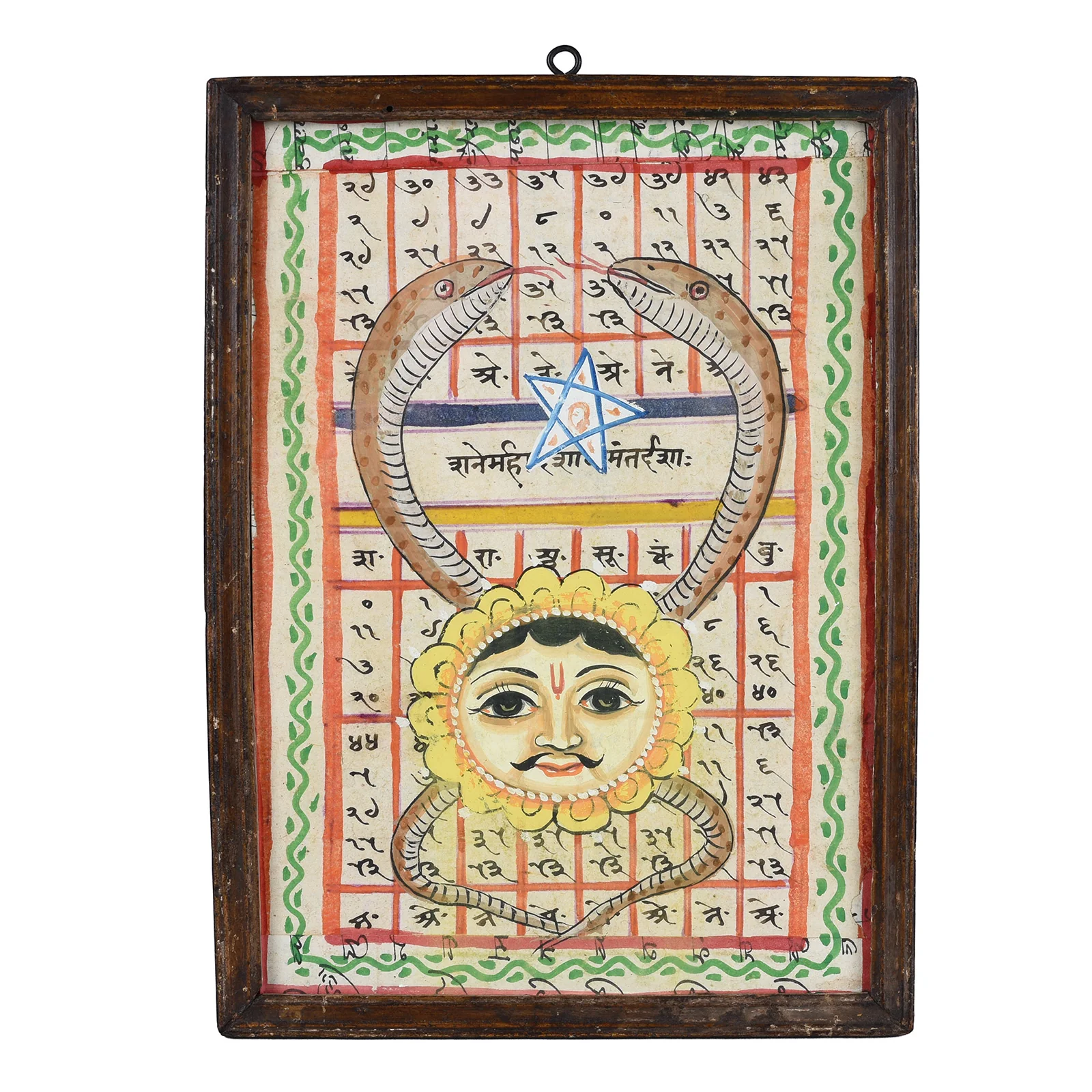
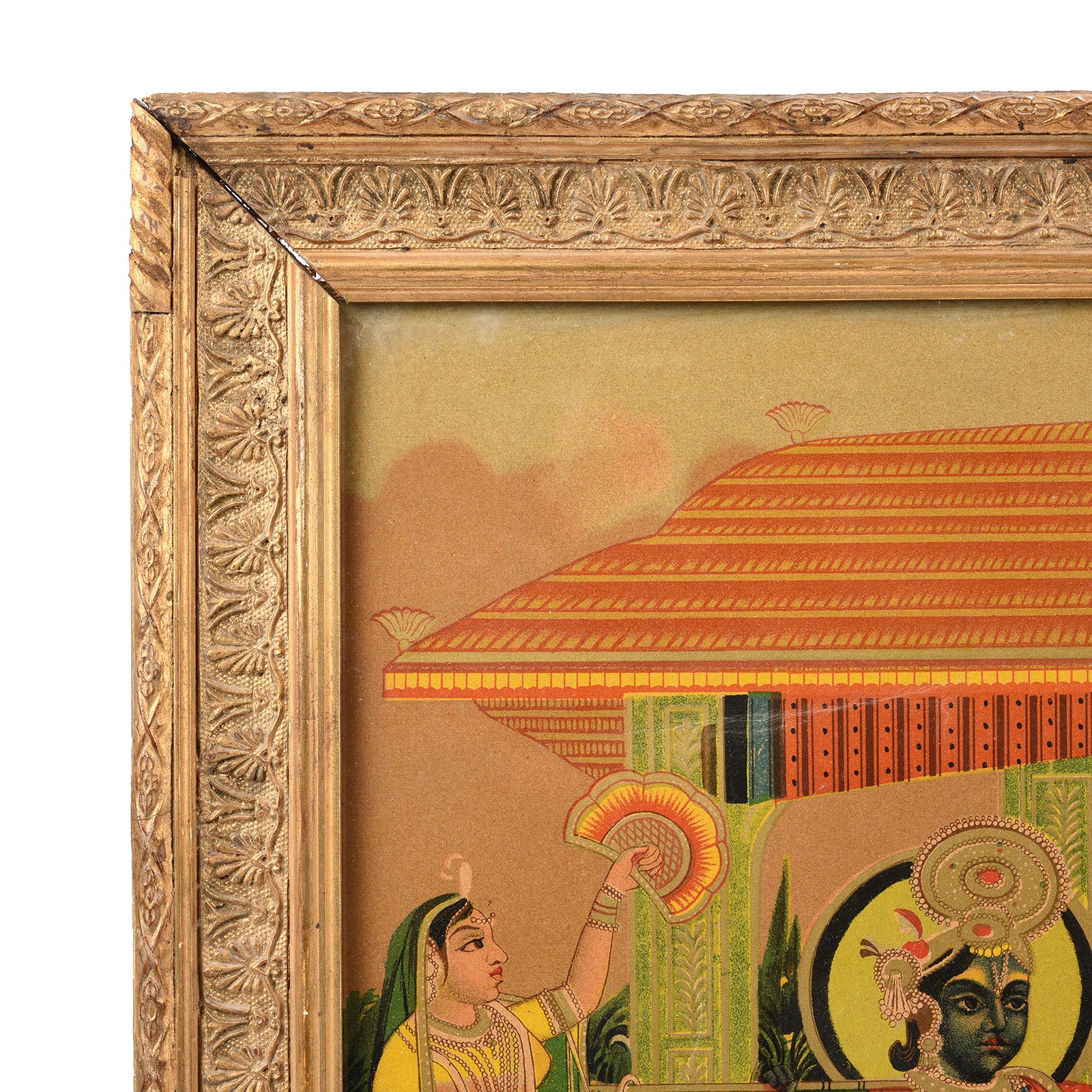
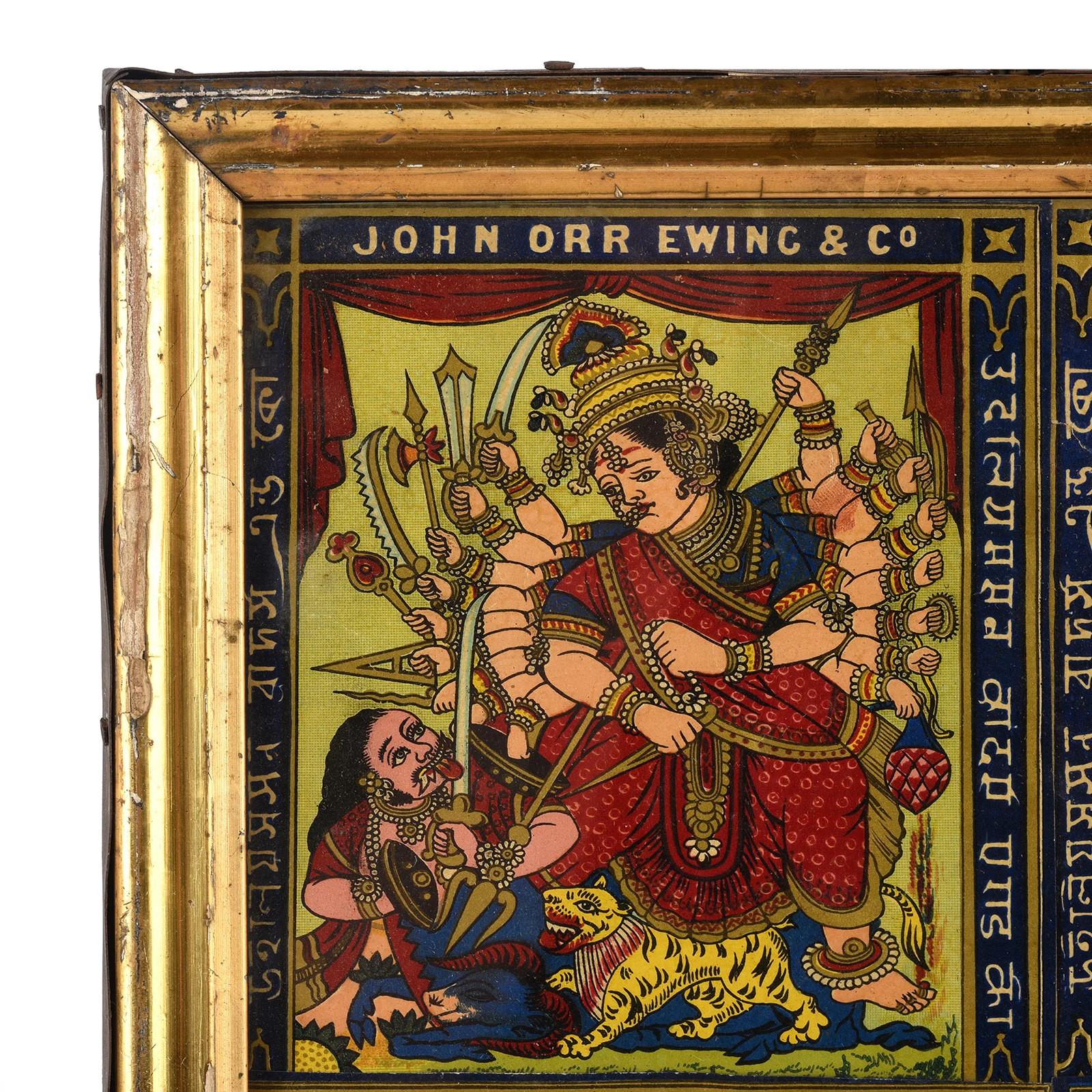
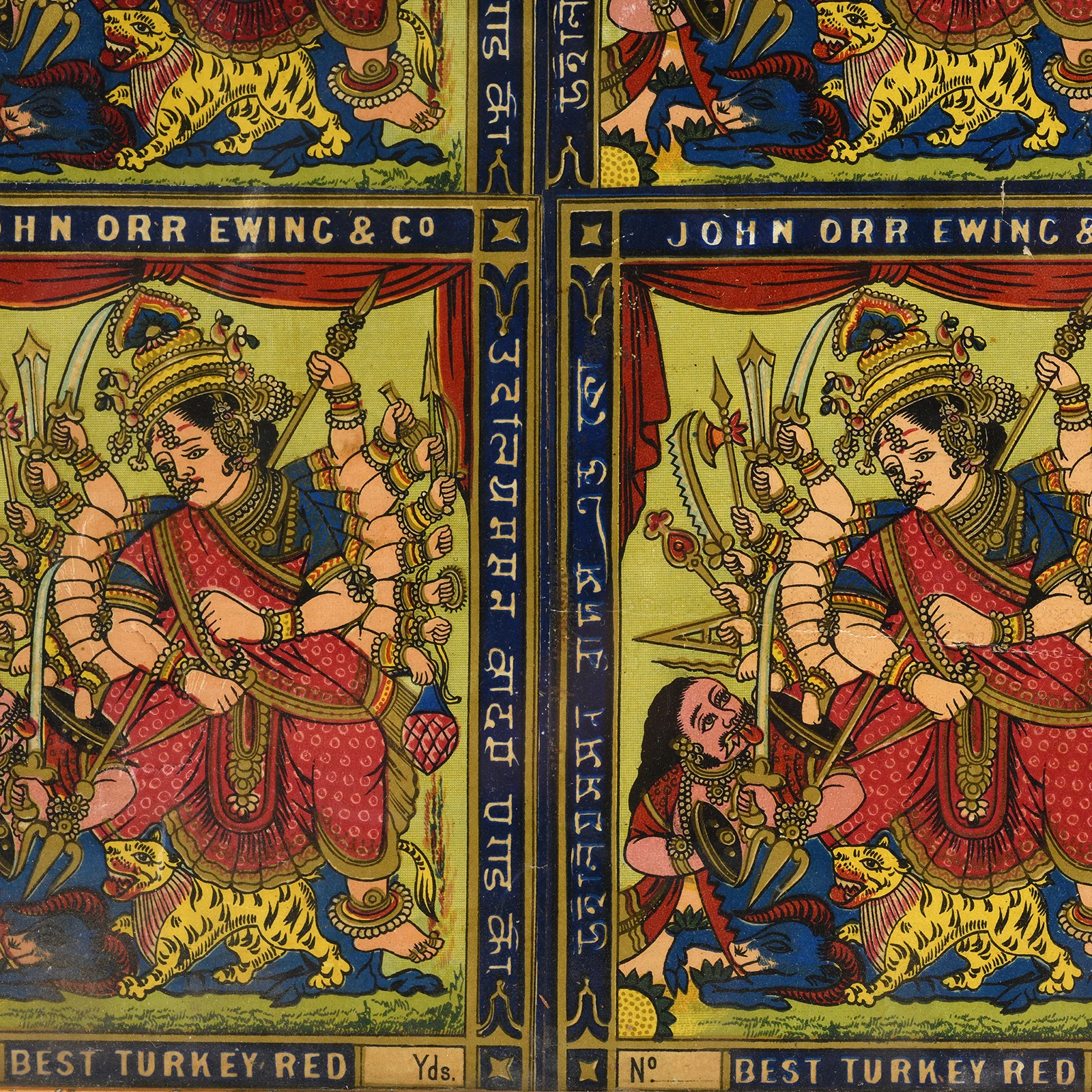
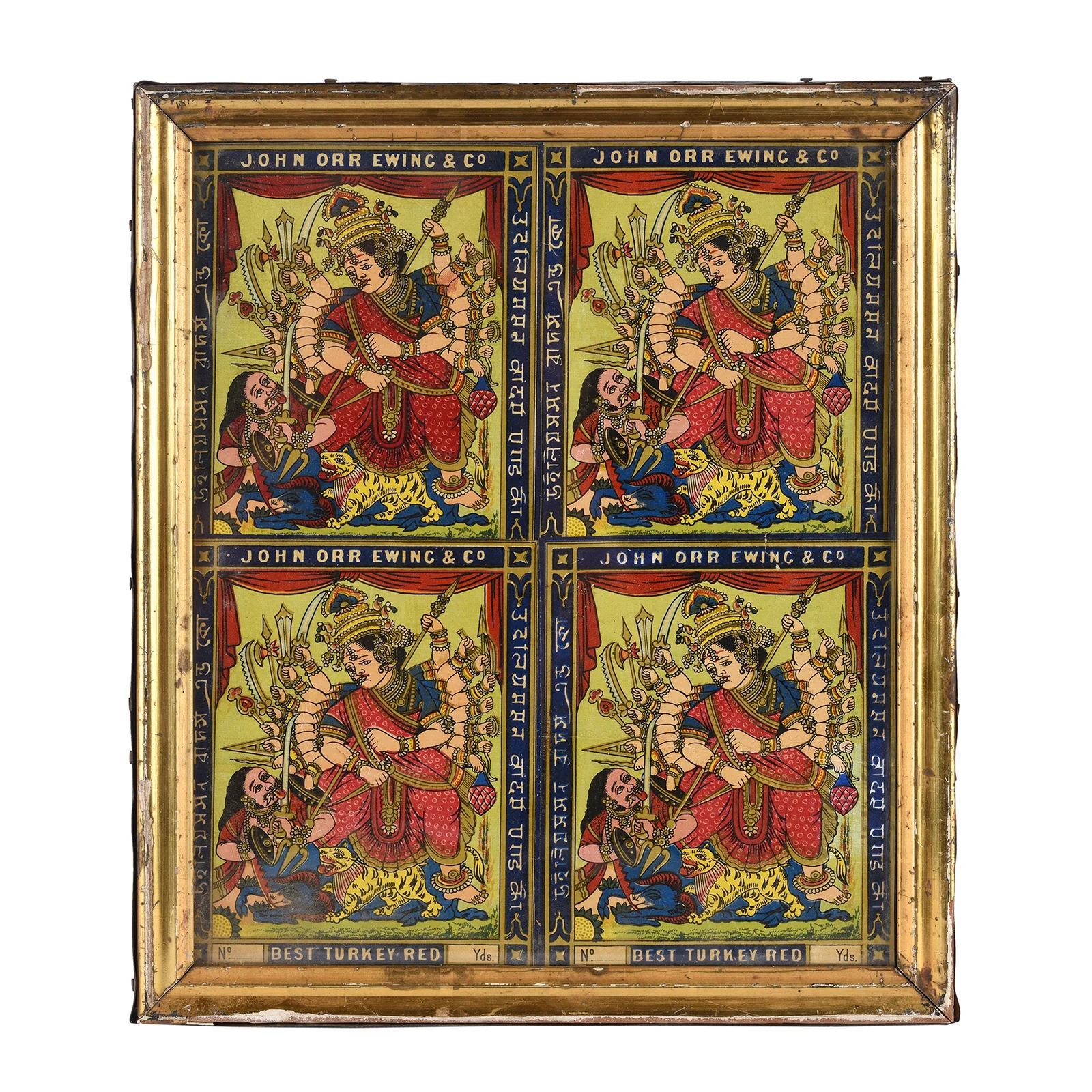
This framed pictorial label printed on paper was used to seal bales of cloth destined for sale in India. These labels were originally designed in India, printed in Alexandria, Scotland (just north of Glasgow), and shipped to India, and were advertisements made for the Indian taste. It dates to the middle of the 19th century - likely 1870's. This particular label appears to feature a many armed Goddess Durga.
The chromolithograph label was printed for John Orr Ewing & Co (founded 1835, Alexandria, near Glasgow), one of the three largest Turkey-red dyeing & printing firms. The company was so successful that John Orr Ewing retired within 10 years. Although he sold the business in 1845, he repurchased it in 1860, by which point, the three largest companies, John Orr Ewing, Archibald Orr Ewing & William Stirling were producing 10,000 pieces of cloth per day and 25,000 ib of yarn. They employed 6,000 workers between them. In the 1860's & 1870's these companies turned from America to India & Africa for their cotton supplies due to the US civil war (1861 - 1865). By 1897, the three companies had been united as the 'United Turkey Red Company.
Labels like this are unusual to find as they were mostly destroyed during the unpacking of textiles. We sourced these labels in Shekhawati in Rajasthan, whose residents became immensely wealthy trading with the west in Bombay & Calcutta. Much of the wealth was shipped back to Shekhawati where they built impressive havelis. Framed in old gilt frames, they are colourful and decorative reminders of the days of the British Raj in India.
Labels of a similar period can be found in the British Museum.
Original: $440.76
-65%$440.76
$154.27More Images
Framed 'John Orr Ewing & Co' Cotton Bale Advertising Label - Ca 1870
This framed pictorial label printed on paper was used to seal bales of cloth destined for sale in India. These labels were originally designed in India, printed in Alexandria, Scotland (just north of Glasgow), and shipped to India, and were advertisements made for the Indian taste. It dates to the middle of the 19th century - likely 1870's. This particular label appears to feature a many armed Goddess Durga.
The chromolithograph label was printed for John Orr Ewing & Co (founded 1835, Alexandria, near Glasgow), one of the three largest Turkey-red dyeing & printing firms. The company was so successful that John Orr Ewing retired within 10 years. Although he sold the business in 1845, he repurchased it in 1860, by which point, the three largest companies, John Orr Ewing, Archibald Orr Ewing & William Stirling were producing 10,000 pieces of cloth per day and 25,000 ib of yarn. They employed 6,000 workers between them. In the 1860's & 1870's these companies turned from America to India & Africa for their cotton supplies due to the US civil war (1861 - 1865). By 1897, the three companies had been united as the 'United Turkey Red Company.
Labels like this are unusual to find as they were mostly destroyed during the unpacking of textiles. We sourced these labels in Shekhawati in Rajasthan, whose residents became immensely wealthy trading with the west in Bombay & Calcutta. Much of the wealth was shipped back to Shekhawati where they built impressive havelis. Framed in old gilt frames, they are colourful and decorative reminders of the days of the British Raj in India.
Labels of a similar period can be found in the British Museum.
Product Information
Product Information
Shipping & Returns
Shipping & Returns
Description
This framed pictorial label printed on paper was used to seal bales of cloth destined for sale in India. These labels were originally designed in India, printed in Alexandria, Scotland (just north of Glasgow), and shipped to India, and were advertisements made for the Indian taste. It dates to the middle of the 19th century - likely 1870's. This particular label appears to feature a many armed Goddess Durga.
The chromolithograph label was printed for John Orr Ewing & Co (founded 1835, Alexandria, near Glasgow), one of the three largest Turkey-red dyeing & printing firms. The company was so successful that John Orr Ewing retired within 10 years. Although he sold the business in 1845, he repurchased it in 1860, by which point, the three largest companies, John Orr Ewing, Archibald Orr Ewing & William Stirling were producing 10,000 pieces of cloth per day and 25,000 ib of yarn. They employed 6,000 workers between them. In the 1860's & 1870's these companies turned from America to India & Africa for their cotton supplies due to the US civil war (1861 - 1865). By 1897, the three companies had been united as the 'United Turkey Red Company.
Labels like this are unusual to find as they were mostly destroyed during the unpacking of textiles. We sourced these labels in Shekhawati in Rajasthan, whose residents became immensely wealthy trading with the west in Bombay & Calcutta. Much of the wealth was shipped back to Shekhawati where they built impressive havelis. Framed in old gilt frames, they are colourful and decorative reminders of the days of the British Raj in India.
Labels of a similar period can be found in the British Museum.