Chinese Reverse Glass Painting of a Woman & Child - 19th Century
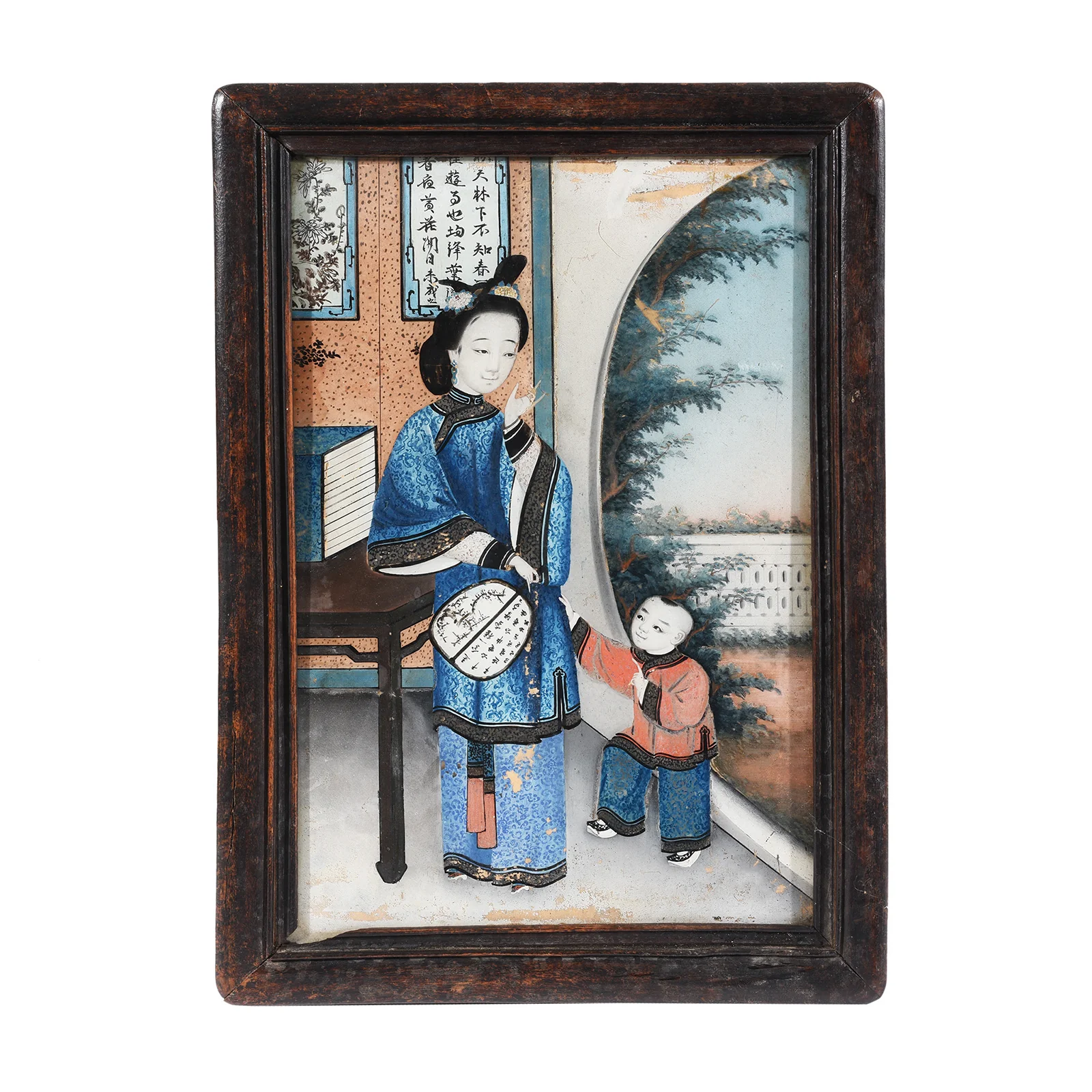
This beautiful 19th century Chinese reverse glass painting dates to the mid 19th century and is skilfully painted on the reverse side of the glass. Here you can see a garden scene depicting a woman and child alongside traditional Chinese furniture.
These scenes were popular with the wealthy class of society during Georgian period in England, along with Chinoiserie painted furniture. It is in its original hardwood frame with traditional Chinese style brass hanger.
References:
For a similar example in a similar frame see China & The West: Reconsidering Chinese Reverse Glass Painting by De Gruyter, page 229.
More Images


Chinese Reverse Glass Painting of a Woman & Child - 19th Century
This beautiful 19th century Chinese reverse glass painting dates to the mid 19th century and is skilfully painted on the reverse side of the glass. Here you can see a garden scene depicting a woman and child alongside traditional Chinese furniture.
These scenes were popular with the wealthy class of society during Georgian period in England, along with Chinoiserie painted furniture. It is in its original hardwood frame with traditional Chinese style brass hanger.
References:
For a similar example in a similar frame see China & The West: Reconsidering Chinese Reverse Glass Painting by De Gruyter, page 229.
Product Information
Product Information
Shipping & Returns
Shipping & Returns
Description
This beautiful 19th century Chinese reverse glass painting dates to the mid 19th century and is skilfully painted on the reverse side of the glass. Here you can see a garden scene depicting a woman and child alongside traditional Chinese furniture.
These scenes were popular with the wealthy class of society during Georgian period in England, along with Chinoiserie painted furniture. It is in its original hardwood frame with traditional Chinese style brass hanger.
References:
For a similar example in a similar frame see China & The West: Reconsidering Chinese Reverse Glass Painting by De Gruyter, page 229.