Chinese Compound Cabinet From Tianjin - 19th Century
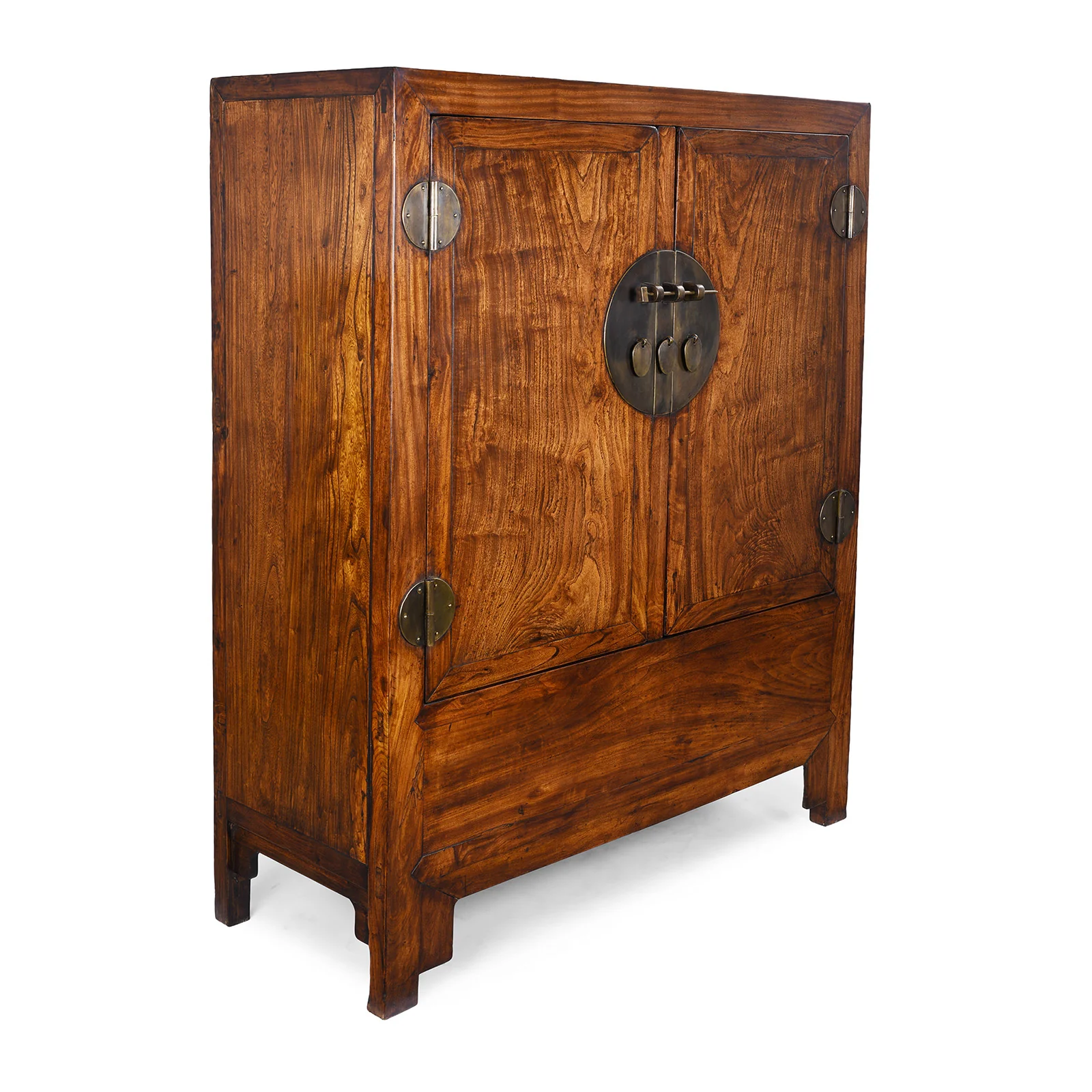
This substantial antique Chinese compound cabinet, known as a dasijiangui, dates to the mid 19th century during the Qing dynasty (1644-1911) and is from Tianjin in Northern China. Cabinets of this type were produced across the north, with examples linked to Tianjin, neighbouring Beijing, and the wider Hebei region. Tianjin examples are notably associated with camphor wood (樟木, zhāng mù), prized for its insect-repellent qualities, whereas closely related cabinets from Beijing and surrounding areas are more commonly made in northern elm (榆木, yú mù).
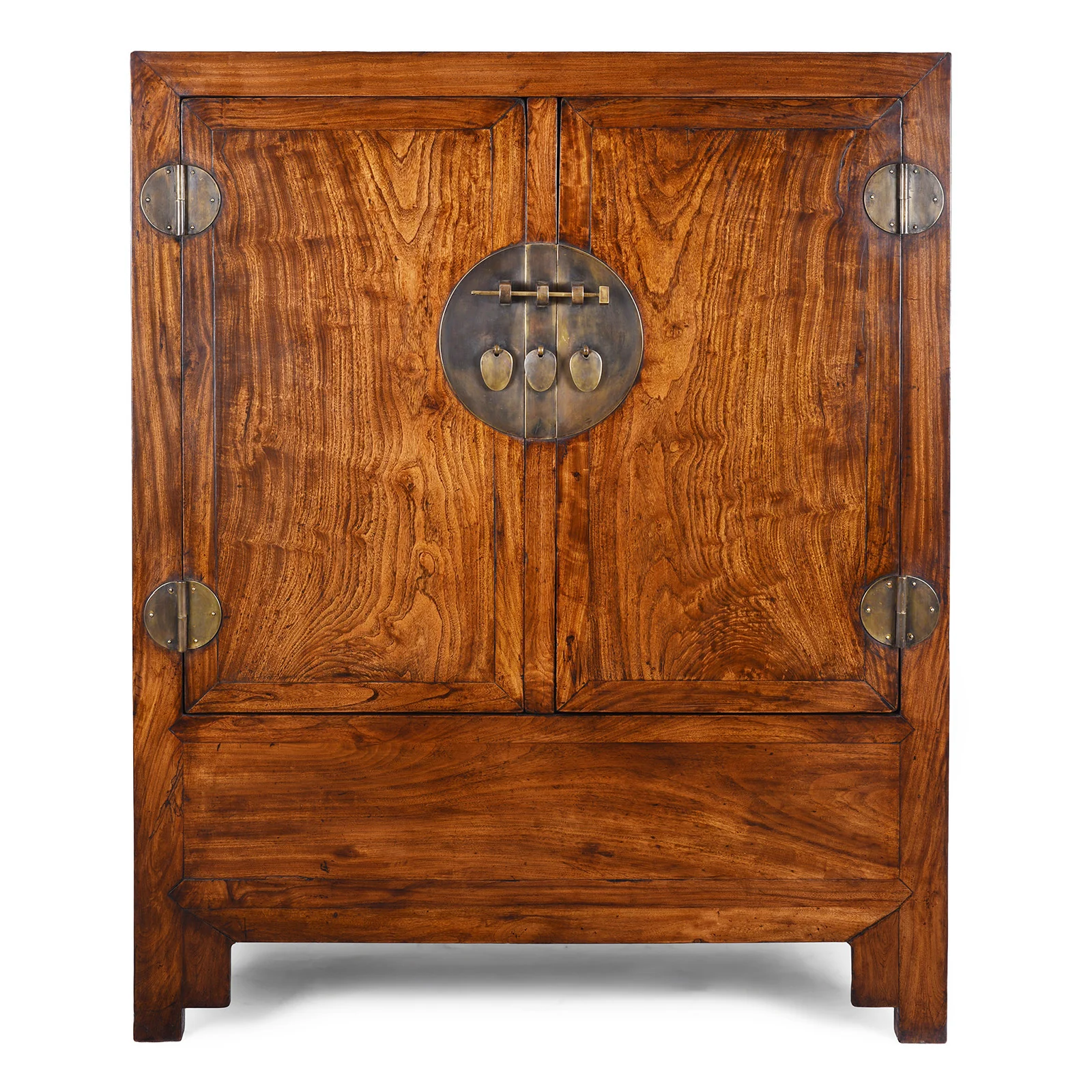
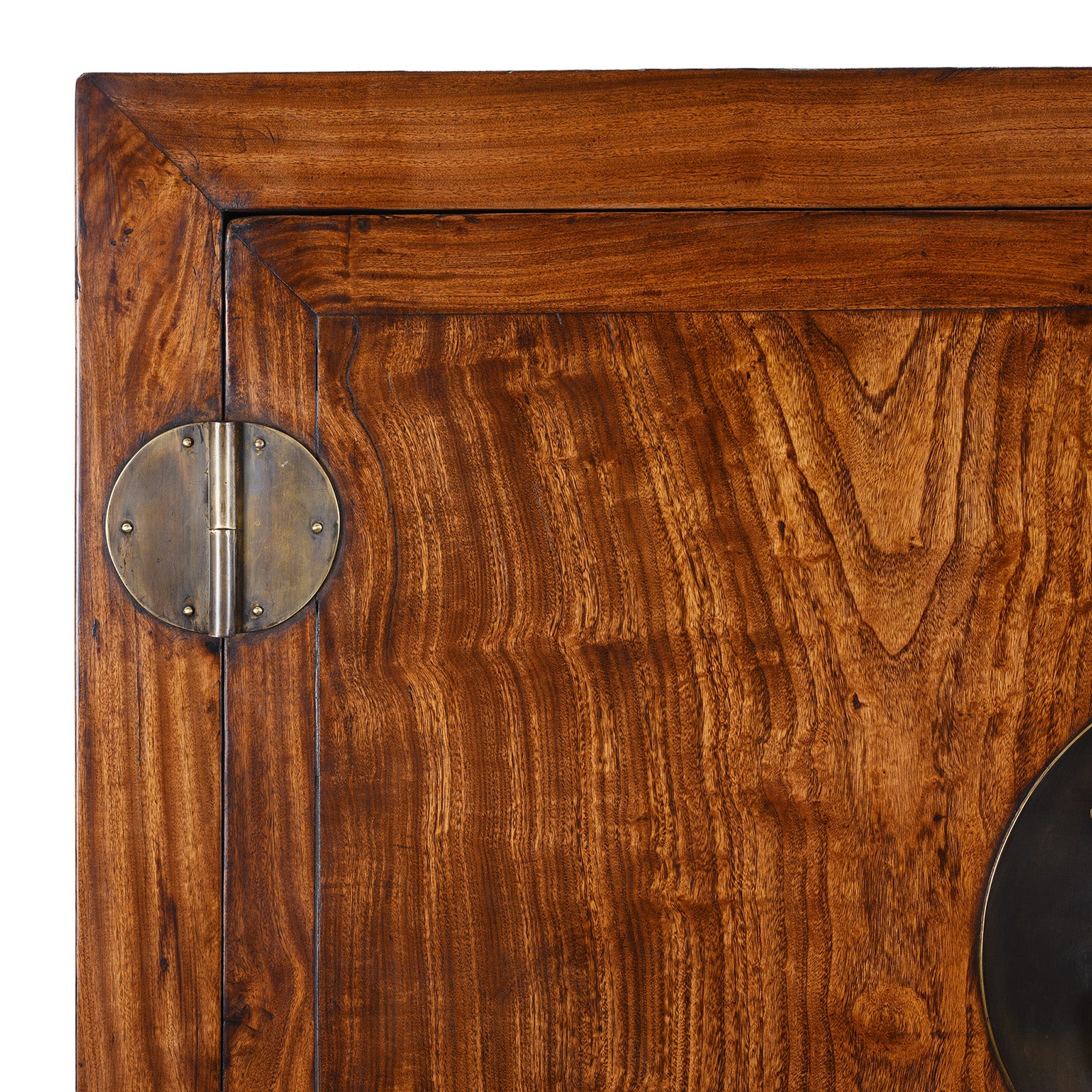
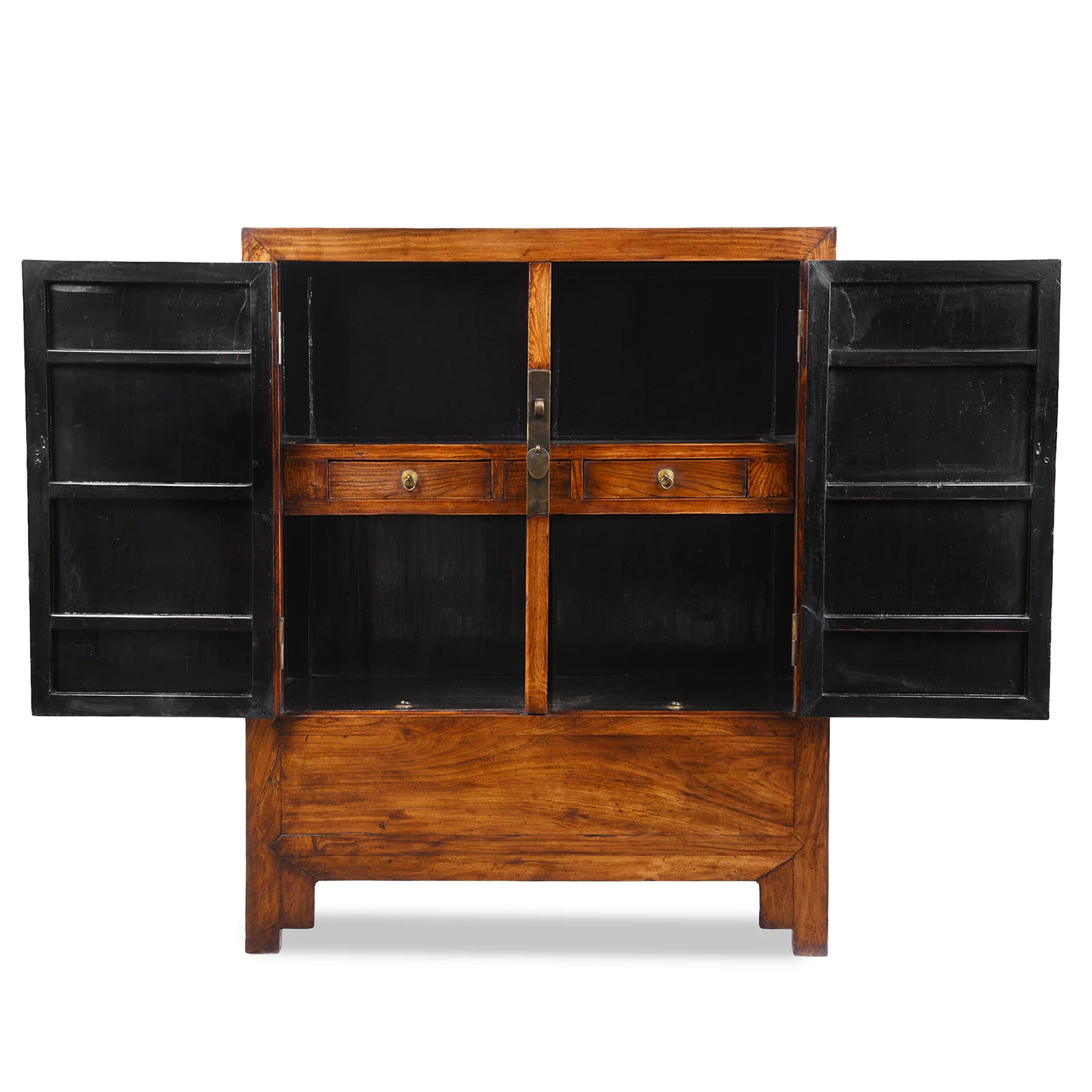
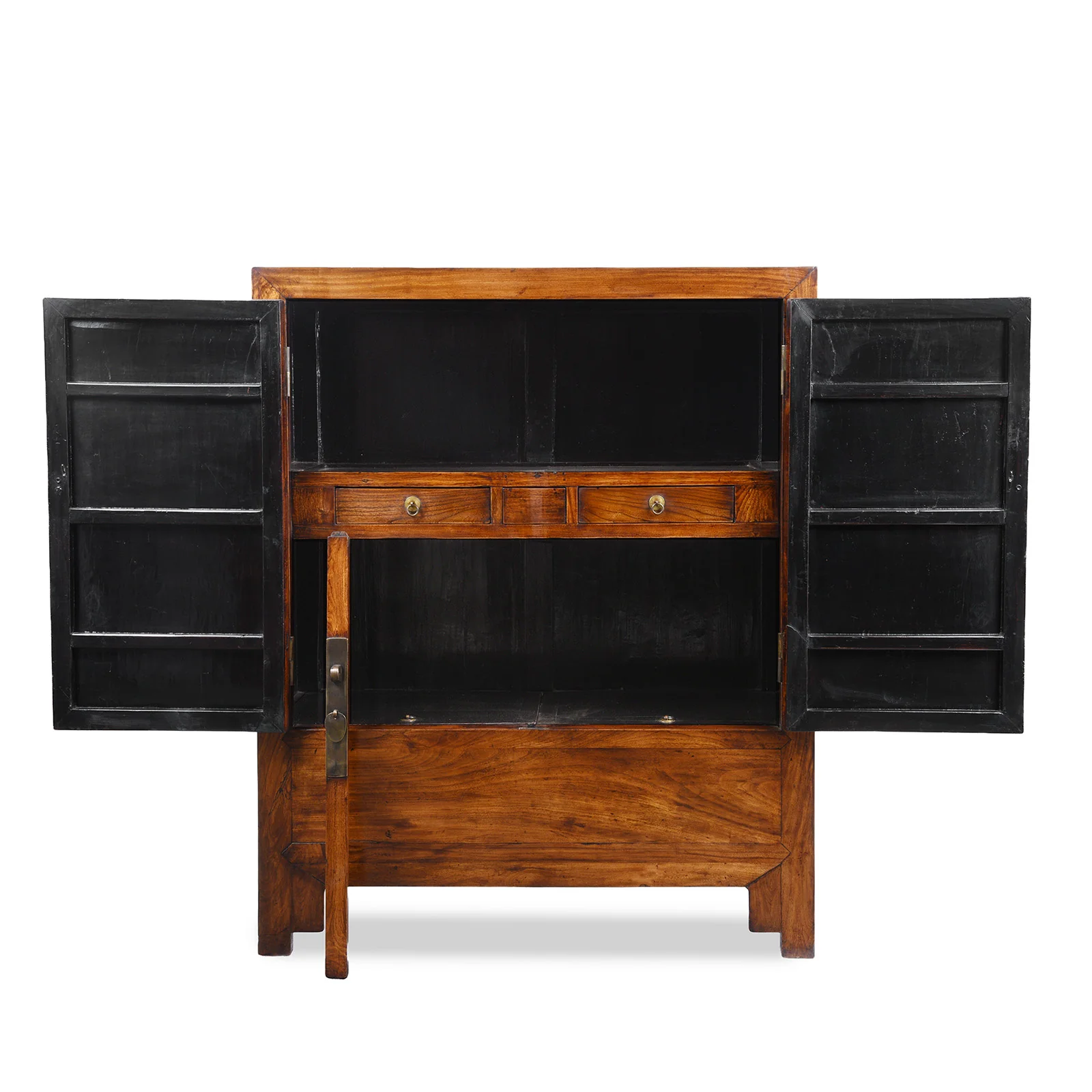
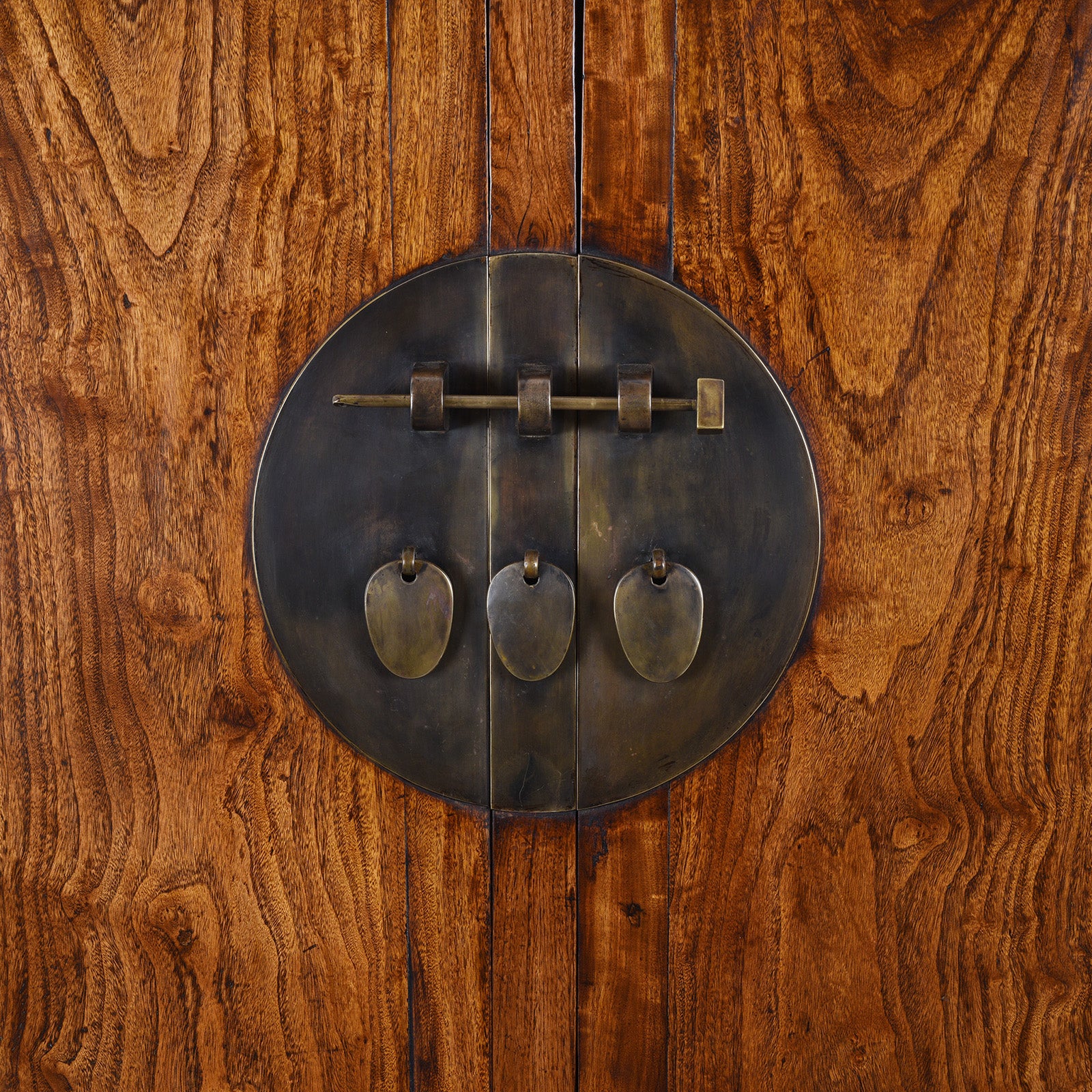
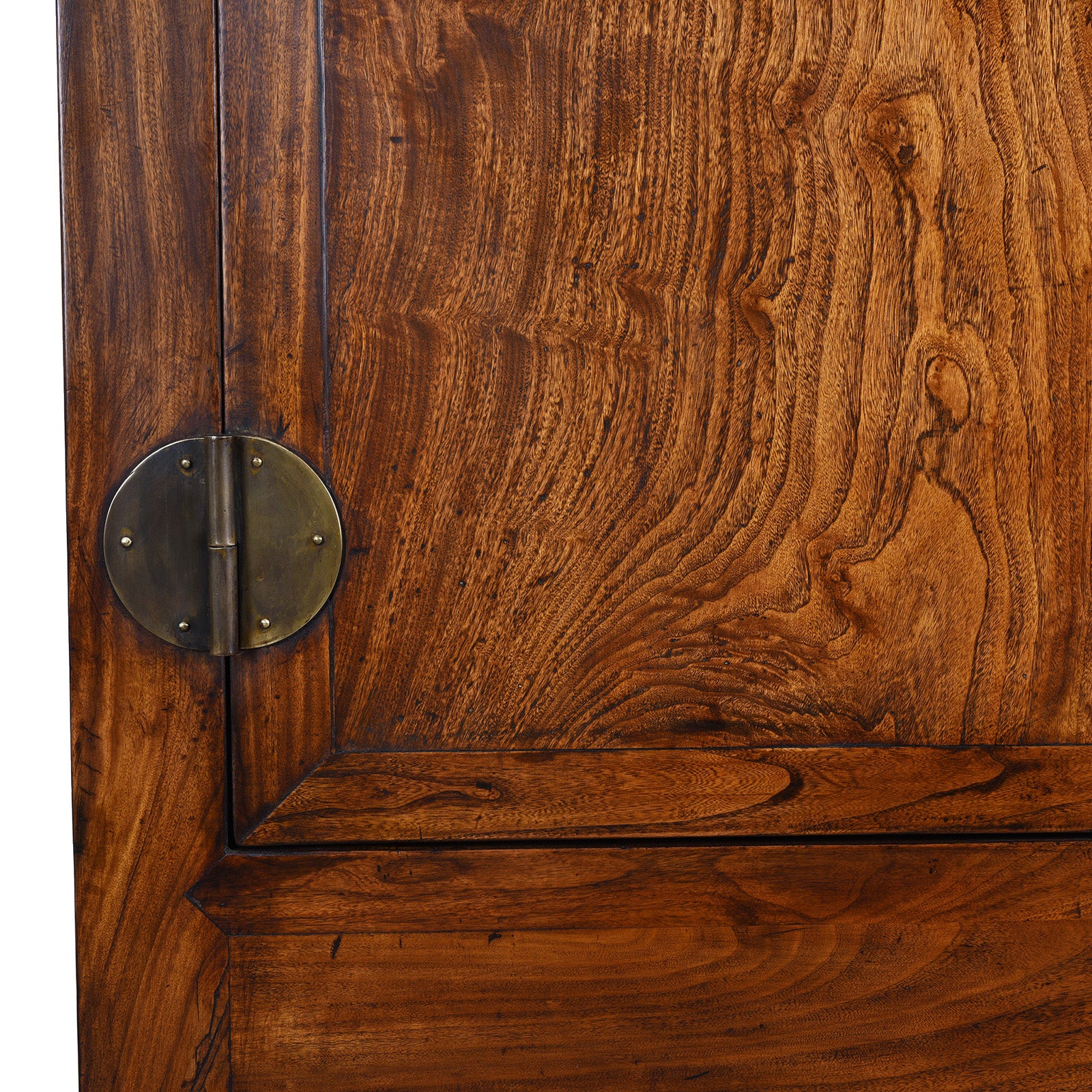
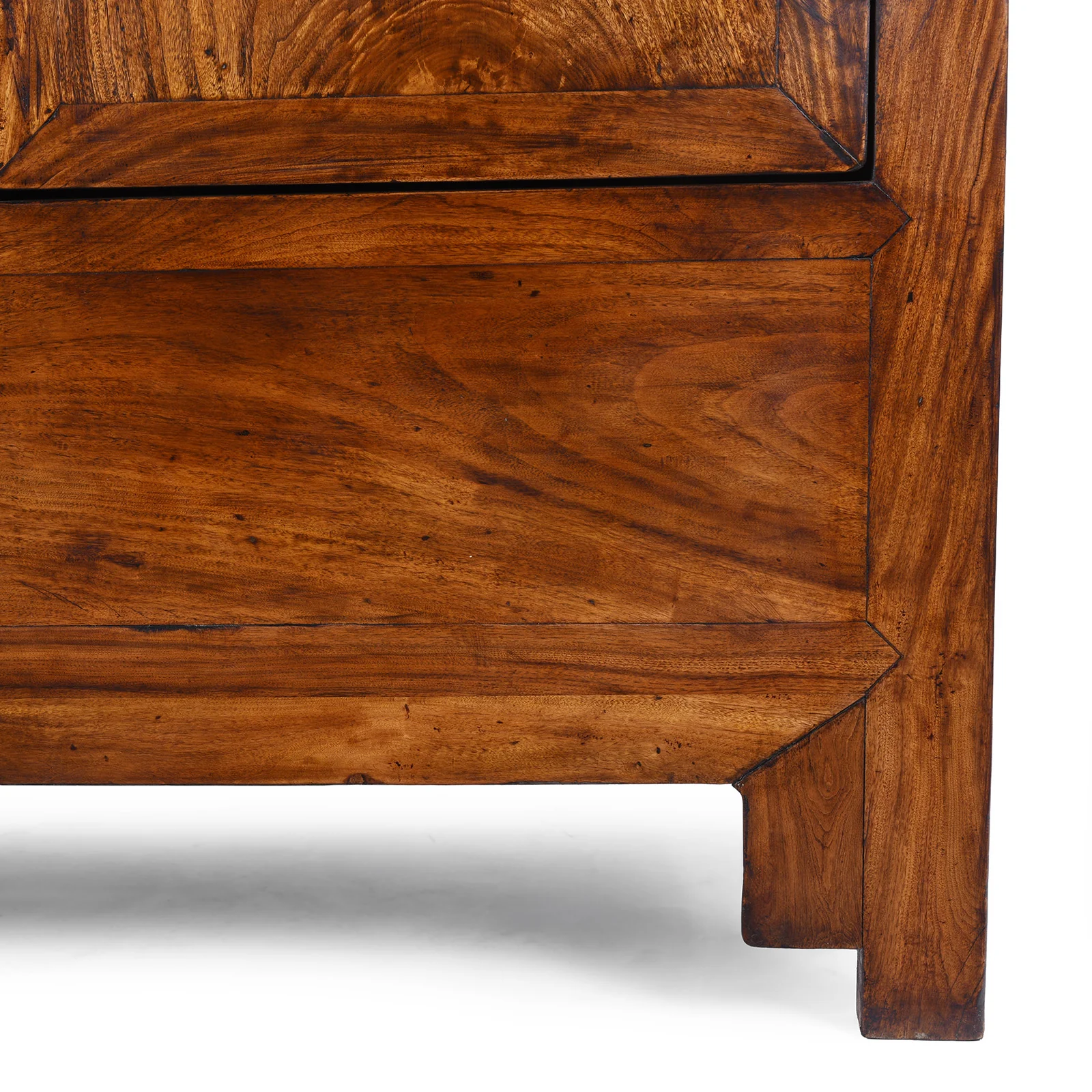
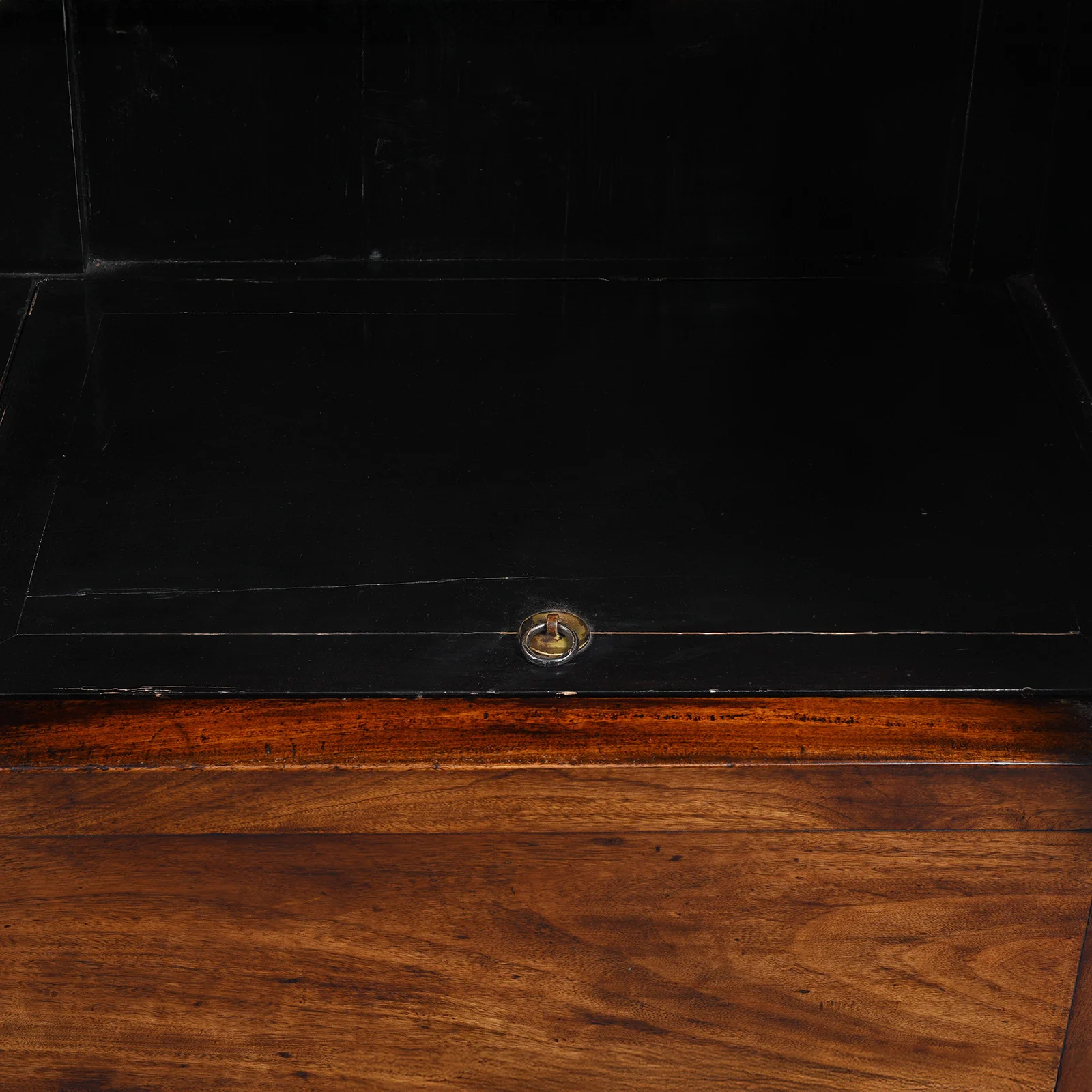
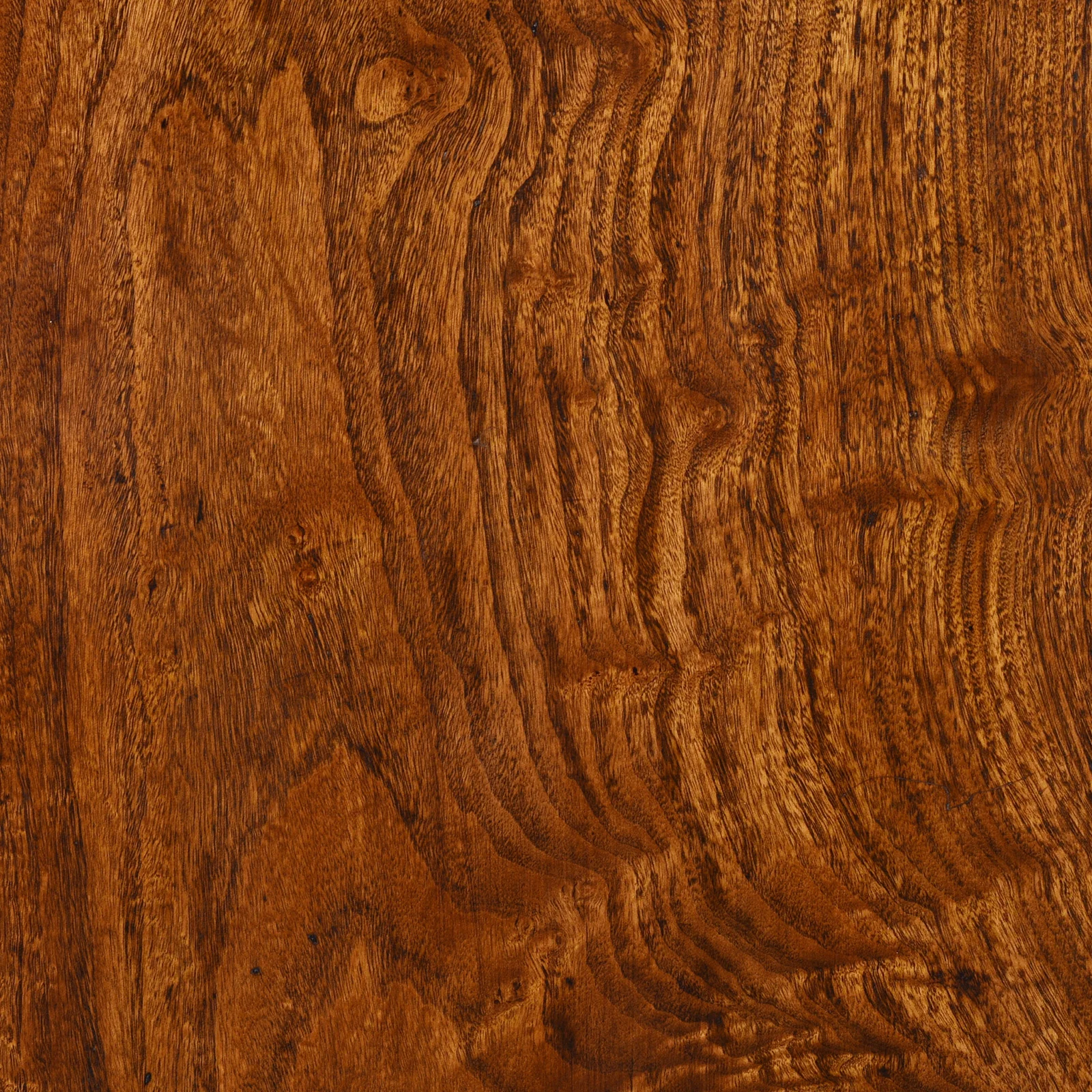
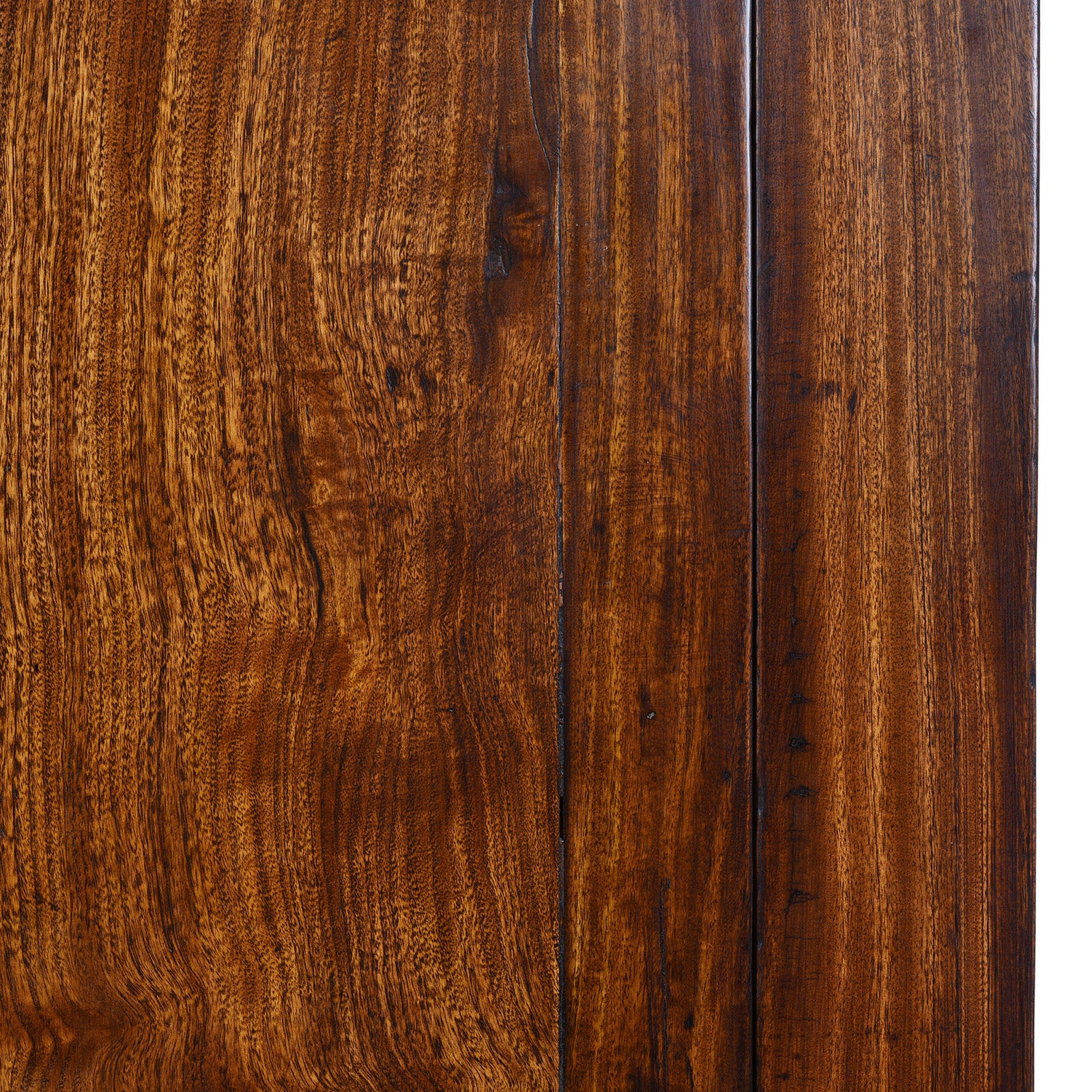
The cabinet is constructed with a camphor wood (樟木, zhāng mù) frame, chosen both for its durability and its natural insect-repellent properties, and fitted with finely book-matched northern elm (yú mù, 榆木) doors. The façade retains its original brass fittings, including circular plate hinges and a central pin-lock escutcheon, all characteristic of well-made Qing dynasty compound cabinets. The disciplined, rectilinear construction and absence of surface decoration place emphasis on proportion, joinery, and the natural figuring of the timbers, resulting in a form that is both restrained and authoritative.
- Type: Compound cabinet (dasijiangui)
- Origin: Tianjin, Northern China
- Date: Mid 19th Century, Qing Dynasty
- Materials: Camphor wood carcass with elm wood doors; metal fittings; black lacquered interior
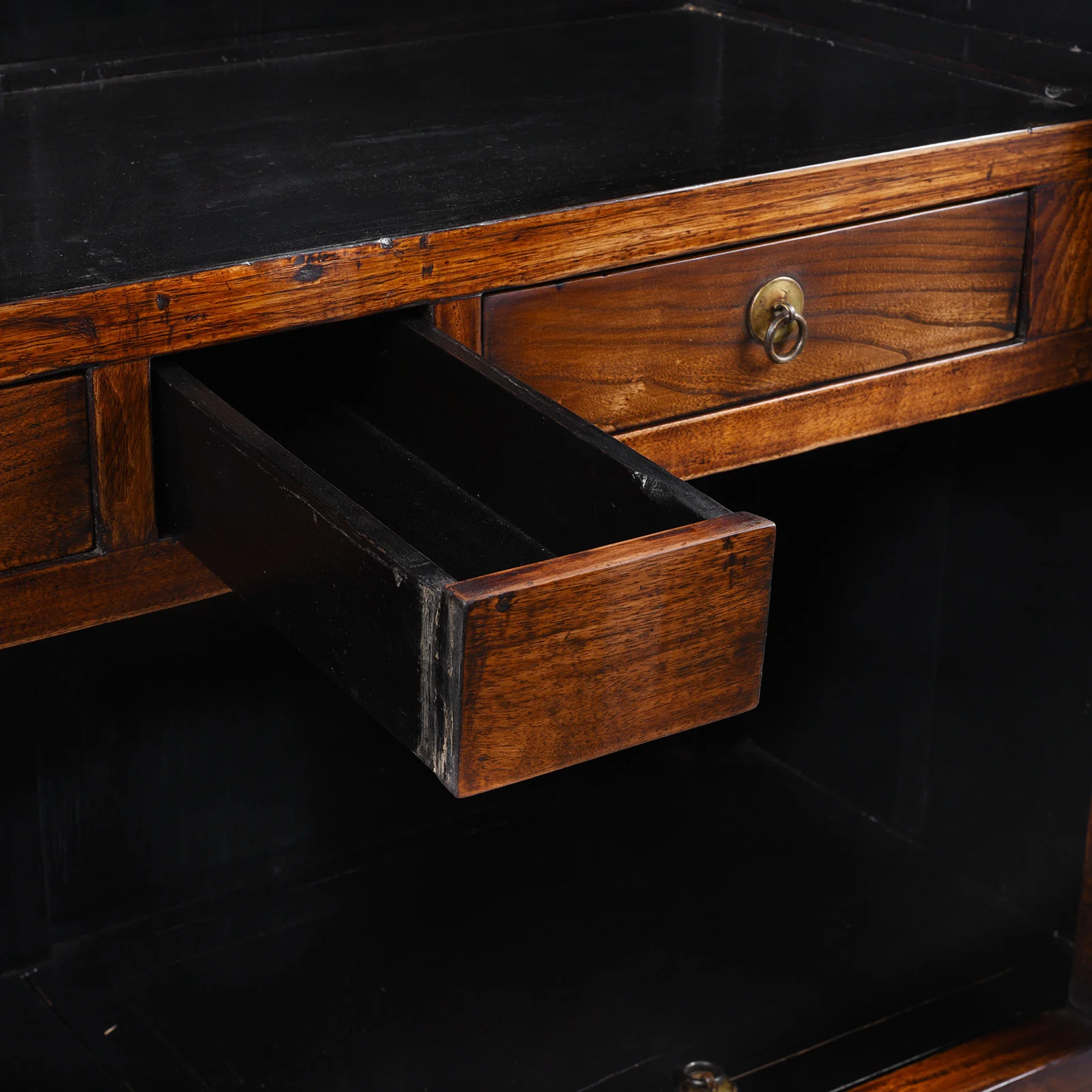
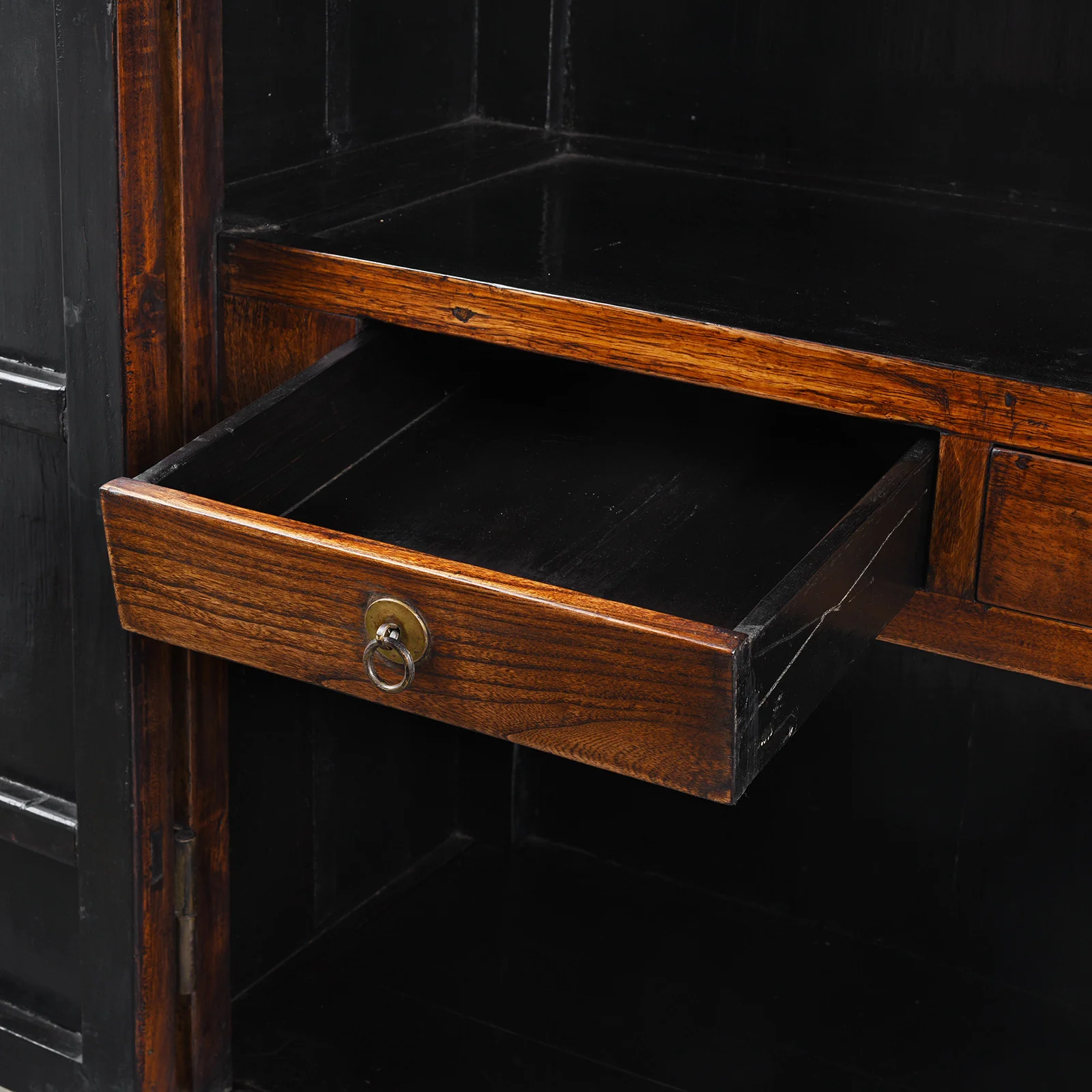
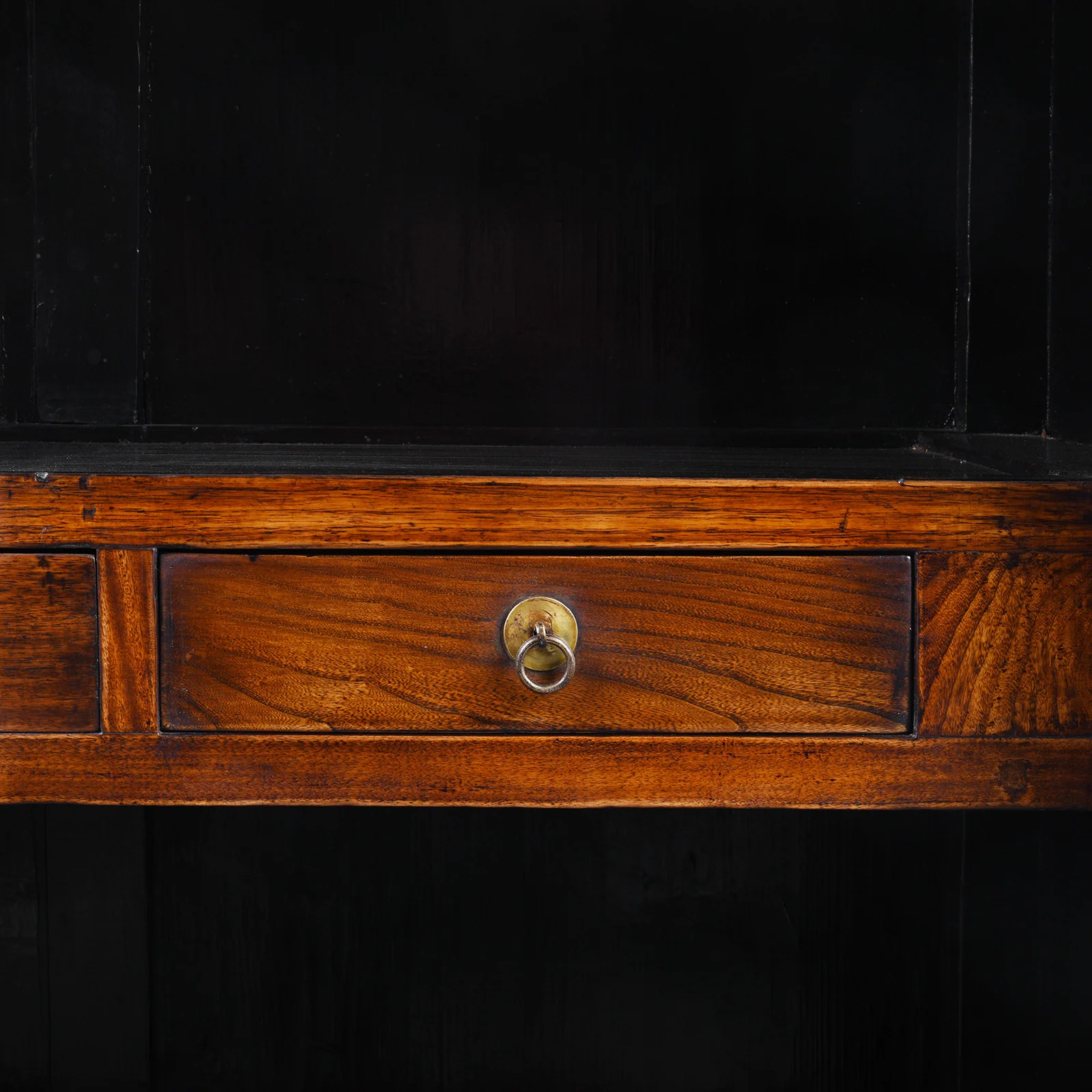
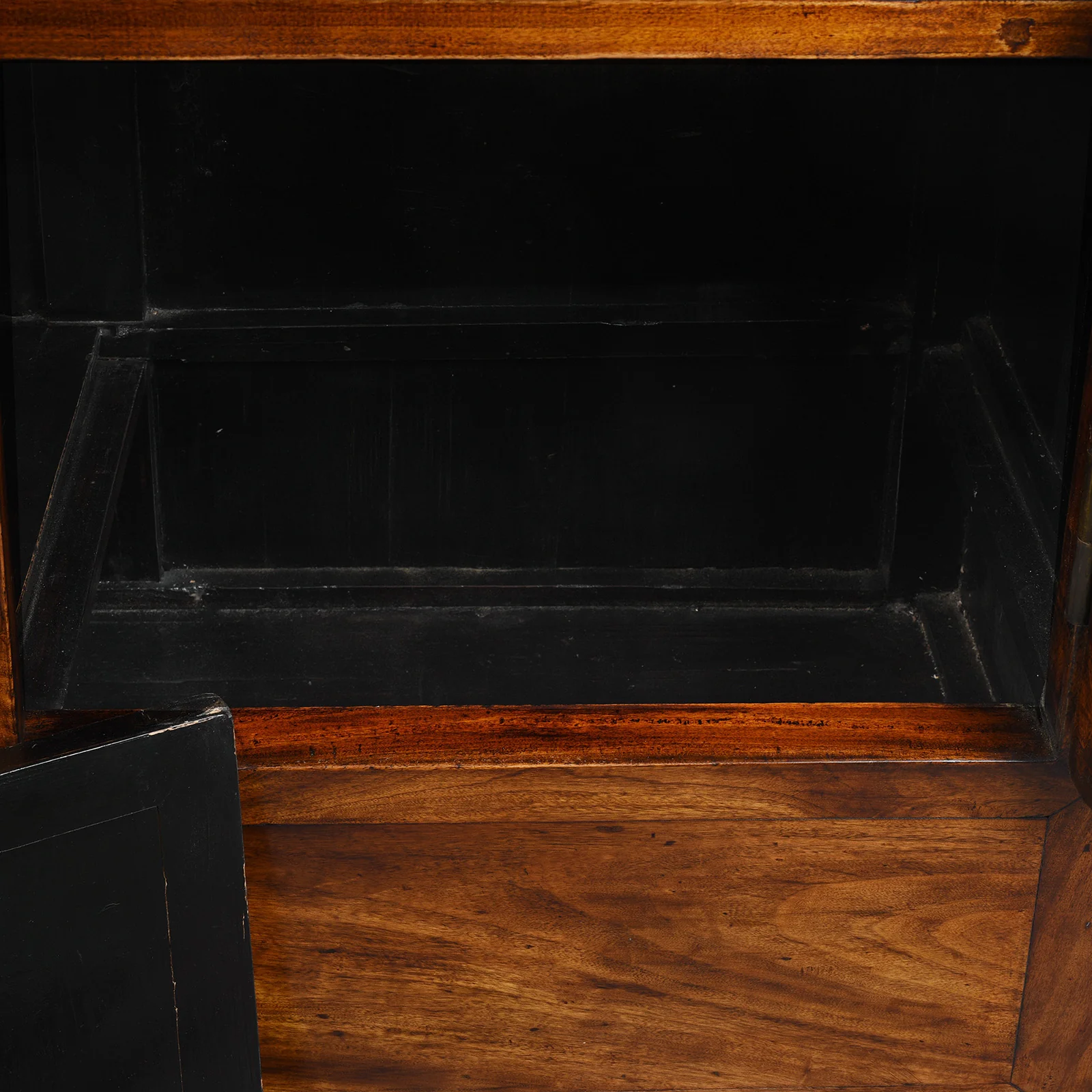
- Features: Circular metal hinges, central pin lock, shelved and lacquered interior, drawers, concealed lower storage with removable panels; originally accompanied by an upper hat box compartment
- Condition: Aged condition with wear and patina consistent with age and use
- Dimensions: Width 142 × Depth 56 × Height 179 cm
A powerful and practical Qing storage piece, combining robust northern craftsmanship with elegant restraint.
References:
- Mazurkewich, Karen. Chinese Furniture: A Guide to Collecting Antiques. Rutland, VT: Tuttle Publishing, 2007. See Fig. 327 for a closely related northern Chinese compound cabinet form.
Original: $5,098.46
-65%$5,098.46
$1,784.46More Images
Chinese Compound Cabinet From Tianjin - 19th Century
This substantial antique Chinese compound cabinet, known as a dasijiangui, dates to the mid 19th century during the Qing dynasty (1644-1911) and is from Tianjin in Northern China. Cabinets of this type were produced across the north, with examples linked to Tianjin, neighbouring Beijing, and the wider Hebei region. Tianjin examples are notably associated with camphor wood (樟木, zhāng mù), prized for its insect-repellent qualities, whereas closely related cabinets from Beijing and surrounding areas are more commonly made in northern elm (榆木, yú mù).
The cabinet is constructed with a camphor wood (樟木, zhāng mù) frame, chosen both for its durability and its natural insect-repellent properties, and fitted with finely book-matched northern elm (yú mù, 榆木) doors. The façade retains its original brass fittings, including circular plate hinges and a central pin-lock escutcheon, all characteristic of well-made Qing dynasty compound cabinets. The disciplined, rectilinear construction and absence of surface decoration place emphasis on proportion, joinery, and the natural figuring of the timbers, resulting in a form that is both restrained and authoritative.
- Type: Compound cabinet (dasijiangui)
- Origin: Tianjin, Northern China
- Date: Mid 19th Century, Qing Dynasty
- Materials: Camphor wood carcass with elm wood doors; metal fittings; black lacquered interior
- Features: Circular metal hinges, central pin lock, shelved and lacquered interior, drawers, concealed lower storage with removable panels; originally accompanied by an upper hat box compartment
- Condition: Aged condition with wear and patina consistent with age and use
- Dimensions: Width 142 × Depth 56 × Height 179 cm
A powerful and practical Qing storage piece, combining robust northern craftsmanship with elegant restraint.
References:
- Mazurkewich, Karen. Chinese Furniture: A Guide to Collecting Antiques. Rutland, VT: Tuttle Publishing, 2007. See Fig. 327 for a closely related northern Chinese compound cabinet form.
Product Information
Product Information
Shipping & Returns
Shipping & Returns
Description
This substantial antique Chinese compound cabinet, known as a dasijiangui, dates to the mid 19th century during the Qing dynasty (1644-1911) and is from Tianjin in Northern China. Cabinets of this type were produced across the north, with examples linked to Tianjin, neighbouring Beijing, and the wider Hebei region. Tianjin examples are notably associated with camphor wood (樟木, zhāng mù), prized for its insect-repellent qualities, whereas closely related cabinets from Beijing and surrounding areas are more commonly made in northern elm (榆木, yú mù).
The cabinet is constructed with a camphor wood (樟木, zhāng mù) frame, chosen both for its durability and its natural insect-repellent properties, and fitted with finely book-matched northern elm (yú mù, 榆木) doors. The façade retains its original brass fittings, including circular plate hinges and a central pin-lock escutcheon, all characteristic of well-made Qing dynasty compound cabinets. The disciplined, rectilinear construction and absence of surface decoration place emphasis on proportion, joinery, and the natural figuring of the timbers, resulting in a form that is both restrained and authoritative.
- Type: Compound cabinet (dasijiangui)
- Origin: Tianjin, Northern China
- Date: Mid 19th Century, Qing Dynasty
- Materials: Camphor wood carcass with elm wood doors; metal fittings; black lacquered interior
- Features: Circular metal hinges, central pin lock, shelved and lacquered interior, drawers, concealed lower storage with removable panels; originally accompanied by an upper hat box compartment
- Condition: Aged condition with wear and patina consistent with age and use
- Dimensions: Width 142 × Depth 56 × Height 179 cm
A powerful and practical Qing storage piece, combining robust northern craftsmanship with elegant restraint.
References:
- Mazurkewich, Karen. Chinese Furniture: A Guide to Collecting Antiques. Rutland, VT: Tuttle Publishing, 2007. See Fig. 327 for a closely related northern Chinese compound cabinet form.