Chinese Sideboard From Peking - 19th Century
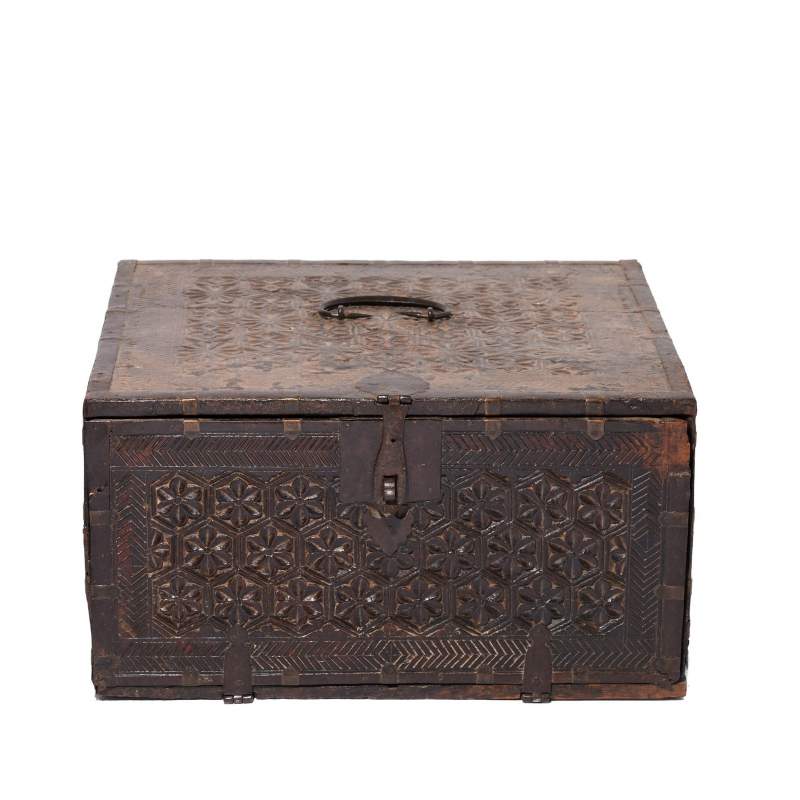
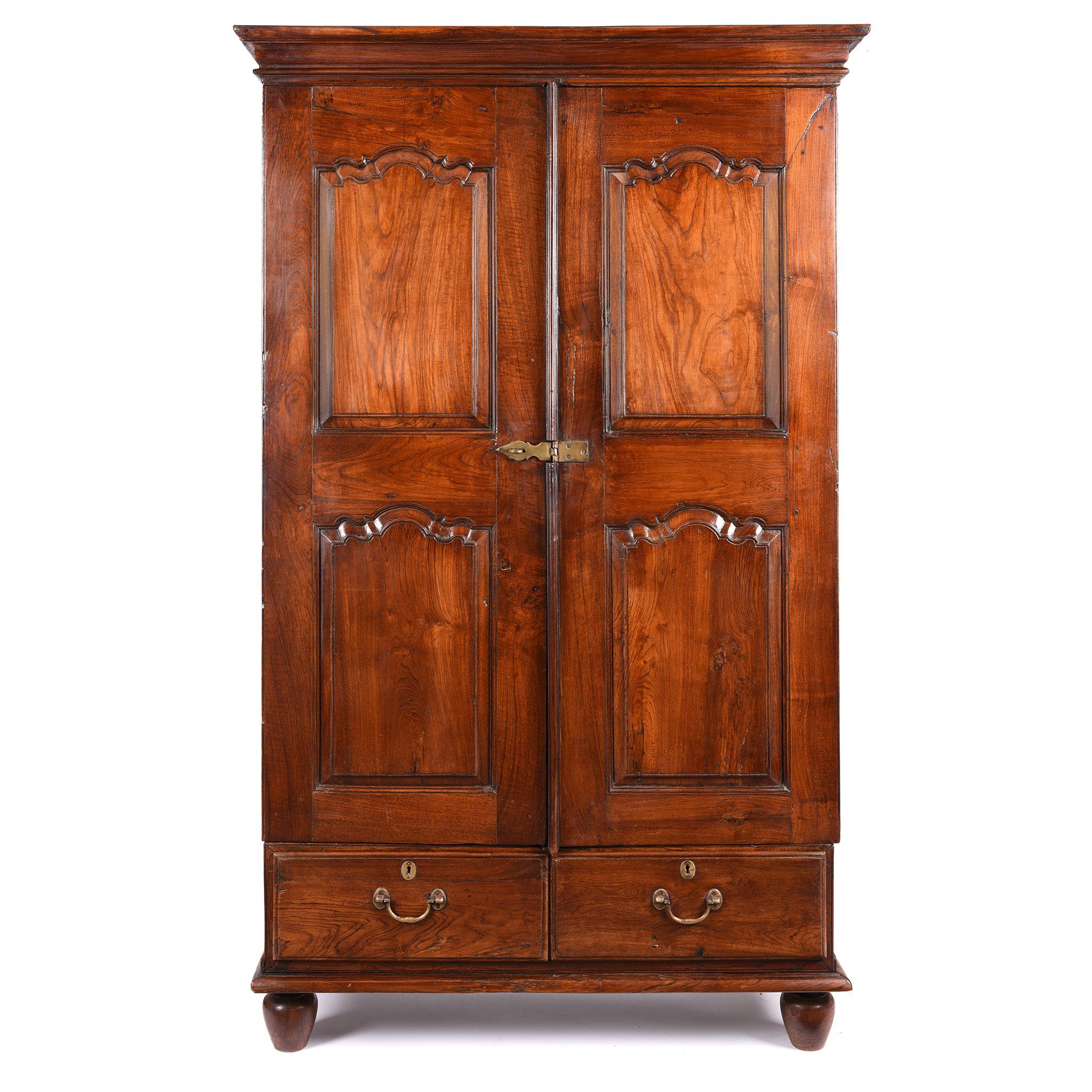
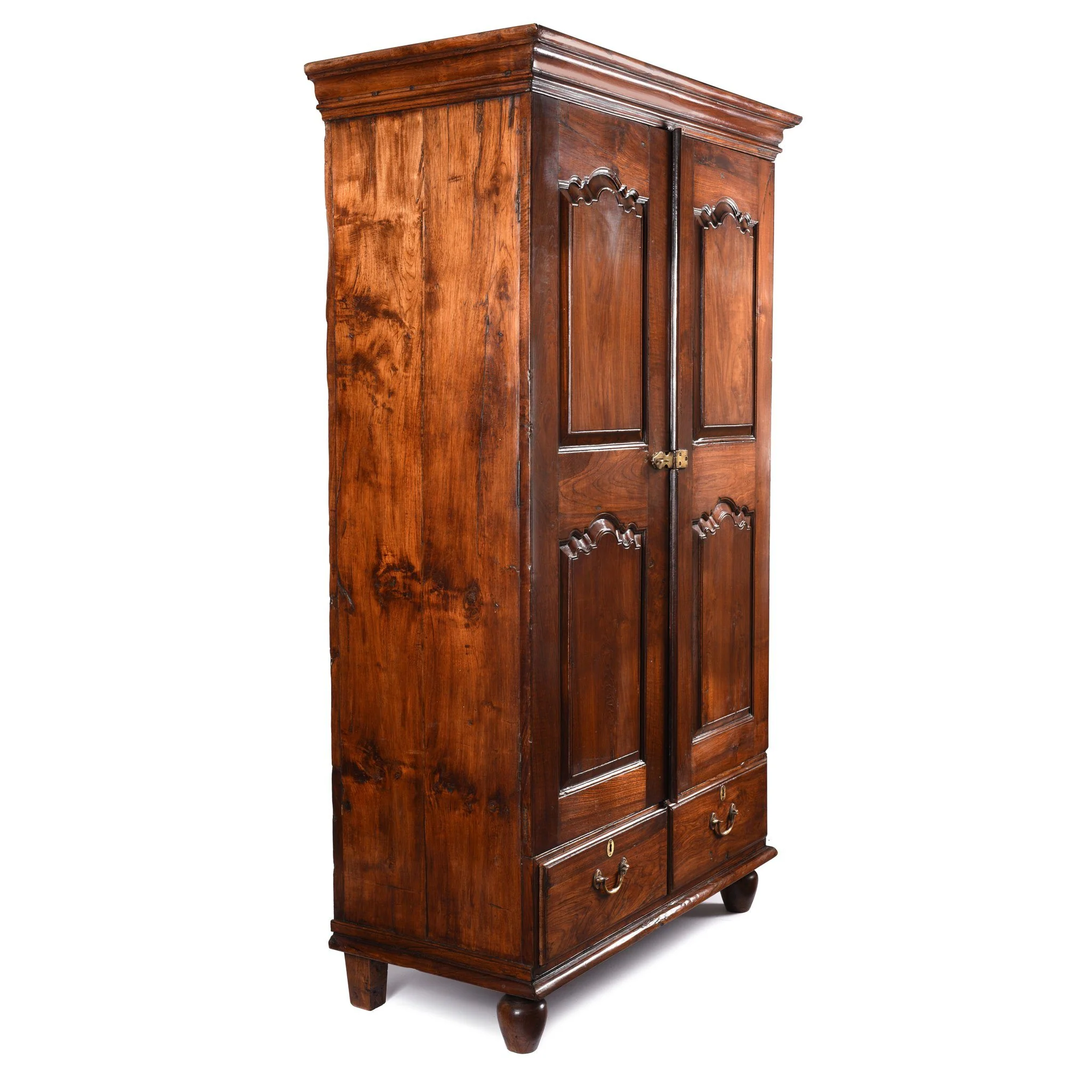
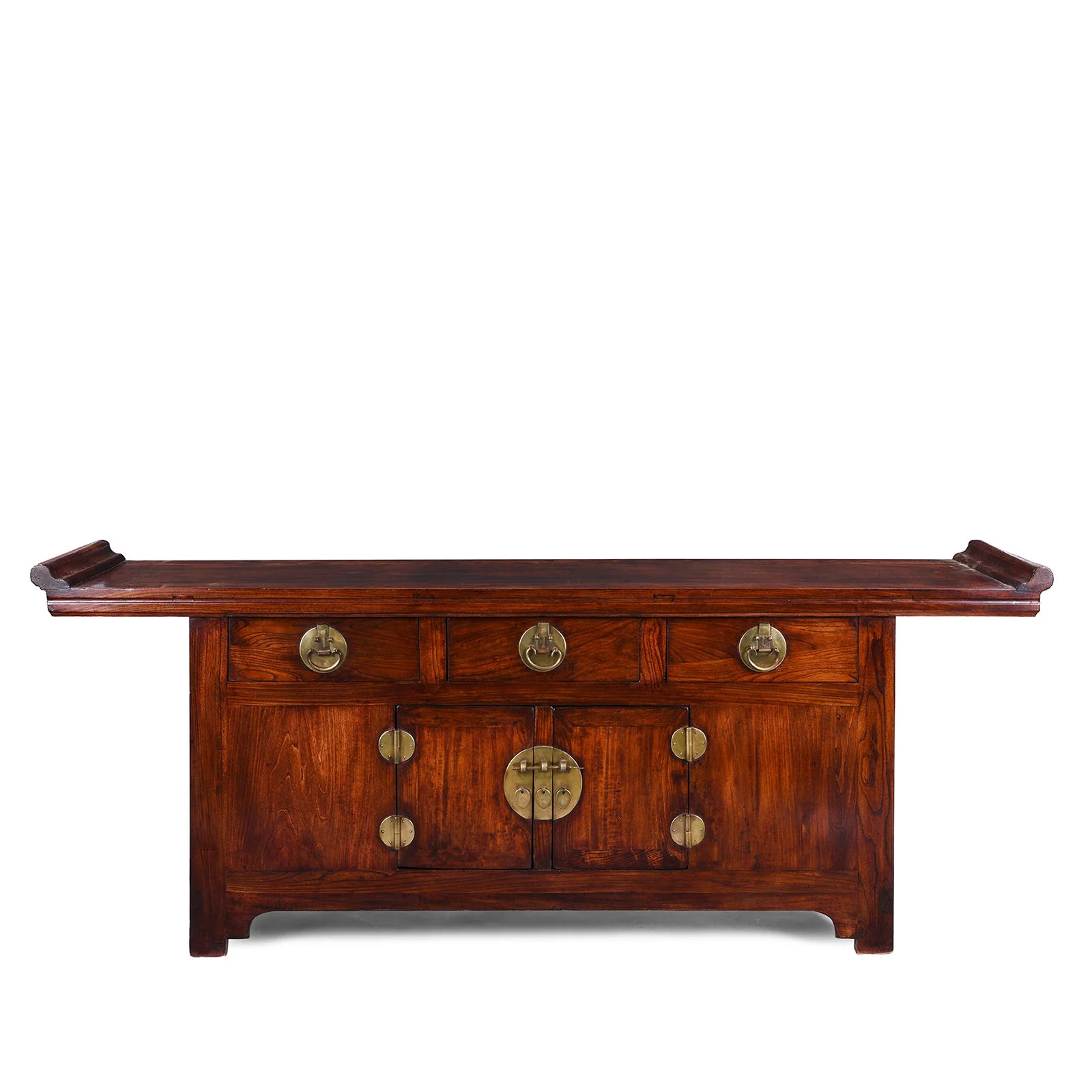
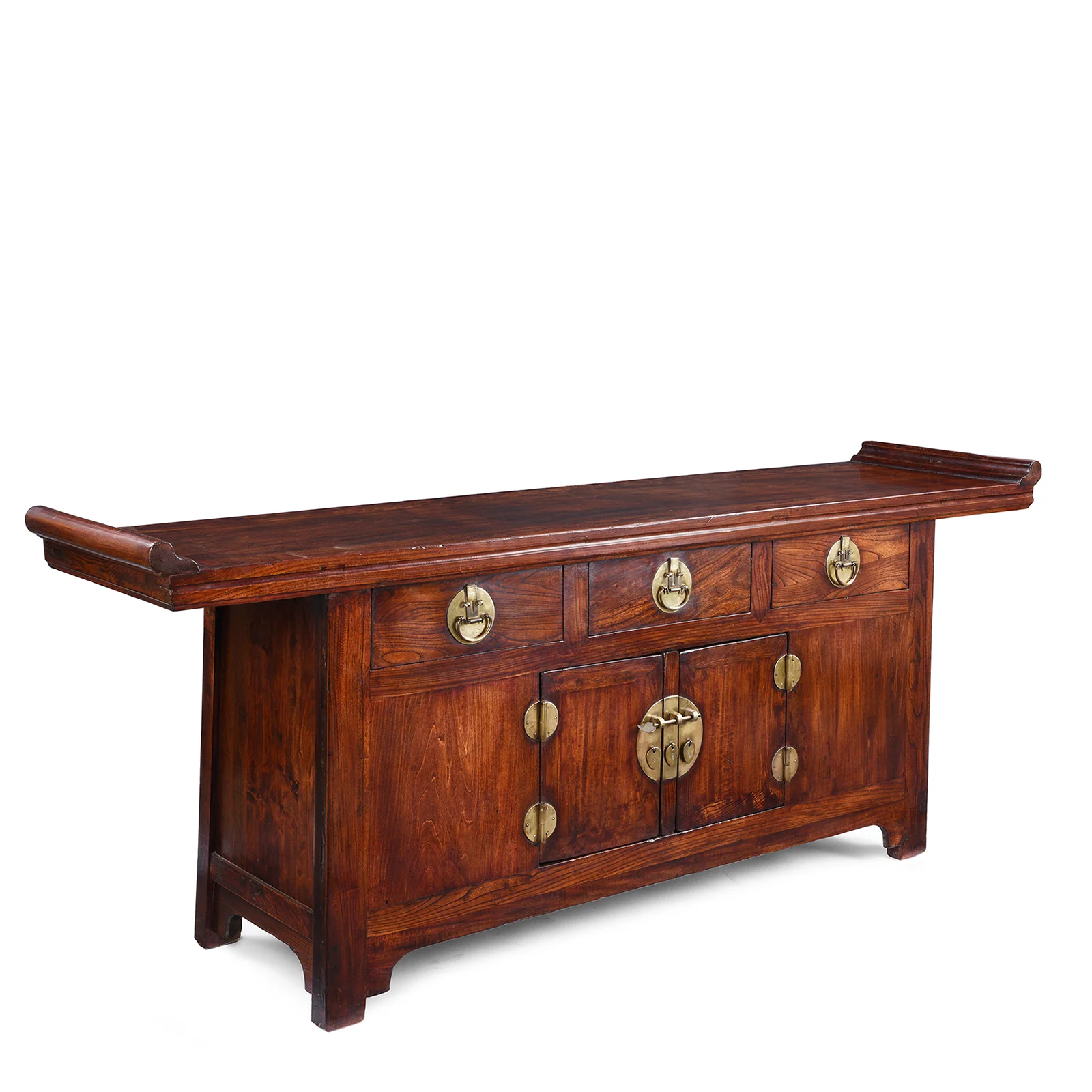
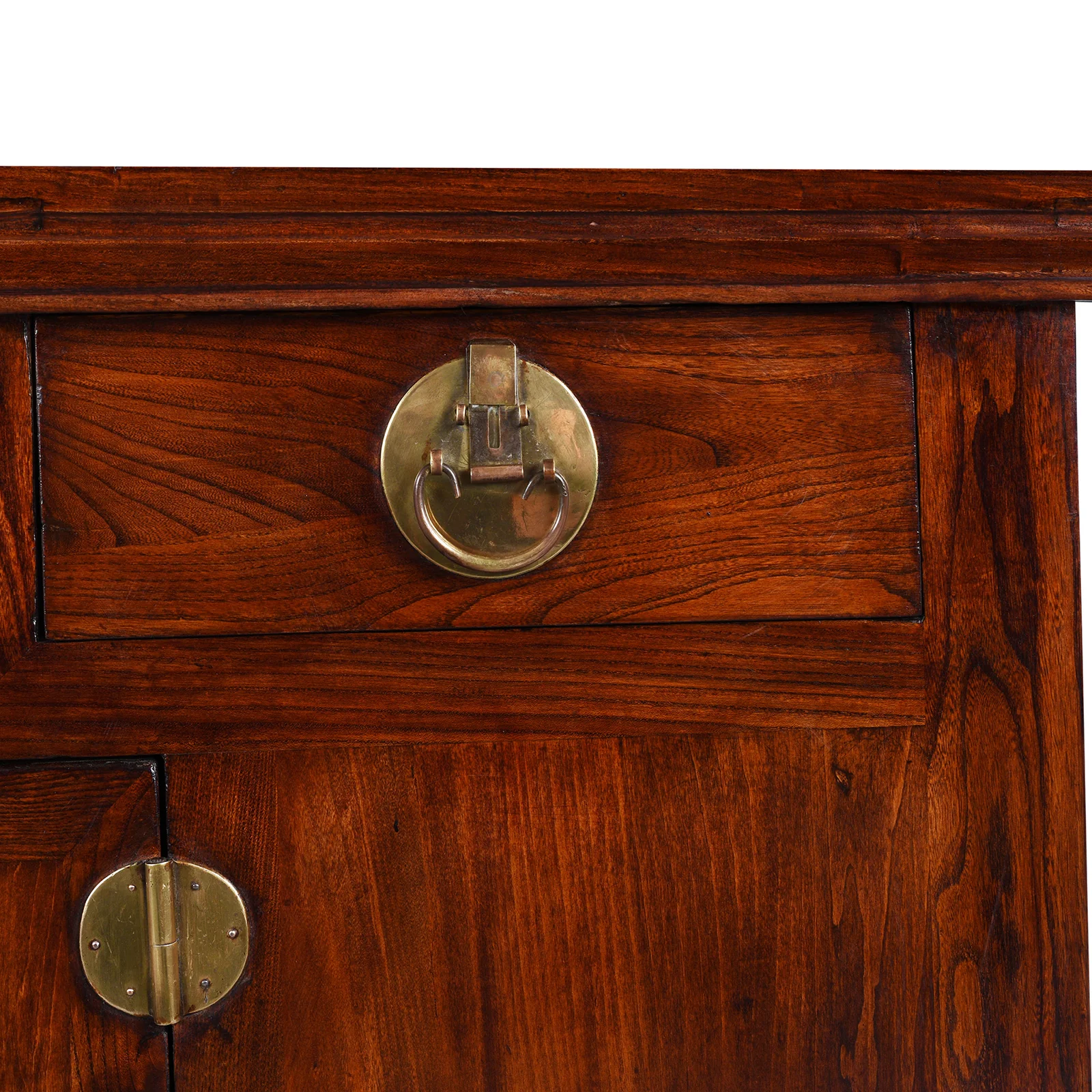
This sideboard, originating during the Ming dynasty, comes from the Chinese capital of Peking (Beijing). The design was also popular in surrounding areas of North China. Its simple design features circular brass fittings. Sideboards of this shape were used as storage and as altar cabinets for burning incense, family ancestor worship with an ancestor scroll above.
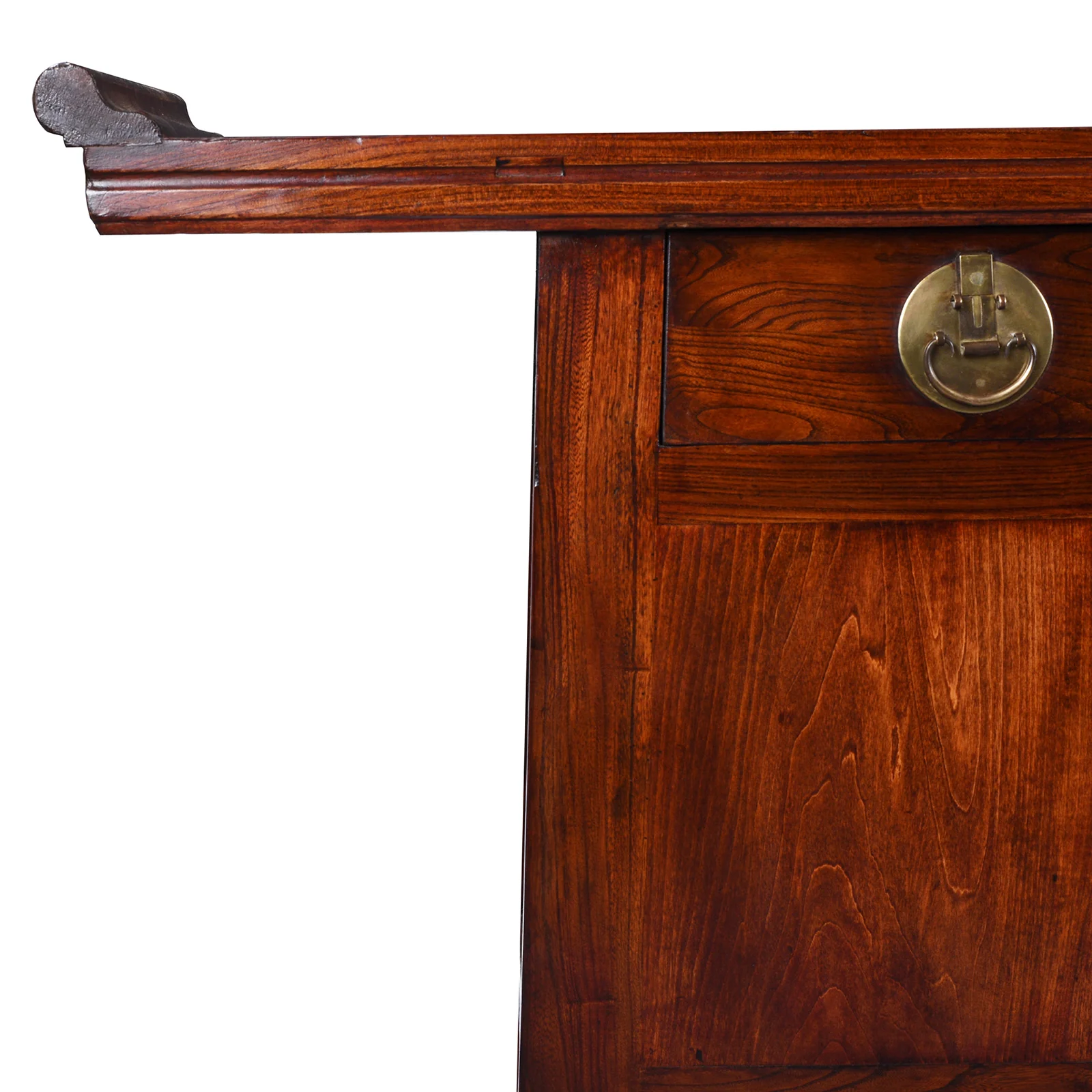
This style of Chinese sideboard is often referred to as an altar cabinet in The West and a lien-san (three in a row) by Chinese dealers referring to the drawer form. Similar examples can be seen in many Chinese furniture books and museums made in expensive woods such as huali & huanghuali. This sideboard is made from northern elm wood (榆木 yumu) with original brass fittings. It is finished with a darker tone stain inspired by the rich luxurious tones of huanghauli. The whole piece is covered in a rich patina and the top displays a wonderful grain.
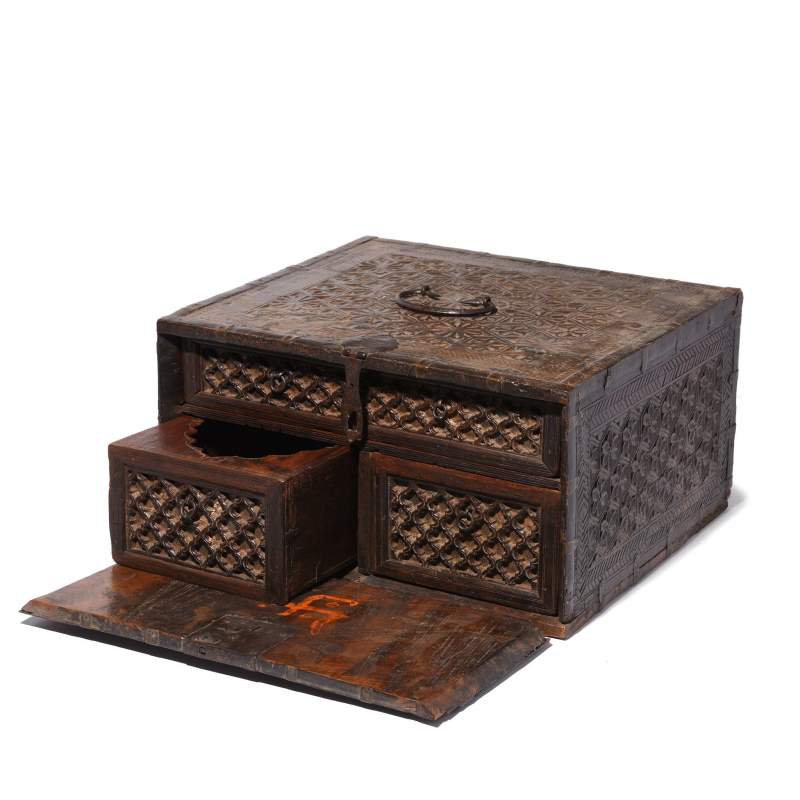
The central doors open to reveal a large interior space, while three drawers add additional storage for smaller items. The upturned ends are for ensuring scrolls do not roll off the cabinet.
Original: $3,987.10
-65%$3,987.10
$1,395.48More Images




Chinese Sideboard From Peking - 19th Century
This sideboard, originating during the Ming dynasty, comes from the Chinese capital of Peking (Beijing). The design was also popular in surrounding areas of North China. Its simple design features circular brass fittings. Sideboards of this shape were used as storage and as altar cabinets for burning incense, family ancestor worship with an ancestor scroll above.
This style of Chinese sideboard is often referred to as an altar cabinet in The West and a lien-san (three in a row) by Chinese dealers referring to the drawer form. Similar examples can be seen in many Chinese furniture books and museums made in expensive woods such as huali & huanghuali. This sideboard is made from northern elm wood (榆木 yumu) with original brass fittings. It is finished with a darker tone stain inspired by the rich luxurious tones of huanghauli. The whole piece is covered in a rich patina and the top displays a wonderful grain.
The central doors open to reveal a large interior space, while three drawers add additional storage for smaller items. The upturned ends are for ensuring scrolls do not roll off the cabinet.
Product Information
Product Information
Shipping & Returns
Shipping & Returns
Description
This sideboard, originating during the Ming dynasty, comes from the Chinese capital of Peking (Beijing). The design was also popular in surrounding areas of North China. Its simple design features circular brass fittings. Sideboards of this shape were used as storage and as altar cabinets for burning incense, family ancestor worship with an ancestor scroll above.
This style of Chinese sideboard is often referred to as an altar cabinet in The West and a lien-san (three in a row) by Chinese dealers referring to the drawer form. Similar examples can be seen in many Chinese furniture books and museums made in expensive woods such as huali & huanghuali. This sideboard is made from northern elm wood (榆木 yumu) with original brass fittings. It is finished with a darker tone stain inspired by the rich luxurious tones of huanghauli. The whole piece is covered in a rich patina and the top displays a wonderful grain.
The central doors open to reveal a large interior space, while three drawers add additional storage for smaller items. The upturned ends are for ensuring scrolls do not roll off the cabinet.