Chip Carved Dowry Hut Box From Jaisalmer - 19th Century
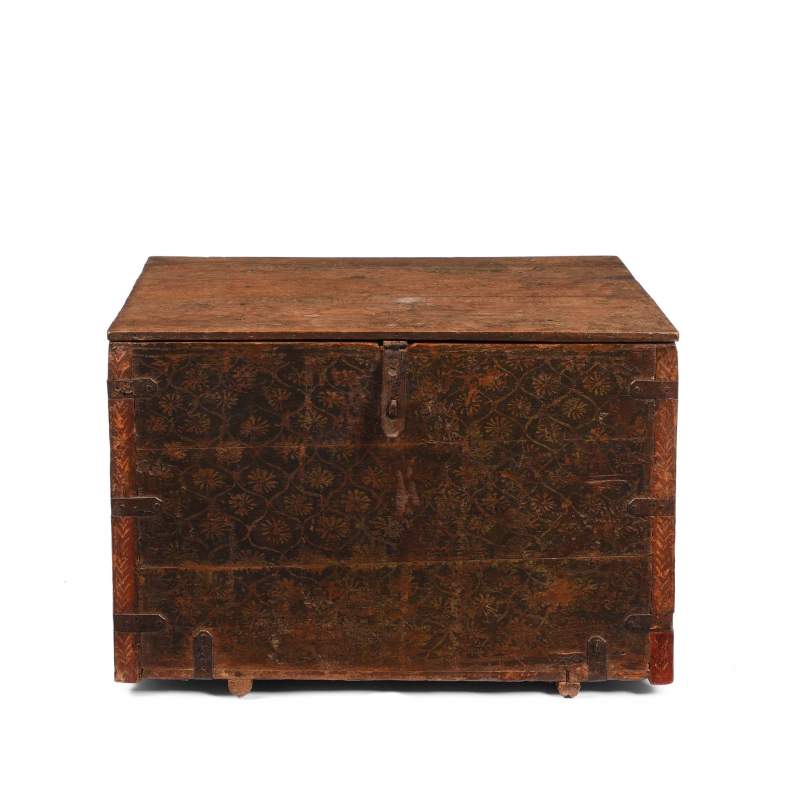
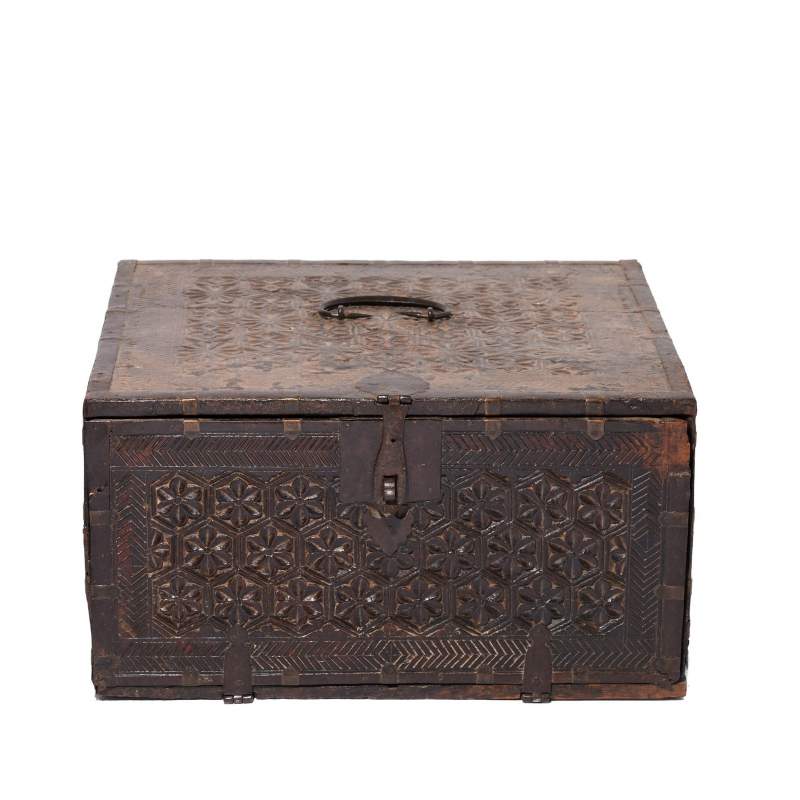
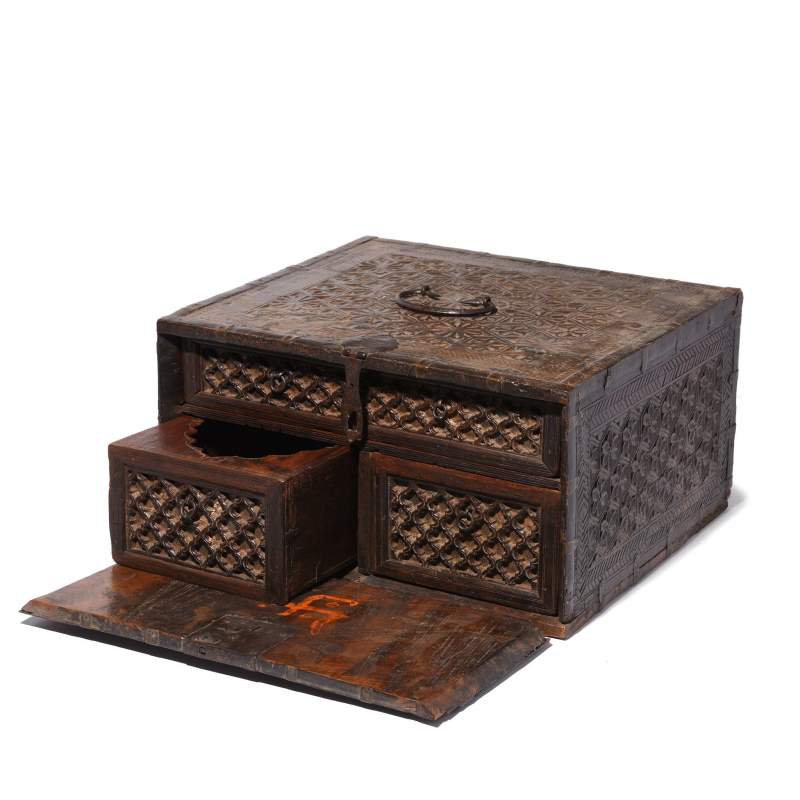
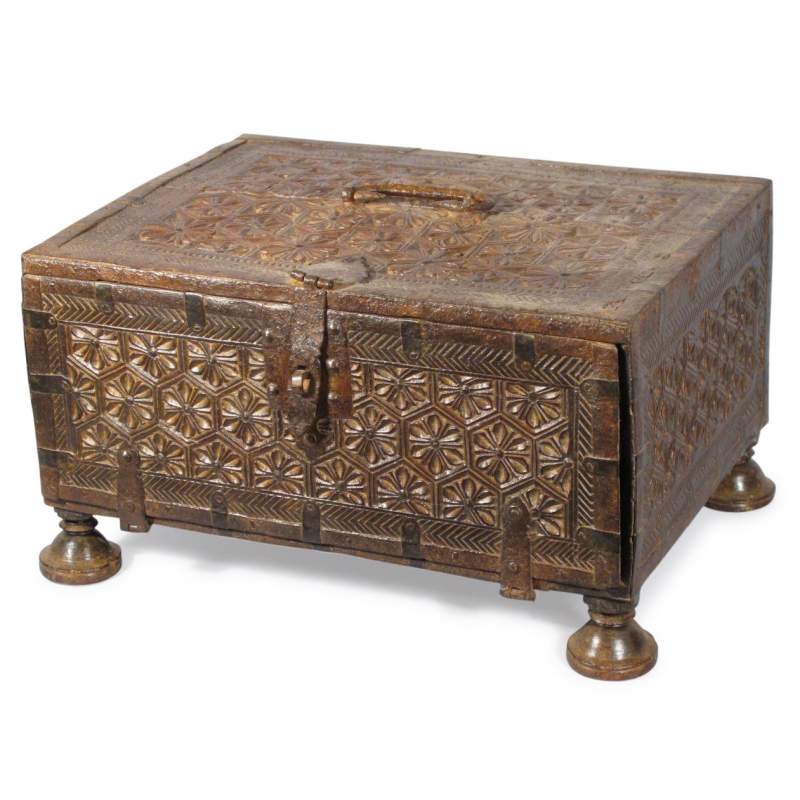
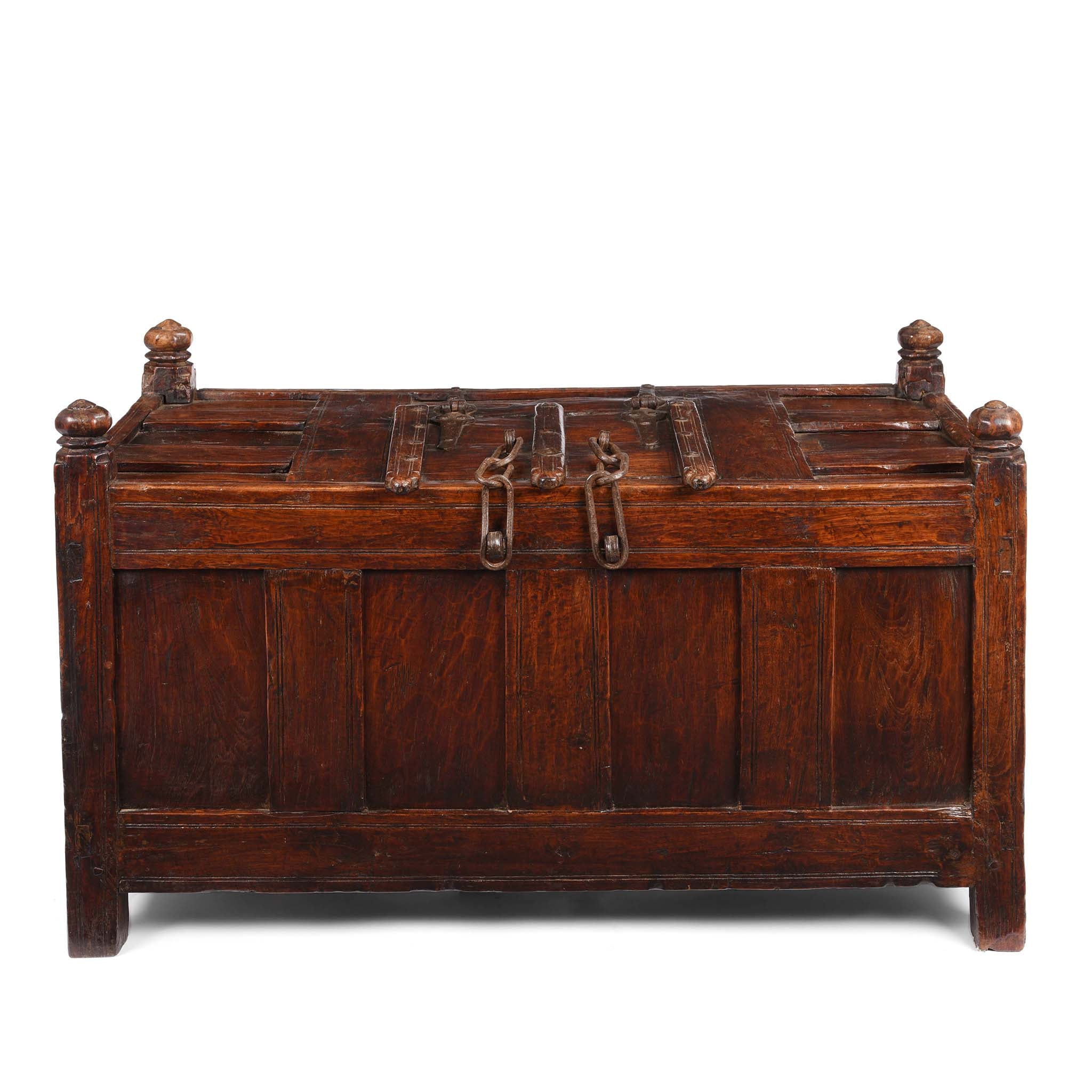
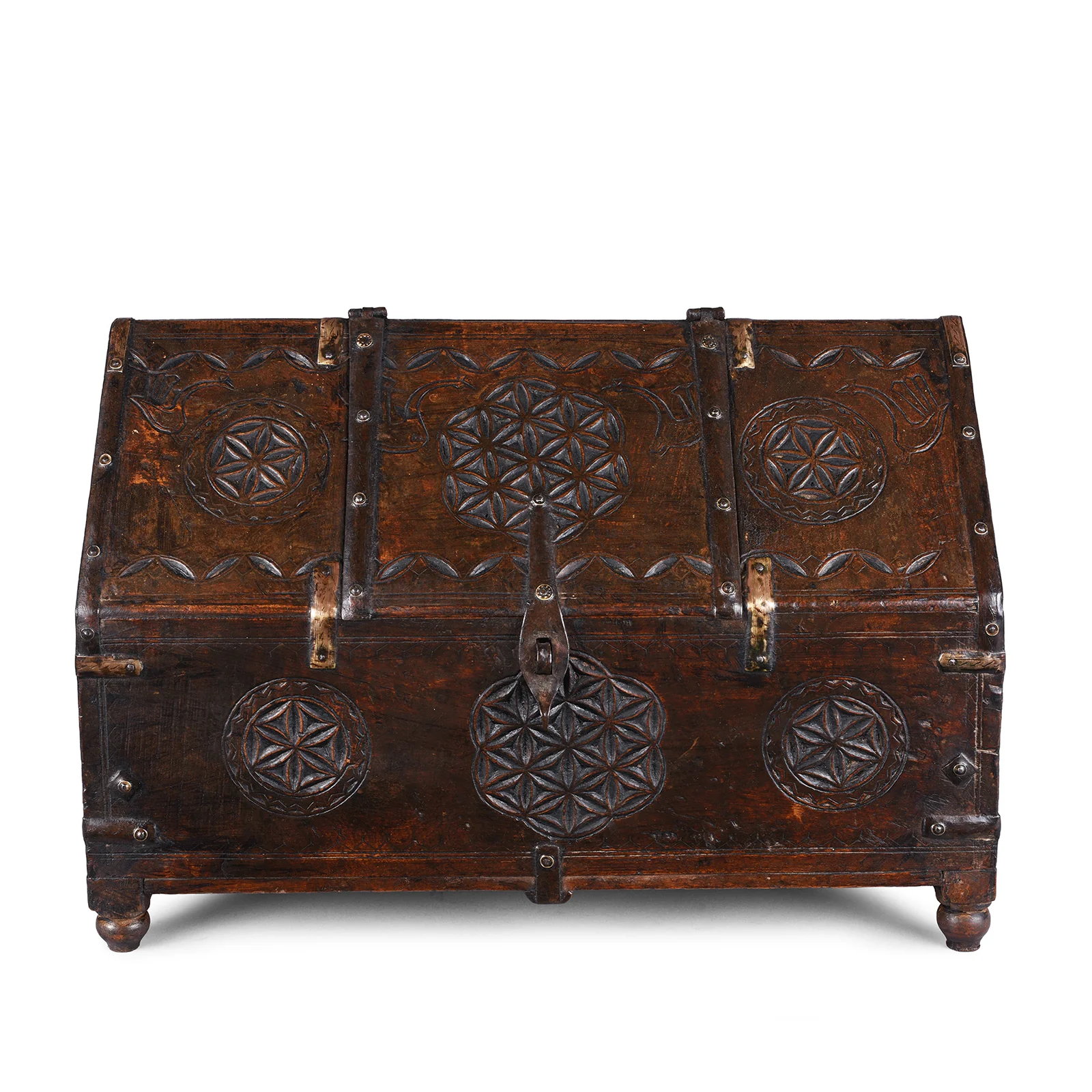
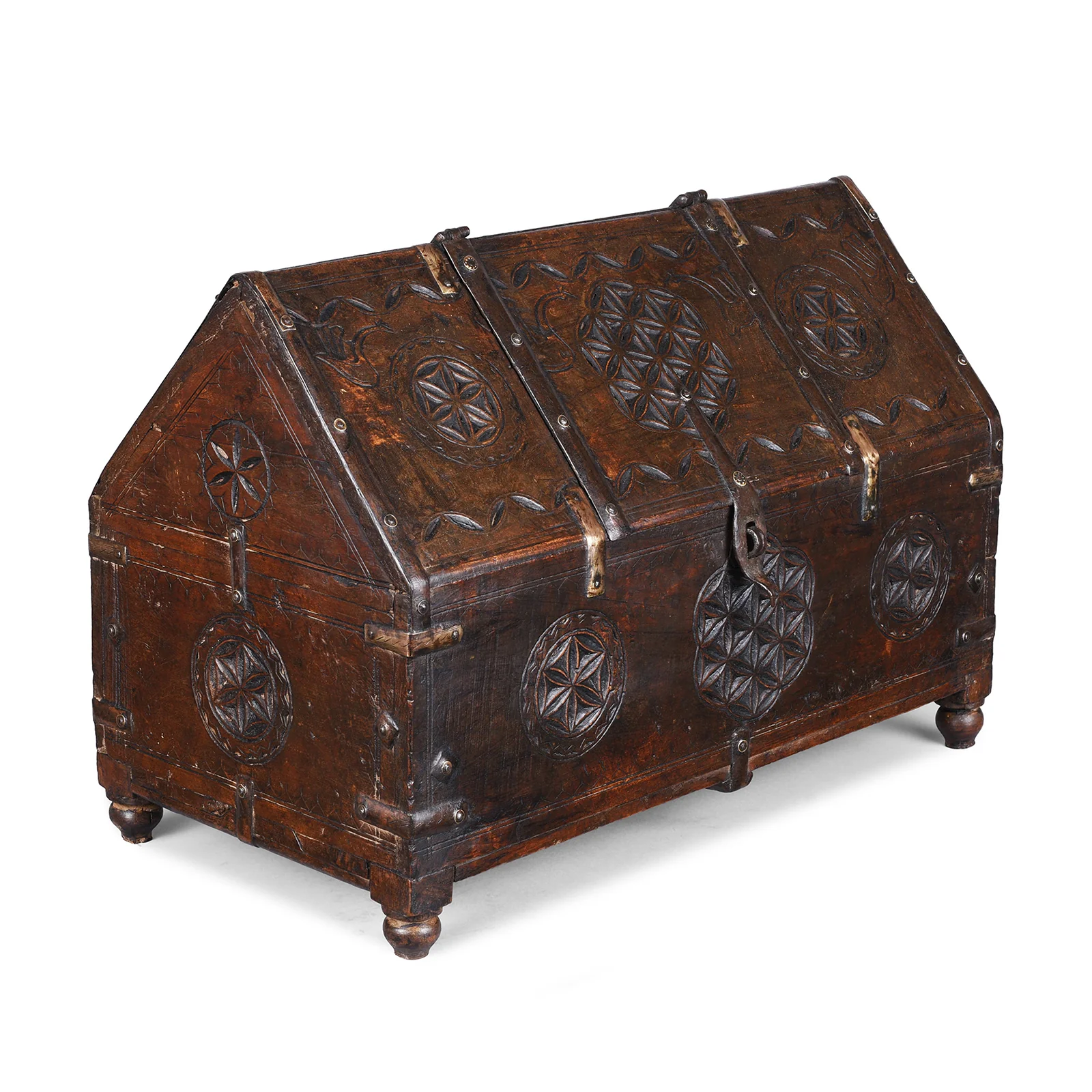
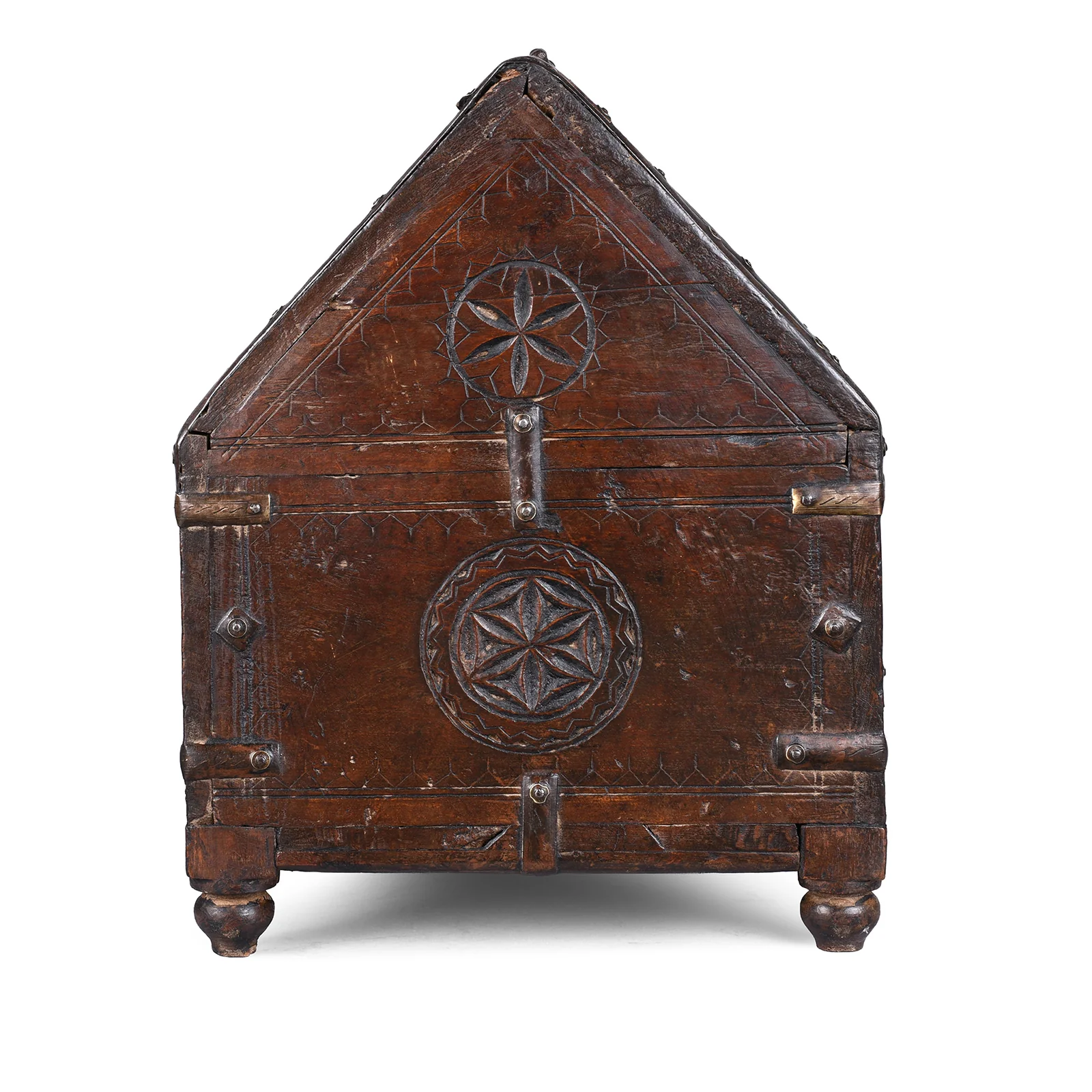
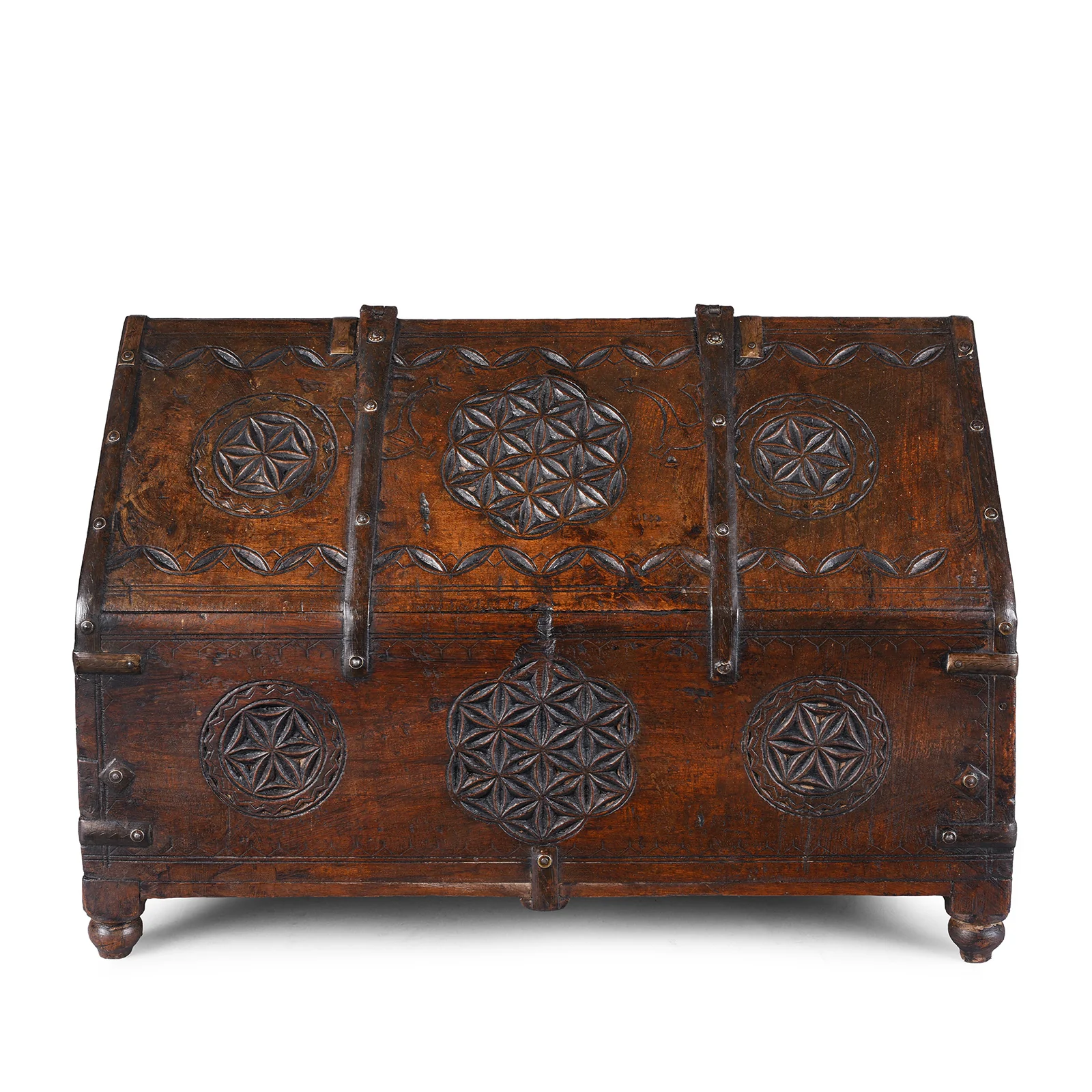
This antique Indian dowry box from the desert region of Jaisalmer, Western Rajasthan, is an excellent mid-19th century example of the hut box form. With its tall gabled lid, the design reflects the vernacular architecture of the Thar desert, where huts and houses carried the same pitched roof structure.
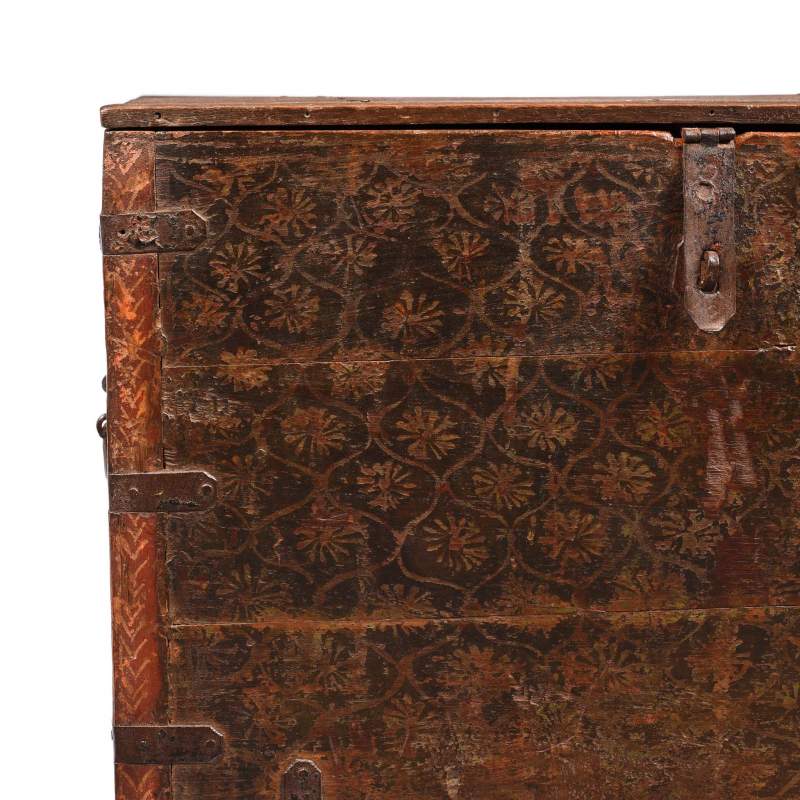
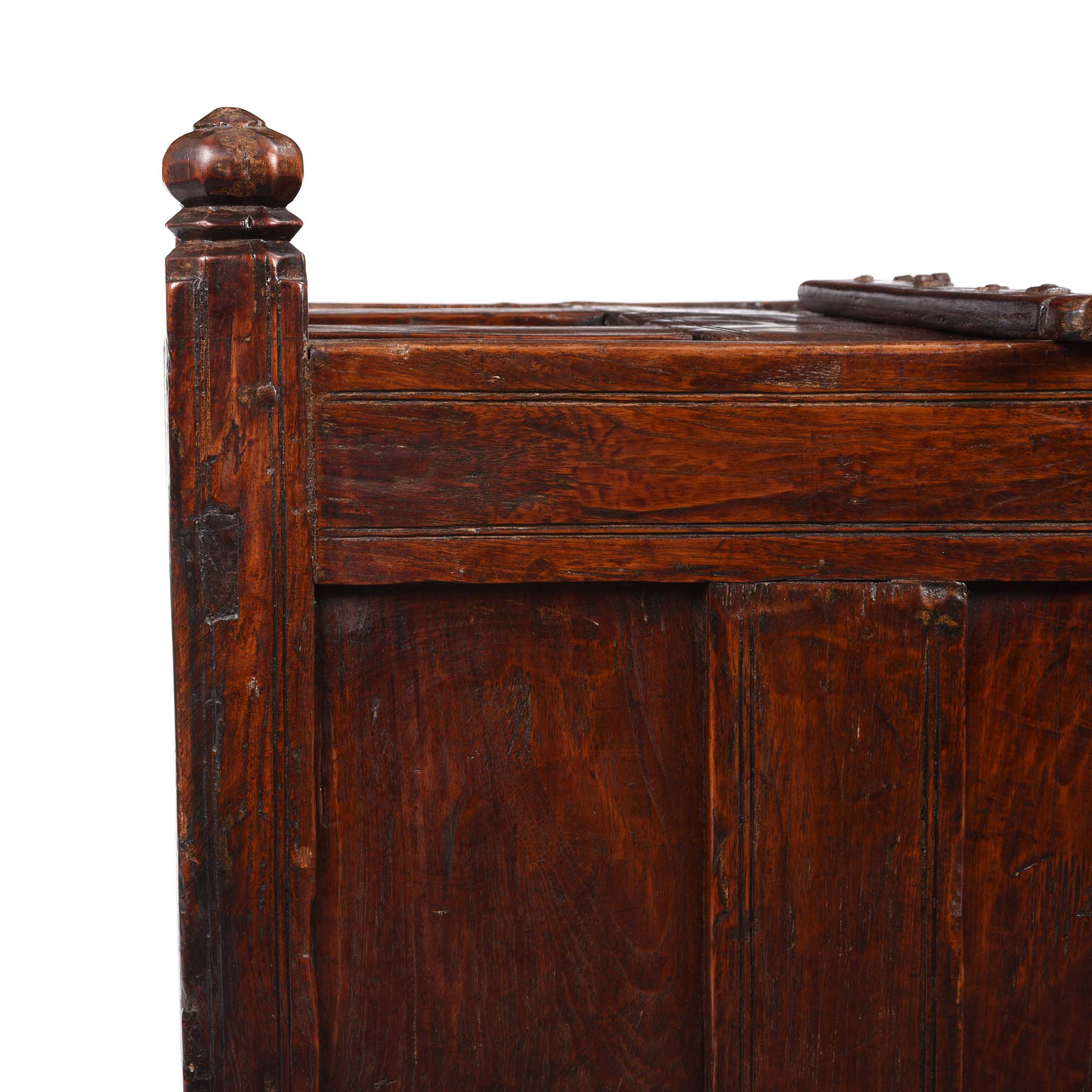
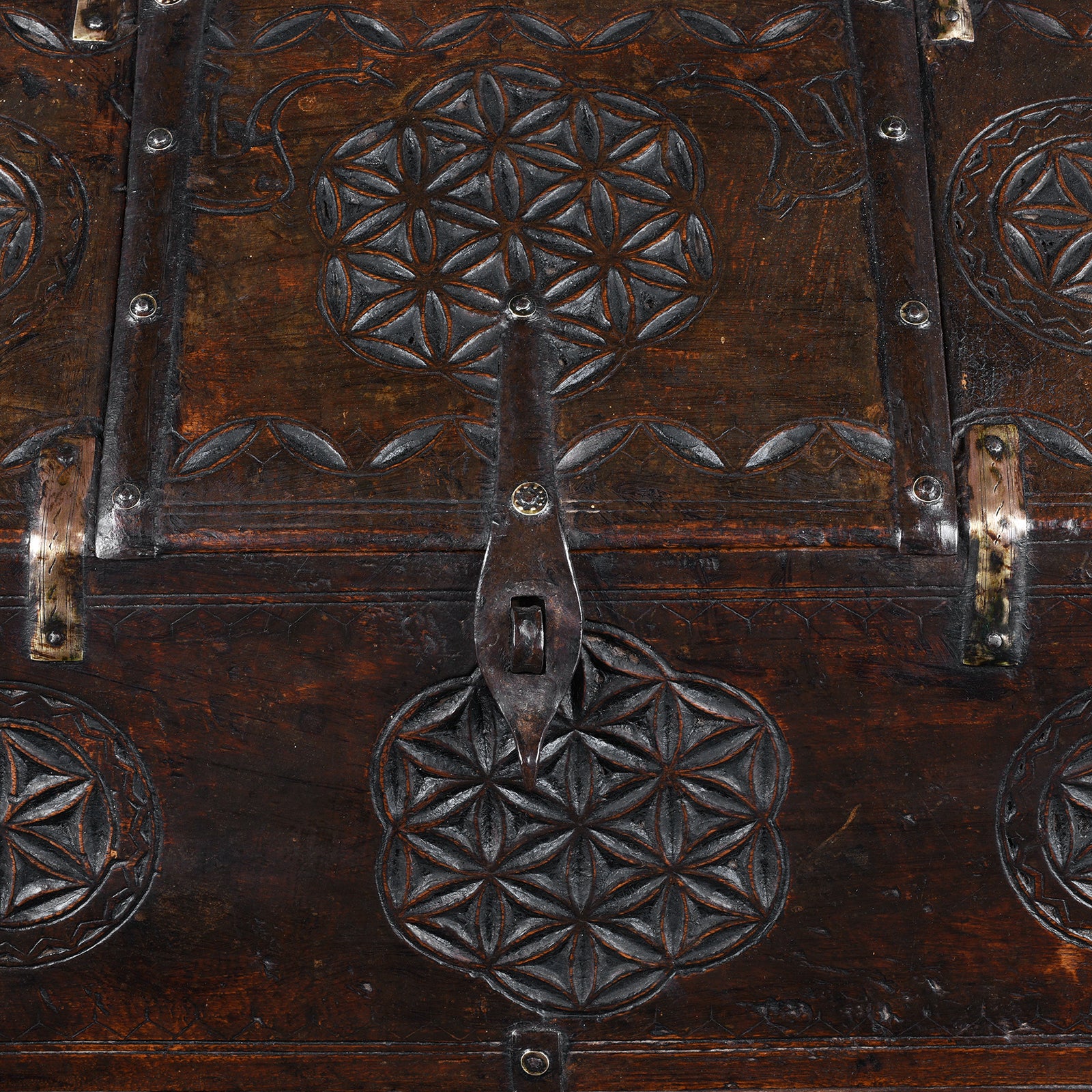
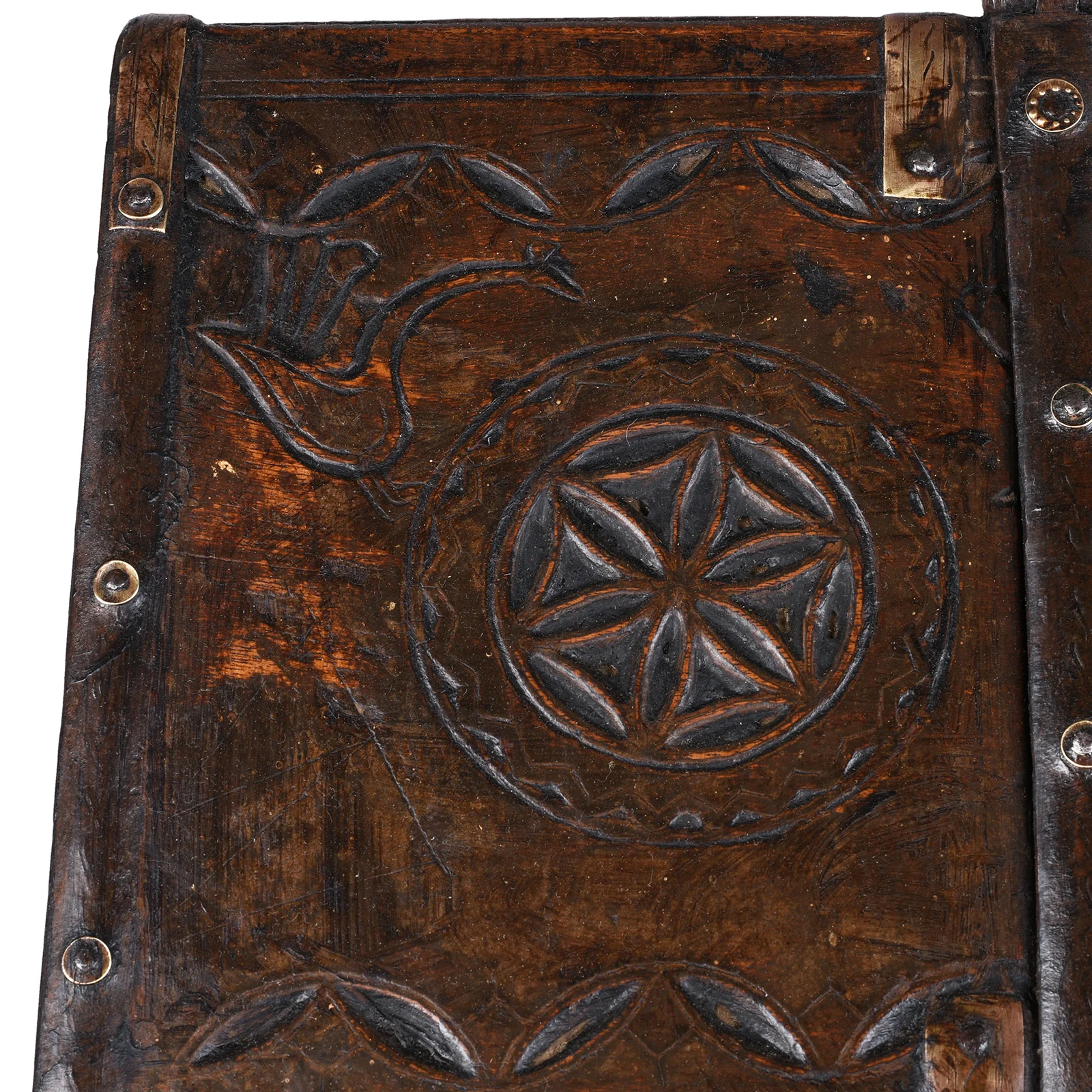
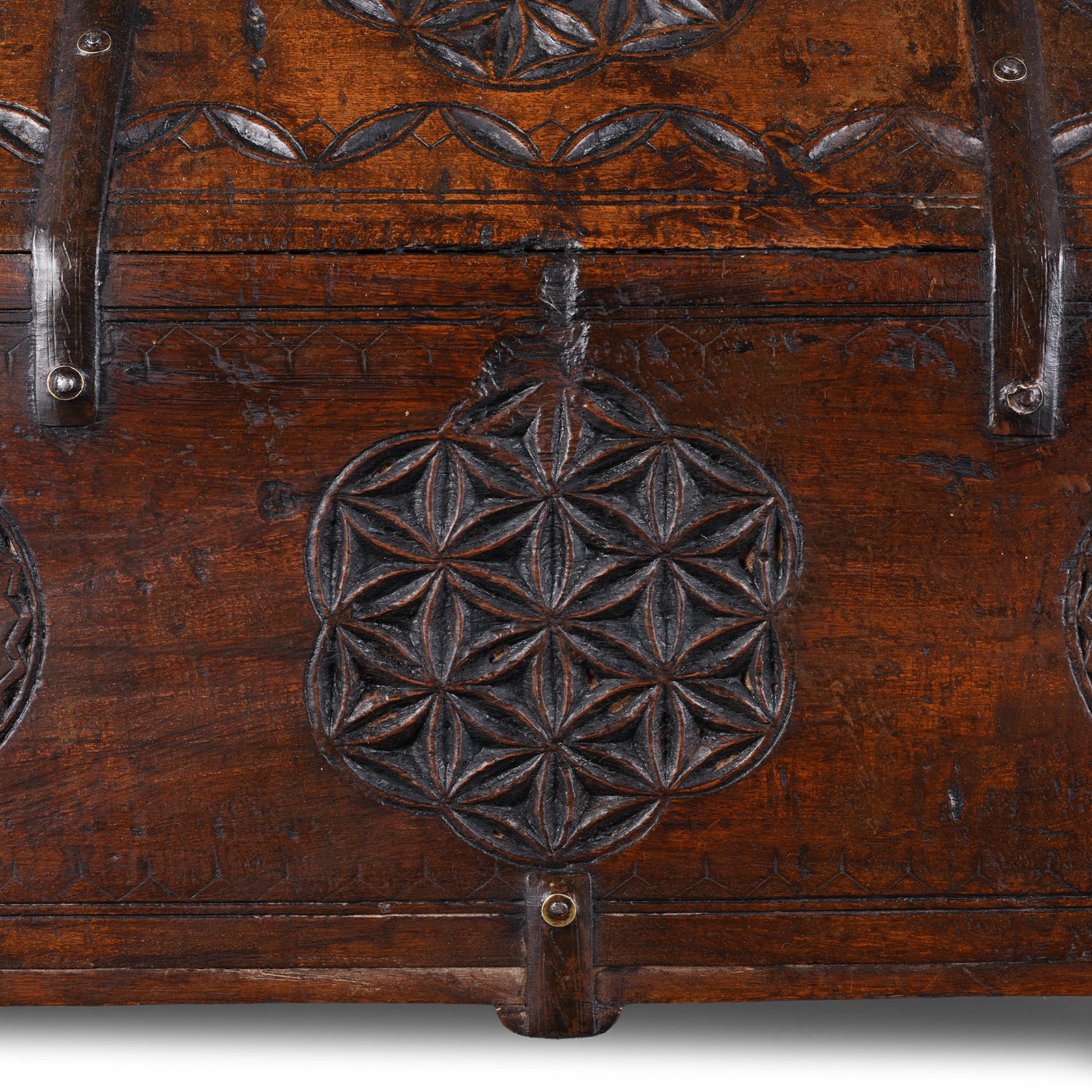
Traditionally, such boxes were crafted to store a bride's dowry, containing her wedding clothes, jewellery, money, and household items to take to her new home. This example is carved from roheda wood and decorated with finely executed chip-carved motifs and birds, bound with iron straps and brass for strength. Its deep, timeworn patina adds to its character, making it both a practical storage chest and a significant piece of antique tribal art.
- Origin: Jaisalmer, Western Rajasthan, India
- Date: Mid 19th century
- Materials: Roheda wood with iron bindings
- Features: Tall gabled hut box lid, chip-carved geometric motifs, original iron fittings
- Condition: Beautiful aged patina with expected wear from long use
- Dimensions: W52 x D28 x H36 cm
Reference:
For similar examples, see India: Village, Tribal, Ritual Art by Mingei International Museum of Folk Art, p. 56 (note: this publication incorrectly attributes the style to Gujarat).
Original: $1,074.85
-65%$1,074.85
$376.20More Images

Chip Carved Dowry Hut Box From Jaisalmer - 19th Century
This antique Indian dowry box from the desert region of Jaisalmer, Western Rajasthan, is an excellent mid-19th century example of the hut box form. With its tall gabled lid, the design reflects the vernacular architecture of the Thar desert, where huts and houses carried the same pitched roof structure.
Traditionally, such boxes were crafted to store a bride's dowry, containing her wedding clothes, jewellery, money, and household items to take to her new home. This example is carved from roheda wood and decorated with finely executed chip-carved motifs and birds, bound with iron straps and brass for strength. Its deep, timeworn patina adds to its character, making it both a practical storage chest and a significant piece of antique tribal art.
- Origin: Jaisalmer, Western Rajasthan, India
- Date: Mid 19th century
- Materials: Roheda wood with iron bindings
- Features: Tall gabled hut box lid, chip-carved geometric motifs, original iron fittings
- Condition: Beautiful aged patina with expected wear from long use
- Dimensions: W52 x D28 x H36 cm
Reference:
For similar examples, see India: Village, Tribal, Ritual Art by Mingei International Museum of Folk Art, p. 56 (note: this publication incorrectly attributes the style to Gujarat).
Product Information
Product Information
Shipping & Returns
Shipping & Returns
Description
This antique Indian dowry box from the desert region of Jaisalmer, Western Rajasthan, is an excellent mid-19th century example of the hut box form. With its tall gabled lid, the design reflects the vernacular architecture of the Thar desert, where huts and houses carried the same pitched roof structure.
Traditionally, such boxes were crafted to store a bride's dowry, containing her wedding clothes, jewellery, money, and household items to take to her new home. This example is carved from roheda wood and decorated with finely executed chip-carved motifs and birds, bound with iron straps and brass for strength. Its deep, timeworn patina adds to its character, making it both a practical storage chest and a significant piece of antique tribal art.
- Origin: Jaisalmer, Western Rajasthan, India
- Date: Mid 19th century
- Materials: Roheda wood with iron bindings
- Features: Tall gabled hut box lid, chip-carved geometric motifs, original iron fittings
- Condition: Beautiful aged patina with expected wear from long use
- Dimensions: W52 x D28 x H36 cm
Reference:
For similar examples, see India: Village, Tribal, Ritual Art by Mingei International Museum of Folk Art, p. 56 (note: this publication incorrectly attributes the style to Gujarat).