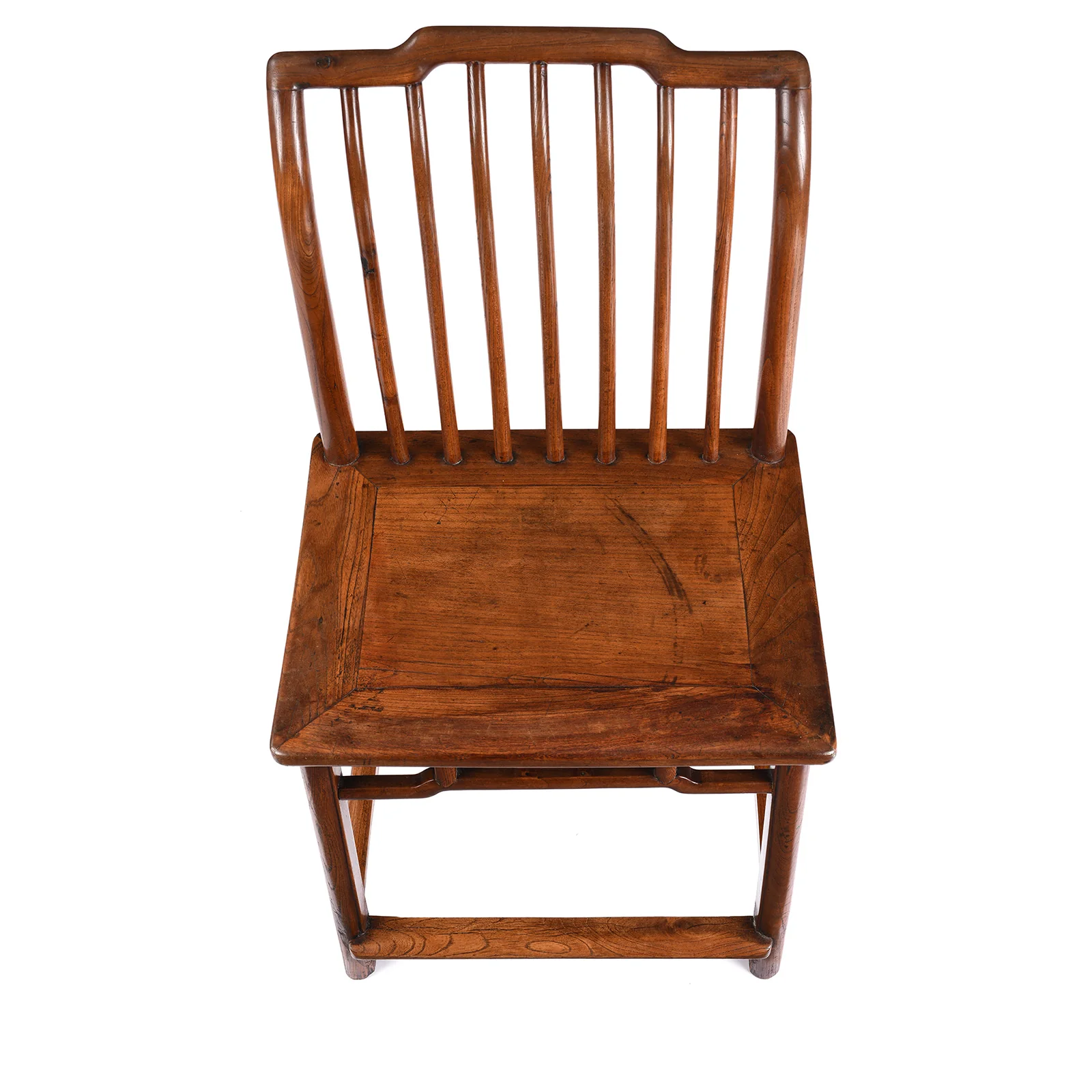

Carved Tribal Chair From Nagaland - Ca 1930
This striking tribal chair from Nagaland, dating to the early 20th century (circa 1940), is a powerful example of indigenous craftsmanship from North East India. Traditionally reserved for tribal leaders and respected elders, chairs of this type were symbols of authority and status within village life. Bound with iron and carved from a solid hollock wood (terminalia myriocarpa), also known as East Indian almond, the form is both sculptural and functional, with a deeply scooped seat and curved back offering surprising comfort.
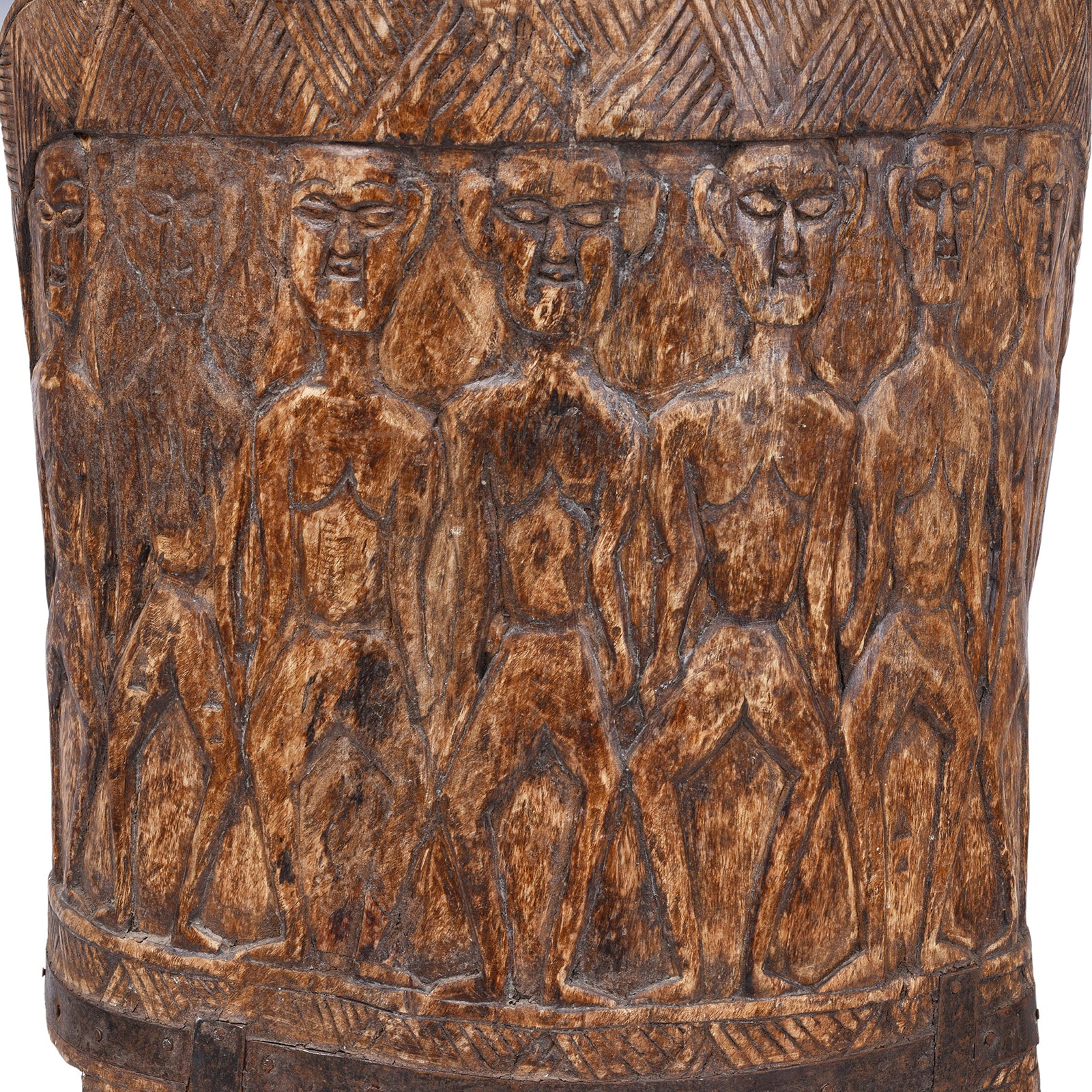
What sets this example apart is the carved figural decoration to the back, depicting stylised human forms framed by geometric motifs. These carvings reflect the rich visual language of Naga tribal art, where symbolism and storytelling were integral to daily life. The surface has developed a beautiful, timeworn patina, with visible tool marks and natural wear that speak to its age and authenticity.
Pieces from this region are increasingly sought after, not only for their bold, primitive aesthetic but also for their cultural significance. This chair works equally well as a standalone statement piece or within a curated interior that celebrates global tribal art.
- Origin: Nagaland, North East India
- Date: Circa 1940
- Material: Single piece hollock wood (terminalia myriocarpa / East Indian almond)
- Features: Hand-carved from one solid piece, sculpted seat and back, carved figural decoration, geometric detailing
- Condition: Good antique condition with age-related wear, patina, and surface variation consistent with use
- Dimensions: W50 x D56 x H96 cm
Original: $1,074.85
-65%$1,074.85
$376.20More Images



Carved Tribal Chair From Nagaland - Ca 1930
This striking tribal chair from Nagaland, dating to the early 20th century (circa 1940), is a powerful example of indigenous craftsmanship from North East India. Traditionally reserved for tribal leaders and respected elders, chairs of this type were symbols of authority and status within village life. Bound with iron and carved from a solid hollock wood (terminalia myriocarpa), also known as East Indian almond, the form is both sculptural and functional, with a deeply scooped seat and curved back offering surprising comfort.
What sets this example apart is the carved figural decoration to the back, depicting stylised human forms framed by geometric motifs. These carvings reflect the rich visual language of Naga tribal art, where symbolism and storytelling were integral to daily life. The surface has developed a beautiful, timeworn patina, with visible tool marks and natural wear that speak to its age and authenticity.
Pieces from this region are increasingly sought after, not only for their bold, primitive aesthetic but also for their cultural significance. This chair works equally well as a standalone statement piece or within a curated interior that celebrates global tribal art.
- Origin: Nagaland, North East India
- Date: Circa 1940
- Material: Single piece hollock wood (terminalia myriocarpa / East Indian almond)
- Features: Hand-carved from one solid piece, sculpted seat and back, carved figural decoration, geometric detailing
- Condition: Good antique condition with age-related wear, patina, and surface variation consistent with use
- Dimensions: W50 x D56 x H96 cm
Product Information
Product Information
Shipping & Returns
Shipping & Returns
Description
This striking tribal chair from Nagaland, dating to the early 20th century (circa 1940), is a powerful example of indigenous craftsmanship from North East India. Traditionally reserved for tribal leaders and respected elders, chairs of this type were symbols of authority and status within village life. Bound with iron and carved from a solid hollock wood (terminalia myriocarpa), also known as East Indian almond, the form is both sculptural and functional, with a deeply scooped seat and curved back offering surprising comfort.
What sets this example apart is the carved figural decoration to the back, depicting stylised human forms framed by geometric motifs. These carvings reflect the rich visual language of Naga tribal art, where symbolism and storytelling were integral to daily life. The surface has developed a beautiful, timeworn patina, with visible tool marks and natural wear that speak to its age and authenticity.
Pieces from this region are increasingly sought after, not only for their bold, primitive aesthetic but also for their cultural significance. This chair works equally well as a standalone statement piece or within a curated interior that celebrates global tribal art.
- Origin: Nagaland, North East India
- Date: Circa 1940
- Material: Single piece hollock wood (terminalia myriocarpa / East Indian almond)
- Features: Hand-carved from one solid piece, sculpted seat and back, carved figural decoration, geometric detailing
- Condition: Good antique condition with age-related wear, patina, and surface variation consistent with use
- Dimensions: W50 x D56 x H96 cm