Tika Box From Rajasthan - 19th Century
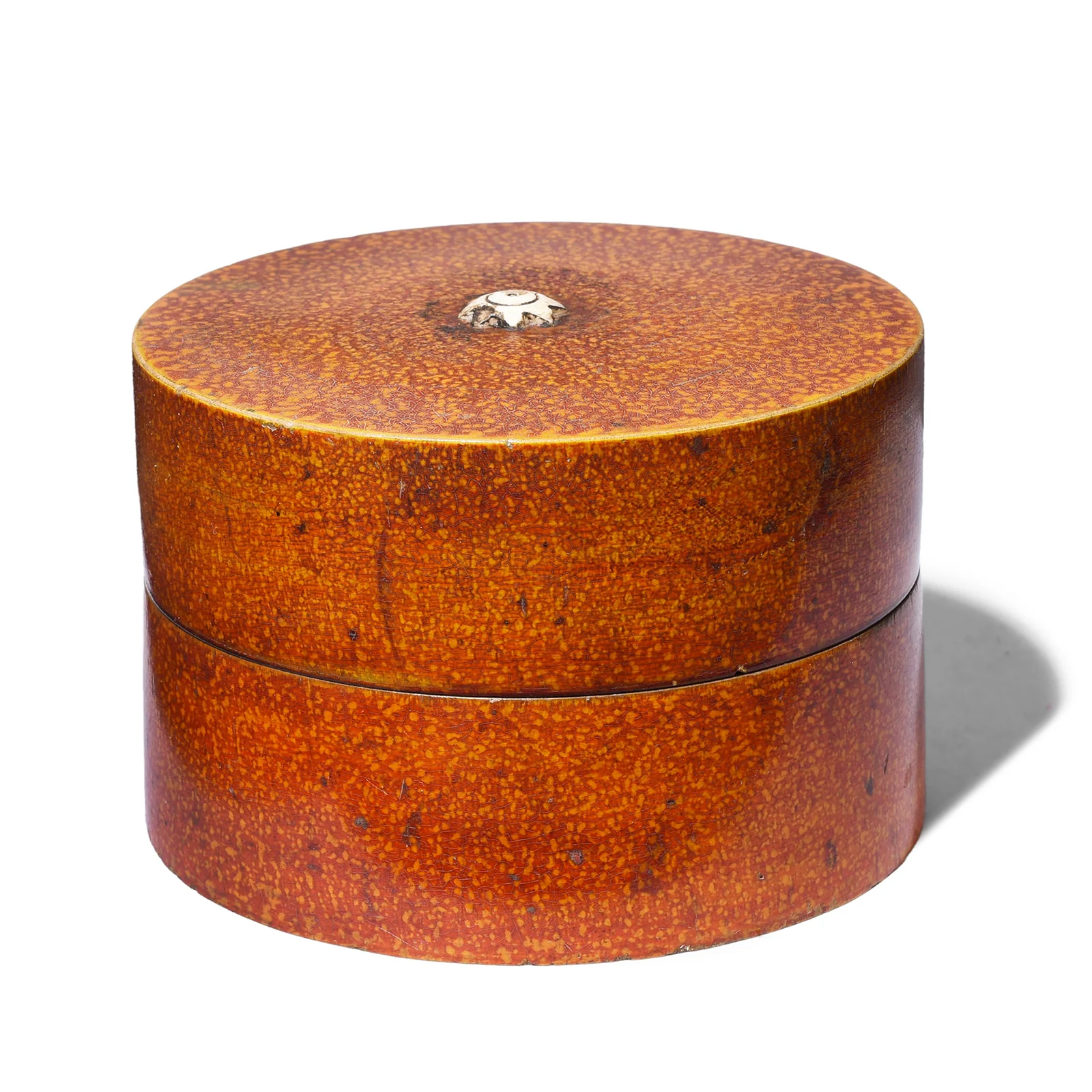
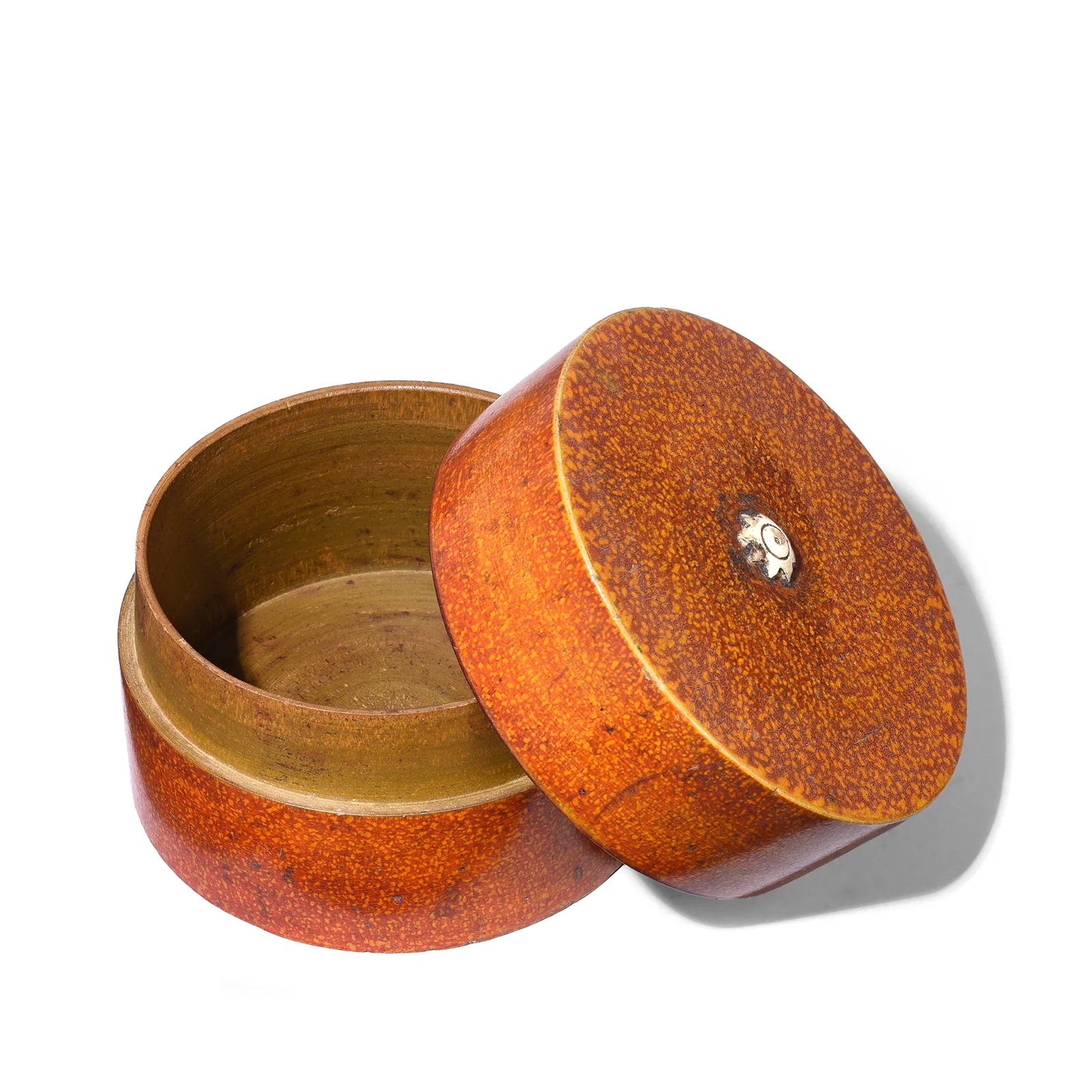
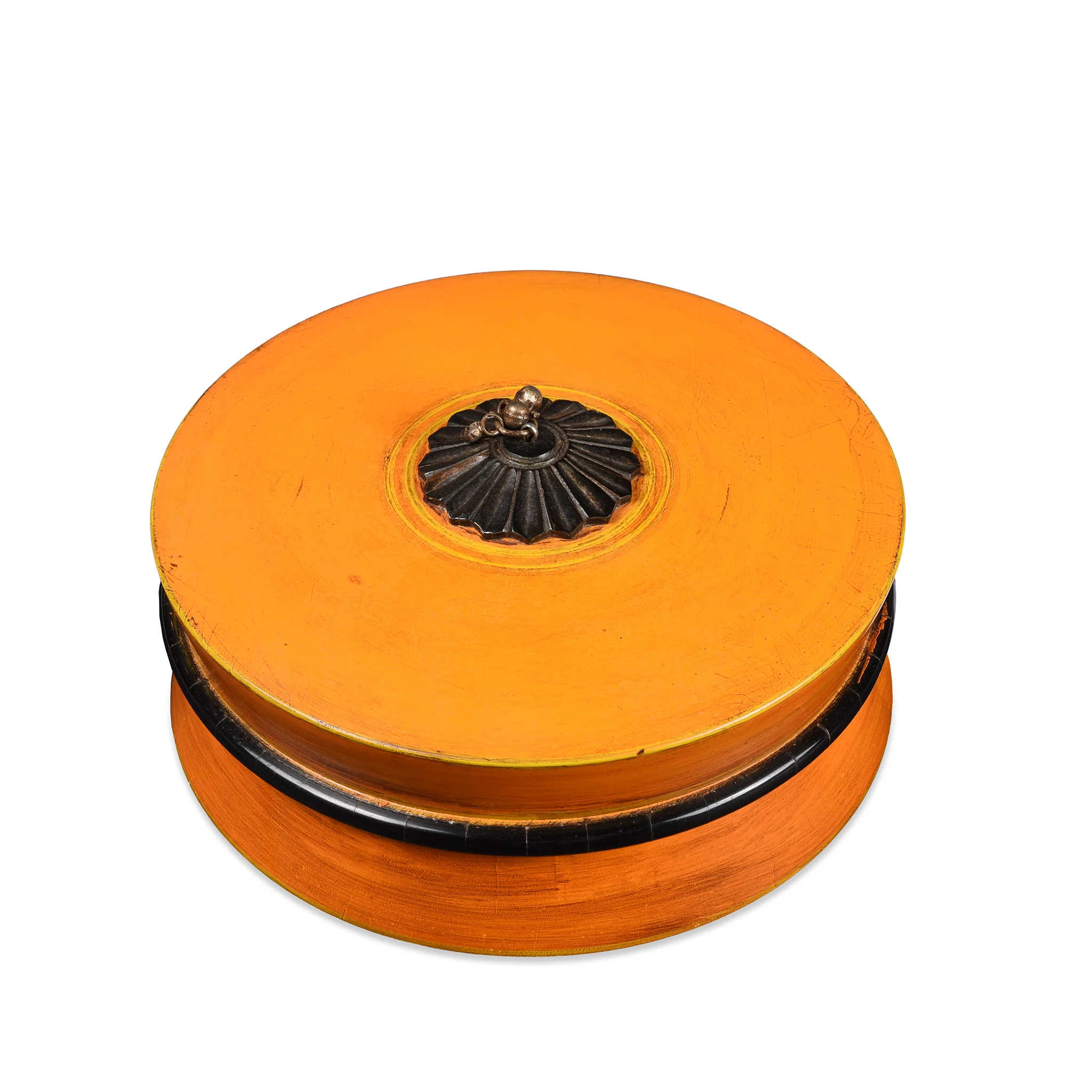
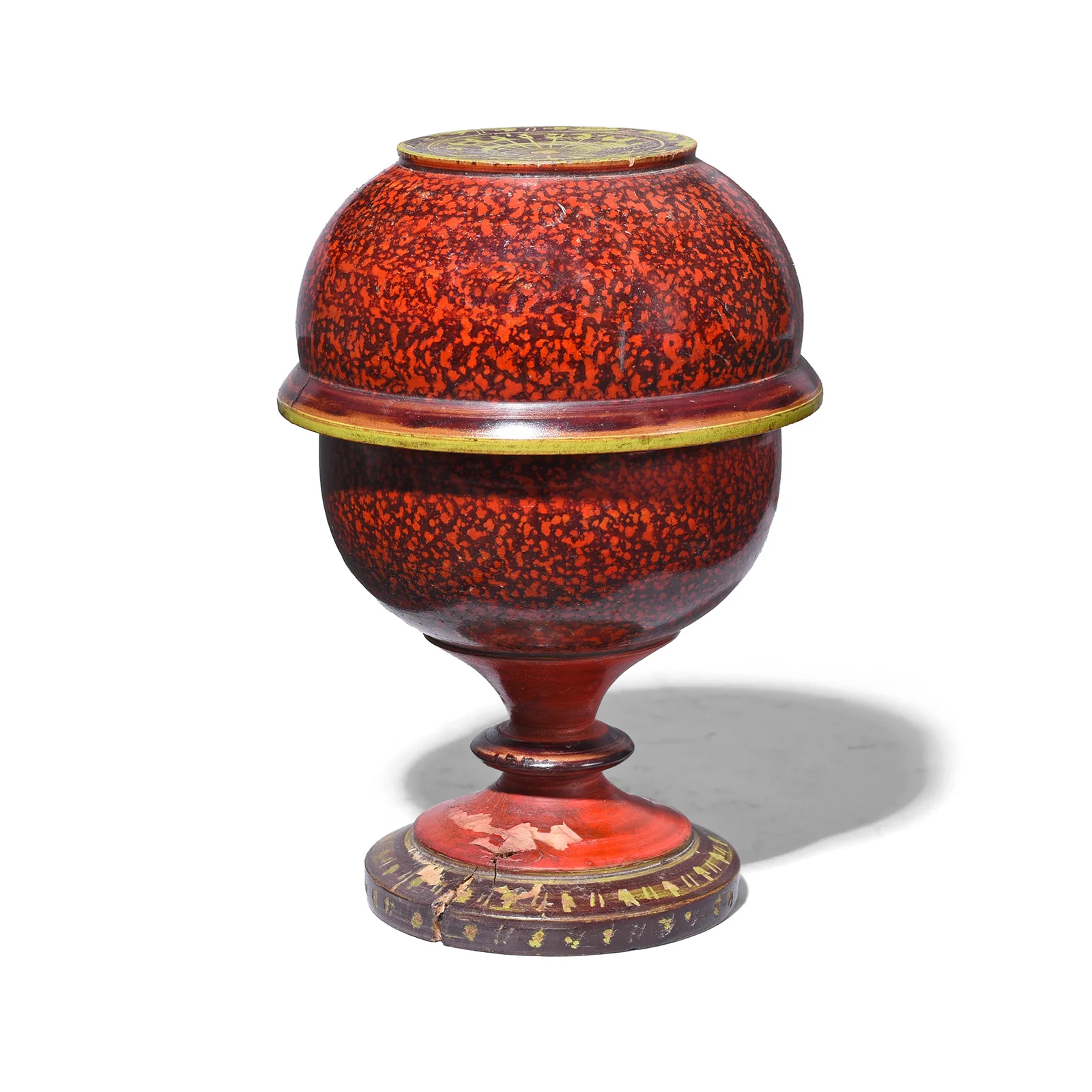
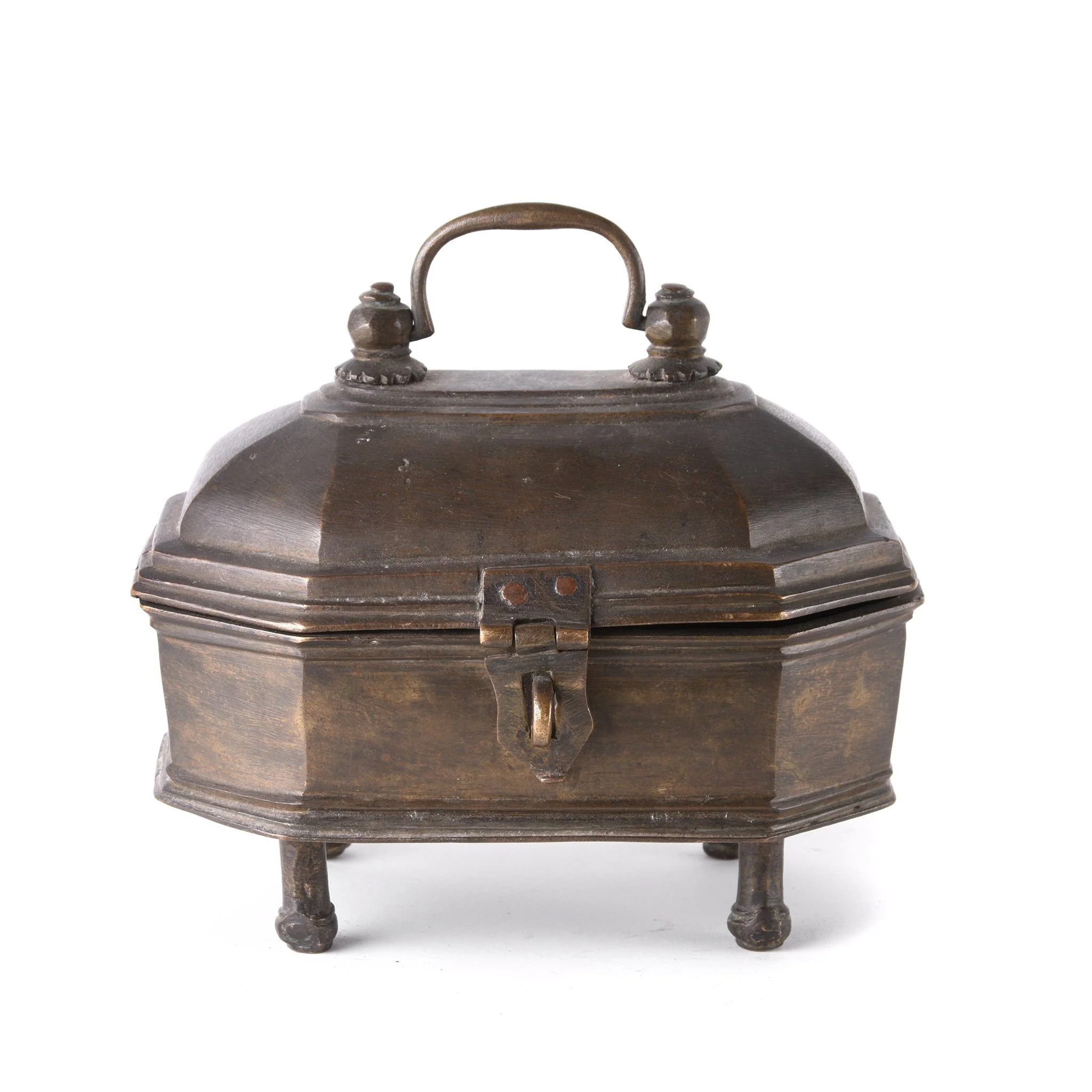
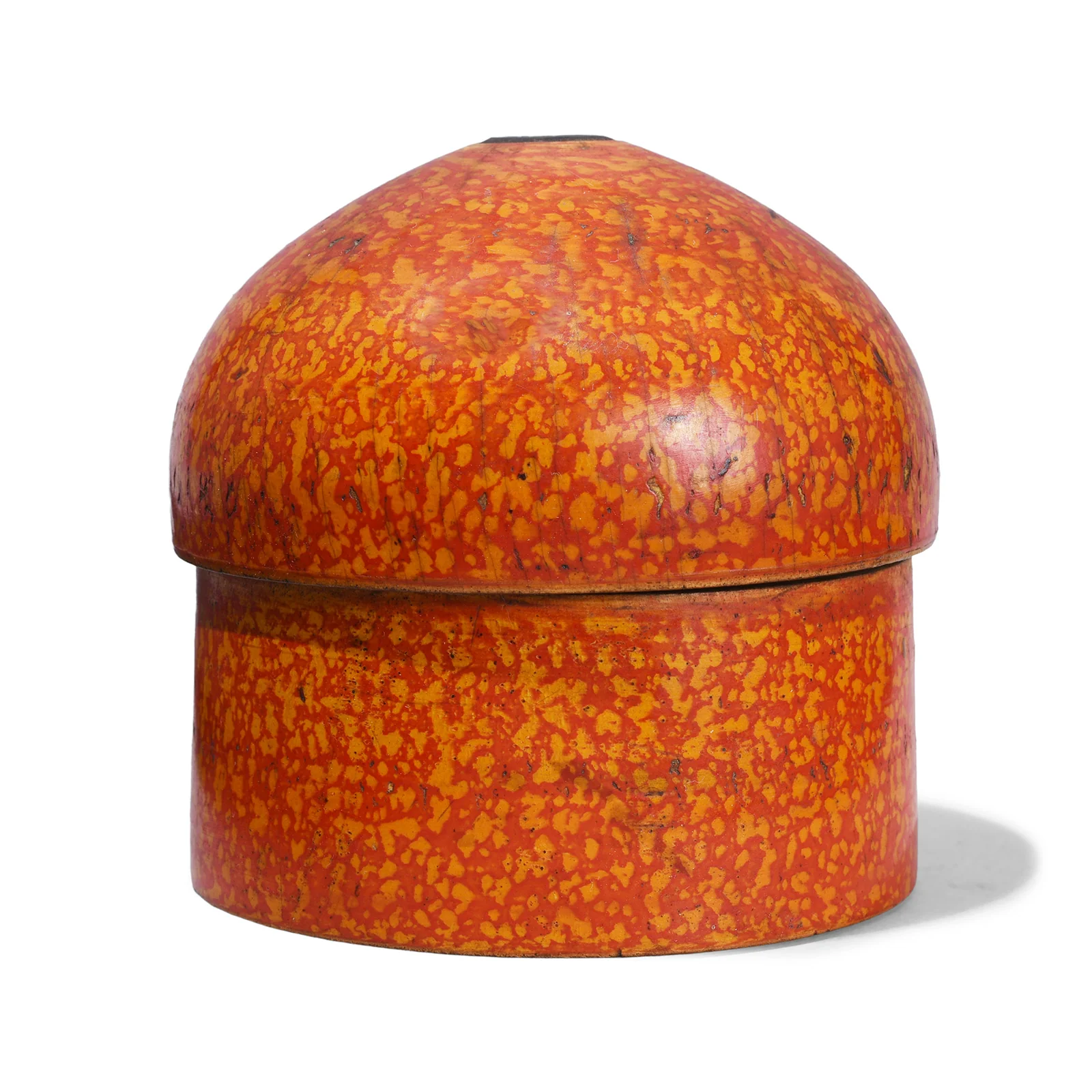
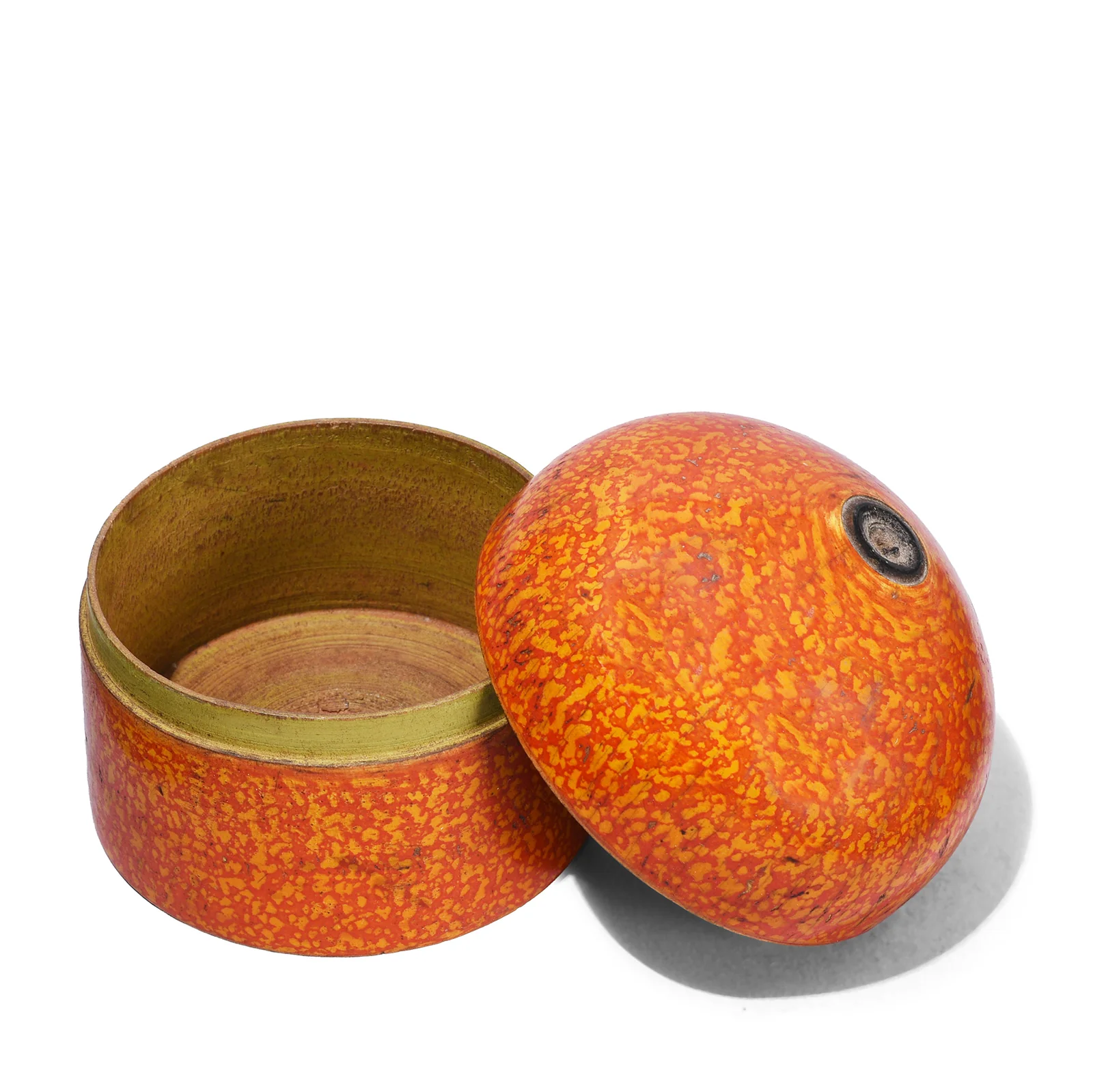
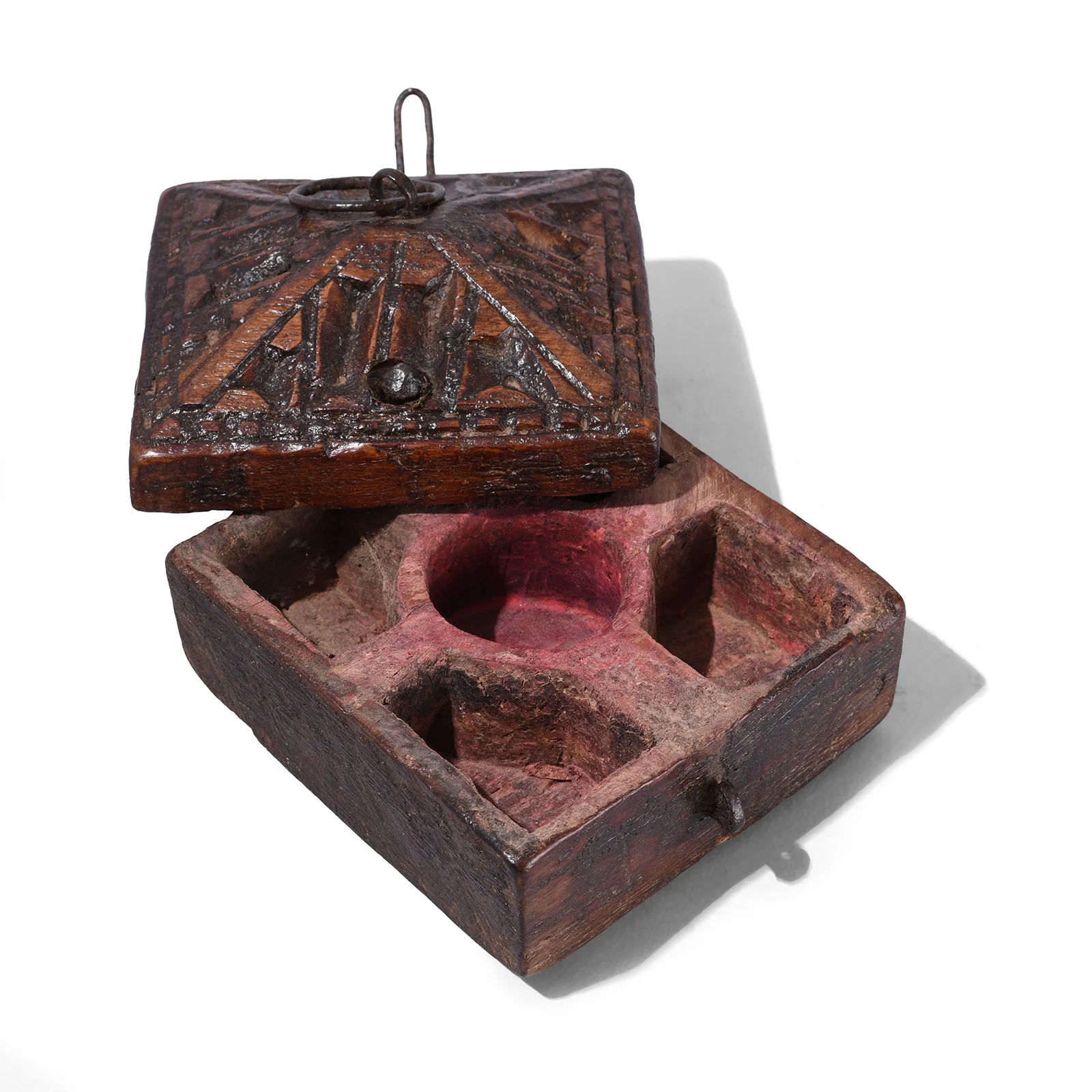
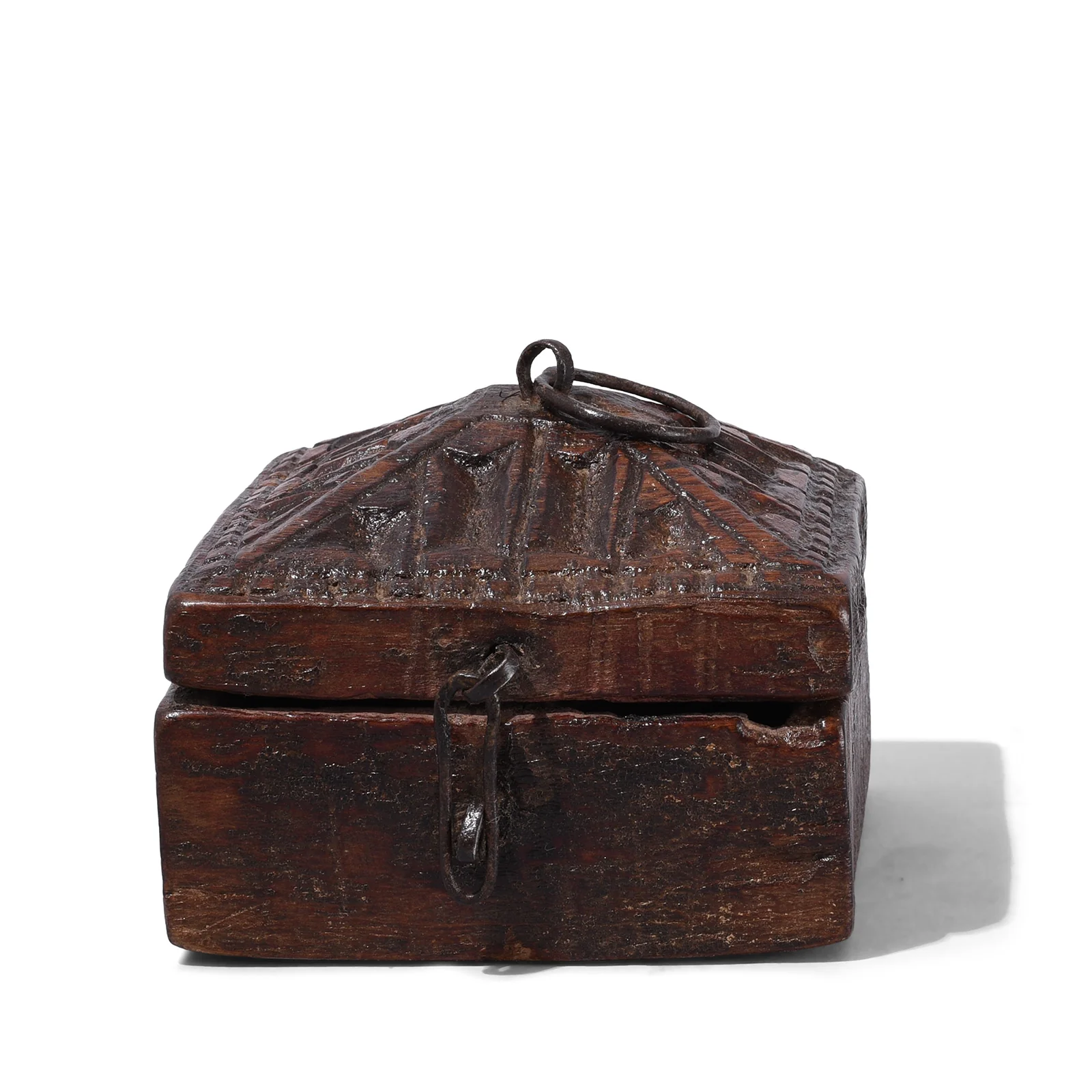
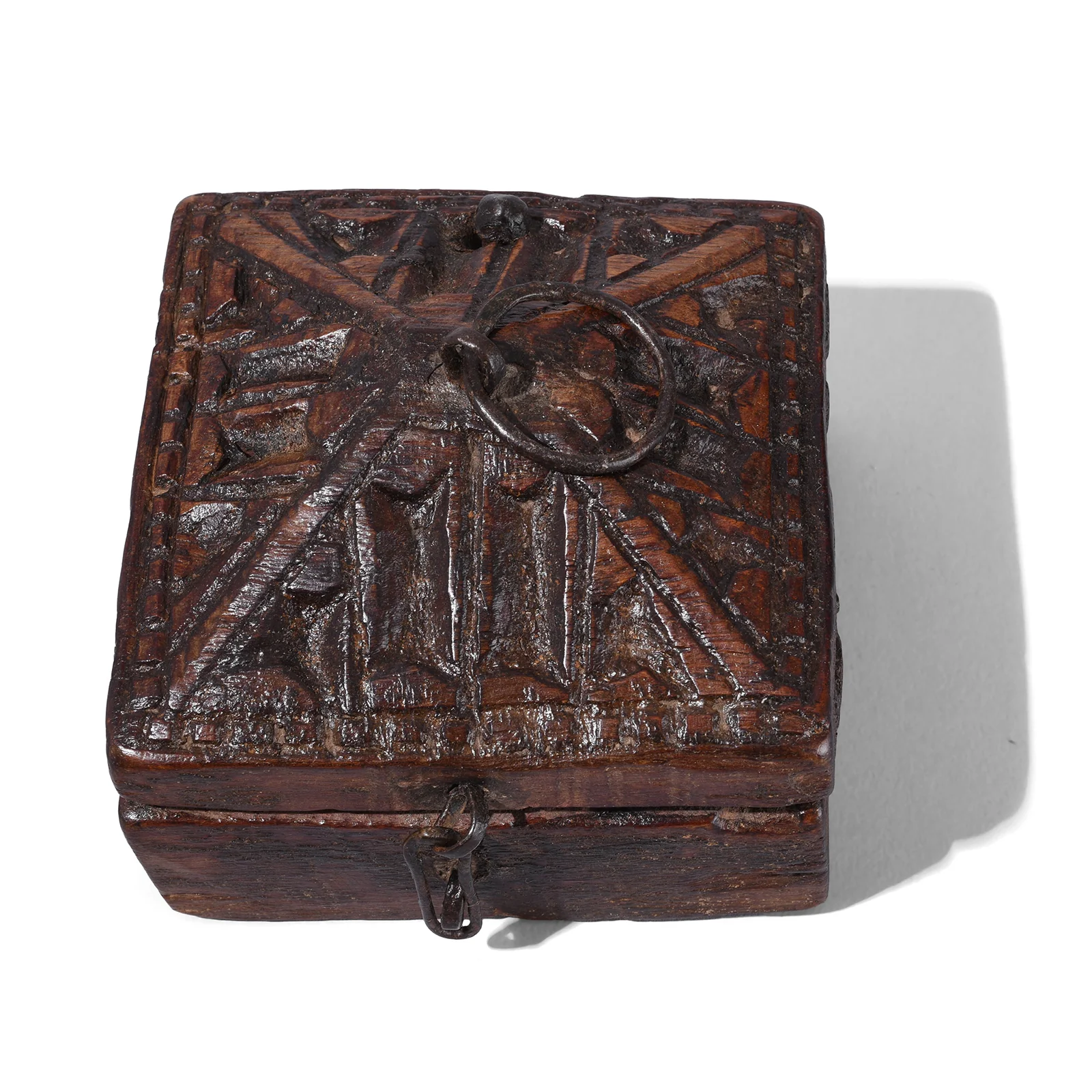
These carved teak wood tika boxes originate from the Banswara tribal region of Rajasthan and date to the 19th century. Traditionally carved from a single solid block of teak, they were used to store the red pigment—kumkum or sindoor—used to make the sacred forehead mark known as a tika or bindi. The interior compartments reflect this purpose, with a central rounded well for the primary pigment and smaller surrounding divisions for additional colours or ritual powders.
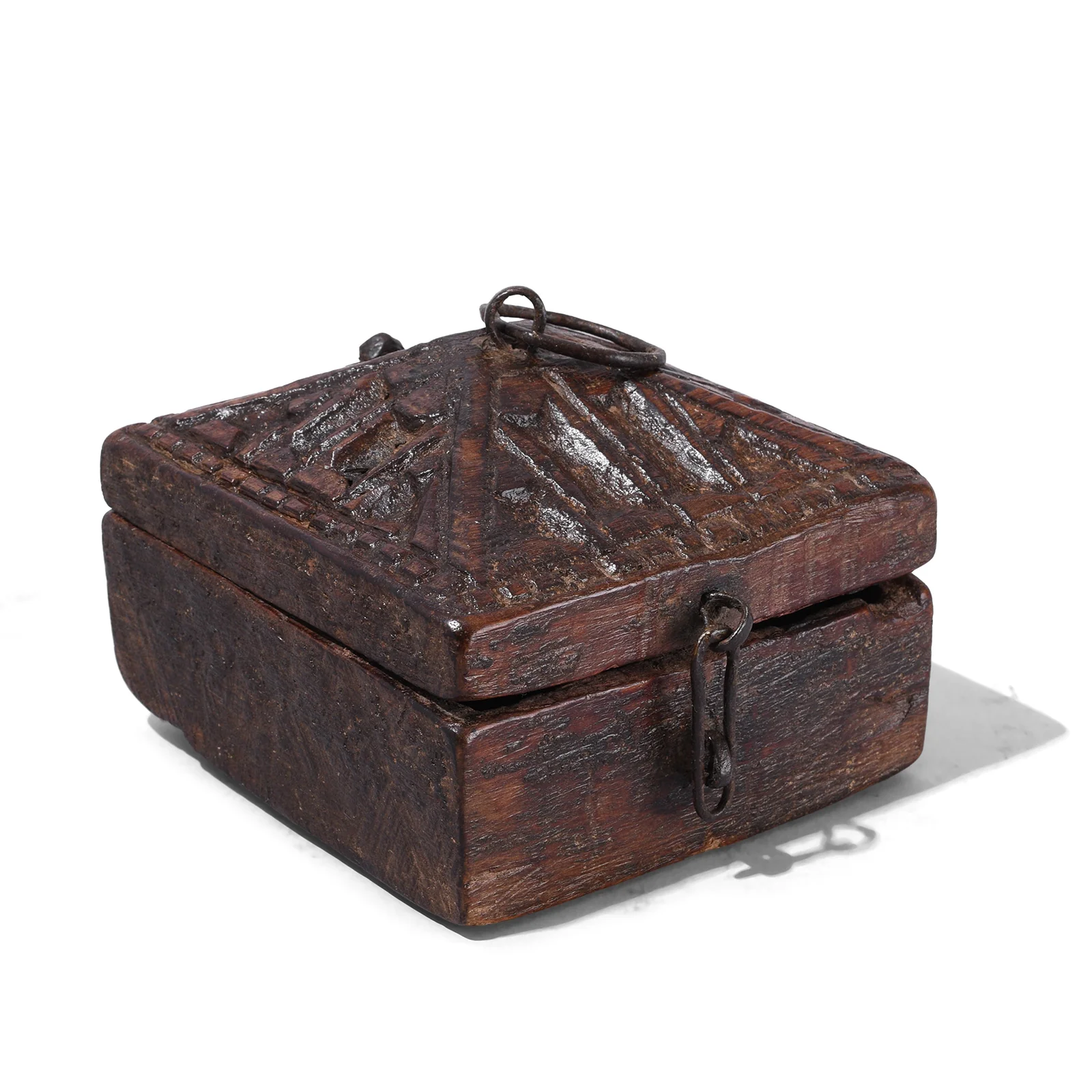
The lid is hand-carved with bold tribal geometric patterns, giving the box a sculptural presence even when closed. Its deep patina, softened edges and traces of red pigment inside are all signs of long and authentic ritual use. These boxes are now highly collectible ethnographic objects, appreciated for both their craftsmanship and cultural resonance.
- Origin: Banswara, Rajasthan, India
- Date: 19th Century
- Materials: Carved teak wood; iron fittings
- Features: Single-block construction; tribal geometric carvings; interior pigment compartments; traces of original red colour
- Condition: Worn patina and pigment residues consistent with ritual use
- Dimensions: W11 x D11 x H8 cm
More Images
Tika Box From Rajasthan - 19th Century
These carved teak wood tika boxes originate from the Banswara tribal region of Rajasthan and date to the 19th century. Traditionally carved from a single solid block of teak, they were used to store the red pigment—kumkum or sindoor—used to make the sacred forehead mark known as a tika or bindi. The interior compartments reflect this purpose, with a central rounded well for the primary pigment and smaller surrounding divisions for additional colours or ritual powders.
The lid is hand-carved with bold tribal geometric patterns, giving the box a sculptural presence even when closed. Its deep patina, softened edges and traces of red pigment inside are all signs of long and authentic ritual use. These boxes are now highly collectible ethnographic objects, appreciated for both their craftsmanship and cultural resonance.
- Origin: Banswara, Rajasthan, India
- Date: 19th Century
- Materials: Carved teak wood; iron fittings
- Features: Single-block construction; tribal geometric carvings; interior pigment compartments; traces of original red colour
- Condition: Worn patina and pigment residues consistent with ritual use
- Dimensions: W11 x D11 x H8 cm
Product Information
Product Information
Shipping & Returns
Shipping & Returns
Description
These carved teak wood tika boxes originate from the Banswara tribal region of Rajasthan and date to the 19th century. Traditionally carved from a single solid block of teak, they were used to store the red pigment—kumkum or sindoor—used to make the sacred forehead mark known as a tika or bindi. The interior compartments reflect this purpose, with a central rounded well for the primary pigment and smaller surrounding divisions for additional colours or ritual powders.
The lid is hand-carved with bold tribal geometric patterns, giving the box a sculptural presence even when closed. Its deep patina, softened edges and traces of red pigment inside are all signs of long and authentic ritual use. These boxes are now highly collectible ethnographic objects, appreciated for both their craftsmanship and cultural resonance.
- Origin: Banswara, Rajasthan, India
- Date: 19th Century
- Materials: Carved teak wood; iron fittings
- Features: Single-block construction; tribal geometric carvings; interior pigment compartments; traces of original red colour
- Condition: Worn patina and pigment residues consistent with ritual use
- Dimensions: W11 x D11 x H8 cm