
Hanging Indian Tika Box From Banswara - Ca 1900
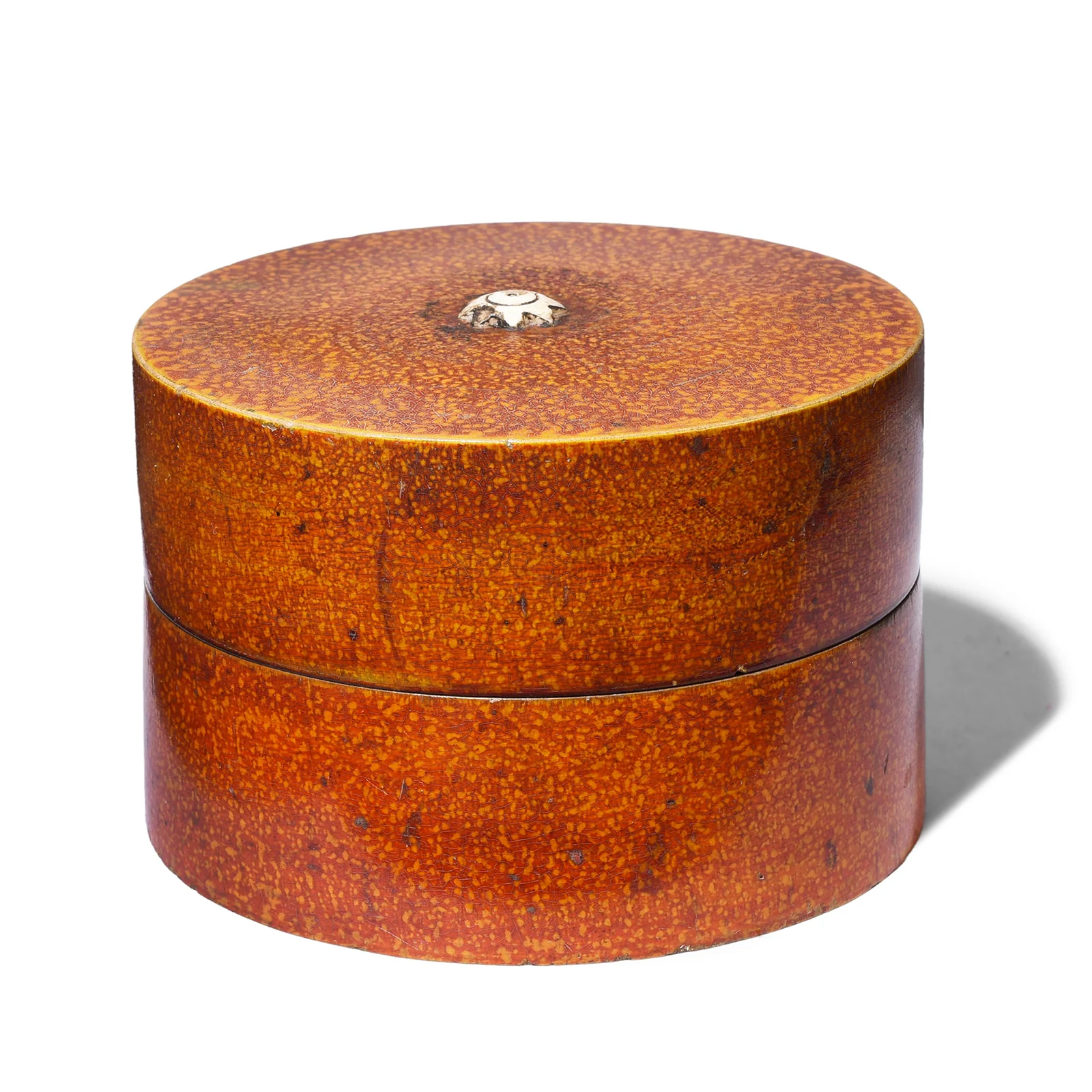
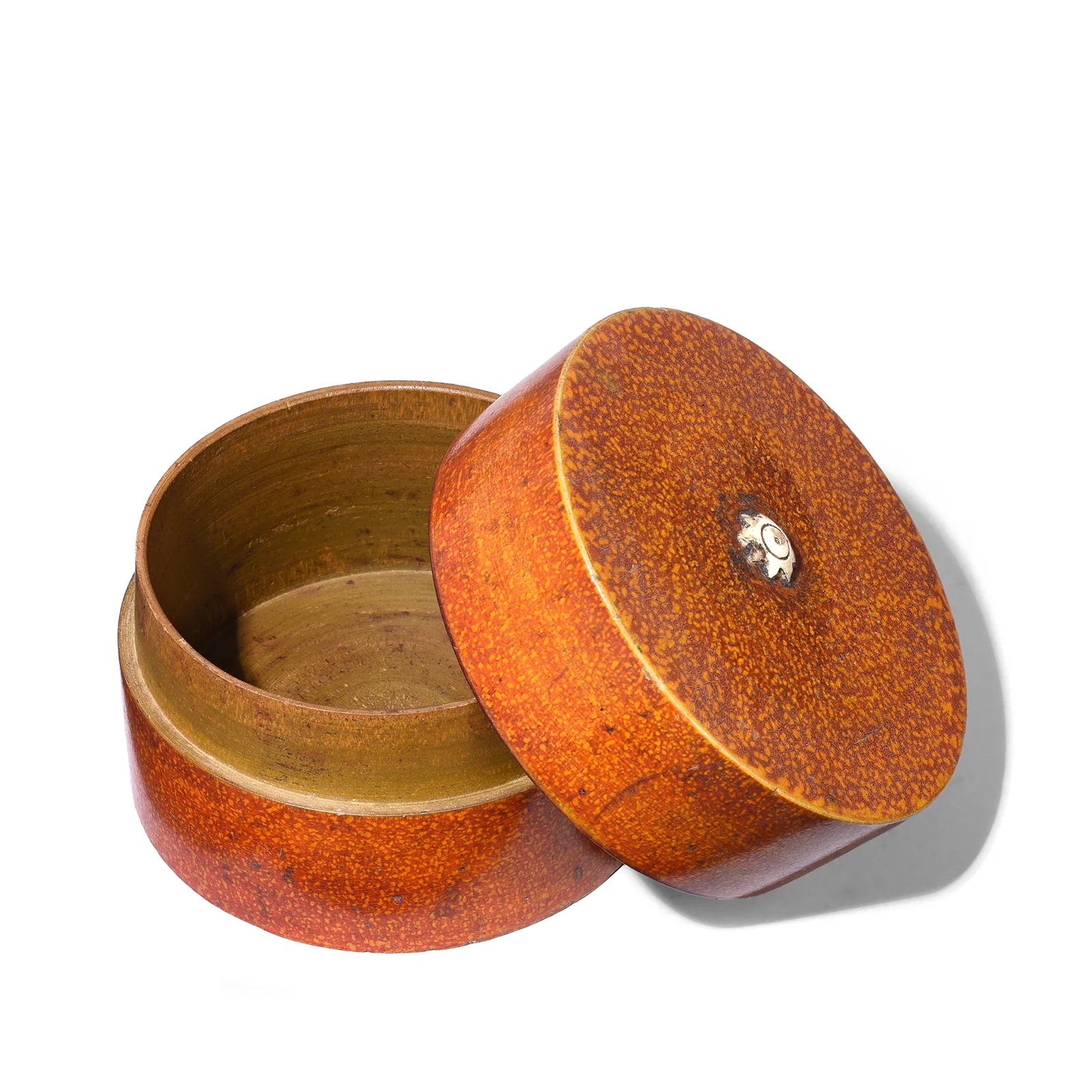
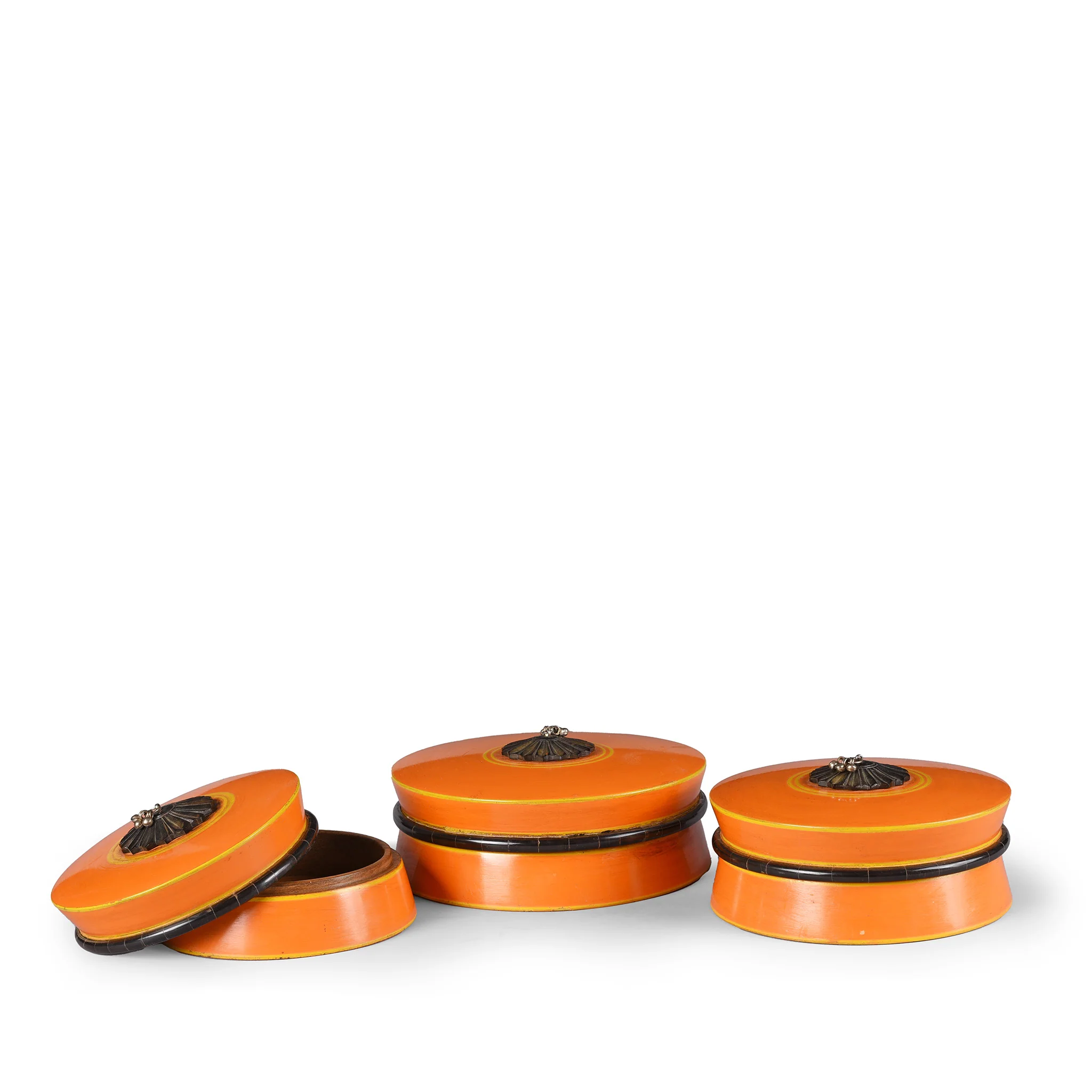
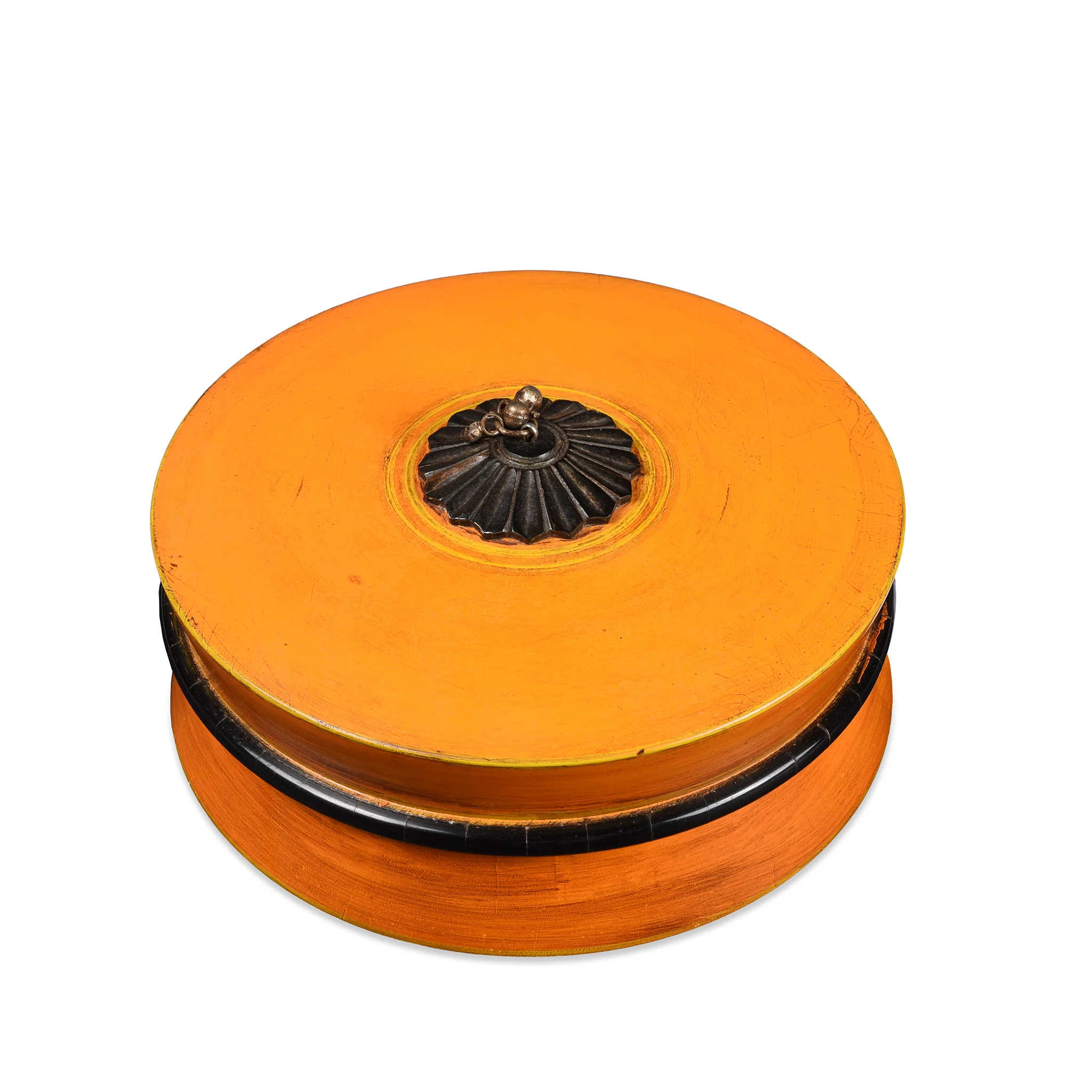
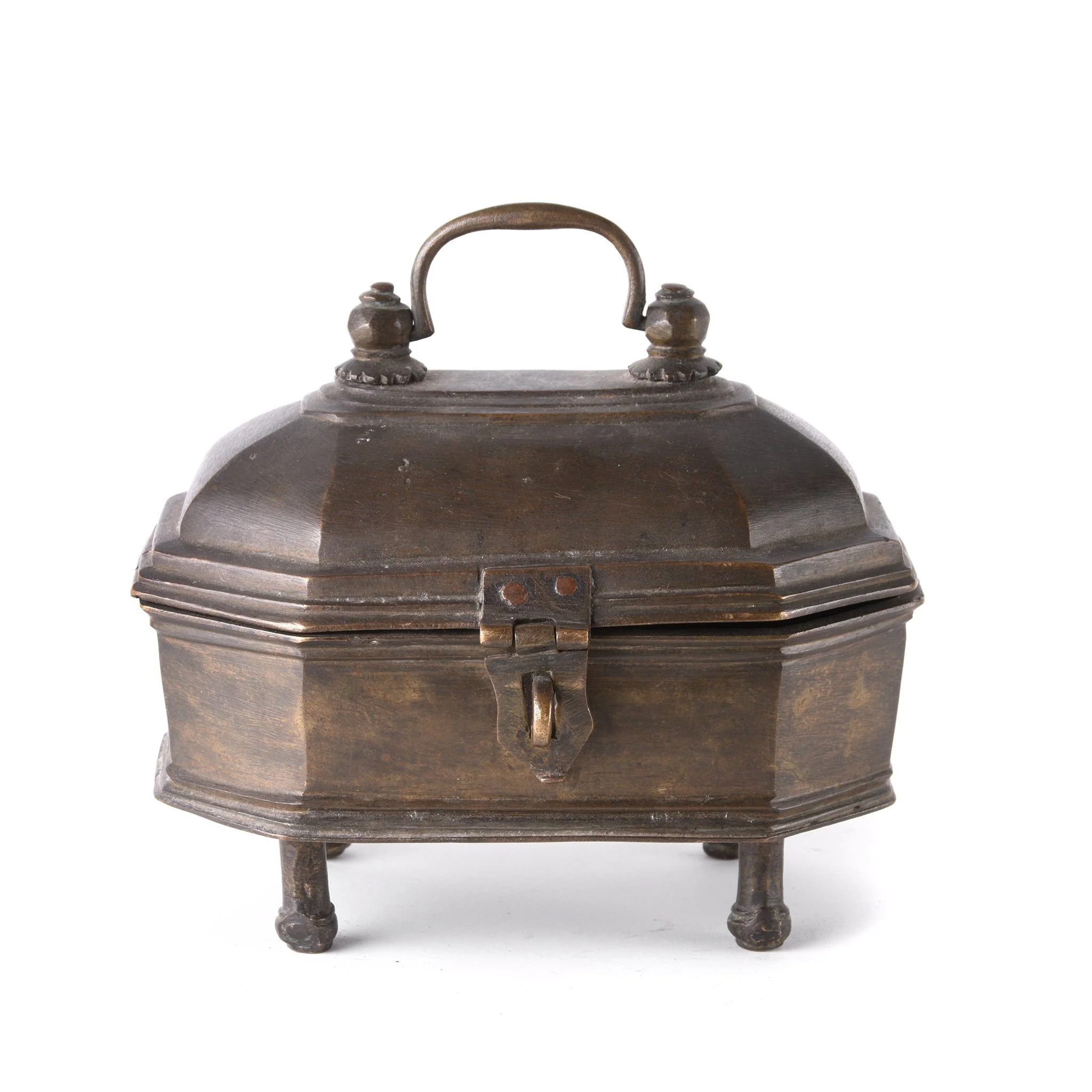
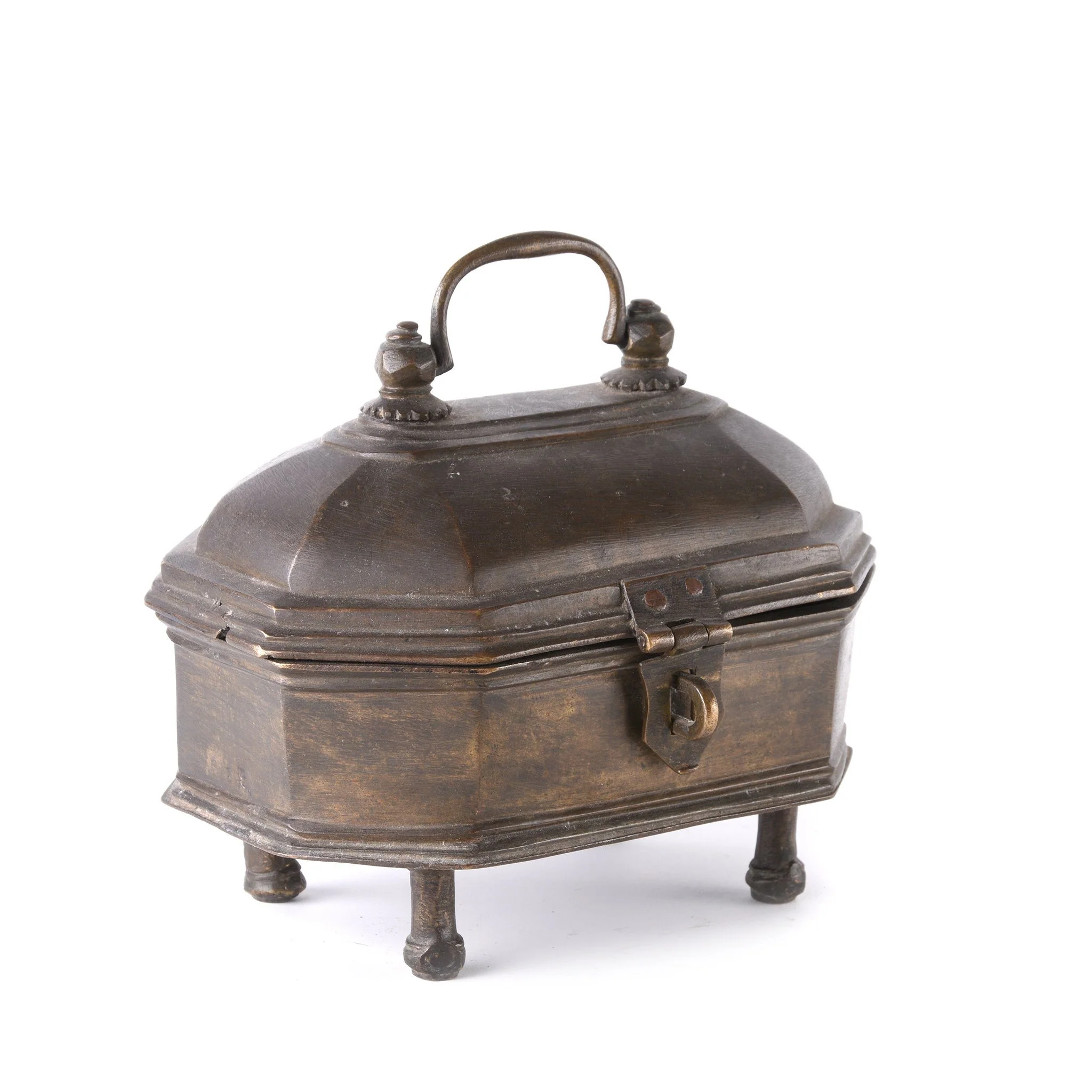
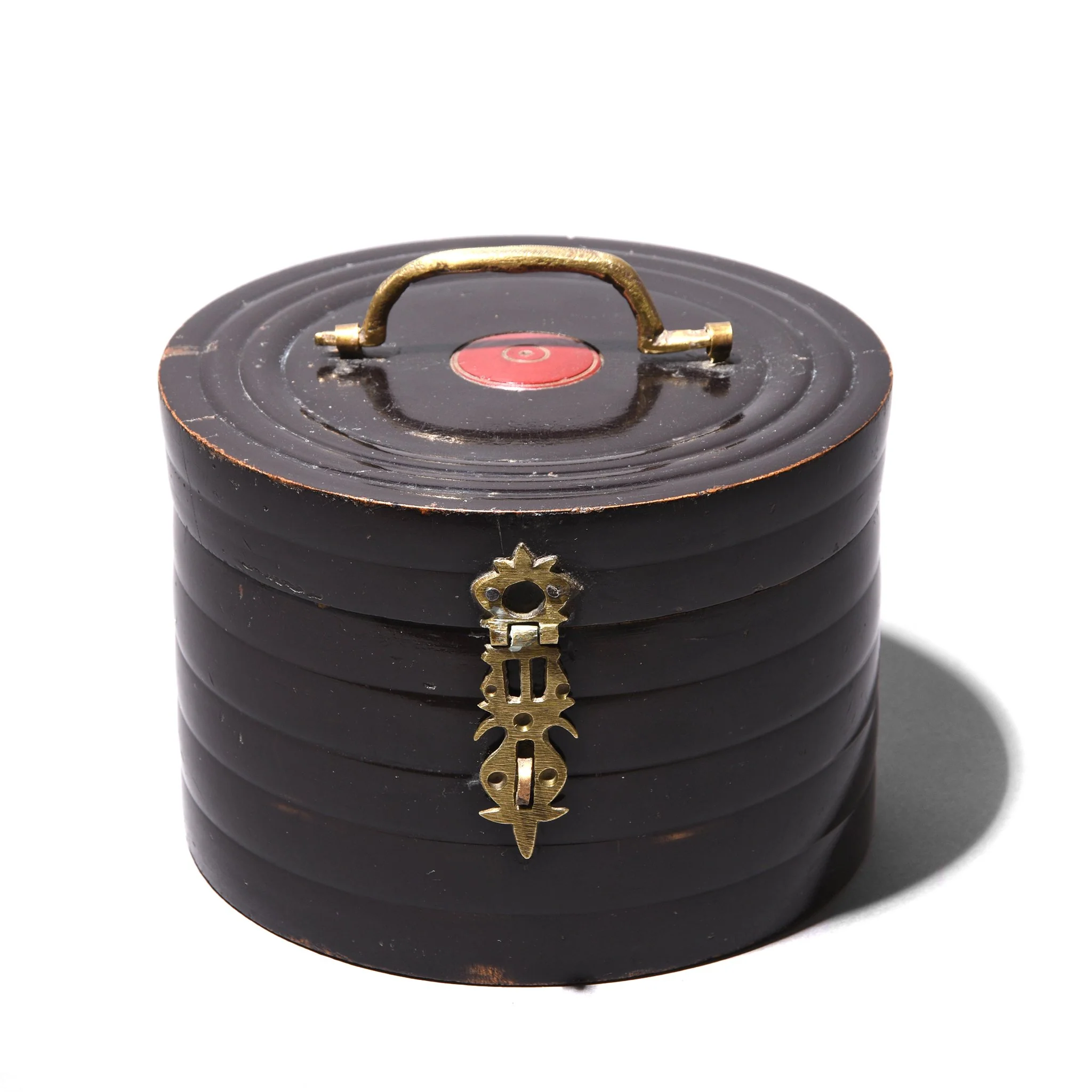
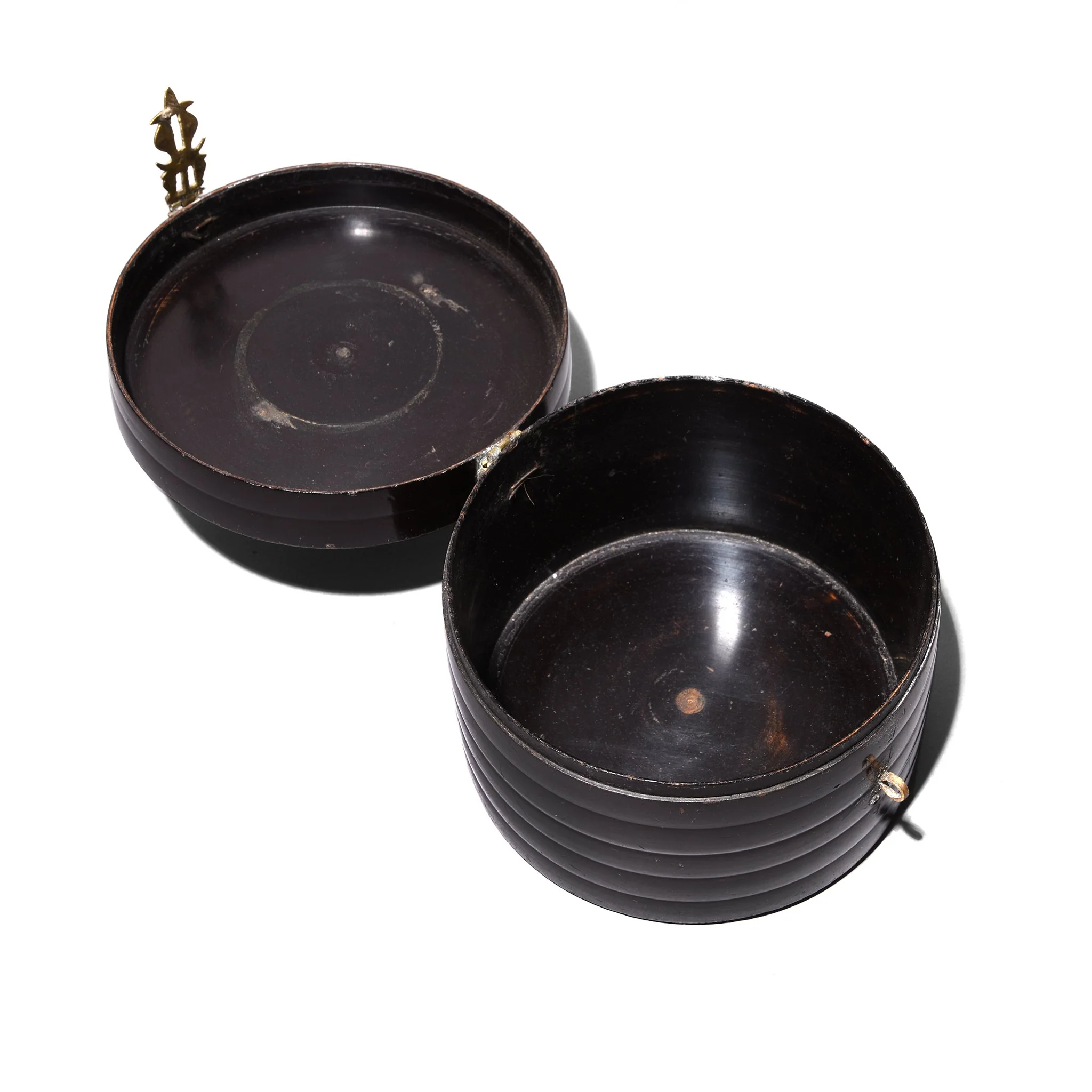
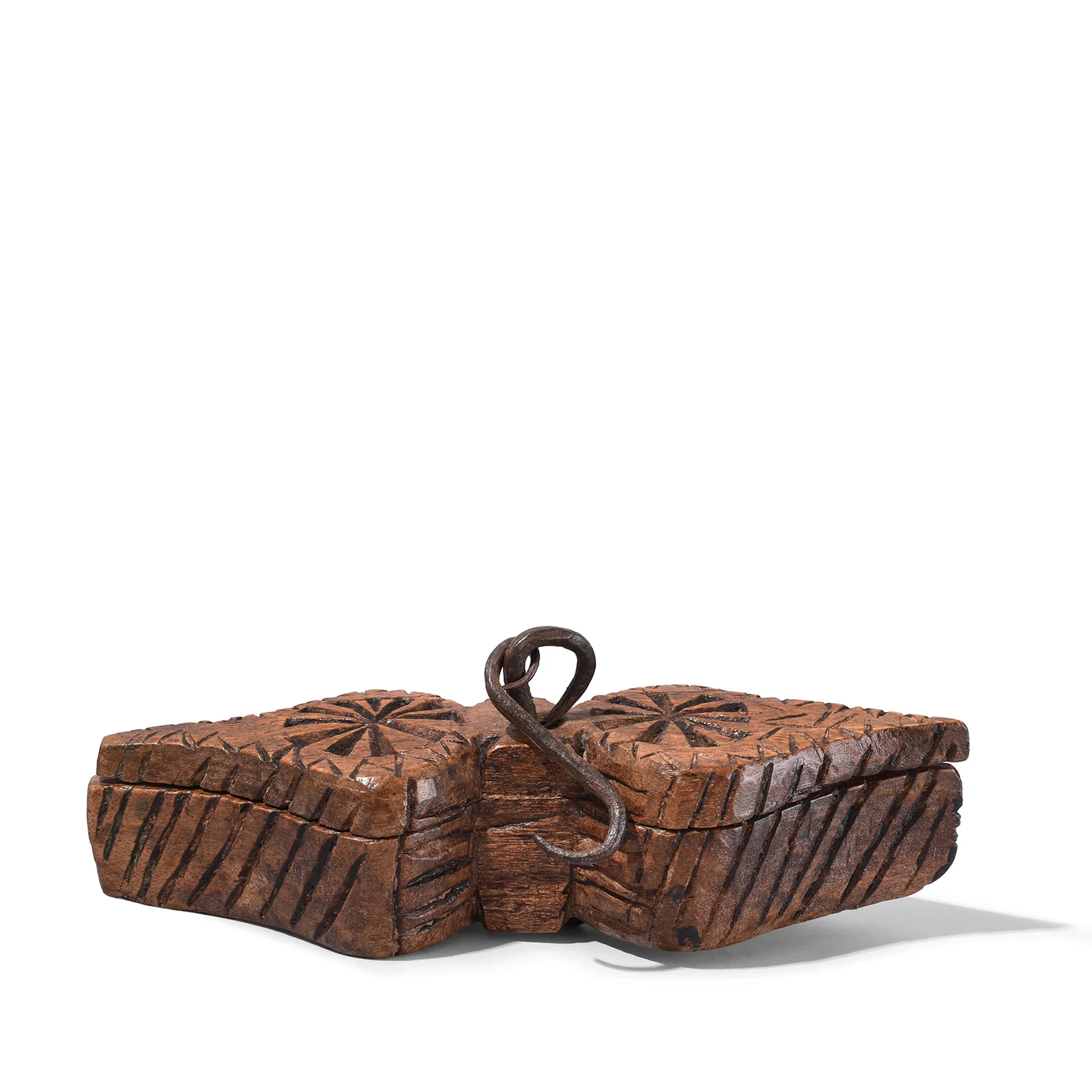
This beautifully hand-carved teak wood tika box comes from the Banswara tribal region of Rajasthan and dates to the 19th century. Crafted from a single piece of teak, it was traditionally used to store red kumkum powder for creating the sacred forehead mark—the tika or bindi—that symbolises the Hindu third eye and spiritual protection. The interior contains three carved compartments, each used for holding pigment or ritual powders.
The lid and projecting finials are richly decorated with deeply carved lotus and radiating geometric stylised padma (blossoming lotus) motifs symbolising rebirth and renewal, an auspicious symbol. Unlike most examples, this piece was designed to be hung rather than placed on a surface, and it retains its original forged iron hook for suspension. With its sculptural star-shaped profile, warm patina and bold carvings, it makes a striking ethnographic collector’s piece or an evocative decorative accent.
- Origin: Banswara, Rajasthan, India
- Date: 19th Century
- Materials: Carved teak wood; forged iron hook
- Features: Single-block construction; lotus and geometric carvings; three interior pigment compartments; designed for hanging
- Condition: Worn patina and carvings consistent with age; retains original iron hook
- Dimensions: W27 x D9 x H10 cm
Original: $193.34
-65%$193.34
$67.67More Images


Hanging Indian Tika Box From Banswara - Ca 1900
This beautifully hand-carved teak wood tika box comes from the Banswara tribal region of Rajasthan and dates to the 19th century. Crafted from a single piece of teak, it was traditionally used to store red kumkum powder for creating the sacred forehead mark—the tika or bindi—that symbolises the Hindu third eye and spiritual protection. The interior contains three carved compartments, each used for holding pigment or ritual powders.
The lid and projecting finials are richly decorated with deeply carved lotus and radiating geometric stylised padma (blossoming lotus) motifs symbolising rebirth and renewal, an auspicious symbol. Unlike most examples, this piece was designed to be hung rather than placed on a surface, and it retains its original forged iron hook for suspension. With its sculptural star-shaped profile, warm patina and bold carvings, it makes a striking ethnographic collector’s piece or an evocative decorative accent.
- Origin: Banswara, Rajasthan, India
- Date: 19th Century
- Materials: Carved teak wood; forged iron hook
- Features: Single-block construction; lotus and geometric carvings; three interior pigment compartments; designed for hanging
- Condition: Worn patina and carvings consistent with age; retains original iron hook
- Dimensions: W27 x D9 x H10 cm
Product Information
Product Information
Shipping & Returns
Shipping & Returns
Description
This beautifully hand-carved teak wood tika box comes from the Banswara tribal region of Rajasthan and dates to the 19th century. Crafted from a single piece of teak, it was traditionally used to store red kumkum powder for creating the sacred forehead mark—the tika or bindi—that symbolises the Hindu third eye and spiritual protection. The interior contains three carved compartments, each used for holding pigment or ritual powders.
The lid and projecting finials are richly decorated with deeply carved lotus and radiating geometric stylised padma (blossoming lotus) motifs symbolising rebirth and renewal, an auspicious symbol. Unlike most examples, this piece was designed to be hung rather than placed on a surface, and it retains its original forged iron hook for suspension. With its sculptural star-shaped profile, warm patina and bold carvings, it makes a striking ethnographic collector’s piece or an evocative decorative accent.
- Origin: Banswara, Rajasthan, India
- Date: 19th Century
- Materials: Carved teak wood; forged iron hook
- Features: Single-block construction; lotus and geometric carvings; three interior pigment compartments; designed for hanging
- Condition: Worn patina and carvings consistent with age; retains original iron hook
- Dimensions: W27 x D9 x H10 cm