Carved Stone Water Trough From Jaisalmer - Late 18th Century
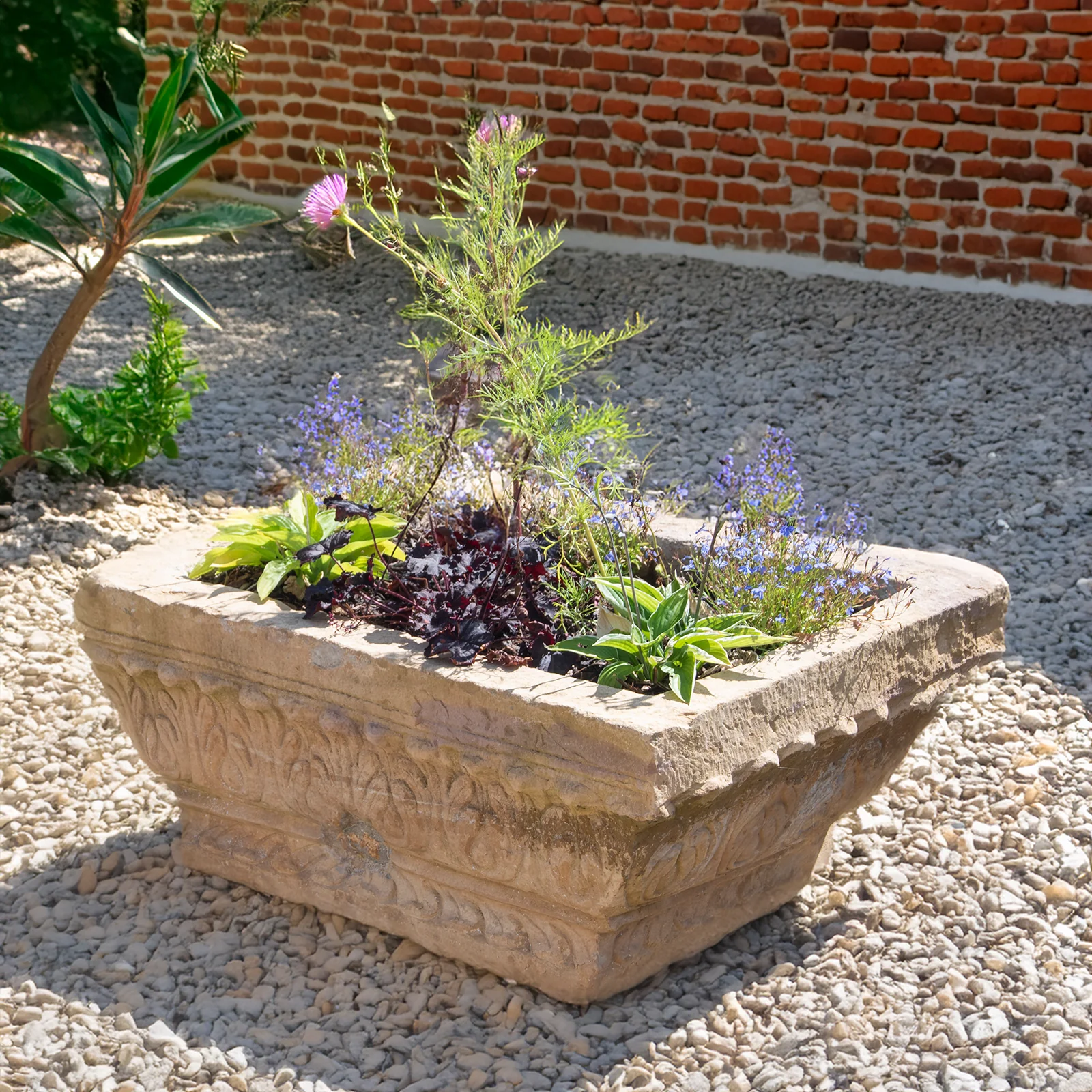
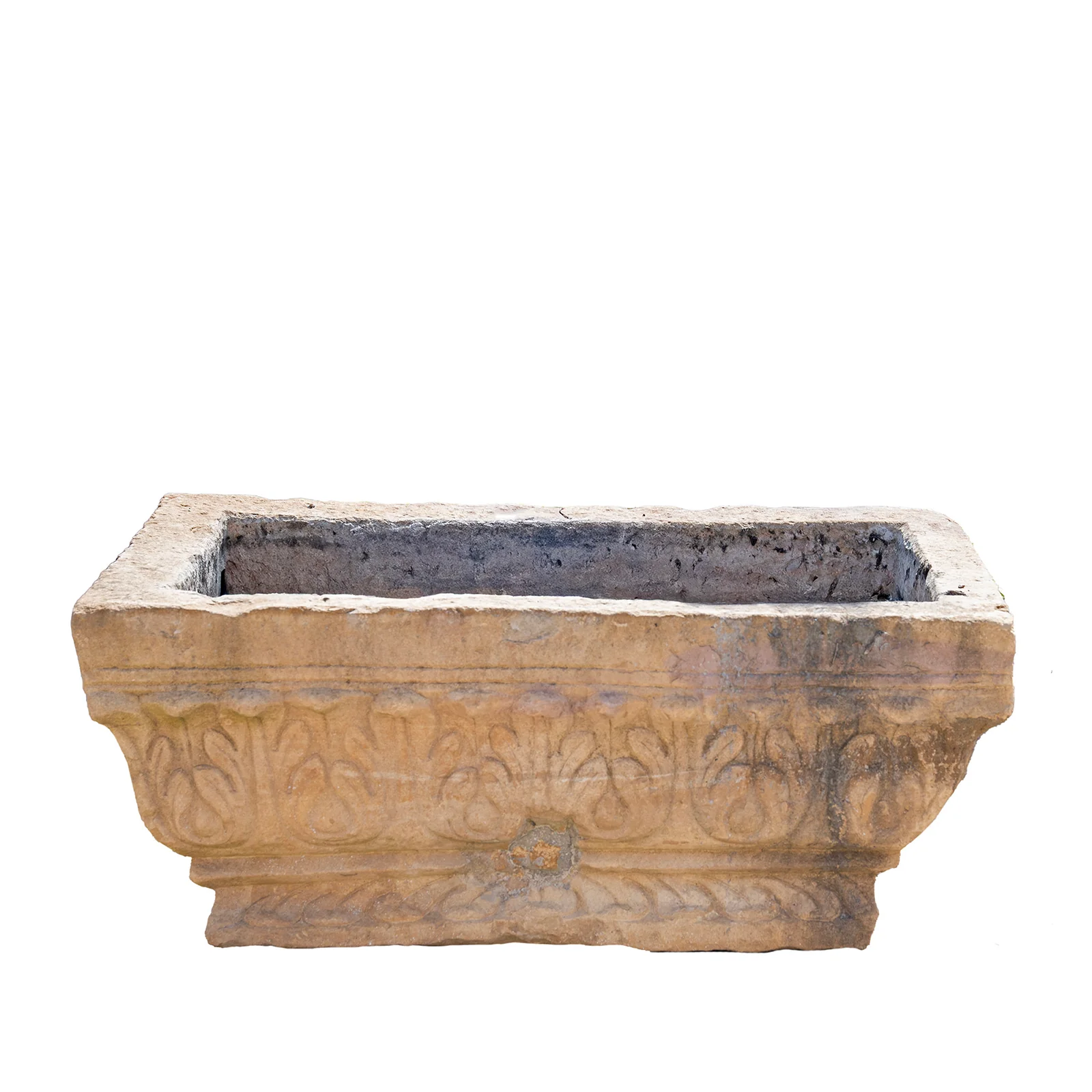
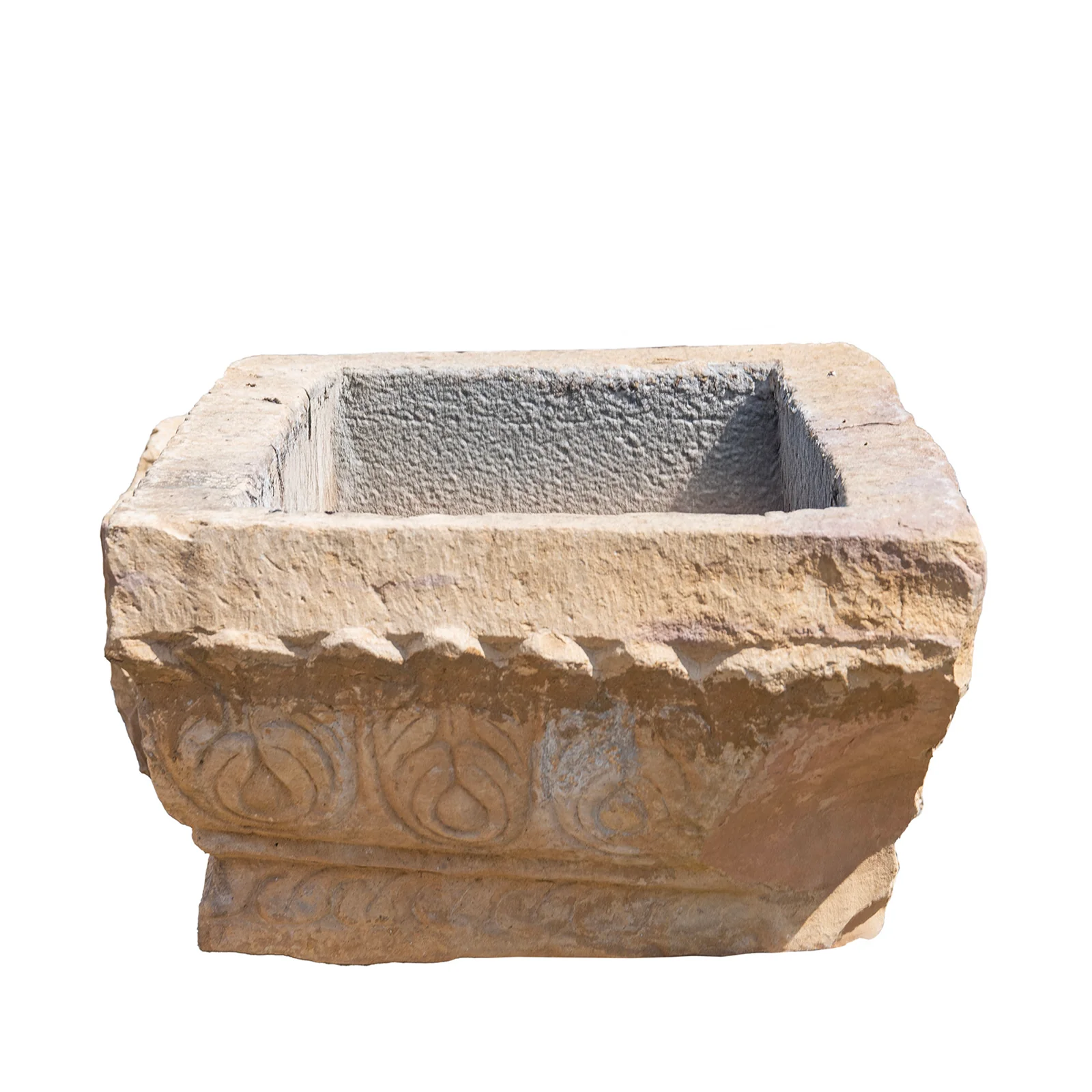
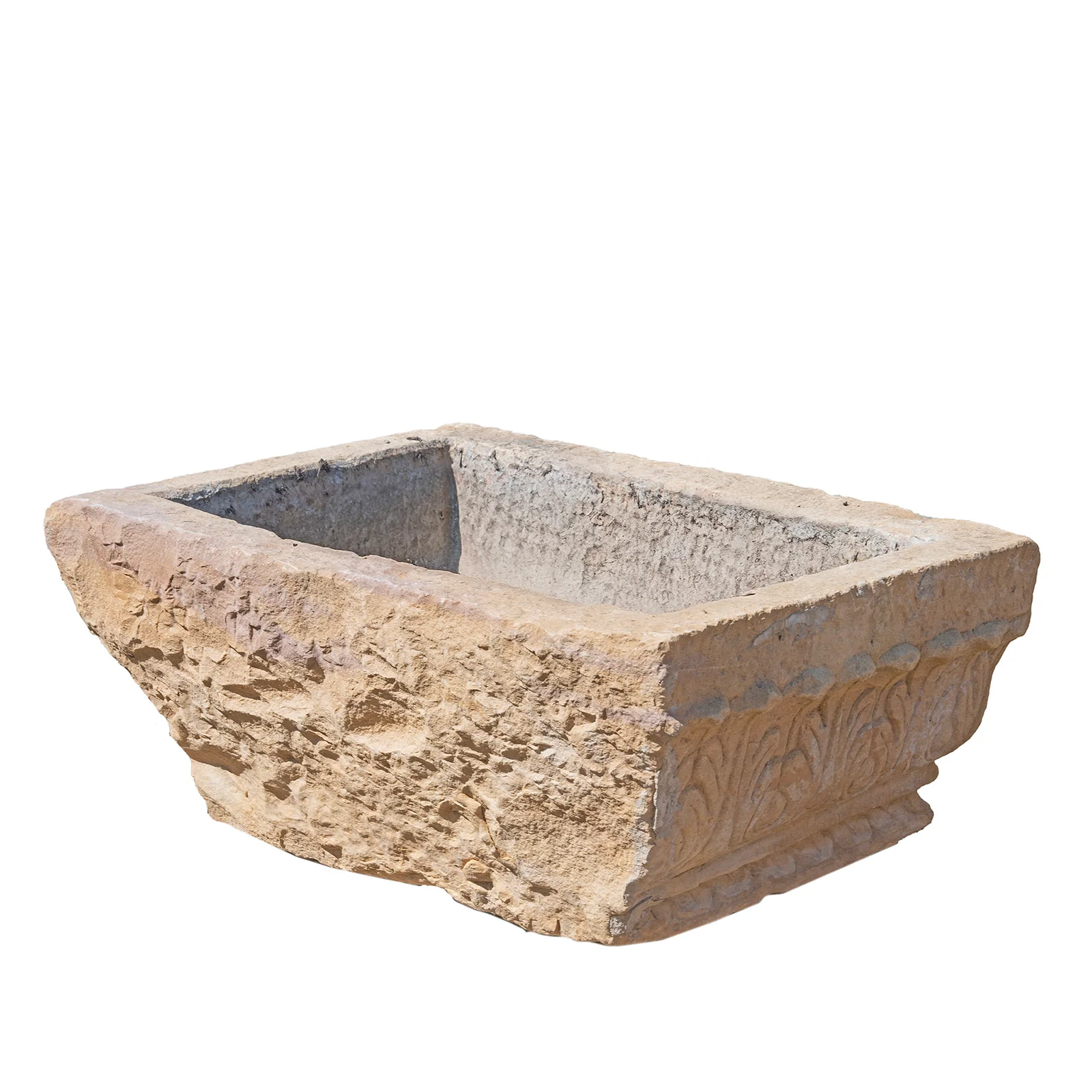
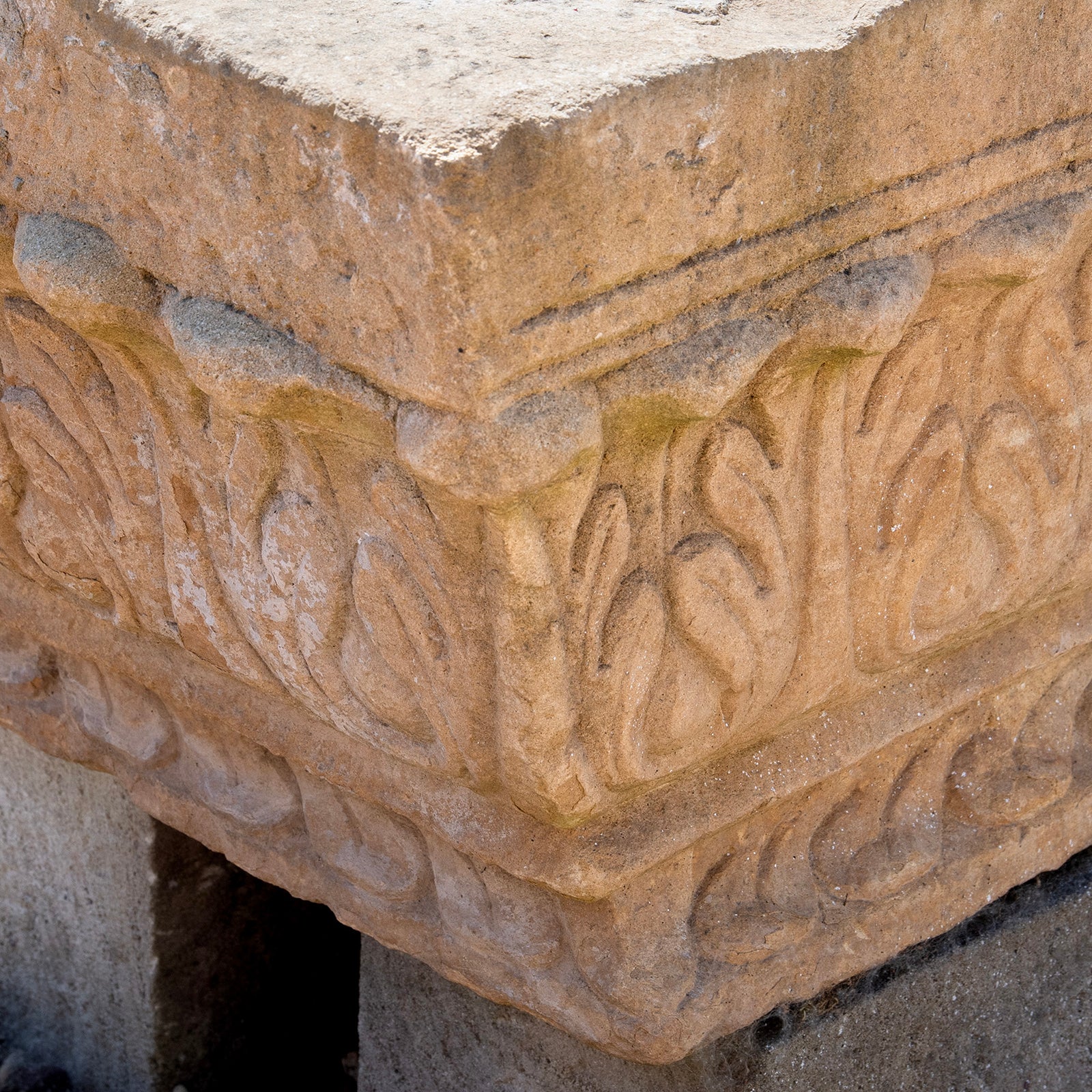
Carved from the warm, golden-hued sandstone of Jaisalmer, this late 18th-century water trough combines utility with sculptural presence. Its rectangular form is enriched by a continuous band of hand-tooled foliate motifs, echoing the architectural carving traditions of Rajasthan.
The original water spout has been expertly blocked, allowing the trough to serve as a distinctive garden planter or decorative focal point. The surface bears the soft weathering of more than two centuries outdoors, with one area of wear on the right-hand side likely caused by repeated water flow or animal use in its working life. This subtle irregularity adds to the authenticity and charm of the piece.
Rajasthani stone masons usually trained as unpaid apprentices from the age of 10. Until the age of 15, the disciples will work on paper or slate and then carve soft soapstone. Their first carving is always of Ganesh, the God of Auspicious Beginnings. Only after this will they be allowed to carry out paid work.
- Origin: Jaisalmer, Rajasthan, India
- Material: Jaisalmer sandstone
- Date: Late 18th century
- Features: Hand-carved foliate decoration, blocked water spout
- Condition: Wear and patina consistent with age; notable smooth wear on right side from historic water or livestock contact
- Suggested Use: Garden planter, water feature base, or sculptural accent
A substantial and characterful survivor from rural Rajasthan, ready for a new life in the garden or interior.
Original: $2,549.91
-65%$2,549.91
$892.47More Images
Carved Stone Water Trough From Jaisalmer - Late 18th Century
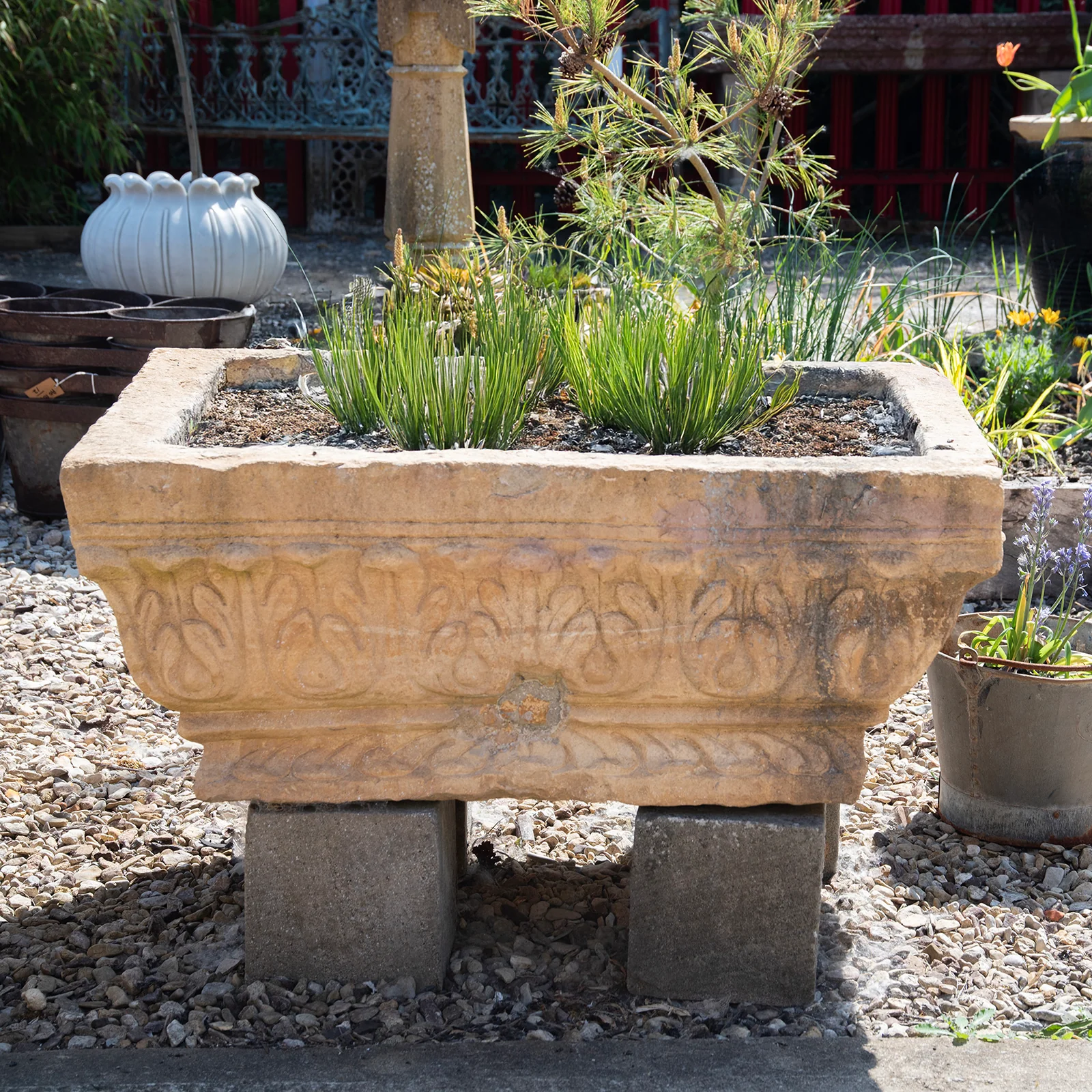
Carved from the warm, golden-hued sandstone of Jaisalmer, this late 18th-century water trough combines utility with sculptural presence. Its rectangular form is enriched by a continuous band of hand-tooled foliate motifs, echoing the architectural carving traditions of Rajasthan.
The original water spout has been expertly blocked, allowing the trough to serve as a distinctive garden planter or decorative focal point. The surface bears the soft weathering of more than two centuries outdoors, with one area of wear on the right-hand side likely caused by repeated water flow or animal use in its working life. This subtle irregularity adds to the authenticity and charm of the piece.
Rajasthani stone masons usually trained as unpaid apprentices from the age of 10. Until the age of 15, the disciples will work on paper or slate and then carve soft soapstone. Their first carving is always of Ganesh, the God of Auspicious Beginnings. Only after this will they be allowed to carry out paid work.
- Origin: Jaisalmer, Rajasthan, India
- Material: Jaisalmer sandstone
- Date: Late 18th century
- Features: Hand-carved foliate decoration, blocked water spout
- Condition: Wear and patina consistent with age; notable smooth wear on right side from historic water or livestock contact
- Suggested Use: Garden planter, water feature base, or sculptural accent
A substantial and characterful survivor from rural Rajasthan, ready for a new life in the garden or interior.
Product Information
Product Information
Shipping & Returns
Shipping & Returns
Description
Carved from the warm, golden-hued sandstone of Jaisalmer, this late 18th-century water trough combines utility with sculptural presence. Its rectangular form is enriched by a continuous band of hand-tooled foliate motifs, echoing the architectural carving traditions of Rajasthan.
The original water spout has been expertly blocked, allowing the trough to serve as a distinctive garden planter or decorative focal point. The surface bears the soft weathering of more than two centuries outdoors, with one area of wear on the right-hand side likely caused by repeated water flow or animal use in its working life. This subtle irregularity adds to the authenticity and charm of the piece.
Rajasthani stone masons usually trained as unpaid apprentices from the age of 10. Until the age of 15, the disciples will work on paper or slate and then carve soft soapstone. Their first carving is always of Ganesh, the God of Auspicious Beginnings. Only after this will they be allowed to carry out paid work.
- Origin: Jaisalmer, Rajasthan, India
- Material: Jaisalmer sandstone
- Date: Late 18th century
- Features: Hand-carved foliate decoration, blocked water spout
- Condition: Wear and patina consistent with age; notable smooth wear on right side from historic water or livestock contact
- Suggested Use: Garden planter, water feature base, or sculptural accent
A substantial and characterful survivor from rural Rajasthan, ready for a new life in the garden or interior.