Carved Teak Seed Drill From Gujarat - Ca 1920
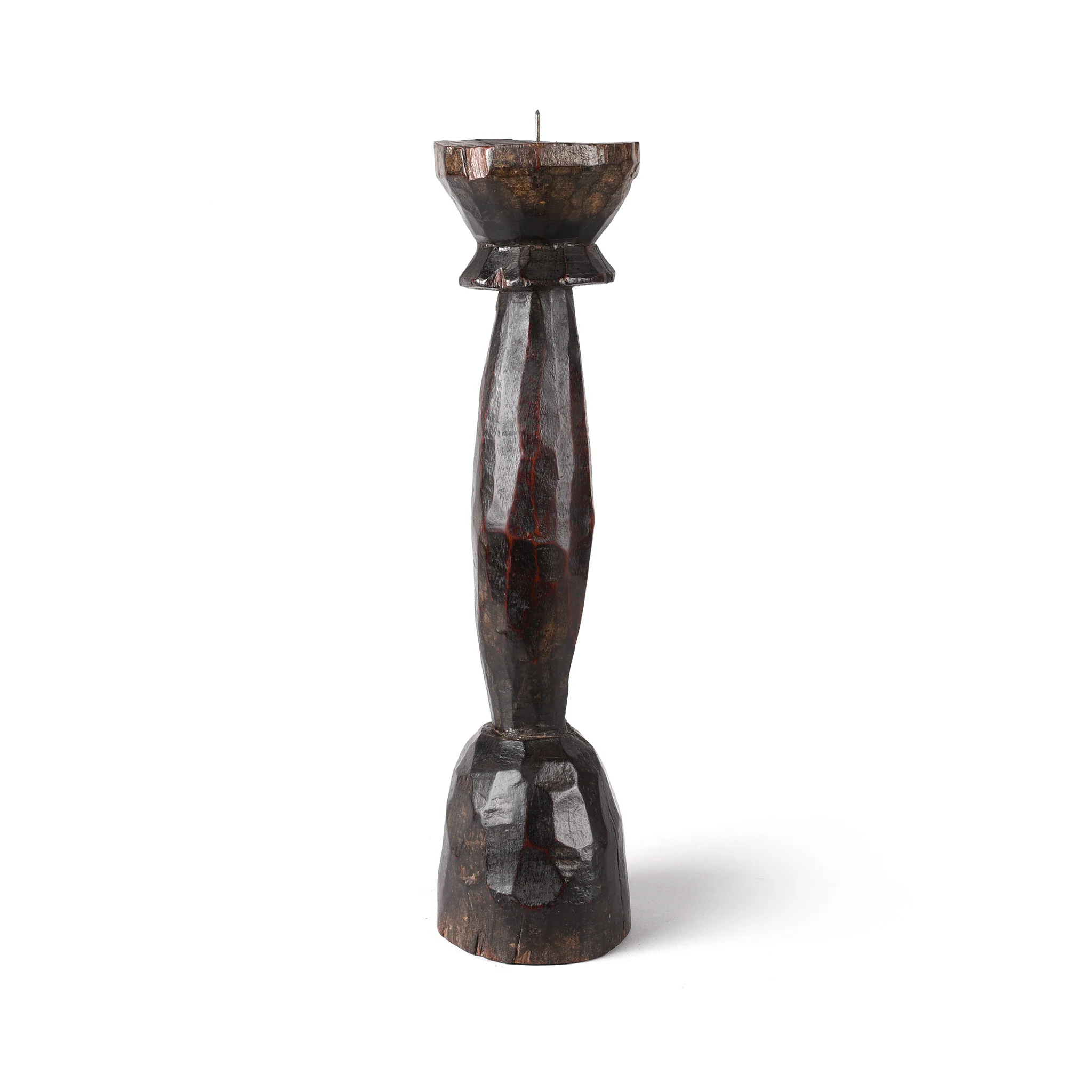
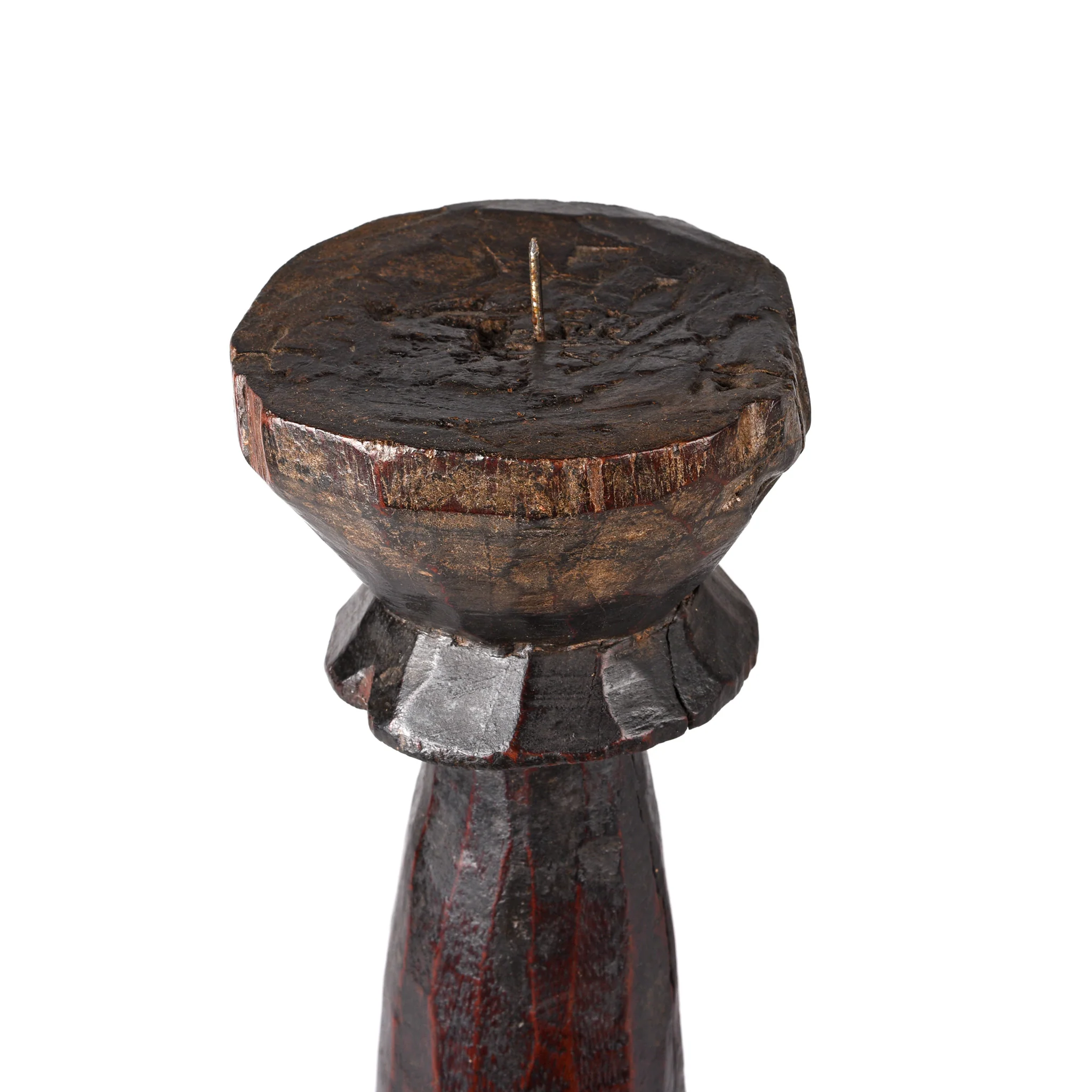
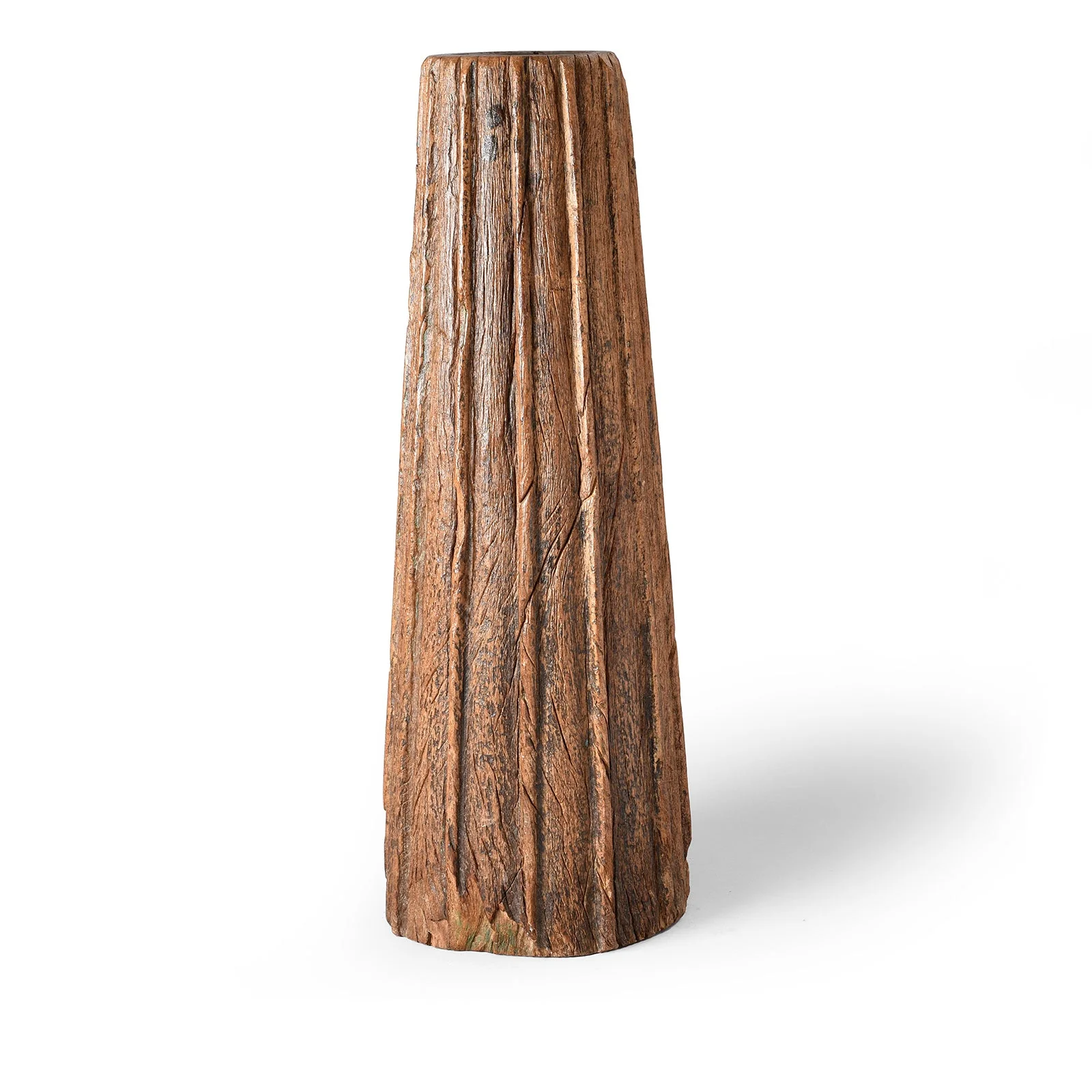
This beautifully carved antique Indian seed drill, known in Gujarat as an orani (ઓરણી), dates to the early 1900s and is a remarkable example of rural craftsmanship elevated through artistic expression. Originally designed as an agricultural implement used to sow seeds evenly in the fields, this particular form was found across Gujarat and Maharashtra, especially among Mer communities.
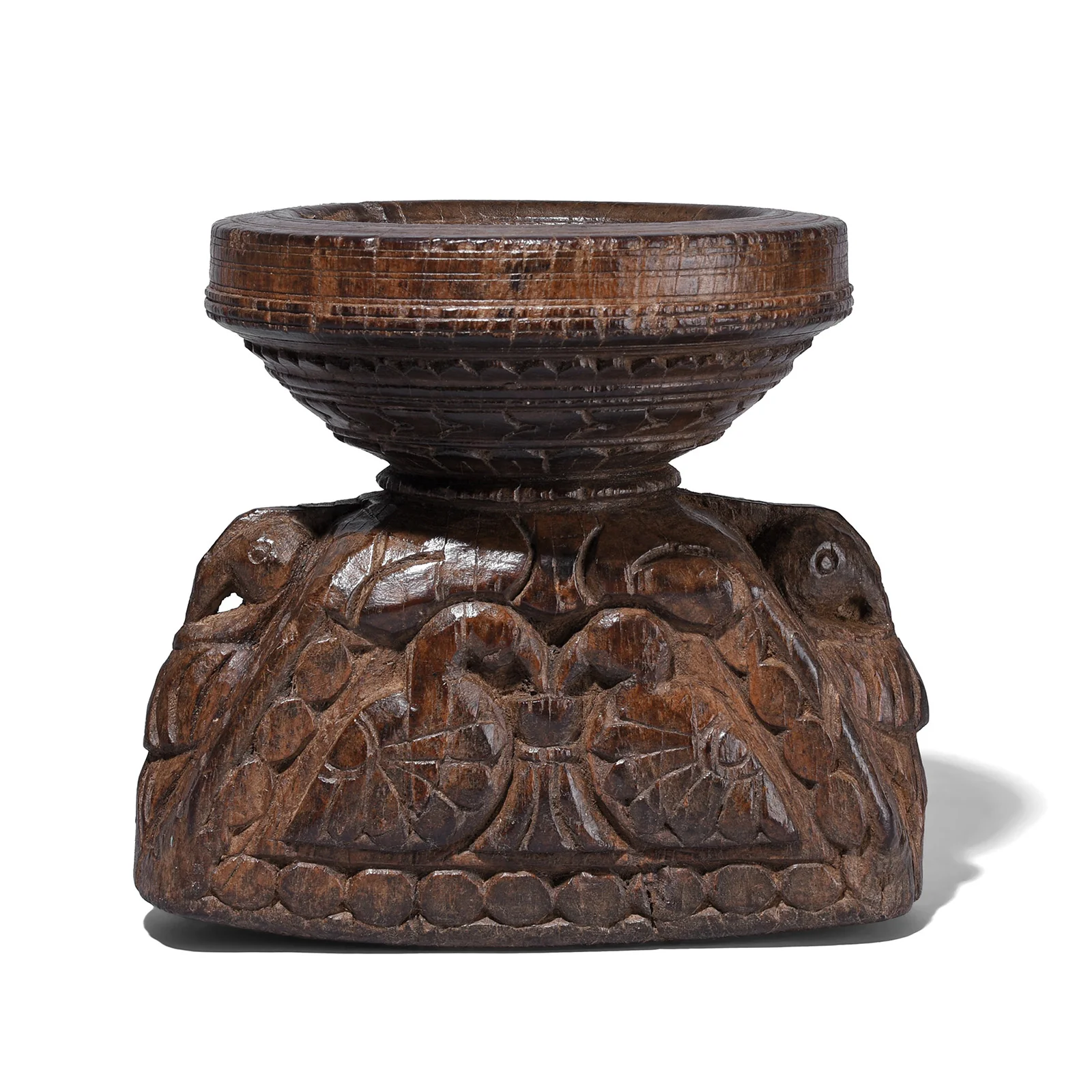
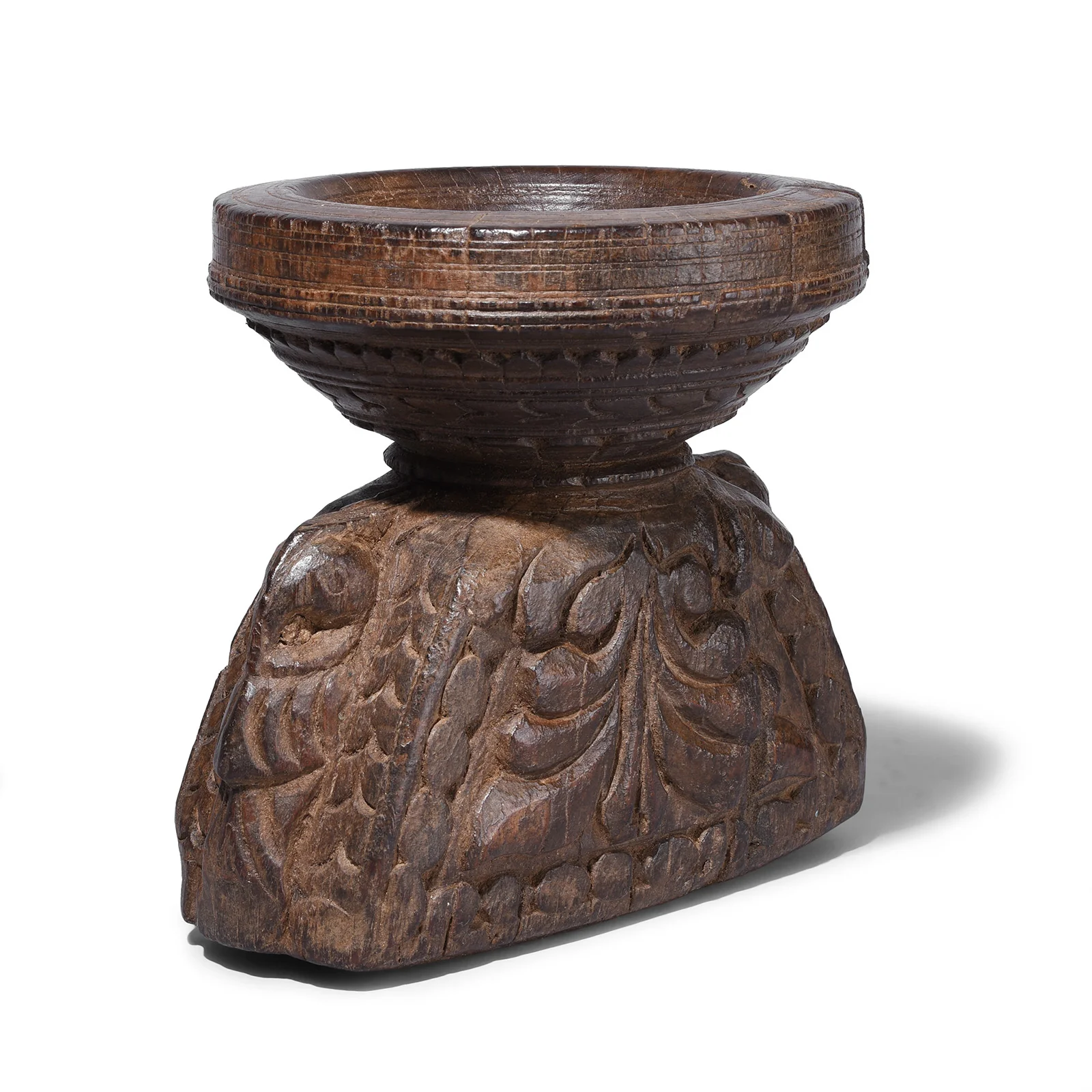
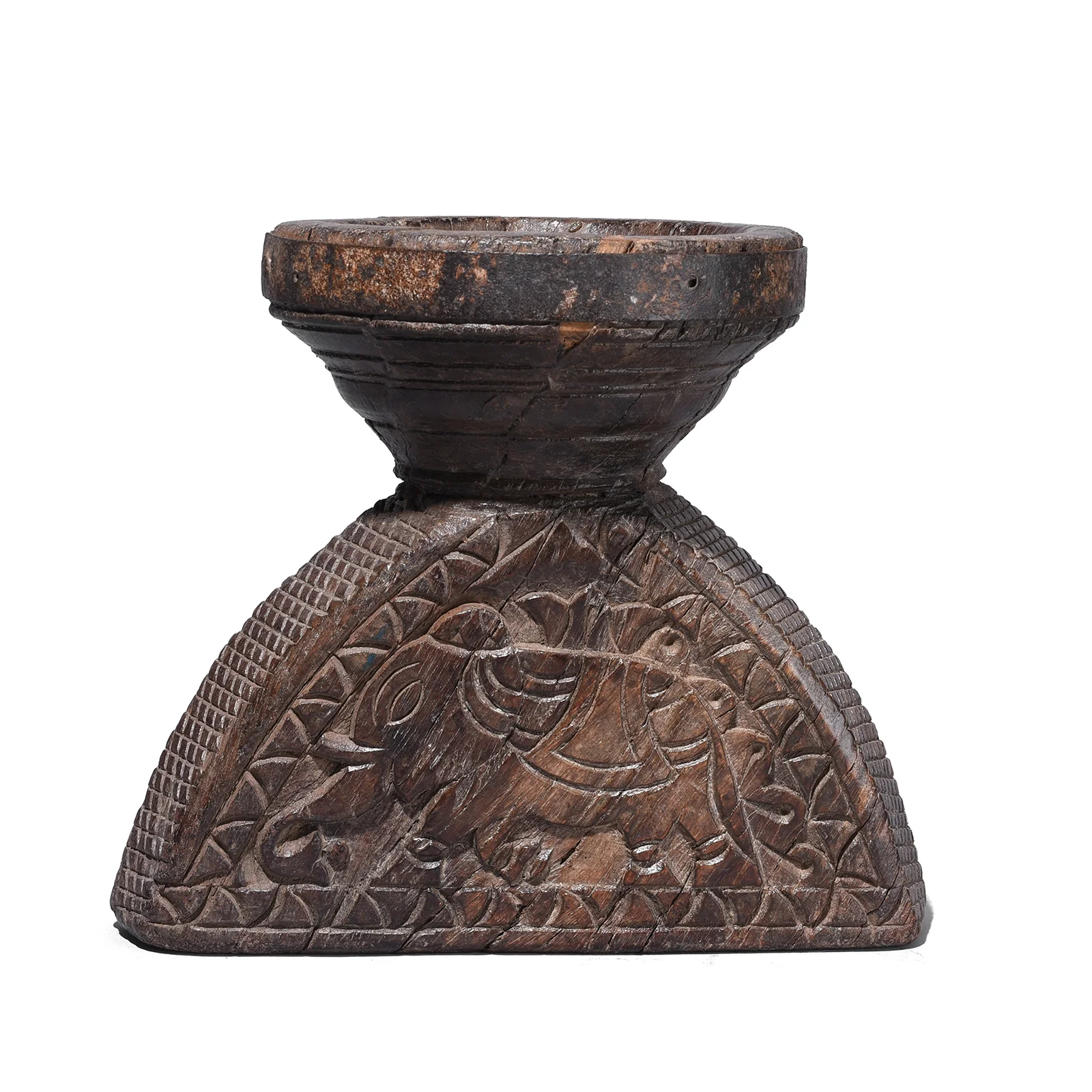
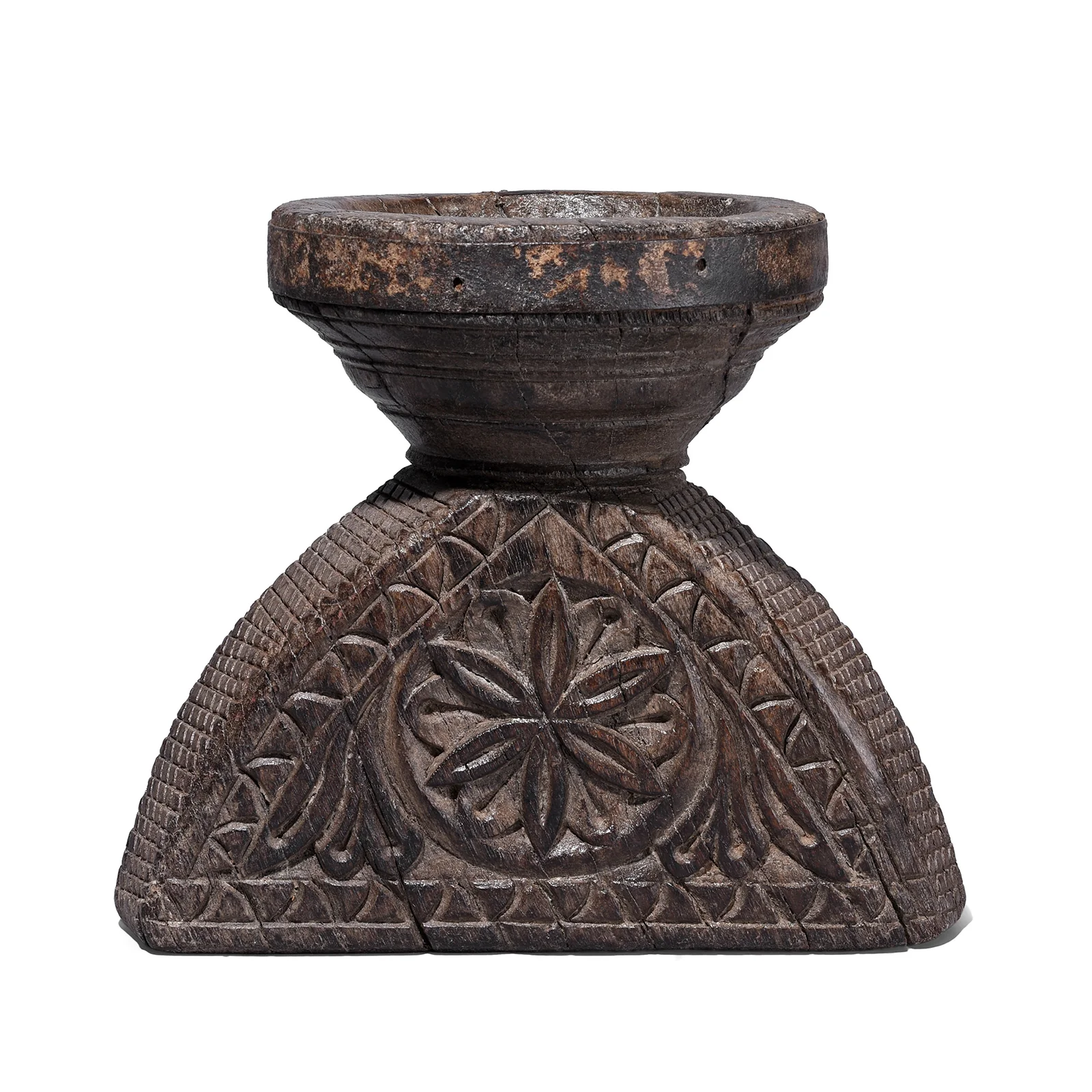
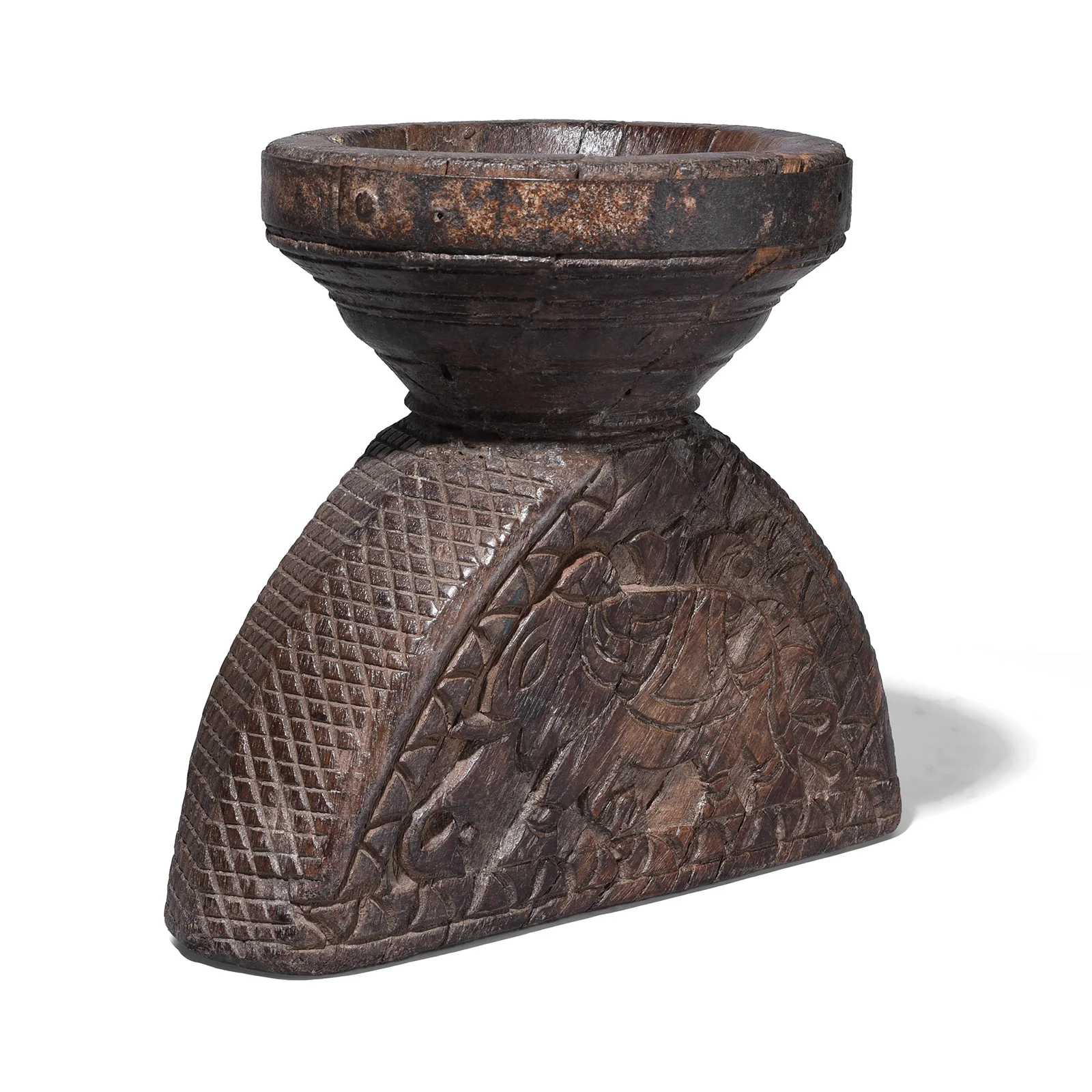
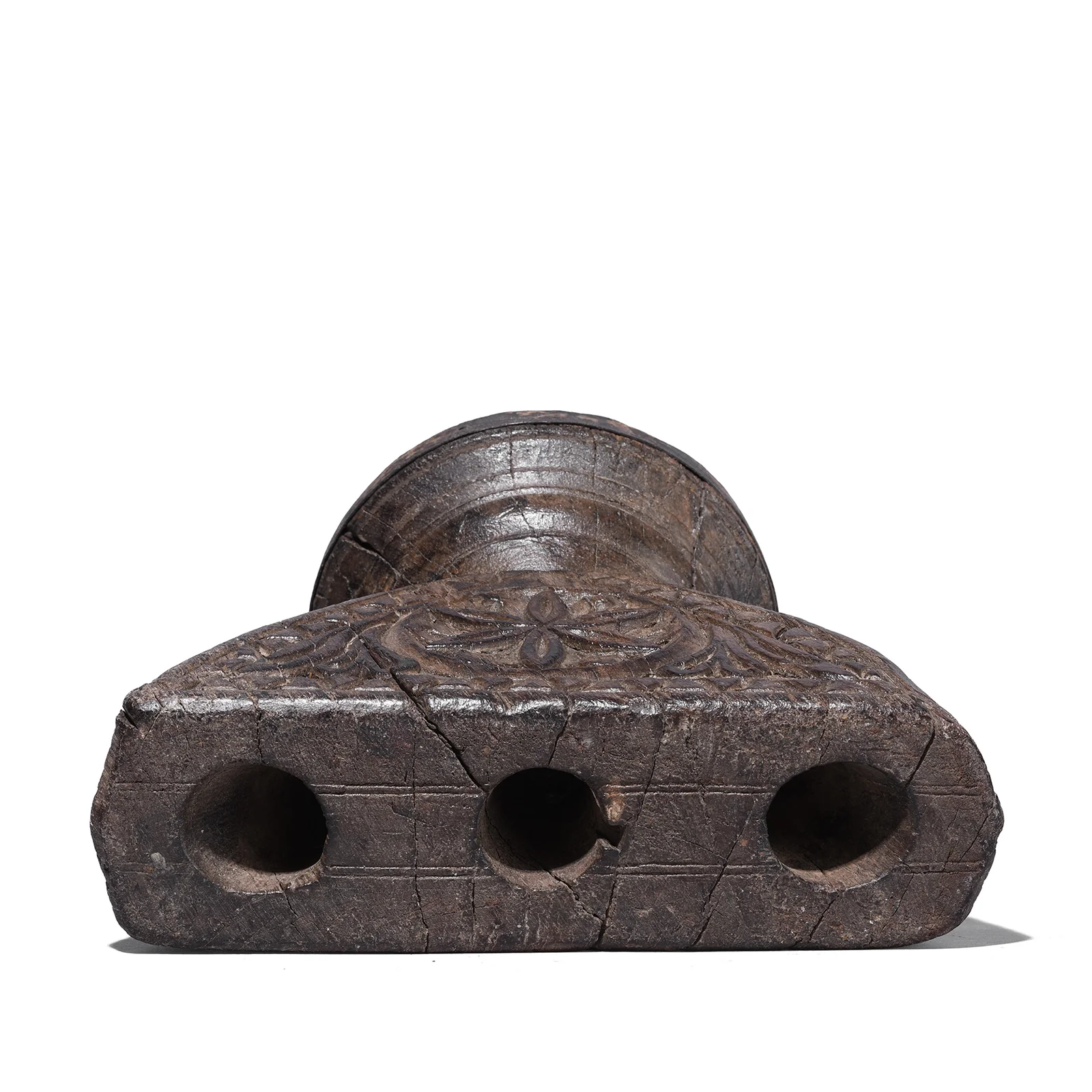
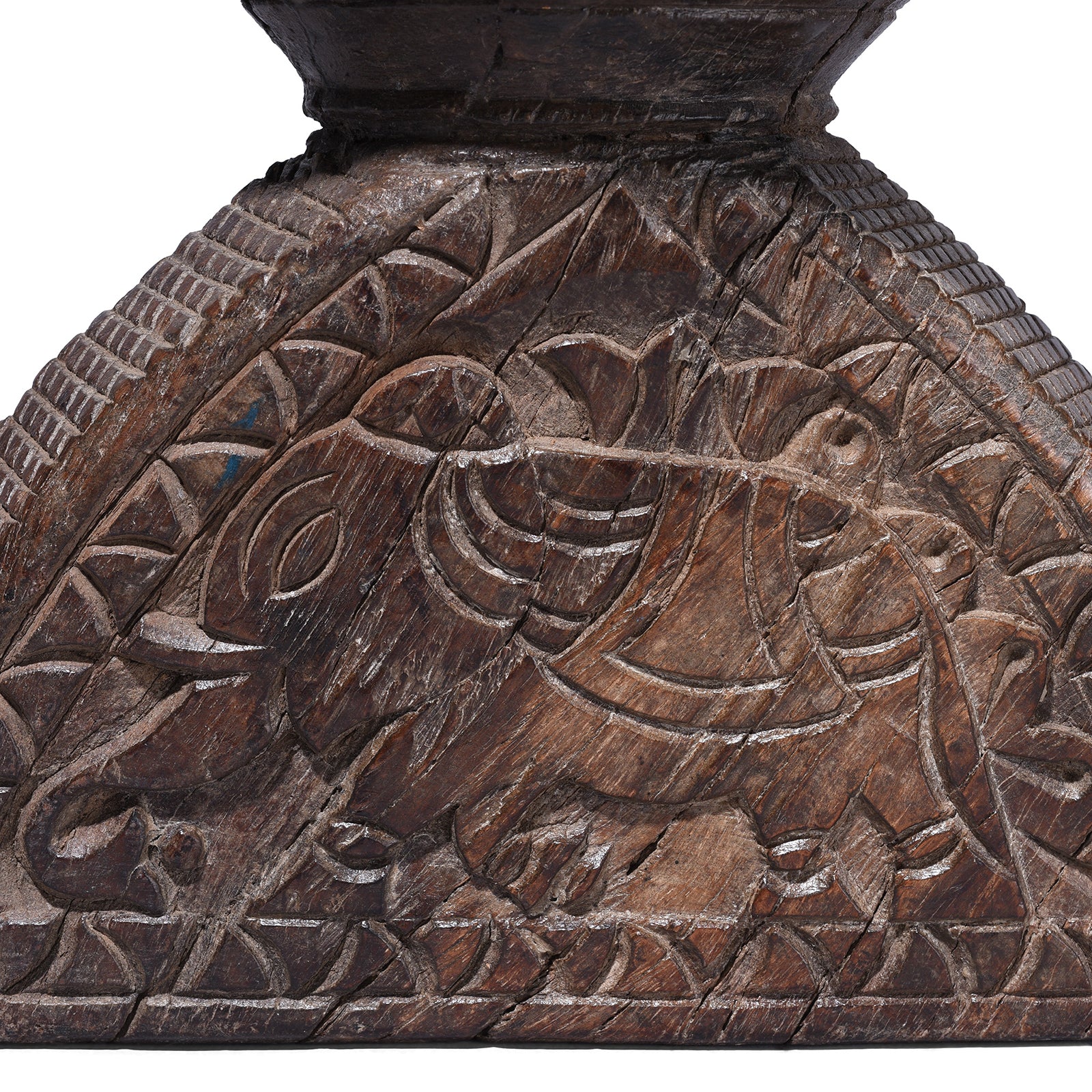
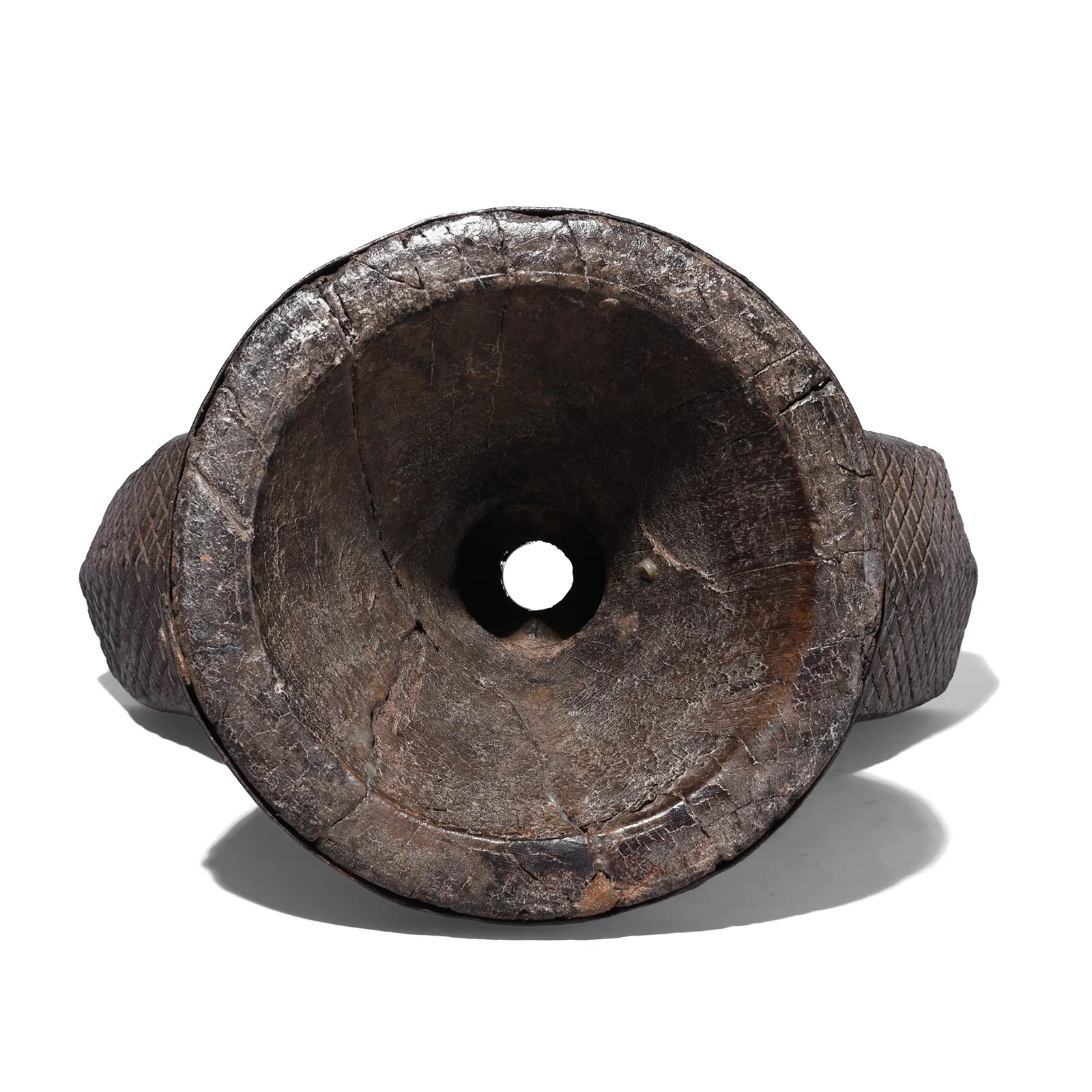
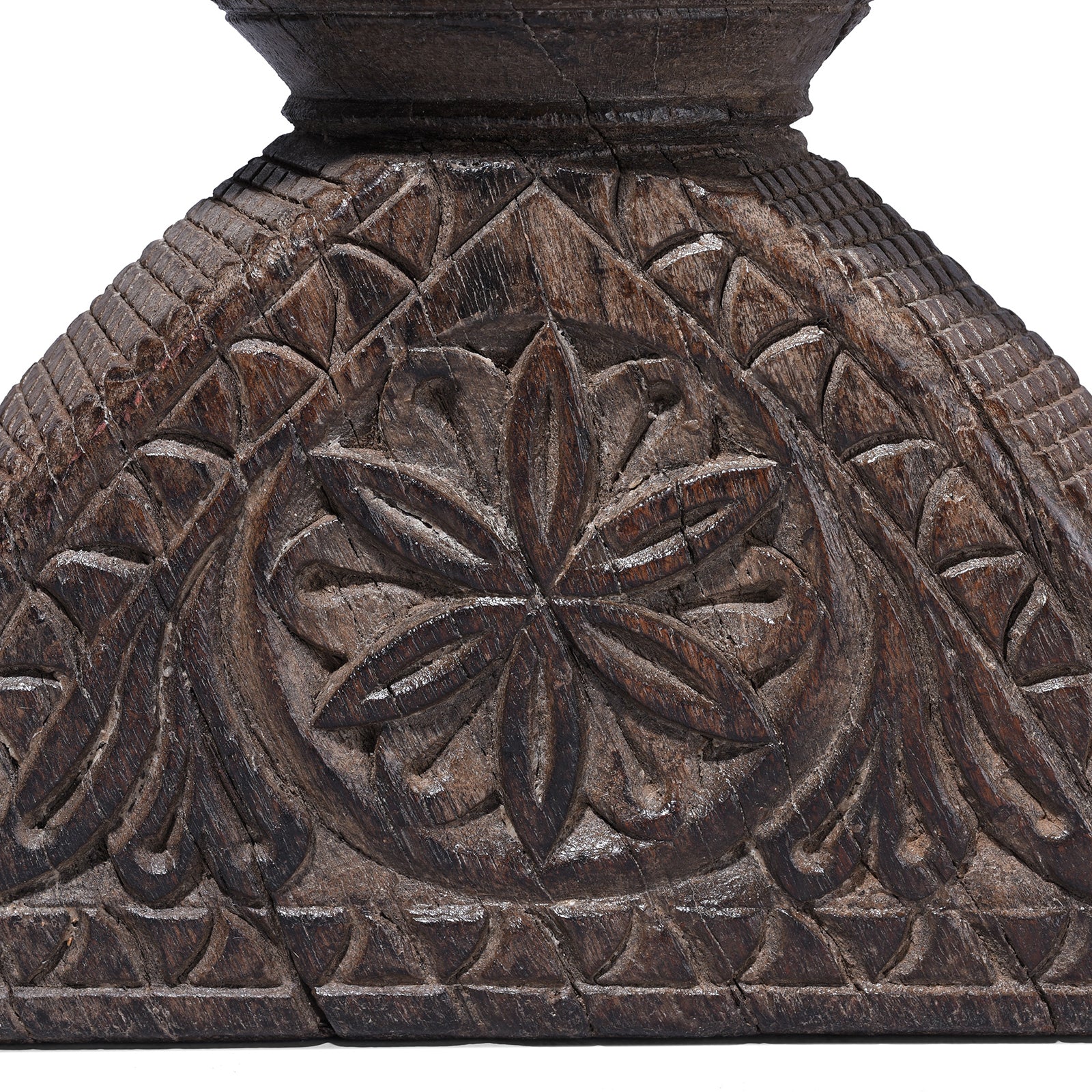
Hand-carved from solid hardwood, the drill features three seed apertures along the front and a richly sculpted body. One side depicts a caparisoned elephant — a symbol of strength and prosperity — while the opposing side is carved with a stylised lotus leaf motif framed by geometric borders. The carvings have been gently softened through more than a century of repeated daily handling and field use, and the surface has developed a deep, lustrous patina that speaks to its age and authenticity.
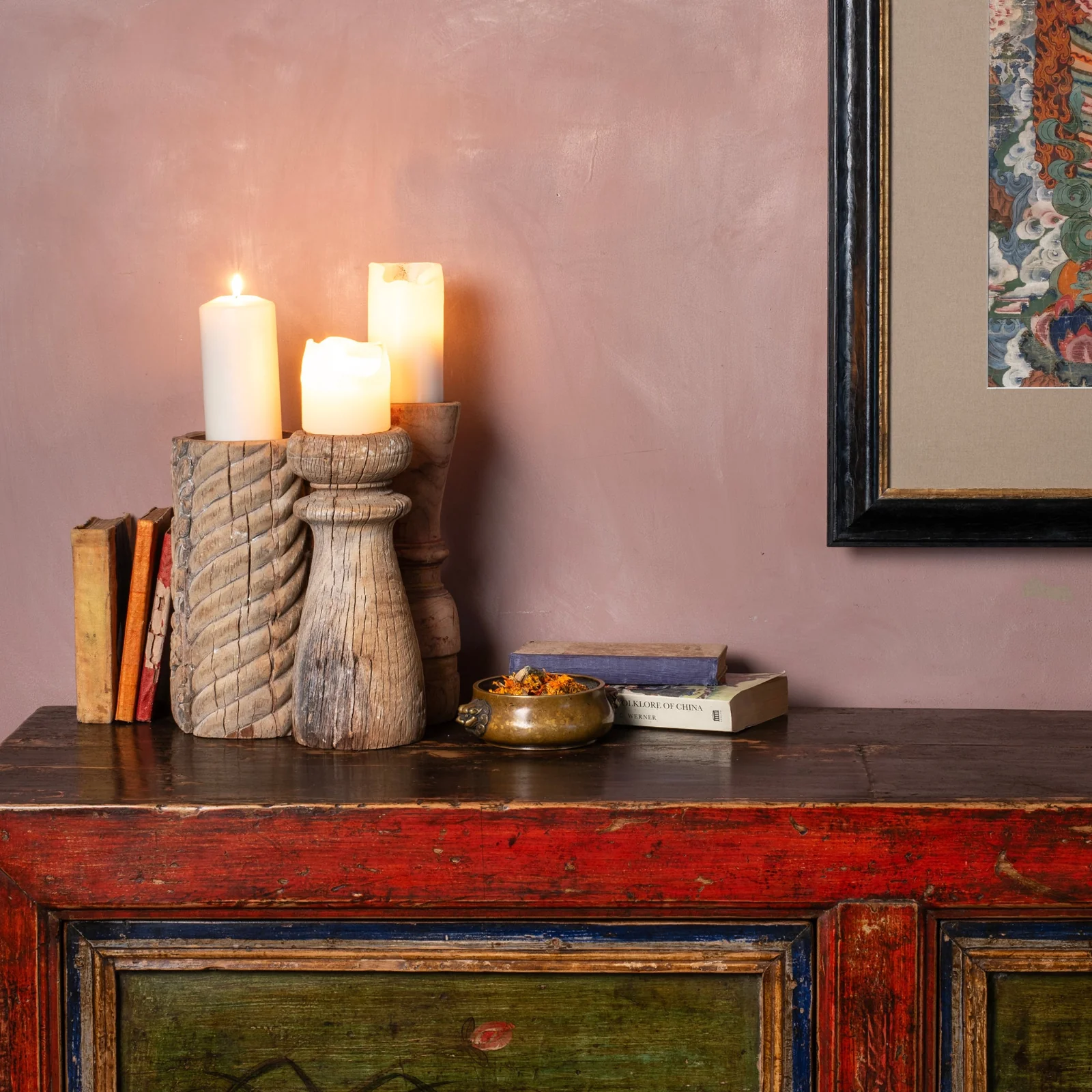
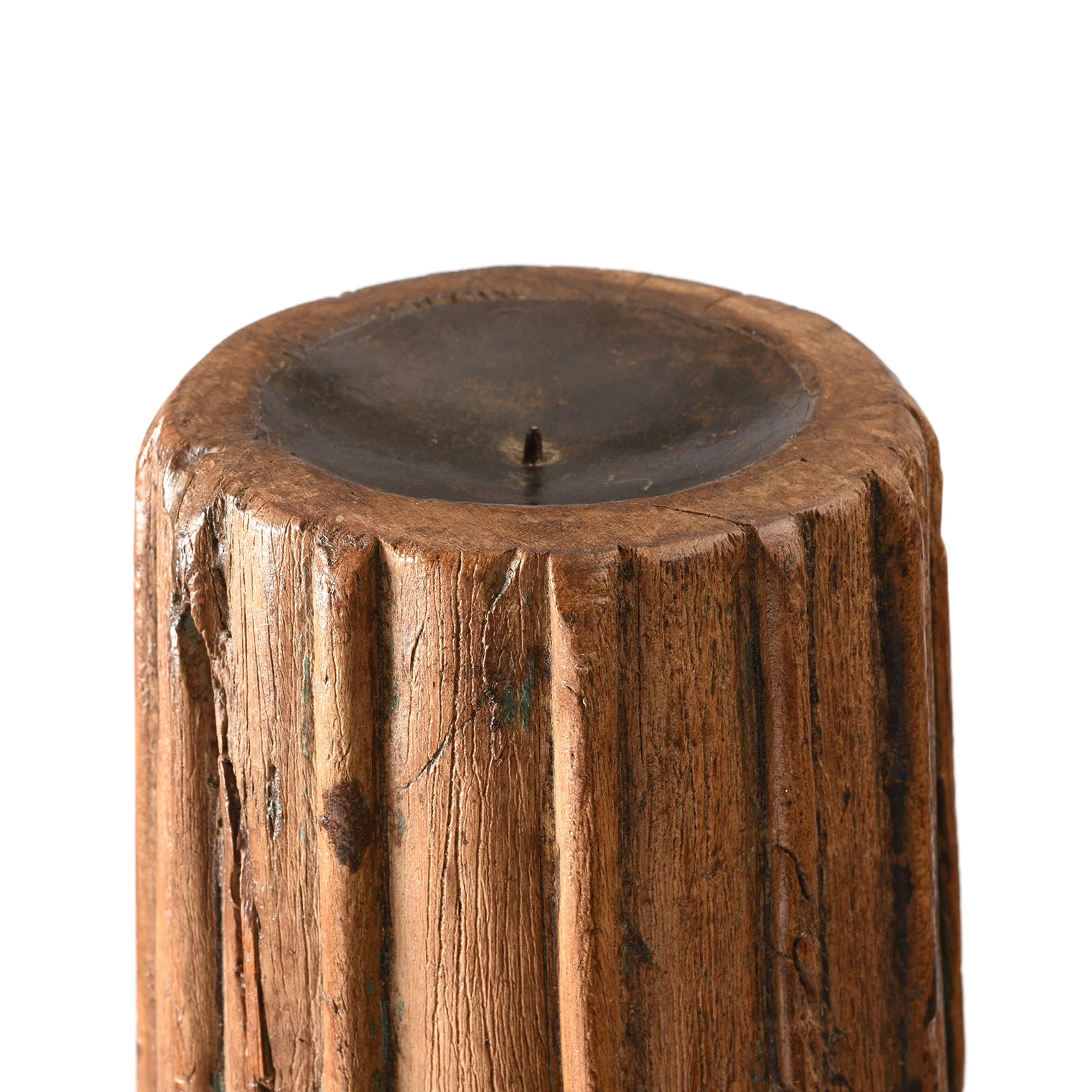
Like many utilitarian objects in India, the orani was crafted not only for function but also with decorative pride, likely by Marathi craftsmen in the 19th and early 20th centuries. Today, these sculptural agricultural tools are highly sought after as decorative objects and can be beautifully repurposed as a candlestand or displayed simply as a piece of folk art.
A closely related example is illustrated in Folk Art & Culture of Gujarat: A Guide to the Collection of the Shreyas Folk Museum of Gujarat by Jyotindra Jain (figure 197), underscoring the cultural and historical significance of this form.
- Origin: Gujarat / Maharashtra, India
- Date: 1920
- Material: Carved Hardwood
- Features: Elephant Carving To One Side, Lotus Leaf Motif To The Other, Three Seed Apertures
- Use: Originally Agricultural Seed Drill (Orani), Now Decorative Object Or Candlestand
- Condition: Age-Related Wear, Surface Patina, Historic Cracks Consistent With Use
- Dimensions: W24.5 x D16 x H21 cm
Original: $209.56
-65%$209.56
$73.35More Images
Carved Teak Seed Drill From Gujarat - Ca 1920
This beautifully carved antique Indian seed drill, known in Gujarat as an orani (ઓરણી), dates to the early 1900s and is a remarkable example of rural craftsmanship elevated through artistic expression. Originally designed as an agricultural implement used to sow seeds evenly in the fields, this particular form was found across Gujarat and Maharashtra, especially among Mer communities.
Hand-carved from solid hardwood, the drill features three seed apertures along the front and a richly sculpted body. One side depicts a caparisoned elephant — a symbol of strength and prosperity — while the opposing side is carved with a stylised lotus leaf motif framed by geometric borders. The carvings have been gently softened through more than a century of repeated daily handling and field use, and the surface has developed a deep, lustrous patina that speaks to its age and authenticity.
Like many utilitarian objects in India, the orani was crafted not only for function but also with decorative pride, likely by Marathi craftsmen in the 19th and early 20th centuries. Today, these sculptural agricultural tools are highly sought after as decorative objects and can be beautifully repurposed as a candlestand or displayed simply as a piece of folk art.
A closely related example is illustrated in Folk Art & Culture of Gujarat: A Guide to the Collection of the Shreyas Folk Museum of Gujarat by Jyotindra Jain (figure 197), underscoring the cultural and historical significance of this form.
- Origin: Gujarat / Maharashtra, India
- Date: 1920
- Material: Carved Hardwood
- Features: Elephant Carving To One Side, Lotus Leaf Motif To The Other, Three Seed Apertures
- Use: Originally Agricultural Seed Drill (Orani), Now Decorative Object Or Candlestand
- Condition: Age-Related Wear, Surface Patina, Historic Cracks Consistent With Use
- Dimensions: W24.5 x D16 x H21 cm
Product Information
Product Information
Shipping & Returns
Shipping & Returns
Description
This beautifully carved antique Indian seed drill, known in Gujarat as an orani (ઓરણી), dates to the early 1900s and is a remarkable example of rural craftsmanship elevated through artistic expression. Originally designed as an agricultural implement used to sow seeds evenly in the fields, this particular form was found across Gujarat and Maharashtra, especially among Mer communities.
Hand-carved from solid hardwood, the drill features three seed apertures along the front and a richly sculpted body. One side depicts a caparisoned elephant — a symbol of strength and prosperity — while the opposing side is carved with a stylised lotus leaf motif framed by geometric borders. The carvings have been gently softened through more than a century of repeated daily handling and field use, and the surface has developed a deep, lustrous patina that speaks to its age and authenticity.
Like many utilitarian objects in India, the orani was crafted not only for function but also with decorative pride, likely by Marathi craftsmen in the 19th and early 20th centuries. Today, these sculptural agricultural tools are highly sought after as decorative objects and can be beautifully repurposed as a candlestand or displayed simply as a piece of folk art.
A closely related example is illustrated in Folk Art & Culture of Gujarat: A Guide to the Collection of the Shreyas Folk Museum of Gujarat by Jyotindra Jain (figure 197), underscoring the cultural and historical significance of this form.
- Origin: Gujarat / Maharashtra, India
- Date: 1920
- Material: Carved Hardwood
- Features: Elephant Carving To One Side, Lotus Leaf Motif To The Other, Three Seed Apertures
- Use: Originally Agricultural Seed Drill (Orani), Now Decorative Object Or Candlestand
- Condition: Age-Related Wear, Surface Patina, Historic Cracks Consistent With Use
- Dimensions: W24.5 x D16 x H21 cm