
Rosewood Archway From Haryana - 19th Century
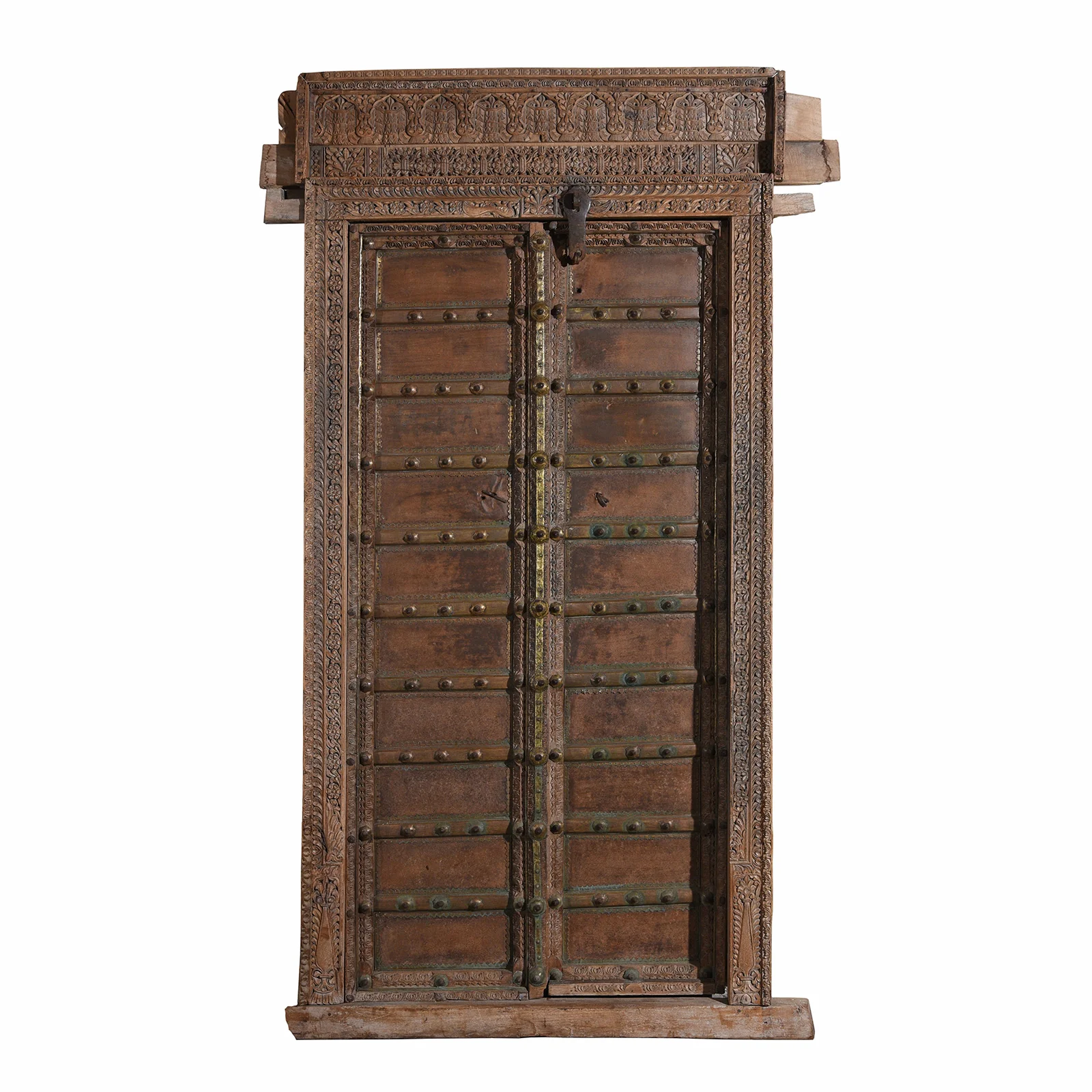
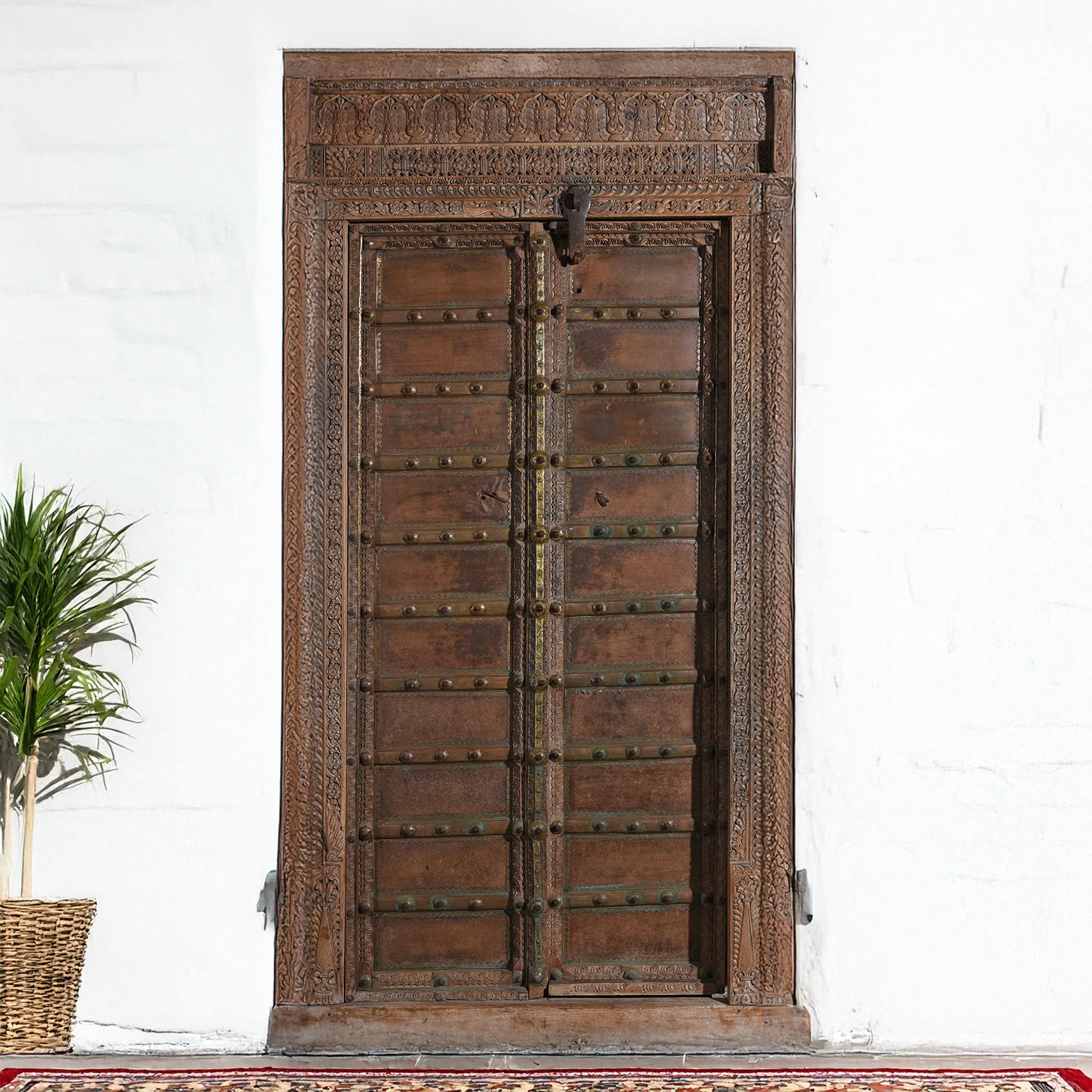
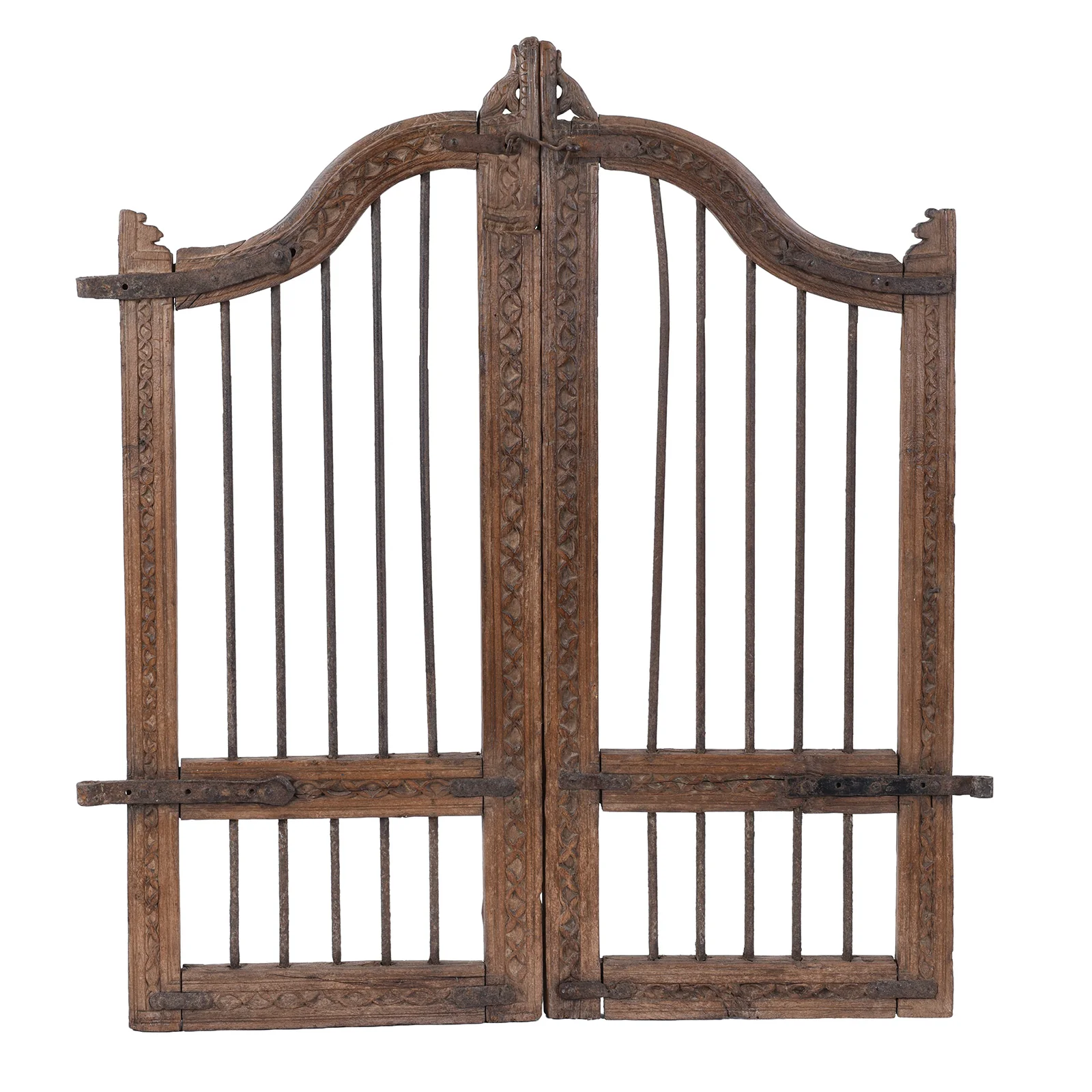
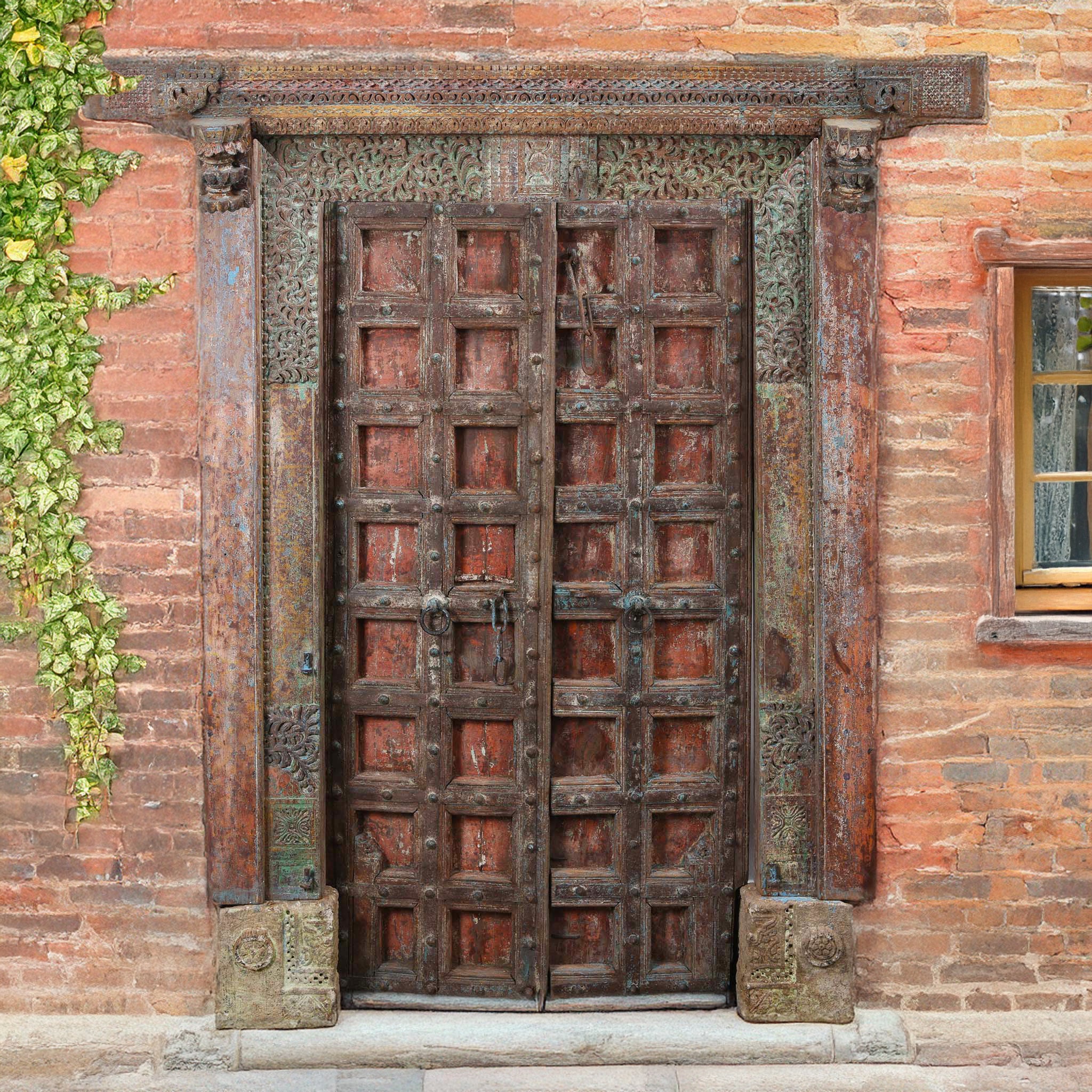
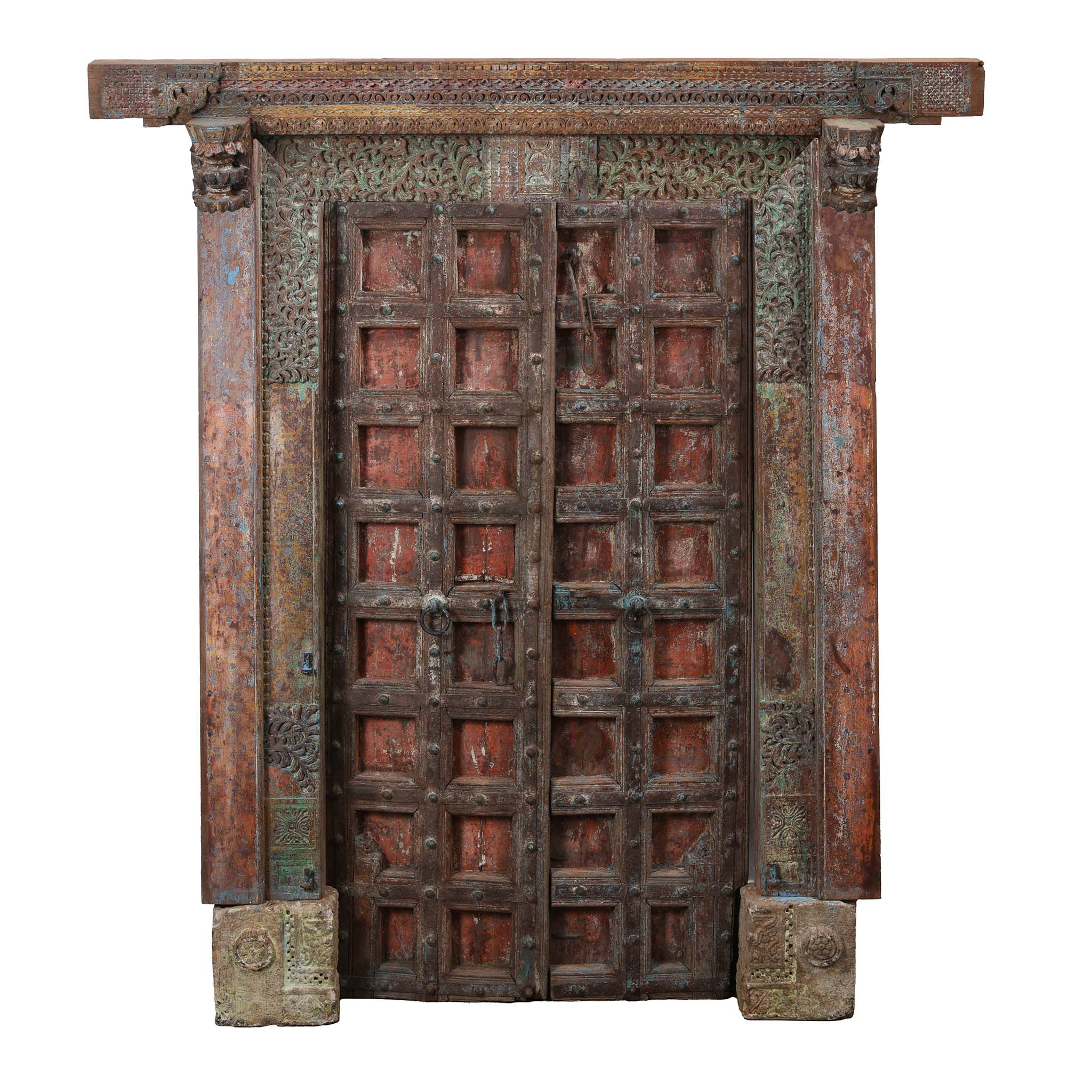
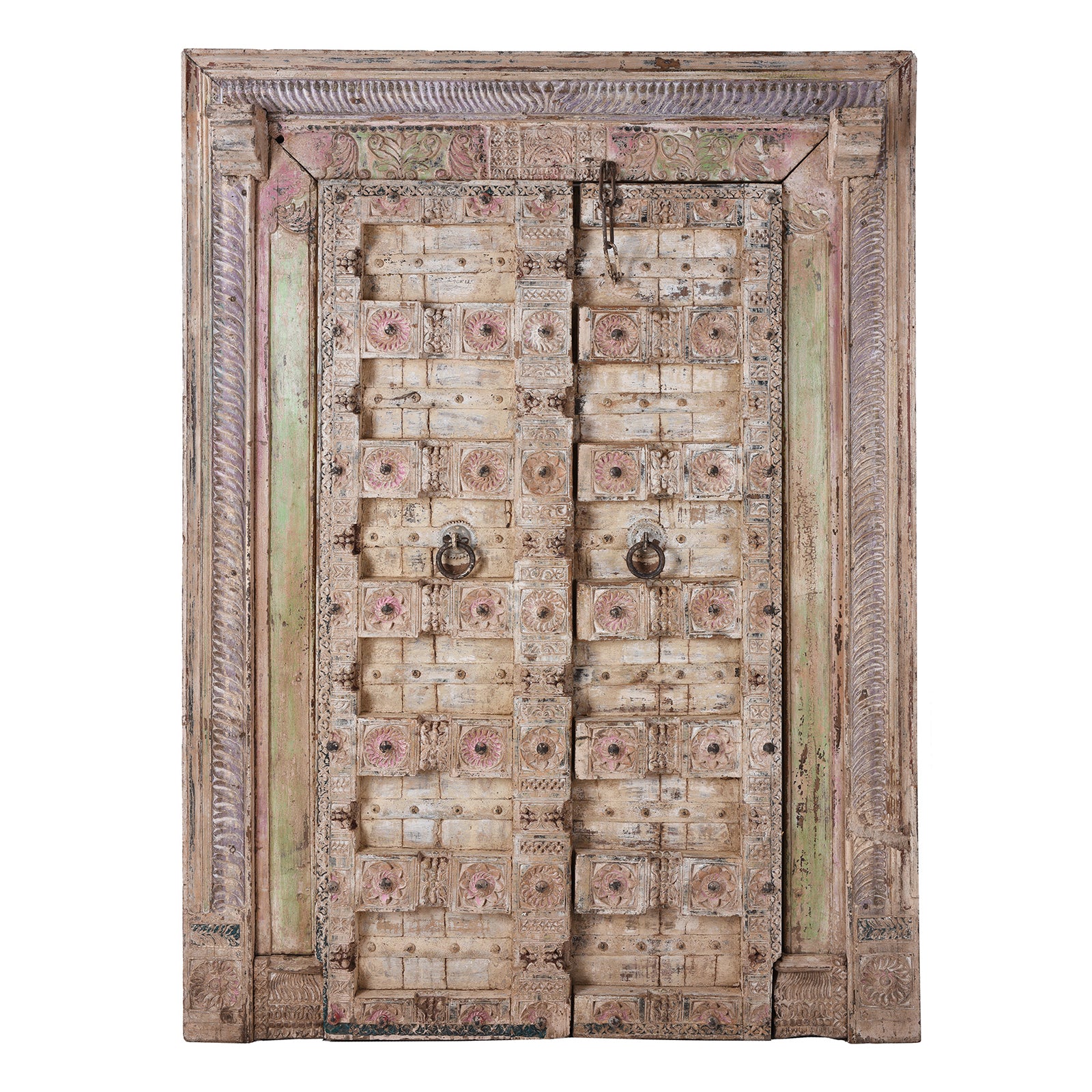
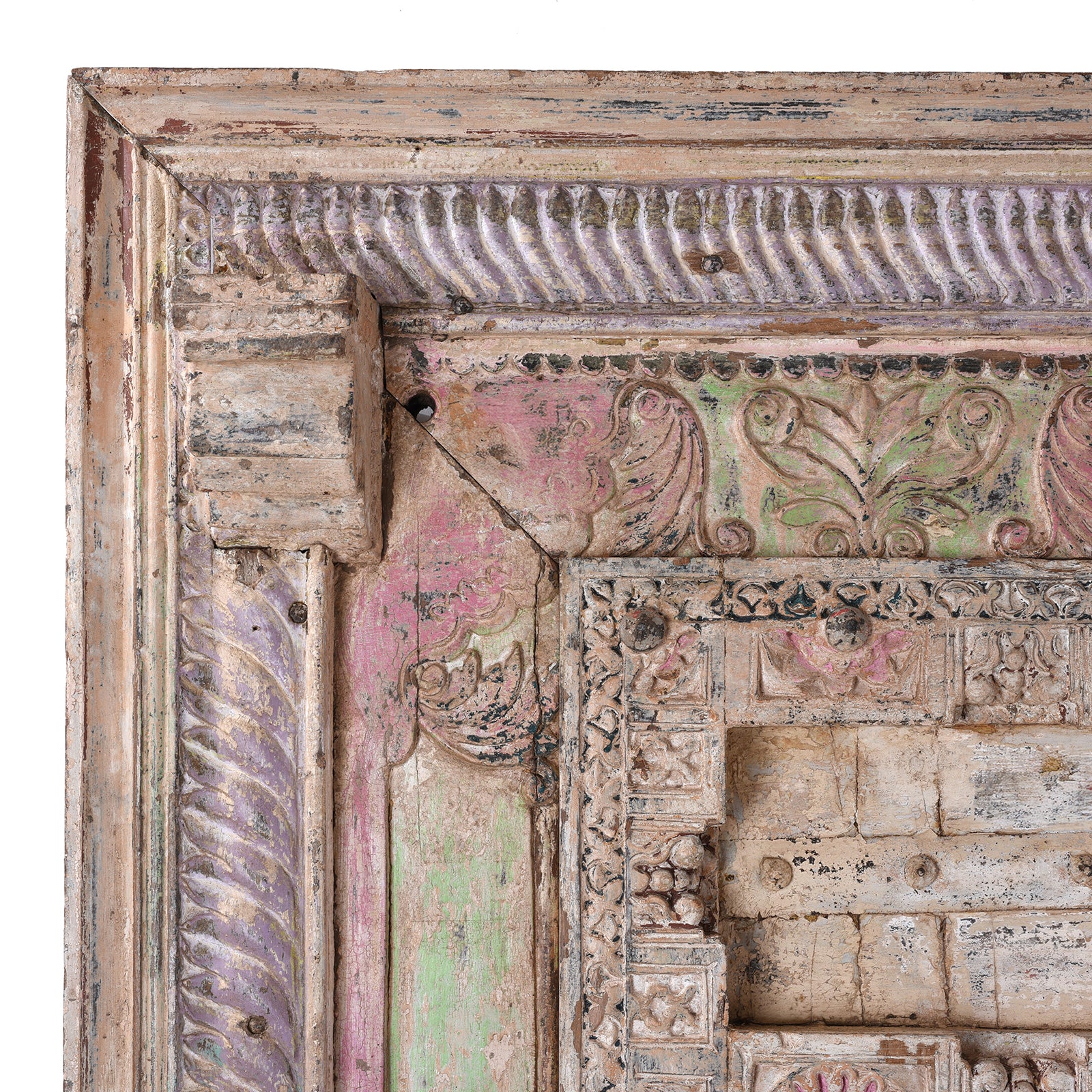
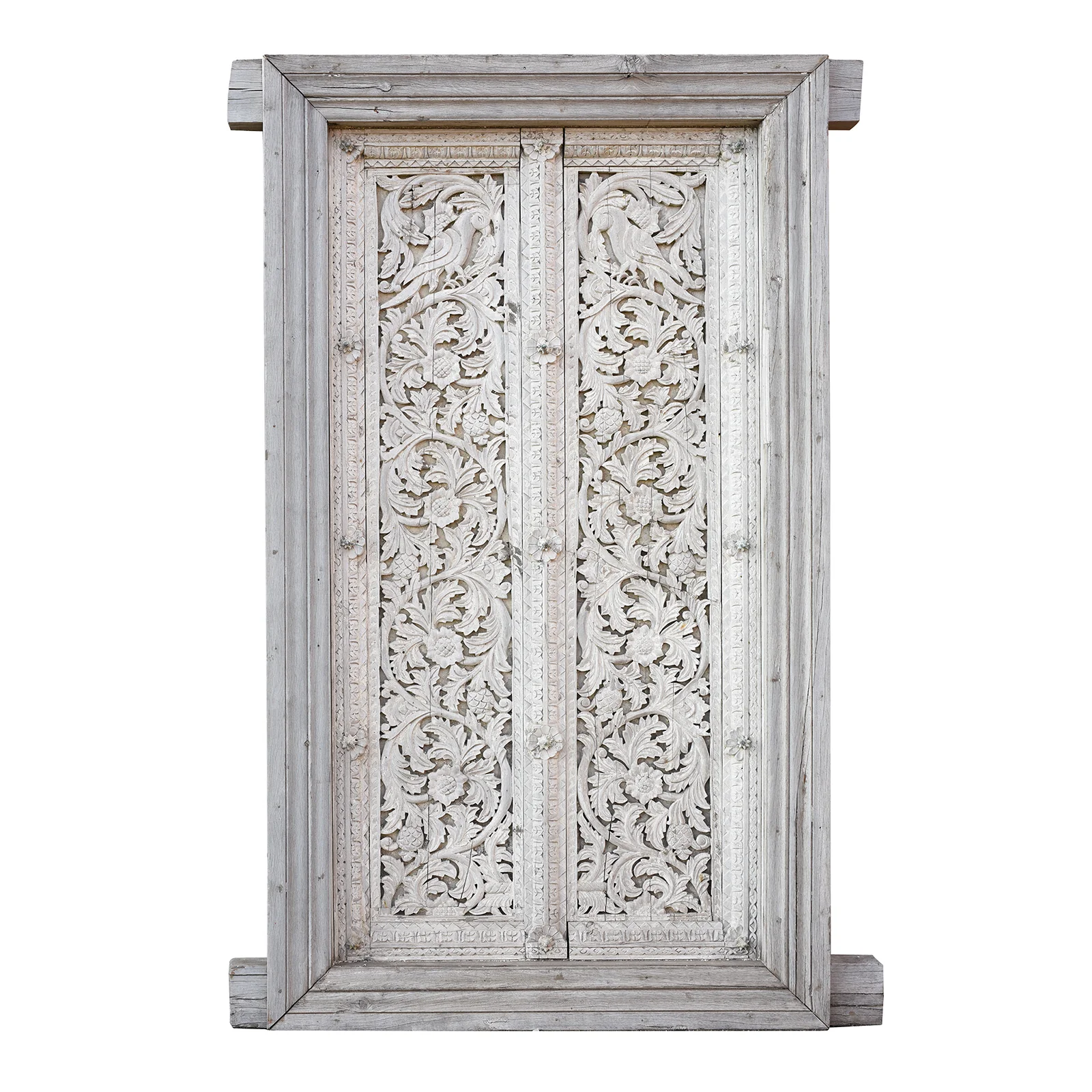
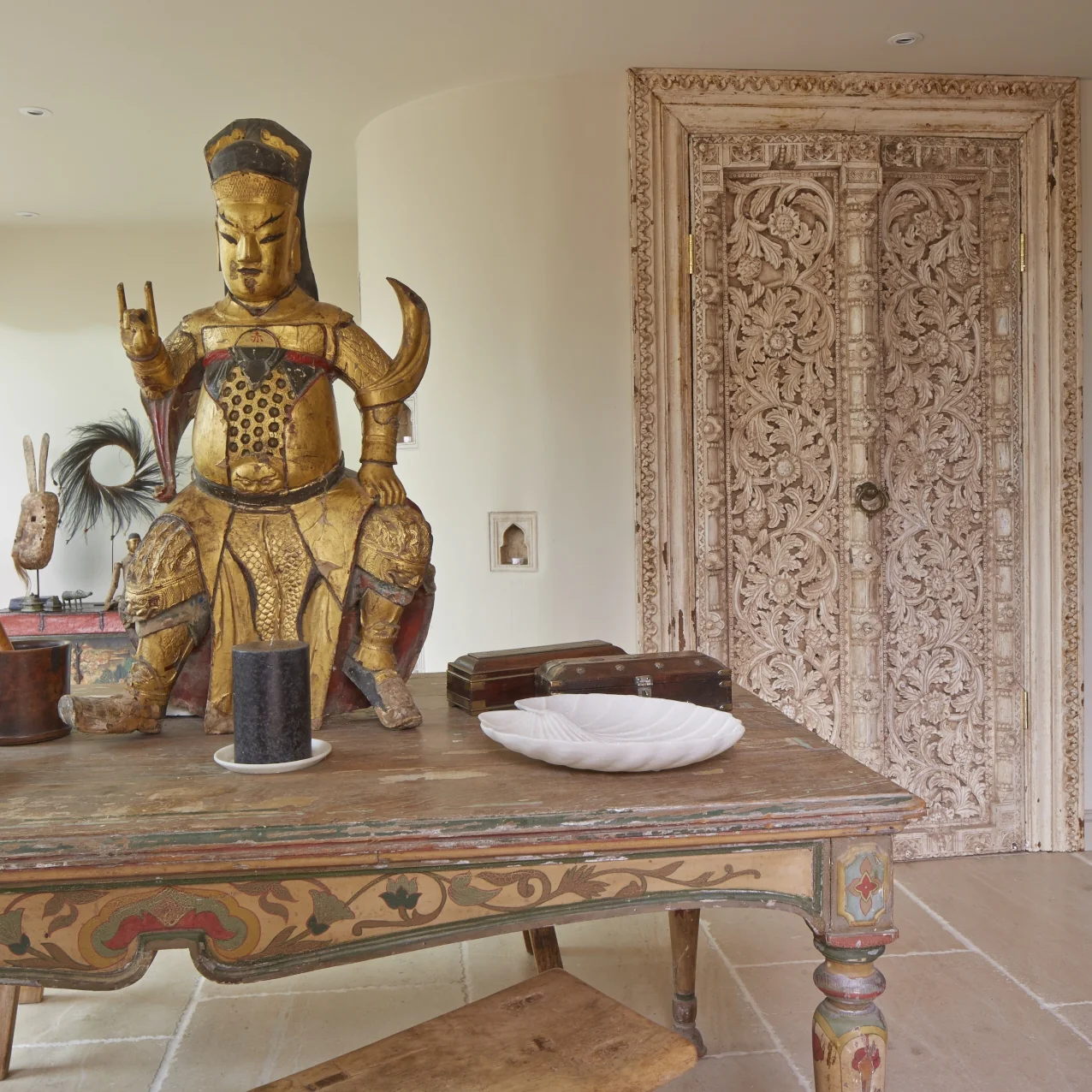
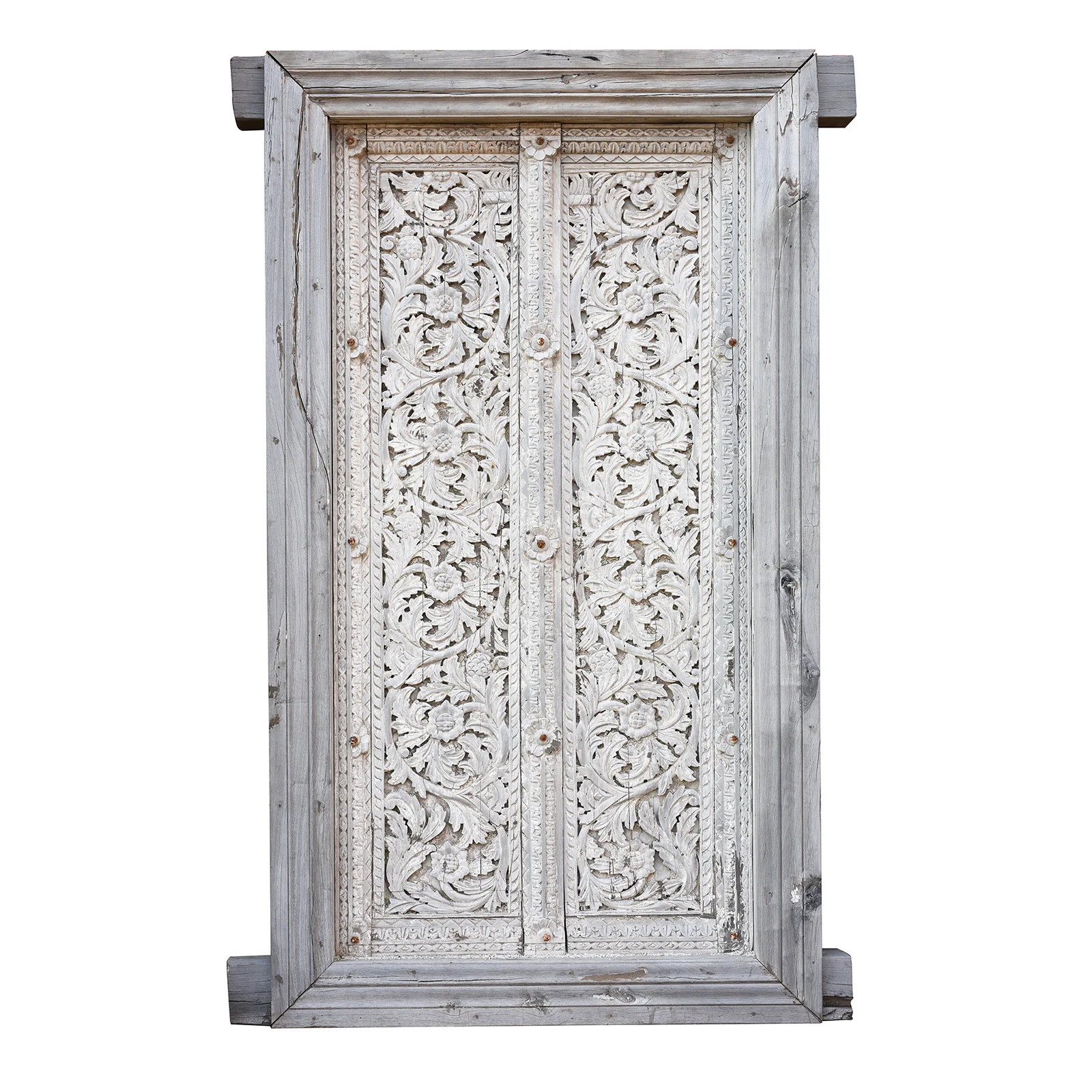
This 19th-century teak archway from Haryana is a substantial example of North Indian architectural craftsmanship, shaped by Mughal design and built to frame a space with both structure and ornament. The form is defined by a scalloped mihrab style inner arch, framed by deeply carved floral panels and a pierced lattice frieze, all executed with confident, hand-carved detail.
Set at the shoulders of the arch are a pair of carved roundels formed as padma (stylised lotus blossoms). In Indian architectural language, the lotus symbolises purity, renewal, and spiritual order, and is often placed at points of transition. Here, they emphasise the arch as a threshold, marking the passage from one space to another while bringing balance and symmetry to the overall composition.
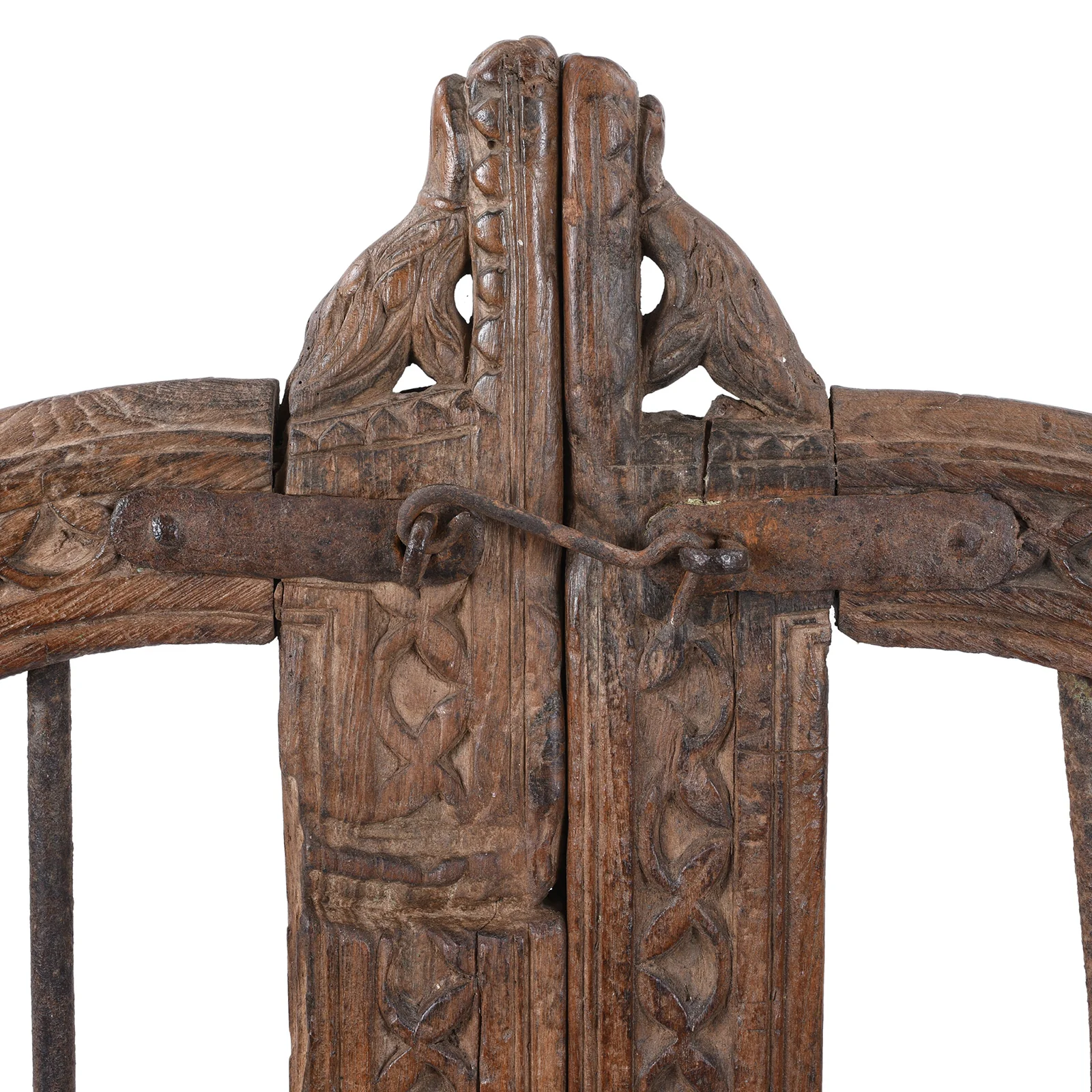
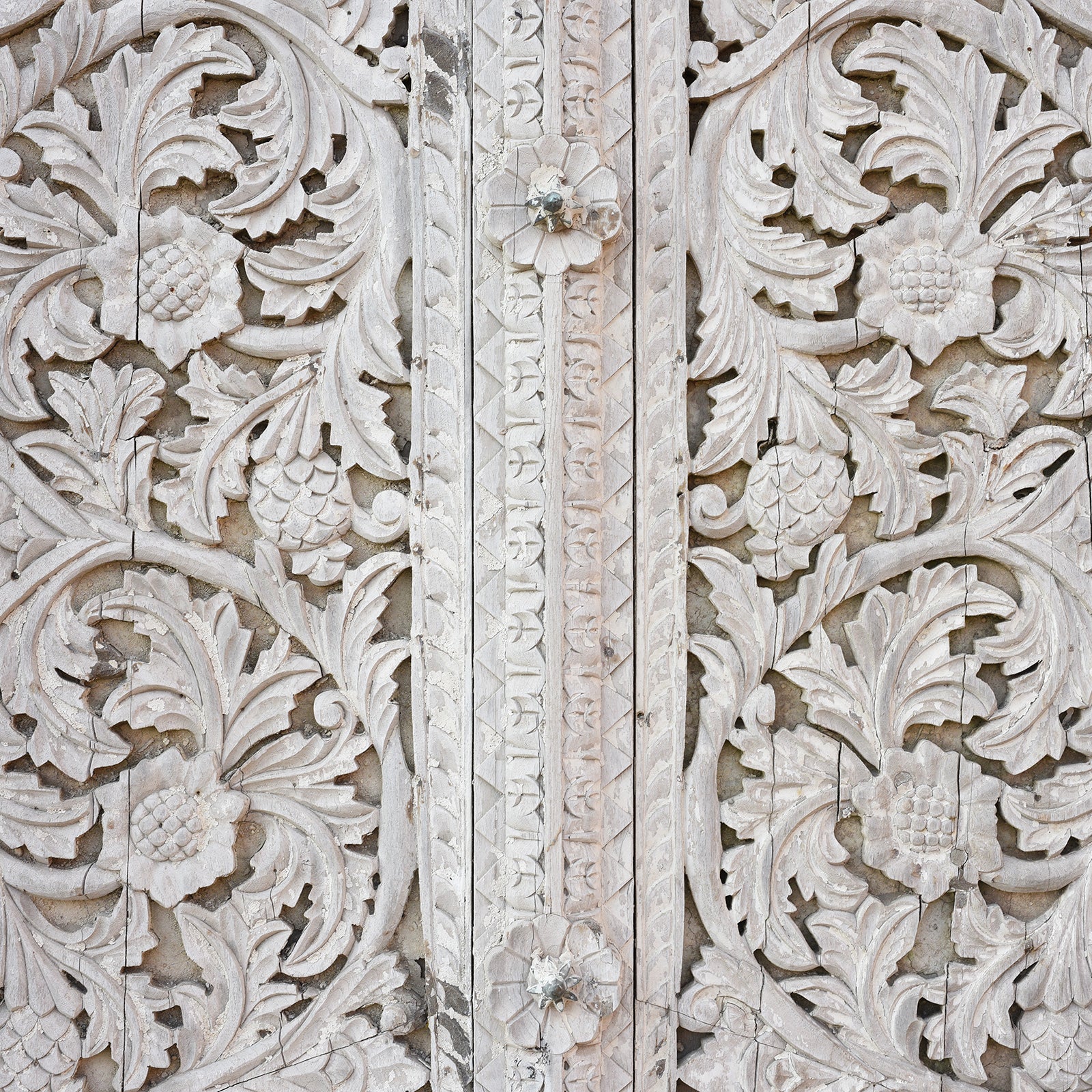
The surrounding carving continues this theme, with scrolling foliage and repeating floral patterns reflecting the Mughal preference for ordered, natural forms. Above, the pierced lattice panels introduce lightness and contrast, filtering light and softening the structure without losing its presence.
The teak has developed a soft, weathered surface over time, enhancing the depth of the carving and giving clarity to the relief work. As a complete architectural element, this is a piece designed to define a space rather than simply decorate it, equally effective indoors or in a sheltered outdoor setting.
Please note whilst the bottom threshold can be removed or recessed into the floor, the main arch cannot be disassembled, so access to your property should be carefully considered prior to purchase.
- Origin: Haryana, India
- Date: 19th Century
- Materials: Solid teak
- Features: Mughal-style scalloped arch, hand-carved floral panels, pierced geometric lattice frieze, carved padma (lotus) roundels, large-scale architectural element
- Condition: Antique condition with age-related wear, minor surface losses and a naturally developed patina consistent with architectural use. Restored in our UK workshops.
- Suitable for: Indoor or sheltered outdoor use
- Dimensions: Width 192 × Depth 14 × Height 278 cm
- Internal Dimensions: Width 117 × Depth 13 × Height 216 cm
A large and well-carved North Indian architectural arch, combining Mughal form with symbolic floral carving and strong architectural presence.
Original: $5,021.39
-65%$5,021.39
$1,757.49More Images


Rosewood Archway From Haryana - 19th Century
This 19th-century teak archway from Haryana is a substantial example of North Indian architectural craftsmanship, shaped by Mughal design and built to frame a space with both structure and ornament. The form is defined by a scalloped mihrab style inner arch, framed by deeply carved floral panels and a pierced lattice frieze, all executed with confident, hand-carved detail.
Set at the shoulders of the arch are a pair of carved roundels formed as padma (stylised lotus blossoms). In Indian architectural language, the lotus symbolises purity, renewal, and spiritual order, and is often placed at points of transition. Here, they emphasise the arch as a threshold, marking the passage from one space to another while bringing balance and symmetry to the overall composition.
The surrounding carving continues this theme, with scrolling foliage and repeating floral patterns reflecting the Mughal preference for ordered, natural forms. Above, the pierced lattice panels introduce lightness and contrast, filtering light and softening the structure without losing its presence.
The teak has developed a soft, weathered surface over time, enhancing the depth of the carving and giving clarity to the relief work. As a complete architectural element, this is a piece designed to define a space rather than simply decorate it, equally effective indoors or in a sheltered outdoor setting.
Please note whilst the bottom threshold can be removed or recessed into the floor, the main arch cannot be disassembled, so access to your property should be carefully considered prior to purchase.
- Origin: Haryana, India
- Date: 19th Century
- Materials: Solid teak
- Features: Mughal-style scalloped arch, hand-carved floral panels, pierced geometric lattice frieze, carved padma (lotus) roundels, large-scale architectural element
- Condition: Antique condition with age-related wear, minor surface losses and a naturally developed patina consistent with architectural use. Restored in our UK workshops.
- Suitable for: Indoor or sheltered outdoor use
- Dimensions: Width 192 × Depth 14 × Height 278 cm
- Internal Dimensions: Width 117 × Depth 13 × Height 216 cm
A large and well-carved North Indian architectural arch, combining Mughal form with symbolic floral carving and strong architectural presence.
Product Information
Product Information
Shipping & Returns
Shipping & Returns
Description
This 19th-century teak archway from Haryana is a substantial example of North Indian architectural craftsmanship, shaped by Mughal design and built to frame a space with both structure and ornament. The form is defined by a scalloped mihrab style inner arch, framed by deeply carved floral panels and a pierced lattice frieze, all executed with confident, hand-carved detail.
Set at the shoulders of the arch are a pair of carved roundels formed as padma (stylised lotus blossoms). In Indian architectural language, the lotus symbolises purity, renewal, and spiritual order, and is often placed at points of transition. Here, they emphasise the arch as a threshold, marking the passage from one space to another while bringing balance and symmetry to the overall composition.
The surrounding carving continues this theme, with scrolling foliage and repeating floral patterns reflecting the Mughal preference for ordered, natural forms. Above, the pierced lattice panels introduce lightness and contrast, filtering light and softening the structure without losing its presence.
The teak has developed a soft, weathered surface over time, enhancing the depth of the carving and giving clarity to the relief work. As a complete architectural element, this is a piece designed to define a space rather than simply decorate it, equally effective indoors or in a sheltered outdoor setting.
Please note whilst the bottom threshold can be removed or recessed into the floor, the main arch cannot be disassembled, so access to your property should be carefully considered prior to purchase.
- Origin: Haryana, India
- Date: 19th Century
- Materials: Solid teak
- Features: Mughal-style scalloped arch, hand-carved floral panels, pierced geometric lattice frieze, carved padma (lotus) roundels, large-scale architectural element
- Condition: Antique condition with age-related wear, minor surface losses and a naturally developed patina consistent with architectural use. Restored in our UK workshops.
- Suitable for: Indoor or sheltered outdoor use
- Dimensions: Width 192 × Depth 14 × Height 278 cm
- Internal Dimensions: Width 117 × Depth 13 × Height 216 cm
A large and well-carved North Indian architectural arch, combining Mughal form with symbolic floral carving and strong architectural presence.