Carved Teak Kharal - Opium Grinder -19th Century
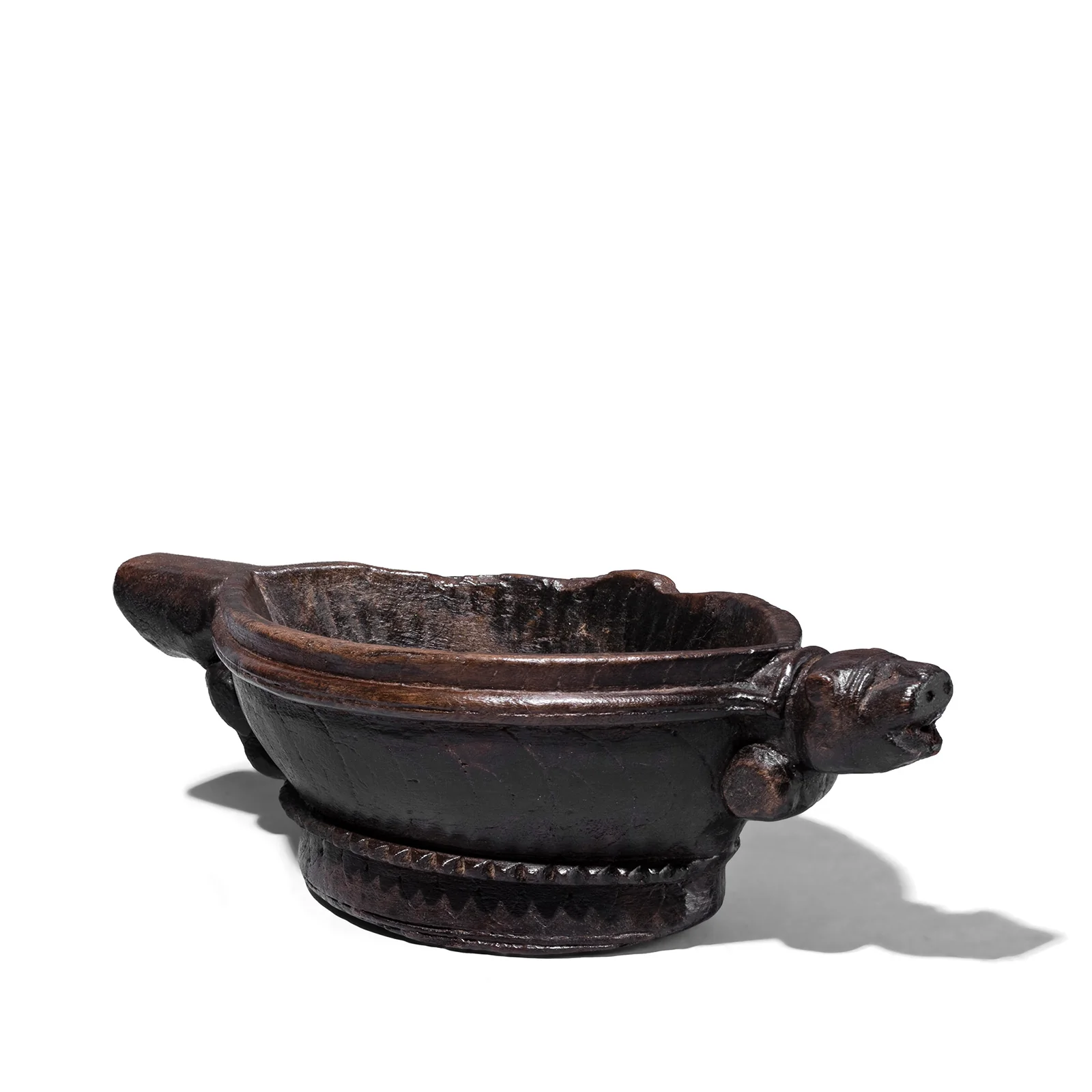
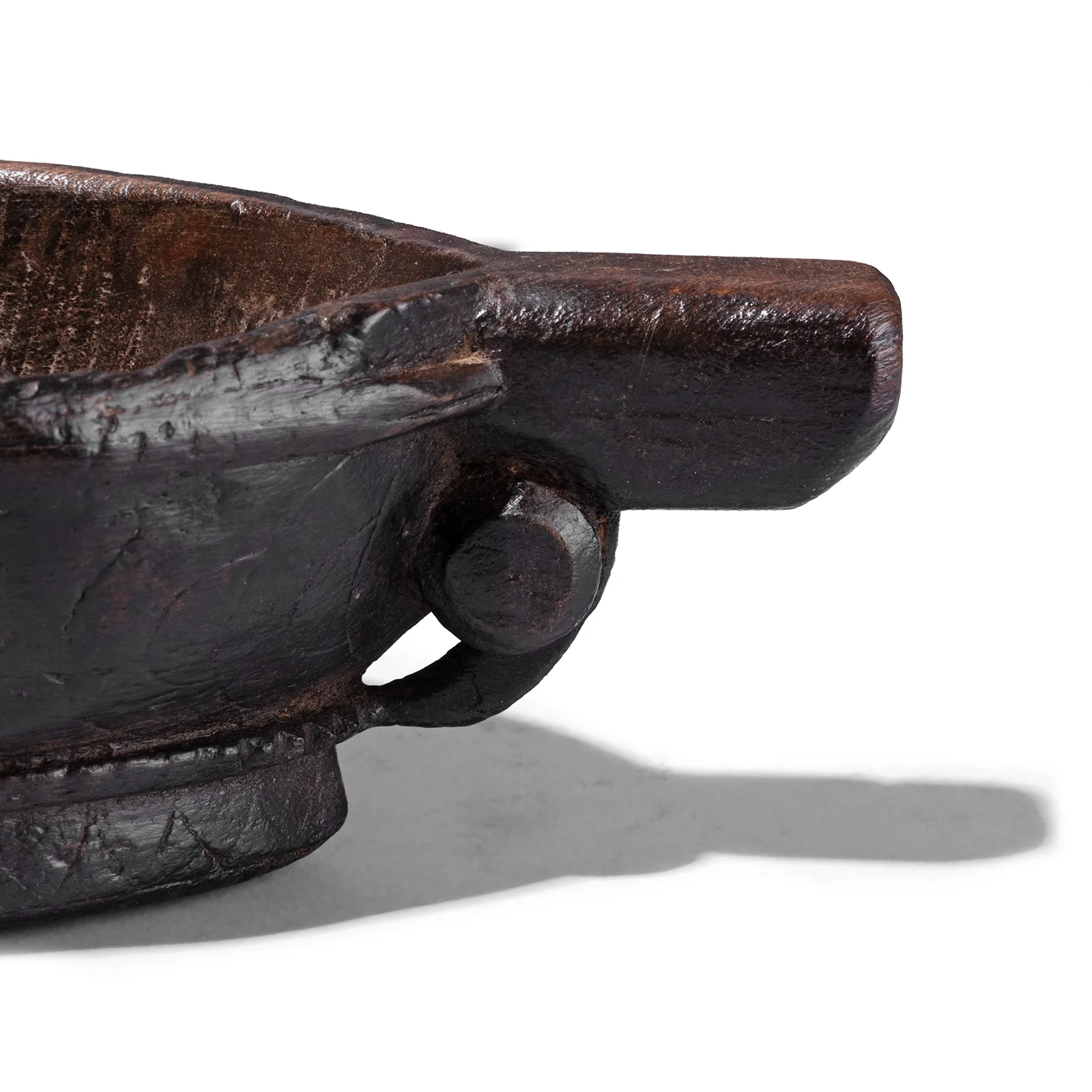
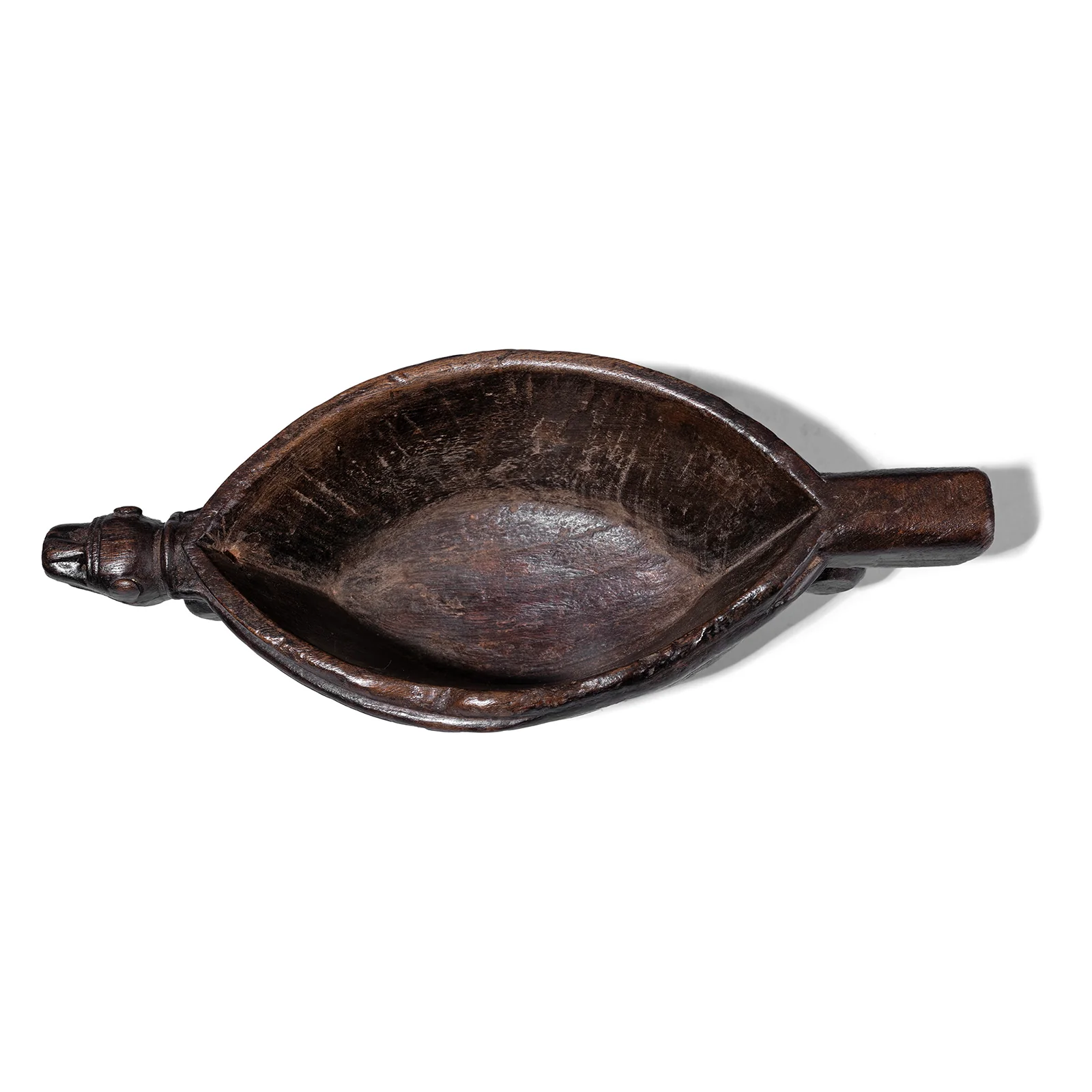
This beautifully carved 19th-century teak kharal from Rajasthan was traditionally used for grinding opium, an important part of rural ritual life for centuries. Hand-carved from a single solid piece of teak, it has developed a deep, dark patina from long use and careful handling over generations. The sculptor has shaped the vessel with elegant, leaf-like contours, and the spout end is carved with the stylised head of a tiger, its open mouth and rounded features giving the piece a lively presence. Tiger motifs symbolise power, guardianship and protection in Rajasthani folk tradition.
Objects such as this were treasured family possessions, passed down from generation to generation and used during ceremonial gatherings where opium was prepared and shared. Today, it stands as a tactile and evocative example of Rajasthani domestic craft, carrying both cultural significance and sculptural beauty.
- Origin: Rajasthan, India
- Date: 19th Century
- Materials: Carved teak
- Features: Single-piece carving, tiger-head spout, dark patinated surface, traditional opium-grinding form
- Condition: Worn and patinated from long use, consistent with age
- Dimensions: W30 x D13 x H9 cm
Original: $301.50
-65%$301.50
$105.52More Images
Carved Teak Kharal - Opium Grinder -19th Century
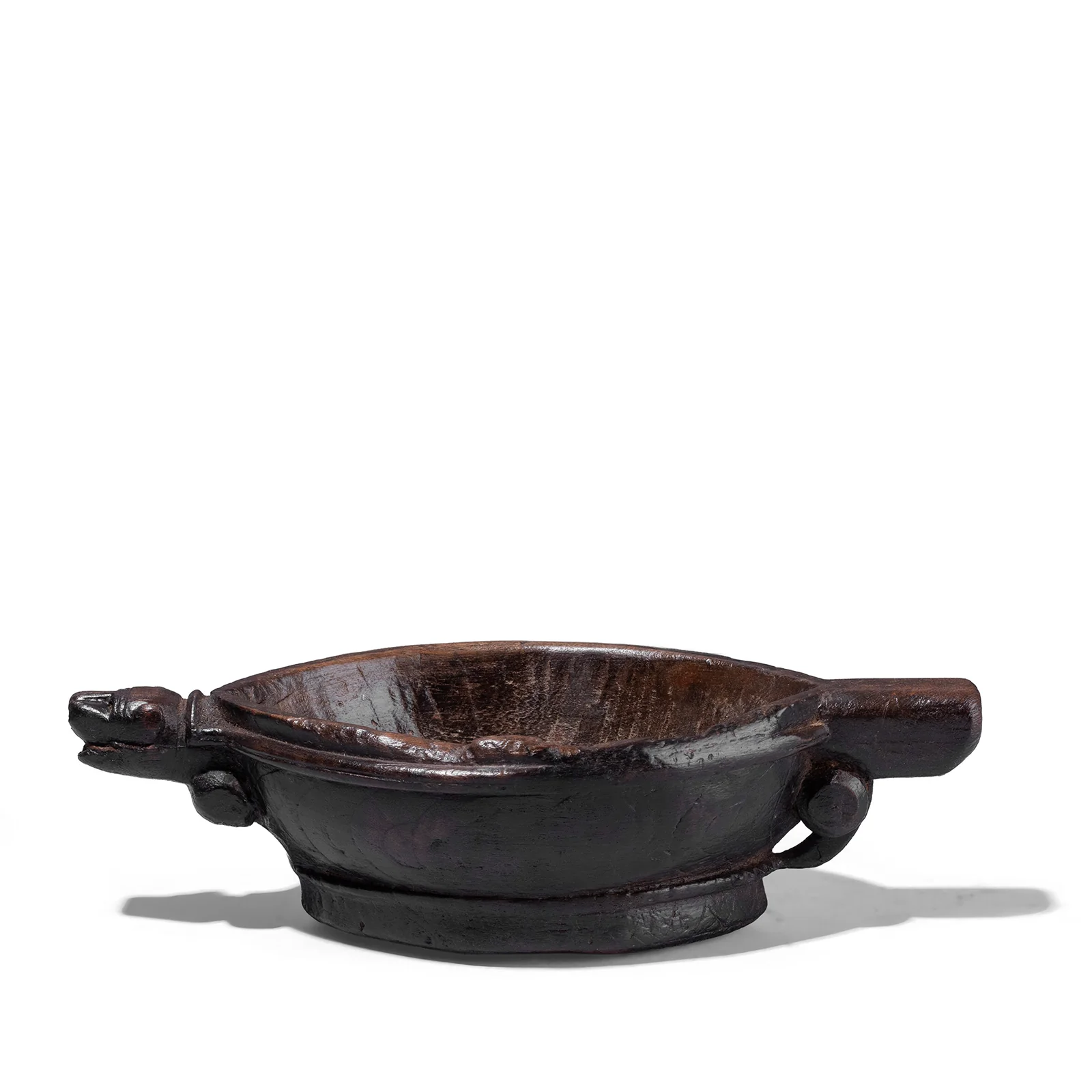
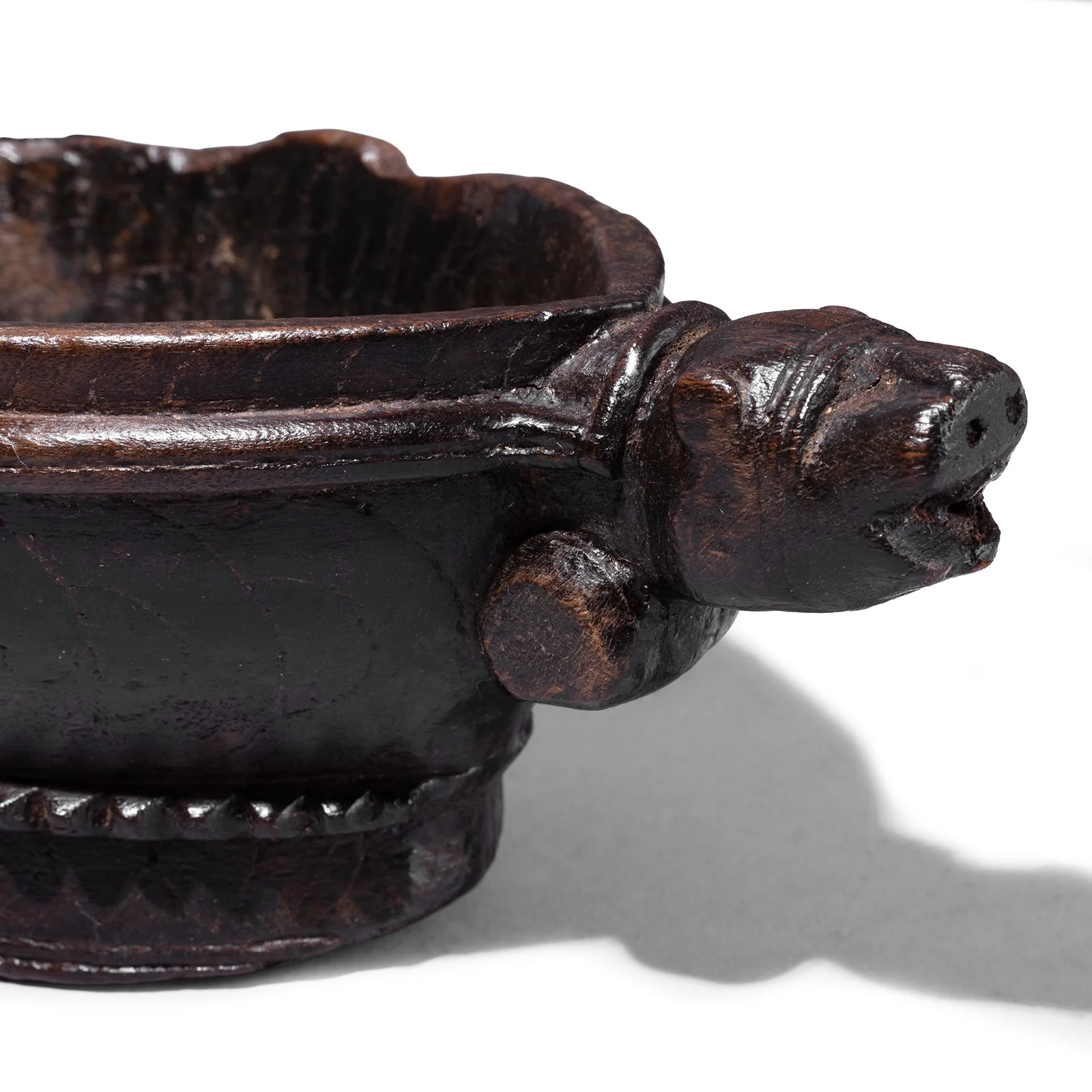
This beautifully carved 19th-century teak kharal from Rajasthan was traditionally used for grinding opium, an important part of rural ritual life for centuries. Hand-carved from a single solid piece of teak, it has developed a deep, dark patina from long use and careful handling over generations. The sculptor has shaped the vessel with elegant, leaf-like contours, and the spout end is carved with the stylised head of a tiger, its open mouth and rounded features giving the piece a lively presence. Tiger motifs symbolise power, guardianship and protection in Rajasthani folk tradition.
Objects such as this were treasured family possessions, passed down from generation to generation and used during ceremonial gatherings where opium was prepared and shared. Today, it stands as a tactile and evocative example of Rajasthani domestic craft, carrying both cultural significance and sculptural beauty.
- Origin: Rajasthan, India
- Date: 19th Century
- Materials: Carved teak
- Features: Single-piece carving, tiger-head spout, dark patinated surface, traditional opium-grinding form
- Condition: Worn and patinated from long use, consistent with age
- Dimensions: W30 x D13 x H9 cm
Product Information
Product Information
Shipping & Returns
Shipping & Returns
Description
This beautifully carved 19th-century teak kharal from Rajasthan was traditionally used for grinding opium, an important part of rural ritual life for centuries. Hand-carved from a single solid piece of teak, it has developed a deep, dark patina from long use and careful handling over generations. The sculptor has shaped the vessel with elegant, leaf-like contours, and the spout end is carved with the stylised head of a tiger, its open mouth and rounded features giving the piece a lively presence. Tiger motifs symbolise power, guardianship and protection in Rajasthani folk tradition.
Objects such as this were treasured family possessions, passed down from generation to generation and used during ceremonial gatherings where opium was prepared and shared. Today, it stands as a tactile and evocative example of Rajasthani domestic craft, carrying both cultural significance and sculptural beauty.
- Origin: Rajasthan, India
- Date: 19th Century
- Materials: Carved teak
- Features: Single-piece carving, tiger-head spout, dark patinated surface, traditional opium-grinding form
- Condition: Worn and patinated from long use, consistent with age
- Dimensions: W30 x D13 x H9 cm