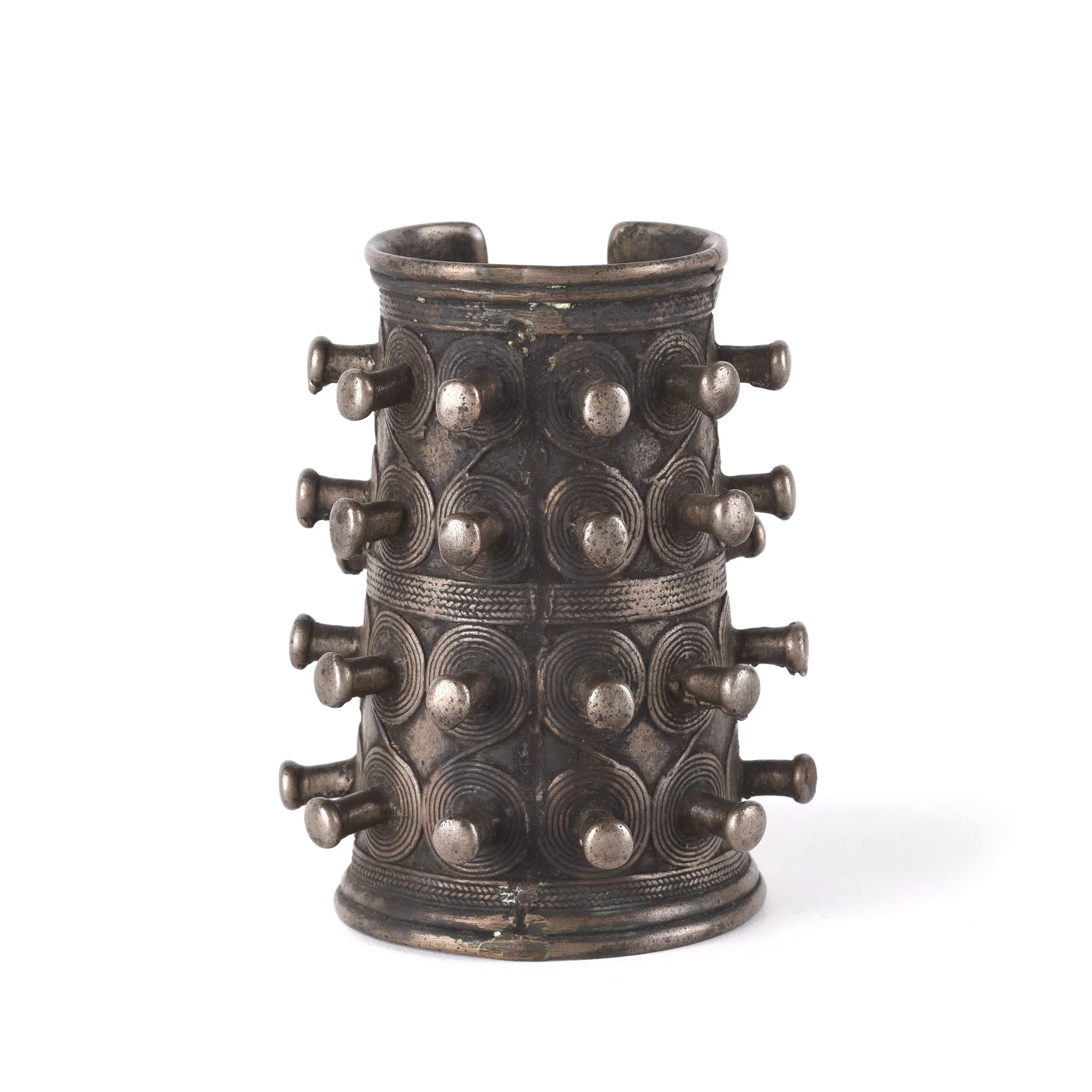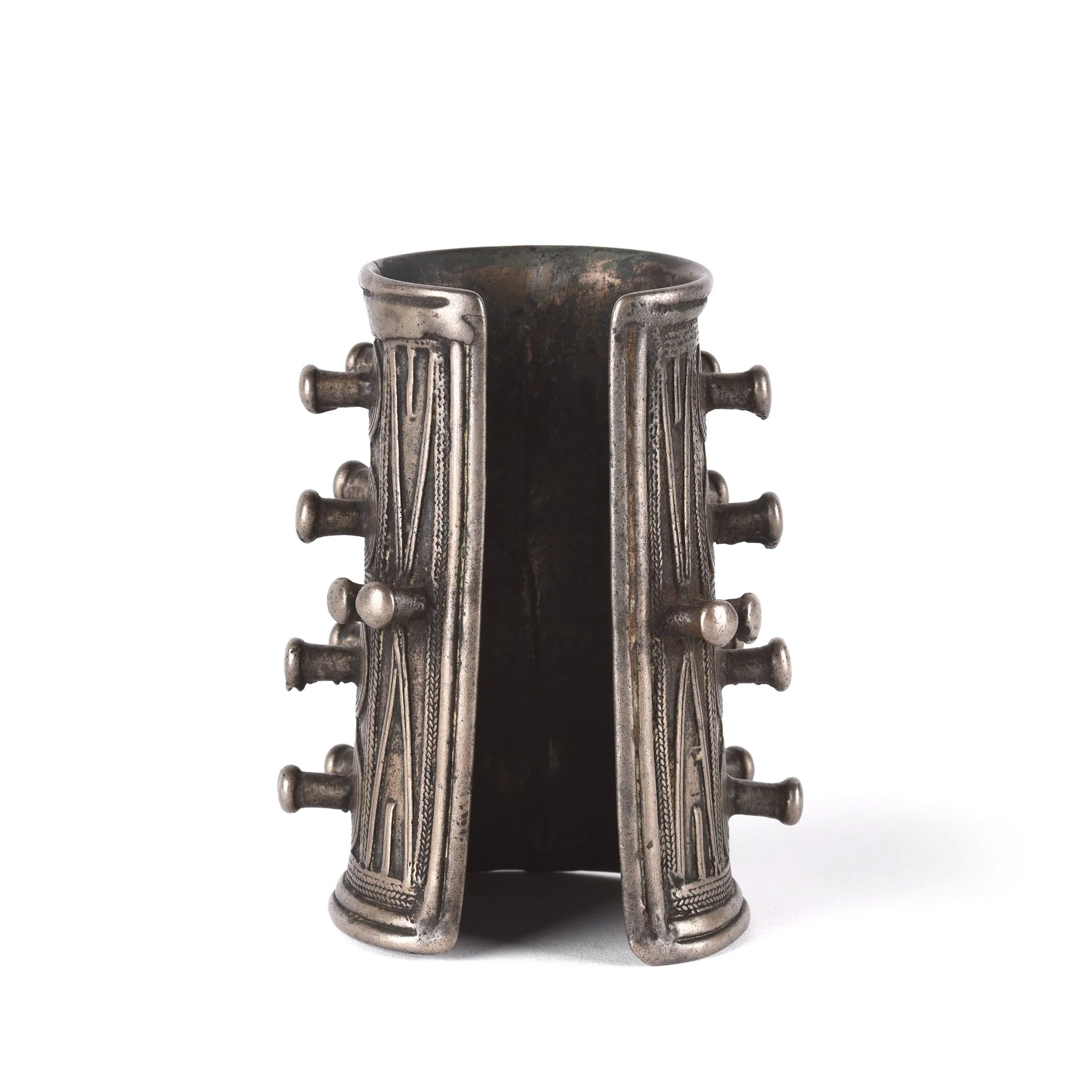
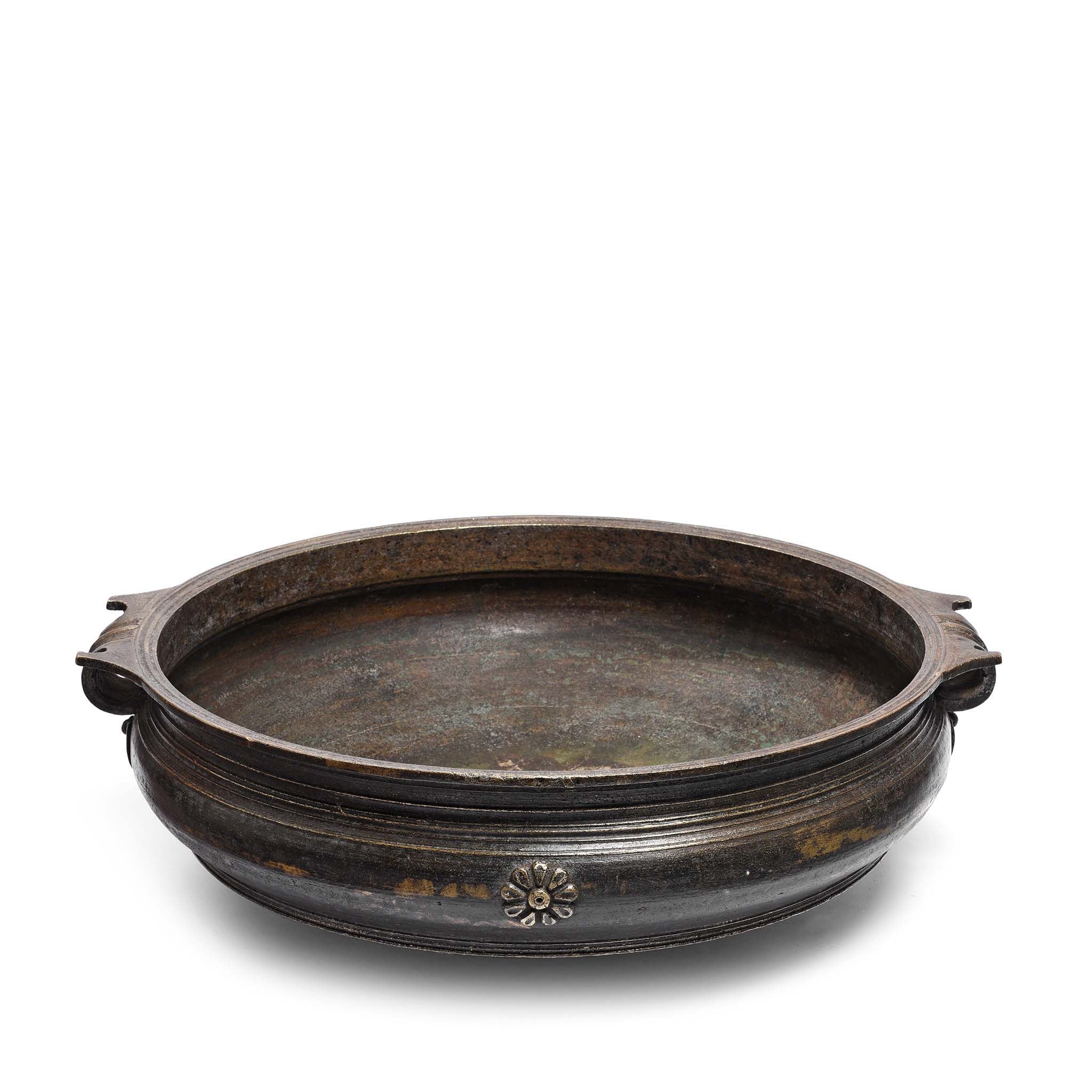
Bronze Urli from South India - Late 19th Century
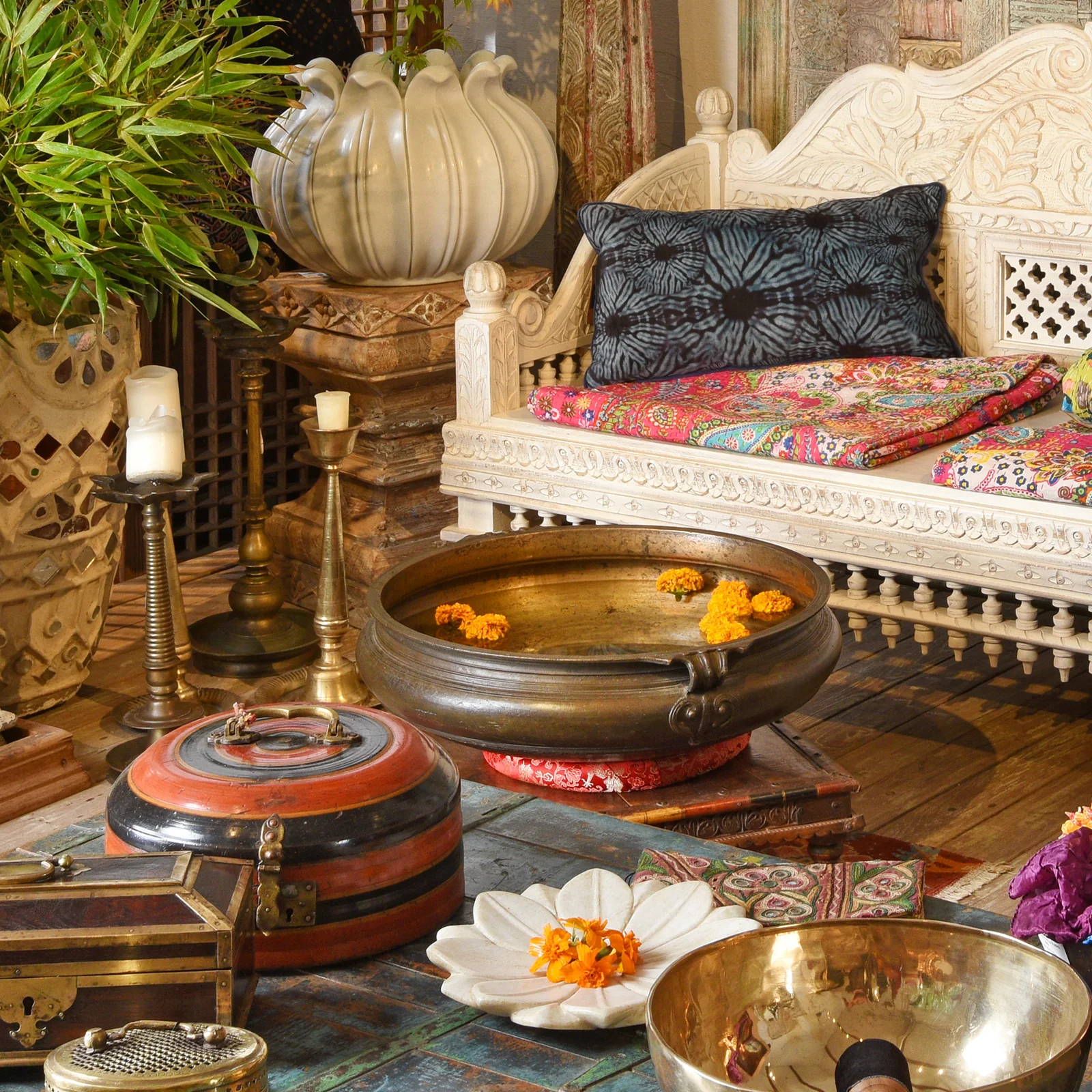
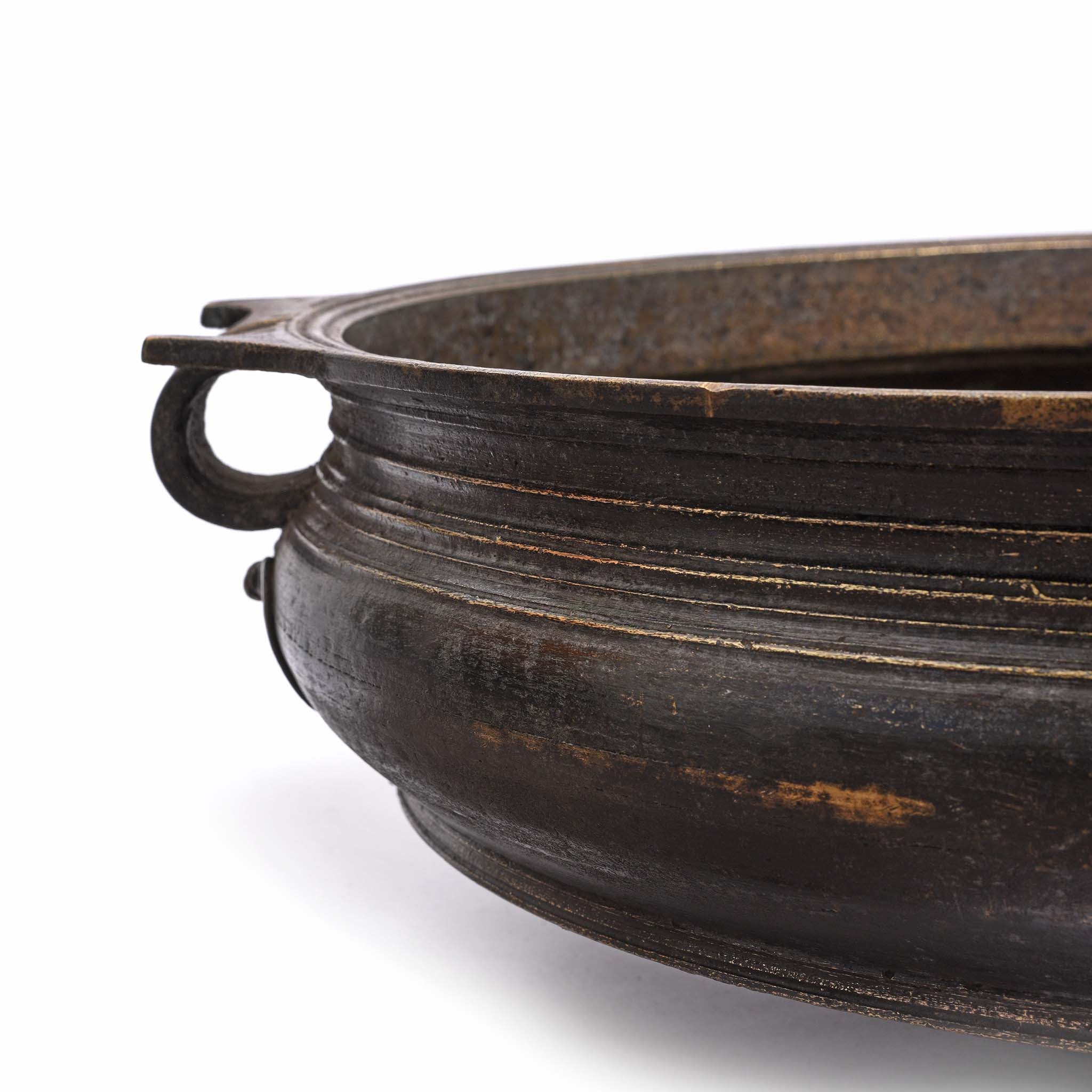
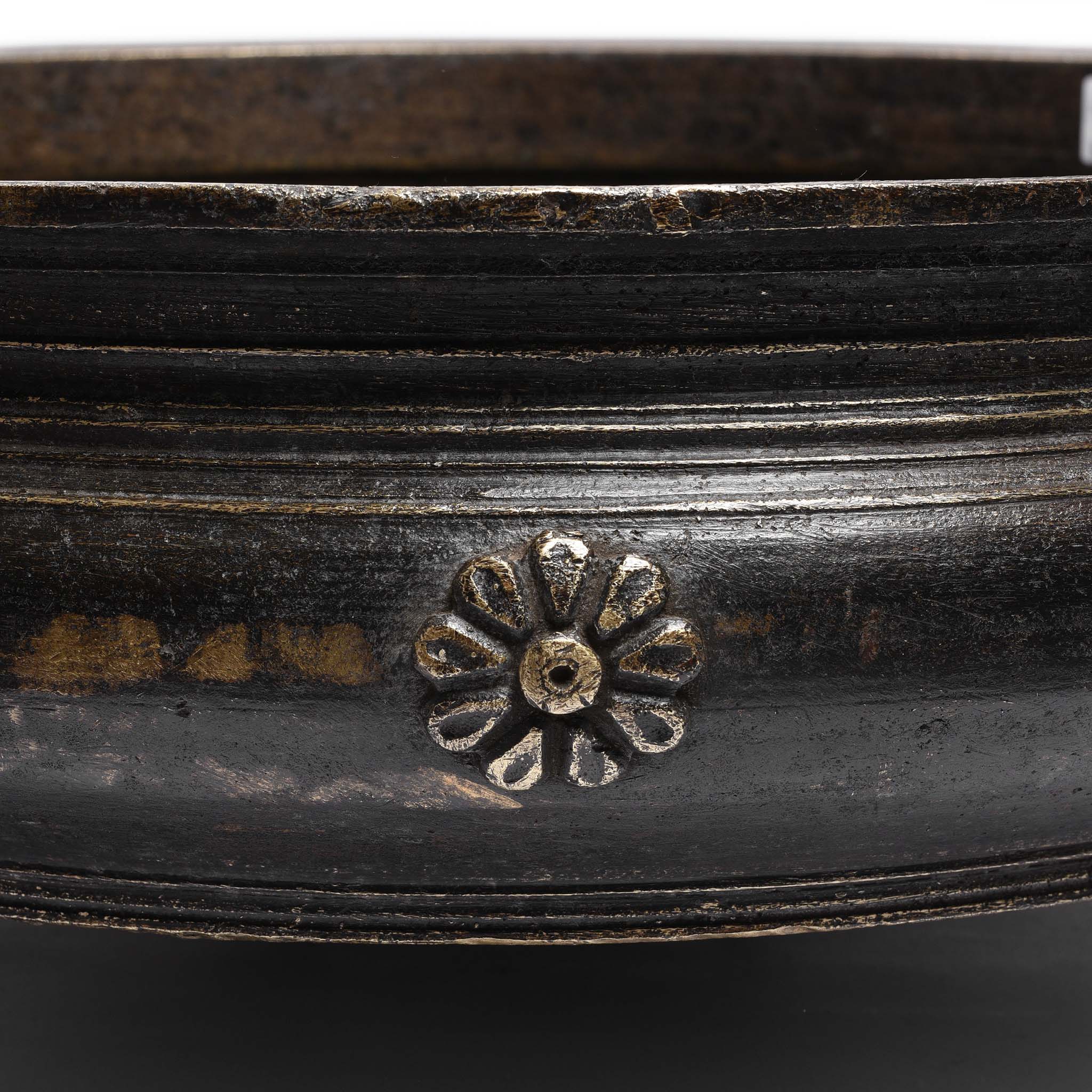
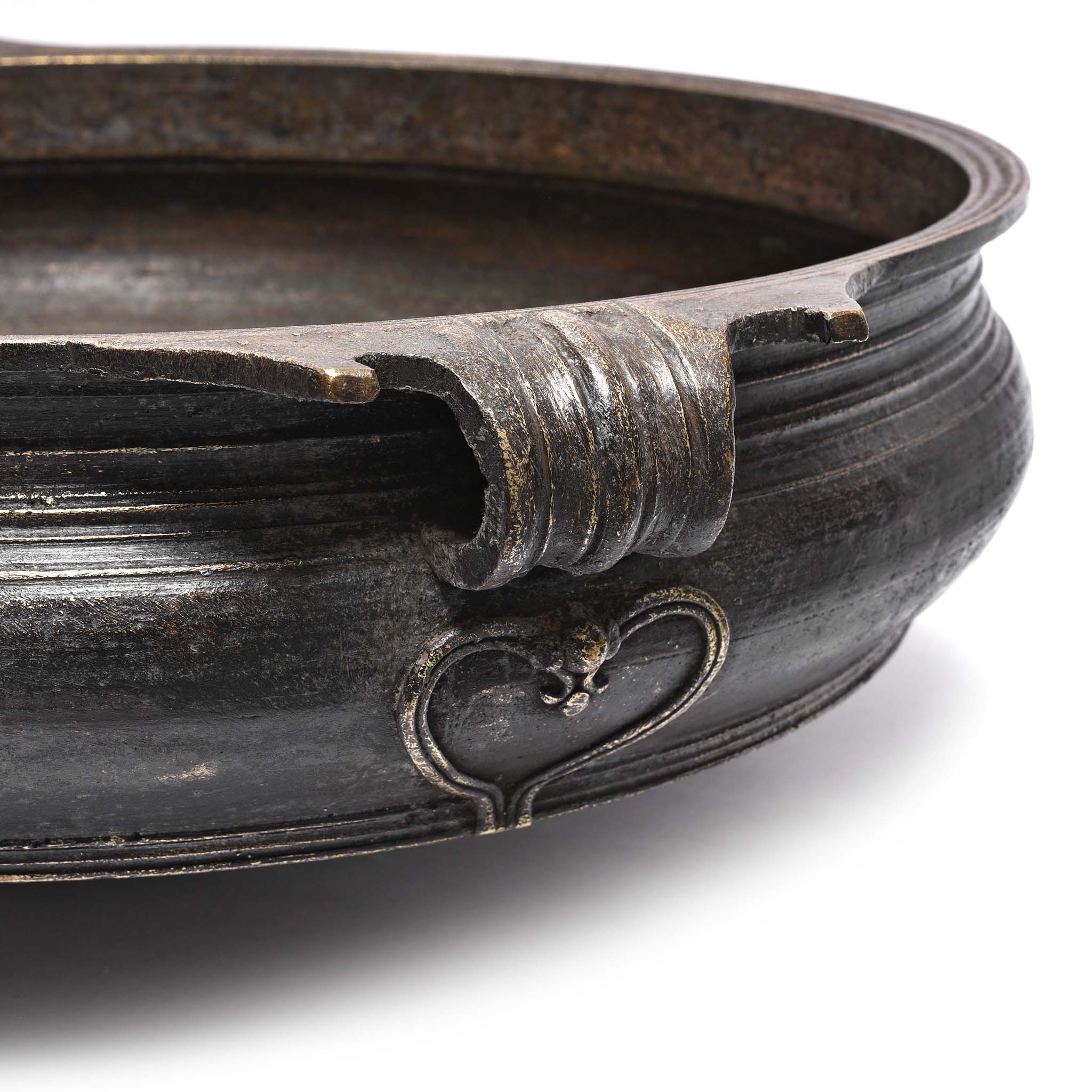
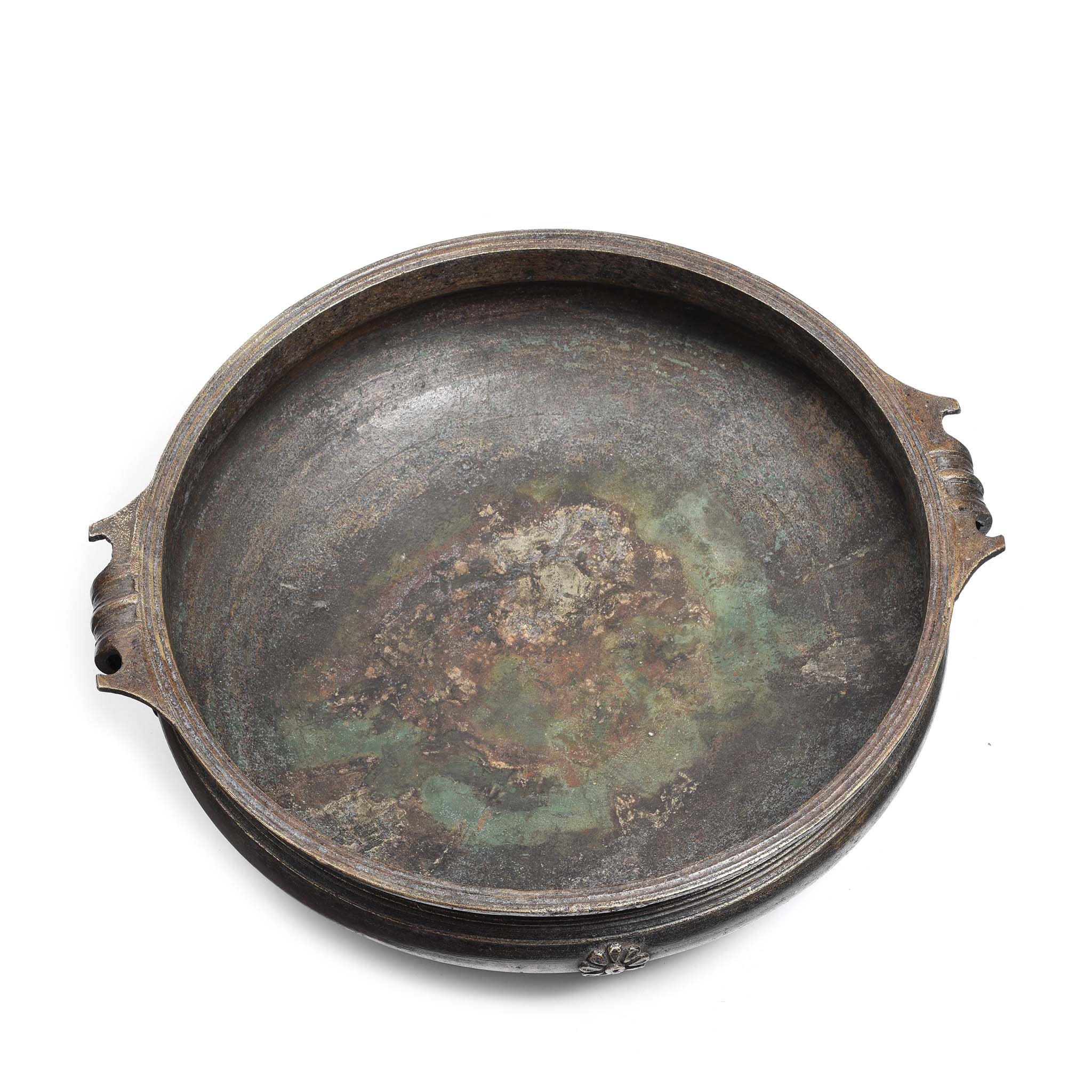
This Indian 19th century cauldron is called an urli ( ഉരുളി ). Urli's are cooking vessels used as cauldrons for food preparation in Kerala, South India. Also called uruli or charakku, these cauldrons were used in both Tamil & Malayali homes and could hold vast amounts of food. They were placed directly on the fire and wooden poles were inserted through the loop handles at each side to carry them.
Traditionally they were always made from bronze, or bell metal using the lost wax process (cire perdue) and were made in Kerela. Each mold is destroyed during the casting process making each one unique.
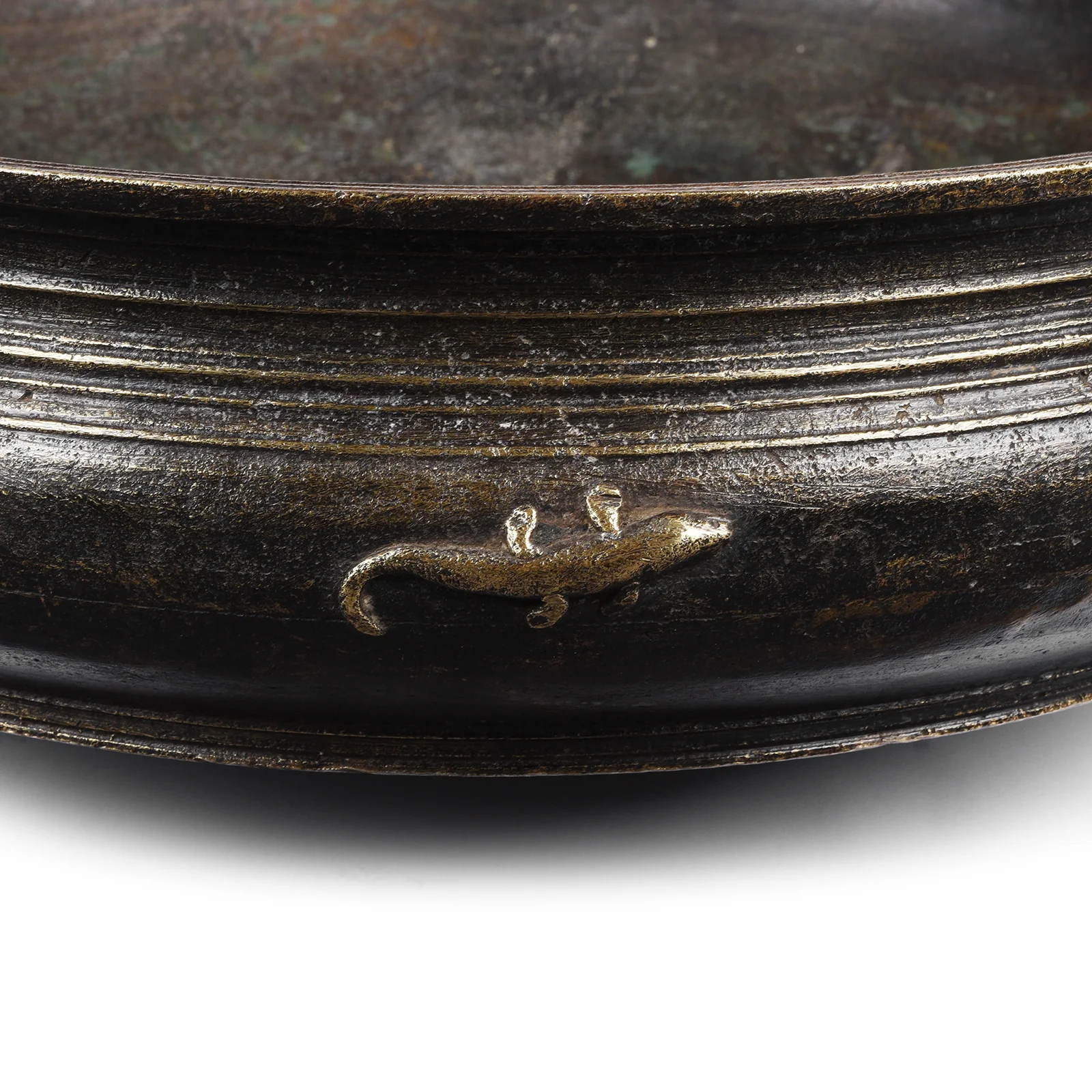
This example has some lovely carving in the bronze of a lizard and lotus flower.
References:
For a similar example see page 42 of Museums of India 'National Handicrafts & Handlooms Museum New Delhi' by Jyotindra Jain & Aarti Aggarwala.
UK Delivery Charge - except Highlands & Islands £40
More delivery options available at checkout
Original: $1,932.03
-65%$1,932.03
$676.21More Images
Bronze Urli from South India - Late 19th Century
This Indian 19th century cauldron is called an urli ( ഉരുളി ). Urli's are cooking vessels used as cauldrons for food preparation in Kerala, South India. Also called uruli or charakku, these cauldrons were used in both Tamil & Malayali homes and could hold vast amounts of food. They were placed directly on the fire and wooden poles were inserted through the loop handles at each side to carry them.
Traditionally they were always made from bronze, or bell metal using the lost wax process (cire perdue) and were made in Kerela. Each mold is destroyed during the casting process making each one unique.
This example has some lovely carving in the bronze of a lizard and lotus flower.
References:
For a similar example see page 42 of Museums of India 'National Handicrafts & Handlooms Museum New Delhi' by Jyotindra Jain & Aarti Aggarwala.
UK Delivery Charge - except Highlands & Islands £40
More delivery options available at checkout
Product Information
Product Information
Shipping & Returns
Shipping & Returns
Description
This Indian 19th century cauldron is called an urli ( ഉരുളി ). Urli's are cooking vessels used as cauldrons for food preparation in Kerala, South India. Also called uruli or charakku, these cauldrons were used in both Tamil & Malayali homes and could hold vast amounts of food. They were placed directly on the fire and wooden poles were inserted through the loop handles at each side to carry them.
Traditionally they were always made from bronze, or bell metal using the lost wax process (cire perdue) and were made in Kerela. Each mold is destroyed during the casting process making each one unique.
This example has some lovely carving in the bronze of a lizard and lotus flower.
References:
For a similar example see page 42 of Museums of India 'National Handicrafts & Handlooms Museum New Delhi' by Jyotindra Jain & Aarti Aggarwala.
UK Delivery Charge - except Highlands & Islands £40
More delivery options available at checkout