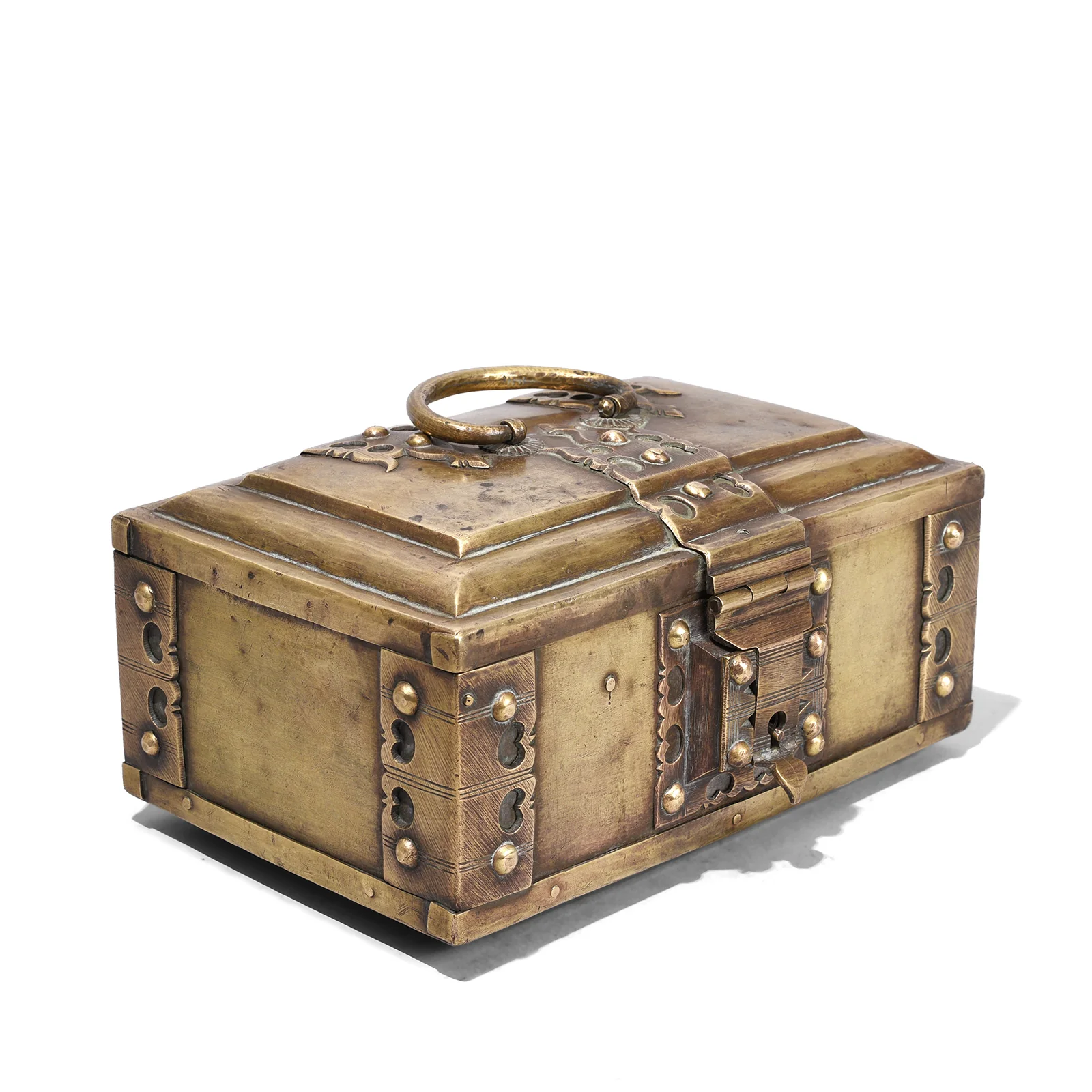
Brass Jewellery Box From Kerala - Late 19th Century
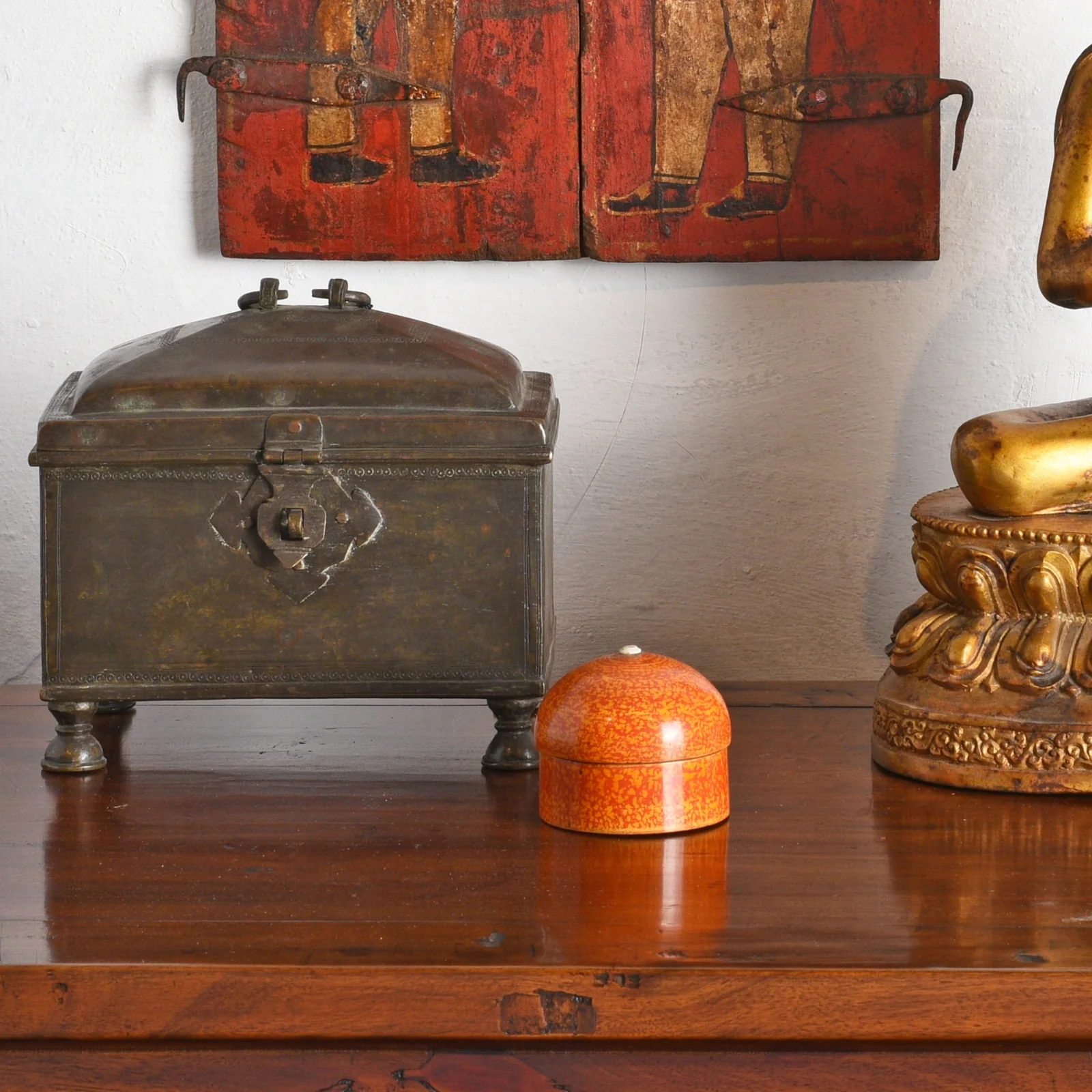
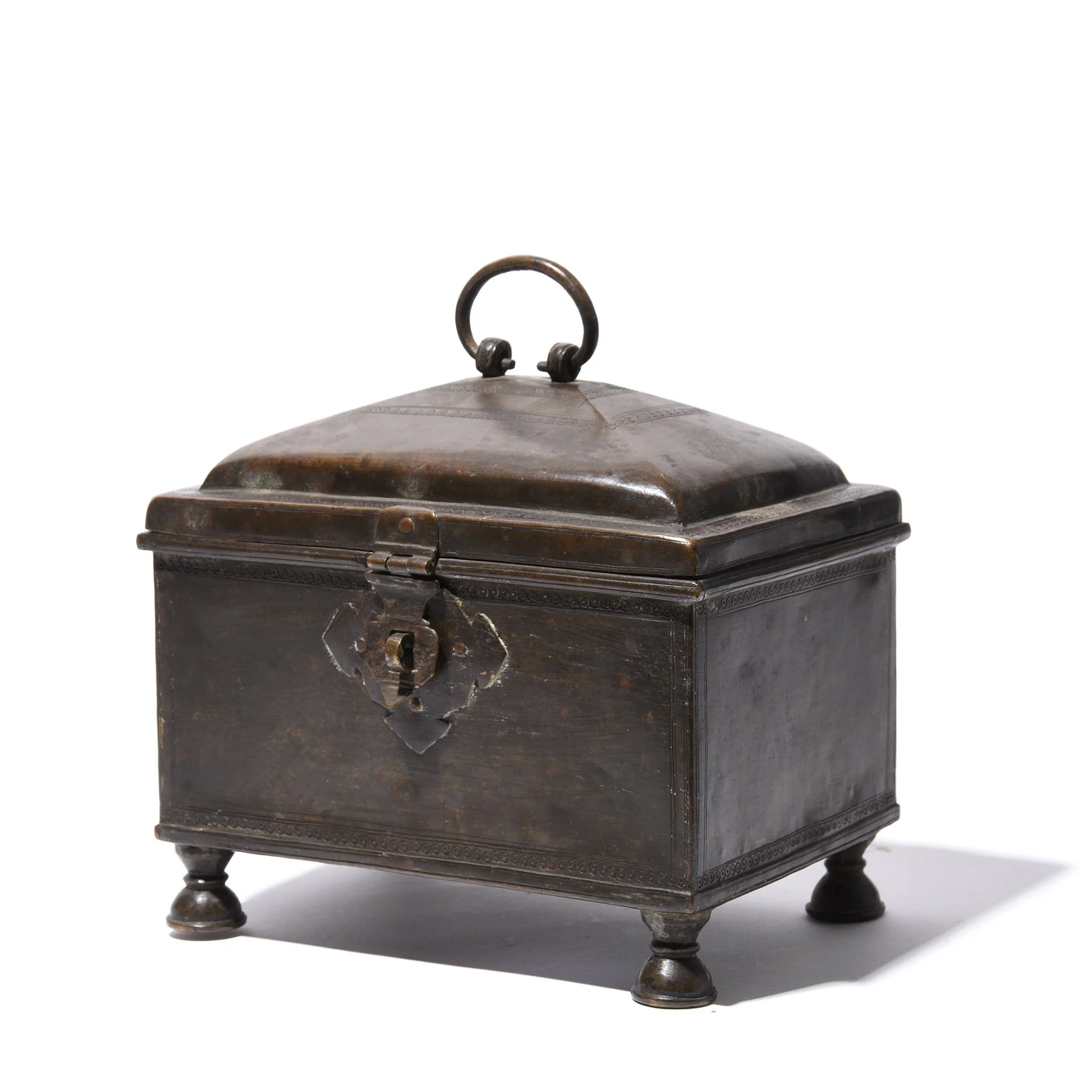
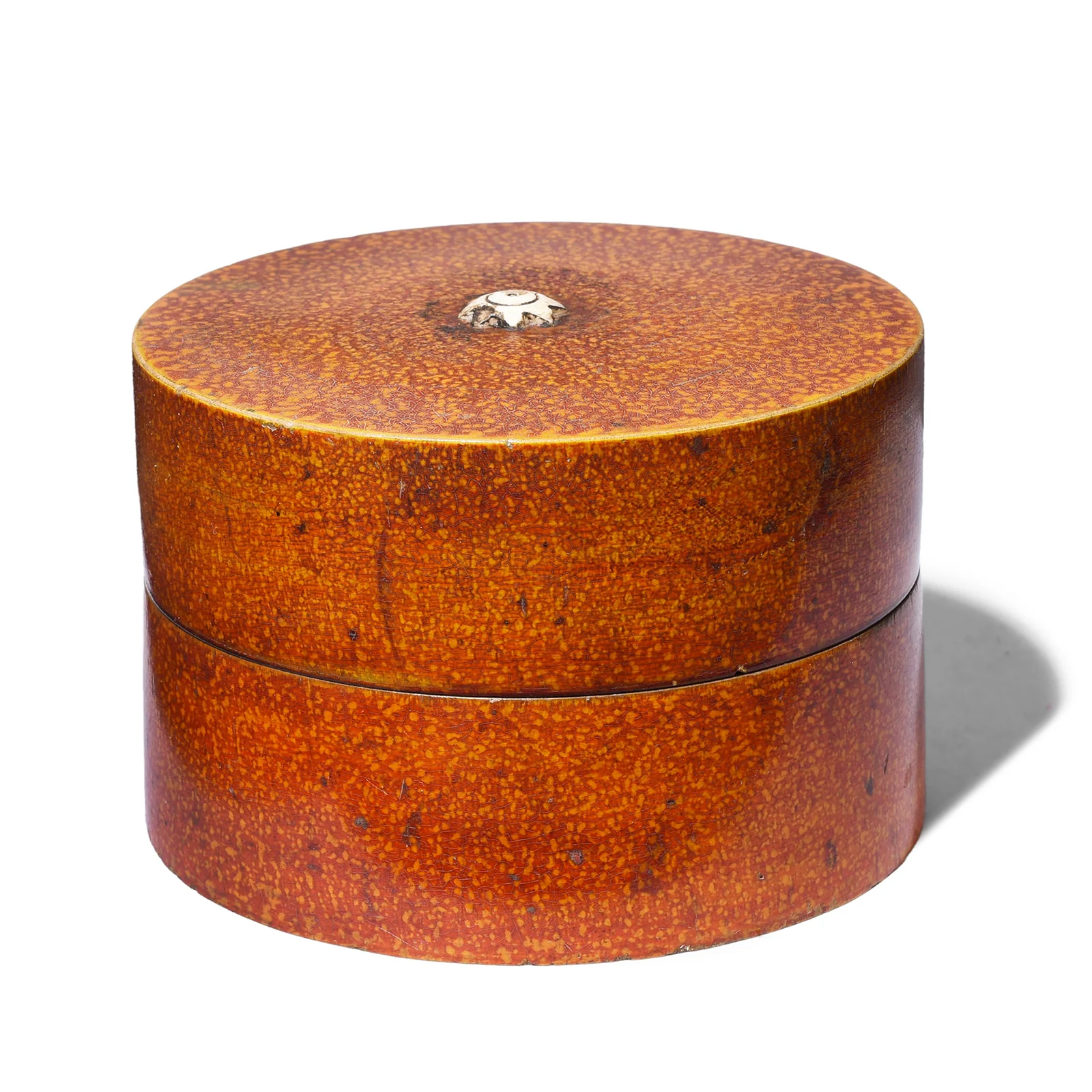
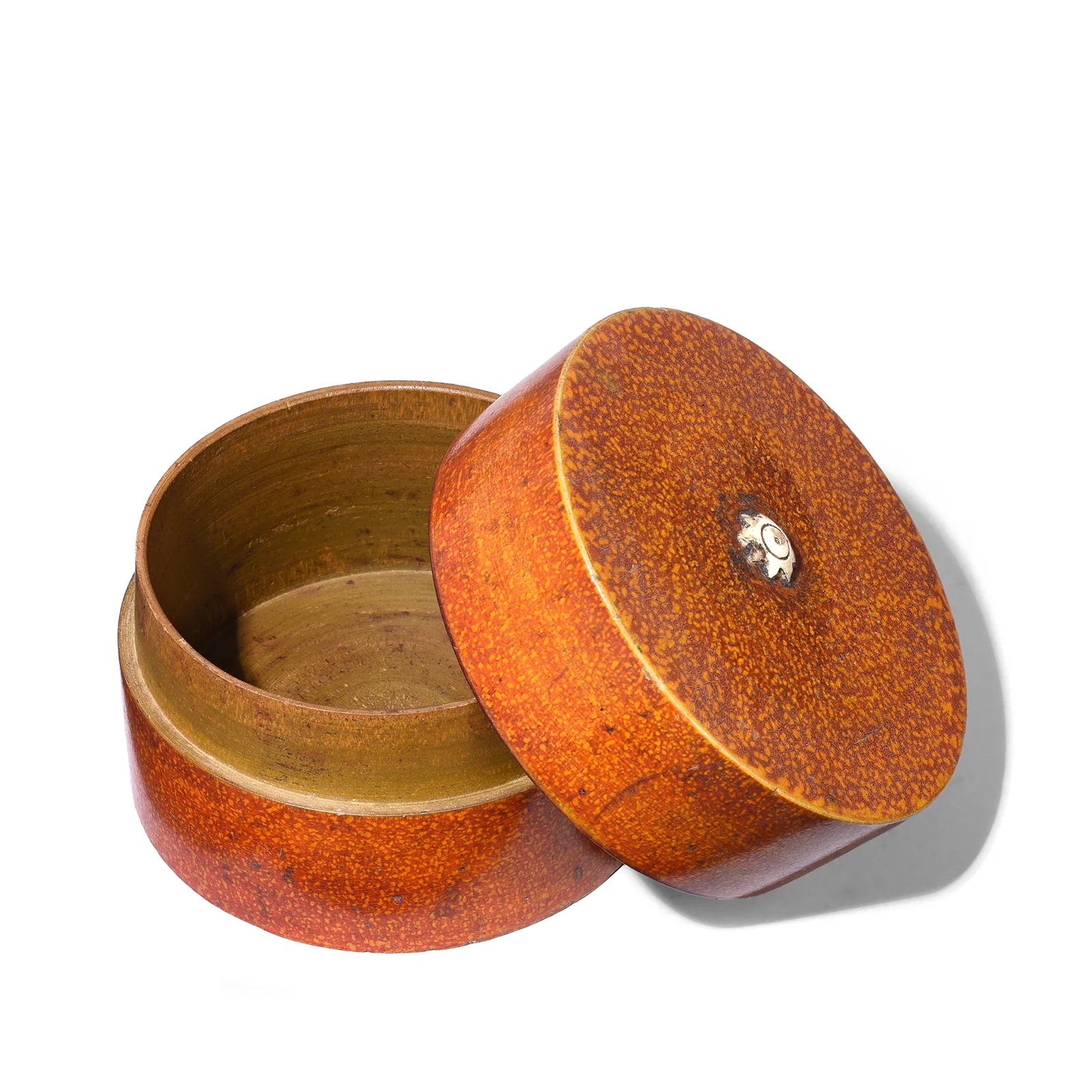
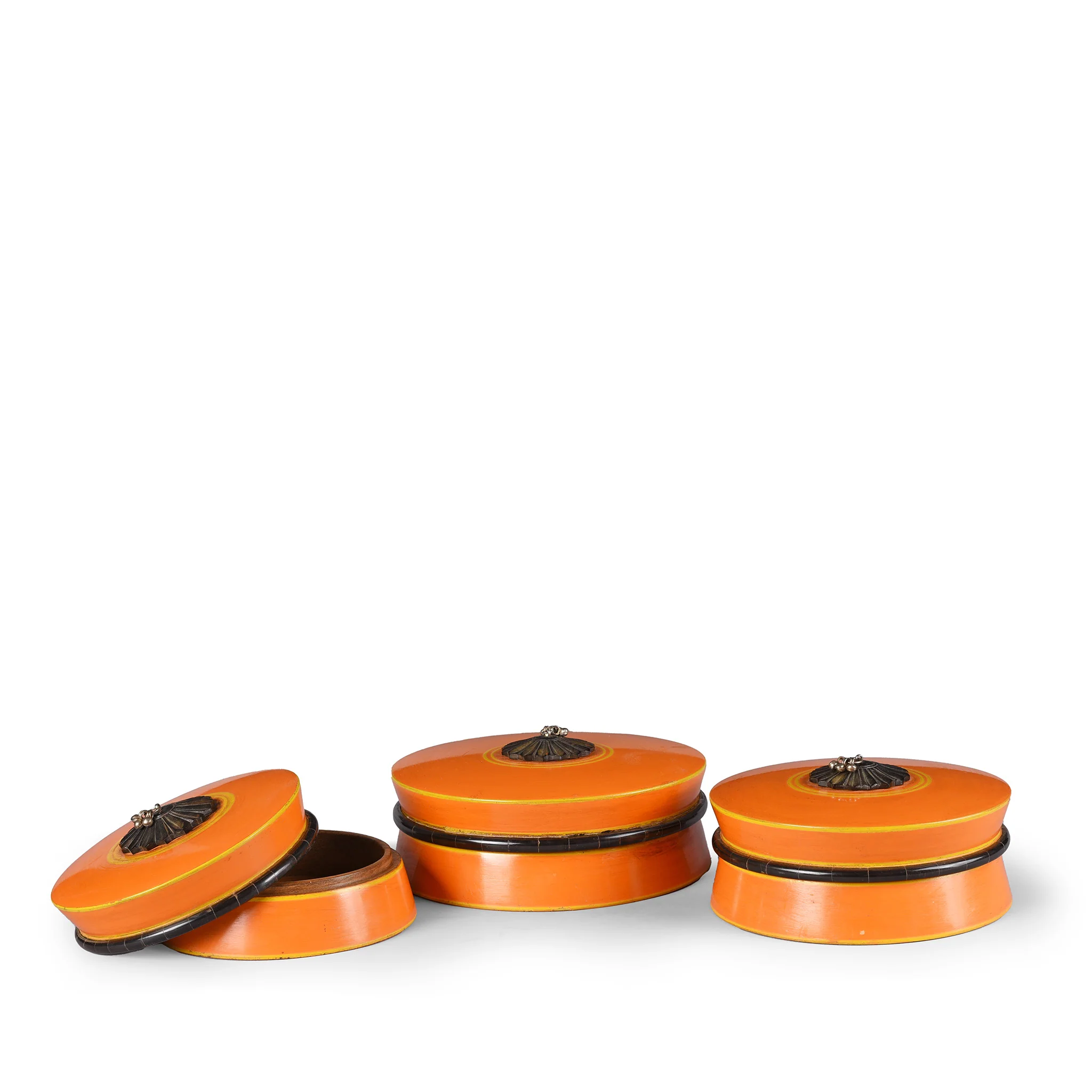
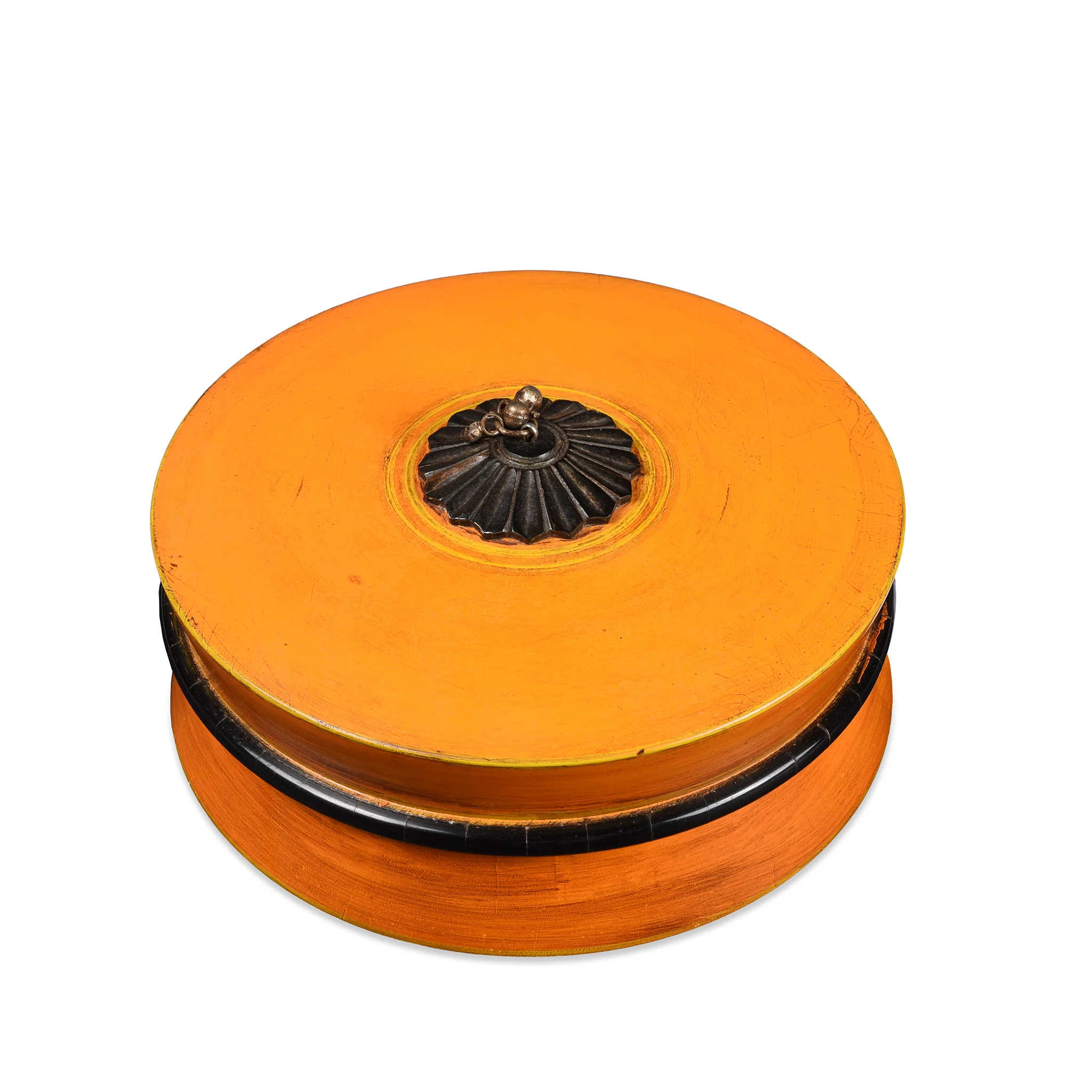
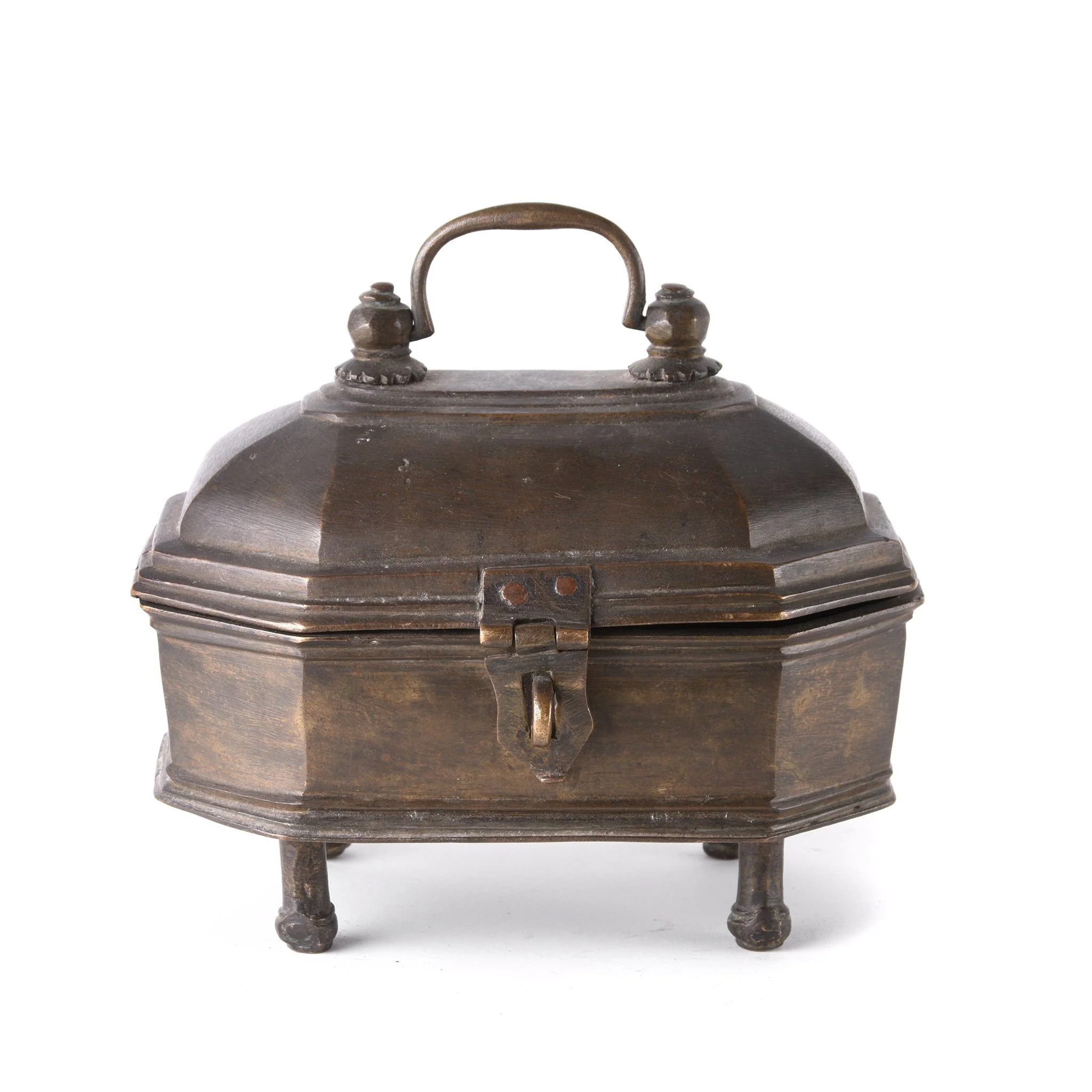
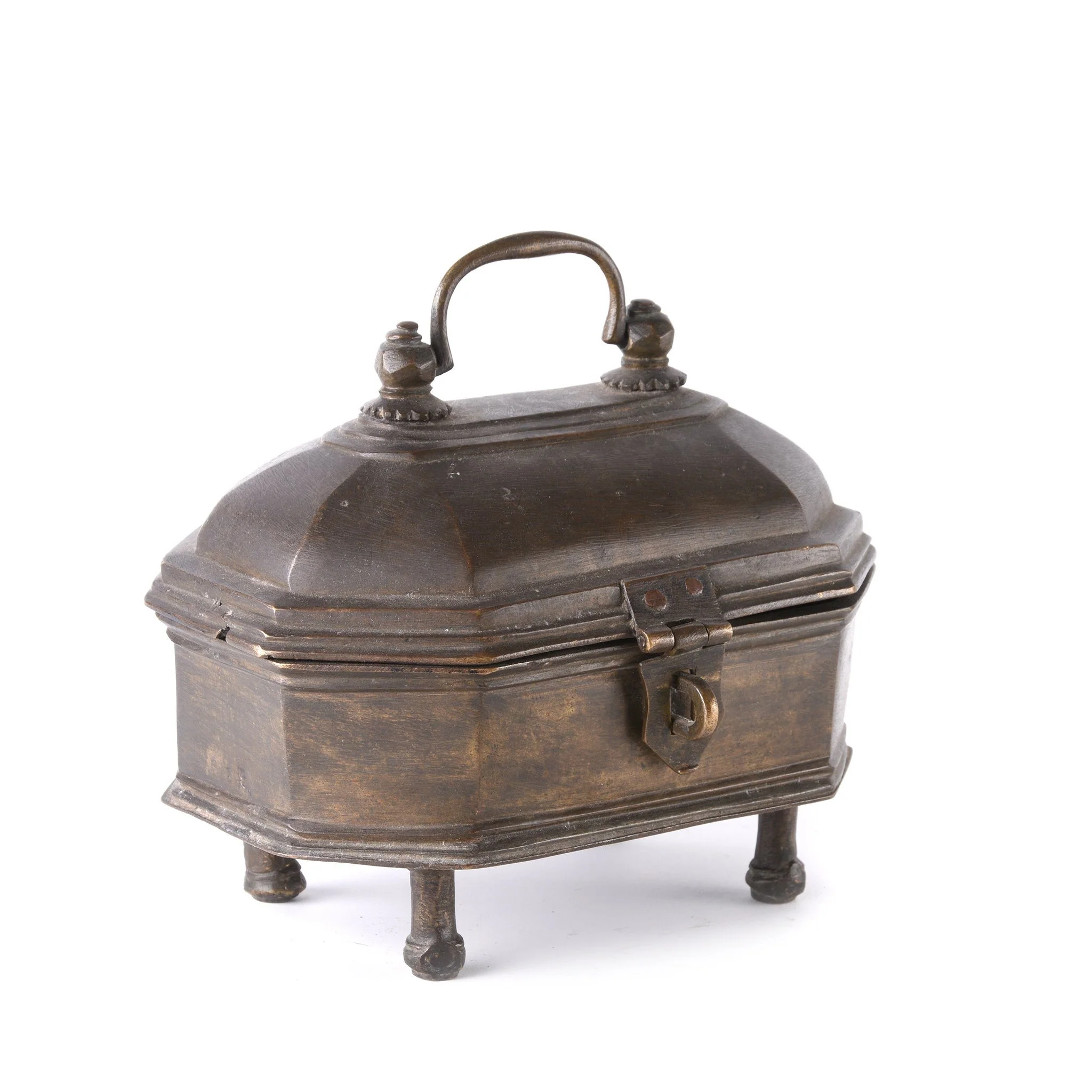
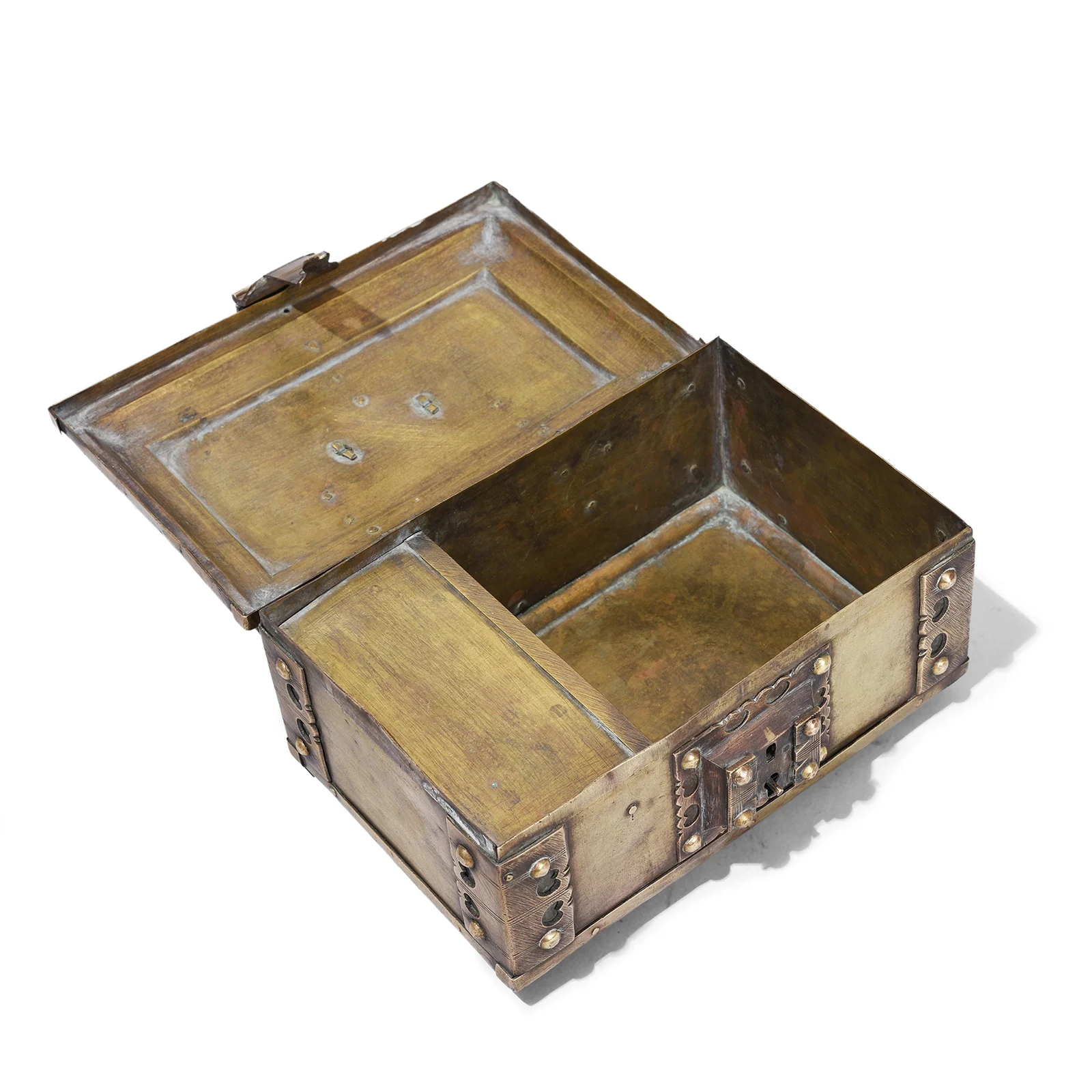
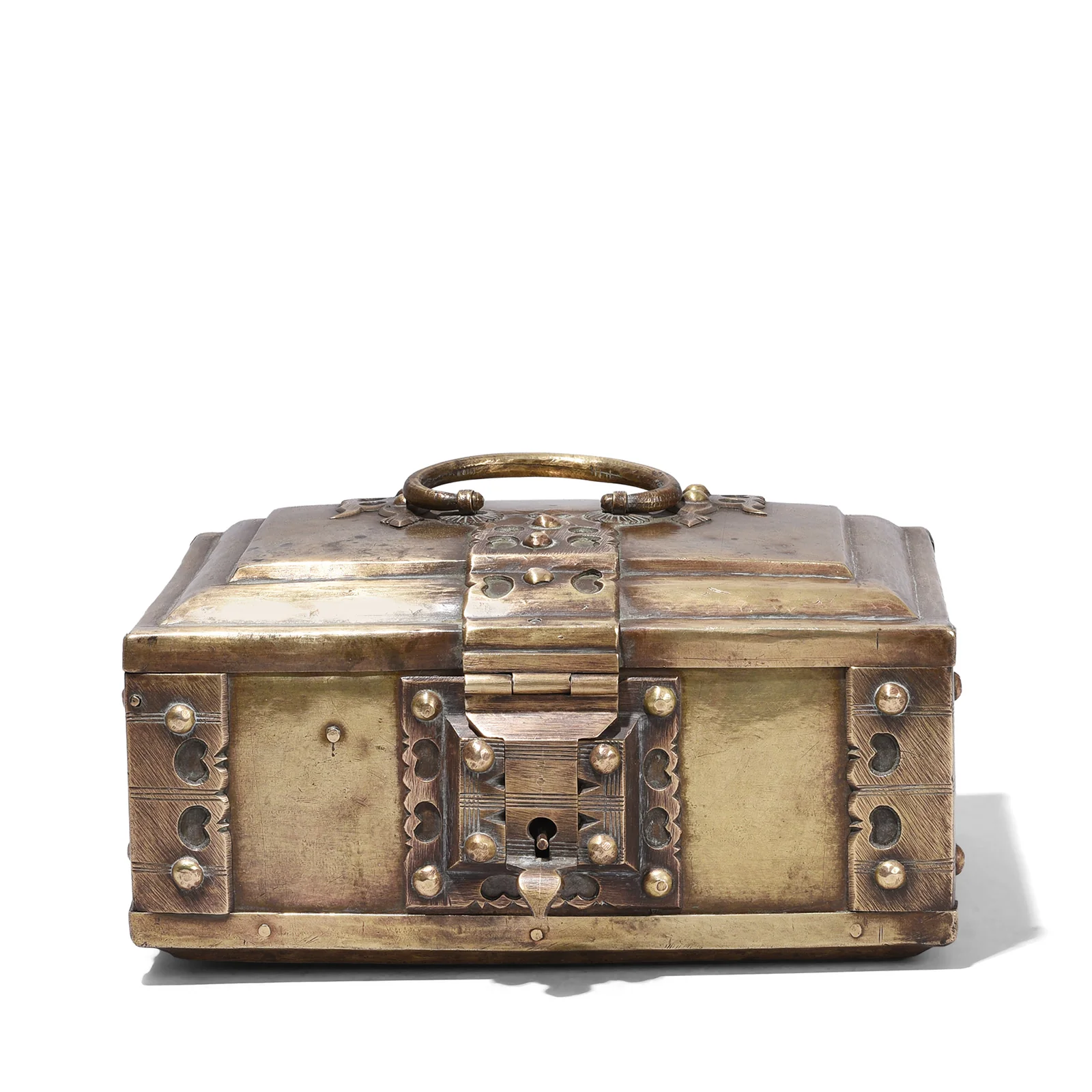
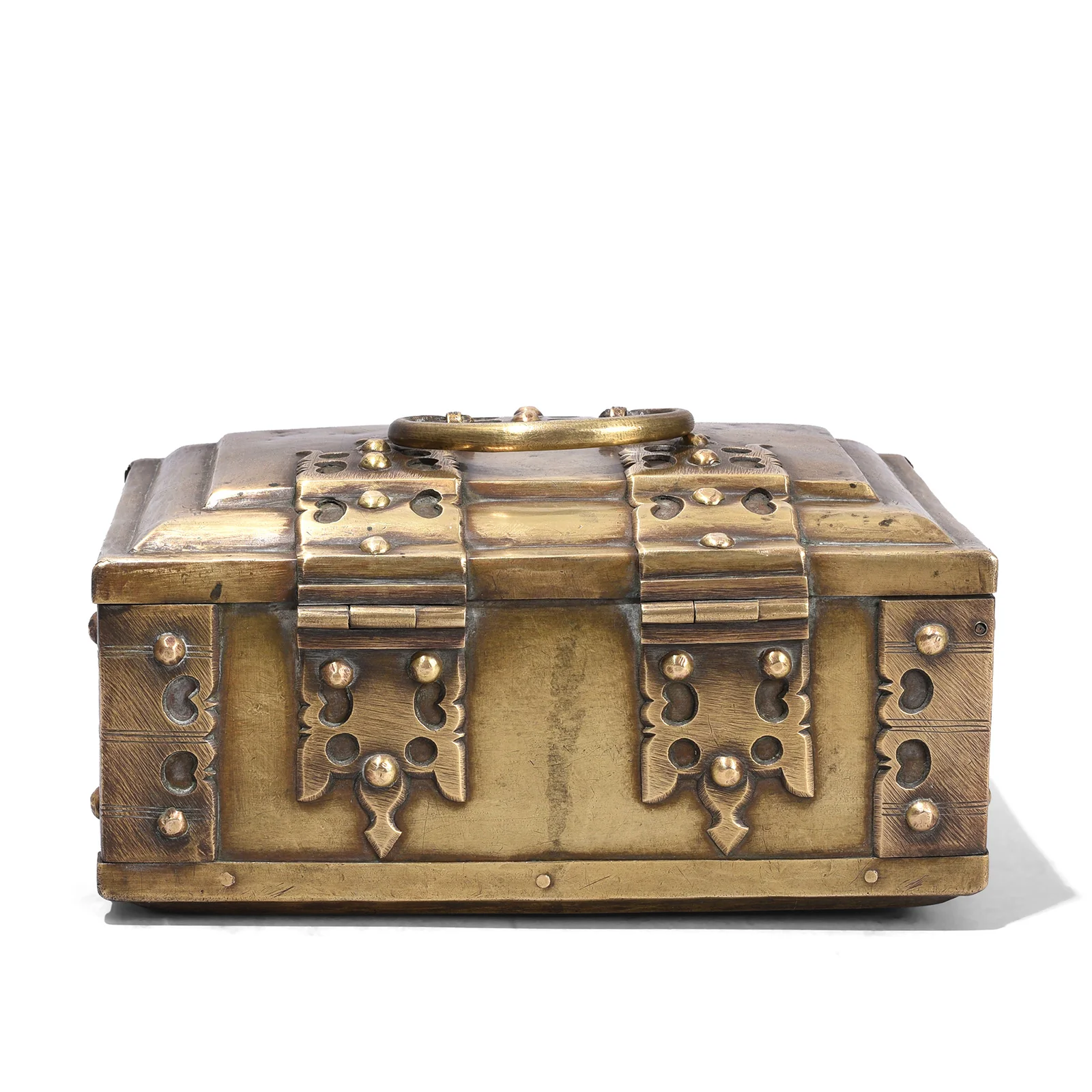
This pretty little Indian brass box is from Kerala in South India and is often referred to as a 'vettile chellam'. It would have been used for storing valuables; jewelry, paan, and money and has an internal divider. Nowadays it could be used as a jewelry box. Designed with sturdy brass panels and intricate riveted detailing, it embodies both practicality and elegance. The box features a hinged lid with a bold handle and a secure clasp, making it an ideal vessel for storing treasures.
Traditionally, such boxes were used to keep valuables safe€”whether jewelry, money, or paan (betel leaf preparations). Today, it retains its charm as a functional jewelry box while also serving as a decorative accent, embodying the artistry and traditions of Indian metalwork. Examples of similar South Indian brass and copper boxes are found in museum collections, including the Victoria and Albert Museum, underscoring their enduring cultural significance.
- Origin: Kerala, South India
- Date: 19th century
- Materials: Brass
- Features: Riveted construction, hinged lid with circular handle, decorative clasp
- Condition: Rich patina consistent with age; wear enhancing character
- Dimensions: W18 x D13 x H9.5 cm
Original: $378.57
-65%$378.57
$132.50More Images
Brass Jewellery Box From Kerala - Late 19th Century
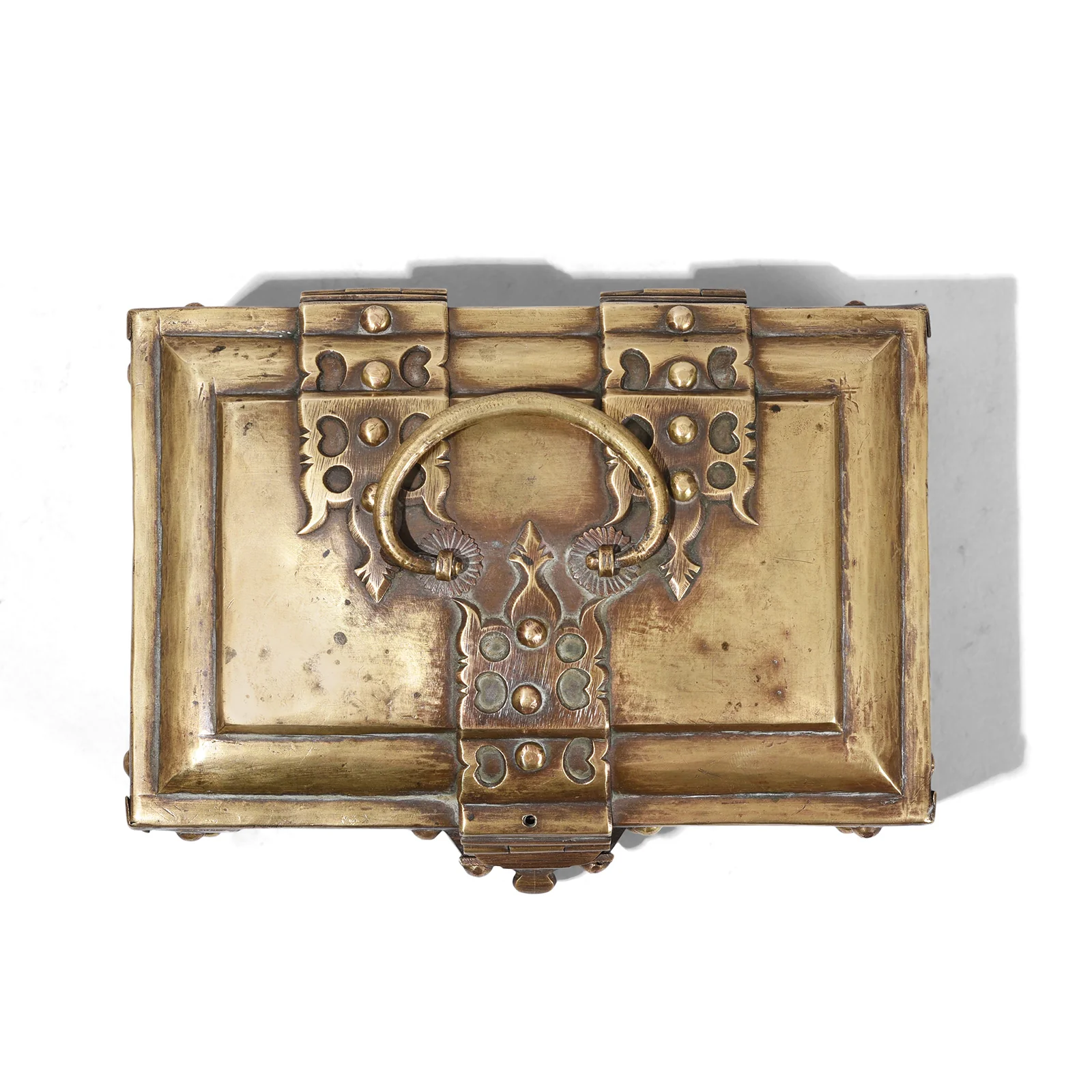
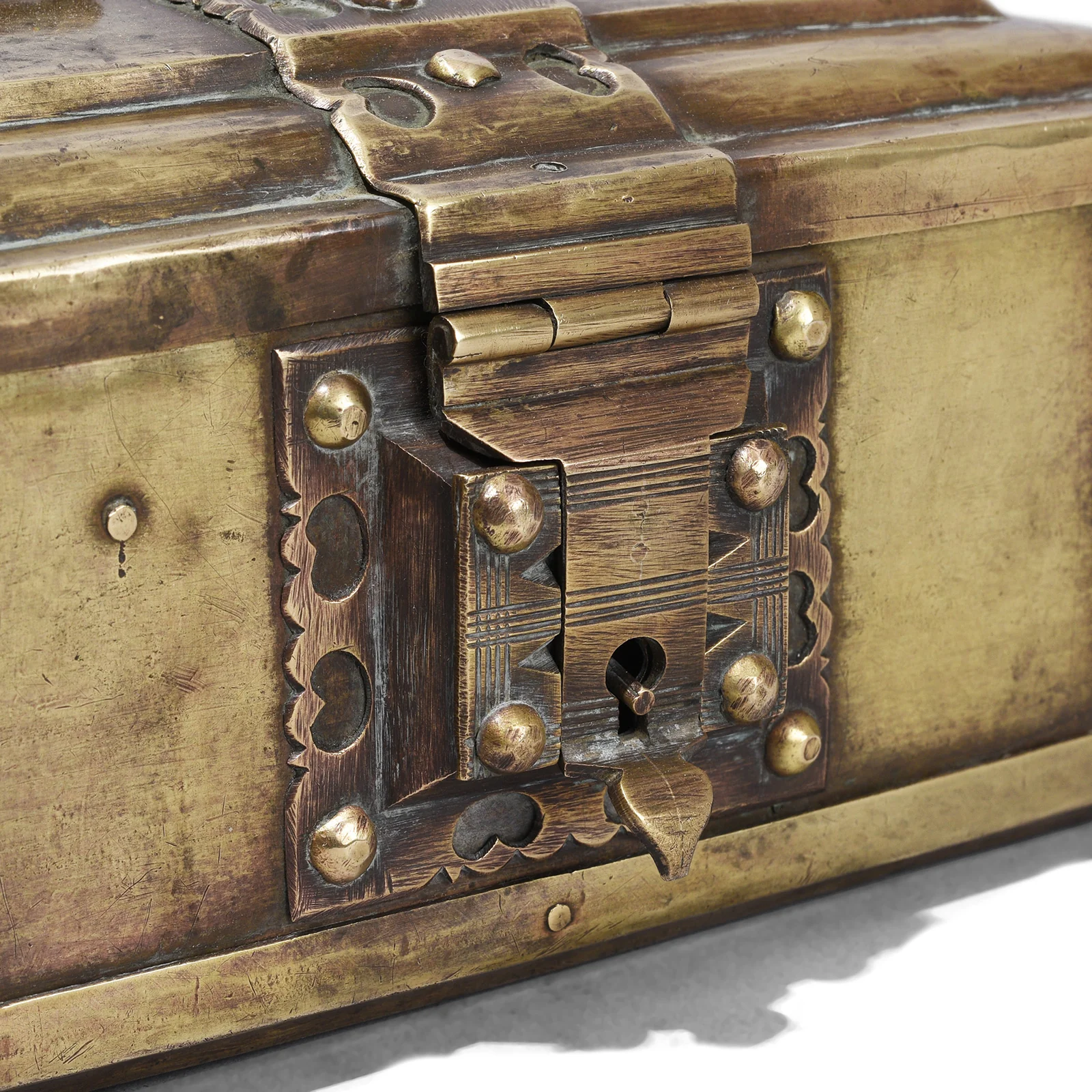
This pretty little Indian brass box is from Kerala in South India and is often referred to as a 'vettile chellam'. It would have been used for storing valuables; jewelry, paan, and money and has an internal divider. Nowadays it could be used as a jewelry box. Designed with sturdy brass panels and intricate riveted detailing, it embodies both practicality and elegance. The box features a hinged lid with a bold handle and a secure clasp, making it an ideal vessel for storing treasures.
Traditionally, such boxes were used to keep valuables safe€”whether jewelry, money, or paan (betel leaf preparations). Today, it retains its charm as a functional jewelry box while also serving as a decorative accent, embodying the artistry and traditions of Indian metalwork. Examples of similar South Indian brass and copper boxes are found in museum collections, including the Victoria and Albert Museum, underscoring their enduring cultural significance.
- Origin: Kerala, South India
- Date: 19th century
- Materials: Brass
- Features: Riveted construction, hinged lid with circular handle, decorative clasp
- Condition: Rich patina consistent with age; wear enhancing character
- Dimensions: W18 x D13 x H9.5 cm
Product Information
Product Information
Shipping & Returns
Shipping & Returns
Description
This pretty little Indian brass box is from Kerala in South India and is often referred to as a 'vettile chellam'. It would have been used for storing valuables; jewelry, paan, and money and has an internal divider. Nowadays it could be used as a jewelry box. Designed with sturdy brass panels and intricate riveted detailing, it embodies both practicality and elegance. The box features a hinged lid with a bold handle and a secure clasp, making it an ideal vessel for storing treasures.
Traditionally, such boxes were used to keep valuables safe€”whether jewelry, money, or paan (betel leaf preparations). Today, it retains its charm as a functional jewelry box while also serving as a decorative accent, embodying the artistry and traditions of Indian metalwork. Examples of similar South Indian brass and copper boxes are found in museum collections, including the Victoria and Albert Museum, underscoring their enduring cultural significance.
- Origin: Kerala, South India
- Date: 19th century
- Materials: Brass
- Features: Riveted construction, hinged lid with circular handle, decorative clasp
- Condition: Rich patina consistent with age; wear enhancing character
- Dimensions: W18 x D13 x H9.5 cm